The Ink-Scented Ancient City: Jianshui, the Time Code of Southern Yunnan's Literary Fame
The Ink-Scented Ancient City: Jianshui, the Time Code of Southern Yunnan's Literary Fame
On the map of Honghe Prefecture in Yunnan Province, there is a small city. It hasn't been elevated to a pedestal by hipster travelers like Dali, nor has it been swept up in the tide of commercialization like Lijiang. Nestled quietly among the mountains and waters of southern Yunnan, it resembles a thread-bound book yellowed by time, each page exuding the fragrance of ink. This city is called Jianshui.
I'm not a professional travel blogger—just an ordinary person born and raised in Honghe. Over the years, I've wandered through my homeland with a camera slung over my shoulder, snapping tens of thousands of photos and jotting down countless fragments of writing. When I tried to organize these materials, one fact struck me: the wealth of tourist resources in Honghe Prefecture far exceeded my imagination. And Jianshui is the place I've visited over a dozen times, yet each trip reveals something new.
If you ask me where the most worthwhile destination in Honghe Prefecture is, I'd answer without hesitation: Jianshui. How does this small county, with a population of just 550,000 and an area of less than 4,000 square kilometers, earn the title "Literary Fame of Southern Yunnan"? Brew yourself a cup of Pu'er tea, and let me tell you slowly.
Commanding the Southeast: Chaoyang Tower, a "Little Tiananmen" Watching Over Six Centuries
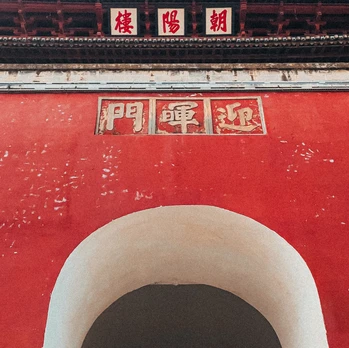
To truly understand Jianshui, you must first pass through one gate—Chaoyang Tower.

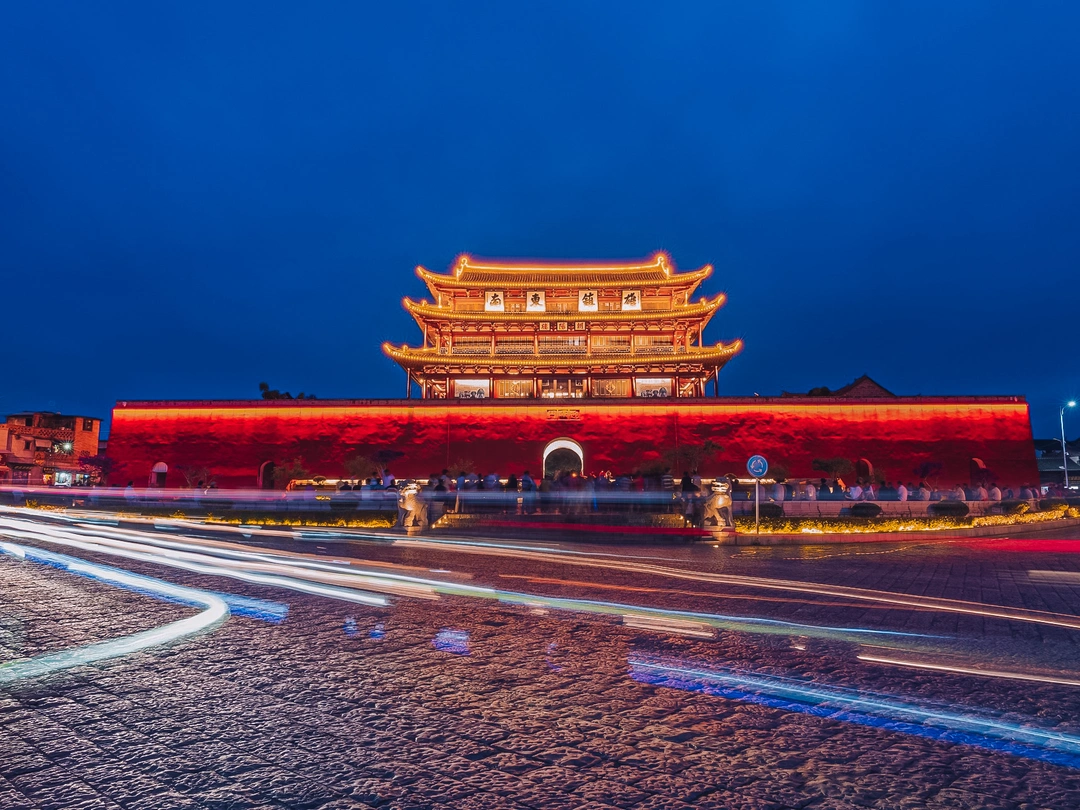
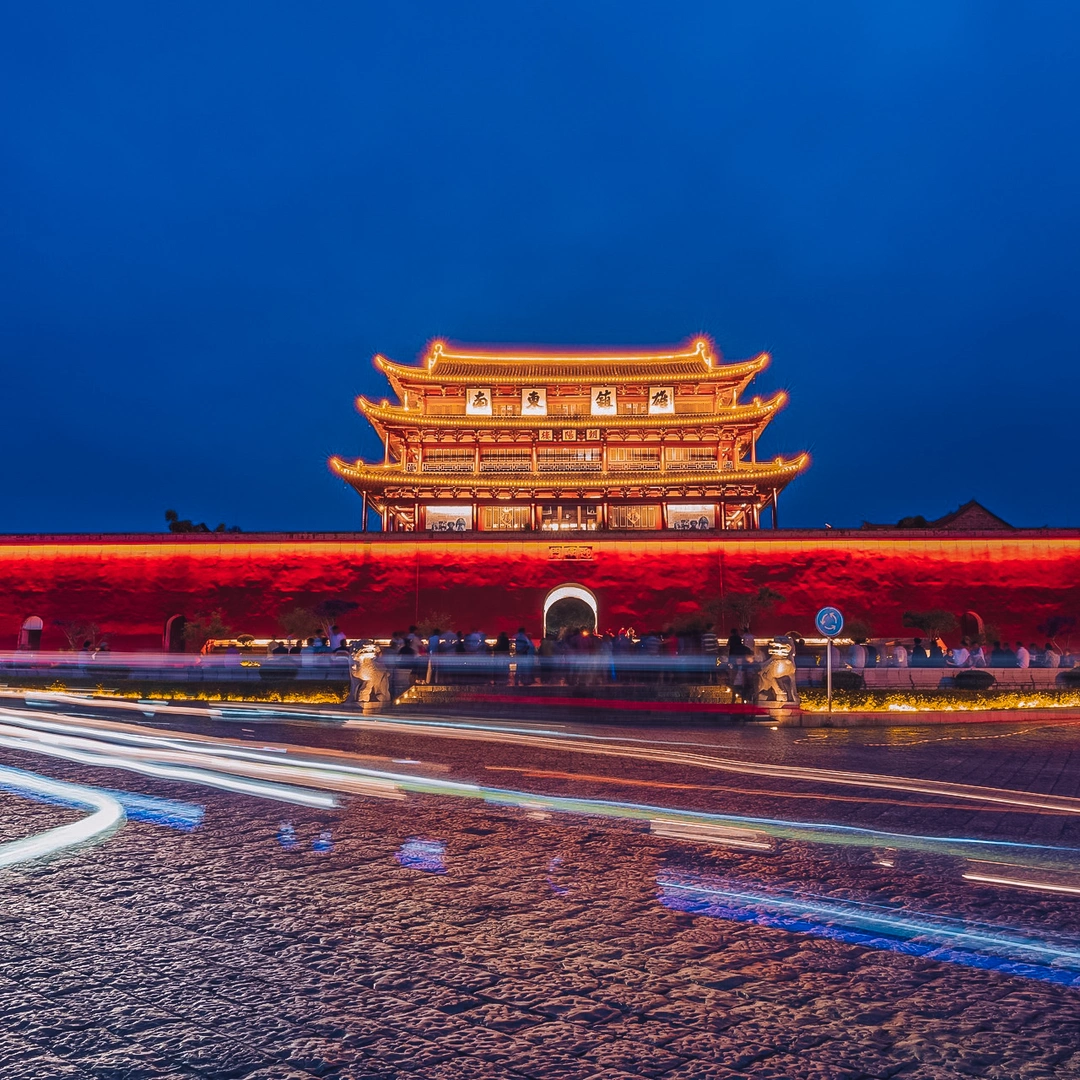
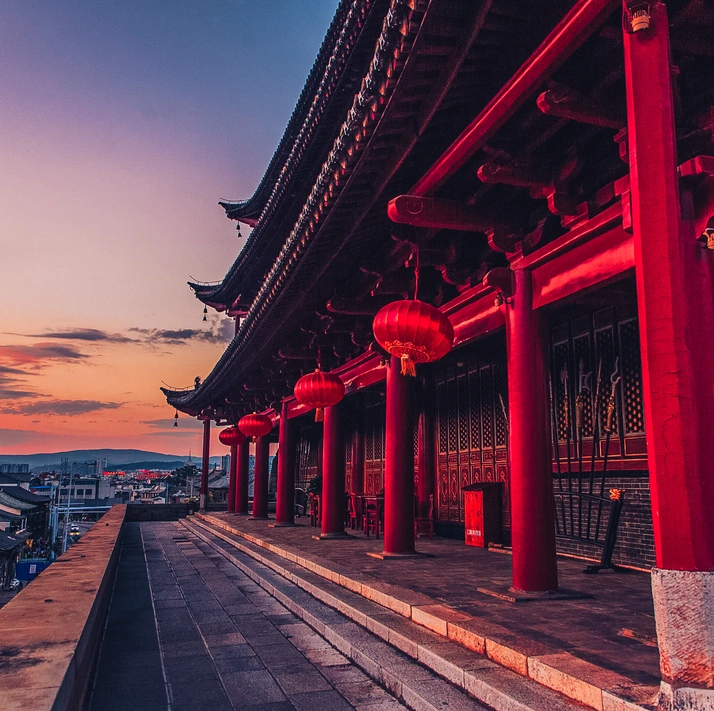
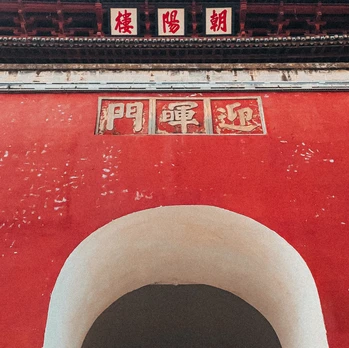
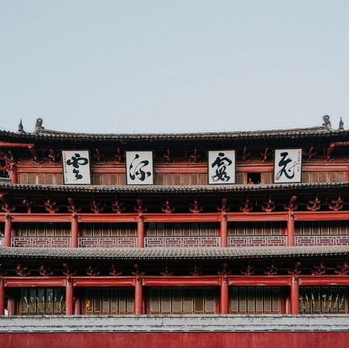
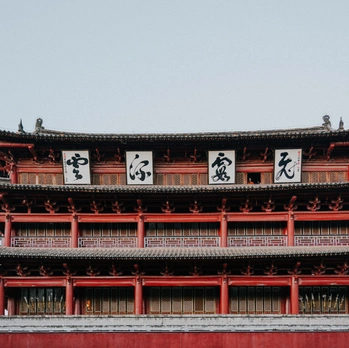
Built during the Ming Dynasty's Hongwu reign, this eastern gate tower bears a striking resemblance to Beijing's Tiananmen. Red walls, three-tiered flying eaves, intricate carvings and painted beams—forty-eight massive wooden pillars support the entire structure. The eight thickest ones rise straight to the third floor, while the outer ones taper down. Standing beneath it, the overwhelming grandeur hits you, and you instantly understand why it's called the "Little Tiananmen."
The giant plaque hanging on the tower's front reads "Xiong Zhen Dong Nan" (Commanding the Southeast), the calligraphy of Qing Dynasty artist Tu Zhuo, hailed as one of the four great monumental inscriptions of Yunnan. On the reverse side is a replica of Tang Dynasty "Cursive Sage" Zhang Xu's "Fei Xia Liu Yun" (Flying Rosy Clouds and Flowing Clouds), each character nearly two meters square, wild and unrestrained—a fascinating dialogue with the dignified front.
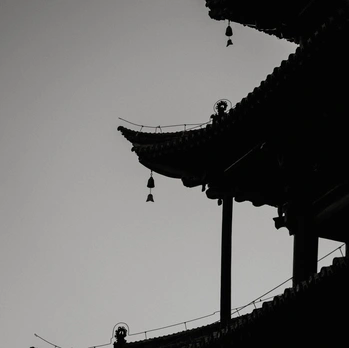
As you climb the tower, you'll encounter a Ming Dynasty bell. Strike it, and the deep, resonant waves ripple outward, as if awakening sleeping history. Bronze bells hang from each eave, chiming in the wind. But the most moving moment comes at dusk—thousands of purple swallows return to their nests, circling the tower with chirps that blend with the bell and chime into a celestial symphony. Standing on the city wall, watching the sunset gild the ancient city in gold, you can't help but recall the poem: "The setting sun is infinitely beautiful, but only near dusk."
Chaoyang Tower has weathered over six centuries of wind and rain, endured more than fifty earthquakes, and still stands firm. The Qing Dynasty's "Jianshui Prefecture Gazetteer" once praised it: "The eastern city tower rises a hundred feet high, piercing the sky, overlooking the city below with countless homes and boundless scenery." It's not just a landmark of Jianshui—it's a living memory.
Guardian of the South: Lin'an Prefectural Office, a Time-Traveling Stage of Officialdom
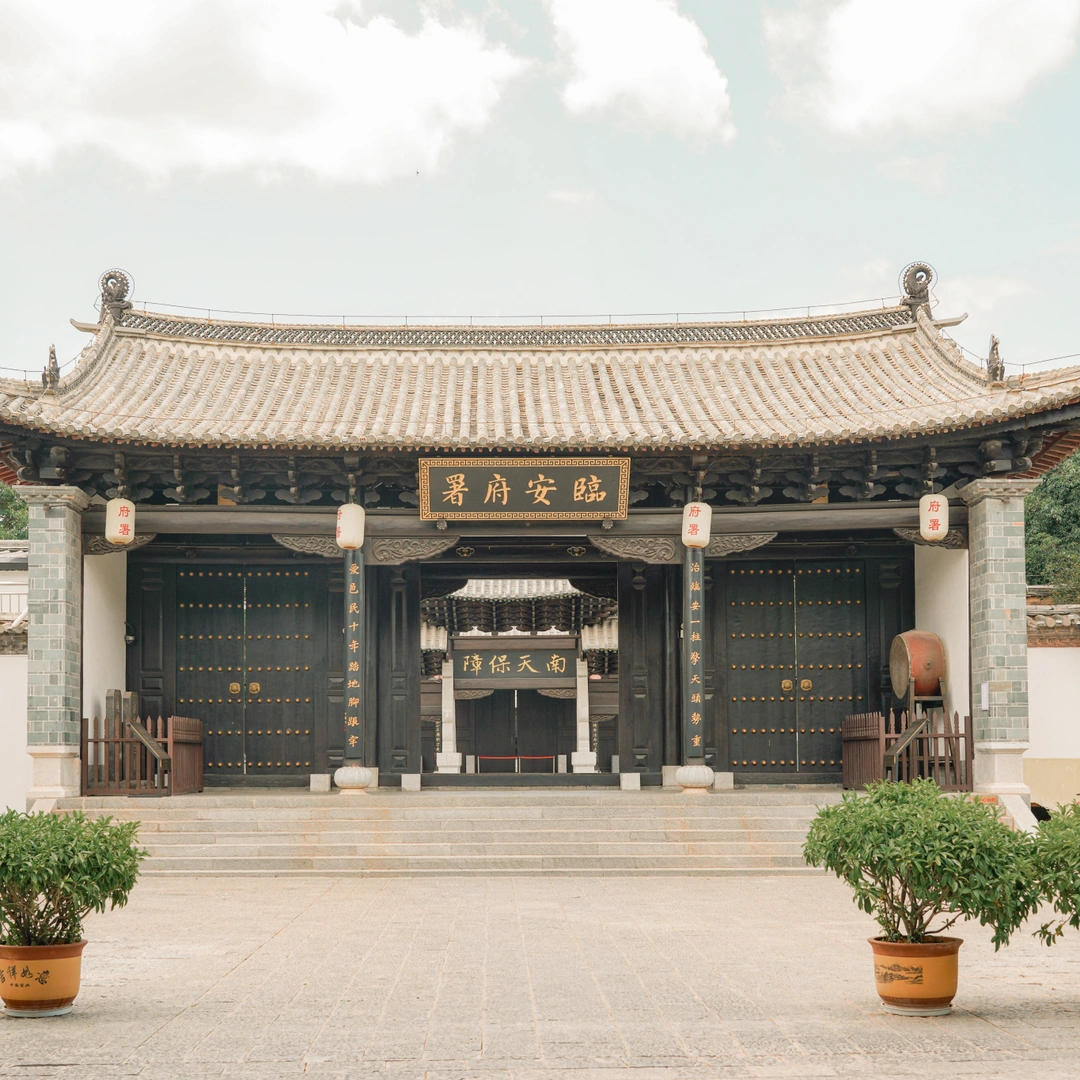
Pass through Chaoyang Tower and walk along the bluestone path. You'll see a building resembling an ancient yamen—the Lin'an Prefectural Office. Don't be fooled by the name "Lin'an"; it's not Hangzhou, but Jianshui's ancient designation.
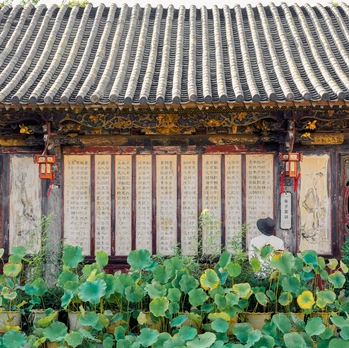
During the Ming and Qing dynasties, Jianshui was the political, economic, and cultural center of southern Yunnan. The Lin'an Prefectural Office was the "provincial government" of its time. First built in the 15th year of the Ming Hongwu reign, it underwent six expansions and remained in use until the late Qing and early Republic eras. Step inside, and you'll find it's nothing like the solemn, imposing yamen of TV dramas—it's filled with the warmth of everyday life.
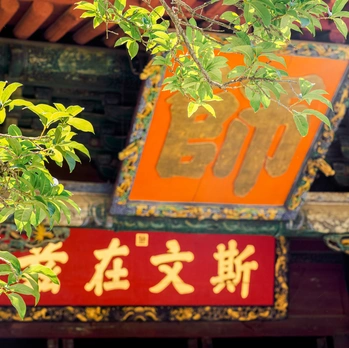
A central axis divides the compound into two halves. On the left are the departments of Civil Appointments, Revenue, and Rites; on the right are War, Punishment, and Works—reflecting the Confucian principle of "left honored, right humble" and "left civil, right military." In the Civil Appointments department, you can see official robes and black gauze hats of different ranks. In Revenue, you'll discover that ancient officials also investigated tax evasion. In Rites, you can even experience the joy of "passing the imperial examination as top scholar." The Works department recreates city-building scenes, War showcases martial spirit, and Punishment's gruesome torture implements send chills down your spine.
The main hall, "Zhong'ai Tang" (Hall of Loyalty and Love), is where the prefect heard cases. Standing before it, you can almost picture the scene: commoners beating the drum to appeal grievances are brought in, yamen runners shouting "Wei wu!" (Majesty!), the prefect slamming his gavel and asking, "What grievance do you have? Speak quickly!" Above hangs the plaque "Ming Jing Gao Xuan" (Clear Mirror High Hanging), while below kneels the trembling plaintiff. I don't know how many cases were tried here, but two stone tablets in the office—one inscribed "Zhong Xiao" (Loyalty and Filial Piety), the other "Lian Jie" (Integrity and Purity)—perhaps reveal the true original intentions of those parent-officials.
Behind lies "Huixuan Tang" (Hall of Benevolent Proclamation), where cases involving officials were tried. The plaque here changes to "Qing Tian Chong Xian" (Blue Sky Reappears). Further back is the council hall, with resting rooms on either side. On the walls hang calligraphy scrolls, evoking the charm of Liu Yuxi's "Humble Room Inscription": "Though this room is humble, my virtue makes it fragrant."
The Lin'an Prefectural Office is like a thick book of governance history. Everyone who walks through it can read stories of vicissitudes and sighs.
Leaping Over the Dragon Gate: The Examination Hall, a Turning Point for Ancient Scholars
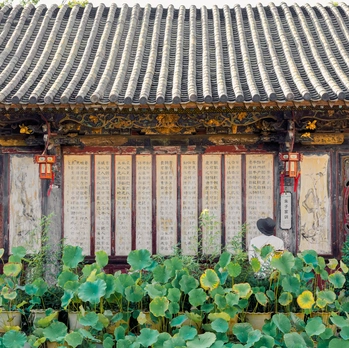
Right next to the Lin'an Prefectural Office is the Yunnan Provincial Education Commissioner's Examination Hall. This was where the highest education official of Yunnan during the Ming and Qing dynasties held the prefectural-level exams for students from four southern prefectures: Lin'an, Yuanjiang, Kaihua, and Pu'er.
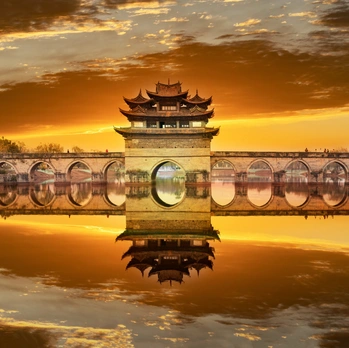
The prefectural exam was a preparatory test before the imperial examinations. Once admitted, students gained preferential treatment and entered the track for national selection. Countless scholars from southern Yunnan set out from here, advancing to provincial and national levels, becoming renowned Confucian scholars and officials, their names etched in history.
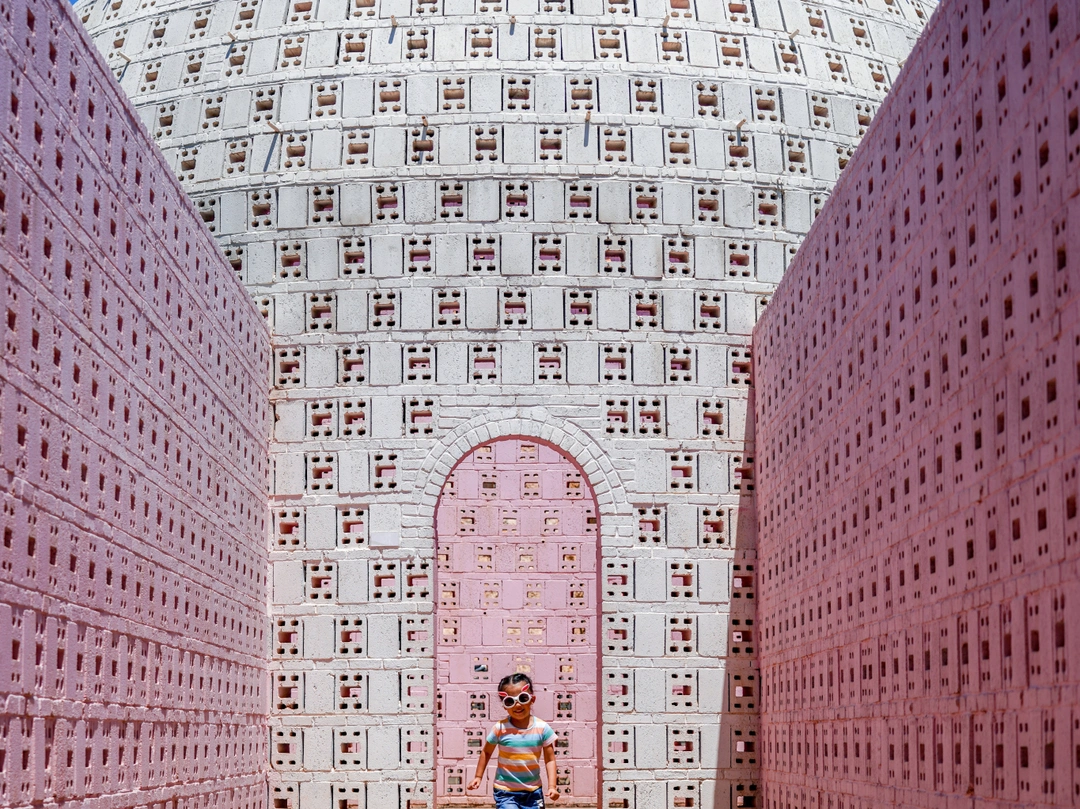
At the entrance, two sets of bronze statues vividly recreate the exam scene. On one side, results are announced: villagers flock from all directions—some praying silently, others slapping their foreheads upon hearing the news, and still more sitting dejectedly on the ground after failing. On the other side, a newly crowned top scholar rides a tall horse, wearing a large red flower, parading through the streets with an honor guard. The smug smile on his face recalls Meng Jiao's verse: "The spring breeze makes my horse gallop with joy; in one day, I see all the flowers of Chang'an."
Enter the hall, and the second gate is called "Longmen" (Dragon Gate), symbolizing "carp leaping over the dragon gate." Passing through, you reach the eastern and western examination fields. Another set of bronze statues depicts the exam journey: porters carrying books for accompanying servants, old scholars never putting down their scrolls, and carefree young gentlemen. Even today, driving from Pu'er to Jianshui on the highway feels long—it's hard to imagine the hardships ancient students endured, crossing mountains and rivers, just to reach this place.
In the main hall, the education commissioner inspects the exam. Signs reading "Su Jing" (Silence) and "Hui Bi" (Stand Aside) remind candidates to maintain discipline. The most stunning sight is the ancient exam papers—the handwriting flows like clouds and water, with no grids or lines, yet the characters are uniformly sized and perfectly spaced, as if printed. Looking at my own "crooked" handwriting, I feel deeply ashamed.
With college entrance exam results just announced, many students feel it's finally over. But it's not—this is just one of countless exams in life. Ancient scholars faced prefectural, provincial, metropolitan, and palace exams; we face preschool, primary, middle school, high school, college entrance, graduate school, and doctoral exams. Education is the fairest way for poor students to achieve class mobility—there's no alternative. If you feel tired or unfair, visit this examination hall. You'll realize that today's hardships pale compared to those of the ancients.
The Source of Confucian Culture: The Confucian Temple, the Soul of Jianshui
Jianshui's reputation as "Zou and Lu of Southern Yunnan" (a reference to Confucius's birthplace) and "Literary Fame" owes much to its Confucian Temple. Built during the Yuan Dynasty, over 700 years ago, it is second in scale only to Qufu's original Confucius Temple in Shandong.
Enter through "Sheng Yu You Zi" (The Sage's Domain Begins Here) Square. In the center stands a statue of Confucius. On holidays, spectacular performances take place here: actors in splendid Han Dynasty robes recreate scenes of ancient students seeking knowledge. When the background music plays passages from the Analects, the audience joins in loud recitation. My daughter, though too young to understand the deeper meaning, was infected by the atmosphere and clapped nonstop.
Pass through "Tai He Yuan Qi" (Supreme Harmony and Primordial Qi) Archway, and you first see Xuehai (Sea of Learning)—a shimmering expanse of water that soothes the soul. Turtles bask on the shore, stacking themselves in piles of three to five, from largest to smallest. On an island in the pool stands "Si Le Ting" (Pavilion of Contemplation and Joy), named after the phrase "The sea of learning has no bounds; hard work is the boat."
The "Zhu Si Yuan Yuan" (Origins of the Zhu and Si Rivers) Archway stands nine meters tall, a wood-and-stone structure with qilin (mythical beast) stone carvings perched atop the base, guarding the wooden archway. Behind it, four archways line up east to west, inscribed with "De Pei Tian Di" (Virtue Matches Heaven and Earth), "Dao Guan Gu Jin" (The Way Spans Past and Present), "Sheng Yu You Zi" (The Sage's Domain Begins Here), and "Xian Guan Jin Yang" (Approaching the Sage's Gate). The wooden pillars of Lingxing Gate pierce through the black tile roof, topped with Ming Dynasty blue-and-white porcelain covers that shimmer in different colors under sunlight.
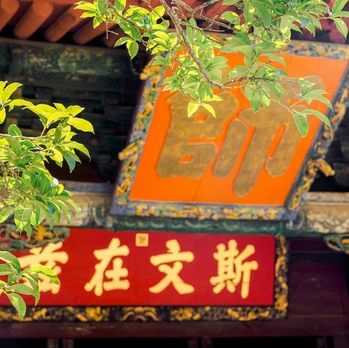
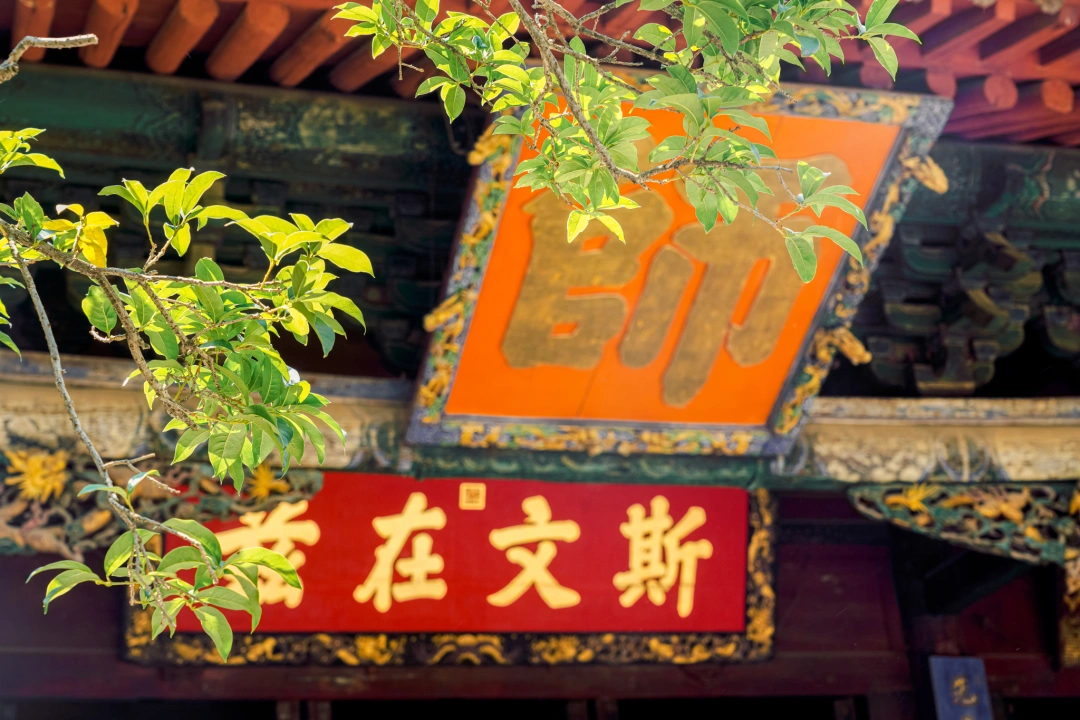
On the central axis lies Xingtan (Apricot Altar). A relief of Confucius teaching stands at its center, while surrounding pillars are carved with coiling dragons riding clouds. Before Dacheng Gate (Gate of Great Accomplishment), a stone staircase features a flying dragon relief. Passing through this gate leads to the temple's core. In front of the Hall of the Great Sage stands a three-meter-tall bronze incense burner, cast during the Qianlong reign. Its four legs are elephant heads, symbolizing that this region was once home to elephants. Inside the hall hang plaques from Qing emperors praising Confucius, from Kangxi's "Wan Shi Shi Biao" (Teacher for Ten Thousand Generations) to Guangxu's "Si Wen Zai Zi" (This Culture Is Here).
Outside, the guide uses just a small hammer to play modern pop songs on the ancient chime bells—a testament to the ancients' mastery of music.
During my holiday visit, I happened upon a "First Writing Ceremony." Parents and children, dressed in Hanfu, gathered at Xuehai. Led by a guide and accompanied by musicians beating drums and gongs, the procession passed through Xingtan, bowed before Dacheng Gate, entered the Hall of the Great Sage, and paid homage to the Confucius statue. Watching this, I felt that no matter how much times change, Chinese traditional culture and virtues must not be lost. I don't expect my daughter to achieve fame or fortune—I just want to teach her, through example, to become a well-informed, knowledgeable, and sensible person.
Three Lesser-Known Temples: Peaceful Havens in the Ancient City
Beyond the Confucian Temple, three lesser-known temples each have their own unique stories.
Tianjun Temple (Heavenly Lord Temple) shares a wall with the Examination Hall. Originally a Fire God Temple, it was transformed when three Taoist immortals came to cure a plague with alchemy. The temple is small but exquisitely built, with intricate wood carvings on doors and detailed framework under the eaves. When my family and I stumbled upon it, a monk in a red robe enthusiastically rang the bell, struck the wooden fish, guided us in "proper" worship, and even gave us a fortune.
Zhilin Temple (Temple of the Pointing Forest), known as "the first temple of Lin'an," was built in the late Song Dynasty. Architectural experts confirmed that its main hall is a Yuan Dynasty wooden structure over 700 years old—rare in Yunnan and even rarer nationwide. A local saying goes, "First came Zhilin Temple, then came Lin'an City." Unfortunately, in over a dozen visits, the temple has always been under renovation, and I've never seen it in person.
Puying Temple (Temple of Universal Response), across from the Confucian Temple, is also known as Guanyin Granary, with nearly 600 years of history. The front hall enshrines Sakyamuni Buddha, while the rear hall sits on a meter-high platform, housing a giant Guanyin statue.
If you want to escape the crowds, these three temples are your best bet. Light incense, pray, admire the architecture, and enjoy a rare moment of tranquility.
Speaking of tranquility, there's another recommendation—the West Gate. Unlike Chaoyang Tower in the east, the West Gate doesn't allow climbing, so it's always overlooked. But its walls are as solid as iron, its tower towering and majestic. The bluestone slabs in the passageway have been worn smooth as jade by time—touch them, and you can feel the warmth of the years.
The Grand View of Southern Yunnan: Zhu Family Garden, a "Grand View Garden" on the Border
Old private residences with historical character are everywhere in the ancient city, but the most representative is the Zhu Family Garden on Hanlin Street.
I'm ashamed to admit that, despite my love for ancient architecture, I've only visited twice. The first time was in childhood—I thought the old Zhu mansion was enormous and a bit eerie, and I rushed through without any impression. The second time, I brought my wife and daughter. Gazing at the pavilions, terraces, ponds, rockeries, and bonsai, I suddenly wondered: who was the master of this house, to create such a jewel on this border town?
Through the main gate, a moon gate in the openwork flower wall is inscribed with "Xun Gui Dao Ju" (Follow the Rules) on the front and "Jin Yan Shen Xing" (Be Cautious in Words and Deeds) on the back. The owner seemed to remind his descendants: enter with discipline, leave with discretion.
Next come four inner courtyards named after plum, orchid, bamboo, and chrysanthemum. Enter and you'll see a central courtyard adorned with ivy and bamboo. Four directions house different halls and guest rooms. The rosewood furniture is intricately carved—clearly the furnishings of a wealthy family. The four courtyards connect and interlink, each with distinct scenery. If you're not careful, you might feel like you're in a maze.
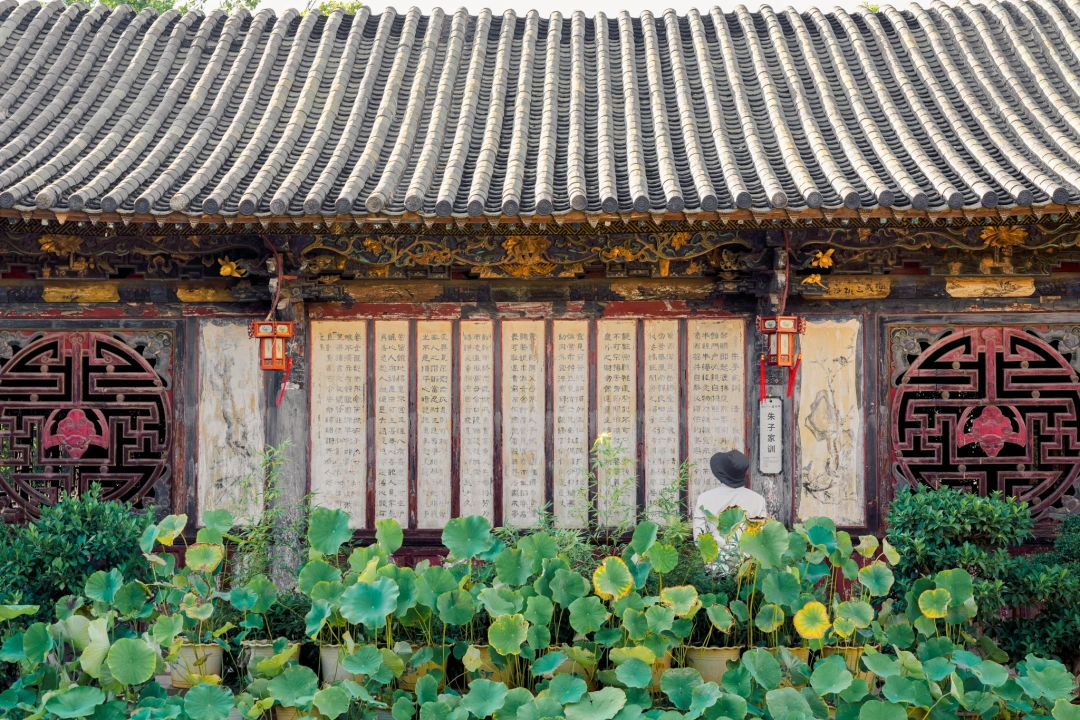
Beyond the inner courtyard, a wall displays the Zhu Family Instructions. The Zhu ancestors migrated from Hunan to Jianshui, starting from scratch in the tea and silk trade, eventually influencing provincial politics and economy. Their success wasn't just luck—it came from the spirit and inheritance of the family.
Behind the ancestral hall is a stage. The audience area has low tea tables where you can sit cross-legged, basking in the warm afternoon sun—a pleasure beyond words. A pond separates the stage from the audience. The stage's reflection shimmers in the water; as performers dance, their reflections dance along. What poetry! My daughter was so inspired she started performing at the edge of the stage.
The back garden is breathtaking. A lotus pond sits at the center, with a small white bridge arching over it like a jade belt floating on water. Rockeries line the pond—hollow inside, with paths to walk through. At the top stands a pavilion called "Liufang Ting" (Pavilion of Flowing Fragrance). From its highest point, you can overlook the entire garden: trees, pavilions, flowers, and plants scattered in elegant grandeur. The title "Grand View Garden of the Southwest Border" is well-deserved.
Lakes and Mountains: Tuanshan Village, a Forgotten Treasure
Jianshui has two "gardens": the Zhu Family Garden and the Zhang Family Garden. But many people search the ancient city in vain for the Zhang Family Garden—it's hidden at the terminus of the Jianshui tourist train, in a village called Tuanshan.
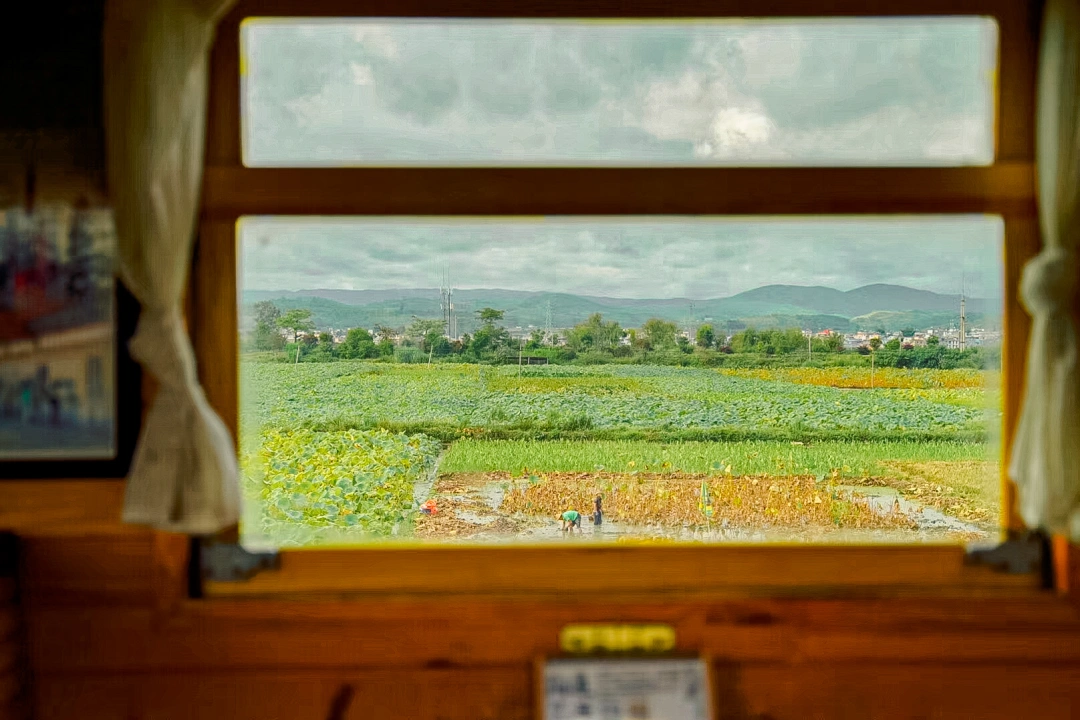
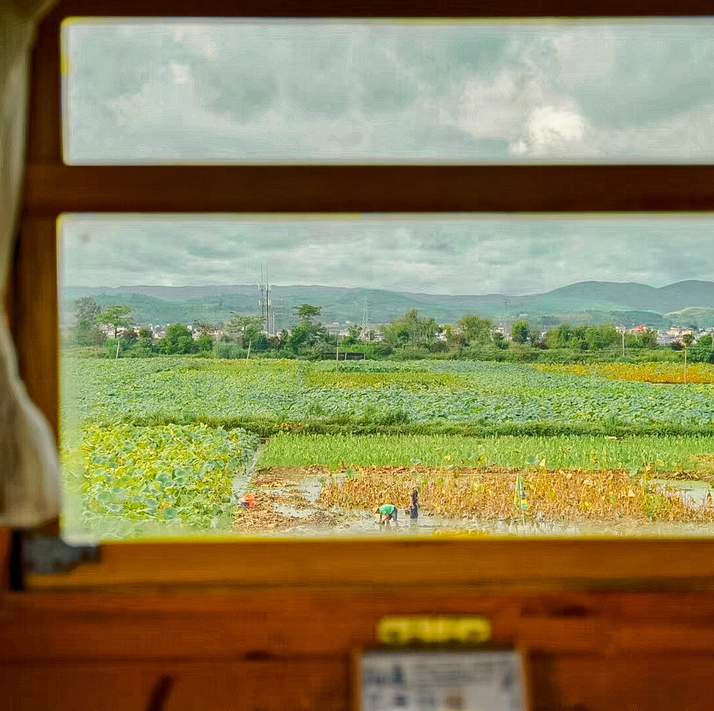
Tuanshan is a Han Chinese immigrant village, originally inhabited by the Yi people. In Yi language, it's called "Tusher," meaning "a place where gold and silver are buried." In front of the scenic area lies a pond filled with lotus. Jianshui's lotus roots are famous for their soft, glutinous texture. I visited in winter, when the entire lotus pond was withered and yellow, with broken stems drooping low. But I knew that this withered pond would burst into life again next summer, covered in lush green leaves—a testament to the resilience and strength of life.
Along the road to the entrance, villagers sell fresh seasonal fruits. They may not look pretty, but their taste is surprisingly good—that's the charm of Jianshui. It doesn't flaunt or show off, but everywhere hides surprises.
Conclusion: Jianshui, a City Worth Reading Again and Again
Jianshui is a city that demands slow, careful reading. It's not a place you can grasp at a glance. It's like a good book—every time you open it, you discover something new.
Here, you can climb Chaoyang Tower and feel six centuries of history. You can step into the Lin'an Prefectural Office and time-travel through the drama of officialdom. In the Examination Hall, you can experience the hardships and glory of ancient scholars. At the Confucian Temple, you can soak in the profound depth of Confucian culture. In the Zhu Family Garden, you can admire the exquisite grandeur of southern Yunnan's gardens. And in Tuanshan Village, you can uncover forgotten treasures.
But what moves me most about Jianshui isn't these sights—it's the life soaked in ink fragrance. Walking on bluestone paths, gazing at old houses on both sides, listening to distant bells, smelling the tea-scented air—you feel time slow down, slow enough to hear your own heartbeat.
If you're looking for an ancient city where you can quiet your mind, Jianshui won't disappoint. Take this guide and start your journey through southern Yunnan. Trust me—you'll fall in love with this place.
You should also read:
Dali Shuanglang: Meeting Your Laziest Self in the Slow Time by Erhai Lake
Dali Shuanglang: Meeting Your Laziest Self in the Slow Time by Erhai Lake Prologue: A Name, A Journey Some places, just by hearing their name, make your heart yearn. Shuanglang is like that for me. I can't remember when I first heard the name "Shuanglang."…
Continue reading...
Before the Tongue: Discovering Nuodeng, the Ancient Salt Town Time Forgot
Before the Tongue: Discovering Nuodeng, the Ancient Salt Town Time Forgot There’s a peculiar magic in places that have been left behind by history. They don’t try to impress you. They don’t have polished welcome centers or laminated maps. They just are—worn, quiet, and utterly…
Continue reading...
Idle Clouds in Autumn, a Moonlit City: A Slow Travelogue Through Lijiang and Shuhe
Idle Clouds in Autumn, a Moonlit City: A Slow Travelogue Through Lijiang and Shuhe When the autumn wind brushes across the ancient city's eaves, when sunlight spills onto the mottled cobblestone streets, when the melodies of folk songs mingle with the aroma of plum wine…
Continue reading...