The Never-Tiring Yunnan: Reading the City in Jianshui, Admiring Flowers in Shiping, Hiking in Gejiu, and Wandering Lakes in Yuxi
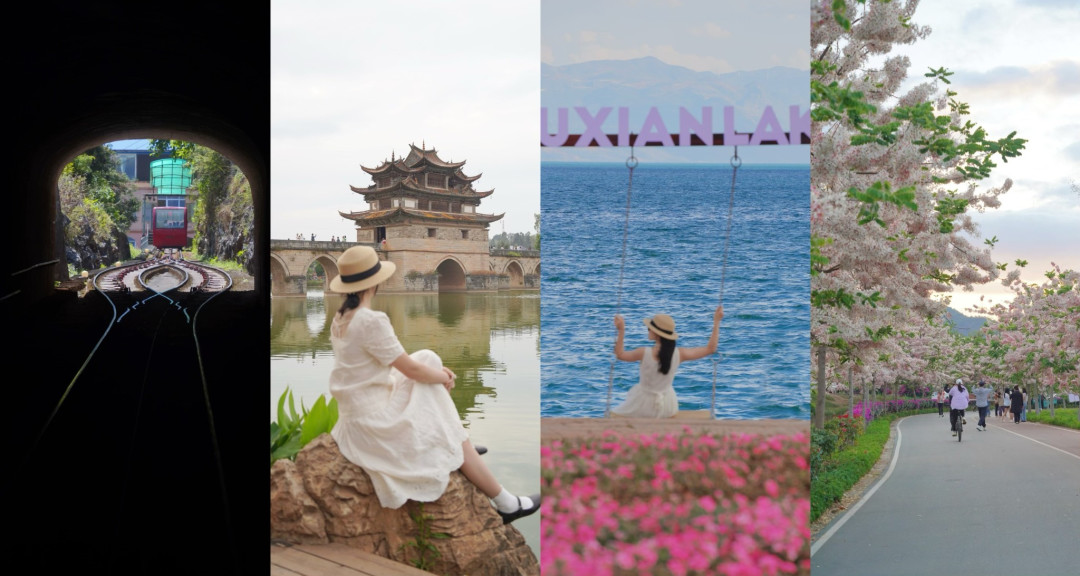
The Never-Tiring Yunnan: Reading the City in Jianshui, Admiring Flowers in Shiping, Hiking in Gejiu, and Wandering Lakes in Yuxi
A person's life is not measured by its length, but by whether it has been lived fully. And for me, one of the ways to live fully is to return to Yunnan, again and again.
Preface: Why We Keep Finding Ourselves on the Road to Yunnan
Someone once asked me, just how much do I love Yunnan?
The answer is simple: for three consecutive May Day holidays, I've given my vacation time to this land. In 2023, I went to Kunming, Maitreya, and Mengzi, and was captivated by Mengzi's laid-back comfort. In 2024, I visited Mangshi, Ruili, and Tengchong, and almost decided to settle down in Tengchong. In 2025, we chose Jianshui, Shiping, Gejiu, and Yuxi—and once again, I was utterly enchanted by the climate of Gejiu, the so-called "Little Hong Kong of Yunnan."
My friends tease me, saying we're scouting out retirement destinations ahead of time. To be honest, retirement is still a distant dream, and as a "P-type" person, I can barely be bothered to plan three days ahead. Rather than searching for a place to live, it's more like a habit—when that season rolls around, my heart inexplicably yearns to wander through Yunnan, to admire flowers, to eat good food. Once I'm in Yunnan, a relaxed peace naturally settles over me.
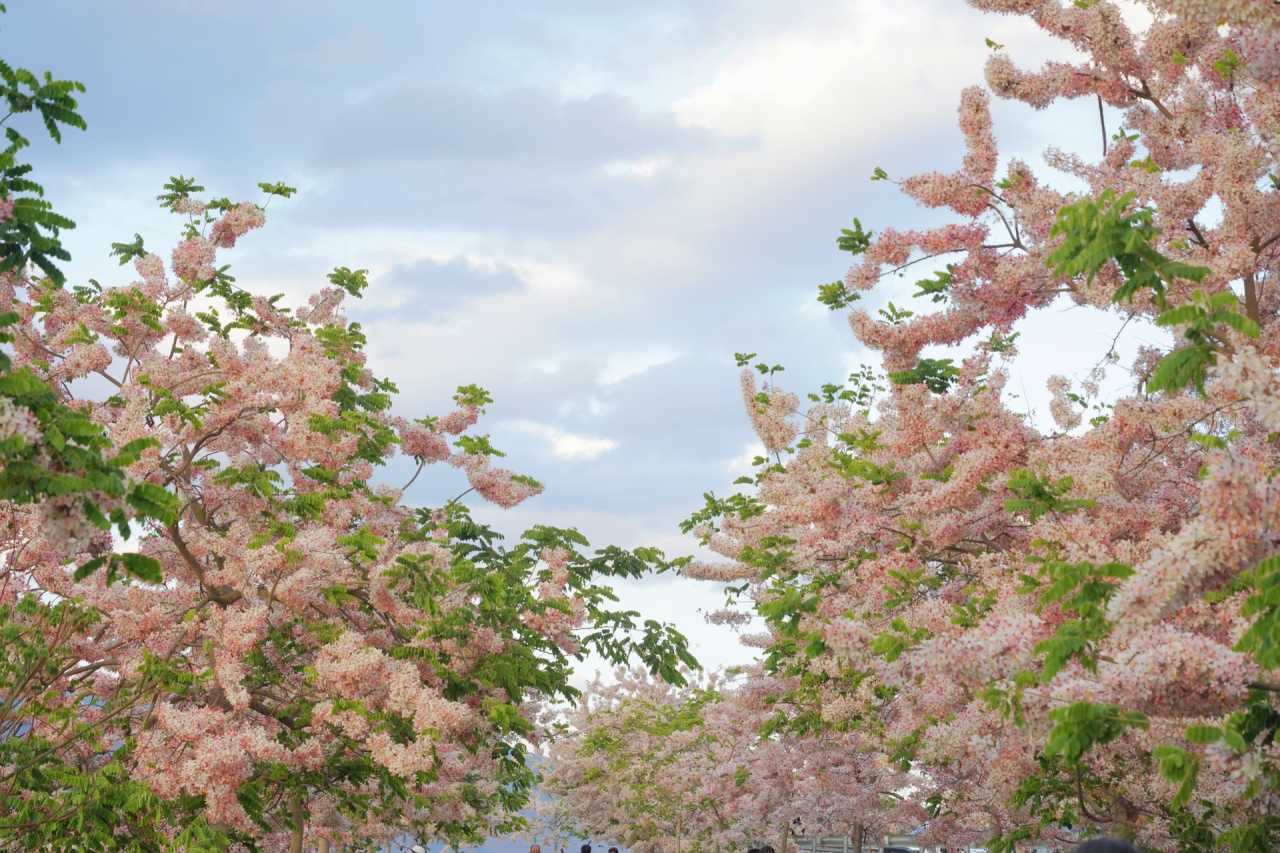
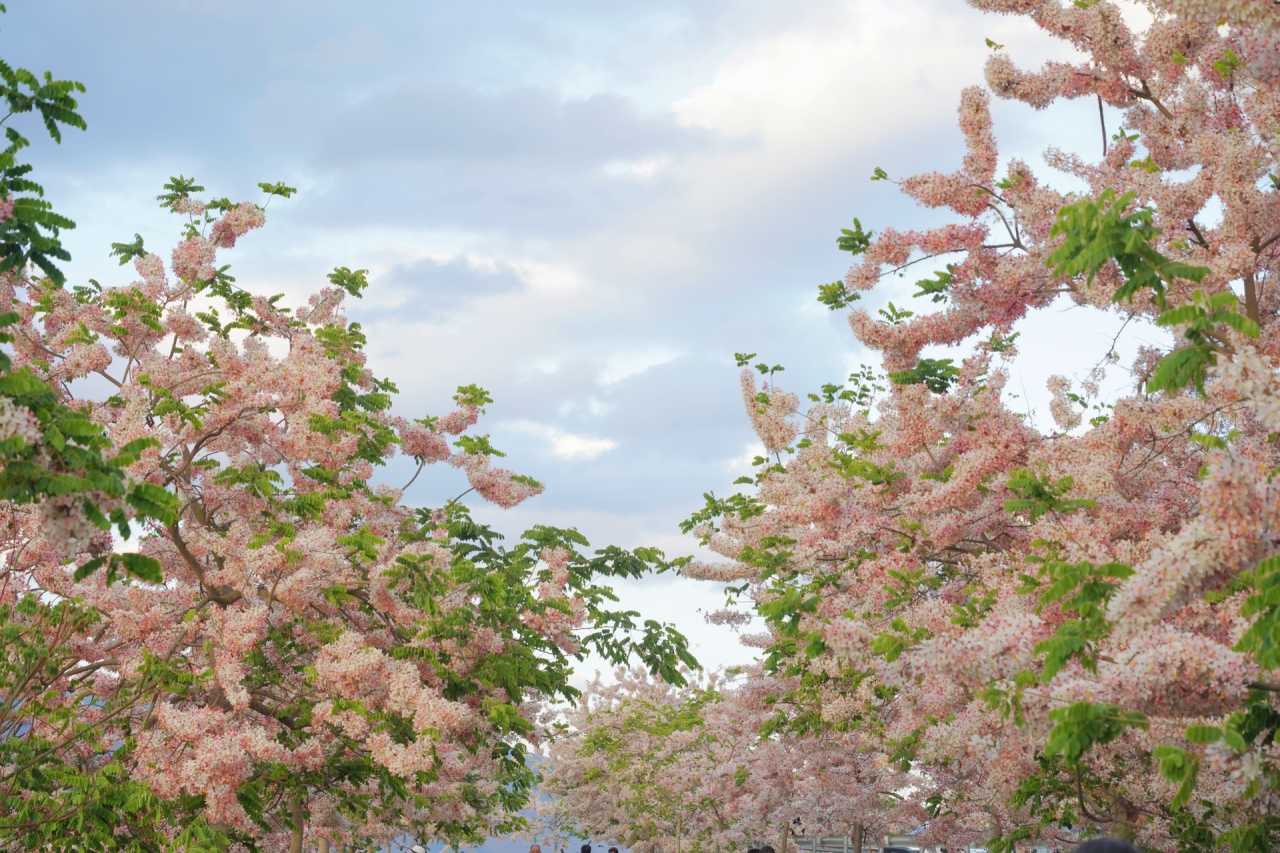
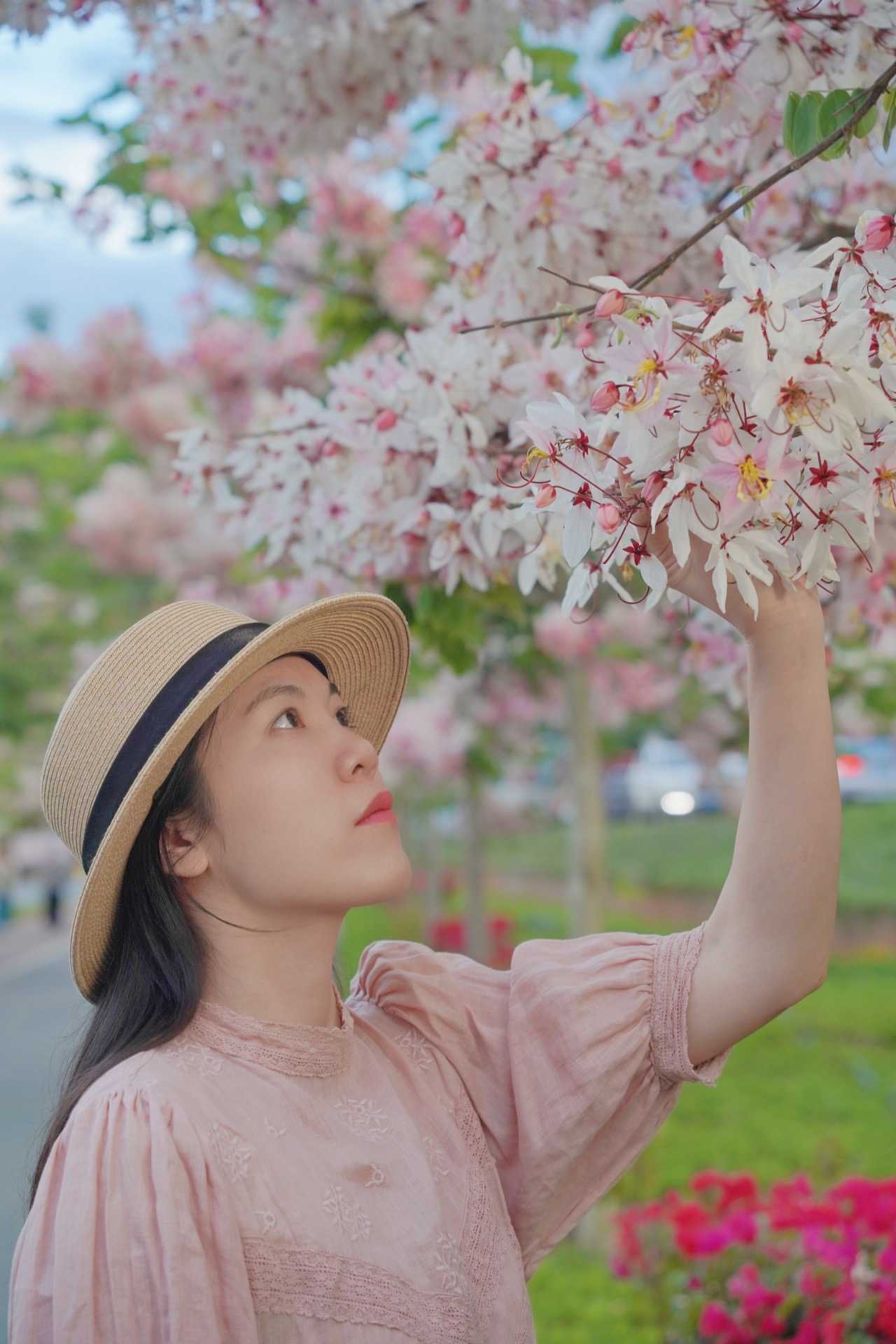
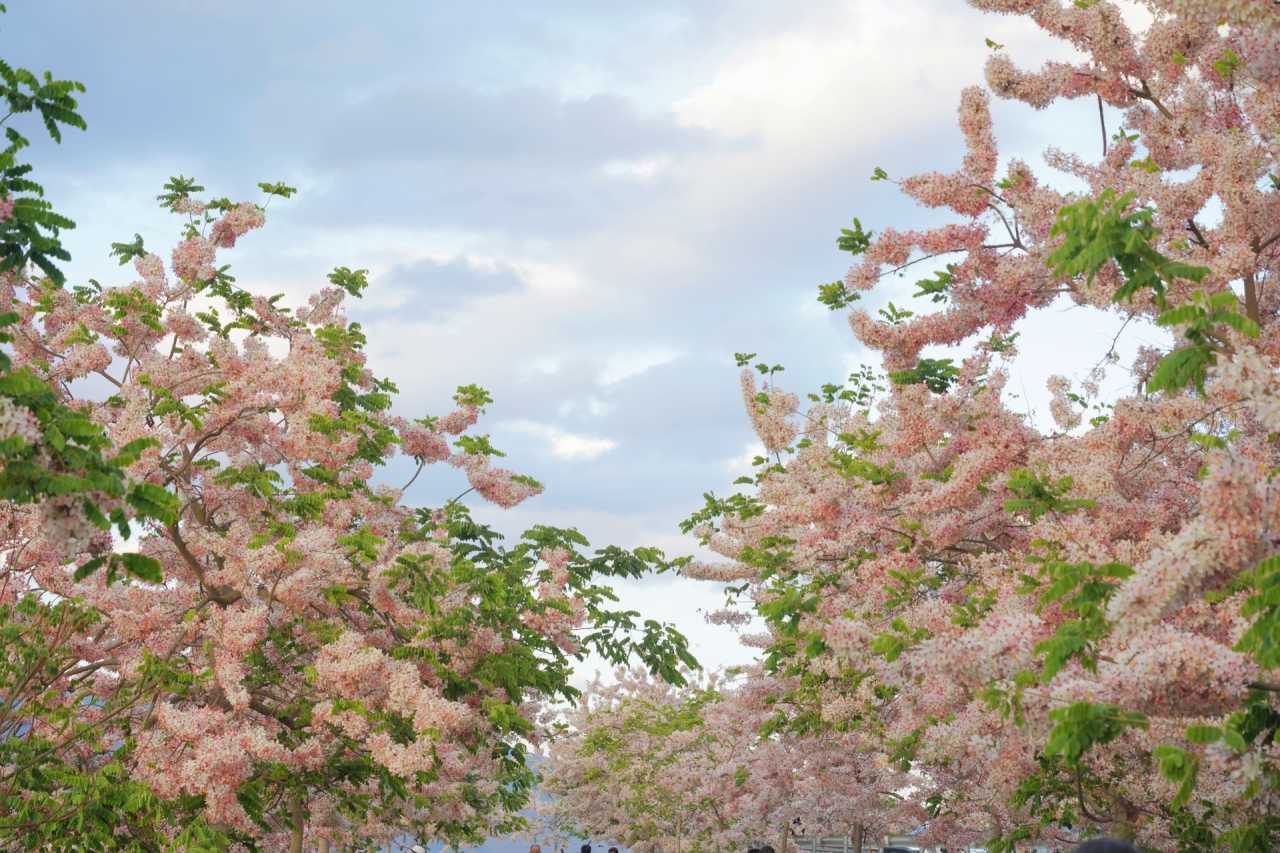
On this trip, we set out from Kunming and headed south. At the most beautiful "Seventeen-Arch Bridge" in southern Yunnan, we missed the sunset but escaped the early bustle of the old town. By Yilong Lake in Shiping, we happened upon the Pongamia pinnata trees in full bloom, strolling through a romantic sea of pink flowers. In Gejiu, we took a one-yuan funicular railway, traveling through a time tunnel, and from Laoyin Mountain looked down upon this former "Little Hong Kong of Yunnan." At Fuxian Lake, every corner on a sunny day painted a picture; the lake water rippled, and no one felt melancholy...
As soon as we walked out of Kunming Changshui Airport, someone handed me a spring rose, fragrant and fresh. No wonder it's called the romantic Spring City—even the locals are so romantic. I have to say, although Jiahua's flower-filled pastries (鲜花饼, flower cakes) are only so-so in taste, their marketing is top-notch.
We bought tickets for the afternoon regular train to Jianshui, leaving us half a day to explore the Daguan Zhuanxin Market for food. Just as we arrived, a heavy rain poured down, with curtains of water cascading from the eaves of every shop and stall. The market was a dazzling array of goods. Without any prior research, we bought whatever looked good, ate whatever we could on the spot, and packed up plenty to take away. We'd intended just to grab a bite, but ended up waddling out with full bellies. Next time, I could easily come for a weekend—no need to go anywhere else, just eat my way through Daguan Zhuanxin Market.
Part One: Jianshui—Reading Time in the Ancient City
Jianshui was once known as Butou, also called Badian, with a long history and a wealth of cultural heritage. During the Tang Dynasty's Yuanhe era (806–820 AD), the Nanzhao Kingdom built the city of "Huili" here, giving it over 1,200 years of urban history. Since the Yuan Dynasty, it has been the political, economic, cultural, educational, and military center of southern Yunnan, earning the titles "Zou-Lu of Southern Yunnan" and "Famous City of Documents." With its glorious identity as the "Thousand-Year Lin'an Ancient City," it is a renowned national historical and cultural city, a key national scenic area, and the capital of Yunnan's purple pottery.
My impression of Jianshui came from a travelogue written by a local, who meticulously recorded the history of this thousand-year-old city in his hometown. Back then, a seed was planted in my heart, and this year it finally sprouted. I think this is the meaning of writing travelogues—for the creator, it's a record or a sharing; for the reader, it's a learning or a gain.
The Big Board Well: The Life Source of a City
We stayed near the West Gate, and the first thing we did upon waking the next day was to visit the Big Board Well (大板井). Located beside West Straight Street near the West Gate of Jianshui Ancient City, it is also known as Pubo Spring. This Ming Dynasty well, over 600 years old, is famous for its sweet water that stays cool in summer and warm in winter, earning it the title "Number One Well in Southern Yunnan."
Standing by the well, my first reaction was how large and clear it was. A few goldfish swam around inside, and even today, many local residents still come to draw water for drinking. I asked them why there were goldfish in the well, but got no answer. Many buckets for drawing water hung on the railing, allowing visitors to try it themselves. I learned to draw water at my grandmother's house when I was little, so this big well wasn't difficult for me. After hauling up some water, I washed my hands and took a sip—it wasn't as sweet or refreshing as I'd imagined, nor was it cool and crisp; it tasted just like ordinary tap water.
An important note: Don't pour the drawn water back into the well. First, it stirs up mud from the bottom and pollutes the water. Second, locals believe this will cause the well to dry up. I hope visitors will respect their customs—try it once, but don't keep drawing and dumping it.
Next to the Big Board Well is a famous tofu workshop. It's said that Jianshui's tofu is inseparable from the well's water. From early morning, people carry water to make tofu—this well is truly the "divine water" for tofu.
A Day Trip to Tuanshan: A Land of Hidden Gold and Silver
In Jianshui, you can either hire a car or take the small train for a day trip to Tuanshan. The typical route is: Shuanglong Bridge (Seventeen-Arch Bridge) — Xianghui Bridge — Tuanshan Station — Tuanshan Folk Houses, or the reverse. This journey lets you explore Yunnan's most beautiful ancient dwellings, experience the century-old history of the southern Yunnan hometowns of overseas Chinese, and ride the unique meter-gauge railway.
Tuanshan Folk Houses: The Pinnacle of Southern Yunnan Architecture
Tuanshan, in the Yi language, is "突sheir" or "突舍尔," meaning "a land where gold and silver are hidden." The Chinese name translates as "Round Mountain." The village is 13 kilometers from the county seat, nestled against a backdrop of rolling green hills and facing fertile fields. It's a settlement of the Zhang clan.
The Tuanshan folk house complex was built in the late Qing and early Republic periods. Today, 14 well-preserved traditional residences, 3 village gates, 3 temples, and 1 ancestral hall remain, covering an area of 18,384.5 square meters, with a building area of 16,158 square meters. The spatial layout is flexible and varied, including three-courtyard houses, four-courtyard houses, and combinations like "three rooms, six side rooms, and a lower flower hall." The structures are orderly, elegant yet unassuming, exquisitely built, and finely crafted, representing the highest level of local architectural development in Yunnan.
Key national heritage buildings include: Zhang Family Garden, Imperial Grace Mansion, Scholar's Mansion, General's Mansion, Dacheng Temple, Upper Temple, Lower Temple, Zhang Ancestral Hall, East Village Gate, South Village Gate, and North Village Gate.
The General's Mansion was built in the 31st year of the Guangxu reign (1905). The courtyard covers 880 square meters, with a building area of 958 square meters, containing 7 skylights and 38 rooms. It was named after its owner, Zhang He, who was appointed as a battalion commander and inspector by Yunnan Governor Cai E after suppressing bandits during the "Lin'an Uprising" of 1911, and was granted the plaque "General's Mansion." The courtyard is adorned with exquisite carvings, and most of the calligraphy and paintings are the work of Jianshui notable Qiu Tingdong.
In the courtyard, I saw a plant called "钉头果" (nail-head fruit), also known as pufferfish fruit or balloon fruit. Despite its rough exterior, its flower language is "sweetness and entanglement." That was a new one for me.

The Zhang Family Garden was also built in 1905, covering 3,495 square meters with a building area of 2,955 square meters. Its layout includes a village gate, a first courtyard, a third courtyard, a garden ancestral hall, and a watchtower, totaling 21 skylights and 119 rooms. It is a castle-like private garden, second only to the Zhu Family Garden in the county seat. As a member of the Zhang clan, I had to take a photo at the gate.
Inside the Zhang Family Garden, there is an exhibition hall detailing the history of the Tuanshan folk houses and the Zhang family's development. I recommend visiting it before touring the rest. The builders, Zhang Guoyi and Zhang Guoming, initially made a living driving mule caravans before striking it rich in Gejiu's mines and commerce. They sent money home, first building a three-courtyard house and garden ancestral hall, then adding a rockery, garden walls, and finally a first courtyard. The calligraphy and paintings inside are ornate, and the wood, stone, and brick carvings hold significant historical and artistic value. The stilted building on the left side of the garden was once the meeting place of the "Nine-Person Group," a united front organization led by the Jianshui County Committee of the Communist Party.
As I left the Tuanshan folk houses, I saw a little boy walking along a flower-lined path. He struck up a conversation, saying he was going to the fields to pick lotus seeds. I wondered if he was a descendant of the Zhang family.
Tuanshan Station: The End of a Century-Old Meter-Gauge Railway
Tuanshan Station is the terminus of the Jianshui Ancient City small train sightseeing line. With a century of history, it bears clear French architectural influences. This station witnessed the prosperity of Gejiu's tin mines—it was through this railway that the wealth of the Tuanshan Zhang family was transported home and, ultimately, to the world.
The station's main color is bright yellow, with sloping red roofs and round-arched doors and windows. The platform still retains old-fashioned signal lights, station signs, and other railway elements, creating a wonderfully atmospheric scene perfect for photos.
Xianghui Bridge: A Covered Bridge in the Memory of Imperial Exams
We took a taxi from Tuanshan Station to Xianghui Bridge Station and happened to catch the afternoon sightseeing train stopping there. For those who want to see the train without riding it, you can time your visit to match the train's stop at each station. In the past, visitors without tickets were allowed to board for photos, but now the train is locked during stops, so you can only take pictures with its exterior.
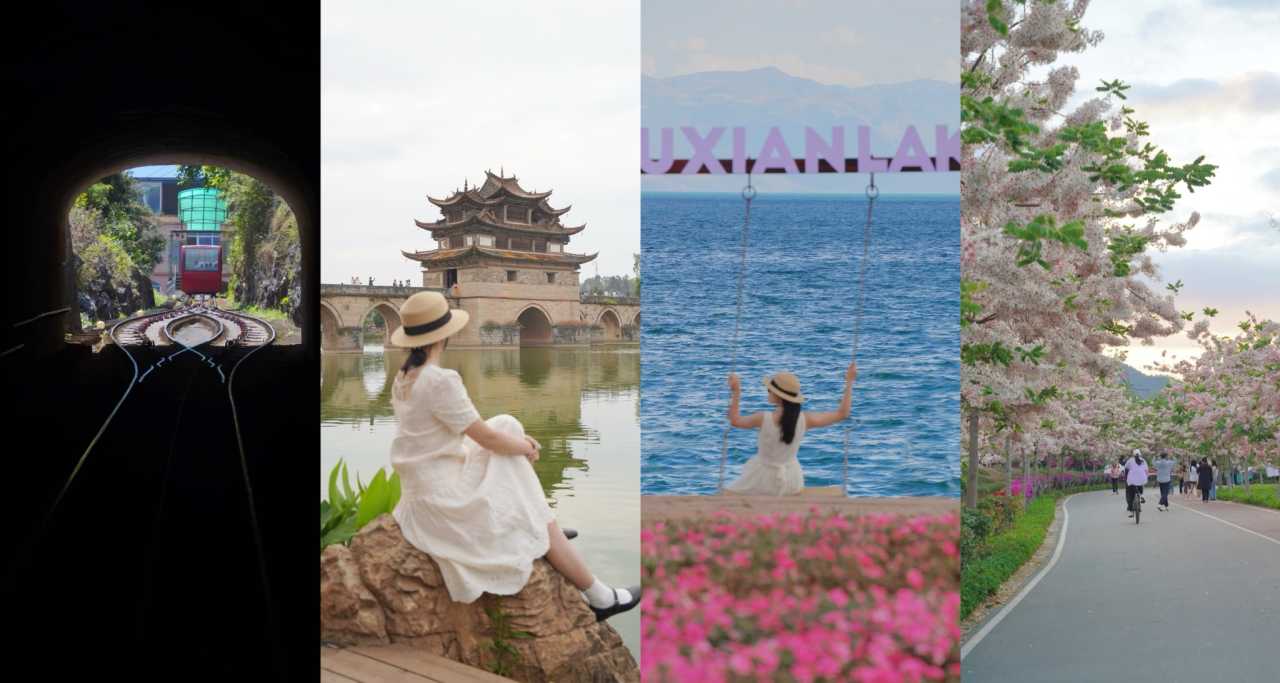
The tracks the small train runs on are part of the Ge-Bi-Shi Railway, built in 1915. Originally constructed to transport tin ore from Gejiu, it was China's first and one of the few remaining private railways. "Meter-gauge" refers to the narrow gauge of 1 meter, narrower than the standard gauge of 1.435 meters used today. The locomotive and vintage wooden carriages are steeped in nostalgia, with interiors decorated in a retro style—wooden seats, fans, and ornaments all striving to recreate the look of old trains.
Next to Xianghui Bridge Station is a café called "Gushanqiu" (故山秋, "Autumn of the Old Mountain"). We sat down for two cups of coffee, leisurely watching the train go by—a moment of pure relaxation.
Xianghui Bridge Station is the most distinctive station on the Ge-Bi-Shi Railway, built in 1932. Its station house cleverly combines Chinese and French architectural styles, a single-eave modern building that perfectly embodies the value of science and art.
From Xianghui Bridge Station, we walked along the tracks to Xianghui Bridge. The scenery along the way was beautiful—trees in full red bloom, dense bougainvillea on both sides, and jacaranda trees at the bridgehead. Walking there didn't feel tiring at all; it was actually quite delightful.
Xianghui Bridge was built in the 19th year of the Jiaqing reign of the Qing Dynasty (1814). It is a three-arch stone bridge, constructed with bluestone arches, a classic brick-wood-stone covered bridge in the form of a pavilion, shaped like an "L." On top of the bridge is a pavilion with three upper rooms, the central one being the Wenxing Pavilion (Star of Literature Pavilion), while the lower level serves as a passage for people and horses. The bridge gets its name from the provincial and metropolitan imperial examinations (乡试, xiangshi, and 会试, huishi). Perhaps because it's a bit of a walk from the station, there weren't many tourists. With the dry riverbed and withered reeds, the scene evoked the poetic imagery of "withered vines, old trees, and evening crows; a small bridge, flowing water, and a cottage."
Shuanglong Bridge: The "Seventeen-Arch Bridge" of Southern Yunnan
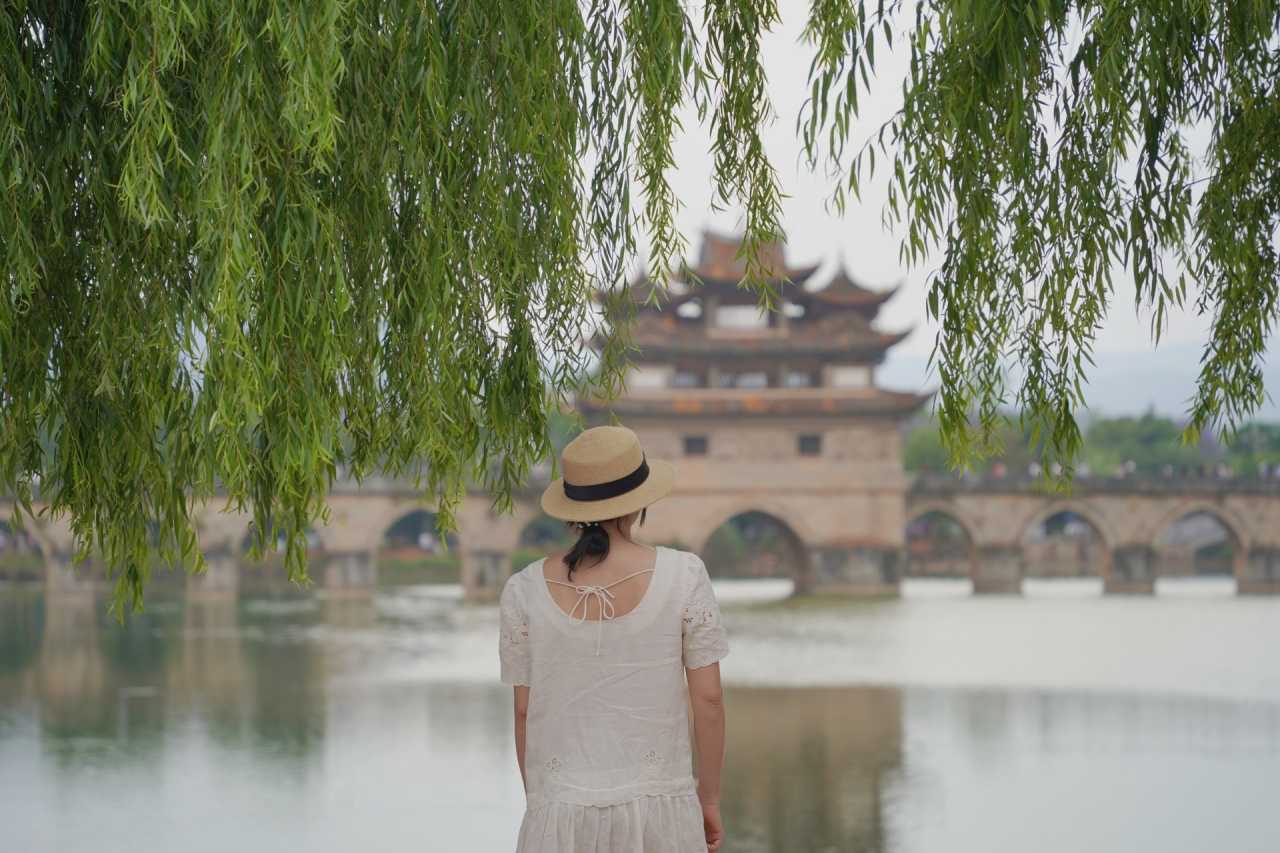
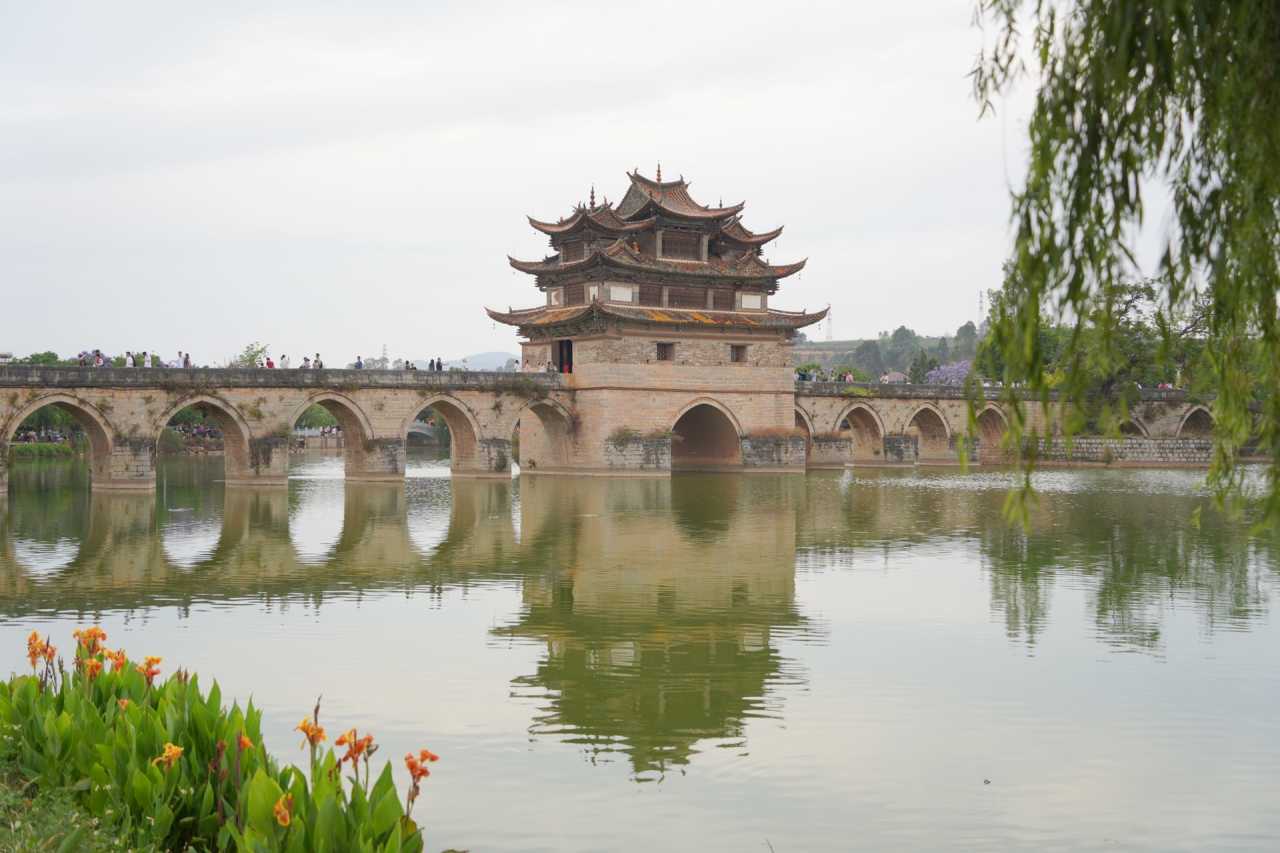
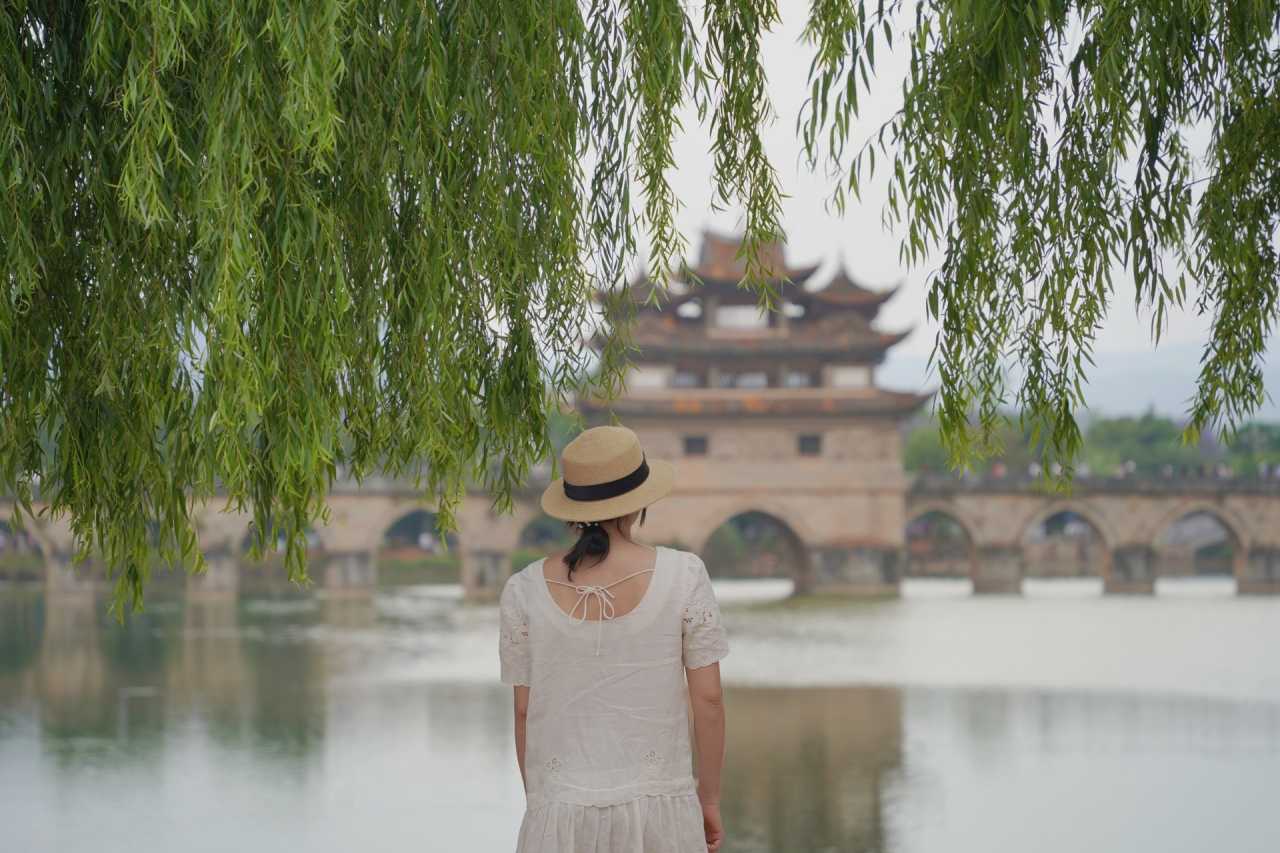
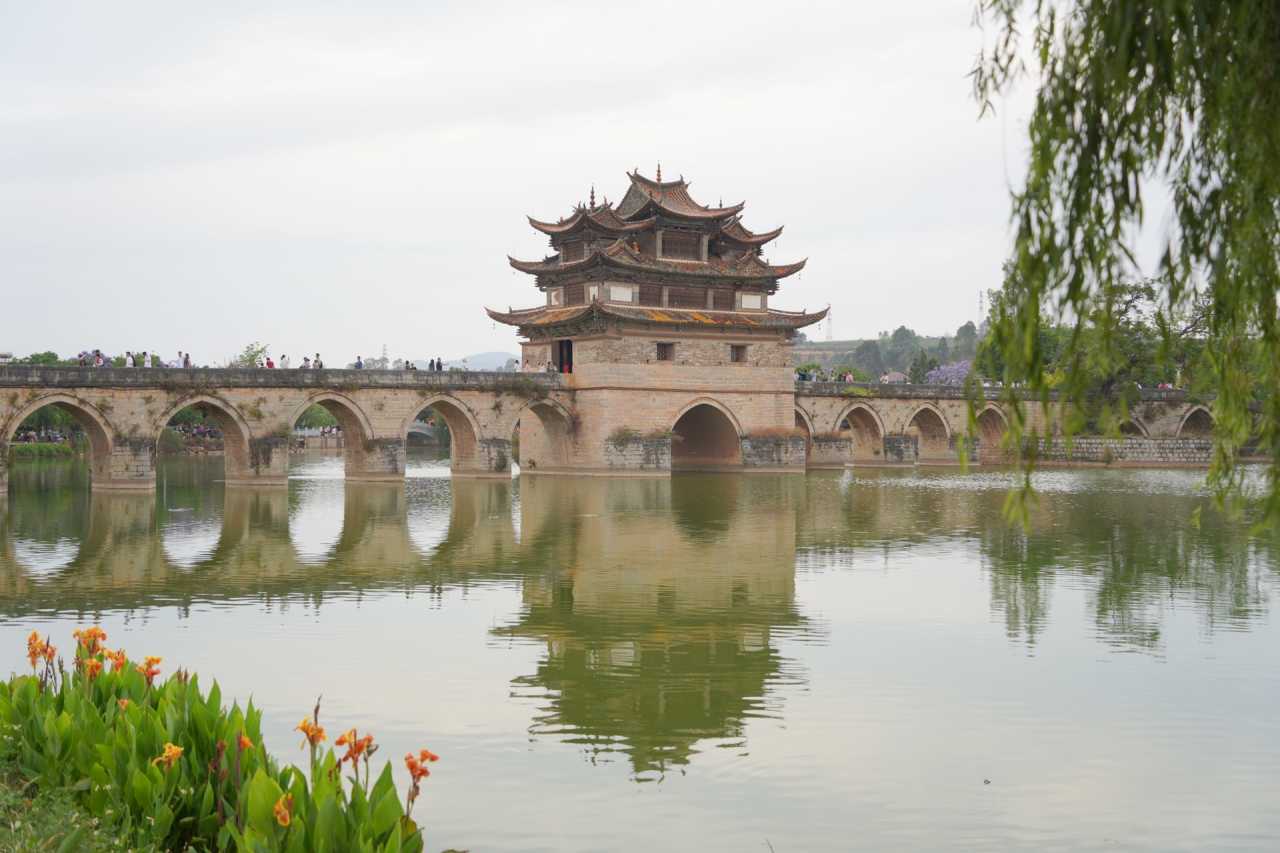
This image was my very first impression of Jianshui—I never imagined that such a majestic seventeen-arch bridge could exist in southern Yunnan. I'd only ever seen one like it at the Summer Palace in Beijing. Although it's not within the ancient city itself, it's only 5 kilometers away, and even if you can't visit other spots on the Tuanshan route, you absolutely must come here.
Shuanglong Bridge, commonly known as the "Seventeen-Arch Bridge," was first built during the Jiajing reign of the Ming Dynasty and rebuilt during the Qianlong reign of the Qing Dynasty. It is 148 meters long, with a height and width of 8.6 meters, and a bridge foundation 5.3 meters high. It is a single-arch bridge with a span of 13.5 meters. The entire bridge's structure consists of six large wooden columns, each about 60 centimeters in diameter and 25.7 meters long. The deck is planked, with wooden columns supporting a tiled roof, forming a covered corridor. It is one of the largest and most artistically valuable ancient bridges in Yunnan, a national key cultural heritage site, and a symbol of Jianshui Ancient City.
We approached the bridge from the back and circled around to the front, where people were coming and going. The bridge pavilions are its most splendid feature, with three multi-eaved, upturned-eave towers. The central one is the most grand and imposing—a triple-eave square main pavilion—while the two at either end are double-eaved. It has long been called the "Grand View Pavilion of Southern Yunnan."
The construction of Shuanglong Bridge was not accomplished all at once. It began during the Qianlong reign, when only three stone arches were built over the Lujiang River. Later, due to flooding from both the Lujiang and Tachong Rivers, the riverbed widened, leaving the three-arch bridge isolated in the middle, unable to span the banks. Local officials and residents then added fourteen more arches in the 19th year of the Daoguang reign (1839), connecting them to the original three arches to form a single structure, hence the name "Seventeen-Arch Bridge."
The name "Shuanglong" (Double Dragon) also has its origins. One theory is that the Lujiang and Tachong Rivers converge here, like two dragons coiling. Another is that, viewed from above, the seventeen arches and their reflections in the water form a string of pearls, making the entire bridge look like a dragon threading through them. I recommend visiting in the late afternoon when the weather is good. Unfortunately, we didn't have a clear day and missed the sunset scene.
The Confucian Temple: The Largest Confucian Hall in Southern China
Ticket: 39 yuan/person. If the timing is right, visitors can buy a Jianshui Ancient City all-in-one pass for 115 yuan, which includes 5 attractions: Zhu Family Garden, Confucian Temple, Imperial Examination Hall, Lin'an Government Office, and Chaoyang Tower.
Compared to yesterday, today was far more crowded. The main tourist groups must have just arrived. When it gets too crowded, I want to escape. We were eager to head to Shiping, which seemed less commercialized, so we only visited the Confucian Temple and the Zhu Family Garden.
The Jianshui Confucian Temple was built in the Yuan Dynasty, covering an area of 114 mu (about 7.6 hectares). It adopts a symmetrical, palace-style layout modeled after the Qufu Confucian Temple. The main buildings are arranged along one vertical and one horizontal axis, grand and majestic. In terms of scale, architectural level, and state of preservation, it is second only to the Qufu Confucian Temple in Shandong and the Beijing Confucian Temple, earning it the titles "Second Largest Confucian Temple in China" and "Largest Confucian Temple in Southern China."
Over seven hundred years ago, the Jianshui Confucian Temple began transmitting Confucian culture, making the titles "Famous City of Documents, Zou-Lu of Southern Yunnan" resonate across the land. The first courtyard features the "Taihe Yuanqi" (Supreme Harmony and Primordial Qi) archway, the main entrance to the temple, which has stood for over 270 years. Inside stands a statue of Confucius, a sight that every Chinese person steeped in Confucian culture should pause to revere.
Behind the statue is the temple's most distinctive feature—the Pan Pond, also known as the "Sea of Learning." Covering nearly 30,000 square meters, it is rare among Confucian temples nationwide, symbolizing the saying "The sea of learning has no bounds, and only through hard work can you reach the shore." It is the largest Pan Pond in any Chinese Confucian temple.
The Hall of the Great Sage (Dacheng Hall) is the temple's core building, the main hall for worshipping Confucius. Inside hang plaques inscribed by several Qing Dynasty emperors, such as "Model for All Ages" and "Unprecedented Among the People." The hall is magnificent, solemn, and resplendent, with exquisite stone-carved dragon pillars in front, featuring intricate relief and openwork carvings.
After leaving the Confucian Temple, we also visited two free temples. The Tianjun Temple (Heavenly Lord Temple) was built during the Jiajing reign of the Ming Dynasty. Also known as the Red Emperor Palace, it is commonly called the Fire God Temple. It was one of the "Seven Temples and Eight Monasteries" of ancient Lin'an Prefecture, a Taoist temple dedicated to the fire god Zhurong. It not only reflects the local characteristics of diverse and composite religious beliefs but is also a major memorial site for the Zhou Yunxiang Uprising, which shook all of Yunnan in 1903, and the Lin'an Uprising of 1911.
Part Two: Shiping—A Feast of Flowers by Yilong Lake
(To be continued, covering flower-viewing in Shiping, hiking in Gejiu, and lake tours in Yuxi)
In Closing: Yunnan, Never Tiresome
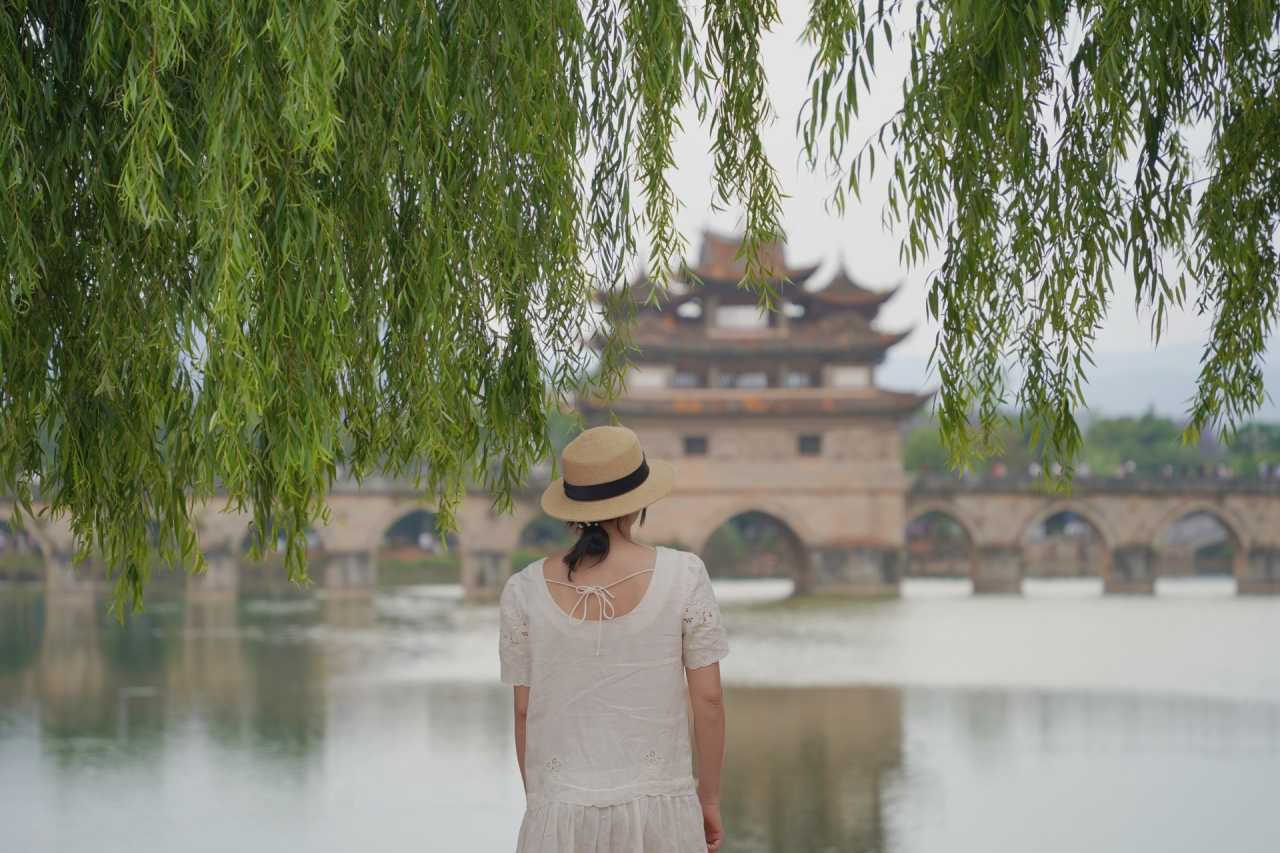
Every time I come to Yunnan, it's a process of rediscovering myself. In Jianshui, I understood the weight of time. In Shiping, I felt the romance of nature. In Gejiu, I experienced the vibrant energy of a mountain town. In Yuxi, I found inner peace.
Yunnan is that kind of land—you never tire of it, because every time, it gives you a new surprise.
You should also read:
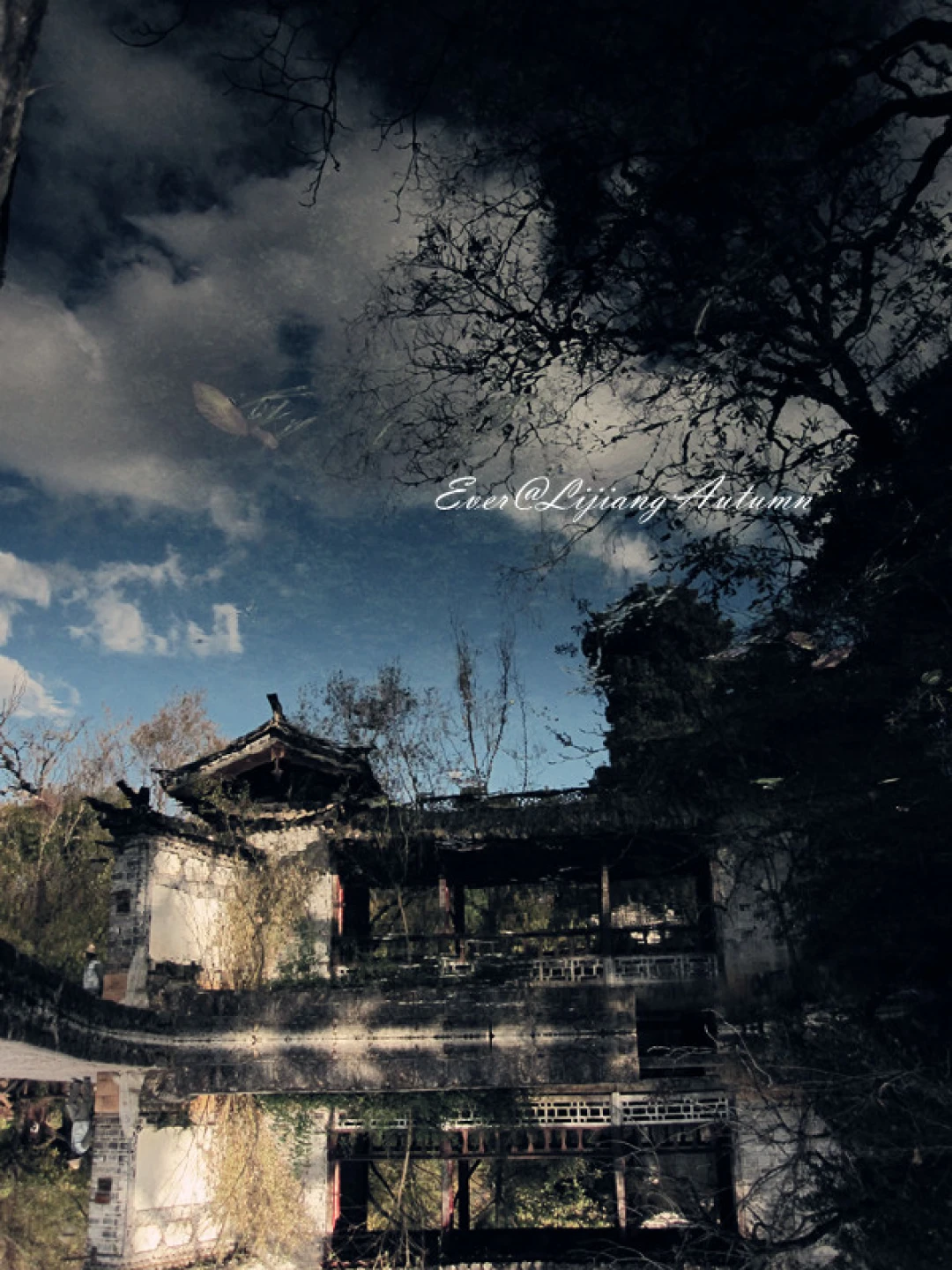
Idle Clouds in Autumn, a Moonlit City: A Slow Travelogue Through Lijiang and Shuhe
Idle Clouds in Autumn, a Moonlit City: A Slow Travelogue Through Lijiang and Shuhe When the autumn wind brushes across the ancient city's eaves, when sunlight spills onto the mottled cobblestone streets, when the melodies of folk songs mingle with the aroma of plum wine…
Continue reading...
Solo in Yunnan: A Wanderer’s Guide to the Land of Eternal Spring
Solo in Yunnan: A Wanderer’s Guide to the Land of Eternal Spring There’s something magical about traveling alone. No compromises, no schedules to keep, no one to please but yourself. I’ve been on the road for nearly three months now, and not once have I…
Continue reading...
Cloud Travelogue · Dali of Wind, Flowers, Snow, and Moon: A Three-Day, Two-Night Journey of a Free Spirit
Cloud Travelogue · Dali of Wind, Flowers, Snow, and Moon: A Three-Day, Two-Night Journey of a Free Spirit I am a cultured female foodie with a touch of rogue charm. I slung on my backpack, took my lover's hand, and set off on a spontaneous…
Continue reading...