The Place of Peace in Yunnan: Haba at 5,396 Meters | My Second Snow Mountain, Where I Want to Waste My Life Forever
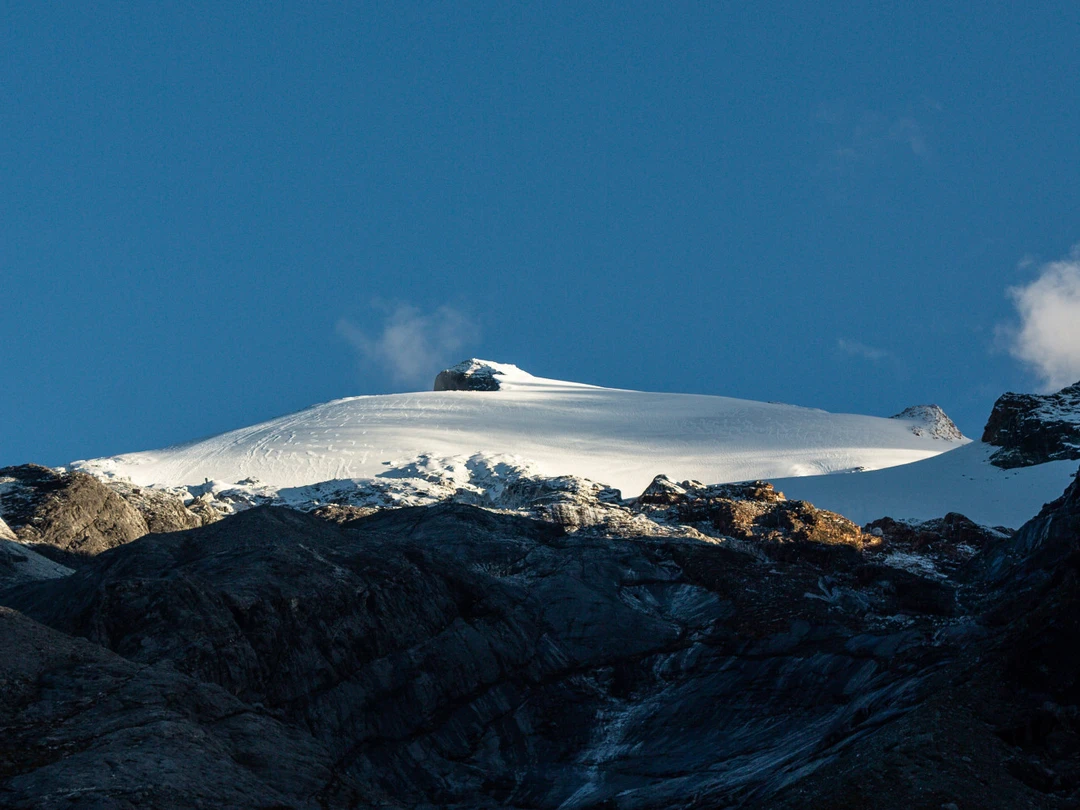
The Place of Peace in Yunnan: Haba at 5,396 Meters | My Second Snow Mountain, Where I Want to Waste My Life Forever
Foreword: Why I Record These Trivial Details
To be honest, I'm a bit embarrassed to say I've moved my life base back to Shenzhen again. This time, my identity is that of a surf shop manager. If you ever pass by Dameisha in Shenzhen, feel free to drop by for a coffee and a chat.
What prompted me to open this document and start writing again was a book called The Nearness of the End. The author began recalling her life in her nineties, yet she could paint vivid pictures of childhood romance, middle-aged struggles, elderly acceptance, and even a minor fender bender as if they happened yesterday. It suddenly hit me: the greatest value of travel writing might lie in these seemingly mundane, diary-like details. Years later, when you flip through these words and photos, you can still travel back to that moment—taste the air of that time, feel the exhaustion in your body, and even relive the emotional highs and lows.
This is my fifth trip to Yunnan. Unlike previous vacations, this time the goal was clear: climb Haba Snow Mountain.
I saw forests, streams, the Milky Way, and a sunrise. I also visited the largest coffee village in China, made a cup of coffee with my own hands, and stumbled upon my favorite little shop in a place where "even birds don't crap." I spent an afternoon going wild—two coffees, two pots of tea, and several glasses of booze.
Countless coincidences made this trip what it was.
Pre-Climb Preparation: Gear Checklist and Practical Tips
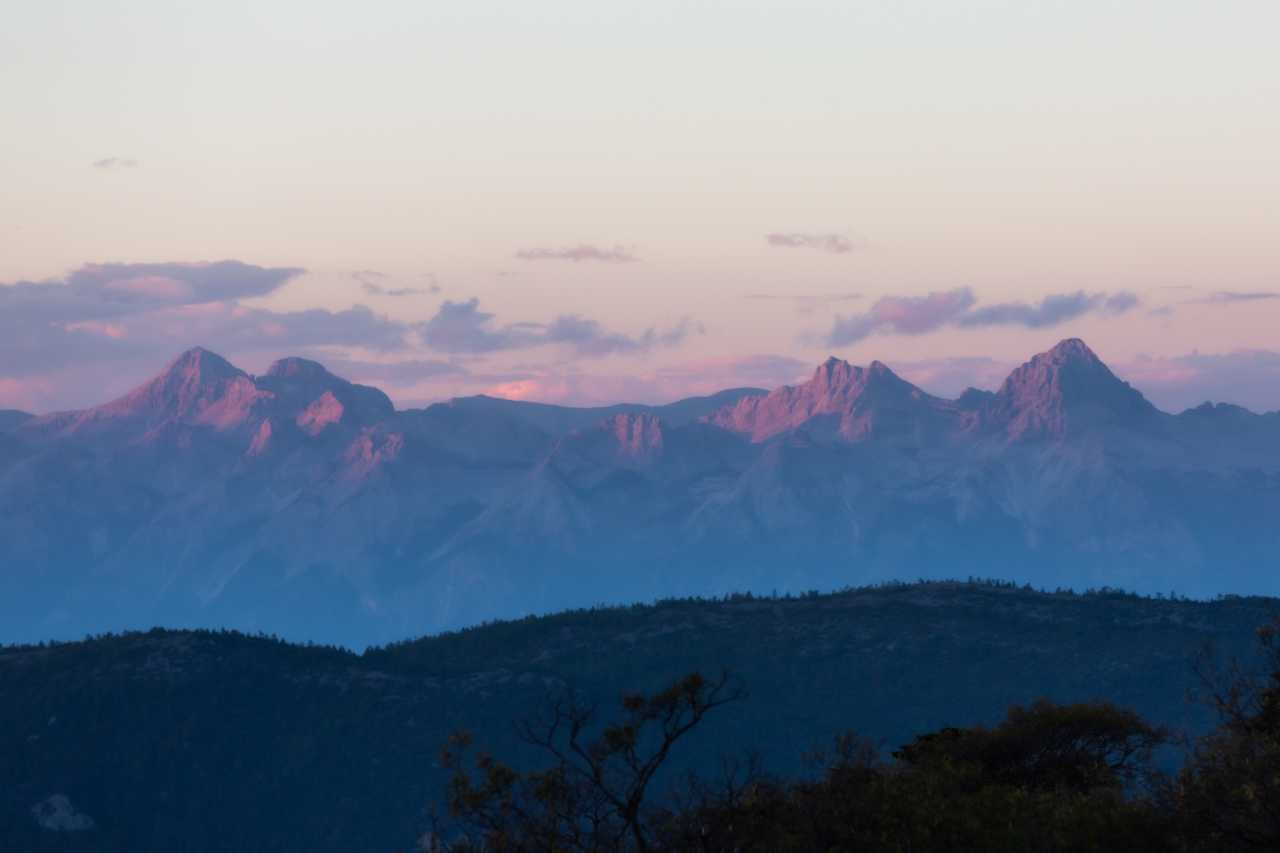
Climbing a snow-capped mountain might seem niche, but it's not out of reach. Let me start by sharing my gear list for your reference. Since I've climbed a snow mountain before, I didn't buy much new equipment this time.
Clothing
Core principle: Windproof and waterproof are king. The weather on a snow mountain changes in an instant. One moment it's clear skies, the next you could be in a blizzard. If your budget allows, I recommend a hard-shell jacket and pants with Gore-Tex fabric.
The outdoor layering rule: base layer + fleece/down + soft shell/hard shell. My legs don't get too cold, so I went with thermal pants and hard-shell pants.
That said, during my hike in Yunnan, I met a guy born after 2000 who was wearing shoes that cost about a hundred yuan and pants that cost a few dozen—and he was hiking like a beast. Gear is just a tool; willpower is what really matters. If you have a big budget, a full "Arcteryx" outfit will definitely look sharp in photos. If you want to save money, Decathlon has everything you need. It's all about what works for you.
My Personal Gear List

- 1 Chinese-brand Gore-Tex jacket
- 1 mont-bell Gore-Tex pants
- 1 pair of Toread high-top hiking boots (hadn't been worn in a long time, and the sole fell off mid-trip—a painful lesson)
- 1 Kailas 700-fill lightweight down jacket
- 1 The North Face fleece
- 2 mont-bell thermal base layers
- 2 Black Diamond trekking poles
- 2 pairs of generic wool socks/professional hiking socks
- 1 Kailas backpack
- 1 Black Diamond headlamp
Honestly, even if you have nothing, you can rent almost everything at the Haba base camp. There are also outdoor gear shops in Lijiang where you can buy brands like Kailas or The North Face.
Itinerary Overview
Day 1: Gather in Lijiang, buy supplies
Day 2: Drive through Tiger Leaping Gorge to Haba Village (about 3 hours)
Day 3: Haba Village → Haba Base Camp (hike or ride a horse)
Day 4: Summit attempt before dawn → descend to Haba Village → return to Lijiang (arrive late at night)
Day 5: Baisha Ancient Town → Shaxi Ancient Town
Day 6: Shaxi Ancient Town → Dali
Day 7: Dali → Baoshan (Xinzhai Coffee Manor)
Day 8: Baoshan → Tengchong
Day 9: Heshun Ancient Town → Ginkgo Village → Papermaking Museum
Day 10: Return from Tengchong
Assembling the Climbing Team: First Encounters in Lijiang
I can't quite remember how this trip came together. During that period when things weren't fully opened up, there weren't many options for National Day. After a long process of filtering, persuading, coaxing, and tricking, we finally managed to gather four people.
On September 29th, zss and I arrived in Lijiang first. I was about an hour early. October in Lijiang already had the chill of early winter in Shanghai. I opened my luggage and put on my jacket.
I met Sen for the first time. He's a friend of kk, my neighbor in Shanghai (the surreal Shanghai experience earned me a close-knit group of neighbors). kk had said Sen and I were alike—we both like to go off on our own, enjoy a drink alone, and don't like carrying women's bags... Despite that, once we got into the taxi, there was still a bit of an awkward silence.
The first day was just wandering around. I had a bowl of rice noodles. The old town was a bit quiet before National Day.
The erkuai (a grilled rice cake) I had was the first time I'd seen such an elaborate version—kind of like sticky rice wrapped around various fillings. After that, we headed up Lion Hill to check out the Aman resort in Dali. Lion Hill isn't high, but from the top you can see the entire old town of Lijiang. In October, Lijiang was still lush and green.
That evening, the other two arrived one after another.
Marching Toward the Mountain: Arriving in Haba Village
After breakfast the next day, we drove to Haba Village, passing through Tiger Leaping Gorge along the way. None of us were particularly interested, so we took a short break and kept going.
Haba Village is located north of Lijiang and south of Shangri-La, roughly halfway between the two. It takes about three hours to cover the 120 kilometers. This small village sits at the foot of Haba Mountain and is the必经之路 (only route) for anyone climbing Haba Snow Mountain.
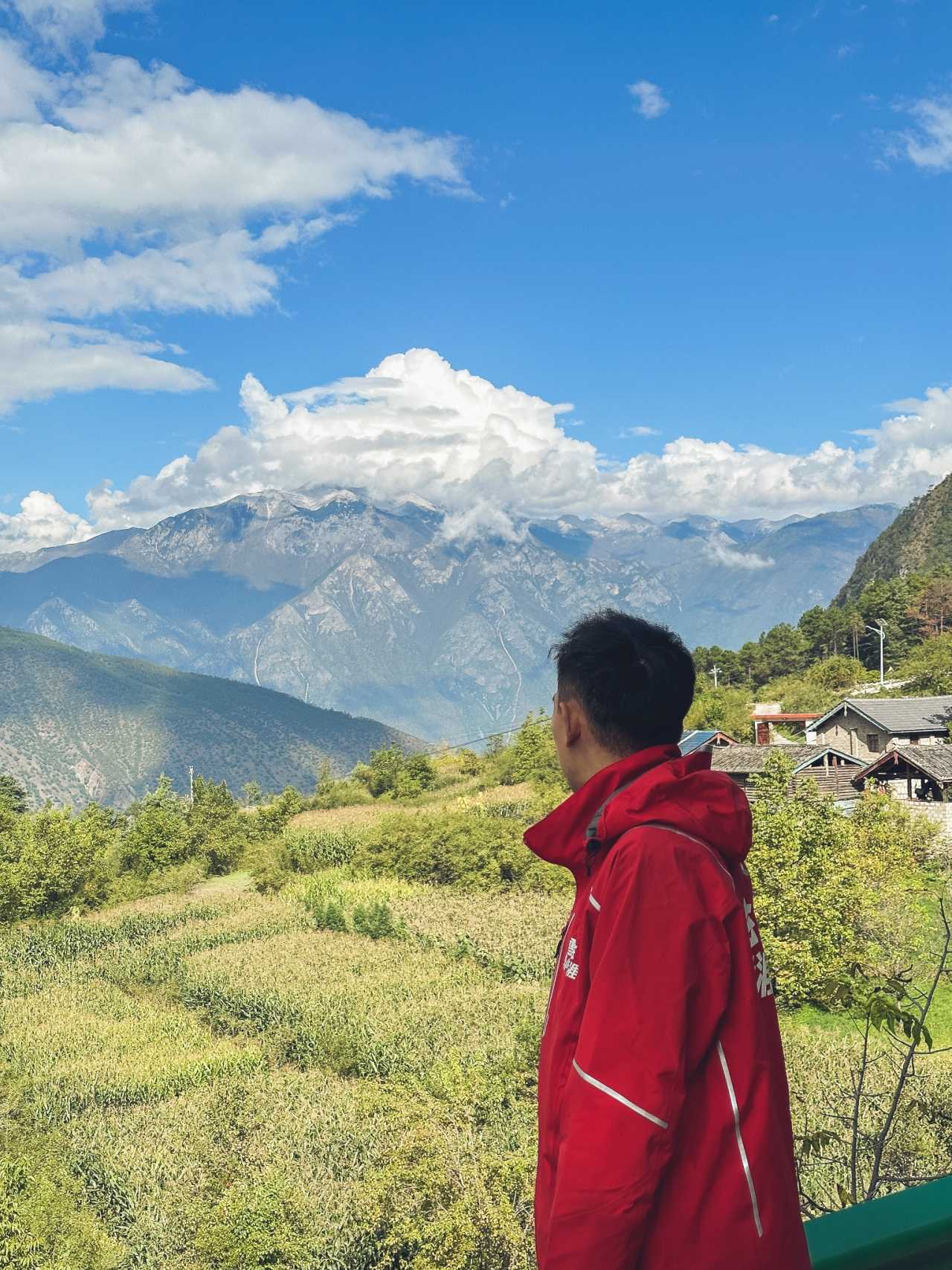
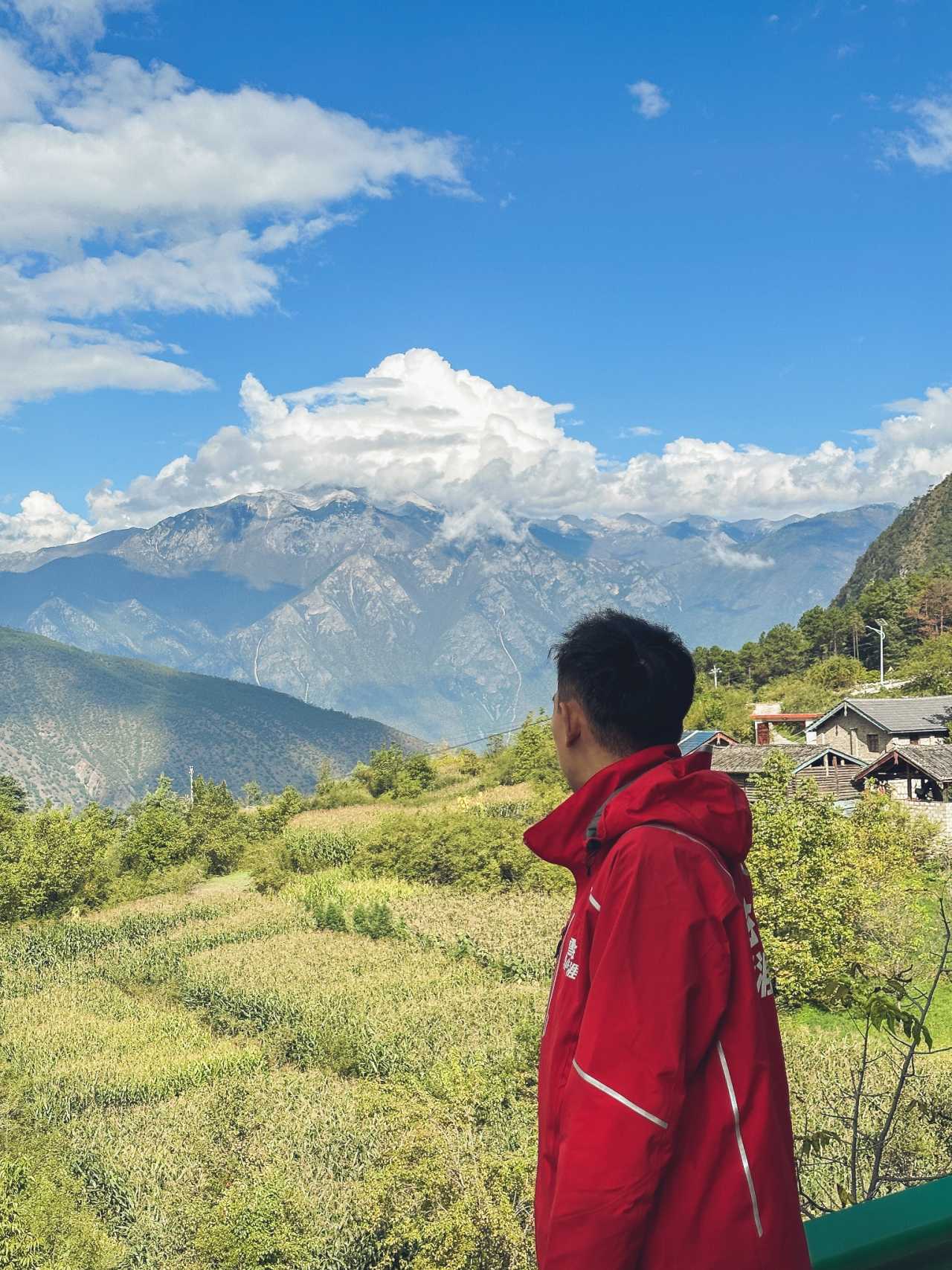
When we arrived and saw the distant peaks, it instantly felt like a real vacation. Everyone immediately started taking photos. This place wasn't even a proper scenic spot—just the roadside near our climbing lodge. The midday sun was perfect.
Here's a quick overview of the climbing schedule:
- Day 1: Lijiang → Haba Village (2-3 hours by car)
- Day 2: Haba Village → Haba Base Camp (ride horses up)
- Day 3: Summit attempt around 3 AM → descend to Haba Village → return to Lijiang that night
If you have time, it's worth staying an extra night in Haba Village.
In the afternoon, we found a hiking trail near Haba Village to acclimatize to the altitude. mars led the way, clearly a hardcore outdoor enthusiast. Emma followed close behind, wearing her college-era jacket—apparently she used to go hiking with classmates a lot back then. But now she's turned into a workaholic. Over the next three days, she was almost constantly searching for a signal to reply to emails.
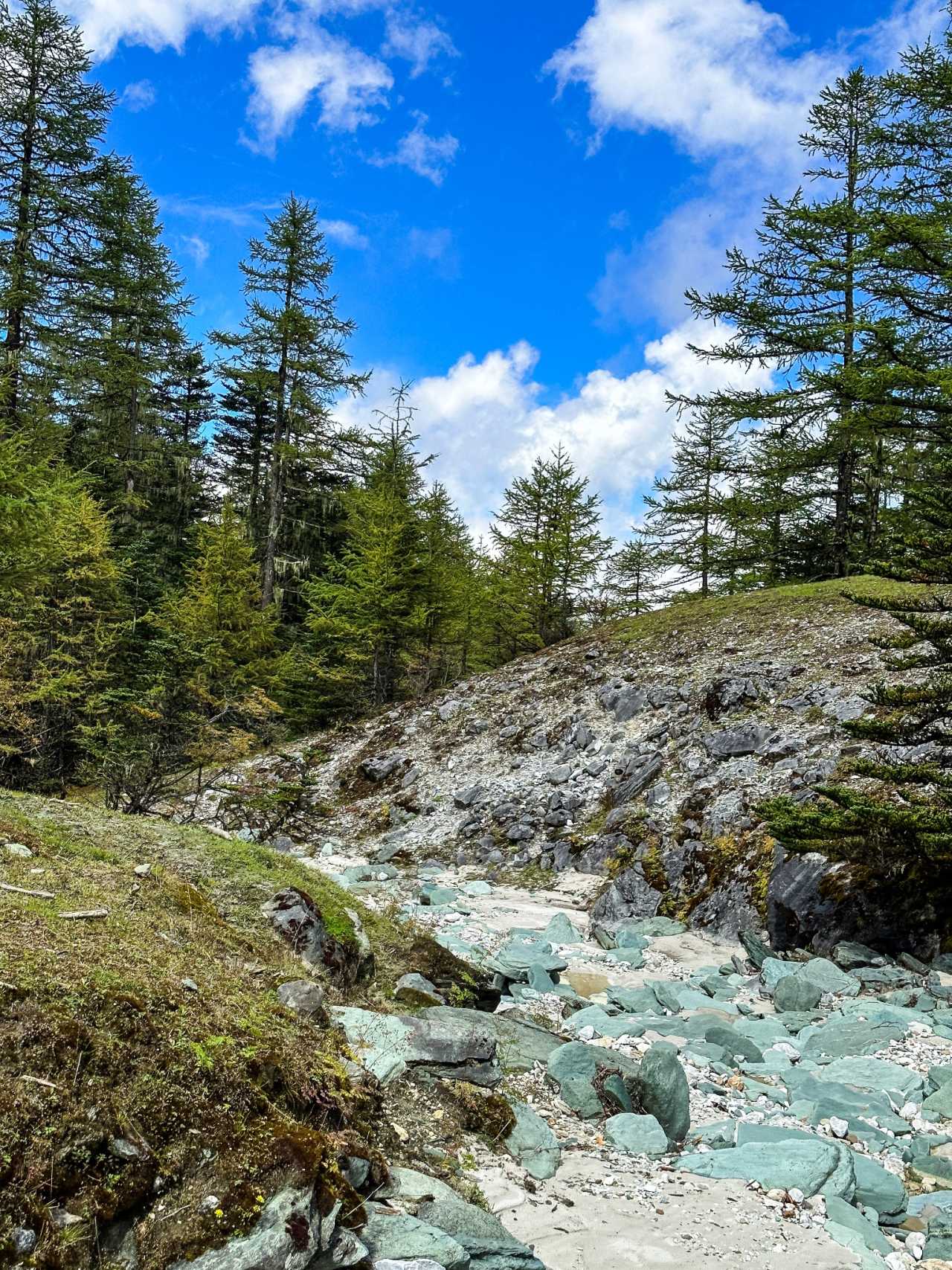
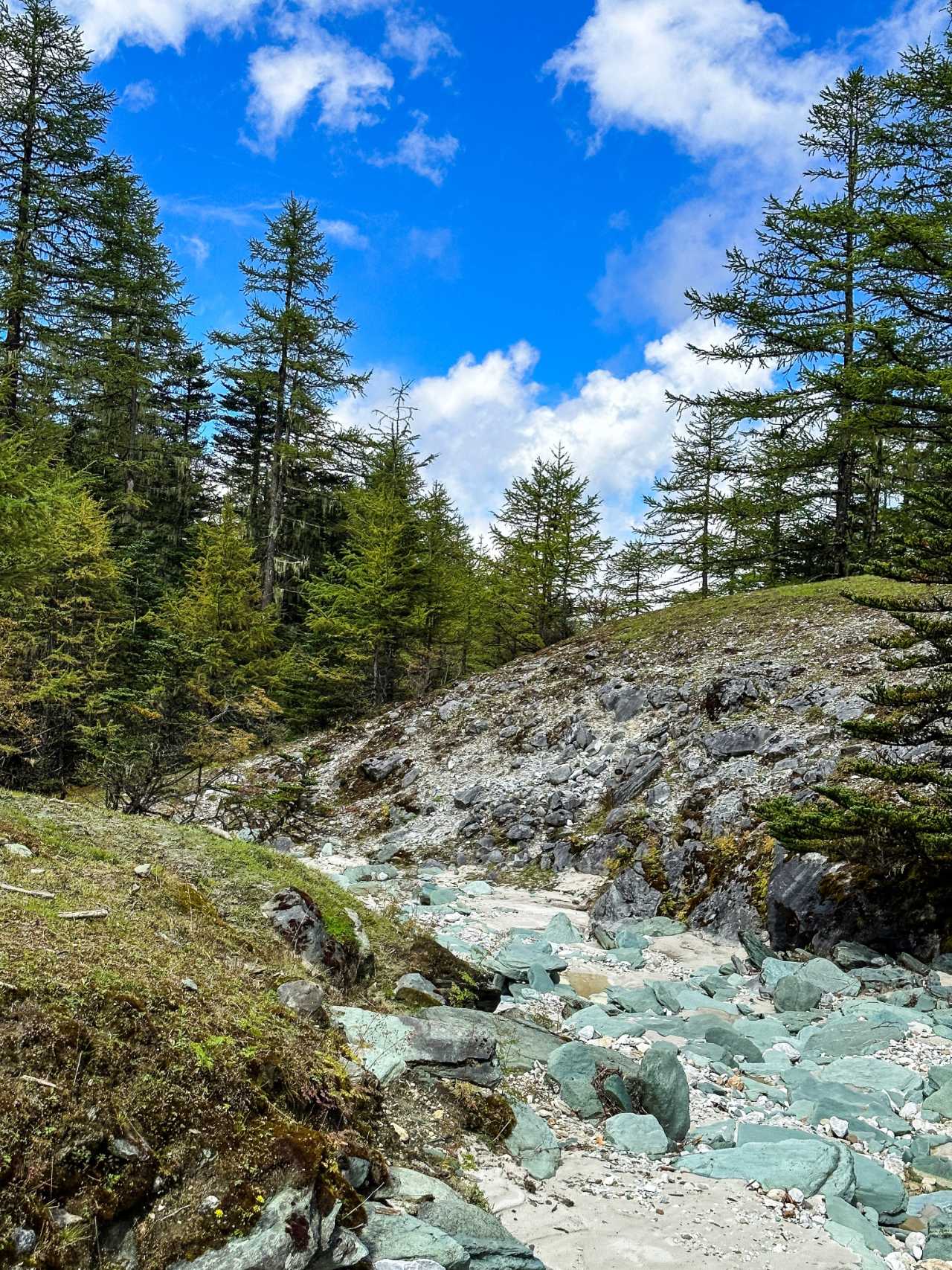
Maybe because we'd been away from nature for too long, we stopped for ages to photograph a tiny stream.
I was really into titanium cups at the time, and this was the first time I brought mine into a real outdoor setting. It handled extreme heat, cold, fire, and freezing without a problem. This little cup has been to quite a few places with me.
Yunnan is quite humid, and the trail was a bit muddy. The air felt heavy with moisture, but not like the sticky humidity of the south—it was a cool, pleasant dampness.
After coming out of the trail, we found a great photo spot: traditional buildings in the foreground, and an unnamed snow-capped mountain in the distance. We took a group photo, and everyone was smiling. None of us were seeing a snow mountain for the first time, and none of us were in Yunnan for the first time, but this was the first time we'd come here specifically to climb together.
As the sky darkened, the white peaks slowly turned golden. We spotted a crescent moon. It was about time to head back for dinner.
Right outside the restaurant, facing the snow mountain, everyone couldn't resist taking a few more photos—even though it wasn't the mountain we were going to climb, and we didn't even know its name.
Emma suddenly got a work call and immediately pulled out her laptop—this wasn't staged.
Dinner was at our climbing guide's house, included in the climbing fee. The food was decent, but the portions were a bit small—after all, we were about to climb a snow mountain, and everyone wanted to eat more.
That night, we stayed at a guesthouse in Haba Village. The room was clean and tidy, with thick blankets and hot water. The only downside was the internet—my China Unicom card was basically useless, so I had to rely on my friend's China Telecom signal or use the Wi-Fi in the owner's living room.
Riding Up the Mountain: Heading to Haba Base Camp
We set off early the next morning. Luggage and people were separated. Everyone only carried their daily essentials, while heavier items were packed onto horses to be taken up to base camp.
To save energy, we all chose to ride horses up the mountain. They looked more like mules than horses—not very tall, but incredibly enduring. We drew lots to pick our horses, which was fair since each one had different looks and abilities.
At first, I wondered if it was worth it—300 yuan per person seemed a bit pricey. But the further we went, the more I felt it was money well spent. The beginning of the trail was incredibly muddy—one step and your foot could sink halfway in. And it was steep, with muddy paths and rocky sections with big elevation changes. The journey was long—we started around 9 AM and rode until dark. Just sitting on the horse from morning till night was exhausting. I couldn't imagine what mental state I'd be in if I had hiked the whole way to base camp.
Each horse had a guide who led it by the rope. The guide walked in front, the horse followed.
After about an hour, we reached the first rest stop—a slope facing a range of mountains. The horses needed a break, and the scenery was beautiful, so we stopped for a while to take photos.
Emma took a few very "chill" shots. The altitude hadn't risen much yet, so there was no fatigue—just pure comfort. We used a drone to take a group photo. The weather was perfect—sunny but not too hot, with clouds but no humidity.
On one side was a valley, on the other a snow mountain (partially hidden by clouds).
mars was remarkably calm, as always.
In the bottom left corner, you could see our group—about fifteen to twenty people, just the right size.
After resting for twenty to thirty minutes, we continued. As the altitude increased, we entered a layer of fog, and the temperature gradually dropped. The vegetation changed noticeably—from grass to moss, from evergreen broadleaf forest to coniferous forest (I can still tell the difference, even years after high school biology).
Soon we reached the second rest stop—a small wooden cabin. Everyone pulled out their snacks. A little dog appeared, brought by a foreigner, and it had followed us all the way here—I had to admire its stamina.
There was free boiled noodle soup available, one bowl per person. I completely forgot how it tasted, but at least it was hot, and we all savored it.
By this point, I was already a bit tired. The mountain path was steep, my butt was sore from bouncing on the horse, and I had to hold on tight with both hands to keep my balance.
I pulled out my beloved titanium cup again, heated it directly, and had hot water in no time. But after roasting it, some kind of residue—maybe from the trees or something—stuck to the surface and never washed off. I was devastated.
After resting, we set off again. Around 5 or 6 PM, we finally emerged from the mid-altitude forest and entered the base camp area at about 4,000 meters above sea level.
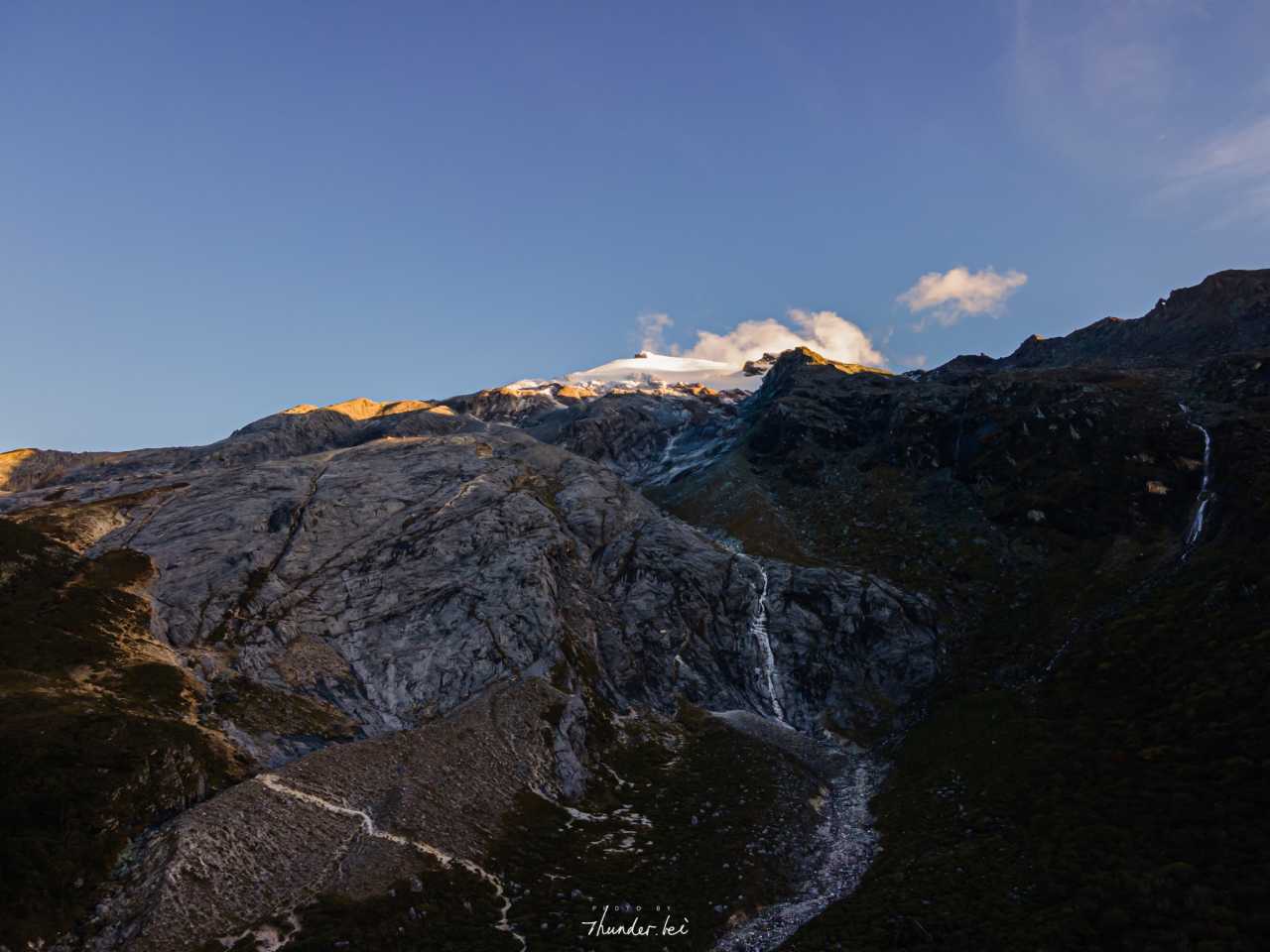
The first thing we saw was a small stream fed by melting snow and ice from the high peaks. Looking up, we could even see a waterfall.
Sleeping Under the Milky Way: Preparing to Summit Haba
When we arrived at base camp, the sun hadn't set yet, and the sky was still bright. We first took photos with Haba Snow Mountain, which we were about to climb.
Behind us was Haba—mostly rock with a bit of snow at the top. At this point, I didn't feel any fear. In reality, we would be climbing along that white line in the bottom left corner: first a path of small碎石 (broken stones), then hard rock, and finally the snow line.
The sky at base camp was clear and cloudless. It had been overcast during the ascent, but here the sky had opened up completely. Despite this beautiful scene, Emma's first priority was still finding a signal to send emails. Luckily, our guide was amazing—his phone had full signal the whole time.
From Haba Village to base camp, we had ascended about 1,000 meters in elevation. The temperature felt fine—not particularly cold, and no strong wind. At base camp, you could rent almost everything—trekking poles, headlamps, jackets, even hiking boots. The commercialization was so mature that even a beginner could make it up from here.
To protect against strong winds, the rooftops were weighed down with stones. Through the roof, you could see the distant mountain ranges. They said that on a clear day, from the summit you could see Jade Dragon Snow Mountain and even farther peaks like Meili Snow Mountain. I started to get excited.
Since we arrived early, we wandered around a bit. There were very few people. Nearby was another base camp run by a different organization. The environment was nice—not cold, but with that unique crispness of high altitude.
Base camp consisted of several rooms: dormitories, a bathroom, a dining room that doubled as a meeting space, an entertainment area, and a foot-soaking zone. For a snow mountain base camp, the conditions were excellent—you could sleep on a real bed (bunk beds), had access to hot water, and could even soak your feet.
Room assignments were random, but there were separate rooms for men and women. Since we wouldn't be sleeping long anyway, no one really cared. Everything looked clean. When we arrived, the staff were airing out the sheets and pillowcases.
Base camp faced north. I thought to myself, it wouldn't be so bad to stay here for a while—far from the world, fresh air, sunrises and sunsets, moonrises and moonsets. The temperature was bearable, and with the sacred mountain at your back and a stream of pilgrims coming and going, it wasn't a bad place to be.
From the foot of the mountain, the snow line looked high, and the climb seemed easy. In reality, it was incredibly difficult.
As darkness fell, the mountains became very quiet. I don't remember hearing any birds or any animals—just the wind. Haba Snow Mountain was a pure white, not the most beautiful shape, but distinctive. Between the distant peaks, the sky was still brilliant.
After dark, it was time for dinner. It was similar to the previous night—seven or eight people per table, and once a table was full, we started eating. Portions were small, but the food was good. After dinner, we had a pre-climb briefing, where the guide explained the schedule, safety notes, and taught us how to use special equipment. We also registered for gear rentals.
An unexpected bonus was seeing the Milky Way. For the first time with my glasses on, I saw it so clearly. I've seen the Milky Way countless times, but it's always stunning. Without a tripod, I managed to take a surprisingly good photo with my phone—iPhone set to a 30-second long exposure, 3-second delay, placed on the ground aimed at the sky, making sure there was no light nearby. If it worked, that's what you got. If someone walked by or a light appeared, it would turn out differently.
I never thought my phone could capture this so well. If I didn't have to wake up at 3 AM the next day, I would have spent more time composing the shot. Plus, the signal was bad, and everyone wanted to conserve energy, so we went to bed around 9 PM.
The Summit Push: Haba Snow Mountain, Here We Come
We woke up at 3 AM. First, we drew lots to choose our guides. Once assigned, we set off one-on-one.
When we started, it was pitch black. I followed my guide closely. I couldn't see anything ahead or to the sides—just the path beneath my feet. There were no stars overhead, no moonlight—the clouds were too thick.
For nearly an hour or two, it was just monotonous hiking. My guide was definitely an introvert—he barely spoke, just walked silently ahead. When I couldn't go any further, we'd stop to rest.
I started too aggressively. There were hardly one or two people ahead of me, but when I looked back, I could see a string of lights behind me. As it turned out, the further I went, the weaker I became. People kept passing me. We kept doing switchbacks, and I lost track of how long we'd been going. It felt like we'd crossed the rock layer, and once we reached the snow line, we put on crampons and snow gaiters and kept climbing.
It wasn't until we were above the snow line that the sky began to lighten. By the time there was enough light, we were already in the final summit push.
The rain jacket came in handy—it started raining about an hour into the climb. Being hit by wind and rain in the pitch dark was an unforgettable experience.
We were still about 300 to 400 vertical meters from the summit, surrounded by clouds. Visibility fluctuated, but thankfully there wasn't much wind.
The result of my aggressive start was that by now I was completely drained. I could barely manage 20 steps before needing to catch my breath. When I was really tired, it was down to 10 steps. There was no technique—just slowly inching upward.
Looking down, looking up—the light above me was zss, who passed me around here. I never caught up to him again.
Everyone had a 1:1 guide. The guide's main role was to encourage you—the route was already clearly marked. Some female climbers had guides who would support or even drag them, while male climbers' guides mostly just stood by.
After the snow line, it was consistently steep. My memory of this section is like a turtle—slowly, bit by bit. At times like this, heavy fog is better than clear skies—you don't know how much higher you have to go, so you just keep moving. The guide would also give you a number lower than the actual distance, making you feel like the summit was close.
Since I couldn't spare a moment to take photos during the climb, the pictures I got are pretty ordinary.
After dozens of gasping breaths, dozens of rests, hundreds of deep breaths, and hundreds of steps, you realize—you've made it to the top.
We were probably among the first to arrive. We waited a while and saw Emma slowly making her way up. She looked great—even though the guide was helping her, she seemed to have plenty of energy left. We spent about twenty minutes at the summit taking photos and messing around before heading down.
At the summit, everyone was happy. No one would know what grimaces we were making on the way up.
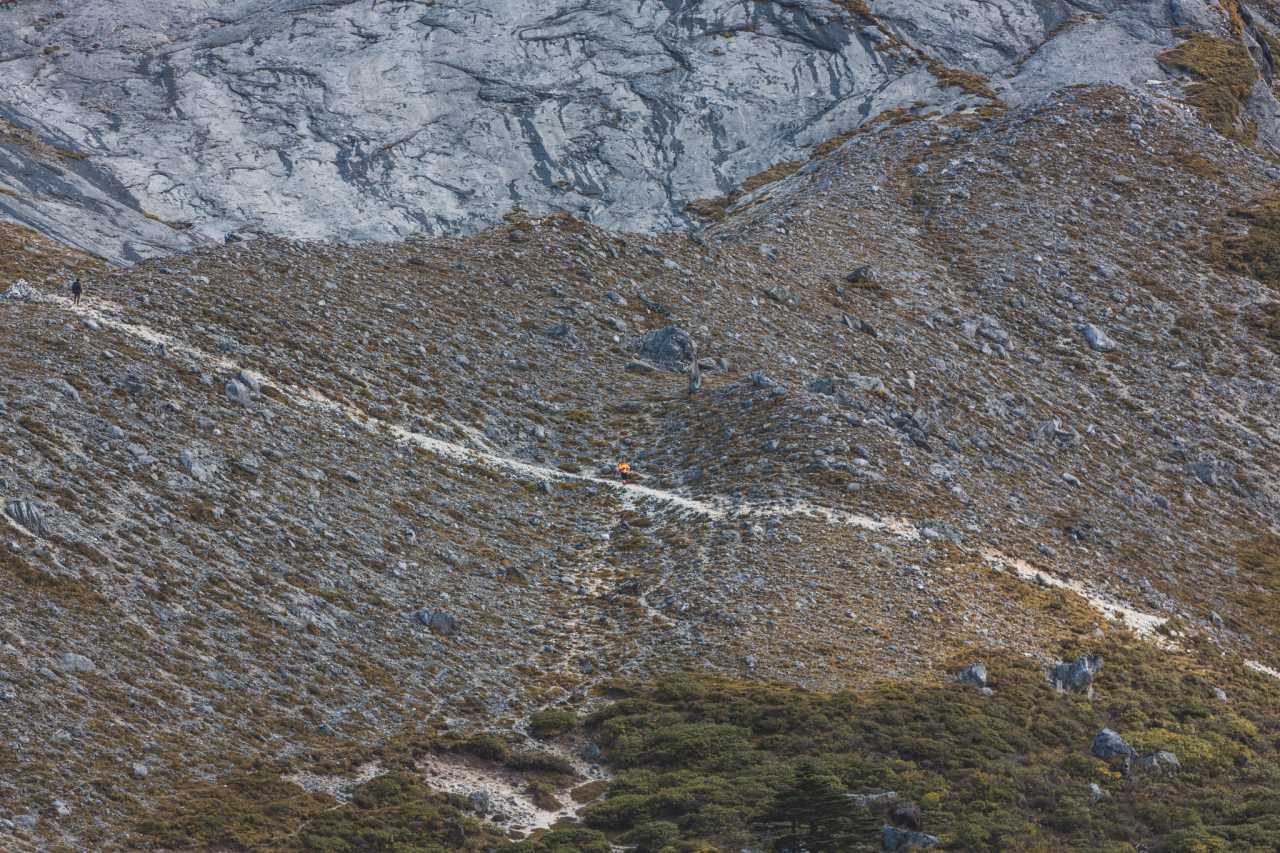
On the way down, I saw a cliff by the trail. Below was a real abyss. Safety first.
About a hundred meters down, we ran into mars. He was doing okay too. Visibility at the summit had been poor the whole time.
There were still so many people climbing up as we descended. It was October 2nd, probably the busiest day. Looking down from the mountain, I could finally see how much we had climbed to reach that height. Above the snow line, the descent was quiet. My calves and feet hadn't started hurting yet. Every group of climbers we passed was silently persevering.
A bit further down, the sky began to clear. Visibility improved, but there were still clouds blocking the view. I kept hoping to see other snow mountains in the distance, but I never did. Maybe if we had gone up later, the visibility at the summit would have been better.
Scenery I used to only see from an airplane—now I could stop and admire it.
After passing the snow line, the descent became even more painful for me. There was a small incident: the day before at base camp, the sole of my Toread hiking boots had fallen off. The main reason was that I hadn't worn them in a long time, and then I put them through intense use. I had to rent a pair of alpine boots on the spot.
They were fine going up—no obvious discomfort. But coming down, they were a terrible fit—too big, and every step was uncomfortable. Wearing the right shoes for a snow mountain climb is absolutely crucial.
On top of that, the path was all hard rock. The descent was extremely difficult, and I kept getting passed. Eventually, mars caught up to me.
On the way down, I saw a little dog. The change in vegetation was also very noticeable.
The guy lying down ahead of me was my guide. To be honest, I was pretty unhappy with him during the descent. He didn't interact with me at all and kept demoralizing me (things like: "Can you make it? Are you sure you can get down? If not, you should arrange a mule now"). He'd walk ahead or behind me. I originally planned to complain about him after we got down, but then I thought—he did successfully get me to the summit. The most important job was done.
Overall, climbing Haba Snow Mountain felt more like a high-altitude hike. There wasn't much technique involved—just constantly climbing upward. Thanks to the cover of darkness, you didn't know the entire climb was just boring rock paths and simple snow slopes.
Scenery-wise, Haba was pretty average—a bit lacking compared to Baima Snow Mountain, which I had climbed before.
Still, I had completed a 5,000-meter-plus snow mountain climb. All four of us in our group made it to the summit and came back healthy and safe—definitely worth celebrating.
When we returned to base camp, zss and Emma had already been waiting for us for an hour or two. Another surprise: base camp offered a foot-soaking service with traditional Chinese herbs—about 50 to 60 yuan per bucket, which was reasonable. After that, we waited for the guide to arrange mules to take us back down to Haba Village.
The return trip was even harder. The guide pulled the rope and ran like crazy. Another two-plus hours of bouncing, with my butt in agony, before we finally made it down.
That night, we drove back to Lijiang, arriving a little after 11 PM.
Relaxing: Slow Time in Baisha Ancient Town
Maybe I was still riding the high of summiting, or maybe I was just too exhausted, but I don't really remember what we did after returning to Lijiang. After a day of rest, we decided to take it easy with a city walk and took a taxi to Shaxi Ancient Town.
Lijiang has three main ancient towns: Baisha, Shuhe, and Dayan. Baisha is the farthest from the old town, the smallest, and the least crowded, but it's the closest to Jade Dragon Snow Mountain—only about 20 to 30 minutes by taxi.
Baisha Ancient Town was the ancient capital of the Naxi people and once the political, economic, commercial, and cultural center of Naxi Lijiang.
Since we were here, we had to try the Naxi mixed pot stew. A huge pot cost only 65 yuan, packed with pork knuckles and side dishes. The four of us couldn't finish it. The taste was great, and the portions were generous. I never expected to find such a good value restaurant in a tourist area. An elderly grandmother was running the place by herself. Maybe because we arrived early, the courtyard was empty.
After eating, we started wandering. Baisha felt like a small street in a little town—not too crowded, with shops on both sides. But they weren't chain bubble tea or coffee shops—they were truly local, niche stores. We found a shop selling Nepalese goods and had a great time browsing.
We randomly picked a coffee shop with a courtyard layout, like a traditional四合院 (siheyuan, a quadrangle courtyard). It was the epitome of "chill." We ordered a pot of tea and a pot of coffee and sat there for a long time, looking at photos and taking pictures. This was my first time experiencing Lijiang in such a relaxed state.
I felt like most of the energy from the climb had returned. There was no lingering soreness from prolonged exercise—maybe because we're all still young and recover quickly.
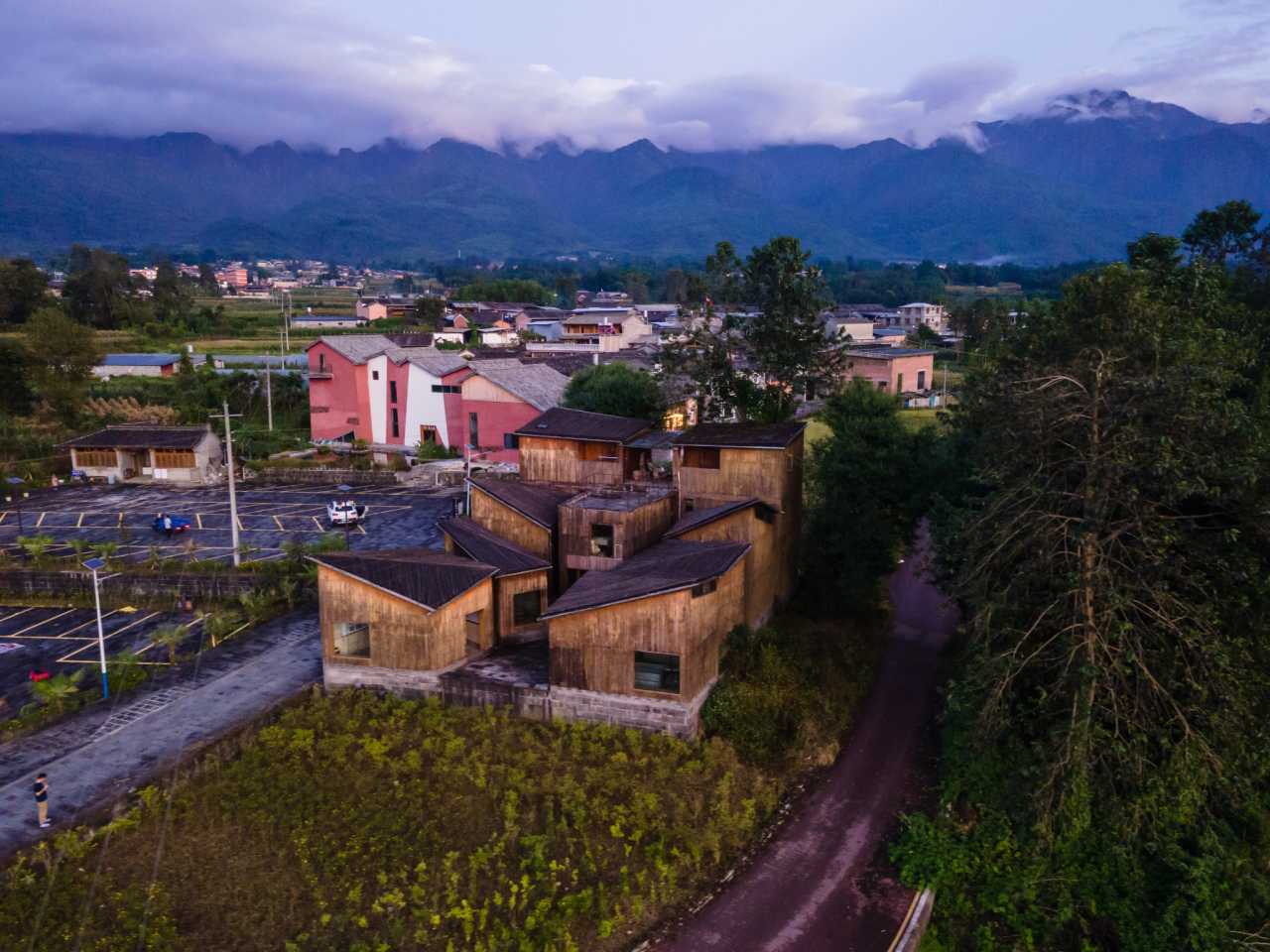
Of course, since we were here, we couldn't skip seeing at least one attraction. We contacted a friend and visited a guesthouse. It was tucked away deep in Baisha Ancient Town, just a five-minute walk from the center, but it felt like a hidden retreat—surrounded by rice paddies, incredibly peaceful. They said the guesthouse was built using local materials and construction methods, blending seamlessly into the surrounding environment.
Epilogue: Where the Heart Finds Peace, That's Yunnan
Looking back on this journey—from the surf shop in Shenzhen to the summit of a snow mountain in Yunnan, from the darkness at 3 AM to the sunrise at the top, from the muddy horse trail to the coffee shop in Baisha Ancient Town—every moment was worth remembering.
Haba Snow Mountain isn't the most magnificent peak, but it holds the shared memory of the four of us. An altitude of 5,396 meters isn't an end—it's a new beginning. I think I'll come back. Maybe to see the Milky Way again, maybe to have another cup of coffee at that little shop, or maybe just to waste my life here.
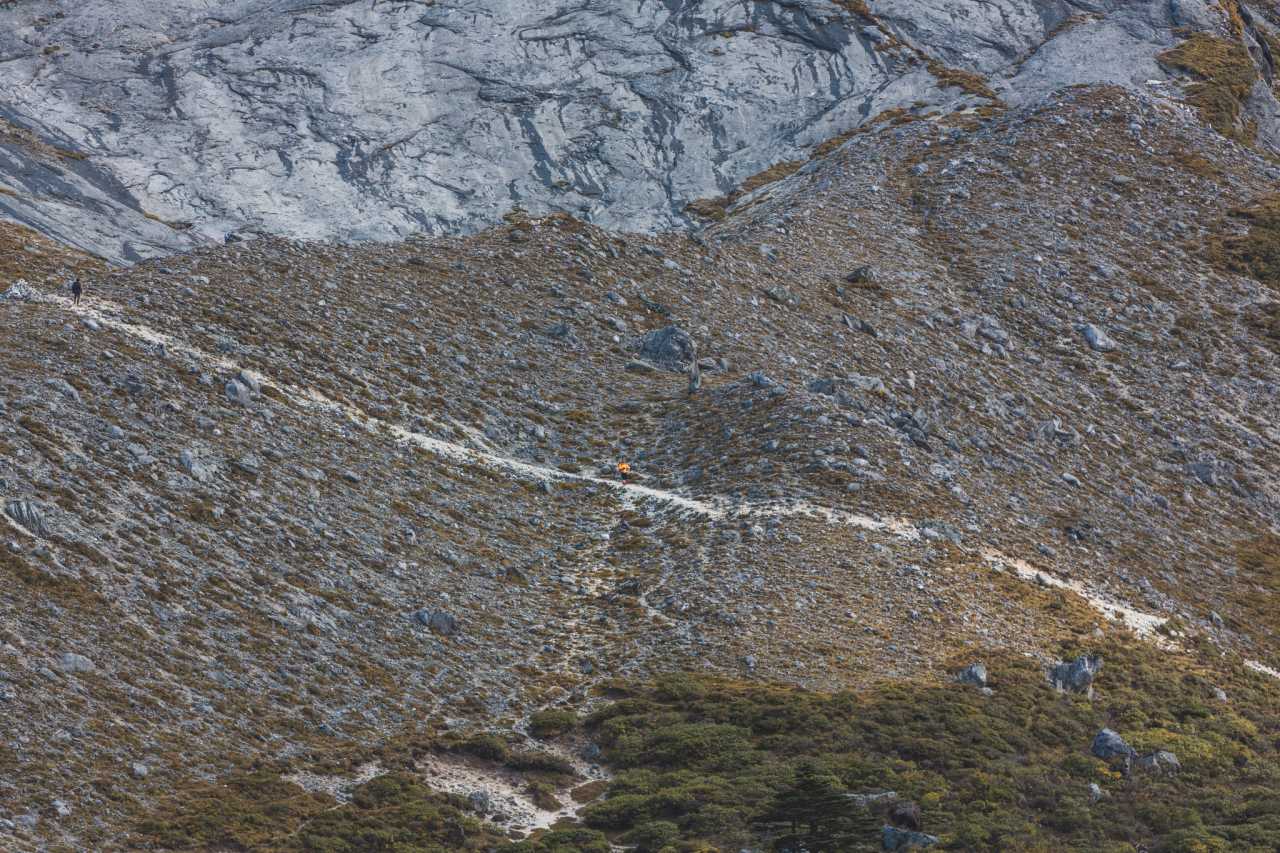
The place of peace in Yunnan, beneath the clouds, is Haba at 5,396 meters.
Practical Summary:
- Gear: Windproof and waterproof are key, but you can spend as much or as little as you want. Most equipment can be rented at base camp.
- Time: Plan for at least 8 to 10 days to balance climbing and relaxation.
- Fitness: Haba is more like a high-altitude hike. No professional skills are needed, but you'll need determination and patience.
- Signal: Cell service is unreliable in Haba Village and at base camp. Be prepared to go offline.
- Costs: Horse riding is 300 yuan per person (highly recommended), foot soaking is 50 to 60 yuan per bucket, and the climbing fee includes meals, accommodation, and a guide.
- Best Season: September to October offers relatively stable weather, but mountain conditions can change quickly—always be ready for anything.
You should also read:
Meili Snow Mountain: A Soulful Journey of Dialogue with the Sacred Mountain
Meili Snow Mountain: A Soulful Journey of Dialogue with the Sacred Mountain Prologue: When Travel Becomes Faith Some journeys are forgotten as soon as they end. Others carve themselves into your bones. The trip to Meili Snow Mountain belongs to the latter. Waking up in…
Continue reading...
Solo in Yunnan: A Wanderer’s Guide to the Land of Eternal Spring
Solo in Yunnan: A Wanderer’s Guide to the Land of Eternal Spring There’s something magical about traveling alone. No compromises, no schedules to keep, no one to please but yourself. I’ve been on the road for nearly three months now, and not once have I…
Continue reading...
Cloud Travelogue · Dali of Wind, Flowers, Snow, and Moon: A Three-Day, Two-Night Journey of a Free Spirit
Cloud Travelogue · Dali of Wind, Flowers, Snow, and Moon: A Three-Day, Two-Night Journey of a Free Spirit I am a cultured female foodie with a touch of rogue charm. I slung on my backpack, took my lover's hand, and set off on a spontaneous…
Continue reading...