The Remote Hidden Realm: My Winter 2018 Journey to the Three Parallel Rivers in Search of the Last Pristine Land
The Remote Hidden Realm: My Winter 2018 Journey to the Three Parallel Rivers in Search of the Last Pristine Land
Prologue: A Dream Buried in My Heart for a Decade
Some places, once they take root in your heart, grow like wild grass until you have no choice but to go.
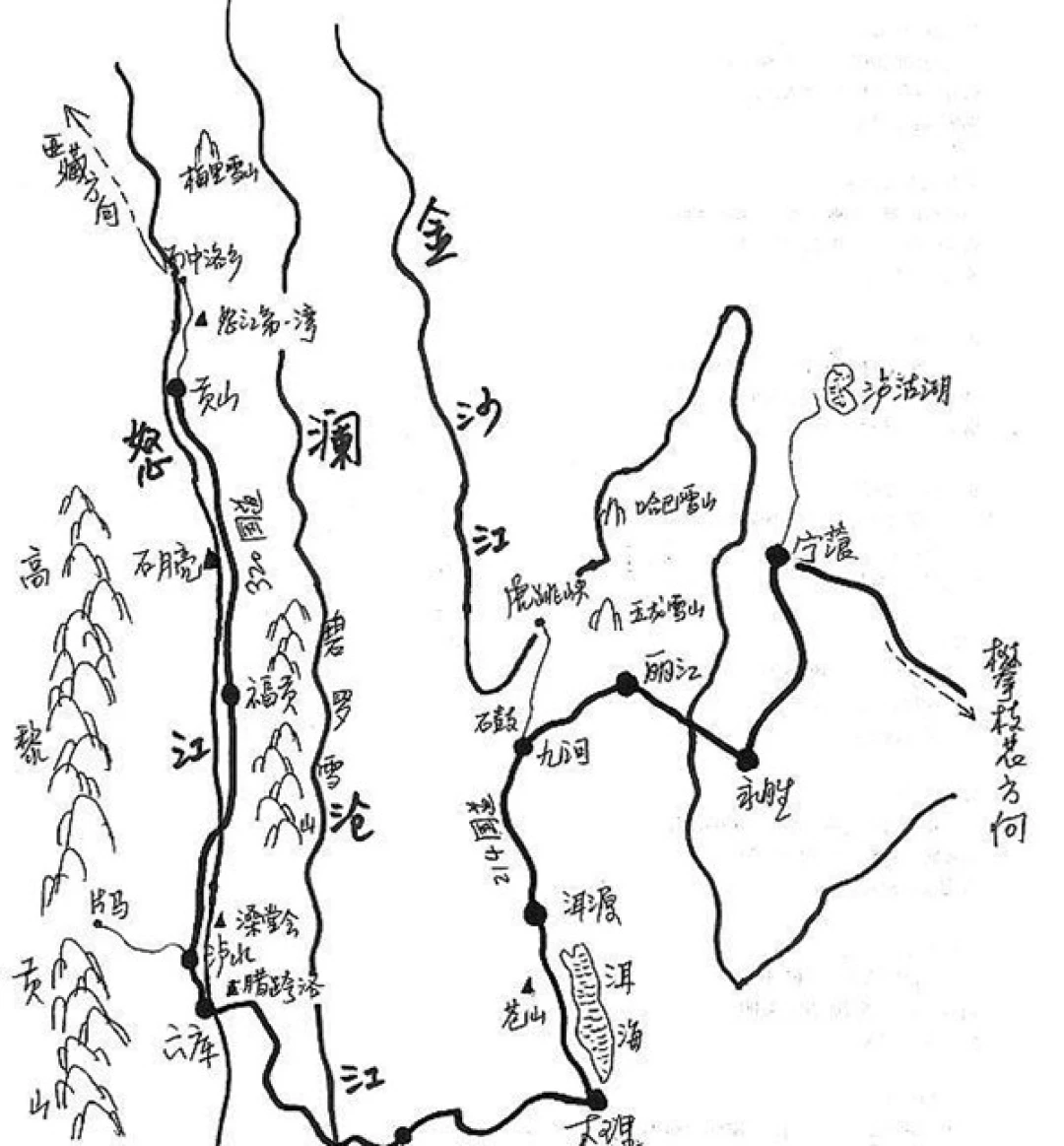
In December 2014, I finally embarked on a journey I had been brewing for ten years. My destination was a region known as the "Three Parallel Rivers" at the border of Sichuan, Yunnan, and Tibet — China's largest UNESCO World Natural Heritage site, a geological wonder where the Jinsha River (upper Yangtze), Lancang River (Mekong), and Nujiang River (Salween) run parallel for hundreds of kilometers, separated by as little as a hundred meters.
Over a decade ago, director Tian Zhuangzhuang's documentary Delamu introduced me to the Nujiang Gorge for the first time. In those images, the jingle of mule bells echoed through the steep canyon, mist drifted uncertainly at the mountainsides, and the isolated villages seemed like specimens peeled away from time itself. From that moment on, names like Bingzhongluo, Qiunatong, and Wuli Village became obsessions I couldn't shake.
But time waits for no one. The waves of modernization and urbanization were sweeping across every corner, and even this hidden realm, shielded by the Hengduan Mountains, was quietly changing. Bingzhongluo had started charging entrance fees, guesthouses were multiplying, and what worried me more — the hydroelectric dam project on the main stream of the Nujiang River, after more than half a century of controversy, seemed to be showing signs of revival.
I knew that if I didn't leave soon, I might never see the distant and mysterious world of Delamu again.
Why Winter?

Many people ask me why I chose December for the Three Parallel Rivers. The answer is simple: the dry season.
From October to March each year, this region experiences the dry season of the Indian Ocean monsoon climate. The skies are clear, the air is crisp, and the chances of seeing snow-capped mountains increase dramatically. More importantly, the river water transforms from the muddy yellow of the rainy season to a blue-green hue. By February and March, glacial meltwater gives the rivers a gem-like blue — that's when the Three Parallel Rivers are at their most beautiful.
Although I missed the most spectacular season, December's Three Parallel Rivers was already stunning enough. Over nine days, I traveled from Hangzhou, passing through Lijiang, Shigu, Deqin, Dali, Lushui, Bingzhongluo, Qiunatong, Gongshan, and Pianma, before returning to Dali and Lijiang, and finally flying back to Hangzhou. The entire journey covered nearly two thousand kilometers, most of it on mountain roads — but every kilometer was worth it.
First Stop: An Unexpected Treasure by the Jinsha River
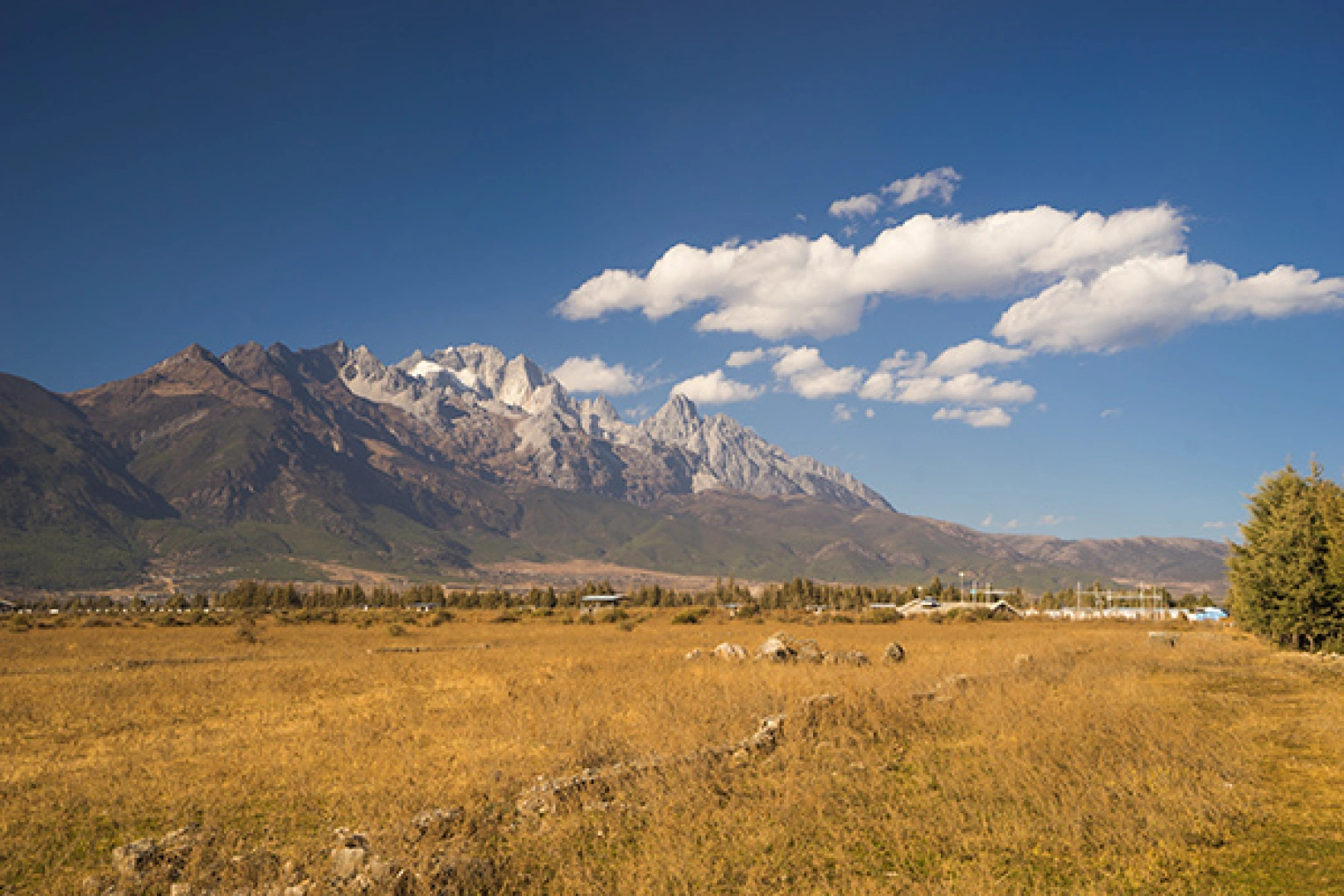
When the plane landed in Lijiang, the first thing I saw was Jade Dragon Snow Mountain (Yulong Xueshan). It was my first time seeing it — the last time I visited in summer, Lijiang had been raining constantly, and the low clouds completely obscured the mountain. I didn't even realize it was so close to the city.
I picked up a Peugeot 3008 from a rental agency called Yihai, and we headed straight for Shigu Town. There's a place here called the "First Bend of the Yangtze River" (Changjiang Diyi Wan) — the Jinsha River makes a nearly 180-degree turn here, changing its course from southward to eastward, marking the end of the Three Parallel Rivers formation.
To capture the panoramic view, I climbed a small hill on an empty stomach. I hadn't expected that going from sea-level Hangzhou to an altitude of 2,000 meters would trigger altitude sickness — I was gasping for breath after just a few steps. But when I stood at the top and saw the Jinsha River reflecting the blue sky like a mirror, flowing silently through the canyon, all the exhaustion was worth it.
At a small restaurant in Shigu Town, my travel companion HH bought some local plant roots. We later discovered they made an excellent soup, with a flavor somewhat reminiscent of angelica root (danggui). By the time we left, the sun had already set. We drove north along the Jinsha River Canyon, heading toward Meili Snow Mountain.
Night Assault on Baima Snow Mountain: A Heart-Pounding Climb
From Shigu to Feilaisi (Flying Temple) in Deqin, we needed to travel 200 kilometers along the Jinsha River Canyon, then cross the 4,300-meter Baima Snow Mountain Pass. The first half of the road was manageable, but as night deepened, the road narrowed, the curves became sharper, and the route seemed to hang precariously on high cliffs.
Approaching Benzilan, I noticed an interesting phenomenon: the Jinsha River Canyon here is known as the "Southwest Arid Pole," with precipitation levels comparable to the deserts of Northwest China. Yet less than a hundred kilometers away, the Dulong River region is one of the rainiest areas in the country. This is the wonder of the Hengduan Mountains — as the warm, moist air from the Indian Ocean crosses several mountain ranges, it releases precipitation with each crossing. By the time it reaches the Jinsha River Canyon, it has transformed into a dry, hot "foehn wind."
After passing Benzilan, we began climbing the Baima Snow Mountain Pass. As the altitude increased, the wind howled outside the windows, the road turned into a dirt-and-gravel track, and it even started snowing lightly. HH was frightened by the atmosphere, and I was tense too — I wasn't familiar with the rental car, and the road was icy. I could only crawl along at twenty to thirty kilometers per hour.
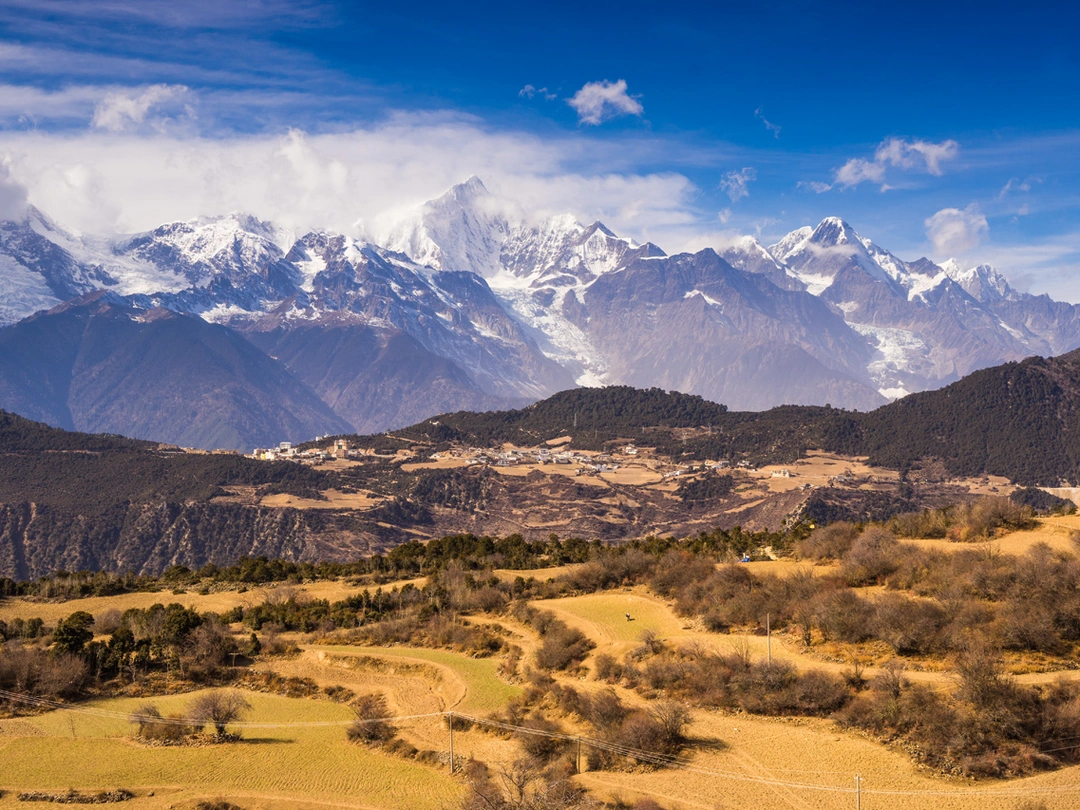
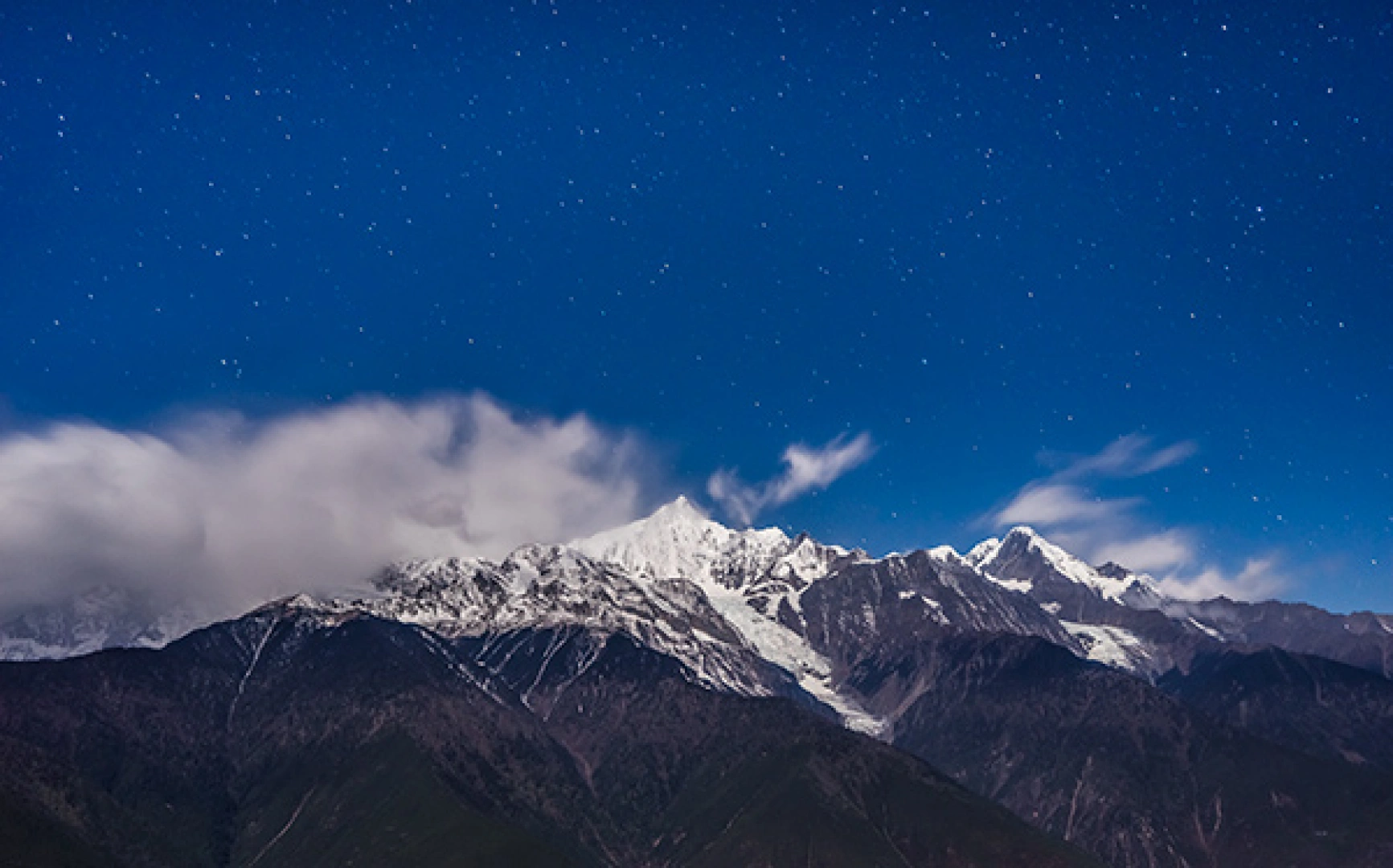
But in the midst of this tension, a snow-capped mountain suddenly appeared ahead — a real one, towering, massive, and steep, not like the seasonally snow-covered mountains with vegetation around it. It was the Thirteen Peaks of Prince (Taizi Shisan Feng)! Although clouds covered half the sky, I recognized Kawagebo (Kawakarpo).
At 11:30 PM, we finally arrived at Feilaisi. In the hotel room, I stared at Kawagebo through the window, watching the moon rise from the southeast and illuminate the snow mountain. The clouds were slowly dispersing, and I barely dared to blink, afraid of missing something.
Laomudeng: A Morning Awakened by a Church
Departing from Deqin, we passed through Shangri-La to Dali, then drove north along the Nujiang River to reach Laomudeng. This Nu ethnic village sits halfway up the Nujiang River Canyon, and its most striking structure is a red-and-white church — Laomudeng Church.
At dawn, sunlight had just crested the mountaintop, illuminating the church's spire. Mist swirled through the Nujiang Canyon, and the sound of church bells drifted from afar. In that moment, I understood why Western missionaries had traveled thousands of miles to come here over a hundred years ago — in a place so isolated from the world, faith might be people's only solace.
The Nu ethnic children in Laomudeng looked at us outsiders with curiosity, their eyes as clear as the waters of the Nujiang River. I suddenly recalled what anthropologists say: the layered mountains here create enormous barriers for horizontal travel, but the narrow, elongated river valleys provide convenient corridors for the migration of both living creatures and humans. While Tibetan Buddhism spread southward, Christianity and Catholicism also moved northward. The two religions collided, blended, and ultimately coexisted peacefully here.
Bingzhongluo: The Last Shangri-La
Bingzhongluo was the place I looked forward to most on this trip. It's the core area of Delamu and the location where the cultural landscape of the Three Parallel Rivers region is best preserved.
Entering Bingzhongluo, the first thing you see is Chongding Church — a church that incorporates Tibetan architectural styles. Every Sunday, local believers gather here for worship, and the sound of hymns echoes through the valley. Not far away is Puhua Monastery, where Tibetan Buddhist prayer flags flutter in the wind. Two religions, coexisting peacefully in the same valley.
What struck me most was Bingzhongluo's mule caravans. Although the Bingcha Highway has been built and the number of mule caravans is decreasing, you can still see pack animals carrying goods along the ancient Tea Horse Road. The jingle of mule bells echoed through the canyon, exactly like the scenes in Delamu.
Heading north from Bingzhongluo, we reached Qiunatong Village and Wuli Village. These two villages are hidden deep in the canyon, almost completely isolated from the outside world. In Wuli Village, a grandmother and her grandson sat in the sun by their doorstep. The old woman greeted me in a language I couldn't understand. In that moment, I felt as though I had traveled through time — this was the world of Delamu. Though the tentacles of modern civilization had reached here, the pace of life remained slow, so slow that you forget about time.
The First Bend of the Nujiang River and the Stone Moon
The First Bend of the Nujiang River (Nujiang Diyi Wan) was one of the most spectacular sights of the trip. Standing at a high vantage point, I watched the Nujiang River make a massive turn, its waters a blue-green color, like a ribbon winding through the valley. It's said that this was also the filming location for the opening and closing scenes of Delamu. Standing in the same spot, I could almost hear director Tian Zhuangzhuang behind the camera saying, "This is the Three Parallel Rivers."
Further north, we reached the Stone Moon (Shi Yue Liang) — a naturally formed stone arch that looks like a full moon hanging halfway up the mountain. The local Lisu people believe this is the passage through which their ancestors descended from the moon to the human world, and they hold sacrificial ceremonies here every year.
Pianma: The Primeval Forest of Gaoligong Mountain
Heading west from Gongshan, we arrived at Pianma. Located on the China-Myanmar border, this area is part of the Gaoligong Mountains. Stepping into the primeval forest felt like entering a green world — towering trees blocked out the sky, vines twisted around trunks, and moss covered every stone. The air was humid and fresh, carrying the scent of earth and leaves.
In Pianma, I heard the local people's views on the hydroelectric dam project. An elderly man said, "Our ancestors have lived here for generations. The Nujiang River is our mother river. If they build a dam, our home will be gone." There was a deep sense of helplessness in his eyes.
Epilogue: Some Scenes, Once Seen, May Never Be Seen Again
Nine days, nearly two thousand kilometers, from Hangzhou to the Three Parallel Rivers and back again. Along the way, I saw Jade Dragon Snow Mountain, Meili Snow Mountain, Haba Snow Mountain, and Gawagapu Snow Mountain. I saw the Jinsha River, Lancang River, and Nujiang River. I saw Laomudeng Church, Chongding Church, and Puhua Monastery. I saw mule caravans, churches, and primeval forests.
But I also saw change. Bingzhongluo had started charging entrance fees. Guesthouses were multiplying. Roads were being built. The controversy over the hydroelectric dam continued. I knew that some scenes, once seen, may never be seen again.
The beauty of the Three Parallel Rivers lies in its primitiveness, its mystery, its remoteness. But this beauty is fragile — it cannot withstand large-scale development. If you also want to see it, my advice is: go early, before it changes completely.
Finally, here are a few practical tips:
- Best Season: October to March — the dry season, with clear skies and clear river water
- Transportation: I recommend renting an SUV. The road conditions are challenging, and even a city SUV requires caution
- Accommodation: In the off-season, you can book upon arrival. In peak season, reservations are essential
- Altitude Sickness: If you're coming from low altitude directly to above 3,000 meters, take time to acclimatize
Some places are miracles simply by existing. And the Three Parallel Rivers is one of those places.
You should also read:
Yunnan! Paradise on Earth – The Yubeng Chapter: A Soul-Cleansing Journey into Seclusion
Yunnan! Paradise on Earth – The Yubeng Chapter: A Soul-Cleansing Journey into Seclusion Prologue: Why Yubeng? If you ask me which place in Yunnan is most worth hiking to, I would answer without hesitation: Yubeng. This is not an answer I give lightly. As a…
Continue reading...
Solo in Yunnan: A Wanderer’s Guide to the Land of Eternal Spring
Solo in Yunnan: A Wanderer’s Guide to the Land of Eternal Spring There’s something magical about traveling alone. No compromises, no schedules to keep, no one to please but yourself. I’ve been on the road for nearly three months now, and not once have I…
Continue reading...
Into the Hidden Valley: A Solo Journey Through the Mysterious Dulong River
Into the Hidden Valley: A Solo Journey Through the Mysterious Dulong River Deep in the northwestern corner of Yunnan Province, tucked away from the modern world, lies a place that feels like a secret whispered among mountains. The Dulong River Valley is not just a…
Continue reading...