The Unforgettable August in Yunnan: A Slow Journey Through Lijiang, Lugu Lake, and Shangri-La
The Unforgettable August in Yunnan: A Slow Journey Through Lijiang, Lugu Lake, and Shangri-La
Prologue: When the Distance Becomes the Path Beneath Your Feet
Some places, the easier they are to reach, the more easily they get pushed to the corner of your bucket list. Yunnan was exactly that for me—a place I had dreamed of visiting a thousand times, yet kept putting off for all sorts of reasons. Until that August, when I finally packed my bags and set foot on this land that has been both praised and criticized by countless travelers.

Over eight days, from Lijiang to Lugu Lake, then to Shangri-La, I traveled with a mental map already drawn in my mind—ready to verify, to discover, and to be surprised. As it turned out, when expectations settle into calmness, what remains—your awareness and longing—allows you to stumble upon the most beautiful version of every landscape.
Before You Go: Practical Tips
Before we dive into the journey, here are some tried-and-tested tips to help you avoid common pitfalls:
Transportation & Accommodation
- Long-distance ride-hailing is a lifesaver: Whether for airport transfers or intercity travel, ride-hailing apps are both affordable and convenient, especially in Yunnan where attractions are scattered.
- Negotiate Lijiang guesthouse prices in the afternoon: Except during peak seasons like May Day or National Day, Lijiang's guesthouses are rarely fully booked. Arriving in the afternoon or evening gives you room to haggle in person, often getting a better price than online. Of course, if you have your heart set on a specific place, book ahead during busy periods.
- Lugu Lake bus vs. private car: The bus is reliable and hassle-free, but the mountain roads are winding and the journey takes longer. Private cars are faster but require more communication. Since we made last-minute plans, we took the bus—the thrill of feeling like we might be "flung" off the cliff edge was a unique experience in itself.
Attractions & Spending
- 150 RMB for Lashihai is already a luxury package: This usually includes access to a clubhouse (great for photos and resting). The 100 RMB tier is just as fun, and there are even cases of people enjoying the same itinerary for 80 RMB. It's best to book through a正规 travel agency; half a day is enough to fully enjoy it.
- Be cautious with Lugu Lake lake-view rooms in Daluoshui: The lake-view rooms in Daluoshui are built along the lakeside boulevard, bustling with people, which diminishes the scenery. Lige Island, Langfang Village, and Nisai Village are better choices. If you don't insist on a lake view, Daluoshui wins for convenience.
- Avoid roadside "wave-down" cars: From the airport onward, you'll encounter endless touts. Remember: ignore them, don't trust them, don't get in. Stick to official transportation channels for safety.
Food Guide
- Follow Dianping (a Chinese Yelp-like app) for meals: Online recommendations aren't foolproof, but they significantly lower your chances of a disappointing meal. We chose restaurants by ratings throughout the trip and were rarely let down.
Itinerary Overview: A Slow-Paced Eight Days
(Our pace was leisurely; if you have more energy, you can cover more ground. Below is our actual route. Some attractions were skipped due to time, but the gaps give us reasons to return.)
- Day 1: Lijiang — Lashihai — Dayan Old Town
- Day 2: Dayan Old Town — Shuhe Ancient Town — Dayan Old Town
- Day 3: Lugu Lake — Daluoshui — Lige Island — Lige Viewing Platform
- Day 4: Lige Island — Daluoshui — Sanjia Bay
- Day 5: Dayan Old Town (rest day)
- Day 6: Shangri-La — Tiger Leaping Gorge — Dukezong Ancient Town
- Day 7: Potatso National Park
- Day 8: Songzanlin Monastery — Return to Lijiang
Day 1: First Encounter with Lijiang, Tenderness in the Rain and Mist
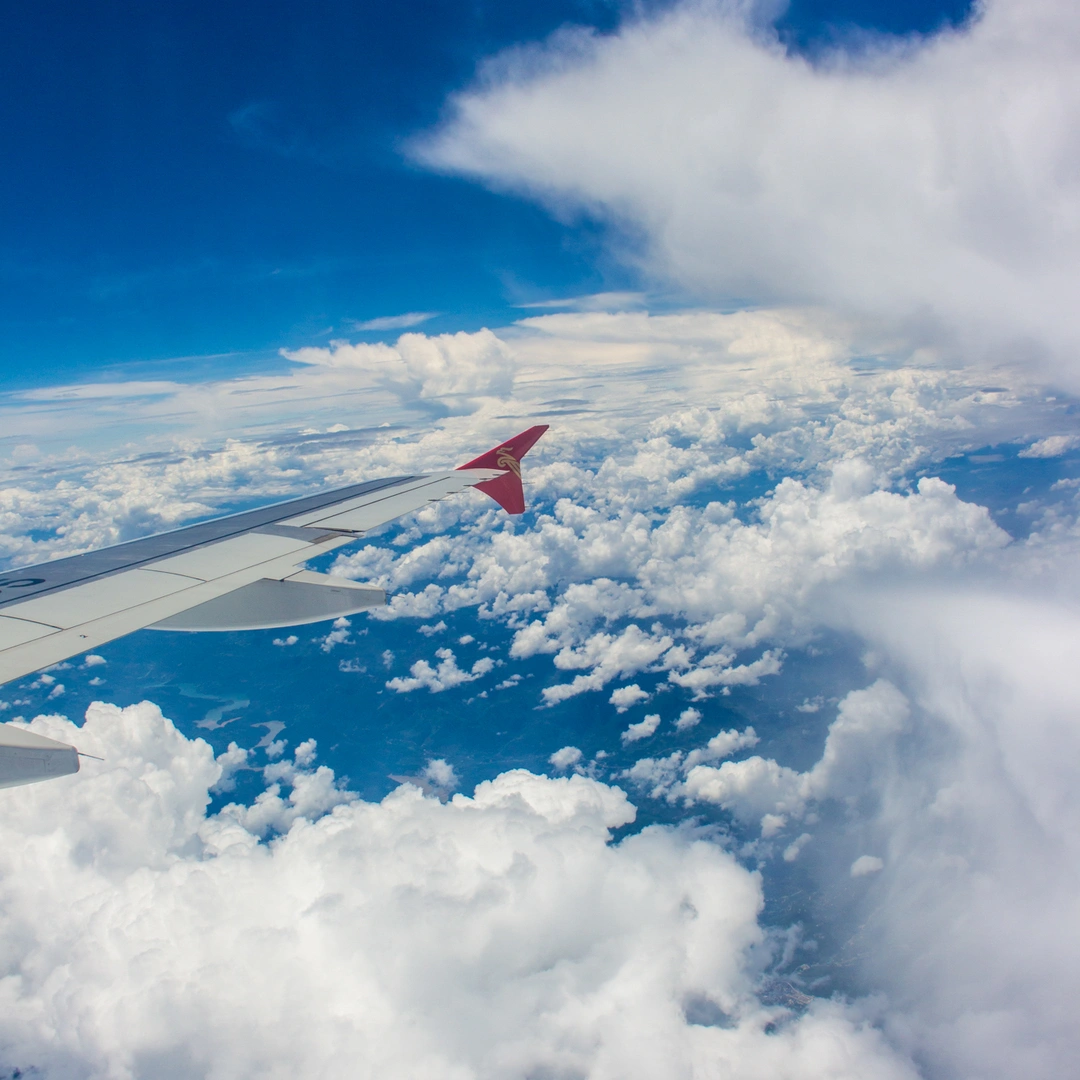
When the plane landed in Lijiang, the sky was overcast, and the mountains loomed faintly through the fog. A chill brushed against my face, and I took a deep breath—escaping the scorching summer, finally free from the grip of air conditioning.
Without a pre-booked guesthouse or a planned route, I casually called a ride-hailing car, and a female driver accepted quickly. Near the north gate of Dayan Old Town, we picked a guesthouse on a whim. Dragging two suitcases to the north gate was a smart move—the cobblestone streets inside the old town make dragging luggage a nightmare, while the north gate opens directly onto the road, making taxis and shared rides easy to find.
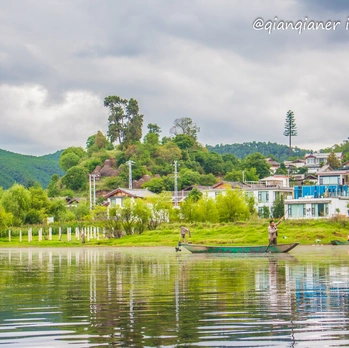
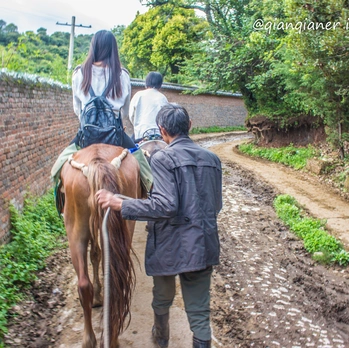
By afternoon, the weather cleared (in Yunnan's rainy season, a dry day is a blessing), and we joined a small tour to Lashihai. The lake wasn't breathtaking, but the horseback riding and boating were enjoyable. The water was crystal clear; rowing to the center felt like floating in a mirror, above the water and among the clouds. It was my first time riding a horse on mountain trails—the bumpy ride was novel at first, but soon my backside was sore. The circular route meant I had to grit my teeth and endure.
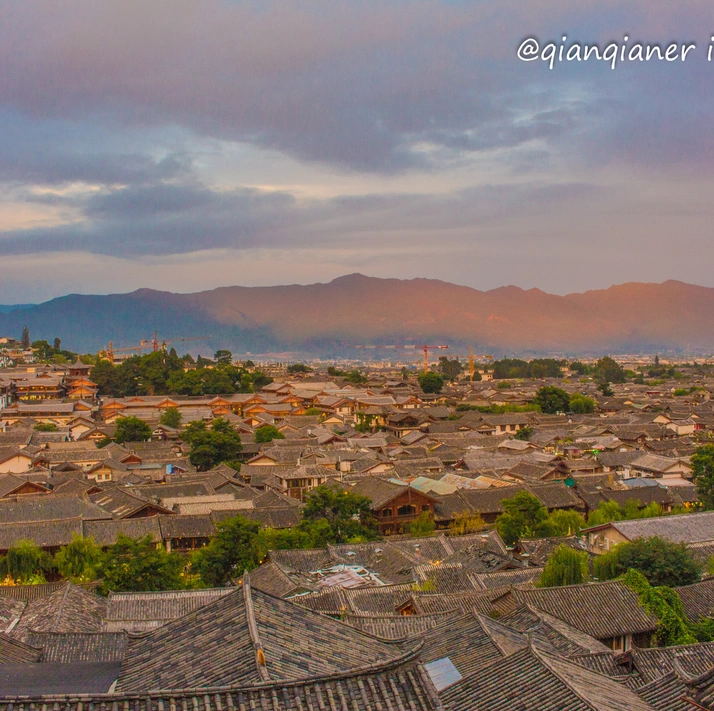
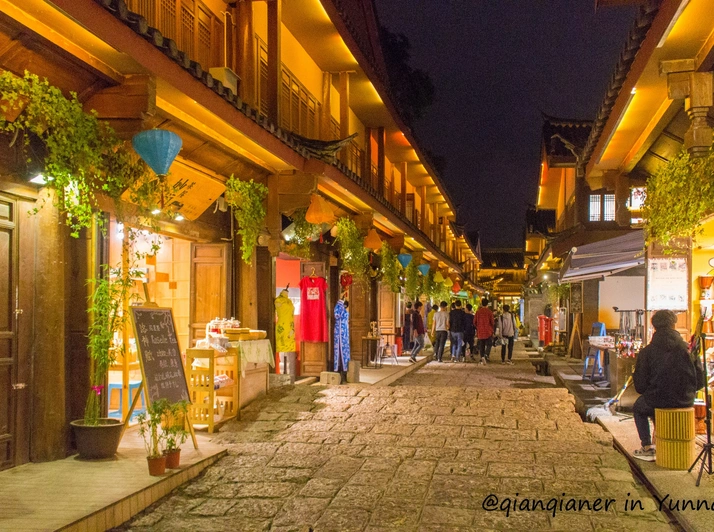
Back in the old town that evening, we strolled from the north gate to Dayan Flower Lane. Standing on the viewing platform, I saw the old town's nightscape for the first time—even if it wasn't the most beautiful, it will always be the most breathtaking.
Day 2: The Old Town in the Rain, and the Tranquility of Shuhe
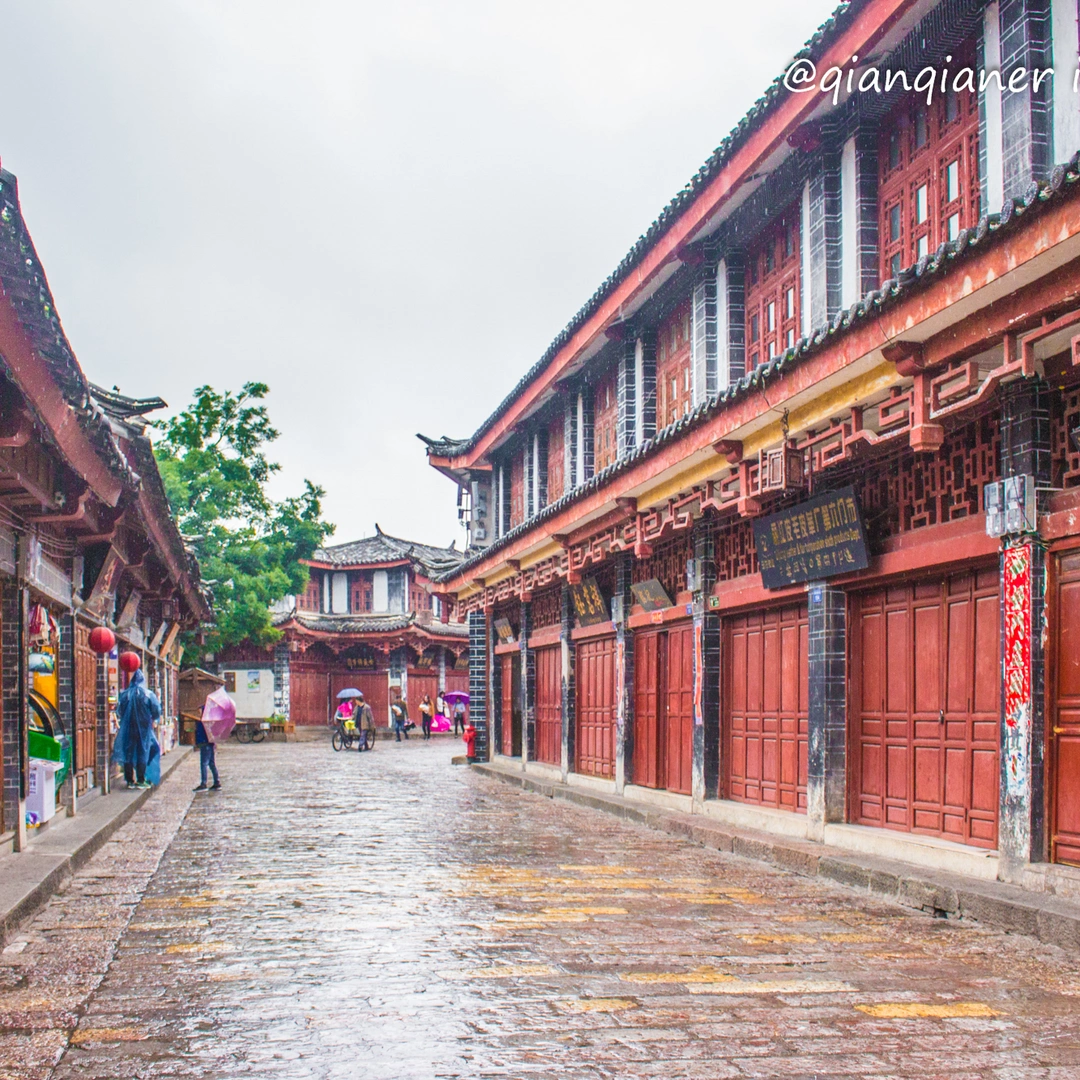
I woke to the sound of rain pattering. We grabbed umbrellas and walked into the nearly empty old town—no street vendors playing "Little Baby" on loop, no girls drumming, the souvenir shops shuttered, only a team of young patrol officers passing by in quiet unison. The rain washed away the commercial veneer, revealing the old town's质朴 simplicity, almost surreal.
Near Sifang Street, we ducked into a shop for crossing-the-bridge rice noodles (过桥米线). Little did we know that this seemingly harmless noodle shop by day would transform into a roaring bar by night. Sitting by the window, each pane framed a picture, but the taste of the noodles has since faded from memory—probably just average.
After the meal, we turned into a small alley, unaware that this was the famous bar street. In the early morning, it held all the old town's beauty. We wanted to climb Lion Hill for a panoramic view, but the rain intensified, so we wandered aimlessly along Xinhua Road near the lower section of Huangshan, peeking into a few guesthouses for their views. The rain grew heavier, soaking our clothes, yet my heart secretly delighted in the scattered rooftops before me.
Lunch was a casual affair on the way back. We ordered some Yunnan specialties, only to be deeply disappointed—the cured pork ribs (腊排骨) were bland, the seasoning failing to penetrate the meat. But the "water spinach" (水性杨花, a type of aquatic wild vegetable) was a pleasant surprise, and I ordered it with every meal thereafter. Naxi rice sausage (纳西米肠) was soft and chewy, while Lijiang baba (丽江粑粑, a type of flatbread) was crispy on the outside and soft inside—the sweet version was also good.
In the afternoon, on a whim, we headed to Shuhe Ancient Town. Many say Shuhe is like the old Dayan used to be, but to me, it had a unique, otherworldly charm—perhaps because of the rain. Distant mountain shadows loomed through the mist, the streets were quiet, and the stillness was deeply soothing. Scarves and shawls were also cheaper here than in Dayan.
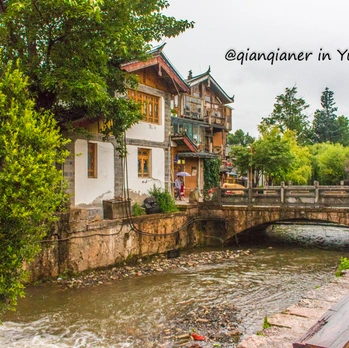
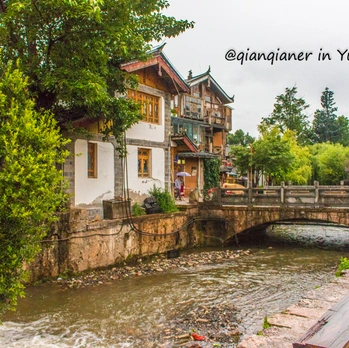
For dinner, we followed Dianping to "Mom Dai's Place" (呆呆妈妈家), a decade-old establishment. Sitting by the window, a stream flowed past just outside, and on a small stone bridge, a couple was taking wedding photos—the groom gently kissed his bride's forehead, freezing a perfect moment. The steamed snow fish (清蒸雪山鱼) was tender and fresh; we finished the whole fish between us. The Naxi mixed vegetable soup (纳西杂菜汤) was light and sweet, a large bowl we couldn't finish. The porcini mushroom fried rice (牛肝菌炒饭) arrived in a small basket-like pot, fragrant with the earthy aroma of mushrooms.
Day 3: Lugu Lake, a Glimpse That Lasts a Lifetime
The Jiantu bus allowed us to pre-select seats, so we chose the front row. The mountain road twisted and turned, and I felt like I was about to be "flung" off the cliff at every bend—that's part of the bus's charm; a low-riding car can't offer such thrill. We passed the Shiba Wan (Eighteen Bends) viewing platform, gazing at the distant mountains, though the weather was too poor to see the snow-capped peaks.
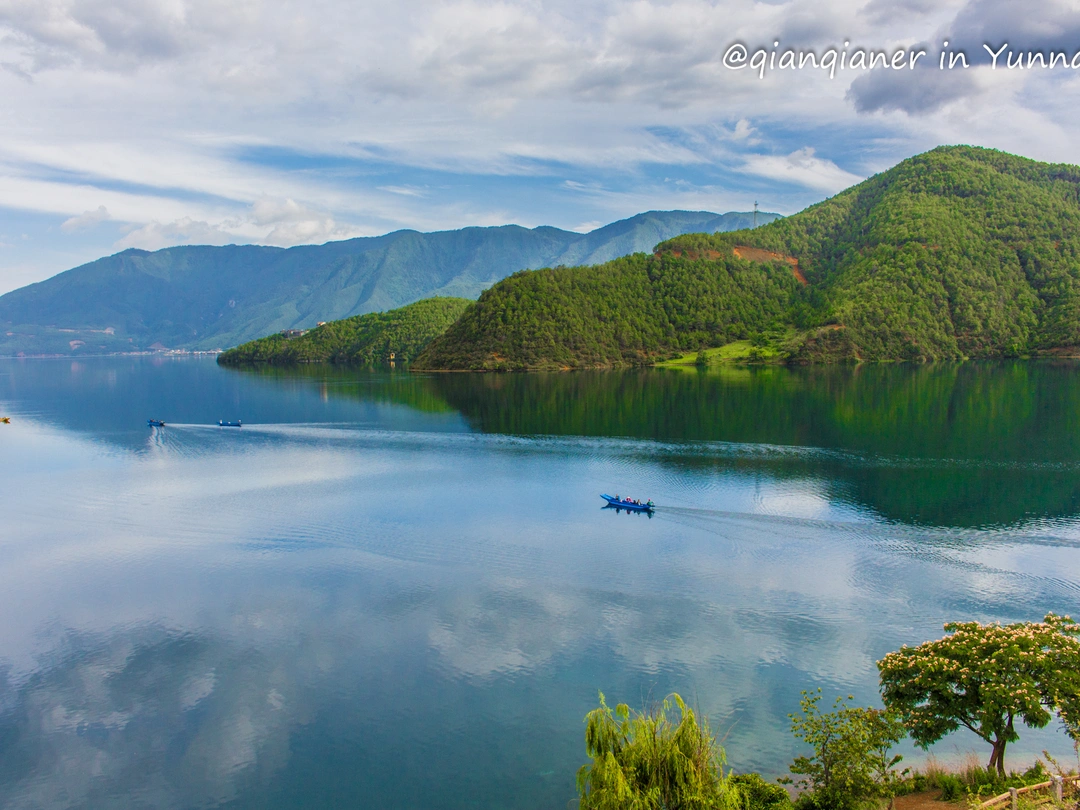
Finally, I saw the Lugu Lake I had longed for. My yearning for it was seeded years ago while reading a novel by Qi Jingnian. At first glance, squeezed among the crowd, my heart felt nothing—even a hint of disappointment. But the next moment, it captured my soul completely. It was too beautiful.
Once again, we set off without a booked guesthouse. The bus only went to Daluoshui; to reach Lige Island, we needed to transfer to a minivan. A young couple on the same bus had booked a guesthouse on Lige Island, and we decided to join them without much hesitation. They were from Beijing, hadn't planned much, bought their return tickets the day before, and booked the highly-rated "Lige彼岸 Guesthouse" (里格彼岸客栈). After chatting on the minivan, they invited us to check it out—and once we saw it, we couldn't tear ourselves away.
彼岸 Guesthouse sits at the very tip of Lige Island, and the "Still Water Room" (止水房) is the room closest to the water. Three glass walls, an unrailed terrace, and the waters of Lugu Lake right beneath your feet—a true "overwater room." We hesitated briefly but decided to stay, despite the steep price.
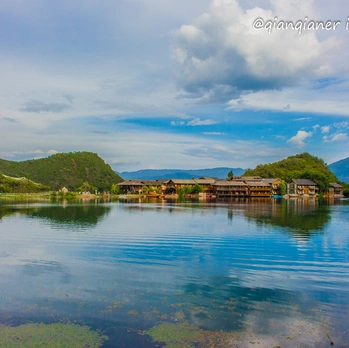
It was still early, so we headed to the Lige Viewing Platform. The sky, which had been overcast, suddenly cleared. Looking back at Lige Island, I barely dared to blink—afraid this beauty might be a mirage. From the platform, the view widened: lake, mountains, solitary islands, and wooden boats all laid out before us. A pig-trough boat (猪槽船) glided slowly across the mirror-like lake, leaving a long ripple in its wake, as if carrying ancient stories.
We descended from the platform and found a barbecue joint on the peninsula to order takeout. While waiting, I tried highland barley wine (青稞酒)—sweet and pleasant. The barbecue was average, but the Moshi baba (摩梭粑粑) was worth trying—soft, slightly sweet, and completely different from Lijiang baba.
That night, I saw a sight that almost made me cry from the mountainside. The path to the viewing platform had no lights, so I climbed a short distance in the dark. Head down, I trudged upward. When I looked up again, the pitch-black night had suddenly brightened—it was the moon! For the first time, I watched the moon rise, in such a beautiful and tranquil place. The moon rises as the sun sets; the sun rises as the moon sets. In that moment, I felt that such a life was enough.
We sat silently on a rock, watching the moon climb halfway into the sky before reluctantly leaving. Back in our room, I sat on the high stool on the terrace, eating dried apple rings made by a Moshi elder, facing the full moon and its reflection in the water. It was so beautiful that we didn't even want to close the curtains—the moonlight gently illuminated half the room.
The next morning, dawn light streamed through the glass, waking us. Opening my eyes, I was greeted by a dreamlike view. Lying in bed, I could feel the new day arriving—though the sun never fully emerged, this "sunrise" was still absolutely wonderful.
Day 4: Cycling Around Lugu Lake, Meeting Water Spinach
The young couple contacted Jiantu, and we all returned to Daluoshui together. After storing our luggage, we rented four bicycles, intending to ride to the Grass Sea (草海)—my earliest memory of Lugu Lake was a scene of paddling a pig-trough boat through the reeds.
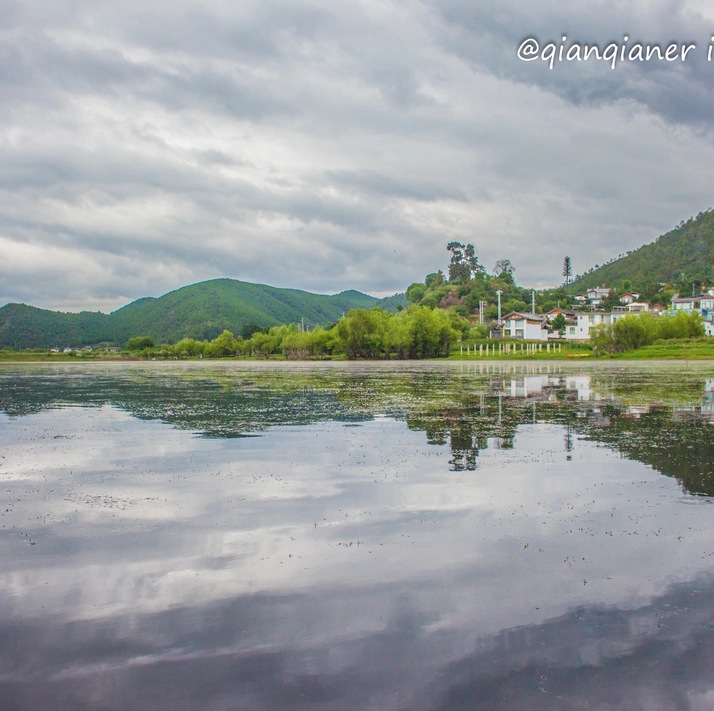
But distance, time, and steep slopes limited our plans. We made it to Sanjia Bay before a light rain forced us to turn back. Still, even that short stretch offered stunning scenery. By the lakeshore in Daluoshui, I saw many "living" water spinach (水性杨花)—white petals floating on the water, swaying with the waves.
Locals were selling dried rose petals, dried water spinach, and fresh red plums along the lakeside—sweet and tangy, absolutely delicious.
For lunch, we found a highly-rated restaurant and ordered a group套餐 for four. The Moshi-style chicken with rice cakes (摩梭饵块鸡) was fragrant but a bit salty, though it paired well with rice. The fried tree bark with eggs (树皮炒蛋) was unique—I'd never eaten tree bark before, but we finished the plate. The stir-fried wild yak meat (爆炒野生牦牛肉) was too salty. The water spinach was stir-fried just right, fresh and generous in portion—the best I had during the entire trip.
Lugu Lake, I fell in love.
Day 5: Dayan Old Town, a Leisurely Day
After two days at Lugu Lake, we were a bit tired, so we took a rest day in Lijiang. Truth be told, even though we started in Dayan, we hadn't really explored it properly. Jade Dragon Snow Mountain was ruled out due to the unpredictable weather, so we spent the day wandering the old town's streets at a leisurely pace.
For breakfast, we had rice noodles and buckwheat cake (荞糕)—the minced pork in the noodles was fragrant, and the buckwheat cake was like a sponge cake. Afterward, we walked to Sifang Street, where we encountered Naxi elders dancing—their version of "square dancing," perhaps. In the old town's main square, it had a unique charm.
Under the overcast sky, we explored every corner of Dayan. We had our second meal of the day in the afternoon, choosing a restaurant recommended online. The dishes were quite unique. The water spinach and taro soup (水性杨花芋头汤) was light and natural, though I still prefer water spinach stir-fried. The salted duck egg mashed potatoes (咸鸭蛋土豆泥) were surprisingly delicious—not at all jarring. But the jasmine flower scrambled eggs (茉莉花炒蛋) didn't suit my palate—if you love jasmine flavor, you might be enchanted.
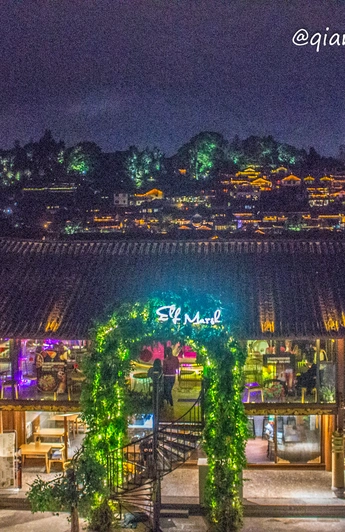
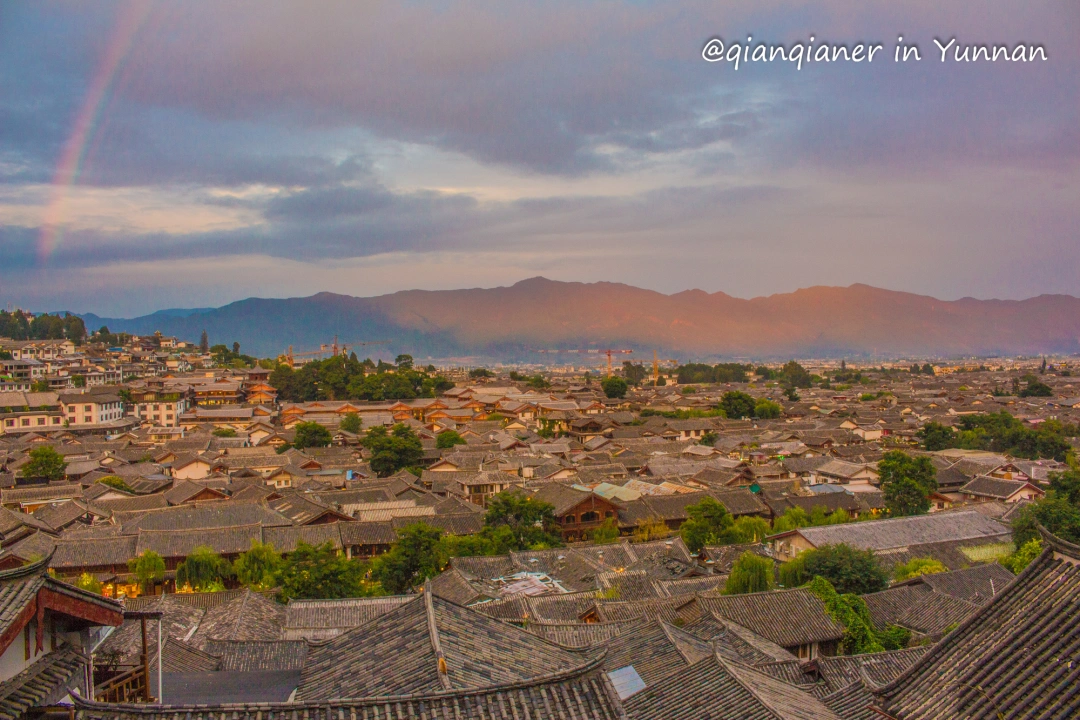
In the evening, I climbed to a high point hoping to see the night view. The spot had offered a great view when I passed by during the day. Night hadn't fallen yet, but I unexpectedly caught a rainbow—the sun, which hadn't shown its face all day, cast its last rays on a distant mountaintop. I stood there, unable to look away. As darkness crept in and lights began to flicker, the old town revealed another, more alluring face.
Descending from the high point, I followed the river to the bar street—a dazzling scene of neon and noise, a world apart from daytime. Turning into the street leading back to our guesthouse, the old town in the night was bathed in warm tones. On a rainless evening, all the travelers had emerged.
Day 6: Shangri-La, Tiger Leaping Gorge, and Dukezong
After a day of rest, we headed to Shangri-La. Passing through Tiger Leaping Gorge (虎跳峡) along the way, we stopped to visit. The parking lot sits above the canyon; the descent was manageable, but the climb back up left us breathless—leave plenty of time and take it slow.
We visited during a period when the water wasn't at its peak, yet it was still awe-inspiring. We arrived in Shangri-La around 4 PM, too late for distant attractions, so we explored Dukezong Ancient Town. Though it inevitably lacks some charm compared to before the fire, the Guishan Temple and the world's largest prayer wheel remain.
The high-altitude sky was a brilliant blue; thick clouds pressed low, even taking the shape of a "lion" hovering over the prayer wheel. At over 3,000 meters above sea level, moving up and down requires patience. We circled Guishan Temple from left to right, taking in the full view of the prayer wheel—it's truly impossible to turn without enough people. When we visited, the crowd was moderate. Some young men resting on the platform saw us struggling and silently joined in, turning it three rounds, then three more.
From the hilltop, looking down at today's Dukezong, I couldn't help but sigh at its mediocrity. I'm fascinated by ancient towns, but this one seemed to have rushed headlong into destruction before enough people could fall in love with it in a tangible way.
Half the sky was blazing sun, the other half overcast. Sensing bad weather, we hurried down. What came wasn't rain, but a barrage of hail—thankfully, we had left just in time.
We had pre-booked a guesthouse in Shangri-La online—a new, industrial-style place called "An Zhi Ruo Su" (安之若宿). The few reviews were genuinely positive; the new facilities were good, and the price was reasonable. In fact, it exceeded our expectations.
We stayed two nights. When the young owner, Xiao Xiao Shan (小小山), had free time, he would cook and eat with us—home-style dishes, simple and delicious. As we ate, we chatted about everything under the sun; wine and stories are a perfect match. On cold, unfamiliar ground, such warm evenings are rare. Xiao Xiao Shan was only in his twenties but had a wealth of experience—choices after the college entrance exam, working alone in the south, a perilous cycling trip to Tibet, and finally arriving in Shangri-La. We listened, captivated by his past.
Day 7: Potatso National Park, Forests and Squirrels
We had planned to visit both Napahai and Potatso, but time was short, so we skipped the former. Potatso National Park has a ticket office on the right side of Moonlight Square, which includes round-trip bus fare. We bought tickets that morning and wandered the old town before departure—there were still remnants of Tibetan culture here.
You can spend most of the day at Potatso, but since it's a managed park, the scenery, while beautiful, lacks a certain wildness. Of the three main areas, Shudu Lake and Bita Lake offer walking trails, while Milithang Prairie can only be viewed from a distance. We chose to walk both—the morning at Shudu Lake was sunny, but the afternoon brought a light drizzle.
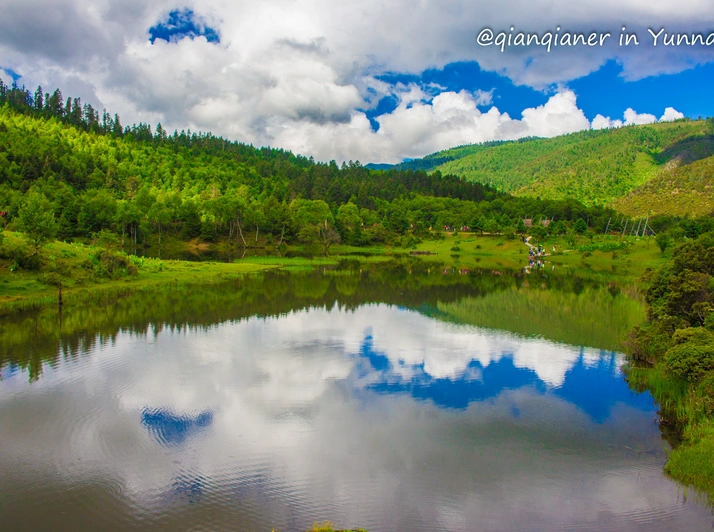
Beyond the lovely scenery, Potatso boasts a variety of unique plants and flowers, as well as adorable squirrels popping up everywhere. Near the exit of Bita Lake, we encountered quite a few of them.
Day 8: Songzanlin Monastery, Bidding Farewell to the Snow Mountains
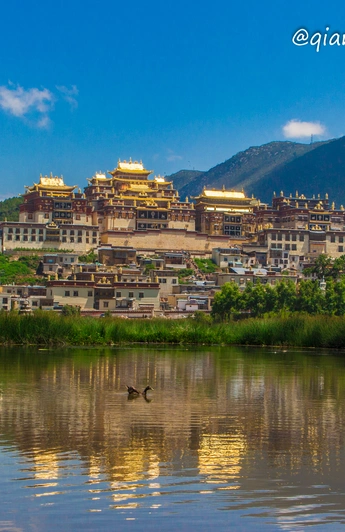
Our last half-day in Shangri-La was devoted entirely to Songzanlin Monastery—known as the "Little Potala Palace," and a place I had long yearned to see. Half a day was enough.
Following a local guide with sun-darkened skin, we slowly made our way up to the golden-roofed main hall. My understanding of religion is limited, but I love the profound depth of ancient temples—they carry a solemn grandeur that awes even non-believers. Though I couldn't experience the devotion of prostrating at every step, climbing the long staircase gave me a small taste of the difficulty of a pilgrimage.
At the top are three main halls: the Tsochen Hall, the Tsongkhapa Hall, and the Shakyamuni Hall. Later in the day, some monks engaged in debate in front of the hall—not as grand as the famous Sera Monastery debates, but it was fascinating to witness for the first time.
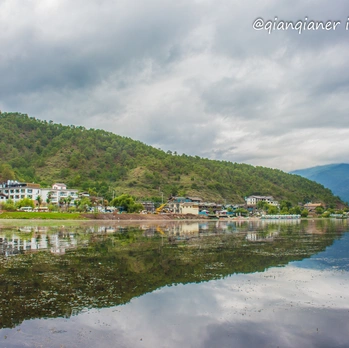
A large lake sits in front of the monastery; on a clear day, you can capture beautiful reflections. I walked around the lake, and with the reflection as a backdrop, the monastery took on a softer, more graceful beauty.
In the afternoon, we set off back to Lijiang. I thought our Shangri-La chapter was closed, but on the road, I finally saw the scenery I had been longing for throughout the trip—the snow mountains, veiled by clouds, yet still captivating. Travel surprises always come when you least expect them.
Oh, and across from the main gate of Dukezong Ancient Town, there's a beef shop (likely the only one in the area). Their beef jerky is cheap and delicious. I bought several bags, finished them shortly after returning home, and still occasionally crave them.
For our last meal in Lijiang, we found a cozy, popular local eatery and ate slowly. The sour plum drink (酸梅汤) was rich with real plum pulp; the Pu'er crispy shrimp (普洱香酥虾) was crunchy, though the tea flavor didn't come through strongly. The seasonal vegetable and tofu soup (时令蔬菜豆腐汤) was light and refreshing. I finally got to try chicken bean jelly (鸡豆凉粉)—cool and smooth. The "old man's head" mushroom (老人头, a type of black mushroom) was just okay.
Epilogue: Yunnan, Never Tiresome
Yunnan was a place I had thought about visiting a thousand times but never got around to. Perhaps because I had thought about it so much, I had also been discouraged by countless negative reports. So when I finally made the trip, there was no moment of shattered illusions. With an empty mind, I could fully absorb one unexpected little surprise after another.
Eight days—from Lijiang's rain and mist to Lugu Lake's moonlight, from Shangri-La's hail to Songzanlin's reflection—every scene confirmed the saying: The unforgettable August in Yunnan is right here.
Cost Breakdown (Excluding Round-Trip Flights and Shopping)
Total: Approximately 2,300 RMB per person
- Transportation: Airport/hotel ride-hailing 64.5 RMB, Shuhe round-trip express 50 RMB, Lugu Lake round-trip bus 278 RMB, Shangri-La one-way bus 138 RMB, return ride-hailing 184.4 RMB, public bus 4 RMB
- Accommodation: Lijiang 5 nights 626 RMB, Lugu Lake 1 night 1,080 RMB, Shangri-La 2 nights 360 RMB
- Food: Multiple meals in Lijiang approx. 289 RMB (rest not recorded in detail)
Finally, if you have any questions, feel free to leave a comment. The beauty of travel lies in sharing—the roads you've walked, the sights you've seen, the people you've met—they all deserve to be remembered and passed on.
You should also read:
The Meaning of Travel – A Tengchong Story: A Journey of the Heart and Personal Growth
The Meaning of Travel – A Tengchong Story: A Journey of the Heart and Personal Growth Setting Out, Only to Return a Better Self Some say travel is nothing more than leaving a place you're tired of, only to go to a place where others…
Continue reading...
A Spiritual Journey to Lugu Lake in Lijiang: Experiencing the Legend of the Kingdom of Women! (Reproduction and Hotlinking Prohibited)
A Spiritual Journey to Lugu Lake in Lijiang: Experiencing the Legend of the Kingdom of Women! (Reproduction and Hotlinking Prohibited) Off-road自驾, food, hotel and民宿 reviews, Featured Traveler, Tank 300 owner, 200,000 km of self-driving experience. WeChat: y01294987 Ninglang Yi Autonomous County 2010.11.08 · 7 days…
Continue reading...
Hiking Around Lugu Lake: Measuring This Mysterious Highland Pearl on Foot
Hiking Around Lugu Lake: Measuring This Mysterious Highland Pearl on Foot Introduction: A Date with the Lake At the border between Yunnan and Sichuan provinces lies a highland lake embraced by mountains, embedded like a sapphire in the folds of the Hengduan mountain range. Here,…
Continue reading...