The Wind Rises: A Gentle Encounter with Rice Fields and Breezes in May, Dali
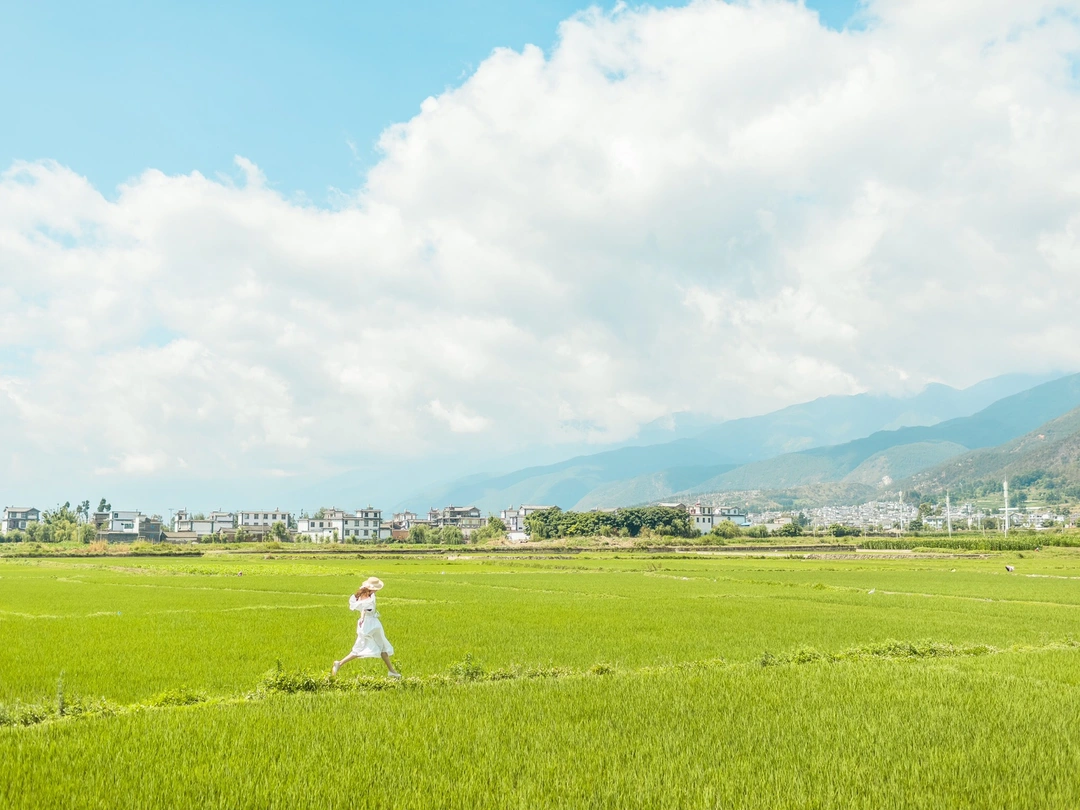
The Wind Rises: A Gentle Encounter with Rice Fields and Breezes in May, Dali
Prologue: Why Dali Again?
The pandemic had trapped everyone in cages of concrete and steel for far too long. When the thought of "getting out" took root in my mind, I didn't hesitate for a moment — Dali, it had to be Dali.
Nine trips to Yunnan, and I'd seen the golden ginkgo leaves carpeting the ancient paths of Tengchong in late autumn, witnessed the surreal June snowfall atop Meili Snow Mountain, and soaked in the endless charms of Lijiang. But Dali has always been the softest spot in my heart. I checked the flights: a round trip from Chongqing to Dali would cost over a thousand yuan, while a round trip to Lijiang was only three hundred. Even better, the pandemic had sent guesthouse prices plummeting. So, with a ticket to Lijiang, a rental car booked through Mafengwo, and a heart yearning to slow down, this spontaneous journey was born.
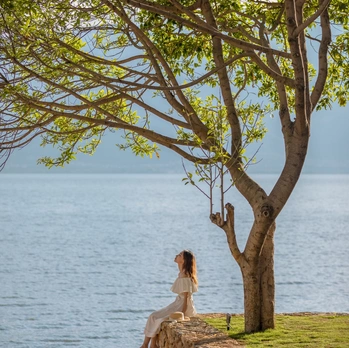
Some say you never truly understand why so many people call Dali their spiritual home until you turn your back to the Cangshan Mountains, face Erhai Lake, wander the ancient town, lose yourself in the fishing villages, and simply let time slip away without purpose.
Chapter One: Baisha Ancient Town — The Warm Glow of a Rainy Night

First Encounter · Arrival in the Rain
Stepping off the plane at Sanyi Airport, a chill wrapped in fine rain greeted me. This was my third time setting foot on this land of romance. Dragging my suitcase through layers of health code checks and temperature screenings, my very first thought upon leaving the airport was — handmade yogurt.
It was my first time renting a car in China, and the process was far simpler than abroad. Through Mafengwo, my Sesame Credit waived the deposit, and I didn't even need a credit card. A signature, a fingerprint, and the staff kindly handed the contract through the car window for me to sign. The rain in Dali, even as it drizzled on, couldn't dampen my spirits.
A forty-minute drive along the Dali-Lijiang Expressway brought me to Baisha Ancient Town just before dark. At the end of a winding path lay the Bansuo Guesthouse, which I'd been longing to visit. The owner held an umbrella as he led us to a parking spot, while his wife brought out steaming bowls of rice noodles (米线). The small courtyard glowed with warm yellow lights, and a few cats curled up by the stove — yes, this was exactly the kind of cozy, lived-in warmth I was after.
On a rainy night, there's nothing better than crawling into bed early. Lying there, listening to the wind and rain outside the window, I almost felt like I was drifting into a dream of "iron horses crossing frozen rivers" — a line from an ancient Chinese poem.
Slow Time · The Softness of the Naxi Old Kingdom
The next morning, I woke to the patter of rain. In my dreams, the little town had seen rain, blossoms, wind, and frost — and even the scent of roasted sweet potatoes.
Breakfast was stir-fried rice noodles with congee. The corn was sweet and refreshing, and a vase on the table held freshly picked flowers. The owner kept three cats and a dog. The dog, named "Jiuwo" (Dimple), was jealous of the cats and refused to eat dog food, instead stealing theirs. Whenever guests went to explore the old town, it would happily tag along as a guide. One of the cats, called "Qiuqiu" (Ball), had the face of a Garfield cat and the body of a British Shorthair. When eating, its flat face meant it would smear food all over itself — one bite, then a lick to clean up, another bite, another lick.
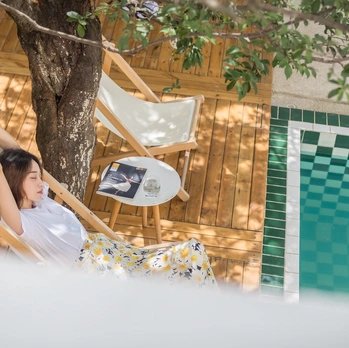
The weather forecast predicted rain all day, so I lazily finished breakfast and lay in bed listening to the raindrops. They fell from the eaves like strings of pearls. Listening to the wind, watching the rain, a book in hand — that was enough to while away the long hours.
Strolling Through Baisha · Lijiang Untouched by Commercialism
In the afternoon, I borrowed an umbrella from the owner and walked ten minutes to the old town. I'd been to Lijiang three times before, but the previous two visits were to the lively Shuhe — with its neon-lit bars and bustling night markets. This time, I wanted to experience a more ancient, unpolished Lijiang.
Time in Baisha moves slowly. On the stone-paved streets, elderly women sat in the corners of their courtyards, soaking up the sun. Woodcarvers focused intently on their craft, while young artists quietly worked on their handmade goods. In the distance, the mist-shrouded Jade Dragon Snow Mountain intertwined with the weathered old alleys. There were no hurried footsteps — only the ebb and flow of time itself.
Unlike other old towns, there was no constant music playing in the streets. Instead, there were restaurants and small artisan shops. Vendors selling antiques and tie-dye shawls sat together playing cards, seemingly unconcerned about how many customers came by. Naxi elders gathered in the town center, chatting about everyday life.
I finally got my hands on that handmade yogurt I'd been craving — thick, slightly sweet, with a hint of strawberry. The café was quiet, with rain streaming down the windows. If you're willing to spend an afternoon wandering through Baisha, you'll discover a质朴 (simple and unadorned) way of life that's both peaceful and profound.
The Poet-Bun Maker · A Bun in One Hand, Poetry in the Other
The guesthouse owner told me about a local character in town — "the poet-bun maker," who makes steamed buns (馒头) while writing poetry. His business was so good that if you arrived late, everything was sold out. When the rain let up a little, I followed the navigation to his shop. A small sign read: "My Buns, My Poetry." Below it, a note explained: "A bun in one hand, poetry in the other."
Next to the bun shop was a small restaurant doing brisk business. I ordered three dishes and a soup — the fried sticky rice cake with brown sugar was absolutely delicious! I asked the owner if he sold it, but he said it was handmade by an elderly woman at the market and didn't keep long. Not one to give up easily, I searched online for vacuum-packed versions and ordered a few bags to see if they tasted the same.
Chapter Two: The Wind Rises — Golden Wheat Fields Beneath the Snow Mountain
Clear Skies · A Ghibli Fairy Tale
No alarm clock needed — I was woken by the chirping of cicadas and insects. Staying on the first floor, the large floor-to-ceiling windows let in every bit of morning light. I lazily went out for breakfast, only to find the cats and dogs sprawled in the middle of the courtyard, blocking the way.
The courtyard was bathed in soft, warm sunlight. The succulents by the pond were plump and full. Seeing the sun, I knew it was going to be a beautiful day.
Breakfast was served in the middle of a wheat field. I hadn't realized yesterday, because of the rain, that the rooftop terrace offered a view of a golden wheat field beneath the snow-capped mountains. Today's breakfast was Western-style. The owner's wife brewed coffee by hand, which attracted Qiuqiu the cat — in the brief moment I turned to take a photo, it sneaked a sip!
White clouds drifted quickly across the sky, revealing the peak of Jade Dragon Snow Mountain. The snow-capped mountain, the rice fields, the sea of clouds — the scene looked like something straight out of Hayao Miyazaki's animated film The Wind Rises. An autumn landscape in the middle of summer — the soft wheat fields and sunlight made it hard to tell what season it was.
The rooftop also had a small terrace with a mirrored surface, perfect for capturing reflections of the blue sky and snowy peaks. The courtyard pool had a glass boat. No drone needed — just shooting from the second floor was enough to get a stunning shot.
Chapter Three: Shaxi — A Century-Old Hidden Gem in the Mountains
Winding Roads · Crossing Eight Hundred Mountains
Driving to Shaxi meant taking the Dali-Lijiang Expressway for sixty kilometers before switching to a provincial road. After passing through Jianchuan, the road turned into a winding forest path. The mountain road twisted and turned, with sheer cliffs on the left side. Most of the curves were over 180 degrees, and there were plenty of large trucks coming and going. Looking at the map was enough to make your head spin — nothing but 360-degree hairpin turns. If you're prone to motion sickness, make sure to bring motion sickness patches. Safety first.
After what felt like crossing eight hundred mountains, the winding path finally gave way to a straight, tree-lined asphalt road. This century-old town, hidden deep in the mountains, had an air of mystery, like a paradise cut off from the world.
Strolling Through the Old Town · The Last Stop on the Ancient Tea Horse Road
Spring in Shaxi filled the air with a gentle, tender atmosphere. White magnolias were in full bloom, and the midday sunlight, filtered through the leaves, cast dappled shadows. Stepping onto the stone-paved road, my first impression of Shaxi was — how quiet it was.
Shaxi isn't famous. The owner of a local restaurant told me there were eighteen villages in the area, each with its own history and culture. Before 2015, the only visitors were foreigners. It wasn't until 2016 that Chinese tourists started coming. After I posted about it on social media, a young woman messaged me, saying she'd once stayed in Shaxi for a week and begged me not to write about it — to keep it a secret for those who loved it. What a wonderful place, to make someone want to hide it away.
At the center of the old town stood an ancient stage, centuries old. The stage had three levels, with a Kuixing Pavilion (a traditional Chinese structure) attached to the front. Flying eaves and overlapping roofs extended outward, with fourteen upturned eaves soaring into the air. Standing in the middle and looking up, you could feel the wheel of history rolling ever forward, never stopping.
If you grew tired, you could sit on a bench in the central square, listening to elderly Bai people chat idly, sipping a cup of coffee steeped in the stories of the old streets.
Later, I came across a passage in an article: "The ancient village of Shaxi, passed down by word of mouth among explorers, has become Yunnan's last hidden paradise. Here, life is still about the simple necessities — rice, oil, salt, soy sauce, vinegar, and tea. It's home to the last market on the Ancient Tea Horse Road, where you can haggle over prices in the most原始 (primal) way, hear Bai folk songs sung by former muleteers, and if you're lucky, spot a plump black pig sprawled out in the sunlight of the old town..."
Yujin Bridge · An Oil Painting at Dusk
Tonight's accommodation was the Tianyepanshan Resort Hotel. I chose not to stay in the old town — I love rice fields and wanted more open space. The room's window offered a view of distant mountains and fields. Sitting on the windowsill under the eaves, I gazed down at the landscape spread out before me.
The Heihui River flowed from north to south through Shaxi, winding its way along the eastern edge of the old town. An ancient bridge arched across the water like a crescent moon — that was Yujin Bridge.
At dusk, Yujin Bridge, with its small bridge, flowing water, and stone-paved alleys, looked like an oil painting. A villager carrying a bamboo basket happened to cross the bridge at that moment, evoking in my mind images of merchants and their horses crossing the same bridge in days gone by. Yujin Bridge was the only route for generations of Bai people living in Shaxi to reach their fields and go about their work. The stone slabs of the bridge, worn smooth and pitted by countless carts, horses, and footsteps, gleamed faintly. It carried the weight of Shaxi's history, welcoming and bidding farewell to travelers year after year.
This was once a strategic pass on the route from Dali to Tibet. Countless mule caravans must have crossed it over the centuries. Time has changed everything, but the Heihui River, flowing silently beneath the bridge, has witnessed it all.
Chapter Four: Xizhou — Rice, Wheat, Blue-and-White, and a May Day in the Clouds

The Fruit Tree Guesthouse · Living with Light

In early May, I checked into a guesthouse called "Fruit Tree." Warm summer sunlight, a cup of tea — time slipped by in a daze. Staying in a place like this, with nothing but poetry and distant horizons in your heart, how could you ever care about the mundane hassles of daily life?
What did I love most about Fruit Tree? The light. Natural light. In the morning, afternoon, and evening, sunlight streamed through the soft gauze curtains, spilling onto the plush sofa. A small table, a cup of tea, a book, a kettle of water — all waiting quietly nearby.
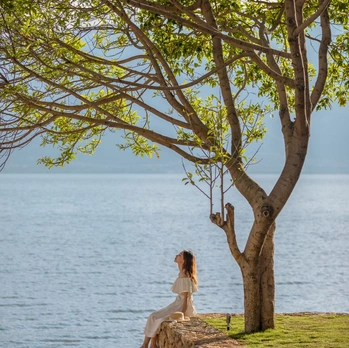
Fruit Tree had a tree that had been basking in the sun for years, weathering wind and rain, offering shade and shelter. I sat beneath it for most of the afternoon. That afternoon, I was as rich as the tree — I could afford to leisurely waste plenty of time and sunlight.
Wandering Through Xizhou · A Candy-Colored Sky
I've been to Yunnan nine times and Dali three times, but Xizhou is my favorite.
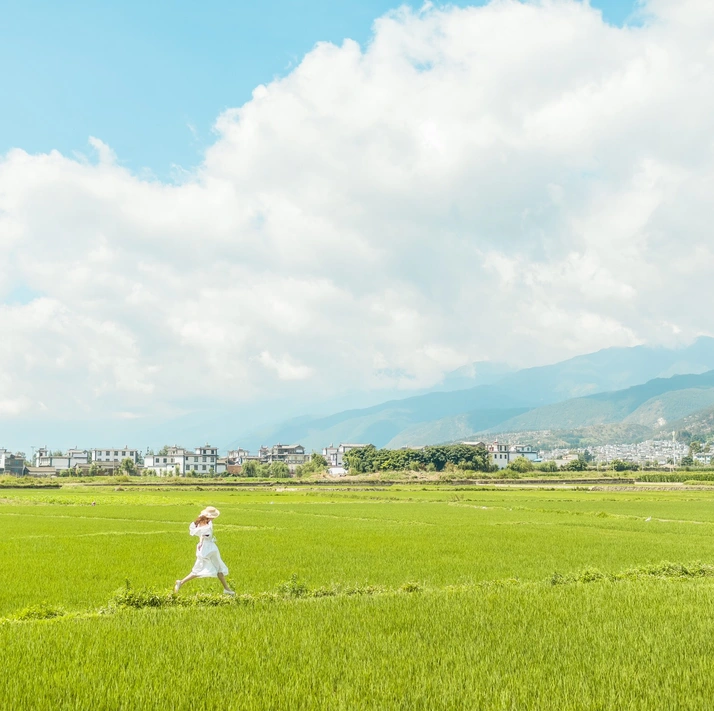
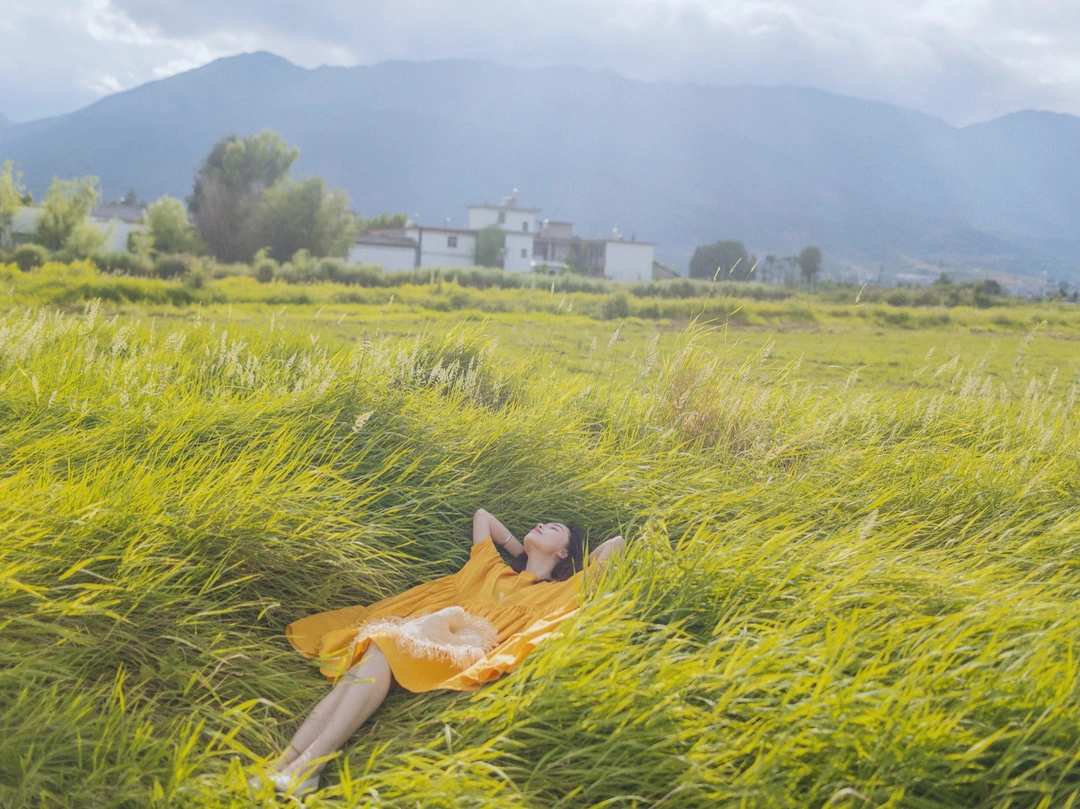
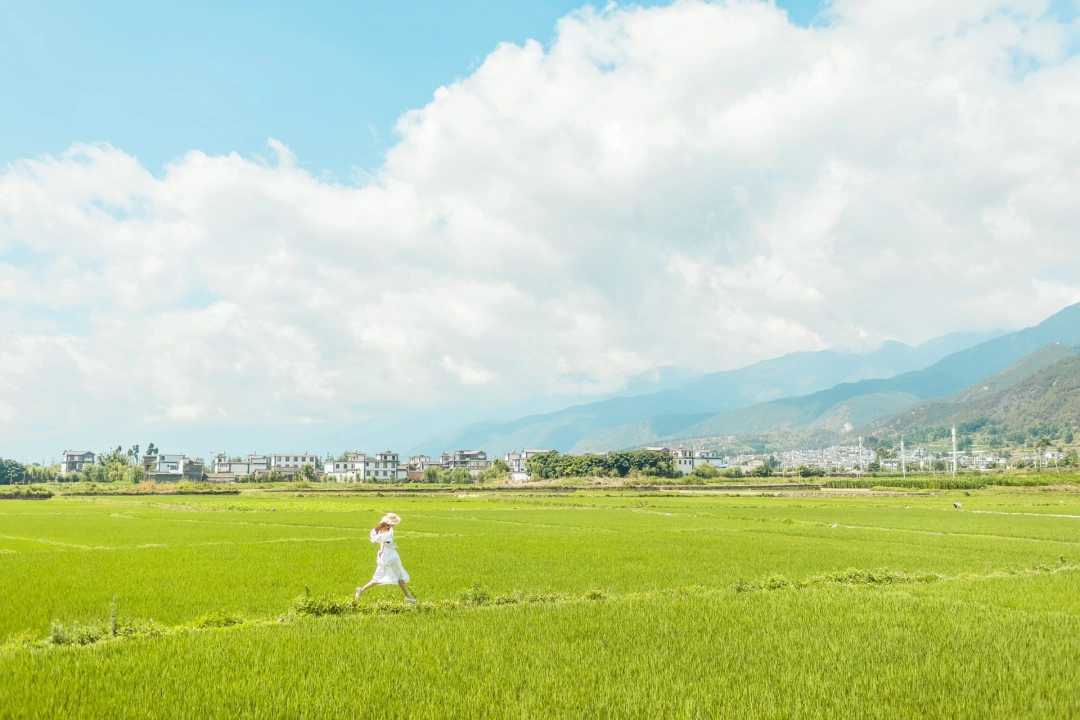
Leaving the village lanes and heading toward the fields, I strolled through the countryside of Xizhou. The sky was candy-colored, with white clouds drifting by. The Cangshan Mountains stretched into the distance. Old walls of Bai-style houses glowed with the light of bygone days. Green trees, emerald fields — and when I ran, there was the wind.
I drove to Haishe Park, which had been closed for construction since March of the previous year. All I could do was catch a distant glimpse from a patch of wild grass outside. The sky was clear, the sun bright, and the water plants lush. "Sparkling" was the only word to describe the scene. Dense water plants floated on the surface, tangled with black, withered branches — a chaotic kind of beauty.
The only reason I love Xizhou is the West Erhai Lake Road. Everyone talks about the charm of Shuanglang or Yang Liping's residence in Wase, but in my eyes, nothing compares to the roadside forests and scenery along the West Erhai Lake Road — the shallows, the wetlands, the lake, the mountains.
The Taste of Xizhou · The Warmth of Everyday Life
Xizhou's most famous snack is the Xizhou flatbread (喜洲粑粑), available in sweet and savory versions. It's made into small round cakes, brushed with sesame oil, and baked in an oil pan with charcoal heat from above and below. But it's hard to find the authentic version now — charcoal baking limits production, and with the influx of tourists, most vendors have switched to ovens, which don't give the crust the same crispness.
Between the Cangshan Mountains and Erhai Lake lie ancient villages, vast fields, and clean, beautiful tie-dye fabrics. Tie-dye (扎染) is a unique traditional dyeing technique from the Dali region, with a wide variety of intricate methods. The cloth produced through this process has rich, layered colors, and no two patterns are ever the same, even among thousands of pieces.
There's a small, somewhat famous workshop in Xizhou. From the outside, it looks like an ordinary home. Inside the courtyard, various shades of blue-dyed fabric hung on lines. When I visited, the workers were in the middle of the tie-dye process. After a brief introduction, they let me wander around freely. The building itself was arranged like a work of art, and the finished pieces were far more refined than most of what you'd see elsewhere.
The rooftop was a large terrace, surrounded by farmland, offering a panoramic view of the rural landscape.
Chapter Five: Dali Ancient Town — Liveliness with a Lazy Streak
Arriving in Dali Ancient Town, things suddenly got lively. People on the streets walked with a light, slightly lazy step. The difference between this place and Lijiang's Shuhe Ancient Town? It's lively without being noisy.
The first thing I did in the old town was eat! Spare ribs, sizzling hot from the grill, with a perfect balance of fat and lean. The hot oil lingered on my lips and teeth, and the cumin seasoning coated every inch of the ribs. And then there was the tofu — a crispy, perfectly fried shell on the outside, and soft, silky, sweet tofu on the inside. One bite, and the texture was pure bliss.

The old town was full of stylish little shops selling all kinds of fruit wines and desserts. Perhaps because of the pandemic, there weren't many people on the streets — just a few couples walking hand in hand, and some shops with their doors closed. The quiet old town had a different kind of charm.
After wandering around, I bought some plum wine for my mom and some handmade yogurt for myself. I really liked a furniture shop, with carpets and cushions in various patterns scattered around the store, exuding a lazy, relaxed vibe.
Probably everyone who settles in Dali can find the kind of life they want here. In fact, what truly makes Dali feel warm isn't the scenery or the food — it's the people who live here. They have a way of making simple, ordinary days feel comfortable and beautiful.
Chapter Six: Dusk and Starry Skies — All the Good Things in the World Are Connected
After visiting the old town, I returned to the West Erhai Lake Road. The sun was slowly sinking behind the mountains, casting a brilliant golden halo through the dark clouds. On the horizon, light gathered and broke through the clouds, and the setting sun blazed with fiery intensity.
Having a barbecue at the guesthouse was pure bliss. Friends from all corners of the country sat down together, exchanging pleasantries at first, then chatting away until they started planning their next trips together. Why do I love traveling? Because this is what travel is all about.
As night fell, the courtyard lit up. The warmth of everyday life is what truly soothes the human heart.

Sometimes I wonder how to add a different flavor to ordinary days. Often, I think I'm a sensible person — I do whatever I love without hesitation, buy what I like right away, say sweet things to the people I love, bring flowers home, invite friends on outings, take photos of beautiful scenery, and take walks at sunset.
But other times, I realize we're all just ordinary people. An old monk once said, "In the end, I still see mountains as mountains." As it's written in Water Margin: "When the tide comes on the Qiantang River, today I finally know who I am." All those years of seeing mountains as something else, of chasing stars and oceans — perhaps they were just a grand dream we gave ourselves as youths, a river of time standing between us and reality. When the dream ends, the youth grows up.
But isn't that what being young is all about? Having passionate, pure dreams, having the courage to leave on a whim, longing for all things beautiful. And in the end, embracing the warmth of everyday life doesn't mean giving up on those youthful dreams — it means understanding, after everything, that this is what life truly is.
On this night, watching fireworks against a starry sky, a song came to mind: All the Good Things in the World Are Connected to You.
Epilogue: Everything About Dali
At home, I can sleep until noon every day. But in Dali, I wake up early every morning.
I climbed to the rooftop of Fruit Tree. I loved the blue sky, the white railings — even the power lines looked like something out of an anime. At that moment, there should have been a girl with a ponytail and a backpack, wearing a Japanese-style pleated skirt, meeting a boy in a school uniform, chewing on a straw in his soda can, wearing baggy jeans, walking with a carefree swagger. And yes, the boy had to be wearing a gray tie.
I took a slow stroll through Xizhou town. When I took this photo, I only thought the colors were beautiful, without knowing the history behind it. Fortunately, after wandering through Xizhou, I understood what it meant to live poetically. Later, while researching for my travel notes, I learned about the grandeur of the Nanzhao Kingdom.
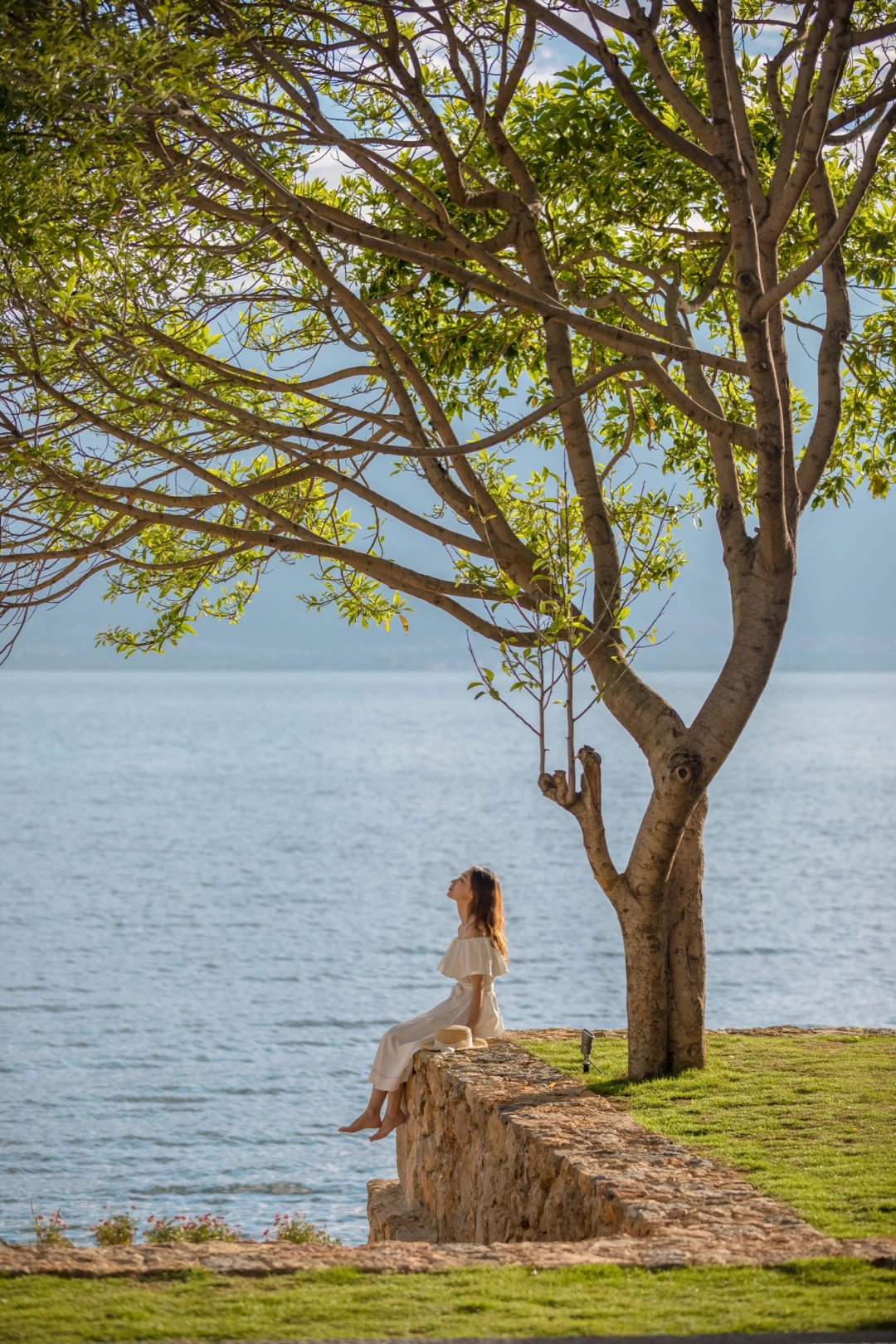
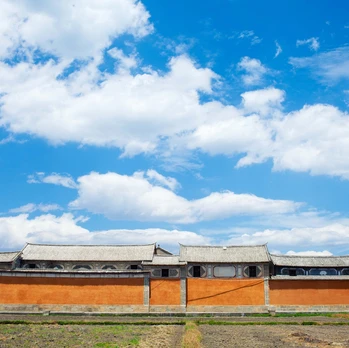
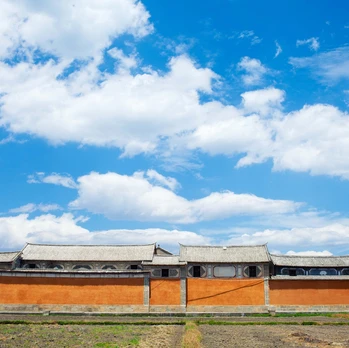
That was Xilin Yuan, the first guesthouse in Xizhou Ancient Town, converted from a traditional Bai-style dwelling. The owner was an American. Later, because of this wall, it became Xizhou's iconic photo spot. In the distance, a row of white Bai houses stood against a field of green crops, dotted with small blooming flowers. Bathed in soft light, clouds as thin as gauze wrapped around the Cangshan Mountains, and birds chirped endlessly. Under the blue sky, white clouds drifted through ancient banyan trees, casting down holy rays of light.
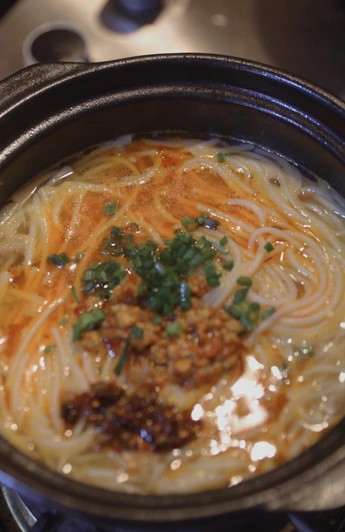
At noon, a friend took us to a Hunan-style restaurant in Xizhou. "Hunan-style" was a loose term — the flavors had already been adapted to local tastes. Stir-fried pomegranate flowers with meat, spicy stir-fried cellophane noodles, jasmine flowers with meat — dishes I never would have thought of, but they tasted amazing and went perfectly with rice.
Why do I say you must drive in Dali? Because you'll discover scenery along the way that makes you feel it was all worth it. At the foot of the snow-capped mountains, blue ripples danced freely, and endless fields swallowed the horizon.
At dusk, I headed to Shuanglang Town to settle in for the night. Shuanglang is surrounded by mountains on three sides and faces the lake on the west, standing opposite Dali Ancient Town in the distance. Sometimes I hear old people talk about Shuanglang as it was more than a decade ago: fishermen returning home, smoke rising from courtyards, Bai women in bamboo baskets weaving through the alleys — a remote, quiet, unknown fishing village. Now, it's commercialized, with comfortable lake-view hotels, restaurants, specialty shops, and crowds of people flowing along the shores of Erhai Lake.
But if you have a rich and contented heart, you can still love this little town, even amidst the noise.
Final Thoughts: What Dali Taught Me
Many people ask me, why do I go to Dali again and again?
I think the answer lies in every little detail — in the warmth of the fireplace on a rainy night in Baisha, on Yujin Bridge at dusk in Shaxi, in the breeze across the wheat fields of Xizhou, in the sunlight at the Fruit Tree Guesthouse.
Dali won't give you the answers to life, but it will make you forget the questions themselves. When you turn your back to the Cangshan Mountains and face Erhai Lake, when you waste an afternoon by the rice fields, when you sit around a fire with friends from all over the world, you'll suddenly understand —
The meaning of travel isn't how far you've gone, but how close you've come to yourself.
In May, the wind rises in Dali. The rice fields whisper in the breeze, and clouds wander across the blue sky. And I just want to slowly, lazily, let time slip away on this land.
Because at the end of time, there is peace of mind.
You should also read:
September: Finding Unexpected Warmth in Yunnan (Kunming, Dali, Shuanglang, Lijiang, Lugu Lake)
September: Finding Unexpected Warmth in Yunnan (Kunming, Dali, Shuanglang, Lijiang, Lugu Lake) Foreword: One Person's Journey, A Crowd's Story Before I set off, like every first-time solo traveler, I printed out a thick stack of travel guides and rehearsed countless possible scenarios in my head—getting…
Continue reading...
A 9-Day Yunnan Journey: From Lijiang to Dali to Tengchong – A Trip Toward Self-Reconciliation
A 9-Day Yunnan Journey: From Lijiang to Dali to Tengchong – A Trip Toward Self-Reconciliation Some say travel is simply going from a place you're tired of to a place other people are tired of. It stings to hear, but it's painfully true. Yet there's…
Continue reading...
Two Girls' Graduation Trip: Dali and Shuanglang – A Poetic Farewell to Mountains and Sea
Two Girls' Graduation Trip: Dali and Shuanglang – A Poetic Farewell to Mountains and Sea Preface: Catching the Tail of Youth, Heading South During our senior year of college, my roommate and I – two girls studying in Beijing – decided to bid farewell to…
Continue reading...