The Year of the Pig, We Met Again: A Yunnan Journey Where Wild Luxury and Memories Intertwine, from Shuanglang to Yunjie
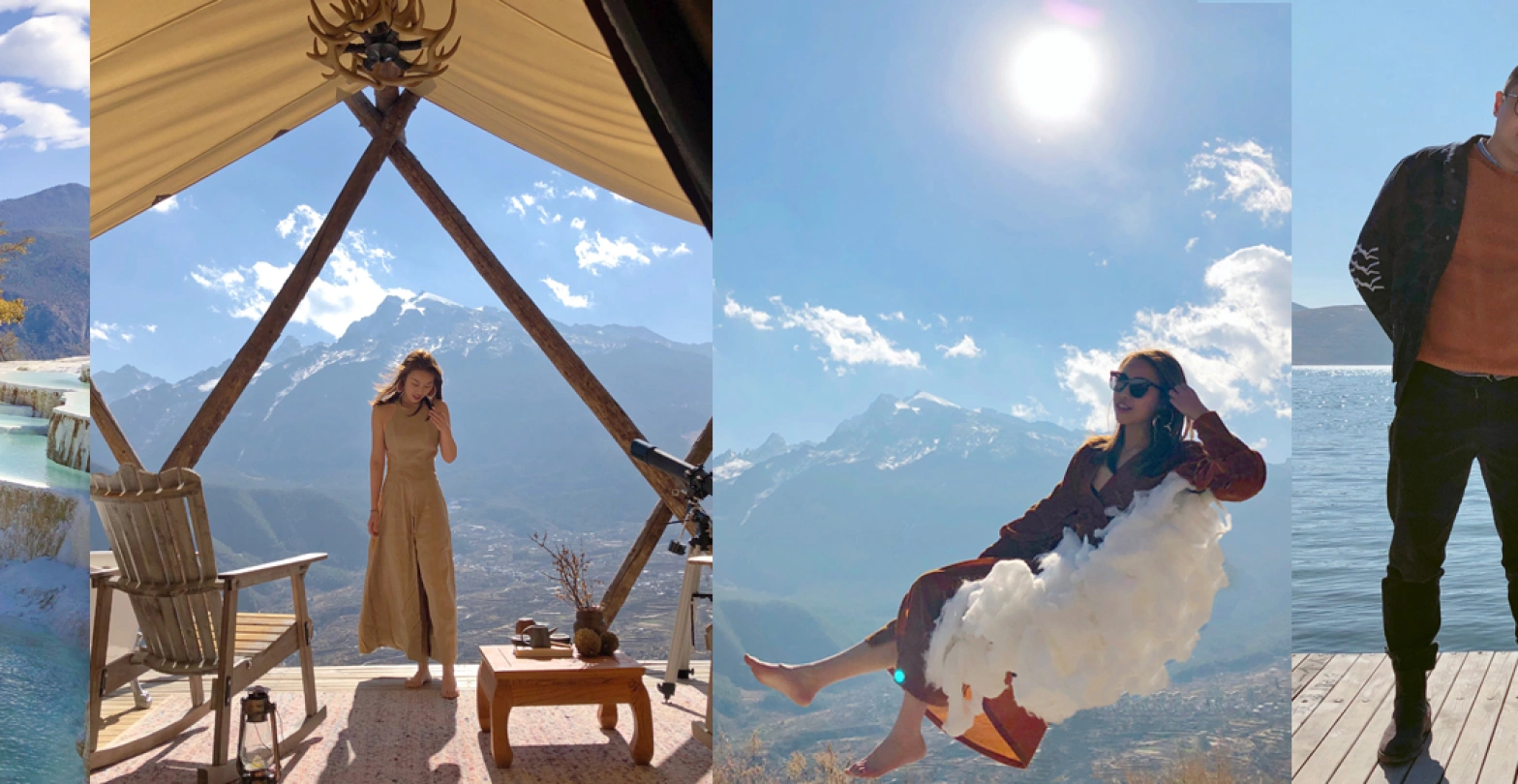
The Year of the Pig, We Met Again: A Yunnan Journey Where Wild Luxury and Memories Intertwine, from Shuanglang to Yunjie
Travel is an elopement with unfamiliar landscapes, and also a reunion with the self you once were. When the cobblestone paths in your memory have been polished smooth by time, when the people who once walked beside you have scattered to the ends of the earth, do you still have the courage to bring someone else and retrace the steps of your past?
In early 2019, after months of relentless rain in Hangzhou, I finally made up my mind. I turned to him and said, "Take me to Yunnan. Let's start from the place where I once spent two months." And so, we embarked on this seven-day journey—from the sunset over Erhai Lake in Shuanglang, to the lively烟火 (fireworks of daily life) of Lijiang Old Town, to a wild luxury tent at the foot of Haba Snow Mountain, and finally to the fairy-tale-like Baishuitai (White Water Terrace). This was not just a simple trip; it was a re-encounter with time, memory, and love.
The Beginning: Why Yunnan?
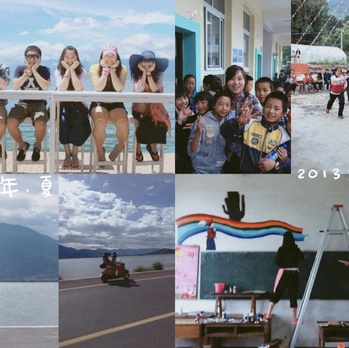
Five years ago, I was a volunteer teacher in Yunnan. When my service ended, I went to Shuanglang with a group of friends. Back then, Shuanglang hadn't undergone its massive renovation. By the shore of Erhai, there were only simple hostels and local eateries, and the air was thick with the scent of youth. That memory is like a piece of amber, preserving the most vivid colors of my青春 (youth).

Five years later, I came back with him. The rainy days in Hangzhou had made me almost forget what sunshine felt like. Yunnan was the closest thing I could think of to healing. We traveled just before the Spring Festival, when tourists were scarce and prices were friendly—a budget-friendly choice with incredible value. From the very start, this trip was filled with small joys.
Itinerary Overview: Lijiang → Dali Shuanglang Ancient Town → Yunjie Glamping → Baishuitai (White Water Terrace) → Lijiang Old Town
Day 1: Shuanglang, Sunset and Reunion
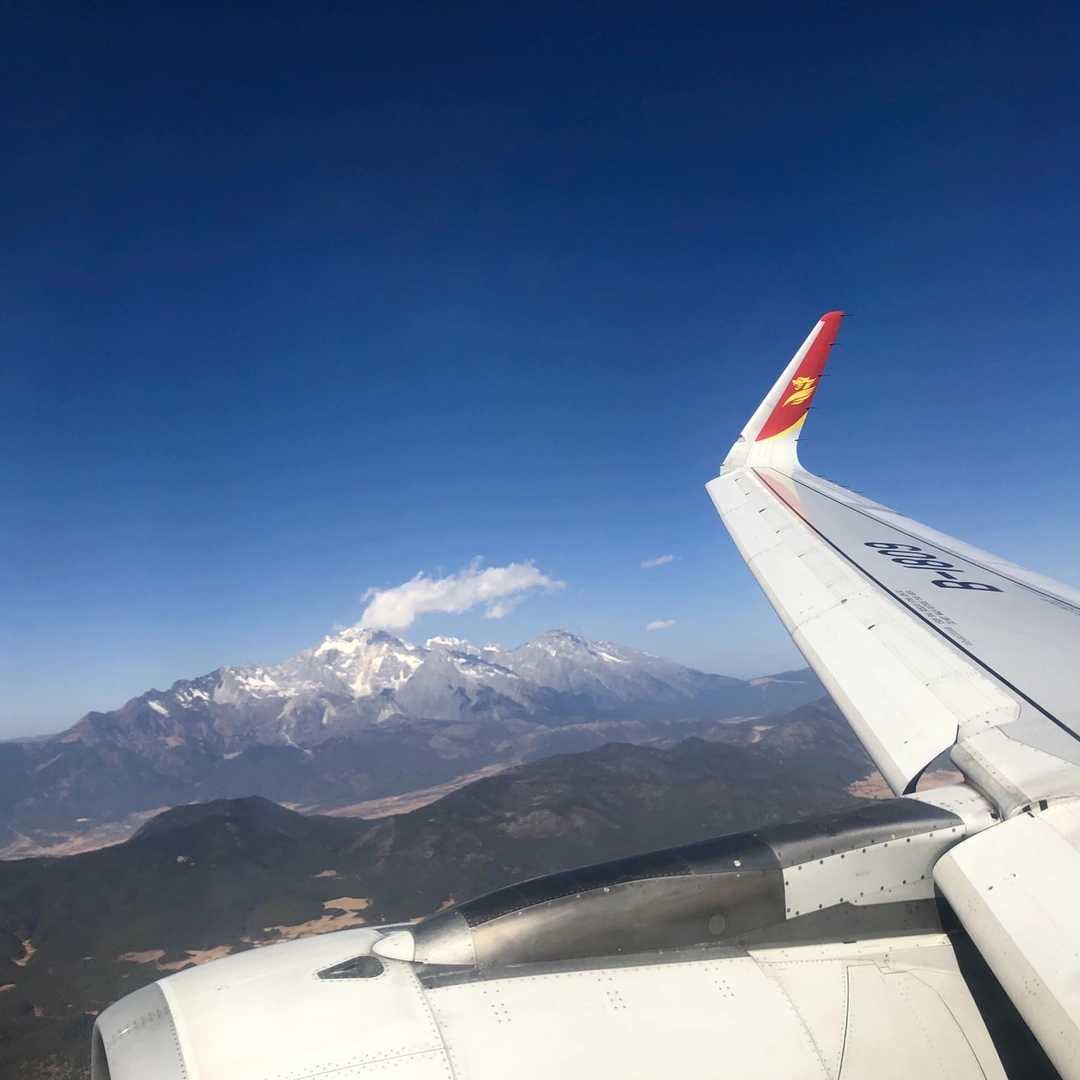
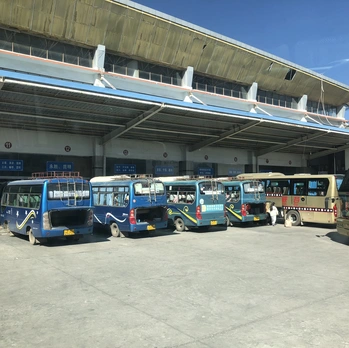
As the plane landed in Lijiang, the Jade Dragon Snow Mountain appeared and disappeared behind the clouds outside the window. After disembarking, we took the airport shuttle to Lijiang Bus Station (about 40 minutes, 20-40 RMB per person) and caught the only direct bus to Shuanglang, which departed at 2:30 PM. The ride took 2 to 2.5 hours, and the scenery along the way already got us excited.
We arrived at Shuanglang Ancient Town around 5 PM. We had booked the Qingyun Inn (青云客栈), which was right at the entrance of the ancient town, for just over 500 RMB a night for a sea-view room. Nowadays, the entire shoreline of Erhai in Shuanglang is lined with stylishly designed guesthouses and hotels (like Liuyue (六阅) and Baiju (白居)), with sea-view rooms typically costing 800 to over 2,000 RMB. But the highlight of this trip was Yunjie, so Qingyun was more than enough for me. The best part? You could rent an electric scooter right outside the door and return it there too, saving us the hassle of dragging luggage over the cobblestone paths.
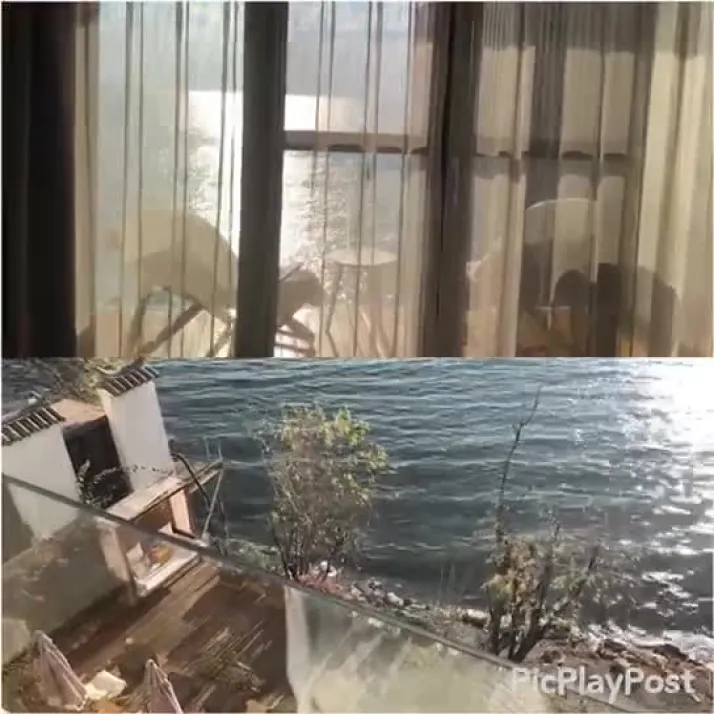
When I opened the door to our room, the sunset over Erhai Lake greeted us head-on. Seagulls circled above the shimmering water, and the ultraviolet rays were relentless on our skin. But I felt a sense of relief I hadn't felt in a long time—the rain of Hangzhou was completely forgotten here.
As night fell, the temperature difference became obvious. During the day, a t-shirt was enough, but at night, we needed thick jackets and scarves. We wandered into the ancient town to find food. At a Bai ethnic grandmother's fruit stall, we bought a bag of mini pineapples for 30 RMB—they were so sweet they surprised us. I had to revisit 饵块 (grilled rice cakes), and we tried 烤乳扇 (grilled milk fan) for the first time. Honestly, it wasn't my thing. But the grilled rice cakes? That's true love. I could eat them forever.
For dinner, we chose "Jixiang Hong" (吉祥红). We sat by the fire pit at the entrance and ordered a spicy and sour hot pot with a beef steak base. The beef was tender and flavorful, practically melting in our mouths. The Bai-style grilled meat was even more amazing—crispy skin, fragrant meat, rich but not greasy. It was the finest cut of pork belly. Paired with a cup of warm rice wine to heat us up, we ate and drank to our hearts' content. Afterward, we strolled back to the inn along the quiet, nearly empty streets of the ancient town. Shuanglang during the off-season was as peaceful as a sleeping child.
Day 2: Slow Time by Erhai Lake
In the morning, the inn's 14-year-old guard dog lay obediently at the door, watching the passersby. Breakfast was simple rice noodles (米线), enjoyed with the tranquil view of Erhai. The temperature was cool but comfortable.
After breakfast, we went down to the shore to feed the seagulls. Sunlight danced on the water's surface as the seagulls flapped their wings, scrambling for food. It was a scene so healing it almost made me cry. We rented an electric scooter and rode along Erhai, stopping to take photos at the famous "glass ball" swing—5 RMB for unlimited photos. You could take them yourself; there was no need to pay for a photographer.
For lunch, we went to "Zhouyu de Yu" (舟渔的鱼). The head chef came out personally to cook the fish, explaining the origins of the broth and the桂花鱼 (sweet-scented osmanthus fish), and even asked about our preferences for sauces. Since it was the off-season, we were the first customers of the day, so the chef gave us a complimentary serving of rice wine. Great value for money. Highly recommended.
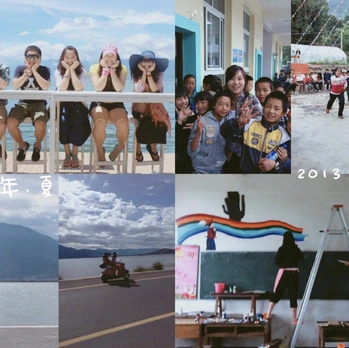
By 2 PM, the sun was so intense it was hard to keep our eyes open. We rode for a short while along Erhai before heading back to the inn. Before our afternoon nap, we sat on the balcony, staring blankly at the lake. It was his most relaxed moment, and the one I treasured most.
For dinner, we chose "Dizhu Jia de Dian" (地主家的店). They had so many varieties of rice wine that it was dizzying. I ordered the purple rice wine (紫米酒)—sweet but not cloying, perfect for warming the stomach.
Day 3: Farewell to Shuanglang, First Glimpse of Lijiang
Before leaving Shuanglang, I had one last grilled rice cake (饵块) to say goodbye to the memories. We boarded the bus and headed for Lijiang Old Town.
That night, we stayed at the "Aizerasi Light Luxury Inn" (艾泽拉斯轻奢客栈), which was incredible value at just over 200 RMB a night. The manager even upgraded us to a suite for free. We didn't use the bathtub, but the terrace outside the room was very comfortable. After dropping off our bags, we spent the afternoon wandering through the old town.
Walking uphill, we found a viewing platform that offered a panoramic view of the entire ancient town. Dongba script (东巴文) was everywhere—pictographic and childlike, it made us smile. For dinner, we went to "Shi Nian Lao Zihao La Paigu" (十年老字号腊排骨, The Ten-Year-Old Smoke-Dried Pork Ribs). The taste was average; once was enough.
Day 4: Heading to Yunjie, Meeting Haba Snow Mountain
The easiest way to get to Yunjie Glamping is to book the tent and then ask the hotel to arrange a private car (800 RMB one-way from Lijiang or Shangri-La to Yunjie). A more budget-friendly option is to take the 9:00 AM bus from Lijiang Bus Station to Baishuitai (White Water Terrace). Just tell the driver you want to get off at Yunjie (note: this bus doesn't run every day, but two drivers alternate every other day).
Originally, we planned to go to Tiger Leaping Gorge first and then have the hotel pick us up. But at the bus station, we unexpectedly found the bus to Baishuitai. We immediately switched tickets, paid the fare difference, and got on—saving us several hundred RMB! The bus stopped at Tiger Leaping Gorge for a break, so we took the chance to see the Upper Tiger Leaping Gorge. The wind in the canyon was strong enough to knock you over, but the spectacular scenery made us forget the cold. As we continued, the mountain roads became treacherous. On the left, we feared falling rocks; on the right, the magnificent mountain views kept our emotions swinging.
After a bumpy ride, we arrived at Yunjie. The butler warmly welcomed us and asked, "Where's your luggage?" We had left our suitcases in Lijiang and only brought toiletries—a decision that proved to be very wise.

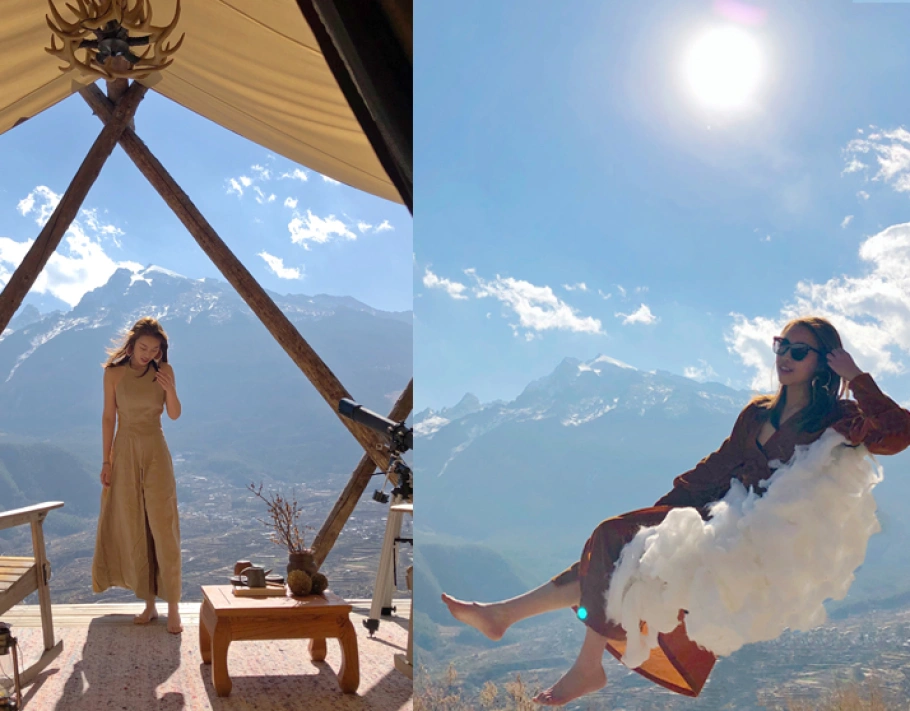
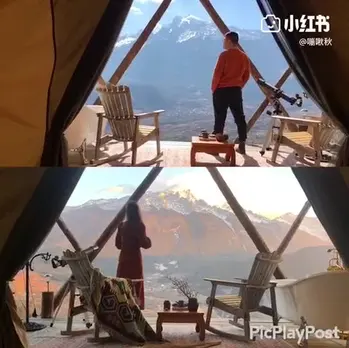
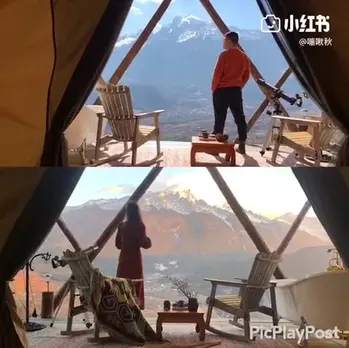
Even better, we were the only guests that night, along with a pregnant couple. We got a free upgrade to the largest tent, "Guan Yun" (观云, Cloud Viewing), which normally costs 2,000 RMB (I had booked the "Ling Yun" (聆云, Listening to Clouds) for 1,800 RMB). Facing Haba Snow Mountain, we spent a day and night of wild luxury.
Inside the tent, the bathroom directly faced the snow-capped mountain. The feeling was surreal. The famous "cloud" installation in the common area was best photographed in the morning, the butler said, but I couldn't wait. I snapped a few photos, and they turned out pretty good too. My only regret was not bringing my DSLR—I missed the chance to capture the magnificent starry sky at night.
For dinner, we didn't want the hotel's barbecue set at 200 RMB per person. Instead, we ordered takeout from a restaurant in Baishui Village at the foot of the mountain. My favorite was tomato and egg stir-fry (番茄炒蛋), and I ordered meat to give him energy. It was so delicious it almost brought tears to my eyes.
Day 5: Haba Snow Mountain, Sunrise and Wild Luxury
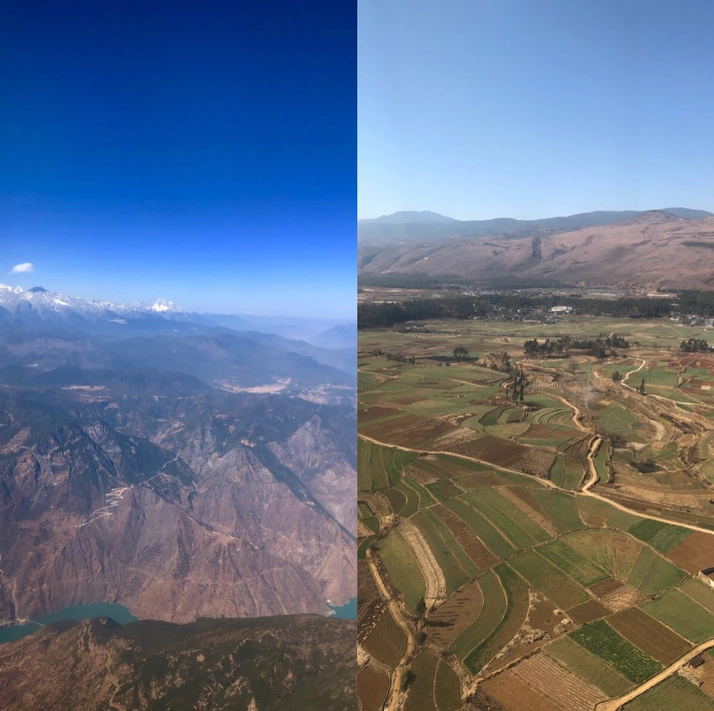
In the early morning, I pulled open the tent flap, and the sunrise over Haba Snow Mountain was breathtakingly beautiful. That warm orange hue was the color I had fallen in love with since autumn began—nature's gift is always the most moving.
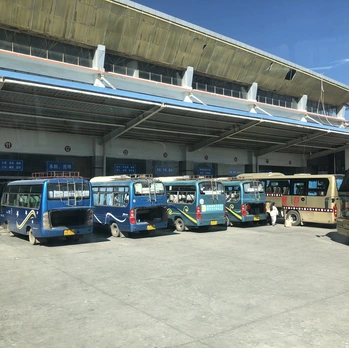
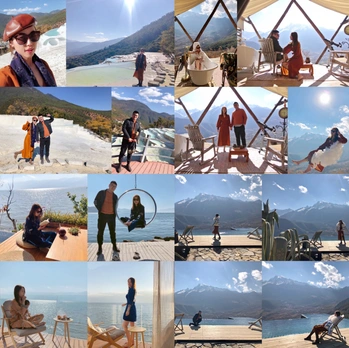
I raised a bottle of AD钙奶 (a popular Chinese probiotic drink) in a toast: one sip for this moment, one sip for Haba Snow Mountain. Then it was time for photos, photos, and more photos. The famous bathtub, the cloud, the snow-capped mountain—every frame captured the feeling I wanted. My favorite was a photo of us standing in front of the tent, with the majestic snow mountain behind us. In that moment, time seemed to stand still.
Day 6: Baishuitai (White Water Terrace), the Immortal's Abandoned Fields

Breakfast at Yunjie was a bowl of wontons (馄饨) with Hong Kong-style char siu buns (叉烧包) and small steamed buns (小刀切). We ate until we were full, then prepared to head down the mountain. The butler, Xiao Peng (小彭), was from Baishui Village below. We hired his car to take us to Baishuitai (300 RMB to Tiger Leaping Gorge, and he even helped us find a ride back to Lijiang).
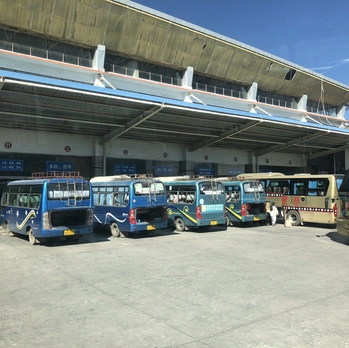
Baishuitai, known as the "Chinese version of Pamukkale," is considered the "Immortal's Abandoned Fields" by the Naxi people. Spring water gushes from the source and flows downward, forming layer upon layer of travertine pools. The color of the water shifts with the changing sky. There were few tourists, so we could enjoy the scenery in peace. The Fairy Cave (仙女洞) is a place to pray for children and safety. The Dongba priest (东巴) on top will bless you in the Naxi language. I took a sip of the spring water—it was clear and sweet.
After coming down from Baishuitai, we returned to Baishui Village with the driver for lunch. We had authentic yellow cattle beef (黄牛肉), stir-fried with local celery. The tomatoes were pale in color but incredibly fresh. The vegetables here all carried the taste of sunshine.
In the afternoon, we returned to Lijiang Old Town. This time, we stayed at an inn on the hill, which offered a panoramic view of the ancient town. The porter who carried our luggage was exhausted, but the night view was worth it.
Day 7: Lijiang, No Goodbyes
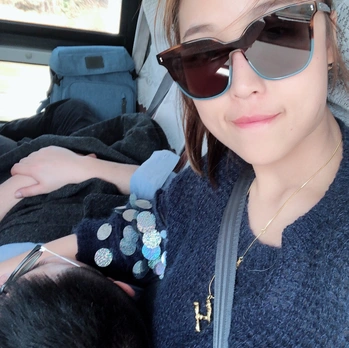
On our last day, we woke up in the inn overlooking Jade Dragon Snow Mountain. The morning scene of the ancient town was peaceful and beautiful. During our stroll, I bought some postcards with Dongba script (东巴文), had a cup of Yunnan small-grain coffee (云南小粒咖啡), and tried some Naxi rice cake (纳西米糕). Topped with honey and sesame, the cake below was fragrant, soft, and slightly chewy. I loved it.
On the other side of the old town, there were very few people. Every small alley we turned into brought a surprise. We found a shop that only sold various preserved fruits (蜜饯). I bought a jar made from white fungus (白木耳). Even now, back home, I occasionally take a small spoonful to satisfy my cravings.
Before leaving, we finally had some cross-bridge rice noodles (过桥米线). Sitting by a small bridge over flowing water, with a live singer performing in the restaurant, it was very pleasant. The inn staff helped carry our luggage to the driver who was taking us to the airport. We didn't have to lift a finger.
Afterword: Travel is a Form of Acquired Hybridity
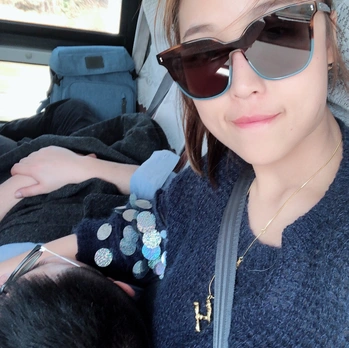
Over seven days, from the memories of Shuanglang to the wild luxury of Yunjie, from the fairyland of Baishuitai to the烟火 (lively energy) of Lijiang, we re-encountered each other, and we also re-encountered ourselves.
Travel is an elopement with unfamiliar landscapes, and a reunion with the self you once were. Every journey injects a little bit of a place into your mind, creating a kind of acquired hybridity. And this time, I want to say—
"Meeting you later means having you for the rest of my life."
Practical Tips: - Best Time to Travel: Off-season before the Spring Festival, when there are fewer tourists, lower prices, and great value for money. - Transportation: There is a direct bus from Lijiang to Shuanglang (departs at 2:30 PM). For Yunjie, you can take the Baishuitai bus or hire a private car. - Accommodation: In Shuanglang, the Qingyun Inn (青云客栈) offers great value for money. At Yunjie, you must stay in the Guan Yun (观云) tent (book in advance). - Food: In Shuanglang, try the beef steak hot pot at Jixiang Hong (吉祥红), the fish at Zhouyu de Yu (舟渔的鱼), and the Bai-style grilled meat. In Baishui Village, try the yellow cattle beef (黄牛肉). - Important Note: When visiting Baishuitai (White Water Terrace), do not step on the travertine pools. Please protect the natural landscape.
You should also read:

Two Girls' Graduation Trip: Dali and Shuanglang – A Poetic Farewell to Mountains and Sea
Two Girls' Graduation Trip: Dali and Shuanglang – A Poetic Farewell to Mountains and Sea Preface: Catching the Tail of Youth, Heading South During our senior year of college, my roommate and I – two girls studying in Beijing – decided to bid farewell to…
Continue reading...
Cloud Travelogue · Dali of Wind, Flowers, Snow, and Moon: A Three-Day, Two-Night Journey of a Free Spirit
Cloud Travelogue · Dali of Wind, Flowers, Snow, and Moon: A Three-Day, Two-Night Journey of a Free Spirit I am a cultured female foodie with a touch of rogue charm. I slung on my backpack, took my lover's hand, and set off on a spontaneous…
Continue reading...
The Meaning of Travel – A Tengchong Story: A Journey of the Heart and Personal Growth
The Meaning of Travel – A Tengchong Story: A Journey of the Heart and Personal Growth Setting Out, Only to Return a Better Self Some say travel is nothing more than leaving a place you're tired of, only to go to a place where others…
Continue reading...