There's a Kind of Travel Called "Just Go," and a Kind of Life Called Lijiang and Tengchong
There's a Kind of Travel Called "Just Go," and a Kind of Life Called Lijiang and Tengchong
Travel is nothing more than going to a place where others have grown tired, to find your own lost breath.
Preface: When "Just Go" Leaps from the Dictionary into Reality
In my mind, "just go" had always been a romantic phrase—it appears at the beginning of countless travelogues but had never truly entered my life. Until one day, I suddenly realized: if I never give myself even one impulse, how dull life would be?
No guide, no plan, not even accommodation booked in advance. I only knew one destination—Yunnan. Then, a plane ticket, a backpack, a DSLR camera, and just like that, I embarked on a fifteen-day journey.
This isn't some grand feat. It's just an ordinary person who finally decided to be honest with themselves for once.
Chapter One: Lijiang, the Place Countless People Have Written into Their Dreams

First Sight of Lijiang: From the Airport to the Old Town
The moment the plane landed, the highland sun slammed down without mercy. There was an indescribable smell in Lijiang's air—was it the scent of sun-baked stone slabs, or the chill of distant snow mountains? I couldn't tell.
I checked into "Ru Ruo Xiang Si Boutique Inn" (If Only We Cherished Each Other Boutique Inn). The innkeeper was a warm-hearted young woman who had added me on WeChat before I arrived, sending detailed directions and tips. For a traveler as unprepared as I was, this kind of help was a lifesaver.
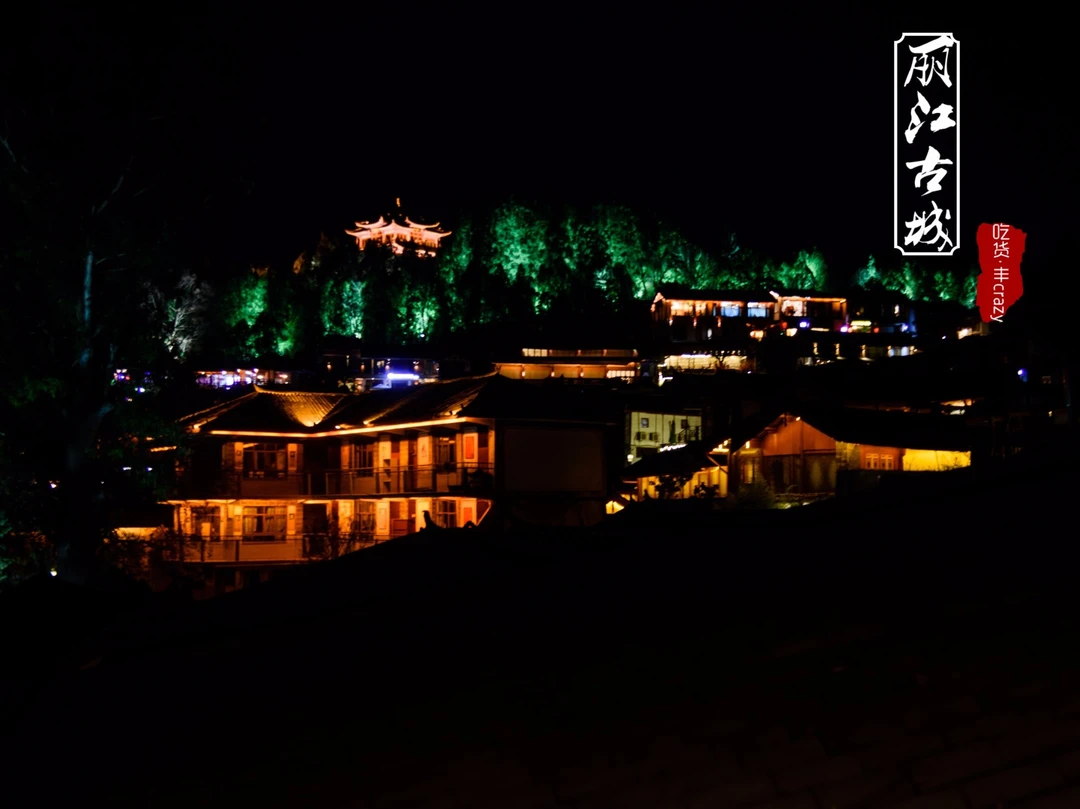
From the rooftop of the inn, you could see the entire Lijiang Old Town. At dusk, the tiled rooftops were dyed golden by the sunset, with wisps of cooking smoke rising slowly—at that moment, I suddenly understood why so many people were willing to stay here.
Da Bing's Little Hut: Forty Yuan for a Quiet Night
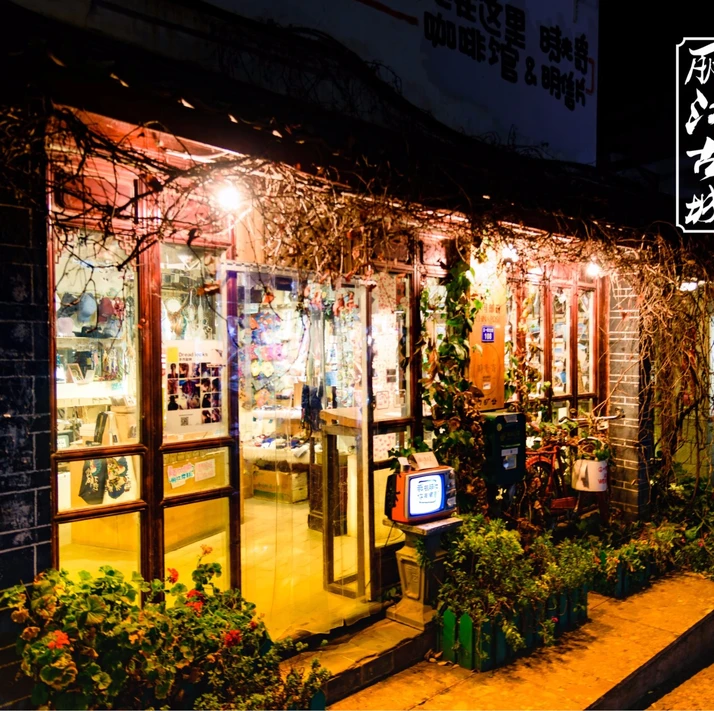
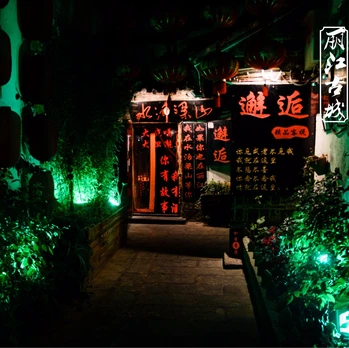
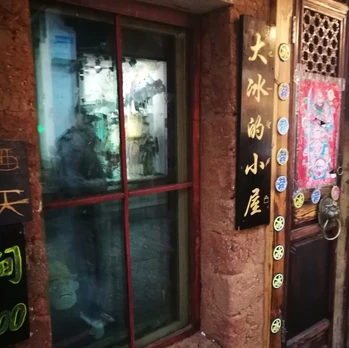
Lijiang has always been synonymous with "encounters." The cacophony of Bar Street starts at dusk and lasts until late into the night. But amid all this restlessness, there is one quiet place—Da Bing's Little Hut (Dabing De Xiaowu).
Forty yuan, a drink, a song. No spotlights, no noise, just music lovers playing for you. I sat in a corner, listening to a young singer with a raspy voice perform "Chengdu," and suddenly felt that this was what Lijiang should really be like.
Chapter Two: Shuhe Ancient Town, the Other Side of Lijiang
If Lijiang Old Town is a heavily made-up dancer, then Shuhe Ancient Town is the girl next door with a bare face.
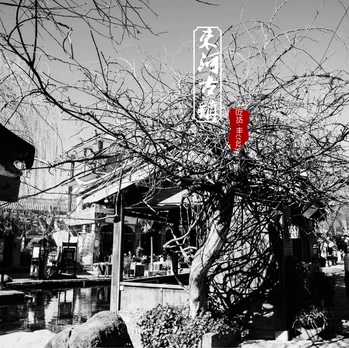
Walking on Shuhe's stone paths, every corner exudes an ancient charm. I stumbled upon a film crew shooting a movie—the director frowning at the monitor, actors rehearsing their blocking over and over. These accidental "intrusions" became the most interesting memories of the trip.
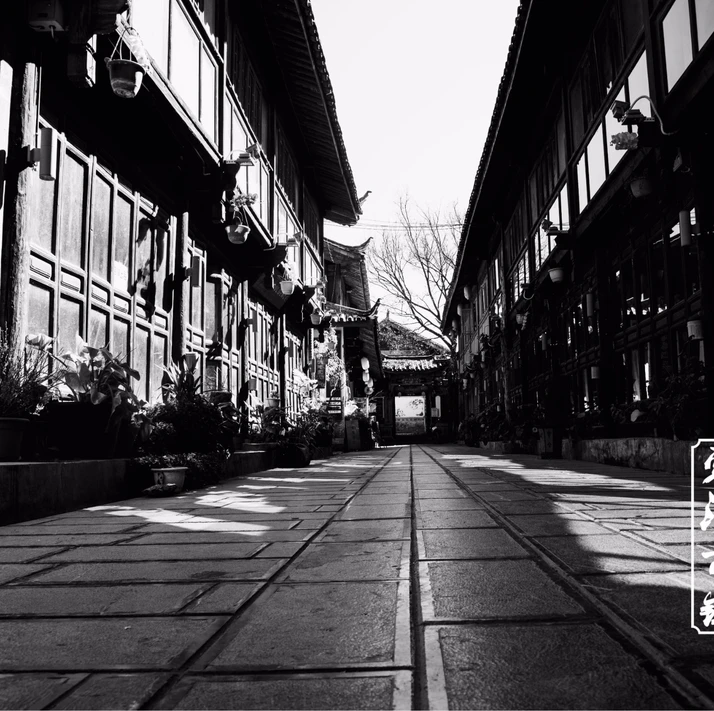
During the day, Lijiang Old Town sheds its wild nighttime persona and gains a touch of tranquility. Sunlight filters through the cracks in the eaves, casting dappled shadows on the bluestone slabs. At this hour, the old town truly belongs to those willing to wake up early.
Chapter Three: Jade Dragon Snow Mountain, Breathing at 4,680 Meters
A Gamble on the Climb
Jade Dragon Snow Mountain is called "Olu" in Naxi language, meaning "silver mountain rock." Thirteen snow-capped peaks stretch endlessly, like a giant dragon leaping and dancing.
Before we set out, the innkeeper helped us arrange a shared car. Strong winds the previous day had shut down the cable car, so we were gambling on luck—thankfully, fortune smiled on us, and the next day the winds stopped.
At 4,680 meters above sea level, the air is thin, and every step feels like walking on cotton. But when you stand on the observation deck, watching the sea of clouds churn beneath your feet and the distant snow peaks stretch endlessly, the awe is beyond words.
Blue Moon Valley: A Different Kind of Feeling
If Jade Dragon Snow Mountain is majestic, then Blue Moon Valley (Lanyuegu) at its base is gentle.
The lake water is so blue it doesn't look real, as if someone had moved Jiuzhaigou's waters here. Sunlight sparkled on the surface, making it feel like a fairyland. I sat by the lake for a long time, thinking of nothing, just staring at the water—this, I suppose, is the meaning of travel.
Chapter Four: Tengchong, the Weight of the "First City on the Frontier"
Ten Hours of Bumping
From Lijiang to Tengchong, we chose the bus. Ten hours of bumping, winding mountain roads that left us dizzy and queasy. But when I finally set foot on Tengchong's soil, all the exhaustion vanished.
We checked into "Tianbo Garden Villa Hotel" (恬泊花园别墅酒店). Arriving past nine in the evening, we found that the entire villa had only two guests—it felt like we had the whole place to ourselves. European-style architecture with refined decoration stood in stark contrast to Lijiang's Naxi style.
The Museum of the Western Yunnan Anti-Japanese War: The Weight of History
The next day, we decided to visit the museum. The Museum of the Western Yunnan Anti-Japanese War (Dianxi Kangzhan Jinianguan) is a must-see.
The museum houses a vast collection of precious exhibits from the Western Yunnan Campaign. Many areas prohibited photography, which actually made me focus more on looking and feeling. Behind every exhibit lay a story of blood and fire.
At the National Memorial Cemetery of the Fallen (Guoshang Muyuan), every tombstone tells a story of sacrifice. Standing in the cemetery, I suddenly realized: the peaceful life we take for granted today was bought with countless lives.
Dieshuihe Waterfall: A Flaw in the Beauty
Dieshuihe Waterfall itself was spectacular, but the water quality issues in the scenic area were disappointing. A foul stench hit us, making it impossible to stay long. This was one of those "small regrets" of travel.
Chapter Five: Volcanoes, Hot Air Balloons, and Beihai Wetland
Pretending to Be in Turkey
Tengchong is famous for its volcanoes and hot springs. The Volcanic Geological Park offers hot air balloon rides—soaring above the Big and Small Kongshan (Kongshan) volcanoes from the air felt just like being in Turkey.
The Monkeys of Heiyu River
After visiting the volcanoes, our hired driver took us to Heiyu River (Black Fish River). A troop of monkeys by the river showed no fear of humans. I pulled out my camera to photograph them, and they even posed cooperatively.
Beihai Wetland: I Wanted to Live Here
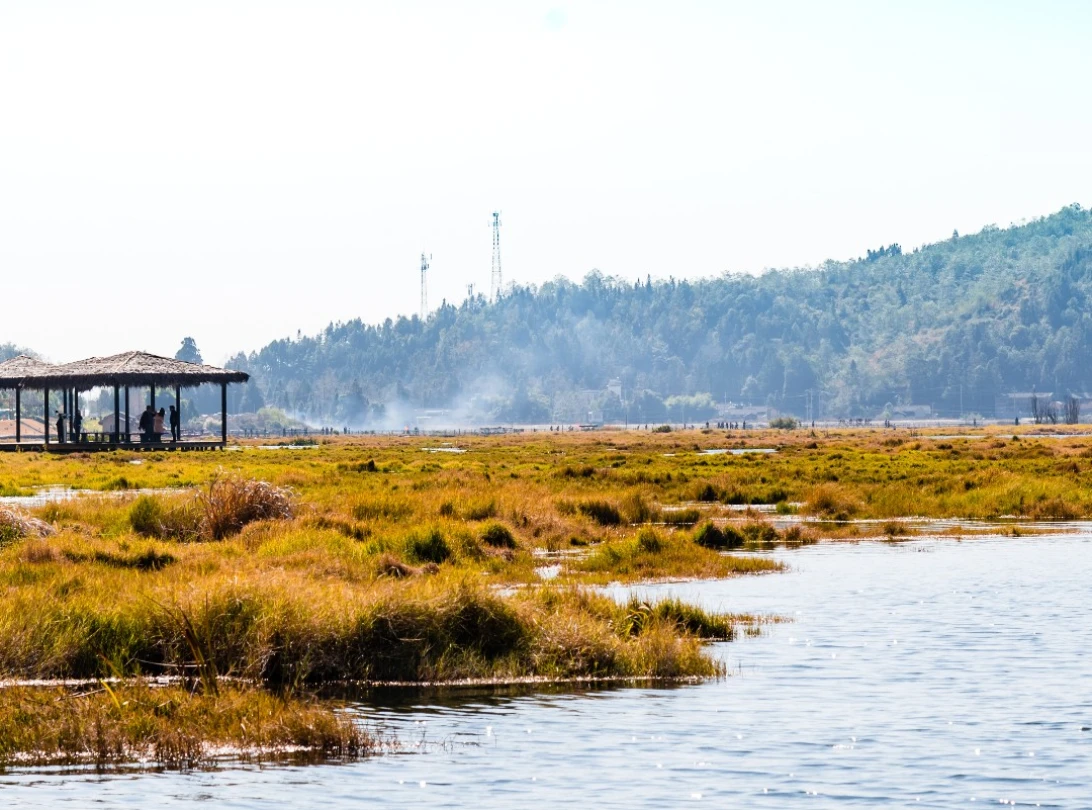
In the afternoon, we arrived at Beihai Wetland. The show "Idols Are Coming" (Ouxiang Laile) made this place more widely known, but standing there, you realize no TV program can capture its beauty.
Sunlight bathed the wetland, a gentle breeze brushed our faces, and water plants swayed. We chose to take a grass boat—it looked simple but was exhausting to paddle. Yet when you lie back in the boat, watching the blue sky and white clouds, listening to the water, the comfort is something no city can offer.
Chapter Six: Jietou, Rehai, and the Yezhuqing Wooden Cantilever Bridge
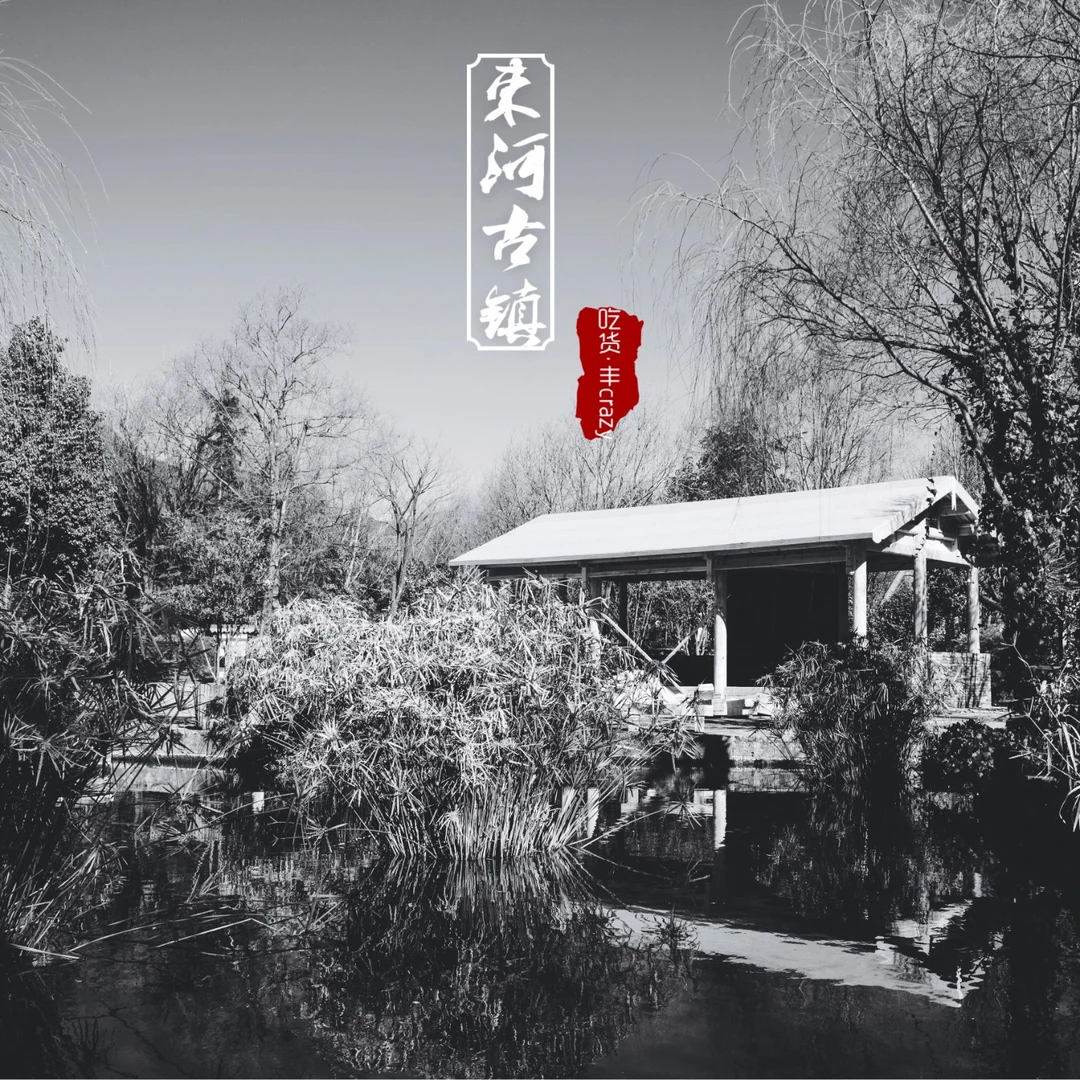
The Disappointment of Rapeseed Flowers
We set out early for Jietou to see the rapeseed flowers, only to find at the observation deck that they wouldn't bloom until late February. Staring at the bare fields, I could only console myself with drone footage.
Gaoligong Handmade Paper Museum
After descending from the observation deck, we visited the Gaoligong Handmade Paper Museum (Gaoligong Shougong Zaozhi Bowuguan). Built in the middle of fields with private funding, almost all the exhibits inside were made of paper. Every household here knows how to make paper, and I tried my hand at it too—it looked simple but was actually very difficult.
Yezhuqing Wooden Cantilever Bridge: Meeting a Painter
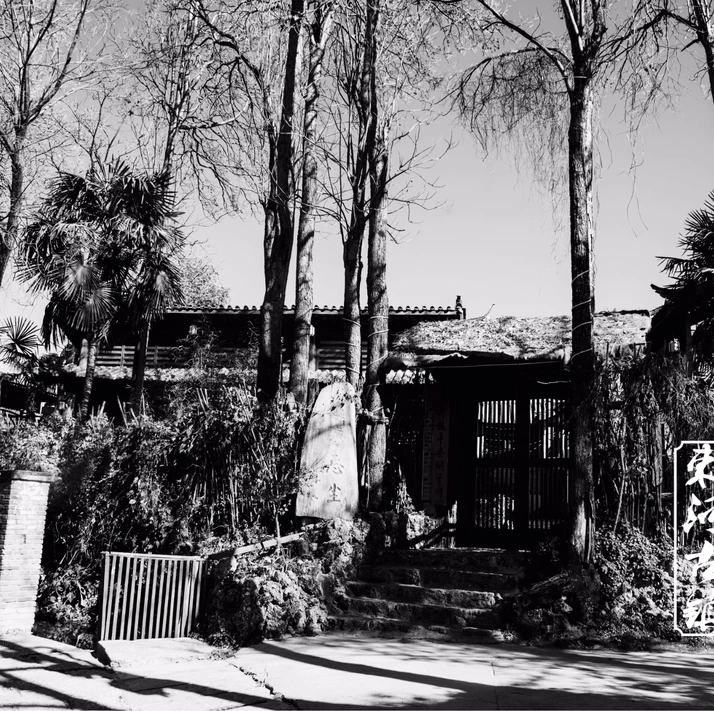
Yezhuqing Wooden Cantilever Bridge (Yezhuqing Mu Xuanbi Qiao) is an ancient covered bridge built from locally grown catalpa wood. The structure is ingenious: overlapping logs secured by compression, stepped supports, and iron chains for tension. It's said this design is highly resistant to flooding.
On the bridge, I met a painter meticulously sketching the bridge. I didn't dare disturb him, just watched quietly. At that moment, I suddenly felt: some things are worth remembering.
Rehai: Hot Spring Eggs
Our last stop was Rehai (Hot Sea). We picked up eggs and cooked them in the hot spring—supposedly the best hot spring eggs you'll ever eat. I tried one, and it was indeed delicious.
Chapter Seven: Cherry Blossom Valley, a Natural Hot Spring
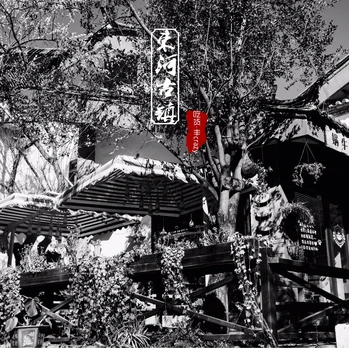
Cherry Blossom Valley (Yinghuagu) sounds romantic, but visiting in January, the cherry blossoms had already faded. However, the hot springs here are worth soaking in—pure natural wilderness springs, more authentic than commercialized ones.
Lying in the hot spring, surrounded by primeval forest, listening to birdsong, I felt completely merged with nature.
Chapter Eight: Heshun Ancient Town, a Place I Didn't Want to Leave
Qiaoxiang Mansion: Birdsong and Floral Fragrance
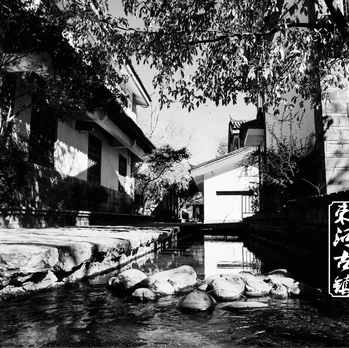
After the hot spring, our driver took us directly to Heshun Ancient Town. We checked into "Qiaoxiang Mansion" (Bridge Township Mansion), and were immediately captivated by the birdsong, floral fragrance, and the innkeeper's warmth.
The innkeeper was a forthright person. She brewed tea and chatted with us in the common area, making us feel right at home.
Jesus Light and the Century-Old Market
The next day, the weather was gloomy. But in this kind of weather, I captured what's called "Jesus light"—sunlight streaming through the clouds like divine radiance.
To get better photos, I decided to wander again early the next morning. Heshun Ancient Town at dawn was filled with a peaceful atmosphere. At the century-old market, people were shopping for the morning market, with all kinds of fresh produce on display. Bar Street had returned to calm, as if the previous night's revelry had dissolved.
Rapeseed Flowers and a Wedding Feast
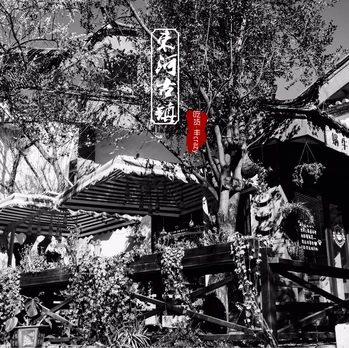
We happened to catch the rapeseed flowers in full bloom. The golden sea of flowers complemented the ancient town beautifully.
Even more serendipitously, a local family was holding a wedding. Three days of feasting with ten signature dishes opened my eyes. The innkeeper also took me to a place where they press oil and treated me to corn—absolutely delicious.
Chapter Nine: Ruili, Southwest China's Largest Inland Port
A Day Trip to Myanmar
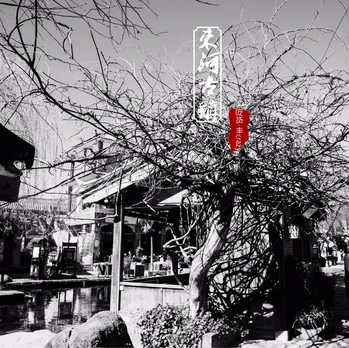
From Tengchong to Ruili, we took the bus. Once in Ruili, we couldn't miss a day trip to Myanmar.
I had no idea what to expect, but after wandering around Myanmar for a day, my love for China grew even stronger. Being Chinese, I felt truly proud.
Chapter Ten: Mangshi, the City of Dawn
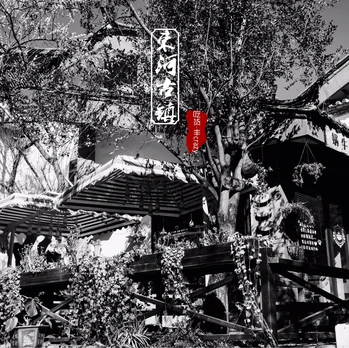
Menghuan Grand Golden Pagoda: Breathtaking
From Ruili to Mangshi takes just over two hours. Upon arrival, we headed straight to Menghuan Grand Golden Pagoda (Menghuan Da Jinta).
Perched on a hilltop, the golden pagoda glittered in the sunlight, resplendent and magnificent. Standing at the top, the entire city of Mangshi lay at our feet.
Tree-Encased Pagoda: A Unique Wonder
In the Mengbanaxi Rare Botanical Garden (Mengbanaxi Zhenqiyuan), there is a Tree-Encased Pagoda (Shu Bao Ta)—a pagoda enveloped by a tree. The pagoda stands over 10 meters tall, while the tree towers several dozen meters high. The pagoda supports the tree, and the tree embraces the pagoda—a truly unique sight.
Chapter Eleven: Practical Travel Guide
Itinerary
DAY1: Beihai → Nanning → Lijiang (Stay: Ru Ruo Xiang Si Boutique Inn)
DAY2: Shuhe Ancient Town → Lijiang Old Town
DAY3: Jade Dragon Snow Mountain
DAY4: Lijiang → Tengchong (Stay: Tianbo Garden Villa Hotel)
DAY5: Western Yunnan Anti-Japanese War Museum → National Memorial Cemetery of the Fallen → Dieshuihe Waterfall → Tengchong Museum
DAY6: Volcanic Geological Park → Columnar Joints → Heiyu River → Beihai Wetland
DAY7: Jietou → Yezhuqing Wooden Cantilever Bridge → Rehai
DAY8: Cherry Blossom Valley (Hot Spring Soaking)
DAY9: Heshun Ancient Town (Stay: Qiaoxiang Mansion)
DAY10: Tengchong → Ruili (Stay: Yujingtan International Hot Spring Hotel)
DAY11: Ruili → Myanmar
DAY12: Ruili → Mangshi (Stay: Dehong Kairui Hotel)
DAY13: Menghuan Grand Golden Pagoda → Mengbanaxi Rare Botanical Garden → Tree-Encased Pagoda
DAY14: Mangshi → Kunming
DAY15: Kunming → Beihai
Tip: If you don't want to take the bus, you can fly to Mangshi first, then follow the route Mangshi → Ruili → Tengchong.
Transportation Guide
By Air
- Lijiang Sanyi International Airport: Direct flights to major cities nationwide
- Tengchong Tuofeng Airport: Built during the Anti-Japanese War, can only accommodate Boeing 737 or Airbus A320 aircraft. Direct flights available to Beijing, Shanghai, Chengdu, Chongqing, Xi'an, Nanjing, Zhengzhou, Shenzhen, Guangzhou, Zhuhai, Changsha, etc.
- Mangshi Airport: Built in 1937, 6.5 km from the city center
By Road
- Jade Dragon Snow Mountain shared car: 480 yuan per person (includes entrance fee, cable car ticket, oxygen canister, cold-weather gear, lunch)
- Lijiang → Tengchong: Bus 198 yuan per person, about 10 hours
- Tengchong hired car: 800 yuan for three days (attractions are far apart; hiring a car is recommended)
- Tengchong → Ruili: Bus 80 yuan, about 4 hours
- Ruili → Mangshi: Bus 60 yuan, about 2 hours
By Public Bus
- Public buses run from Lijiang Old Town to Shuhe Ancient Town
- Public buses from Tengchong city center go to Rehai, Volcanic Geological Park, Heshun Ancient Town, and the Western Yunnan Anti-Japanese War Museum
Accommodation Recommendations
- Lijiang: Ru Ruo Xiang Si Boutique Inn (the innkeeper is incredibly thoughtful)
- Tengchong: Tianbo Garden Villa Hotel (the breakfast rice noodles are amazing)
- Heshun Ancient Town: Qiaoxiang Mansion (the innkeeper is warm and great for tea and conversation)
- Ruili: Yujingtan International Hot Spring Hotel
- Mangshi: Dehong Kairui Hotel
Hot Spring Recommendations
Tengchong has five famous hot springs:
- Yue Chun Hot Spring (Yue Chun Wenquan): Five-star resort, excellent facilities, ideal for renting a private villa
- Bai Lian SPA Hot Spring (Bailian SPA Wenquan): Near Heshun Ancient Town, has an indoor pool
- Rehai Yugu Hot Spring (Rehai Yugu Wenquan): Best water quality, but older facilities
- Lotus Hot Spring (Hehua Wenquan): Forest oxygen bar, great for evening soaks
- Cherry Blossom Valley Forest Hot Spring (Yinghuagu Senlin Wenquan): Mountain wilderness spring, natural and fun
Food Recommendations
- 腊排骨 (cured pork ribs): Grandma's Cured Ribs (Apo La Paigu), melt-in-your-mouth tender
- 三文鱼 (salmon): Tuojiang Fish House (Tuojiang Yufu), can be eaten raw or hot pot style
- 包浆豆腐 (stuffed tofu): Rich and fragrant
- 松花糕 (pine pollen cake): Local snack
- 铜瓢牛肉 (copper pot beef): A trendy restaurant in Heshun Ancient Town
- 土锅子 (clay pot stew) and 大救驾 (stir-fried rice cakes): Tengchong specialties
- 泡鲁达 (coconut milk dessert with bread): Must-try dessert in Ruili
Afterword: Follow Your Heart, Go Where You Please
How many impulses does a person get in life? How many "just go" moments?
This trip had regrets, surprises, and sorrows. But it's these imperfections that make travel real. Travel isn't about going to places where others are tired—it's about giving yourself a chance to breathe, to think, to feel.
A cup of tea, a cup of coffee, a glass of juice—that's enough to let you slow down on the road.
Although this trip had no guide and I went wherever I pleased, it was precisely this spontaneity that brought me more unexpected delights. With regrets come reasons to return.
Yunnan, see you next time.
May everyone follow their heart without hesitation, go where the wind takes them, and walk freely.
You should also read:
Escaping Nanning, Falling Under Lijiang's Spell: Our Four-Person, Ten-Day Yunnan Dream
Escaping Nanning, Falling Under Lijiang's Spell: Our Four-Person, Ten-Day Yunnan Dream Before We Set Off: No Pain, No Obsession Have you ever had that impulse—suddenly tired of the office fluorescent lights, the crush of the subway, the endless parade of identical takeout boxes, and just…
Continue reading...
Tengchong·Heshun: Finding Life as It Should Be in a Border Town Where Time Stands Still
Tengchong·Heshun: Finding Life as It Should Be in a Border Town Where Time Stands Still The long journey of over twenty days was over. On my first day back at the office, I was still in a daze. My fingers couldn't find the keys on…
Continue reading...
Cloud Travelogue · Dali of Wind, Flowers, Snow, and Moon: A Three-Day, Two-Night Journey of a Free Spirit
Cloud Travelogue · Dali of Wind, Flowers, Snow, and Moon: A Three-Day, Two-Night Journey of a Free Spirit I am a cultured female foodie with a touch of rogue charm. I slung on my backpack, took my lover's hand, and set off on a spontaneous…
Continue reading...