This Summer, Take the One You Love to Yunnan — My Ultimate Couple's Travel Destination
This Summer, Take the One You Love to Yunnan — My Ultimate Couple's Travel Destination
If there's one place where you and your partner can experience exotic culture, natural wonders, romantic sunsets, and everyday life all at once, it's Yunnan. With international travel restrictions these past few years, unable to go abroad or to Southeast Asia, Xishuangbanna is the perfect alternative. This small city is incredibly romantic — I'm declaring it right now: Yunnan is one of those places you'll return to again and again, no matter how many times you've been.
Truth be told, I've always been torn about this place: Is it really worth it? In 2020, a chance opportunity forced me to go to Dali, and I discovered it was completely different from when I'd visited seven or eight years earlier. Later, I fell in love with Dali, even living there for over half a year. Then came the constant recommendations for Xishuangbanna — "Little Thailand," "full of Southeast Asian vibes." This year, we finally decided to visit the place that had me both conflicted and excited: Xishuangbanna.
Was it worth it? The title should say it all — absolutely yes!
From "Been There, Done That" to "Immersive Living": The Right Way to Experience Yunnan
About seven or eight years ago, I took my first-ever group tour — a 12-day Yunnan trip. On the afternoon of Chinese New Year's Day, I boarded a sleeper train from Shenzhen to Kunming, where the tour began and ended. Those 12 days of Yunnan travel really wore me out — Xishuangbanna, Lijiang, Dali, Tiger Leaping Gorge, Shangri-La... we visited so many places, but we spent most of our time on the bus, traveling from one spot to another. Early departures, late returns, just checking off destinations. After that, I never wanted to set foot in Yunnan again, and I swore off group tours for good. Young and naive, too innocent — it's both a sad and funny story.
But after that trip, Yunnan went on my "must revisit for deep exploration" list. Culture, scenery, snow-capped mountains, all four seasons — it has everything. Personally, if places like Xinjiang and Tibet feel too far, Yunnan is absolutely worth considering! Next time, I want to unlock the Yubeng trek!
This time, we took a small loop route, starting from Kunming, passing through Mile, Jianshui, Yuanyang, Pingbian, and finally arriving in Xishuangbanna. Over half a month, we saw countless faces of Yunnan — a kingdom of colors like Greece, a real-life Squid Game maze, glass-like terraces in the clouds, a mini-Iceland waterfall... every stop left us in awe.
Mile Dongfengyun: An Eastern Fantasy Castle, the Road Home for Runaway Princesses
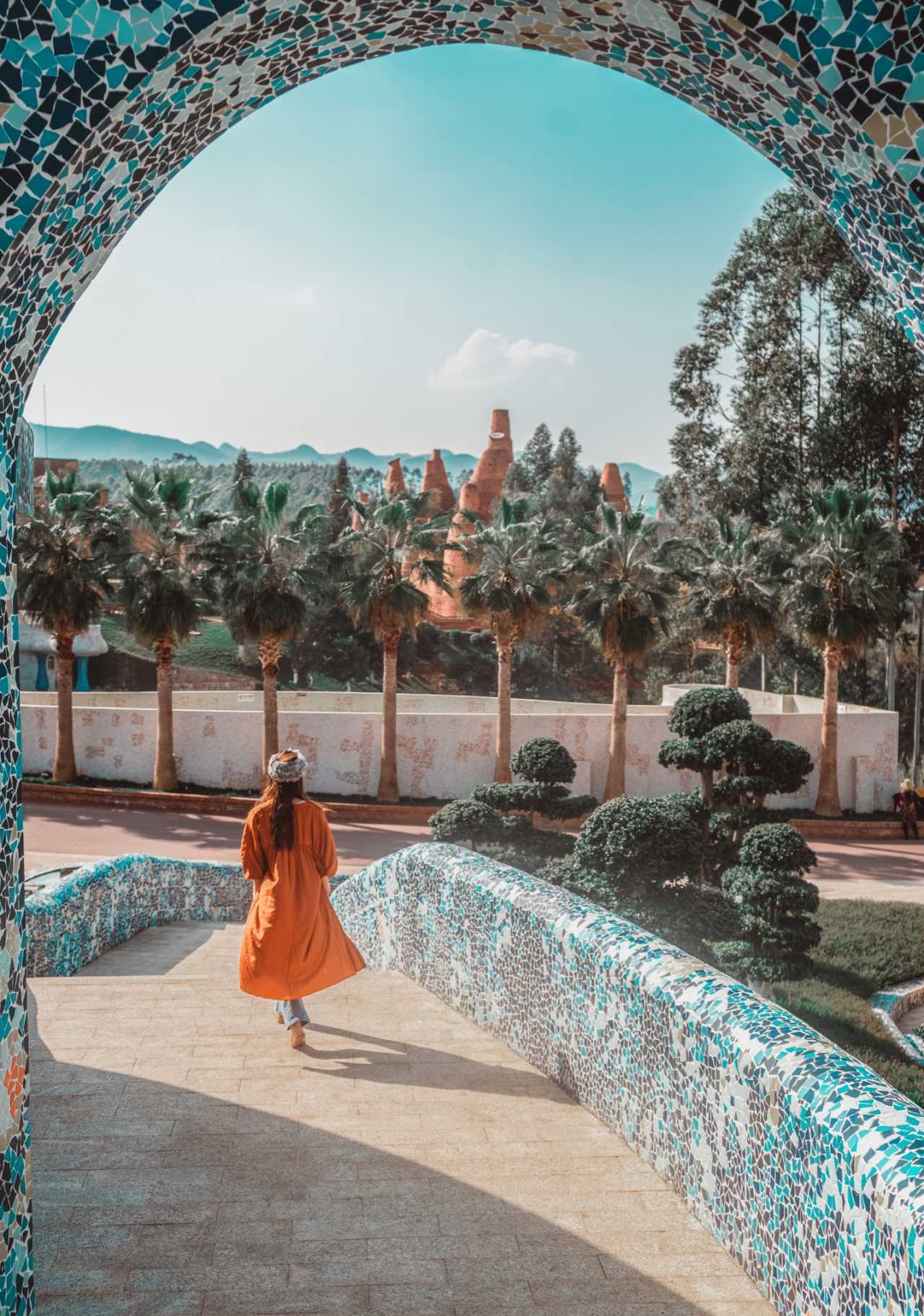
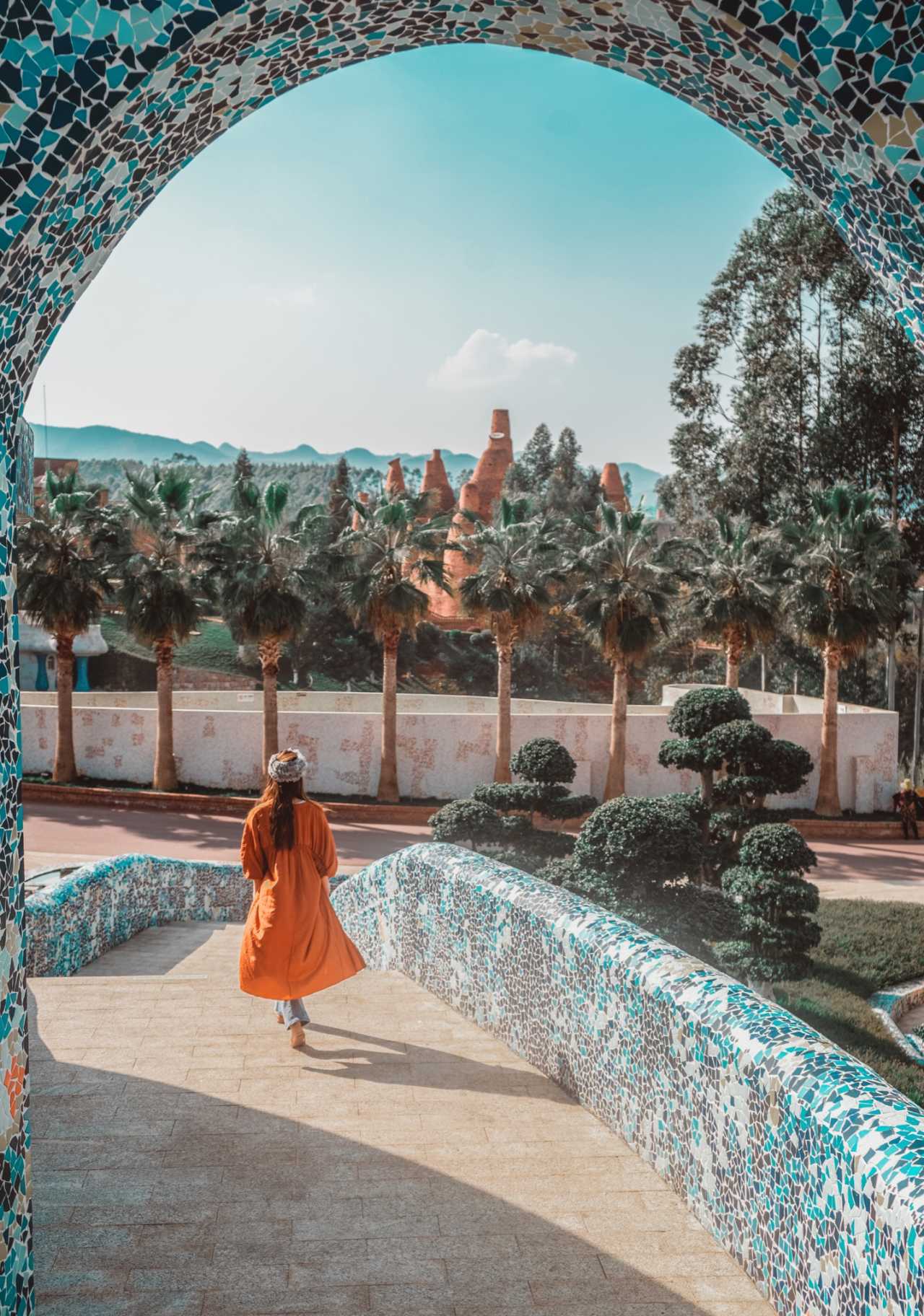
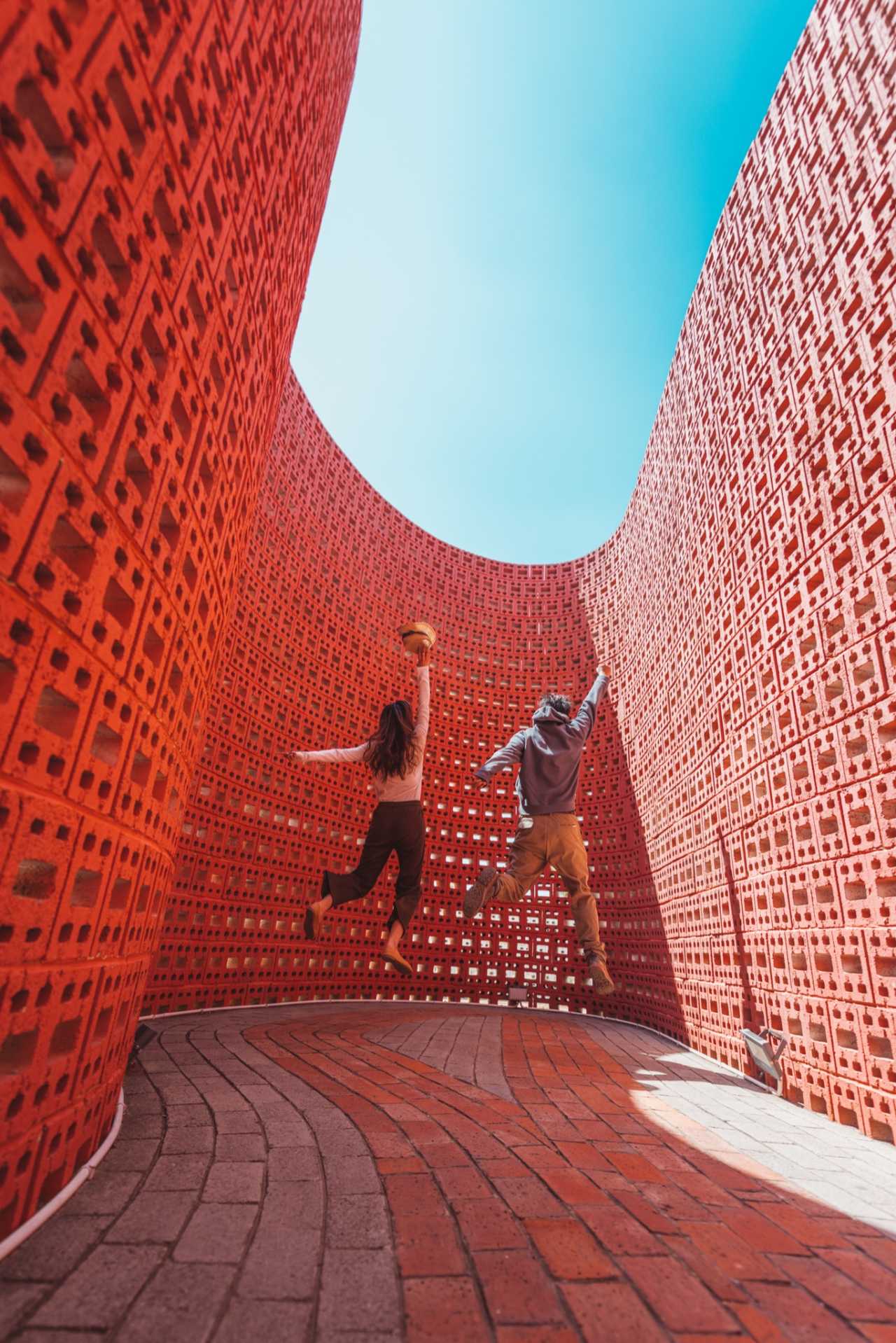
Two hours from Kunming, you'll reach Mile Dongfengyun Art Town. This unique town blends grape culture, natural scenery, and cultural tourism, earning it the nickname "Provence of Central Yunnan." The first time I saw it, I was blown away — the kaleidoscope architecture is absolutely stunning! Anyone who loves castles and romance hasn't truly lived if they haven't been here.
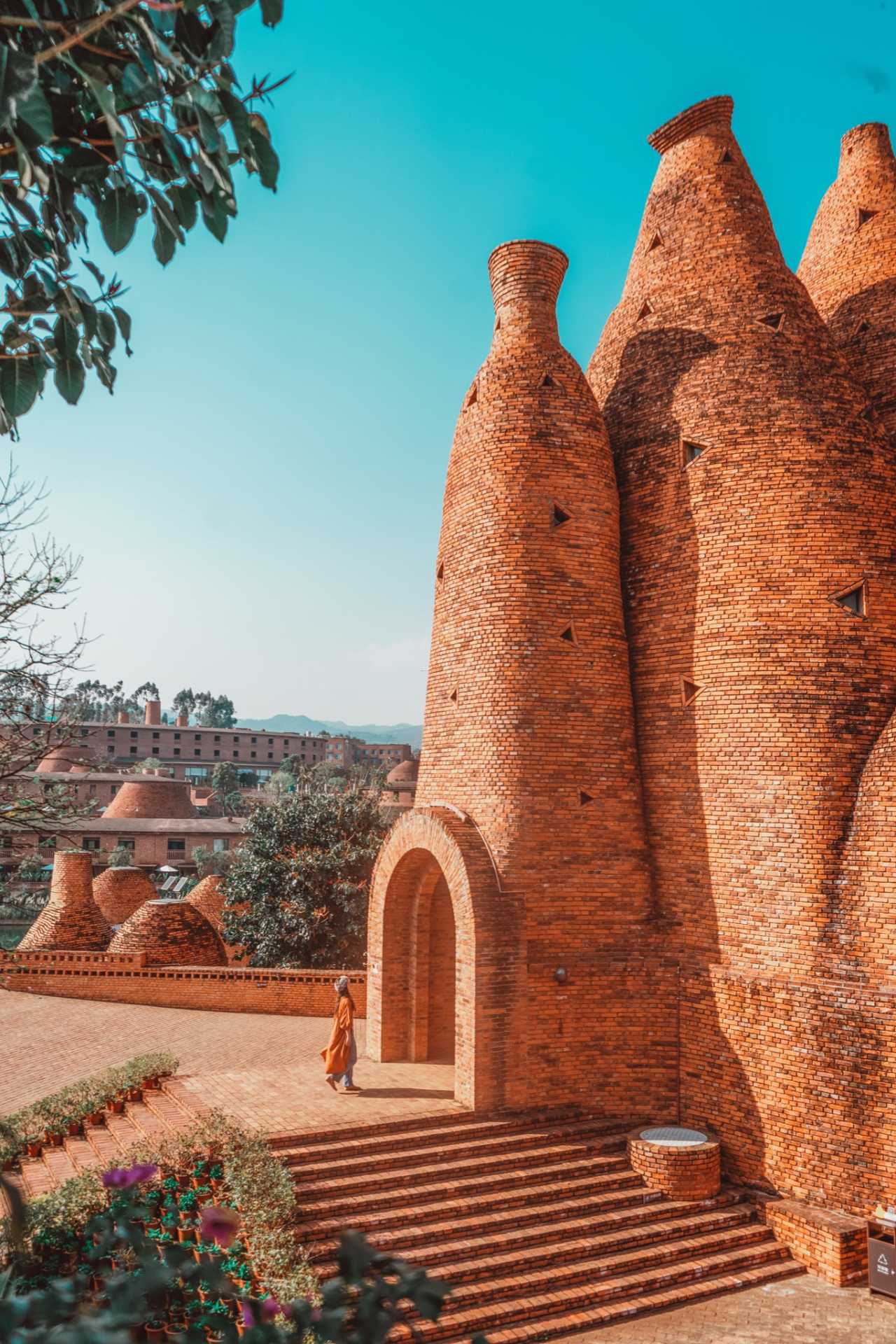
I love this spot — it feels like stumbling into a video game. Every candid shot looks amazing. The Kaleidoscope Art Gallery is the hottest photo spot, with architecture inspired by wine culture and the fire worship of the Yi ethnic group's Axi branch — bottle-shaped and flame-shaped castles all built from red bricks. It's been called a "magical futuristic fantasy castle" and "the fairy-tale castle closest to your heart."
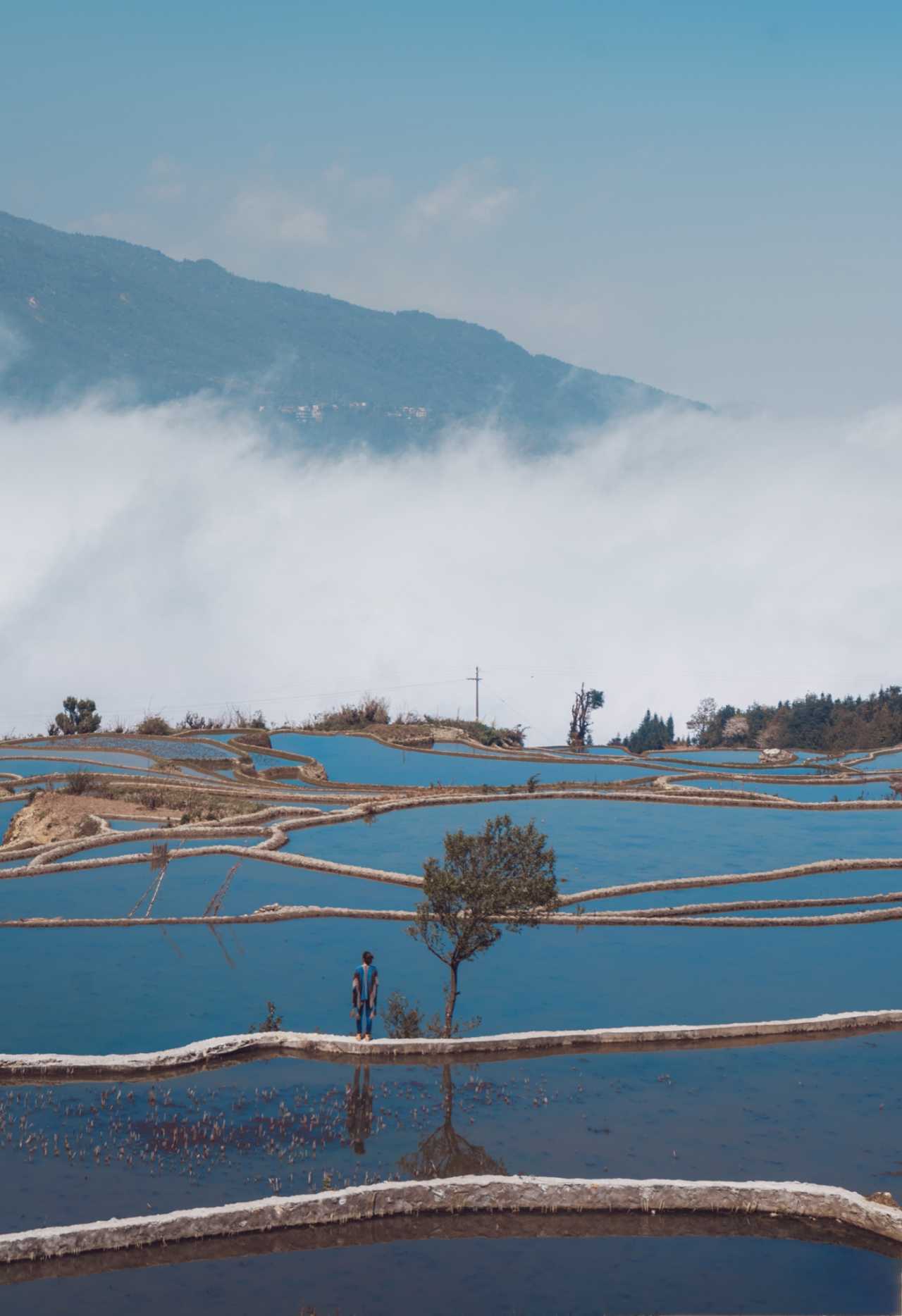
Photo spots: - The classic kaleidoscope castle — walk below and have someone snap rotating shots - At the main entrance, with the photographer shooting from above - Walk or run around the buildings outside the kaleidoscope, using flowers as foreground - The reflection in the lake water across from the hotel — absolutely stunning - Loosen up your body and capture natural candid moments
Note: Drones are prohibited here, though you might still see some people flying them inside. We asked at the gate and didn't bring ours — so should we fly or not? Didn't dare ask, didn't dare try. But look at that cloud above the castle — it appeared at just the right moment.
Practical info: - Ticket: 40 yuan, shuttle bus 20 yuan (we happened to come during Women's Day promotions — 38 yuan for women, and male companions also got the 38 yuan rate) - Opening hours: 8:00 AM – 6:00 PM - If you stay at the on-site hotel, you can keep exploring all day
Jianshui Ant Workshop: A Real-Life Squid Game, a Pastel-Colored Geometric Maze
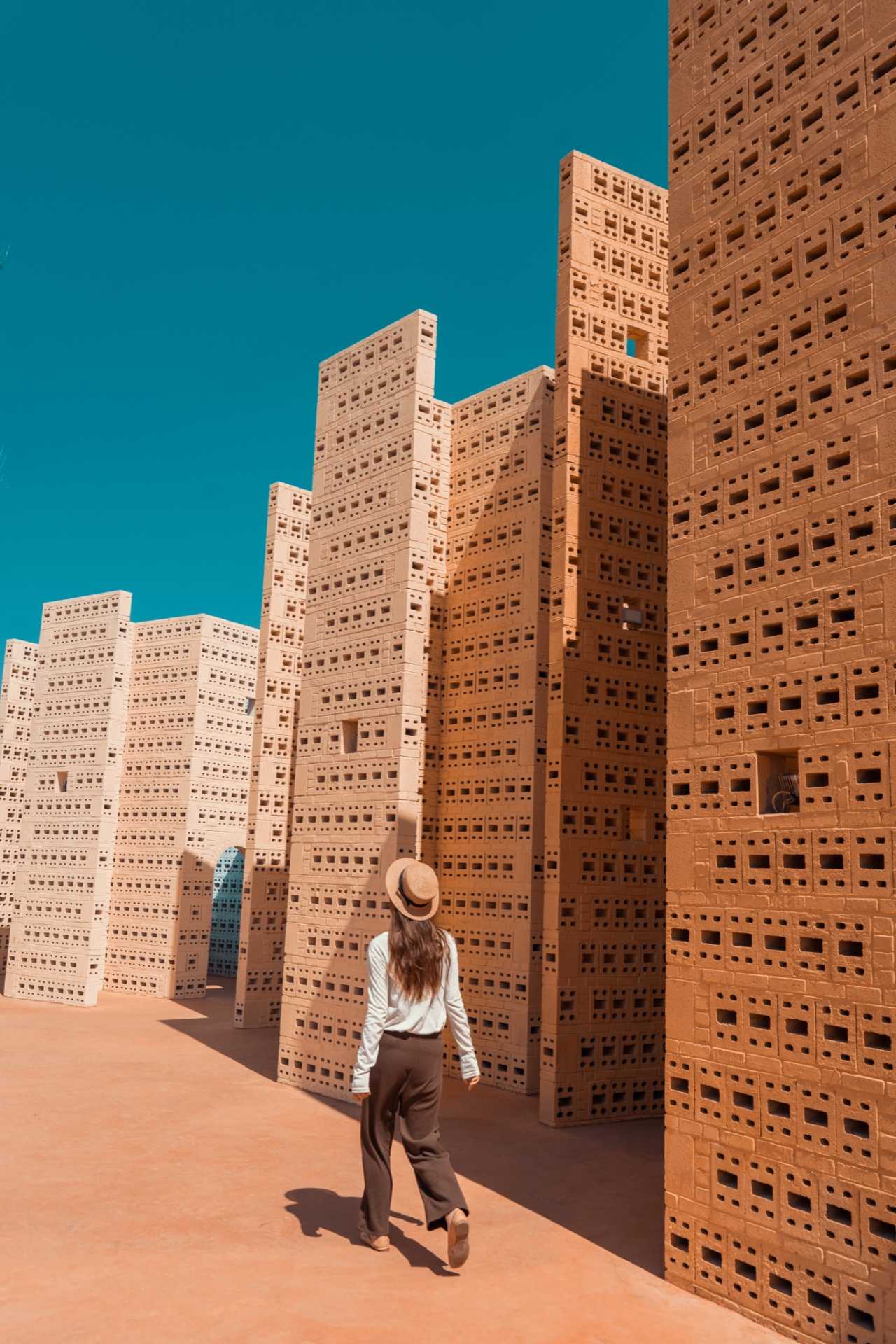
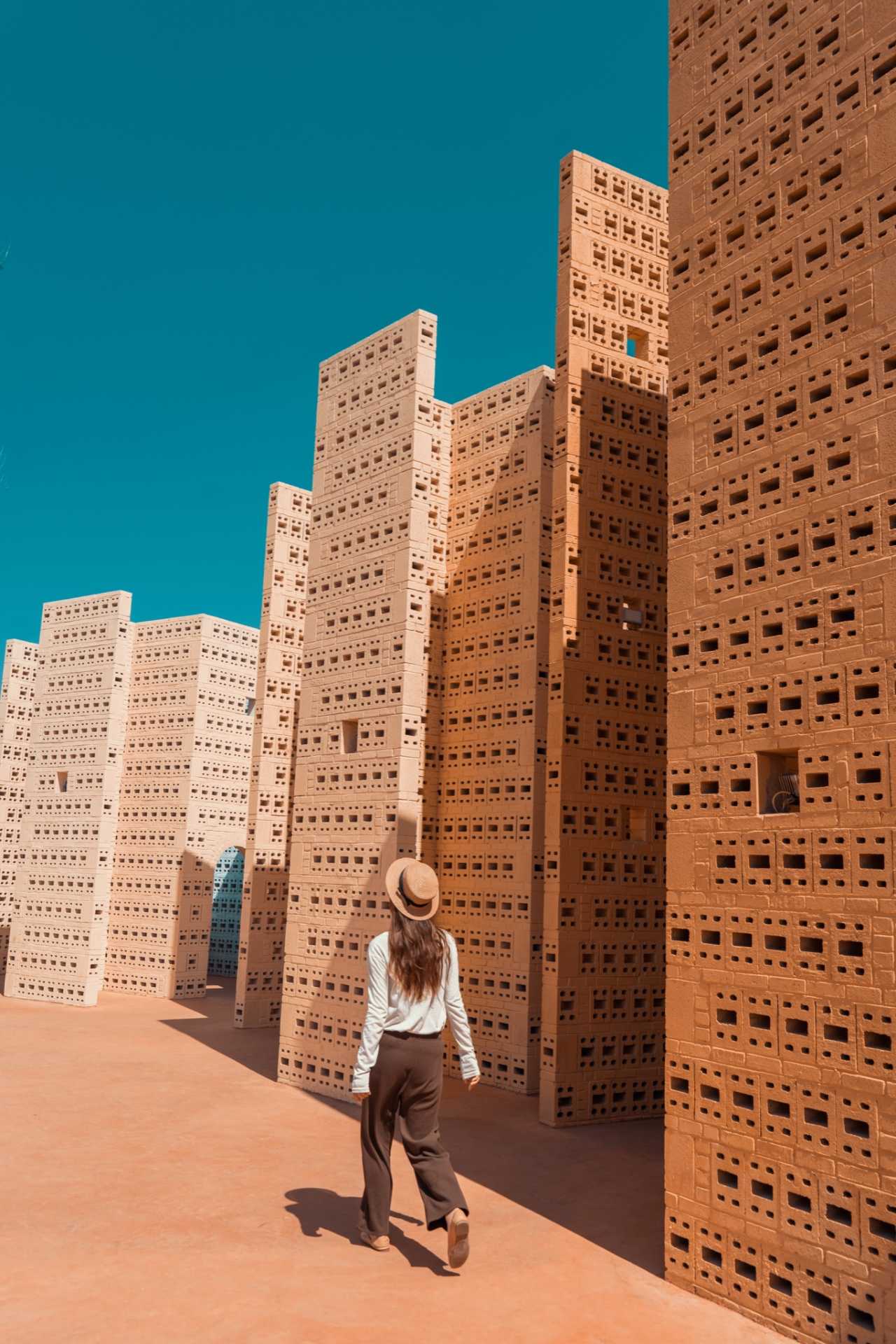
Can you imagine how powerful one person's artistic creativity can be? Jianshui Ant Workshop is the answer. The moment you step inside, doesn't it feel magical? Doesn't it look like you've wandered into Squid Game? I was obsessed with that show — I started watching before it blew up, and then suddenly it was everywhere. Addictive, indeed.
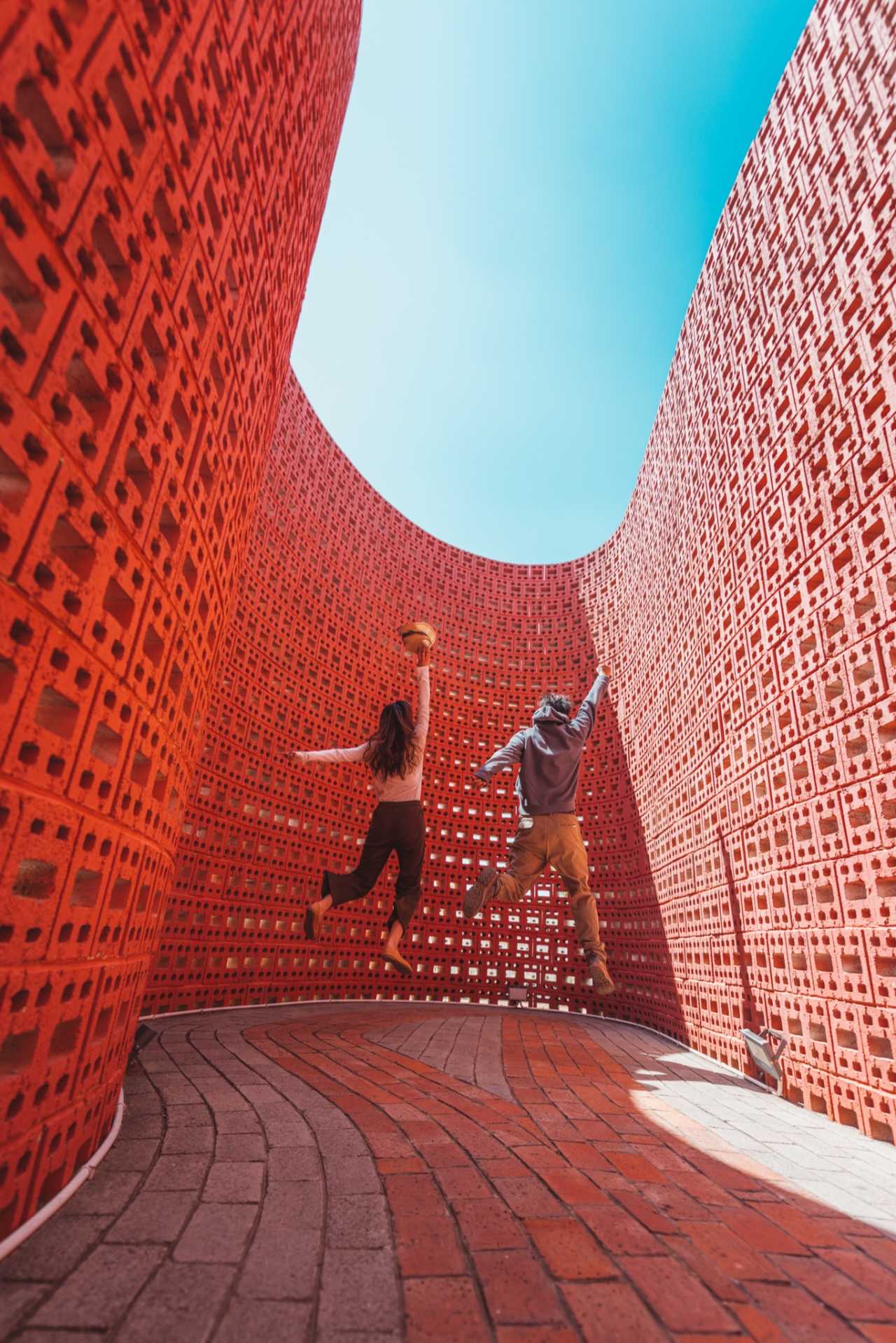
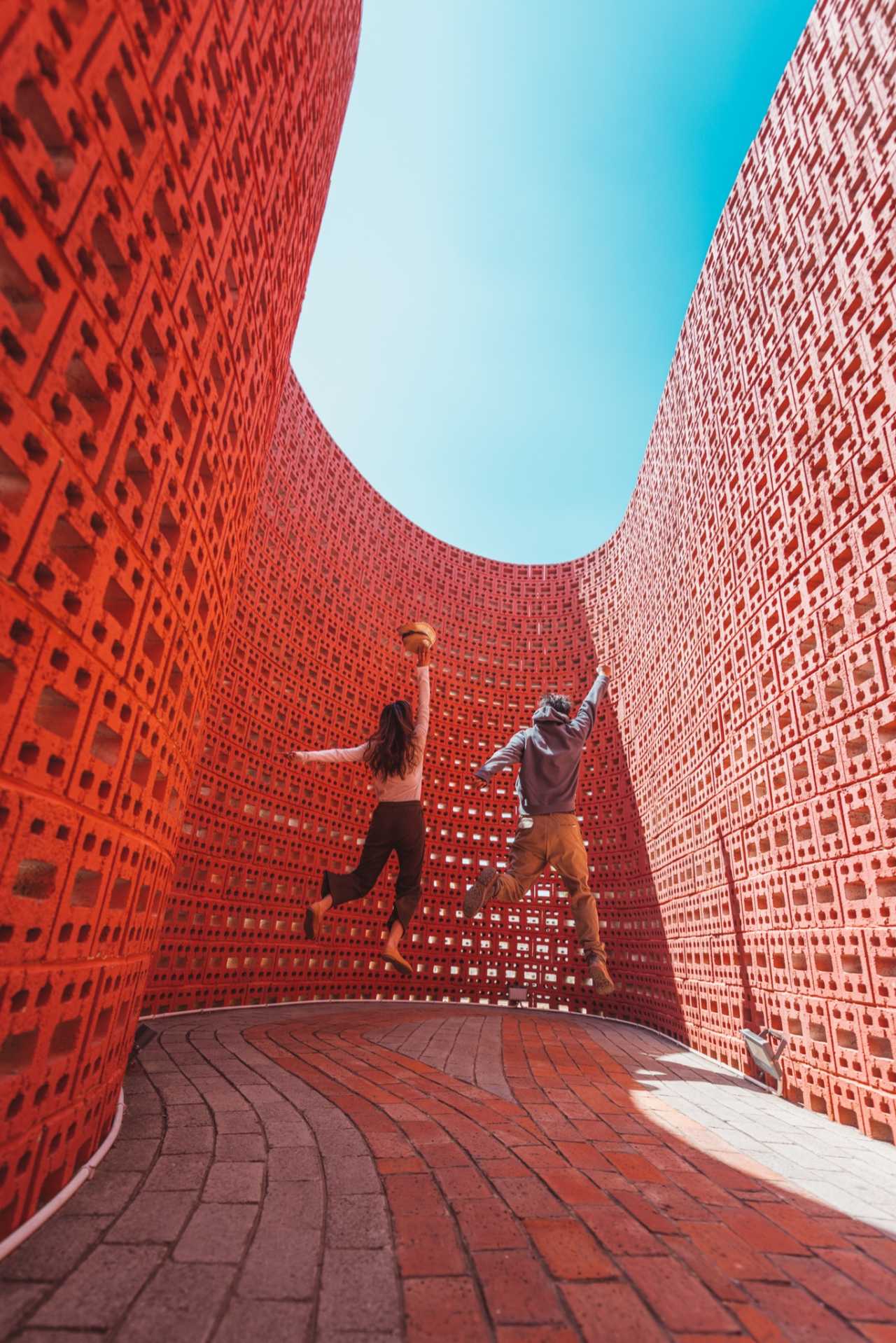
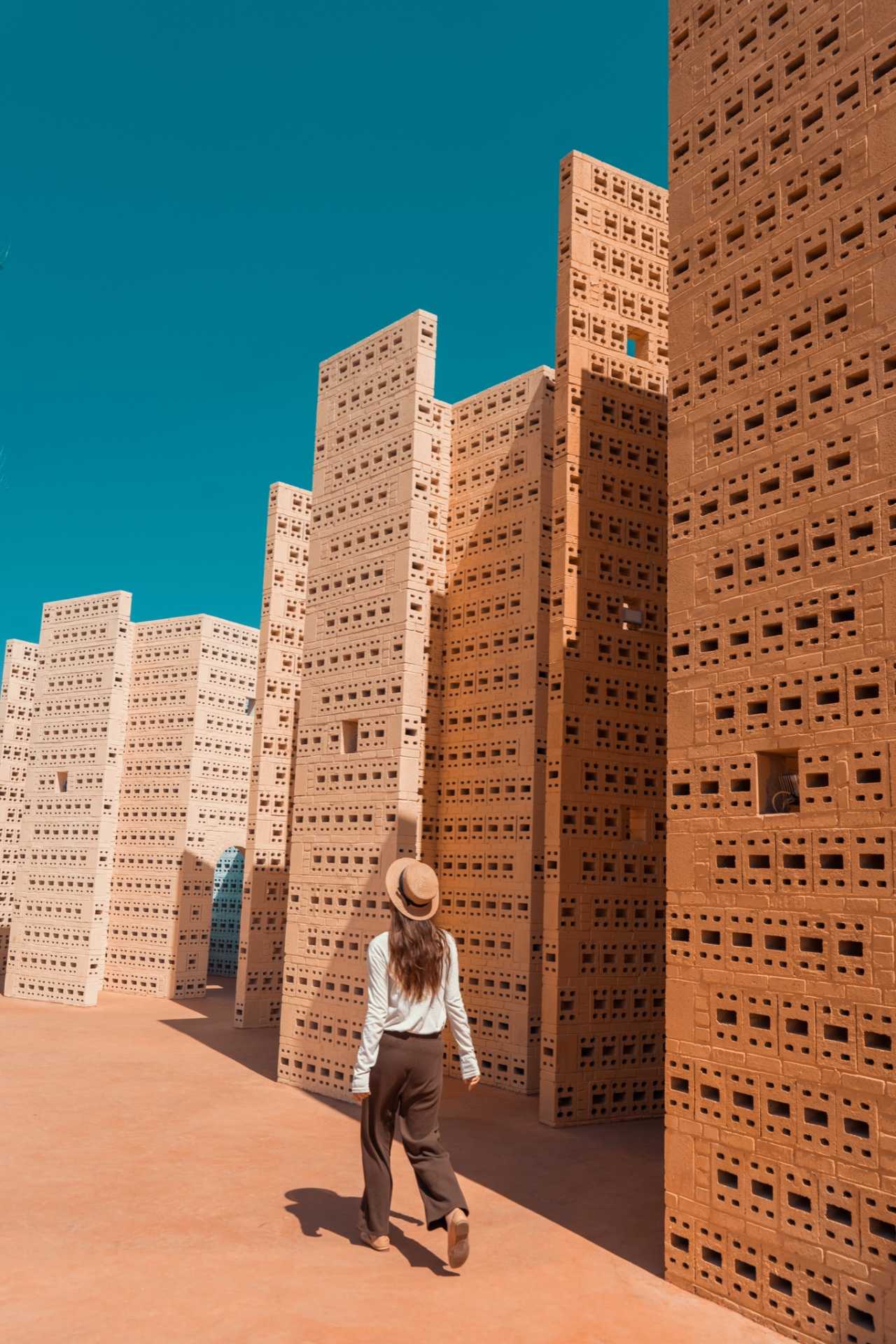
The pastel-colored geometric buildings are seriously cool. Everything here is built from hollow bricks stacked together, and you can even peek through the holes in the bricks to see a wonderland beyond. A super dreamy maze — walk around a few times and you'll get lost, hearing voices but not seeing anyone. This is also Yunnan's own little "Morocco," a hidden gem near Kunming.
Apparently, it was built by Luo Xu, a quirky Yunnan artist. In 1996, he built a "native nest" filled with his works near Kunming's Xiaoxi Village toll station. In 2016, he designed and supervised the construction of the red-brick sculpture castle in Mile — the now-famous "Dongfengyun." And in 2016, he designed another viral attraction in Jianshui — the "Ant Workshop."
Photo spots: - The red, orange, yellow, blue, pink, and white colorful maze-like buildings — fold the composition for creative shots - The interplay of light, shadow, and brick kiln architecture creates great atmosphere - Align three arches to capture four colors in one frame - Use a wide-angle lens to create a circular "sky mirror" effect - Couple creative shots: holding hands, jumping — incredibly photogenic - Symmetrical composition, walking candid shots, atmospheric light and shadow
Practical info: - Ticket: 20 yuan, combo ticket 40 yuan - Free parking - Two shooting spots: the colorful geometric buildings visible from the entrance, plus a classic spot behind the Ant Workshop guesthouse - Can be toured in about half an hour
It's very close to Jianshui Ancient City — make sure to try Jianshui's famous stuffed tofu (爆浆豆腐)! There's also an ancient well, and only tofu made with water from this well can be called authentic Jianshui tofu. Try the "five ways to eat tofu," but don't overdo it.
Yuanyang Rice Terraces and Azheke: A Village in the Clouds
See the terraces, watch the morning mist, and visit the mushroom houses in the cloud-shrouded village — at Yuanyang Rice Terraces, you'll witness the perfect harmony of mountains, water, and village life. It's a natural landscape more beautiful than any painting.

After exploring Jianshui Ancient City, we headed to Yuanyang. It was the season when the terraces are filled with water. I'd seen autumn terraces at Longji before, but I still needed to experience summer. We chose a guesthouse with a view, where we could watch the sunrise from the rooftop. We'd planned just one night, but the owner said, "See if you're lucky — you might get morning mist." And sure enough, we did the next day! It seemed to happen every morning, so we stayed two days, capturing the mist both mornings.
We shot the sunrise over the terraces from the rooftop — the sea of clouds was breathtaking. Behind us was the observation deck, packed with people, but we had a great spot, just upstairs from our room. The building at the very bottom was our guesthouse. There were also red terraces — covered in crimson duckweed, hence the name. You absolutely need a telephoto lens for these — they look like a fairyland.
Just as we were about to leave, we spotted a water buffalo working through our guesthouse window. If you love local culture, I recommend getting up early and wandering around the village — you'll capture many shots of locals starting their busy day. It reminded me of my hometown when I was a kid — there was always something to do, all year round.
Azheke: A Century-Old Village in the Terrace Sea of Clouds
Azheke is a hundred-year-old village born among the terraces and clouds. A stone-paved path that's been there for centuries leads to the cloud-shrouded mushroom houses. In the Hani language, Azheke means "a small, prosperous, and auspicious place." Only locals live here. Having seen Hainan's boat-shaped thatched houses and Guizhou's primitive villages — like Dali Dong Village and Zengchong Drum Tower — I've come to love China's ancient villages even more. I seek out these rustic settlements wherever I go.
Azheke Ancient Village is located deep in the mountainside of Yuanyang Rice Terraces in Honghe Prefecture, Yunnan. It's a small Hani village of about sixty households, one of five key villages included in the UNESCO World Heritage-listed Honghe Hani Rice Terraces. The village has perfectly preserved its ecosystem of "four elements in one" — village, terraces, forest, and water system. People call it the "village above the clouds."
The mushroom houses here are architecturally unique — single buildings with no courtyards. Usually two to three stories, the ground floor houses livestock and tools, the second floor is for living, and the third floor is for grain storage. The locals are warm and hospitable, and the combination of nature and village looks like a painting. If you love raw, authentic street photography and local culture, this is the place.
When we visited, there was morning mist every day. Come in the early morning, and by the time you're finishing up, the mist clears and the sun comes out — you can feel the light change dramatically. Shoot a time-lapse, and the village comes alive. Once the sun is fully out, the village looks incredibly healing. It's actually not big — you can walk through it in half an hour. There's an entrance fee, but the money goes back to the villagers, which is great.
Practical info: - Visit time: About 2 hours - Ticket: 30 yuan - Free parking - Location: Inside Yuanyang Rice Terraces, Yuanyang County, Honghe Prefecture, Yunnan
Pingbian: A Mysterious Border Town — My Least Expected but Most Treasured Discovery
I have to say: this was the place I had the lowest expectations for, yet it turned out to be the most rewarding!
This is Pingbian Miao Autonomous County in Yunnan, a small town hidden along China's southwestern border. Waterfalls, clouds of mist, meter-gauge railways, a train market, the century-old Yunnan-Vietnam Railway, and virgin forests — it's a border town rich in nature and culture, completely untouched by commercialization.
Dishuiceng Waterfall: Yunnan's Little Iceland
When my travel partner said, "We can stop by Pingbian on the way from Yuanyang," I wasn't impressed. The mountain roads weren't difficult, but I kept thinking, "Why are we coming here?" Everything felt raw and a bit rough. Out of curiosity, we went to see the waterfall. We walked down — 15 minutes to the bottom! I was shocked. The rainforest waterfall's overwhelming presence was incredible.
A waterfall like a river of stars, a mountain cascade through tropical rainforest and bamboo groves — that's Dishuiceng Waterfall. Right above the waterfall is a flat area, incredibly close. We brought our camping gear and sat there to rest and enjoy the view. This is a hidden gem that 90% of people don't know about. The water crashes down from above, with immense mist and pressure — it was my first time experiencing such a powerful waterfall up close. Absolutely spectacular! Just like Guizhou's Xianghuoyan Waterfall! Easy to reach — 15 minutes down to the bottom with almost no difficulty, free to enter, and drones are allowed. Standing beneath the waterfall, all I felt was awe.
We stayed for ten minutes and were already soaked. The surrounding black sand and stone looked beautiful, very Instagram-worthy. But there was too much mist to get any closer.
Photo tips: - White T-shirts or ethnic-style shawls look amazing — very Iceland vibes - You can walk right under the waterfall for a pure waterfall background - The greenery on the right gives a tropical rainforest feel - The black rocks beside the waterfall look just like Iceland's black sand beaches - Set up a tent with the waterfall in the background for that Iceland camping aesthetic
Practical info: - Location: Dishuicheng Miao Town, Yuping Town, Pingbian Miao Autonomous County, Yunnan (Dishuiceng Waterfall viewing platform) - Free parking. Walk forward, past the China Petroleum station on the right, find a small path beside the pavilion — 15 minutes to the waterfall
Tips: - The waterfall has a huge drop, so it gets cold underneath. Bring a waterproof jacket to stay warm and dry - You can walk to the very edge for an incredible view, but the rocks are slippery with moss — be careful - You can pitch a tent on the flat ground above — a wild waterfall campsite - Take your trash with you — enjoy the experience while protecting the environment
Yunnan-Vietnam Railway Renzigou Bridge: A Train Through the Mountains in the Clouds
The Renzigou Bridge, over 7 meters long, spans a sheer cliff face — it's the most spectacular iron bridge on the Yunnan-Vietnam Railway. You can hike up and walk onto the tracks. When we visited, locals were building a pedestrian walkway, so it might open as a scenic spot or other attraction in the future. During the half-hour we spent taking photos, a train passed by — but we missed capturing it. There's also a viewing platform above.
Pingbian County in Yunnan is a border town as pristine and uncommercialized as the villages in Guizhou. Its unique geography has created special volcanic lava landforms and a distinctive ecological environment — waterfalls and mountains coexist, volcanoes and cities stand side by side, and lava relics grow alongside virgin forests. A hidden gem you can't miss!
This is also a county where ethnic minorities gather, with local cultural festivals that are very lively. On the day we arrived, there was supposed to be a bonfire performance. The hotel owner told us to check the entrance of the village, but due to pandemic restrictions, such gatherings were temporarily canceled. Next time, I definitely want to catch a bonfire show and see the unique train market — a living piece of cultural heritage. I'll be back!
Xishuangbanna: Let Loose in Summer
Besides the beach, there's this treasure of a city for summer. Summer's synonym — Xishuangbanna! I'd been wanting to visit this "little Southeast Asia" and "free Thailand" in China for ages. One visit and my heart stayed here. It's now on my list for a wedding trip destination. The "Back to Field" (向往的生活) Xishuangbanna edition. Every beautiful, romantic word fits it perfectly. Couples, groups of girlfriends — just come. No need for an itinerary. You'll have a blast just in Gaozhuang!
This is also a filming location for the TV drama Night Action — go find the same spots as Li Yifeng and Song Yi! One thing though: it's really hot. Best to go out in the early morning or evening and stay in your hotel during midday — isn't that our favorite way to travel anyway?
Starlight Night Market: The Largest Southeast Asian-Style Night Market in China
Let me share some photos first — the Starlight Night Market is two different worlds by day and night! There are various pagoda-style buildings, and the water market is free during the day. The sunset collages are amazing, and the night market lights up brilliantly. The red pagoda is incredibly photogenic — packed at night, but I had it all to myself during the day.
In my opinion, the daytime Starlight Night Market is no less impressive than any scenic spot, with almost no tourists around. We stayed in Gaozhuang, so we could walk back anytime we got tired. The moment you step into this night market, you feel like you've been transported to Southeast Asia. Can't travel abroad these years? Pick a time and come to Xishuangbanna.
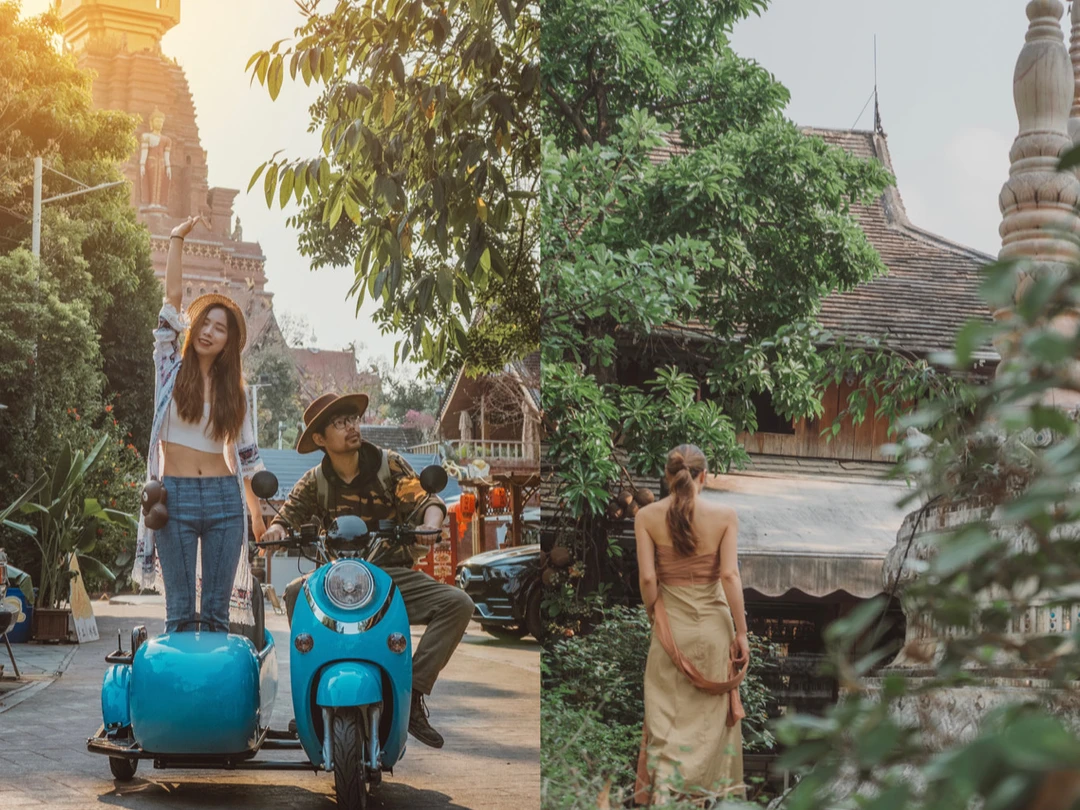
The night market is inside the Great Golden Pagoda complex. Get a photo with the elephants scattered around. The Southeast Asian-style market street (赶摆街) has so many colorful houses — like a fairy tale! You can collect photos of doors in different colors. Then ride a little scooter around the Great Golden Pagoda — every angle looks great, and none of the shots are the same. There's also a white cotton-candy castle in Gaozhuang. If you're tired of exotic architecture, this white castle is also super photogenic — you can see it from the street to the right of Jinglan Hotel.
The Starlight Night Market sits along the Mekong River. Its unique architecture and the lively atmosphere under the lights make it a fairy-tale kingdom bathed in a magical filter once night falls — hot and romantic. Every evening at 7:00 PM, the Starlight Night Market opens, instantly coming alive. On one side of the market stands the Great Golden Pagoda, majestic and dazzling, like the brightest stars in the galaxy.
You'll notice that everyone here is dressed in Thai-style sarongs! The market mainly offers street food and various handmade crafts. Apparently, there are nearly 5,000 vendors here. Each stall has a paper umbrella in a different color, marking their own little space. Food, drinks, entertainment, and handicrafts — everything is here. Of course, as a tourist market, you can haggle a bit and try things in moderation.
Rooftop photo spots: - The red pagoda in the center of the market connects to the Great Golden Pagoda - The alley at Puzuo Time (菩左时光里) — the one with the electric scooter photo - The market's street (赶摆街) — colorful houses like a Ghibli movie - Collect doors in different colors along this street — come during the day - The elephants inside the Great Golden Pagoda complex - The white castle visible from the street to the right of Jinglan Hotel - The Mekong Water Market's popular spot — free during the day
Just wandering around Gaozhuang during the day, every corner is photogenic — instant Instagram-worthy shots. You can rent all kinds of cute electric scooters in Gaozhuang — make sure to ride around. We spent two mornings doing just that, since we had nothing else to do. But they only work within Gaozhuang — step outside and they immediately cut off! Still, that's enough range to hit all the photo spots. You can negotiate the rental price — we paid 30 yuan for about an hour and a half.
Manting Park: The Garden of Souls
Manting Park is the oldest park in Xishuangbanna. In the Dai language, it's called "Chun Huan," meaning "Garden of Souls." It was once the royal garden of the Xishuangbanna Dai kings. Legend has it that when the Dai princess visited, she was so captivated by the beauty that her soul stayed here, hence the name.
Every shot here could be a cover photo. It's connected to the General Buddhist Temple, with tropical rainforests and various Thai-style castle temples. Almost everyone has a photo of the white pagoda. What I found most beautiful was the white pagoda at the entrance and this brick-red castle-like building — it's actually a café and aromatherapy shop. Behind it is the famous Monet Garden. It really feels like you're abroad.
There are many temples of various sizes along the way. At the far end, it seems to be the royal garden of the Dai king. Walking through, you'll notice the rich greenery — according to online sources, there are over 500 ancient ironwood trees and lush vegetation preserved here. The park has hills and waterways, along with culturally rich human landscapes, making it a natural village-style park. It was once the Dai king's royal garden, with a history of over 1,300 years. This attraction embodies three main themes: "Dai royal culture, Buddhist culture, and Dai folk culture."
Practical info: - Ticket: 40 yuan - Manting Park and the General Buddhist Temple are connected — visit them together
General Buddhist Temple: The Highest-Ranking Temple in Xishuangbanna
The General Buddhist Temple of Xishuangbanna, called "Wa Ba Jie" in the Dai language, is the center of Buddhist pilgrimage in the region. Located on the south side of Manting Park in Jinghong city, it shares a courtyard with the Buddhist College. With a history of over 1,300 years, it's the highest-ranking temple in Xishuangbanna. Today, it's also one of the most popular temple attractions, usually visited together with Manting Park.
According to online sources, the General Buddhist Temple was the sacred site where the highest ruler of Xishuangbanna, the Zhao Pianling (召片领), and his chieftains worshipped Buddha before liberation. It was also the highest-ranking temple among all Buddhist temples in Xishuangbanna. Abbots from various temples would come here to pay respects and discuss scriptures. Even today, Buddhist followers regard it as the foremost temple and frequently come to worship, with a constant stream of pilgrims.
There's an important note: unlike most temples and monasteries in mainland China, Dai Buddhist temples have many rules, especially the General Buddhist Temple. For example, improper attire is not allowed inside, and commercial photography like portraits or wedding photos is prohibited. Staff patrol with megaphones and will warn violators; repeat offenders may be escorted out. Please respect local regulations when visiting.
The General Buddhist Temple closes promptly at 6:30 PM — it's absolutely worth seeing, so don't miss it. We visited it together with Manting Park, parking at the General Buddhist Temple's lot (which seemed to be free), then walked from the temple directly into Manting Park.
Bore Temple: A Pristine White Pagoda
Bore Temple is located on a mountain near Gasa Airport. Its main attraction is the completely white Bore Pagoda. It's one of the oldest and most famous pagodas in Xishuangbanna, a place where the Three Jewels are enshrined and where monks study and practice the Dharma. Comparable to the white pagoda in Mangshi, it's free and less crowded, so many people come to visit.
The temple strictly prohibits revealing clothing, wedding photos, and loud behavior. Just take a simple look and some photos — if you're not careful, a loudspeaker will remind you. When we visited, two girls in Dai-style sarongs were turned away at the gate. There are also clothes available for rent, apparently for 10 yuan, as long as they're not too revealing.
Under the sunlight, Bore Temple is truly pure and flawless. The wind carries the crisp sound of bells from the pagoda's spire. The pagoda itself doesn't take long to see — and because it's not easily accessible, there aren't many visitors.
Final Thoughts: Yunnan, Worth Coming Back to Again and Again
After this trip, I'm more convinced than ever: Yunnan is the ultimate couple's travel destination. It has exotic charm, natural wonders, romantic sunsets, and everyday life all in one place. You and your loved one can ride a scooter through the Starlight Night Market, watch morning mist over Yuanyang's rice terraces, feel the thunderous power of Dishuiceng Waterfall, and take a "runaway princess" photo in front of Manting Park's white pagoda.
Most importantly, Yunnan has countless ways to be explored. Don't join a tour group. Don't rush. Don't just check off destinations. Find a place you love, settle in, walk slowly, and take your time. You'll discover that Yunnan's magic isn't in how many places you visit — it's in the unexpected beauty you encounter when you stop and stay.
So this summer, take the one you love and go to Yunnan. You don't need a detailed itinerary. You don't need to plan every step. Just go — that's the best beginning.
You should also read:

God’s Abandoned Palette: A Self-Drive Journey Through Yunnan’s Dongchuan Red Land
God’s Abandoned Palette: A Self-Drive Journey Through Yunnan’s Dongchuan Red Land Travel has never been about reaching some distant geographic coordinate. It’s about encountering, along the way, the version of yourself buried beneath the rubble of daily routine. During this May Day holiday, I finally…
Continue reading...
Cloud Travelogue · Dali of Wind, Flowers, Snow, and Moon: A Three-Day, Two-Night Journey of a Free Spirit
Cloud Travelogue · Dali of Wind, Flowers, Snow, and Moon: A Three-Day, Two-Night Journey of a Free Spirit I am a cultured female foodie with a touch of rogue charm. I slung on my backpack, took my lover's hand, and set off on a spontaneous…
Continue reading...
The Meaning of Travel – A Tengchong Story: A Journey of the Heart and Personal Growth
The Meaning of Travel – A Tengchong Story: A Journey of the Heart and Personal Growth Setting Out, Only to Return a Better Self Some say travel is nothing more than leaving a place you're tired of, only to go to a place where others…
Continue reading...