This "Year" I'm Here: Exploring the Yunnan-Vietnam Railway – A Flowing Tapestry of History and Nature
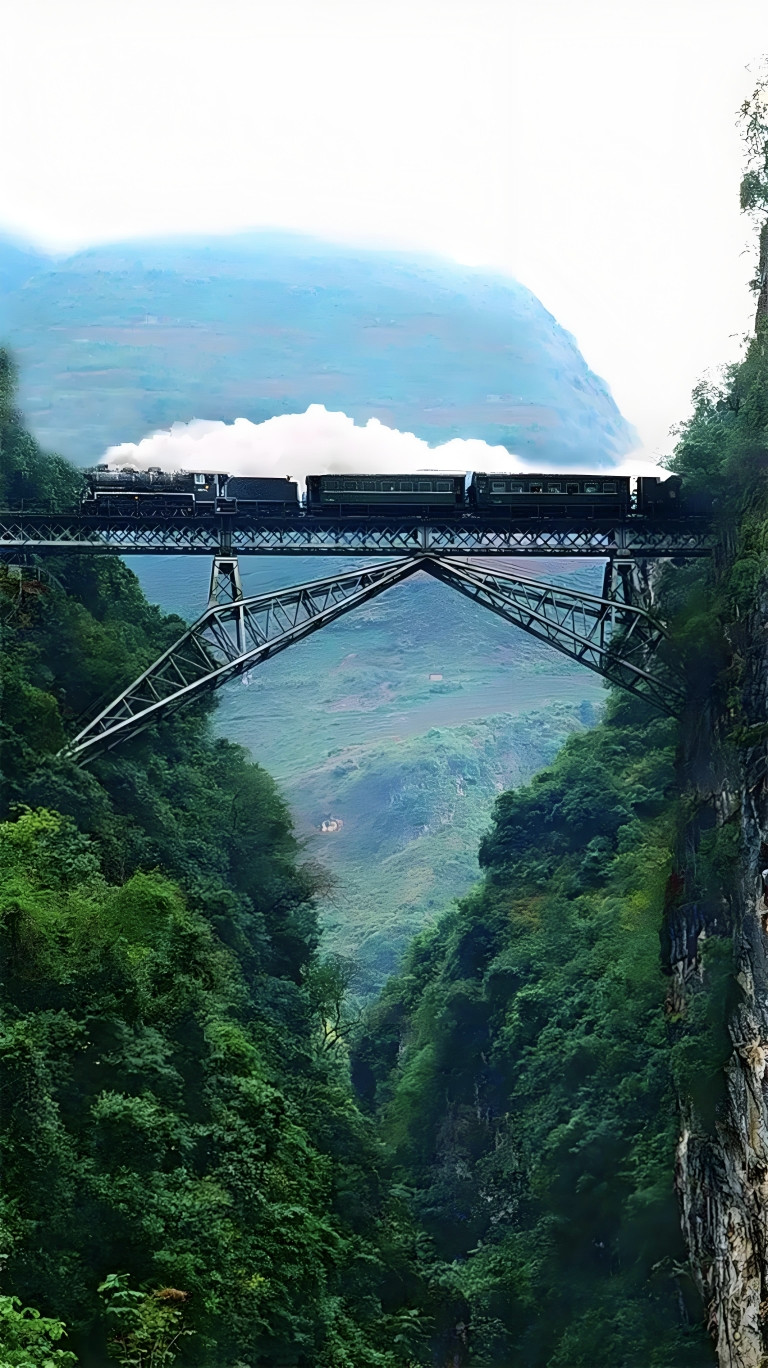
This "Year" I'm Here: Exploring the Yunnan-Vietnam Railway – A Flowing Tapestry of History and Nature
Preface: One Railway, Two Lives
The poet Yu Jian once described the Yunnan-Vietnam Railway like this: "On other railways, you are forever just a passenger. But on the Yunnan-Vietnam Railway, you might just become a poet." That sentence lodged itself like a seed in my heart. It wasn't until this Spring Festival that I finally embarked on this journey, to explore the century-old沉淀 (accumulated years) and to search for the version of myself that yearns for poetry and distant horizons.
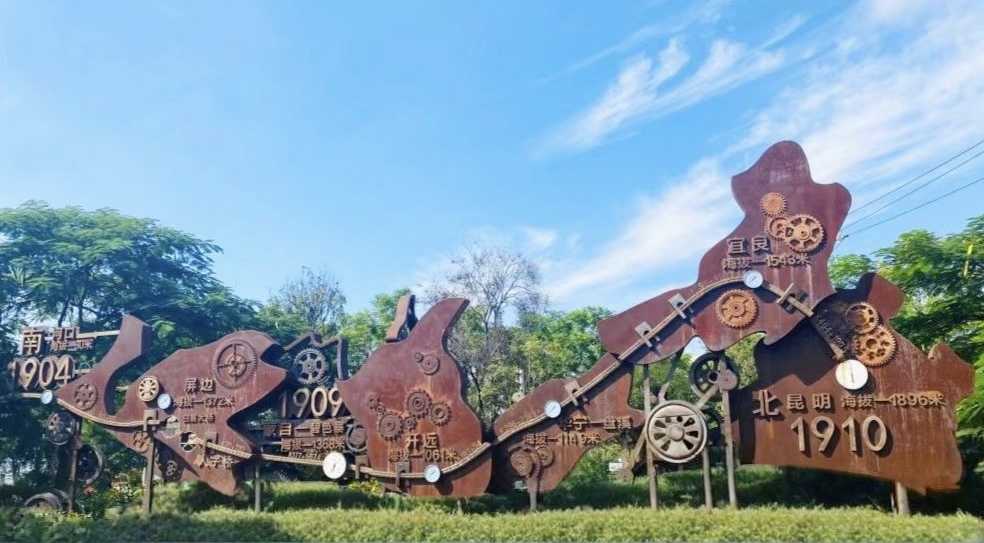
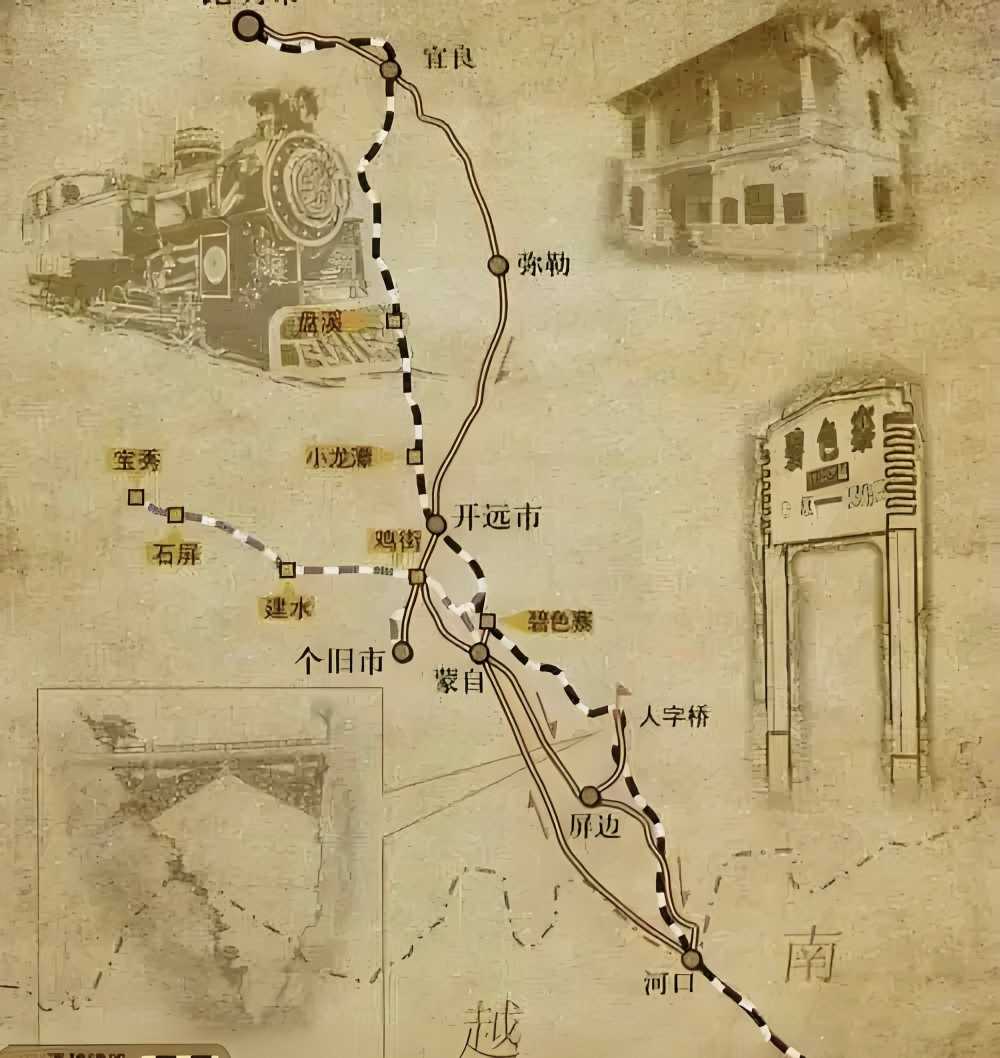
The Yunnan-Vietnam Railway – this meter-gauge track winding through the towering mountains of southeastern Yunnan – strings together natural landscapes and human culture, as well as the collision and fusion of Eastern and Western civilizations. From dry, hot plains to humid valleys, from brilliant sunshine to torrential downpours, from bustling border markets to mist-shrouded silent forests – every frame along the way feels like a moving painting.
We set off, carrying reverence for history, a longing for nature, and a heart that wanted to slow down.
Self-Drive Itinerary: A Spontaneous Journey Through Southern Yunnan
D1 Chengdu → Qujing
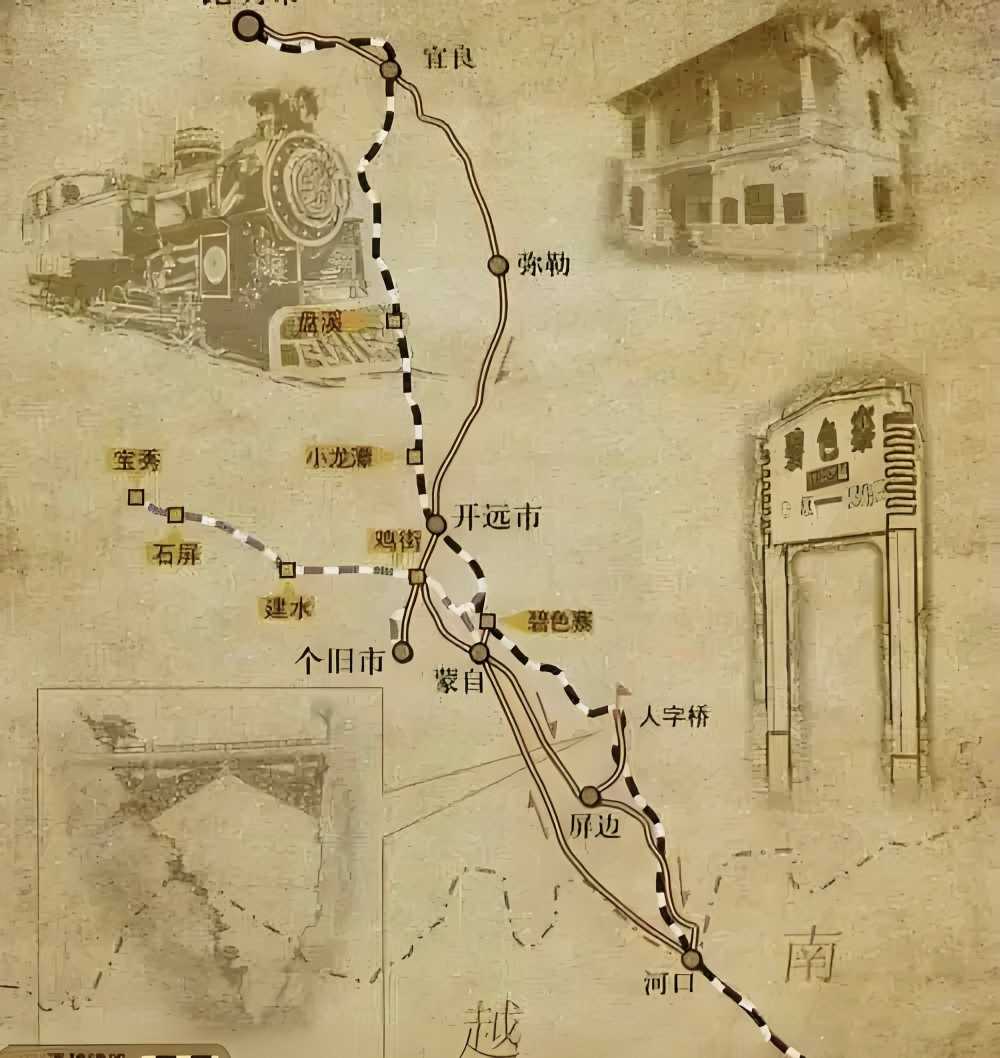
D2 Qujing → Hekou → Baihe Town, Pingbian County
D3 Baihe Town, Pingbian County → Renzigiao Village, Wantang Township → Lüchun County Town
D4 Lüchun County Town → Lagü Rice Terraces → Mengzi City
D5 Mengzi City → Bisezhai (Green-Blue Village) → Shiping County
D6 Shiping County Surroundings (Zhengying Village, Yilong Lake)
D7 Shiping County → Xinping County
D8 Xinping County → Yuanmou County
D9 Yuanmou County and Surroundings
D10 Yuanmou → Chengdu
Self-Drive Tips: We departed on the fourth day of the Lunar New Year, traveling against the peak crowds. The first two days were spent on expressways heading straight for the farthest point, Hekou. This allowed us to take advantage of the Spring Festival's free highway tolls while avoiding the mass exodus of cars from Sichuan (the "Sichuan A Army"). On the return trip, we slowly made our way back along the Yunnan-Vietnam Railway, enjoying a completely smooth journey.
The Pearl of the Border – Hekou: One City, Two Countries, Southeast Asian Vibes All Around
Hekou, the lowest-altitude city in Yunnan at just 76 meters above sea level. The moment you enter Hekou, a thick Southeast Asian atmosphere washes over you. Tall coconut trees cast long shadows, and French-style buildings along the streets harmonize with tropical plants. "Bananas overhead, pineapples underfoot, one city spanning two countries, the pearl of the border gate" – this description couldn't be more fitting.
We parked at the entrance lot and strolled along the riverside road. Standing on the bank of the boundary river and looking across, we could see the beautiful French-style palace-like buildings on the Vietnamese side of Lào Cai, nestled among green trees. Hekou is a Yao Autonomous County, and on the streets, we occasionally saw Yao women in their vibrant ethnic costumes, their smiles as warm as the local sunshine.
Hekou Old Railway Station: The End of the Line
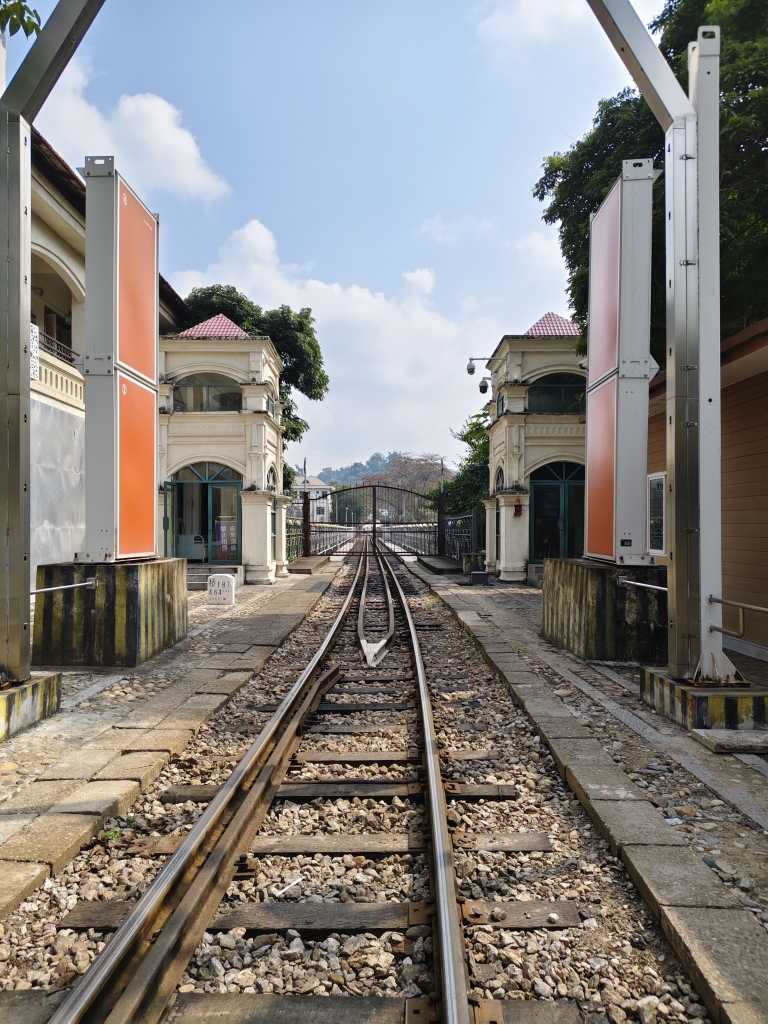
Hekou Old Railway Station was the terminal point of the Yunnan section of the Yunnan-Vietnam Railway and remains an important overland gateway from China to South and Southeast Asia. The China-Vietnam Railway Bridge, just 50 meters from the station, spans the confluence of the Red River and the Nanxi River. In the past, it was the only route for international rail transport on the Yunnan-Vietnam line. Today, it serves as a dedicated freight corridor, where meter-gauge trains thunder through the mountains, cross the China-Vietnam Bridge, and head into Vietnam.
To witness a meter-gauge train crossing the China-Vietnam Railway Bridge, we spent two hours on the terrace of a café with the best view of the bridge, drinking two cups of coffee. We never saw a train. Later, we heard it's easier to spot one after 2 PM, and that trains crossing the bridge at night, with their lights twinkling, offer a particularly charming sight.
French Architecture and Historical Marks
Nearby stands a French Customs House built in 1897, now converted into the Hekou Uprising Memorial Hall of the Tongmenghui (Chinese Revolutionary Alliance). The walls display materials related to the 1908 Hekou Uprising and photos of its leaders, including not only Sun Yat-sen and Huang Xing of the Chinese Tongmenghui but also Huang Longsheng of the Vietnamese Hanoi Xingzhonghui. This building witnessed the years when revolutionaries from both China and Vietnam fought side-by-side.
The old Hekou Post Office building is another classic example of French architecture, with its yellow walls and green windows. Yet, at its entrance stand elephant sculptures with a distinctly Southeast Asian flair – a marvelous fusion of Eastern and Western cultures right here.
The Border Trade Market: A Taste of Vietnam
The dazzling border trade market was filled with Vietnamese snacks. Giant zongzi (sticky rice dumplings) wrapped in massive banana leaves were intimidating – at our appetites, it would take three days to finish one. We bought some Vietnamese steamed rice rolls (bánh cuốn) that we'd previously tried in Dongxing. The vendor skillfully spread rice milk batter into thin sheets, added a filling of chives and minced pork, rolled them up, and packed them in a box. She gave us a dipping sauce made with bird's eye chili, soy sauce, vinegar, cilantro, and lemon. One bite, and it was absolutely divine!
Vietnamese spring rolls and chicken noodle soup are also worth trying, and they're reasonably priced. Every time I'm in Yunnan, as a fruit fanatic, I make a point to visit the local market for tropical fruits – bananas, mangoes, sugar apples, eggfruits. They're fresh, cheap, and never disappoint. Coconuts are the go-to drink, refreshing and thirst-quenching.
Tips: - Hekou doesn't have dazzling scenery, but watching meter-gauge trains on the China-Vietnam Railway Bridge is a major draw. It's reportedly easier to see them after 2 PM, and they look even better at night. You can ask the railway staff for exact times.
The Last Train Market – Baihe Town: Life and Bustle on the Tracks
I first learned about the train market in Baihe Town, Pingbian County, from a program aired by CCTV's financial channel last November. The lively, bustling scene full of everyday life sparked a strong desire in me to visit.
"One station, one market" was originally a unique cultural landscape along the Yunnan-Vietnam Railway. However, due to war, natural disasters, destroyed tracks, and train stoppages, most of these markets have disappeared. The Baihe Town train market is the last one standing.
Baihe Town is the first settlement the Yunnan-Vietnam Railway enters in the Nanxi River Valley. Every Monday, from early morning, villagers from near and far carry their backpacks and baskets, bringing their local produce to set up stalls along both sides of the railway line. Fruits, vegetables, chickens, ducks, grain, oil, daily necessities – everything you can imagine. Both sides of the tracks are bustling with people coming and going, a lively scene. Vendors calmly set up shop on either side of the rails, crowds stroll along the tracks, and tourists buy local specialties while snapping photos, capturing this unique southern Yunnan charm.
The Baihe market is relatively well-organized, with large umbrellas and canopies. Most goods are placed on the edge of the street, a safe distance from the meter-gauge tracks. Only a few villagers who came from far away and arrived late, unable to find a good spot, place their goods right next to the rails.

A vegetable-selling lady in a red coat met an acquaintance and chatted away happily, even stuffing a handful of greens into the other's bag as she left. Perhaps because everyone was still celebrating the New Year (it was the sixth day of the lunar calendar), there weren't as many villagers at the market today as there were during the CCTV filming.
The vegetables and fruits here were very fresh, mostly from the villagers' own gardens. Green jujubes were 7 yuan per kilogram – sweet, crisp, and refreshing, a real bargain. I quickly bought two kilos. Some mountain products were completely unfamiliar to me – what was that green thing resembling a snail? The red buds were apparently banana flowers. As the saying goes, "Within ten miles, the customs differ; within a hundred miles, the practices vary." In Yunnan, where multiple ethnic cultures blend, the variety of foods is truly rich and colorful.
After finishing our market visit, we sat nearby waiting to see a meter-gauge train pass by. But after waiting all morning, no train appeared. We asked a local, who said there's only one or two freight trains passing through each day, and the timing is irregular, usually after 2 PM. Suddenly, I remembered that last night, exhausted and lying in bed at the hotel, I had vaguely heard the distant sound of a train whistle in my drowsy state – that must have been the train passing!
Later, I found a picture on a Yunnan official website that satisfied my curiosity: in the dim light of night or early morning, goods were laid out on both sides of the narrow tracks. When the train came, people stepped back to let it pass, but the goods weren't moved. I guessed that was the old market. Now, with proper management, staff give advance notice for people to clear the tracks when a train is coming.
Still, with the advent of the high-speed rail era, such train markets are probably a sight you'll see fewer and fewer of. This was a rare experience!
Tips: - Baihe Town holds its market every Monday. There are only one or two trains passing through daily. You can ask the railway staff on duty for specific times.
The Rénzì Bridge in the Clouds: A Miracle of the Yunnan-Vietnam Railway
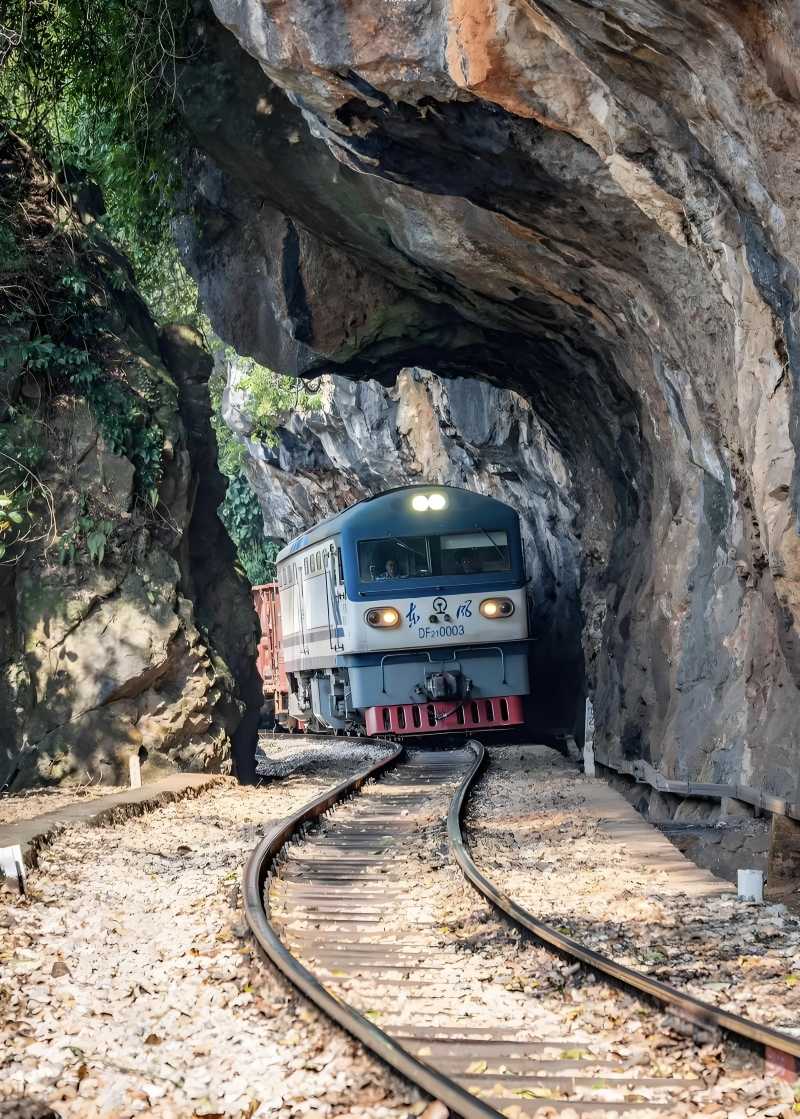
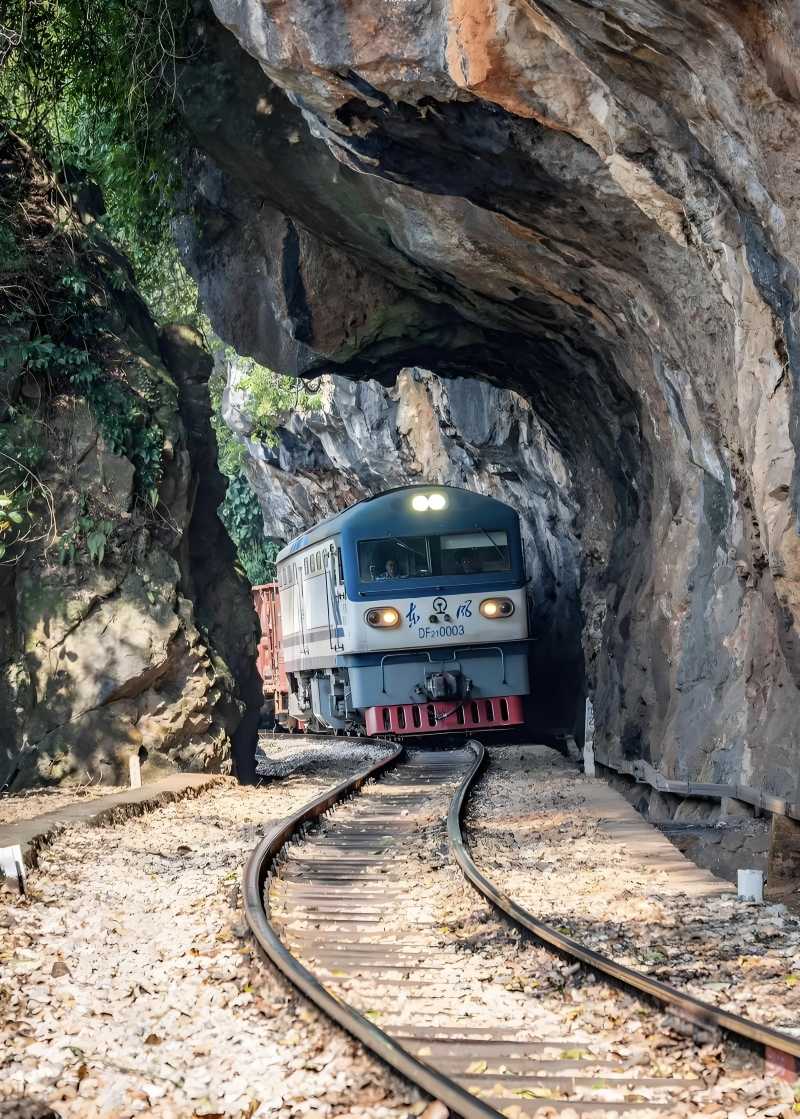
The Wujiazhai Rénzì Bridge (literally "Herringbone Bridge") is a single-track meter-gauge railway bridge, suspended between two sheer cliffs, connected to tunnels on both ends, its terrain formidable. Over a hundred years ago, when transport relied mainly on manual labor and horse caravans, the construction was extraordinarily arduous. An outstanding French female engineer used her unique creative inspiration to design this great architectural wonder: the entire bridge has no piers, relying entirely on steel plates, channel steel, angle steel, and rivets for its structure. This ingenious design was the engineers' careful consideration of the environment and harsh construction conditions, aimed at reducing the bridge's weight. But even so, the workers involved in its construction expended immense effort and paid with their blood and sweat – statistics show that 800 workers lost their lives during the building process. Perhaps it is those 800 spirits guarding it, but this century-old herringbone bridge still functions today, handling freight for international trade on the Yunnan-Vietnam line, with 1-2 trains passing daily.
We were very lucky this time. As we hiked up the mountain path on the right side of the bridge and just reached the meter-gauge tracks, we heard a train whistle in the distance. The railway staff on duty immediately directed us to stand aside and wait. A few minutes later, a Dongfeng-class meter-gauge locomotive appeared on our left, passed right in front of us, and then disappeared into the tunnel on our right. We turned around and waited about ten minutes, and it emerged again from the opposite tunnel.
We walked along the tracks for a bit and entered a dark tunnel. We needed flashlights to see inside. Exiting the tunnel, we saw the bridge deck of the Rénzì Bridge. Outside the tunnel entrance was a simple duty room, with a sign in the window identifying it as a Major Historical and Cultural Site Protected at the National Level, issued in 2006. On the left side of the bridge deck, there was a path leading down – an excellent vantage point for capturing most of the breathtaking herringbone bridge in a photo.
Descending the left side of the mountain, we were surrounded by towering green bamboo. Reaching the river valley below, we found massive boulders standing tall, the river water a beautiful emerald green – a truly scenic spot. Looking up at the railway bridge in the gorge, it truly felt like a bridge in the clouds.
Back in Pingbian County town, we happened upon the tail end of the Huashan Festival (Flower Mountain Festival), the biggest festival of the Miao people (celebrated from the 2nd to the 6th day of the lunar New Year). We only caught the finale, but it was still delightful. Yunnan has numerous ethnic minorities and many festivals; locals jokingly say they "celebrate festivals every day."
Address: Rénzìqiáo Village, Wantang Township, Pingbian County, over 50 km from the county town
Admission: Free
Transportation: Self-drive. For those unfamiliar with the roads, it's recommended to take the national highway for better conditions. Public transport only goes as far as Wantang Township; you'll need to hire a car to reach Rénzìqiáo Village.
Tips: 1. To reach the bridge deck, you must pass through a pitch-black tunnel. Bring a flashlight. 2. Generally, two trains pass daily, but times are not fixed. Ask the railway staff on duty. 3. The mountain paths are rugged and tiring, and the valley floor can be slippery. Wear hiking shoes.
A Pearl Left in the Mountains – Lagü Rice Terraces: The Shock of a Sky Mirror
Lüchun is a small town perched on a mountain ridge, with only one main street that you can walk in twenty minutes. The local people are simple and honest, and greenery is everywhere, earning it the name "China's Natural Oxygen Bar." The Hani women's clothing here is particularly beautiful – a red and black color scheme, stylish wide-leg pants, and tassels on their heads that sway with their steps. It's different from the Hani women's attire seen elsewhere, possessing a special feminine charm.
This stop was for the Lagü Rice Terraces, a place I "copied" from a friend's social media post. We set off early from the county town. The mountain roads were rugged, shrouded in clouds and fog with low visibility. There was also a section of muddy road – the conditions were indeed poor, with scattered gravel. As we drove, I felt the car wobble. My husband got out to check – we had a flat tire! We put on the spare, drove back to the county town to get a new tire, and then set off again (adding an extra 20 kilometers of mountain road round trip). But with such beautiful scenery ahead, nothing could stop us from chasing the "poetry inscribed on the earth."
The township road to Sanmeng Township was very narrow with many curves, requiring full concentration, though thankfully there wasn't much oncoming traffic. But the scenery along the way was truly beautiful: ancient trees towering, the mountain road winding down, and Hani rice terraces and houses nestled in the green trees halfway up the mountain, like a fairyland.
Finally, we reached Lagü Village. The fog had cleared, and sunlight bathed the Hani village. We parked and ran straight to the viewing platform. It was winter, the season for flooding the fields to nourish the soil. The terraces shimmered in the sunlight, like mirrors inlaid on the earth. The layered paddies reflected the blue sky and white clouds, truly a scene of "skylight and cloud shadows wandering together." It felt like a sky mirror. The light and shadows shifted, creating a breathtakingly beautiful spectacle.
The Lagü Rice Terraces are the largest in Lüchun County and are part of the buffer zone for the World Heritage Site, the Honghe Hani Rice Terraces. Although less famous than the Hani Terraces, they are pristine, undeveloped, and free of charge – no entry fee, no parking fee. This hidden gem of a terrace, unknown to many, possesses a unique character that rivals the Yuanyang Terraces: the layers are distinct, stretching for several kilometers, changing with the mountain's topography – as small as a dustpan on steep slopes, as large as a football field on gentler ones. The scale is immense, the spectacle grand! And because of the remote mountains and long distances, it lacks the crowds of Yuanyang. I loved its tranquility and beauty, its sense of standing apart from the world.
We walked down from the viewing platform and followed the narrow paths along the ridges to where people were working in the terraces. The industrious Hani people had already started transplanting rice seedlings. I was glad for our persistence today – if we had come later, we would have missed this beautiful sky mirror!
So, where does the water for the terraces come from? Through long-term practice, the Hani people have developed a scientific and effective method: they have built a healthy ecosystem based on the terraces – forests, villages, terraces, and water systems form the "four elements in one" agricultural system of the Hani Terraces. Villages are located halfway up the mountain. Water sources from the forests above – springs, streams, waterfalls – flow through the villages and then down to the terraces distributed below. Ingenious Hani people!
Although today was full of twists and turns, thankfully heaven blessed us, allowing us to witness a magnificent landscape we had never seen before. It was an absolutely worthwhile trip!
Tips: 1. Lüchun County is remote with inconvenient transport; self-driving is the only option. 2. The road from the county town to the Lagü Terraces is in poor condition. Sanmeng Township, which you must pass through, is under construction, resulting in a muddy section and uncleared gravel. Check your car thoroughly before departure and drive carefully.
Mengzi: More Than Just Crossing-the-Bridge Noodles
We arrived in Mengzi as the city lights were coming on. Looking through the car window, we saw wide streets and brilliant lights. The pavilions and towers on South Lake (Nanhu) and the uniquely decorated hotels along the streets sparkled with splendor. After all, it's a prefectural capital.
Tired from the day, we didn't want to search for a hotel. We simply checked into the Guanfang Hotel by South Lake. It had convenient parking, a nice environment, and a standard garden-view room was only about 300 yuan on Meituan. After checking in, we immediately went out to find food. The hotel staff recommended a nearby Crossing-the-Bridge Noodle restaurant, saying it was run by an inheritor of the intangible cultural heritage. We ordered the deluxe version for 75 yuan. Honestly, aside from having a wider variety of ingredients, the taste wasn't much different from the 10-yuan chrysanthemum noodles locals eat. It wasn't as good as the posu baozi (flaky stuffed buns) we had the next morning at a small street stall.
South Lake: A Poetic Paradise
Waking up and seeing the blue sky and white clouds outside the window gave me the motivation to get up. How could you come to Mengzi and not visit South Lake?
Stepping into South Lake felt like entering a paradise. The lake water was crystal clear, reflecting the blue sky, white clouds, green trees, colorful flowers, winding corridors, and curved bridges. Weeping willows hung low by the lakeside, reminding me of the poem: "In the second month of spring, grass grows and orioles fly; willows brush the embankment, intoxicated by the spring mist."
In the middle of the lake stands Yingzhou Island, a hexagonal, three-story pavilion resplendent in gold and jade, its eaves decorated with beautiful glazed tiles and hung with wind chimes that tinkle pleasantly. The lake also features various other pavilions, towers, and exotic flowers and plants, creating a serene environment. Because scholars and literati often gathered here to recite poetry and study, it was also known as the "Sea of Learning." The famous legend of Mengzi's Crossing-the-Bridge Noodles originated here.
Stepping onto the Nine-Bend Bridge leading to the island, the scenery changes with every step, making you feel as if you're in the water towns of Jiangnan – agile and elegant. The antique Lanyue Pavilion (Moon-Viewing Pavilion) stands gracefully in the middle of the water, connected to the surrounding islands by painted bridges and misty willows, full of charm and a distinctly Chinese aesthetic.
The western scenic area of South Lake is also worth seeing. There, the Wen Yiduo Monument and the Monument to the Revolutionary Martyrs stand quietly, commemorating the countless heroes who shed their blood and lives for this land.
Historical Remains: French Architecture and Memories of Southwest Associated University
West of South Lake stand several yellow Western-style buildings, the French Garden that once served as the headquarters of the Yunnan-Vietnam Railway General Administration. Next to it is the site of the Mengzi Customs House – Yunnan's first customs office.
On North Lake Road are the旧址 (former site) of the Southwest Associated University (Lianda) branch campus. The two most prominent bright-yellow, two-story buildings were the most luxurious hotel in Mengzi, built in 1907 by the Greek merchant Goluš. In 1938, the College of Arts and the College of Law and Commerce of Lianda moved to Mengzi, far from the war and connected by railway. The then-vacant Goluš building became their schoolhouse. Famous scholars like Wen Yiduo, Zhu Ziqing, and Chen Yinke all lived here.
In those turbulent years of a broken nation, Mengzi, far from the flames of war, provided a peaceful place for the students of Lianda to study. They had endured immense hardship, traveling via Hong Kong and entering Yunnan along the Yunnan-Vietnam Railway from Vietnam. In turn, the students brought a fresh vitality and a strong academic atmosphere to remote Mengzi. Later, many local Mengzi middle school students were inspired to take the entrance exams for Lianda.
In the park, there is a half-body sculpture of Mr. Wen Yiduo and his poem "Red Candle" on the wall. There are also photos of Mr. Wen and the Lianda faculty and students during their southward migration. Next to it, with green walls, is Yunnan's first telephone exchange – I couldn't resist trying the antique phone.
Leaving Mengzi for Bisezhai, we happened to pass by the open-plan office area of the Honghe Prefectural Government – impressive! I give it a thumbs up. My fondness for Mengzi grew even more.
Tips: - Attractions in Mengzi are free. - The Honghe Museum is closed on Mondays.
Bisezhai: Crossing a Century of Glory, Leaving Countless Legends
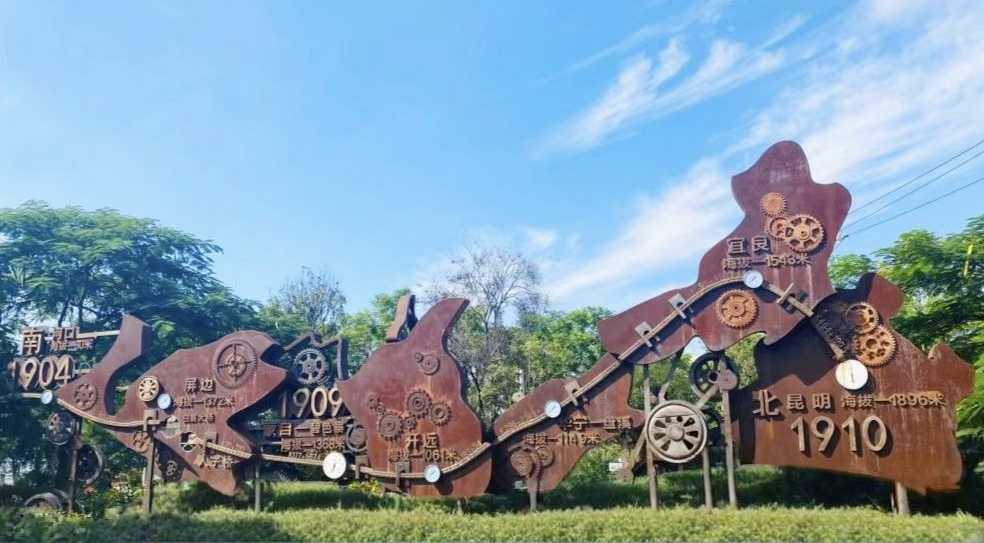
A hundred years ago, after the Yunnan-Vietnam Railway opened, Bisezhai Station was the first station on the line and the only first-class station (even Kunming was only a second-class station, ranking lower). This was mainly because the Yunnan-Vietnam meter-gauge railway and the Ge-Bi-Shi (Gejiu-Bisezhai-Shigu) inch-gauge railway intersected here. As an important hub for the transshipment of goods in Yunnan, Bisezhai attracted merchants from Greece, France, and other countries to engage in trade. In its heyday, Bisezhai was bustling with traffic and filled with businesses. Along with the opening of the Yunnan-Vietnam Railway came the Mengzi Post Office, the first red clay tennis court in China, the Goluš Hotel and trading company. Bisezhai's glory even surpassed that of Kunming, earning it the nickname "Little Paris." Today, a large number of well-preserved early 20th-century sites remain.
Yunnan-Vietnam Railway Station Building
The station building bears the characters "碧色寨" (Bisezhai). Above the door hangs an old clock, and there's a century-old fire hydrant. Looking at these relics full of history, imagining the glory of this place back then, I couldn't help but feel a surge of emotion.
Ge-Bi-Shi Railway Station Building and Locomotive Shed
The Ge-Bi-Shi inch-gauge railway was born from the Yunnan-Vietnam Railway. The inch-gauge trains had their own station building and locomotive shed. Two 600mm inch-gauge tracks extend directly through the main gate and into the French-style cottage – this is the locomotive shed for the inch-gauge trains. In the woods nearby, there is a locomotive and a turntable for turning steam engines. Although the inch-gauge trains of that time only reached a speed of 10 km/h, once connected to the Yunnan-Vietnam Railway, they transported large quantities of minerals and daily necessities from Gejiu, freeing the region from its dependence on horse caravans. The dawn of industrial civilization was breaking over remote southeastern Yunnan. In 2013, the Ge-Bi-Shi inch-gauge locomotive shed was listed by the State Council as the seventh batch of key national cultural relics.
Mengzi Qing Dynasty Post Office, Bisezhai Branch
Located on the main street of Bisezhai Village. Entering the gate of Bisezhai, the bustling commercial street was filled with crowds. The most common shops were costume rental and photography studios, where tourists of all ages, mostly women, vied to dress in colorful ethnic outfits, Republic-era clothing, or military uniforms for photo shoots. Various snack shops blasted recordings from loudspeakers advertising "papaya water, baked potatoes, grilled chicken wings." Few people noticed the outdated Qing Dynasty Post Office standing quietly there. As a witness to the century of glory of the Yunnan-Vietnam Railway, it seemed like an old man who has seen all the vicissitudes of life and achieved a state of perfect calm.
Honestly, I don't like the cookie-cutter, noisy commercial streets and the ubiquitous costume photography that plagues tourist attractions.
Datong Company Site
A hundred years ago, the Datong Company was the most powerful firm in southern Yunnan, monopolizing the import-export transshipment business for local merchants. Inside the former company building, there is now the Bisezhai Historical Exhibition Hall, featuring precious historical photos, artifacts, and related historical introductions. Here, you can not only learn about the past and present of the Yunnan-Vietnam Railway but also about the legends that took place in Bisezhai: General Cai E barely escaped assassination by an agent sent by Yuan Shikai when passing through Bisezhai. Fortunately, someone tipped him off, and with the help of many, General Cai E successfully escaped, though his close aide tragically lost his life.
Bisezhai's glory lasted less than half a century. In 1940, to prevent the Japanese from using the Yunnan-Vietnam Railway to invade Yunnan, the government blew up the China-Vietnam Railway Bridge and dismantled the tracks from Hekou to Bisezhai. Later, the Ge-Bi-Shi inch-gauge line was also suspended. Bisezhai and the Yunnan-Vietnam Railway fell into silence. Although the Yunnan-Vietnam line was restored after the war, its former glory never returned, with only a few freight trains slowly passing through each day.
A century later, the movie Youth (Fanghua) brought Bisezhai back into the public eye. These century-old buildings exude the charm of accumulated time.
China's First Red Clay Tennis Court
Built by the French. The exhibition hall displays a tennis ball and racket signed by stars like Sun Tiantian. Along the road, you can also find century-old water cranes (used to fill steam locomotives with water) and local traditional houses built from stacked stone. These simple, rustic homes show signs of repair, but they are at least authentic. An ancient village should have its own unique character.
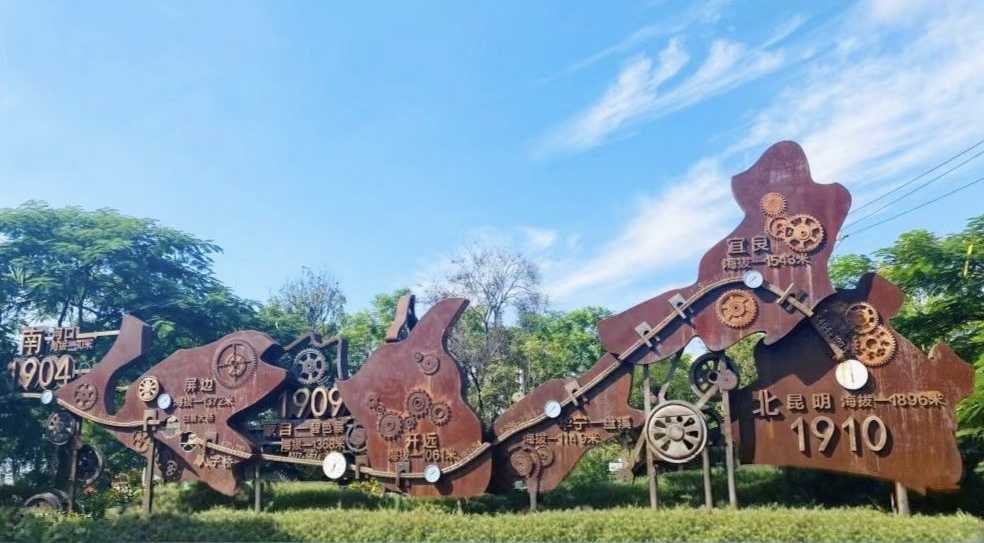
Bisezhai is worth a visit – railway culture, Western culture, and the culture of the War of Resistance against Japan converge here, and the history of the century-old Yunnan-Vietnam Railway is condensed in this place. Although its prosperity is gone, the sedimentation of a century of history ensures that Bisezhai's glory remains.
Tips: 1. Admission to Bisezhai is free. The shuttle bus from the visitor center to the station on the hill costs 20 yuan round trip. 2. It's best to visit on non-holidays and go early to avoid the noisy crowds of people taking photos. There's actually a lot to see in Bisezhai; you need at least two or three hours to do it justice.
The Hidden Gem of Shiping County: Beauty of Ancient Architecture and the Meter-Gauge Train
It was already 3 PM when we left Bisezhai. We drove non-stop to Shiping County. Approaching the county town, we saw a wide lake – undoubtedly Yilong Lake, the mother lake of Shiping. It was sunset. The afterglow and sunset rays scattered across the lake, shimmering like a beautiful painting.
Watching the sunset and photographing the clouds delayed us a bit, so we arrived in Shiping town after dark. Following past experience, we found a hotel near the city center with parking, the Shiping Yuan Hotel. We found a small eatery in an alley frequented by locals and had roast goose rice and Shiping tofu.
Back at the hotel, we rested. The room had a tatami, perfect for enjoying some tea (black tea) and fruit.
Zhengying: A Place with Stories
The next morning, we had posu baozi and soy milk, then headed straight for Zhengying Village.
Of all the ancient Yunnan villages I've visited, Zhengying is my favorite. It best embodies the traditional Chinese village ideal, with its sedimentation of "the family tradition of farming and studying" and the heritage of "a long, steady flow." Although most of Zhengying's people have a martial background (descended from military households), the cultural aura of the rainy, poetic Jiangnan region permeates this remote southern Yunnan village. It's a place selected as one of China's most beautiful ancient villages. The greenish-white roof tiles, the north-south oriented courtyard houses, the old, high, upturned eaves – everything hints at the atmosphere of Jiangnan.
During the Hongwu era of the Ming Dynasty, the Ming army pacified Yunnan and stationed twelve military camps in Baoxiu Township. Zhengying was one of them. Zheng Taiwu, from Pujiang County in Jinhua Prefecture, Zhejiang, led Ming troops into Yunnan. His son, Zheng Congshun, settled here and renamed it Zhengjia Camp (Zheng Family Camp). Subsequently, Emperor Zhu Yuanzhang's immigration policies brought a large number of Han Chinese from the Jiangnan region, creating a harmonious multi-surname community. With its rich history, culture, and complete ancient architectural complex, Zhengying was named a "Chinese Historical and Cultural Village" in 2008. The ancient Chen Clan Ancestral Hall and Zheng Clan Ancestral Hall within the village are listed as provincial-level key cultural relic protection units.
The Chen Family Residence: Unassuming Exterior, Hidden Grandeur Inside
From the outside, it looked completely unremarkable, but stepping inside revealed a different world. A spacious courtyard planted with greenery, a three-section compound with a central courtyard, divided into sections for the eldest son, the maidens' quarters, and the elders' residence. Deep courtyards, exquisite wood carvings, and ahead-of-its-time aesthetics. The windows were imported from France and had anti-theft features. This large residence from the Republic of China era covers 1,300 square meters and is exceptionally well-preserved.
Conclusion: The Yunnan-Vietnam Railway – A Flowing History and Natural Landscape
A ten-day journey, over a thousand kilometers of self-driving. We followed the trajectory of the Yunnan-Vietnam Railway, from the border checkpoint to the deep mountain gorges, from the bustling market to the silent terraces, from the century-old station to the ancient village homes. This railway is more than just a transportation line; it is a flowing history, a three-dimensional painting.
We witnessed the奇妙共存 (remarkable coexistence) of French architecture and Hani rice terraces. We heard the whistle of the meter-gauge train echoing through the valleys. We tasted the unique flavors of Vietnamese steamed rice rolls and Shiping tofu. More importantly, we felt the fusion and inheritance of various ethnic cultures on this land of southeastern Yunnan, and the
You should also read:

South of the Clouds, Beauty Like This (Nuo Deng - Dali Xizhou - Lijiang)
South of the Clouds, Beauty Like This (Nuo Deng - Dali Xizhou - Lijiang) Kunming Green Lake Park Thank you, Mafengwo, for featuring me on the homepage again! And thanks to all of you for your support! — Sarah If you'd like to connect, feel…
Continue reading...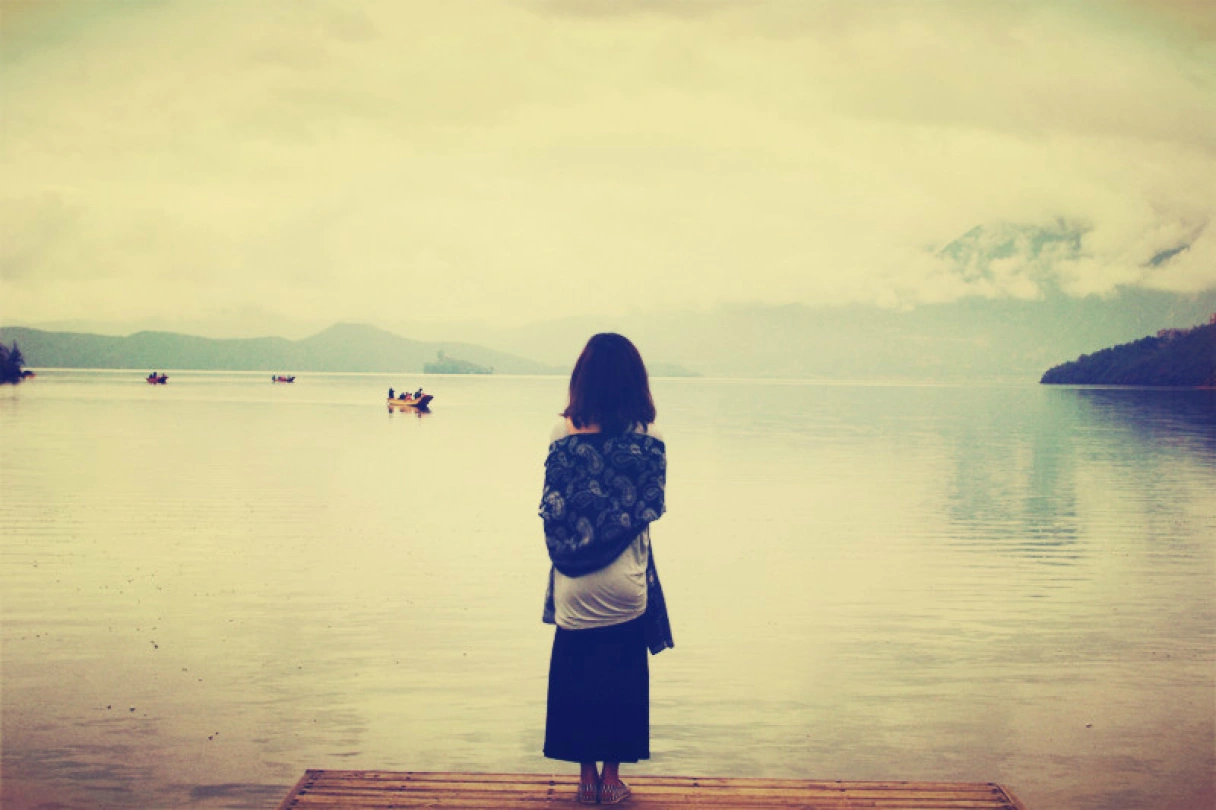
If You Also Pass Through Here: A Solo Journey to Lugu Lake, a Dialogue with Myself
If You Also Pass Through Here: A Solo Journey to Lugu Lake, a Dialogue with Myself Some places aren't on your map when you decide to go. Some roads aren't traveled because others call them beautiful. You set out simply because a voice inside whispers:…
Continue reading...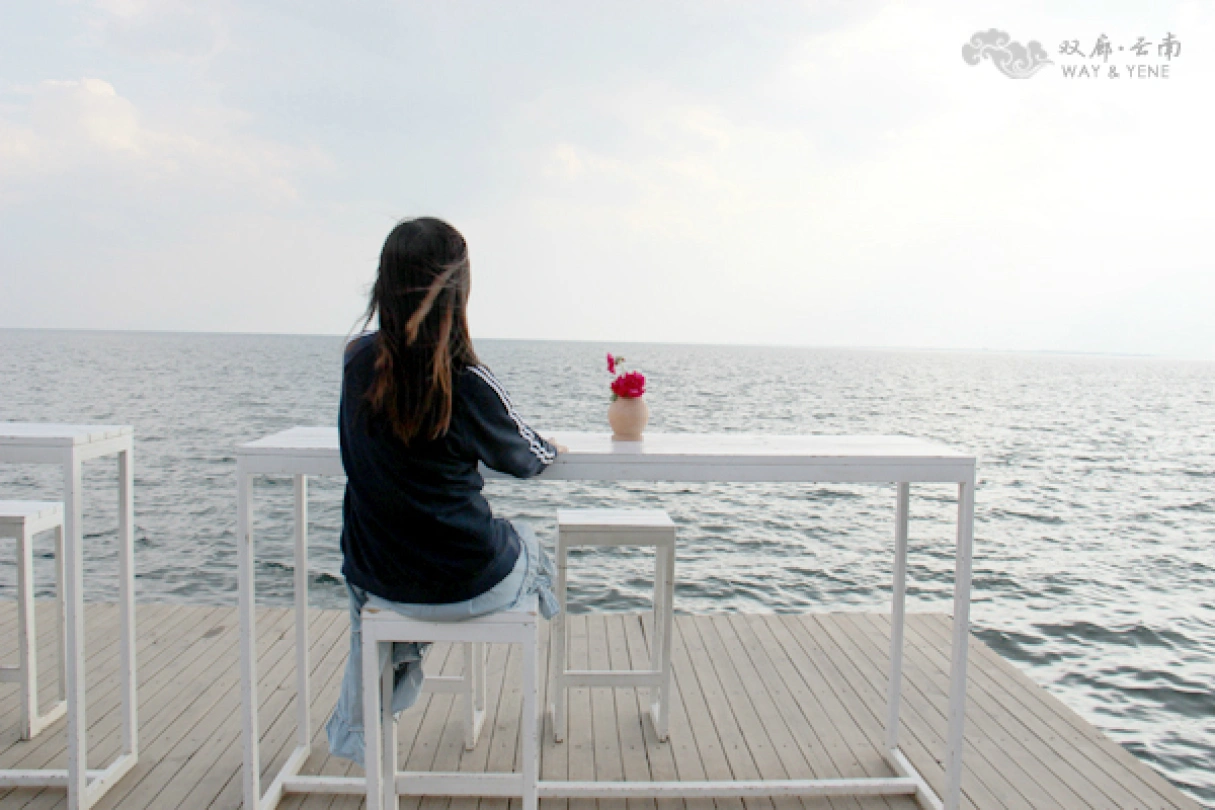
Days on the Clouds: This Spring, We Stumbled Into a Dream in Yunnan
Days on the Clouds: This Spring, We Stumbled Into a Dream in Yunnan One Journey, Two Hearts, Fourteen Days, Five Cities Some trips are about escape, others about discovery. Our journey to Yunnan was about celebration—celebrating the birthday gift my boyfriend gave me, and celebrating…
Continue reading...