Three Days in a Floating Life: Colliding with a Millennium of Time in Chang'an City
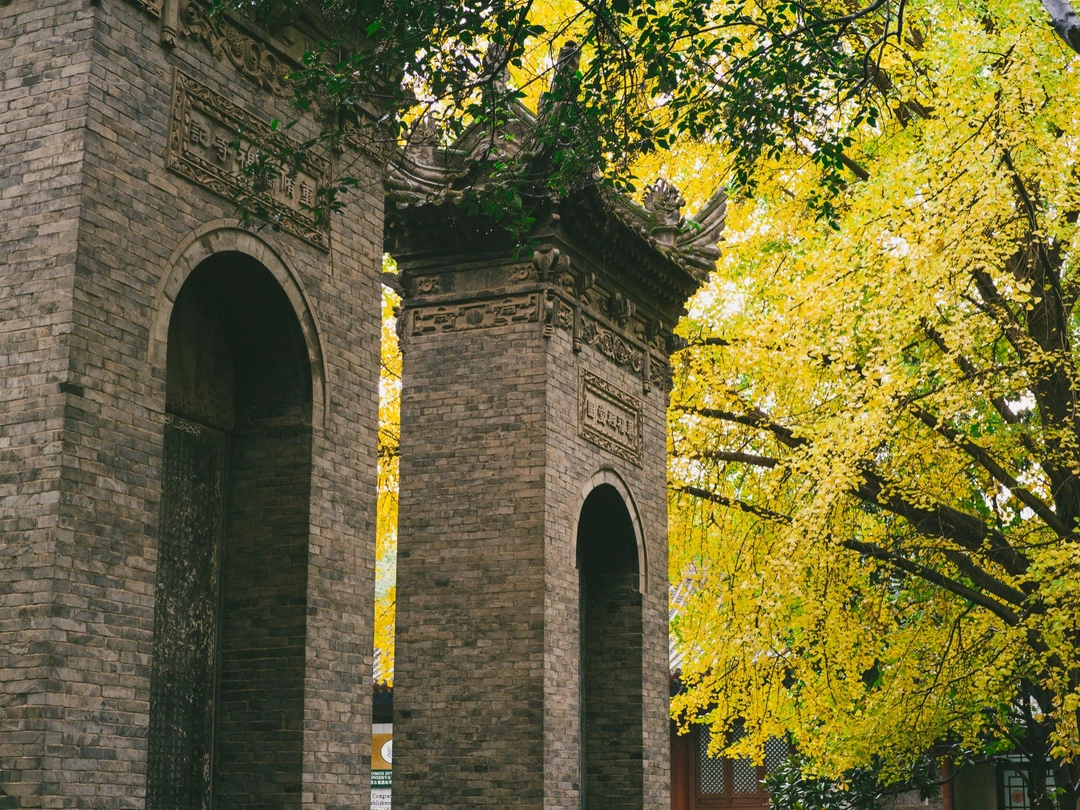
Three Days in a Floating Life: Colliding with a Millennium of Time in Chang'an City
LIFE IS LIFE, THIS IS THE WAY OF LIFE.
WeChat: 241118413 | Weibo: 贝小贤
Destination: Xi'an
Travel Dates & Duration: November 2, 2018 · 3 days
Cost per Person: Approximately 1,500 RMB
Travel Companions: With a friend
Introduction: A Zen Traveler's Autumn Invitation
I used to be an "attraction junkie"—whenever I arrived in a new city, I'd cram every single sight on the map into my itinerary, measuring every inch of ground with my feet and capturing every corner with my shutter. But somewhere along the way, that "must-see-everything" obsession quietly faded, replaced by a more serene state of mind. These days, I prefer to wander aimlessly through unfamiliar streets, stumble upon a fragrant little eatery, or simply sit still in some corner and watch the world go by.

Xi'an in November perfectly suits this Zen-like mindset. Dodging the summer and winter holiday crowds, this ancient city reveals a different charm in the autumn breeze. The wind sweeps down from the Qinling Mountains, carrying the mingled scent of centuries-old trees and city walls, draping the old town in a patchwork coat of autumn colors. Without the clamor of peak season, there's only tranquility and ease—the autumn scenery is just right, so pleasant and inviting.
Three days in this floating life, strolling through the city—I want to measure this city, named for its antiquity, with my own footsteps.
The Great Qinglong Temple: Seeking Zen in the Rain, Echoes of the Tang Dynasty in Silence
Even during the off-season, Xi'an's weekends are far from quiet. To find a moment of peace, you have to head for the less-traveled spots. Fortunately, this ancient city has deep reserves—places of elegant beauty with few visitors aren't hard to find.
That day, my friend Stone hadn't arrived yet, so I decided to explore the city on my own. I woke up early, and a light rain began to fall. The autumn wind wrapped around the fine raindrops, and the chill of the season truly set in. From my lodging, I took the subway southeast. Line 3 passed through Dayan Pagoda Station, and two stops later, I arrived at Qinglong Temple Station.
Stepping out of the subway station, I was a bit disoriented—dilapidated old houses mixed with demolition rubble made me wonder if I'd taken a wrong turn. Following the map, I passed through a row of houses on a slope before finding the temple's unassuming side gate.
The Cradle of Esoteric Buddhism, the Footsteps of Kūkai
Qinglong Temple sits on the Leyou Plateau, southeast of the ancient city. It's the ancestral temple of the Esoteric School, one of the eight major sects of Buddhism, and the birthplace of the Tang Dynasty's True Word School. If you've seen the film The Legend of the Cat Demon (The Legend of the Demon Cat), you'll remember the Qinglong Temple where the monk Kūkai stayed—yes, this is the place. However, compared to its heyday, the current scale has shrunk to about one-sixth or one-seventh of its former glory.
During the Northern Song Dynasty, the temple was destroyed, its ancient buildings lost and buried underground. What we see today are later reconstructions. Though replicas, the structures are grand and imposing, still carrying the majesty of the High Tang.
"The setting sun is infinitely beautiful, but only near dusk." Li Shangyin's poem captures the evening scene of Leyou Plateau. Although it wasn't yet noon and a light rain was falling, my mind conjured up the faint outline of the Qinling Mountains, imagining a Qinglong Temple bathed in golden sunset light.
The Cherry Garden and Autumn Leaves: Beauty Without Flowers
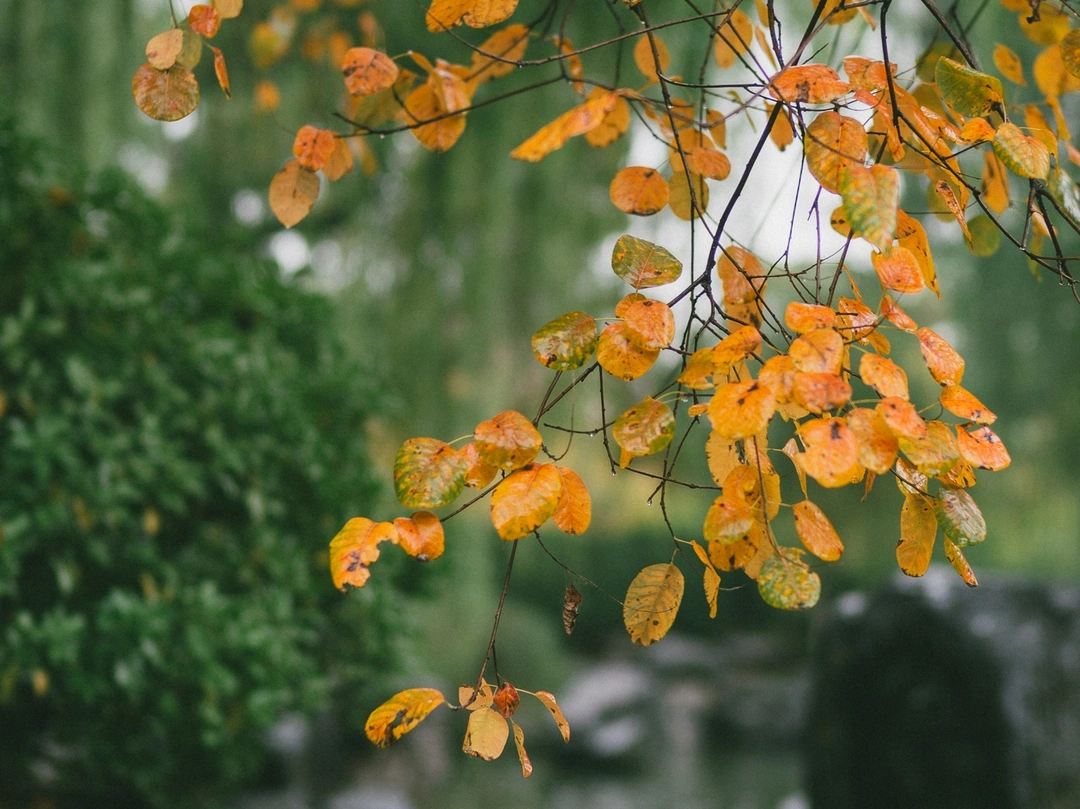
Beside the temple lies a cherry garden, planted with over a thousand cherry trees. Every March and April, when the blossoms bloom and crowds gather, Qinglong Temple becomes the city's premier cherry-viewing spot. But in the autumn rain, naturally, there were no flowers in sight. Red leaves, yellow leaves, and green leaves swayed gently in the wind, unable to resist its pull, drifting down onto the grass and bluestone paths. The air was as elegant as poetry, and in the empty courtyard, only I kept them company.
Leaving the cherry garden, I headed toward the adjacent temple buildings. Though newly constructed, the courtyards were filled with trees, surrounded by a forest that lent them an air of ancient simplicity and tranquility. Carved dragons were everywhere, living up to the temple's name (Qinglong means "Azure Dragon"). With no one around, the chirping of birds was clearly audible, giving the place an otherworldly, mysterious depth.
After Kūkai arrived in the Tang Dynasty, he studied under Huiguo at Qinglong Temple. When he returned to Japan, he founded the True Word School, becoming the patriarch of "Eastern Esoteric Buddhism." For this reason, Qinglong Temple holds a sacred place in the hearts of Japanese people.
Red Ribbons and Monks: The Silence of Faith
Since Qinglong Temple returned to Buddhist management, religious activities have been restored. A few monks were inside, all absorbed in their own tasks, paying little attention to the coming and going of visitors. Travelers and monks respected each other, neither disturbing the other.
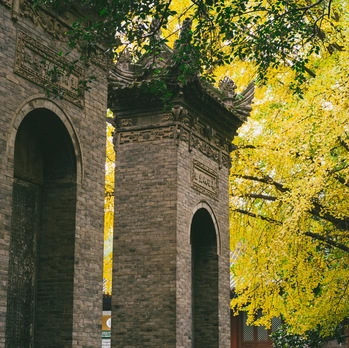
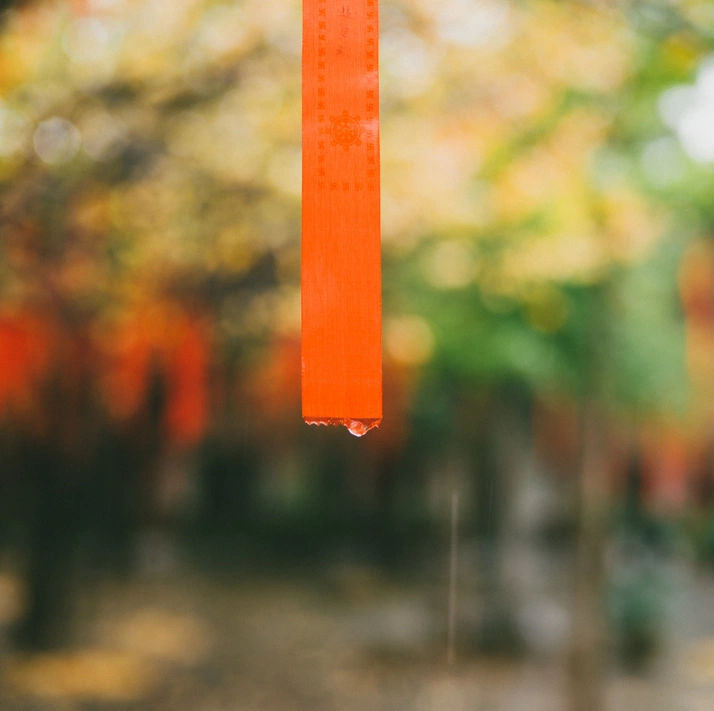
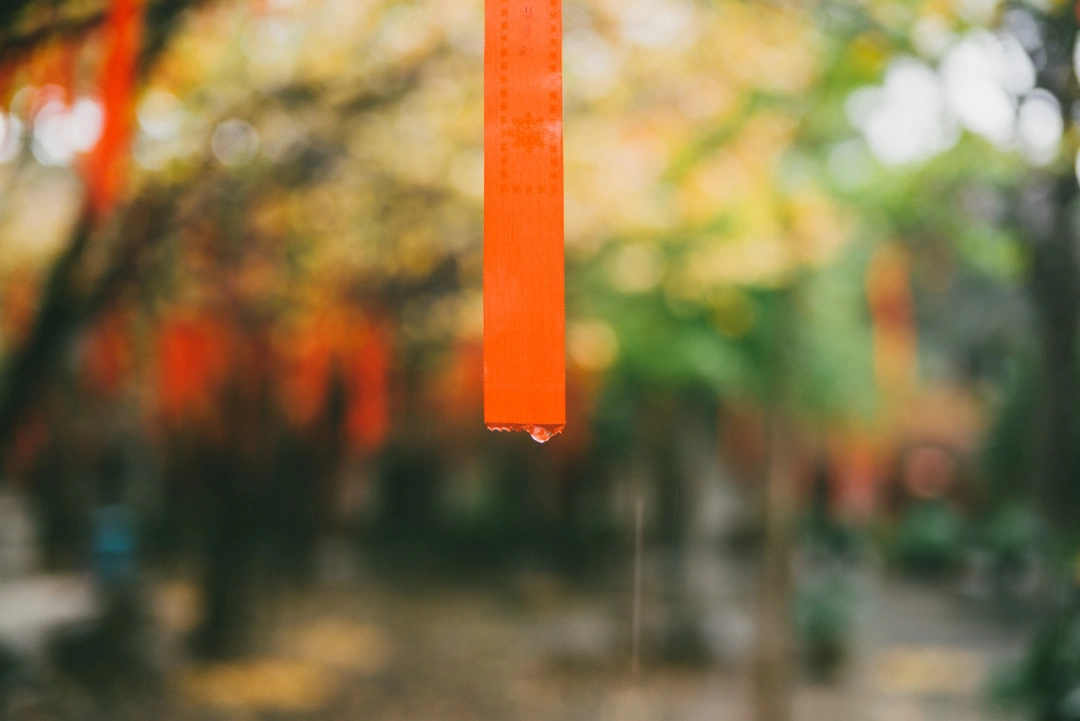
Many Chinese people follow Buddhism, and they often tie red ribbons or strips of red cloth to temple trees, praying to the bodhisattvas for their families' safety. The courtyard was filled with trees, and wherever I looked, red prayer ribbons hung everywhere—a clear sign of Qinglong Temple's thriving incense offerings. The rain soaked the leaves and moistened the red ribbons, as if nature itself were receiving these wishes. Though I'm not a Buddhist, I hold deep respect and reverence for faith and prayer—may the sincere achieve their goals.
Wandering around, I couldn't help but sigh: if the original Qinglong Temple were still standing, how magnificent and splendid it would be? Now, only a few structures remain for people to reminisce about the past. There's also a peony garden within the temple, situated on higher ground. When the blooming season arrives, it becomes a sea of purple and red.
The autumn rain showed no sign of stopping. I walked alone along the path, gazing at the yellow leaves scattered on the ground. I wondered if, when dreaming of the Tang Dynasty, the monk Kūkai had ever wandered in the same way.
Mount Li and the Huaqing Palace: Exploring Antiquity, a Dialogue Across a Thousand Years
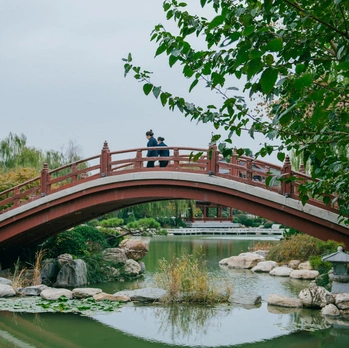
Stone's work trip took him near Lintong, so we agreed to meet there the next day. I marveled at how quickly time passes—another year had gone by since our last meeting. Fortunately, the reunion felt familiar, and we chatted without any distance or awkwardness.
Lintong's most famous attraction is the Mausoleum of the First Qin Emperor and its Terracotta Warriors, which is why most tourists come here. But since childhood, I've seen so many images of the Terracotta Warriors that I've lost the desire to visit them specifically. Besides, it was the weekend, and there were still plenty of tourists. Stone had already been to the Terracotta Warriors years ago, so after some discussion, we decided to skip them and visit the Huaqing Palace instead.
Mount Li: Myths and History on a Branch of the Qinling Mountains
Huaqing Palace consists of two parts: Mount Li and the gardens below. Mount Li is a branch of the Qinling range, made up of the Eastern and Western Embroidered Peaks. Its slopes stretch gracefully, covered in lush trees, and from a distance, it resembles a dark steed—hence its name (Li means "black horse"). When the sun sets, Mount Li is bathed in golden twilight, creating a particularly enchanting scene—this is one of the "Eight Sights of Guanzhong," known as "Mount Li in Evening Glow."
Mount Li is also a famous autumn-viewing spot in Lintong. Our visit coincided with the season when the vegetation on the mountain's slopes was turning yellow, with red and yellow foliage woven into the green, as beautiful as brocade. The natural scenery of Mount Li is stunning, and it's dotted with numerous cultural relics and attractions, including the Beacon Tower, the Old Mother Hall, the Old Lord Hall, the Evening Glow Pavilion, the Remonstration Pavilion, the Shangshan Lake, the Qixi Bridge, the Shangde Garden, the Immortal Meeting Bridge, and the Sanyuan Cave.
After purchasing a ticket for the Huaqing Palace scenic area, you can explore both the mountain and the lower gardens. There are various ways to tour Mount Li, depending on your preference and stamina. Since Stone and I were short on time, we decided to take the cable car halfway up and continue from there.
The Old Mother Hall and the Mythological Origins of Mount Li
Getting off the cable car, our first stop was the Old Mother Hall. Among the stories about Mount Li's origins, the most mythical is the tale of the Old Mother of Mount Li mending the sky. Legend has it that in ancient times, the sky collapsed, bringing disaster to the world. Nüwa saw the suffering of humanity, so the celestial Old Mother of Mount Li descended to the mortal realm with her two daughters to smelt stones and repair the heavens.
The younger daughter transformed into a divine flying horse, carrying her mother and sister through the skies and across the earth until the sky was mended. A black dragon seized the opportunity to emerge from the earth, shattered by the falling sky, and flooded the land with a deluge. The three goddesses then subdued the evil dragon and began smelting stones to repair the ground. After the earth was fixed, the younger daughter, exhausted from her efforts, lay down to rest before transforming back into her original form. When she woke up, she saw the beautiful landscape around her—green mountains and clear waters—and decided to stay. She turned into a great mountain, shaped like a giant horse lying on the earth—and that, according to legend, is the origin of Mount Li.
To commemorate the goddesses' achievements, later generations built the Old Mother Palace on the second peak of the Western Embroidered Peak. Every year on the 13th day of the sixth lunar month, people from all around gather to spend the night on Mount Li, offering sacrifices to the Old Mother.
The Old Mother Palace evolved from the Nüwa Shrine of the Shang Dynasty. It was built as a Daoist temple during the Tang Dynasty, underwent major renovations in the Ming Dynasty, and was expanded during the reign of the Shunzhi Emperor of the Qing Dynasty. Inside the mountain gate, an iron cauldron and an iron vat cast during the Wanli period of the Ming Dynasty are still preserved. The entire complex has three courtyards, featuring the Mountain Gate, the Three Dawn Hall, and the Old Mother Hall, flanked by east and west wing rooms and a rear corridor. The Old Mother Hall sits on a raised foundation, constructed entirely of wood in ancient style, surrounded by white marble railings, with flying eaves, painted brackets, and a golden roof—solemn, majestic, and awe-inspiring.
Temple fairs are often held around the Old Mother Palace. During these fairs, visitors gather from all directions, firecrackers roar, and all kinds of folk opera performances are on display. This ancient folk tradition is a precious cultural heritage passed down through the ages. The 15th day of the sixth lunar month is said to be the birthday of the Old Mother of Mount Li, making it an auspicious day for engagements and marriages. The Women's Matchmaking Festival is an ancient custom that has been passed down for thousands of years in the Lintong area. During the festival, people from far and wide come to pray for children and blessings, seeking divine guidance and offering gifts. Today, it has evolved into an occasion where people can pray to the goddess for all kinds of wishes—and it's said to be very effective, with every request being granted.
Riding a Horse Up the Mountain: An Unexpected Adventure
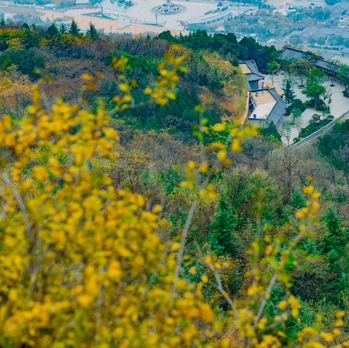
Leaving the Old Mother Hall, we continued upward, passing a rest area along the way. Here, you could choose to ride a horse up the mountain, saving time and energy. The horse trail was narrow and steep, and I was quite nervous when I first mounted. But the horses made several trips up and down the mountain each day and were very obedient to their handlers, walking steadily. The handler led the horse for a while, then grabbed its tail for support as he climbed—a tug on the tail, and the horse would obediently stop.
It took about ten minutes to reach the summit. Compared to the descent later, riding was definitely much faster.
The Beacon Tower: A Lament for a Kingdom Lost to a Smile
The Western Zhou Beacon Tower ruins sit at the summit of Mount Li, the highest point in the area, offering a panoramic view of Lintong city. It has been a strategic military location since ancient times. The beacon tower is tall and imposing, occupying a key position at the mountain's peak, and was used in ancient times to transmit battle reports and mobilize troops.
According to legend, in the late Western Zhou Dynasty, King You had a stunningly beautiful concubine named Bao Si. Bao Si was cold by nature and never smiled after entering the palace. King You, following the advice of the treacherous minister Guo Shifu, ordered the beacon fires lit without cause, summoning the feudal lords from all directions to come to the rescue. When the exhausted lords arrived, sweating and out of breath, they found the beacon tower lit up with feasting and entertainment, and they left in anger. Seeing the lords' disheveled state, Bao Si finally let out a laugh.
However, in 771 BC, when the Quanrong tribes invaded the Western Zhou, King You lit the beacon fires again—but no one came to his aid. The Western Zhou fell, leaving behind the tale of "the beacon towers fooling the lords, and a smile costing a kingdom."
Climbing to the top of the beacon tower, the beautiful scenery unfolded before us. Gazing at the distant mountains, I could almost see the feudal lords of old, dusty and weary, crossing mountains and valleys to answer the call, and I seemed to hear the blaring war horns of the Quanrong and sense the humiliation of the Western Zhou's downfall.
Descending the Eastern Embroidered Peak: Poetic Autumn Colors
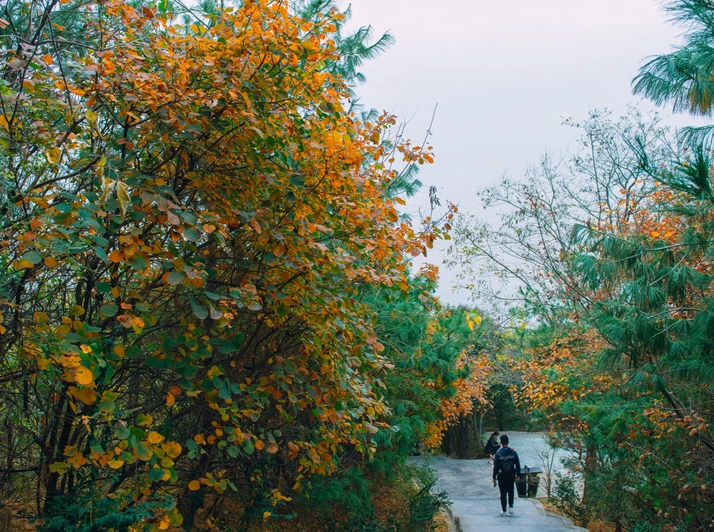
From the beacon tower, the path led downhill. Since we'd saved most of our energy on the way up, we were in no hurry to descend. Stone and I walked and took photos, stopping now and then to rest. Watching the panting tourists struggling upward, we couldn't help but feel that riding the horse up had been a wise decision.
The autumn landscape of northern mountains isn't as vibrant as in spring or summer. But Mount Li was still lush and colorful, with ancient buildings faintly visible among the trees, creating a poetic atmosphere. On a clear day, you could see for hundreds of miles.
We preferred natural scenery and historical sites, so following the scenic area map, we chose the less-traveled Eastern Embroidered Peak for our descent. Along the way, we passed countless pavilions, towers, and interesting sights. We came across a cave five meters deep, two meters high, and three meters wide, said to be where a disciple of the Indian Buddhist monk Bodhidharma, known as the Mountain Guarding King, had once meditated—hence the name Bodhidharma Cave. From the Stone Jar Pool, a treacherous path wound westward, connecting the Eastern and Western Embroidered Peaks—visitors had to climb hand over foot, as difficult as a chicken perching on a rack.
Shangshan Lake: A Jade Gem on the Mountainside
Coming down from the mountain, I looked at the lake marked on the map and wondered: how could there be a lake on a mountain? As we walked, we reached the mountainside, and through an archway formed by green trees, a turquoise lake came into view—this was Shangshan Lake.
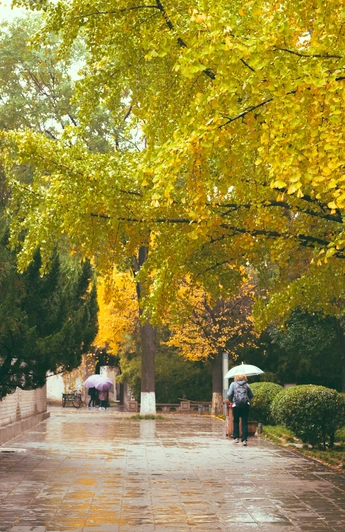
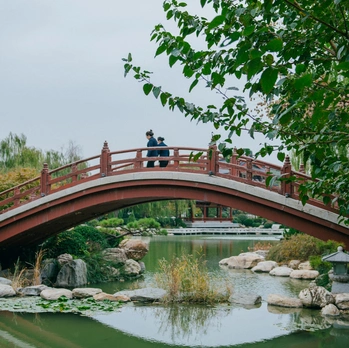
Shangshan Lake is an artificial lake built along the mountain's contours, situated in a wide area on the slope. Its name comes from Laozi's Tao Te Ching, meaning "supreme goodness is like water," reflecting the idea of benefiting all things without contention, earning it the reputation of "Mount Li's Sacred Realm." Mount Li is a Daoist site, so the name "Shangshan" (supreme goodness) is very fitting. Shangshan Lake is modest in size, shaped like a crescent moon, with the mountain on one side and a covered bridge for visitors on the other, beyond which lies a steep slope. Though it lacks the grandeur of great rivers and lakes, its scenery is exquisitely refined.
Water lilies grew in the lake, and the clear water acted like a mirror, reflecting the colorful surrounding forests. Through the water, we could see fish swimming. Walking by the lake was a soothing experience, refreshing the mind and spirit. Autumn, it seemed, was the most beautiful and peaceful time for Shangshan Lake.
Also on the mountainside was a Daoist temple called the Mingsheng Palace, built in 1992 with donations from Taiwanese Daoists to express gratitude for the protection of the Immortal Ancestor Yingdeng.
Huaqing Palace: A Thousand-Year Witness to Li and Yang's Love
Continuing downhill, we came across the Qixi Bridge. Though small, the bridge carried deep meaning—using the love of ancient times to guide modern romances, allowing visitors to experience the legendary meeting of the Cowherd and the Weaver Girl on the Magpie Bridge in a real setting.
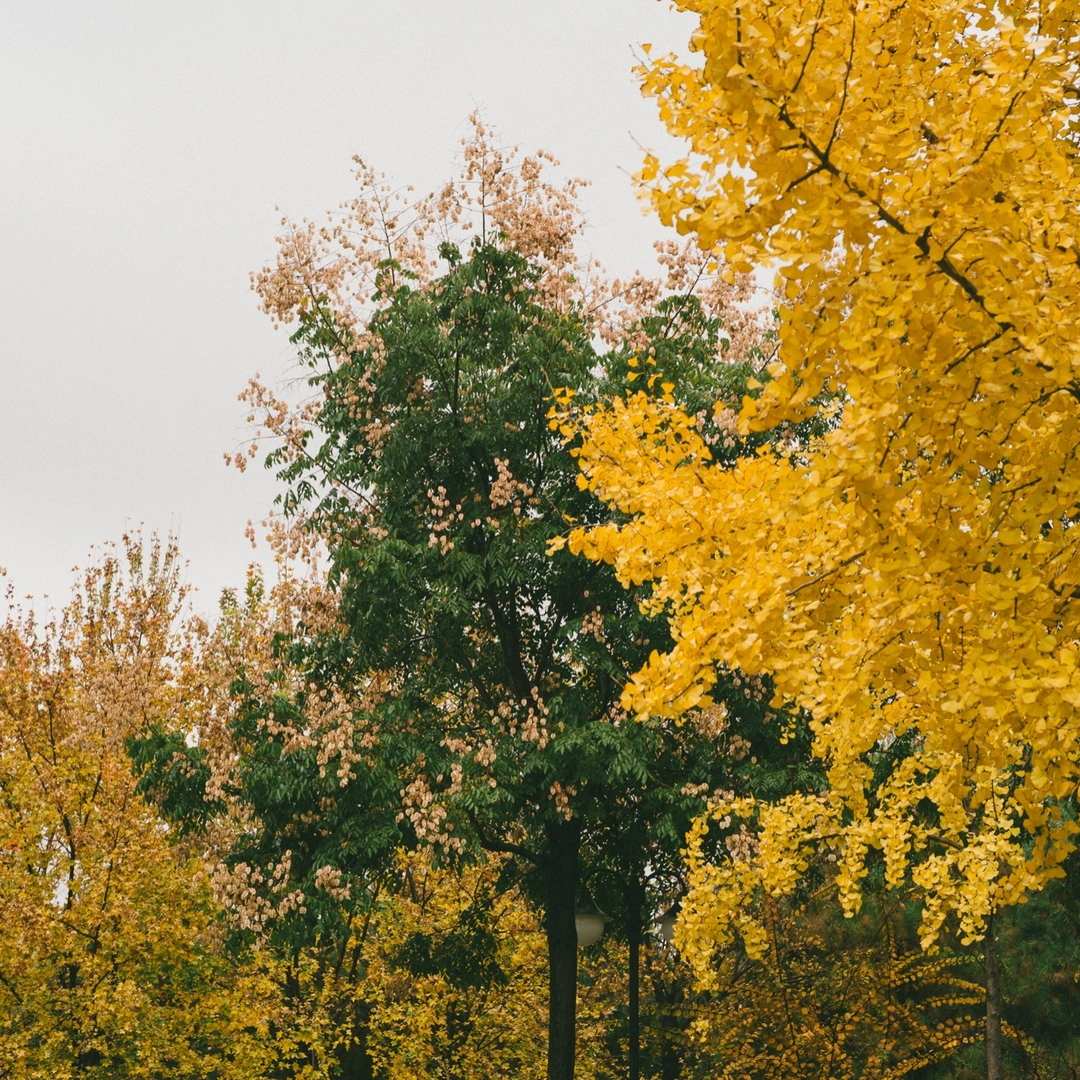
Following the Eastern Embroidered Peak all the way down, we arrived at the Huaqing Palace complex—the place that witnessed the ten-year love story of Emperor Xuanzong of Tang and his beloved consort Yang Yuhuan.
Dreaming back to the Tang Dynasty, Emperor Xuanzong and Yang Guifei—one of the most legendary couples in Chinese history—spent ten years at Huaqing Palace. This grand and exquisite imperial garden, favored by emperors of various dynasties for its eternal hot springs, harbors countless untold palace secrets. Emperors from the Zhou, Qin, Han, Sui, and Tang dynasties all cherished this place, building detached palaces and villas here, with the scale reaching its peak during the Tang Dynasty.
Huaqing Palace houses the Tang Imperial Bath Ruins Museum, the Nine-Dragon Lake and Lotus Lake, the Tang Pear Garden Ruins Museum Cultural Zone, and iconic structures like the Flying Frost Hall, Longevity Hall, the Hall of Eternal Life, the Ring Garden, and the Yu King Hall—an excellent place to explore the charm of the Tang Dynasty.
The Ginkgo Grove: Poetry on a Golden Carpet
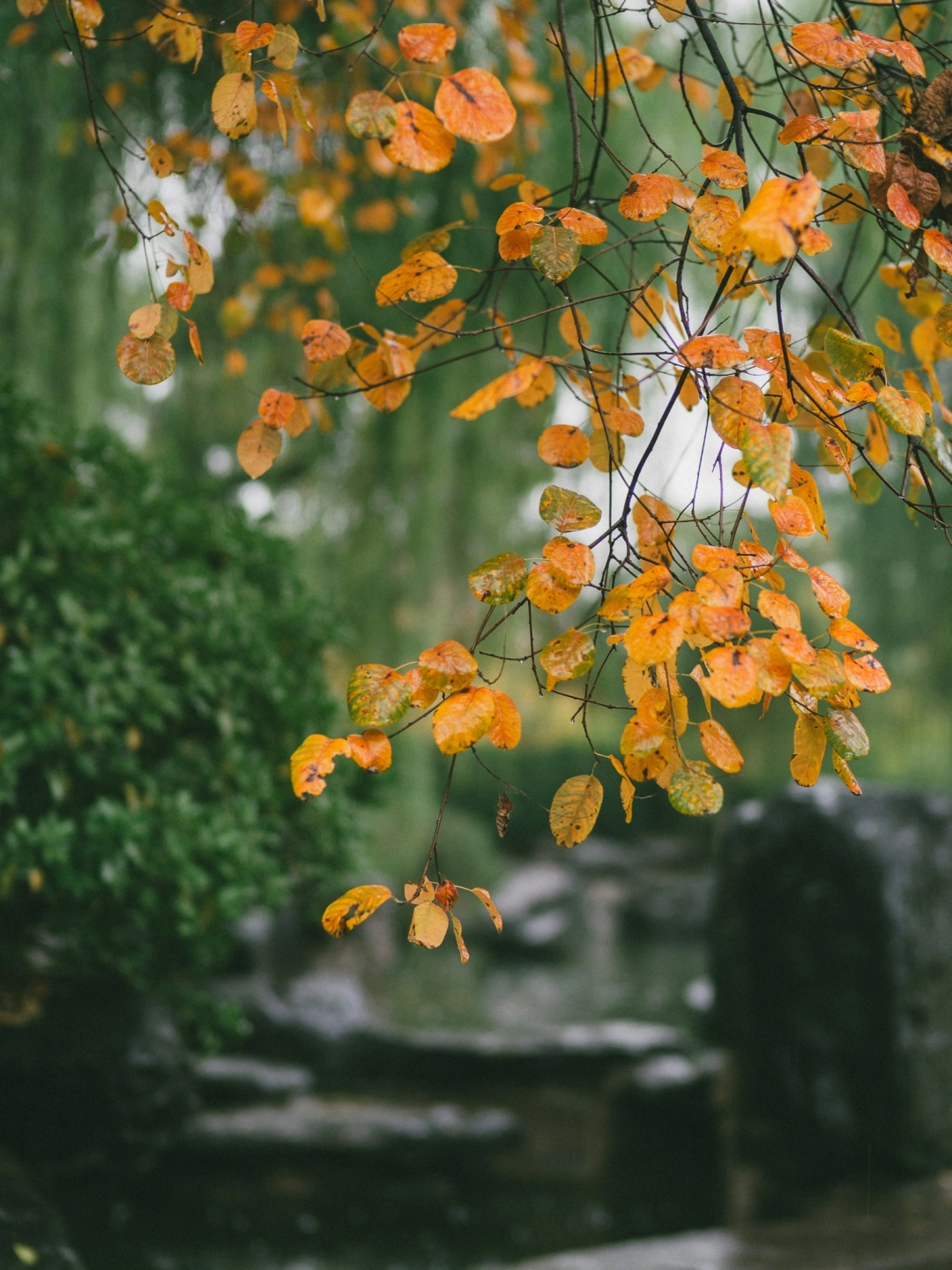
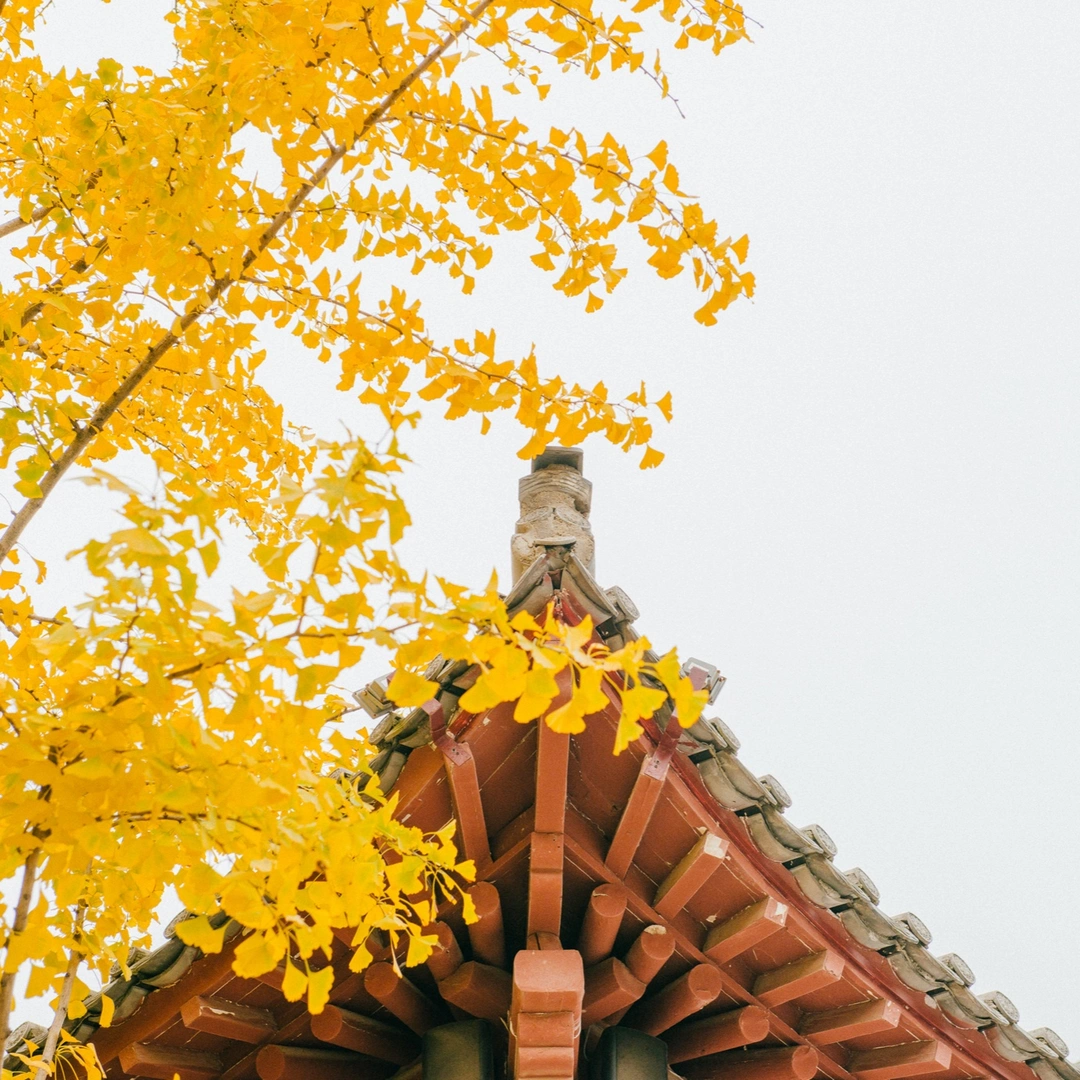
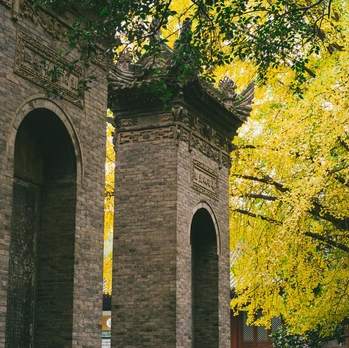
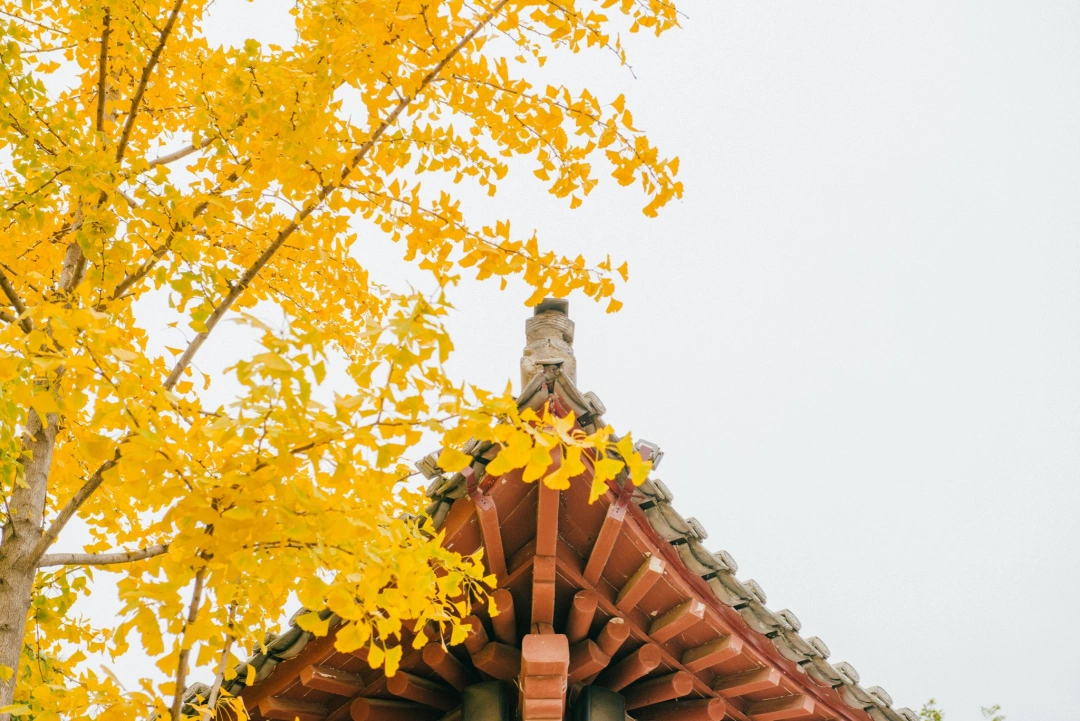
Stone and I descended from Mount Li, dusty and tired. As soon as we reached the foot of the mountain, we were stunned by the ginkgo grove before us. This stretch of the descent was incredibly beautiful—the path was lined with tall, straight ginkgo trees, their leaves perfectly golden. Looking out, ancient buildings appeared among the foliage, a breathtaking sight. The golden trees along the road were ethereally beautiful.
The color of the ginkgo leaves was heartwarming, deepening with the autumn atmosphere. Even on an overcast day, they bathed Huaqing Palace in a golden glow, making the buildings shine. Against the backdrop of the lush green Mount Li, the golden leaves hung from the treetops, mingling with the sky, sometimes dancing in the air before drifting down to the ground—a thick carpet of fallen leaves spread across the path.
We passed by a Tang-style market, where red lanterns hung high from the treetops, creating a lively, festive atmosphere. Couples and students tied red prayer ribbons and wooden plaques inscribed with wishes and secrets to the branches—some praying, some blessing.
The Baths and the Hall of Eternal Life: Imperial Romance and Regret
The Begonia Bath was a gift from Emperor Xuanzong to Yang Yuhuan, named for its shape resembling a blooming begonia flower. Also known as the Imperial Consort's Bath, it was exclusively for Yang Guifei's use—no other consort ever received such treatment, showing the depth of Xuanzong's love for her. Beside the Begonia Bath stood a white marble statue of Yang Guifei—she had shed her ornate robes, half-draped in a bath veil, her feet on the warm, smooth spring water. It was said that every time Yang Guifei bathed, she would scatter flower petals in the pool—and when she bathed, the entire Huaqing Palace would be filled with a captivating fragrance.
Bai Juyi's famous lines from "The Song of Everlasting Sorrow"—"In the cold spring, she was granted a bath at Huaqing Pool; the warm water smoothed her creamy skin. Attendants supported her delicate form, and it was then that she first received the emperor's favor"—seem to describe this very scene.
Leaving the Begonia Bath, we came to the Lotus Bath. The Lotus Bath was magnificent, also called the Imperial Bath or the Nine-Dragon Hall, and was where Emperor Xuanzong himself bathed. The pool was built with black jade stones and featured a double lotus base, incredibly luxurious. According to legend, An Lushan, to curry favor with the emperor, brought fine white marble from Fanyang and had fish, dragons, flying swallows, and a double lotus pedestal carved and placed in the pool. Outside the bath, there was a pavilion built on a high terrace called the Flying Sunset Pavilion—behind it lay the lush scenery of Mount Li, with vines winding around the pavilion, exquisite and delicate. This pavilion was built by the emperor especially for his consort, and one could imagine Yang Guifei, after bathing, ascending the terrace, with the wind brushing against her—every moment like a scene from a poem.
"On the seventh day of the seventh month, in the Hall of Eternal Life, at midnight, when no one was listening, they whispered their secret vow. In heaven, they wished to be birds flying together; on earth, they wished to be trees with intertwined branches. Heaven and earth may last forever, but this sorrow will never end." These are the most famous lines from Bai Juyi's timeless masterpiece "The Song of Everlasting Sorrow." Reading them, one feels the sorrowful, lingering passion and endless regret of this love. They also mention the key location of Li and Yang's romance—the Hall of Eternal Life.
The Hall of Eternal Life was first built in the sixth year of the Tianbao era of the Tang Dynasty (AD 748), as a place to honor the spirit tablets of seven Tang emperors: Gaozu Li Yuan, Taizong Li Shimin, Gaozong Li Zhi, Empress Wu Zetian, Zhongzong Li Xian, Ruizong Li Dan, and the posthumously honored Supreme Mysterious Emperor Laozi (Li Er). Hence, it was also called the Seven Saints Hall during the Tang Dynasty. Today, the Hall of Eternal Life within Huaqing Palace houses a digital cinema that continuously shows The Mystical Hall of Eternal Life. Standing on the opposite shore of Lotus Lake, gazing at the quietly standing Hall of Eternal Life, a melancholic nostalgia arises, and my thoughts seemed to drift further away with the ancients. Lovers don't always end up together, and even imperial love is often beyond one's control.
The Pear Garden and Treasures: Echoes of Culture
Huaqing Palace also features a Pear Garden-themed cultural zone, displaying a large collection of artifacts and historical materials related to musical instruments. According to historical records: "Emperor Xuanzong, being knowledgeable about music and fond of court music, selected three hundred sons of the court musicians and taught them in the Pear Garden. If anyone sang off-key, the emperor would notice and correct them, calling them the 'Emperor's Pear Garden disciples.'" The main function of the Pear Garden was to train instrumental performers, standing alongside the Imperial Music Bureau, which handled ritual music, and the inner and outer training institutes, which managed dance and entertainment. Hundreds of palace maids also became Pear Garden disciples, residing in the Yichun North Courtyard. This marked the beginning of the Pear Garden tradition. Later generations came to refer to the world of opera as the "Pear Garden" and opera performers as "Pear Garden disciples"—in a sense, Emperor Xuanzong could be considered the founding patriarch of the opera tradition.
Wandering around, we came to Huaqing Palace's cultural and creative center. It was a place to buy souvenirs, decorated with great style, offering visitors a place to relax. The goods on sale ranged from simple to luxurious, with everything you could imagine.
The beauty of Huaqing Palace requires careful appreciation—natural beauty, architectural beauty, and cultural beauty. Only after savoring its history and legends can one feel truly satisfied. A rushed tour will only make you miss its wonders. It's worth stopping and staying at one of the hot spring hotels within the palace, experiencing the warm baths once reserved for emperors. If the timing is right, you can also watch the world-famous dance drama The Song of Everlasting Sorrow, experiencing the modern interpretation of Li and Yang's love firsthand.
Unfortunately, Stone and I could only pass through briefly, catching just a glimpse—seeing only a tenth of her beauty.
The Bell of the Wild Goose Pagoda: Echoes of the Ancient City in Autumn Rain
The next day, I said goodbye to Stone. After a brief reunion, he returned to his work, and my ancient city journey had only one day left. Waking up in the morning, I felt as if I hadn't yet come back from exploring Huaqing Palace and Mount Li—my mind was full of the myths and love stories I'd heard and seen.
A cup of clear tea brought my thoughts back from the outskirts to the city. I decided: today, I would do nothing else—just walk around the city, look around, and eat. That would be the greatest satisfaction. In the distance, the sound of bells rang out—a call from the Wild Goose Pagoda.
The Small Wild Goose Pagoda: Serene Zen in the Bustling City
The Small Wild Goose Pagoda is located within the Jianfu Temple in the southern suburbs. Xi'an was undergoing major subway construction, making the already chaotic traffic even more annoying. Add to that the light rain, which made the muddy roads unfriendly to pedestrians—the journey to the Small Wild Goose Pagoda was not easy.
The Small Wild Goose Pagoda didn't require a ticket; you just needed to exchange your ID card for an entry pass at the gate—a nice touch. Once inside the pagoda grounds, I couldn't help but marvel at the cleverness of Xi'an's urban planning: hiding this tranquil, beautiful place within the chaotic city, so that you can only discover its beauty by getting close.
The Small Wild Goose Pagoda was built during the Jinglong era of Emperor Zhongzong of Tang, to house the Buddhist scriptures and statues brought back from India by the eminent Tang monk Yijing. The pagoda courtyard was part of Jianfu Temple, though it wasn't within the temple itself at the time, but faced the temple gate. During the wars at the end of the Tang Dynasty, Jianfu Temple was repeatedly damaged and eventually destroyed, leaving only the Small Wild Goose Pagoda standing.
The Small Wild Goose Pagoda is a classic example of early Chinese square, multi-eave brick pagodas. It's a masterpiece of Tang Dynasty Buddhist architectural art and a landmark symbolizing the introduction of Buddhism into central China and its integration with Han culture. Multi-eave pagodas have many tiers with dense eaves, each layer built with overlapping brickwork, decorated with triangular ornaments at the eaves' edges. Each level has a semi-circular arched window on the north and south sides, and the structure tapers inward from bottom to top. Originally 15 stories, only 13 remain, standing 43.4 meters tall. The pagoda's form is elegant—compared to the sturdy, heavy shape of the Big Wild Goose Pagoda, the Small Wild Goose Pagoda resembles a graceful young woman: tall, slender, and beautiful.
Since arriving in Xi'an, I'd noticed many foreign tourists—it seems foreigners are often more enthusiastic about Chinese ancient history than the Chinese themselves. The number of visitors in the scenic area wasn't large, and the arrival of a group of foreigners added a bit of liveliness.
As a Buddhist garden, the Small Wild Goose Pagoda exudes an atmosphere of "Zen enlightenment" everywhere. Its transcendent, leisurely, secluded, and ethereal quality naturally expresses another dimension of the reclusive spirit. The Small Wild Goose Pagoda scenic area is quite large, with a pleasant environment. The courtyard contains ten ancient trees over 800 years old, adding green vitality to the temple. The faintly visible temples were also decorated with a mystical, enchanting air.
Looking up, there were century-old trees; looking down, bluestone bricks polished smooth by time. The autumn rain didn't diminish the charm of the place; instead, it made it even more endearing. The drizzling rain and the ancient, serene atmosphere made me want to sit here, clear my mind, and just daydream for an entire day.
The Morning Bell of the Wild Goose Pagoda: Poetic Scenery of Guanzhong
"The Morning Bell of the Wild Goose Pagoda" is known as one of the "Eight Sights of Guanzhong." Every morning, the temple rings its bell at a fixed time, audible for dozens of miles. The clear sound of the bell and the graceful shadow of the pagoda create a unique charm in the ancient city. The Qing Dynasty poet Zhu Jiyi wrote: "The booming bell breaks the frost at dawn, the setting moon lingers over the vast wilderness. A single sound wakes a fading dream on the pillow, a thousand autumns of grandeur always shrouded in mist." A nearby visitor reverently struck the ancient bell—this poem and this scene were a perfect match.
In the courtyard of the Small Wild Goose Pagoda, there were many stone inscriptions, mainly recording additions, repairs, and renovations to the temple—carved to commemorate the merits of those who contributed. Thanks to these inscriptions, later generations can clearly understand the history of the pagoda. These ancient steles have long become part of the courtyard, blending with the century-old trees to form the most beautiful scenery around the Small Wild Goose Pagoda.
The Big Wild Goose Pagoda and the Ginkgo Grove: A Double Autumn Gift
Besides the Small Wild Goose Pagoda, Xi'an also has the Big Wild Goose Pagoda. The two pagodas face each other, east and west, both important landmarks preserved from the Tang Dynasty capital of Chang'an. In fact, in ancient times, the Small Wild Goose Pagoda was always called "Jianfu Temple Pagoda"; the true "Wild Goose Pagoda" was the larger one.
The Big Wild Goose Pagoda is located within the Great Ci'en Temple, also known as the "Ci'en Temple Pagoda." In the third year of the Yonghui era of the Tang Dynasty, the monk Xuanzang oversaw its construction to preserve the scriptures and Buddhist statues he had brought back from India along the Silk Road. Originally five stories, it was later increased to nine, and then underwent several changes in height and number of stories, finally settling at the seven stories we see today, with a total height of 64.517 meters and a base side length of 25.5 meters. The square in front features a grand fountain complex, and at night, under magical lighting, the Big Wild Goose Pagoda takes on a different charm from its daytime appearance.
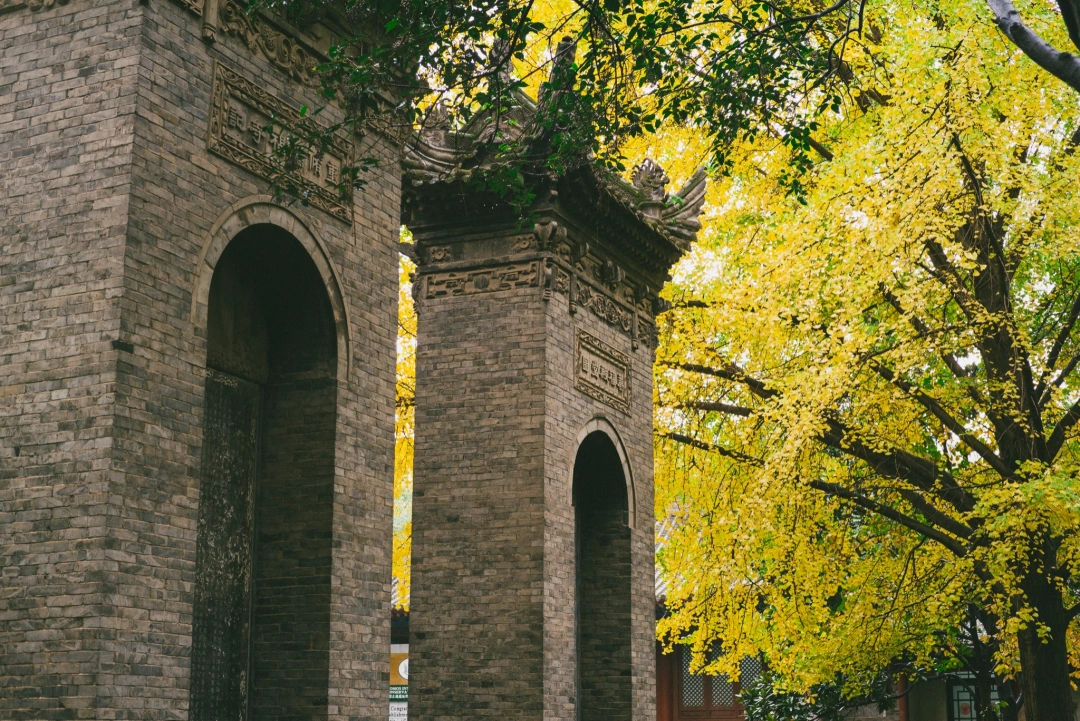
Compared to the Big Wild Goose Pagoda itself, I actually preferred the ginkgo grove in the surrounding park. The ginkgo trees were planted here in the late 1980s. Time has passed, but the grove has remained—blooming, bearing fruit, leaves turning yellow, leaves falling. I'm crazy about ginkgo trees, and this trip to Xi'an allowed me to fully appreciate their beauty.
"Since ancient times, autumn has been a season of sorrow, but I say autumn surpasses spring." It's rare to find such a peaceful place in the midst of a bustling city—rich in Zen, with beautiful scenery everywhere, revealing classical beauty. Here, it feels as if time has stopped, the years have stood still, and even restless moods can settle down.
The City Museum: Understanding a City Through Its Museum
To quickly understand a city, you need to step into its history. And Xi'an's history is hidden in its museums.
The Shaanxi History Museum was my last destination on this trip. Known as "the pearl of the ancient capital and the treasure house of Chinese civilization," this museum houses countless treasures from the Zhou, Qin, Han, Tang, Ming, and Qing dynasties. From bronze vessels to terracotta figurines, from gold and silverware to murals, every artifact...
You should also read:

Meili Snow Mountain: A Soulful Journey of Dialogue with the Sacred Mountain
Meili Snow Mountain: A Soulful Journey of Dialogue with the Sacred Mountain Prologue: When Travel Becomes Faith Some journeys are forgotten as soon as they end. Others carve themselves into your bones. The trip to Meili Snow Mountain belongs to the latter. Waking up in…
Continue reading...
Idle Clouds in Autumn, a Moonlit City: A Slow Travelogue Through Lijiang and Shuhe
Idle Clouds in Autumn, a Moonlit City: A Slow Travelogue Through Lijiang and Shuhe When the autumn wind brushes across the ancient city's eaves, when sunlight spills onto the mottled cobblestone streets, when the melodies of folk songs mingle with the aroma of plum wine…
Continue reading...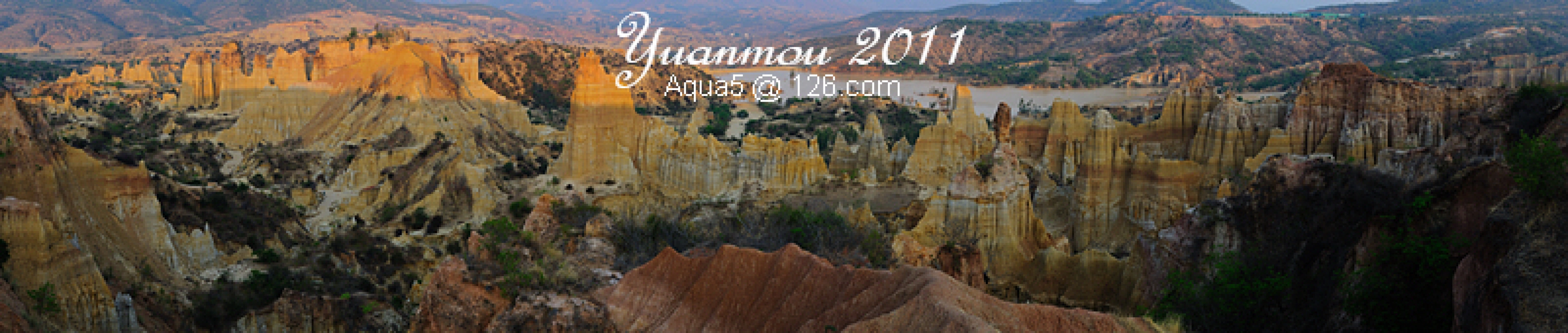
A Journey Through Time: The Earthen Forest of Yuanmou — April 2011 Chuxiong & Yuanmou Self-Drive Guide
A Journey Through Time: The Earthen Forest of Yuanmou — April 2011 Chuxiong & Yuanmou Self-Drive Guide Some journeys are destined to take root in your memory. In April 2011, I set out from Shuhe in Yunnan, heading north toward the Chuxiong Yi Autonomous Prefecture,…
Continue reading...