Three Days in the Spring City: Discovering Kunming's Time-Frozen Corners
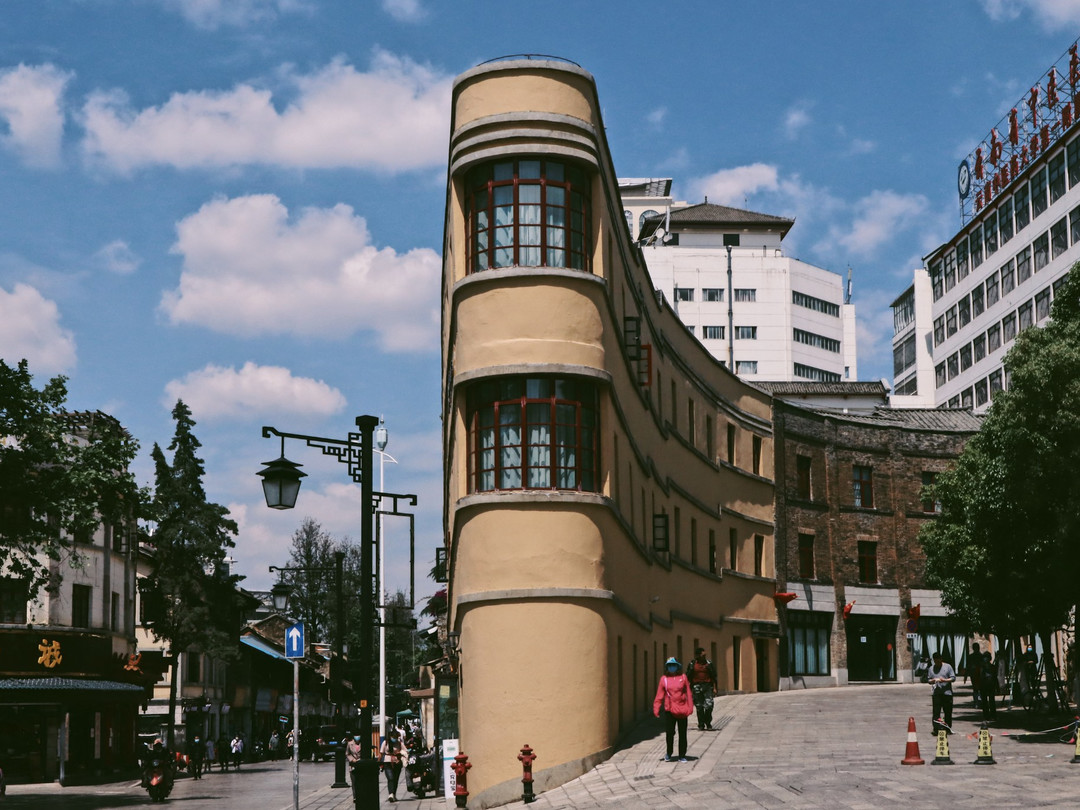
Three Days in the Spring City: Discovering Kunming's Time-Frozen Corners
For many travelers heading to Yunnan, Kunming is merely the first stop—rarely the destination. Dali's winds and flowers, Lijiang's ancient canals, Lugu Lake's morning mists and starry skies—all seem to outshine this city of eternal spring. I used to be one of those passing-through travelers myself, until I decided to give three full days to Kunming.
Taking the high-speed train from Chengdu, the five-hour journey was long enough to feel like a real escape from urban noise. Strictly speaking, we had only one full day and two half-days in Kunming, so we kept everything within the city center. No long-distance trips, no check-in anxiety—just slow walks and quiet observation in this "Spring City."
What I discovered surprised me: Kunming's beauty isn't the kind that hits you at first glance. It's more like aged Pu'er tea—the more you savor it, the richer the flavor becomes. Those time-frozen lake views, old streets, bookshops, and everyday烟火气 (the warm, lived-in atmosphere of daily life) all quietly tell the story of a city's composure and depth.
Lakeside Serenity: Cuihu (Green Lake) at Dawn, Kunming at Its Gentlest
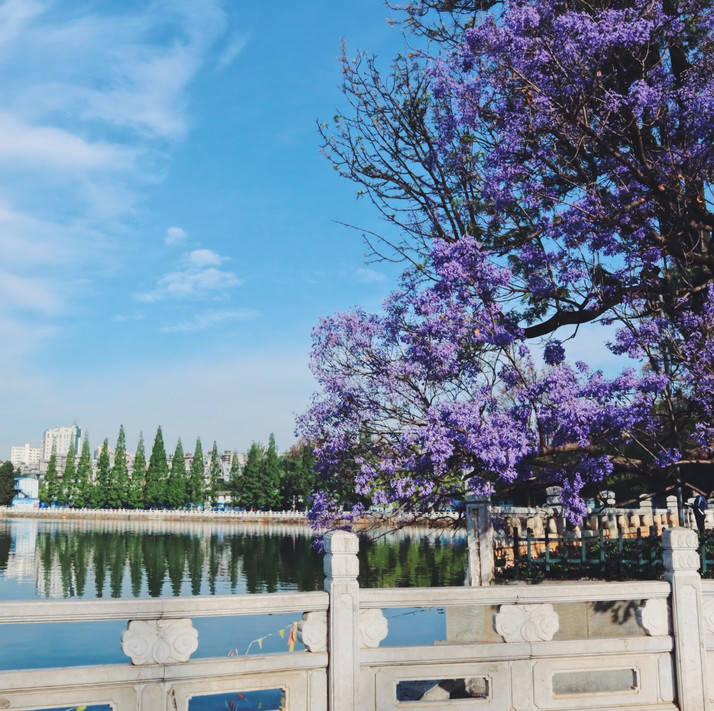
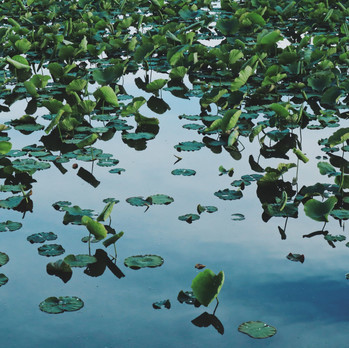
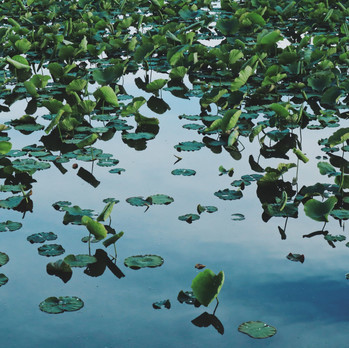
At 7:30 in the morning, Cuihu sheds its daytime bustle and reveals pure stillness. The lake lies like a mirror, reflecting the clear blue sky; weeping willows sway gracefully in the breeze; blooming Jacaranda trees dot the green with dreamy purple. The name "Cuihu" (Green Lake) comes from a poetic description: "water green on all sides, bamboo green in all seasons, willow green in spring and summer." Only by seeing it yourself can you truly grasp the意境 (artistic conception).

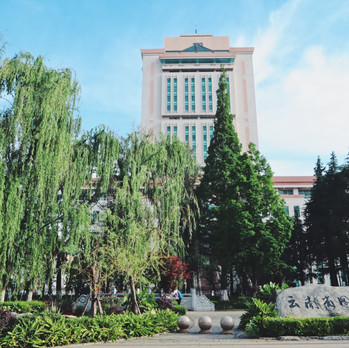
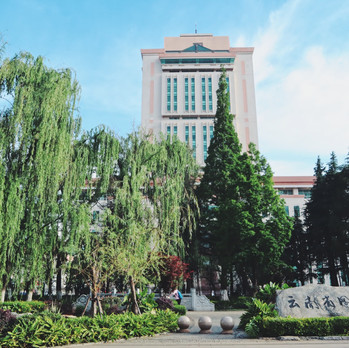
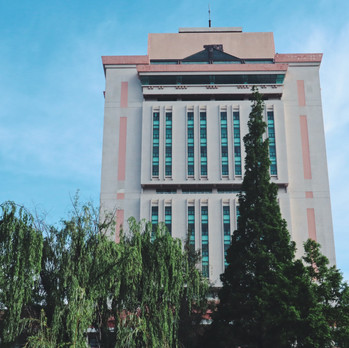
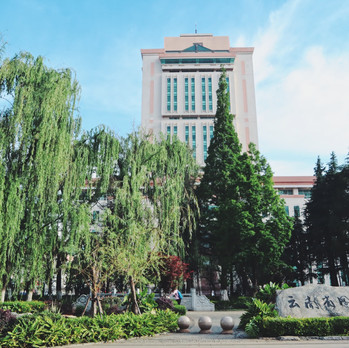
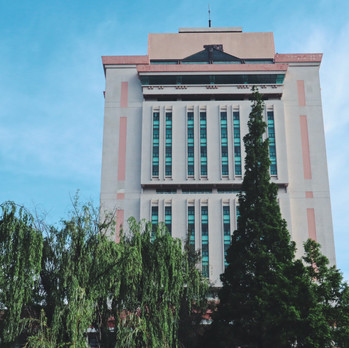
But Cuihu's charm goes far beyond its waters. It's like an open-air cultural museum, quietly preserving Kunming's history and humanity. On the lakeside stands the Yunnan Provincial Library, its retro high-rise dignified among the trees. Not far away, Yunnan University and the旧址 (former site) of National Southwestern Associated University bear witness to a turbulent era when intellectuals upheld their principles with unwavering resolve.
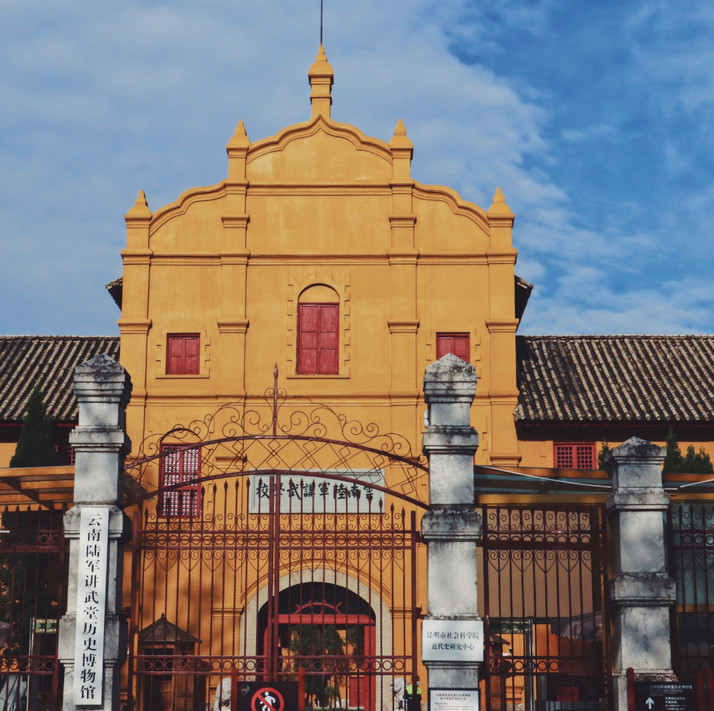
Speaking of National Southwestern Associated University (Lianda)—that name commands deep respect. In 1937, as the War of Resistance against Japan broke out, Peking University, Tsinghua University, and Nankai University first moved to Changsha, then relocated to Kunming, forming the National Southwestern Associated University. Chen Yinke, Zhu Ziqing, Hua Luogeng, Zhou Peiyuan—these luminaries of modern Chinese history all taught here. Until the three universities returned north in 1946, Lianda's nine years in Kunming infused the city with profound cultural DNA. Many places we visited later bear the traces of these scholars.
Today's Cuihu has shed the weight of history. Morning birdsong, tai chi music, and radio broadcasts blend into a symphony of spring city mornings. Elderly people practicing tai chi by the lake, young people playing tennis, residents walking their dogs—every face reflects ease and contentment.
Lakeside Serenity: Daguan Park (Grand View Park), Poetry and Horizons by Dianchi Lake
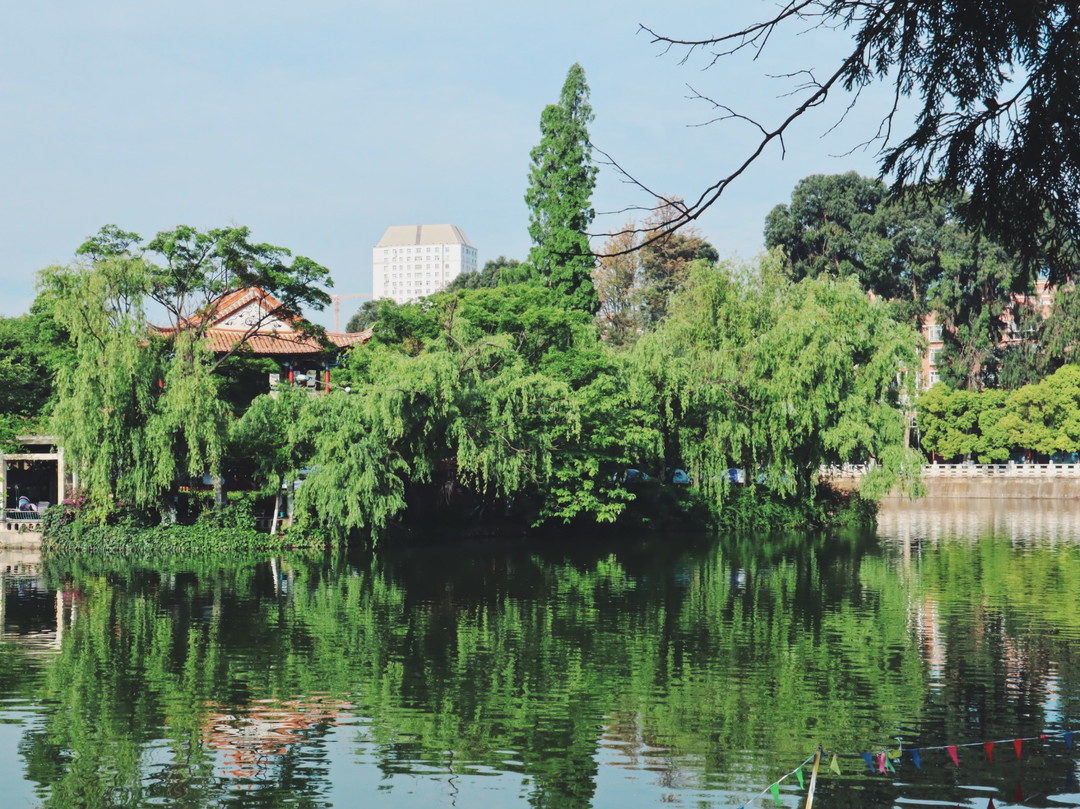
If Cuihu is Kunming's pearl, then Daguan Park is a long scroll unfolding by Dianchi Lake. In June, the park is a riot of flowers, with summer breezes and shimmering lake waters—calm yet rhythmic. Located southwest of Kunming at the northernmost tip of Dianchi Lake, the park takes its name from the Daguanlou (Grand View Pavilion). And the pavilion's greatest claim to fame is the 180-character "Longest Couplet in Chinese History," composed by Qing dynasty scholar Sun Ranweng.
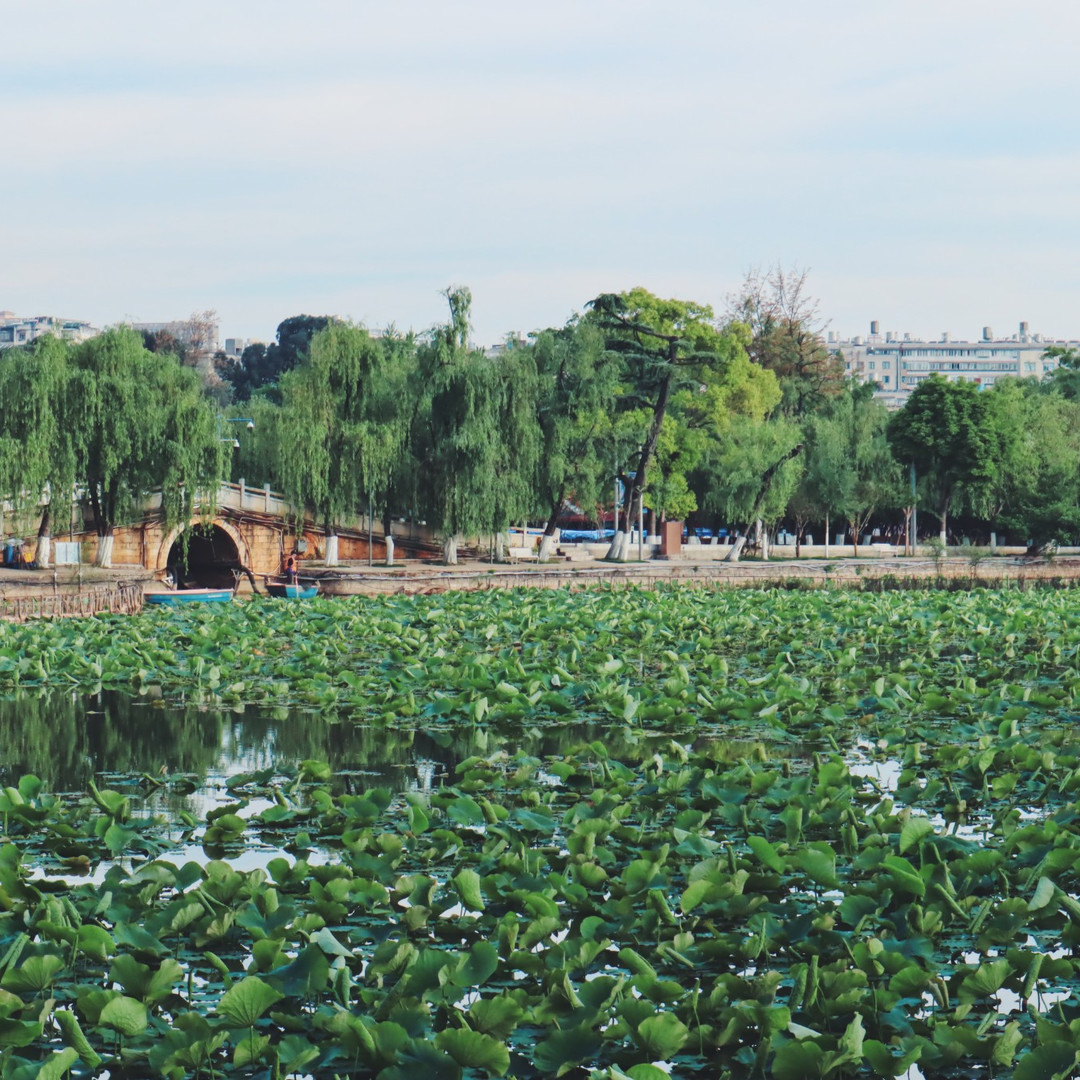
The first half describes scenery; the second half recounts history. "East like a divine horse galloping, west like a sacred phoenix dancing, north like a serpent winding, south like a white crane soaring"—these lines depict the mountains surrounding Kunming: Jinma Mountain in the east, Bijishan (Phoenix Mountain) in the west, Sheshan (Snake Mountain) in the north, and Heshan (Crane Mountain) in the south. The second half uses four historical allusions to trace Yunnan's past: Emperor Wu of Han building a Kunming Lake in Chang'an to train a navy for conquering Erhai Lake; Emperor Zhongzong of Tang erecting an iron pillar to commemorate reclaiming Erhai; Emperor Taizong of Song drawing the Dadu River as a boundary; and Kublai Khan crossing the river on leather rafts to bring Yunnan back under central rule.
Dynasties rose and fell, winds of change blew—and all returned to stillness. Today's visitors to Daguan Park gaze upon this tranquil lake and mountains, rarely dwelling on historical details. They simply enjoy the peace and beauty before them. You can take a small boat to feel the vastness of this plateau lake, or ride the Ferris wheel for a bird's-eye view of the park's lush greenery.
Beyond the green, there are flowers everywhere. In June, Kunming's blooms are at their peak, and the air is filled with subtle floral fragrance.
Ink and Pages: Dongfang Bookstore (Oriental Bookstore), A Dream Frozen in Time
Leaving the lakes and mountains behind, we walked into Kunming's old streets to find a nearly century-old bookstore—Dongfang Bookstore. The name itself carries classical elegance. Founded in 1926, it was visited by many renowned literary figures. On the wall above the bookshelves hang photos of Wen Yiduo, Li Gongpu, Lin Huiyin, Lin Yutang, and Hu Shi—all frequent visitors during the Lianda era.
The bookstore mainly sells literature, along with many second-hand books. But what I loved most were the old Kunming photo postcards. Each postcard has descriptions of the corresponding streets or buildings, like a portable city memory album.
In this fast-paced era, Dongfang Bookstore feels like a corner frozen in time, where all beauty is carefully preserved. A card on the table reads: "One day, you and I will become each other's old relics." It struck a chord.
This is also a bookstore with attitude. The entrance clearly states "Eight Things We Don't Sell": no chicken soup for the soul, no self-help success books, no cultivation manuals, no forbidden histories, no Machiavellian strategies, no get-rich-quick schemes, no health and wellness guides, no fortune-telling texts. Every book has a handwritten review by the owner—a delightful touch.
Ink and Pages: Daxiang Bookstore (Elephant Bookstore), A Creative Space Underground
Also in Wuhua District, Daxiang Bookstore offers a completely different vibe. If Dongfang is classical, Daxiang is modern, playful, and imaginative. Tucked underground, stepping inside feels like entering another world.
The selection is more diverse—beyond literature, there are books on architecture, design, and lifestyle. A shelf labeled "About Kunming" is filled with books about the city. The most intriguing touch: each shelf has a quote related to its category, connecting different times and spaces. The photography shelf, for instance, displays a line from Susan Sontag's On Photography: "Photographs may be more memorable than moving images, because they are a neat slice of time, not a flow." And so, in every photography book, we discovered those frozen moments.
Old Street Glimpses: Xunjin District, Where History Meets Fashion
Kunming has two "old street" areas worth exploring. Let's start with Xunjin District, on the west bank of the Panlong River. Its name dates back to the Qing dynasty, when the Panlong River frequently flooded. Embankments were built along Yunjin Dike, and "Xunjin" means "patrolling the Yunjin riverbank." This was Kunming's first district to open to the outside world. The Panlong River flows north to south through the city, with Xunjin Street on the west bank and the Yunnan-Vietnam Railway on the east. The famous Yunnan saying "trains go abroad but not to other parts of China" refers to this railway.
Consequently, the area is dotted with old Western-style villas. Lin Huiyin and Liang Sicheng lived here briefly, and their friends Jin Yuelin, Zhu Ziqing, and Shen Congwen often gathered. Lin Huiyin wrote a poem here, "Kunming Scene: The Small Building":
"The low building on the street, seven steps up, eight steps down, / Half-hidden, half-standing, on the street corner, / Tiles cover it, a window cracks open, / Sunset dyes it red, as if writing an ancient dream."
Today, the streets have transformed dramatically, but the remaining villas still record the passage of time. Interestingly, the outer walls are covered with murals, adding a modern, artistic flair to the old neighborhood. What was once "trendy" has become "internet-famous," drawing more and more young visitors. Old streets never truly age—they simply take on new faces.
Old Street Glimpses: Kunming Old Street, Where Time Slows Down
If Xunjin blends fashion with history, then Kunming Old Street is truly frozen in time. It's the largest area in Kunming with the most preserved Qing dynasty and Republican-era buildings. Uneven stone paths, mottled walls, old-fashioned folding wooden doors—walking here, time really seems to slow down.
The area comprises six streets and fifteen alleys, preserving traditional residential clusters, the Victory Hall of the War of Resistance, and the Confucian Temple, forming a layout of streets, halls, and temples. The oldest is Guanghua Street, where a landmark "Golden Cup" building stands—two symmetrical structures embracing the Victory Hall like wine cup bases. Guanghua Street also houses Fulin Tang (Fortune Forest Pharmacy), built in 1857, the oldest surviving pharmacy in Yunnan. Its traditional Chinese wood-and-earth structure exudes antiquity.
Besides Fulin Tang, there's the 97-year-old Ma Family Courtyard, the 1912 birthplace of Nie Er (composer of China's national anthem), and over 100 other historic buildings. At 10 p.m., the old street remains lively—tourists, young people, and residents strolling among snack shops, hotpot restaurants, Western eateries, and tea houses. Though many shops have closed, the energy persists.
Spring City Sentiments: FRTRACE, A Hidden Café in a Deep Alley
After exploring natural scenery and old streets, it's time to rest at a café tucked away in a quiet alley. FRTRACE appears to be a café but is actually the owner's studio. They run an independent原创 (original) clothing brand called "Spring City Made," and the studio is located in a peaceful residential compound near Yunnan University.
You have to knock to enter. The owner presses a switch from inside, and the iron door slowly slides open—a ritualistic experience. Once you're in, the door closes again. After all, when there are no customers, this is the owner's private workspace. The café is small, decorated in retro red and green, filled with interesting collectibles—full of personality and design flair.
We ordered fruit tea and iced coffee, both carefully made by the owner. The fruit tea was rich and aromatic; the coffee, an eight-hour drip Americano, had a slightly bitter, sour entry but left a subtle sweetness. The shop also has many vintage knick-knacks. Time here is slow and still—a place that inspires you to focus on doing one thing well.
Spring City Sentiments: NEABAY, Mint Green and Lemon Yellow at a Youth Hostel Café
Another café, NEABAY, is a fresh, youthful spot inside a hostel. The team behind it is a group of design-loving, creative friends. Though they have different personalities, they share the same passion—turning life and work into something they love. The café's main colors are mint green and lemon yellow, looking especially refreshing under the early summer sun.
The hostel's overall design is Scandinavian minimalist. The staff mentioned there's a nice staircase inside, perfect for photos. We ordered a latte and iced coffee—average in taste, but the Instagram-worthy tableware made up for it. The cheesecake was just okay, but hey, atmosphere matters more in a café. The staff, all post-90s young people, were warm and sunny, chatting and laughing with ease.
Taste Memories: Yunnan Rice Noodles, A Thousand Variations in One Broth
How could you visit Kunming without trying rice noodles? Everyone knows Guoqiao Mixian (Crossing-the-Bridge Rice Noodles), but only in Kunming do you realize just how many ways Yunnan has to eat them. And surprisingly, every version is delicious.
Flower-Infused Crossing-the-Bridge Rice Noodles are a Kunming specialty. The standard version typically includes fresh shrimp, sea cucumber, salmon, chicken slices, abalone, fish maw, Yunnan ham, squid, tenderloin, crispy pork, and quail eggs, plus vegetables like tomato, magnolia buds, chives, asparagus lettuce, bean sprouts, tofu skin, and grass shoots. The boiling hot pot base is a rich chicken and bone broth, with a layer of oil sealing in the heat. You add raw meat first, then vegetables. The flower version adds petals, elevating the visual appeal. Taste-wise, it's similar—a good broth trumps everything.
Beef Rice Noodles are the signature of Wenshan Morning Snacks, a local favorite in Kunming. The secret is the rich, aromatic bone broth. Huge beef bones roll in the pot—a sight that commands respect. We wanted to order cold chicken, but the staff checked and said the chicken wasn't quite ready, then pulled out two whole free-range chickens from the pot. Our eyes lit up—clearly, this broth was the real deal. Another Wenshan specialty: you can customize your toppings—scallions, chives, cilantro, celery, peas, cabbage, tomatoes, bird's eye chilies... The most unique is mint leaves, which add a fresh, Vietnamese-pho-like layer to the noodles.
Tofu Pudding Rice Noodles—the name says it all: tofu pudding (豆花) plus rice noodles. Toppings include minced pork, pickled vegetables, scallions, soybean powder, and a spicy sauce. It's a dry-mix style, without much broth. Before trying it, I worried the tofu pudding would turn into a "dark dish" when stirred. But the soft, silky tofu actually coats the toppings better, wrapping around the noodles for a richer, fuller flavor. Sanwan Tofu Pudding Rice Noodles is a well-known spot in Kunming. Besides their signature dish, they also serve pea jelly, rice pudding, soy milk with sticky rice, and old Kunming papaya water—a perfect sweet-and-savory combo.
Taste Memories: Kunming Street Snacks, Hidden Surprises in Every Alley
Guanghua Street has several old-name food shops where you can sample local specialties. Sanwan Tofu Pudding Rice Noodles is one of them—we had breakfast there, and it was incredibly hearty.
Pea Jelly (豌豆粉) comes in block form, soft and sticky, with a slightly firmer, chewy skin. Rice Pudding (米布) is a Kunming specialty made from milk—like warm milk pudding, but not overly milky. It reminded me of the milk ice cream I had as a child—just right. I'm someone who can't handle pure milk and even finds double-skin milk pudding too gamey, but I loved this. Papaya Water (木瓜水) is everywhere in Kunming. Similar to Chengdu's "liang xia" (cold shrimp jelly) or "bing fen" (ice jelly), it has a subtle sweetness reminiscent of winter melon tea—very refreshing.
Final Thoughts
Kunming has long enjoyed the reputation of "eternal spring," yet among China's many tourist cities, it doesn't command much attention. Finally taking the time to truly explore it, I found it doesn't offer many breathtaking moments. But it's precisely this unhurried, gradual, flowing immersion that made me fall deeply for this city.
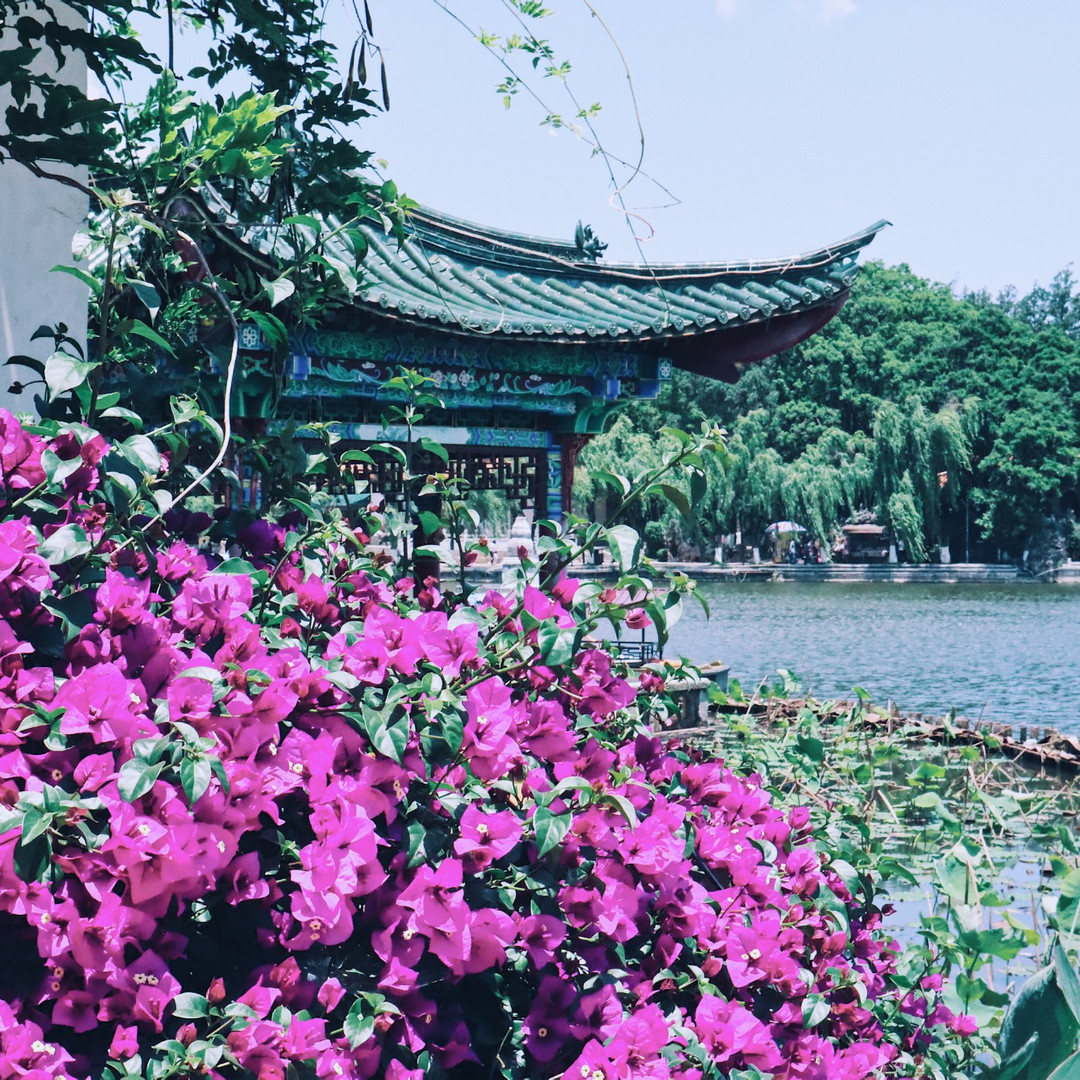
Three days—from Cuihu's morning to Daguan Park's dusk, from Dongfang Bookstore's old books to Daxiang Bookstore's creativity, from Xunjin Street's villas to Guanghua Street's historic buildings, from FRTRACE's retro red-and-green to NEABAY's mint-and-lemon, from a bowl of Crossing-the-Bridge Noodles to a bowl of Tofu Pudding Noodles... Kunming's beauty isn't far away—it's in these time-frozen corners, waiting for you to discover slowly.
If you're thinking of visiting Kunming, give yourself three days. Don't rush, don't check off a list. Just walk slowly, look carefully. You'll find this Spring City has more flavor than you ever imagined.
Practical Tips: - High-speed train from Chengdu to Kunming takes about 5-6 hours; take an early train to maximize your time - Visit Cuihu early in the morning to avoid crowds and experience its purest tranquility - At Daguan Park, take a small boat or the Ferris wheel for panoramic views of Dianchi Lake - Both Dongfang Bookstore and Daxiang Bookstore are worth visiting; schedule them on the same day - Xunjin District is great for photos, especially in the late afternoon light - Don't miss Fulin Tang and Ma Family Courtyard on Kunming Old Street - At FRTRACE, you need to knock; don't be put off by the closed iron door - Rice noodle recommendations: Wenshan Morning Snacks (beef rice noodles), Sanwan Tofu Pudding Rice Noodles (tofu pudding rice noodles) - Budget: approximately 500-1,000 RMB per person for three days within the city (excluding long-distance transportation), depending on personal spending habits
You should also read:

The Call of the Snow Mountains: Discovering Another Self in Yunnan
The Call of the Snow Mountains: Discovering Another Self in Yunnan Prologue: Quitting My Job Wasn't an Escape—It Was a Search "You've lost your mind! You quit your job just to travel?" I've heard that line more times than I can count. Every time, I'd…
Continue reading...
24 Days, 1400 Yuan: A Solo Journey Along the Sichuan-Yunnan Route, Trading Stories for Scenery
24 Days, 1400 Yuan: A Solo Journey Along the Sichuan-Yunnan Route, Trading Stories for Scenery Setting Out, Not to Escape, but to Find Myself The year I graduated from university, I did two "crazy" things: I quit my job, and I set off on a…
Continue reading...
Before the Tongue: Discovering Nuodeng, the Ancient Salt Town Time Forgot
Before the Tongue: Discovering Nuodeng, the Ancient Salt Town Time Forgot There’s a peculiar magic in places that have been left behind by history. They don’t try to impress you. They don’t have polished welcome centers or laminated maps. They just are—worn, quiet, and utterly…
Continue reading...