Three Days, Two Nights Around Erhai Lake: Claim This Lazy Breeze and Discover the Soul of Dali
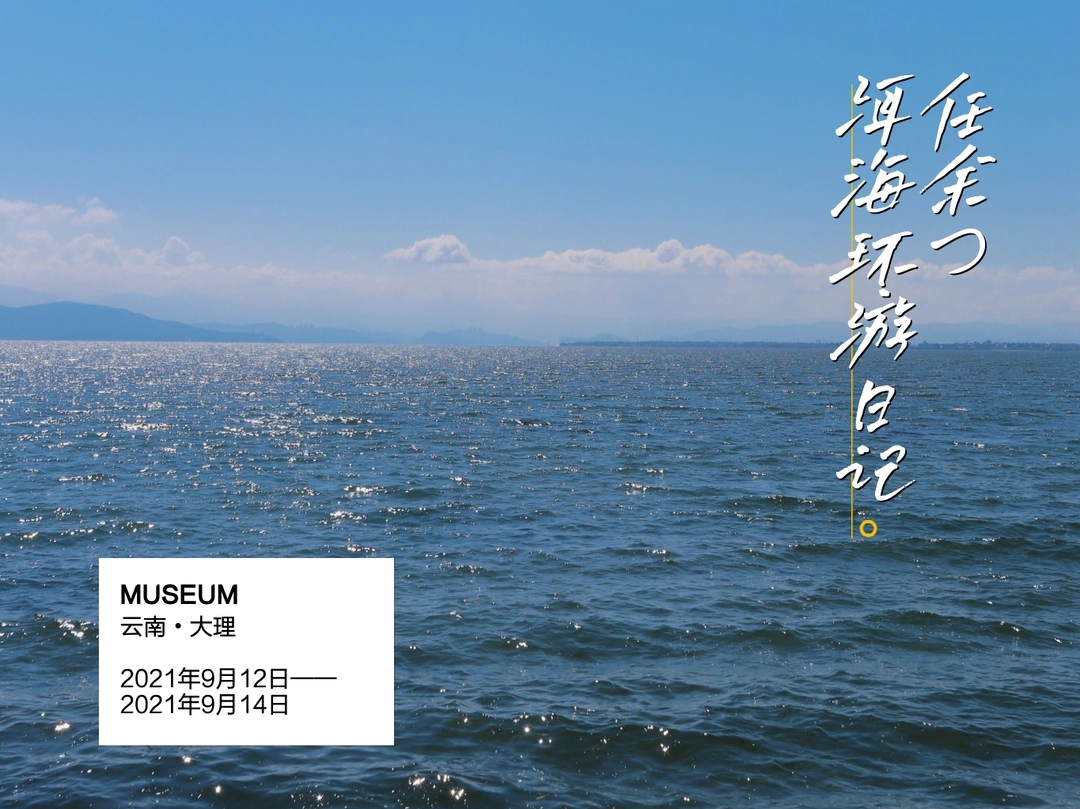
Three Days, Two Nights Around Erhai Lake: Claim This Lazy Breeze and Discover the Soul of Dali
Foreword: Why Erhai Lake?
If you ask me what makes Dali so unforgettable, I’ll answer without hesitation: Erhai Lake.
Not the majesty of Cangshan Mountain, not the bustle of the ancient town—but that expanse of blue water lying quietly on the plateau. It’s like a giant mirror, reflecting the clouds drifting across the sky and the turmoil and tranquility within every traveler’s heart.
My name is Ren Yu, a 99-born Aries guy. After college, instead of cramming into an office like most people, I made a “willful” decision—I settled in Dali and became a travel blogger. Before that, I’d traveled through more than 30 provinces, done twelve stints as a volunteer, and met Erhai Lake several times. But every time, I felt I still owed it a deeper conversation.
So came this three-day, two-night in-depth loop tour. I wanted to measure every inch of this water’s beauty with my own steps, then package the most practical tips and truest feelings into a gift for everyone who dreams of Erhai Lake.
Pre-Trip Preparation: What You Need to Know Before You Go
Essential Packing List

Looping Erhai Lake isn’t a spur-of-the-moment whim—it’s an exploration that requires careful preparation. Make sure to pack these items:
- ID card—Need I say more? It’s your passport
- Student ID or tour guide license—If you have one, bring it. Many spots will save you a chunk on admission
- Sun protection trio: sunscreen, face scarf, arm sleeves—Erhai’s sunlight may feel gentle, but UV rays never go easy on you
- Phone, power bank, charger—Navigation, photos, social media—can’t do without any
- Camera (I use a Canon 6D)—If you want high-quality memories
- 2-3 changes of clothes—Lightweight is key. Dali has big temperature swings between day and night, so pack a light jacket
- Plenty of water—Supply points along the lake road are scarce. Don’t wait until you’re thirsty to regret it
- Umbrella for sun and rain—Yunnan’s weather changes on a dime
Transportation: Pick the Right Ride, and Half the Loop Is Done
The lake loop is about 120 kilometers. Your choice of transport directly shapes your travel experience.
🛵 Electric scooter (top pick) - Price: About 60 yuan/day (a bit higher in peak season) - Range: A full charge covers about 60 km—enough for the loop - Pros: Stop anytime, squeeze into small roads, high freedom - Cons: Long rides aren’t super comfortable, and you’ll get sunburned
🚗 Car - Price: 350-800 yuan/day (including insurance and gas) - Recommended models: Beetle convertible, Jeep, SUV - Pros: Comfortable and fast, great for 3-4 people - Cons: Narrow roads to小众 photo spots are hard to access; parking fees apply
🚌 Bus - Best for those who only want to go from the ancient town to Shuanglang - Cons: Low freedom, can’t stop as you please
My advice: If you’re solo or with one other person, an electric scooter is the best choice. That feeling of riding against the lake breeze, free as the wind—a car just can’t give you that.
My Private Map: Must-Visit Spots Around Erhai Lake
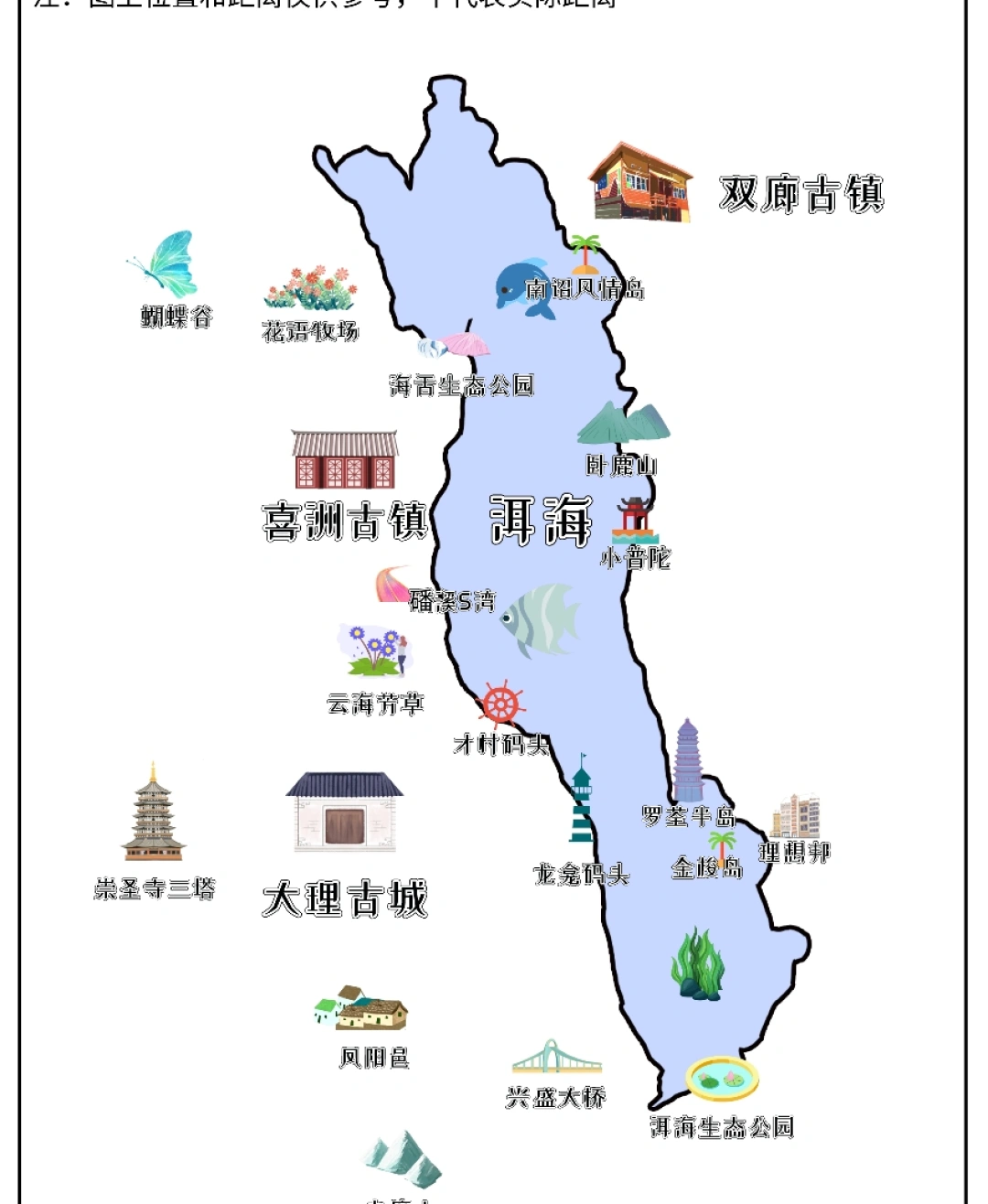
After looping the lake many times, I’ve drawn up a “Ren Yu edition” map of worthwhile places around Erhai. Of course, there’s so much beauty here that this map is bound to miss a few gems, but at least it’ll help you avoid some pitfalls and find spots truly worth lingering at.
Full Three-Day, Two-Night Itinerary
DAY 1: From the Ancient Town to Shuanglang, Scenery Heading North
Yunhai Fangcao (Sea of Clouds and Fragrant Grass): An Unexpected Encounter with Alpacas
Setting out from Dali Ancient Town, the weather was impossibly good. Wispy clouds floated in the sky, and sunlight made every leaf on the roadside shine. Since the west lakeside road was under construction, I took Dali Road heading north.
On both sides of Dali Road, farms and gardens appeared one after another, like a never-ending exhibition. Not far along, a windmill cottage in a sea of yellow flowers caught my eye—Yunhai Fangcao.
I chatted with the owner for a bit. When he heard I was a travel blogger gathering素材, he generously waived the 30-yuan admission fee. Inside the garden, vast flower beds spread out, dotted with various photo props. The biggest surprise? Three alpacas grazing on a hillside, their fluffy coats begging to be touched. Luckily, they had good tempers and didn’t spit at me. The owner said that with a reservation, you could try BBQ, tie-dye, and flower cakes, but my schedule was too tight—I’ll save that for next time.
Panxi S-Curve: Erhai’s First Intimate Embrace
Leaving Yunhai Fangcao, I headed straight for the long-awaited Panxi S-Curve. This road gets its name from its S shape, hugging the lake tightly—a perfect viewpoint.
No vehicles are allowed on the S-Curve itself, so there are plenty of private paid parking lots nearby. Here’s where riding an electric scooter pays off: I parked in a small alley and saved the fee. If you’re in a car, you’ll have to cough up 10-15 yuan.
Walking onto the S-Curve, the view lived up to its reputation. With nearly a 270-degree panorama, seagulls occasionally skimmed the water. At the entrance, shops rented bicycles. Watching couples and families ride multi-person bikes, leisurely pedaling in the breeze, I suddenly felt that if I had more time, renting a bike and taking it slow might be the real way to experience the S-Curve.
Xizhou Ancient Town: Frolicking in the Fields, Satisfying Your Taste Buds
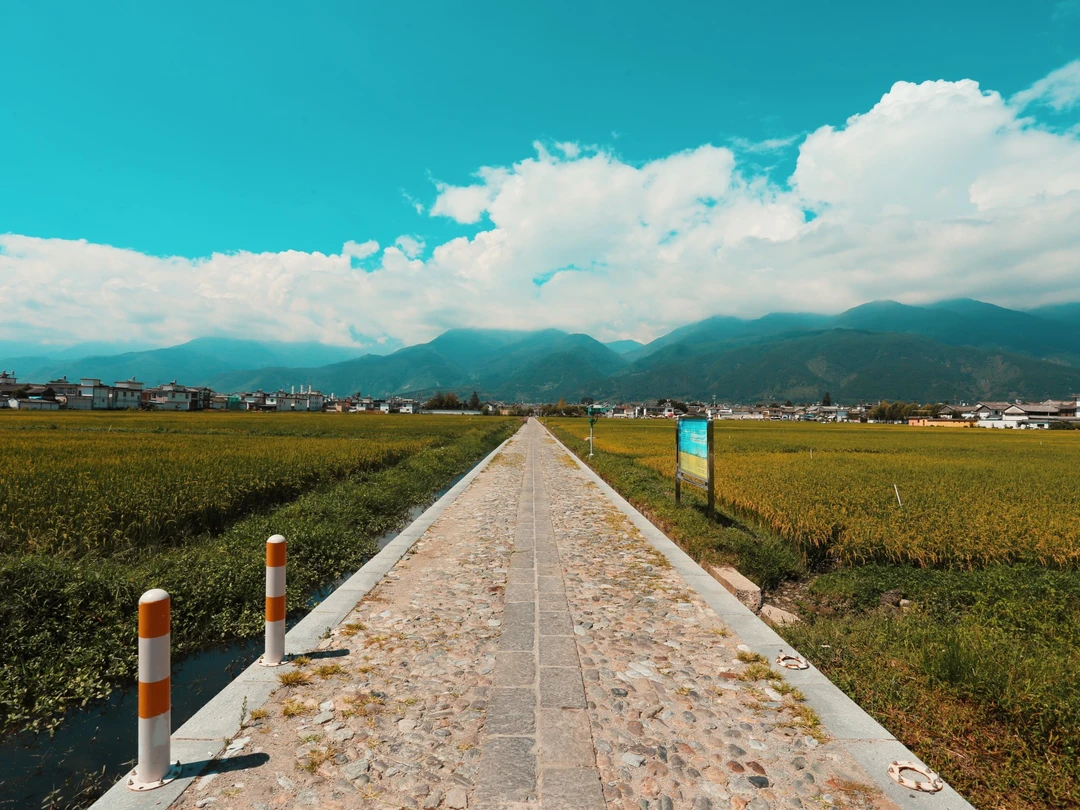
Continuing north, I reached the midpoint of the day—Xizhou Ancient Town.
A vast lotus pond greeted me, fish swimming inside, tempting me to feed them. But what really stole my heart was the field behind Xizhou. In autumn, the fields had turned golden, stretching out like an ocean. A few couples were shooting wedding photos—imagining them making vows in such a romantic spot felt almost blissful.
By noon, my stomach was growling. Xizhou’s most famous snack is Xizhou baba (a type of stuffed flatbread). At 5 yuan each, one bite sent the aroma of sticky rice and diced meat exploding in my mouth, crispy crumbs falling everywhere—truly “fragrant enough to make you drop your jaw.”
One baba wasn’t enough, so I found a private kitchen restaurant called “Moshang Huayuan Restaurant” (Garden on the Field Path). I ordered a pot of qiguoji (steam pot chicken) and some洋芋 (potatoes). The chef was a local Bai ethnic minority, and the flavors were so authentic they moved me. Stuffed and satisfied, I left content.
Huayu Muchang (Flower Language Ranch): Drowning in Flowers, a Touch of Regret
Haishang Ecological Park was closed, so I headed straight for Huayu Muchang. Admission was 50 yuan. Stepping inside felt like falling into an ocean of flowers—dahlias, roses, lavender fields, layer upon layer, almost overwhelming.
They say this is the largest garden in all of Dali. Everywhere in the flower sea, girls were posing for photos—perfect for打卡 (checking in). But the downside of solo travel hit me hard: I wanted to take photos but had no model. I debated for a moment whether to grab a “lucky audience member” on the spot, but my social anxiety won out, and I left in frustration.
Shuanglang: The Gentle Embrace of Erhai Moon
Riding along the lakeside road, fatigue began to creep in. By the time I reached Shuanglang, the sun was already sinking.
I’d booked Yanhai Shanjü Guanjing Inn (Sea-View Mountain Residence Inn), with rooms ranging from 200 to 600 yuan. Located on a small hillside next to the ancient town, it had an excellent vantage point. My room had a little balcony where I could sit and watch the sunset.
Too tired to go out, I ordered takeout for dinner. But sitting on the balcony, overlooking the entire Shuanglang ancient town, lights twinkling, the moon slowly rising, the day’s exhaustion seemed to blow away with the lake breeze. I said goodnight to the moon and soon drifted off to sleep.
DAY 2: From Shuanglang to Lixiang Bang (Ideal State), Meeting “Santorini”
Shuanglang Ancient Town: The Number One Town for Cangshan and Erhai Scenery
Shuanglang is known as “the number one town for Cangshan and Erhai scenery,” and it’s the only ancient town that sits right on the lake. From any alleyway leading to the shore, you can get up close with Erhai. I took off my shoes and stepped into the cool water, waves washing over me—so soothing I didn’t want to leave.
Shuanglang is quite commercialized, but Yang Liping’s former residence, “Moon Palace,” is worth a visit. Sitting inside Moon Palace felt like traveling through time to have tea with Yang Liping herself, and the view of Erhai was unbeatable.
From Shuanglang Pier, I took a boat to Nanzhao Style Island. The 50-yuan ticket included round-trip ferry service. The statues on the island were intriguing, and a quick ride on the sightseeing car took me around the whole island. Gazing at Sun Palace and Moon Palace from the island made the ticket feel well worth it.
Luwo Mountain and Xiaoputuo (Little Putuo): Fun Times with Seagulls
Leaving Shuanglang, I drove along the east lakeside road. This section hugs the coastline so closely it feels like you’re driving through the sea—the scenery was so beautiful I didn’t want to blink.
Passing the Luwo Mountain ruins, I stopped for a few photos. It reminded me of the Blue Bridge on Weizhou Island. Continuing on, I reached Xiaoputuo. This tiny island is surrounded by water on all sides; the boat ticket was 15 yuan. Many red-billed gulls from Siberia had gathered here. For 10 yuan, I bought a pack of biscuit crumbs. They weren’t shy at all—some even landed on my shoulders. The joy of interacting with the gulls is an experience not to be missed on the loop.
Luoquan Peninsula: Climb High, See Cangshan and Erhai at a Glance
Heading further south, I arrived at Luoquan Peninsula (Tianjing Pavilion Scenic Area). Admission was 30 yuan, and it took about an hour to explore.
The Luoquan Pagoda is the landmark here. Built during the Nanzhao period (legend has it), it was later reconstructed and stands 43 meters tall. After some effort, I climbed to the top. The panoramic view of the peninsula washed away all the fatigue from the ascent. The wind was strong, the lake breeze cool and refreshing. Gazing at Cangshan Mountain, with mist swirling around it, I couldn’t help but sigh: Cangshan and Erhai—truly the most worthwhile sight.
Lixiang Bang (Ideal State): Dali’s “Santorini”
The last stop of the day—and the one I’d been most looking forward to—was Lixiang Bang Resort Town.
Perched by Erhai Lake, with layer upon layer of white steps and architecturally striking buildings, it really did feel a bit like Santorini. Walking up the white staircase, the exquisite design attracted countless girls taking photos.
Around dinner time, I visited a Japanese restaurant called “Matsuzuki” (鮨松月MATSUZUKI). I ordered sashimi and wagyu sukiyaki. The taste was indeed good, though the price was a bit steep—about 150 yuan per person. But eating good food while looking out at the lake view? A little splurge now and then is worth it.
After dinner, I found a place to stay near Lixiang Bang, ready to welcome the final day of the journey.
DAY 3: From the City to the Ancient Town, Closing the Circle
Xingsheng Bridge: A Touch of Europe and Memories of “Si Teng”
I set out early on the third day and soon entered Dali’s city center. The city had a more urban feel compared to the lakeside route. My destination was Xingsheng Bridge, a filming location for the TV drama “Si Teng.”
This bridge, with its European-style architecture, draws many couples for wedding photos. I’d seen plenty of stylish European-inspired shots online, so I couldn’t wait to see it in person. I parked my scooter by the roadside and started clicking away. The weather was still perfect, and the bridge in the sunlight had a distinctly London vibe.
If you’re looping the lake with friends, make sure to shoot a set of photos here. Dark-colored clothes are recommended—they look good no matter how you pose, giving off a full-on high-end vibe.
Longkan Pier: A Farewell Embraced by Erhai
As the three-day, two-night journey neared its end, I returned to the area near the ancient town. My heart still racing with excitement, I decided to take a stroll at Longkan Pier.
Longkan Pier is a hidden gem in my book. Standing on the spit of land that juts into Erhai, I felt as if the entire lake was embracing me. The lake breeze blew away the fatigue of the past few days, and I headed home completely satisfied.
This loop around Erhai wasn’t just about chasing scenery—it felt like a cleansing of the soul.
Final Thoughts: Erhai Lake Is Always Waiting for You
I’ve circled Erhai three times now, and every time, it gives me a different feeling.
For me, Erhai is a spiritual anchor, a kind of psychological cue. Whenever I face it, it tells me: let go of everything that’s bothering you.
Looping Erhai gave me a sense of peace unlike any other. Settling my mind, returning to my daily life refreshed—this wasn’t just a trip; it was a soul-cleansing.
So if you’re in a good mood right now, take that good mood and go—let the lake breeze accompany you to Erhai.
And if you’re in a bad mood, you need a relaxing trip even more—let this journey carry away all your worries.
Finally, I’ll end with those song lyrics:
“Maybe love is waiting by Erhai Lake, maybe a story is unfolding.”
So, what’s your story?
📌 Practical Tips Summary: - Best season: September to November—clear weather, seagulls start arriving - Looping method: Electric scooter for freedom, car for comfort—choose based on group size and budget - Accommodation suggestions: Shuanglang for lake views, ancient town for night markets, Lixiang Bang for stunning photos - Must-pack items: Sunscreen, power bank, water, umbrella - Time planning: Three days, two nights—not rushed, not slow; two days, one night—streamlined; one day—you’ll have to make some trade-offs
This travelogue is original content. Please do not reproduce without permission.
You should also read:
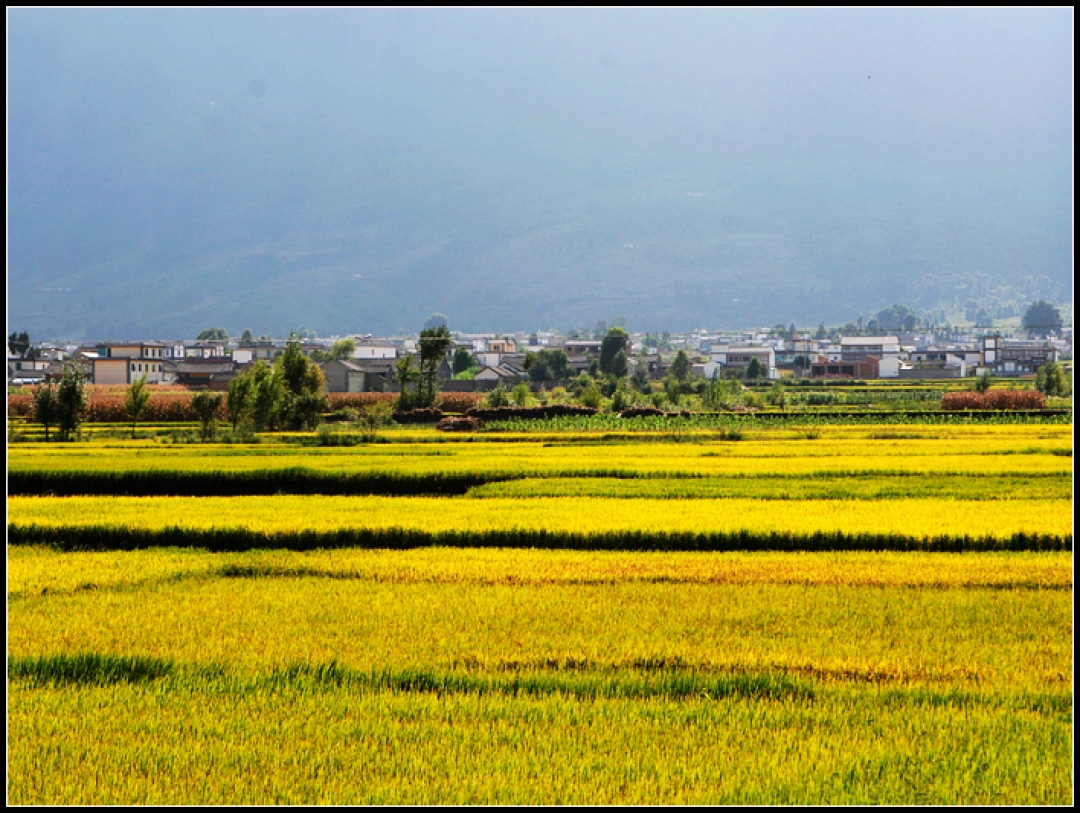
A 9-Day Yunnan Journey: From Lijiang to Dali to Tengchong – A Trip Toward Self-Reconciliation
A 9-Day Yunnan Journey: From Lijiang to Dali to Tengchong – A Trip Toward Self-Reconciliation Some say travel is simply going from a place you're tired of to a place other people are tired of. It stings to hear, but it's painfully true. Yet there's…
Continue reading...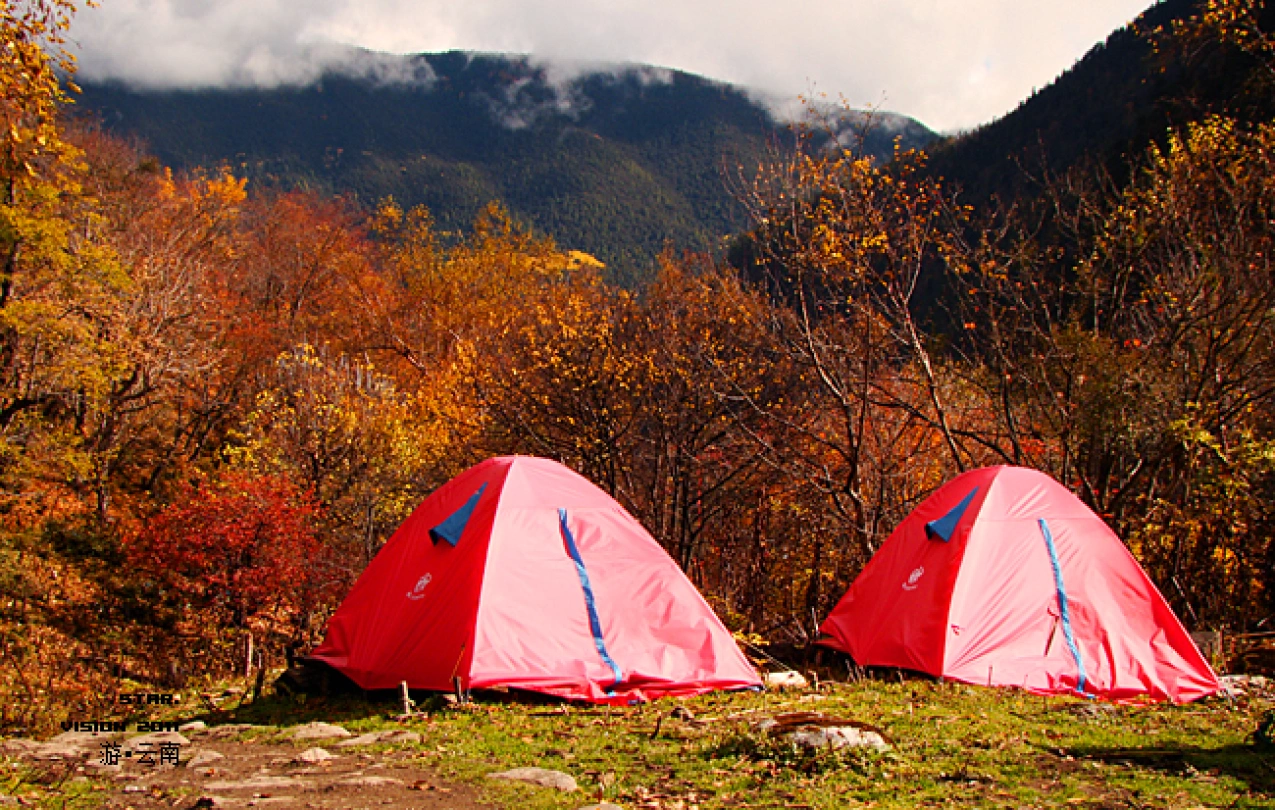
Yunnan! Paradise on Earth – The Yubeng Chapter: A Soul-Cleansing Journey into Seclusion
Yunnan! Paradise on Earth – The Yubeng Chapter: A Soul-Cleansing Journey into Seclusion Prologue: Why Yubeng? If you ask me which place in Yunnan is most worth hiking to, I would answer without hesitation: Yubeng. This is not an answer I give lightly. As a…
Continue reading...
Two Girls' Graduation Trip: Dali and Shuanglang – A Poetic Farewell to Mountains and Sea
Two Girls' Graduation Trip: Dali and Shuanglang – A Poetic Farewell to Mountains and Sea Preface: Catching the Tail of Youth, Heading South During our senior year of college, my roommate and I – two girls studying in Beijing – decided to bid farewell to…
Continue reading...