Three Thousand Miles of Clouds and Moon: A Self-Drive Wedding Journey from Chengdu to Yunnan
Three Thousand Miles of Clouds and Moon: A Self-Drive Wedding Journey from Chengdu to Yunnan
Some trips are meticulously planned; others are written by fate. When a bargain airfare, an unexpected wedding invitation, and a restless heart longing for distant horizons collide, you get a three-thousand-mile road trip across Yunnan. Setting out from Chengdu, passing through Lugu Lake, Lijiang, Dali, and Shuanglang, I brought along my parents and my wife to embark on a journey filled with surprises and delights. Perhaps, as the saying goes, "Maybe somewhere out there even a devil may cry when he loses a loved one" — but this time, what we lost was the noise of the city, and what we gained was the gentle embrace of mountains, rivers, and lakes.
The Spark: An Unexpected Departure
The seed of this trip was actually a cheap flight to Malaysia. I had originally planned to wander around Southeast Asia in early June, but then my cousin in Kunming suddenly announced his wedding on June 1st. A lightbulb went off: why not use this wedding as an excuse to take my parents and wife on a self-drive trip from Chengdu all the way to Yunnan? That way, we'd attend the wedding and also visit Lugu Lake, Lijiang, Dali, and Shuanglang — killing multiple birds with one stone.
Before leaving, I checked the weather. Yunnan was in the middle of its rainy season, with forecasts calling for thunderstorms every day. But the heavens seemed to be on our side: we barely encountered any heavy rain throughout the trip. A few light drizzles came and went quickly. The high-altitude sun was intense, but compared to a downpour, that was already the greatest blessing.
Itinerary Overview: Eight Days, Three Thousand Miles

Our route went like this: We set off from Chengdu in the early hours of the first day, drove along the Yaxi Expressway to Xichang, then exited at the Ximu junction, passing through Yanyuan before arriving at Lugu Lake. Aside from the two-to-three-hour stretch of rough road between Yanyuan and Lugu Lake, the rest of the roads were in decent condition. However, my little Ford Focus has a low chassis, and after installing an underbody guard, every bump was pure agony — each pothole made me wince.
We reached the Lugu Lake scenic area around 2:00 PM and checked into a lake-view room near the Luowa Pier. After a nap, we headed out at around 5:00 PM to explore the Sichuan side of Lugu Lake. The next day, we spent the entire day circling the lake, mostly on the Yunnan side. On the third day, we watched the sunrise, went boating, and set off for Lijiang around 10:00 AM. The fourth day was a dash to Dali, where we briefly visited the Three Pagodas and the Tianlong Babu Film Studio before heading to Shuanglang. On the fifth day, we continued circling the lake in Shuanglang and drove to Kunming in the afternoon. The sixth day was the wedding; that night, I had to fly back to Chengdu early for an exam the next day — and my flight was delayed by two hours. On the seventh day, my parents and wife drove back to Chengdu, departing at 6:30 AM and arriving at 6:00 PM.
Total costs came to around 4,000 RMB (approximately $560), plus my early return flight to Chengdu, bringing it to 4,500 RMB ($630). Fuel and tolls were the biggest expense at about 2,000 RMB ($280); accommodation cost 1,150 RMB ($160); and food was cheap since we brought plenty of snacks and instant noodles. For tickets, entering Lugu Lake from the Sichuan side cost 80 RMB ($11), and from the Yunnan side, 100 RMB ($14). Student IDs get you a 50% discount — don't forget to bring yours.
Lugu Lake: A Poem of Light and Shadow Beneath the Goddess Peak
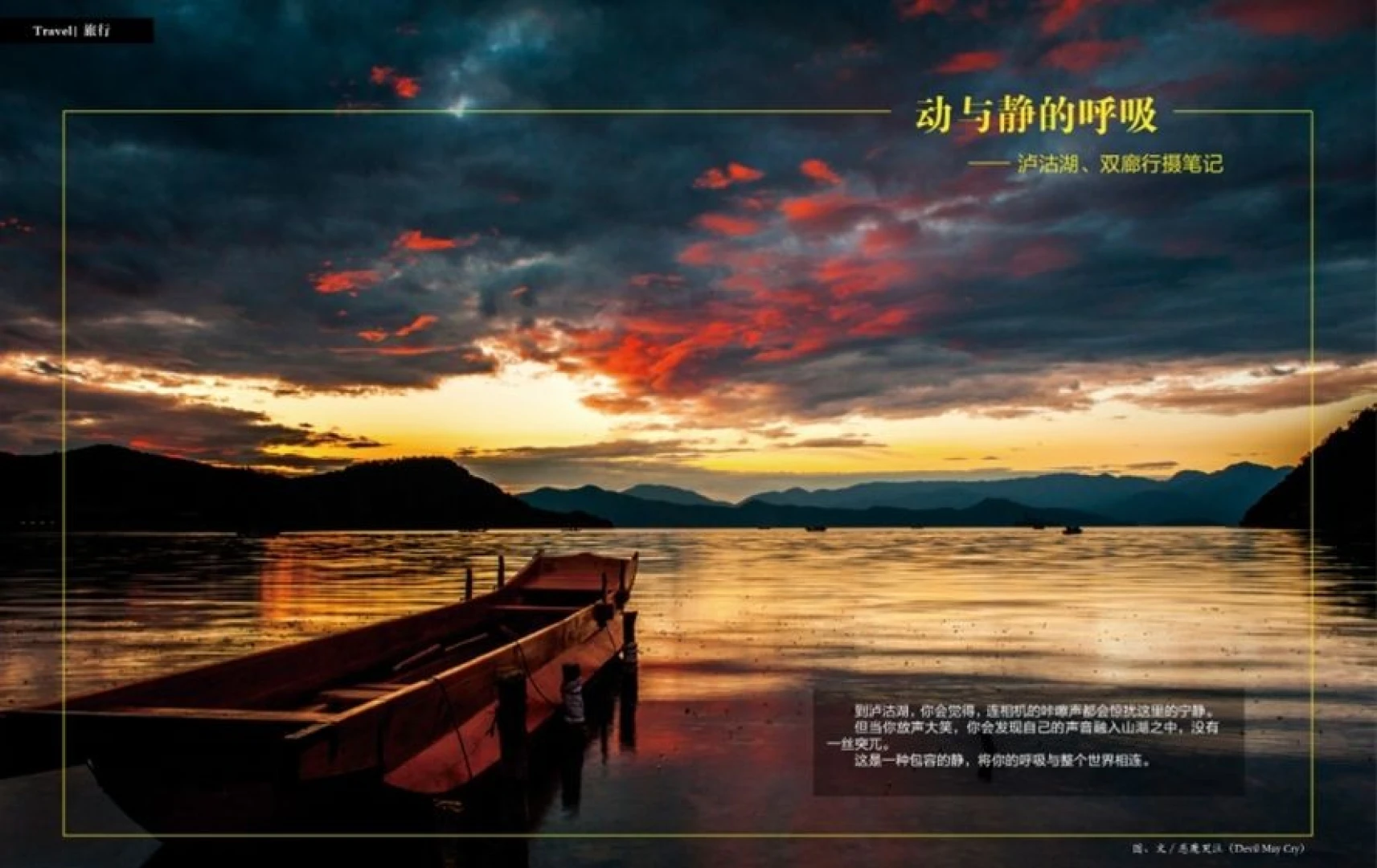
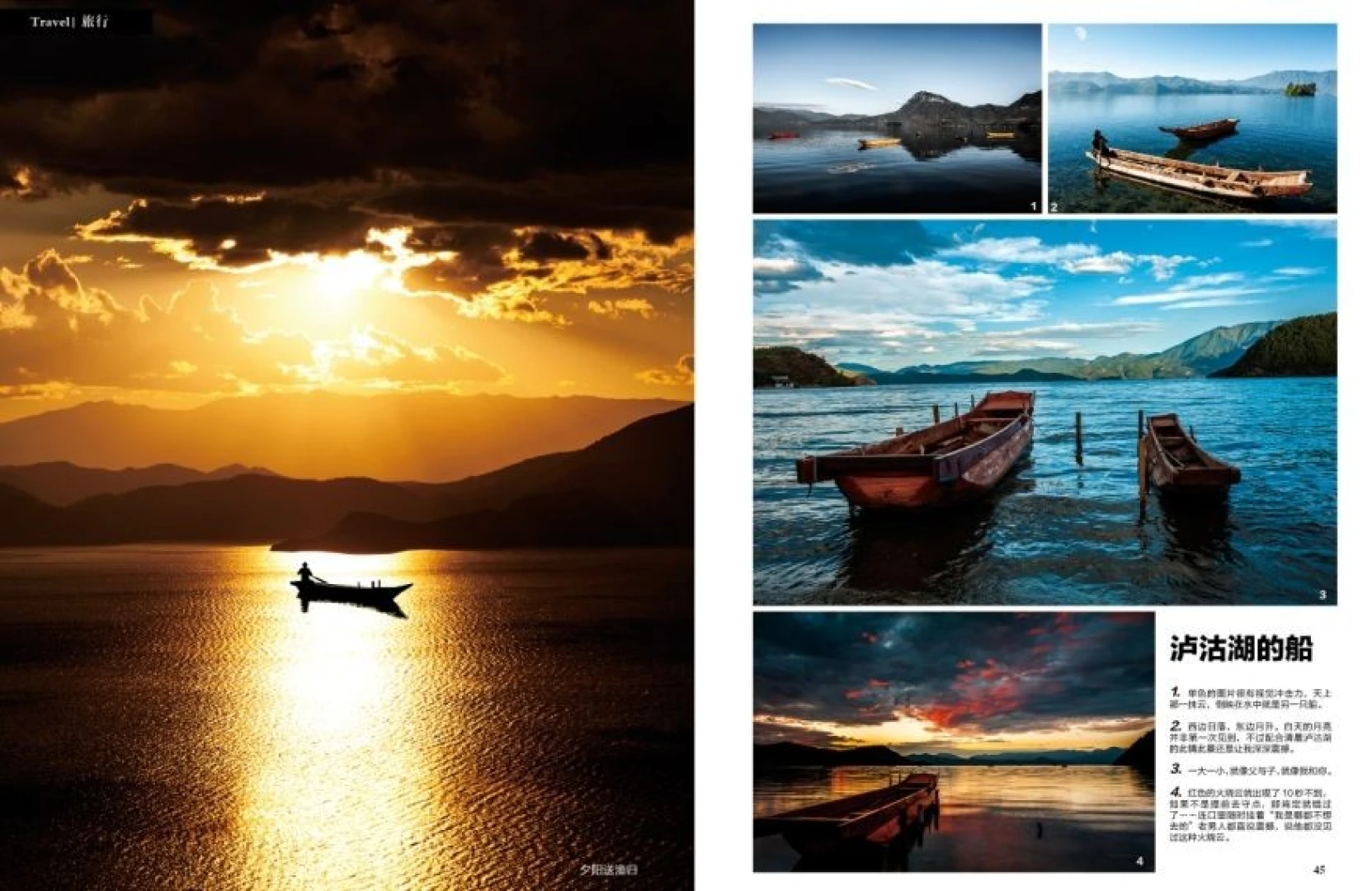
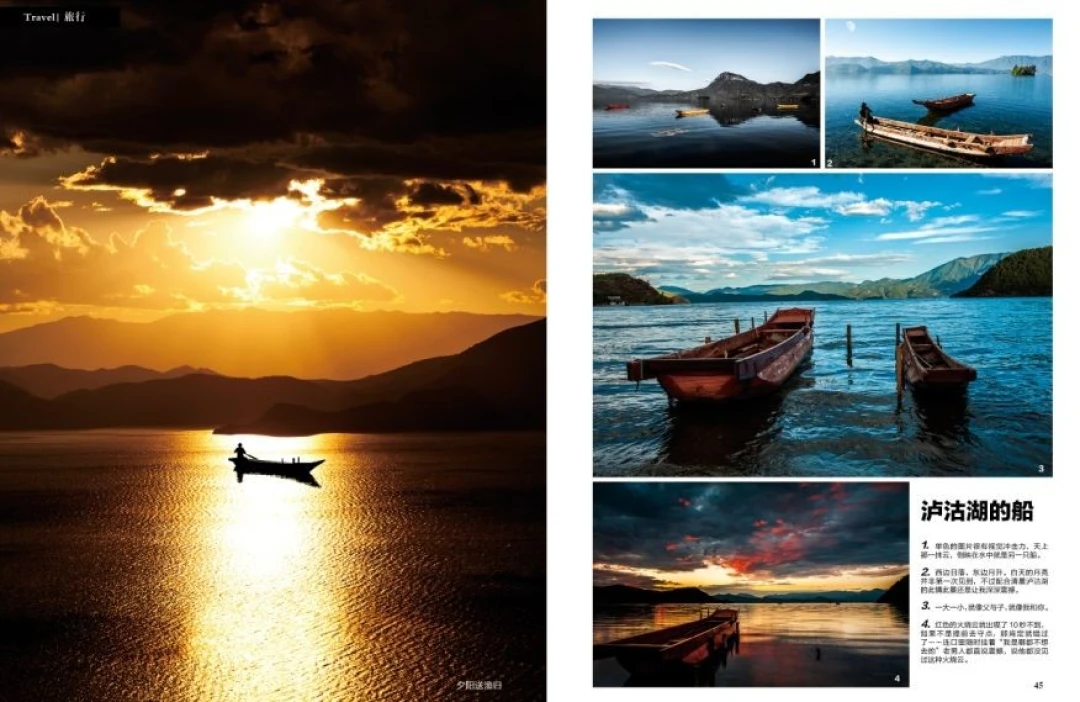
Before going to Lugu Lake, this was the place I was most excited about. Although the weather wasn't ideal, high-altitude weather is like a child's mood — unpredictable — but that brought unexpected rewards. Take, for example, the photo that made me truly satisfied: a pig-trough boat at sunset. That image later won an award in the Daliangshan Panorama Photography Competition. I gave it the poetic title "Sunset Sends the Fishermen Home," but honestly, what I love more is the contrast between the monochrome tones and the scattered sunlight — it feels like time frozen in that moment.
I never quite understood Lugu Lake's layout before departure. I initially thought you couldn't drive inside the scenic area, but it turns out vehicle roads and pedestrian paths are separate. The vehicle road is set back from the lake, so if you want to get up close to the water, you have to walk or bike. My advice: if you're fit, walk or cycle around the lake — the experience is far better than driving.
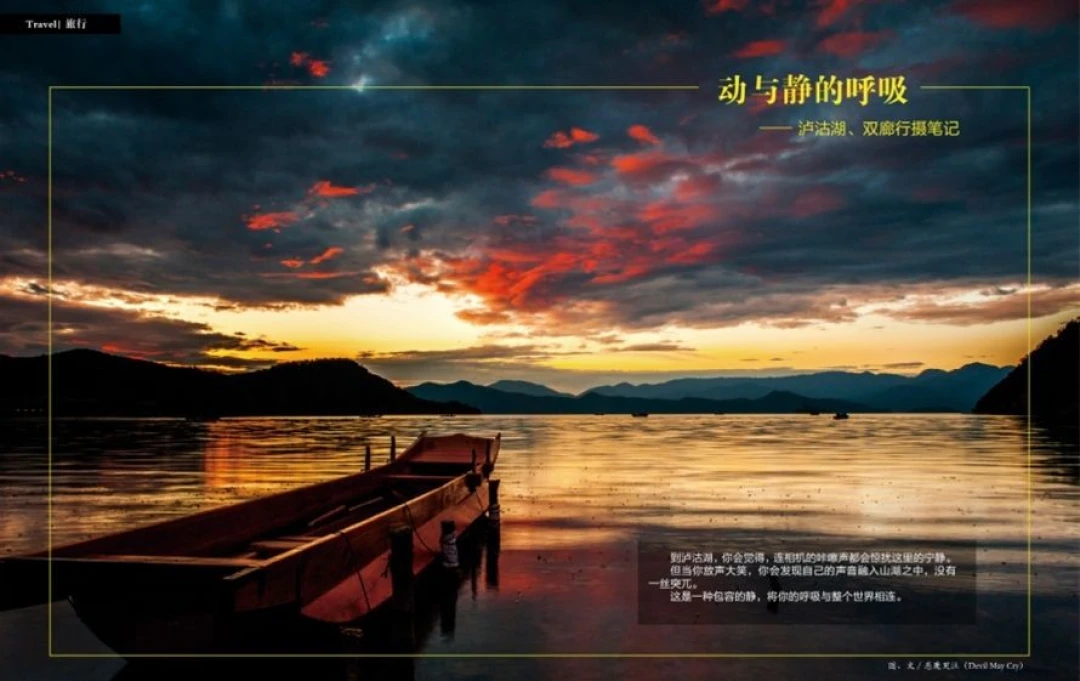
The Goddess Peak is one of Lugu Lake's landmarks. It's said to resemble a young woman's profile. At dusk, the silhouette of the mountain against a sliver of light made me feel like it was a goddess sleeping for millennia, weathered by time. With the fiery clouds above, it gave off a melancholic vibe. A friend named this photo "The Goddess's Lament," and I couldn't agree more.
Lugu Lake at dawn is breathtaking. Seeing the moon during the day isn't unusual, but paired with the morning lake scenery, the impact is indescribable. I particularly love that composition — the foreground and background in perfect harmony, creating a powerful visual punch. And that silhouette shot at dawn, with villagers starting their farm work, made me feel the most authentic pulse of life in this land.
Of course, Lugu Lake has its disappointments. The pollution near the Grass Sea is quite serious, with visible trash in the water. The "Marriage Bridge" is just an ordinary bridge — I had high expectations before going, but left deeply underwhelmed. As for attractions like the "Last Queen's Residence" or "Yang Er Che's Hometown," the innkeeper kindly warned me to skip them, saying they're tourist-trap money grabs. Lige Peninsula is what most people consider the best spot — a bit commercialized, but the lakeside beauty remains undiminished, and you can capture panoramic views.
Lijiang and Dali: A Whirlwind Tour of Commercialization
I'm lumping Lijiang and Dali together because we barely scratched the surface of both. To be honest, these two places are overly commercialized, and I'm not a fan. I'd been once before and wasn't particularly interested; this time, it was purely to accompany my wife and parents. Since they hadn't been and it was on the way, we decided to stop by.
In Lijiang, we arrived around 2:00 PM, rested until 5:00 PM, and then headed to the Old Town. The place was packed with people, lined with shops and bars. We did a quick walk-through, grabbed some local snacks, and called it done. Dali was the same — a hurried glance at the Three Pagodas and the Tianlong Babu Film Studio, without even entering the old city. Honestly, the level of commercialization has made it hard for me to find that original sense of purity anymore.
Shuanglang: An Unexpected Delight
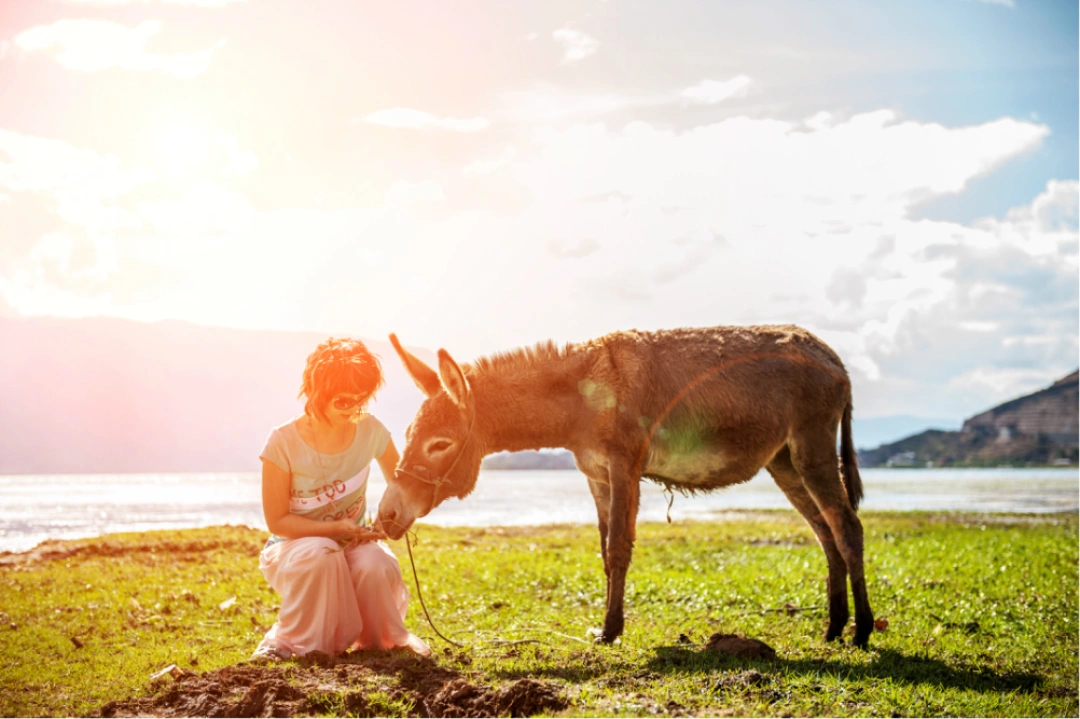
Before going to Shuanglang, I wasn't excited at all — again, because of commercialization. But my wife wanted to go, and since it was on the way, we stayed for a day. And it turned out to be a huge surprise. Many of my favorite shots from this trip were taken in Shuanglang.
My route was different from most people's. Instead of hitting the popular towns and islands, I drove around the lake, soaking in the local atmosphere. The lakeside road in Shuanglang is an absolute highlight — the scenery along the way is breathtaking. If any friends are planning to visit Shuanglang, I strongly recommend driving around the lake. It won't disappoint.
Photography Notes: Gear and Insights
I used a Nikon D700 with a 24-70mm f/2.8 lens, with post-processing in Photoshop. I've been dreaming of getting a second body, adding a telephoto lens, and maybe picking up a Nikon wide-angle "lightbulb" lens — too many ideas. But in the end, I decided to make the most of what I already have. Gear matters, but what matters more is the eye for beauty and the instinct to capture the moment.
At Lugu Lake, I took many photos I love. Like that monochrome pig-trough boat, with a streak of cloud reflected in the water like another boat. And that morning moon shot, paired with Lugu Lake's scenery, left me in awe. In Shuanglang, I captured images that look like they belong in an advertisement, with stunning light-and-shadow effects.
Practical Tips for Self-Drive Travelers
Speed cameras are the biggest concern for self-drive travelers. On Yunnan's highways, speed limits generally don't vary by lane — they only differ for large and small vehicles. Large vehicles usually have a speed limit 40 km/h (25 mph) lower than small cars. But pay close attention to speed cameras on curves and in tunnels, where limits drop to 60–80 km/h (37–50 mph). Since Yunnan is mountainous, there are many tunnels and curves, so always be aware of the speed limit on your current stretch. If you're moving from a low-speed zone to a high-speed zone and don't see a "speed limit lifted" sign, you're still in the low-speed zone. I got caught once and flashed by a camera.
Other tips: First, the sun in Yunnan is intense — use high-SPF sunscreen. Second, the temperature difference between morning and evening is significant, so bring a jacket. Third, flies and mosquitoes are plentiful around Lugu Lake and Shuanglang — pack insect repellent and mosquito coils.
Conclusion: Tired but Happy
This trip was exhausting — I felt tired the whole way. The main reason was choosing to depart in the early hours of the first day, racking up a serious sleep debt. Throughout the sightseeing and photography, my mind wasn't fully clear. I'll never do that again. Also, traveling with the older generation made photography a challenge — different perspectives and too many uncontrollable factors.
But despite the fatigue, the rewards were immense. Lugu Lake's light and shadow, Shuanglang's lakeside road, Lijiang's bustling烟火气 (the lively, earthy atmosphere of everyday life), Dali's Cangshan Mountain and Erhai Lake — every place left its mark. Although some spots didn't yield the photos I'd hoped for due to weather, I unexpectedly captured many favorites. Gain and loss are always relative. Contentment is a virtue, and the meaning of travel lies perhaps in the scenery along the way and the company you keep.
If you're planning a similar self-drive trip, remember: plan your route in advance, protect yourself from sun and mosquitoes, bring your student ID, and most importantly — get a good night's sleep before you go. After all, three thousand miles of clouds and moon deserve to be greeted with your best self.
You should also read:

God’s Abandoned Palette: A Self-Drive Journey Through Yunnan’s Dongchuan Red Land
God’s Abandoned Palette: A Self-Drive Journey Through Yunnan’s Dongchuan Red Land Travel has never been about reaching some distant geographic coordinate. It’s about encountering, along the way, the version of yourself buried beneath the rubble of daily routine. During this May Day holiday, I finally…
Continue reading...
Cloud Travelogue · Dali of Wind, Flowers, Snow, and Moon: A Three-Day, Two-Night Journey of a Free Spirit
Cloud Travelogue · Dali of Wind, Flowers, Snow, and Moon: A Three-Day, Two-Night Journey of a Free Spirit I am a cultured female foodie with a touch of rogue charm. I slung on my backpack, took my lover's hand, and set off on a spontaneous…
Continue reading...
The Meaning of Travel – A Tengchong Story: A Journey of the Heart and Personal Growth
The Meaning of Travel – A Tengchong Story: A Journey of the Heart and Personal Growth Setting Out, Only to Return a Better Self Some say travel is nothing more than leaving a place you're tired of, only to go to a place where others…
Continue reading...