Through the Snowy Mountain Sanctuary: Riding the High-Speed Rail to Shangri-La's Moonlit Rendezvous
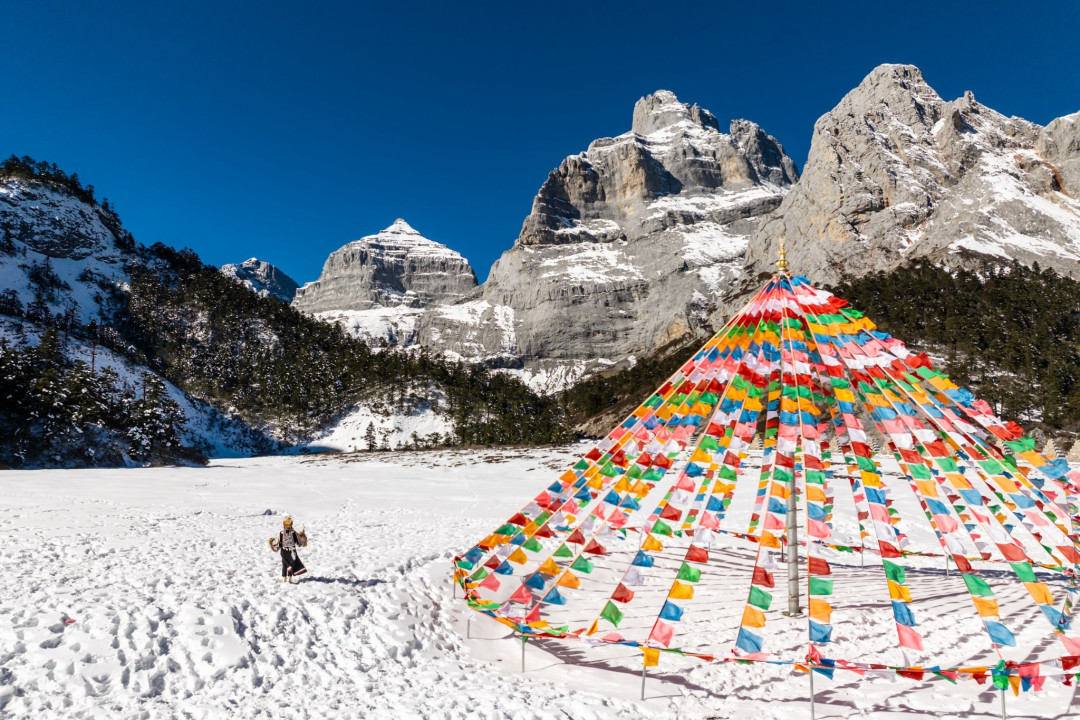
Through the Snowy Mountain Sanctuary: Riding the High-Speed Rail to Shangri-La's Moonlit Rendezvous
When the steel rails first stretched into the snow-covered plateau, when the whistle of the bullet train echoed through the valleys at 3,000 meters above sea level, the hidden paradise that James Hilton called "Shangri-La" finally opened its arms to the world in a way never seen before.
I had imagined countless times how I would arrive in Shangri-La—perhaps along winding mountain roads, catching glimpses of snow-capped peaks through the bumps and jolts; perhaps by plane, swooping down between gorges, feeling that heart-pounding rush. But never did I think that one day, I would sit in a smooth-riding carriage, gazing through wide windows as the scenery gradually shifted from the gray-tiled roofs of Lijiang's ancient town to the vast, desolate expanse of the high plateau. And then, amid the songs and white scarves of Tibetan compatriots, I would arrive at this "City of Sun and Moon" in my heart.
A Pilgrimage on Rails: From Lijiang to Shangri-La, a Highland Crossing
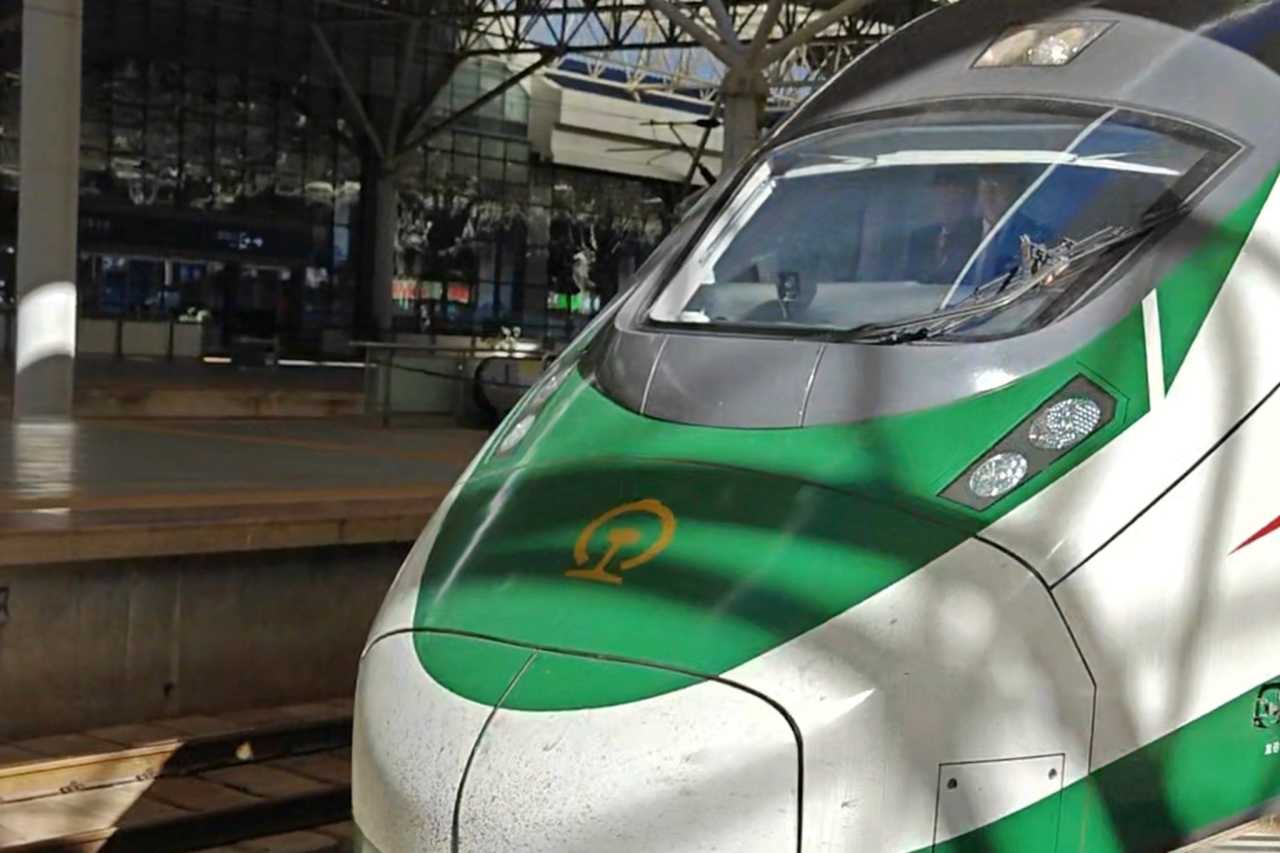
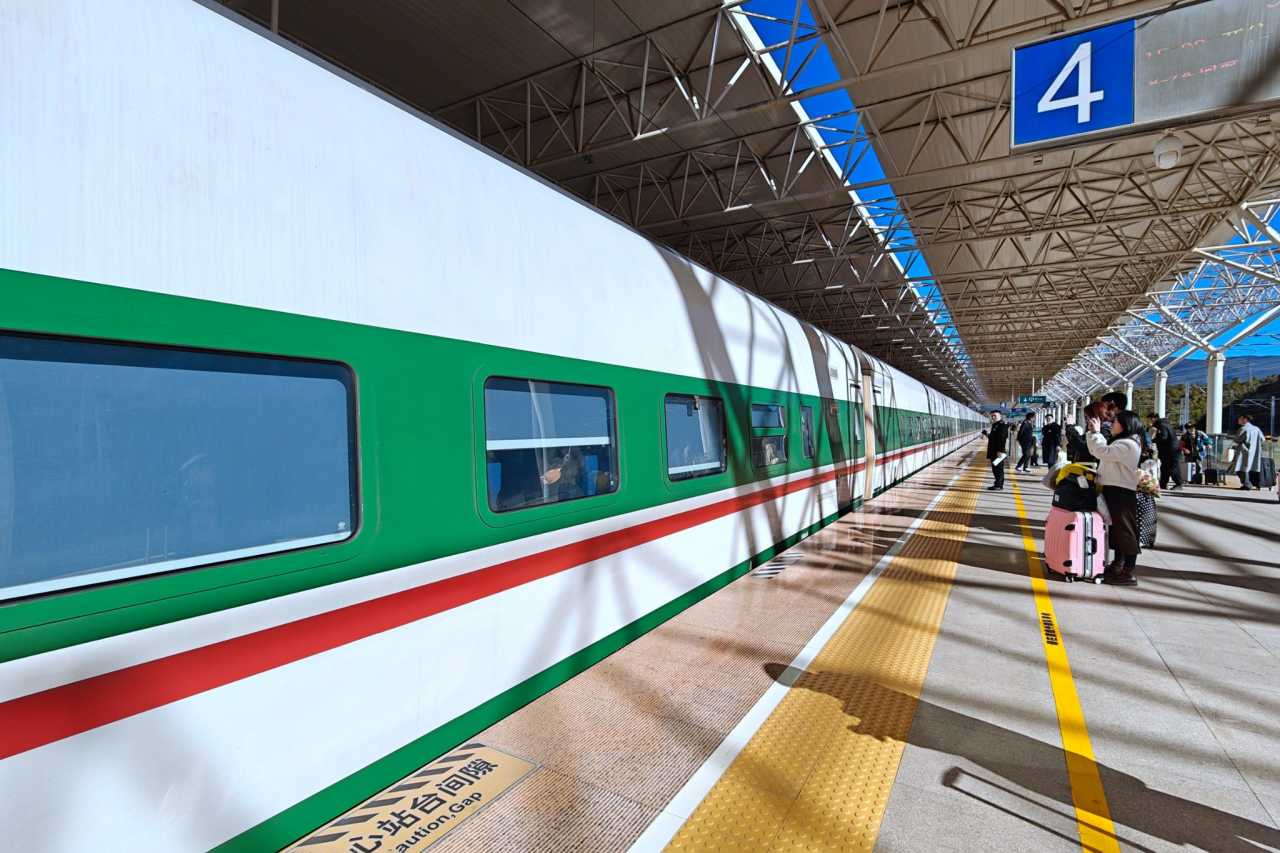
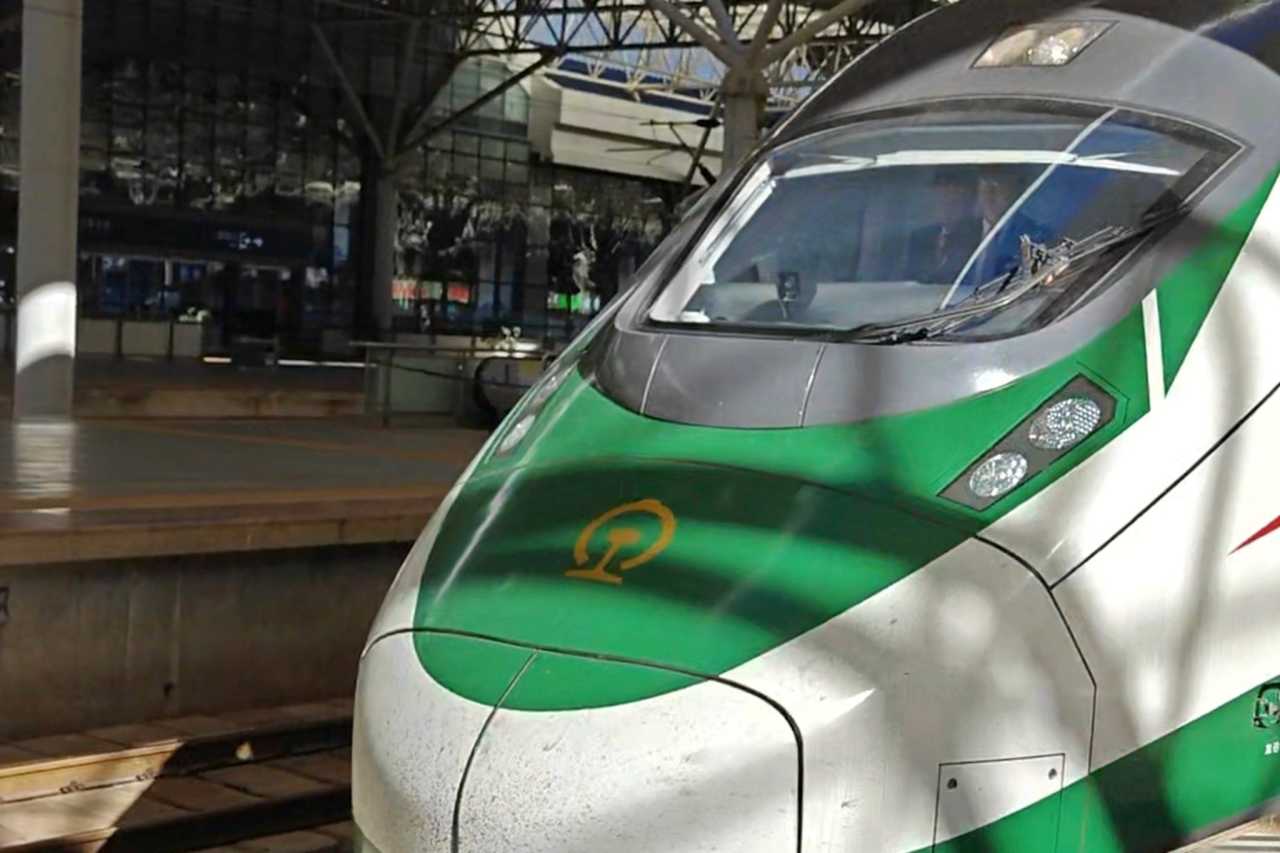
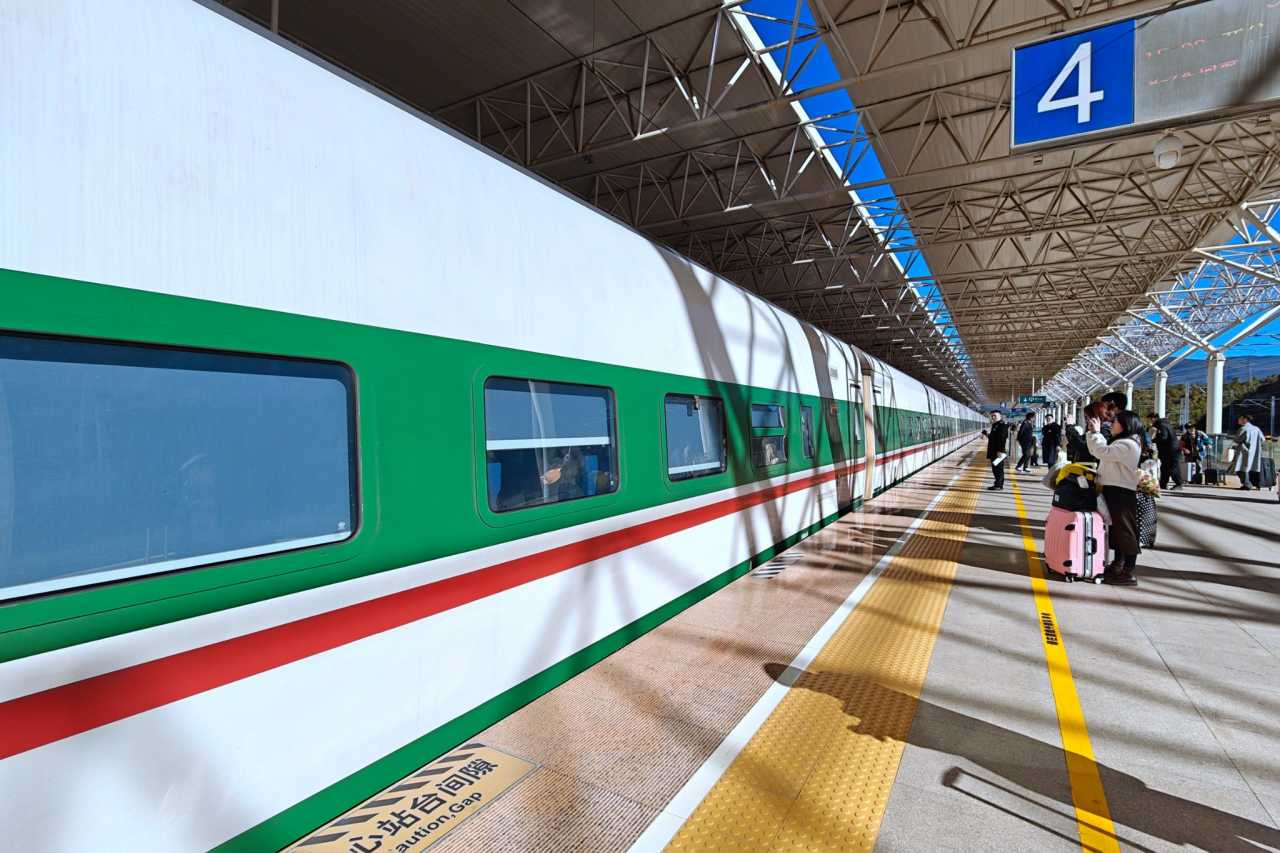
November 26, 2023—a date worth remembering. The Lijiang-Shangri-La Railway officially opened for service, with the bullet train departing from Lijiang, heading north through countless mountain ranges, and arriving at Shangri-La, perched at 3,274 meters above sea level. I was fortunate to be among the passengers on the inaugural run, witnessing this historic moment.
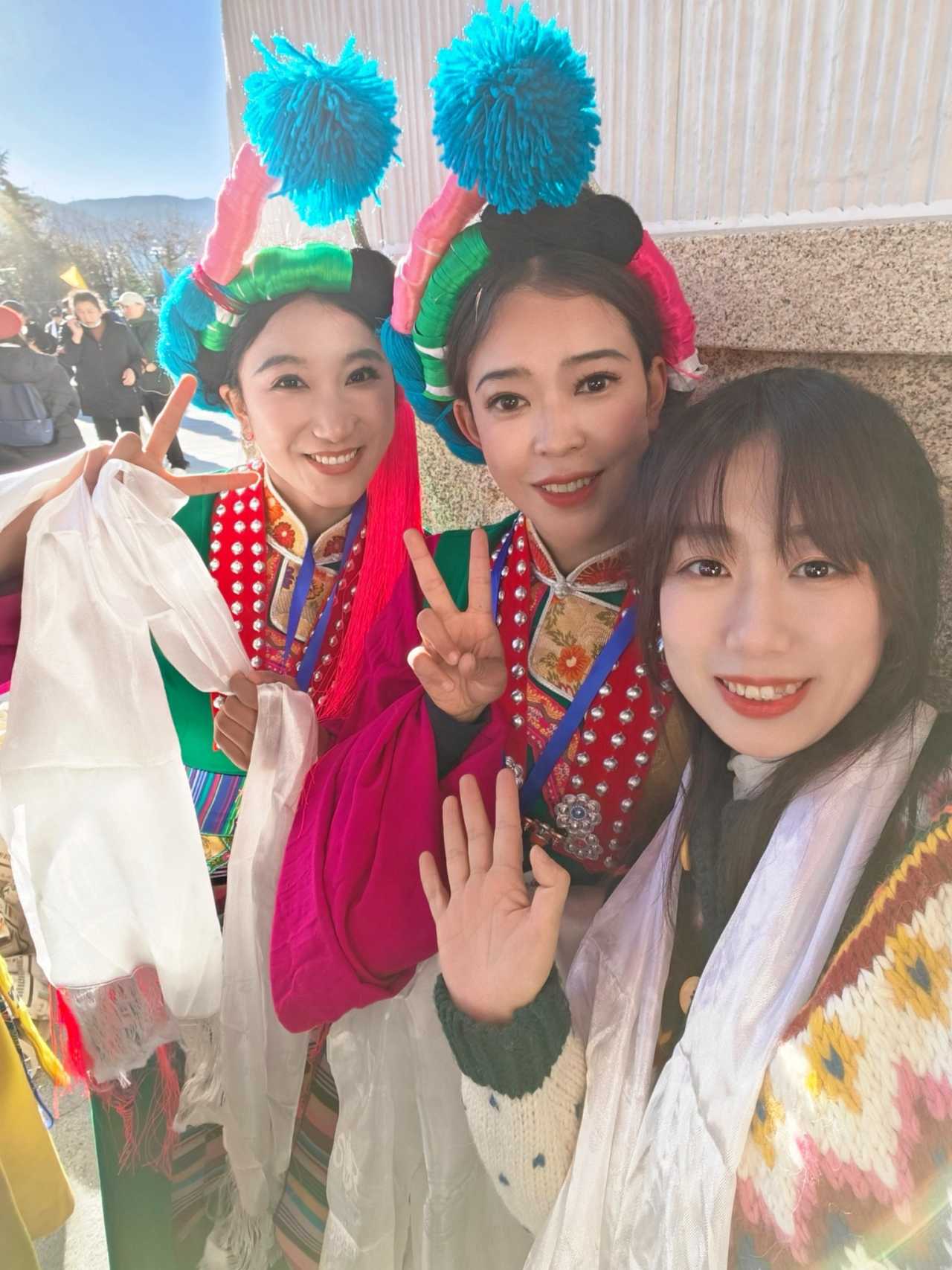
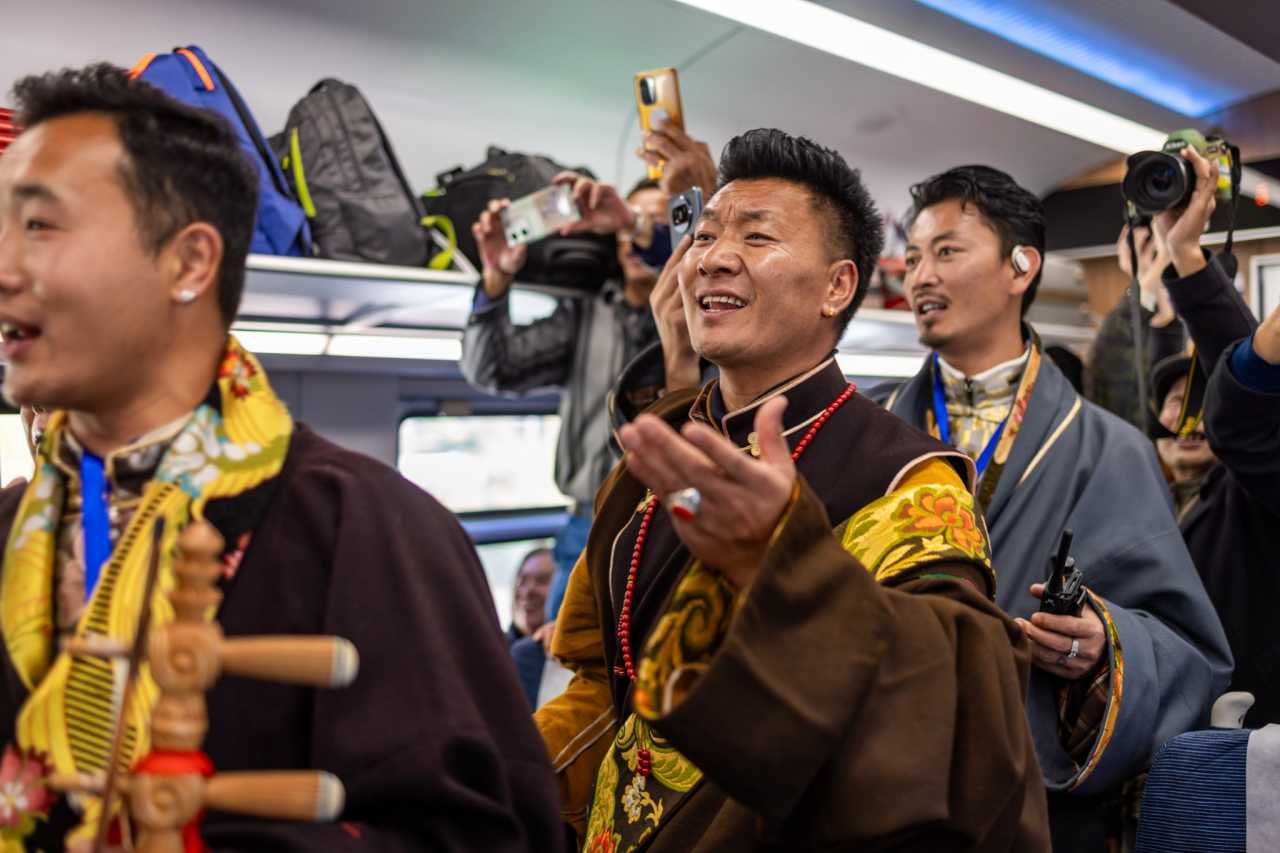
Inside the carriage, Tibetan compatriots dressed in festive attire sang with clear voices and danced with light steps. As the train slowly pulled into Shangri-La Station, every passenger received a pure white hada (ceremonial scarf) and carefully prepared souvenirs—the fragrance of highland barley flowers, the sweetness of Tibetan pear jelly—the most sincere greetings from Shangri-La. At that moment, I felt the warmth of this city, not the cold of the plateau, but the warmth of people's hearts.
The CR200J1-D Fuxing train we rode was specially designed for high-altitude environments. UV-resistant window glass, electric heating systems, rotatable seats, and even oxygen equipment were installed in the carriages. From the 2,400-meter altitude of Lijiang Station to the 3,274 meters of Shangri-La Station, the elevation climbed, but comfort never diminished. This route passes through 13 stations, linking famous scenic spots such as Lijiang Ancient Town, Lashihai Lake, Jade Dragon Snow Mountain, Tiger Leaping Gorge, and Haba Snow Mountain, crossing areas inhabited by Tibetan, Yi, Bai, Pumi, and other ethnic groups. It can be said that this is not just a railway, but a cultural corridor leading to a hidden paradise.
Dukezong Ancient Town: The Moonlit City, a Millennium of Vigil
For my first stop upon arriving in Shangri-La, I chose Dukezong Ancient Town. With a history of over 1,300 years, this ancient town was an important stronghold on the Ancient Tea Horse Road and is the best-preserved and largest Tibetan residential complex in China. "Dukezong" in Tibetan means "Moonlit City" or "Castle Built on Stone"—a name full of poetry in itself.

As night fell, the ancient town lit up with warm lights. I walked slowly along the stone-paved paths, hearing the melodious folk songs of Tibetan locals and catching the faint, elusive scent of Tibetan incense in the air. The steps at Guishan Park were steep, and I was out of breath climbing them, but when I stood before the giant prayer wheel and looked down at the entire ancient town, all my fatigue vanished.
This prayer wheel is the largest in the world, standing 21.45 meters tall and containing 1.24 million sutras and mantras inside. According to tradition, turning it clockwise three times brings good luck. I joined the crowd in turning the wheel, feeling the power of faith.
Travel Tips: - The ancient town is free to enter; some attractions require separate tickets - Plan for half a day to a full day - Recommended attractions: Guishan Park, Dafo Temple (Great Buddha Temple), Sifang Street (Square Street), Red Army Long March Museum - Food recommendations: butter tea, tsampa (roasted barley flour), highland barley wine - Shopping recommendations: Tibetan carpets, silver jewelry, Tibetan incense
Songzanlin Monastery: The Tranquil Hours of the Little Potala Palace

The next morning, I arrived at Songzanlin Monastery, known as the "Little Potala Palace." This is the largest Tibetan Buddhist monastery in Yunnan, built in 1679 on a mountainside with imposing grandeur. Red eaves, pinkish-white walls, and golden rooftops glistened brilliantly under the intense plateau sunlight.

I spent an entire day at the monastery—taking photos, basking in the sun, chanting sutras, and offering prayers. The temple houses a vast collection of cultural relics and artworks: Buddha statues, thangka scroll paintings, murals… each piece worth savoring. Walking through the smoke of burning cypress leaves, I felt a deep inner peace.
Photography Tips: If you want to take beautiful photos in Tibetan costume, it's recommended to first get your makeup and styling done in Dukezong Ancient Town (average price 99 RMB, includes makeup and hair, unlimited time), then take photos in the ancient town before heading to Songzanlin. Remember, Tibetan costume photography is only allowed in the square and outdoor structures; photography is prohibited inside the temple buildings.
Practical Information: - Address: No. 3 Niwang Road, Shangri-La, Diqing, Yunnan - Hours: 07:00-22:00 - Ticket: 90 RMB for adults - Reminder: At high altitudes, bring water and snacks, walk slowly, and take breaks
Balagezong: The Last Hidden Paradise, a Land of Miracles
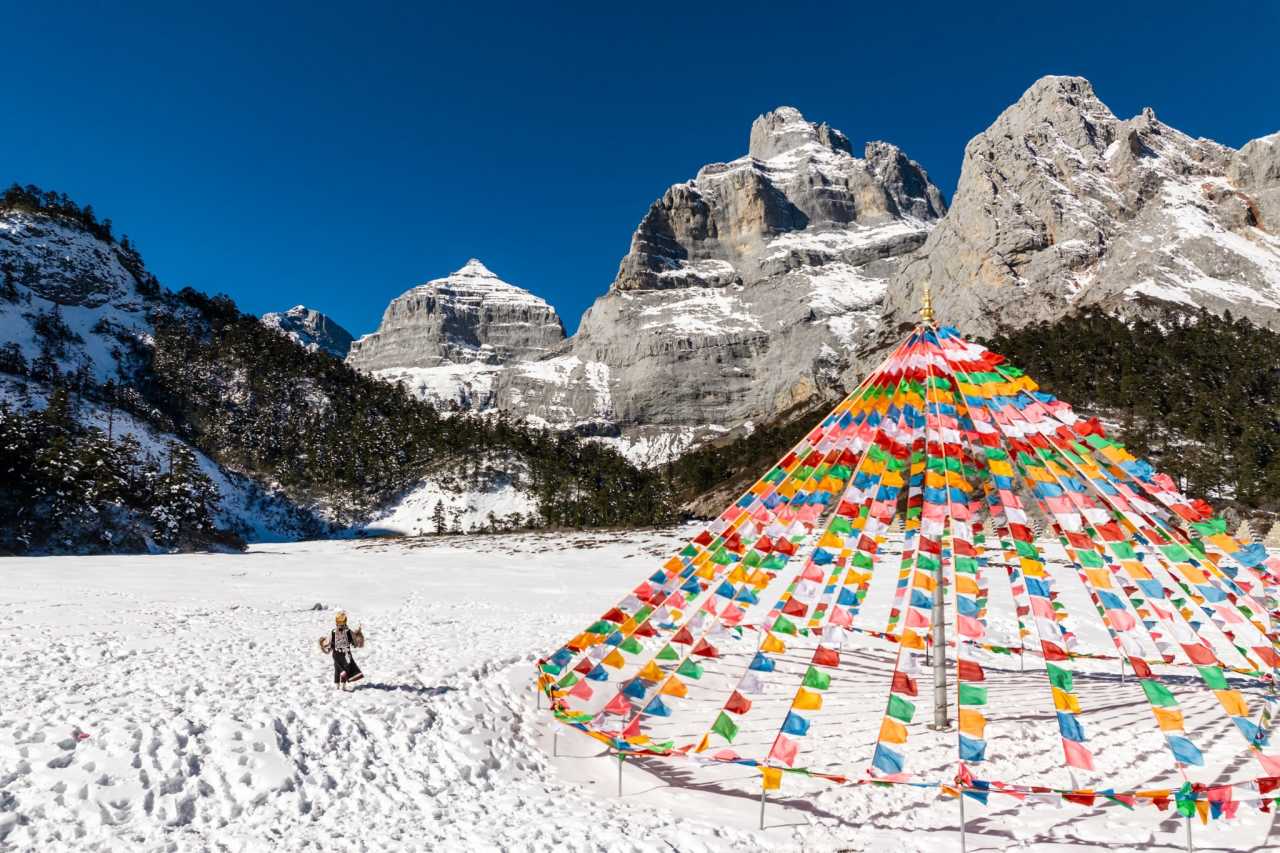
If Shangri-La is a paradise, then Balagezong is the hidden paradise within that paradise. This place, once unfindable on any map, has now become a holy grail for countless travelers.
The story of Balagezong is inseparable from one man: Sana Dingzhu. From childhood, he dreamed of building a road for the isolated Bala Village. He left home at 13 to do business, worked hard for over twenty years, amassed millions in wealth, and poured it all into building that road. It took ten years and left him heavily in debt, but he finally opened this road of life, putting Balagezong on the world map.
Must-Visit Attractions
The Thousand-Year-Old Bodhi Tree: Growing on a cliff face, this bodhi tree's branches spread like a phoenix's tail, covering nearly 400 square meters of rock surface. Even more miraculous, a "hand" has grown from its trunk, reaching into a rock crevice, like the weathered hand of an elder.
Sky Mirror: The reflective surface mirrors the blue sky, white clouds, Gezong Snow Mountain, and soaring eagles. A single shot here is a visual masterpiece.
Bala Village: A hidden ancient village deep in the mountains, with earthen walls and stone paths weathered by time, as if stepping back into another era.
Echo Wall Glass Walkway: At an altitude of 3,000 meters with a vertical drop of 1,700 meters, every angle offers a view of magnificent rivers and mountains.
Shambhala Stupa: At 4,250 meters above sea level, this naturally formed mountain resembles a Buddhist stupa. Together with the nearby "Lama Sitting Statue" and "Sutra Book Statue," they are known as the Three Jewels of Buddha, Dharma, and Sangha. Legend says they can dispel negative energy and purify the soul.
Accommodation Recommendation
If you just join a tour group and leave, that would be a real shame. I recommend staying one night in Balagezong to experience its magic and tranquility. I stayed at the Snow Mountain Cliff Miracle Hotel, which cost 988 RMB and included tickets for two, the glass walkway, zipline or rafting, and prayer flags. The room had air conditioning and underfloor heating, I was greeted with hada scarves upon arrival, enjoyed local specialties and chicken hotpot for dinner, watched the starry sky and the Milky Way at night, and danced around a bonfire. The next morning, I opened the door to see the golden sunrise on the snow mountain, went to Bala Village for Tibetan-style coffee, and felt the ancient, untouched tranquility of a world apart.
Baishuitai: China's Version of Pamukkale
Baishuitai is located in Baidi Village, Sanba Township, Shangri-La City, and is the birthplace of the Naxi Dongba religion. Spring water rich in calcium carbonate flows down gentle slopes. Under strong sunlight, the water evaporates, and the calcium carbonate deposits form wonders that look like cotton, like clouds, or like terraced fields. The accumulated water turns into sapphire under the sun, earning it the name "Immortal's Abandoned Fields," a phenomenon that has existed for thousands of years.
Transportation: Depart from Shangri-La City along National Highway 214, about 3 hours by car Ticket: 30 RMB per person Note: Protect the environment—do not step on the formations. Watch out for sunburn and altitude sickness.
Haba Snow Mountain and Tiger Leaping Gorge: Nature's Masterpieces
Haba Snow Mountain faces Jade Dragon Snow Mountain across Tiger Leaping Gorge. Its highest peak is 5,396 meters above sea level, while the lowest river surface is only 1,550 meters. "Haba" in the Naxi language means "flower of gold."
Tiger Leaping Gorge is known as the "First Gorge of the Ten-Thousand-Mile Yangtze River." The cliffs on both sides look as if they were carved by knives and axes, with the river roaring through and the sound of rushing water shaking the heavens. The narrowest point is only about 50 meters wide. Legend has it that a tiger once leaped across in a single bound, giving the gorge its name. The scenic area includes Upper Tiger Leaping, Middle Tiger Leaping, and Lower Tiger Leaping, with Tiger Leaping Rock being the most famous attraction.
Ticket: Shangri-La section: 45 RMB/person; Lijiang section: 65 RMB/person Elevator: 100 RMB for the full route, 40 RMB for the descent Hours: 8:30-17:30 Note: Wear comfortable, non-slip shoes. Be careful with drone flights to avoid obstacles.
Final Thoughts: Shangri-La, Goodbye Is a Reunion
From Lijiang to Shangri-La, the bullet train takes just over an hour. But that single hour spans thousands of years of history and civilization. As the train raced across the snowy plateau, I felt as if I could see the paradise without worldly troubles that James Hilton wrote about, now revealing its charm to the world in a brand-new way.
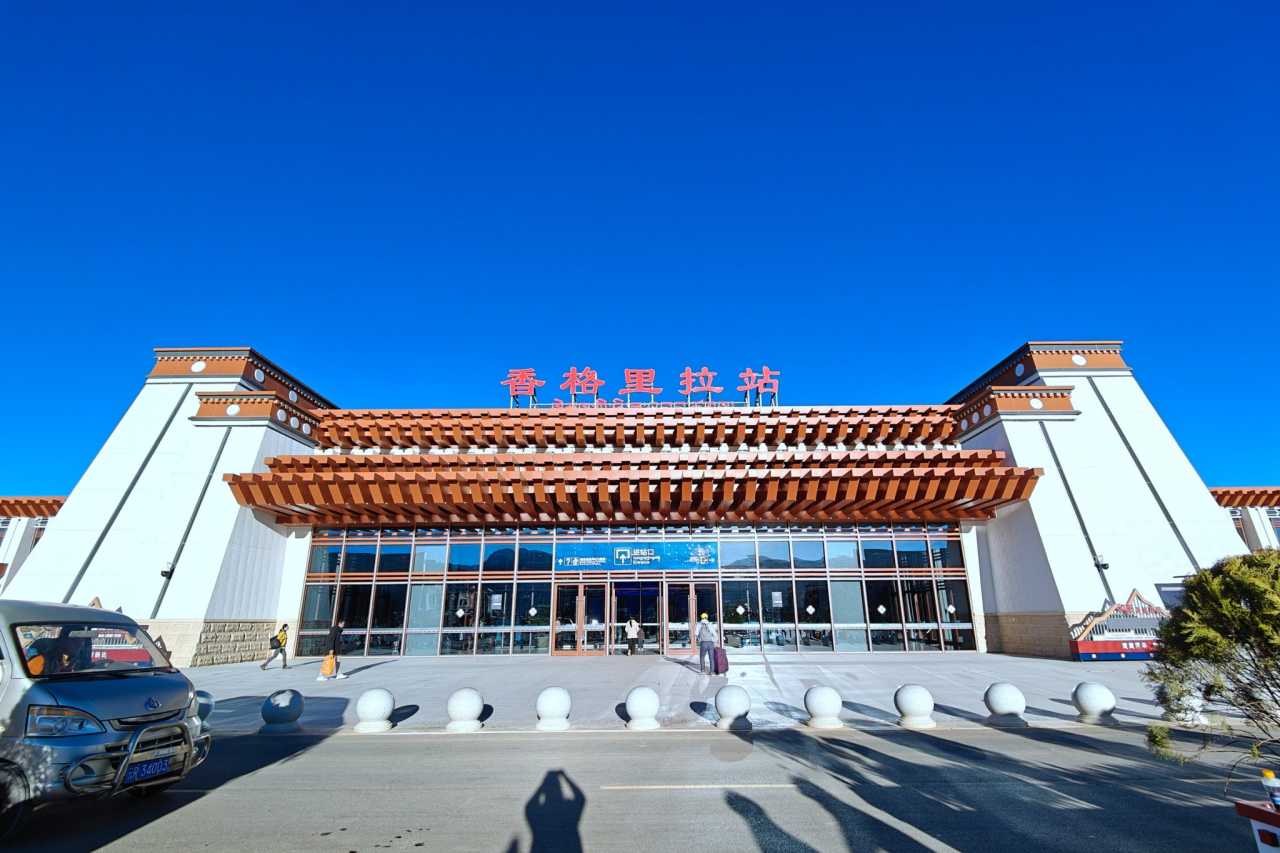
Shangri-La, this city of sun and moon, is no longer distant. Whether you depart from Kunming or start your journey in Lijiang, the high-speed rail will take you through the snowy mountain sanctuary to the sun and moon in your heart.
Travel Tips for Shangri-La: 1. The plateau climate is changeable with large temperature differences between day and night. Protect against sun and cold. 2. The altitude is high (3,300 meters). Avoid strenuous exercise and alcohol; eat plenty of vegetables and fruits. 3. Respect local religious culture. Walk clockwise around religious structures; do not pick up or sit on mani stone piles. 4. Protect the environment—take your trash with you.
Goodbye, Shangri-La. But I know that every goodbye is the beginning of a reunion.
You should also read:

Into the Hidden Valley: A Solo Journey Through the Mysterious Dulong River
Into the Hidden Valley: A Solo Journey Through the Mysterious Dulong River Deep in the northwestern corner of Yunnan Province, tucked away from the modern world, lies a place that feels like a secret whispered among mountains. The Dulong River Valley is not just a…
Continue reading...
God’s Abandoned Palette: A Self-Drive Journey Through Yunnan’s Dongchuan Red Land
God’s Abandoned Palette: A Self-Drive Journey Through Yunnan’s Dongchuan Red Land Travel has never been about reaching some distant geographic coordinate. It’s about encountering, along the way, the version of yourself buried beneath the rubble of daily routine. During this May Day holiday, I finally…
Continue reading...
Two Girls' Graduation Trip: Dali and Shuanglang – A Poetic Farewell to Mountains and Sea
Two Girls' Graduation Trip: Dali and Shuanglang – A Poetic Farewell to Mountains and Sea Preface: Catching the Tail of Youth, Heading South During our senior year of college, my roommate and I – two girls studying in Beijing – decided to bid farewell to…
Continue reading...