Time Journal: Strum Your Dombra, Tonight We Journey to Xinjiang Together
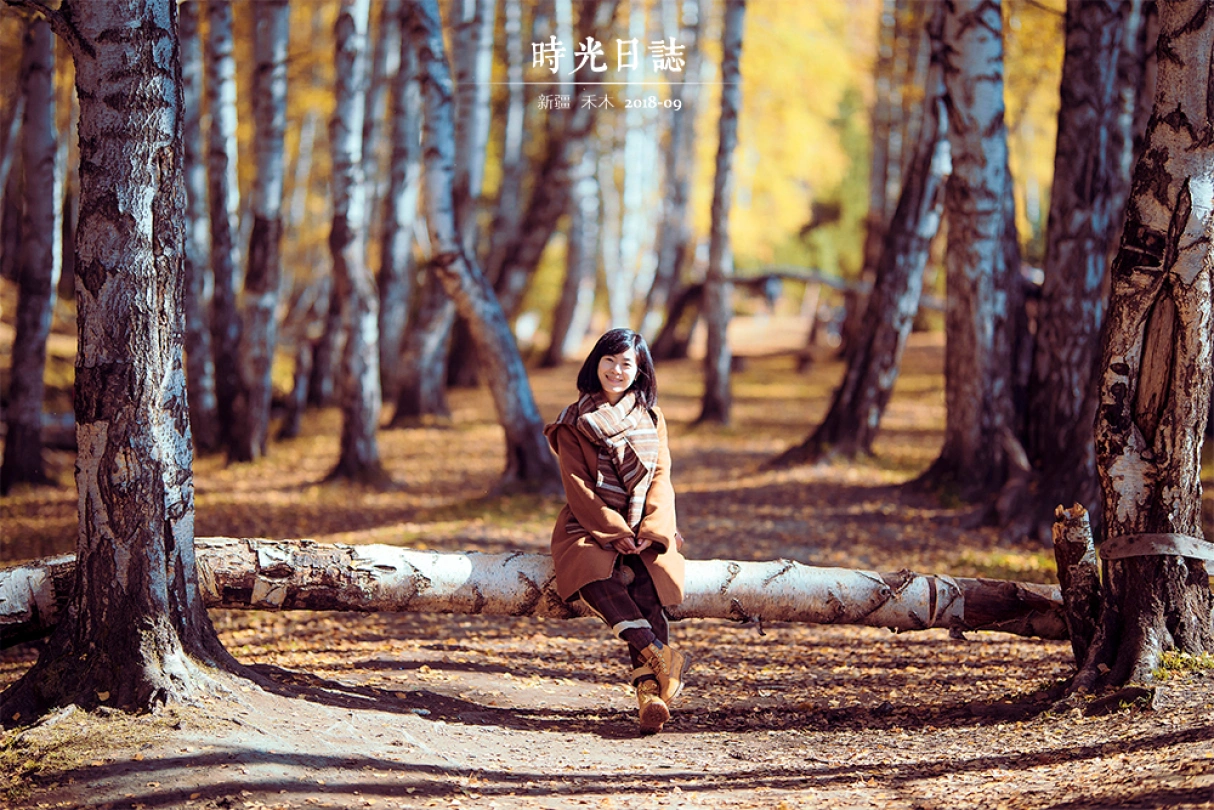
Time Journal: Strum Your Dombra, Tonight We Journey to Xinjiang Together
Prologue: That Land Beyond Reach
Xinjiang — a place that inspires both love and frustration. Love it for its breathtaking vastness, frustration for its daunting distance. Countless times in dreams I've set foot on this land, only to be held back by distance and hesitation. Those who've never been feel both longing and anxiety; those who've visited want to turn back the moment they leave. After traveling through ten major tourism provinces, Xinjiang became the ultimate destination we could no longer avoid.

Grapes, fragrant pears, jujubes, lamb skewers — this is Xinjiang on the tongue. Deserts, grasslands, the Tianshan Mountains, Kanas Lake — this is Xinjiang through the eyes. This vast territory, covering one-sixth of China's total area, cannot be explored in a single trip. So we chose the most beautiful season — autumn — to discover the wonders of Northern Xinjiang.
Before departure, safety concerns weighed heavily on our minds. But once we set foot on this land, we could only say: the sense of security here far exceeds expectations. Police booths are reassuringly abundant, security scanners are everywhere, and every hotel lobby has police officers stationed. When refueling, the driver must swipe their ID card to enter while everyone else waits outside. Even the restrooms at two service areas required ID registration for entry. And the special police officers of Xinjiang? So handsome that our travel companions developed full-blown crushes.
On Itinerary and Finding Travel Companions
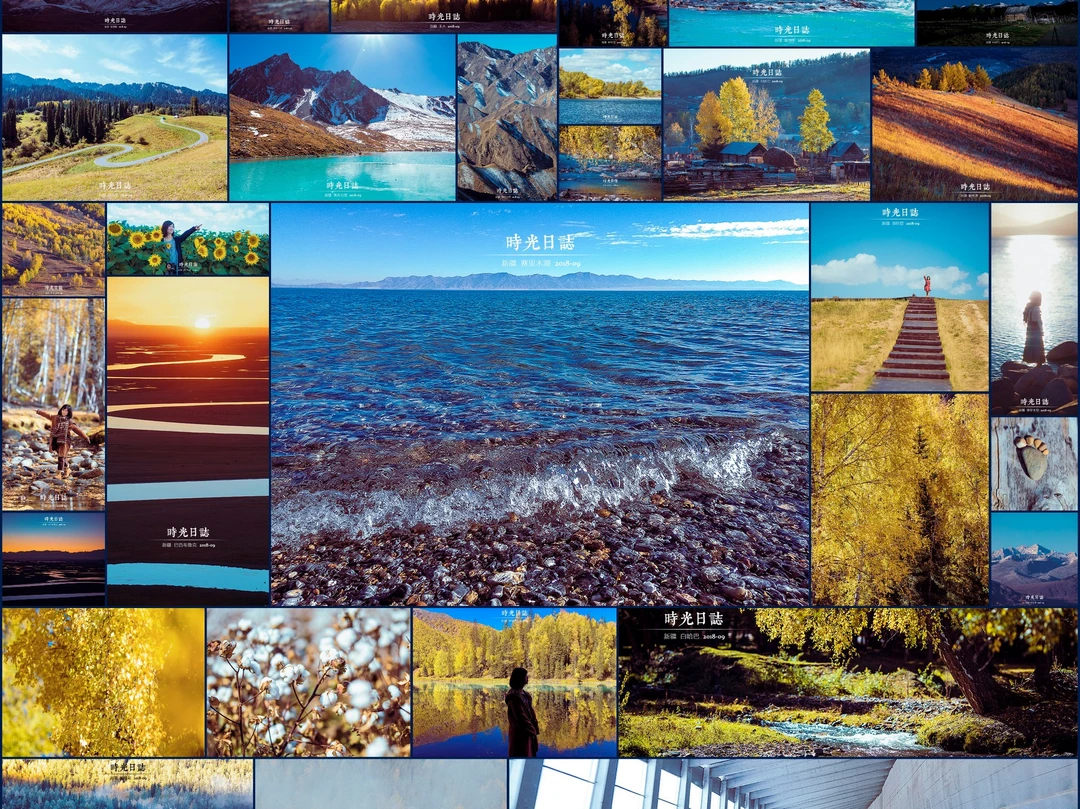
For the third time finding companions on Mafengwo, we were lucky to meet like-minded travelers. Our team of four post-80s (barely missing the post-90s mark) formed a temporary yet默契默契 (harmonious) group.
Xiao Qiang: A tall guy from Shandong, pseudo-photography enthusiast, true German football fan. On the Xinjiang expressway, he actually asked a policeman, "How do I get to Xinjiang?" — that sense of humor instantly won me and the Master over. He forcefully joined our journey, devoured every travel guide, and was hyperactive on WeChat.
Bei Bingyang: An adorable girl, core member of the Douyin squad. She can eat, sleep, and act cute — the guaranteed traffic generator for our team.
On Car Rental: An Adventure of Courage and Trust
We boldly canceled the chartered car option and chose self-driving. Only drivers with steady nerves dare to roam freely across the vast expanse of Xinjiang. Freedom of time, freedom of movement — that's the greatest charm of self-driving.
Instead of choosing chain rental companies like Shenzhou or Yihai, we rented a Nissan X-Trail from a private owner — 2.5L displacement, manual-automatic transmission, four-wheel drive, seven-seat SUV. No deposit paid, relying entirely on the tall Shandong guy's personal guarantee — and it turned out that trust was well placed.
I. Duku Highway: First Gasps at Stars and Snowy Peaks
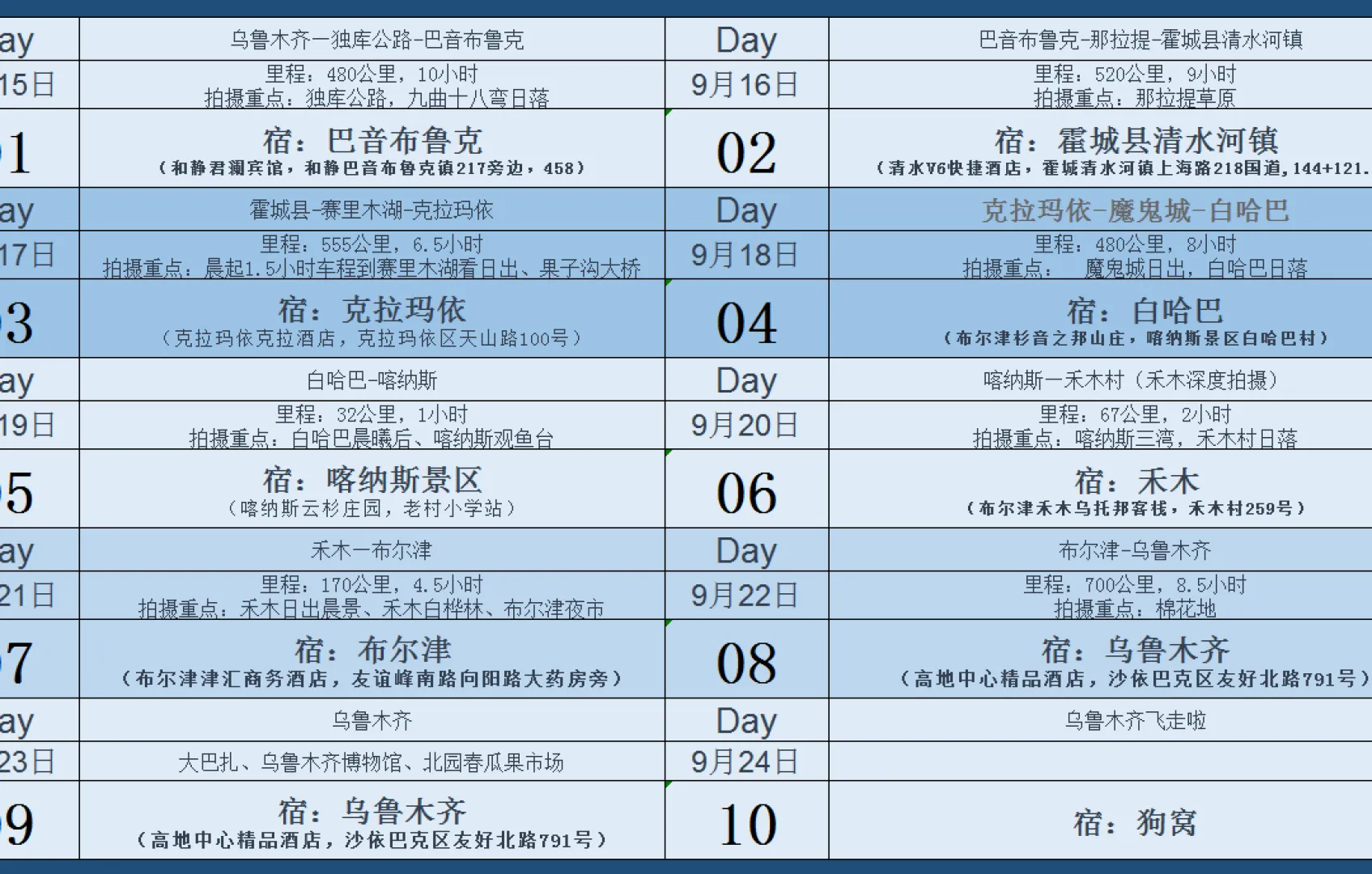
The most rushed day began. We departed from the airport at 5 AM, drowsy and weary, and didn't reach the hotel until 1 AM. Bleary-eyed, we met our travel companions for the first time in the dark, unable to even see each other's faces. We set off with navigation, greeted by a sky full of stars as we embarked on our journey.
From Urumqi to Bayanbulak, we had to cross the Duku Highway. Due to road construction on the latter half, we needed to take a detour. The first day is always exhilarating — even with only two or three hours of sleep, we were full of energy. We drove in the dark on the Lianyungang-Khorgas Expressway under construction, until 7:30 AM when we finally saw the sun rise — experiencing Xinjiang's time zone difference firsthand.
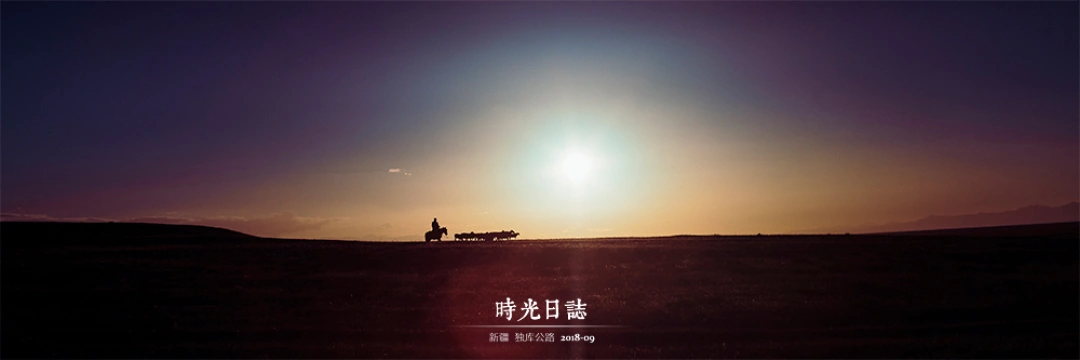
At 10 AM, we finally exited the expressway and arrived at our long-awaited Duku Highway (National Highway 217). "Wow, wow, wow" — this became our most-used exclamation in Xinjiang. The distant Tianshan Mountains stood majestic and magnificent, like a painting hanging before us. Make way, front-row snowy peaks — the Douyin squad is charging through!
It had just snowed before our arrival, a thin white veil draped over the hills. The winding Duku Highway, various canyons, glaciers — look how clear this ice is, slipping on it would be especially refreshing. Snowy mountains and lakes lined the roadside, the lake water partially frozen yet blue as jade. Accompanied by reflections, I couldn't help but linger for a long time.
Duku Highway, grasslands and snowy mountains. When people think of Xinjiang, most imagine desert road movies, but we only had snowy mountain road movies and forest road movies. Emerald-green streams, winding mountain roads — low altitude yet offering snowy mountain views. There were always "walking lamb skewers" blocking the road — we learned to bleat together, a chorus of "baa baa baa." A sheep brother with great camera presence strutted like a celebrity. Behind followed a sheepdog; the cow brother was too formidable to mess with, so we could only quietly slide along behind.
With just over an hour's journey remaining, we hit a traffic jam. While waiting, we got out to look around and take photos — scenery like Switzerland made us forget our anxiety.
II. Kaidu River: Sunset Afterglow at Bayanbulak
The road finally cleared at 5 PM. An hour of frantic driving later, Bayanbulak Scenic Area stopped admitting visitors at 6 PM. We arrived at the gate at 6:30 PM, watching the last shuttle bus enter. Begging the ticket seller was futile.
Finally, we found someone soliciting business at the entrance — 200 yuan per person (about 40-50 yuan more than the ticket price). We agreed without hesitation. From the scenic area entrance to the viewing platform, it was another hour's drive — this attraction was endlessly vast. We urged the driver to hurry, hurry, hurry. At the bottom of the Nine Bends and Eighteen Turns viewing platform, we still needed to take a shuttle bus up. Watching the sun about to dip below the horizon, we sprinted all the way.
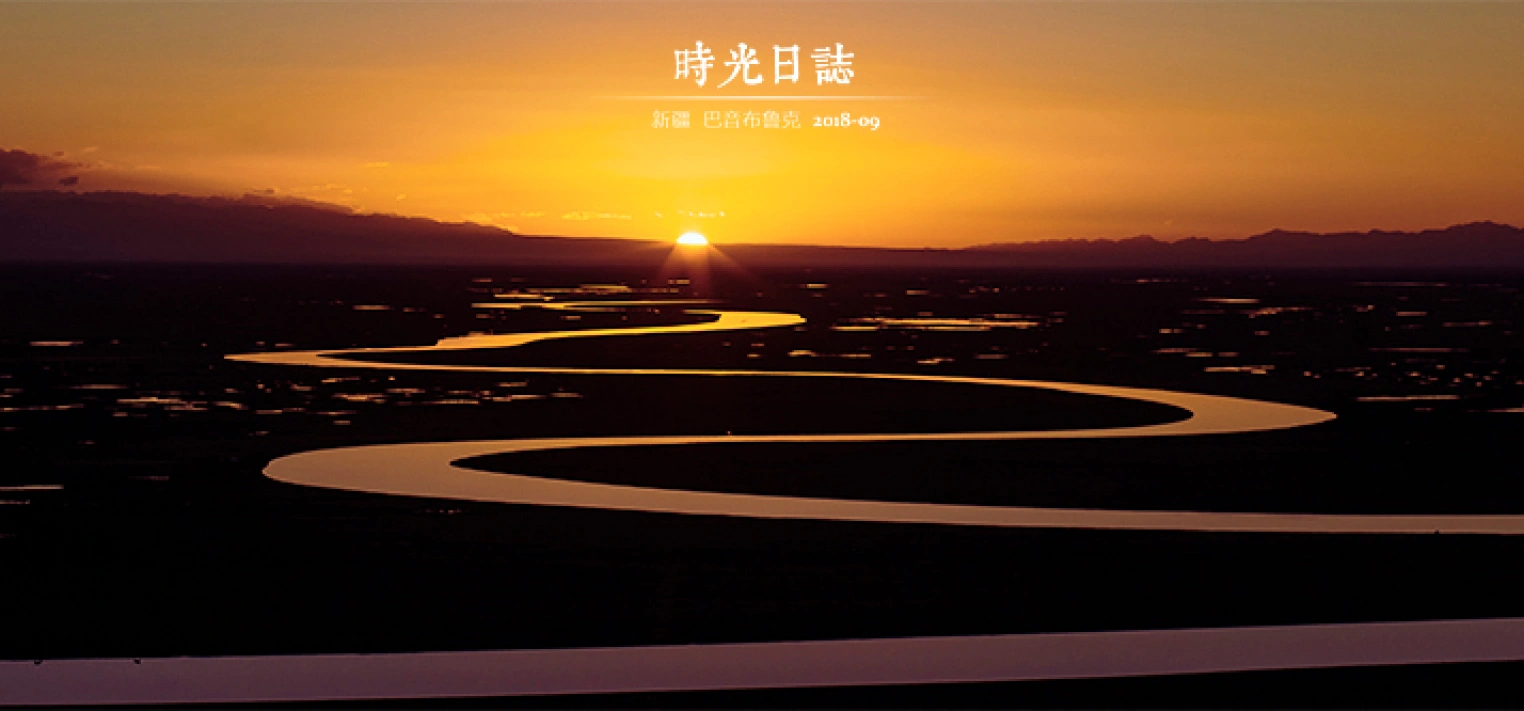
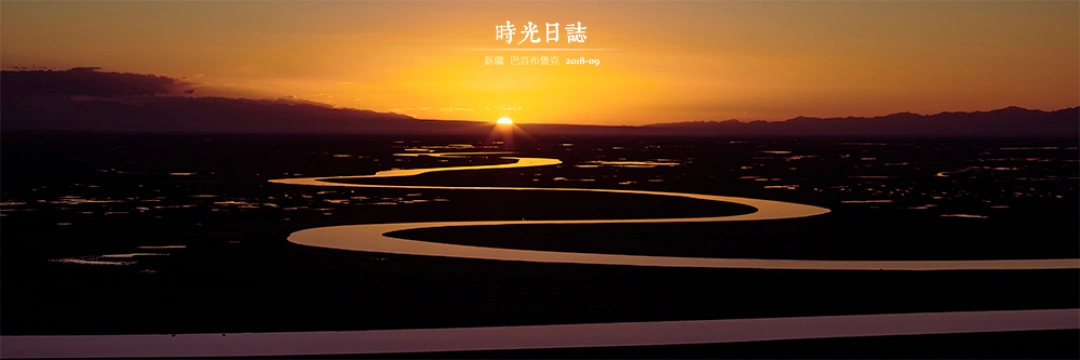
The viewing platform was packed with people. Without the advantage of height, I could only raise my camera to shoot. We missed the nine suns — let's say we saw five suns. Still incredibly beautiful. As the sun grew smaller, we were blessed with good weather, and the sunset was truly stunning. Watching the sun slowly set, all the day's rushing was released. My anxious heart finally calmed.
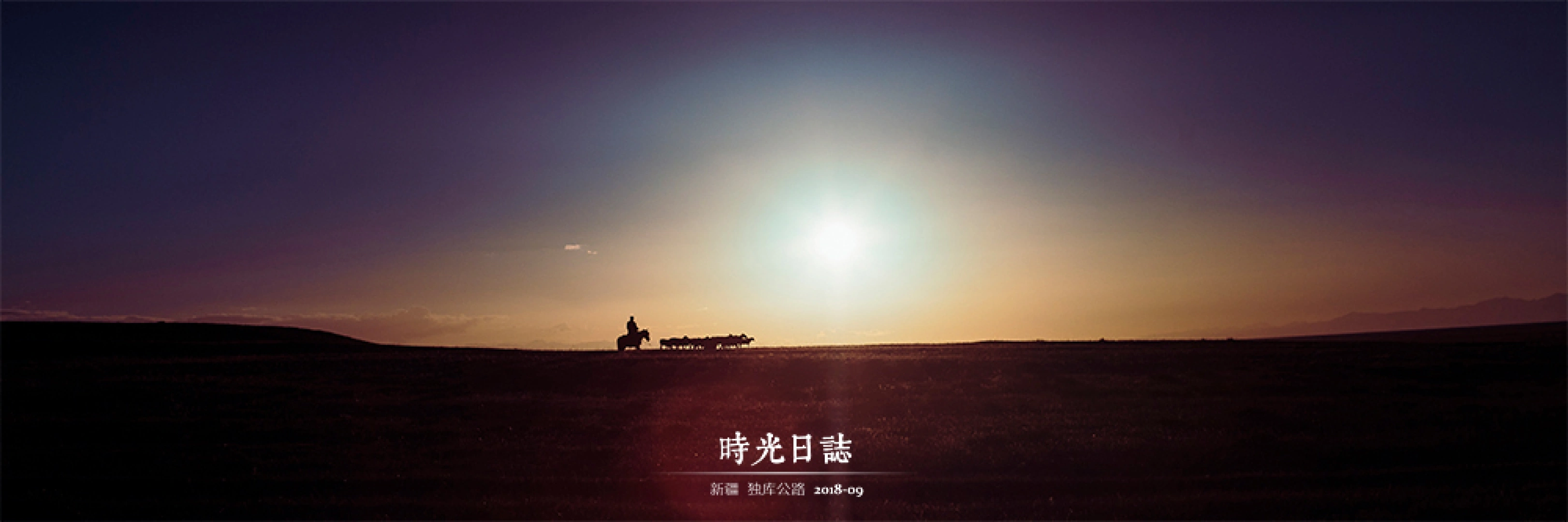
By now it was 8:30 PM Beijing time. In the afterglow of sunset, we captured the last rays of light before being chased down the mountain by security guards. The scenic area bus had a long queue, and suddenly having our private car felt like a blessing — no need to wait in the cold wind. We learned some Mongolian and Uyghur phrases from our Mongolian driver, watching the stars and driving under the moonlight as we left the scenic area.
Finally, our first meal arrived. Big plate chicken (大盘鸡), Xinjiang mixed salad, and our first day's skewer check-in — the skewers at the scenic area entrance were a bit salty, but when you're starving, everything tastes delicious. On the way back to the hotel, we saw a big moon and fell into a blissful sleep.
III. Nalati: The Legend of Spring Blossoms Across the Fields
We got up early to hit the road. Playing in Xinjiang always means a tight schedule. We crossed the Duku Highway, which had been closed the previous afternoon, winding through mountain roads with an average speed of less than 30 km/h. After about two hours, the distant Tianshan Mountains looked like a row of townhouses — within sight but beyond reach.
Private cars are not allowed inside Nalati Scenic Area; you must take a shuttle bus. Among the three routes, we chose the forest route. The沿途沿途 (along the way) scenery was Swiss-style — grasslands, forests, and snowy mountains echoing each other. The bus stopped at each station, with the driver setting time limits — it felt quite restrictive.
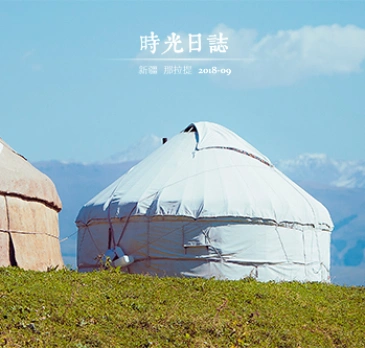
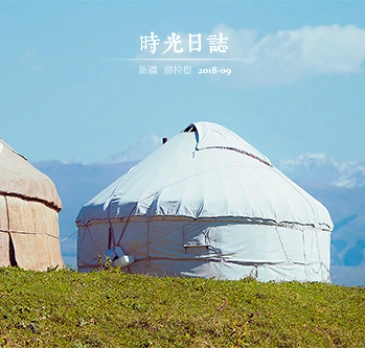
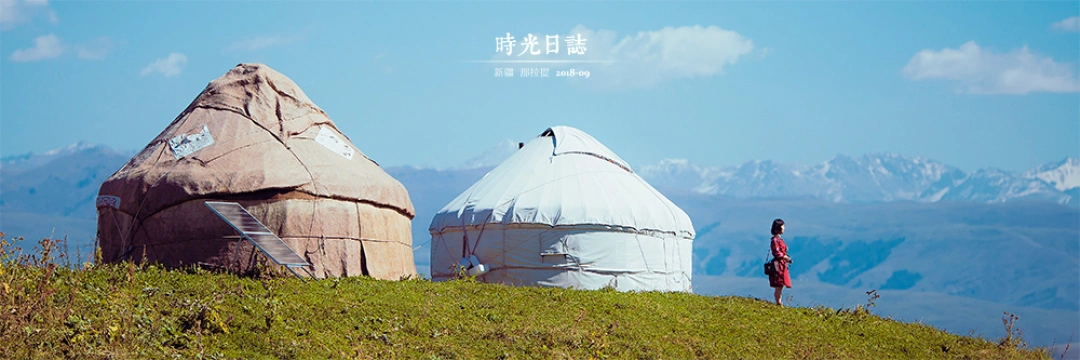
Nalati's southern location meant autumn had only just begun. The weather in Xinjiang: in the morning you wear a down jacket, by noon you can switch to a single layer. The sun was warm and comfortable. At the Couple Tree, we circled clockwise — men on the left, women on the right — to make wishes. Will my wish come true? The distant Tianshan Mountain range and this place seemed to blend two seasons. This area has a larger Mongolian population — yurts everywhere, distinctive ethnic costumes, snowy mountains, and an oxygen-rich environment.
Higher than the snowy mountains, higher than the clouds — flying into the sky! The lush forest hid traces of autumn yellow. Time stood still as we gazed at the distant mountains. At one stop, the scenery was mediocre, but the theme seemed to be grilled lamb skewers — perfect timing, as we were hungry. One skewer each. The greatest advantage of Xinjiang lamb skewers is the tender, fresh meat.
There weren't many entertainment options, but horse riding made things exciting. Xinjiang's horses are tall and strong, and I especially loved riding the white horse. The horse's owner rode along with me, feeling sorry for the horse having to carry two people. After exploring Nalati, we felt a bit ripped off — no wonder there were so few people here. We took one panoramic view and said goodbye.
At the scenic area entrance, we bought various plums we'd never tried before — so sweet and large. Xinjiang's sun really does wonders for the fruit. Leaving Nalati, we headed toward Huocheng County. Small flowers at the service area, the Red Forest BBQ across from the hotel in Huocheng County — our second day's skewer check-in. The naan pit-roasted meat (馕坑肉) was incredibly delicious.
IV. Sayram Lake: The Last Tear of the Atlantic
Today's highlight was the sunrise at Sayram Lake. We checked many methods and learned that by the time the scenic area opens, the sun has already risen, and private cars aren't allowed inside, so watching the sunrise seemed impossible. But the Master was resourceful — he first determined the sunrise direction, then located another entrance to enter. With a "let's try our luck" attitude, we agreed to set off at 5 AM again.
From Huocheng to Sayram Lake was nearly a two-hour drive. Our companions were forcibly woken up to watch the sunrise and slept the whole way, while the Master and I held down the fort. Fortunately, Xinjiang's sunrise is late, so we arrived at the western side of Sayram Lake before 7 AM. Wow, this entrance had no guard — we drove right in. There were already a few visitors inside watching the sunrise.
The lakeside before sunrise was freezing cold. This was the last time we used our tripod — and then we lost it. When we first arrived, the sky was still completely dark, with only a hint of light in the east. Hello, Sayram Lake — so cold, so cold. No wind, yet still freezing. My hands and feet were numb.
The sun quietly tinged the sky red behind the mountains. After waiting half an hour in the low temperature, sunlight was coming. Cameras and phones ready — photography and video prepared. Sunlight gives color to the world. Wow, the moment the sun emerged, I felt warmth. Frozen silly, I waited for the sun's baptism. When the sun first crested the mountaintop, its light was the gentlest — making a heart shape.
Everywhere the sun touched grew warm. The sun warmed me, and I softened the world. Everything came back to life. In Xinjiang, mobile signals were restricted and often poor — Xiao Qiang couldn't even post his stone wholesale moments on WeChat in time, missing out on countless business opportunities.
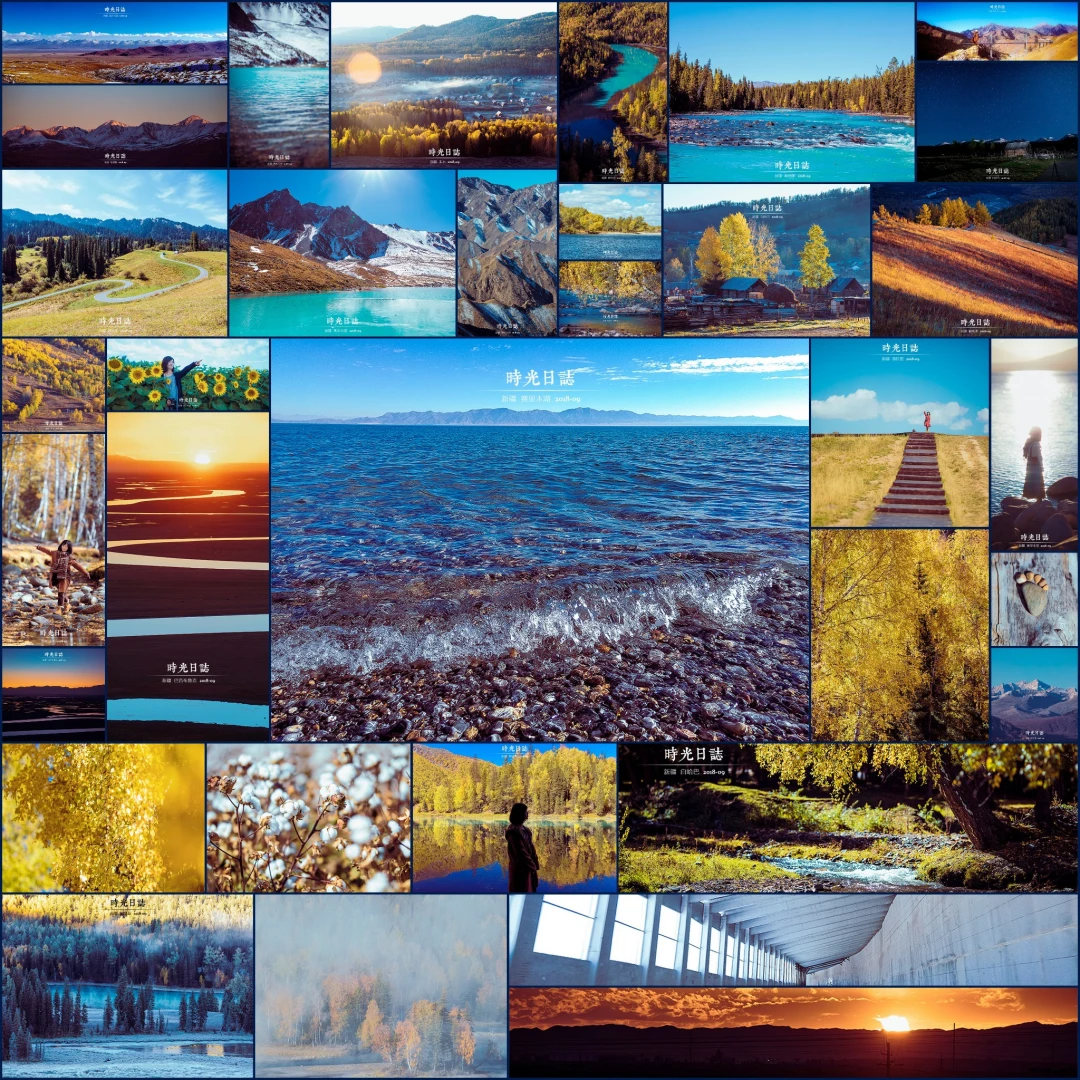
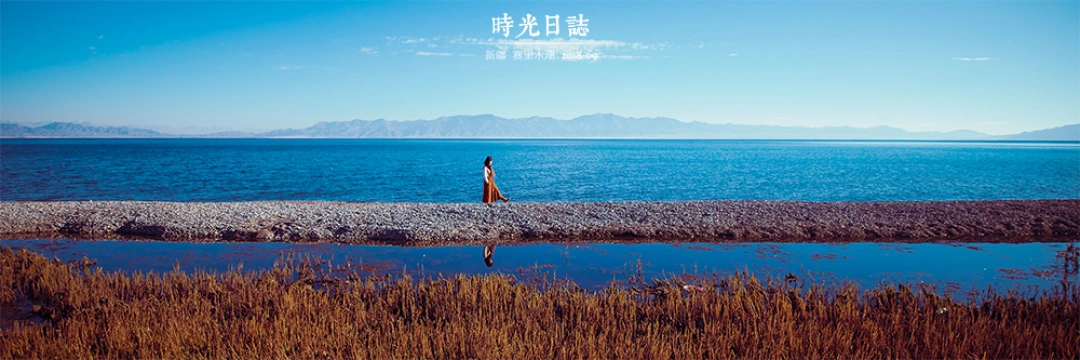
The lake water, turned a brilliant blue by the sunlight, was crystal clear — like a scene from a movie. Arriving early, there were few tourists by the lakeside. In the distance, an elderly man walked his two little dogs — I envied him deeply. The autumn colors looked like a spilled palette. One person watching over a lake — our team uniforms made an appearance, haha.
We didn't circle the entire lake; we hit the highlights and prepared to retreat. Thinking we'd entered a scenic area that normally doesn't allow cars, and for free, we smugly drove toward the exit — only to be stopped. Luckily, we only had to pay for four people's tickets, 70 yuan each. Successfully checked in at Sayram Lake, we were flying with joy.
Not far from Sayram Lake was the Guozigou Bridge. After confirming the route with a policeman, we found it easily. We parked for 10 yuan and walked the wooden boardwalk. The wind here was incredibly strong — it felt like it would blow us onto the bridge to hang there. Xiao Qiang had a knack for finding good photo spots, and we followed his lead. Bei Bingyang's clothes were practically invisible here. Spreading my arms, I became a kite.
After photographing Guozigou Bridge, it was already afternoon. We hurried on to Karamay. It took two crossings of Guozigou Bridge to turn around. Xinjiang is so vast that every destination change means hours of driving. We wanted to see the pumping jacks before sunset but couldn't find the right spot, so we just watched them along the way.
Finally, we arrived at Karamay — the only big city with 4G signal. We were moved to tears. Time to post on Douyin and WeChat! Dinner in Karamay was our third day's skewer check-in. Eating meat every day — such happiness.
V. Irtysh River: You Flow from South to North
Whoa, the main event is coming — today we enter Kanas! But the journey was long, and we had to reach the Kanas Scenic Area before 6 PM to catch the bus to Baihaba, or my 1,000+ yuan room booking would be wasted. More rushing ahead. We left early for the Devil City, but the sun hadn't risen yet, and it was drizzling — we collectively decided to just look at the entrance and skip the scenic area to avoid wasting time.

The further we went, the better the weather got. The service area was selling papayas — who knew you could sell them like that? We learned something new. We caught up on the pumping jacks we'd missed the previous evening. Sunflower fields by the roadside — the sunflowers were still in full bloom, all smiling faces facing the sun. Heading all the way north, seeing so many wind turbines gave us an idea of how strong the wind was here — blown away instantly.
Our feet stepped onto the banks of the Irtysh River. We deliberately posed our feet — so cute. The riverside trees were a mix of yellow, green, and a hint of red. Was this car driven to the river to wash? The Shandong guy's car needed cleaning. So blue, so blue — our mood was soaring. The tall Shandong guy looked just like TVB actor Vincent Wong. Me, being Zen-like, adorable Bei Bingyang, releasing our inner shouts. Xiao Qiang discovered a giant mushroom — our mobile home for eight days.
Leaving the Irtysh River, we hurried toward Kanas. Word had it that the queue for the entrance shuttle bus was always long — we were nervous. The further north we went, the more beautiful the autumn colors became, and the lower the temperature dropped.
VI. Baihaba: Moonlight over Kazakhstan
We arrived at Jiadengyu a little after 4 PM, and the car could only be parked at the entrance. To reach Baihaba, we had to take the scenic area shuttle. We packed quickly — we'd be staying inside for two days before returning to the car. Xiao Qiang and Bei Bingyang brought just backpacks, while the Master and I dragged a small suitcase. We didn't even have time for the restroom before buying tickets and entering. Luckily, there weren't many people entering in the afternoon. From the main entrance to the transfer center took another hour by bus.
Once inside the Kanas Scenic Area, the autumn scenery was breathtaking. The pine and poplar trees by the roadside were at their peak autumn colors — passengers on the bus were all "wow wow wow." After reaching the transfer center, we needed to go to the police station to get a border pass — just bring your original ID and a copy. We were running the whole time, afraid of missing the bus to Baihaba. We made it to the Baihaba shuttle queue right at 6 PM — a huge relief. The queue was surprisingly long; we waited an hour before boarding. From the transfer center to Baihaba was another hour's drive.
While waiting in line, we received terrible news — the room we'd booked for tomorrow in Kanas New Village through Qunar.com was suddenly unavailable. We were furious. Kanas Scenic Area rooms were incredibly tight; every website I checked showed full occupancy. Qunar.com told me to rebook and they'd compensate 100% of the original order — unacceptable. I felt like we'd be sleeping on the street the next day.
A kind girl ahead of us in the queue said she'd booked a triple room for herself and could help accommodate two of us if we couldn't find lodging. I quickly added her on WeChat — a lifesaver. While arguing with Qunar.com customer service, we finally boarded the bus to Baihaba. The route to Baihaba wound around Youyi Peak, and our "wows" grew even louder. Unforgettable cow dung paths, beautiful sunset, magnificent Youyi Peak — the scenery was unforgettable.
By the time we reached Baihaba, it was too late to catch the sunset. The horses were already heading home. The snowy mountains were bathed in golden sunset light. Booking rooms too late meant paying premium prices — our 1,000+ yuan room had a rather open bathroom, and the wooden cabin offered no soundproofing. Fourth day skewer check-in — with the high prices in scenic areas, we couldn't manage ten skewers per person tonight. One bowl of Xinjiang pulled noodles (新疆拌面) each — filling enough.
After dinner, the four of us went on foot to find a spot for stargazing. Wow, wow, wow — wooden cabins, snowy mountains, and starry skies — so beautiful, so moving that just looking up touched our hearts. We took quite a few starry portraits, mainly thanks to Xiao Qiang's many poses. Bei Bingyang's white coat shone brightly under the stars. My childish outfit, plus a Milky Way portrait. Using a finger to block the phone flashlight made it look like we were lighting up the stars. The autumn Milky Way — if cities had skies like this, it could probably cure many cases of stiff necks. We drifted off to sleep accompanied by the Milky Way and the lingering taste of lamb skewers.
VII. Kanas: Goodbye Sunset, Hello Sunrise
The most disappointing Baihaba sunrise — a wave of tourists waited for the sunrise from 7-something until after 9 AM, but the sun never made it over the mountaintop. We were frozen stiff. After most of the tourists gave up on the legendary dawn light and left, cold and hungry, we took a few quick shots once the sun appeared and retreated. Word had it that Hemu's sunrise was the one worth capturing.
Even after seeing the sun, we waited another half hour for the sunlight to reach the village. We were literally crying from the cold. The leaves touched by sunlight were coated in gold. Chimney smoke curled upward, and we caught the scent of steamed buns and stuffed buns. We stepped through cow dung to go eat breakfast. A little calf was led to nudge a dairy cow, then led away — we stood nearby watching the mother cow being milked, feeling sorry for her. The calf looked resentful.
After breakfast, we checked out and wandered around the village. A particularly photogenic sheep. A large, gentle dog — unknown breed, but Baihaba village was full of big dogs. A car by the roadside also contained big dogs — several Labradors barking inside. Snowy mountains, village, wooden houses, cattle and sheep — this was the life we dreamed of.
Xiao Qiang, who had broken his own camera, had to borrow the Master's camera to strike a pose. We strolled along a small river — the morning in Baihaba was so comfortable. The gentle sunlight was warm, and the crisp, sweet air cleansed our lungs. Natural stage lighting — a little calf, almost tall enough to reach. A picture of美好美好 (beautiful) life — mushroom pulled noodles, delicious!
A naturally broken tree trunk served as a bridge. Backpackers crossed a wooden bridge that seemed trustworthy — but I was too chicken. Xiao Qiang led the leaf-throwing. Dense forest, sunlight struggling to squeeze through. Professional at slipping — a hundred times over. So autumnal, so yellow. Birch trees are most beautiful in autumn — yellow through and through. Yellow wooden cabins — hiding in plain sight, playing cool. The leaves were translucent yellow. The Master put away his camera and created a few more shots with his phone.
Next door to the hotel, a minority ethnic child looked unhappy — like he was locked inside and not allowed to play outside. Successfully checked in at Northwest China's First Village. After a quick stroll, we grabbed our luggage and headed toward the Kanas Scenic Area. First, we took a bus to the transfer center, then to the second stop in the Old Village to check in. After frantically refreshing room availability all night and making follow-up calls, we finally booked two standard rooms that others had just canceled. Lucky and grateful!
After checking in, we walked a couple hundred meters downhill to the Kanas River — so beautiful, so beautiful, we couldn't stop exclaiming. The lake was blue, the sky was blue, the autumn scenery was delightful. Where was Xiao Qiang? Whoa. A tree nearly bent into the water, so yellow. We stepped on rocks, following the water's flow. In the face of such beauty, we had to stop and photograph every few steps. Was I a dog magnet? Three dogs chased each other around. Xiao Qiang's grand landscapes — melting into this beautiful scene.
We explored a short section of the Kanas River before reluctantly turning back — given more time, we should have walked a longer stretch. We headed to the transfer center to catch the bus to Guanyu Terrace. The bus ticket was purchased separately — 20 yuan per person. The ride took over half an hour, and at the foot of Guanyu Terrace, we still had to climb over a thousand steps to reach the top. After just a few steps, we noticed sunlight quietly leaving the lake surface, so we picked up the pace and scrambled upward.
We could already faintly see some moonlight. Legend has it that there's a water monster in Kanas Lake — I really wanted to see one. Vast autumn colors — we agreed to come back to this pond at night for stargazing. I led the way, quickly climbing to the top. The sunlight had already dropped some more; half the lake surface was without sunlight — but we still saw half, so blue, so blue. Like an oil painting — I wanted to wait for sunset at Guanyu Terrace.
Starting at 7 PM, the security guard began urging us to go down — "Hurry, hurry, hurry" was the classic line. The sunset was even more gentle. The uphill and downhill paths were different — regretfully, we didn't capture the step numbers. Xiao Qiang, whose camera had failed since day one, relied entirely on his phone. We slowly walked down the mountain, sunlight slanting across the grass. How warm the backlit plants looked; the opposite mountain was glowing red.
Under the guard's herding-like催促 (urging), we finally descended. We caught the last return bus and slept the whole way. Fifth day skewer check-in. After dinner and some rest, we set out again for stargazing. We planned to walk to the pond we'd seen that afternoon — the three of us walked heads down in silence. By the Kanas River, there was no light except moonlight and starlight. We walked with flashlights, walked for nearly 40 minutes without reaching the pond — feeling anxious, cold, and with the night deepening, I quickly called the two guys to stop. Let's find a spot by the river to take photos.
The moon, close to the Mid-Autumn Festival, was so round and bright that the surrounding stars were barely visible. The lake surface illuminated by moonlight — wow, look! That's your constellation. We returned to the hotel at 2 AM, unable to help exclaiming that Kanas was incredibly beautiful — we regretted not allocating more time. We quickly rested, looking forward to tomorrow's scenery.
VIII. Three Bays Morning Mist: Shenxian Bay, Moon Bay, Wolong Bay
Kanas, day two. The legendary three beautiful bays — Shenxian Bay (Fairy Bay), Moon Bay, and Wolong Bay (Crouching Dragon Bay) — here we come!
We didn't leave for the transfer center until after 8 AM. Since Kanas is surrounded by mountains and we couldn't see the sunrise anyway, we allowed ourselves to sleep in. We thought we'd missed the morning mist and planned to go straight to the last bay and work backward. But just as we arrived at Shenxian Bay, we spotted the morning mist in the distance — a spectacular sight. The Master decisively called everyone to get off. The viewing platform was packed; we squeezed in to take a few shots. Looking back, most tourists had climbed up the hillside.
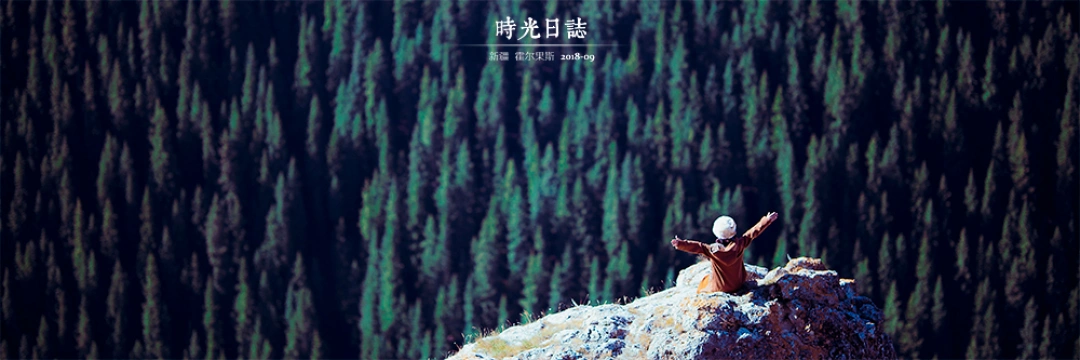
View from the platform. We quickly ran toward the hill behind — only by standing high could we capture the distance. Wow, the pines in the mist looked dreamlike, like ink wash paintings. Misty paths, sunlight hitting the lake surface, the morning mist slowly dissipating to reveal the blue water. The surrounding pines gained color too — each had its own charm. The shutter couldn't stop, afraid of missing a moment. Xiao Qiang gave us a sense of Kanas's tourist volume. Autumn colors and the dissipating morning mist — everyone except the Master was in the photos. Was that fair? A tribute to the photography master.
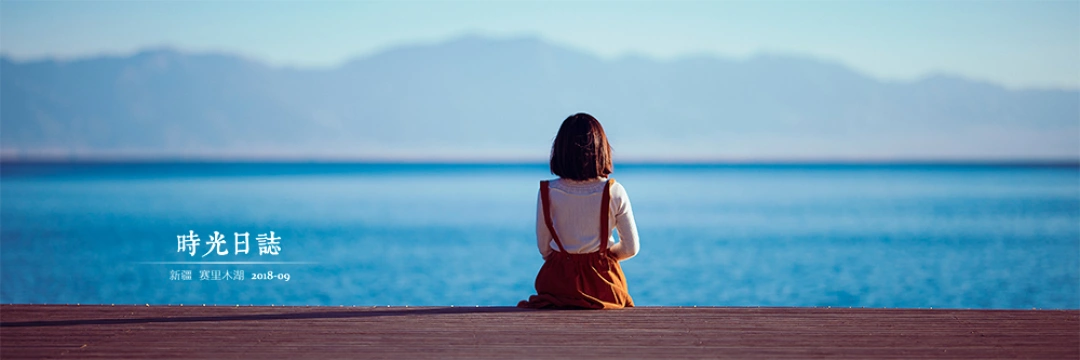
The sun had fully come out. We descended and headed to the next stop. A patch of white plants looked beautiful and soft. We continued queuing for the shuttle to the next stop — Moon Bay. Wow, wow, wow — wasn't this exactly like the promotional photos? How could it be this beautiful! The water surface wasn't fully lit by sunlight yet, and the shadowed areas had exceptionally clear reflections. Word had it that the lake water changes color with each season — in September autumn, it was emerald green. We were so glad we came to Kanas at this time — autumn colors at their peak, weather just right, everything perfect.
We waited on the viewing platform for a while, waiting for more sunlight to spread across the water. The scenery from Moon Bay to Wolong Bay was the most beautiful, so we chose to hike along the river to Wolong Bay. Going down to the riverside, the reflections in the water were especially clear. We entered a world of reflections, melting into the autumn colors. Cool team uniform enthusiasts — look! I'm in Kanas. Even the shadows were hard to distinguish. Walking toward Wolong Bay.
Arriving at Wolong Bay, we had successfully checked in at all three bays. Not continuing to hike slowly through Kanas was a real regret — we'll have to save it for next time. Kanas is truly a place you'd want to visit again and again. We returned to the hotel to pick up our stored luggage, then caught the bus out of the scenic area. The wait from Wolong Bay to the transfer center was long — an elderly man shamelessly tried to cut in line, and the queuing crowd shouted him down.
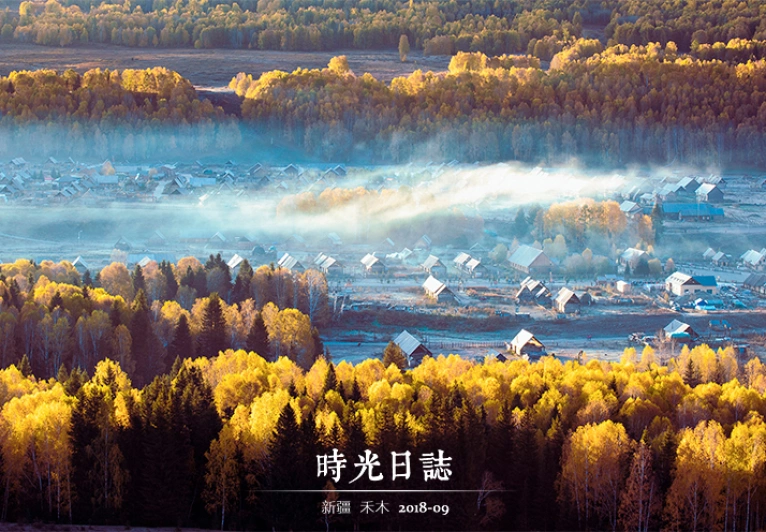
Leaving the scenic area and returning to our car felt like coming home. After two days of trekking in Kanas, driving ourselves to Hemu Village was fantastic. The沿途沿途 (scenery along the way) was stunning beyond compare. Beautiful autumn — let's down this can of Red Bull and keep going. We had to reach Hemu before 6 PM.
Final Chapter: Xinjiang, No Goodbyes
The Xinjiang journey was a trip about distance, about courage, about trust. From the snowy peaks and glaciers of the Duku Highway to the sunset afterglow at Bayanbulak; from the grasslands and forests of Nalati to the azure waters of Sayram Lake; from the starry skies and Milky Way of Baihaba to the morning mist wonderland of Kanas's Three Bays — every frame is etched into memory.
Xinjiang is perfect in every way — except for being far. But it's precisely this distance that makes its beauty more precious. If you also long for this land, don't hesitate — just go. Bring your dombra, strum the melody in your heart, and tonight, let's set off together.
Practical Tips: - Self-driving in Xinjiang requires a capable driver; a 2.5L or larger four-wheel-drive vehicle is recommended - Autumn in Northern Xinjiang has large temperature swings; pack both a down jacket and light clothing - Book scenic area accommodations well in advance; rooms are scarce during peak season - Keep your ID card with you at all times; security checks are frequent - Allocate at least 2-3 days for Kanas; hiking is the best way to experience it - Xinjiang's lamb skewers are always worth the anticipation
Strum your dombra — Xinjiang is waiting for you.
You should also read:

God’s Abandoned Palette: A Self-Drive Journey Through Yunnan’s Dongchuan Red Land
God’s Abandoned Palette: A Self-Drive Journey Through Yunnan’s Dongchuan Red Land Travel has never been about reaching some distant geographic coordinate. It’s about encountering, along the way, the version of yourself buried beneath the rubble of daily routine. During this May Day holiday, I finally…
Continue reading...
Cloud Travelogue · Dali of Wind, Flowers, Snow, and Moon: A Three-Day, Two-Night Journey of a Free Spirit
Cloud Travelogue · Dali of Wind, Flowers, Snow, and Moon: A Three-Day, Two-Night Journey of a Free Spirit I am a cultured female foodie with a touch of rogue charm. I slung on my backpack, took my lover's hand, and set off on a spontaneous…
Continue reading...
The Meaning of Travel – A Tengchong Story: A Journey of the Heart and Personal Growth
The Meaning of Travel – A Tengchong Story: A Journey of the Heart and Personal Growth Setting Out, Only to Return a Better Self Some say travel is nothing more than leaving a place you're tired of, only to go to a place where others…
Continue reading...