Time Log: A Dream of Yellow and Blue in Late Autumn, Southwest Yunnan
Time Log: A Dream of Yellow and Blue in Late Autumn, Southwest Yunnan
Destination: Yunnan
Travel Dates: November 20, 2015 · 9 Days
Per Person Cost: Approximately 5,000 RMB (including private car hire, accommodation, meals, and entrance fees)
Travelers: Couple/Husband and Wife
"Most of life's encounters are fleeting moments of joy traded for lifelong unease; photography, however, is a moment of discomfort that brings lifelong happiness." — Yu Guangzhong, Who Can Make the World Stop for Three Seconds
Prologue: A Spontaneous Date with Southwest Yunnan
Two years ago, my partner and I completed a seventeen-day honeymoon in Yunnan. Back then, I wrote: "I hope this travelogue marks the beginning of beautiful memories and serves as a prelude to our next departure." I never imagined that three years later, in the depths of autumn, we would set foot on this land once more.
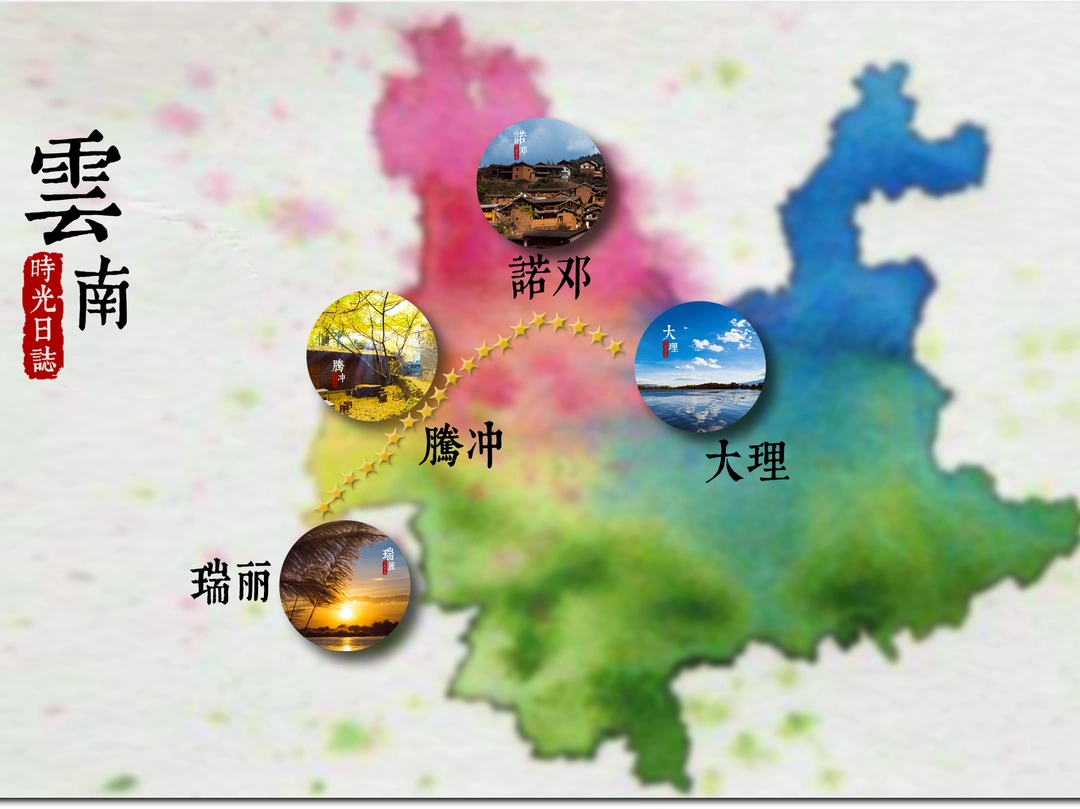
This time, we set our sights on Southwest Yunnan—the golden ginkgo trees of Tengchong, the border-town charm of Ruili, the timeless simplicity of Nuodeng, and the gentle sunsets of Dali. Autumn is Yunnan's most generous season, and our route was like a golden thread, stringing together these scattered pearls.
Yunnan is vast, with three classic routes each possessing its own allure: the Southwest Route (Dali-Tengchong-Mangshi-Ruili), the Northwest Route (Lijiang-Shangri-La), and the Southern Route (Honghe-Pu'er-Xishuangbanna). This time, we chose the Southwest Route, hoping to gradually explore every corner of this magical land in the future.

Before departure, inspired by a travelogue I had read, I compiled a list of ten "small certain happinesses"—those fleeting yet precious wishes:
- Ride a hot air balloon overlooking a volcanic crater
- Watch a sunrise in Ginkgo Village
- Eat a string of boiled eggs in Rehai (Hot Sea)
- Soak in a natural hot spring
- Eat braised chicken with ginkgo nuts
- Drink tea in Heshun Ancient Town
- Take a photo with the starry sky
- Post a Weibo at the border gate saying "I'm here"
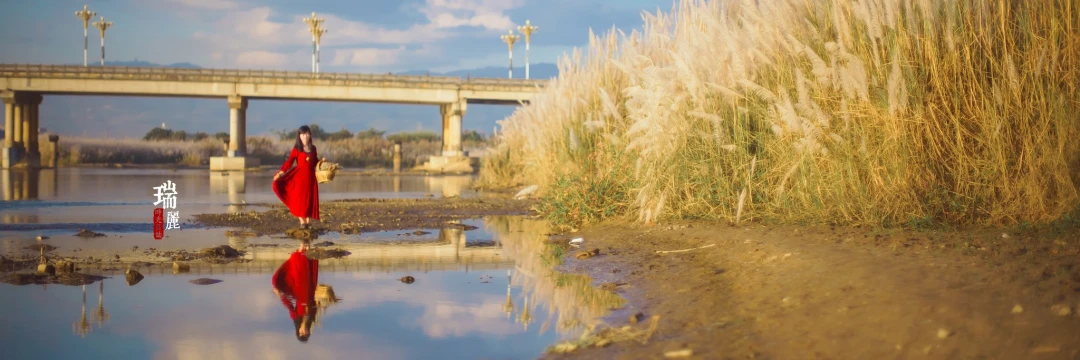
- Watch the sunset over the Ruili River
- Step on the grass at Beihai Wetland
These wishes would later become the shining moments of our journey.
Photography Gear and Practical Tips
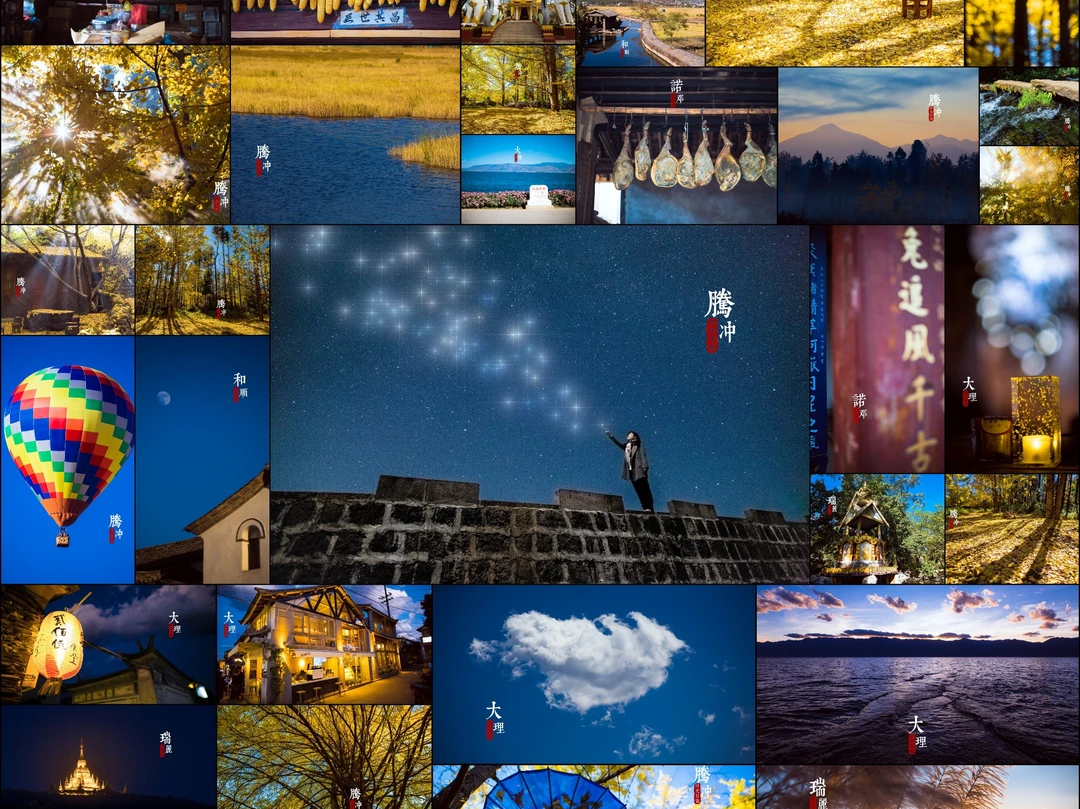
Cameras: Canon 5D3 + Sony A7s
Lenses: Sigma 20/1.4 (ideal for star photography), Tamron 70-300VC (telephoto for landscapes), Minolta 58/1.2 (portraits)
Post-Processing: Lightroom + RAW format
Collage Software: Picasa
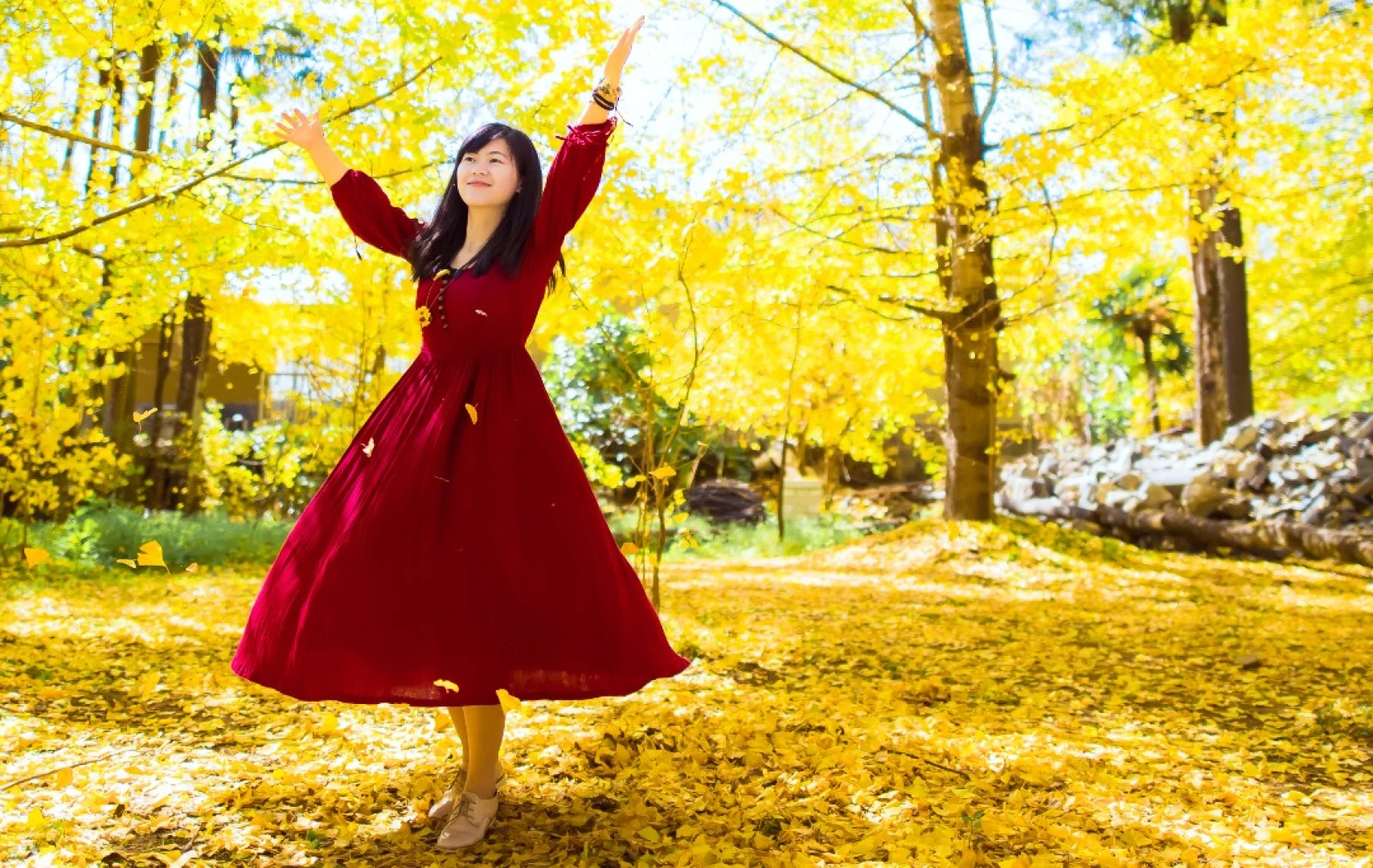
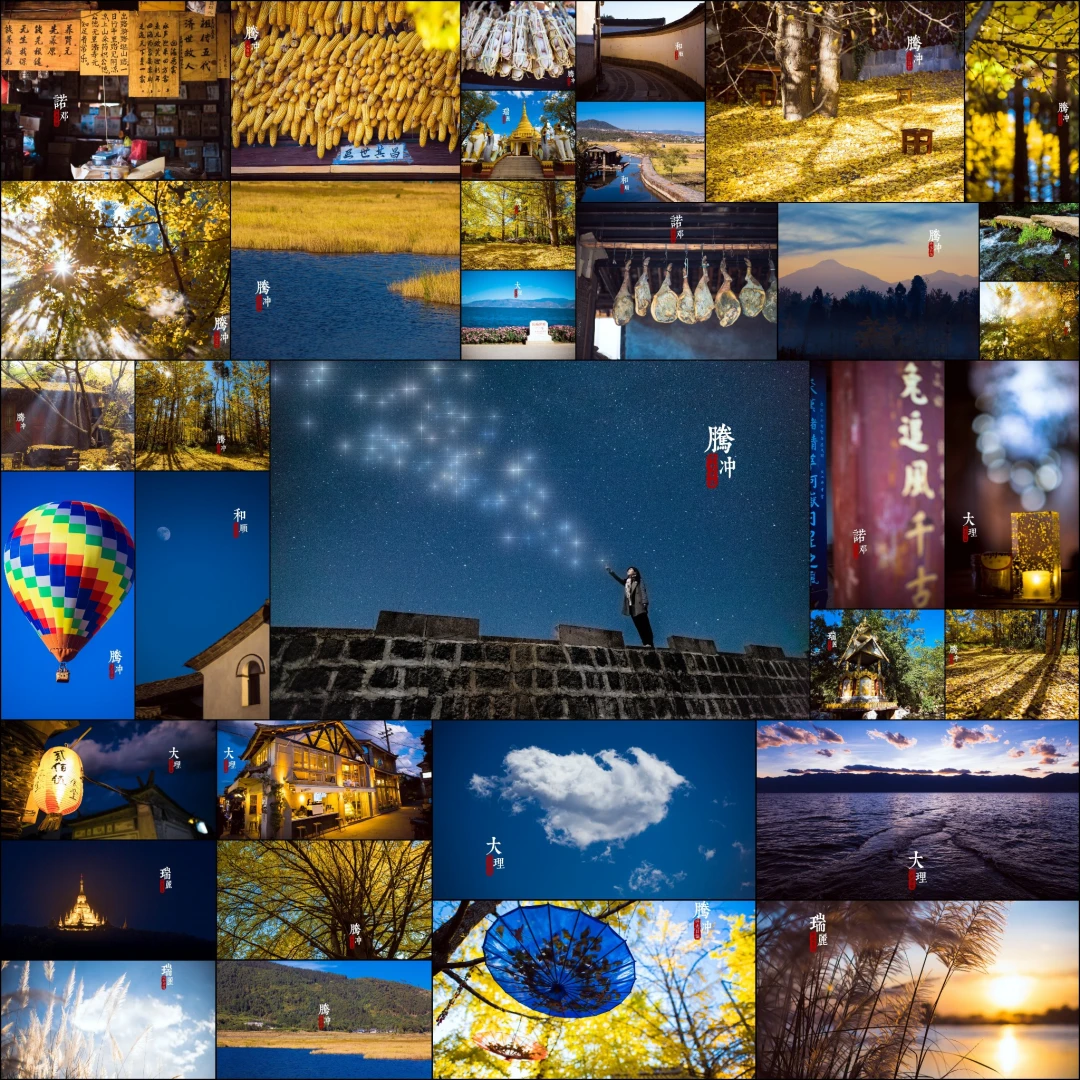
Photography Insights: - For landscapes, I mostly used the 20/1.4 and 70-300VC; for stars, the 20/1.4 was essential; for portraits, I favored the 58/1.2 for its soft bokeh. - I increased contrast and saturation in post-processing, but good weather and a good model are the true keys. - Key photography spots: Ginkgo Village in November, Beihai Wetland at sunset, the Ruili River under the Jiegao Bridge, and the sunset at Wase Pier.
Transportation and Private Car Hire: There are no direct flights from Beijing to Tengchong; we had to transfer through Kunming. We opted for a private car tour, starting from Tengchong, passing through Ruili and Nuodeng, and ending in Dali. Master Li, our driver, was a local—honest, familiar with the roads and local customs, and attentive throughout the journey. The cost for the private car was reasonable in the off-season, and we also covered his meals and accommodation. If you're interested, feel free to leave a comment or send a private message for his contact information. Highly recommended.
Chapter 1: Ginkgo Village — A Golden Fairy Tale
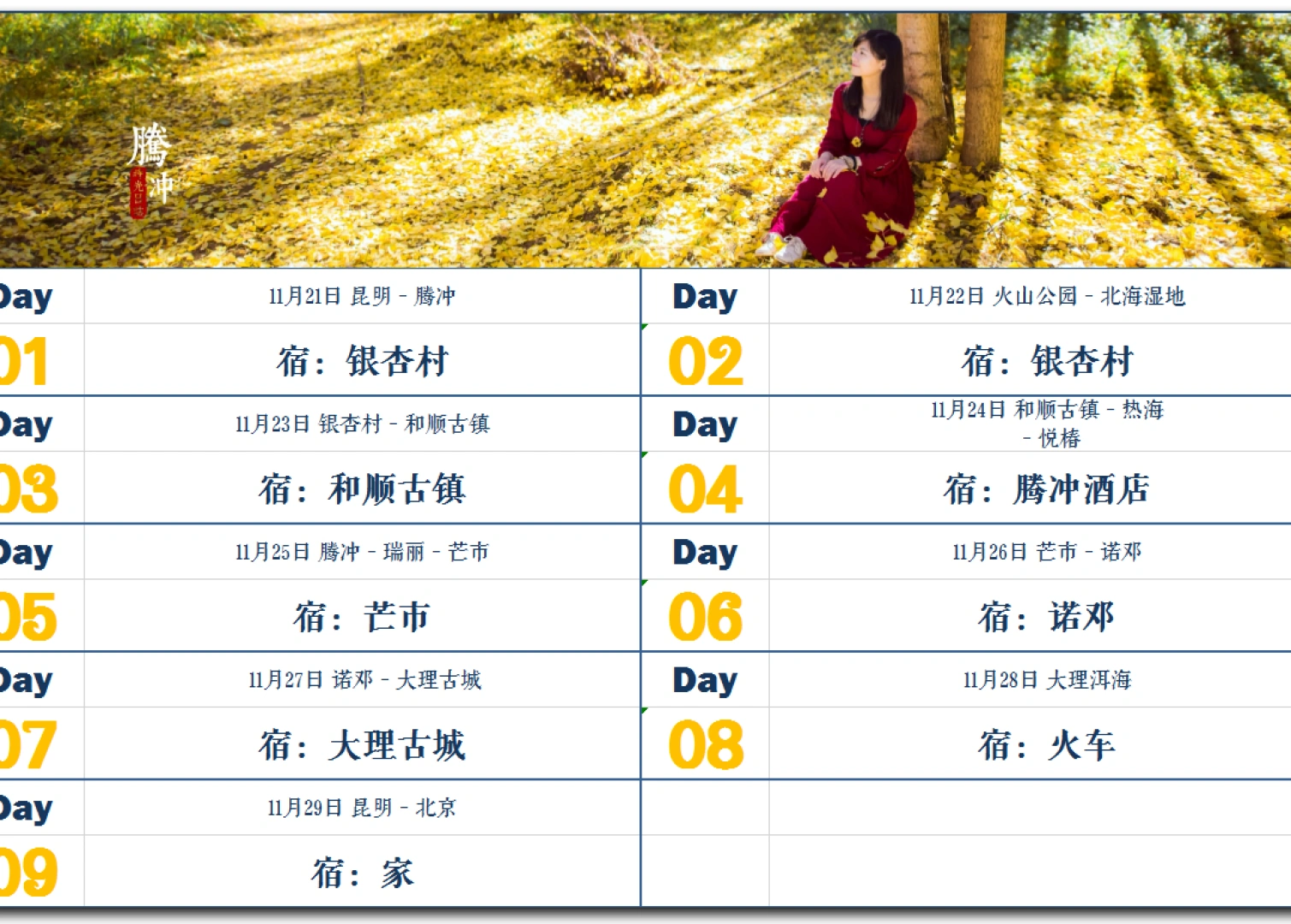
Time: Days 1-2
Location: Tengchong · Ginkgo Village
Tips: - The best viewing period is around mid-November. - Entrance fee is 40 RMB per person; you can enter for free before 8:00 AM or after 8:00 PM. - No need to book accommodation in advance; there are plenty of farmhouse guesthouses in the village, all in excellent locations.
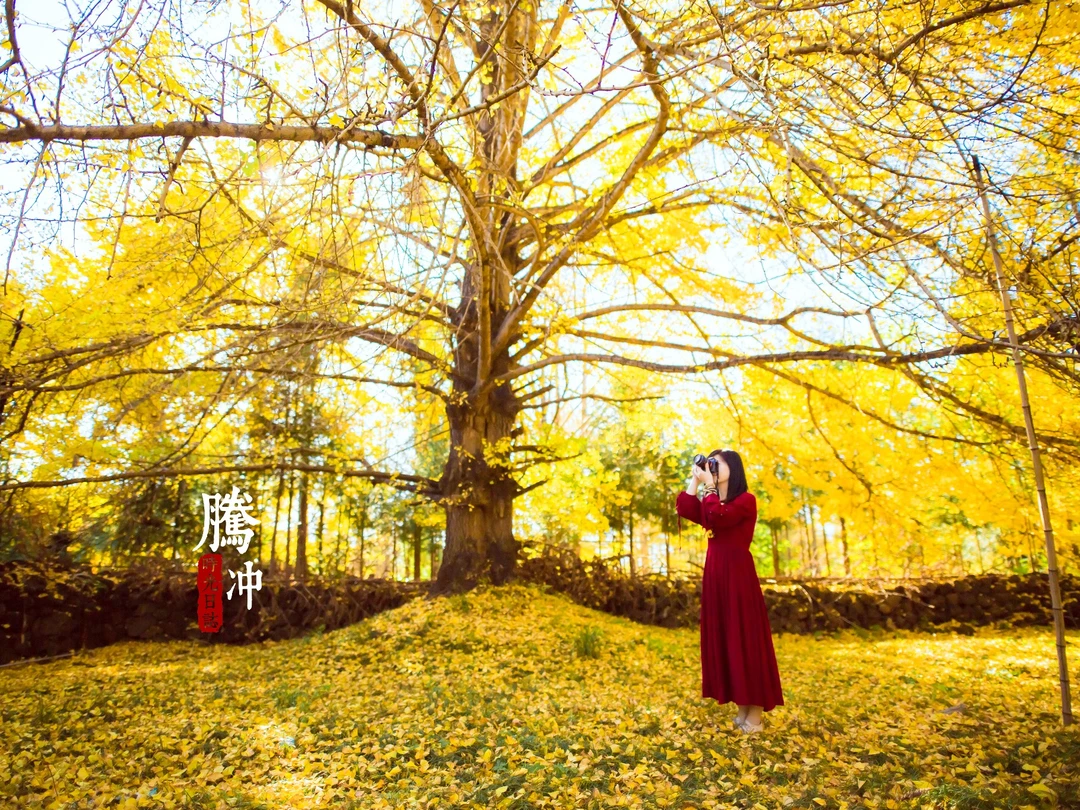
Autumn is colorful, and the ginkgo tree is the most vivid stroke in autumn's palette. Two years ago, I was deeply captivated by photos of Ginkgo Village—golden leaves blanketing rooftops and alleyways, the entire village seemingly drenched in sunlight.
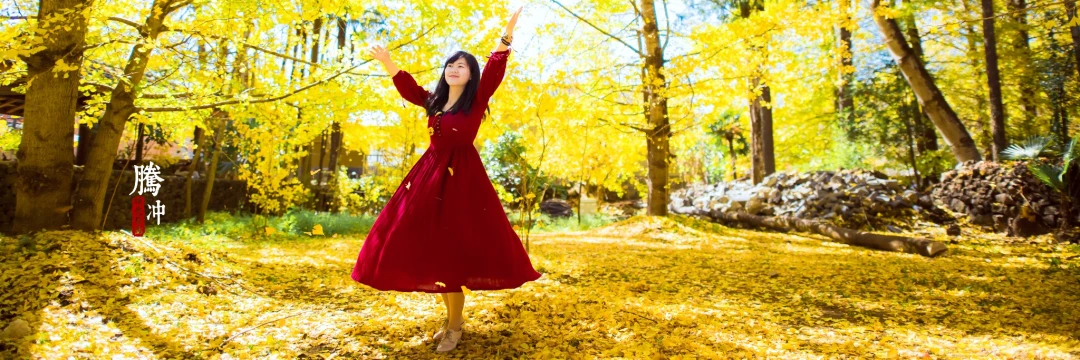
We stayed at "Shuangle Farmhouse Inn," right in front of a golden carpet of leaves. Every household was adorned with hanging corn, the scent of harvest filling the air. Locals cleverly hung umbrellas upside down to catch falling ginkgo leaves. By the roadside, vendors sold ginkgo nuts and dried "lover's grass," which looked like little white bouquets. I couldn't resist buying a bunch and placing it in a small vase made of volcanic rock—it looked especially beautiful.
The village women would string ginkgo leaves into garlands, and children were out early, vying for business. I heard that Tengchong has a pepper called "shuanshuan la" (rinse-and-rinse spicy) said to be so hot it could make an elephant run wild, but unfortunately, we never found any.
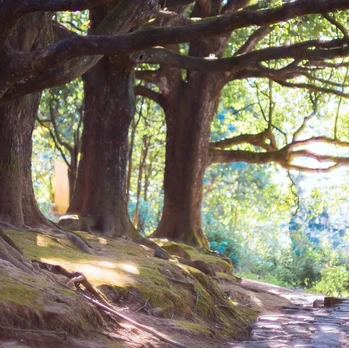
Ginkgo Village is small. Tourists clustered along the main road, but we soon discovered a vast, sparsely populated ginkgo grove. The trees here were often centuries old, untouched by artificial pruning, each with its own unique posture. Sitting beneath them, lost in thought or simply daydreaming, was a perfect way to spend time.
In the evening, we tasted our first "small certain happiness"—braised chicken with ginkgo nuts. It was incredibly delicious. As night fell, Ginkgo Village grew quiet, leaving only the sound of wind and insects. Unfortunately, a bright moon dimmed the stars, so we had to take portraits under the moonlight, still fulfilling our wish to "take a photo with the starry sky."
The next morning, we set out in the dark, hoping to find a viewing platform for the sunrise. Instead, we unexpectedly witnessed the Tyndall effect—sunlight piercing through the ginkgo leaves, casting golden beams that made the world feel like a fairy tale. Beyond the village, dormant volcanoes stood silently, confirming Tengchong's local saying: "Ten mountains, nine without heads" (referring to their flat-topped volcanic craters).
Recommendation Rating: ★★★★★★★★★★ (Ten stars — an absolute must-visit)
Chapter 2: Volcanic Park — A Dream Fulfilled in a Hot Air Balloon
Time: Day 2, Morning
Location: Tengchong · Volcanic Park
Tips: - You can enter for free before 7:00 AM, as the ticket office isn't open yet. - The hot air balloon ride costs 200 RMB per person and is only available in the morning. It's an excellent way to overlook the volcanoes and the Gaoligong Mountains. - The horse racing field next to the hot air balloon square is the best spot for photographing the balloons. - You can skip the columnar jointing, but Heiyu River (Black Fish River) is worth a visit.
Riding a hot air balloon had been a dream of mine for years. I had originally planned to do it in Turkey, but various circumstances prevented it. I never expected this wish to quietly come true at Tengchong's Volcanic Park.
At 7:40 AM on November 22, we left Ginkgo Village and arrived at the Volcanic Park twenty minutes later. The ticket and inspection booths weren't staffed yet, so we walked straight in. The two volcanic craters, Dakongshan (Big Empty Mountain) and Xiaokongshan (Small Empty Mountain), were open for climbing. We were so early that the hot air balloon staff hadn't even arrived.
The morning sun was gentle, and dewdrops sparkled on the grass blades. We climbed Dakongshan. The steps were so steep and numerous they left us breathless; we were almost overtaken by a young man who sprinted past us for the "first place." Inside the crater, it was cold and gloomy, with a thin layer of frost on the surface. A faint wisp of steam drifted from within—was this dormant volcano showing signs of waking?
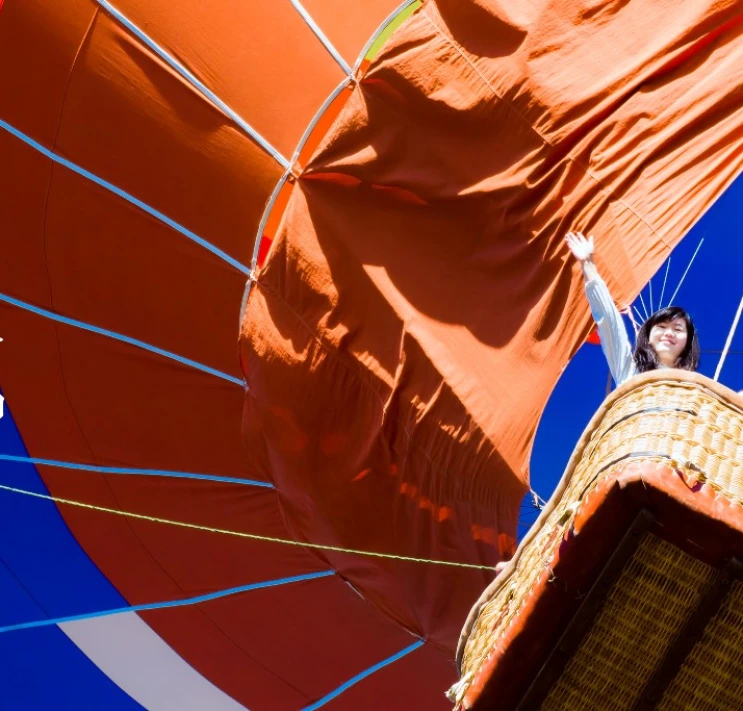
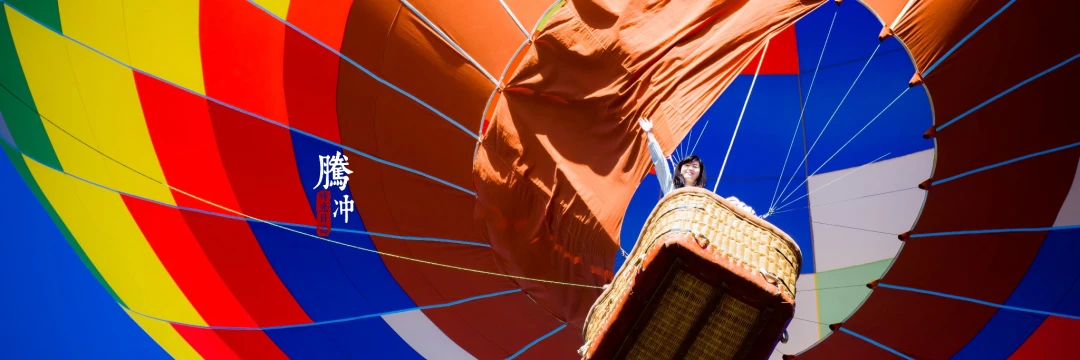
After a quick tour, we timed it perfectly for the first hot air balloon launch. Against a brilliant blue sky, the colorful balloon rose slowly, like something out of a fairy tale. I paid 200 RMB for a ticket, took photos with the balloon while waiting in line, and felt as excited as a child.
Each ride carried 6-7 people and lasted less than ten minutes total, up and down. Once airborne, the Gaoligong Mountains unfolded beneath us, with rolling clouds creating a magnificent spectacle. The crater of Dakongshan was clearly visible, prompting a group of ladies from Guangdong to exclaim, "The sea of clouds is so beautiful!"
Although there was only one balloon, lacking the grandeur of Cappadocia, at that moment, I truly felt the joy of flying.
Afterwards, we visited the columnar jointing and Heiyu River. The columnar jointing, a wonder formed by cooled magma, was visually underwhelming. Heiyu River, however, was a delightful surprise—a crystal-clear underground river whose water was drinkable. Wild monkeys by the riverbank cautiously begged for food from tourists.
Recommendation Rating: ★★★★★★ (Six stars — the hot air balloon is the highlight)
Chapter 3: Beihai Wetland — A Surreal Walk on Water
Time: Day 2, Afternoon
Location: Tengchong · Beihai Wetland
Tips: - It's recommended to buy a combo ticket (includes boating and the unique "grass-sledding" experience, where you stand and punt on a floating grass mat). - There are many farmhouse guesthouses around the wetland where you can try local dishes. - Bring an extra pair of sandals or cloth shoes, as grass-sledding will get your feet wet.
In Jiang Wen's film The Sun Also Rises, the image of the mad mother paddling away on a grass raft had always lingered in my partner's mind. Later, he learned that scene was filmed at Beihai Wetland. Despite many travelogues not recommending it, he insisted on going. As it turned out, his stubbornness was tinged with romance.
Beihai Wetland is a "water grassland." The aquatic plants grow densely, their roots intertwining to form entire floating mats of turf on the water's surface. Taking off our shoes and stepping onto it barefoot felt like walking on a sponge. The first step would sink, but the grass quickly supported you—a truly peculiar sensation.
We bought a combo ticket for grass-sledding and boating, costing 178 RMB per person. Grass-sledding in the afternoon was a challenge—the wind picked up, and once you were blown far from shore, getting back was hard work. The staff required people to go in pairs, but my partner insisted on staying on the bank to take photos, leaving me to "brave the wilderness" alone. And so, relying on my own strength, I managed to paddle out and return to shore by myself. Looking back at the photos, I saw a certain vagabond spirit captured in my expression.
As the sun began to set, I seized the last moment to step on the grass again. My shoes got wet, but the feeling of "cutting through the grass and wandering into the distance" brought me immense satisfaction.
Recommendation Rating: ★★★★★★★★ (Eight stars — a choice for the sentimental)
Chapter 4: Heshun Ancient Town — The Quiet Flow of Time
Time: Days 3-4
Location: Tengchong · Heshun Ancient Town
Tips: - Heshun is a mountain town. If you have a lot of luggage, it's recommended to stay at a guesthouse near the main entrance. - The ancient camphor tree grove near the Thousand-Armed Guanyin statue is a great spot for photography.
With over 600 years of history, Heshun boasts more than 1,000 traditional residences, including over 100 from the Qing Dynasty. The charm of Huizhou-style architecture blends with Western elements here. The wooden carvings on doors and windows are incredibly lifelike, and the steps made of volcanic stone are both slip-resistant and durable.
On the afternoon of the 23rd, we bid farewell to Ginkgo Village and headed for Heshun. We had originally planned to stay at "Alley No. 1," but it was fully booked, so we settled for a small courtyard next door. The late autumn sun in Southwest Yunnan was warm but could easily cause sunburn, so we frequently had to stop in the shade.
We found a café on the second floor, its window facing the embankment featured in the TV drama Beijing Love Story. The sunlight was too harsh, so we took a distant photo. Walking up the hill, we occasionally encountered cats, dogs, and a small parrot that could say "Hello."
Heshun was much larger than Ginkgo Village. I walked until my legs gave out searching for the ancient camphor tree grove. Fortunately, I met a vendor selling steamed buns from a tricycle. Devouring two of them instantly boosted my spirits. When I finally found the grove, a group of photographers from Guangdong had already set up their gear. My partner insisted on taking portraits, and I ended up becoming a model for everyone.
As night fell, red lanterns were lit, and barbecue stalls appeared. My partner couldn't resist, and after a feast, he concluded that the meat was average, but the vegetables were good.
At around 4:00 AM, my partner dragged me out to photograph the stars. The late autumn night in Heshun wasn't cold, and the empty streets exuded a sense of peace. After finishing the star shots around 6:30 AM, we grabbed some sleep. When we woke up, the sun was already strong.
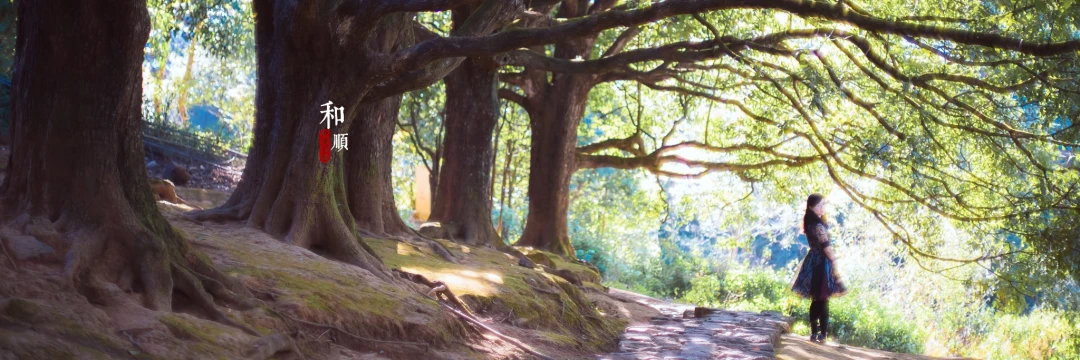
We visited a shop selling Tengchong Xuan paper, bought two small notebooks, and asked the craftsman to inscribe them. He was a master calligrapher in disguise, his writing exquisite. Next door was a Pu'er tea shop. We tasted a tea called "Heshun," which came in two bricks—one raw, one ripe—inscribed with the characters "和" (harmony) and "顺" (smoothness). It was a very meaningful souvenir. Without even realizing it, our "small certain happiness" of "drinking tea in Heshun" had been fulfilled.
Recommendation Rating: ★★★★★★ (Six stars — ideal for a quiet, contemplative experience)
Chapter 5: Rehai "Big Boiling Pot" — Geothermal Wonders and the Joy of Boiled Eggs
Time: Day 4, Afternoon
Location: Tengchong · Rehai (Hot Sea)
Tips: - Buy your eggs at the main entrance and mark them with something distinctive to avoid confusion. - Don't miss the hot spring experience; the natural sulfur springs are beneficial for the skin.
Rehai is a concentrated display of Tengchong's geothermal resources. The most famous feature is the "Big Boiling Pot" (Da Gun Guo), a boiling pool about 3 meters in diameter with water temperatures reaching 96°C (205°F). We bought eggs at the main entrance, marked them with a plastic bag, and placed them in one of the hot spring pools to cook. After about ten minutes, the eggs were done—the whites were tender, the yolks soft and sandy. A pinch of salt made them absolutely delicious.
The hot spring experience at Rehai was also fantastic. We soaked in a natural sulfur spring. The water temperature was perfect, leaving our skin feeling smooth and washing away all our fatigue. After the soak, eating a string of our boiled eggs was the perfect "small certain happiness" achieved.
Recommendation Rating: ★★★★★★★ (Seven stars — the geothermal wonders are worth seeing)
Chapter 6: Ruili — The Exotic Flavor of a Border Town
Time: Days 5-6
Location: Ruili
Tips: - The Ruili River under the Jiegao Bridge is an excellent spot to watch the sunset. - Near the border gate, you can post a Weibo with the location tag "I'm here," which is quite memorable.
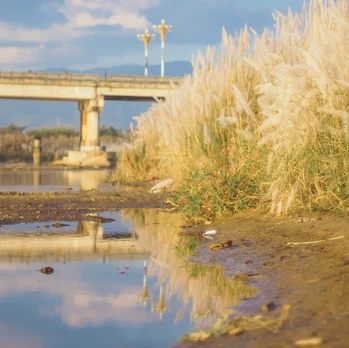
Ruili—a place I had long felt drawn to "just by the sound of its name"—we had finally arrived. At the Ruili River under the Jiegao Bridge, as the sun set, the river was dyed gold, a breathtakingly beautiful sight. We posted a Weibo near the border gate, checking in with "I'm here," completing another "small certain happiness."
Ruili is steeped in border-town atmosphere. The streets are filled with Myanmar vendors selling tropical fruits and handicrafts. Prices were low, and the fruit was fresh. We bought a large stash of mangosteens and durians, eating to our hearts' content.
Recommendation Rating: ★★★★★★★ (Seven stars — unique exotic charm)
Chapter 7: Nuodeng Ancient Village — A Salt-Horse Road Frozen in Time
Time: Day 7
Location: Nuodeng
Tips: - Nuodeng is famous for its ham; you can buy local specialties. - The ancient village is built on a hillside, so wear comfortable shoes.
Nuodeng Ancient Village is a nearly forgotten post station on the ancient Salt-Horse Road. The houses here are built layer upon layer up the mountainside, with stone paths polished smooth by time. We tasted Nuodeng ham—salty, rich, and flavorful. Paired with a bowl of plain white rice, it was simple yet deeply satisfying.
The old salt well at the village entrance is still there, said to be over a thousand years old. Standing by the well, you could almost hear the jingling bells of the horse caravans from centuries past.
Recommendation Rating: ★★★★★★ (Six stars — a niche destination but worth the visit)
Chapter 8: Dali — Gentle Sunsets to Fill the Gaps
Time: Days 8-9
Location: Dali
Tips: - The bars on Renmin Road (People's Road) at night have a great atmosphere; highly recommended. - The sunset at Wase Pier is a paradise for photography enthusiasts.
Our visit to Dali this time was to fill in the gaps from our last trip. At night, the bars on Renmin Road were bathed in hazy light, with folk songs floating in the air. We ordered two cocktails and sat by the window, watching the passersby and soaking in Dali's slow pace of life.
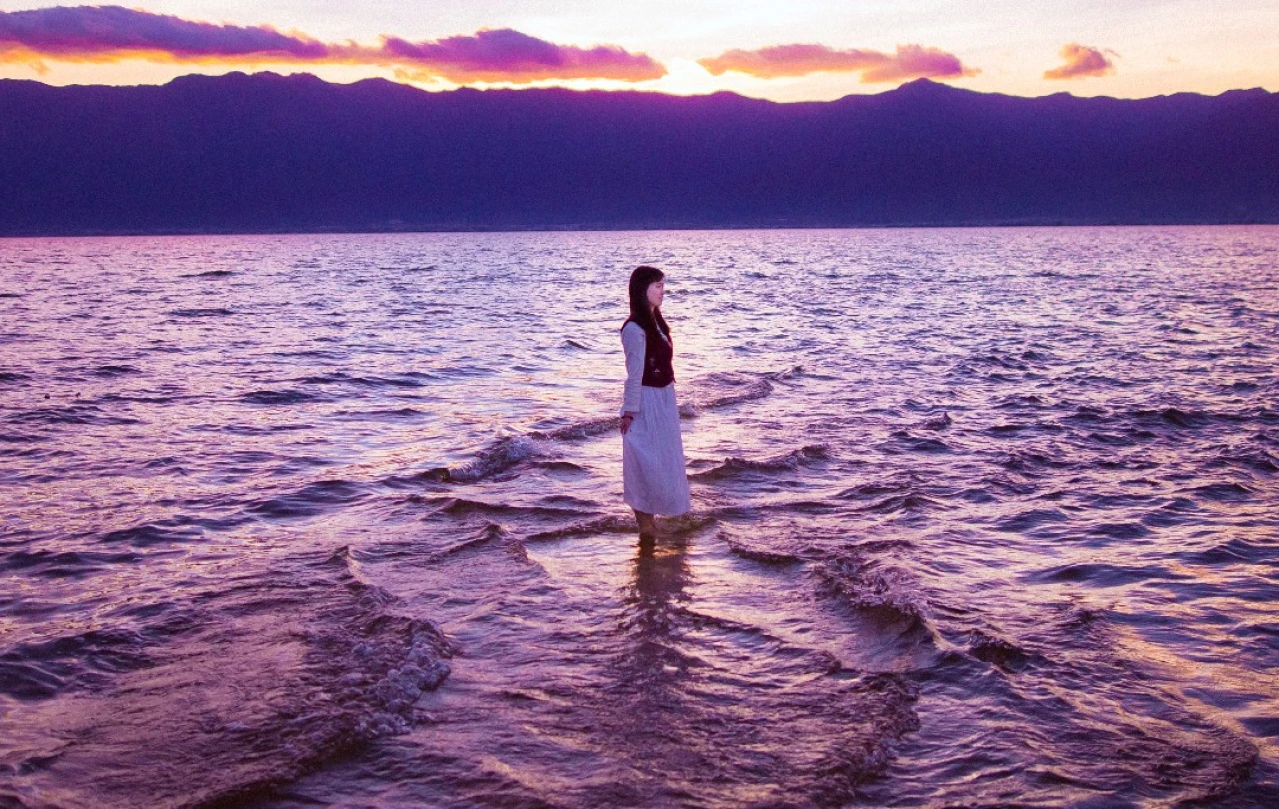
The next evening, we rushed to Wase Pier. As the sun set, Erhai Lake was painted gold, with the distant Cangshan Mountains silhouetted in dark ink. My partner captured a silhouette of me standing on the pier. In that moment, time seemed to stand still.
Recommendation Rating: ★★★★★★★★ (Eight stars — Dali is always worth a return visit)
Epilogue: Those "Small Certain Happinesses" — The Most Precious Gifts of the Journey
Our nine-day journey through Southwest Yunnan came to a close amidst the yellows and blues of late autumn. The gold of the ginkgo trees, the steam of Rehai, the turf of the wetland, the tranquility of Heshun, the sunset of Ruili, the antiquity of Nuodeng, the gentleness of Dali—every frame was like a page in a time log, recording our laughter and our emotions.
Looking back on this trip, those "small certain happinesses"—riding a hot air balloon, watching a sunrise, boiling eggs, soaking in a hot spring, eating braised chicken with ginkgo nuts, drinking tea, photographing the stars, posting a Weibo, watching a sunset, stepping on the grass—each one became a shining moment in my memory. As Haruki Murakami said, "small certain happinesses" are fleeting joys, and photography is the way to freeze those moments.
If you too are thinking of going to Southwest Yunnan, remember this: autumn is golden, and Yunnan is always worth setting out for.
The End
You should also read:
Escaping Nanning, Falling Under Lijiang's Spell: Our Four-Person, Ten-Day Yunnan Dream
Escaping Nanning, Falling Under Lijiang's Spell: Our Four-Person, Ten-Day Yunnan Dream Before We Set Off: No Pain, No Obsession Have you ever had that impulse—suddenly tired of the office fluorescent lights, the crush of the subway, the endless parade of identical takeout boxes, and just…
Continue reading...
Solo in Yunnan: A Wanderer’s Guide to the Land of Eternal Spring
Solo in Yunnan: A Wanderer’s Guide to the Land of Eternal Spring There’s something magical about traveling alone. No compromises, no schedules to keep, no one to please but yourself. I’ve been on the road for nearly three months now, and not once have I…
Continue reading...
Tengchong·Heshun: Finding Life as It Should Be in a Border Town Where Time Stands Still
Tengchong·Heshun: Finding Life as It Should Be in a Border Town Where Time Stands Still The long journey of over twenty days was over. On my first day back at the office, I was still in a daze. My fingers couldn't find the keys on…
Continue reading...