Time Moves Slowly: The Gentle Days of Yunnan

Time Moves Slowly: The Gentle Days of Yunnan
Some journeys are destined to be etched into the deepest corners of memory. Some landscapes are worth savoring for a lifetime. The moment the plane pierced through the clouds and touched down at Kunming Changshui Airport, I knew—a story about Yunnan had quietly begun.
Before We Set Off
It had been two and a half years since my last long-distance trip. Not that I hadn't traveled in between—Singapore's dazzling skyline, Hainan's golden beaches—they all looked beautiful in photos. But deep down, the emotions never quite surfaced, waiting for the right moment to spill onto the page.
And then came Yunnan. This place, praised by countless travelers, finally became our family's destination that summer.
Our Itinerary: Xi'an → Kunming → Dali → Shaxi → Lijiang → Tiger Leaping Gorge → Shangri-La → Dali → Kunming. Eight days, seven nights. Two adults, one child. Total cost: 12,700 RMB.
To be honest, the schedule was tight. If you only have a week, I'd recommend taking it slow around Dali and Lijiang—explore the villages at the foot of Jade Dragon Snow Mountain, or stumble upon some obscure little town. If Shangri-La is on your list, set aside at least ten days. Yunnan's roads may look like two or three hundred kilometers on the map, but the winding mountain passes demand far more time than you'd expect.
What I Packed: A Nikon D700 with a 24-70mm lens—an old friend I've carried for years. An Olympus EP5 with a Panasonic 25mm f/1.4 lens—light and nimble, always ready. And my Xiaomi 4 and iPhone 6S Plus for those spontaneous snapshots.
Day One: Heading for a Meeting of Mountains and Sea
At six in the morning, Xi'an was still asleep as we made our way to the airport. After a three-hour flight, Kunming greeted us with a steaming bowl of rice noodles (米线). Our pre-booked rental car was waiting, and after a quick lunch, we hit the road to Dali.
By the time we arrived, dusk was settling in. A friend had recommended "Grandma's Firewood Chicken" (奶奶的柴和鸡), and they'd already started slow-cooking the free-range chicken over firewood. The place was tucked away along the national highway, but the aroma of that simmering pot was irresistible. Even I—someone who can't handle much spice—kept reaching for more. My husband was sweating with delight, and our kid, despite complaining about the heat, couldn't stop eating. A whole pot of chicken was way too much for three people; I'd say five or six is the sweet spot.
We checked into the Dali Artist Garden Villa (大理艺术家园别墅), nestled at the foot of Cangshan Mountain, right next to Dali University. Pushing open the courtyard gate, a three-story house stood quietly before us. From the terrace, we could see Erhai Lake in the distance. As the night deepened, we sat on the terrace, snapping silhouettes with our phones. The only sounds were the wind and our own breathing. In that moment, the world felt so still—as if only we existed.
Day Two: Above the Clouds on Cangshan Mountain
Dali had seen an unusually rainy year; it hadn't stopped since May. Waking up to a drizzly morning, we decided to brave the rain and climb Cangshan.
We took the Gantong Cable Car (感通索道) up. Halfway, the view was already breathtaking. The cable car glided high above the treetops, and our kid—experiencing this suspended sensation for the first time—was a mix of nerves and excitement. After getting off, we followed the mountain path toward the Seven Dragon Maiden Pools (七龙女池). The official sign said it was a 9-kilometer round trip, but it felt much longer.

Along the way, we spotted different geological rock layers. Our kid fired off endless questions, and I seized the chance to tell him about the Earth's interior, borrowing stories from The Magic School Bus. He listened with half-understanding, then threw out wild ideas: "Are the Seven Dragon Maiden Pools seven women with dragon heads and human bodies?" "Or maybe it's just a puddle from the seventh-ranked woman peeing?" Kids' imaginations—always good for a laugh.
We finally reached the end. Our little one insisted on climbing all the way to the Seventh Pool, while I collapsed after the Third, completely spent. On the way back, we had only an hour before the cable car closed, so we jogged. My husband tried every trick to keep the kid moving: riddles, word chains, racing games. The laughter along the way was worth more than any scenery.
By the time we descended, it was 5 PM. The vegetarian restaurant we'd planned to visit was already closed. We found a nondescript place called Gantong Restaurant (感通饭庄) by the highway—and were pleasantly surprised. Sometimes, the most ordinary joints hide the most authentic flavors.
Day Three: Shaxi Ancient Town, Where Time Stands Still
Dali's nights are so quiet you can hear the insects and the wind. We slept in, made a simple breakfast ourselves, and reluctantly left the villa around noon.
On the way to Lijiang, we made a detour to Shaxi Ancient Town (沙溪古镇). Instead of the expressway, we took the county road, driving slowly. Vast rice paddies and lotus ponds glistened in the rain. We couldn't resist pulling over to take photos in the drizzle. An unnamed reservoir looked eerily serene in the mist.
Shaxi is small but has an indescribable charm. We had lunch at "Gudao Huifeng Restaurant" (古道惠风饭庄), a tiny place that was easy to miss. The owner cooked personally, and the food was surprisingly good. Afterward, we wandered through the town. Wild mushrooms were everywhere, alleyways were quiet, and inns were adorned with succulents. The pace here was so slow it felt like time had stopped.
The funniest sight: a cat sprawled right in the middle of the road, completely indifferent to passersby. I couldn't help but smile. This is what an ancient town should feel like.
Around 6 PM, we headed to Lijiang Old Town. We got lucky—the maintenance fee collectors had just clocked out, saving us 80 RMB per person. A young man from our inn zigzagged us through the alleys to our lodging. After settling in, we ventured out to experience Lijiang's nightlife. Sifang Street (四方街) was as lively as ever, with music drifting from the bars. It wasn't my preferred kind of quiet, but as they say, "When in Rome..."—we walked, we looked, we tasted.
Day Four: The Roaring Gorge and Anticipation for Shangri-La
After a light breakfast at the inn, we set off for Shangri-La. Only a short stretch of the road was expressway; the rest were winding mountain passes. Our small-engine car struggled on the uphill climbs—flooring the accelerator barely made a difference. The road had only two lanes, with countless curves. I'd recommend keeping your speed under 60 km/h.
Tiger Leaping Gorge (虎跳峡) was a必经之地 (must-pass spot), and it turned out to be one of the most awe-inspiring sights of the trip. Standing on the wooden walkway, watching the river roar and churn through the canyon, you couldn't help but feel a sense of reverence. The upper section had a well-built boardwalk, but going down was easy; coming back up was brutal on the legs.
After the gorge, we grabbed lunch at a random restaurant in Tiger Leaping Town (虎跳镇). Yunnan's fresh vegetables and mushrooms are always a safe bet, and the rice noodles were flawless—no matter where you go.
We reached Shangri-La as night fell. I found a highly rated spot on Dianping called "Yipin Yang Restaurant" (一品羊餐厅). Their lamb hotpot was incredibly tender, with no gamey taste. Even our kid loved it. But he was showing mild signs of altitude sickness—an upset stomach—so he only sipped some lamb broth. We headed back to the hotel early to rest up for the next day.
Day Five: Disappointment at Songzanlin, Regret at Napahai
In the morning, our kid had a slight fever, so we rushed to the Shangri-La People's Hospital. The doctor diagnosed a sore throat combined with mild altitude sickness. After a shot and an hour of oxygen, our little one insisted on continuing. We went ahead with our plan to visit Songzanlin Monastery (松赞林寺).
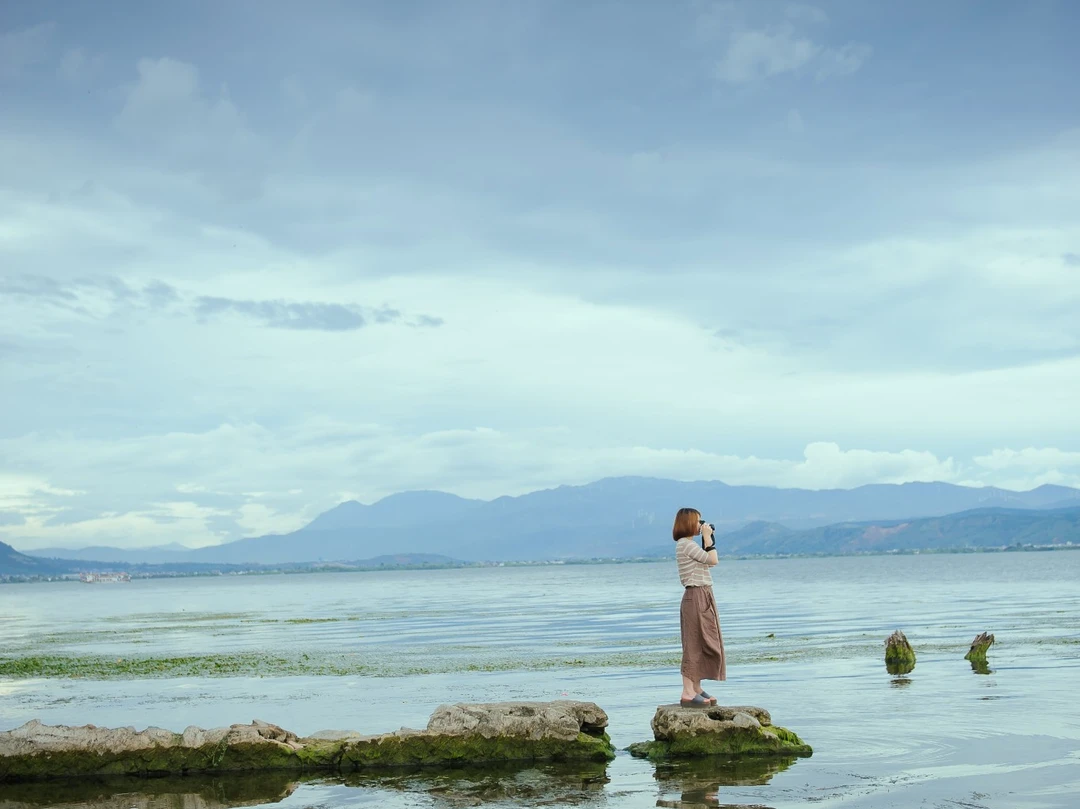
The monastery had been rebuilt, and honestly, it was a letdown. The nearby Lamuyangcuo Lake (拉姆央措湖) was better for panoramic shots. We walked around the lake, killing time. Originally, we'd planned to visit Potatso National Park (普达措国家公园), but a friend said the scenery wasn't great this season, so we changed course to the Napahai Yila Grassland (纳帕海伊拉草原).
Napahai and Yila Grassland are the same place—when there's enough rain, the wetlands form a lake. But the water and grass didn't live up to expectations. The entire Shangri-La leg fell short. Maybe autumn would be better, but I don't think I'll come back.
On the way back, my husband and kid played and walked, while I clicked away with my camera. The compositions weren't great—too much ground in the frame—but the joy of that moment was worth more than any perfect photo.
Day Six: Back to Dali, Embracing Erhai Lake
The drive from Shangri-La back to Dali was much faster going downhill. Our kid and I dozed off in the car, waking up only when we hit the Dali-Lijiang Expressway.
At 2 PM, we checked into the Taoyuan No.1 Hotel (桃源1号酒店) near Xizhou Pier. After a hearty lunch, we crashed in the room. Waking up at 5 PM, we had afternoon tea at the hotel and then strolled along the West Erhai Lakeside Road (环海西路). Erhai Lake looked especially gentle under the overcast sky. Our kid ran ahead, my husband chased after him, and I brought up the rear with my camera. In that moment, all fatigue melted away.
Day Seven: Misty Erhai, Slow Time
Waking up to birdsong and insect chirps—there's nothing more peaceful. The hotel's buffet breakfast hit the spot. Afterward, we set out to circle Erhai Lake.

With the drizzle, we didn't want to go far. We visited the free Sea Tongue Park (海舌公园), wandering for two hours. Then, along the lakeside road, we arrived at our next stop: the Blue House Inn (蓝舍客栈). Dali's guesthouses are all stunning—Taoyuan No.1 and Blue House both have prime locations in town. The environment, views, service, and design were all top-notch.
We had lunch at Blue House's private kitchen. The food was excellent. In the afternoon, we'd planned to visit Dali University, but on the way, we got sidetracked by Dali Old Town. It rained all day, and the town looked especially atmospheric in the downpour. I bought a lovely umbrella as a souvenir to take back to Xi'an.
At dusk, the rain stopped. We stood on the inn's terrace, watching Erhai Lake gradually darken. The lake at night was as quiet as a painting.
Day Eight: Saying Goodbye to Yunnan, Looking Forward to Reunion
At 8:30 in the morning, our kid was still curled up in bed. Standing by the roadside in the overcast morning, gazing at Erhai Lake, I felt a tug at my heart.
The drive from Dali to Kunming took five hours. We arrived at Yunnan University (云南大学) at 3 PM, quickly touring the old campus. The lotus flowers in Cuihu Park (翠湖公园) were in full bloom. Kunming was hotter than Dali. We made it to the airport just before evening.
At the gate, our kid had already fallen asleep. I scrolled through the photos on my phone, reliving the past eight days: the clouds over Cangshan, the cat in Shaxi, the roar of Tiger Leaping Gorge, the strolls along Erhai Lake. Every frame held a beautiful memory.
Practical Recommendations
Food Highlights
Dali: - Grandma's Firewood Chicken (奶奶的柴鸡): Near Dali Old Town, along the national highway. Order 40 minutes ahead. Slow-cooked free-range chicken over firewood. Delicious. Go for mild spice. - Gantong Restaurant (感通饭庄): Near the Gantong Cable Car exit. Unmarked sign by the highway. Good food, fresh veggies. - Daxi Restaurant (大禧食府): Xizhou Pier. The iron-plate beef is very tender. Generally on the salty side—ask for less salt. - Blue House Private Kitchen (蓝舍私房菜): Fresh ingredients, a bit pricey, but genuinely tasty.
Lijiang: - Gudao Huifeng Restaurant (古道惠风饭庄): At the corner near Shaxi Ancient Town's entrance. The owner cooks personally. Excellent. - Heshu Restaurant (和叔食府): Lijiang Old Town. The pickled intestine/duck intestine is great. Ask for less oil. - Dingdingdangdang (丁丁当当): Only sells yogurt and bread. The yogurt is thick; the bread comes in coffee and chocolate flavors.
Shangri-La: - Yipin Yang Restaurant (一品羊餐厅): Five-star reviews on Dianping. Lamb is tender, no gamey taste. Recommended: skin-on bone-in lamb, fresh wild greens, and highland barley cakes (青稞饼).
Accommodation
Dali: - Artist Garden Villa (大理艺术家园别墅): At the foot of Cangshan, next to Dali University. Three-story house with views of Erhai and Cangshan. Requires a friend's referral; not bookable online. - Taoyuan No.1 Seaview Garden Resort Hotel (桃源1号海景花园度假酒店): Near Taoyuan Pier. 900+ RMB/night, includes breakfast and afternoon tea. Stunning environment. - Erhai Blue House Seaview Inn (洱海蓝舍海景客栈): Along the West Erhai Lakeside Road. Thai-style sea-view suite, 900+ RMB/night. Their private kitchen is recommended.
Lijiang: - Baisuifang Boutique Chain Inn (百岁坊精品连锁客栈): In the center of Lijiang Old Town. Quiet despite the location. Attentive service. Includes breakfast.
Shangri-La: - Hanting Express Hotel (汉庭快捷酒店): Shangri-La is small. If you're out exploring during the day, there's no need for anything too fancy.
Final Thoughts
Eight days—not too long, not too short. Some places amazed us; others disappointed. But that's the beauty of travel: you never know what awaits around the next corner.
Dali's slow rhythm, Shaxi's tranquility, Tiger Leaping Gorge's raw power, Shangri-La's letdowns—every experience was unique. Next time, I'll find a small ancient town, sip a cup of Pu'er tea slowly, stay overnight, and do nothing but let my mind wander.
Looking forward to the next journey—perhaps with you.
You should also read:
Escaping Nanning, Falling Under Lijiang's Spell: Our Four-Person, Ten-Day Yunnan Dream
Escaping Nanning, Falling Under Lijiang's Spell: Our Four-Person, Ten-Day Yunnan Dream Before We Set Off: No Pain, No Obsession Have you ever had that impulse—suddenly tired of the office fluorescent lights, the crush of the subway, the endless parade of identical takeout boxes, and just…
Continue reading...
Solo in Yunnan: A Wanderer’s Guide to the Land of Eternal Spring
Solo in Yunnan: A Wanderer’s Guide to the Land of Eternal Spring There’s something magical about traveling alone. No compromises, no schedules to keep, no one to please but yourself. I’ve been on the road for nearly three months now, and not once have I…
Continue reading...
Tengchong·Heshun: Finding Life as It Should Be in a Border Town Where Time Stands Still
Tengchong·Heshun: Finding Life as It Should Be in a Border Town Where Time Stands Still The long journey of over twenty days was over. On my first day back at the office, I was still in a daze. My fingers couldn't find the keys on…
Continue reading...