Time Paints a Tapestry of Color: The Hidden Wonders of Southern Yunnan — A Journey Through a Kingdom of Flora and Fauna, Terraced Fields, and Ancient Cities
Time Paints a Tapestry of Color: The Hidden Wonders of Southern Yunnan — A Journey Through a Kingdom of Flora and Fauna, Terraced Fields, and Ancient Cities
While the north still lingers in the lingering chill of early spring, the summer of southern Yunnan has already unfolded with blazing warmth. The magic of Yunnan lies in its ability to host "four seasons on one mountain and different weather ten miles away" — from the snow-covered world of Shangri-La to the tropical rainforests of Xishuangbanna, you can traverse the cycle of seasons in just a few days. This time, we set out from Tianjin, heading south through Xishuangbanna, the Hani Rice Terraces, Jianshui Ancient City, and finally returning via Yuxi and Kunming, measuring this land blessed by time with our own footsteps.
Man Ting Park: The Imperial Garden That Crosses a Millennium
Flying from Tianjin to Xishuangbanna, choosing a connecting flight can save a considerable amount of money — spending an extra two or three hours can save 500 yuan (about $70). Why not? As soon as we landed at Gasa Airport, the warm tropical breeze rushed to greet us, instantly leaving the northern cold behind.
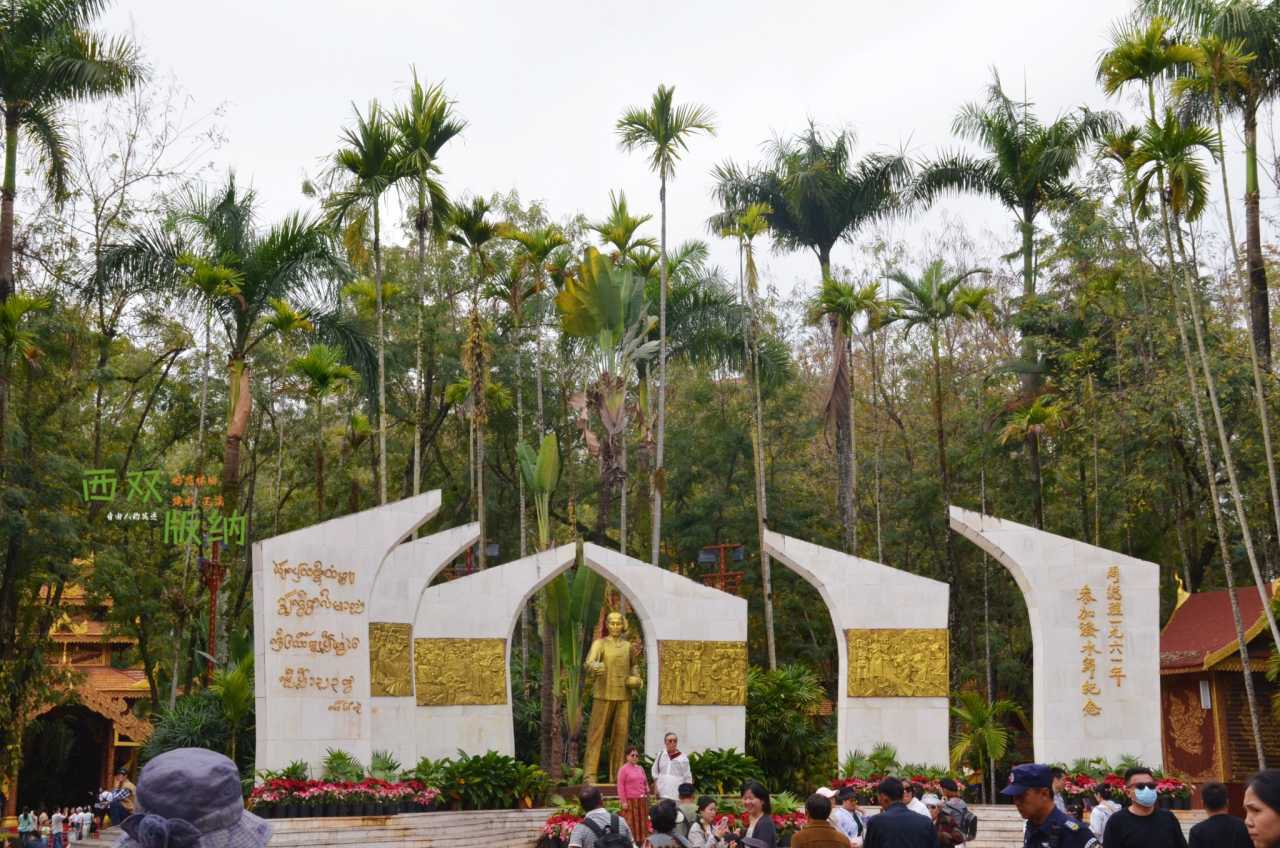
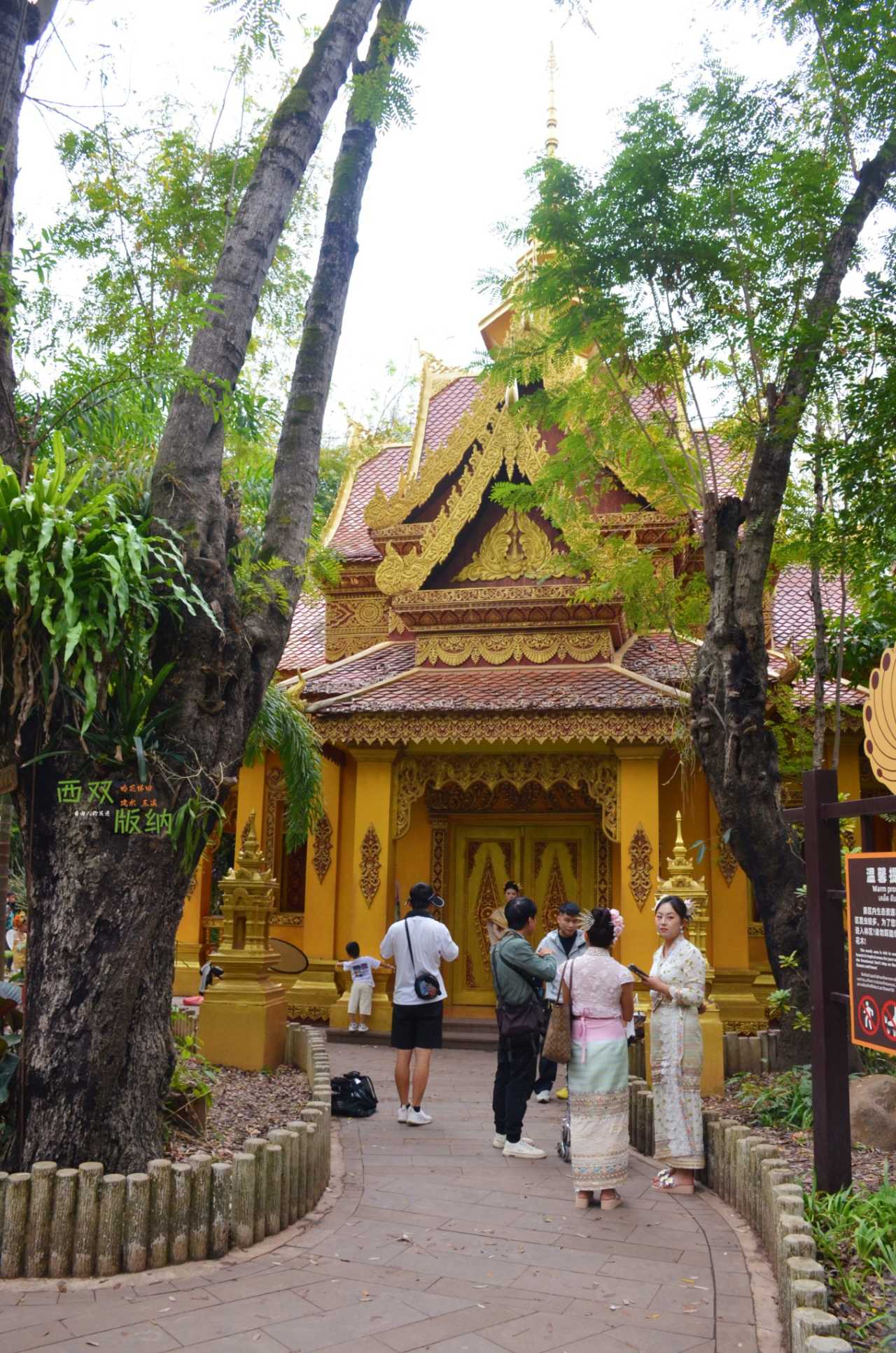
Man Ting Park, the royal garden of the Dai kings with a history of over 1,300 years, is the oldest park in Xishuangbanna. The entrance fee is 40 yuan (about $5.50), and it connects seamlessly with the General Buddhist Temple, showcasing three major themes: "Dai Royal Court Culture," "Buddhist Culture," and "Dai Folk Culture." Stepping through the gate, the first thing to catch the eye is a bronze statue of Premier Zhou Enlai — dressed in Dai attire, holding a water bowl in his left hand and an olive branch in his right, commemorating his participation in the Water Splashing Festival in 1961. On the white marble screens flanking the statue, copper reliefs recreate the grand scene of people from various ethnic groups welcoming the Premier. To the left, two bodhi trees planted by a Thai princess symbolize the enduring friendship between China and Thailand.
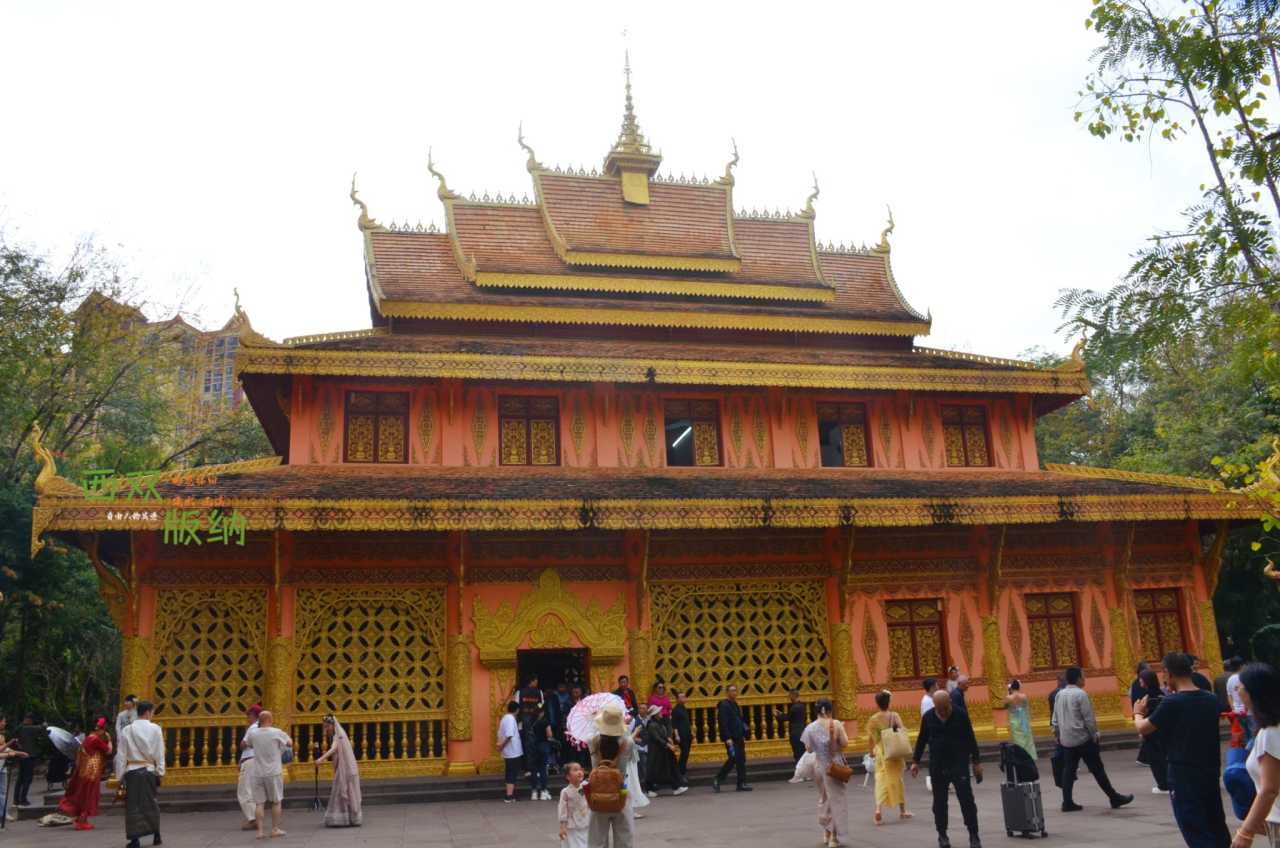
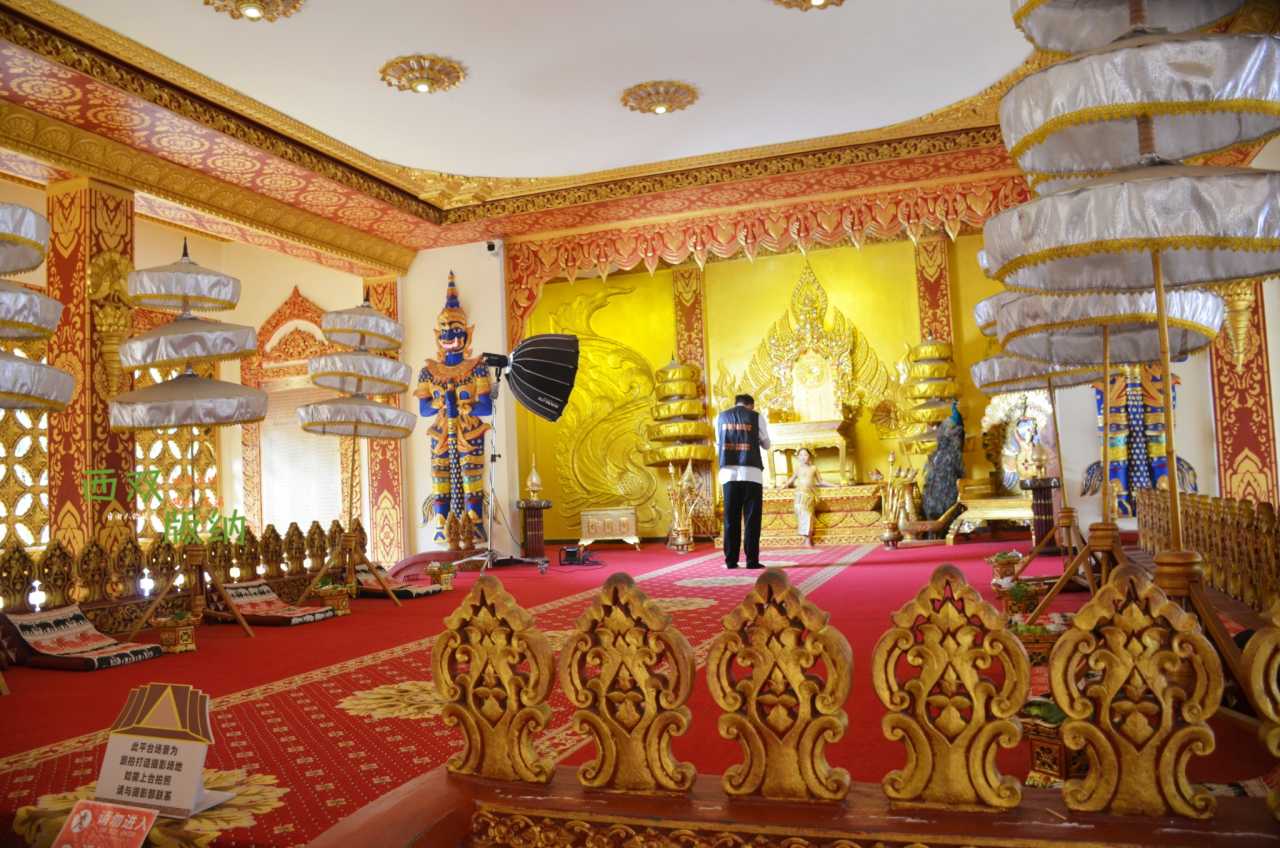
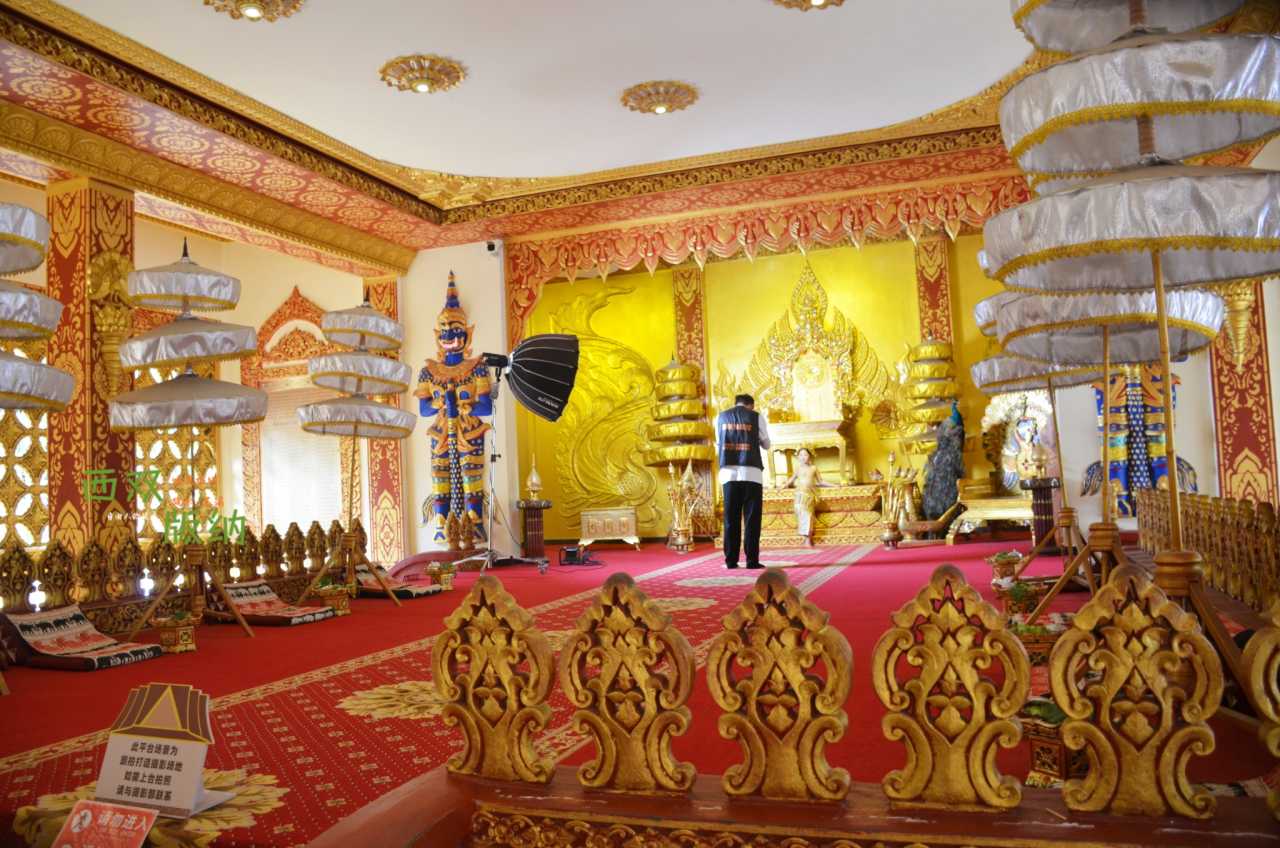
Venturing further in, you arrive at the Dai King's Palace. Built over 800 years ago, this structure is dominated by yellow and red hues, with a golden roof as spectacular as a peacock spreading its tail. The auspicious animals adorning the eaves — phoenixes, peacocks, and lions — tell stories of royal dignity and prosperity. In front of the palace lies a forest of ironwood trees, hiding the ecological wisdom of the Dai people — they only cut branches at a height of one meter from the ground, leaving the stumps intact, allowing the trees to regenerate endlessly and sustainably. This tradition of not over-harvesting is a lesson still worth pondering today.
Passing from Man Ting Park to the General Buddhist Temple, a 7.9-meter-tall standing Buddha commands awe. The main hall, ordination hall, stupa, drum tower, and bell tower all exude a strong atmosphere of Theravada Buddhist culture. The elephant show at the Royal Elephant Garden, though somewhat controversial, still brings summer cheer to visitors with the animals' cleverness and charm — when an elephant's trunk scoops water from a bucket and sprays it at the audience, the crowd erupts in cheers, and drenched clothes become the most joyful souvenir.
In the evening, we headed to Gaozhuang Xishuangjing. This cultural tourism district, known as "Nine Pagodas and Twelve Villages," sits close to the Lancang River. The resplendent Jinglan Grand Buddha Temple glittered in the sunset. For dinner, we chose a Dai-style restaurant to taste authentic local cuisine. As night fell, the night market came alive with local specialties and Dai clothing on display. After some searching, we finally found a perfect spot on a 28th-floor balcony to overlook the nightscape of Gaozhuang — the bridge over the Lancang River was dazzling with lights, cruise ships moved like a stream, and the Starry Night Market sparkled like countless stars, a breathtaking sight.
Tropical Botanical Garden: Entering a Living Kingdom of Plants
On the second day, we visited the Xishuangbanna Tropical Botanical Garden of the Chinese Academy of Sciences. This 5A-rated scenic spot is located in Menglun Town, Mengla County. A one-hour bus ride from the city center costs 22 yuan (about $3), and the entrance fee is 80 yuan (about $11). The garden is divided into three areas: the West Zone, the Valley Rainforest, and the Green Stone Forest. The West Zone can be explored on foot, while the East Zone requires a scenic shuttle (50 yuan per zone, about $7).
Entering through the West Gate, we first arrived at the Hundred Flowers Garden. Over 600 species of plants competed for attention here, with not only flowers and trees but also water features and thoughtful human design complementing each other perfectly. Next came the Hundred Fragrances Garden, which has introduced over 100 important domestic and international spice plants — ylang-ylang, cloves, sandalwood, agarwood, nutmeg… as well as Dai favorites like lemongrass and刺芫荽 (spiny coriander). This garden is arguably China's largest living gene bank of spice plants.
The Southern Medicine Garden collects nearly 500 medicinal plant species. Dragon's blood tree, betel nut, cardamom, amomum, cinnamon, malva nut, sandalwood, strychnos, and rauwolfia — each represents a precious treasure of the Chinese people. The Ethnic Medicine Zone showcases traditional medicinal plants of the Dai, Hani, and Jinuo peoples, truly opening one's eyes.
In the Cycad Garden, these "living plant fossils" from the age of dinosaurs grow robustly. Here, "a cycad blooming" is no longer a rare sight — male plants flower every year, females every two years, and they can even bear fruit. The Banyan Garden displays tropical wonders such as "a single tree forming a forest," strangulation, and "a tree enveloping a pagoda." In the Arboretum, with over a thousand species, flame flowers, ylang-ylang, sausage trees, oriental bittersweet, gourd trees, and rain trees create a dizzying array of sights.
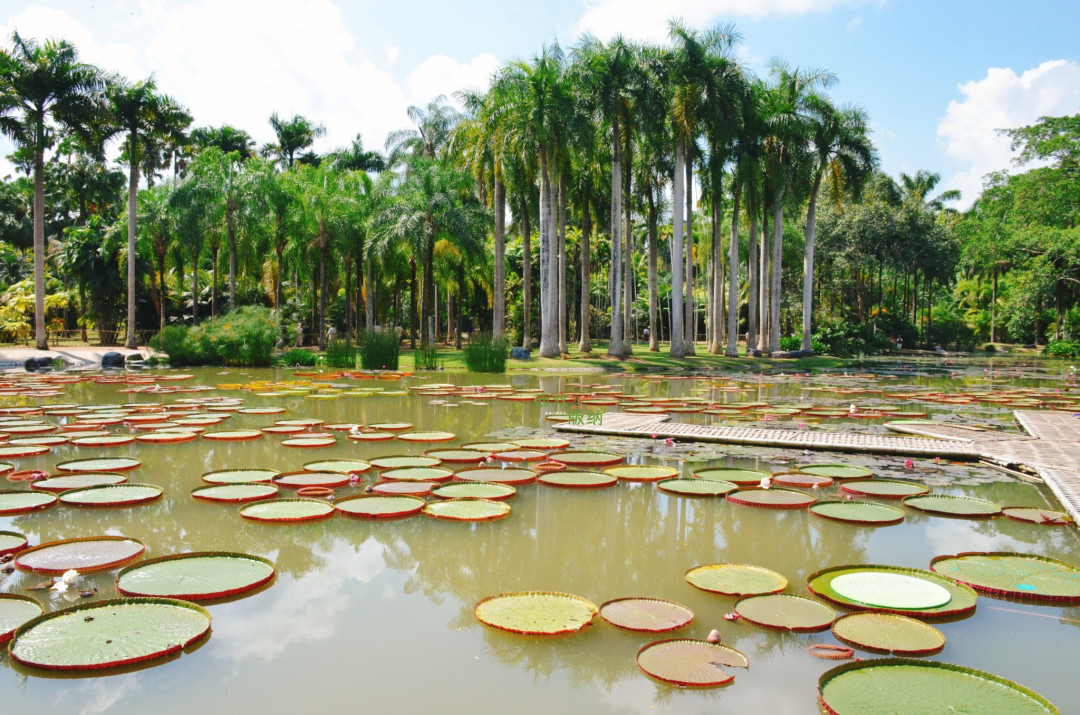
The Rare Flowers and Exotic Trees Garden, though small, draws the most visitors. The interactive mimosa plants delight both children and adults. The Dipterocarp Garden, Energy Plant Garden, Palm Garden, and Aquatic Plant Garden each offer unique scenery. Most amusingly, children can sit on the leaves of the giant Amazon water lilies (Victoria amazonica) for photos, which has become a signature activity of the park.
The East Zone requires the scenic shuttle. The primary tropical rainforest and Green Stone Forest areas are full of adventure. The "strangulation" phenomenon of plants, massive buttress roots, and ancient towering trees… an hour-long hike feels like traveling back to primeval times. Although there are fewer photo opportunities than in the West Zone, the immersive experience is intense.
A full day only allowed for a cursory glance. But seeing so many novel plants, economic crops, and medicinal herbs firsthand made me reflect: plants, as friends of humanity, deserve our careful development, protection, preservation, and reuse.
Daluo Port: Dai Culture on the China-Myanmar Border
On the third day, we joined a one-day tour to the China-Myanmar border, visiting the Mengjinglai Scenic Area in Menghai County, Daluo Town, and the "Single Tree Forming a Forest." Our guide was professional and enthusiastic, with no forced shopping — we only bought tickets for the single-tree forest.
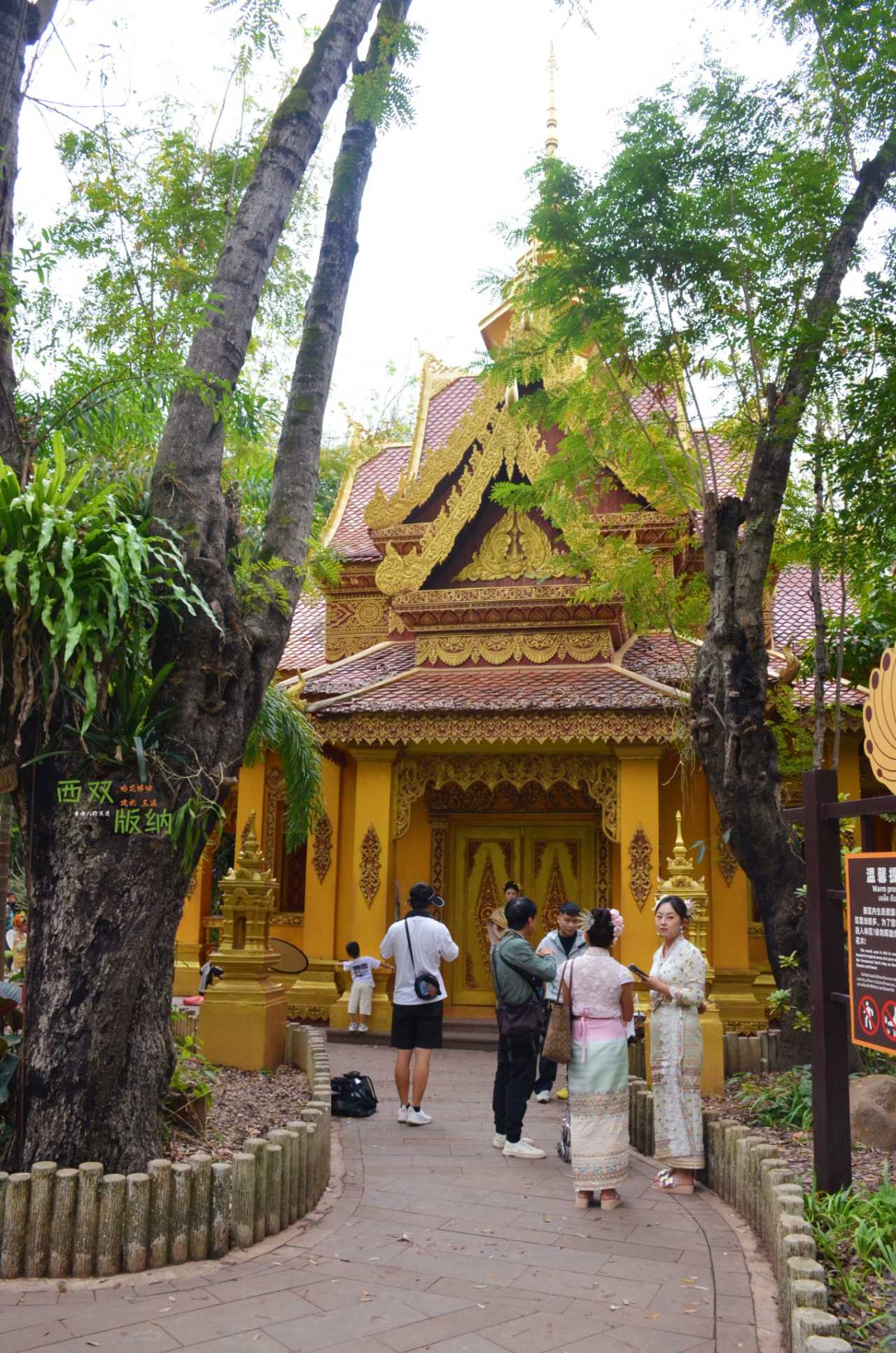
"Mengjinglai" means "Dragon's Shadow" and is a typical traditional Dai village, adjacent to Myanmar, earning it the title "First Dai Village on the China-Myanmar Border." At the village gate, villagers played ethnic instruments to welcome visitors. The village was clean and tidy, with a pagoda forest as its landmark — the largest pagoda forest in Xishuangbanna, with 58 existing pagodas, all resplendent in gold. An ancient banyan tree had grown into a single-tree forest, over 900 years old, its canopy blocking out the sun, a truly magnificent sight.
At the Dai Traditional Culture Exhibition Hall, we saw ancient sugar pressing, slow-wheel pottery, Dai brocade weaving, Dai paper making, traditional brewing, blacksmithing, and Dai dance — these living folk crafts made us feel the vitality of Dai culture.

We took an eco-friendly vehicle to the border. The clear Daluo River forms a natural boundary, with Myanmar on the opposite bank. After taking photos with the No. 229 boundary marker, we strolled along the border and visited an exhibition hall of minority medicine culture. Returning to the village, while other tourists had lunch, we explored freely — admiring the "stilted" Dai houses, water lilies, sacred trees, and sacred springs. Outside the village were fields, fish ponds, and woodlands, a pastoral idyll. We bought some local fruits at the market at fair prices.
From Mengjinglai to Daluo Port is only 4 kilometers. The national gate is an important checkpoint on the China-Myanmar border, with vehicles passing through regularly. Not far away, the jade and gemstone market was filled with Myanmar jade, as well as "gambling stone" stalls, adding an air of mystery.
Finally, we arrived at the "Single Tree Forming a Forest" scenic area. This thousand-year-old banyan tree had aerial roots that grew downward into the soil, forming new trunks, intertwining with the branches to create a "forest" — only a banyan can work such magic. The area also featured ethnic performances and visitor participation activities. The No. 219 boundary marker and the site of the Chinese Expeditionary Force's anti-Japanese resistance were also here, adding a layer of historical weight.
Wild Elephant Valley: An Encounter with Asian Elephants
On the fourth day, we went to Wild Elephant Valley. The entrance fee was 60 yuan (about $8.50). Although it's only a 4A-rated scenic area, the chance to see wild elephants made it well worth the price. Around 300-500 Asian elephants live here in about 50 groups, along with protected animals like wild oxen, monitor lizards, pythons, green peacocks, and hornbills, with a forest coverage rate of 96%.
Entering through the South Gate, we first watched a folk song and dance performance at the Rainforest Little Theater — Yi boys and girls dancing, a Dai boy playing the cucurbit flute, and Wa girls performing their hair-swinging dance, all full of energy. We passed the Snake and Lizard Garden, Butterfly Garden, Orchid Garden, and Hundred Birds Garden. The most amusing sight was two animals resembling roe deer lying back-to-back, as if they were sulking at each other, making us laugh.
We headed straight for the elevated boardwalk, the best spot for seeing wild elephants. Along the way, we saw a slow loris clinging to a tree trunk, sleeping in a charmingly clumsy pose. But some people shook the tree to take photos, causing the loris to fall — a heartbreaking sight of poor behavior and pitiable animals.
The Asian Elephant Museum, though small, offered comprehensive educational content, covering everything from the origin, evolution, physiology, and ecology of Asian elephants to rescue efforts and breeding programs. An interactive scale showed that the weight of an adult human is roughly equivalent to one of an elephant's legs.
Just as we left the museum, we heard a commotion — a wild elephant herd was approaching! Staff quickly closed the iron gate, pulled up warning tape, and asked visitors to step back. A dozen elephants came walking slowly, both old and young, with calves staying close to their mothers. They stopped near the fence, with some even playfully bumping against it, while staff nervously reminded visitors to keep their distance. After waiting half an hour, a sudden whistle sounded, and the elephants vanished in an instant — it's hard to believe such massive animals can run so fast.
From the museum, we took the boardwalk to the Phase 2 elevated elephant-watching walkway, hearing only elephant calls but seeing no trace of them. Returning to the North Gate, we took a shuttle to the South Gate in time for the elephant show. The performance was similar to the one at Man Ting Park, but still enjoyable.
Finally, we explored the Orchid Garden, Hundred Birds Garden, and Butterfly Garden. In the Butterfly Garden, the golden chrysalises were beautiful, and the moment of a butterfly emerging from its cocoon was indescribable.
With this, our Xishuangbanna itinerary came to an end. The region's hot climate, dense vegetation, and abundant wildlife truly earn it the title "Kingdom of Plants and Animals."
Hani Rice Terraces: Earth Sculptures on the Ailao Mountains
There is no direct bus from Jinghong to Yuanyang, so we hired a seven-seat minivan, setting off early in the morning and arriving in the afternoon. Passing through Mojiang, we had a cheap and delicious lunch at a community canteen. Mojiang is famous for "producing" twins and holds a twins festival every year.
From Yuanyang to the terraces, we needed to share a ride. The straight-line distance was short, but the winding mountain roads took over an hour. We arrived around 4 PM, just in time to catch the sunset. Our homestay had an excellent location — we could see the terraces right from the window.
We hired a car to go to Bada for sunset. Although it was the off-season, there were still many visitors. We found a good spot by the roadside and waited. As the sun set, golden rays spilled over the layered terraces, creating a breathtaking scene. But our companions who entered the scenic area said there were too many people, and all they could see were the backs of heads — sometimes the most beautiful scenery is right by the roadside.
The next morning, the homestay owner took us to see the sunrise. We set out under the stars, passing through the Duoyishu Scenic Area, then taking a few more turns before a vast expanse of terraced fields came into view. As the eastern sky blushed, golden morning light poured onto the water-filled terraces, reflecting brilliant patterns. From gold to emerald green to deep blue, every moment revealed a different beauty. The sea of clouds, sunlight, and terraced water surfaces combined in a breathtaking spectacle.
After breakfast, we hired a car to go to the Aichun Blue Terraces. The entrance fee was 5 yuan (about 70 cents), and we could go down into the fields to take photos. The water-filled terraces mirrored the blue sky and white clouds, appearing a lake-blue color, stunningly beautiful. It was hard to understand why some people argued over a 5-yuan ticket.
The driver recommended Azheke Village, and it turned out to be well worth the visit. The village had about 60 households, all Hani. The unique "mushroom houses" were built with thatch, wood, and bamboo, staying warm in winter and cool in summer, rainproof and sun-proof, naturally regulating the indoor environment like air conditioning. The terraced fields were arranged in a pleasing disorder, complementing the distant mountains, trees, and streams. The water came from the Ailao Mountains, and the irrigation techniques were remarkably advanced.
After leaving Azheke, we ate local-style rice noodles, simple and authentic, without the taste of chemical additives. On the way to Yuanyang, the driver showed us another set of terraces, but by then we were suffering from aesthetic fatigue. If we had time to stay here for a few days and live like locals, we might have gained even more.
Jianshui Ancient City: A Millennium-Old City Frozen in Time
There is a direct bus from Yuanyang to Jianshui, taking about an hour and a half. We stayed inside the ancient city, where the stone streets were flat and easy to walk on. Jianshui Ancient City began its construction during the Nanzhao period, with a history of over 1,200 years.
After checking in, we enjoyed a Jianshui specialty — steam pot chicken (汽锅鸡, qiguo ji), made with Jianshui's special purple clay steam pot, pure and delicious.
After dinner, we strolled through the ancient city. The core area preserves over 40 ancient buildings, with historical relics well-maintained. The Zhu Family Garden faces south, with the street-side shops on the left serving as the "Zhu Hengtai" general trading company, while the interior is a classic southern private garden. Near the West Gate, we found a purple clay pottery workshop, showcasing the exquisite craftsmanship of Jianshui's purple clay art.
Conclusion: Southern Yunnan — A Place to Savor Slowly
From the tropical rainforests of Xishuangbanna to the magnificent vistas of the Hani Rice Terraces, and then to the thousand-year-old time capsule of Jianshui Ancient City, every inch of southern Yunnan exudes a unique charm.
Practical Tips: - Transportation: Choose connecting flights from Tianjin to Xishuangbanna to save money; use hired cars or shared rides between scenic areas for flexibility and convenience. - Accommodation: Stay at homestays near the terraces for easy access to sunrise and sunset views; stay inside Jianshui Ancient City for walking tours. - Tickets: Man Ting Park 40 yuan ($5.50), Tropical Botanical Garden 80 yuan ($11), Wild Elephant Valley 60 yuan ($8.50), some Hani Terrace areas require separate tickets. - Best Season: November to April is the dry season, ideal for travel; the water-filling period for terraces (December to March) offers the most beautiful scenery. - Things to Note: Xishuangbanna is hot — protect yourself from sun and mosquitoes; respect local ethnic customs; protect the ecological environment; do not disturb wildlife.
Southern Yunnan is a place to be savored slowly. Every turn may bring an unexpected surprise. If you also long for such a journey, why not pack your bags and set off on a spontaneous trip to southern Yunnan?
You should also read:
Tengchong·Heshun: Finding Life as It Should Be in a Border Town Where Time Stands Still
Tengchong·Heshun: Finding Life as It Should Be in a Border Town Where Time Stands Still The long journey of over twenty days was over. On my first day back at the office, I was still in a daze. My fingers couldn't find the keys on…
Continue reading...
God’s Abandoned Palette: A Self-Drive Journey Through Yunnan’s Dongchuan Red Land
God’s Abandoned Palette: A Self-Drive Journey Through Yunnan’s Dongchuan Red Land Travel has never been about reaching some distant geographic coordinate. It’s about encountering, along the way, the version of yourself buried beneath the rubble of daily routine. During this May Day holiday, I finally…
Continue reading...
Cloud Travelogue · Dali of Wind, Flowers, Snow, and Moon: A Three-Day, Two-Night Journey of a Free Spirit
Cloud Travelogue · Dali of Wind, Flowers, Snow, and Moon: A Three-Day, Two-Night Journey of a Free Spirit I am a cultured female foodie with a touch of rogue charm. I slung on my backpack, took my lover's hand, and set off on a spontaneous…
Continue reading...