Tipsy with Flower Seas and Terraced Fields | Encountering the Earth's Most Beautiful Colors Through the Millennia of Hani Culture
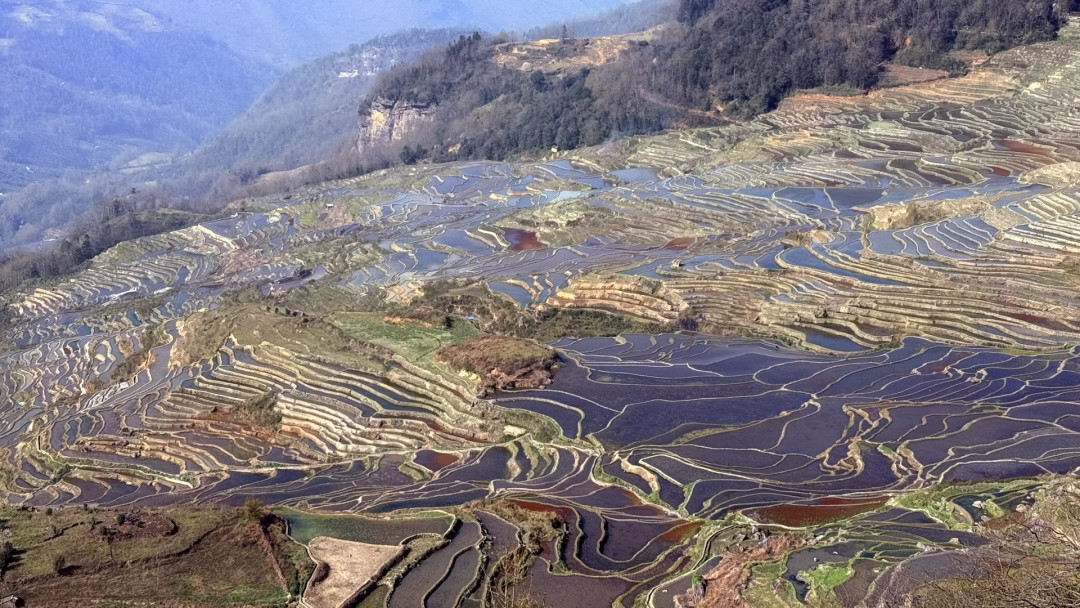
Tipsy with Flower Seas and Terraced Fields | Encountering the Earth's Most Beautiful Colors Through the Millennia of Hani Culture
A Long-Overdue Promise
Some places are destined to plant seeds in your heart, waiting for the right season to sprout. Yuanyang's rice terraces and Luoping's flower sea are exactly that kind of place.
In the summer of 2023, standing under the warm sun of Shangri-La, my mind was preoccupied with that eastern Yunnan route so strictly governed by seasons. The rapeseed flowers in Luoping had to wait for spring; the terraced fields in Yuanyang needed the irrigation period—these conditions were like invisible thresholds that kept me at bay for four whole years.
But I knew that one day, I would stand in that colorful palette.
Today, I finally arrived as promised.
I. A Whim of Inspiration: The Call of the Ailao Mountains
Six months earlier, I had returned from the colorful autumn forests of western Sichuan to civilization. While waiting for my flight at the airport, I stumbled upon a video about the Ailao Mountains. The vlogger ventured deep into this primeval forest, known as the "Forbidden Zone of Life," thrusting this mysterious mountain range into the public eye.
When the autumn colors of western Sichuan collided with the legends of the Ailao Mountains in my mind, a thought suddenly became clear: I had to go to the Ailao Mountains.
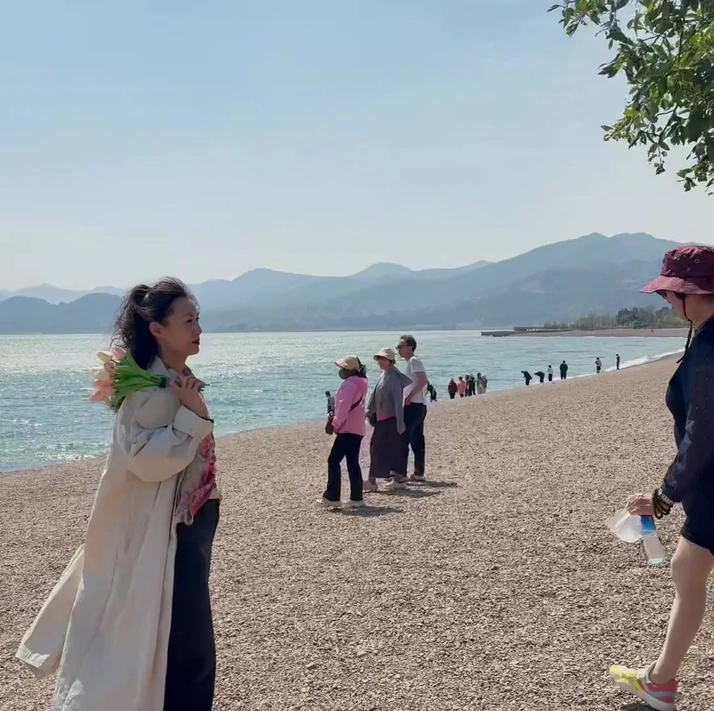
And as it happens, the Yuanyang rice terraces lie at the southeastern foot of the Ailao range.
To be honest, the name "Ailao Mountains" sounds a bit eerie. Online information about them is mostly linked to paranormal phenomena—dense fog, malfunctioning compasses, the 30th parallel north. But it was precisely these mysterious legends that drew me in like a magnetic field. The scenery of the Yuanyang terraces alone was already captivating enough, and with the added mystique of the Ailao Mountains, this trip became an absolute must.
My two veteran travel companions and I hit it off immediately and designed a loop route starting from Kunming: Luoping's rapeseed flower fields, Jianshui Ancient City, Yuanyang's rice terraces, and Fuxian Lake—capturing all the highlights of eastern Yunnan in one go.
II. The Biting Cold of Luoping: A Gamble with the Weather
The Disappearance of the Stationary Front
Before departure, the biggest headache was the weather. The forecasts for these places changed every single day, like a roller coaster—one day it said T-shirts, the next day winter coats, and eventually it became completely chaotic. To be safe, I packed clothes for all four seasons, and it turned out to be a brilliant move.
Three stubborn women set off in grand style. I deliberately chose a window seat, ready to observe the Kunming stationary front from the plane—a unique meteorological phenomenon at the border between Guizhou and Yunnan, where cold air is blocked by the Wumeng Mountains, creating vast cloud seas over Guizhou while Yunnan enjoys clear skies.
But when the crew announced our descent, the "half cloud sea, half clear sky" I had anticipated never appeared. Outside the window was nothing but a uniform blanket of dark clouds, the sky gloomy. The cold air current was too strong; the front had shifted southward.
After landing, I saw ground crew members bundled in thick windbreakers, hunching their necks and squinting against the cold. Damn, I started worrying whether this trip could even go on.
A Night of Bitter Wind and Rain
At the airport, we met up with our driver, Master Xiao Bi. A young guy in a hoodie and faded denim jacket, with a slight resemblance to Lu Xianren (a Chinese model and influencer). I later found out he was born after 2000, but his driving skills were top-notch.
From Changshui Airport to Luoping was a two-hour drive. The sky was overcast and cold, with occasional light drizzle. I pulled out my phone to check the temperature: 8.2 degrees Celsius (about 47°F). One of my travel companions was a severe weather anxiety sufferer, constantly asking, "Do you think tomorrow's weather will be good?"
I, on the other hand, was more of a go-with-the-flow type—having weathered snow and storms in western Sichuan, even if it hailed knives, it wouldn't be a big deal.
We arrived in Luoping county town before dinner. After settling in, we decided to take a stroll. The cold in Luoping was more biting than in Kunming; I added a woolen vest before heading out. The small town was eerily quiet, with a permanent population of only 526,000. The streets weren't wide, but they were clean. A few barbecue stalls were sparsely open along the roadside, their fires cold, with hardly any customers. Pedestrians were few and far between. There was no evening rush hour like in big cities—just a quietness that bordered on desolate.
We passed a small restaurant and ordered a local specialty: "Extravagant Stir-Fried Rapeseed Flowers." While waiting for the food, we gathered around the stove inside, its red flames dancing. The warmth spread from our fingertips through our bodies—this was the most satisfying comfort Luoping had given me.
Before bed, I checked the weather forecast: cloudy tomorrow, 3 to 8 degrees Celsius (37-46°F). Just as I was feeling a bit smug, a thunderclap suddenly exploded outside, followed by wind and rain. Listening to the storm, I silently prayed: Let the tempest come harder! Let all the rain fall tonight!
III. The Golden Flower Sea: An Unexpected Surprise
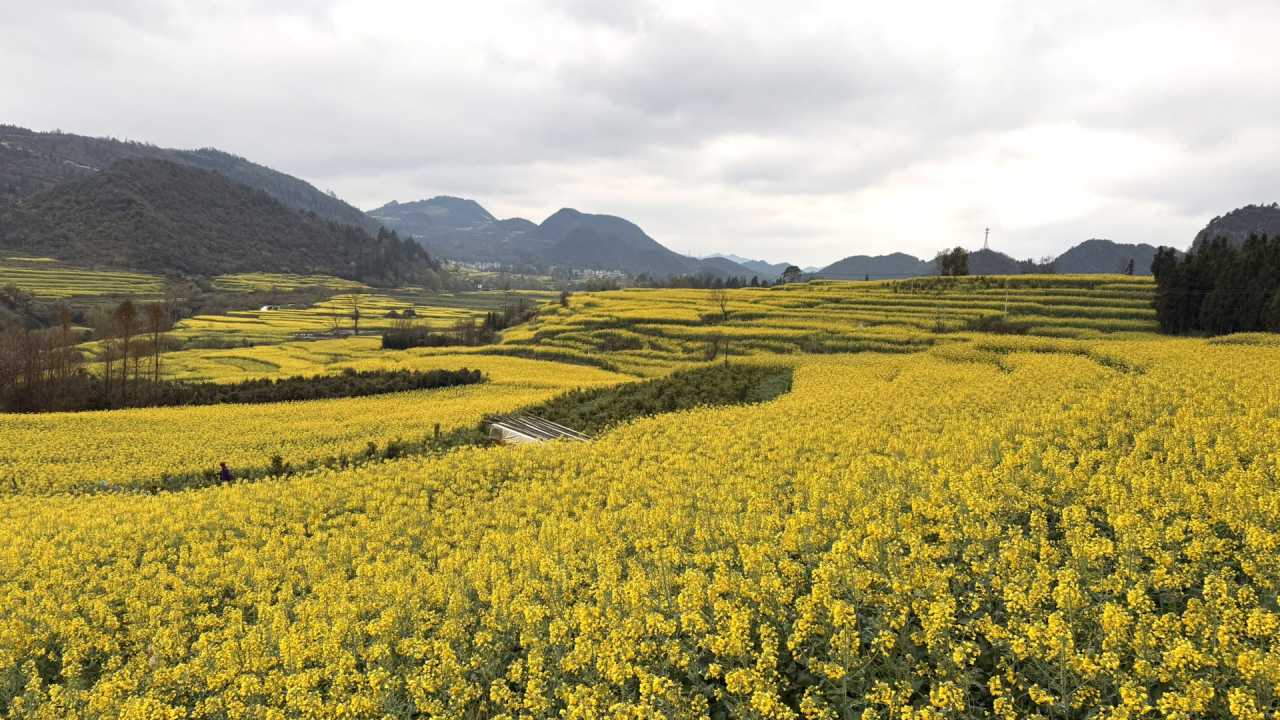
The Wilderness Beauty of the Cloud-Borne Flower Country
When I pulled back the curtains in the morning, everything outside was peaceful, as if the storm had never happened. Grayish-white clouds billowed at the horizon, and sunlight broke through, generously spreading across the land.
Satisfaction often comes from unexpected surprises. All my worries became meaningless—time to pack up and go!
Breakfast, without exception, included stir-fried rapeseed flowers. Even before seeing the vast flower fields, the power of rapeseed had already infiltrated my consciousness. Here, you could not only see rapeseed flowers and eat them—even the wind carried their fresh fragrance.
Master Xiao Bi drove through the streets and alleys. As soon as we left the city, the stunning sight hit us: endless golden yellow as far as the eye could see. The rapeseed flowers in Luoping grew exceptionally lush, each cluster towering over a person's height. Standing among them was like wading through a reed marsh—you couldn't even show your head. Due to the rain and low temperatures, the rapeseed leaves were covered in dewdrops that fell at the slightest touch. Bees busied themselves among the flowers, and beekeepers shook out their honeycombs, filling the air with the sweet fragrance of honey.
The Curved Beauty of Luosi Tian (Snail Shell Terraces)
After half an hour on mountain roads, we arrived at the Luosi Tian viewing platform. An elderly woman at the platform was selling flower crowns for six yuan each. Yunnan never lacks fresh flowers—a quick weave makes a beautiful crown. I bought one as a photo prop and confidently started shooting.
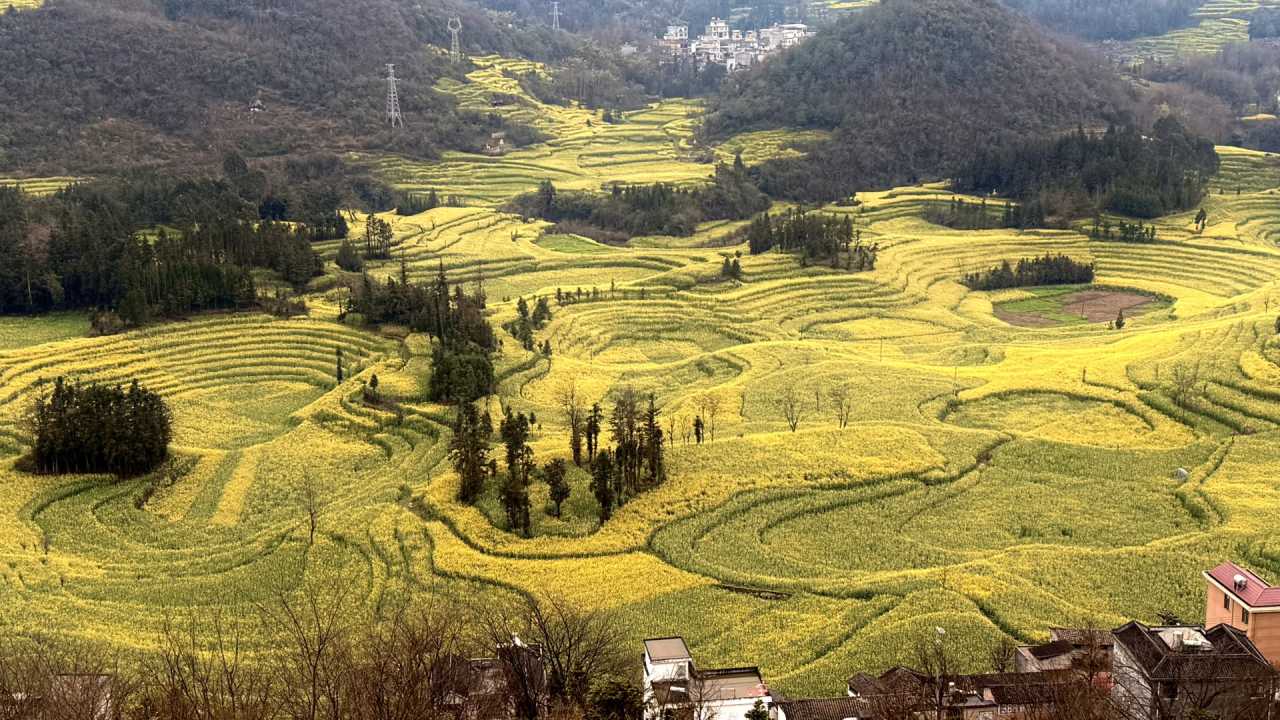
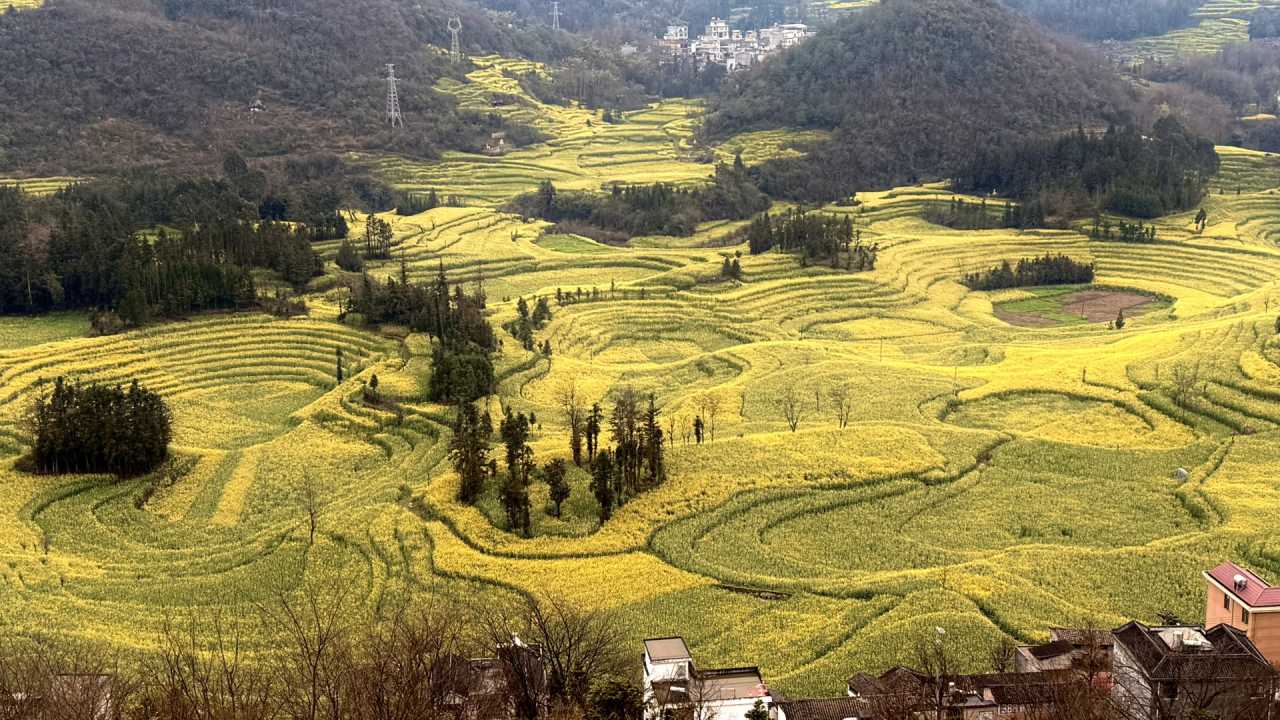
Luosi Tian consists of rapeseed flowers planted on ring-shaped terraces, forming arcs, circle after circle, layered with precision. From above, it looks like the shape of a snail's tail, adding a three-dimensional charm that flat flower fields lack. However, since it's situated in a valley, the flower area is relatively small, visible only from a distance, with no way to enter.
Flat flower fields allow entry but don't show the full picture; Luosi Tian shows the full picture but can't be entered. The two complement each other perfectly. And Jiji Fengcong (Golden Rooster Peak Cluster) is the most perfect combination of both.
Jiulong Waterfall: The Harmony of Mountain, Water, and Fields
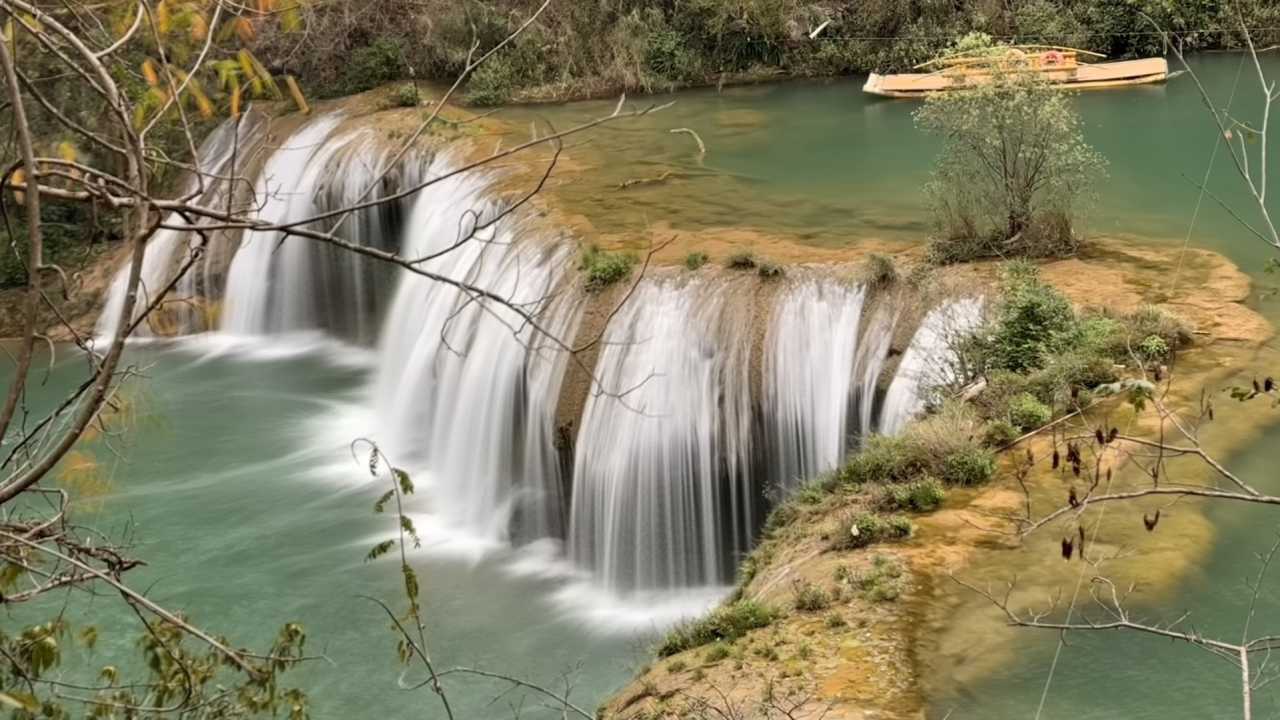
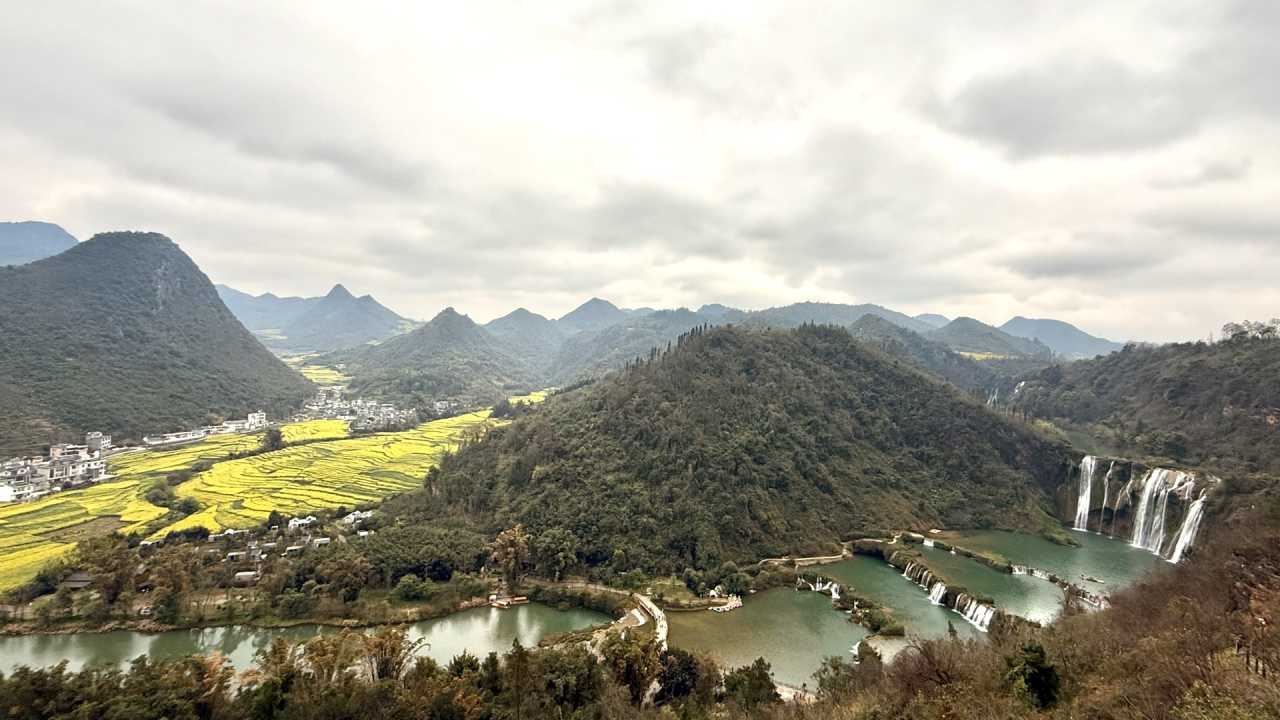
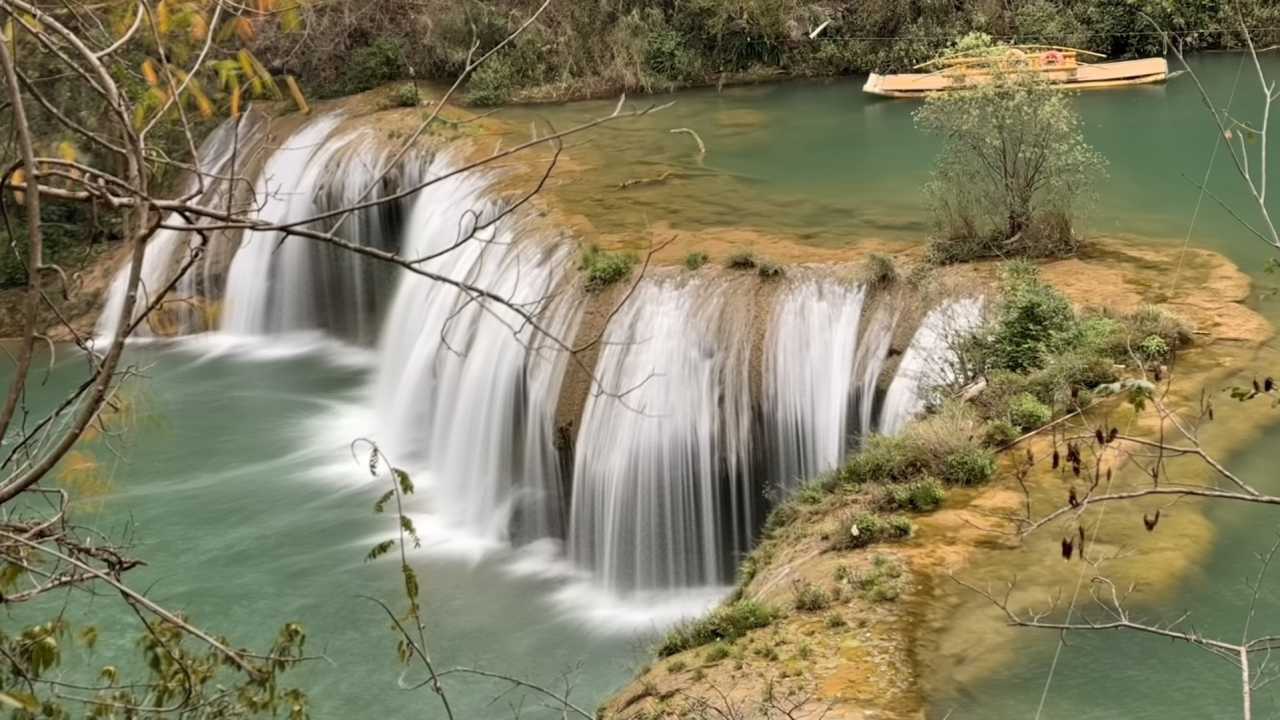
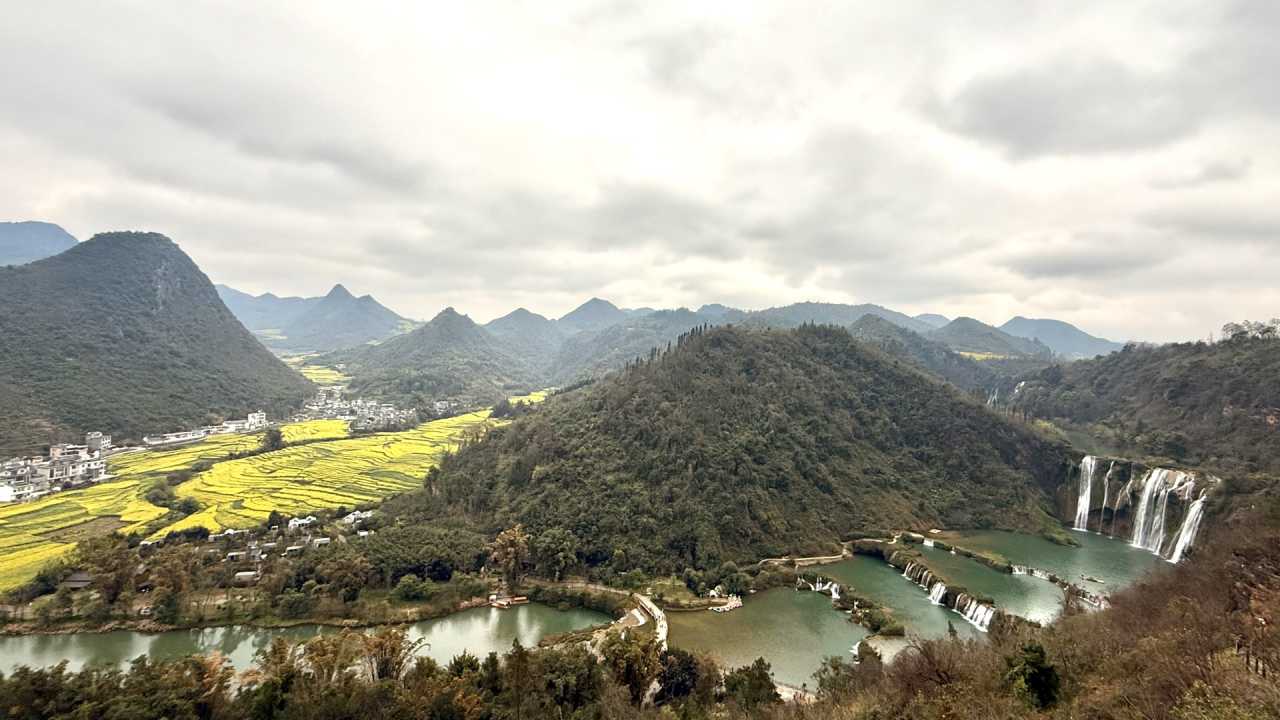
Leaving Luosi Tian, a half-hour drive brought us to Jiulong Waterfall. I hadn't had high expectations, thinking it was just a small waterfall. But this scenic area turned out to have mountains, water, and terraced fields full of rapeseed flowers—all these elements combined in harmonious coexistence, making it truly exceptional.
The entrance fee was 65 yuan. Entering through the west gate and exiting through the east gate meant a downhill route, relatively easy on the legs. As we entered, we first passed a large expanse of rapeseed flower fields. The afternoon light was strong, making the colors especially vibrant. A short walk later, we heard the rumbling sound of water. After a hairpin turn downhill, the largest waterfall of Jiulong appeared before us—112 meters (367 feet) wide and 56 meters (184 feet) tall, with magnificent momentum.
In this season, the green water paired with the yellow rapeseed fields created a perfect yellow-green harmony. It didn't feel like autumn's decline; instead, it radiated vitality.
Under the waterfall, we couldn't resist the temptation of a travel photoshoot and put on Yi ethnic costumes. I chose a red dress and wore a Yi silver headpiece. The ornaments on the hat jingled with every step, creating a rhythmic sound that evoked a sense of song and dance.
Luckily, the sun also faintly peeked out. The light was just right, and there weren't many tourists. We went wild under the waterfall, where the wind blew mist from the cascading water, sprinkling us along with the gentle sunlight. Perhaps because yesterday's rain was so harsh, this sudden happiness felt like time flowing in stillness.
Jiji Fengcong: The Ultimate Beauty
Exiting Jiulong Waterfall, a 20-minute drive brought us to Jiji Fengcong. As soon as we stepped out of the car, we were all stunned by the scene before us—this was exactly the Luoping we had imagined.
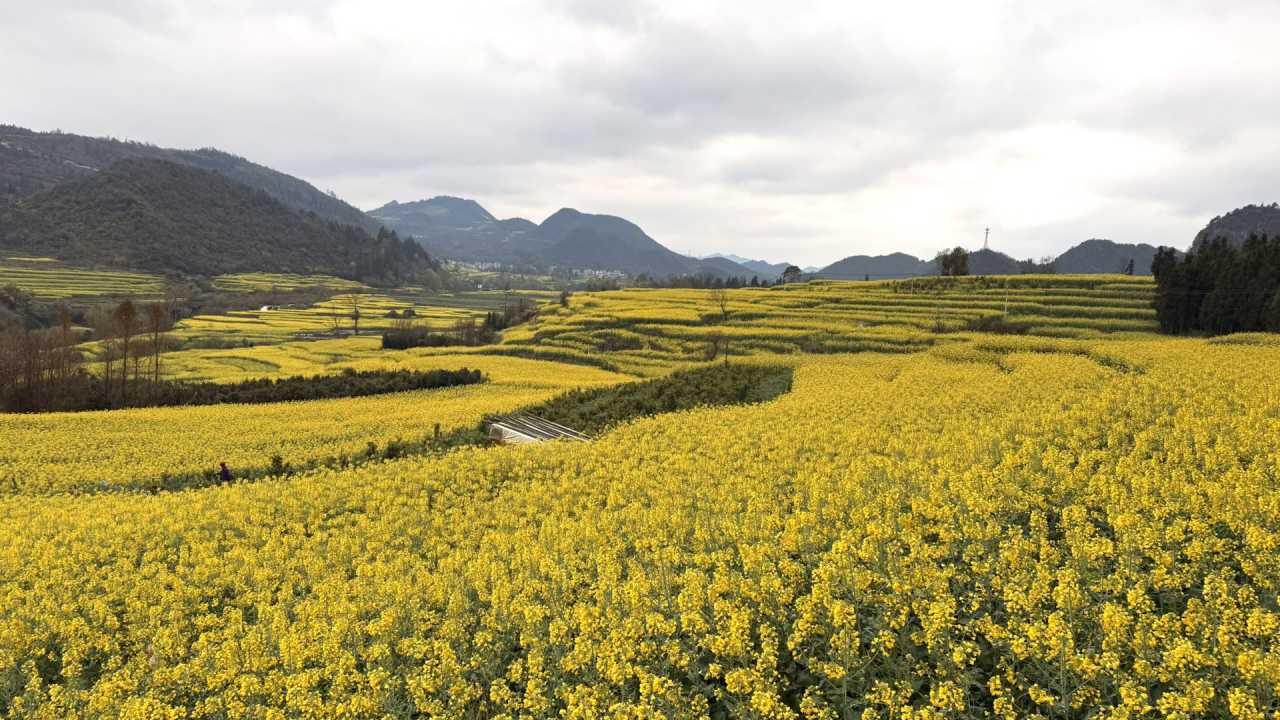
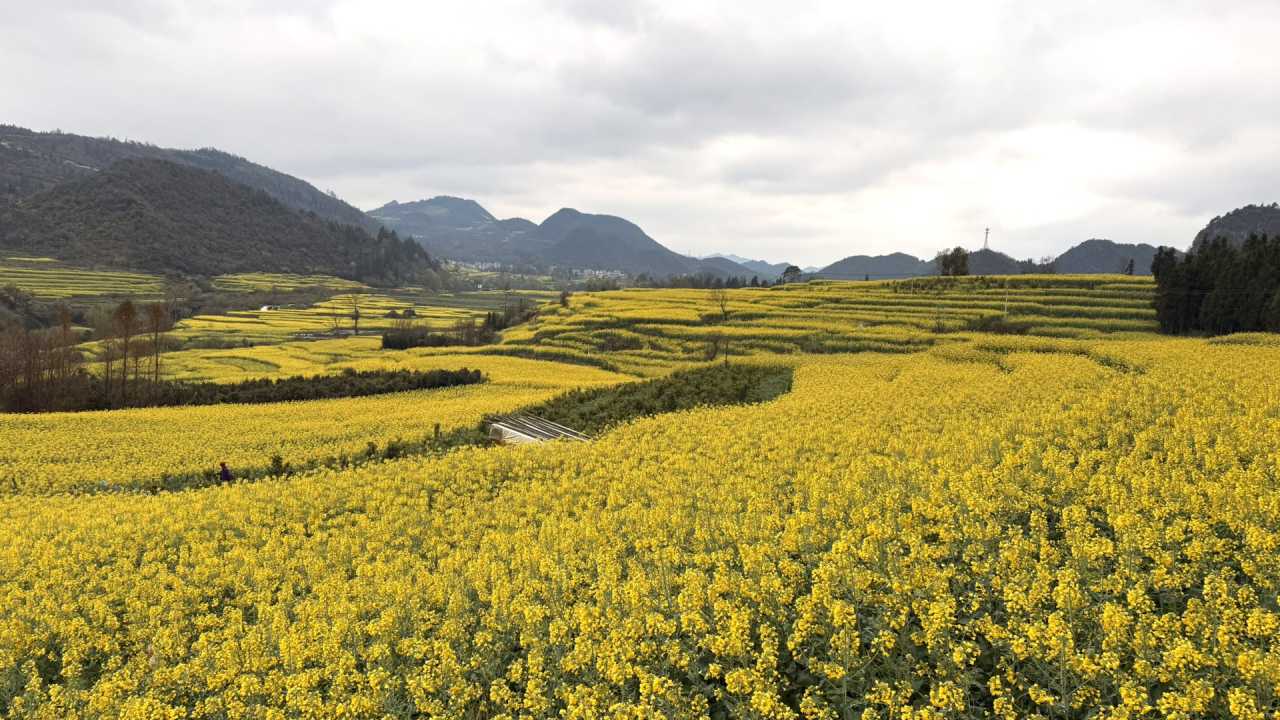
The flower fields were flat and vast, stretching endlessly, like the earth covered in a yellow carpet. The Maillard-colored paths between the fields complemented the yellow, etching this golden landscape into an abstract work of art. Scattered across the boundless lemon-yellow expanse were countless brownish-black conical hills, arranged in perfect disorder among the flower fields. These small hills are typical karst formations—not majestic, but elegant and unobtrusive, with an effortless, lazy charm.
We were dazzled by the scenery. An elderly local man approached us to pitch his oxcart ride into the fields for photos, 20 yuan per person. Thinking it would be a fun experience, we hopped on. But we soon realized the oxcart's route was completely outside the scenic area; we could only see the park's train passing by on the other side of a fence. So we cut our losses, got off, bought tickets to the scenic area (30 yuan each), and then purchased cable car tickets (98 yuan each) to take an electric cart straight to the viewing platform.
As evening breezes blew, waves of flowers rippled. Mist began to rise in the distance, and the fresh fragrance of blossoms filled the air. This viewing platform was the best spot for sunset, but unfortunately, it was cold and foggy, so we didn't get to see the most beautiful sunset.
In the evening, we drove to Mile. A two-hour drive, 150 kilometers (93 miles) away, and Mile was a completely different world—Luoping's freezing cold seemed to have hit a barrier, while Mile was rolling with heat waves.
Luoping Travel Guide:
- Yunshang Huaxiang (Cloud-Borne Flower Country) Ten-Thousand-Acre Rapeseed Fields: Recommended for drone photography for a stunning bird's-eye view. Not a ticketed scenic area; free entry.
- Luosi Tian (Snail Shell Terraces): Viewing is from above, looking down into the valley. The viewing platform is relatively small. Not a ticketed scenic area; free entry.
- Jiulong Waterfall: Recommended to enter from the west gate and exit from the east gate for a downhill route. About two hours for a visit. Ticket price: 65 yuan.
- Jiji Fengcong (Golden Rooster Peak Cluster): The most classic attraction in Luoping. Recommended to spend more time here. Ticket price: 30 yuan. There are trains and electric carts inside the scenic area. On clear days, you can watch the sunset at Dahei Mountain.
IV. The Lively Jianshui: Ancient City's Hustle and Bustle
From Mile to Jianshui
Mile is very livable—not backward, not desolate, not tense, not oppressive. But we only stayed one night in Mile with no intention of lingering. The next morning, we continued to Jianshui, about 150 kilometers (93 miles) away.
We arrived in Jianshui around 10 a.m.—an ancient, leisurely, yet lively little town. As the car entered the old town area, the bluestone pavement was polished smooth and shiny, reflecting dazzling white light under the sun. Pedestrians strolled slowly, not flinching or panicking even as cars drove by.
Jianshui wasn't just lively; it was scorching. The blazing sun overhead was especially fierce; it felt like my hair was melting. I peeled off layers of clothing, opened my umbrella, yet my steps still felt heavy and sluggish. If only this sun could be shared with Luoping.
The Legacy of Lin'an
Walking through Jianshui Ancient City, you can feel the lingering charm of Lin'an—the historical name for Jianshui. Since the Yuan Dynasty, it had been the political, military, economic, cultural, and transportation center of southern Yunnan, thriving for seven centuries.
Jianshui Ancient City once had four city gates. The only surviving one is the East Gate, Chaoyang Tower (also called Yinghui Tower). Because of its striking resemblance to Tiananmen, it's known as "Little Tiananmen." Built in the 22nd year of the Hongwu reign of the Ming Dynasty (1389), it's not only one story taller than Tiananmen but was also completed 28 years earlier. Today, a three-story tower stands atop the vermilion city platform, with the top floor bearing eight large characters: "Xiong Zhen Dong Nan" (Mighty Guardian of the Southeast) and "Fei Xia Liu Yun" (Flying Clouds and Flowing Mists), written by Qing Dynasty calligrapher Tu Zhuo and Tang Dynasty "Sage of Cursive Script" Zhang Xu, respectively.
Climbing Chaoyang Tower offers a panoramic view of the ancient city. Wind chimes hanging from the upturned eaves played a pleasant melody in the breeze, as if echoing through history.
Unfortunately, the current Jianshui Ancient City has become a "newly built ancient city." After being approved as a national-level historical and cultural city in 1994, large-scale demolition and reconstruction began, damaging some old buildings and significantly diminishing its historical depth and cultural value.
Searching for Ancient Wells and Tasting Local Delicacies
Under the scorching midday sun of the Yunnan-Guizhou Plateau, we went searching for Jianshui's famous ancient wells. When we asked locals for directions, they would counter: "Which one are you looking for? The Five-Eye Well, the Twelve-Eye Well, or the Big Board Well?" We replied firmly: "The one used to make tofu." "Ah, that well. You have to go out of the West Gate."
After searching high and low, we looked up and there it was—the Twelve-Eye Well. The twelve openings were very small, with an inner diameter of maybe just over a foot (about 30 cm). It's now abandoned. The deep grooves worn into the well's rim by ropes over time were visible traces of history.
The tofu made from Jianshui's well water is said to have a unique flavor, reportedly because the water contains a special acidic substance. Grilled Jianshui tofu, found on every street corner, is the most distinctive local snack.
We passed by the Zhu Family Garden, a mansion of a wealthy family from the Qing Dynasty and one of the surviving original relics of Jianshui Ancient City. The ticket was 35 yuan, so we went in for a look. Known as the "Grand View Garden" of Yunnan, the Zhu Family Garden was built during the Guangxu reign of the Qing Dynasty. Its main building follows a "three vertical, four horizontal" layout, with orderly rooms and layered courtyards. The light green carvings on the eaves have never faded, showcasing high architectural artistic value.
Leaving the Zhu Family Garden, we exited the West Gate and walked a distance before finally finding the Big Board Well. This well is over a meter (about 3.3 feet) in diameter, with crystal-clear water. On the wall behind the well were three characters: "Bo Bo Quan" (Abundant Spring). Many local residents came in a steady stream to draw water—this well dates back to the Ming Dynasty and is an important witness to the evolution of Jianshui Ancient City.
V. Yuanyang Rice Terraces: The Earth's Palette
Crossing the Ailao Mountains
From Jianshui to Yuanyang, we had to cross the Ailao Mountains. Along the way, we witnessed firsthand the wonder of "one mountain has four seasons, ten miles have different skies." As altitude increased, the temperature gradually dropped, and vegetation transitioned from subtropical evergreen broadleaf forests to coniferous forests and then to alpine meadows.
The mysterious legends of the Ailao Mountains lingered in my mind, but the scenery before us was so real—misty mountain peaks, layered forests, and occasional ethnic minority villages. This mountain range, known as the "Forbidden Zone of Life," actually nurtures abundant life.
Qingkou Village: First Glimpse of the Terraces
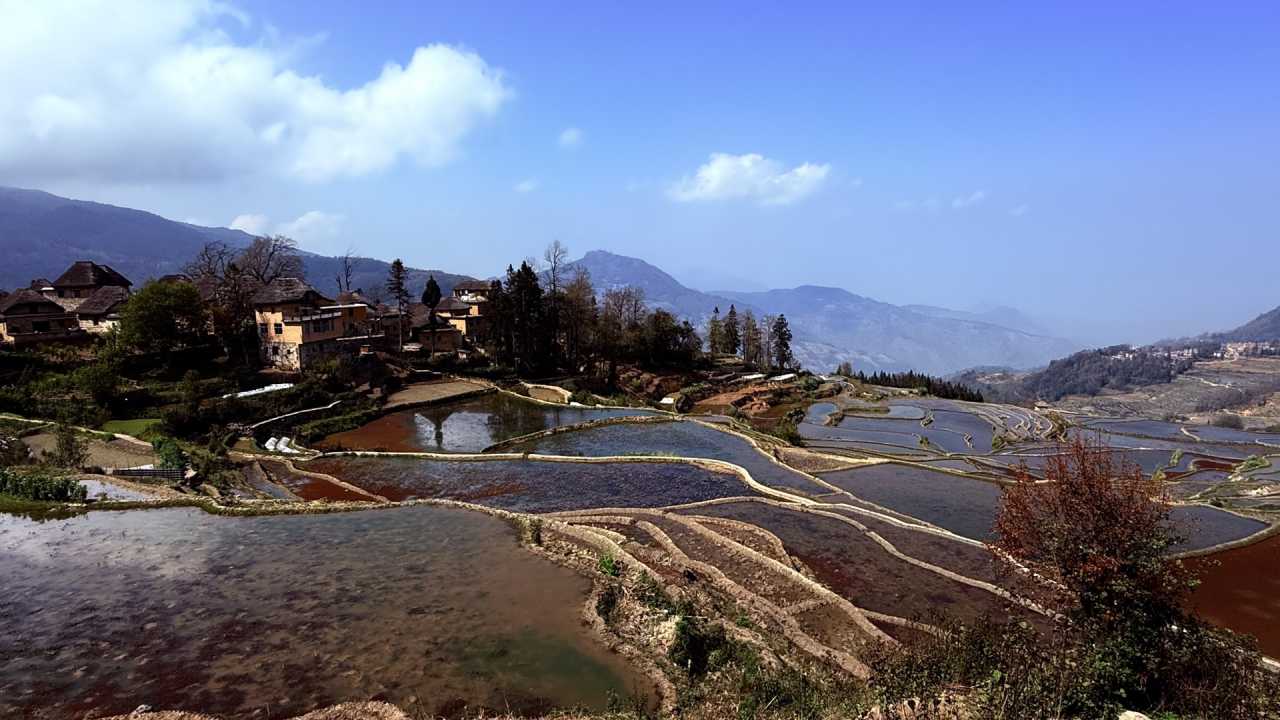
Entering the Yuanyang Rice Terrace scenic area, our first stop was Qingkou Village. The terraces here had just begun to be irrigated, their surfaces shimmering with silver light, like mirrors embedded in the hillsides. Hani ethnic mushroom houses (thatch-roofed cottages) were scattered among the terraces, their straw roofs glowing golden under the sun.
The viewing platform at Qingkou was small but offered a great view. From here, we could see the full extent of the terraces—layer upon layer, stretching from the foot of the mountain all the way to the summit, like stairways to heaven. Although it wasn't yet the peak viewing season, it was already breathtaking.
Azheke: A Living Museum of the Hani People
Azheke is a Hani village in the core area of the Yuanyang terraces, hailed as a "living museum of the Hani people." It preserves the most original Hani way of life—mushroom houses, terraced fields, water mills, swinging poles... everything as it was hundreds of years ago.
Walking into the village, we saw Hani women working in the fields, children running through the alleys, and elderly people sitting under eaves, soaking up the sun. The terraced fields here weren't large, but every single one was meticulously tended, embodying the harmonious coexistence between the Hani people and nature.
Duoyishu Terraces: Appointment with Sunrise
Duoyishu is one of the most famous viewpoints in Yuanyang, renowned for its sunrise scenery. To catch the sunrise, we got up at 5 a.m. By the time we reached the viewing platform, many photography enthusiasts had already set up their tripods.
The sky began to lighten with a pale fish-belly white, and the water on the terraces started reflecting a faint glow. As the sun slowly rose, the colors of the terraces began to change—from silver-gray to pale pink, then to golden yellow. When the sun fully emerged, the entire terrace seemed to ignite, sparkling with gold—an indescribable beauty.
Bada Sunset: A Symphony of Light and Shadow
Bada is the best spot in Yuanyang for watching the sunset. Around 4 p.m., we arrived at the Bada viewing platform, where many people were already waiting.
As the sun sank westward, light and shadow began to dance across the terraces. Each terrace reflected different colors—some golden, some orange-red, some deep green. When the sun completely set, the terraces returned to calm, like mirrors reflecting the evening glow.
Aichun Blue: The Mystery of the Blue Terraces
Aichun is a village in the Yuanyang terraces, famous for its "blue terraces." Under specific angles and lighting, these terraces appear blue, reportedly due to certain minerals in the water.
We arrived at Aichun around noon, when sunlight was directly hitting the water. From a specific angle, the terraces did indeed show a pale blue, like sapphires embedded in the hillside.
Laohuzui (Tiger's Mouth) Terraces: The Earth's Palette
Laohuzui is one of the largest and most spectacular viewpoints in Yuanyang. The terraces here stretch from the foot of the mountain to the summit, like a giant oil painting.
Standing on the viewing platform, we could see the layers of the terraces—each level a different color, from light green to deep green, from golden yellow to orange-red. These colors intertwined, like the earth's own palette.
VI. Fuxian Lake: The Final Tenderness
Leaving Yuanyang, we headed straight for Fuxian Lake. Fuxian Lake is one of the deepest plateau freshwater lakes in China, with exceptionally clear water, earning it the title "Pearl of the Plateau."
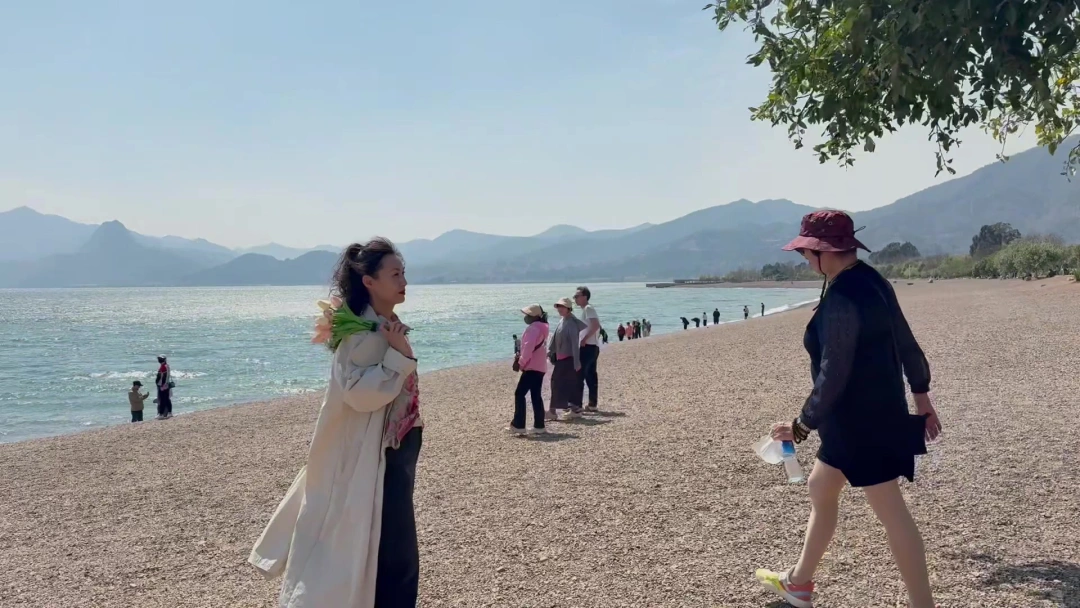
We arrived at Fuxian Lake in the evening. The last rays of sunset spilled across the lake's surface, shimmering with golden ripples. We strolled along the shore, breathing in the fresh air and soaking in the tranquility of the plateau.
The water quality of Fuxian Lake truly lived up to its reputation—so clear you could see the stones and water plants at the bottom. It's said that the lake water is drinkable directly, making it one of the best-quality lakes in China.
VII. Conclusion: Everything Is for the Best
This journey—from the biting cold of Luoping to the lively bustle of Jianshui, from the awe-inspiring Yuanyang to the serene Fuxian Lake—left a deep impression at every stop.
What struck me most was that the unpredictable weather never dampened our spirits. On the contrary, it was these uncertainties that made the journey more interesting. As I realized under Jiulong Waterfall: Everything in the world follows the way of nature. Going with the flow is the highest wisdom of self-care.
Water has no beginning or end; it simply flows. When it meets high mountains and deep valleys, it naturally becomes rivers, lakes, and seas. Everything is for the best.
Practical Tips:
- Best Seasons: Luoping rapeseed flowers (February-March), Yuanyang rice terraces (November-April, irrigation period)
- Transportation: Recommended to charter a car or self-drive for flexibility
- Clothing: Pack clothes for all four seasons; temperature differences are extreme
- Route Order: Kunming → Luoping → Mile → Jianshui → Yuanyang → Fuxian Lake → Kunming
- Ticket Prices: Jiulong Waterfall 65 yuan, Jiji Fengcong 30 yuan, Zhu Family Garden 35 yuan, Yuanyang Rice Terraces 100 yuan
Keywords: Luoping rapeseed flowers, Yuanyang rice terraces, Jianshui Ancient City, Fuxian Lake, Ailao Mountains, Hani culture, karst landforms
You should also read:
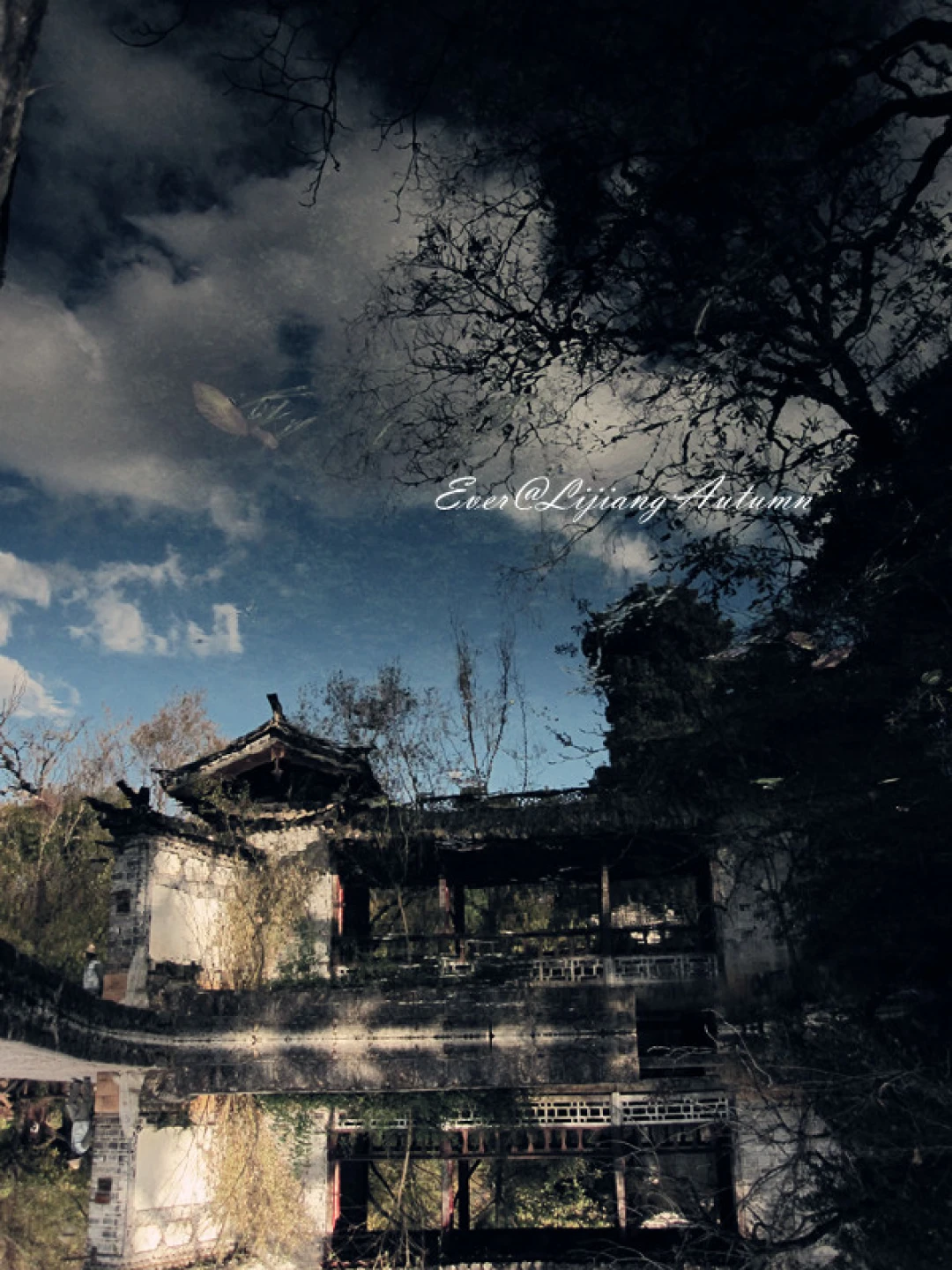
Idle Clouds in Autumn, a Moonlit City: A Slow Travelogue Through Lijiang and Shuhe
Idle Clouds in Autumn, a Moonlit City: A Slow Travelogue Through Lijiang and Shuhe When the autumn wind brushes across the ancient city's eaves, when sunlight spills onto the mottled cobblestone streets, when the melodies of folk songs mingle with the aroma of plum wine…
Continue reading...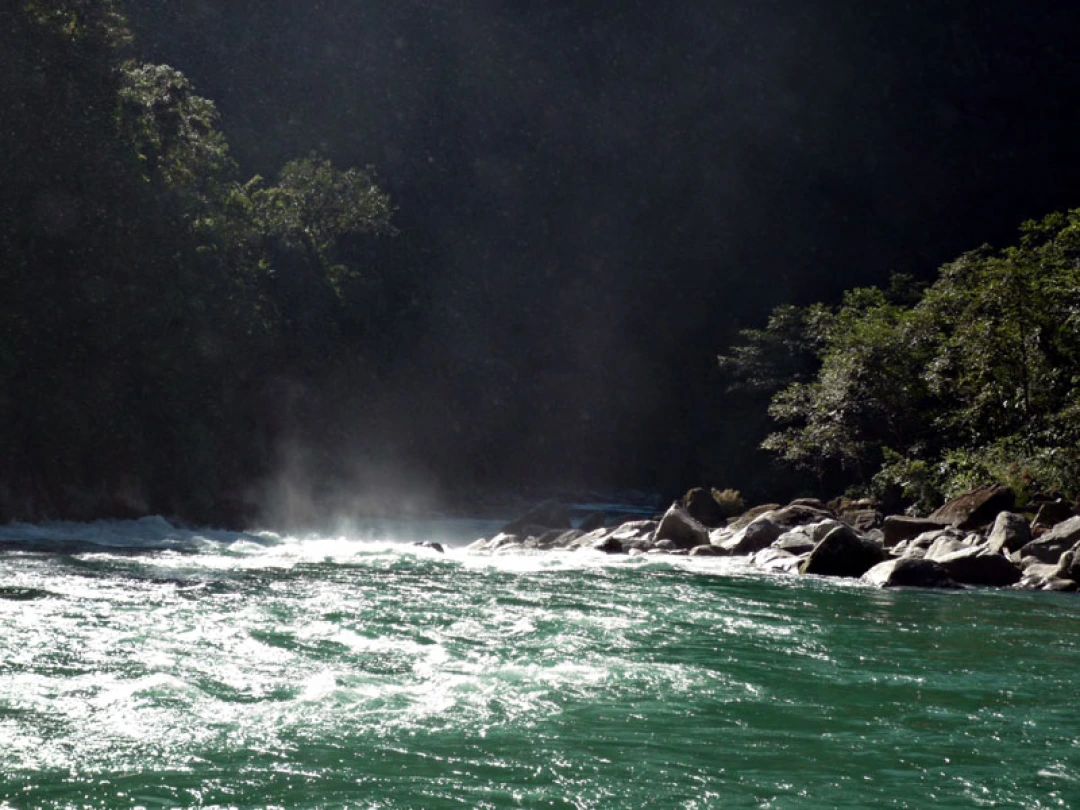
Into the Hidden Valley: A Solo Journey Through the Mysterious Dulong River
Into the Hidden Valley: A Solo Journey Through the Mysterious Dulong River Deep in the northwestern corner of Yunnan Province, tucked away from the modern world, lies a place that feels like a secret whispered among mountains. The Dulong River Valley is not just a…
Continue reading...
God’s Abandoned Palette: A Self-Drive Journey Through Yunnan’s Dongchuan Red Land
God’s Abandoned Palette: A Self-Drive Journey Through Yunnan’s Dongchuan Red Land Travel has never been about reaching some distant geographic coordinate. It’s about encountering, along the way, the version of yourself buried beneath the rubble of daily routine. During this May Day holiday, I finally…
Continue reading...