Tracing Mountains, Rivers, Lakes, and Seas: Encountering Winter and Summer in Yunnan
Tracing Mountains, Rivers, Lakes, and Seas: Encountering Winter and Summer in Yunnan
Preface: A Promise with the Unknown
Some say Yunnan is a book you can never finish reading. No matter how many times you flip through its pages, each one still holds surprises. I thought I already knew this land well enough—the ancient ethnic minorities, the towering mountains, the storied Tea Horse Road—these labels were etched into my mind. But it wasn't until I actually set foot here that I realized Yunnan is far more vivid, more magical, and even more magnificent than I ever imagined.
Every inch of this land feels like a carefully crafted puzzle piece, fitting together into a one-of-a-kind tapestry. Spring, summer, autumn, winter—each season has its own unique language. And the most enchanting part of travel lies precisely in those unexpected moments: when flocks of migratory birds sweep across valley lakes, when ancient temples shimmer on snowy plateaus, when the morning breeze off the lake brushes your face, and you can't help but break into a run. In that moment, you know you've come to the right place.
We can't capture every instant, but we can use our lenses and words to preserve those warm memories. So why chase distant lights? The very act of walking your own path makes you a light yourself. If you have a holiday coming up, come here and let yourself stumble into Yunnan's winter and summer.
Winter at Napahai: A Symphony of Life in Ice and Snow
A Jewel in the Hengduan Mountains
East of the Himalayas lies a series of north-south trending mountain ranges—the Hengduan Mountains. Here, towering peaks and deep valleys crisscross, with dramatic changes in elevation, creating a unique climate where "one mountain has four seasons, and a few miles bring different skies." Hidden within this magnificent landscape is a gem: Napahai (Napa Lake).
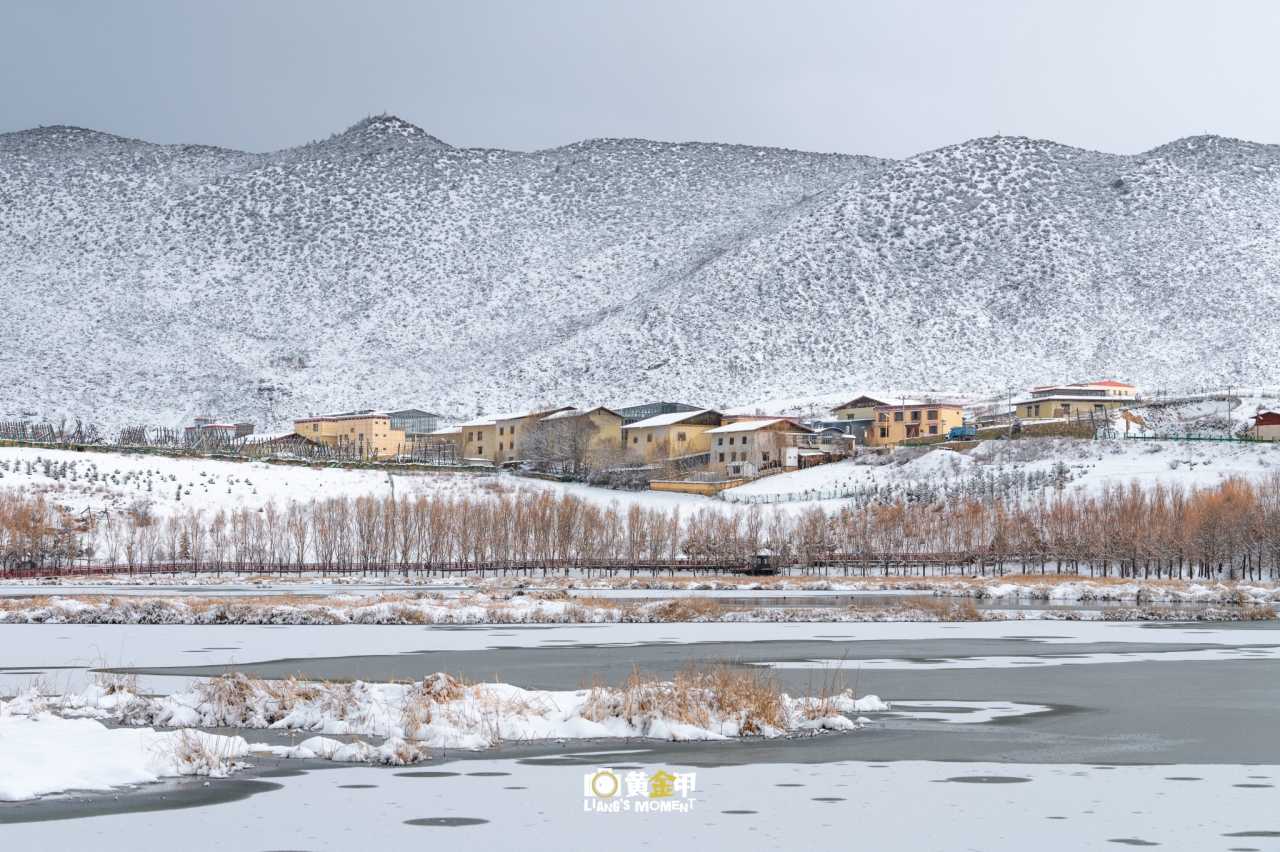
Napahai sits at an elevation of 3,266 meters and covers an area of 31.25 square kilometers. During winter, it's the dry season, and the lake shrinks to just a few square kilometers. But don't underestimate this modest body of water—it's a crucial migratory bird corridor in western China. Every spring and autumn, tens of thousands of birds travel north and south along the valleys and ridges of the Hengduan Mountains, and Napahai serves as a warm stopover and wintering ground on their long journey.
A Snowy Guesthouse and a Dog Named Xiao Qi
Our Napahai journey began at a guesthouse. In the midst of ice and snow, a room with underfloor heating became our warmest sanctuary. Shedding our heavy winter coats, we curled up by the large bay window as snow fell heavily outside while warmth enveloped us inside. The snowflakes drifted down lazily, and time itself seemed to slow.
Outside the window, a dog named Xiao Qi rested his chin on a wooden fence, curiously watching us. The guesthouse owner said Xiao Qi has the sweetest temperament—completely even-tempered. We opened the back door and stepped into the snow-covered yard, and he immediately started running around joyfully—chasing black-headed sheep, teasing the geese, living a life even more carefree than ours.
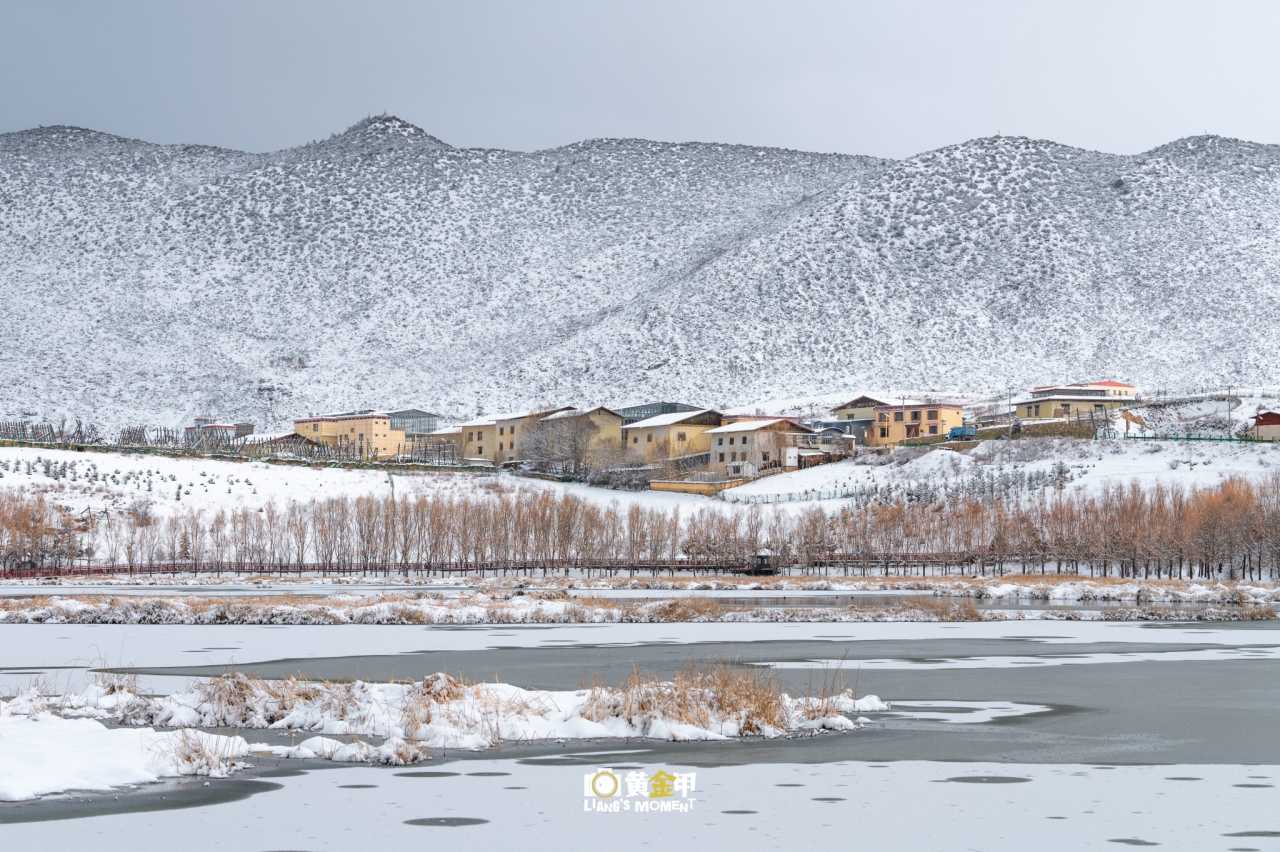
Climbing to the rooftop observation deck, the distant mountains were shrouded in snow mist, appearing and disappearing. The grasslands that were lush green in summer now wore a golden coat, decorated with frost flowers, contrasting beautifully with the half-frozen lake. The Tibetan villages nestled beneath the连绵 mountain ranges stood in silence, making it impossible to disturb their peace.
The Lake Loop: Freedom in a Frozen World
The next morning dawned with a sky so clear it looked filtered. The guesthouse owner told us that the road around the lake had frozen over the day before—a section close to the water was sealed by ice, impassable for cars. But today, sunlight poured recklessly onto the white snow, and we felt lucky.
As we approached Napahai, the sky was deep blue, clouds drifted lazily, and a vast white landscape unfolded before us. The spinning wheels reminded us that without tire chains, driving on this icy terrain required caution. There were few winter tourists, and the snow beside the road was pristine, untouched. My travel companion even lay down in the snow to strike a pose.
The further we went, the road conditions varied—whether it was icy depended entirely on whether the sun could reach it. We finally arrived at the road the owner had mentioned as "impassable." The road and the lake were almost level, with large chunks of ice lingering at the junction. Fortunately, the center of the road had thawed. We parked and quietly took in this frozen painting.
Napahai is a pearl of Shangri-La. Every winter, bar-headed geese, black-necked cranes, black storks, various species of ducks, coots, and crested grebes gather here. At peak season, the number of wintering birds exceeds 20,000. For travelers, there's no need to identify every bird species through the lens—just appreciate their free-spirited grace. The birds flock together, pausing, taking off, landing, relying on one another to get through the cold winter.
Standing by the lake, soaking in the sun, the breeze off the ice brushed our cheeks with a crisp chill. The birds were right there on the ice edge, their calls like whispers from Napahai, telling the stories of this land.
Songzanlin Monastery: Five Weathers, Five Wonders
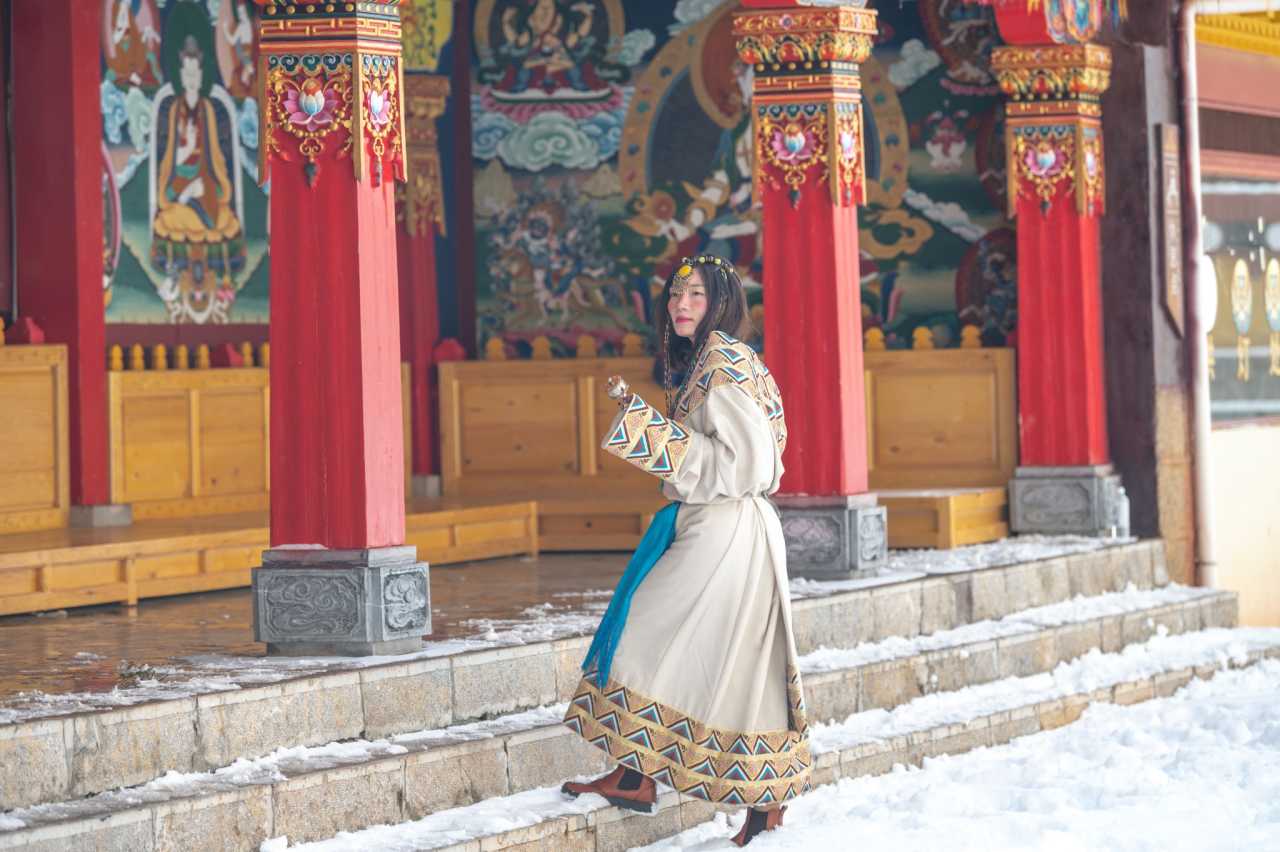
Mystery in the Fog
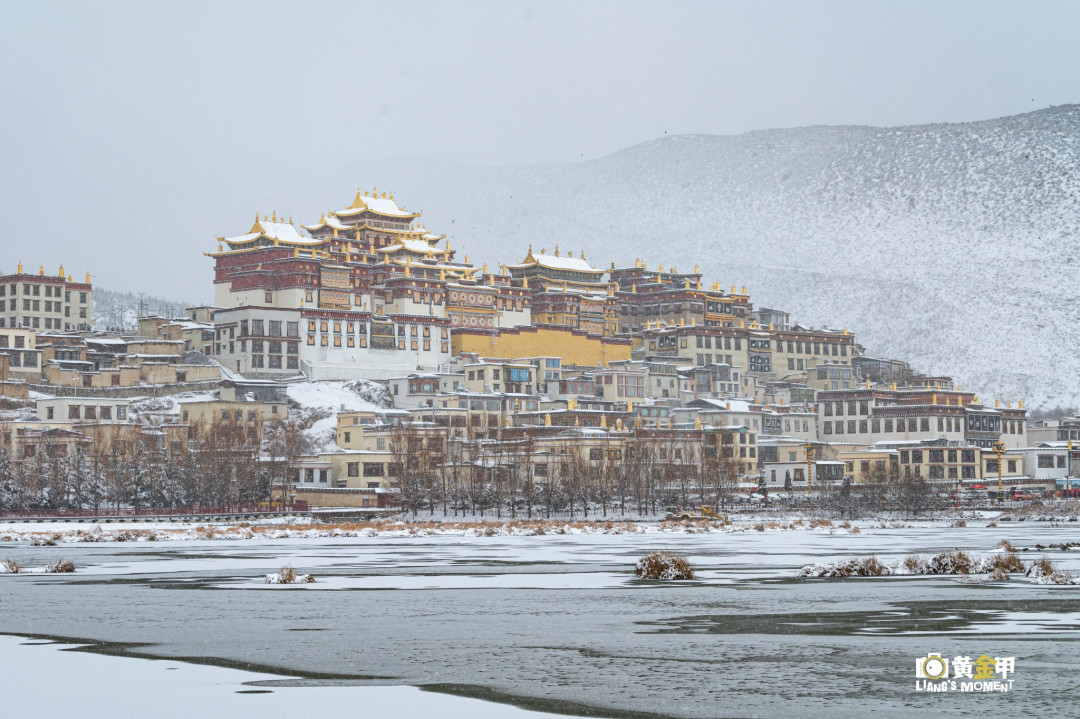
We stayed at a hotel very close to Songzanlin Monastery—just a seven- or eight-minute drive away. The first afternoon, we rushed over excitedly, only to be met with a thick fog. The monastery before us looked nothing like the golden, sunlit photos we'd seen online.
But we've learned to take weather in stride. Being able to travel during the pandemic was already a blessing, and different weather brings different experiences. The fog-shrouded Songzanlin Monastery exuded an air of mystery, which had its own unique charm.
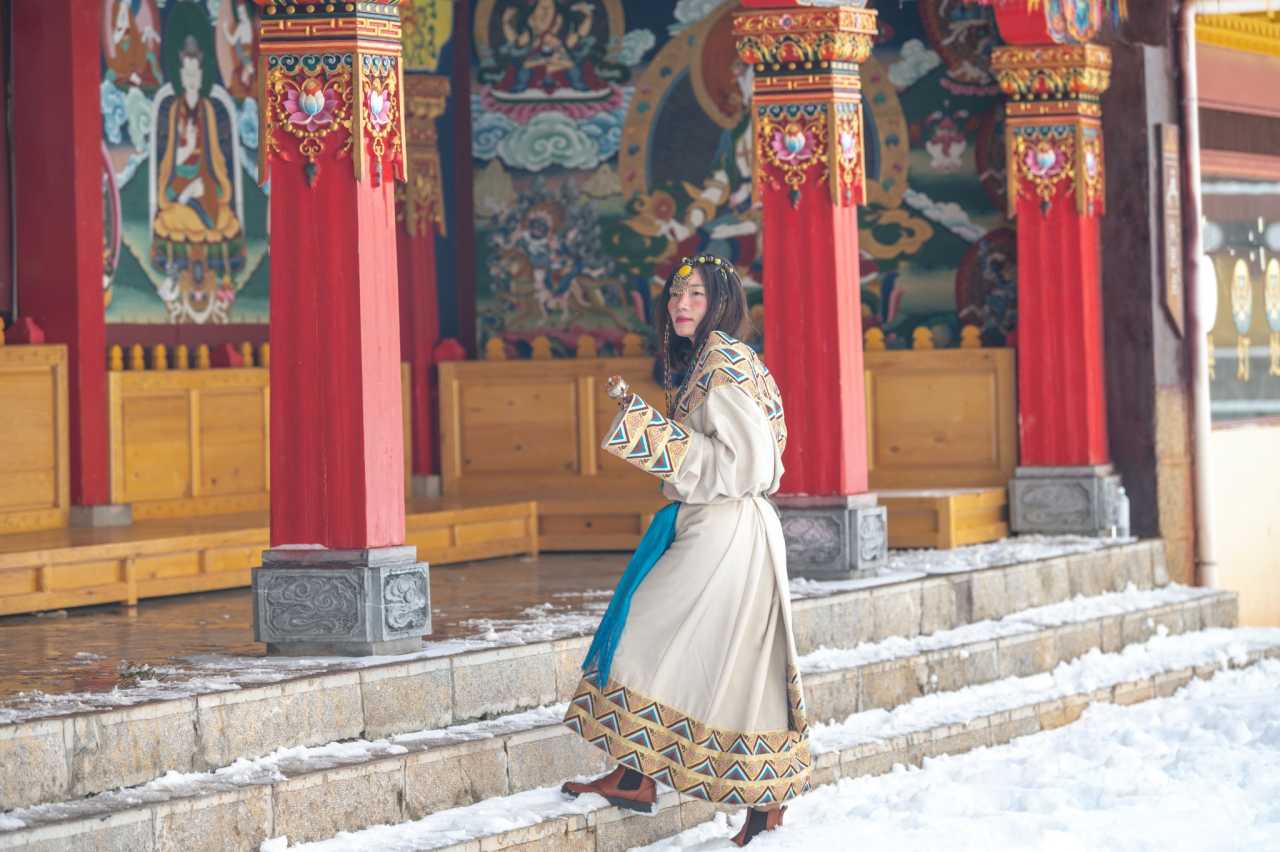
As the fog gradually lifted, we could see flocks of wintering birds in the sky. The colorful buildings of the monastery, captured through a telephoto lens, looked vivid and charming. While we were searching for pinecones in the snow, two Tibetan pigs strolled over leisurely and took a keen interest in our tripod. One pig, its snout numb from the cold, sniffed at the tripod bag for a long time and even licked it all over... This unexpected "encounter" so startled my companion that she insisted we head back immediately for a calming cup of tea. So we decided to come back the next day.
The Golden Hall After a Snowfall
A heavy snow fell all through the night. The hotel staff said it was the biggest snowfall in about a decade. We felt incredibly lucky—we would get to see a different side of Songzanlin Monastery.
The next morning, the sun was brilliant. The hotel shuttle bus was topped with a thick white cap of snow, the pines were draped in silver, and the sky was crystal clear. We checked out and drove back to the monastery.
This time, I brought my camera to the boardwalk around Lamu Yangcuo Lake. There's an entrance near the spot directly facing the monastery where you can descend to the lakeside—the best vantage point for photographing Songzanlin's front facade. This was also where we'd met the Tibetan pigs the day before. Returning to the scene, I carefully checked my surroundings—today seemed safe.
Unlike the day before, the withered grass by the lake was now buried under snow. As I set up my camera, the sun suddenly disappeared, and a thin mist rose, turning the sky a dreamy blue. Continuing along, the sky shed its dreamy blue and donned a silvery white cloak. The snow-covered pines seemed perfectly at home in this atmosphere, and most of the lake surface was frozen.
The weather on the plateau is fickle. Before the moisture over the mountains could dissipate, the sun sank back into the fog. A valley breeze swept across the frozen lake, carrying an intense chill. As I neared the end of the boardwalk, I discovered a 45-degree angle of Songzanlin Monastery—the snow-covered buildings, built along the lake, layered upon one another, presenting the most unexpected silhouette. Snowflakes swirled erratically in the mountain wind and fell wherever they pleased. Leaning on the railing, I saw water and sky merge into one—the monastery amidst the snowy mountains and lake had already become one with the universe.
As I exited the boardwalk, the snow suddenly stopped, the mist cleared, and the sky was cloudless. We climbed the steps and looked back at Lamu Yangcuo Lake—behind us, it was still shrouded in mist. Songzanlin Monastery isn't large; you can easily explore it in an hour or so. As we left, the sky turned its most brilliant blue, and cotton-candy clouds began to drift by.
During winter in Shangri-La, we witnessed Songzanlin Monastery under five different skies—fog, overcast, dreamy blue, snowfall, and clear blue with white clouds. Each backdrop was distinctive, and each was breathtaking.
Erhai Lake: A Poem of Wind, Flowers, Snow, and Moonlight
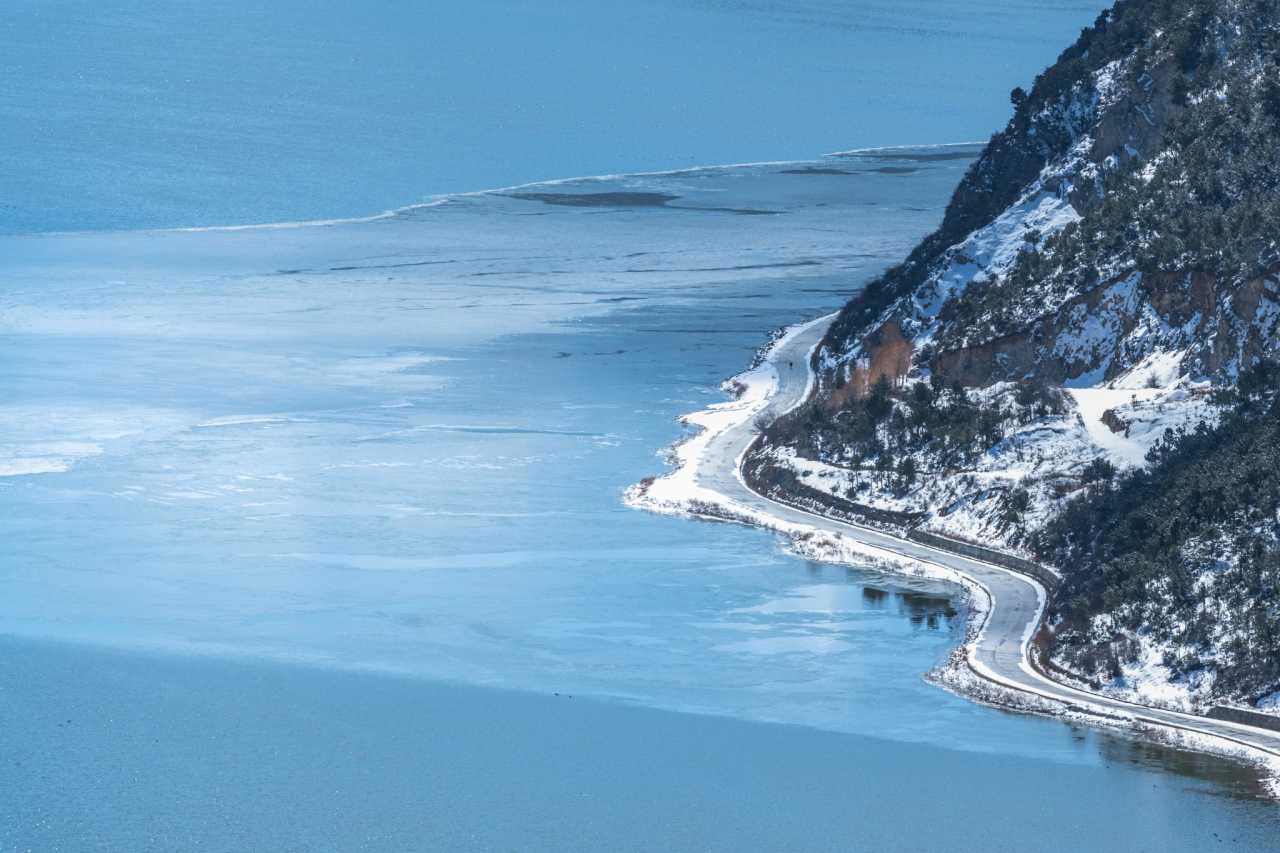
The Joy of a Lakeside Drive
Erhai Lake covers about 246 square kilometers, sits at an elevation of 1,972 meters, and stretches 40 kilometers from north to south—making it Yunnan's second-largest lake. Driving around Erhai takes less than two hours, but there are so many places to stop along the way. Slowly circling the lake, you can pull over whenever you want and simply take in the view.

Dali is a place that puts you completely at ease, with no constraints. Whether it's the pressures of life or work, they all seem to melt away or find healing here. Just follow your mood and wander along Erhai Lake.
Wase Pier is truly a "wow" pier—raise your camera, and it immediately rewards you with the perfect Erhai you've always imagined. Xiaoputuo Island covers about 100 square meters. Legend has it that in ancient times, Erhai was infested with dragons that stirred up violent storms, and this massive reef was the seal Guanyin used to subdue them.
Since the western shore of the lake has been gradually developed into a pedestrian and cycling eco-corridor, with vehicle roads set farther back, the eastern shore highway has become the closest driving route to the lake. Taking road-trip photos under these signs really gives you that feeling of "poetry and the horizon."
Longkan Pier and the Instagram-Worthy Spots
On the southwestern corner of Erhai lies a beautiful Bai ethnic village—Longkan Village. This was the filming location for the Wutong Inn in the movie Heart Blossoms (Xin Hua Nu Fang), and its theme song "Going to Dali" (Qu Dali) has struck a chord with countless people. Heading north along Erhai from the south, Longkan Pier has been developed into a natural park nestled against the mountains and the lake, also part of the eco-corridor.
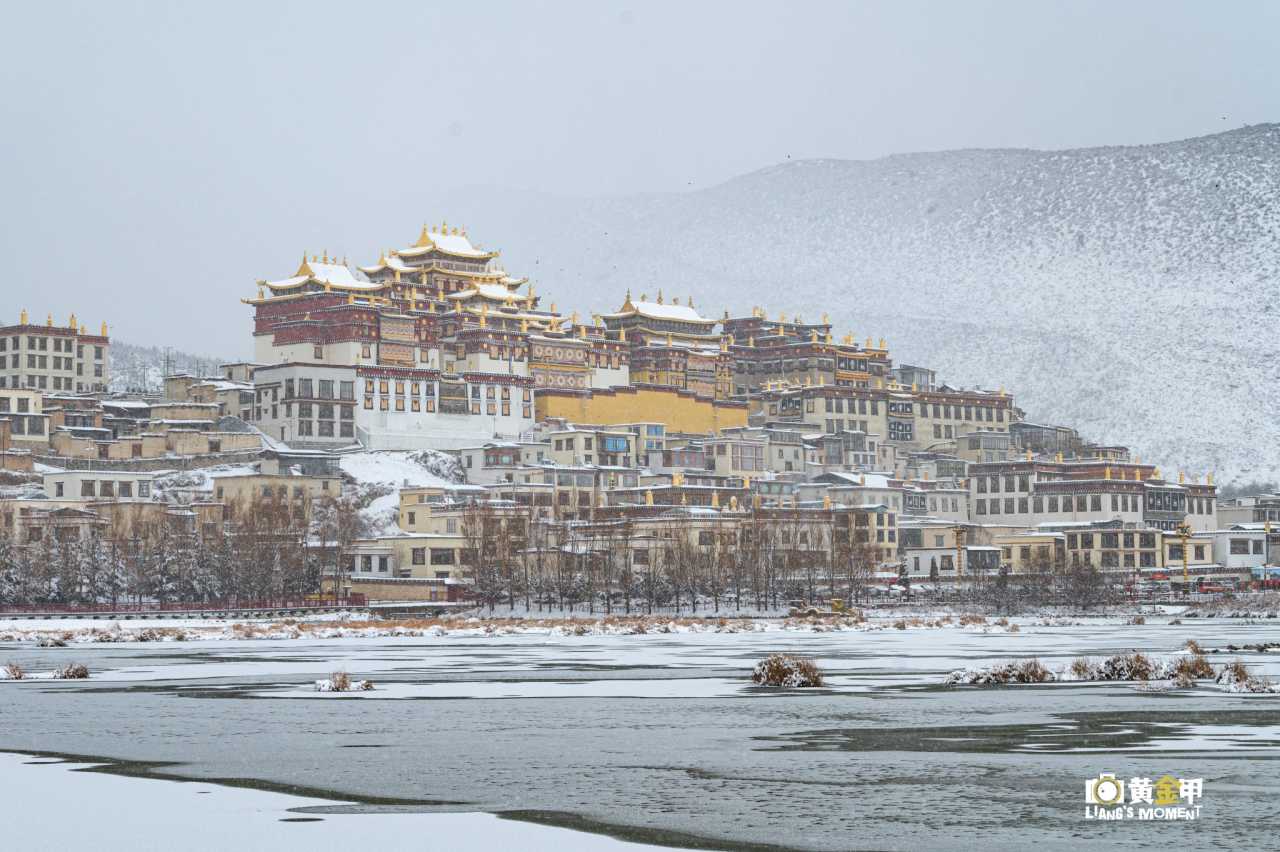
Walking along the lakeside path, we launched a drone and took in the full view of the pier. Cangshan Mountain and Erhai Lake—every scene from east, west, north, and south looked exceptionally vibrant through the lens.
The newly popular Instagram spot "Hongsheng Road" runs straight down from the mountainside to the lake. The dramatic drop in elevation from Cangshan Mountain loses its impact against the blue satin of Erhai. But traffic here is heavy, and loudspeakers constantly remind you to "stay safe and leave immediately."
The Panxi S-bend is a winding road on the western shore, framed by Cangshan Mountain and Erhai Lake, accompanied by seagulls, warm sunshine, and gentle breezes—a spot that's recently surged in popularity. We arrived during peak hours and didn't have our drone handy, so we decided to focus on photographing the birds instead.
Hidden within the Erhai Eco-corridor is a lesser-known spot: the Corridor Bridge. Navigate to "Luosideng Village" or "Corridor Bridge Cultural Square," walk a short distance toward the lake, and you'll find it. In summer, the branches are thick and lush; in winter, using weathered iron boats and bare branches as foreground elements creates a different kind of beauty. The eco-corridor offers a new vista at every step—spending a day walking or cycling here is the best way to experience it.
Sunset on Zhemo Mountain
Pick a clear evening and head to Zhemo Mountain to see the wind turbines. This is a relatively undeveloped, off-the-beaten-path spot, about an hour and a half's drive from Dali's old town. We had no idea what was at the top—we just kept climbing the winding mountain road, accompanied by windmills and cattle.
Standing at the highest point of Zhemo Mountain, the rustic charm of Dali's old town and the bustle of its new city intertwine along the shores of Erhai. Shangguan flowers, Xiaguan wind, Cangshan snow, Erhai moon—wind, flowers, snow, and moonlight are no longer just dreams. Come to Dali!
Shuanglang: Slow Living by the Water
"Dali's beauty lies in Erhai, and Erhai's beauty lies in Shuanglang." Shuanglang sits on the northeastern shore of Erhai, surrounded by mountains on three sides and facing the lake on one—a Bai fishing village turned ancient town. If you just wander the commercialized main streets, this town won't bring you much joy. The real Shuanglang experience is finding a lakefront guesthouse, basking in the sun in the courtyard, and doing nothing all day.
This trip to Shuanglang was essentially for one guesthouse. It sits at the very tip of Yuji Island, right next to Yang Liping's Sun Palace, with zero distance to Erhai. On lucky days, you can have the entire lawn to yourself—with fewer tourists during the pandemic and room rates slashed, we checked into a photographer's dream room and fulfilled our travel fantasies.
The third-floor sea-view terrace room was full of surprises when we opened the door. The combination of warm gray and natural wood created a cozy living atmosphere. The collision of blue-gray stone and vibrant red injected fresh Bai cultural inspiration into the architecture. The unobstructed lake view recorded every change in Erhai's light and shadow, from sunrise to sunset.
The courtyard featured a pond with a circular sofa embedded in it. Sitting there, gazing at the bench under the tree nearby, we lost ourselves in the natural beauty. One book, one afternoon—blissfully lazy. The winter lawn had turned a warm yellow, just a step away from Erhai, perfect for sunbathing. Enjoying a hearty breakfast in the courtyard, soaking in the morning sun, separated from Sun Palace by just one wall, listening to seagulls calling by the shore—a beautiful day doesn't require going anywhere. Just stay here.
Xizhou: The Poetry of Rice Fields and Red Walls
Sunny days, warm breezes, rice fields, red walls—this is Xizhou's winter beauty. Wandering through the crisscrossing lanes, white walls and black tiles exude ancient charm.
When in Yunnan, how could you not enjoy a cup of locally grown small-batch coffee? We casually pushed open the sliding door of a coffee shop, never expecting what lay inside. The café had two floors, and the owner was seriously brewing his own roasted coffee downstairs. After finishing, he let us pick a cup that caught our eye. The aroma of coffee drifted up the old, slightly wobbly wooden stairs, filling the second floor with a wonderfully relaxed atmosphere. Opening the window, sunlight streamed in, covering the entire space, mingling with the coffee scent—we were immersed in Xizhou's gentlest hours.
The Corner Building, with its two street-facing sides, exterior shop and interior residence, and blend of Chinese and Western design, was built by Yang Ruxuan, a member of the Yang family—one of the four great merchant families of Xizhou. After going through historical changes, it has now become one of the most popular photo spots in Xizhou Ancient Town.
Xizhou's rice fields are undoubtedly among the most distinctive agricultural landscapes. The field paths and the red wall of Xilin Courtyard dot the vast paddies. Even in winter, you can capture their beauty—let alone spring's rapeseed flowers, summer's green wheat waves, and autumn's golden grain, which are surely even more intoxicating.
Xizhou's charm lies in the harmony between its ancient town and rural scenery, the perfect fusion of Bai residential architecture and slow living. Here you'll find ethnic-style building clusters, pristine natural landscapes, and traditional crafts passed down for centuries—every corner holds delightful surprises.
Shaxi: A Treasure Time Forgot
If you can only visit one ancient town in Yunnan, make it Shaxi Ancient Town in Jianchuan County, Dali. What makes it different? Perhaps it's the rare absence of commercialization, the birdsong by the riverside fields, the ancient gates in all four directions, and the everyday烟火气息 of pavilions and towers.
In Yunnan travel guides, you'll only find Shaxi under the "off the beaten path" label. This town, nestled between the three major tourist hotspots of Shangri-La, Lijiang, and Dali, draws its vitality from the blue-black waters of the Heihui River. If your Yunnan journey is a puzzle, Shaxi is the most unpretentious yet unforgettable piece.
A beautiful day starts with sunrise. Surrounded by hills, the sun doesn't crest the mountaintops until after seven, so you don't have to wake up early. The riverside is the best place in the morning. When sunlight floods the water, wild ducks start splashing joyfully.
We planned to try the famous "Universe Bread" bakery, but it didn't open until 10 a.m. So we entered the town from the East Gate and strolled around. The town's buildings center around the ancient stage and square. While Shaxi isn't lacking in shops, it truly hasn't been deeply commercialized. Walking along the cobblestone alleyways, with few tourists around, it felt peaceful and quiet.
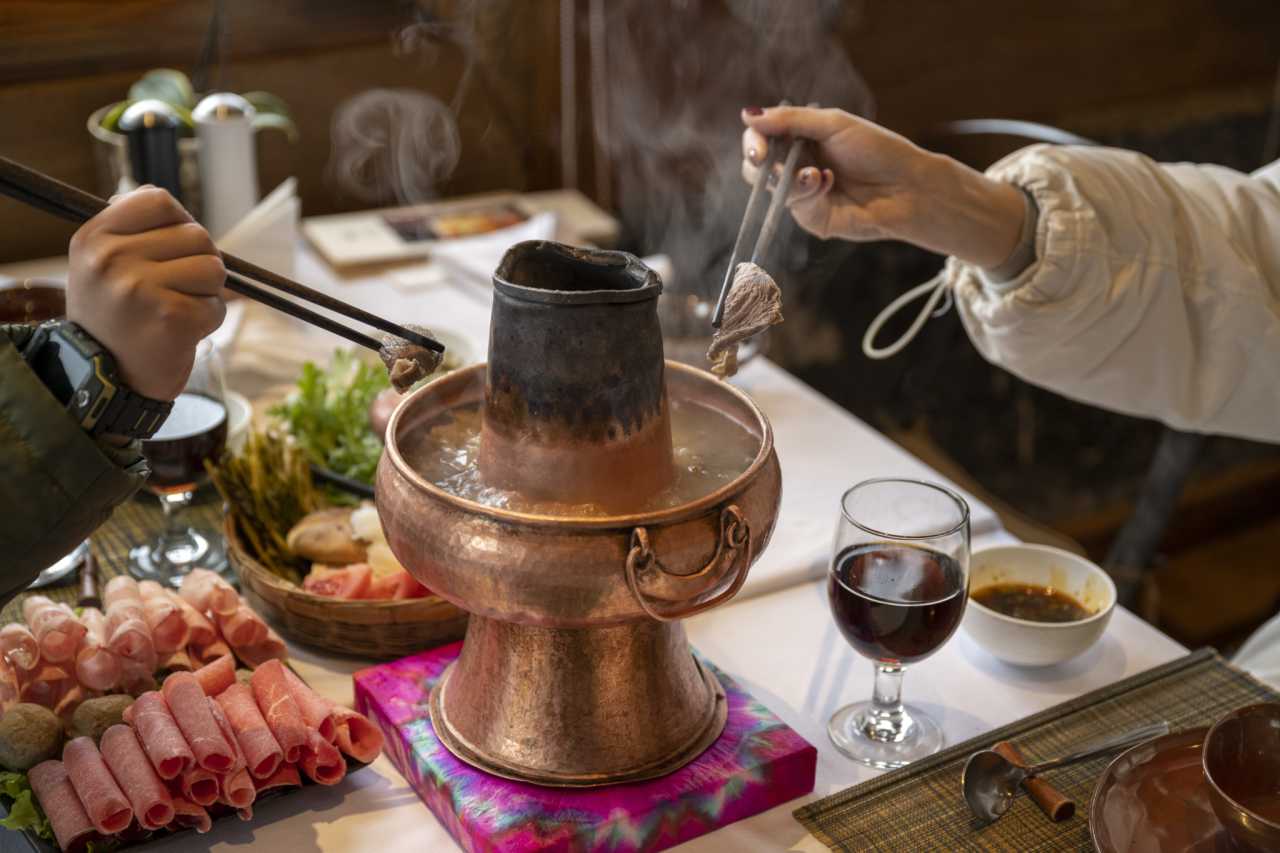
The bakery was near the South Gate, with several customers already waiting. That morning, they only sold two types of bread, both freshly baked. A bit pricey, and not mind-blowing in taste, but still decent.
For lunch, we had a reservation at the famous burger joint on this street—"Xiang Shi Er Western Restaurant." The owner runs it solo, and the menu is simple: one burger, one chicken wrap, some desserts, and drinks. He only serves lunch and in limited quantities. Without a reservation, you might miss out on the signature super beef burger.
I don't usually seek out burgers, but I genuinely fell in love with this place. A burger's quality largely depends on the bun—because besides appearance, the first thing you taste isn't the beef but the bread. Their freshly baked bun was crispy and fragrant, the beef was excellent, and the layers of cheese and vegetables created a perfect harmony. Five stars from me. The chicken wrap was good too, but not as impressive as the burger. My friend also ordered a passion fruit ice cream—served in the fruit's shell and drizzled with passion fruit juice—creative and delicious.
In the afternoon, we visited the nearby "Pioneer Bai Ethnic Bookstore," about 2 kilometers from Shaxi's East Gate in Beilong Village. The bookstore was once a granary, renovated with local Bai characteristics. Where grain was once stored, now it houses spiritual nourishment. It holds over 20,000 books, categorized by Yunnan, the Tea Horse Road, Dali, and Bai culture, with many titles on Yunnan's history, geography, culture, and scenery. The overall space and book displays are simple yet design-conscious, like an art piece hidden in the village.
Reading always makes you drowsy. Our next stop was "Matcha Coffee," halfway up the hill in Shaxi's Lighthouse Village. The place was hard to find, but when you start doubting whether you're on the right path, you're almost there. The owner video-called us, brewing coffee while giving us live navigation—clearly, he's well-practiced at guiding lost customers.
Halfway up the hillside, we found a Bai-style courtyard that also housed a guesthouse. The café had huge glass windows with fantastic views. Like the burger joint, it was run by a single person. The menu was handwritten on the wall, with visible corrections and scribbles, full of handmade warmth.
Epilogue: Yunnan, Worth Returning to Again and Again
Winter in Yunnan isn't bleak—it's vibrant. Napahai's ice and migratory birds, Songzanlin Monastery's five weathers and five wonders, Erhai's wind, flowers, snow, and moonlight, Shuanglang's slow pace, Xizhou's poetic fields, Shaxi's tranquil antiquity—each place is like a puzzle piece, coming together to form Yunnan's most moving picture.
And Yunnan's summer—what would that be like? I imagine it's another story, another encounter.
That's the thing about travel—there are always surprises you never expected. When you see flocks of birds sweep across a valley lake, when you gaze up at an ancient temple on a snowy plateau, when you can't help but run along the lakeshore at dawn—you'll know you've come to the right place.
So why chase distant lights? The very act of walking your own path makes you a light yourself. If you have a good holiday ahead, come here. Yunnan's winter and summer are both waiting for you.
Practical Tips: - Napahai: Watch for icy roads when driving around the lake in winter; bring tire chains. Choose a guesthouse with underfloor heating for a better experience. - Songzanlin Monastery: Plateau weather is unpredictable; plan for two days to experience the monastery under different skies. - Erhai Lake: The eastern shore highway is the closest driving route to the lake; the eco-corridor is best for walking or cycling. - Shuanglang: Pick a lakefront guesthouse and spend the day doing nothing—that's the right way to experience it. - Xizhou: The rice fields are beautiful in all seasons; the coffee shop and Corner Building are must-visits. - Shaxi: Off the beaten path but worth a special trip; reserve ahead at the burger joint and café.
You should also read:
Escaping Nanning, Falling Under Lijiang's Spell: Our Four-Person, Ten-Day Yunnan Dream
Escaping Nanning, Falling Under Lijiang's Spell: Our Four-Person, Ten-Day Yunnan Dream Before We Set Off: No Pain, No Obsession Have you ever had that impulse—suddenly tired of the office fluorescent lights, the crush of the subway, the endless parade of identical takeout boxes, and just…
Continue reading...
Solo in Yunnan: A Wanderer’s Guide to the Land of Eternal Spring
Solo in Yunnan: A Wanderer’s Guide to the Land of Eternal Spring There’s something magical about traveling alone. No compromises, no schedules to keep, no one to please but yourself. I’ve been on the road for nearly three months now, and not once have I…
Continue reading...
God’s Abandoned Palette: A Self-Drive Journey Through Yunnan’s Dongchuan Red Land
God’s Abandoned Palette: A Self-Drive Journey Through Yunnan’s Dongchuan Red Land Travel has never been about reaching some distant geographic coordinate. It’s about encountering, along the way, the version of yourself buried beneath the rubble of daily routine. During this May Day holiday, I finally…
Continue reading...