Travels Through Jiangxi: A Journey Through Millennia of Culture and Nature
Travels Through Jiangxi: A Journey Through Millennia of Culture and Nature
Prologue: A Chance Flight That Led to Jiangxi
In the deep autumn of 2018, I stumbled upon a last-minute flight deal to Nanchang online. That single click set the stage for an impromptu journey through Jiangxi. Twenty days of solo travel took me from revolutionary Nanchang to the millennium-old porcelain capital, from misty Lushan Mountain to the shores of Poyang Lake, from Hui-style Wuyuan to the Taoist peaks of Sanqing Mountain. This land of Jiangxi and Poyang wove an unforgettable tapestry of landscapes and humanity.
First Stop: Nanchang — The Red Imprint of a Hero City

A Rainy Baptism at August First Square
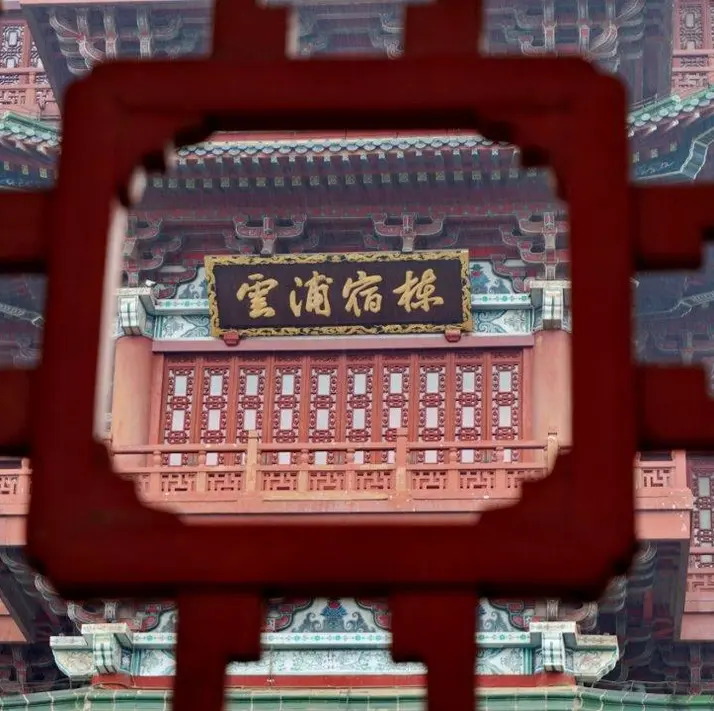
Nanchang, the city that fired the first shot of the August First Uprising, was the starting point of my Jiangxi adventure. Standing before the towering memorial at August First Square, I felt a deep reverence for the revolutionary pioneers. But the heavens had other plans — a torrential downpour derailed my cycling plans.
Wearing a flimsy disposable raincoat, I pedaled a shared bike through the rain, utterly drenched and miserable. Yet I thought to myself: compared to the heroes who once fought and bled on battlefields, what was a little rain? That bit of self-reassurance helped me shake off the frustration.
Tengwang Pavilion: Clear Skies After the Rain
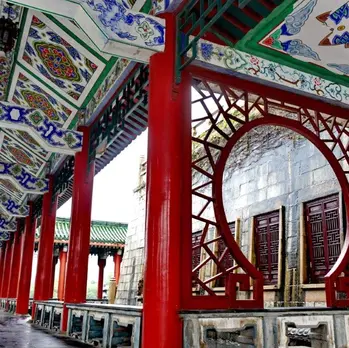
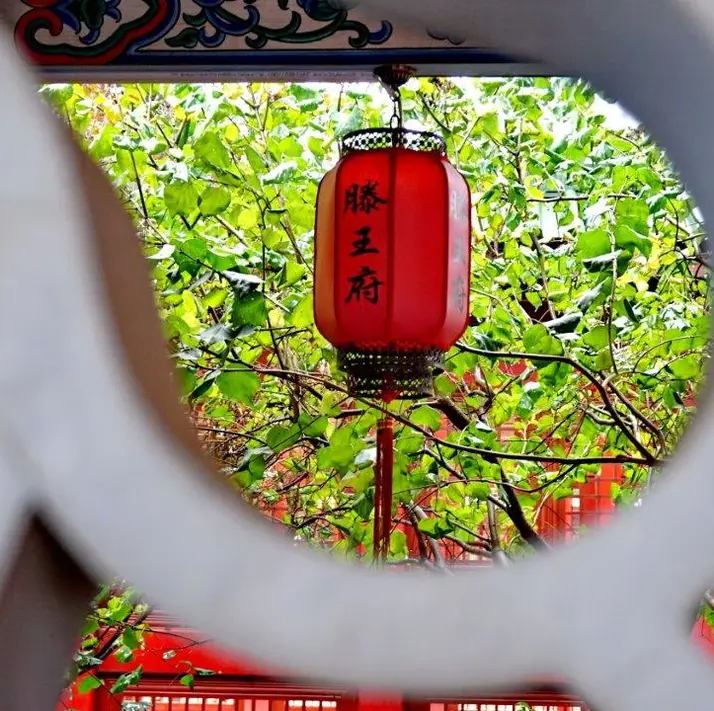
As one of China's three great pavilions, Tengwang Pavilion was a must-visit. The rain lent it a unique charm, but the real magic came at nightfall — when the lights came on, the rain stopped, and moonlight spilled across the river. I finally understood the saying: "After the clouds part, you see the moon."
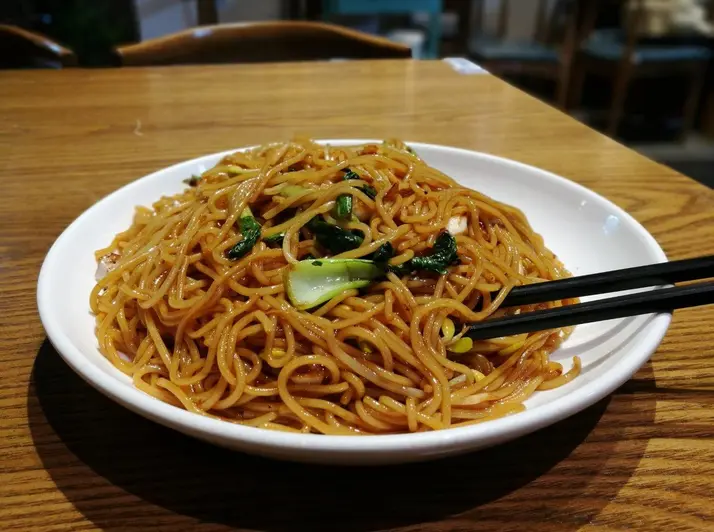
Practical Tips: - Getting there: From Nanchang Airport, take the airport bus to the city center. Shared bikes are convenient for getting around. - Where to stay: Near August First Square — convenient transport links. - Must-try local food: Nanchang rice noodles (南昌米粉), and stir-fried bacon with artemisia selengensis (藜蒿炒腊肉).
Second Stop: Poyang Lake — The Unexpected Beauty of the Dry Season
In Search of Pink Flower Fields
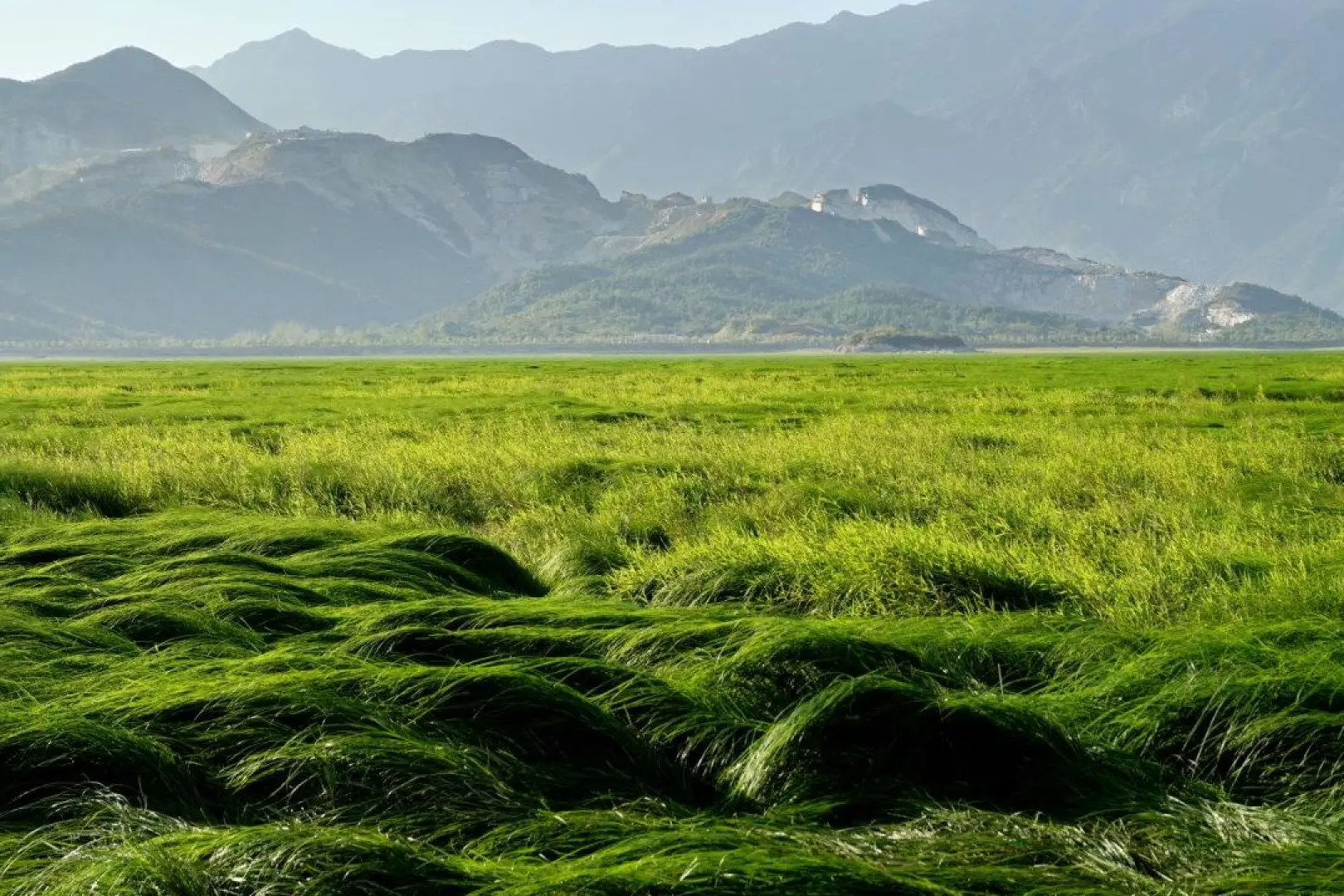
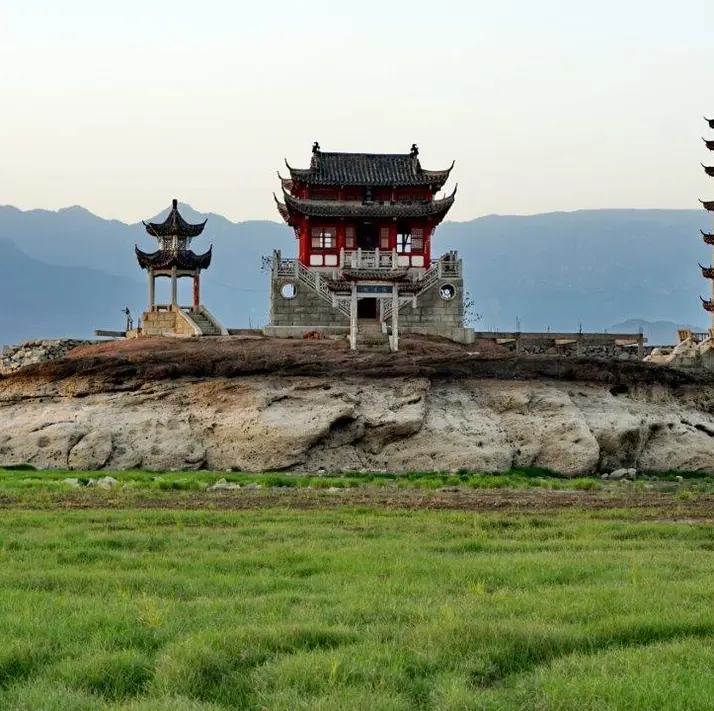
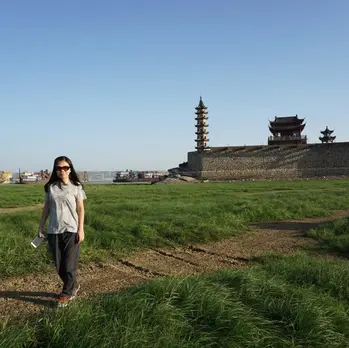
Poyang Lake, the jewel of Jiangxi, enters its dry season in autumn. I had hoped to see the pink sea of knotweed flowers mentioned in online guides, but I was out of luck. What I found instead was a different kind of beauty — the lakebed had transformed into an endless green meadow, and Luoxing Pier (落星墩) was now accessible on foot, no boat required.
A Golden Meadow at Sunset
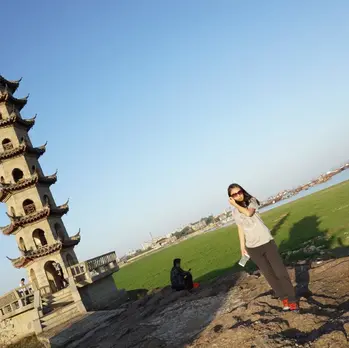
I climbed the small tower at Luoxing Pier and looked out. The setting sun draped a golden veil over the emerald grassland. In that moment, I understood the true meaning of travel — not every expectation comes true, but the unexpected sights often touch you the most.
Practical Tips: - Getting there: Take a bus from Nanchang Bus Station to Xingzi County, then a taxi to the lakeside. - Where to stay: Family-run inns near the Xingzi County bus station — a standard room costs about 50 yuan per night. - Note: Taxi drivers may overcharge outsiders (e.g., 10 yuan for a short ride). Haggle.
Third Stop: Lushan Mountain — Falling in Love with a Mountain
An Unexpected Surprise
Before coming to Lushan, nearly every friend who had visited told me it was unremarkable compared to other famous mountains. With low expectations, I was pleasantly surprised — Lushan isn't just about mountains and water. It has lakes, pavilions, villas of various architectural styles, and political relics. It's a place where scenery and history coexist.
The Fairytale Town of Guling
Guling Town, perched atop Lushan, is a必经之地 (must-visit) for every traveler. It's surprisingly commercial and well-stocked, making you forget you're on a mountaintop. The highlight for me was the local specialty — tea cakes (茶饼). They cost just 7–8 yuan for 250 grams. Once I left Lushan, I never found them at such a bargain again.
Rugin Lake and Lulin Lake
Rugin Lake (如琴湖) is named for its violin-like shape, with a small island and a curved bridge creating a picturesque scene. Lulin Lake (芦林湖), where Chairman Mao and Premier Zhou once swam, now serves as Guling's drinking water source and is off-limits for swimming.
Sunrise at Five Old Men Peak
I joined a group from the youth hostel and set off before dawn for Five Old Men Peak (五老峰). Standing on the Fourth Peak's observation deck, waiting for the sun to rise over the Jiujiang River, all fatigue melted away.
Meilu Villa and the Villa Cluster

Lushan has the second-largest collection of foreign villas in China, after Gulangyu Island, but with far fewer tourists. Meilu Villa (美庐) was once home to both Chiang Kai-shek and his wife, and later Mao Zedong. The exhibits inside are fascinating — including the original kerosene refrigerator and a set of porcelain tableware commissioned from Jingdezhen for Chiang Kai-shek.
An Unexpected Gift: The Maple Leaf Festival
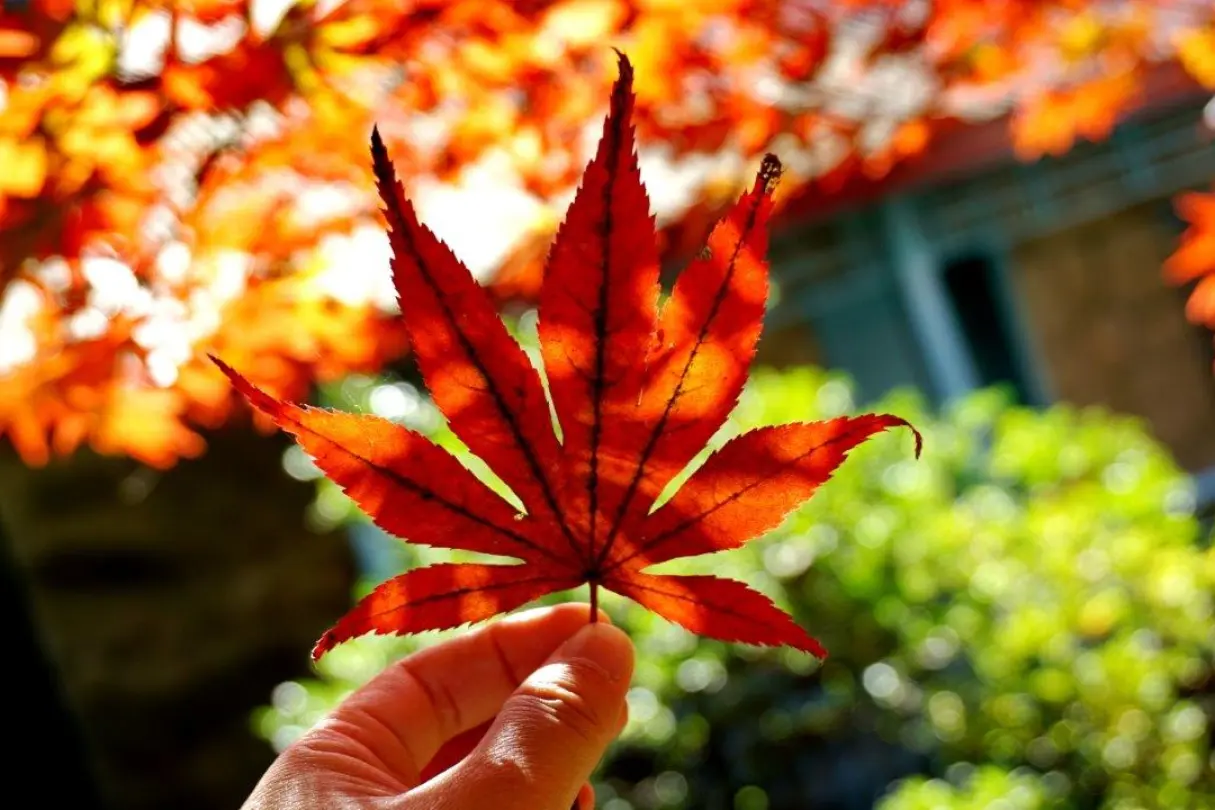
I had no idea that the day I arrived was the first day of Lushan's inaugural Maple Leaf Festival. The leaves weren't fully red yet — green, yellow, and crimson mingled together, glowing like a colorful dream under the sun. Du Mu's famous lines came to life: "I stop my carriage to sit and admire the evening maple grove; the frost-touched leaves are redder than the flowers of February."
Practical Tips: - Best itinerary: Allow at least two days and one night. - Day 1 (West Route): Rugin Lake → Flower Path → Splendid Valley → Great Heavenly Pond → Suspension Bridge → Three Treasures Tree - Day 2 (East Route): Five Old Men Peak for sunrise → Botanical Garden → Hanyang Pass → Lushan Conference Site → Meilu Villa - Getting there: Direct buses from Jiujiang Bus Station to Guling Town — only 15 yuan. - Where to stay: I recommend Youge Youth Hostel in Guling Town. It's well-equipped and shows the classic film Love on Lushan Mountain (庐山恋) every night. - Food: Near Hemian Street, there are fast-food restaurants where 20 yuan per person will fill you up. - Tickets: Show your Nanchang Changbei Airport boarding pass for a 50% discount (80 yuan instead of 160). I found out too late.
Fourth Stop: Jingdezhen — The Oriental Soul of the Millennium Porcelain Capital
A World of Porcelain
China equals China, and china equals porcelain. Jingdezhen, the city that turned clay into gold, has used a thousand years of earth and fire to become the world-renowned porcelain capital.
Walking through Jingdezhen's streets, you see blue-and-white porcelain patterns everywhere — on lampposts, guardrails, even building facades. As a native of Chaozhou, a city known for its own ceramics, I thought I knew porcelain. But Jingdezhen truly opened my eyes.
Practical Tips: - Allow at least one full day to visit the Ancient Kiln Folk Customs Museum (古窑民俗博览区) and the Ceramic Museum. - Shopping: Be cautious about authenticity. Buy from reputable stores.
Epilogue: Jiangxi — A Destination Worth Revisiting
Twenty days in Jiangxi, from revolutionary Nanchang to the millennium-old porcelain capital, from misty Lushan to the shores of Poyang Lake — every stop left a deep impression.
Jiangxi's beauty lies not only in its landscapes but also in its cultural richness. Here, you find the red legacy of revolutionary heroes alongside the cultural heritage of a thousand-year-old porcelain capital. There are poems and songs by literary giants, and the everyday warmth of ordinary people.
If you're looking for a spontaneous trip, make Jiangxi your destination. It's easy to get around, offers diverse accommodation, and has incredible food. Most importantly, the people are warm and welcoming — they'll make you feel at home.
Let me sum up this journey in one sentence: Jiangxi is a place you won't want to leave once you arrive — and a place you'll come back to, again and again.
You should also read:
Yunnan! Paradise on Earth – The Yubeng Chapter: A Soul-Cleansing Journey into Seclusion
Yunnan! Paradise on Earth – The Yubeng Chapter: A Soul-Cleansing Journey into Seclusion Prologue: Why Yubeng? If you ask me which place in Yunnan is most worth hiking to, I would answer without hesitation: Yubeng. This is not an answer I give lightly. As a…
Continue reading...
Into the Hidden Valley: A Solo Journey Through the Mysterious Dulong River
Into the Hidden Valley: A Solo Journey Through the Mysterious Dulong River Deep in the northwestern corner of Yunnan Province, tucked away from the modern world, lies a place that feels like a secret whispered among mountains. The Dulong River Valley is not just a…
Continue reading...
God’s Abandoned Palette: A Self-Drive Journey Through Yunnan’s Dongchuan Red Land
God’s Abandoned Palette: A Self-Drive Journey Through Yunnan’s Dongchuan Red Land Travel has never been about reaching some distant geographic coordinate. It’s about encountering, along the way, the version of yourself buried beneath the rubble of daily routine. During this May Day holiday, I finally…
Continue reading...