[Treasure Memorial] Little Monster in Serbia │ 9-Day In-Depth Self-Drive Through Wind and Rain, Together Every Step of the Way (Massive Ultra-High-Definition Photos + Videos) To Be Continued
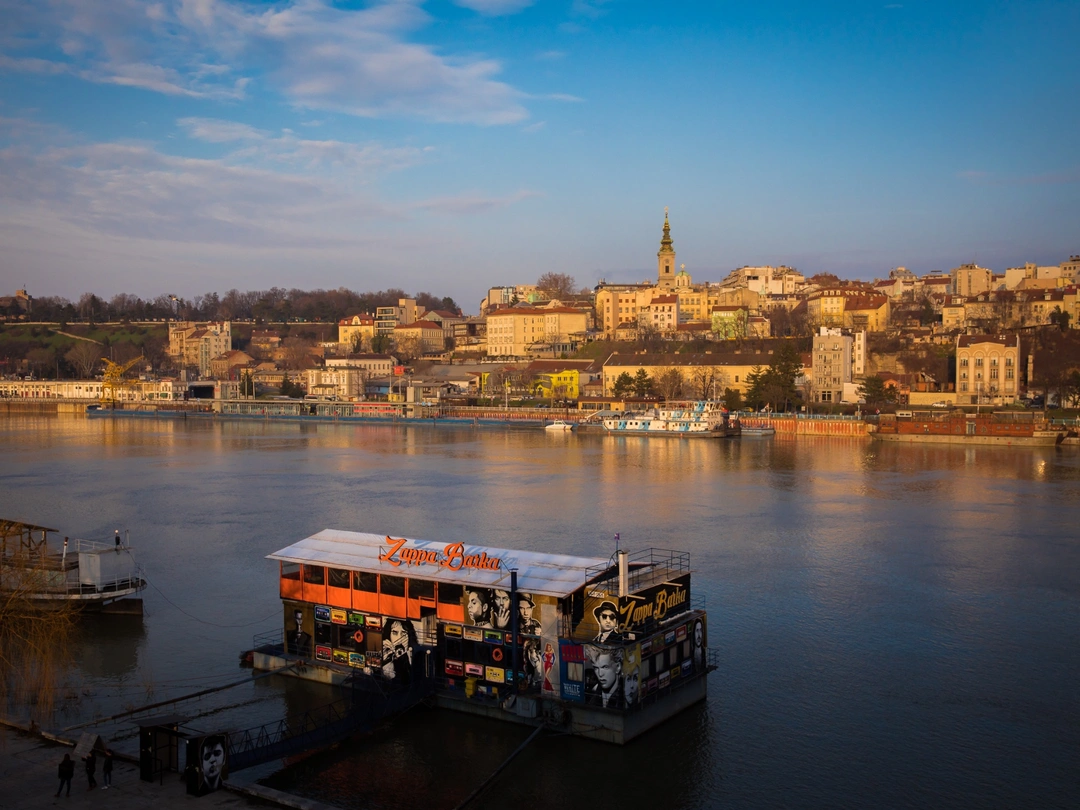
[Treasure Memorial] Little Monster in Serbia │ 9-Day In-Depth Self-Drive Through Wind and Rain, Together Every Step of the Way (Massive Ultra-High-Definition Photos + Videos) To Be Continued
As long as you're happy, everything is fine...
Destination: Serbia
Travel Dates: 2018.02.16 - 2018.02.24 (9 days)
Cost Per Person: Approximately 10,000 RMB
Travel Companions: With friends
Preface: Serbia, an Unexpected Encounter
The first time I truly became curious about Serbia was in early 2017. That day, two viral articles flooded my social media feed, and the word "visa-free" repeated in the headlines attracted me like a magnet. Before that, my impression of Serbia was limited to the women's volleyball final at the Rio Olympics — that epic showdown between the Chinese team and the Serbian team. Yes, starting from January 15, 2017, Serbia granted visa-free access to Chinese citizens! This policy turned this obscure Eastern European country, once almost completely overlooked by travelers, into an overnight hot topic in the travel community.
But what attracted me went far beyond visa-free travel. Serbia, a nation scarred by war, boasts cities that remain stubbornly beautiful in the aftermath, the romantic blue Danube River, and breathtaking natural landscapes. Of course, what truly won me over was its incredibly low cost of living — meaning you could enjoy a higher quality of travel for less money. Only one thought crossed my mind: "I have to go! I have to go! I absolutely have to go!"
So I began my quest to recruit travel companions.
"Feifei! Let's go to Serbia!"
"Serbia? Where is that? Is it fun?"
"It's amazing! Super cheap, stunning scenery, and we can even go skiing!"
"Sounds pretty good. When do you want to go?"
"My schedule is full for this year. How about next year's Spring Festival? I checked the flights — round trip is only 3,500 RMB! Should we grab it?"
"That cheap? Let's buy!"
(Three minutes later)
"Done!"
Just like that, we booked our plane tickets 11 months in advance and then began the long... wait. Wait. Wait.
A Sneak Peek: Serbia's Beautiful Scenery
(Insert massive ultra-high-definition photos and videos here, to be continued)
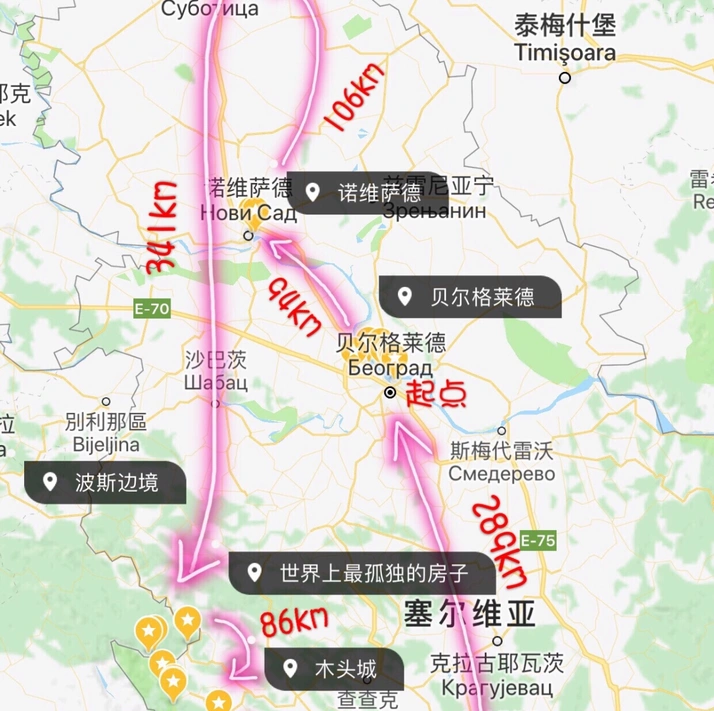
Itinerary Overview: 9-Day In-Depth Self-Drive Route

- Feb 16: Shanghai → Belgrade (SU207 / SU2090)
- Feb 17: Belgrade, Zemun Town
- Feb 18: Belgrade
- Feb 19: Novi Sad
- Feb 20: Subotica
- Feb 21: Tara National Park, The World's Loneliest House
- Feb 22: Tara National Park, Drvengrad (Wooden Town), Zlatibor
- Feb 23: Kopaonik Mountain, Skiing
- Feb 24: Kopaonik Mountain, Skiing → Belgrade → Shanghai (SU2093 / SU206)
The Allure: Flight Booking Tips — How to Get the Lowest Price?
There are no direct flights from Shanghai to Belgrade, Serbia. Connecting flights are the only option. Among them, Aeroflot via Moscow has always been the most cost-effective choice. The round-trip ticket we got, including taxes, for 3,500 RMB was an absolute rock-bottom price.
Ticket-Buying Secrets
When we decided to go to Serbia for the 2018 Spring Festival, it was February 2016. Initially, I searched for ticket prices for several different time periods (like May, August, and October) to get a general sense of the price range — mostly between 3,500 and 6,500 RMB. From this, I determined that 3,500 was essentially the best possible price.
But the question was: since our departure was during Spring Festival, would ticket prices skyrocket? Would we even be able to get the lowest fare? The answer was: yes, we could! The key was — do it early.
On the Aeroflot official website, we found that tickets for the following February's Spring Festival departure hadn't been released yet (although you could see prices on platforms like Qunar, those were just estimates and inflated prices from agents — always verify on the official website). So, I started checking the official website daily. Aeroflot's ticket release window for the Belgrade route is approximately 11 months before departure. Each day that passed, tickets for one more day became available. After waiting about a month, by March, the release dates finally covered our return time. Newly released tickets are usually the lowest fare class, and availability is limited (later promotions might release a few more, but still not many). At that point, what was the price? Including taxes, 3,500 RMB! If not now, when? Buy! Buy! Buy! (Before buying, compare a few platforms — you might save a few dozen RMB.)
A month later, tickets for the same time period had already stabilized above 4,500 RMB and stayed there for half a year before continuing to climb. By the second half of 2017, they had risen to over 6,000 RMB. And just before departure, the same ticket was already priced at 8,700 RMB.
Summary: Buying early, buying tickets as soon as they're released, is the key to saving money.
The Allure: Accommodation Recommendations
Accommodation prices in Serbia are very affordable, and there are now many apartment rentals to choose from. Personally, I think if you're traveling in a group of 3-4 people, staying in a local apartment is the best value. A two-bedroom room costs about 400 RMB per day, with great locations and modern rooms. These apartments can generally be found on Airbnb and Booking. However, apart from the capital Belgrade, accommodation options in other cities are limited. If you book through Booking, you can pay in euros upon arrival, and cancellation policies are flexible; if you book through Airbnb, you need to pay in advance, and cancellations will result in a loss of the service fee.
I've included photos and links for all the accommodations on this trip (see subsequent sections for details). Of course, staying in hotels is also a good option.
The Allure: Car Rental Guide
A popular car rental platform in China is "Zuzuche" (租租车). I've rented from this platform more than once because it can search for prices and models from most major rental companies. Plus, by booking on the platform, you can get a free GPS, a free international driver's license certification, and add a super comprehensive full-coverage insurance to cover any issues that might arise during the rental period.
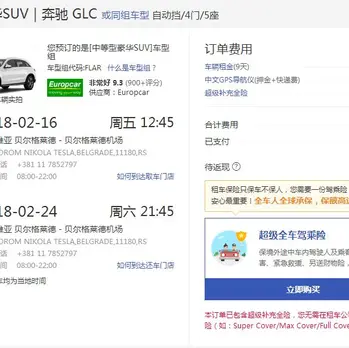
We rented a Mercedes GLC or similar model for 9 days, costing 3,699 RMB (including basic insurance), plus 846 RMB for the super comprehensive full-coverage insurance, and 18 RMB for GPS shipping (with an 800 RMB deposit refundable), totaling 4,563 RMB. There are also more economical models available, but since we were two women traveling together, we chose a slightly better model for a sense of security.
Important Reminder: During a previous self-drive trip in Iceland, we had a tire punctured. At that time, we didn't have full-coverage insurance, and tires weren't covered under the policy. As a result, we ended up paying over 1,000 RMB to fix a tire in expensive Iceland! So, I strongly recommend adding full-coverage insurance!
The Allure: Communication and Internet
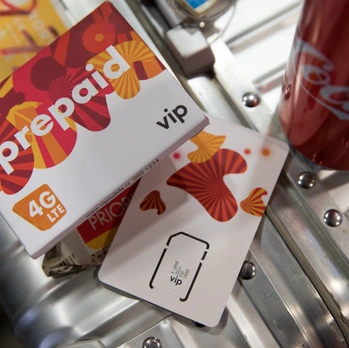
I bought a physical SIM card in advance on Taobao. Since I'm the type who "can't be without internet," I prefer to prepare ahead rather than buy one after landing. I bought two types of cards: one with 14 days and 8GB of data, and another with 14 days, 8GB of data, plus 100 minutes of call time (useful for contacting apartment hosts, etc.). They were plug-and-play, very convenient, and had fast internet speeds. Of course, you can also buy one after landing — there are several local telecom companies to choose from, with VIP being the most common.
During the 9 days in Serbia, except for areas with higher elevation in the national parks where the signal was weaker, we had perfect LTE coverage everywhere else. Eventually, I didn't even need GPS navigation — I just used Google Maps. However, because this place is relatively obscure, searching for attractions on GPS was difficult, making Google Maps more convenient.
The Allure: Currency and Spending
- 1 Serbian Dinar ≈ 0.0667 RMB
- 1 RMB ≈ 14.9942 Serbian Dinar
In Serbia, except for accommodation fees which are specified to be paid in euros, all other expenses need to be paid in local currency. The exchange rate is quite favorable, and the cost of living is incredibly low — basically, you'll feel like a millionaire there.
Departure! A Glamorous New Year's Eve
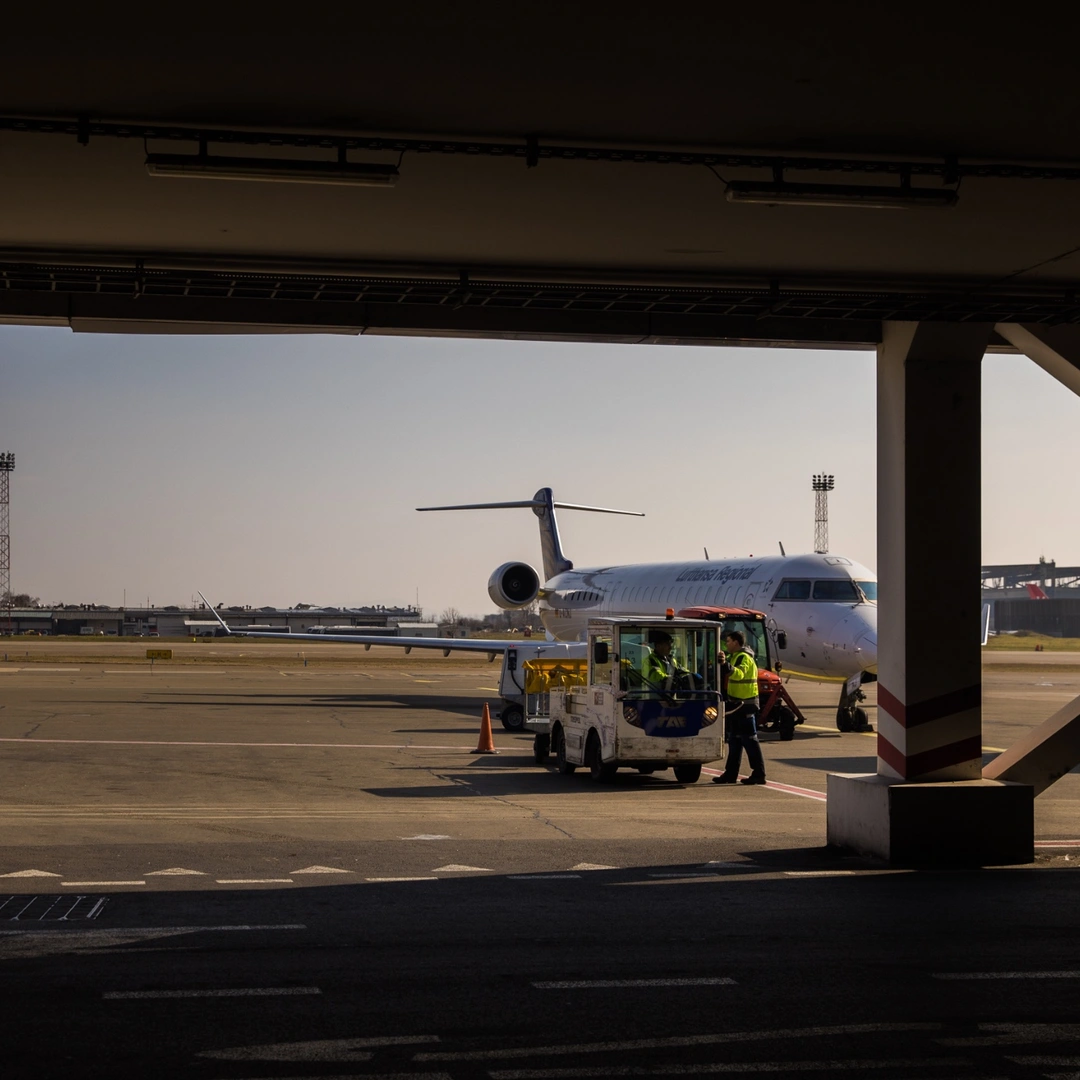
To maximize our vacation time, we boldly chose the SU207 flight departing at 1:05 AM on the first day of the Lunar New Year (February 16). After a layover in Moscow, we arrived in Belgrade at 11:55 AM on February 16. After picking up the car and reaching our accommodation, we could check in just in time! Perfect! This meant we would be spending New Year's Eve at the airport — honestly, it was a first for us. But the thought of getting an extra 7 hours on the first day of the new year was somewhat comforting.
(Skip the long transit process — I know you don't want to read about it, and I don't want to start with a bunch of airplane meal photos either.)
So... we arrived.
Day 1: Belgrade
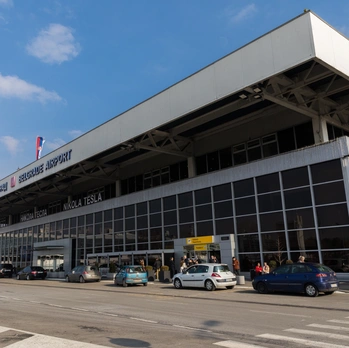
First Arrival: Nikola Tesla Airport
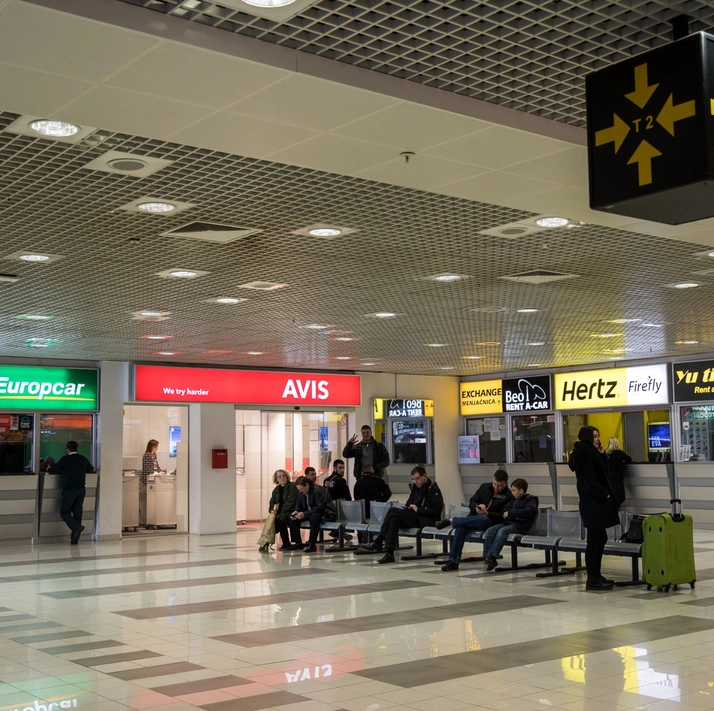
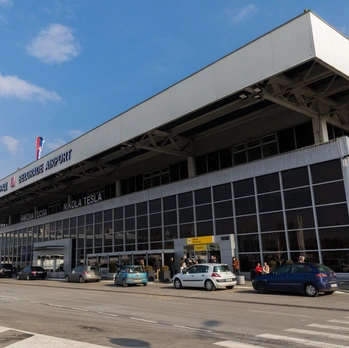
Nikola Tesla Airport is very small. From getting off the plane to clearing customs and collecting our luggage, it felt like only 20 minutes had passed. Exiting into the arrivals hall, the check-in counters for major car rental companies were on the right. The process took about 20 minutes, and the staff would always ask if you had purchased full-coverage insurance — because basic insurance has a limited coverage scope and a high deductible, meaning minor scratches or bumps would still need to be paid out of pocket.
After completing the paperwork, the parking lot was directly opposite the airport terminal. This was also where we would return the car. Each rental company had its own designated parking spaces, marked on the ground. When returning the car, you just park in the corresponding spot and then go back to the original counter to complete the process.
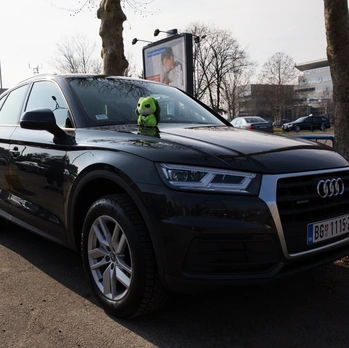
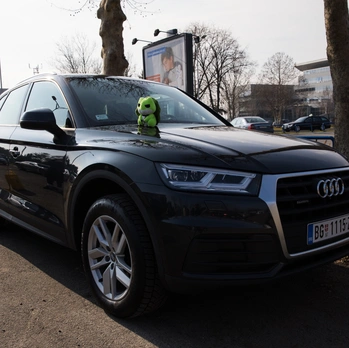
We got a brand-new Audi Q5, which was in excellent condition. The diesel version felt very fuel-efficient, which was later confirmed — we drove about 1,200 kilometers in total and used only about one and a half tanks of fuel.
Come on, little frog, let's take a heart-shaped photo!
Then, we excitedly headed into the city.
There was no traffic congestion in Belgrade, and the road conditions were good. Shortly after leaving the airport road and nearing the city, we saw Huawei's massive billboard ads — a constant presence in major cities everywhere!
First Impressions of Belgrade
Belgrade is the capital of the Republic of Serbia and the largest city in the former Yugoslavia region. It is the fourth-largest city in the Balkan Peninsula, after Istanbul, Athens, and Bucharest. It is strategically located at the confluence of the Danube and Sava Rivers.
The distance from Nikola Tesla Airport to the city center is very short — only 18 kilometers to our booked apartment, which took about 20 minutes. We had booked a two-bedroom hotel-style apartment on Booking (sleeping up to 6 people). The room was spacious and bright, and the bathroom was very clean. The host proactively contacted us in advance to answer various questions and personally waited for us during check-in — very nice.
Accommodation Recommendation: Vivio Luxury Apartment
Booking Link: Omitted
Price: 235.35 euros (3 nights, Feb 16 – Feb 19)
First Driving Experience in Belgrade
The biggest challenge we faced when driving in downtown Belgrade was: making U-turns. Our accommodation was actually just across the street, but to get there, we had to take a huge detour. At first, we strictly followed the rule of "don't make a U-turn if there's no U-turn sign, and don't cross a solid line." But over the next few days, we saw many local cars making U-turns casually, with no police in sight and almost no surveillance cameras.
Additionally, parking in the city requires considerable skill. Although there are many street parking spots, the busier streets are usually full. If there's a parking space near your accommodation, grab it immediately! If you're staying at a hotel, they usually have their own parking, so you can ignore this.
Note: Street parking signs indicate "Park for 120 minutes" or "180 minutes," etc. However, Serbians park casually, and no one really times you — it's all based on honesty. So, you can pretty much park as you please.
But if you're still concerned, I recommend a free, unlimited-time, close-to-downtown parking lot — also highly recommended by our host. It's a skate park with a small road around its perimeter where you can park many cars. There are no marked spaces or signs, making it perfect for overnight parking. We parked there for the first two days. But later, we saw other cars parked overnight under those "120-minute" signs, still there in the morning! So, for our last night in Belgrade, we decided to follow suit.
Coordinates: 44.814827, 20.440500 (Navigate using these coordinates to easily find the small parking road. Once you turn in, you can park deeper in, closer to the river, because there are stairs by the river that lead directly to the bridge, allowing you to walk across.)
Exploring Belgrade
After a short rest, we set out with excitement for our first stop in Belgrade.
Heading west, we reached the Sava River. From the bridge over the river, we could see the cityscape in the late afternoon. Although it looked slightly worn and weathered at first glance, that just meant — there's a story to tell!
The city's attractions are all within walking distance of each other. If you choose accommodation near the city center (around Knez Mihailova Street), you can walk to all the sights.
We walked along the winding city streets towards Kalemegdan Fortress, located at the confluence of the Sava and Danube Rivers. Along the way, we saw many graffiti on houses, walls, and even the roads. We were amazed that graffiti was so encouraged here! In China, it's heavily prohibited! The architecture here was somewhat European, but not as ornate, with a more minimalist style. Old and new buildings were mixed together, creating a unique and distinctive scenery.
There were also terrain differences similar to Chongqing. Since the fortress is on the highest point of Belgrade, the route involved many steps and inclines. Locals were used to it, but as someone who doesn't exercise much, I found myself quite out of breath.
This kind of integration of old building ruins with new structures was common here.
Kalemegdan Fortress
Kalemegdan Fortress, also known as the Belgrade Fortress (search for "Belgrade Fortress" on Google for accurate directions), was once a military fortress for Belgrade's external defense. It has survived many wars and remains one of Belgrade's most significant landmarks. The best time to visit the fortress is from afternoon to evening — after exploring the fortress, you can watch the sunset from the highest point, which is absolutely perfect!
The outer area of the fortress is a park square where many locals stroll and chat, and some tourists come to visit. However, even at such a famous attraction, we didn't see any Asian faces — a testament to how rare Asians are here. One thing worth noting: Serbian men are incredibly tall! The average height feels like it's over 182 cm, and we kept seeing long-legged handsome men walking towards us! Sometimes, when they came in groups, the sight was truly imposing!
The park square had several statues of famous figures. Since we couldn't read Serbian, we didn't know their names or stories, but given their presence here, they must have been great and unforgettable figures of their time.
Take a look at the fortress from above. The outermost part of the fortress has a city wall, with a white tower outside it, probably serving as a lookout post in the past. To enter from the outside through the first layer of the wall, there was only one gate. At the entrance of the gate, we took our first group photo. The fortress was a bit chilly in the evening, probably due to the wind, so we took one photo and quickly moved inside.
Inside the first layer of the wall, we climbed the steps to the upper part of the second layer of the wall, where we saw a large number of military defense weapons. It was unclear whether these weapons were left over from that time or placed there later, but they were scattered around and varied in type, making for an interesting display.
Continuing further in, we crossed another green area and soon reached the highest point of the fortress. This spot is not only by the river but also at the confluence of the Danube and Sava Rivers. It was my first time seeing the legendary Danube River — isn't it supposed to be blue? But here, it didn't look much different! Maybe it depends on the location.
This vantage point offered a view of the deeper riverside areas of the fortress. It didn't look particularly special, so we didn't go down. By this time, it was dusk, and the view was stunning! Highly recommended for a leisurely watch!
When the sun had almost completely set, we walked back along the other side of the fortress. This path was different from the one we came on — it felt more worn and weathered, but also richer in history.
Just as we were about to leave the fortress, we saw this iconic view! Isn't this the cover photo of the fortress in every travel blog? Could this be the real entrance? But seeing it at the end was fine too — it's a gradual progression, right?
After exiting here, we saw a parking lot. So, if you don't want to walk, you can navigate directly here, park, and enter the fortress from this scenic spot.
First Dinner: Prolece
After visiting the fortress, it was completely dark, and we were starving. We hadn't had a proper meal since arriving in Belgrade. There were a few restaurants within the fortress area, and the prices on their menus were very affordable, similar to what you'd find outside. But when we checked in, our host recommended two local restaurants that he thought were good. Since it was a local's recommendation, we felt compelled to try them, and we didn't want to waste the opportunity for our first dinner.
In the end, we decided to go to one of the host's recommended local restaurants — Prolece. According to the map, it was right next to Knez Mihailova Street. I'll introduce this central pedestrian street in more detail later, but tonight we just hurried through it for our dinner.
After passing through a corner near Knez Mihailova Street, we arrived. The storefront was very simple and not particularly eye-catching. Through the glass, we could see well-dressed waitstaff inside, which immediately increased our好感.
We went in without a reservation, but they gave us a spacious table by the window. The restaurant was about 80-90% full. Before ordering, the waiter asked what we wanted to drink — this was the same at every restaurant we visited later. Feeling a bit chilly from the walk, Feifei ordered a mulled wine for me, saying it was what Europeans love to drink. Okay, I'll give it a try.
The mulled wine was surprisingly good! It was sweeter than regular red wine, and when it arrived, it was almost boiling hot — truly warming to the core.
The food here was mostly meat-based, with large portions, but very affordable. For one soup, one main course, and one drink per person, the total was less than 100 RMB per person. We ordered the restaurant's beef soup — but it wasn't very appealing, so I didn't take a photo. I had hoped for something like a rich, hearty Chinese-style broth or at least a thick Western-style soup. Instead, we got a light yellow clear soup with some thin noodles floating in it. At that moment, I was a bit taken aback! When we questioned the waiter, he said it was a soup made from beef broth with some thin, soft noodles added. Well, at least it was light and warm, and it still felt somewhat like a Chinese-style soup, so we enjoyed it.
The meat dishes were decent. The dish in the bottom left tasted similar to the meat box I had in Turkey; the top right was a mushroom and onion stewed meat dish, which was more Chinese-style and my favorite of all the dishes; the steak in the bottom right was cut and pan-fried with eggs, which seemed to be a local dish.
One advantage of this restaurant: the menu had photos! You know, even if some menus have English, those fancy names and ingredients can be hard to understand. Photos made things much easier.
After dinner, it was around 8 PM local time. But between the layover and the afternoon of walking, we were exhausted and went back early to rest. Before sleeping, we checked the weather forecast — a beautiful sunny day ahead! Perfect weather for visiting Zemun Town! We happily fell asleep in seconds.
Day 2: Belgrade → Zemun
Knez Mihailova Street in the Morning
On the second day of our trip, I woke up naturally at 8 AM feeling refreshed — something I hadn't done in a long time! Just a few days ago in Shanghai, I was a serious case of "can't get out of bed"! The heating in the room was very comfortable, and we could wear just a thin set of pajamas without feeling cold. Since we were too tired the previous day to buy groceries, we had breakfast using our own instant mashed potatoes, rice porridge, and some fruit from the room.
PS: When traveling, even though there's plenty of delicious food, there are always times when you can't find anything to eat, get tired of the local cuisine, or just crave something familiar! So, bringing some convenient food is very important! As a foodie and a late-night snacker, I brought quite a bit — the self-heating hot pot I brought played a crucial role later in the trip at the national park cabin!
This was our first morning in Serbia. After breakfast, we planned to explore Knez Mihailova Street, which we hadn't had time to visit the night before. Most shops here close by 9 PM, and they open between 9 and 11 AM. Restaurants, however, open later, often after 11 AM.
Knez Mihailova Street
One end of Knez Mihailova Street connects to Kalemegdan Fortress, and the other end connects to Republic Square. It's the most central commercial street in Belgrade, much like the Champs-Élysées in Paris. If you're choosing accommodation, this area is the best choice. When searching on Google, the correct name is "Kneza Mihaila." During the day, you can browse the shops on both sides — but there are no luxury stores here, at most some third-tier brands (like Lacoste) or local brands. The largest storefronts are occupied by fast-fashion brands like ZARA and H&M. So, if you're looking to shop, you might be a bit disappointed — there's not much to buy. During the day, there are also some unique street performers and a few nice dessert shops. At night, after the shops close, the surrounding bars come alive — this is the essence of Belgrade's nightlife! Don't miss it! Don't miss it! Don't miss it! (Important things said three times!)
In the early morning, Knez Mihailova Street was not very crowded, and all the shops were closed.
This was probably the only Chinese restaurant we saw in Serbia, located near a branch of the main street. But since we had just arrived in Serbia and hadn't yet grown tired of the local meat dishes, we weren't particularly interested. If we had seen it later in the trip, we probably would have gone crazy for it — just like our craving for Chinese food after eating meat for over ten days in Turkey.
Republic Square (Trg Republike)
At the end of the main street is Republic Square. The statue in the center of the square is a bronze statue of Mihailo Obrenović III, built in 1822, to commemorate his liberation of Serbia from Ottoman rule. This is also the origin of the street's name. The square is not large, but it's bustling both day and night. When we took photos, it was early morning, so it looked a bit quiet.
Behind the statue is the National Museum of Serbia, which is still under renovation and closed.
Having a friend who loves taking landscape photos means you get to experience a sculpture from every possible angle, with a full set of photos.
A few more photos of the Belgrade morning street scene — what you see in front of you is correct: rows of parked cars; and in the distance, also correct: more of them!
We both loved this photo. The dog was incredibly well-behaved, quietly accompanying the old man as he smoked and rested in the morning.
More graffiti everywhere.
After exploring enough, we planned to drive to Zemun, about 6-7 kilometers from the city center. On the way, we passed by the site of the former Chinese Embassy in Yugoslavia, which was conveniently on our route. I recommend taking this route as well.
Site of the Former Chinese Embassy in Yugoslavia
This might...
(To be continued)
Conclusion: Serbia, Worth the Journey Through Wind and Rain
Nine days of in-depth self-driving, from the weathered yet vibrant Belgrade, to the peaceful and romantic Zemun Town, to the pristine and awe-inspiring Tara National Park, and finally to the snowy thrills of Kopaonik Mountain — Serbia, a country once scarred by war, conquered us with its resilience and beauty.
There's no Parisian luxury here, no Roman clamor. But it has its own story to tell. Every brick, every...
You should also read:
A Journey Through Time: The Earthen Forest of Yuanmou — April 2011 Chuxiong & Yuanmou Self-Drive Guide
A Journey Through Time: The Earthen Forest of Yuanmou — April 2011 Chuxiong & Yuanmou Self-Drive Guide Some journeys are destined to take root in your memory. In April 2011, I set out from Shuhe in Yunnan, heading north toward the Chuxiong Yi Autonomous Prefecture,…
Continue reading...
A 9-Day Yunnan Journey: From Lijiang to Dali to Tengchong – A Trip Toward Self-Reconciliation
A 9-Day Yunnan Journey: From Lijiang to Dali to Tengchong – A Trip Toward Self-Reconciliation Some say travel is simply going from a place you're tired of to a place other people are tired of. It stings to hear, but it's painfully true. Yet there's…
Continue reading...
Into the Hidden Valley: A Solo Journey Through the Mysterious Dulong River
Into the Hidden Valley: A Solo Journey Through the Mysterious Dulong River Deep in the northwestern corner of Yunnan Province, tucked away from the modern world, lies a place that feels like a secret whispered among mountains. The Dulong River Valley is not just a…
Continue reading...