Under the Shadow of Jade Dragon Snow Mountain: A Slow-Paced Mother-Daughter Escape to Lijiang
Under the Shadow of Jade Dragon Snow Mountain: A Slow-Paced Mother-Daughter Escape to Lijiang
There's an old saying that goes, "Travel ten thousand miles before reading ten thousand books." I've always believed in moving first, thinking later—keeping my legs swinging and my eyes wide open. But this time, the journey wasn't just about me. It was about bringing my mother along for a slow, unhurried retreat beneath one of China's most iconic peaks.
When the 2021 May Day holiday stretched into a five-day break thanks to some clever calendar shuffling, I knew I had to make it count. Sure, some grumbled about the disrupted weekends, but for those of us who live for travel, five consecutive days off felt like winning the lottery. The challenge? Finding a destination that wouldn't be overrun by the holiday crowds.
My eyes landed on a place that had haunted my memory for a decade: Lijiang, and more specifically, the magnificent Jade Dragon Snow Mountain.
Why This Time Had to Be Different
I first visited Lijiang ten years ago—on a group tour my mother had organized for us. Back then, I was clueless about travel planning and photography. I simply followed the herd, shuffled through rain-soaked attractions in tacky plastic ponchos, and snapped blurry, poorly composed photos that I later deleted in embarrassment. The mountain? I barely saw it through the endless drizzle.
This time, I was determined to do it right. I spent weeks researching, mapping out locations, and consulting local friends. "Where can I get an unobstructed view of the snow mountain?" I asked. Their answer surprised me: "Everywhere. Even the vegetable market has it as a backdrop."
With that reassurance, I booked our tickets and packed our bags. What followed was nothing short of magical.
The Journey Begins: Sleeper Trains and Surprises
Let's be honest—flying during a holiday spike is a financial nightmare. As a budget-conscious traveler, I couldn't justify the sky-high airfare. So, I did something I'd never considered before: I booked a sleeper train from Beijing to Kunming.

The train itself was a revelation. Gone were the cramped four-bed compartments I remembered. Instead, each berth now had its own curtain, creating a private cocoon. The upper bunk was surprisingly spacious—I could sit upright without hitting my head. And the breakfast kit they handed out in the morning? It contained bread, cookies, snacks, and even milk tea. I was genuinely impressed.
After a peaceful night's sleep (thankfully, my car was quiet), I woke up to see the lush green landscapes of Yunnan through the window. From Kunming, another three-hour high-speed ride brought us to Lijiang.
This was already different from my usual trips. No rushing, no clock-watching. Just the slow, steady rhythm of travel—the way a vacation should feel.
Choosing the Right Base: Why I Skipped Old Town
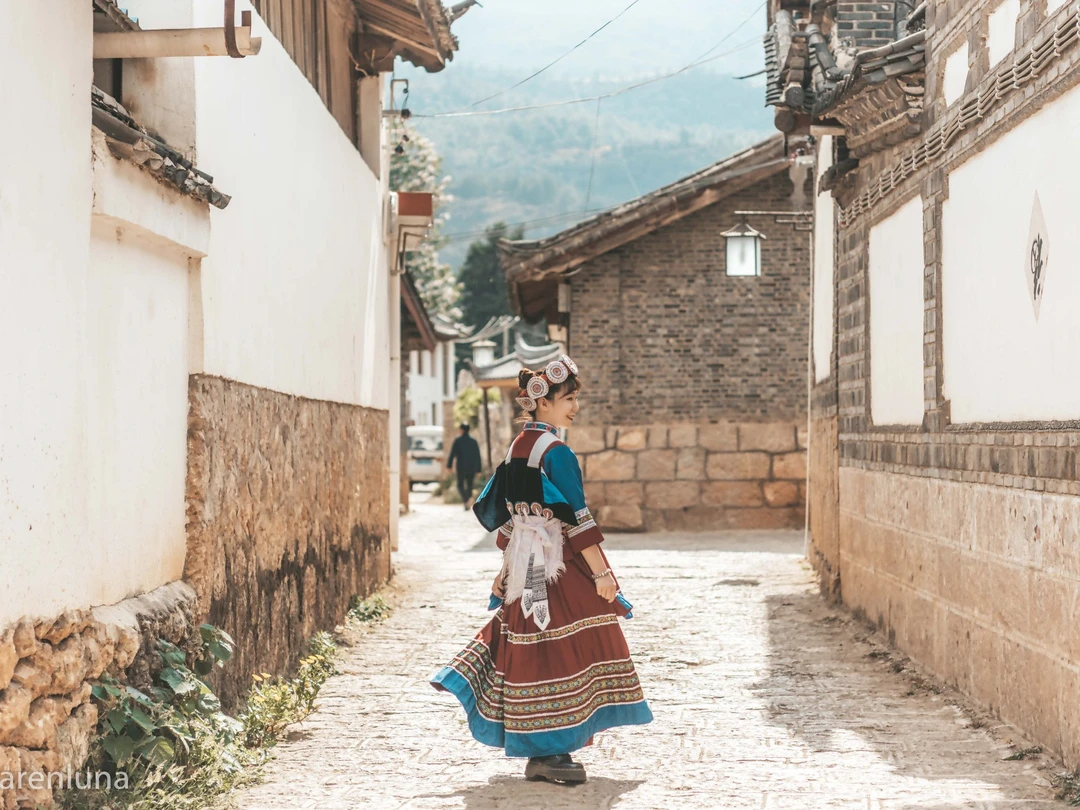
To avoid the holiday chaos, I deliberately avoided Lijiang's famous Old Town. Instead, I chose a quieter, lesser-known village: Baisha. Nestled closer to the snow mountain, it offered peace, authenticity, and a glimpse into traditional Naxi culture.
Our home for the next few days was the Qingpu Cultural Hotel, a beautifully restored Naxi courtyard. At first, I thought "Cultural Hotel" sounded like a museum. But after reading reviews, I realized it was something far more special—a brand dedicated to preserving local heritage through immersive experiences.
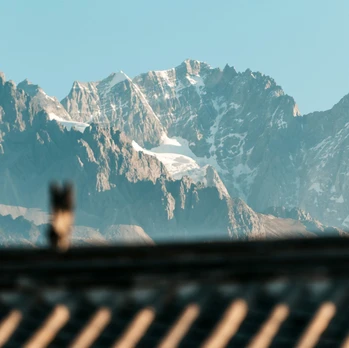
The architecture blended Japanese minimalism with Naxi ruggedness. Stone walls, wooden beams, and floating stone screens created a space that felt both ancient and modern. Every rooftop featured a "tile cat" (瓦猫 wǎ māo)—a mythical creature believed to ward off evil spirits. Each one was uniquely carved, adding character to the skyline.
My room had a private terrace with an unobstructed view of the mountain. Little did I know, this terrace would later become the best seat in the house for watching fireworks light up the night sky.
Tackling Jade Dragon Snow Mountain: The Smart Way
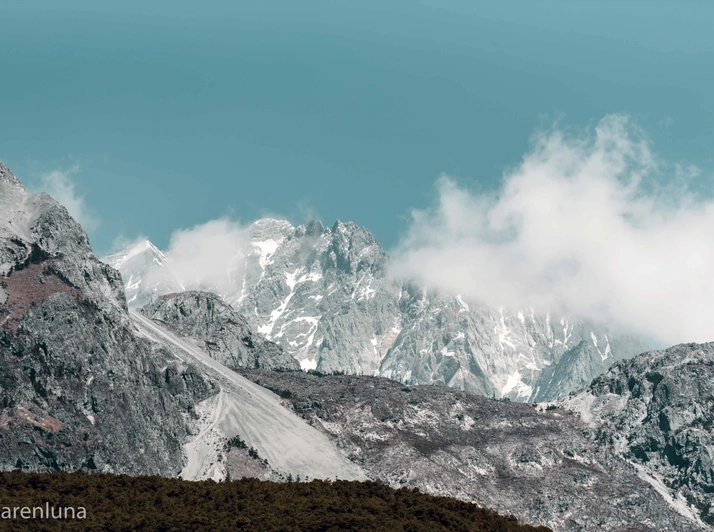
The mountain offers three cable car routes: the Glacier Park (4,600 meters / 15,092 feet), the Yak Meadow (3,800 meters / 12,467 feet), and the Spruce Meadow (3,200 meters / 10,499 feet). Most tourists flock to the Glacier Park, but with my mother's health concerns and my own aversion to crowds, I opted for Spruce Meadow—the same route I'd taken ten years earlier, but this time with better planning.
We woke up at dawn, skipped breakfast, and hailed a taxi. The early start paid off: we breezed through the entrance without any traffic. By 9 a.m., the road was already jammed with tour buses.
After a shuttle ride through the valley, we reached the cable car station. The mountain, which had been shrouded in clouds the day before, now revealed itself in all its glory.
Spruce Meadow: A Hidden Gem Above the Clouds
At 3,200 meters, the air thins quickly. I hadn't expected altitude sickness—I'd been fine on higher peaks before. But within minutes of walking, I was gasping for breath. My mother, who had been worried about her own health, was actually handling it better than me.
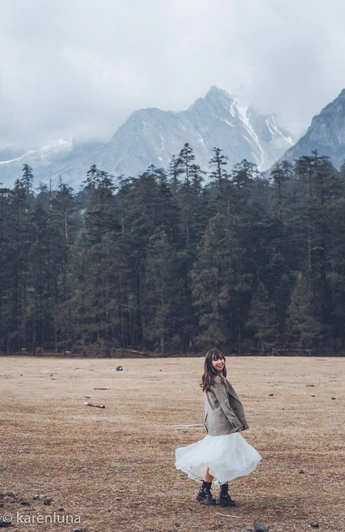
We opted for an electric cart to save energy. The ride wound through dense spruce forests, sunlight filtering through the canopy. It was like entering a fairy tale.
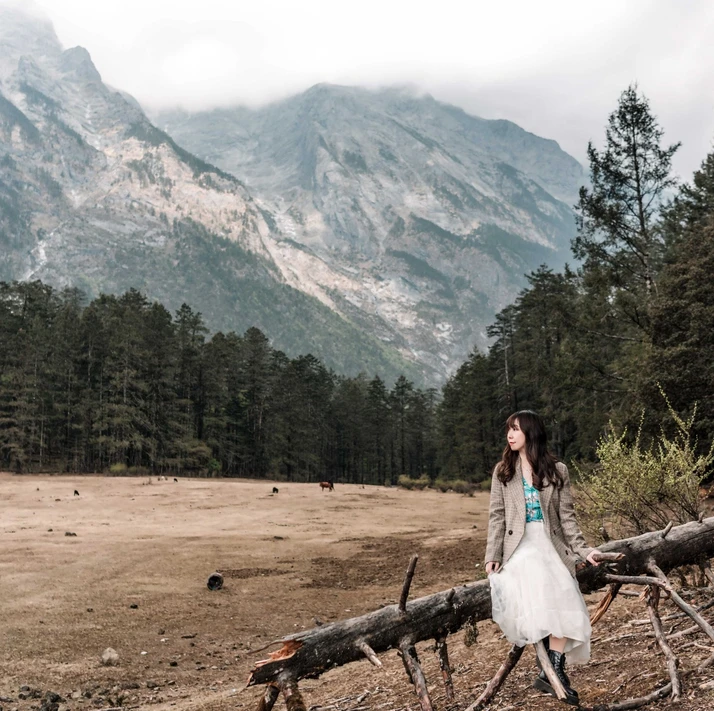
The meadow itself was breathtaking. Known as "Yulong Third Kingdom" in Naxi mythology, this is where lovers were said to have chosen death over separation. I didn't feel the romance, but I did feel an overwhelming sense of peace. The grass hadn't turned green yet—it was early May—but the golden-brown tones against the snow-capped peaks created a natural, high-end palette.
We spent hours taking photos. My mother, initially tired, perked up the moment she saw the scenery. We posed, laughed, and captured moments that would later become cherished memories. The forest trails, the fallen logs, the grazing sheep—every corner offered a new composition.
By noon, the clouds rolled in, and the mountain disappeared behind a veil of mist. It was still beautiful, but in a different way—ethereal and mysterious.
The Unexpected High-Altitude Lesson
Around lunchtime, both my mother and I started feeling sluggish. Not nauseous or headache-y, just completely drained. We had planned to visit the famous Blue Moon Valley afterward, but the crowds and our fatigue made us reconsider.
On the taxi ride back, our driver—a former soldier—noticed our condition. He handed us each a slice of red ginseng. "My family's doctor taught me this," he said. "It helps with altitude sickness." Skeptical but desperate, I put it in my mouth. Within minutes, I felt my energy return. My mother, too, perked up. I made a mental note: always carry red ginseng on high-altitude trips.
A Quiet Afternoon in the Courtyard
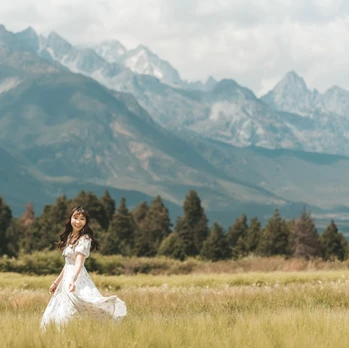
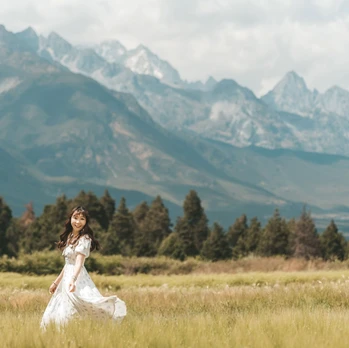
Back at the hotel, we finally had time to explore the property. The courtyard was a photographer's dream—every angle framed the mountain perfectly. I spent an hour just wandering, noticing the details: the handmade Dongba paper, the leather crafts from the ancient Tea Horse Road, the calligraphy on the walls.
That evening, I drew a bubble bath and soaked away the day's exhaustion. The window faced the mountain, now bathed in the golden light of sunset. It was the kind of moment that makes you forget about work, stress, and deadlines.
Dragon Girl Lake: Photo-Worthy or Overhyped?
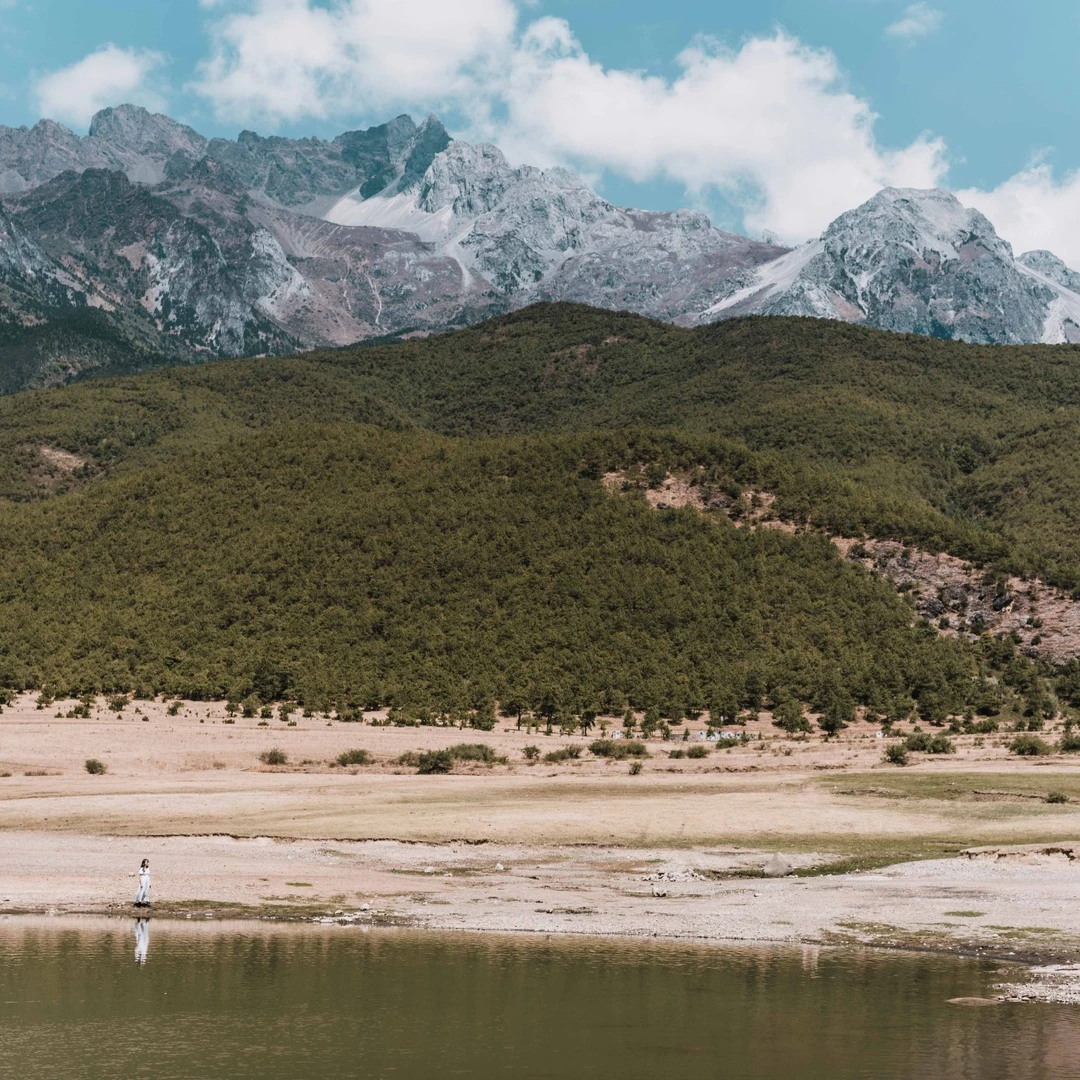
The next morning, we headed to Yuhu Village, home to Dragon Girl Lake (龙女湖 Lóngnǚ Hú). Online reviews were divided: some called it a must-visit for Instagram-worthy shots; others dismissed it as a muddy puddle with nothing to do.
We arrived early, before the crowds. The lake was small, yes. The grass was dry, and the water level was low due to the drought. But the mountain reflected in the still water, the lone tree standing by the shore, and the two friendly dogs that followed us around—it all felt like a scene from a movie.
We took our time walking around the lake. The best photo spot turned out to be a dam on the opposite side, where the entire landscape mirrored itself in the water. My mother, who had never been particularly interested in photography, suddenly became a model. She posed against the mountain backdrop, laughing and adjusting her scarf. I snapped dozens of shots.
A Taste of Naxi Hospitality
That afternoon, we wandered through Baisha village. Unlike the commercialized Old Town, Baisha felt alive with local rhythms. Elderly Naxi women sat by the roadside, embroidering traditional patterns. The smell of roasted Yunnan coffee drifted from a tiny café.
We stopped for lunch at a small family-run restaurant. The owner recommended 鸡豆凉粉 (jī dòu liáng fěn), a cold jelly made from local chickpeas, served with chili oil and vinegar. It was refreshingly tangy. Then came 腊排骨火锅 (là pái gǔ huǒ guō), a smoky pork rib hotpot that warmed us from the inside out. The broth, simmered for hours with wild mushrooms and local herbs, was the perfect remedy for our tired bodies.
Fireworks Over the Mountain
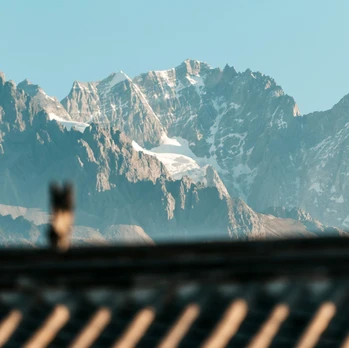
That evening, we returned to our hotel terrace just as the sun dipped below the horizon. Without warning, fireworks erupted over the village. Red, gold, and green bursts painted the sky above the snow-capped peak. It was spontaneous—likely a wedding celebration somewhere in Baisha—but it felt like a private show.
My mother and I sat in silence, watching the colors fade and bloom. For a moment, everything was perfect.
Reflections on the Slow Life
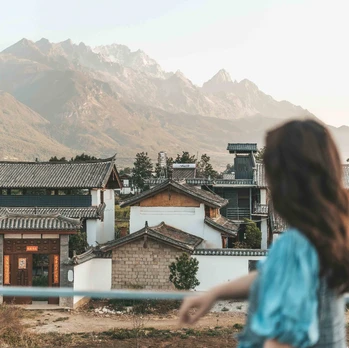
As our trip came to an end, I realized what made this journey different. It wasn't the famous attractions or the perfect photos. It was the unhurried pace—the mornings spent sipping tea on the terrace, the afternoons wandering aimlessly through ancient streets, the evenings sharing meals without checking phones.
My mother, who had been nervous about the altitude and the crowds, confessed she hadn't felt this relaxed in years. "I could stay here forever," she said, staring at the mountain one last time.
And I believed her.
Practical Tips for Your Own Trip
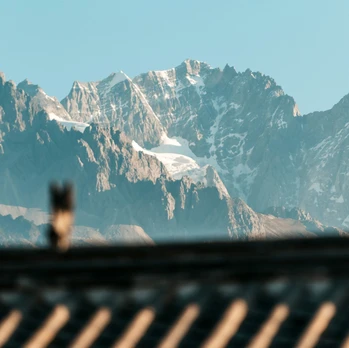
If you're planning a similar escape, here's what I learned:
- Skip the Old Town — Baisha or Shuhe offer more authentic experiences without the crowds.
- Book early — Holiday periods fill up fast, especially for hotels with mountain views.
- Carry red ginseng — It genuinely helps with altitude sickness. You can find it at local pharmacies.
- Choose the right cable car — Spruce Meadow is perfect for families and those with health concerns. Glacier Park is for thrill-seekers.
- Wake up early — The mountain is clearest in the morning. By noon, clouds typically roll in.
- Pack layers — Temperatures swing dramatically. Mornings are cold, afternoons warm, and evenings chilly.
- Bring cash — Many small vendors and restaurants in Baisha don't accept digital payments.
The Last View
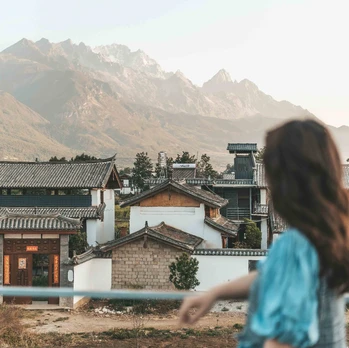
On our final morning, I woke before sunrise. The sky was clear, and the mountain stood in full view, its peak glowing pink in the first light. I didn't reach for my camera. I just sat there, breathing in the thin, cold air, memorizing every detail.
Some views don't need to be photographed. They need to be felt.
And this time, I had someone to share it with.
You should also read:

Cloud Travelogue · Dali of Wind, Flowers, Snow, and Moon: A Three-Day, Two-Night Journey of a Free Spirit
Cloud Travelogue · Dali of Wind, Flowers, Snow, and Moon: A Three-Day, Two-Night Journey of a Free Spirit I am a cultured female foodie with a touch of rogue charm. I slung on my backpack, took my lover's hand, and set off on a spontaneous…
Continue reading...
A Spiritual Journey to Lugu Lake in Lijiang: Experiencing the Legend of the Kingdom of Women! (Reproduction and Hotlinking Prohibited)
A Spiritual Journey to Lugu Lake in Lijiang: Experiencing the Legend of the Kingdom of Women! (Reproduction and Hotlinking Prohibited) Off-road自驾, food, hotel and民宿 reviews, Featured Traveler, Tank 300 owner, 200,000 km of self-driving experience. WeChat: y01294987 Ninglang Yi Autonomous County 2010.11.08 · 7 days…
Continue reading...
The Slow Life of Lijiang: A Soft Dream on the Yunnan-Guizhou Plateau
The Slow Life of Lijiang: A Soft Dream on the Yunnan-Guizhou Plateau Some places, just by hearing their name, stir a ripple in your heart. Lijiang is one of those names. It's not the kind of destination that demands you tick off a checklist of…
Continue reading...