Wandering Lijiang, Finding Myself: A Seven-Day Journey Through Time and Soul
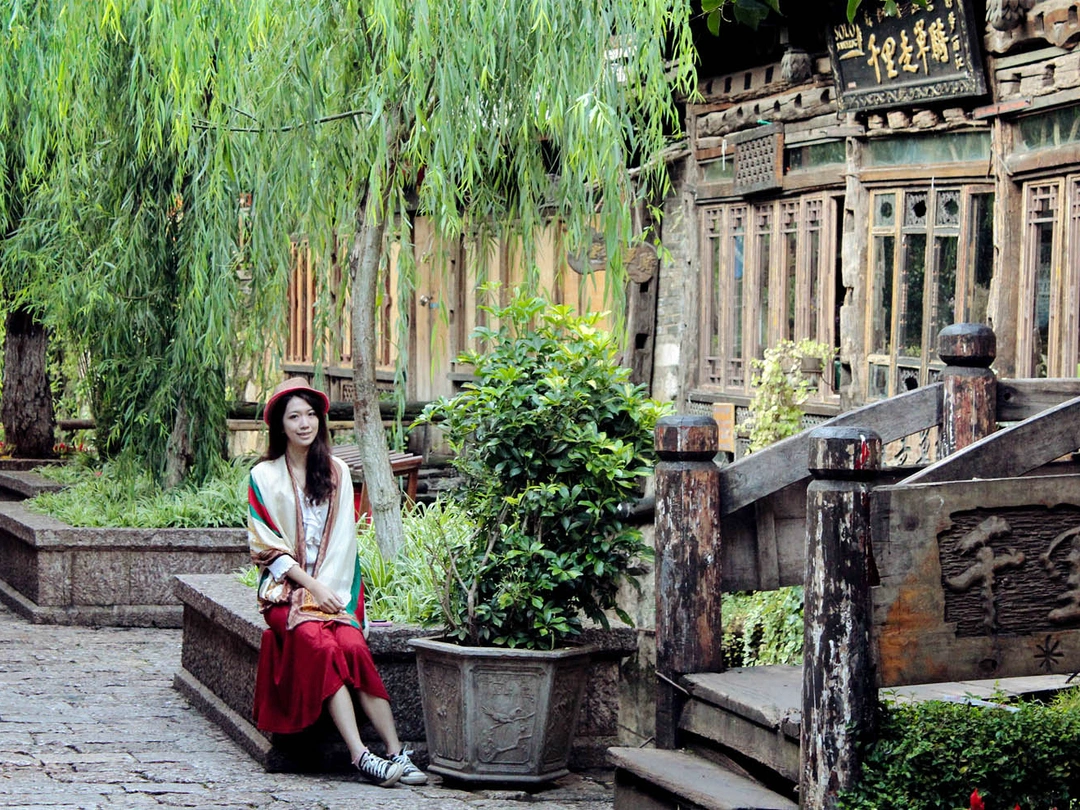
Wandering Lijiang, Finding Myself: A Seven-Day Journey Through Time and Soul
Weibo | Xiaohongshu: Steel Teeth Xiao Jia
WeChat Official Account: TinyVision
Prologue: When Dreams Become Reality
Some journeys are for seeing the scenery; some journeys are for finding yourself. In September 2012, my friend of over a decade, Chen Xiaochong, and I set foot on Yunnan—a land celebrated by countless travelers. As two typical Sagittarius girls, we longed to etch the world's beauty into our memories while we were still young and free.
Over seven days, from Lijiang to Shangri-La, and then to Lugu Lake, we experienced cold, disappointment, surprise, and profound emotion. This is more than just a travelogue; it's a practical guide on how to embrace boundless scenery with limited time.
Pre-Trip Essentials: The Truths You Need to Know
About Itinerary Planning
Our route wasn't perfect—starting from Lijiang, two days round trip to Shangri-La, another two days round trip to Lugu Lake, and finally back to Shenzhen on the last day. If you ask me what the ideal plan would be, I'd say: spend two or three days each in Lijiang and Lugu Lake, soaking it all in slowly. As for Shangri-La, to be honest, it's better suited for trekking than a quick glance. In my heart, Lugu Lake is the true "Shangri-La."
About Costs

Round-trip airfare was about ¥2,800 per person, taking up most of the budget. The all-inclusive tours for Lugu Lake and Shangri-La cost around ¥1,540 per person (excluding meals). Three nights in a Lijiang inn at ¥138 per night, plus meals, souvenirs, and incidentals, brought the total to just over ¥5,000 per person.
Practical Tips
- Clothing: In September, Lijiang has extreme temperature swings between day and night, and Shangri-La is even worse. A heavy jacket or down coat is essential for survival—catching a cold at high altitude makes it hard to recover when you return to lower elevations.
- Accommodation: During the off-season, there's no need to book Lijiang inns in advance. With over 3,000 guesthouses in the old town, many hang signs saying "Rooms Available"—just show up and check in.
- Transportation: The old town is all cobblestone streets. Dragging a suitcase as a woman is exhausting—better to have a strong companion to help.
- Food: The snack streets serve food that's neither authentic nor hygienic. Don't be fooled by the lively atmosphere.
- Tours: Travel agencies are everywhere in the old town. Never fall for cheap tours costing ¥200–300; ones priced at ¥500–600 or more are reliable. Recommended clubs: Yuezhe (Off-Roader), Jinsha (Golden Sand), etc.
- Shopping: Most of the so-called yak meat in Lijiang is fake. You're lucky if you can even buy synthetic beef with a trace of yak meat in it.
- Altitude Sickness: As healthy young adults, we didn't need oxygen tanks at all. Trust yourself—don't let anyone talk you into buying them.
Chapter One: Arriving in Lijiang—When Ideals Collide with Reality
From 35°C to 12°C in a Flash
In mid-September, Shenzhen's ground temperature topped 35°C. I was wearing jeans, a T-shirt, a little straw hat, and a small scarf, completely unaware that in a few hours, this outfit would become a disaster.
When the plane landed in Kunming, the announcement came: "Ground temperature, 12°C." Chen Xiaochong and I stared at each other, unable to believe our ears. It wasn't until we saw airport staff shivering in heavy windbreakers that we finally realized—yes, it really was 12°C! In the same country, the temperature difference was that extreme.
To make matters worse, the flight from Kunming to Lijiang was delayed. We huddled in the airport, put on our down jackets, double-checked our itinerary, and waited. At 10:30 PM, we finally landed at Lijiang Airport. The driver who picked us up had been waiting for ages. He shrugged nonchalantly: "Delays are normal in Lijiang. Small airport, few flights. Sometimes you wait until dawn."
Late-Night Food Hunt
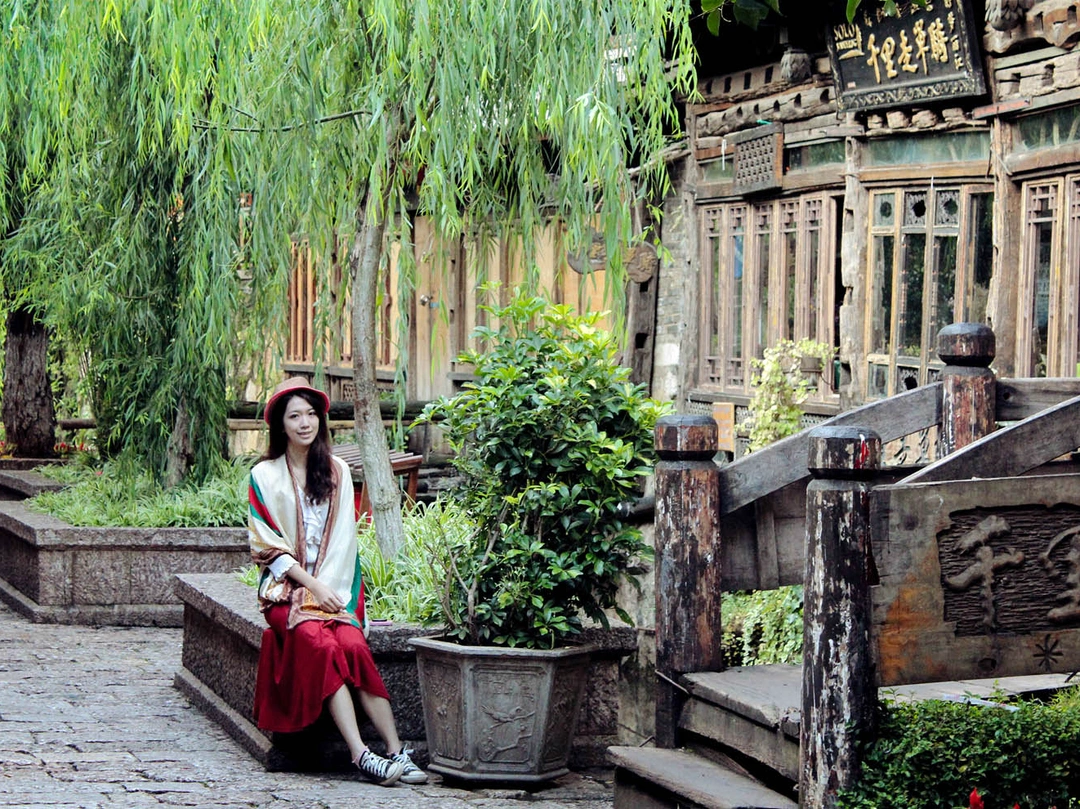
There was a small hiccup finding the inn—I'd accidentally saved the owner's phone number with one digit missing. After some back-and-forth, we finally got in touch, and the driver dropped us off near Lijun Hotel. It was almost 11 PM by the time we reached the inn, starving. The owner directed us to the snack street for food.
But everything about the snack street was disappointing. Vendors who seemed enthusiastic were selling barely edible food. The sound of the boss spitting nearby, the noise of staff washing the floor... I ordered a bowl of rice noodles (mi xian), but couldn't eat a bite. Sipping on some completely unauthentic Rhodiola (hong jing tian) tea, I felt nothing but frustration. Was this the legendary Lijiang? A delayed flight, a lost inn, hunger and cold—the first day had shattered every beautiful fantasy.
Chapter Two: Lijiang by Day and Night—The Dual Life of Quiet and Chaos
Early Morning in the Old Town Is the Real Old Town
Only in the early morning does Dayan Old Town show its true quiet side. The cobblestone streets are free of tourist noise, with morning light spilling over the gray tiles, casting a gentle glow. This is what the old town must have looked like originally—peaceful, serene, untouched by the world, like a pure and proud young woman.
I was lucky enough to capture the moment when morning light poured into the ancient city. A hint of gray hid within the blue sky, creating a beauty that touched the soul.
Lijiang at Night Is for Daydreaming and Missing Someone
"Daydreaming is free"—that's the most common phrase you'll see in Lijiang's inns and restaurants. For those of us striving in different cities, daydreaming has become the ultimate luxury, but here, it's the most natural thing to do.
No matter where you go, there's always someone you miss. Send a postcard, share your travel feelings. Lijiang's "drift slow mail" service requires you to put postcards in envelopes—I did the same thing in Xiamen once.
Food Recommendations: - Alili's Steam Pot Chicken (汽锅鸡): The potato dumplings are absolutely amazing - No. 88 Snack Shop (88号小吃店): Their grilled fish is better than Alili's, and the fried tofu is top-notch - A'an Yogurt (阿安酸奶): Famous for a reason, worth a try
Wish lanterns can be found everywhere, and there's always a corner that feels like yours. A shop plays beautiful music, a little girl smiles brightly, and a foreigner upstairs chats with another downstairs—so joyful. Here, time seems to slow down.
Chapter Three: Shangri-La—The Moon in Your Heart, or a Distant Dream?
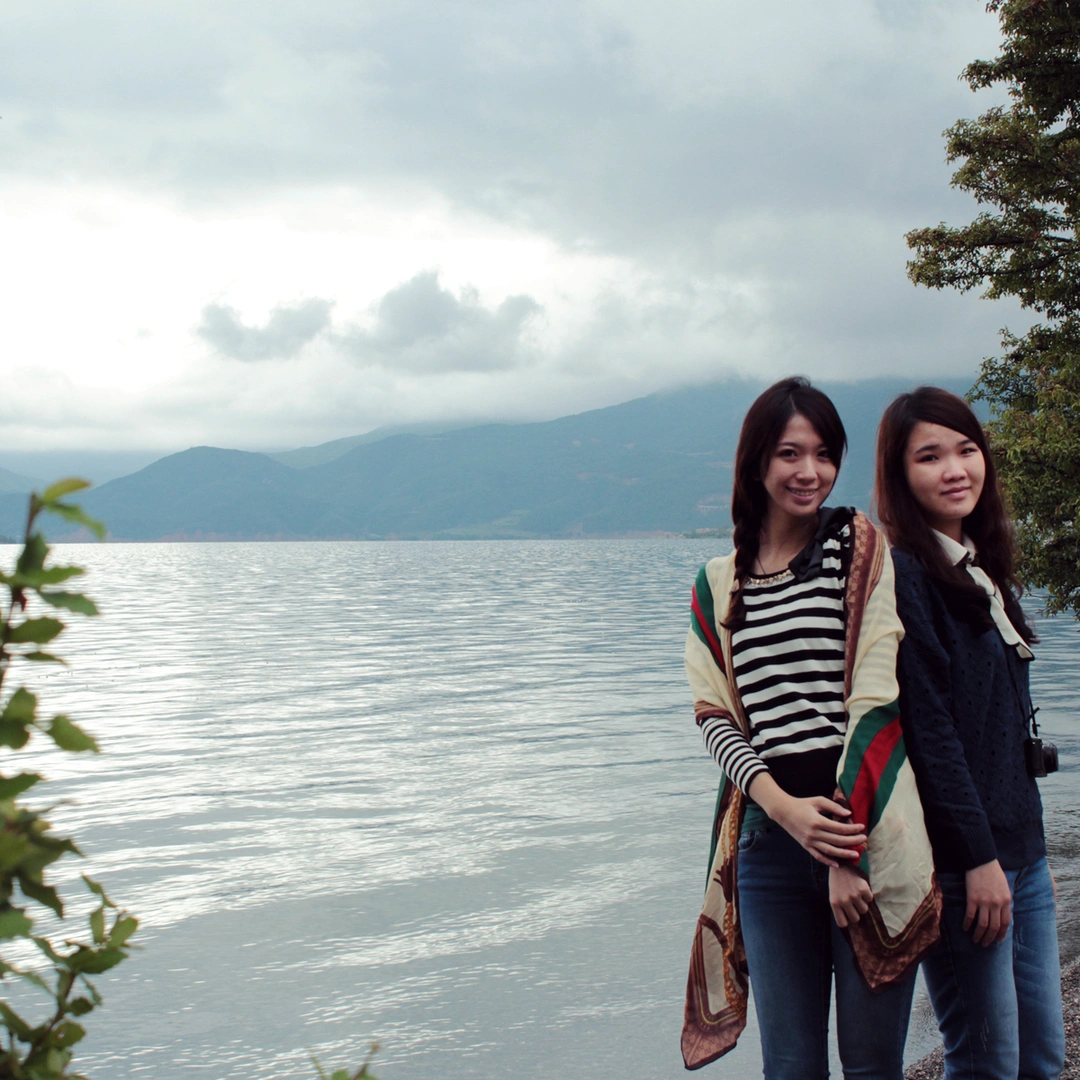
Meeting the Best Guide
The next day, we joined Jinsha Travel Agency's all-inclusive Shangri-La tour. A small group of 15 people—mostly couples, plus our duo of best friends, and a solo female traveler. Our guide, Xiao Yang, was the most warm-hearted and genuine guide I've ever met. Short and dark-skinned, I joked that he looked like a smaller version of Han Geng. Younger than us, yet he took care of everyone like an older brother.
The group also included a Korean couple studying medicine in Beijing—they spoke Mandarin fluently—and a young couple from Wuhan who had been in Lijiang for over two weeks, eagerly recommending places to eat. Everyone pulled out pens and notebooks, jotting down tips one by one.
Our young guide had just turned 18. He came to Lijiang on vacation two years ago, fell in love with it, and stayed. I couldn't help but admire his courage—I asked myself, when could I make such a decisive choice?
Tiger Leaping Gorge and Songzanlin Monastery
Route: Xionggu Observation Deck → Distant view of the First Bend of the Yangtze River → Hike at Upper Tiger Leaping Gorge → Xiaozhongdian Grassland → Songzanlin Monastery.
The morning was sunny and bright. Xiao Yang said we were lucky to see the "Golden Summit" at sunrise. During our six days in Lijiang, the sky's pure yet enchanting blue was what I loved most.
Tiger Leaping Gorge was magnificent—the rushing water filled me with awe. Xiaozhongdian Grassland was bare and not at all lush. Songzanlin Monastery, known as the "Little Potala Palace," had steep stairs that left me breathless. But standing before its majestic halls, I felt small yet found inner peace.
That evening, we had yak hotpot (mao niu huo guo), one small pot per person. As soon as the meat arrived, everyone at the table whipped out their phones: "Weibo! Quick, Weibo!" After dinner, we watched a show. The lead dancer, a handsome local man (zha xi), received many ceremonial scarves (ha da) from admiring women.
Potatso National Park—A Misty Wonderland
The next day, we went to Potatso. It was drizzling and thick with fog. The guide said it was colder here than outside and recommended renting down jackets and buying oxygen. The Wuhan couple bought three full oxygen tanks. The guy had already drained one before even reaching Potatso. Xiao Yang couldn't help saying, "Brother, take it easy. You're a healthy young man."
Honestly, for those of us in our twenties, unless you're particularly frail, there's no need to rent down jackets or buy oxygen. Chen Xiaochong and I bought nothing and had no altitude sickness. Young people, trust yourself—you can push past your limits.
Shrouded in fog, Potatso had mirror-smooth lake surfaces. We took a boat ride for one section and walked two others. I climbed to the boat's top deck and saw breathtaking scenery. The light rain added a mystical atmosphere. Plants were covered in moss, and trees hung with root-like strands. They say that in Potatso, you'll always meet a loyal little dog—and we really did.
Chapter Four: Lugu Lake—A Hidden Gem in the Mountains
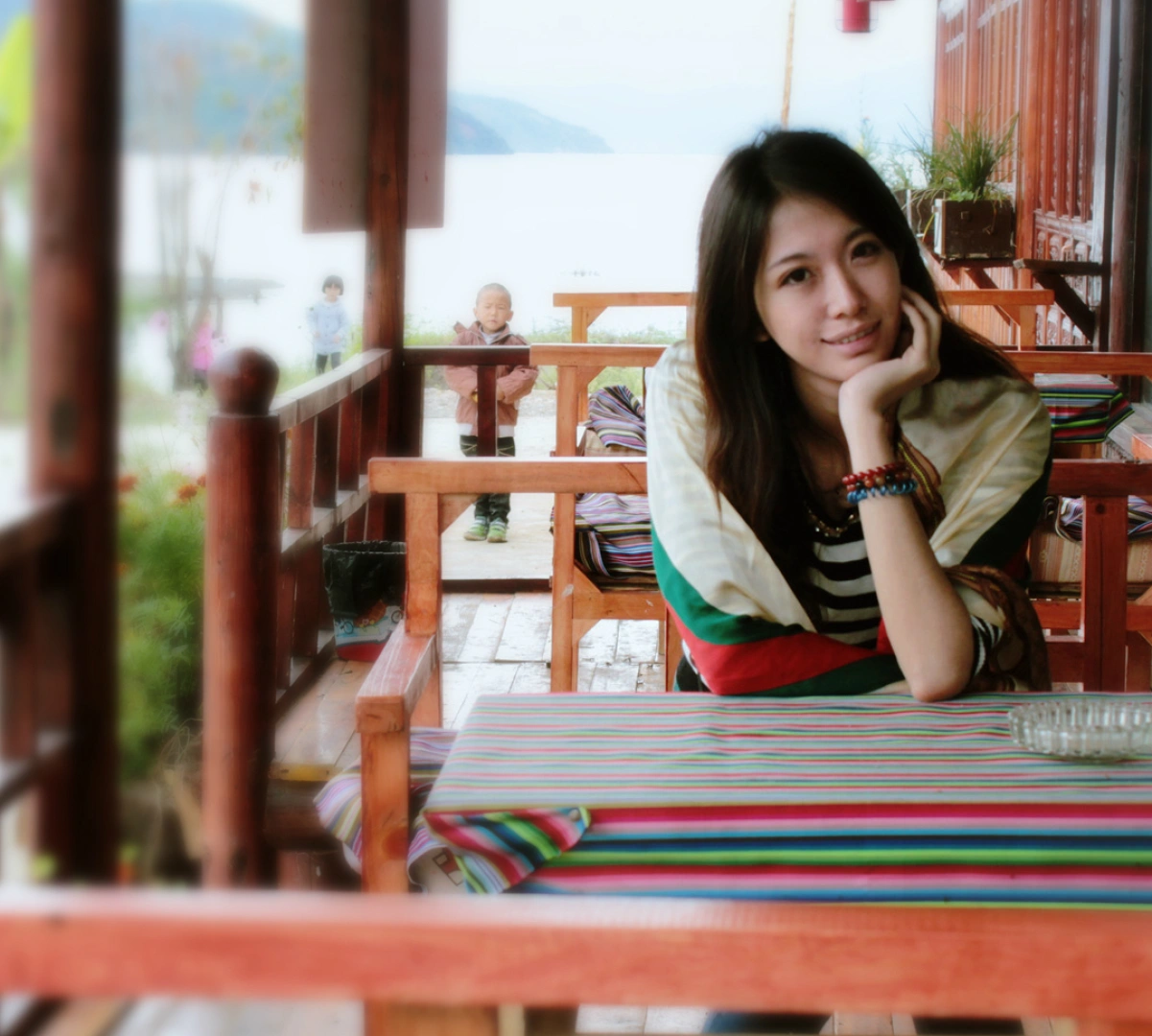
A Journey Across the Ridges
Lugu Lake lies on the border between Yunnan and Sichuan, half in each province. Starting from Lijiang, you have to circle around towering mountains, navigate steep and narrow mountain roads, and endure a four-hour drive to get there. It's like a gem hidden deep in the mountains, shining alone.
There are three islands on the lake: Heiwawu Island, Libiwu Island, and Lige Island. Lige Island connects to the shore to form a peninsula, now developed into a cluster of inns where you can enjoy lake views from your room—very relaxing.
The Lesson of Joining a Tour
This time, we joined the Dianma Club tour—a large bus with over thirty people. From the moment we got on, something felt off. The guide was strange, in an indescribable way. Compared to Jinsha Travel Agency's attentive service, this experience was far inferior. It confirmed once again: choosing the right club is everything.
Epilogue: The Meaning of Travel
Over seven days, we went from disappointment to surprise, from cold to warmth, from strangers to old friends. What Lijiang taught me wasn't how to check off scenic spots, but how to slow down—to feel, to listen, to accept.
Those quiet mornings, lively nights, the misty wonderland of Shangri-La, the lake and mountains of Lugu Lake—all have become treasures in my memory. But the most important thing is the road walked with a dear friend, the scenery we saw together, and the time we shared.
Finally, to you about to set off:
- Don't fear the cold—just bring enough clothes
- Don't fear altitude sickness—just trust yourself
- Don't fear getting lost—just ask someone
- Don't fear disappointment—because surprises come when you least expect them
May you find yourself in Lijiang.
All photos in this article were taken with a Canon 600D kit, iPhone 4S, and Lumix LX3. Special thanks to Jinsha Travel Agency for their thoughtful service, and to all the lovely people we met along the way.
Scarf (Gucci), red dress (H&M) purchased from official stores. Floral dress and hat purchased from Taobao—search for "Little Chili Pepper Hat/Long Dress."
Background music: "各自远飏" (Nagori Yuki) — Ataru Nakamura
You should also read:

Cloud Travelogue · Dali of Wind, Flowers, Snow, and Moon: A Three-Day, Two-Night Journey of a Free Spirit
Cloud Travelogue · Dali of Wind, Flowers, Snow, and Moon: A Three-Day, Two-Night Journey of a Free Spirit I am a cultured female foodie with a touch of rogue charm. I slung on my backpack, took my lover's hand, and set off on a spontaneous…
Continue reading...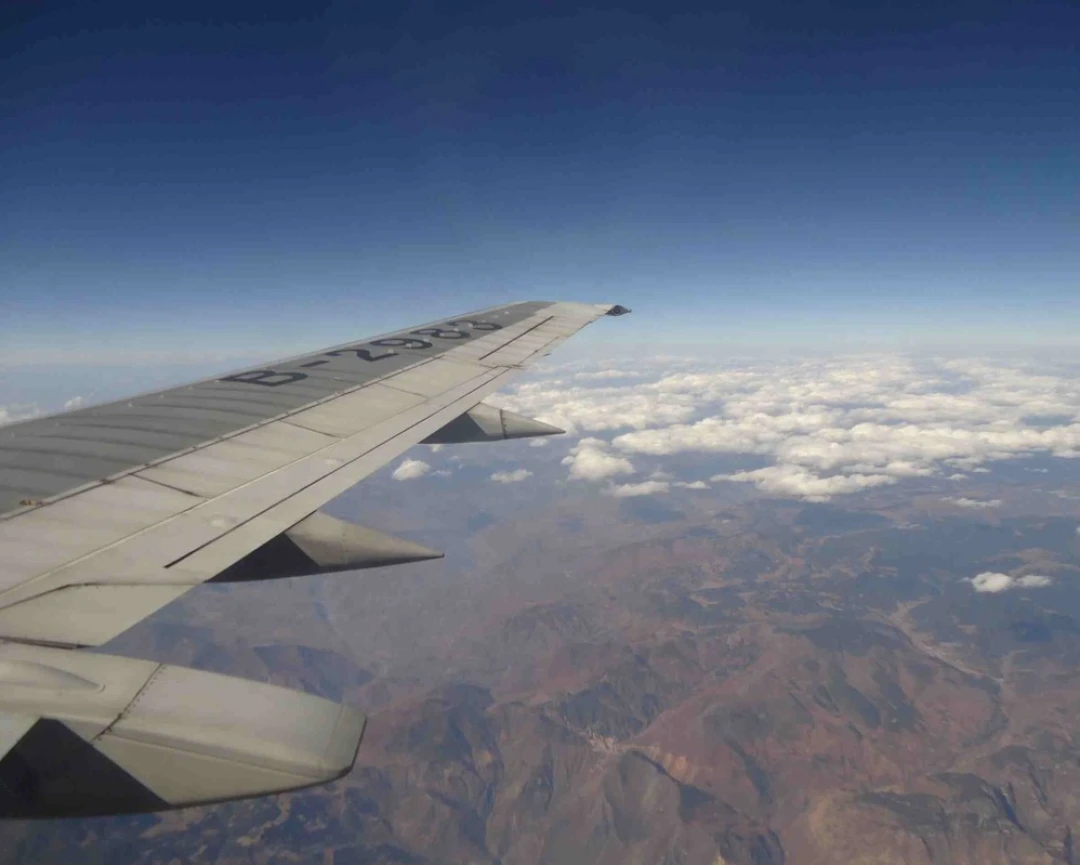
The Meaning of Travel – A Tengchong Story: A Journey of the Heart and Personal Growth
The Meaning of Travel – A Tengchong Story: A Journey of the Heart and Personal Growth Setting Out, Only to Return a Better Self Some say travel is nothing more than leaving a place you're tired of, only to go to a place where others…
Continue reading...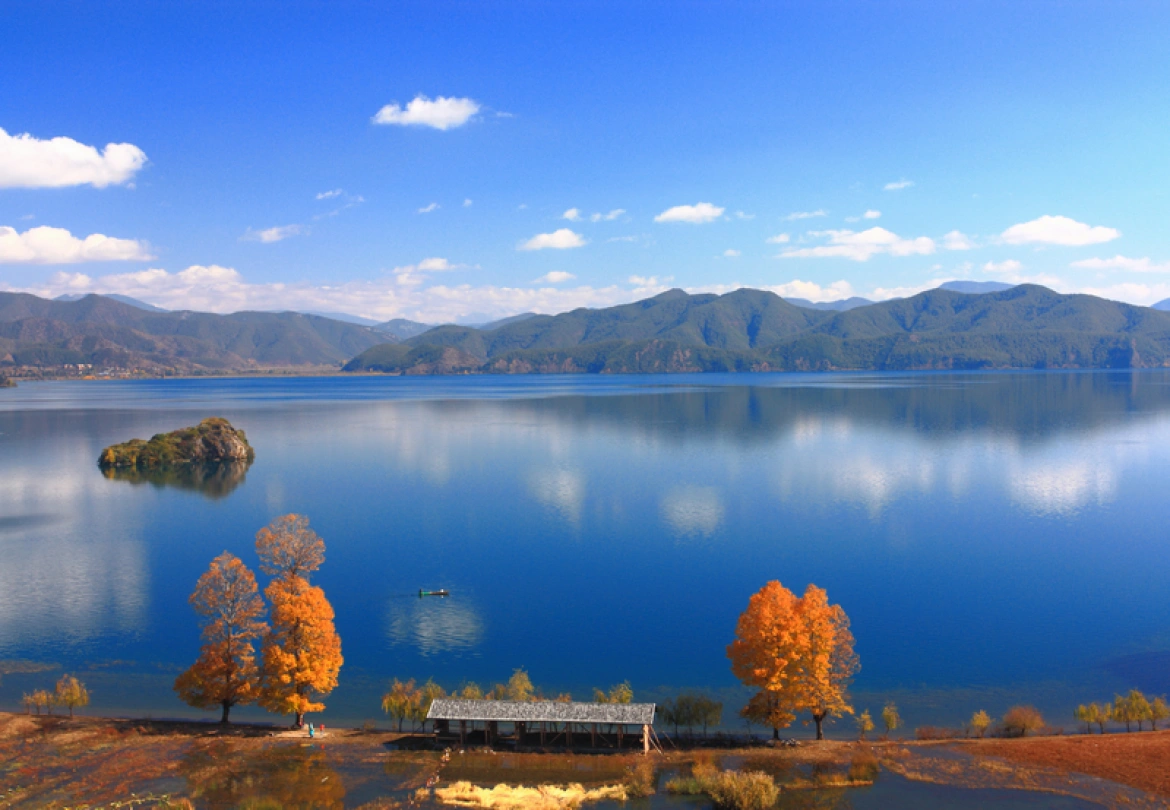
A Spiritual Journey to Lugu Lake in Lijiang: Experiencing the Legend of the Kingdom of Women! (Reproduction and Hotlinking Prohibited)
A Spiritual Journey to Lugu Lake in Lijiang: Experiencing the Legend of the Kingdom of Women! (Reproduction and Hotlinking Prohibited) Off-road自驾, food, hotel and民宿 reviews, Featured Traveler, Tank 300 owner, 200,000 km of self-driving experience. WeChat: y01294987 Ninglang Yi Autonomous County 2010.11.08 · 7 days…
Continue reading...