Wandering Slowly Through a Small Town | Xishuangbanna: 4 Days, 3 Nights, Stealing a Cool Summer in the Tropical Rainforest
Wandering Slowly Through a Small Town | Xishuangbanna: 4 Days, 3 Nights, Stealing a Cool Summer in the Tropical Rainforest
While most people were torn between "sea or mountains," I chose a third option—trees. As my friends on social media flooded the eastern coasts or northern grasslands, I once again set foot on Yunnan soil, this time heading to its southernmost tip: Xishuangbanna.
I'll admit, my reason for choosing Xishuangbanna was a bit pragmatic—summer hotel prices had dropped, and I figured there wouldn't be too many tourists. As it turned out, I was both right and wrong. The crowds were indeed smaller than expected, but the humid heat was far more intense than I'd imagined.
This was my fourth visit to Yunnan. From my first encounter in Lijiang and Shangri-La, to the awe of Diqing's Yubeng Village, to the romance of Dali's Erhai Lake—each trip left its mark on this land of rolling clouds. This time, I brought my girlfriend along, planning to spend four days slowly exploring this border town.
First Impressions of Xishuangbanna: Humidity, Pagodas, and the Starlight Night Market
We arrived in Xishuangbanna in the evening. The tropical plants flashing past the train window already hinted that this place was different from the rest of Yunnan. The air was thick with moisture, like stepping into a giant greenhouse.
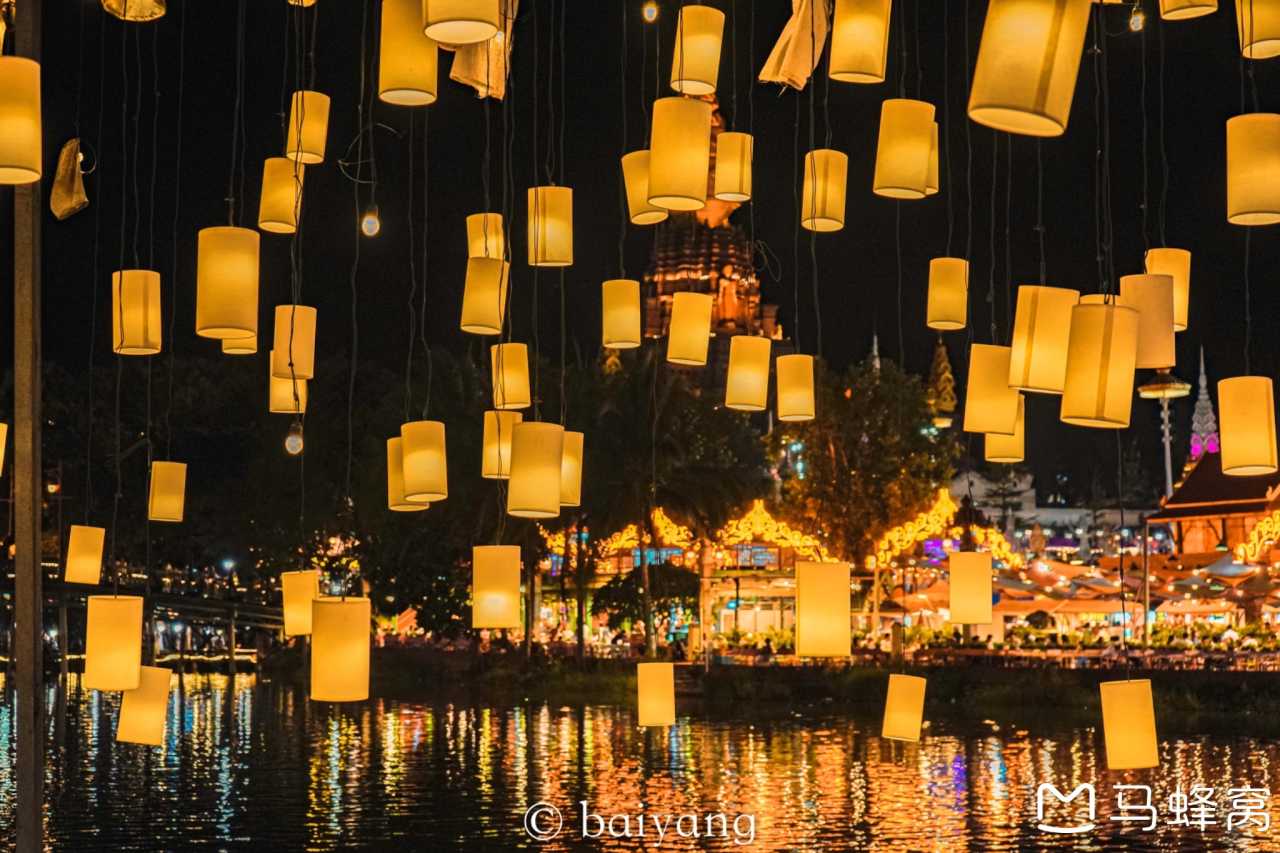
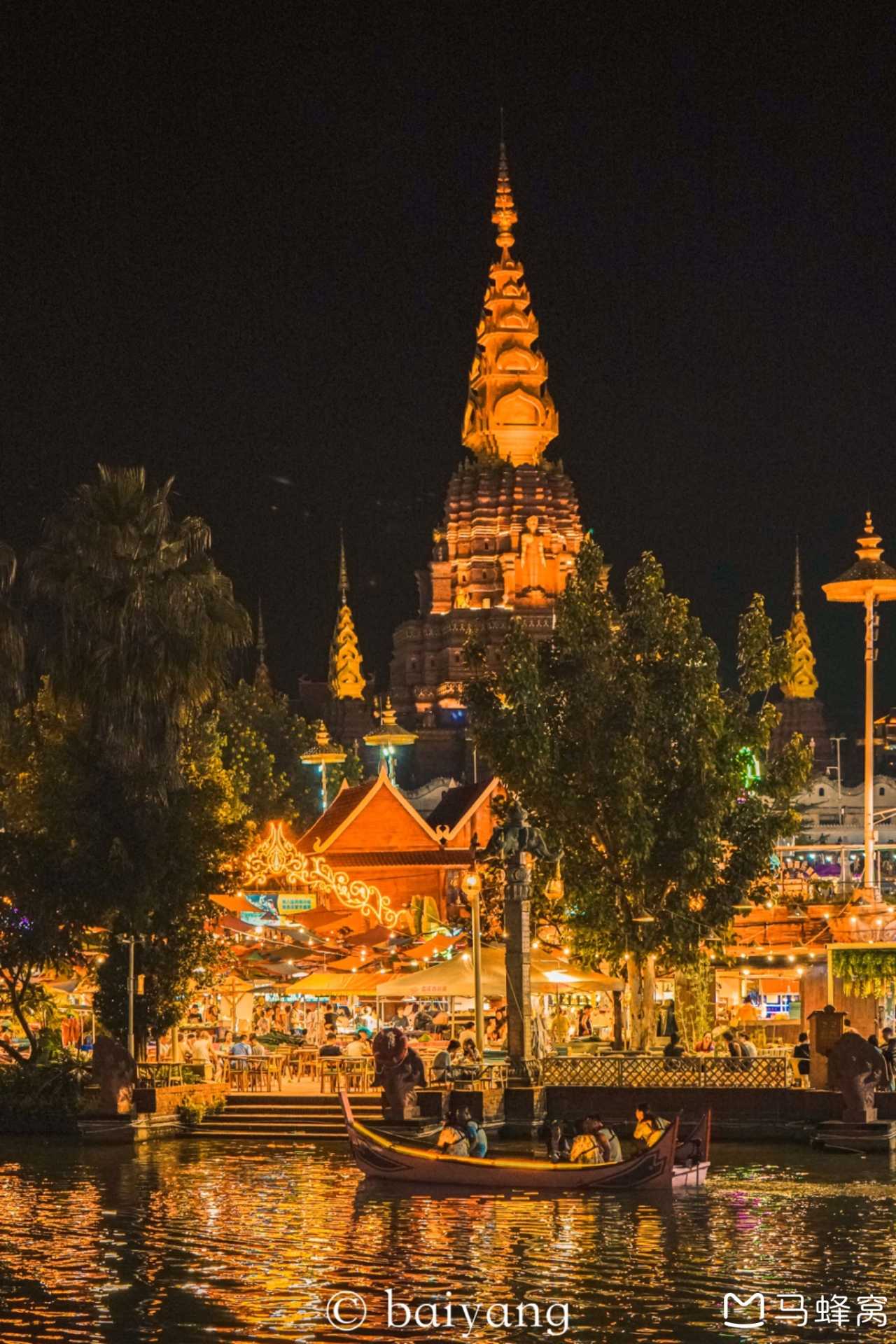
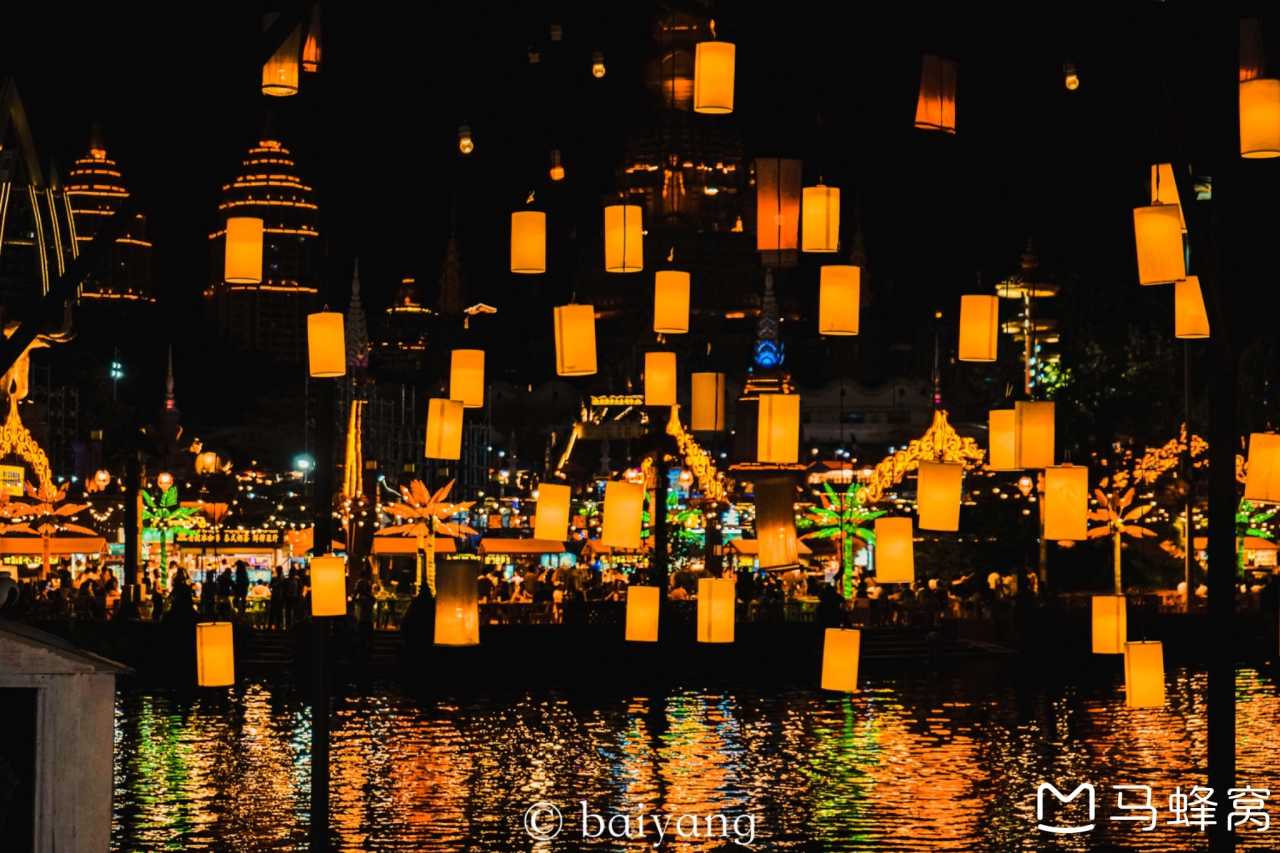
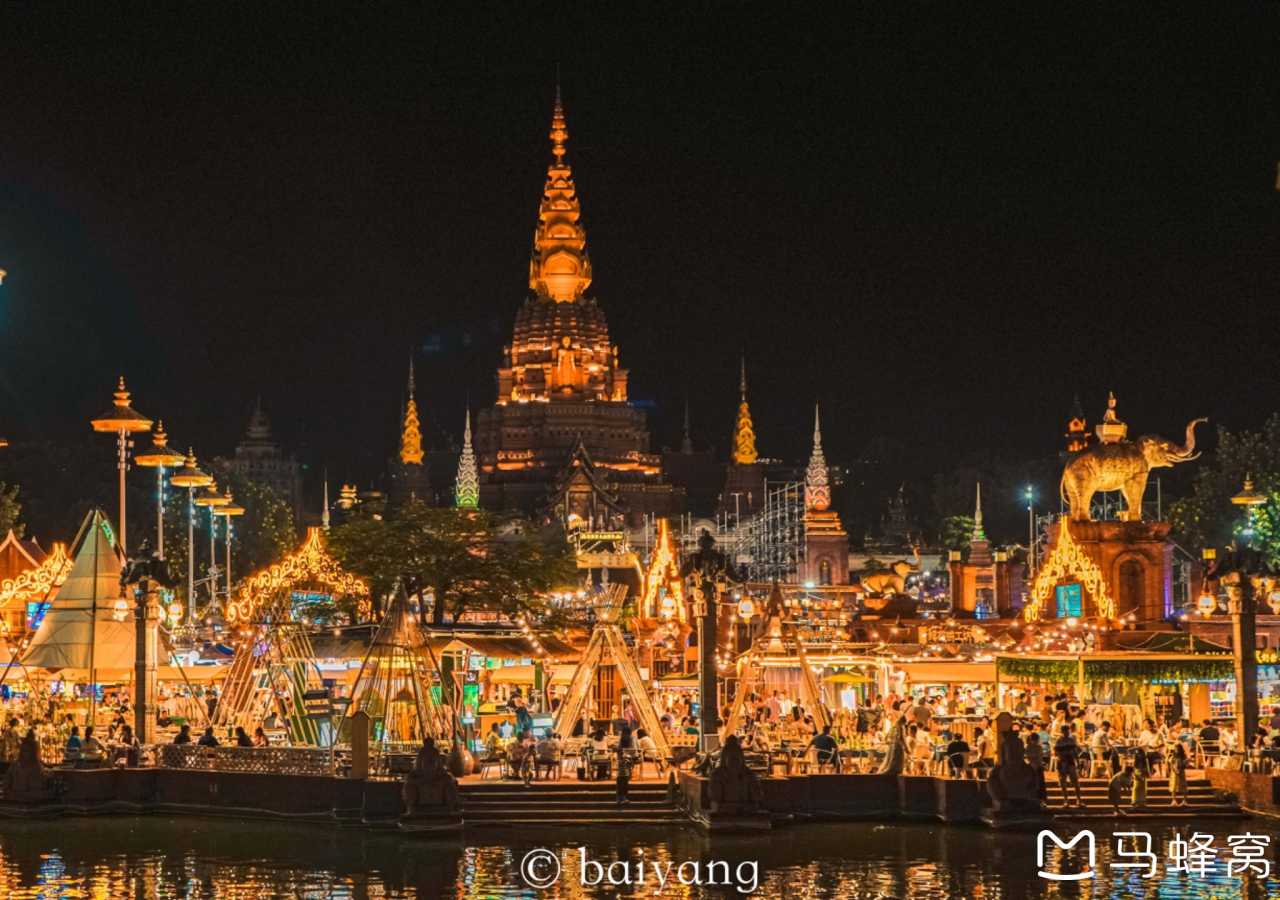
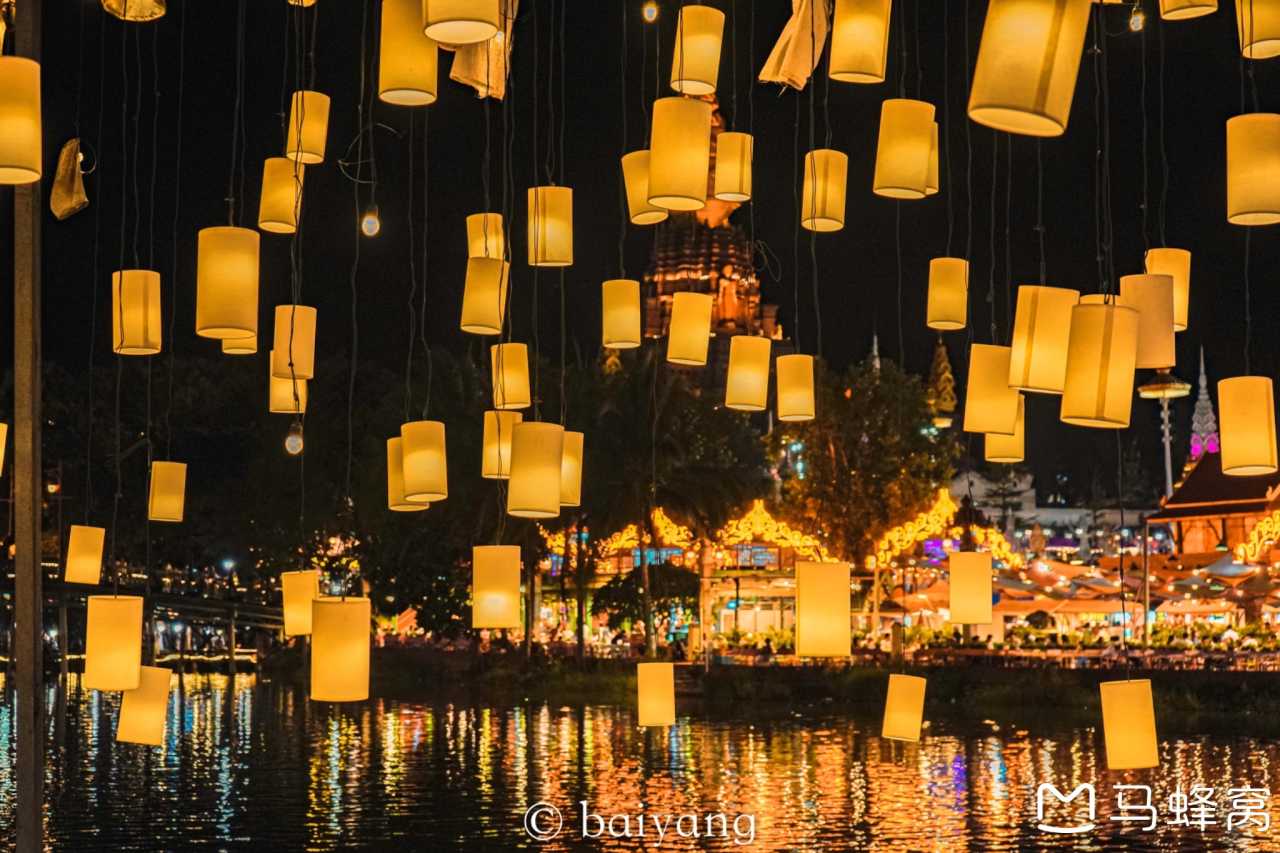
My first impression of Xishuangbanna was the Starlight Night Market. Honestly, my feelings about it were mixed. Online reviews had warned of inflated prices and a lack of locals, calling it a place for a quick glance. When night fell, the market was packed with people, shoulder to shoulder, reminding me of Kuanzhai Alley in Chengdu during holidays. The most absurd part? Near the Golden Pagoda, every five steps you'd encounter a group of photographers and young women in Dai ethnic costumes taking portraits. Finding a clean spot for a photo felt impossible.
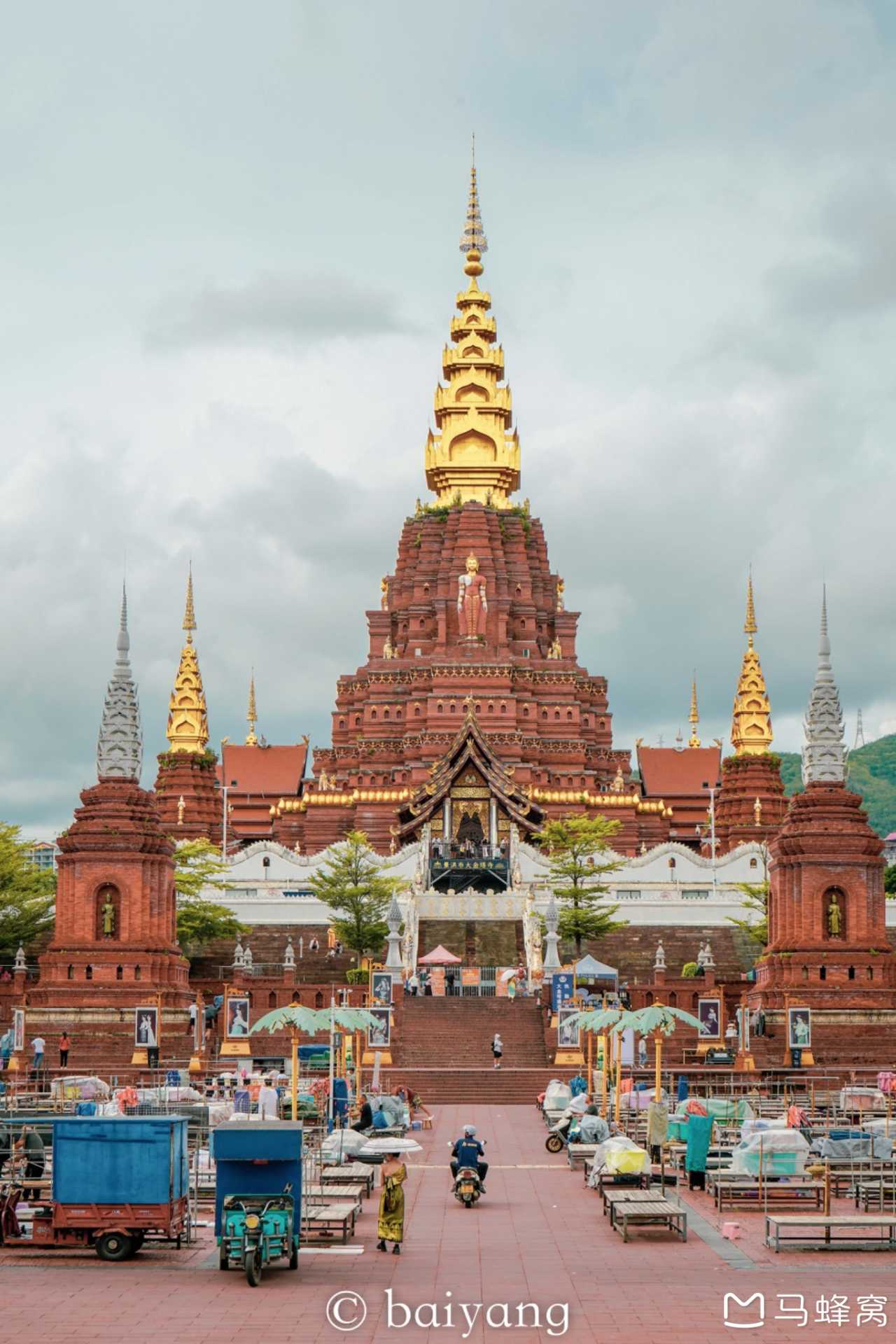
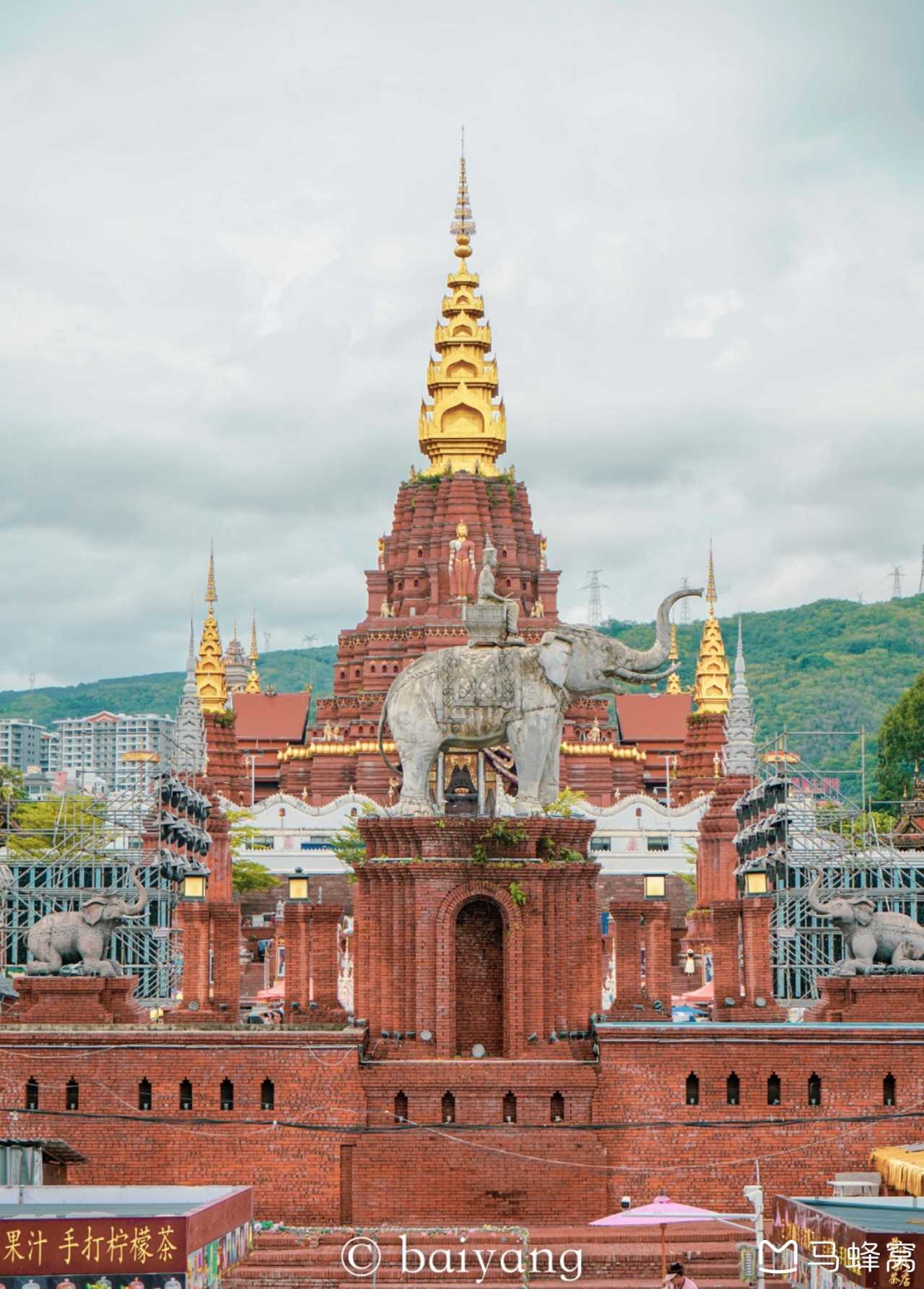
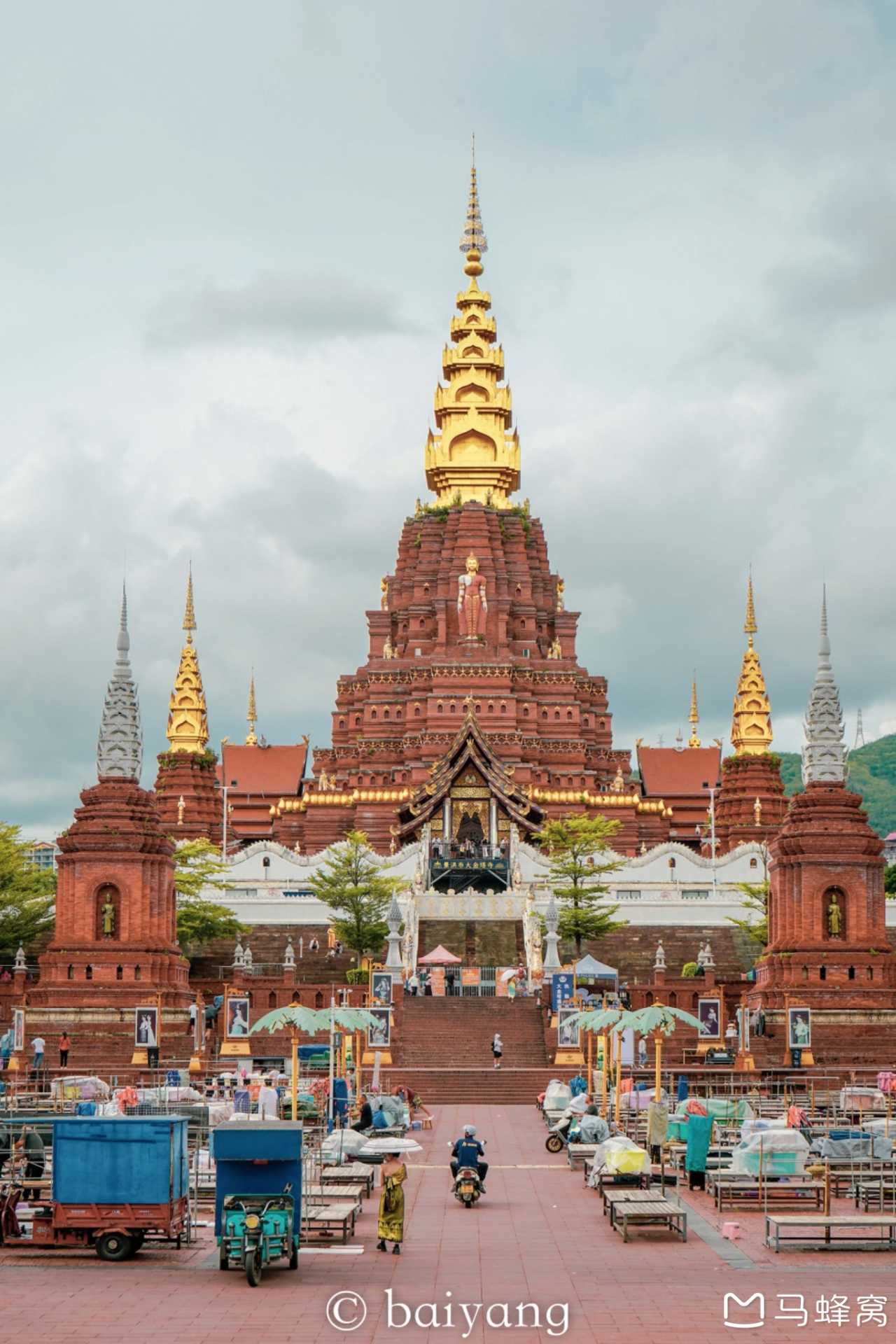
Most of the good photo spots required payment, so I didn't spend a cent there—I saved it all for the riverside night market instead. But during the day, the Starlight Night Market completely changed my mind. Without the nighttime chaos, the red brickwork and golden pagoda stood quietly in the sunlight. With only a scattering of tourists in the square, I finally felt the town's true character.
The Jinghong Golden Pagoda, also known as the Myanmar Golden Pagoda, is a representative structure of Theravada Buddhism. Standing 66.6 meters tall, it symbolizes "one river connecting six countries"—the Lancang River flows downstream through Laos, Myanmar, Thailand, Cambodia, and Vietnam. The four smaller pagodas beside it are solid structures, while the main pagoda houses a museum of palm-leaf scriptures. What captivated me most was the Buddha statue at the center of the pagoda—even from a distance, it exuded a solemn stillness.
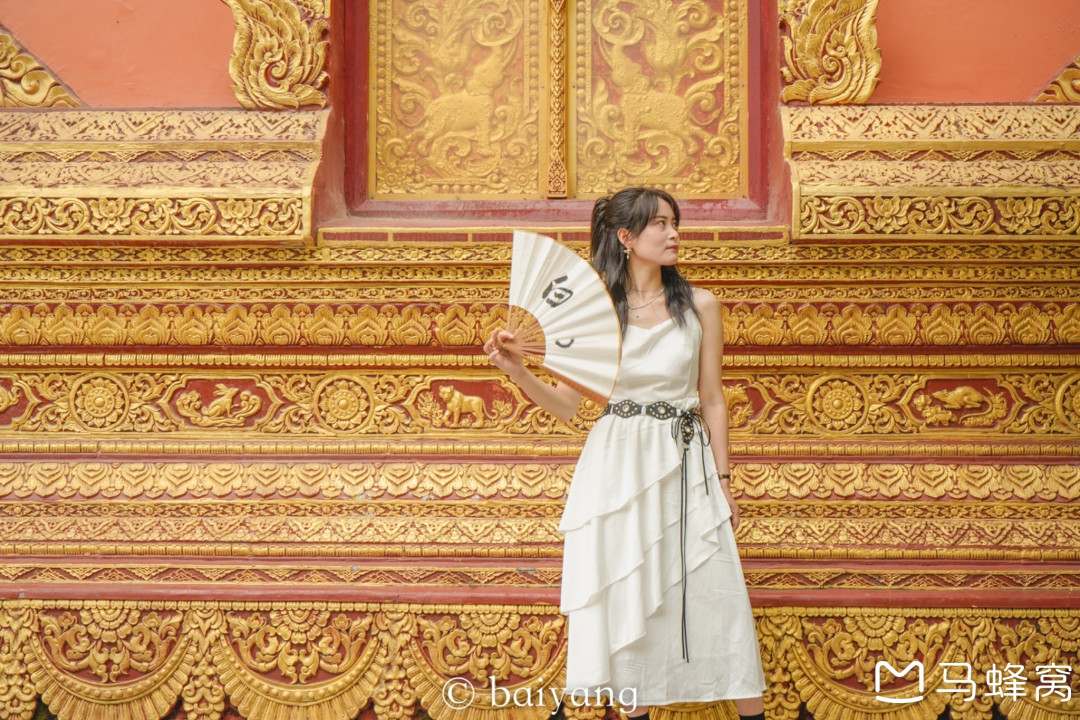
We bought a Dai ethnic costume at the local market for 30 yuan and went to take photos before the vendors set up their stalls. The combination of red brick and white pagoda created an exotic, foreign atmosphere. I even thought that locals in Xishuangbanna don't really need to visit Thailand or Laos—because the scenery they'd see abroad isn't much different from what they have at home.
Man Ting Park: Morning Tranquility and the Royal Garden's Timeless Charm
On our second day, we deliberately woke up early, left at 8:30, and entered Man Ting Park by 9:00. During summer break, getting an early start is always the smart move.
Man Ting Park combines tropical forests, hills, waterways, and rich ethnic cultural landscapes—it's a natural village-style park. I'd originally planned to follow this route: Dai King's Palace → Royal Garden → Royal Orchid Garden → City Heart Pagoda → Leaf Garden → Twin Pagodas → Octagonal Covered Bridge → Lakeside Promenade → Parrot Paradise → Royal Elephant Garden → White Pagoda → Earth Goddess. But I soon realized that in a park like this, wandering aimlessly is the most comfortable way to go.
Towering trees and exotic architecture made it feel like we weren't in China. I've heard that the Thai people of Thailand and the Dai people of China share common origins, both belonging to the Tai-Lao ethnic group—I picked this up from a local guide, so I can't vouch for its accuracy, but walking through the park, you could definitely sense that cultural kinship.
The City Heart Pagoda, with its red and orange base and gold-trimmed eaves decorated with Dai motifs, looked magnificent. The red-brick Twin Pagoda Castle was crowded even in the morning, but by the lake, there were equally elegant views of red walls and green water. Hidden among the greenery was a small lakeside pagoda—when no tourists passed by, the stillness was so captivating I didn't want to leave.
The Royal Elephant Garden housed two elephants that looked quite old. There were no performances, but you could feed them up close. The kids gathered around them were absolutely delighted. Among these elephant-loving children, there must be some who will grow up determined to protect them.
The White Pagoda was our last stop. Built from brick and lime plaster, covered in white mortar, it's one of Xishuangbanna's iconic structures. Another is the Bojue Temple, but it's a bit out of the way, so I skipped it. Travel always leaves a few regrets.
The General Buddhist Temple: A Golden Sanctuary of Faith

The Xishuangbanna General Buddhist Temple is the highest-ranking temple in the region, separated from Man Ting Park by just one wall. While planning, I kept confusing it with the Big Buddha Temple on the hillside—I later realized one is on flat ground and the other on a slope.
Built in 615 AD, this temple has a history of 1,400 years. It was once the royal garden of the Dai kings, known in the Dai language as "Wa Ba Jie," meaning "beautiful and serene place of practice." Entering from the north gate, you're greeted by a golden Buddha statue with a hand gesture of meditation. The temple is resplendent, with golden dragons and golden roosters adorning the main structures, gleaming under the sunlight. To enter the main hall for worship, you must remove your shoes, and photography is prohibited inside. The temple isn't large, but it's great for photos—go in the morning to avoid the crowds.
The Primitive Forest Park: An Unexpected Rainforest Adventure
The Primitive Forest Park was a spontaneous trip. We'd planned to hike in the Jinuo Rainforest, but heavy rain forced us to cancel. The next morning, rain was still pouring outside when we woke up, only stopping around noon. My girlfriend stumbled upon a video of peacock releases, and we decided on a whim to visit the Primitive Forest.
The park is located east of Jinghong, north of the Lancang River, about 8 kilometers from the city center, with a direct bus route. Main attractions include the peacock release, Aini Ethnic Village, intangible cultural heritage instrument performances, the Rainforest Splash Festival (Water-Splashing Festival), Monkey Garden, and rainforest hiking.
We took the sightseeing car straight to the Monkey Garden. Monkeys sat on bamboo poles suspended over a rushing river, waiting for visitors to feed them. The rainforest hike was the highlight—trees blocked out the sky, layered upon each other. After the rain, the forest felt fresh, but the muggy weather left us sticky all over. Gnarled roots twisted everywhere, and we even spotted a strangler fig—though I forgot to take a photo.
As for the peacock release I'd been looking forward to, honestly, it was a bit disappointing. It wasn't the spectacular scene I'd imagined—dozens of peacocks flying down from a hill all at once. Instead, they came in small groups of a few, which lessened the visual impact. Still, compared to parks that charge extra for every activity, the Primitive Forest Park at least included all four main attractions in the ticket price.
Riverside Road and Citywalk: Discovering Another Side of the Town
Every city with a river running through it has a road called Riverside Boulevard. The Lancang River cuts through Xishuangbanna, dividing it into north and south banks, connected by the Xishuangbanna Bridge.
We followed a small path leading to the riverbank and started our Citywalk: from Riverside Park, past Xishuangbanna Bridge, to Music Square—about 3 kilometers total. Coconut palms lined both sides of the road, giving it a Sanya-like vibe. The evening sunlight filtered through the swaying palm leaves, casting dappled yellow patches on the ground.
People were fishing by the river, while across the water lay Gaozhuang Xijing. Walking along the shaded streets, everything felt peaceful. The truth is, when traveling—especially to Xishuangbanna—you don't have to stick to the popular spots. As a border town, Xishuangbanna's beauty often lies on the streets, in an unexpected corner.
We had a little incident by the river—my girlfriend wanted to show off her stone-skipping skills, but her bracelet was too loose and flew into the water along with the stone. She tested the depth with a branch from the shore and found that just one step from the edge, the water was already up to her thighs. She gave up.
Wild Elephant Valley and Manzhang Village: From Forest to Village
A friend told me there are two must-visit spots in Xishuangbanna: Wild Elephant Valley and the Xishuangbanna Tropical Botanical Garden. Wild Elephant Valley is China's first national park focused on animal protection and environmental conservation. The quick sightseeing route is: Elephant Science Theater → Butterfly Garden → Elevated Boardwalk → Asian Elephant Museum.
At the Elephant Science Theater, the elephants demonstrate their daily behaviors, with some mischievous ones spraying water at the audience. Their entrance was especially amusing—each elephant used its trunk to hold the tail of the one in front, like children holding hands for a performance. These are Asian elephants that were rescued from the wild but can't return to nature.
The Butterfly Garden is a highlight of Wild Elephant Valley. You can get up close to all kinds of beautiful butterflies, strolling through what feels like a romantic secret garden. Walking along the elevated boardwalk, below us was a path once used by wild elephants, and we could spot cheeky wild monkeys nearby. Unfortunately, from the elevated viewing platform, we didn't see what we'd hoped for—no elephants. Spotting wild Asian elephants is even rarer than seeing the "golden sunrise" over a snow-capped mountain.
At noon, under a sky dotted with cartoonish clouds, we arrived at the Dai village of Manzhang. In Xishuangbanna, place names starting with "Meng" are usually towns, while "Man" means village. The stilted bamboo houses, known as "ganlan" style, are typical Dai architecture. Almost every household had flowers and greenery planted at their doorstep—even the barbecue joints had blooming flowers out front. It felt less like a village and more like a massive Dai-style garden.
We also tried Dai papermaking, a favorite among kids. Looking around, almost every child was accompanied by a parent, experiencing the charm of this intangible cultural heritage. The village is small, taking about an hour to explore, but it became one of my favorite spots in Xishuangbanna.
Mengpeng Road and Urban Wandering: That Tropical Laziness
I stumbled upon a street online that had a strong tropical vibe—Mengpeng Road, like a mini Sanya. It was only 1.2 kilometers from my hotel, so I hopped on an electric scooter with my girlfriend and headed out.
Our route was: Xishuangbanna Twin Towers → Water-Splashing Square → Mengpeng Road → Menglong Road → Mengle Avenue. Mengpeng Road is about 500 meters long with three intersections, the second being the most photogenic. We parked and walked a bit, carrying a bag of Lao coffee and sipping as we went—though we never did find a shop selling Lao coffee along the way.
The coconut palms lining the streets reminded us of Hainan. Clouds gathered on the horizon, forming a fluffy cotton-like shape. On Mengle Avenue, we crossed the Liusha River Bridge and reached the roundabout park, where we could see the Big Buddha Temple. Tickets were 120 yuan—not great value—so we just snapped a photo from outside and headed back to the hotel. Consider it checked off the list.
Back at the hotel, we were surprised to see a double rainbow outside our window. Unfortunately, rain was moving in from the distance, and the rainbow faded before it could fully arch across the sky. How lucky to spot such a romantic rainbow during just a few days of travel!
Xishuangbanna Tropical Botanical Garden: The Crown Jewel of the Kingdom
If Yunnan is the kingdom of plants and animals, then the Xishuangbanna Tropical Botanical Garden is the crown jewel. Covering about 1,125 hectares, it houses 38 specialized plant collections and a 250-square-kilometer area of primary tropical rainforest. It's the world's largest outdoor collection of plant species.
The garden is divided into the East and West sections. The East section features tropical rainforest and green stone forest, while the West section has various photogenic plant displays. If you're short on time, just visit the West section. Tickets are 80 yuan, and the electric cart costs an additional 50 yuan—I highly recommend buying the cart ticket, as the garden is huge and winding, making it easy to take wrong turns.
My route was: Ethnic Plants Garden → Shade Plants Garden → Palm Garden → Exotic Flowers Garden → Hundred Flowers Garden → Arboretum → Celebrity Trees Garden → Vine Garden.
The Palm Garden is famous for its giant water lilies (Victoria amazonica), where you can stand on the lily pads—but there's a weight limit of 35 kilograms, so my girlfriend couldn't try it, much to her regret. But the other side of the Palm Garden was the real secret spot: rows of tall palm trees standing straight, with stone paths, green lawns, and blue skies. During the crowded summer break, it felt like we were the temporary owners of this palm grove, barely encountering other tourists.
The Hundred Flowers Garden was my personal favorite. Large clusters of plants were arranged in one area—some in ponds, others on slopes—creating a scene that changed with every step. The areas with red and pink "paper flowers" were especially stunning. The red leaves contrasted beautifully with the lush tree on the hillside, making every casual photo look like a movie poster.
The Vine Garden, near the West section exit, is a paradise for climbing plants. Hardly any tourists come here—partly because it's near the exit, and partly because by this point, everyone's exhausted. Vines twisted along gray brick walls, making it feel more like someone's lovingly maintained courtyard garden than a public attraction.
On Food: From "Sapie" Rice Noodles to "Paoluda" Coconut Drink
In the past, I rarely wrote about food in my travel notes, since street food is often similar everywhere. But Xishuangbanna, due to its location, has food that really caught my attention. Almost every meal, I tried to sample as much as possible.
Our first meal was "Sapie" rice noodles at a place called Nanwan Dai. My girlfriend loves rice noodles, so she tried the Yunnan specialty "Sapie" rice noodles—the broth contains cow bile, giving it a bitter taste. She couldn't finish it. I ordered a regular bowl of rice noodles, and sure enough, rice noodles taste best when made by locals in Yunnan.
A friend recommended the trendy restaurant Wantai, especially their 牛肝菌炒饭 (porcini mushroom fried rice). It had some red chili and meat bits, and the flavor was indeed delicious, though not as mind-blowing as my friend described. I tried 菜包鱼 (lettuce-wrapped fish) because the name intrigued me, but neither my girlfriend nor I liked it—you wrap fish, shredded carrots, rice noodles, and cucumber in lettuce leaves, add a red sour-spicy sauce, and eat it all in one bite.
At a place called Chongba Dai Snacks, I had the best 泡鲁达 (Paoluda, a coconut drink) in Xishuangbanna. Paoluda is essentially coconut milk with various toppings and a few crispy bread slices—a dessert. My serving cost 20 yuan and had plenty of toppings. Later, I tried versions at the riverside night market for 15 yuan and 10 yuan—the 15-yuan one was mediocre, and the 10-yuan one was pretty sparse.
Final Thoughts: Travel Tips
My 4-day, 3-night trip to Xishuangbanna gave me a whole new perspective on this border town. It's not the kind of place that sweeps you off your feet at first glance, but as you wander slowly, you discover many surprises.
Practical Tips: - Bring extra clothes for summer travel—changing twice a day is normal - The Starlight Night Market is better during the day; at night it's too crowded and photos cost money - Visit Man Ting Park and the General Buddhist Temple in the morning to avoid crowds - The Primitive Forest Park includes its main attractions in the ticket price—good value - Definitely buy the electric cart ticket for the Botanical Garden; the West section alone can fill a day - You can buy Dai ethnic costumes at the local market for 30 yuan
Deepest Feeling: When traveling, especially to Xishuangbanna, you don't have to stick to the popular spots. As a border town, more of Xishuangbanna's beauty lies on the streets, in an unexpected corner. The lazy, laid-back vibe of the alleys and avenues—that's what a trip to Xishuangbanna should really be about.
Keep the passion alive, and head for the mountains and seas. See you next time.
You should also read:
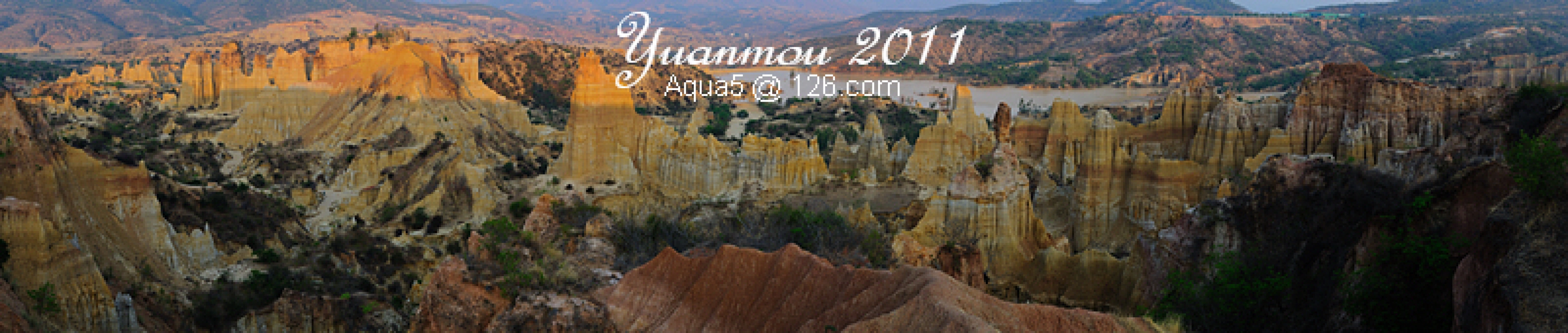
A Journey Through Time: The Earthen Forest of Yuanmou — April 2011 Chuxiong & Yuanmou Self-Drive Guide
A Journey Through Time: The Earthen Forest of Yuanmou — April 2011 Chuxiong & Yuanmou Self-Drive Guide Some journeys are destined to take root in your memory. In April 2011, I set out from Shuhe in Yunnan, heading north toward the Chuxiong Yi Autonomous Prefecture,…
Continue reading...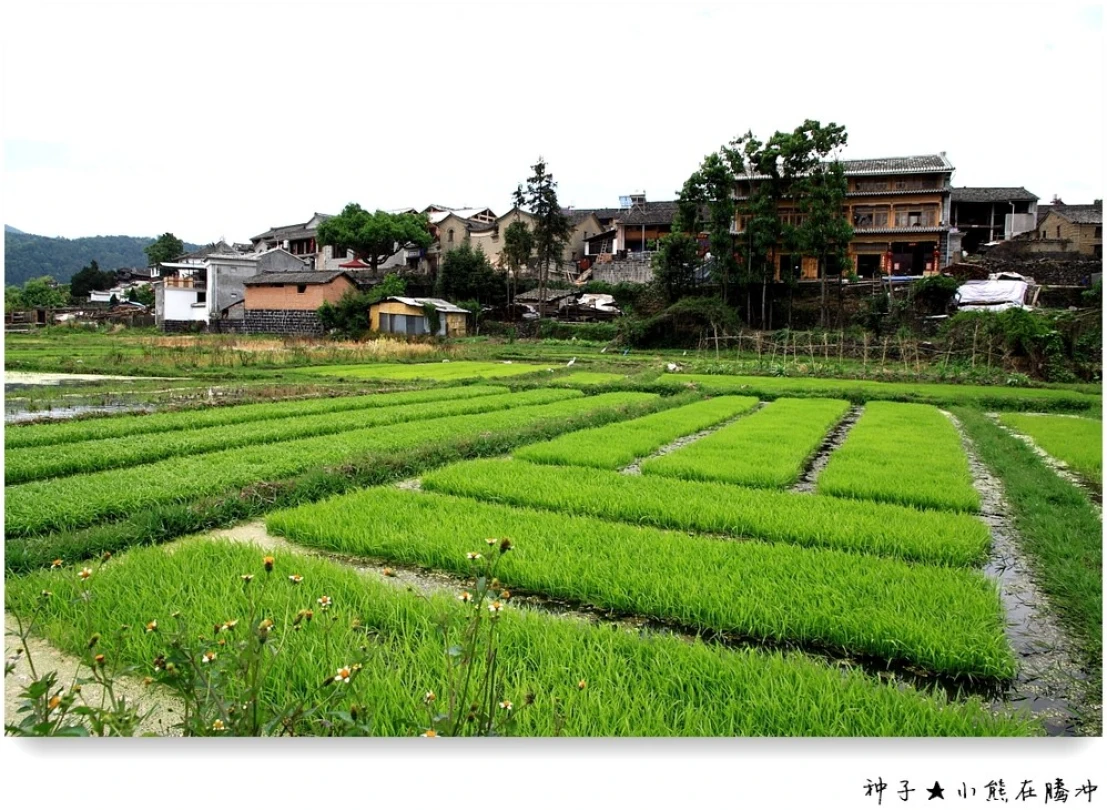
Tengchong·Heshun: Finding Life as It Should Be in a Border Town Where Time Stands Still
Tengchong·Heshun: Finding Life as It Should Be in a Border Town Where Time Stands Still The long journey of over twenty days was over. On my first day back at the office, I was still in a daze. My fingers couldn't find the keys on…
Continue reading...
God’s Abandoned Palette: A Self-Drive Journey Through Yunnan’s Dongchuan Red Land
God’s Abandoned Palette: A Self-Drive Journey Through Yunnan’s Dongchuan Red Land Travel has never been about reaching some distant geographic coordinate. It’s about encountering, along the way, the version of yourself buried beneath the rubble of daily routine. During this May Day holiday, I finally…
Continue reading...