Wedding Photos Beneath the Snow Mountain: A Complete Guide to Lijiang Pre-Wedding Photography
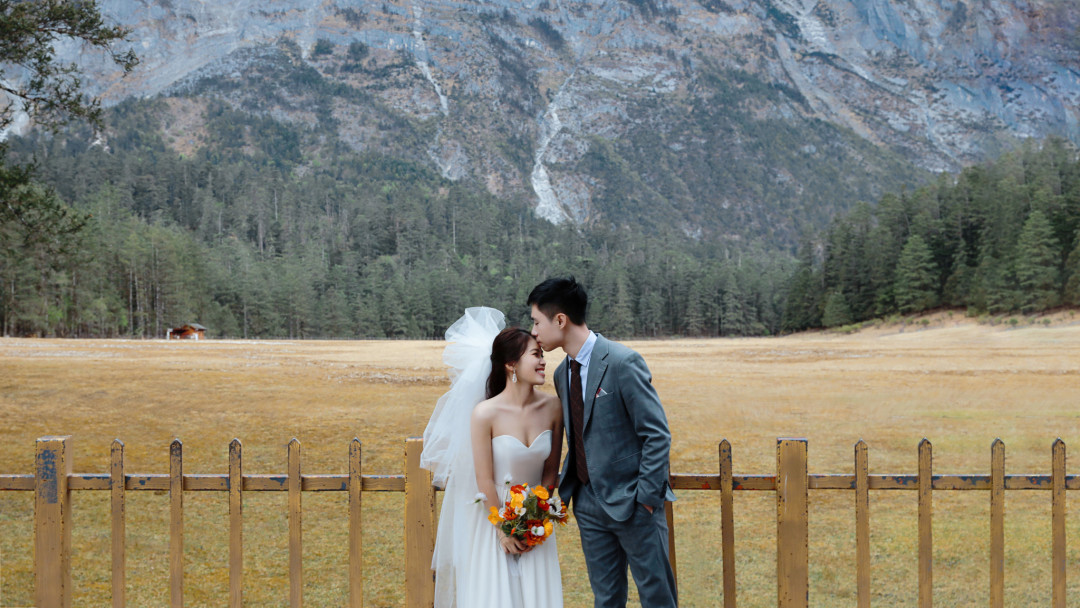
Wedding Photos Beneath the Snow Mountain: A Complete Guide to Lijiang Pre-Wedding Photography
When Love Meets the Snow Mountain: A Journey of Light, Shadow, and Promise
"Can you feel the love tonight?" As the melody from The Lion King played through my earphones, I sat at my computer, scrolling through photos in my album—images witnessed by snow-capped mountains, ancient towns, and crystal-clear lakes. This isn't your average travelogue. It's a guide forged from countless hours of thought and hard-earned lessons. In May 2023, my husband Pan and I, along with both sets of parents, traveled from Foshan, Guangdong, to Lijiang for a two-day pre-wedding photoshoot. Over eight days, we experienced laughter, regrets, surprises, and plenty of practical insights worth sharing.
If you're planning a snow-mountain wedding photoshoot, this article might help you avoid some pitfalls. Please note: all information is based on our experience in May 2023. For the latest details, always check local updates.
1. Choosing the Destination: Why Lijiang?
From Xinjiang to Lijiang: A Rational Trade-Off
After our proposal and marriage registration last year, Pan and I began dreaming of a pre-wedding photoshoot trip. Initially, my ideal destination was the Tianshan Mountains in Xinjiang—home to snow peaks, forests, grasslands, and lakes, often called "China's most beautiful summer." We had never been to Xinjiang and were captivated by the idea of renting a car, hiring one or two photographers, and spending a week traveling and shooting at our own pace.
However, during his research, Pan discovered a crucial fact: most pre-wedding photoshoot trips only last one or two days. Our "shoot-as-we-go" plan was clearly too idealistic. After further investigation, we narrowed down a few popular destinations: Dali, Lijiang, and Western Sichuan.
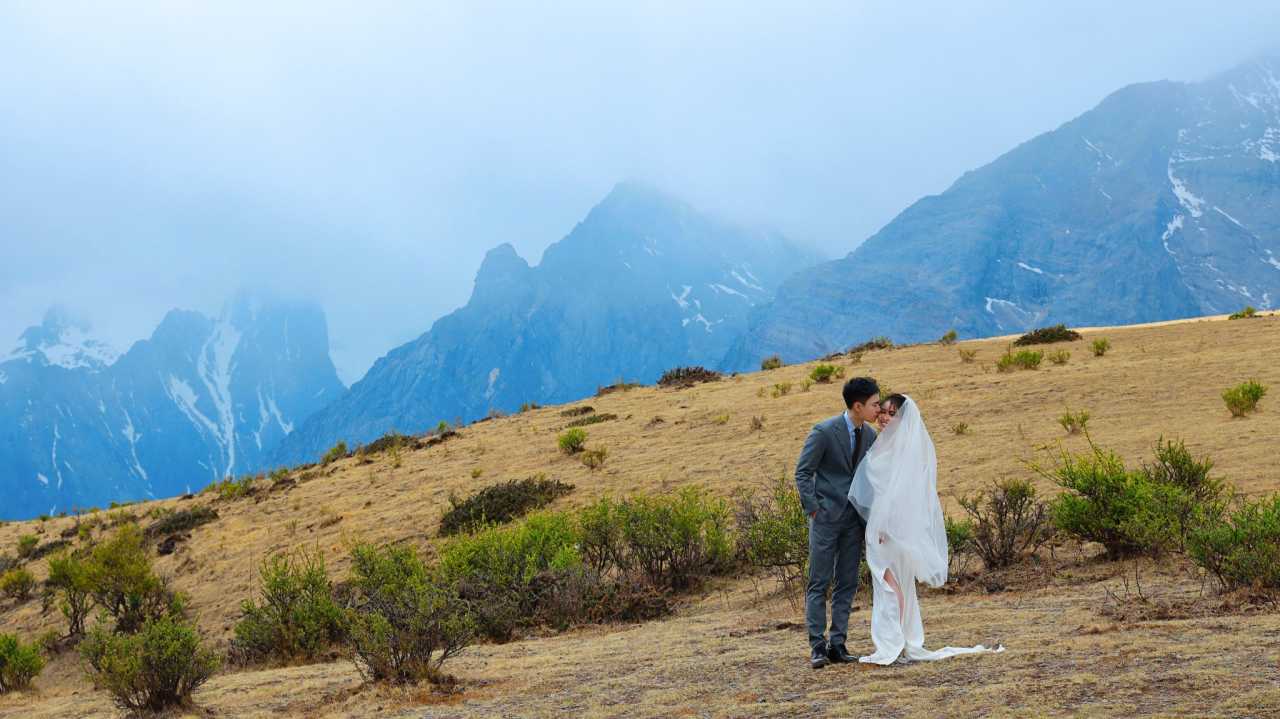
Why did we ultimately choose Lijiang?
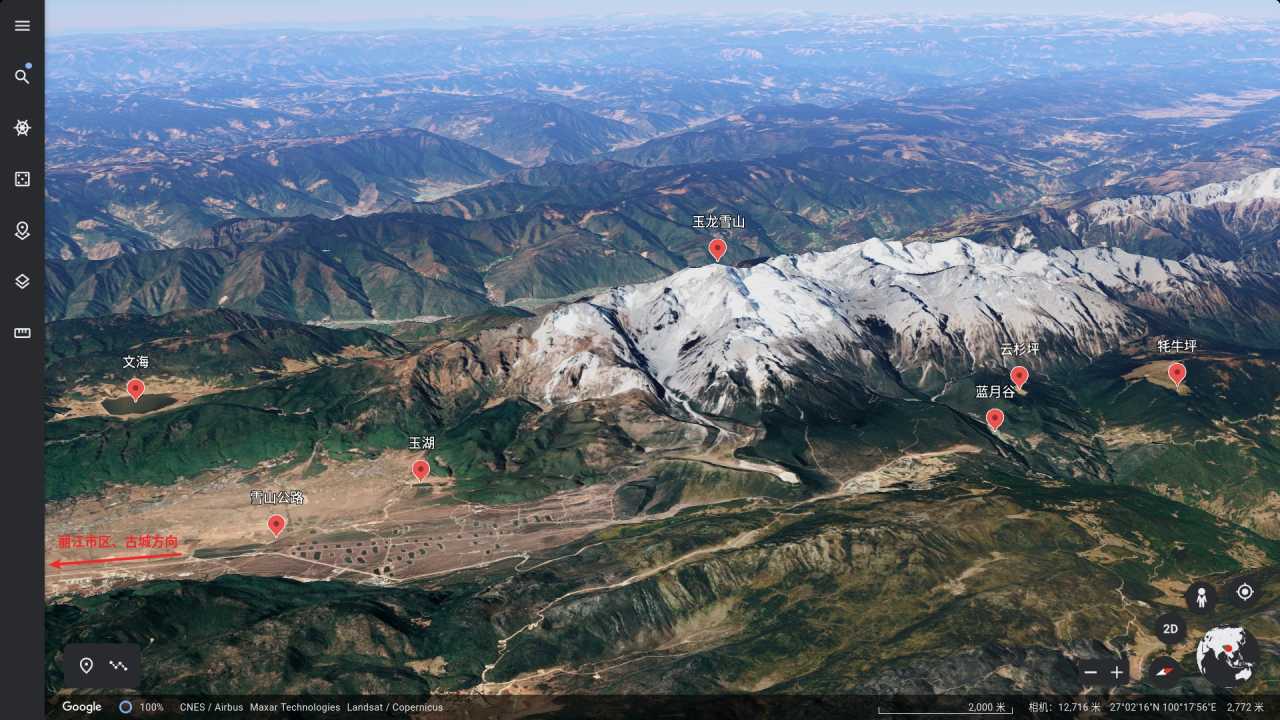
- Diverse scenery: Lijiang offers snow mountains (Jade Dragon Snow Mountain), forests (Spruce Meadow), ancient towns (Shuhe, Baisha), and lakes (Blue Moon Valley, Jade Lake)—a blend of nature and culture.
- Convenient transportation: Direct flights are available, no need for connecting flights.
- Comparative advantage: Dali's scenery is relatively uniform, while Western Sichuan has higher altitudes and less lush vegetation.
In comparison, Lijiang felt like a carefully prepared palette, with every color perfectly placed.
2. Choosing a Photography Studio: Local vs. Non-Local—A Delicate Balance
Local Yunnan Studios: Professional but Formulaic
Local photography studios in Yunnan have a major advantage: they come fully equipped. They provide complete outfits, shooting gear, and transportation, with teams typically including a photographer, makeup artist, lighting technician, assistant, and sometimes even a videographer. Brides can wear elaborate gowns and enjoy a one-stop service. Plus, local photographers know the spots, lighting, and seasons inside out, allowing for efficient shoots.
Yet, it was this very "over-familiarity" that led me to vote against them. After Pan reviewed sample photos from multiple local studios, a common issue emerged: formulaic styles. For instance, almost every set featured tilted horizons, whether it made sense or not, or deliberately blurred "artistic shots" that left viewers confused about their intent. These photos felt more like checking off a task list than creating art.
Non-Local Studios from Guangzhou/Foshan: Communication is Key
As an amateur photography enthusiast, I know that portrait photography is far more challenging than landscape photography. When shooting landscapes, your subject is static mountains and water. But with portraits, you must consider not only the background but also the relationship between the person and the space, their expressions, poses, movements—and most importantly, you need to satisfy the person being photographed. Therefore, communication between the photographer and the couple is crucial.
Choosing a studio from Guangzhou or Foshan has its perks:
- Pre-shoot communication: You can meet the photographer face-to-face beforehand, getting to know each other's personalities, interests, and aesthetics like friends.
- During the shoot: Everyone travels together, stays at the same inn, making it feel like a group outing with friends.
- Post-production: Photo selection and retouching can be done in person, improving efficiency.
In the end, we chose a photography studio from Foshan. Even if the final results aren't perfect, the entire collaboration process is more enjoyable.
3. Choosing a Photography Package: Spend Wisely
Photographer: Look at Portfolios, Not Just the Studio
When selecting a photographer, I recommend focusing on three key aspects:
- Composition: Is the framing reasonable? Is the spatial relationship between the subject and background harmonious? Do poses match the setting?
- Naturalness: Do expressions, movements, and outfits feel stiff or forced?
- Atmosphere: Do the colors, lighting, and textures resonate with you emotionally?
When browsing sample photos online, we were essentially choosing the studio, not the photographer. That's because the industry tends to credit the studio for the final results. So, after settling on a studio, we chose the most expensive photographer within our budget—which usually means more experience and better equipment.
Shooting Duration: Two Days, Just Right
The photography studio offered options: one day for three to four scenes, or two days for four to five scenes. Given that outdoor shoots depend heavily on weather, and we wanted to capture the snow mountain without feeling rushed, we opted for the two-day, four-to-five-scene package.
Our photographer takes couples to Yunnan or Western Sichuan for shoots every May and June. Since we booked early, we chose the two days right after the May Day holiday. This way, we could enjoy the holiday first and shoot afterward, perfectly avoiding the peak crowds.
4. Choosing Shooting Scenes: Snow Mountains, Lakes, and Ancient Towns
Scene Combination Suggestions
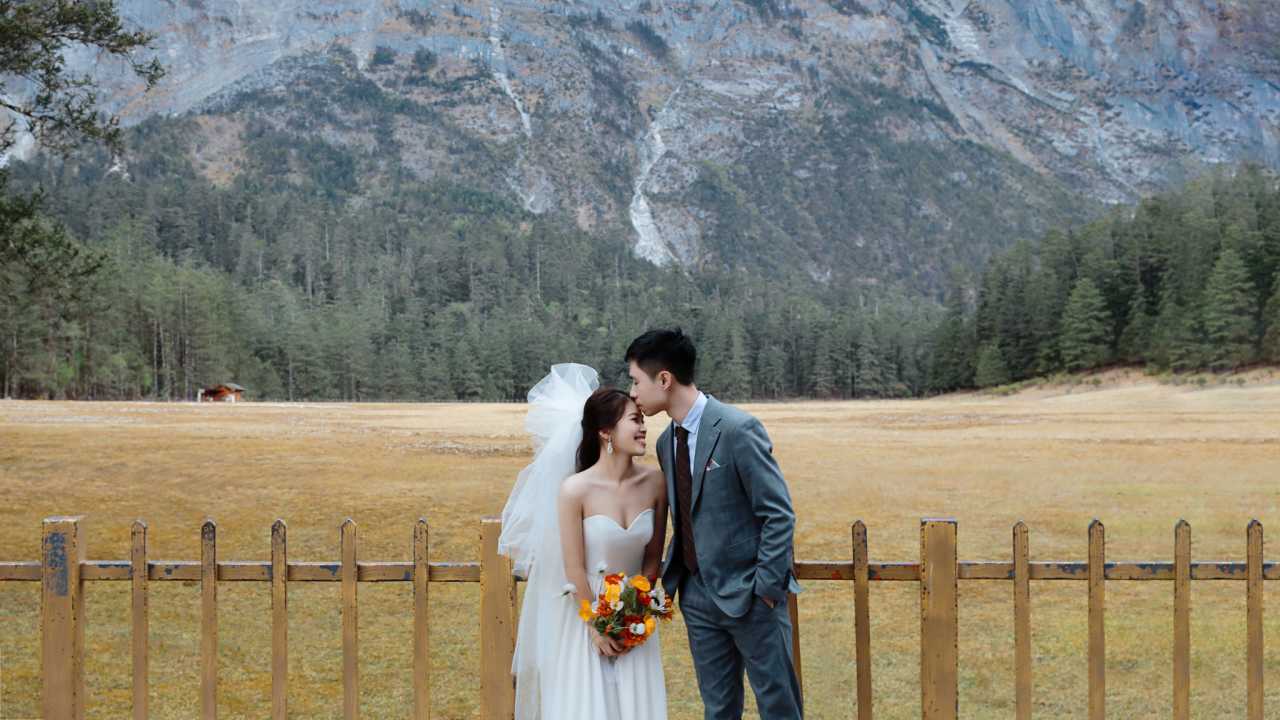
For four to five scenes, I recommend this allocation: - Two to three scenes related to Jade Dragon Snow Mountain (Spruce Meadow, Yak Meadow, Snow Mountain Road) - One ancient town scene (Shuhe Ancient Town) - One lake scene (Jade Lake)
This way, you get both mountains and water, plus cultural elements, creating rich, layered photos.
Snow Mountain Scenes
🚩 Spruce Meadow (Highly Recommended)
Located on the eastern slope of Jade Dragon Snow Mountain, this is the top choice for Lijiang pre-wedding shoots. It features grasslands, spruce forests, and snow-capped peaks, all perfectly blended. No couple can resist this backdrop—it's as if nature designed a stage specifically for wedding photos.
🚩 Yak Meadow
Also on the eastern slope of Jade Dragon Snow Mountain, but here there are no tall spruce trees—just low shrubs and a few lonely pine trees, giving the landscape a slightly desolate feel. As a result, fewer couples choose this spot. If you're drawn to a sense of ruggedness, give it a try.
🚩 Snow Mountain Road
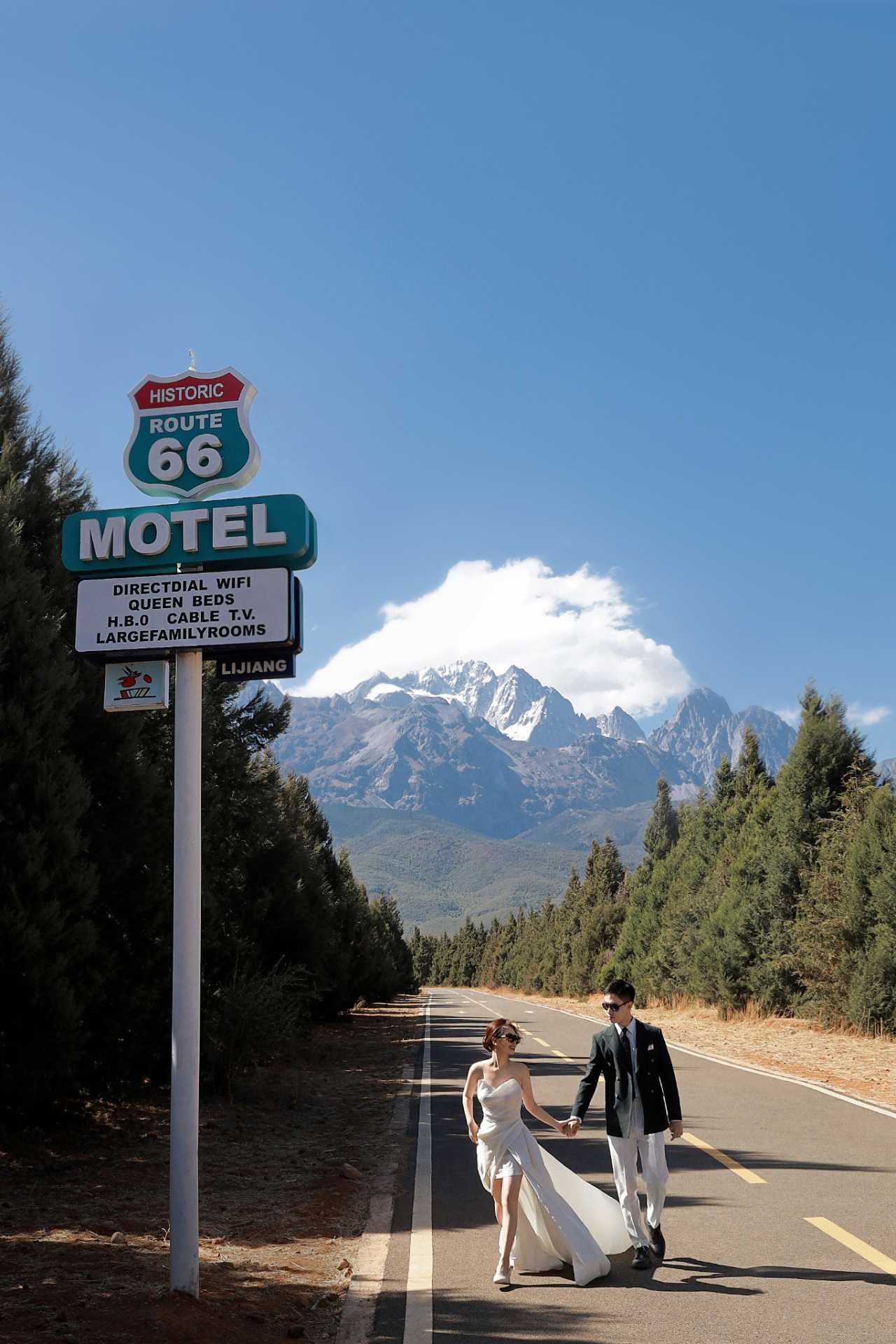
This is a dead-end road built specifically for photography. In bad weather, it's just an ordinary road. But on a clear day, the road stretches toward Jade Dragon Snow Mountain, creating a powerful sense of depth.
Lake Scenes
🚩 Blue Moon Valley
The second most popular spot after Spruce Meadow. Its turquoise waters resemble Jiuzhaigou Valley. However, we ultimately didn't choose it—the lake is narrow and cramped, making it difficult to capture the person, the lake, and the background all in one frame. Plus, Pan thought the blue was too vivid to look natural.
🚩 Wenhai Lake
The largest lake near Lijiang city. But when composing shots, you have to consider the relationship between the foreground where the person stands and the distant background. None of the sample photos we saw had compositions that really grabbed us.
🚩 Jade Lake (Our Choice)
This is a small reservoir at the southeastern foot of Jade Dragon Snow Mountain. Between the reservoir and the mountain lies a vast grassland, with an open valley behind it. Using a medium-to-telephoto lens makes composition easy. In the end, we chose to shoot here.
Ancient Town Scenes
🚩 Dayan Ancient Town
What people usually call "Lijiang Ancient Town" refers to Dayan. It's the largest and most accessible, but overly commercialized, so we passed on it.
🚩 Baisha Ancient Town

Located at the southern foot of Jade Dragon Snow Mountain, it's the closest to the mountain. But it's small, inconvenient to reach, and less commercialized, giving it a somewhat quiet, lonely feel.
🚩 Shuhe Ancient Town (Our Choice)
Among the three ancient towns, Shuhe strikes the best balance across all criteria. Our photographer knew it well, and the inn we stayed at was also here. In the end, we shot inside the inn, capturing warm, intimate scenes.
🚩 Black Dragon Pool Park
Located on the northern edge of Dayan Ancient Town, the scenery resembles Beijing's Summer Palace, with lakes, stone arch bridges, and pavilions. It's the best spot for shooting Jade Dragon Snow Mountain. Strangely, almost no photography studios choose it. After visiting, we realized: on clear days, you need a telephoto lens of 100mm or more to capture the snow mountain; but the lake makes it difficult to shoot people with a telephoto lens. If the weather is bad and you can't see the mountain, it's just an ordinary park.
5. Itinerary Planning: A Table for the Eight-Day Trip
We combined the five-day May Day holiday with two shooting days. First, we drove around Dali and Lijiang for fun, then did the photoshoot. Since we had both sets of parents with us, the itinerary prioritized relaxation, ease, and avoiding crowded spots.
| Date | Itinerary | Notes |
|---|---|---|
| Day 0 | Guangzhou → Dali | Stayed at a hotel on the south bank of Erhai Lake |
| Day 1 | Erhai Lake tour (Xiaguan → Gusheng Village → Xizhou → Shuanglang → Xiaguan) | Self-driving |
| Day 2 | Dali → Shaxi Ancient Town | Experienced a post station on the Ancient Tea Horse Road |
| Day 3 | Shaxi → Lijiang → Jade Lake Village | Stayed at Shilock Hotel |
| Day 4 | Jade Lake Village → Baisha Ancient Town → Shuhe Ancient Town | Explored with parents |
| Day 5 | Shuhe → Black Dragon Pool | Parents returned home; met up with the photography team |
| Day 6 | Shuhe → Yak Meadow → Spruce Meadow | First shooting day |
| Day 7 | Shuhe → Snow Mountain Road → Jade Lake Village | Second shooting day |
| Day 8 | Lijiang → Guangzhou | Return trip |
6. Detailed Itinerary: Moments Worth Remembering
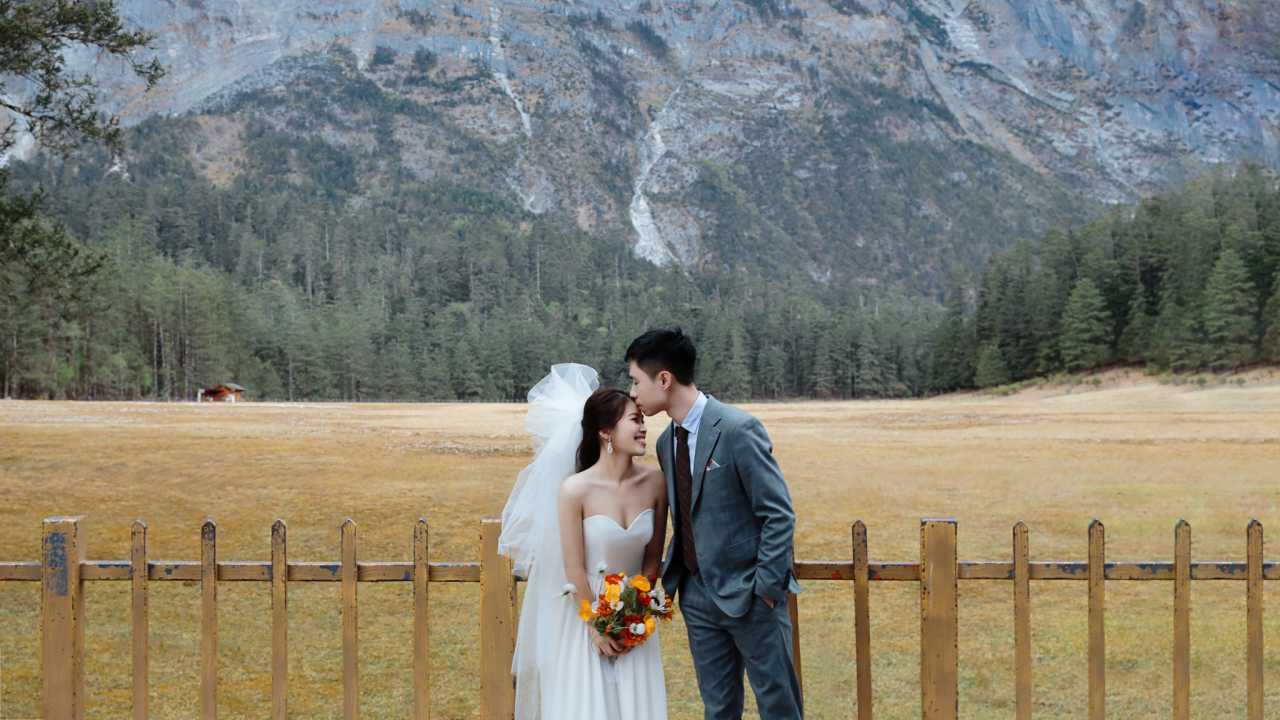
Day 0: Dali Ancient Town—First Glimpse of Erhai Lake
Flying from Guangzhou to Dali, we spotted Erhai Lake from the right window just before landing. After picking up our rental car (a Buick GL8, just enough for five people and luggage), we headed straight to the hotel. The high-altitude blue sky, intense sunlight, and crisp air instantly lifted our spirits.
In the evening, we walked to Xingsheng Bridge—a European-style bridge—and saw many couples taking wedding photos. We strolled along the lakeside path to Erhai Lake Moon Wetland Park, gazing at Cangshan Mountain on the opposite shore. Pan looked especially beautiful in the sunset. That night, we had Dai cuisine outside Dali Ancient Town and walked through the bustling old town back to the hotel.
Day 1: Around Erhai Lake—From Gusheng Village to Shuanglang
Driving around Erhai Lake is about 120 kilometers, easily doable in a day. We first visited the lesser-known Gusheng Village—a clean, peaceful hamlet with an ecological corridor along the lake, where "water lilies" floated on the surface. Next came Xizhou Ancient Town, but it was too crowded. When it started raining, we grabbed a quick lunch and left.
By 4 p.m., we reached Shuanglang Ancient Town. The jacaranda trees lining the old streets were in full bloom. We found a restaurant by the "sea" for dinner, and I used my drone to capture aerial shots of Yuji Island and Nanzhao Customs Island. As night fell, we drove back along the Dali Expressway to the hotel.
Day 2: Shaxi Ancient Town—The Serenity of the Tea Horse Road
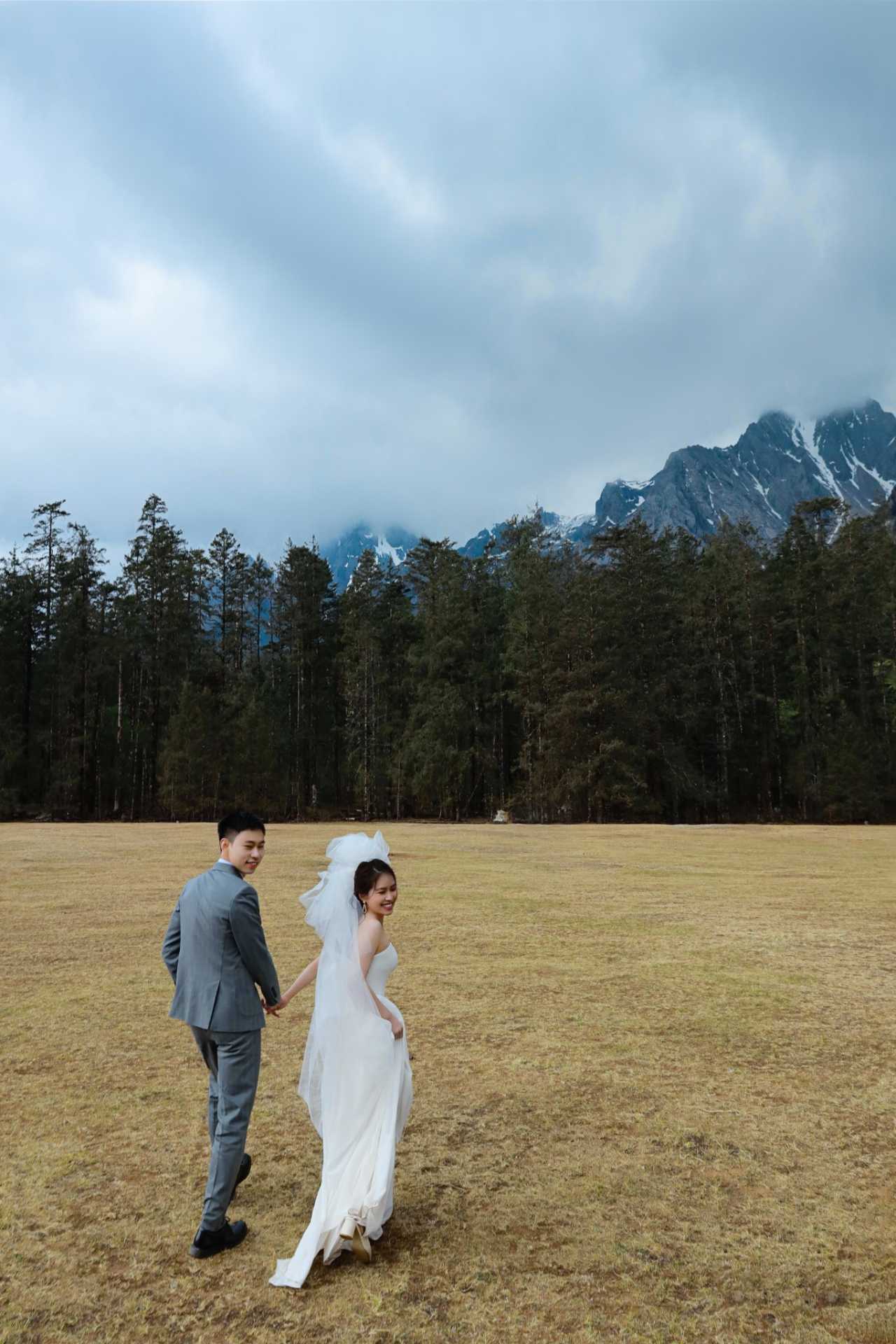
Heading north from Dali, we reached Shaxi Ancient Town in an hour and a half. Once an important post station on the Ancient Tea Horse Road, it remains quiet despite being featured in the hit drama Meet Yourself. Most buildings are made of rammed earth, giving the town an ancient, peaceful feel. The central Sizheng Street resembles Lijiang's Sifang Street, where locals gather.
We took photos at Yujin Bridge—a stone arch bridge—with the dark Heihui River flowing quietly beneath. One detail that struck me in Shaxi: along the walls of buildings, there were benches or cushions for visitors to rest. This thoughtful design brought people closer to the town.
In the evening, we dined at a friend's inn run by my mother-in-law, then strolled through the town. After sunset, the day-trippers left, and the town returned to its tranquil state.
Day 3: Jade Lake Village—A Hidden Paradise in Locke's Writings
Leaving Shaxi, we reached Lijiang in less than two hours. Despite the overcast sky, the towering Jade Dragon Snow Mountain was still awe-inspiring. We checked into Shilock Hotel in Jade Lake Village—the best hotel of the entire trip. The building was constructed from stones of various sizes, but the interior was Nordic minimalist, with large floor-to-ceiling windows, blending ruggedness with elegance.
The biggest surprise: from the hotel courtyard, you could see Jade Dragon Snow Mountain, complete with hammocks and camping chairs. The hotel offered daily activities like snow mountain hikes, Jade Lake tours, and fireside chats. That afternoon, a staff member walked us to Jade Lake at the village's edge. Although the cloudy sky hid the snow peak, the open grassland and reservoir were still beautiful. This spot is actually ideal for capturing the "golden hour" glow on Jade Dragon Snow Mountain, but we weren't lucky with the weather.
Conclusion: Pre-Wedding Photography—An Adventure in Trust
Reflecting on this trip, my biggest takeaway is this: wedding photos aren't just pictures; they're a testament to a journey. We chose Lijiang for its blend of snow mountains, lakes, and ancient towns. We chose a studio from Guangzhou/Foshan for smooth communication and enjoyable collaboration. We chose two days and four scenes to avoid rushing.
Of course, there were regrets—like not seeing the snow mountain in bad weather, or certain compositions not meeting expectations. But it's these imperfections that make the photos feel real. If you're planning a pre-wedding photoshoot, remember this:
- Destination choice: Consider scenic diversity, transportation convenience, and personal preference.
- Studio choice: Local studios offer great hardware but may be formulaic; non-local studios offer better communication but at higher costs.
- Package choice: Choose shooting days, scene counts, and photographers based on your budget and needs.
- Scene combination: Snow mountains + lakes + ancient towns create layered photos.
- Mindset: A pre-wedding shoot is a team effort. Trust your photographer, and trust yourself.
Finally, thank you to Pan, both sets of parents, and the photography team. The smiles we left behind at the foot of the snow mountain, in the alleys of the ancient town, and by the lake's edge will be our most cherished memories. I hope this guide helps you find your own "wedding photos beneath the snow mountain."
May your love be as pure as the snow-capped peaks, and as enduring as the ancient town.
You should also read:

Solo in Yunnan: A Wanderer’s Guide to the Land of Eternal Spring
Solo in Yunnan: A Wanderer’s Guide to the Land of Eternal Spring There’s something magical about traveling alone. No compromises, no schedules to keep, no one to please but yourself. I’ve been on the road for nearly three months now, and not once have I…
Continue reading...
Cloud Travelogue · Dali of Wind, Flowers, Snow, and Moon: A Three-Day, Two-Night Journey of a Free Spirit
Cloud Travelogue · Dali of Wind, Flowers, Snow, and Moon: A Three-Day, Two-Night Journey of a Free Spirit I am a cultured female foodie with a touch of rogue charm. I slung on my backpack, took my lover's hand, and set off on a spontaneous…
Continue reading...
A Spiritual Journey to Lugu Lake in Lijiang: Experiencing the Legend of the Kingdom of Women! (Reproduction and Hotlinking Prohibited)
A Spiritual Journey to Lugu Lake in Lijiang: Experiencing the Legend of the Kingdom of Women! (Reproduction and Hotlinking Prohibited) Off-road自驾, food, hotel and民宿 reviews, Featured Traveler, Tank 300 owner, 200,000 km of self-driving experience. WeChat: y01294987 Ninglang Yi Autonomous County 2010.11.08 · 7 days…
Continue reading...