Winter at Nianhu Lake: A New Year's Date with the Black-necked Cranes
Winter at Nianhu Lake: A New Year's Date with the Black-necked Cranes
As the New Year's bell is about to ring, are you also searching for a hidden sanctuary to cleanse your soul and welcome the first rays of sunlight? Deep in the mountains of Yunnan lies a little-known lake—Nianhu (Nianhu Lake). Here, there are no noisy crowds, only the elegant silhouettes of black-necked cranes, a misty wonderland at dawn, and the purest beauty of nature under the warm winter sun. Last New Year's, my companion Dong and I, along with our two dogs, drove across the border between Sichuan and Yunnan, embarking on a six-day, five-night "crane protection scientific expedition." This was not just a trip; it was a deep dialogue with nature, history, and ourselves.
Departure! The Old Driver's "Thrifty Philosophy"
December 29: The Prelude of the Night
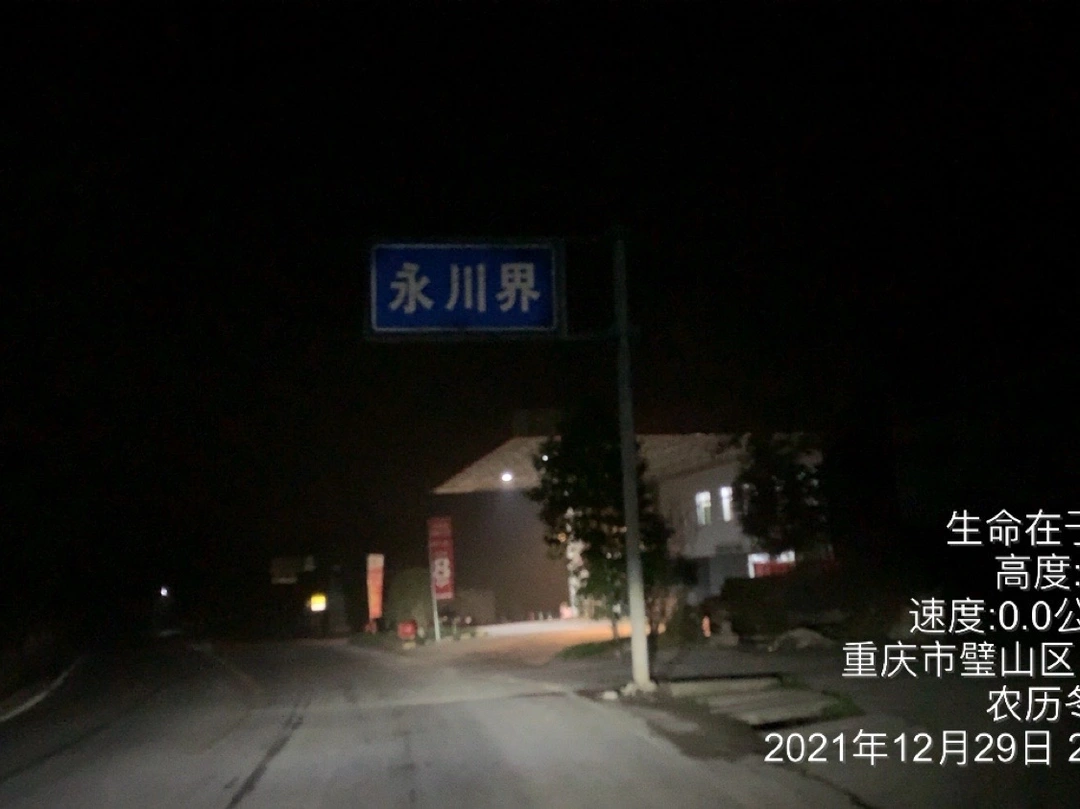
The end-of-year night always carries a special stillness. Dong, an experienced driver, carefully calculated the route and found that taking the old road and the expressway had almost the same mileage, but the tolls would save us over 300 yuan. So, we decided to take the old road, also to avoid the expressway traffic jams. At nine in the evening, we set off. In the darkness, there were few cars, and the scenery outside the window was like a flowing painting. Over an hour later, we arrived at Yongchuan (Yongchuan District), and the first day's journey quietly ended in the dark.
December 30: Day and Night Travel from Sichuan to Yunnan
To catch the beauty of Nianhu Lake as early as possible, we had taken leave and set off ahead of schedule. Just as dawn was breaking, we woke up in the courtyard of Macun Village Committee (Macun Village Committee)—at 2:30 a.m., we were so exhausted that Dong decisively decided to stop and rest. After a quick wash, we continued on the road. The weather was good today, although clouds tried to block the rising sun. For us, as long as it didn't rain, it was the best gift.
The moment we entered Yunnan, the sunlight seemed to break free, piercing through the clouds and flooding the land. We drove along the Zhaoma (Zhaotong-Mawei) secondary road, and a simple roadside meal became our lunch. By 5:30 p.m., we finally neared the Huize Black-necked Crane Nature Reserve. As the sun was setting, we decided to head to the Nianhu Lake viewing platform to capture the fleeting sunset. The sunlight was warm but brief; when it fully sank below the horizon, the chill immediately set in. We drove back eight kilometers to the Black-necked Crane Protection Center's education and publicity building parking lot—the terminal for outside vehicles. After registering, showing our travel cards and health codes, we received our "Crane Protection Scientific Expedition" passes and officially entered this hidden realm.
The smoking pavilion in the parking lot became our makeshift kitchen. Dong set up the bed, and I cooked a pot of mixed sauce noodles (zha jiang mian). With the heater running, the pavilion was warm as spring. Considering the late hour, we turned off the generator and used the public restroom's power to boil water for foot soaking, preparing for tomorrow's sunrise.
Dawn at Nianhu Lake: The First Encounter with Black-necked Cranes

December 31: Sunrise, Crane Dance, and Unexpected Gains
Just after 6 a.m., the crescent moon still hung in the sky, dotted with stars. After breakfast, we leashed our two dogs and walked along the concrete road to the pre-arranged "Nianhu Renjia" (Nianhu Homestay). The owner, Xiao Guo, was already waiting. After settling the dogs, we continued toward the lake. The sky gradually turned red, and we quickened our pace, searching for the best viewing spot.
The sun peeked between two mountain gaps, then suddenly jumped out, dyeing the sky red and the entire Nianhu Lake. The originally bare trees, painted by the sunlight, became colorful. Bar-headed geese occasionally flew by, creating a stunning picture.
According to a regular photographer we met, the black-necked cranes had already flown off to forage by this time and wouldn't return until evening. We decided to go back to Nianhu Renjia to rest—after all, we had woken up so early for the sunrise. After a nap of over an hour, we set off again, ready to officially begin our "scientific expedition."
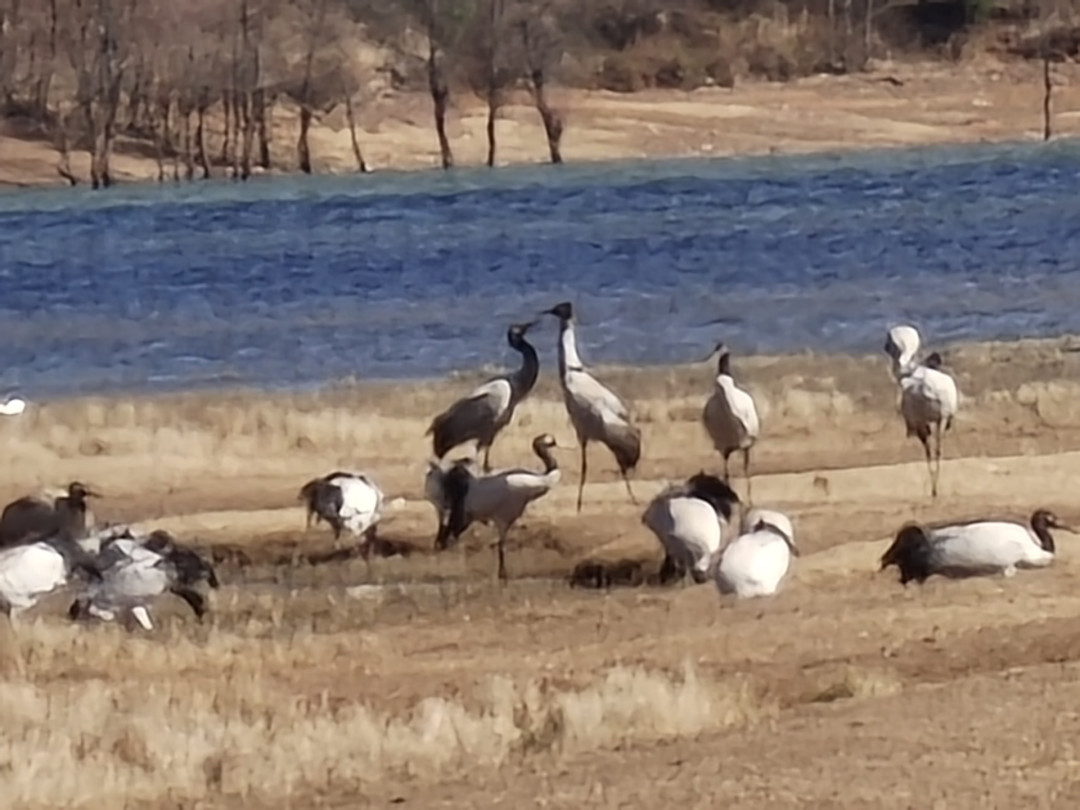
The Huize Black-necked Crane National Nature Reserve consists of the Daqiao (Big Bridge) area and the Changhaizi (Long Lake) area; we were in the Daqiao area. Nianhu Lake, originally named "Yuejin Reservoir" (Leap Forward Reservoir), is one of the main wintering habitats for black-necked cranes. Every year from November to March, large flocks of black-necked cranes, bar-headed geese, common cranes, ruddy shelducks, and hundreds of other bird species fly here to winter. According to the parking lot manager, Brother Guo, this year the reserve had nearly double the number of black-necked cranes compared to previous years, exceeding 1,000.
On the wetland, common cranes pecked incessantly like chickens, clearly the "foodies" of the bird world. A few black-necked cranes strolled and foraged in the distance, their movements elegant. Black-headed gulls swam happily in the lake, darting like arrows toward the center at the slightest disturbance. We quietly approached a group of black-necked cranes; some glided in the sky, others walked leisurely on the wetland, occasionally "feeding us dog food" (showing affection)—cranes in good relationships would nestle against each other, making us chuckle.
Most of the day slipped away. We returned to our room at Nianhu Renjia, cooked a pot of lettuce soup, and with two other dishes and the soup, we ate heartily. Our two dogs obediently lay under the table, staring at us with longing eyes.
The Fog of New Year's Day: An Unexpected Ink Painting

January 1: The First Day of the New Year, Fog Shrouds Nianhu Lake
To welcome the first sunlight of the New Year, we got up early again. I stirred up a pot of hot youcha (fried flour tea), and one bowl each warmed us up instantly. However, when we reached the bridge, Nianhu Lake was enveloped in morning fog, and not a trace of the sun could be seen.
But at this moment, Nianhu Lake revealed another kind of beauty. The clear water reflected sparse trees, and the mist swirled around, creating a fairy-tale scene. Although we didn't see the sunrise, this natural ink-wash painting-like landscape brought us an unexpected delight. Black birds perched on branches fluttered their wings occasionally, some flying away and others arriving; an egret stood motionless by the lake, as if meditating with closed eyes; mallards swam freely in the water, carefree and happy.
Seeing that the fog showed no sign of clearing, we decided to leave Nianhu Lake and slowly head back. We first went to Nianhu Renjia to settle the bill, then passed through the pomegranate town of Nagua (Nagua Town). Finally, the sun deigned to show its face. Golden sunlight bathed the land, so we decided to visit Baimu Village (White Mist Village).
Baimu Village: The First Stop of the Ten-Thousand-Li Copper Transport
Baimu Village is a small settlement in Nagua Town, but it boasts a profound historical heritage. As early as the Western Han Dynasty, it was a key post for military and commercial traffic. During the mid-to-late Ming Dynasty, the development of copper mines in Dongchuan Prefecture brought prosperity to Baimu, making it a major stop for transporting copper from the south to the north, earning it the title "The First Stop of the Ten-Thousand-Li Copper Transport." Today, the village retains its ancient folk houses and architecture, with historical sites like St. Joseph's Church (Sheng Yuese Jiaotang) and the Three Saints Temple (San Sheng Gong) still intact.
We cooked boxed meals in the village's smoking pavilion, then strolled through the alleys. The dilapidated old houses, clear drainage channels, and small groups of villagers all exuded a sense of peace and leisure. An elderly woman sat at her doorstep, a silent witness to Baimu Village's vicissitudes. We bought some vegetables and pork, deciding to cook hotpot (huoguo) for the New Year's celebration in the parking lot at night. The steaming hotpot, paired with a star-filled sky, made this New Year's Day uniquely memorable.
Returning to Nianhu Lake: Farewells and Reluctance

January 2: The Final Sunrise
To make up for missing the sunrise the day before, we drove back to the Black-necked Crane Reserve parking lot. Early in the morning, we packed some dry food, tied our dogs to the back of the car, entrusted them to the security guard, and headed straight into the reserve. The sky began to redden, and Nianhu Lake was peaceful. Bar-headed geese flew across the lake in perfect formation, over the treetops, a beauty so breathtaking it made us hold our breath. When the sun rose, it appeared exceptionally round. On a nearby wetland, a group of black-necked cranes was ready to depart; a few impatient ones flapped their wings, creating a magnificent scene.
But no matter how beautiful the scenery, parting is inevitable. We reluctantly left this earthly paradise. When we returned to the parking lot, our two little ones were extremely excited. The door of the Black-necked Crane Protection Center's education building was wide open, so we went in for a tour. The lifelike taxidermied black-necked crane specimens gave us a deeper understanding of this "crane protection scientific expedition." Dong exclaimed, "This trip was truly worthwhile!"
The Return Journey: Lizhuang Ancient Town and Fivefold Wonders
On the way back, we made a detour to Lizhuang Ancient Town in Yibin (Yibin City). This thousand-year-old town is famous for its "Lizhuang Three Whites"—white meat (bairou), white liquor (baijiu), and white cake (baigao). We visited historical sites like the Dongyue Temple (Dongyue Miao) and the Zhang Family Ancestral Hall (Zhangjia Ci), and tasted authentic Yibin burning noodles (yibin ranmian) and knife-sliced white meat (dadao bairou). The fatty but not greasy white meat, paired with a special dipping sauce, left a lasting impression.
At Doushaguan (Bean Sand Pass), we witnessed a fivefold transportation wonder—waterways, railways, national highways, expressways, and an ancient five-foot road (wuchi dao) coexisting. The clearly visible hoof prints on the ancient road told the story of the prosperity of the Southern Silk Road. Standing before the Stone Gate Pass (Shimen Guan), we could almost hear the echoes of history.
Conclusion: The Meaning of the Journey
On the way home, although we encountered traffic jams, Dong's "thrifty philosophy" allowed us to see more scenery. At 2 a.m., we finally arrived home safely. Though exhausted, our hearts were full of fulfillment.
This trip to Nianhu Lake made me deeply realize: The meaning of travel lies not in how far you go, but in the scenery you encounter and the feelings you experience. From the elegance of the black-necked cranes to the history of Baimu Village, from the white meat of Lizhuang to the wonders of Doushaguan, every experience is worth treasuring.
If you, too, are looking for a place to cleanse your soul at the start of the New Year, consider visiting Nianhu Lake. There, you will not only meet the black-necked cranes but also meet a better version of yourself.
Practical Tips: - Best Time: November to March, during the black-necked crane wintering period - Transportation: Self-driving is recommended; taking the old road can save tolls, but pay attention to road conditions - Accommodation: Nianhu Renjia (Nianhu Homestay) or camping in the reserve parking lot - Essential Items: Warm clothing, cooking utensils, binoculars, camera - Notes: No loud noises within the reserve; comply with epidemic prevention regulations
Keywords: Nianhu Lake, black-necked cranes, New Year's travel, Yunnan self-driving, Baimu Village, Lizhuang Ancient Town
You should also read:
Traveling with the Soul: Yunnan Under My Feet, My Heart in the Clouds
Traveling with the Soul: Yunnan Under My Feet, My Heart in the Clouds Prologue: A Spontaneous Escape Have you ever had that moment—sitting in a noisy city, staring at a screen full of dense text, suddenly yearning for a complete escape? As the K159 train…
Continue reading...
Dreaming of Nanzhao: A Gentle Encounter with Erhai Lake in Dali Shuanglang, July
Dreaming of Nanzhao: A Gentle Encounter with Erhai Lake in Dali Shuanglang, July Every summer, a voice whispers softly from the depths of my heart: it's time to go. No matter how tight the budget, no matter how precious the annual leave, the ritual of…
Continue reading...
Yunnan's Colorful Clouds: Touching Shangri-La — A Dialogue with the Sky
Yunnan's Colorful Clouds: Touching Shangri-La — A Dialogue with the Sky If you ask me where in China is closest to heaven, I would tell you without hesitation: Shangri-La. The name itself carries a mysterious magic, as if every syllable whispers tales of distant lands.
Continue reading...