Xishuangbanna: A Reunion with This City After Fifteen Years
Xishuangbanna: A Reunion with This City After Fifteen Years
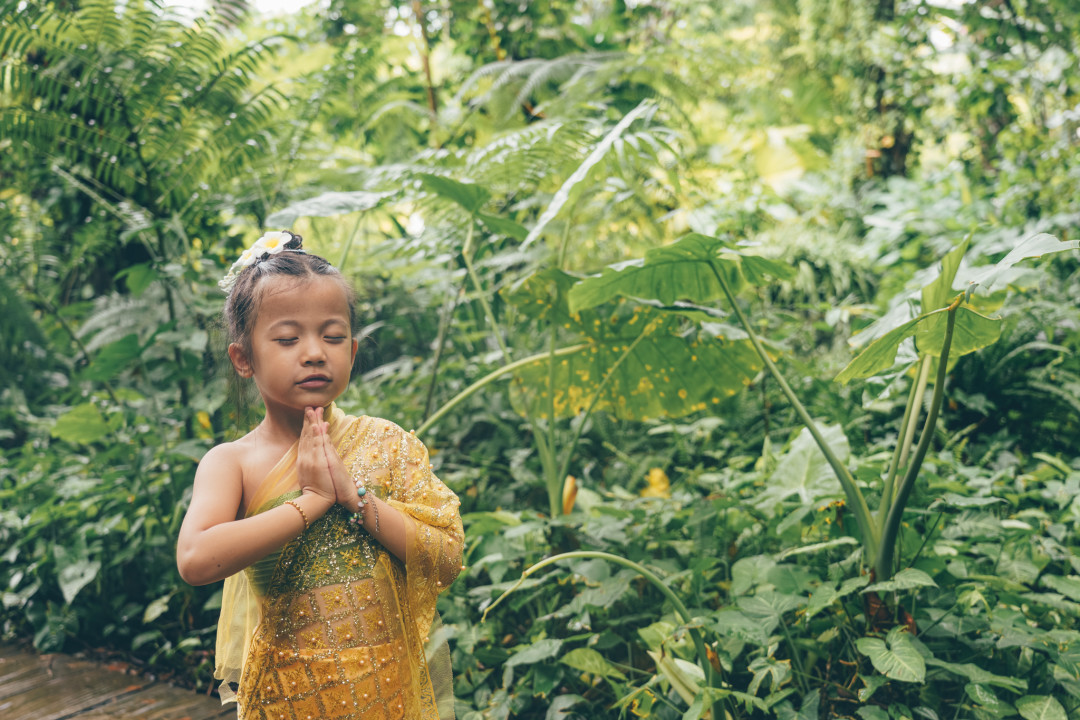
Fifteen years ago, I last set foot on the soil of Xishuangbanna. Back then, I was a young backpacker brimming with curiosity about the world. Fifteen years later, as I stepped out of Gasa Airport again, this time holding my daughter's hand, the humid, warm wind hit my face. The air was laced with the sweet fragrance of tropical plants and a faint floral scent. It felt as if time had never passed, and yet, as if everything had changed.
In August 2022, rumors were rife that half of China's population was vacationing in Yunnan. As a traditional tourism powerhouse, the province's appeal needs no introduction. Across this colorful land, Dali offers its wind, flowers, snow, and moon; Lijiang boasts ancient charm and lingering melodies; and Xishuangbanna presents its tropical allure. Each has its own character. But for me, Xishuangbanna holds a special place — my relatives live here, fragments of memories from fifteen years ago linger, and new memories are waiting to be woven for my daughter.
My daughter was about to start elementary school. She had always dreamed of visiting Thailand, and "Little Thailand" — Xishuangbanna — naturally became our top choice. And so, a reunion spanning fifteen years began.
Manhana: The New Face of an Ancient Village
One of Xishuangbanna's greatest charms lies in its rich ethnic minority culture. When people think of the Dai people, they picture graceful girls dancing the Peacock Dance under the moonlight, their natural talent for singing and dancing, and their warm hospitality. To truly understand this ethnic group, the best place to start is their home — the original Dai villages.
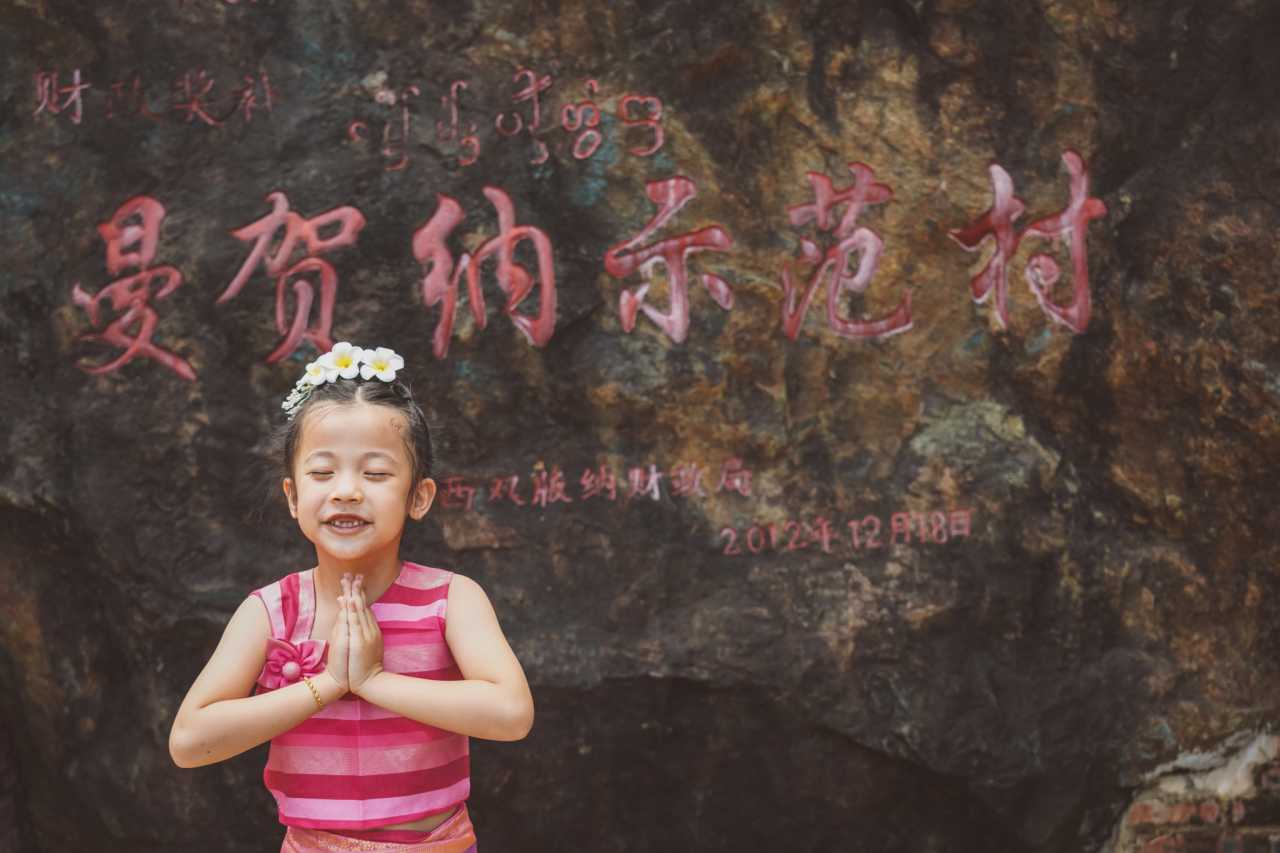
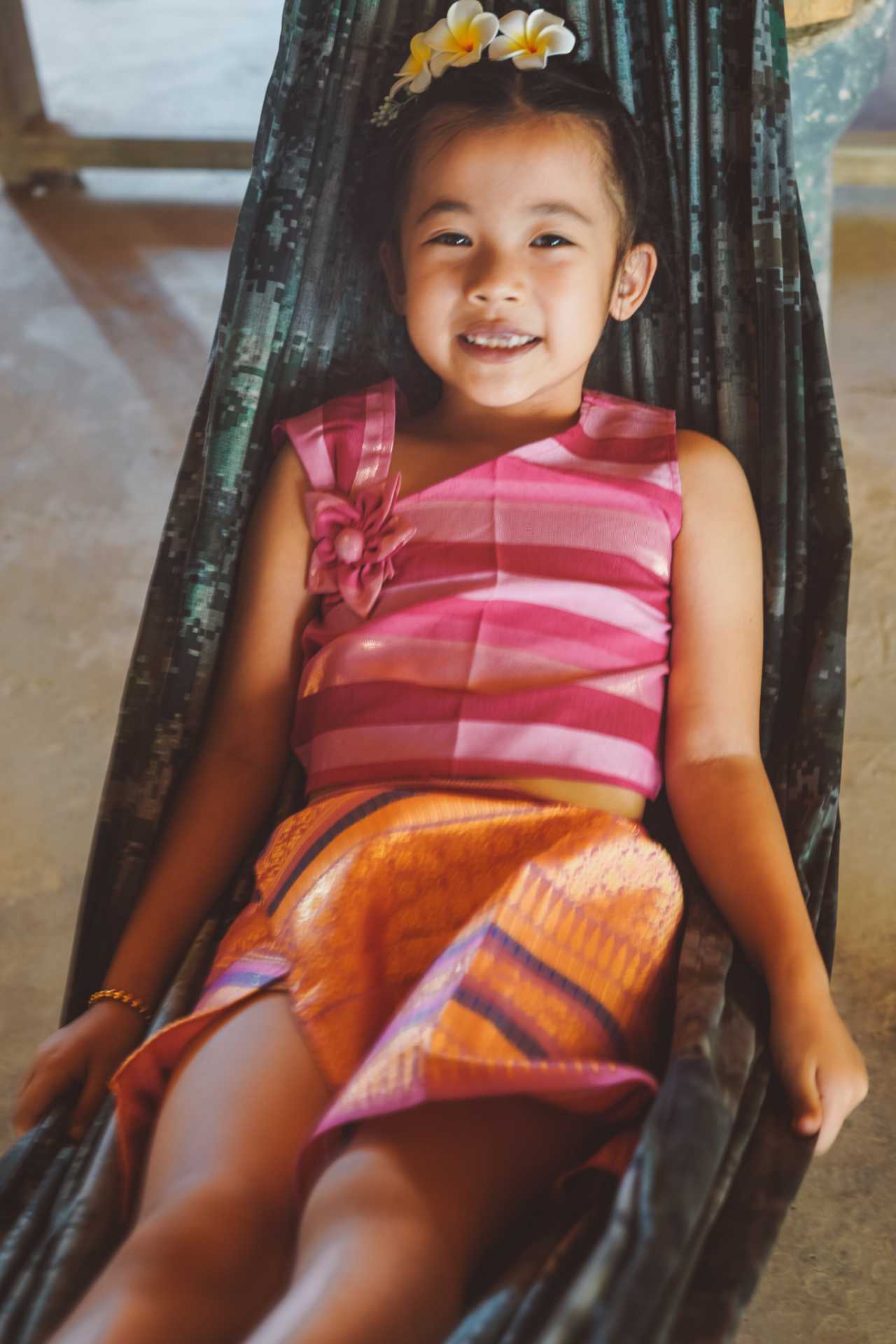
Located on Ronglin Avenue in Jinghong City, Manhana Ancient Village still retains the most authentic appearance of a traditional Dai village. Stepping through the village gate, rows of traditional stilted houses (吊脚楼, diaojiaolou) come into view. These square, two-story buildings have double-sloped roofs covered with woven thatch. The ground floor, open and wall-less, is used for storing odds and ends, with space cleverly utilized — a hammock hangs between two massive wooden pillars, creating a perfect spot for escaping the heat and relaxing. Lying in the hammock, cooled by the breeze, is pure bliss.
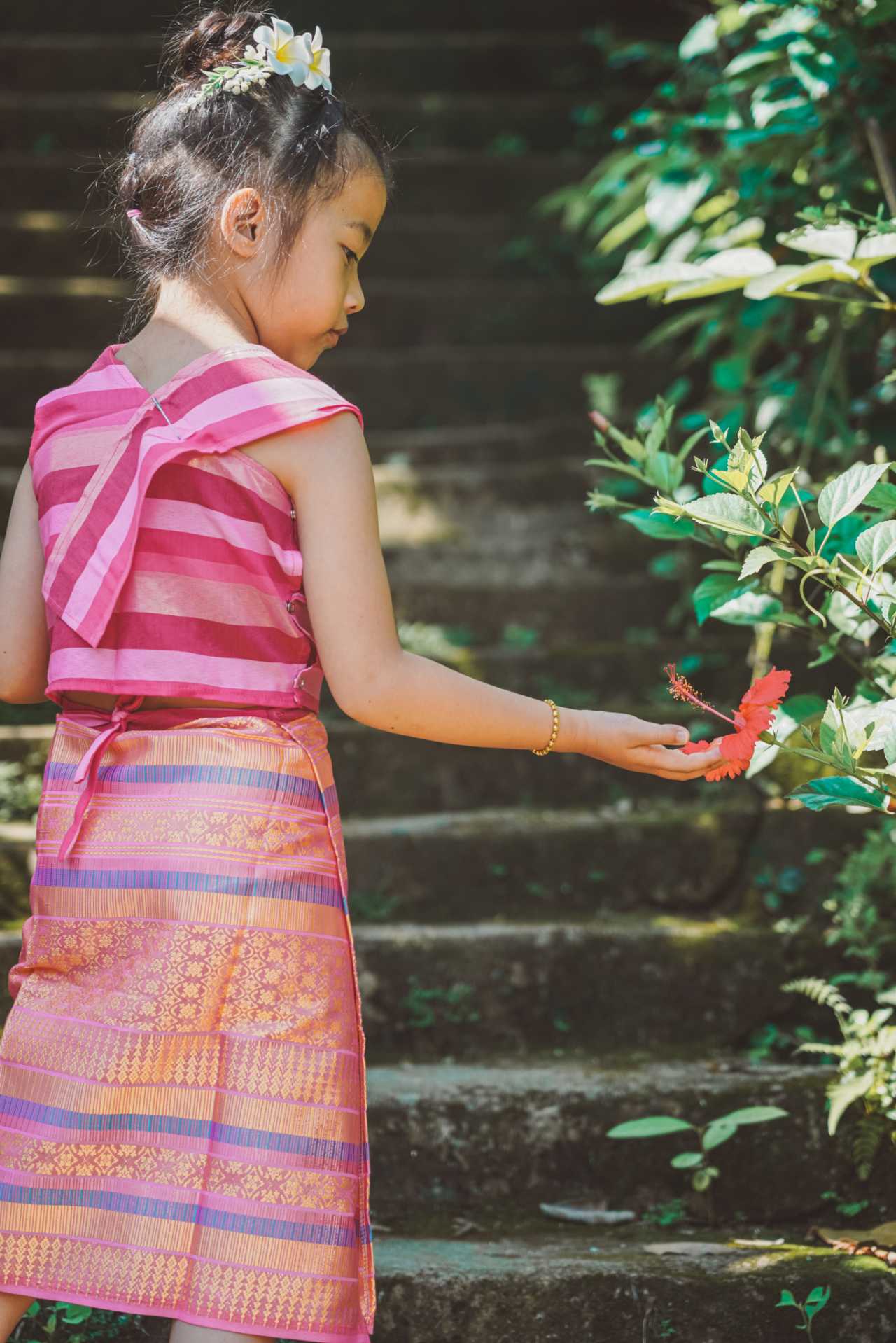
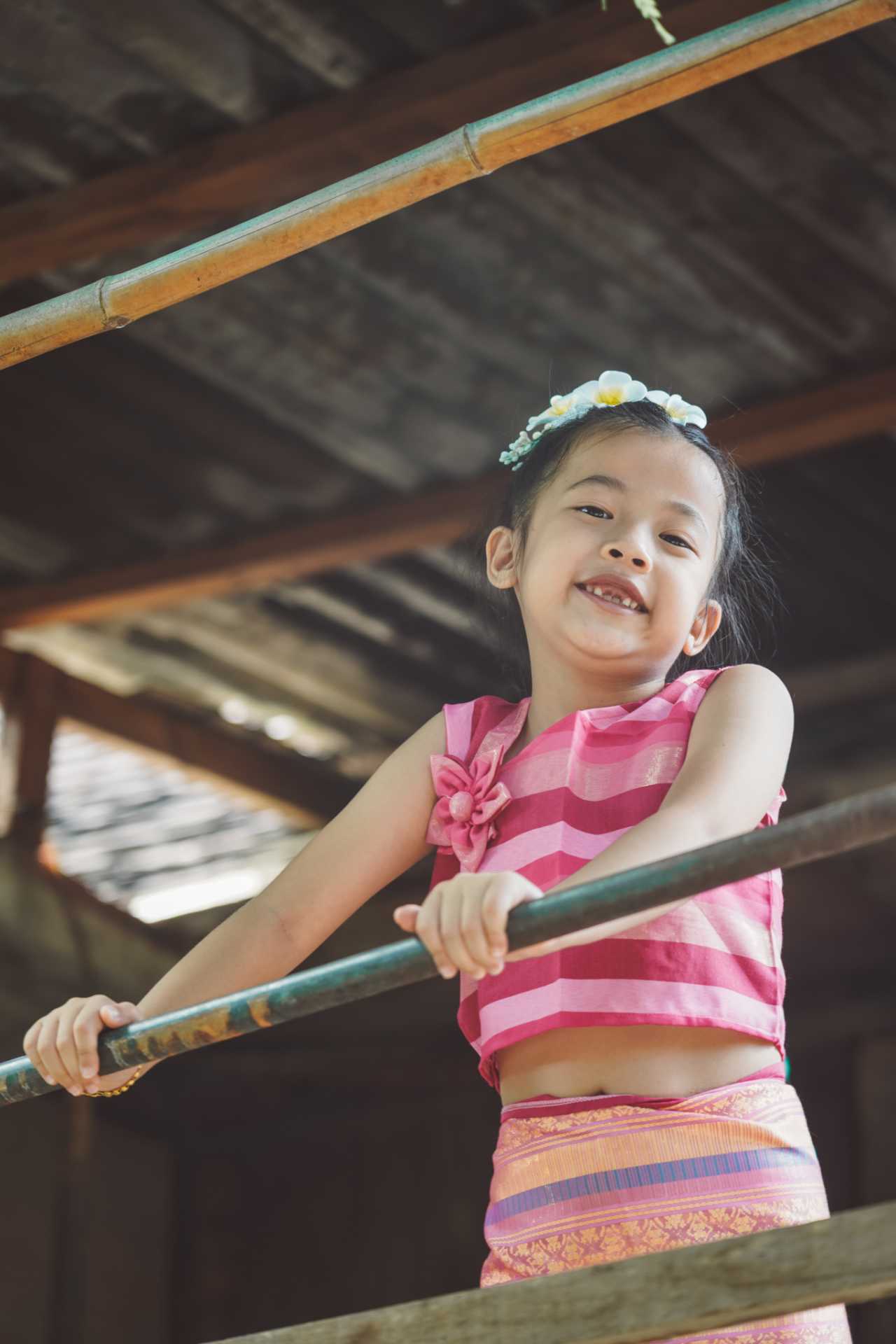
Climbing the stairs, you find corridors and drying platforms for airing items. My daughter leaned curiously against the bamboo railing, just like a little Dai girl from the village, watching the passersby. The root tendrils of climbing plants serve as natural door curtains — this seamless integration with nature is seen everywhere in the village.
Some houses still have portraits of Chairman Mao and Premier Zhou Enlai hanging above their doors. Though the years have left them slightly faded, the deep patriotism they represent has never dimmed.
Walking up the slope, every corner of the village is blanketed with vegetation. Even under the scorching sun, it doesn't feel unbearably hot. Climbing the stone steps, you reach the Buddhist temple at the highest point. The Dai people are devout Buddhists, so the temple is naturally the most magnificent building in the village. Black eaves are topped with mythical beasts guarding the home, while below, relief-carved Buddha statues look lifelike. The surrounding ancient trees act as natural umbrellas for the temple. A hen leads her chicks foraging through the woods, unafraid of visitors. A thin layer of moss covers the bluestone slabs, lush and green. Sunlight filters through the leaves, casting dappled shadows and bringing new life to the cracks between.
Following the mountain path downhill, new-style stilted houses are springing up. Brick-and-wood structures have replaced traditional wood and bamboo materials, making them look more spacious and solid, but also losing some of the original Dai character. The ground floor is no longer a storage space but has been turned into shops, each square inch exploited. Shopkeepers with accents from other provinces enthusiastically introduce Dai-style handicrafts.
Watching the constant stream of tour buses and endless flow of tourists, I felt a complex mix of emotions. Tourism has injected fresh blood into the ancient Dai village, but it has also quietly changed its face. I'm not sure whether to feel happy or sad about this transformation.
Fengqing Park: A Hidden Gem for Kids
If there's one underrated attraction in Jinghong city, it's Fengqing Park. Despite its name suggesting "local customs," you won't experience much of that here. Past the "Liberation Monument," its true nature is revealed — the "Tropical Zoo."
Just inside the entrance, a baboon had surrendered to the heat, leaning sideways against the glass, trying to cool its body. It couldn't be bothered with the taunts of visitors, maintaining an aloof, otherworldly air.
The other animals seemed unaffected by the high temperature, full of energy. A "方便面君" (a playful Chinese term for a raccoon or similar animal, literally "instant noodle lord") stood upright, waving its front paws vigorously, begging for food with clear, pitiful eyes that melted hearts. A gentle giraffe extended its long tongue, curling it to scoop up large leaves with ease. Accustomed to crowds, it even allowed visitors to pet it, though its fur was a bit coarse. The zebra, another grass-eater, was clumsier — no matter how it gestured with its front hooves, it couldn't stand up, growing so anxious it curled its lips back, revealing rows of large teeth. The alpaca, by contrast, was far less refined — tease it, and you'd be met with a spray of spit. Two argali sheep fought fiercely over a mouthful of leaves, charging at each other from a distance with a dull thud, leaving a smug winner and a dazed loser seeing stars.
A pair of hippos, unable to bear the sun's scorching heat, sank their bodies into the water, leaving only their massive heads exposed. Their faces, with nowhere to hide, had turned bright red from the sun.
Ring-tailed lemurs, made famous by the movie Madagascar, are from Africa. This temperature was no challenge for them — it almost felt like home as they munched on cucumbers with gusto.
Most of the birds in the aviary were free-range. Golden pheasants and peacocks strutted on the ground, while black and white swans glided in the pond. Seeing new faces, they craned their necks and honked — whether in welcome or to assert territorial rights was unclear. An old tortoise barely registered here; it just wanted to move to a spot out of the sun, but by the time it painstakingly got there, the sunlight had shifted onto it again.
The final attractions were a family of three Asian elephants. The calf, still covered in soft yellow fuzz, was surprisingly clever. It snatched food from its mother's mouth and bolted, and by the time she caught up, it had already chewed and swallowed. The bull elephant, too hot, kept flapping its enormous ears to no avail. Luckily, the keeper turned on a hose, letting it enjoy a shower.
While zoo animals may be similar everywhere, the joy of feeding them is never the same. I remembered that as a child, my first stop on any trip was often the local zoo. Times have changed, but children's preferences seem unchanged — Fengqing Park is indeed a perfect place for kids.
Tropical Flower Garden: A Surprise After the Rain
If I had to pick one attraction to represent Xishuangbanna, it would be the Xishuangbanna Tropical Botanical Garden, Chinese Academy of Sciences in Mengla County. But due to the pandemic, a 24-hour nucleic acid test was required to enter, plus nearly an hour's drive — inconvenient for those without a car. Fortunately, there's a substitute within the city: the "Tropical Flower Garden," which locals call a mini version of the botanical garden.
Before heading to the flower garden, Jinghong was hit by a massive rainstorm. Trees lining the streets were uprooted by the fierce wind, lying across the road. I couldn't imagine what devastation awaited in the garden.

But when we arrived, the bird-of-paradise flowers on both sides still held their heads high, completely unaffected. The rain hadn't stopped; ripples spread across the pond's surface, and the giant leaves of the Victoria water lilies (王莲, wang lian) spread out — the largest leaves could even support a child sitting on them, now serving as vessels for collecting water.
The rainwater was like nectar for the garden's plants. It was the fruiting season, and the fruit trees were drinking greedily, laden with pomelos, oranges, and dragon fruit, their branches bent low under the weight. A jackfruit, having drunk too much, fell from the tree, its golden-yellow flesh spilling out. Underground insects feasted, and even a toad got its taste of "swan meat."
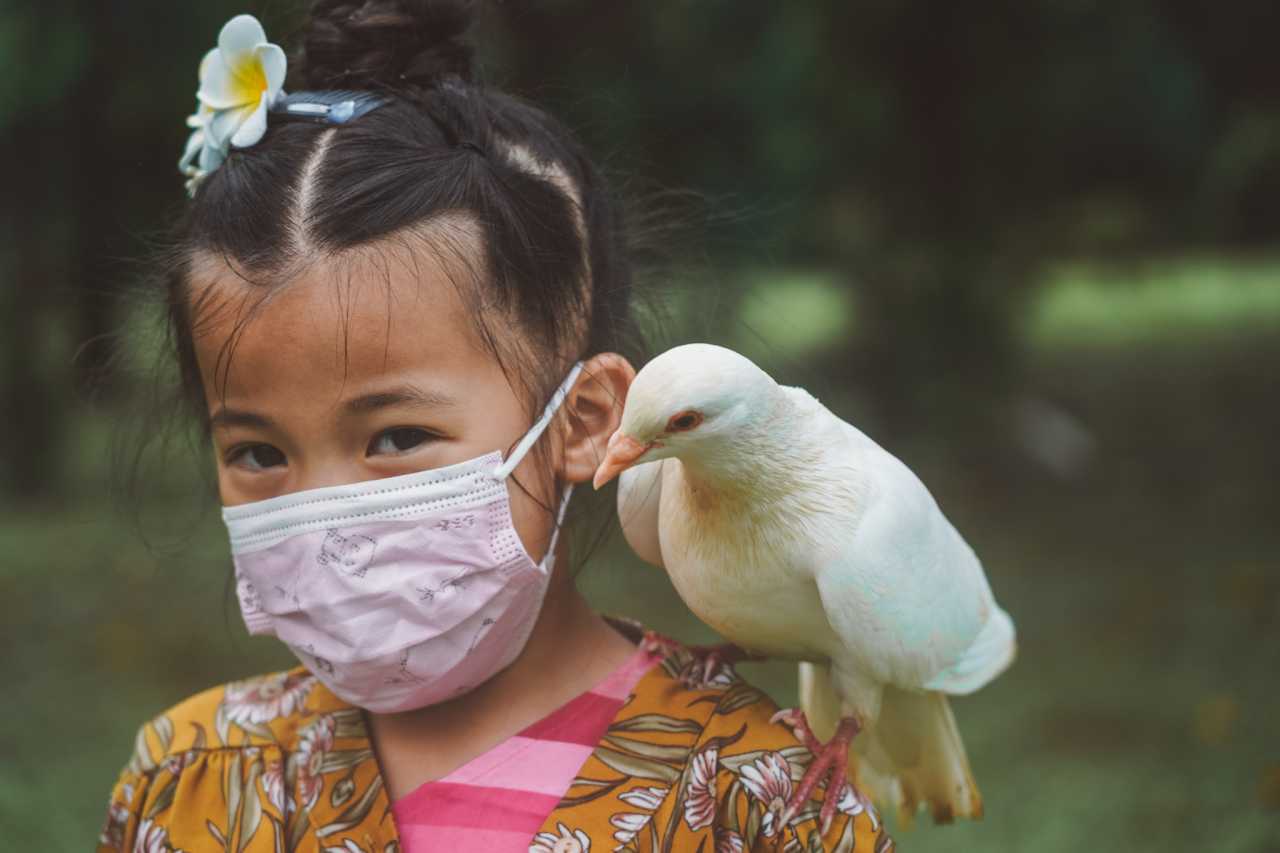
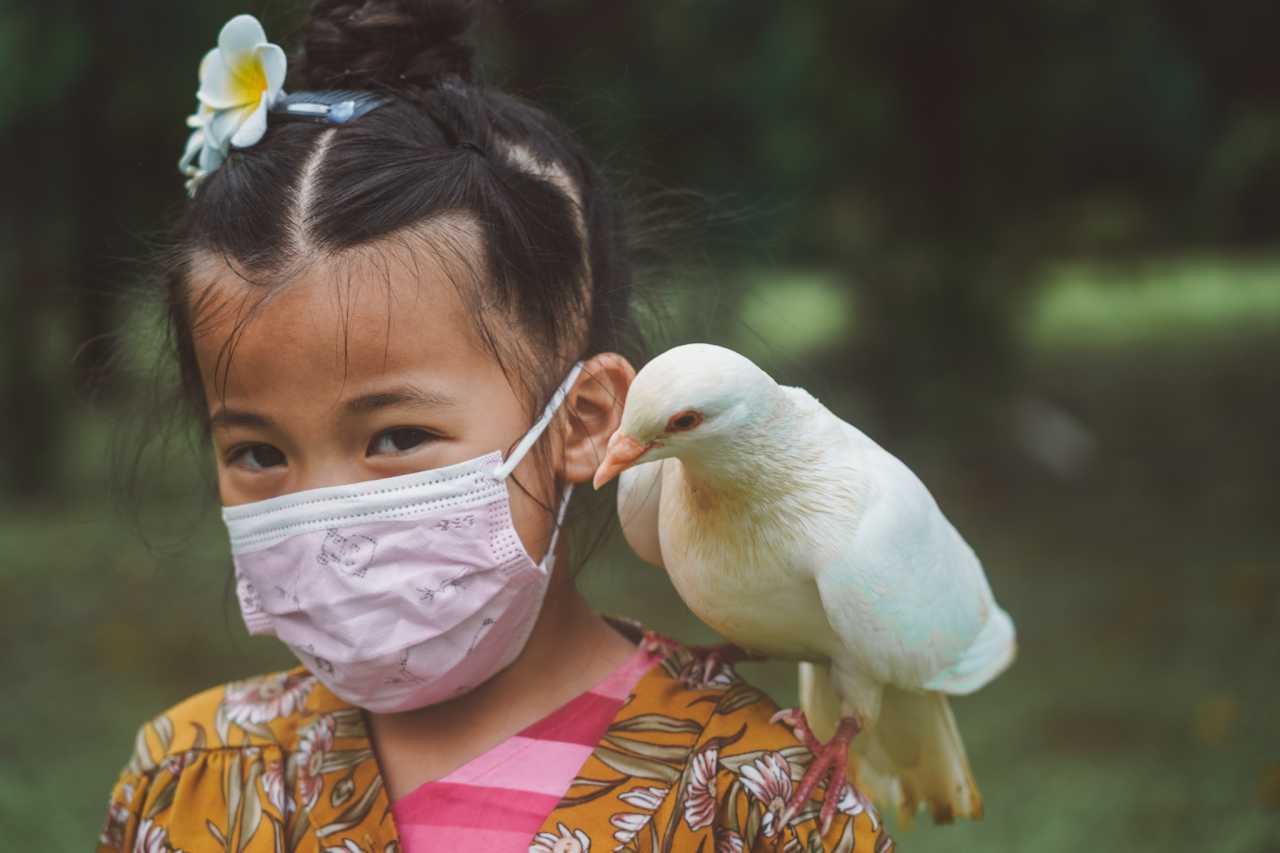
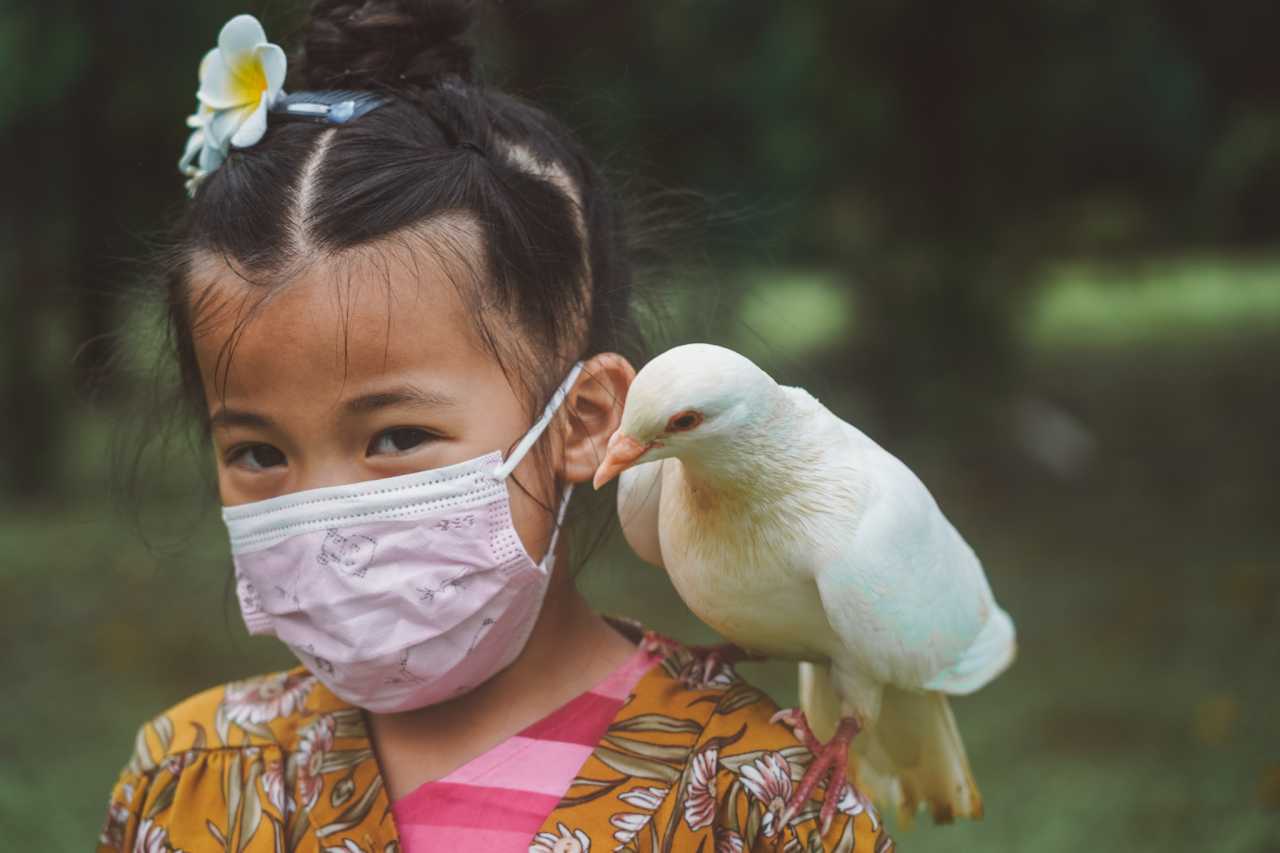
During a brief break in the rain, the birds seized the chance to frolic. A large flock of white doves huddled on the grassy roadside, like little white flowers scattered across a giant green carpet. They were greedy — if you had food, they'd fly onto your arms and shoulders, tilting their heads and cooing. One hand couldn't hold two doves — if two landed on you at once, a lively comedy would ensue, and as the middleman, you wouldn't know how to mediate, just letting them squabble and tussle.
Walking through the garden felt like stepping into a primeval tropical rainforest. Large raindrops would fall from towering trees, unexpectedly slipping into your clothes, sending a chill through your body. Unnamed flowers vied for attention with their vibrant colors. The air was heavy with humidity; each breath felt like inhaling moisture.
The sun didn't stay hidden for long. It soon reappeared, bringing light and heat. The overcast sky was swept clean, revealing Yunnan's unique blue, set against the lush green forests below — a combination of blue and green bursting with vitality.
The abundant rainwater created waterfalls between ponds at different levels. Clear streams of water flowed into the lotus pond at the lowest point. After blooming all morning, the water lilies were tired, curling up to rest on the surface. The trees along the bank stood like guards — among them were rambutans and tamarinds, their fruits like medals of honor for their diligent service.
While the ancient trees were impressive, they lacked artistic beauty. The trees in the Thousand-Leaf Garden were different — every one that entered had been pruned by skilled craftsmen into various shapes.
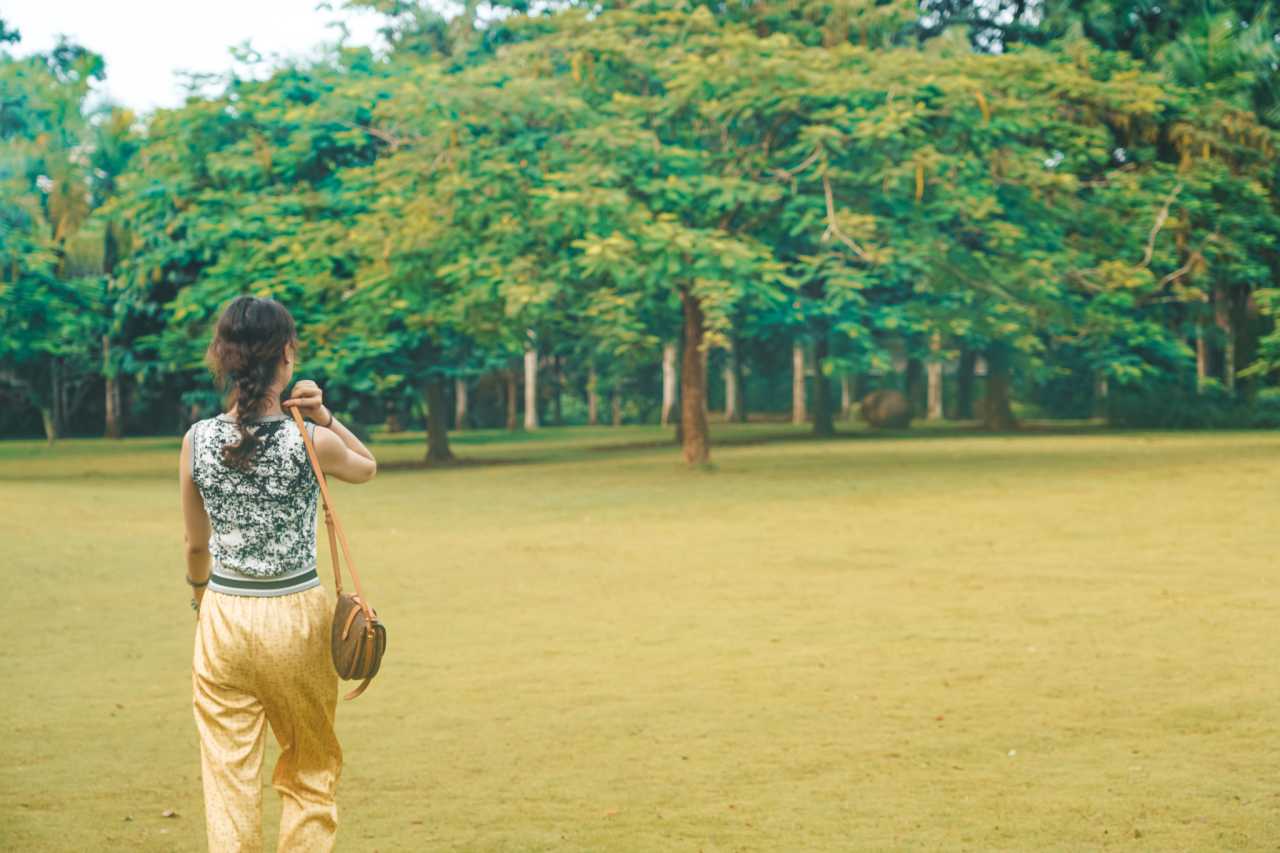
Passing through the Thousand-Leaf Garden, we reached a huge lawn, the locals' favorite spot. On weekends, they'd gather a few friends, bring camping gear, and hold a grand lawn party. Eating desserts and drinking beverages — this is the slow life of Jinghong that everyone dreams of.
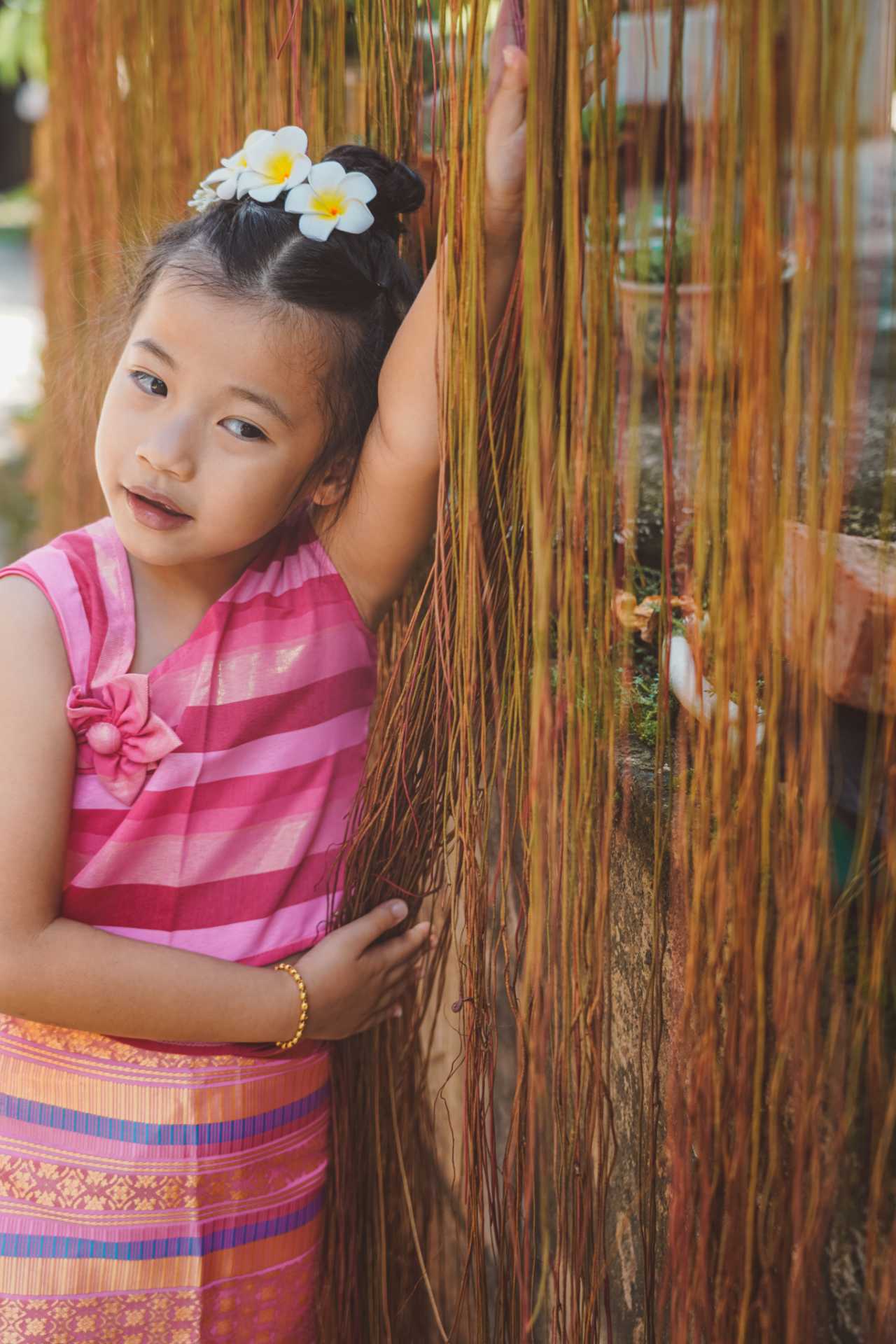
Our last stop was to visit a 200-year-old banyan tree. In fact, it was formed by two trees fused together, earning the lovely name "Intertwined Branches" (连理枝, lianli zhi). Apart from their roots, the two were indistinguishable. The hanging aerial roots formed a doorway that even an adult could pass through.
My daughter ran curiously under the tree and asked me to take a photo. Looking at the picture, I couldn't help but reflect: fifteen years ago, I had taken the same photo; fifteen years later, my child had taken one too. The tree hadn't changed, but the people had. What would it be like when my daughter visits this place again in another fifteen years? How interesting it would be to compare photos from then and now. If plants had memories, every tree in the flower garden would be a notebook, silently recording everything about past visitors. I don't remember them, but they remember me.
Grand Buddha Temple: Where Joy and Faith Intertwine
If you want to find a single spot that encompasses ethnic culture, faith, and rituals, look no further than the Grand Buddha Temple. As the name suggests, it houses the largest Buddha statue in Southeast Asia. The temple has a long history, built by a Dai king to commemorate his deceased queen. Built on a mountainside, the temple is visible from afar.
As soon as my daughter entered, she was captivated by the peacocks at the gate. As the Dai people's mascot, the beautiful peacock has an irresistible charm. Their feathers are a sapphire blue, shimmering with a metallic luster in the sunlight. Peacocks are gentle and allow visitors to pet them — if you offer some food, they'll get even closer, pressing their heads against your hand. Even with many tourists, the owner didn't try to overcharge, only asking for twenty yuan to print a photo, while allowing free photography. This shows how restrained the Dai people are under the influence of Buddhist culture.
Don't rush to check off sights — at the Grand Buddha Temple, you must participate in two special events: the Water Splashing Ceremony and the Peacock Release. Check the schedule for the nearest sessions and make sure to join in.
By the time we reached the Water Splashing Square, it was packed with people. Find a central seat quickly — the feast was about to begin. Everyone knows about the Dai Water Splashing Festival, but few know its origin. Legend has it that long ago, the Dai homeland was a beautiful place where people lived in harmony. But suddenly, a wicked fire demon appeared, not only destroying houses and crops but also kidnapping seven beautiful girls as his wives. The people were furious but helpless. Fortunately, the youngest girl was very clever. She first won the demon's favor, then tricked him into getting drunk. When he was unconscious, she pulled out his hair and strangled him with it. But although the demon's head was severed, it burst into flames, setting everything on fire wherever it rolled. In desperation, the girl hugged the head to her body, constantly dousing it with water to keep it from burning. And so, the kidnapped girls took turns holding the head for seven years until the demon finally died.
The Dai girls reenacted this story through dance, earning applause and cheers. The front-row audience also received the blessing of water from the Dai people. Then the host seized the moment, calling for volunteers to join the water splashing. At my daughter's strong insistence, the two of us joined in. Before the splashing began, there was a warm-up — as infectious music played, the lead dancer, sunglasses on and caring about nothing, started bouncing to "Dai disco." The entire audience, infected by the energy, began to move — men and women, young and old, those who could dance and those who couldn't, all swayed.
When the music ended, it was time for battle. The warriors took off their shoes, picked up containers, and slowly stepped into the pool. At the host's command, streams of water shot into the air, mixed with cheers and screams, instantly pushing the atmosphere to its peak. My daughter, never having seen such a wild scene, got stage fright and withdrew from the fight. But I, a thirty-something "old kid," became the main attacker, sending the children fleeing in panic. At first, everyone was a bit reserved, unsure how to approach strangers. But after the host organized "men vs. women," "left vs. right," and "front vs. back" battles, everyone was in a frenzy — if someone was standing in front of you, you just had to get them wet. After several rounds of fierce combat, I was exhausted, dragging my soaked body out of the pool.
The heavens seemed to want more, adding an unscheduled downpour of wind and rain, which also meant we missed the Peacock Release performance.
After the rain washed over the buildings, they looked cleaner and more solemn. The guardian vajra warriors on both sides of the steps had fierce, imposing faces. On either side of the stairs, multi-headed serpent deities were often seen — these are Naga snakes, legendary protectors of water. The nature of Naga snakes is close to human nature, with both good and evil. They can summon wind and rain and are invincible in battle. Good Naga snakes bring bountiful harvests; evil ones cause floods and droughts, bringing disaster. Touching the scales of the Naga snakes, we arrived at the main hall — red tiles, golden roof, each corner guarded by real dragons. Pillars and walls were adorned with various relief patterns, truly resplendent.
Passing through the main hall, the giant golden Buddha statue suddenly came into view. Its eyes were half-closed, its right hand with thumb and index finger touching in the teaching mudra; its left hand hung naturally, fingers pointing down, palm outward, symbolizing that the Buddha can fulfill the wishes of all beings. Flanking it were eighty arhats draped in kasayas, known as the "Eighty Arhats." Such grandeur inspired awe.
The carved beams and painted rafters of the Longevity Hall were mesmerizing. My daughter, seemingly influenced by the Buddhist architecture, joined her palms together and prayed silently.
After the rain, the air in the mountains felt like autumn. With the beginning of autumn, the rain had brought a chill to the air. As we took the sightseeing car to the summit, our bare arms broke out in goosebumps. The moist air was refreshing, like entering a natural oxygen bar.
The golden pagoda at the summit still gleamed even on a cloudy day, its many pointed spires piercing the sky. In front of the pagoda was a golden basin for collecting water, guarded by a golden dragon — "washing one's hands in a golden basin" to retire from the world seemed no easy task.
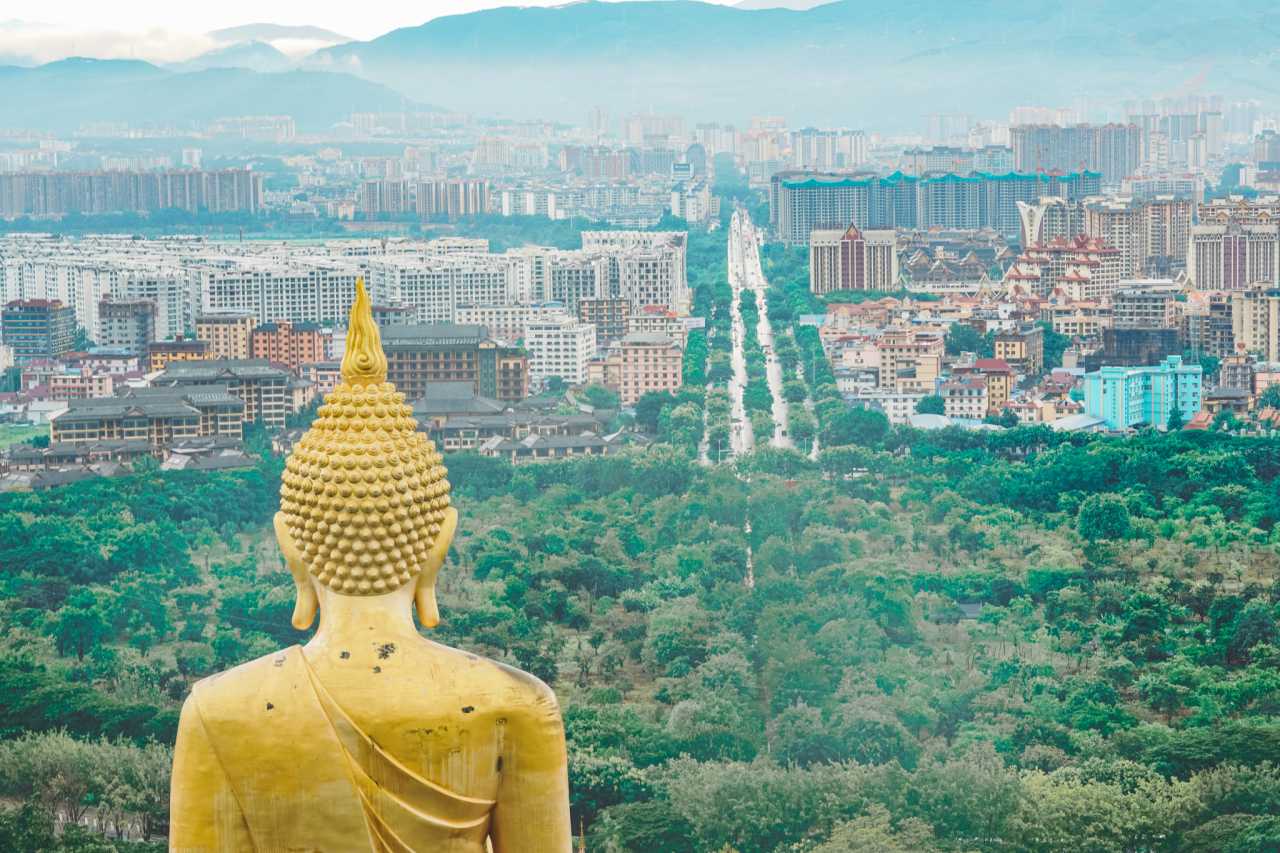
At the summit, you must walk the glass walkway, which offers a panoramic view of Jinghong city. With excellent visibility, I easily identified landmark buildings. Though Jinghong is not large, the houses are arranged in pleasing disorder — villas in the distance, high-rises farther away, all exuding an exotic charm. The Buddha statue faced Mengle Avenue, silently using its invisible power to protect this beautiful city.
Manting Park: The Elegance of a Royal Garden
In the Dai language, "Man" means village, and "Ting" means planting trees and flowers. So Manting Park is a village-style garden. The name may sound a bit rustic, but this garden, with over 1,300 years of history, was once the "Royal Garden of the Dai King." Today, ordinary people can also enjoy the leisure of the former royals.
This time, we took an unconventional route, starting our visit from the back gate. Behind Manting Park is the General Buddhist Temple (总佛寺, Zongfo Si). Though both are Buddhist temples, their styles differ — if the Grand Buddha Temple was grand and majestic, the General Buddhist Temple is elegant and refined. Before liberation, this was the holy site where the highest rulers and headmen of Xishuangbanna worshipped the Buddha. Even abbots from temples across the region would come here to pay homage and discuss scriptures.
Square golden pagodas stood on both sides of the bluestone path, leading to the main hall called "Weihan." The hall was dominated by gold, silver, and red — purple-red tiles on the roof, gold-painted beams and walls, and silver-decorated spires. The entire building shimmered with golden light, as if bathed in Buddha's radiance, bringing salvation to all beings.
Guardian vajra warriors stood in silver shrines. Up close, their faces were full of authority, conveying the solemnity and sanctity of Buddhism.
Every corner — the eaves, railings, and pagodas — was a sight worth savoring. Following the golden dragon handrails to the second-floor Grand Hall, we found a bronze Buddha cast by Thai artisans in Thailand, consecrated by the Thai Supreme Patriarch and attended by Thai royalty. This is the largest bronze Buddha in Xishuangbanna, symbolizing the unbroken lineage of Theravada Buddhism between China and Thailand since ancient times.
The main hall of the General Buddhist Temple is a perfect fusion of traditional Dai craftsmanship and modern architectural culture. Today, it stands as the largest and most magnificent building in the Theravada Buddhist region of Yunnan's borderlands.
Although Manting Park and the General Buddhist Temple are adjacent, once you enter the park, the scenery changes noticeably. The vegetation here is lush, green becomes the dominant color, with delicate white pagodas as subtle accents. The river god was collecting the heavenly rain, bestowing blessings on all things — so the calamus grew greener, the bamboos stood taller, and even the fish in the water swam more joyfully.
A pagoda I discovered by chance became my favorite building. Originally white, time had added black speckles, and with this decoration, it blended perfectly into the natural surroundings.
Ancient trees were adorned with red ribbons of blessings, making them special landmarks. We contributed our own ribbons as well.
Boats came and went on the Release Life Lake, but the fish were unfazed, poking their mouths out of the water to feed. As soon as someone threw food, they gathered in droves, creating a swirling storm of pushing and shoving.
Crossing a bridge, a patch of lotus flowers caught my eye. Though the blooming season was over, the lotus pods were still worth admiring. The dense lotus leaves made pedestrians look as if they were walking through a lotus pond.
Manting Park features two animal shows: one starring the adorable Asian elephants, and the other featuring mischievous parrots. Perhaps my expectations were too high, but the shows weren't as impressive as I'd imagined — the elephant missed an empty goal three times in a row, and the parrot's basketball shot went who knows where. But then I thought, with so many tourists every day and increased performance schedules, it's really tough on them. And we, as spectators, besides making harsh demands, sometimes wouldn't even buy snacks to feed them.
In a tropical rainforest climate, daily rain is a given. Today's downpour arrived on schedule. I love these short, intense rains — they bring coolness and are followed by gentle, post-rain sunshine. The sunlight filtered through the dense forest, casting shadows on the ground, giving form to the formless.
Glistening raindrops on lotus leaves seemed like nature's masterstroke, like round diamonds set on jade plates. A red dragonfly flew in, adding a splash of bright color to the scene. Seeing this, my daughter couldn't help reciting: "Little lotus has just shown its pointed tip, a dragonfly has already alighted on it."
The Dai King's Summer Palace looked especially beautiful after the rain. The sky was a clear, washed blue, and the golden buildings shone even brighter under the sun. The indoor vessels were exquisite, showcasing the wealth of Dai royalty. Outside the railing, I noticed a young photographer so captivated by the scene that he forgot to press the shutter — but I captured him in my lens.
Suddenly, I was drawn by the sound of elephant-foot drums. Following the sound, I found a grand welcome ceremony taking place in the square in front of the main gate. Dai girls held up colorful umbrellas, dancing the Peacock Dance. The girls in front dipped flowers in a silver bowl of water and sprinkled it on passing guests — this was their sincerest blessing for travelers from afar.
On the other side, young men of the Aini ethnic group laid out bamboo poles. Eight long bamboo poles were arranged in four parallel rows, opening and closing in patterns that changed with the rhythm of the music. Pretty girls, following the fast or slow tempo, nimbly and cleverly jumped in and out of the crossing poles — landing with one or both feet when the poles opened, then leaping up again before they closed, constantly changing steps and making graceful dance moves. Curious children wanted to try too. After several attempts, they finally succeeded, beaming with joy, and generously posed for photos with the Aini girls.
In front of the Premier Zhou Enlai Water Splashing Memorial Square, a troupe of performers reenacted the grand scene of the Dai King's procession. It was thanks to the efforts of older-generation leaders like Premier Zhou that we have the harmonious ethnic unity we enjoy today. We must cherish this hard-won ethnic bond and continue to promote it.
Gaozhuang: The Dual Charm of Day and Night
"Gaozhuang Xishuang Jing" on the banks of the Lancang River translates to "Nine Pagodas and Twelve Villages." Today, it's become the first stop for visitors to Xishuangbanna. It's arguably Jinghong's largest and most diverse night market, hailed as the "First Impression of Xishuangbanna." This is a unique lifestyle water market combining hotels, restaurants, shops, and stalls, integrating eating, drinking, fun, play, and entertainment — it has a down-to-earth vibe while also exuding exotic romance.
Many tourists only see Gaozhuang at night, unaware of what it looks like during the day. Entering through the main gate, we were greeted by majestic elephant sculptures on both sides, along "Elephant Avenue." Perhaps still recovering from a night of revelry, Gaozhuang hadn't woken up yet — there weren't many vehicles on the road, making it the perfect time for cycling. Renting an electric scooter by the roadside, we set off. Gaozhuang's signature Snoopy-style electric scooters come with an extra seat attached on one side, just enough for a family of three.
The Golden Pagoda Temple in the central area was our first stop. The Grand Golden Pagoda is Gaozhuang's tallest building, with a quadrilateral structure facing four directions, representing China, Thailand, Laos, and Myanmar. Behind the pagoda lies the famous Starry Night Market. During the day, it lacks its vibrant atmosphere, but the red-brick shrines on both sides — spots where dozens of people queue for photos at night — were now deserted.
We explored the popular restaurants and cafes in the tree-lined streets, and also checked in at the most luxurious "Mekong Jinglan" and the uniquely shaped "Pineapple Hotel." A gentle breeze brushed past our ears as we completely let go — this was the feeling of a real vacation.
By the time the afternoon sun lost its intensity, Gaozhuang began to stir. Vendors started setting up their stalls, laying out their goods. Hungover tourists emerged from their inns, looking for food on the streets. Traffic began to pick up — but wait, this wasn't the busiest time yet.
As night fell and the colorful paper lanterns hanging on the streets lit up, Gaozhuang's golden hour arrived.
The Grand Golden Pagoda transformed under the lights, appearing even more mysterious. The silver pagodas at its four corners made the central golden one seem especially towering. In front of the temple, devotees had placed candles, like lotus lanterns, their flickering flames dancing in the darkness. The silver Naga snake shimmered with jewel-like light.
Looking down from here, countless colorful umbrellas were open, each sheltering a small stall. It's said there are nearly 5,000 vendors here, their stall lights making the night market sparkle like a galaxy — hence the name "Starry Night Market."
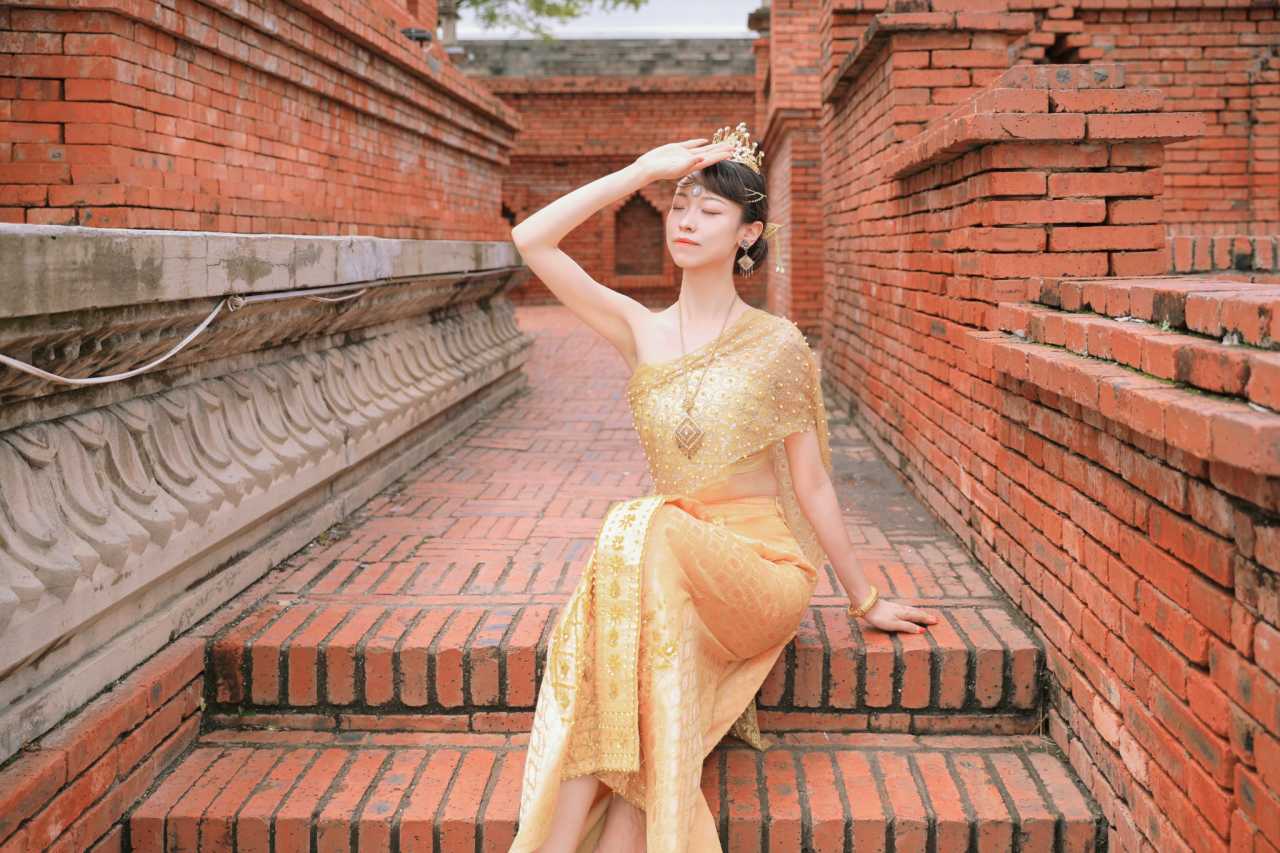
The goods were dazzling: Thai bracelets, little elephant sculptures, earrings made from leaves... truly exotic, making you want to buy everything on sight. Of course, there were also Dai-style costumes for sale — pick a style you like, add some gold and silver accessories, and in just a few minutes, you could transform into a beautiful Dai girl. In Gaozhuang, not wearing Dai clothing almost seemed to disqualify you as a tourist.
Besides shopping, there was plenty of food. Gaozhuang's culinary offerings encompass almost all Southeast Asian countries — Thailand, Vietnam, Myanmar, Laos — as well as Dai specialties like 米干 (rice noodles), 椿鸡爪 (pounded chicken feet), 香茅烤鱼 (lemongrass grilled fish), and 菠萝饭 (pineapple rice). Barbecue stalls were buzzing with activity, fragrant large pieces of beef and soft, sweet little corn ready to be served. The display tables also held many tropical vegetables I couldn't name.
Directly opposite the Grand Golden Pagoda stood a white elephant sculpture, beneath which was a stage with exciting performances waiting for visitors. Eating delicious food, watching beautiful performers, listening to music — a triple treat for the taste buds, eyes, and ears. It was pure indulgence.
Behind the Starry Night Market, there's a bridge, a favorite spot for the "photo shoot army." The bridge was divided in two by a rope: one side for pedestrians, the other reserved for photography. Boats passed under the bridge, their twinkling lights cutting through the water's surface, creating ripples...
You should also read:
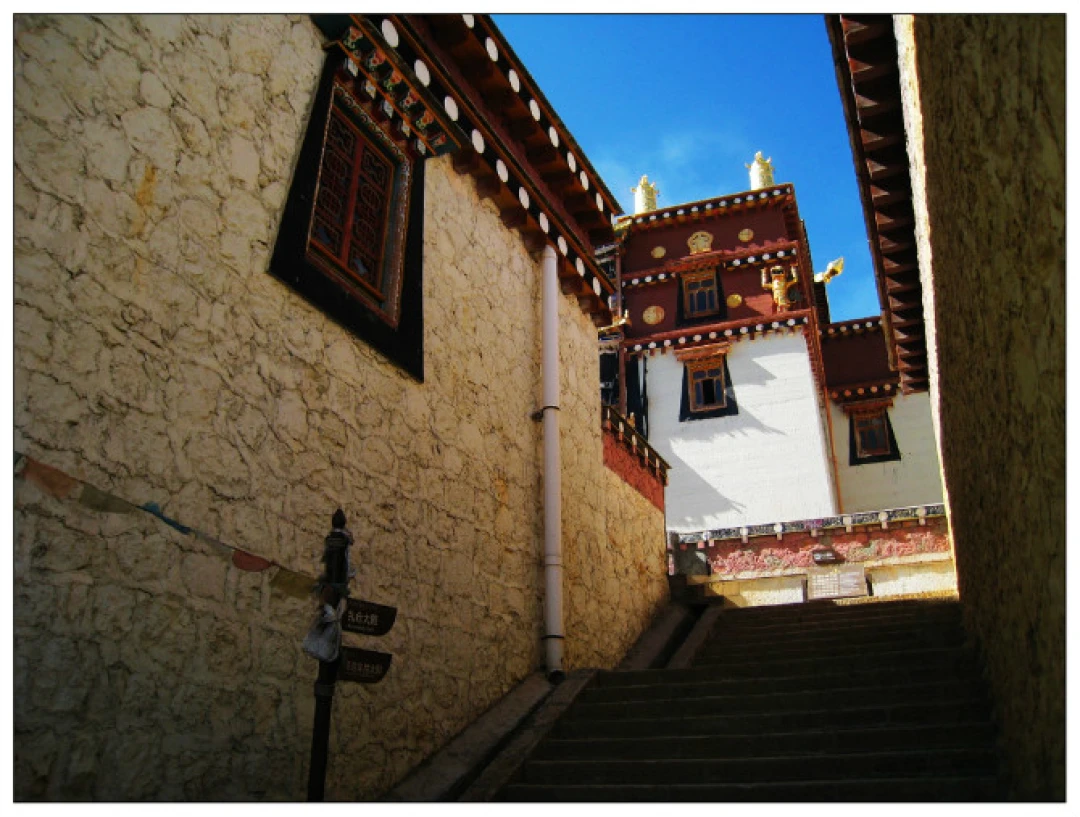
Yunnan's Colorful Clouds: Touching Shangri-La — A Dialogue with the Sky
Yunnan's Colorful Clouds: Touching Shangri-La — A Dialogue with the Sky If you ask me where in China is closest to heaven, I would tell you without hesitation: Shangri-La. The name itself carries a mysterious magic, as if every syllable whispers tales of distant lands.
Continue reading...
Meili Snow Mountain: A Soulful Journey of Dialogue with the Sacred Mountain
Meili Snow Mountain: A Soulful Journey of Dialogue with the Sacred Mountain Prologue: When Travel Becomes Faith Some journeys are forgotten as soon as they end. Others carve themselves into your bones. The trip to Meili Snow Mountain belongs to the latter. Waking up in…
Continue reading...
Idle Clouds in Autumn, a Moonlit City: A Slow Travelogue Through Lijiang and Shuhe
Idle Clouds in Autumn, a Moonlit City: A Slow Travelogue Through Lijiang and Shuhe When the autumn wind brushes across the ancient city's eaves, when sunlight spills onto the mottled cobblestone streets, when the melodies of folk songs mingle with the aroma of plum wine…
Continue reading...