Xishuangbanna: A Tropical Dream Across the Border, A Spontaneous Journey to an Exotic Land
Xishuangbanna: A Tropical Dream Across the Border, A Spontaneous Journey to an Exotic Land
On the first spring after retirement, my wife and I finally set down the heavy burden of decades of work. After celebrating the Lantern Festival at our hometown, we drove back to Shenzhen, just in time for our daughter's brief break between job changes. With our family of three finally together, we decided to take advantage of the post-Spring Festival lull in tourism and head to Xishuangbanna—a place warm as spring, shrouded in mystery.
To be honest, my impression of Xishuangbanna was still stuck on those TV images of Dai bamboo houses and the Water Splashing Festival. It wasn't until our plane landed at Gasa International Airport and we stepped out of the cabin, hit by a wave of humid air mixed with the scent of unknown flowers, that I truly realized—we had actually arrived at this tropical borderland bordering Laos and Myanmar.
Arriving in Xishuangbanna: From Airport to Gaozhuang, Every Step Feels New
Our plane took off from Shenzhen at 8:50 AM, and just after noon, we set foot on Xishuangbanna's soil. The airport isn't large—it takes only about five minutes to walk from the tarmac to the ride-hailing pickup point. But our driver kept us waiting over twenty minutes. When he finally arrived, he apologized profusely, explaining that he had just dropped off a group of guests at their hotel and got stuck in heavy traffic.
On the drive into the city, this enthusiastic driver became our first "tour guide." He told us that Jinghong, the capital of Xishuangbanna, administers two counties—Menghai and Mengla—and that most of the scenic spots are scattered around Jinghong. During this season, temperatures range from 20 to 30 degrees Celsius. While the days are hot, the mornings and evenings are surprisingly cool, making for a very comfortable experience. When it came to food, his eyes lit up as he recommended pineapple sticky rice, lemongrass grilled fish, and Dai-style haoluosuo (a sweet glutinous rice cake wrapped in banana leaves), insisting these were must-try dishes in Xishuangbanna.
As we crossed the Xishuangbanna Bridge, the driver pointed out the buildings along the river. "That's the Peacock Building—shaped like a peacock spreading its tail. That round one is called the Pineapple Hotel, a local landmark. If you go to the Starry Night Market tonight, it's right over there..." His words carried a sense of pride in his hometown, and they filled us with anticipation for the days ahead.
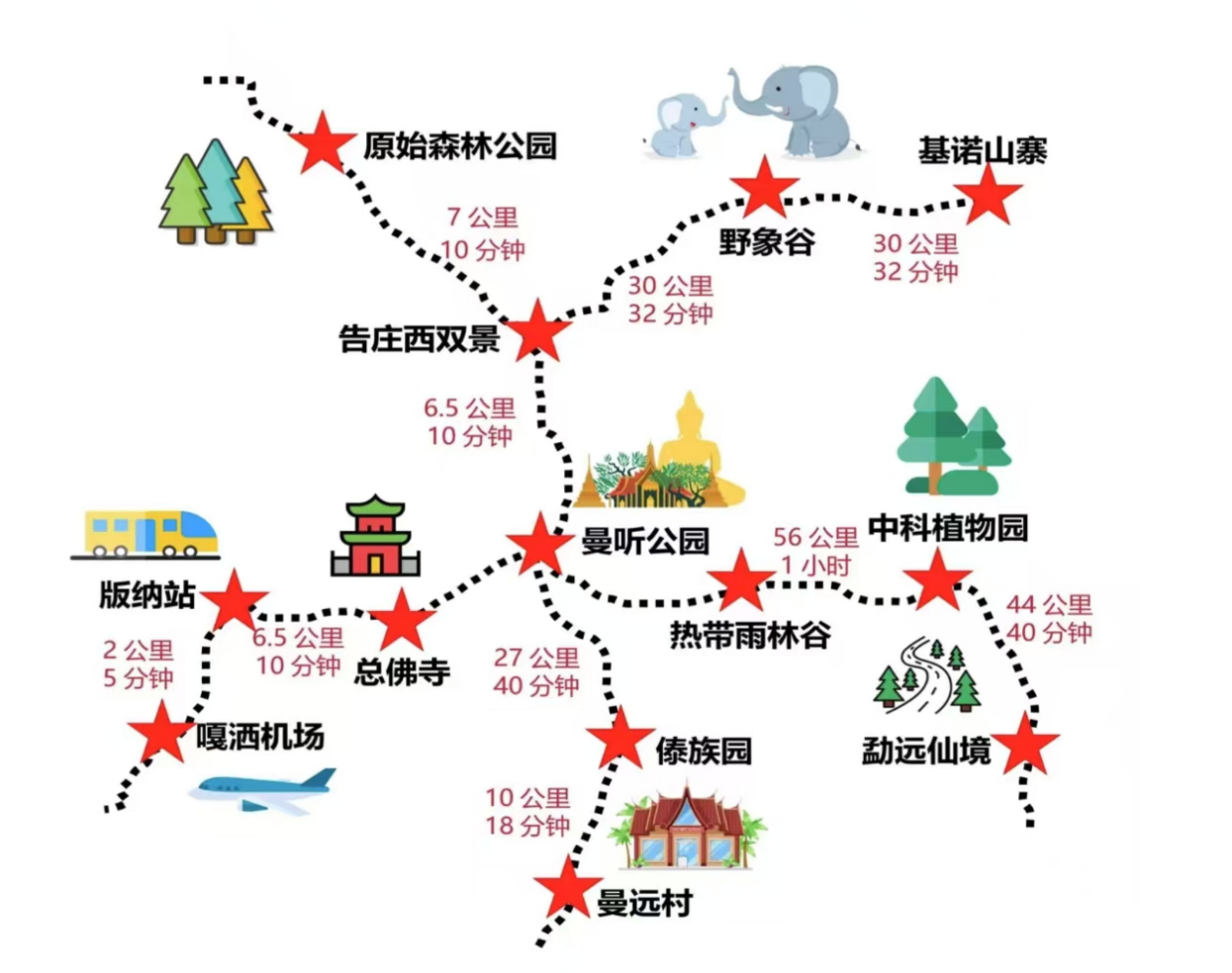
We had booked a hotel in Gaozhuang Xishuang Jing, the main tourist hub of Jinghong. It's within easy reach of the Starry Night Market, Manting Park, and the General Buddhist Temple. By nearly 1:00 PM, we arrived at the hotel, but since check-in time hadn't arrived yet, we stored our luggage and set off to grab some food.
First Meal: Surprises and Traps—A Taste of Dai Cuisine
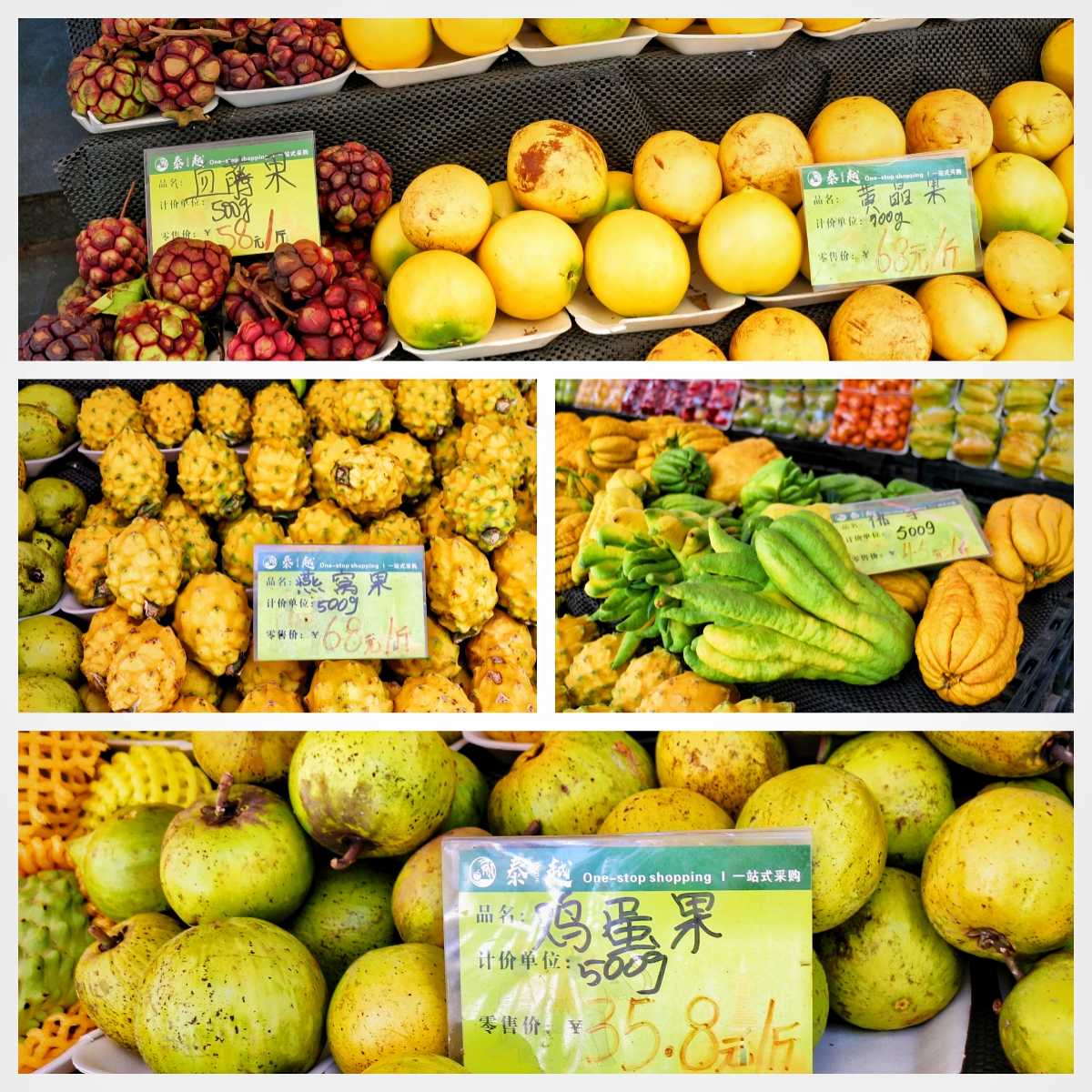
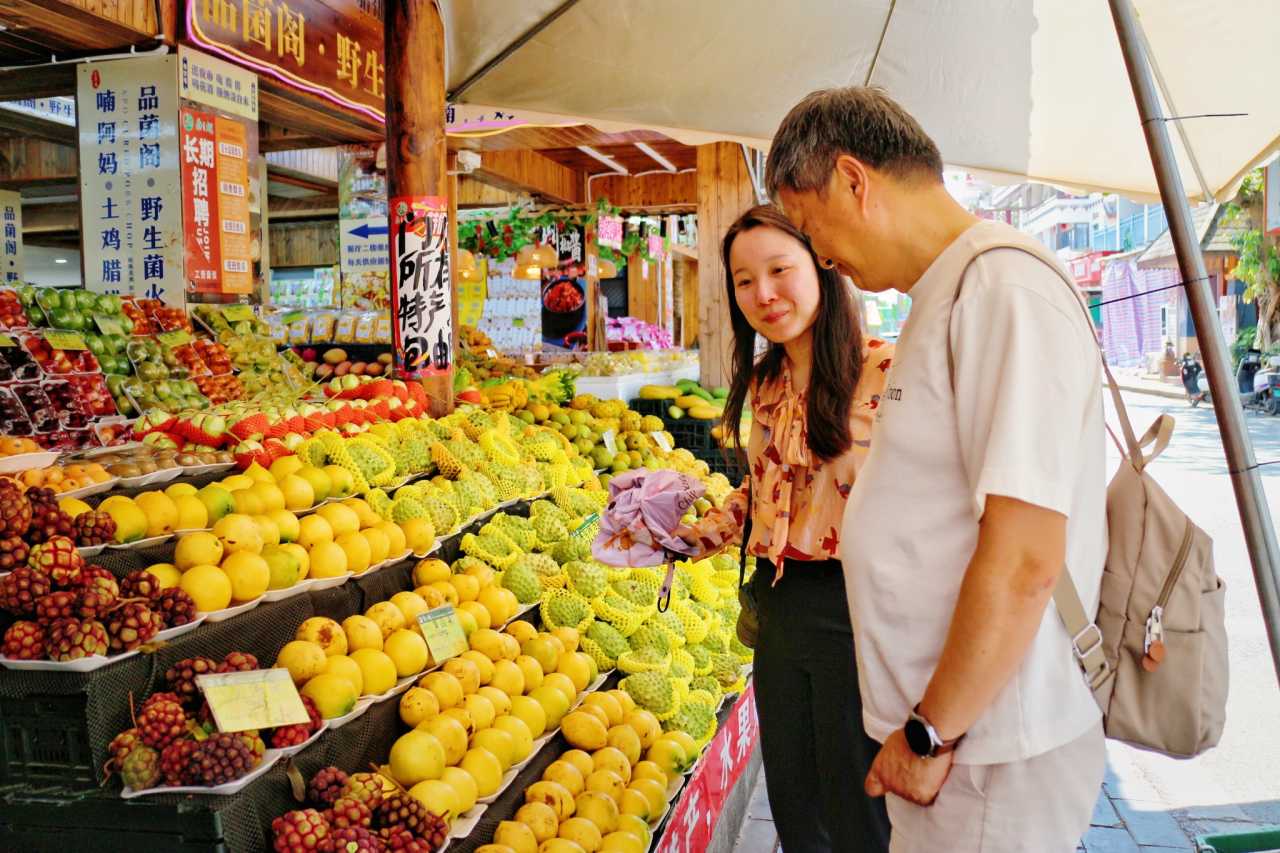
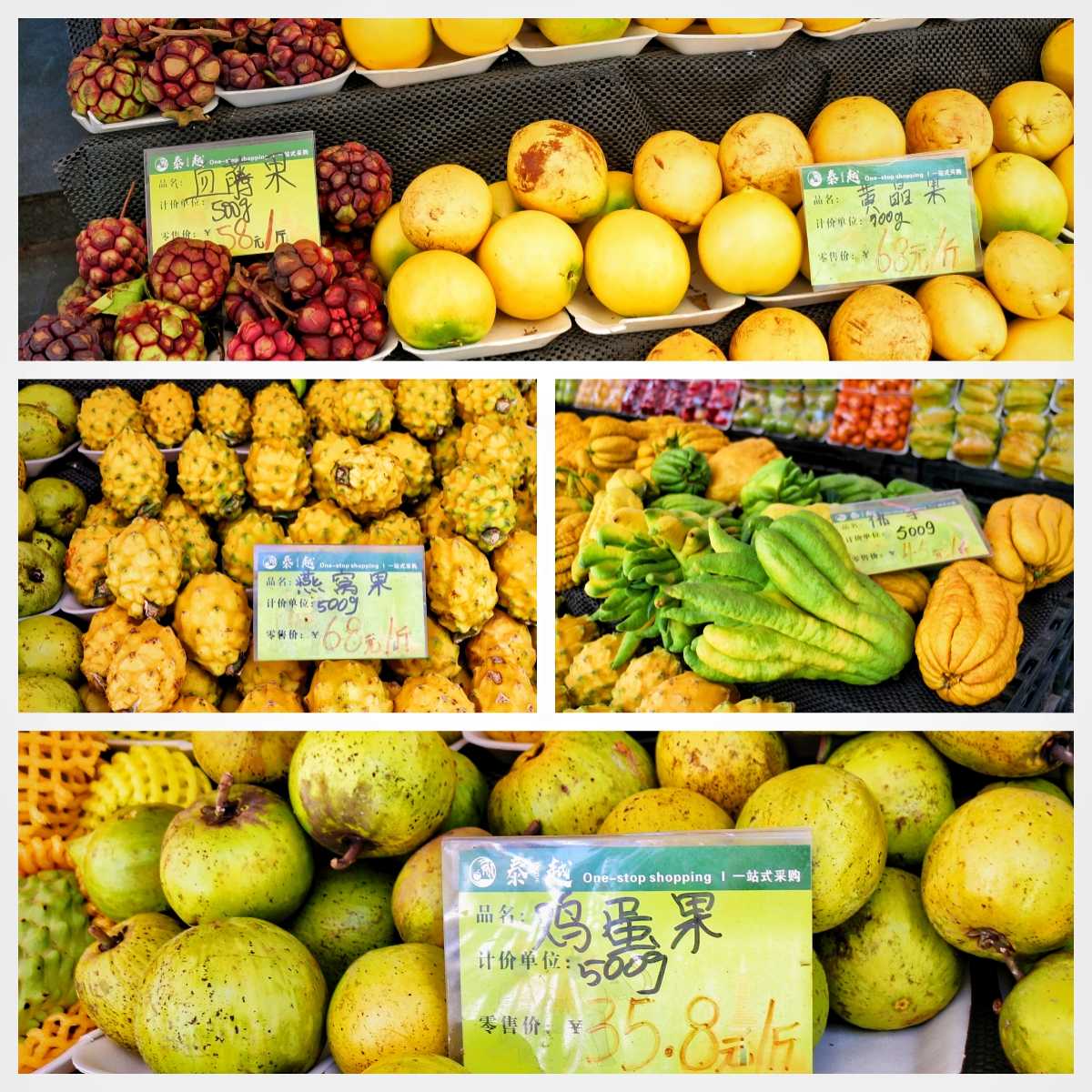
Our daughter found a restaurant called "Dai Princess" on Dianping, just over 400 meters from the hotel. As we stepped out of the hotel, the tropical fruit stalls lining the street immediately caught our attention. Piles of fruit, half of which I couldn't even name—some spiky, some horned, others so brightly colored they seemed unreal—lined the road. We walked and talked about coming back to buy some, our pace unconsciously quickening.
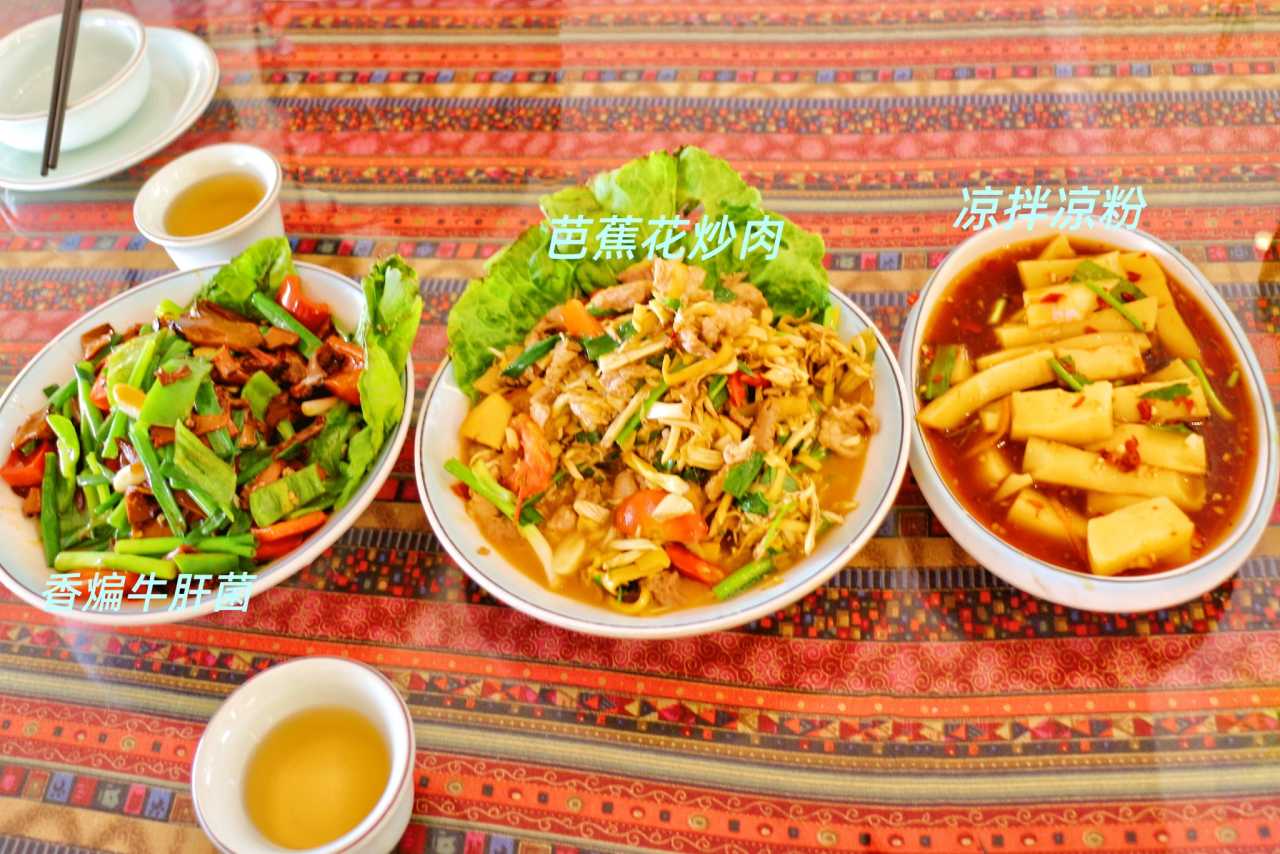
The "Dai Princess" restaurant wasn't large, but at midday, every seat was taken. Nearly every table had a "Peacock Feast"—a Dai-style set meal arranged in the shape of a peacock. We hesitated for a moment, then decided to order à la carte. After all, there were only three of us, and the set meal might not suit everyone's taste.
Our daughter quickly placed the order: Dai-style haoluosuo, cold rice noodles with dressing, lemongrass grilled fish, stir-fried banana flower with pork, and sautéed porcini mushrooms. Total: 196 yuan. The haoluosuo was a sticky rice cake wrapped in banana leaves, steamed with sugar syrup and glutinous rice—a kind of dessert. As soon as it hit the table, my wife couldn't resist taking a bite. She didn't stop until the banana leaf had been licked clean. The cold rice noodles were tangy and refreshing, a classic Dai-style dish. The sautéed porcini mushrooms were incredibly savory, and our daughter polished them off in no time. The banana flower stir-fry, however, was unremarkable—the only dish left unfinished.
The last dish to arrive was the lemongrass grilled fish, made with local tilapia. But the fish was so small that there was barely any meat to eat. I stared at it for a long time before realizing it was the same fish Cantonese people call fushouyu (tilapia, also known as African crucian carp). The preparation was different, but I couldn't really taste anything special.
The Fruit Stall Lesson: Some Traps You Have to Fall Into
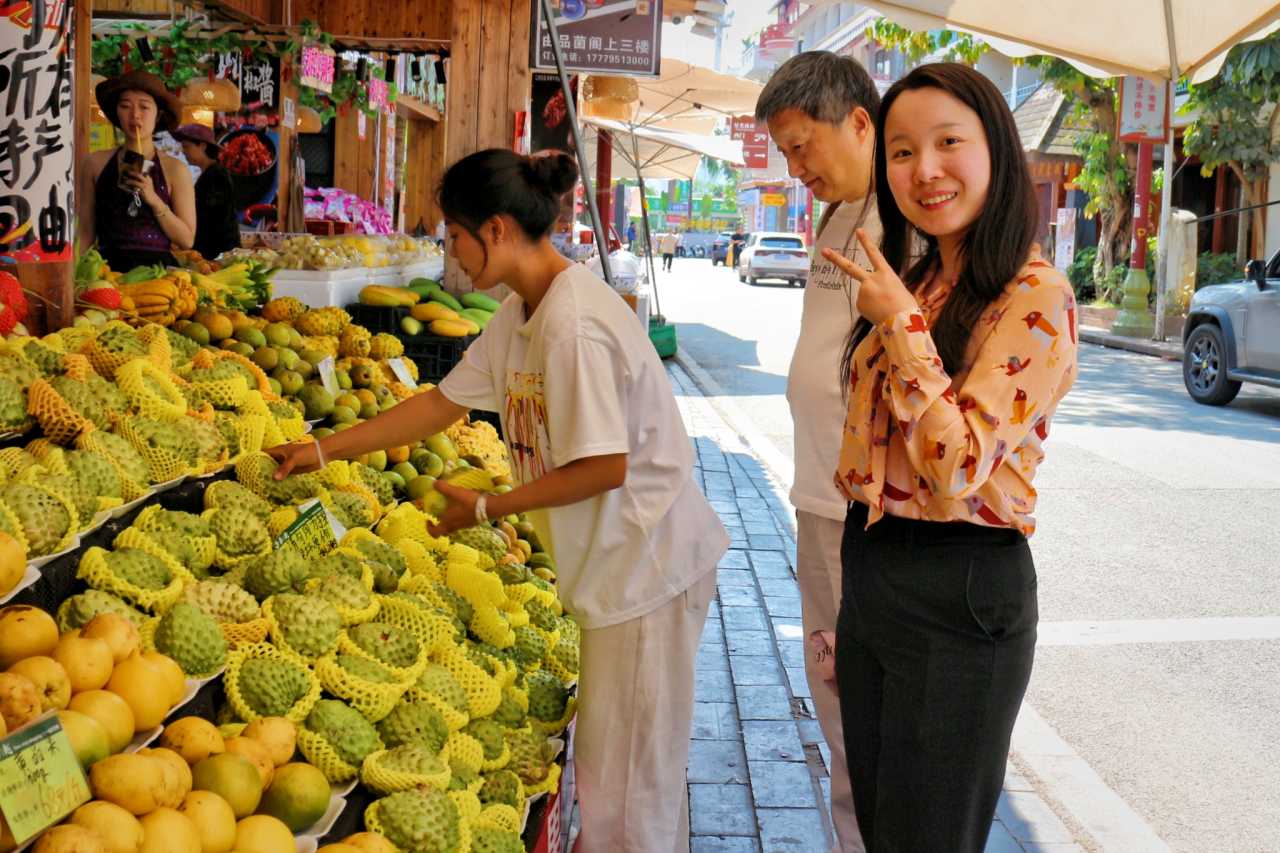
On our way back to the hotel, we were drawn to a fruit stall called "Thai-Viet 13." The staff enthusiastically introduced the flavors and origins of various fruits. We were like country bumpkins visiting a grand garden—touching this, looking at that—and finally decided to buy a little bit of everything.
"If it's good, we'll come back for more in the next few days," we naively told the staff, asking them to pick the best ones. As it turned out, this was a classic tourist trap. Six peeled mini pineapples cost 30 yuan—more sour than sweet, nowhere near as good as the ones we'd had in Thailand. A "Fúwá" (a type of fruit) cost 20 yuan each—it tasted like a human-shaped cucumber, not even as fresh as a regular one. An egg fruit (canistel) cost 16.9 yuan—sticky, but passable. Three "top-grade" dragon fruit (yellow pitaya) cost 107.7 yuan—watery and bland. A blood plum cost 15.3 yuan—indescribable. A golden fruit cost 48.4 yuan—I forgot what it tasted like as soon as I finished it. A Thai cream custard apple cost 26.5 yuan—the only one everyone agreed was good. The worst was the "top-grade" Thai golden pillow durian, which cost 188.5 yuan—absolutely terrible. Our daughter said it was the worst durian she'd ever eaten.
All these fruits cost us 453 yuan—a clear rip-off. But at the time, we thought we'd struck gold. The three of us happily carried our bags of fruit back to the hotel. It wasn't until later that evening, when our daughter grimaced and said the durian was so bad she wanted to throw it away, that we realized—buying so much fruit right in the tourist hub was practically begging to be taken advantage of.
Manting Park and the General Buddhist Temple: A Journey Through Time in the Dai King's Royal Garden
While my daughter and I took a nap, my wife went to pick up the rental car we'd booked. According to our plan, the afternoon itinerary was to visit Manting Park and the General Buddhist Temple. Manting Park is only a ten-minute drive from the hotel. In the Dai language, "Manting" means "Royal Garden." It was once the private garden of the Dai kings, often called the "soul landmark" of Xishuangbanna.
By nearly 4:00 PM, we arrived at the park. The sunlight was perfect, the weather pleasant, and our spirits were high. After buying tickets and entering, the strong Dai atmosphere enveloped us. The park features the Royal Elephant Lake, the Dai King's Palace, a Peacock Garden, a grassy square, and it connects to the General Buddhist Temple—the tallest Buddhist structure in Xishuangbanna. We wandered aimlessly around the park, stopping occasionally to take photos.

Our daughter first bought a trendy Lao-style iced coffee—served in a paper bag with a straw, giving it a nostalgic, "bitter-sweet" vibe. After a few sips, she decided it was mediocre and tossed it in the trash. Then she bought a stylish ice cream from a stall run by a vendor from Northeast China, holding it up with delight.
Before we knew it, we reached the General Buddhist Temple. This is the "head temple" of Theravada Buddhism in Xishuangbanna, with a status comparable to the Potala Palace in Tibetan Buddhism. Throughout history, Dai kings held major ceremonies here—coronations, weddings, funerals—and the temple once housed a relic of the Buddha's tooth. The entire main structure is built from century-old teak wood, using not a single iron nail, showcasing traditional Dai woodworking techniques. The architecture reminded me of temples in Thailand, though not as opulent. We wandered around, finding angles for photos, capturing some great shots while the sunlight was still good.
Continuing on, we crossed a small, ethnic-style bridge that spanned a section of the Lancang River. The Lancang River originates in the Tanggula Mountains, flows through Tibet and Yunnan, and after entering Xishuangbanna, it becomes the upper reaches of the Mekong River. It runs through the heart of Jinghong, stretching about 150 kilometers within Xishuangbanna before flowing into Myanmar, Laos, Thailand, Cambodia, and Vietnam.
Finally, we arrived at the Lotus Pond—the legendary bathing place of ancient Dai princesses. The lotus flowers in the pond symbolize "purity and good fortune." This is also one of the most naturally scenic spots in the park, often crowded with tourists in colorful Dai costumes taking photos. We were getting tired, so we decided to head back to the hotel to rest, planning to explore Gaozhuang Xishuang Jing and the Starry Night Market in the evening.
Starry Night Market: The Bustling World Under the Buddha's Gaze
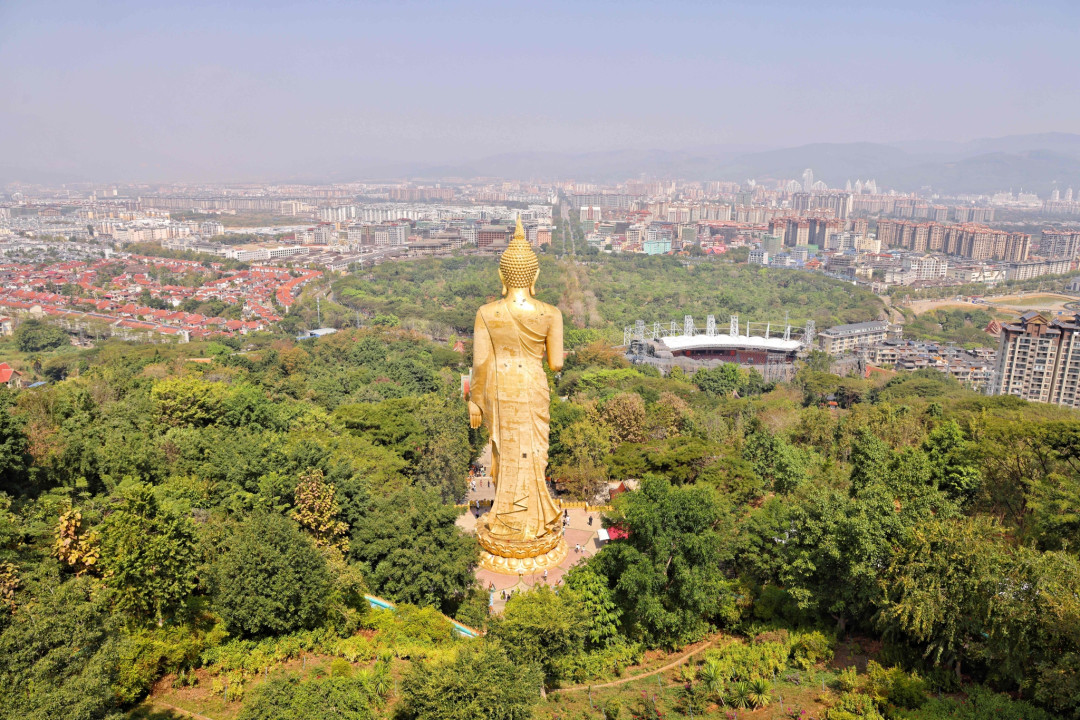
From the hotel, it was a short drive to Gaozhuang Xishuang Jing—about ten minutes, despite some traffic. The navigation landmark for Gaozhuang Xishuang Jing was right below the giant Buddha statue, and the roadside was already packed with cars. A security guard came over to greet us. My wife paid 20 yuan for parking, and he guided us to a naturally good spot around the corner.
It was nearly 6:30 PM, and the market vendors were starting to set up their stalls. At the entrance, under the giant Buddha, red walls created a striking atmosphere, attracting many people dressed in elaborate costumes for photos. We joined the crowd, snapping a few pictures of our own.
Then came our daughter's favorite part: the food. We wandered around, sampling a variety of snacks. Ali Baba corn cakes cost 10 yuan each—rich, pure corn flavor, very chewy. Dried yogurt cost 25 yuan a cup—firmer than jelly, with a strong milky taste, but we only found it once. Stuffed tofu (wrapped, then fried) cost 15 yuan a serving—crispy on the outside, soft on the inside, full of bean flavor. It became my favorite; I ate it several times that evening. Vietnamese spring rolls cost 20 yuan a serving—the rice paper wrappers were fragile, but the dipping sauce made them tasty. Mini thumb-sized corn cost 10 yuan for six—tiny, but tasted like regular corn. Bamboo tube sticky rice cost 15 yuan each—infused with the fragrance of bamboo, my wife loved it. Grilled milk fan (a kind of cheese curd) cost 15 yuan each—rich, cheesy flavor, our daughter's favorite. She ate it several times that night and worried she wouldn't find it again back in Shenzhen. Later, she searched online and found that most Yunnan restaurants in Shenzhen serve it, so she relaxed.
Passing a drink stall, our daughter suddenly craved beer. She discovered that beer paired perfectly with the grilled milk fan. "No wonder foreigners love beer with cheese," she mused. "This is a match made in heaven."
After eating and drinking our fill, we wandered down a random branch of the market. As night deepened, the bustling market under the watchful gaze of the giant Buddha felt strangely surreal. The scenery along the Mekong River was even more enchanting—the beautiful Peacock Building in the distance, and the yet-to-open Six Kingdoms Water Market nearby. Against the last traces of sunset, the blue sky and river water were both strikingly beautiful. We kept walking until we were too tired to go on, then returned to the hotel.
Tropical Botanical Garden: A Nature Walk in the Earth's Green Lung
The next day, we headed to the Xishuangbanna Tropical Botanical Garden of the Chinese Academy of Sciences. This was the longest drive of the trip—over 60 kilometers, about an hour. At 7:30 AM, we had breakfast at the hotel restaurant. The hotel corridor had an open-air design, with a view of the blue pool below and a glimpse of the Peacock Building in the distance. Sunlight streamed through the palm leaves, giving everything a lazy, tranquil feel.
Breakfast was a set meal. We chose the minced pork rice noodles. The server quickly brought out the full spread: appetizing minced pork noodles, flower-shaped pastries, an egg, sweet potatoes, corn, pickled vegetables, stir-fried cauliflower, and a small portion of fruit—generous without being excessive.
The botanical garden is located in Mengla County, with a typical tropical rainforest climate. The park sits against a mountain and faces the Lancang River, with fresh air and a natural environment. It houses over 15,000 species of higher plants, accounting for one-third of China's tropical plant species. Given its reputation as the "Earth's Green Lung," we decided not to buy round-trip electric cart tickets and instead walked, hoping to fully experience the harmony between humans and nature.
Once inside, we were immediately captivated by the pristine natural surroundings. The bougainvillea blooming on both sides of the bridge at the entrance felt familiar and nostalgic to us, residents of Shenzhen. The flowers were so exuberant that many had fallen on the bridge, and visitors picked them up to tuck into their hat brims, creating a lovely scene. After crossing the bridge and rounding a corner, we entered the heart of the botanical garden. The air was filled with a faint, pleasant plant fragrance—indescribable, but instantly uplifting.
We walked slowly, savoring the nature around us, trying to capture its essence with our cameras. Passing through a grove of fir trees, our daughter suddenly felt inspired. We spent over half an hour there, creating a series of clean, minimalist photos.
Eventually, we reached an electric cart stop, which was also a concentrated area of exotic plants and flowers. Suddenly, the crowd thickened. We overheard several tour guides explaining the stories of dancing grass and mimosa plants. One guide even sang enthusiastically to demonstrate how the dancing grass would sway to the music. We took some photos of tropical flowers, read a few scientific explanations, and then, feeling hungry, began our walk back.
A Five-Star Lunch: The Most Expensive Meal, But Also the Most Worth It
Lunch was our daughter's choice. She found a highly-rated restaurant on Dianping—a perfect 5.0 score. It was located in a complex of Dai-style buildings we had seen from the bridge earlier, a Chinese restaurant in a five-star hotel, offering classic Dai cuisine.
At lunchtime, the restaurant was nearly empty. While waiting for the food, my wife and our daughter explored the hotel's public areas. They snuck an apple from the gym, which they claimed was exceptionally sweet. About fifteen minutes later, the dishes started arriving. True to the five-star standard, although the prices were steep, every dish was excellent. I barely had time to take photos before everyone was digging in.
The Dai-style crispy moss rolls were wonderfully crunchy, with a faint, earthy moss flavor—though a bit salty. The grilled beef tendon with chili was gone as soon as it hit the table. The Dai-style grilled fish, made with local tilapia, was surprisingly delicious. The Dai-style grilled bamboo shoots with dipping sauce were simply perfect. The coconut sticky rice with mango was decent—my wife's favorite, so she finished it all. The total came to 690 yuan—the most expensive meal we had in Xishuangbanna. But everyone agreed it was worth it, great value for the quality.
Wild Elephant Valley: An Unexpected Encounter with Asian Elephants
After lunch, we drove to Wild Elephant Valley. The drive took about an hour. Our daughter and I napped in the car, leaving my wife to handle the driving. Wild Elephant Valley is located on a gentle slope at the edge of the tropical rainforest. It is China's only eco-tourism attraction themed around Asian elephants, with a forest coverage rate of over 90% and a rich variety of tropical plants and small wildlife.
We arrived around 3:00 PM. Entering through the North Gate, we planned to walk to the South Gate, visit the elephant show, Butterfly Kingdom, Orchid Garden, and then take the cable car back to the North Gate. At the entrance to the Orchid Garden, a free guide offered to show us around. Just as we were about to follow her inside, she glanced at her watch and asked if we had seen the elephant show. If not, she suggested we hurry—the next show was starting in five minutes.
So, to catch the elephant show, we ran all the way, barely noticing what gardens we passed. We had no chance to encounter any wild Asian elephants. Out of breath, we finally reached the area near the South Gate, where a large crowd had gathered. We squeezed through just as the show was beginning.
In the center of the performance area, the elephants obediently followed their trainers' commands—using their trunks to spray water, eat watermelon, and spray water at the audience for laughs. We also watched an "elephant doctor" measure an elephant's height, weigh it, and check its teeth. Children eagerly answered questions about wild elephants to win prizes. The show lasted about half an hour. When it ended, the host encouraged everyone to buy baskets of fruits and vegetables to feed the elephants.
My wife happily bought a basket of vegetables and competed with our daughter to feed the elephants. According to them, an elephant's trunk is incredibly strong—not just for curling things, but also for sucking them in. It was impossible to outpull the elephant. The basket of vegetables was quickly finished between the two of them.
We left the performance area and started walking back, hoping to see what else Wild Elephant Valley had to offer. First, we visited the Butterfly Garden, a mesh-enclosed ecological pavilion housing over 300 species of butterflies, including some rare ones. We even saw the process of caterpillars turning into chrysalises and then emerging as butterflies. Next, we passed the Snake and Lizard Garden, briefly glancing at giant pythons, snakes, and lizards. Along the way, we saw various caged animals we couldn't identify—it felt a bit like a zoo.
According to our original plan, we would walk from the North Gate to the South Gate, then take the cable car back. This aerial cable car is said to be a sky corridor through the scenic area, offering panoramic views of the tropical rainforest. Unfortunately, when we reached the cable car station, we were told the last car had already departed. So we had to queue for a shuttle bus instead, returning to the North Gate around 5:30 PM. We then drove back to the city.
Riverside Night Market: The Local Vibe
Since we had visited the Starry Night Market the night before, we decided to cross the river and try the more authentic Riverside Night Market. Compared to the Starry Night Market, this one had more handmade crafts and a stronger local, everyday atmosphere. Locals, we were told, mostly come here.
Our daughter, persistent as ever, ate three grilled milk fans and drank a bottle of beer. There were also some snacks and fruits we hadn't seen the night before, and the prices were more reasonable. The grilled milk fan was still 15 yuan each, same as before, but the flavor was richer. The beer was 12 yuan a bottle, 6 yuan cheaper than the night before. Grilled dried beef (similar to beef jerky) cost 16 yuan a serving—soft yet slightly chewy, very tasty. Jabuticaba (Brazilian grape) cost 30 yuan per catty—sweeter than regular grapes, and it disappeared quickly after we bought it. Coconut egg (a whole soft-shelled coconut) cost 15 yuan each—a trendy food, basically the inner soft shell of a coconut peeled off whole. It had a light, fresh fragrance, and after drinking the coconut water, you could eat the entire soft shell. Yunnan potato pancake cost 8 yuan a serving—good enough to be a meal. Stuffed tofu (two servings, 15 yuan each) was still excellent. Eight-treasure lotus root starch cost 15 yuan a serving—my wife loved it, and a large cup was finished quickly. Lamb skewers cost 15 yuan each—barely passable, poor value.
Stuffed to the brim, we decided to walk around the market a bit more. Our daughter bought a pair of Dai-style sandals made on the spot. The soles were plain, but you could choose the decorations—pearls, embroidery, etc.—and the vendor glued them on while you waited. After about ten minutes, the sandals were ready. Our daughter excitedly took off her sneakers and put them on.
Too tired to walk anymore, we decided to treat ourselves to a Thai massage to fully relax...
Final Thoughts: The Exotic Code of Xishuangbanna
Four days in Xishuangbanna—not too long, not too short. But this border city left us with far more than just scenic spots and food. It felt like an open book, each page telling a different story—the splendor of the Dai King's Palace, the solemnity of the General Buddhist Temple, the vitality of the tropical rainforest, the bustle of the Starry Night Market, the wildness of Wild Elephant Valley, and the everyday warmth of the Riverside Night Market.
If you're planning a trip to Xishuangbanna, here are a few tips:
Accommodation: Gaozhuang Xishuang Jing is the most convenient area to stay. It's close to major attractions and easy to walk to the night markets.
Transportation: Renting a car gives you the most flexibility, but be aware of the distances between attractions—some drives take over an hour.
Food: Don't buy too much fruit right in the tourist hub—you'll likely get overcharged. Try the snacks at the night markets, but be mindful of hygiene. The Chinese restaurant in a five-star hotel may be expensive, but the quality is guaranteed.
Attractions: Manting Park and the General Buddhist Temple can be visited together in half a day. At the Botanical Garden, it's better to take the electric cart—otherwise, you won't cover everything in a day. The elephant show at Wild Elephant Valley has a fixed schedule, so plan your route accordingly.
Shopping: The Starry Night Market tends to be pricier; the Riverside Night Market is more affordable. The custom-made Dai-style sandals are a great souvenir.
Xishuangbanna—this border city neighboring Laos and Myanmar—opens a window to Southeast Asia with its tropical charm, Dai culture, and exotic atmosphere. If you're looking for a spontaneous journey to a foreign land, just go. It won't disappoint.
You should also read:

Cloud Travelogue · Dali of Wind, Flowers, Snow, and Moon: A Three-Day, Two-Night Journey of a Free Spirit
Cloud Travelogue · Dali of Wind, Flowers, Snow, and Moon: A Three-Day, Two-Night Journey of a Free Spirit I am a cultured female foodie with a touch of rogue charm. I slung on my backpack, took my lover's hand, and set off on a spontaneous…
Continue reading...
The Meaning of Travel – A Tengchong Story: A Journey of the Heart and Personal Growth
The Meaning of Travel – A Tengchong Story: A Journey of the Heart and Personal Growth Setting Out, Only to Return a Better Self Some say travel is nothing more than leaving a place you're tired of, only to go to a place where others…
Continue reading...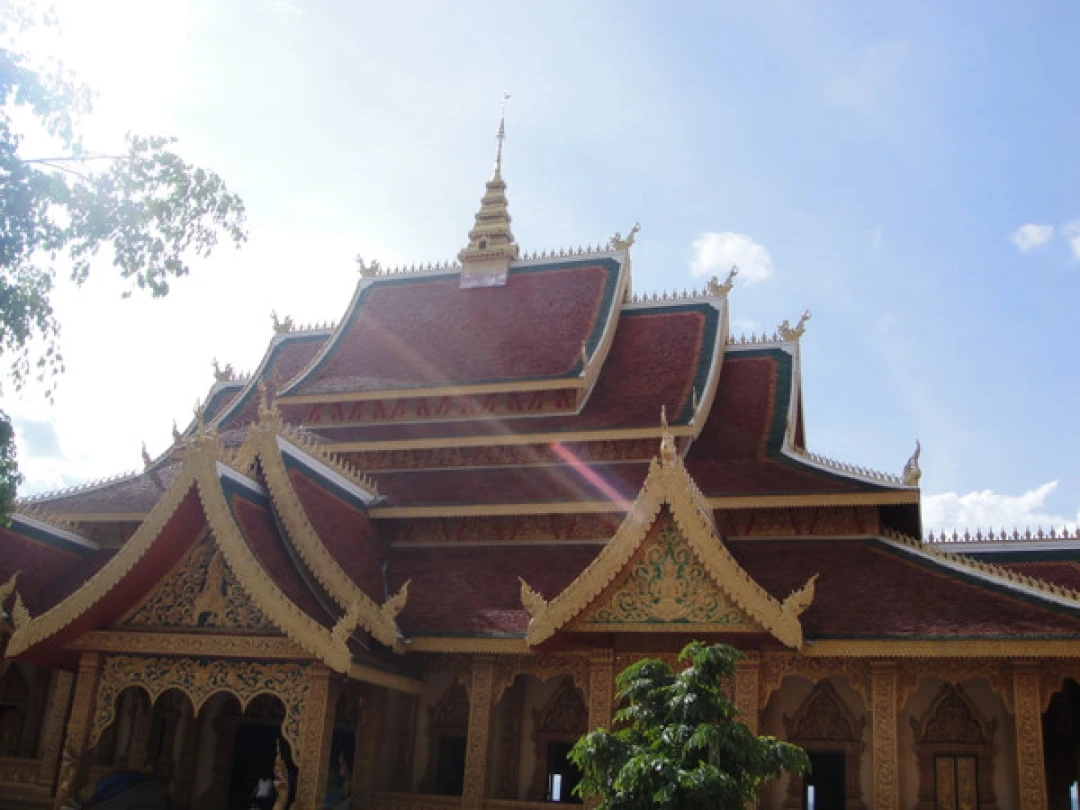
Xishuangbanna: Encountering an Ideal and Magical Paradise in the Green Wonderland at 21° North Latitude
Xishuangbanna: Encountering an Ideal and Magical Paradise in the Green Wonderland at 21° North Latitude If you ask me which place in China most resembles Southeast Asia, I would answer without hesitation: Xishuangbanna. This is not Thailand, yet it possesses an even richer Buddhist ambiance…
Continue reading...