Yubeng: Speaking Your Soul in the Embrace of Snow Mountains
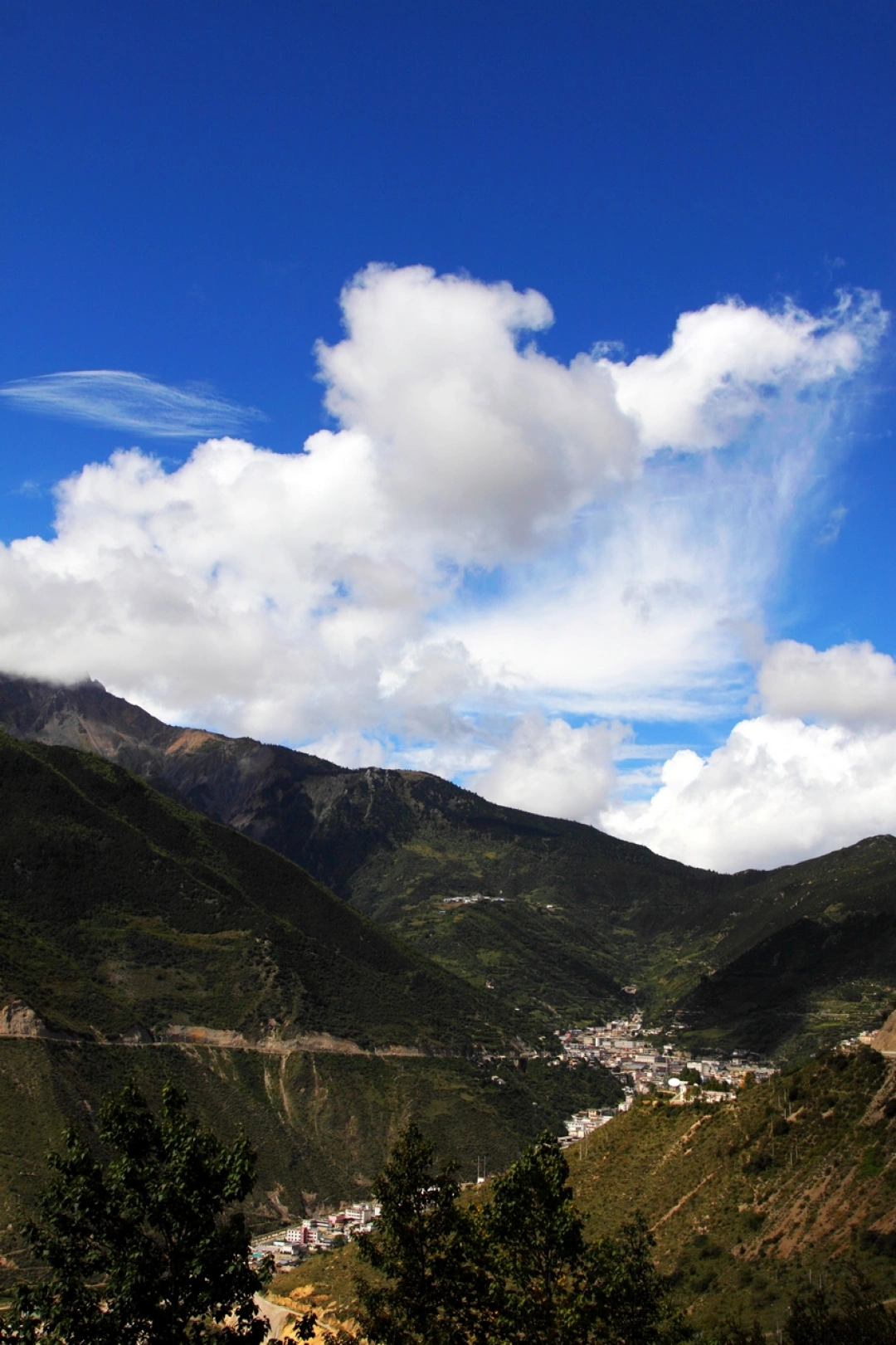
Yubeng: Speaking Your Soul in the Embrace of Snow Mountains
Have you ever wondered if there's still a place hidden away in this world—one with no road access, no noisy crowds, only snow-capped peaks, prayer flags, ancient forests, and hearts full of devout pilgrimage?
Yubeng, a village whose Tibetan name means "piled-up scriptures," lies quietly cradled in the embrace of the Meili Snow Mountains. No vehicles can reach it. To get in, you either hike 18 kilometers of mountain trails, crossing a pass at 3,700 meters, or bounce along on the back of a mule. It's precisely this isolation, this hard-won seclusion, that made Yubeng the most unforgettable chapter of my Yunnan journey—so much so that I gladly traded Lijiang's neon lights and Shangri-La's flower-strewn meadows for this rendezvous with the snow mountains.
First Steps into Yubeng: Dark Nights and Piggy Companions
At five in the morning, Shangri-La's sky was still pitch black. Sleepy-eyed, I choked down a few bites of supermarket bread, climbed into a minivan, and we rattled off into the darkness. Outside the window, sheer cliffs plunged into nothingness. The road was a construction zone of crushed stone, the mountain scarred from blasting—a gritty, hardcore opening that gave this trek an immediate taste of adventure.
Our guide was a young Naxi guy nicknamed "Yak"—a bundle of fiery enthusiasm who turned the bumpy ride into a stand-up comedy show with his endless jokes. As we passed Baima Snow Mountain, luck was on our side: the peaks stood crystal clear, their snowy summits glittering in the sunlight like a stamp of approval on this journey.
By three in the afternoon, we reached Feilai Temple (Flying Temple). We wolfed down a quick meal and pressed on. When the van crossed the bridge over the Jinsha River (Golden Sand River), massive mountains loomed on both sides, the river roared far below in the valley, and low-hanging clouds seemed close enough to pluck from the sky. In that moment, everyone jolted awake from their drowsy stupor—this scenery was worth every mile.
At five o'clock, we finally disembarked at Xidang Village. The sun hung low over the peaks, casting a golden glow. I shouldered my backpack, took a deep breath, and began the climb.
The ascent was steep from the start. After less than 500 meters, I was panting like a dog. Then came the清脆 jingle of bells behind me—mules carrying tourists up the trail. I instinctively moved to the side, and the mules ambled past, their hooves finding steady footing on the narrow path as if they were strolling through their own living room.

Even more amusing? We ran into a herd of pigs. Yes, pigs. And they were on the move too, seemingly determined to race us. I picked up my pace, and they broke into a trot alongside me. But fat and gravity eventually took their toll. Ten minutes later, the lead pig stopped, gasping for air, and the whole herd ground to a halt, blocking the trail. Just as we were wondering what to do, more bells jingled behind us. A few mules charged into the pig pack, sending them scattering in panic, tumbling down the slope beside the trail.
That little "piggy parade" became the happiest memory of the hike.
After dark, the trek turned cautious. The trail was muddy and churned up by mule hooves. With no views to distract us, everyone had only one thought: get to Yubeng and rest. After Yak repeated "almost there" five or six times, we finally reached a gentle stretch lined with prayer flags—the pass had arrived.
Following the sound of the Yubeng River downstream, we stumbled into the village at 10:30 p.m. I dropped my backpack and checked my watch—five straight hours on the trail.
Ice Lake: A Conversation with the Sacred Mountain
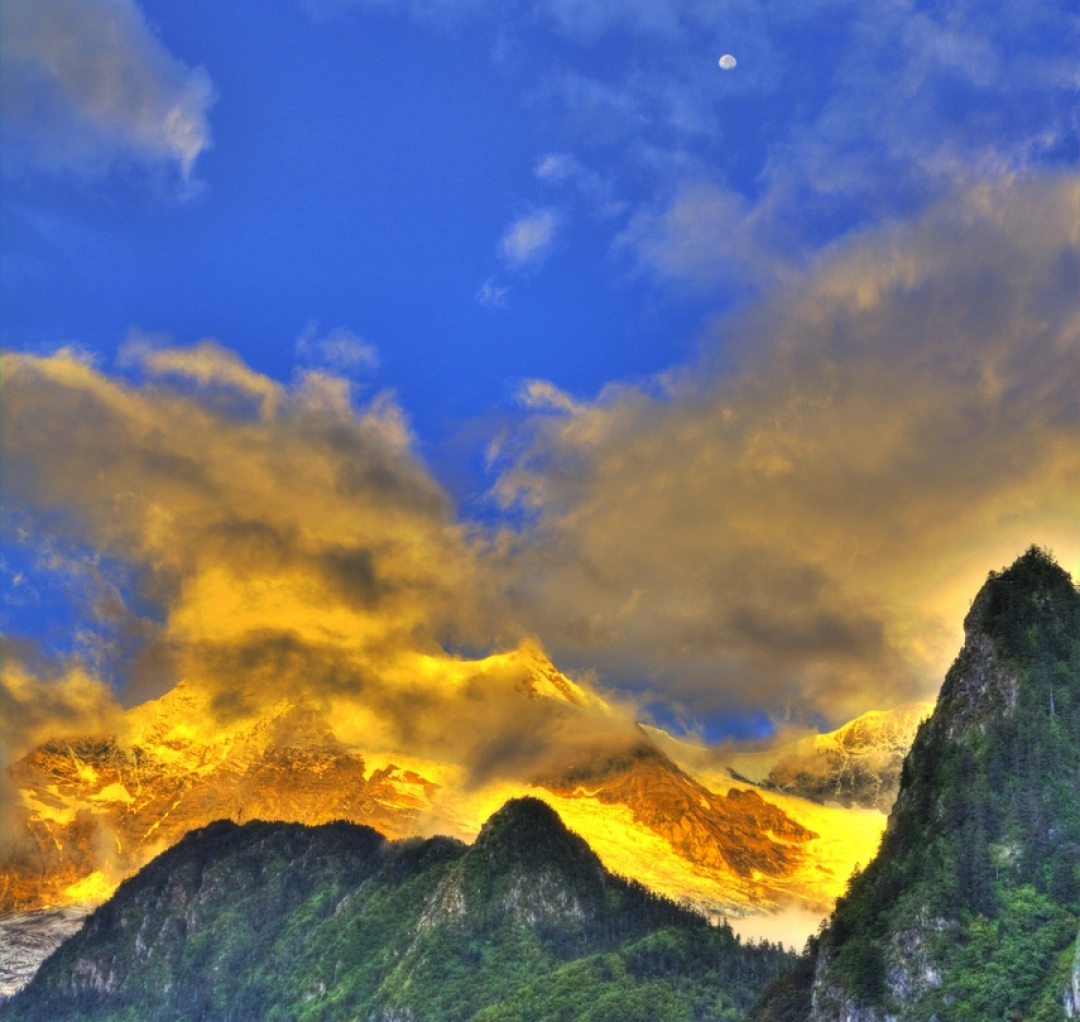
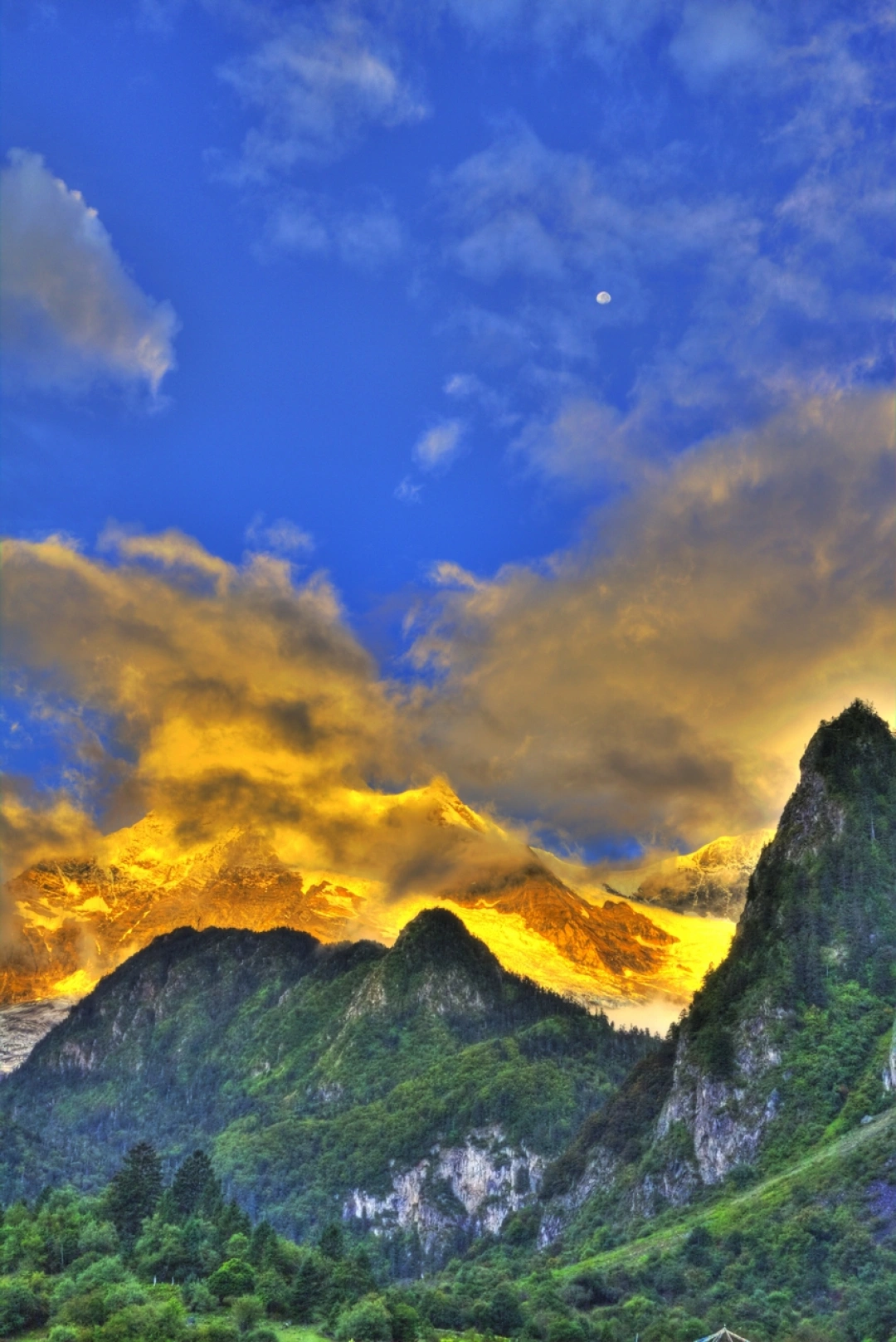
I woke early the next morning, as excited as if it were a first date. I slipped out onto the terrace, and there it was: the opposite snow mountain, just catching the morning light, its summit glowing gold, clouds swirling around it—a golden sunrise over the peaks, hitting me right in the chest before I was ready.
Today's destination: Ice Lake. The weather was good. Leaving the guesthouse, we turned onto a village path of thick mud, where mules, cows, chickens, and pigs were already romping around. Four piglets shot across the trail in front of us, their agility a clear sign of regular exercise. Compared to their city cousins, these pigs were living in paradise.
Entering the primeval forest, I was swallowed by green. Towering trees, hanging moss beards, trunks covered in lichen—it was as if someone had broken a green magic bottle, spilling its potion over everything and turning it all into plant life. In the forest clearings, sunlight filtered through the canopy, so beautiful I wanted to lie down and nap right there.
By noon, we reached the pass, offering a sweeping view of the landscape. We continued downhill along the Yubeng River until we arrived at the base camp for mountaineers. It was abandoned now, converted into herders' shelters, with cattle and horses wandering around. It was lunchtime, and cooking smoke rose from the huts. The weather turned against us—rain began to fall. I huddled under a wooden shelter and brewed a bowl of instant noodles. That humble meal tasted better than any gourmet feast.
The rain eased, and we pushed on. The final stretch was brutally steep. I collapsed my tripod and used it as a hiking pole—heavy, but effective. I climbed to the top in one go, and Ice Lake appeared before me in its entirety.
What shade of blue was it? A deep, dark green, like a flawless piece of fine jade, pure and untainted. It lay quietly beneath the glacier, water flowing in from under the ice tongue and out through an opening on the opposite side, rushing into the Yubeng River. The first sight of it left me speechless.
Excitedly, I set up my camera, ready to shoot like crazy—but the rain intensified. I took off my jacket and draped it over the camera, leaving only the lens exposed, looking like a 19th-century photographer,狼狈 yet exhilarated, shooting in the rain. After about 20 shots, I turned around and saw the nearby peaks already shrouded in mist—as if the sacred mountain was saying, "Time to go."
On the way down, we warmed ourselves by the fire in a herder's hut and drank fresh yak milk. The taste lingers with me still.
Sacred Waterfall: In a Sea of Prayer Flags, I Believed in the Divine
Day three: Sacred Waterfall. In Tibetan Buddhism, Meili Snow Mountain is the foremost of the eight sacred mountains. Tibetans have a tradition of circumambulating the mountain, believed to cleanse sins and earn merit. The inner circumambulation route is this trail to the waterfall.
Leaving the village, we headed straight for Lower Yubeng. On the way, we met a black pig. When it saw us approaching, it spun around, sprinted to a courtyard gate, and started ramming it frantically—a scene both hilarious and bizarre. Half an hour later, we reached a rock face with faint square markings, surrounded by offerings. Yak told us a story: legend has it that a local once saw a woman washing by the river here. A door opened in the rock beside her, and a man sat inside. The villager tried to speak to them, but neither replied. When he returned with others, both the man and woman were gone, the door sealed shut, leaving only the square impression on the stone.
It sounded like a gateway to Shambhala, the hidden paradise.
We pressed on. The prayer flags grew thicker, like a multicolored river guiding the way. At a rest stop, we met a black dog. I called it "Little Black," and it perked up and followed us. All the way to the top, it paused now and then to lap up stream water or nibble on grass roots for hydration—more in tune with nature than us "civilized" folks.
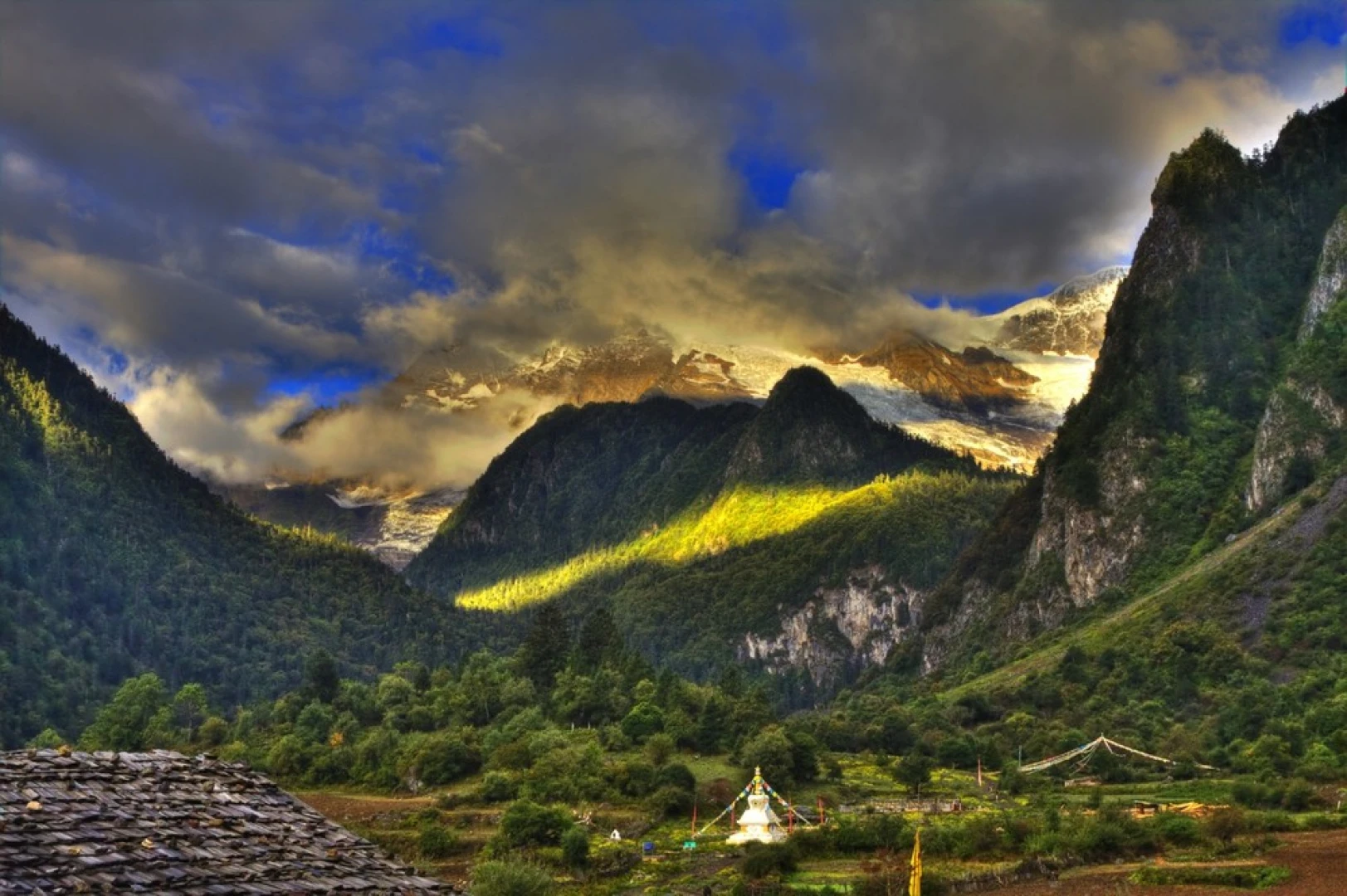
Finally, we reached the Sacred Waterfall. I was stunned. All around was an ocean of prayer flags, blotting out the sky, as if the entire world were draped in colorful cloth. And there, ahead, was the waterfall—water cascading from a cliff face dozens of meters high on the snow mountain, gentle yet powerful.
Yak said, "Let's do the circumambulation of the waterfall."
I handed my phone and camera to someone else, pulled my jacket tight, and followed Yak. The water struck my body like a soft caress. I glanced back casually, and there, about five or six meters to my right, was a tiny rainbow! Before I could even get excited, on the second lap, a second rainbow appeared beside the first! Two rainbows, side by side, shimmering against the waterfall's curtain of water.
In that moment, I felt that the divine was real.
For the first time, I believed.
Descending: Saying Goodbye to Little Black, Saying Goodbye to Yubeng
Coming down from the Sacred Waterfall, my heart was still racing. Back at the rest stop, I saw Little Black again—and learned it was actually a Tibetan mastiff, only seven months old but already over a meter long. Its owner had bought it in Tibet for 20,000 yuan. Its official name was "Four Eyes," but it didn't seem to care for that slightly effeminate name. "Little Black" worked, though. It became the star of our group photos.
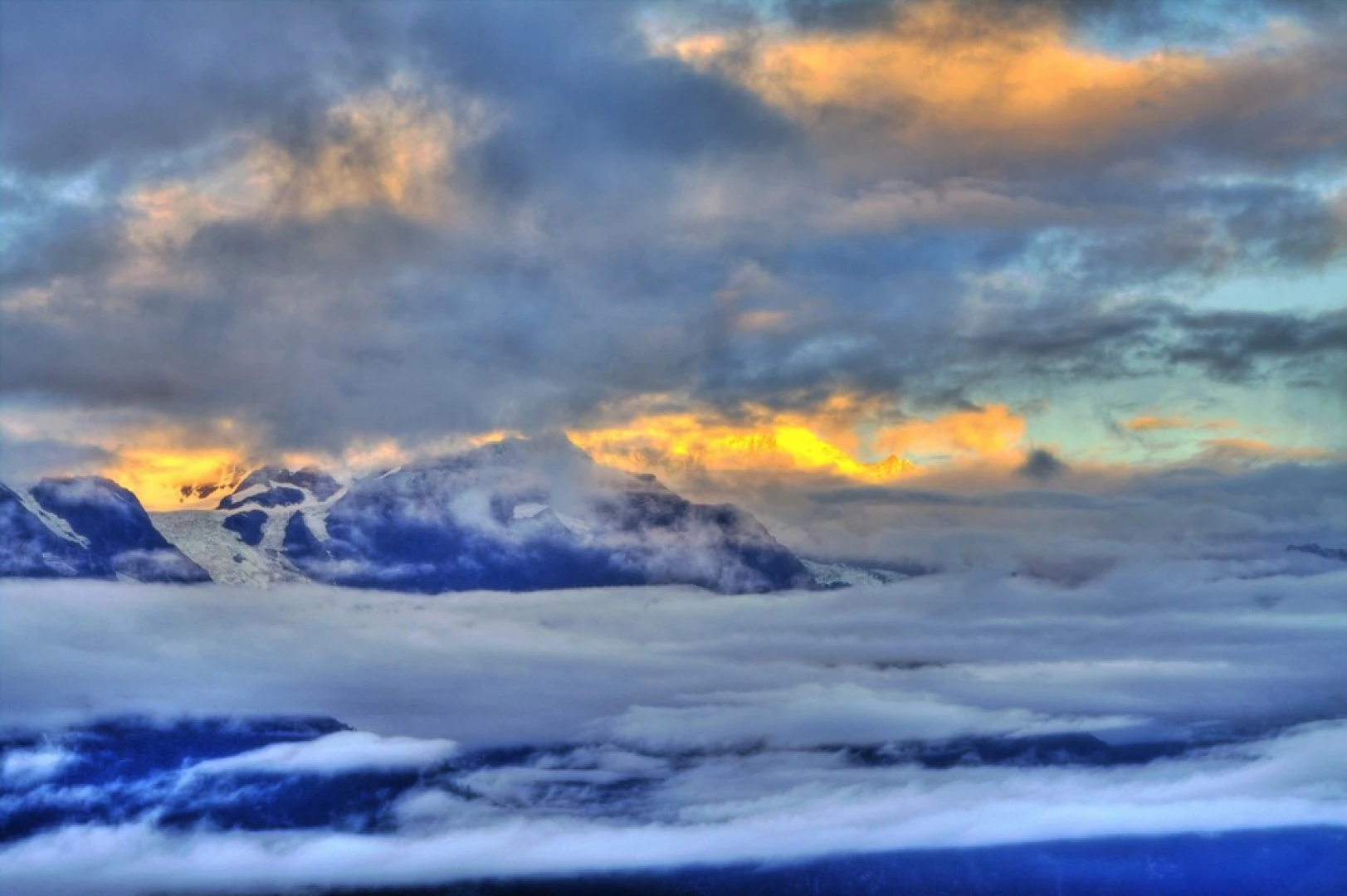
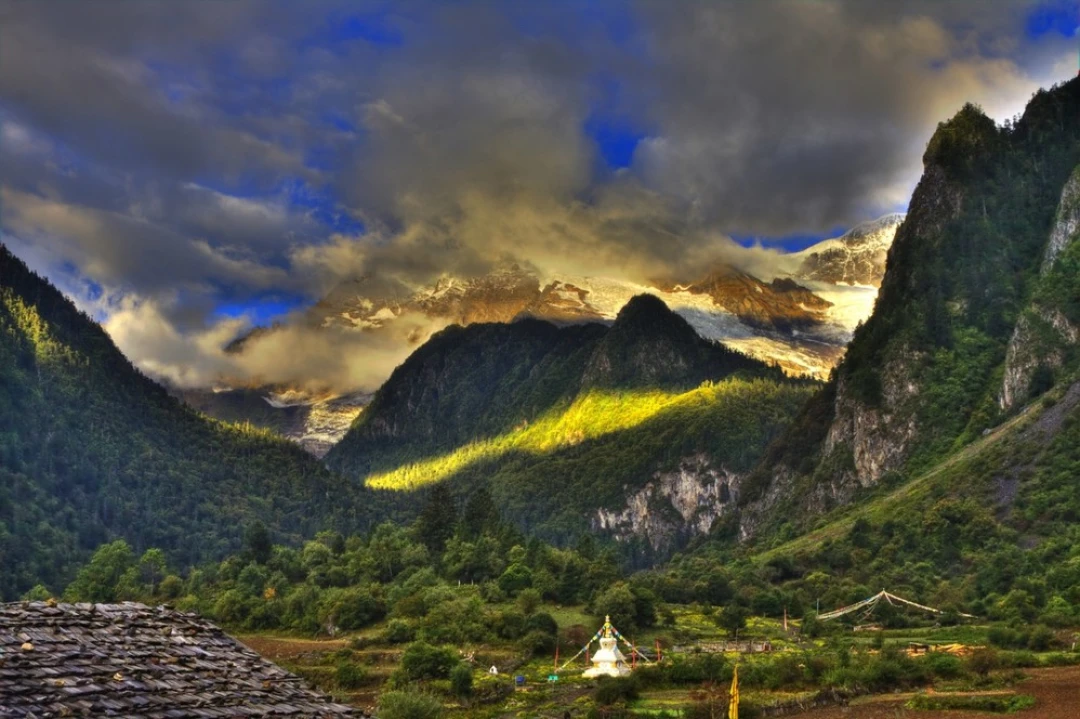
The descent was first uphill, then down. From a high vantage point, I saw the full panorama of Lower Yubeng—a peaceful village nestled between two mountains, back against the snow peaks, facing a gorge. Tao Yuanming's legendary Peach Blossom Spring couldn't have been more idyllic.
Along the way, I noticed something I'd missed on the way in: a "tower of instant noodle bowls." Villagers had collected all the empty noodle cups left behind by trekkers and stacked them into this strange monument. And there were the "tree beards"—a type of lichen called Usnea that only grows where the air is exceptionally pure. In Yubeng, they hung everywhere, like the whiskers of trees, swaying in the breeze.
Near Xidang, we took a shortcut onto a road under construction. A road connecting Yubeng to the outside world is being built, and another from Niru is also underway. Soon, this place will be easily accessible. I felt conflicted—I wanted more people to see this pristine land, but I also feared losing its peace and simplicity.
Epilogue: A Heart-Stopping Farewell by the Jinsha River
Even the end of the Yubeng trip was unforgettable.
On the way from Xidang back to Feilai Temple, we hit a landslide. A section of the road was completely blocked by fallen rocks. We got out of the van into pitch-black darkness. On one side was the cliff face; on the other, a sheer drop dozens of meters down to the roaring Jinsha River. The landslide zone was seven or eight meters wide, covered in rubble—some boulders the size of a car, others just pebbles—forming a steep slope from the mountain above.
The only way through was in the dark, by the faint light of our headlamps, listening to the Jinsha's thunderous roar, watching for falling rocks from above, and crossing the debris on foot.
Halfway across, we hit a dead end—a massive boulder blocked the path uphill, and downhill was a straight plunge into the river. Nowhere to go. In those few tense minutes, some of the women started screaming. Then, lights appeared from the other side—road workers climbing over from the opposite end. One by one, they took our hands and guided us across a narrow ledge.
We owe them our thanks.
At 10:30 p.m., the van pulled into Feilai Temple. The journey was over. Back at the inn, I did the math: three days, 80 kilometers of mountain trails, a 15-kilogram backpack.
Final Thoughts
After Yubeng, I kept wondering: why was this journey so unforgettable?
Maybe because, on those mountain trails with no signal, no internet, and sometimes no path at all, you're left alone with your own breath and the challenge of each step. You find joy in a herd of pigs and a line of mules. You taste satisfaction in instant noodles and fresh yak milk. And in an ocean of prayer flags, you believe in something greater.
Yubeng isn't a place to "check in." It's a place to "let go." Let go of your phone. Let go of your anxiety. Let go of the version of yourself that's worn out in the city.
If you ever go, remember a few things: bring a good waterproof jacket (don't leave it at the guesthouse like I did), bring trekking poles (or improvise with a tripod like I did), and most importantly—bring a reverent heart.
Because in the embrace of those snow mountains, you might just meet another version of yourself.
You should also read:
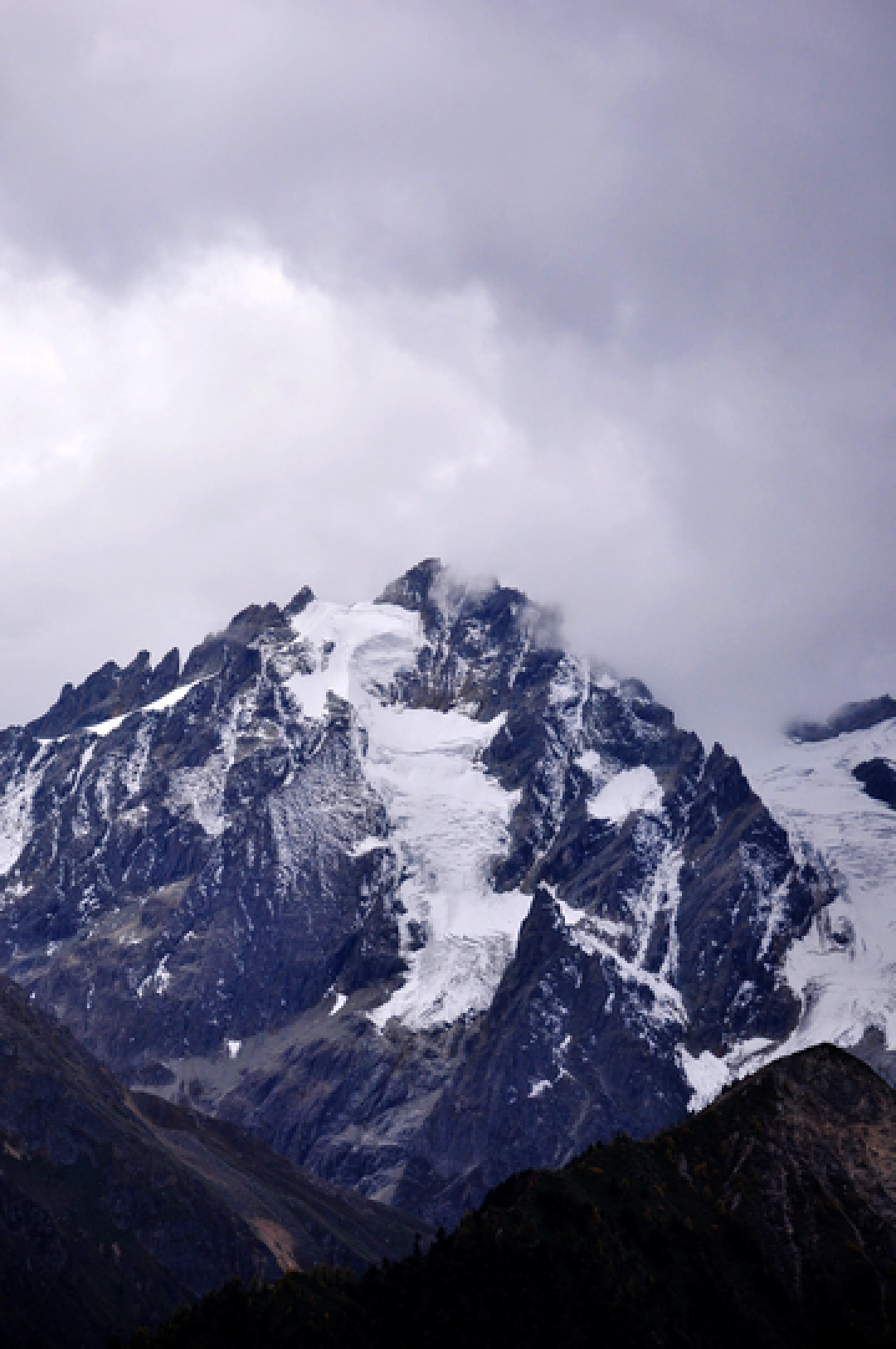
Meili Snow Mountain: A Soulful Journey of Dialogue with the Sacred Mountain
Meili Snow Mountain: A Soulful Journey of Dialogue with the Sacred Mountain Prologue: When Travel Becomes Faith Some journeys are forgotten as soon as they end. Others carve themselves into your bones. The trip to Meili Snow Mountain belongs to the latter. Waking up in…
Continue reading...
Dreaming of Lijiang, Dreaming of Shangri-La: A Journey That Lets Your Soul Breathe Deeply
Dreaming of Lijiang, Dreaming of Shangri-La: A Journey That Lets Your Soul Breathe Deeply Life is like a long trek. We're always rushing through the concrete jungle, searching for a glimmer of light in the monotony of our days. Then one autumn, I heard the…
Continue reading...
Yunnan! Paradise on Earth – The Yubeng Chapter: A Soul-Cleansing Journey into Seclusion
Yunnan! Paradise on Earth – The Yubeng Chapter: A Soul-Cleansing Journey into Seclusion Prologue: Why Yubeng? If you ask me which place in Yunnan is most worth hiking to, I would answer without hesitation: Yubeng. This is not an answer I give lightly. As a…
Continue reading...