Yunnan: A Never-Ending Romantic Journey
Yunnan: A Never-Ending Romantic Journey
Preface: Why Do I Keep Coming Back?
The summer after I graduated from high school, I set foot on Yunnan's soil for the first time. Back then, it was the perfect embodiment of "poetry and distant lands" in my heart—blue skies, white clouds, dark-tiled roofs, whitewashed walls, small bridges over flowing water. Every scene described in fairy tale books could be found here.
In the years that followed, I kept chasing my dreams, stumbling and rushing forward. Whenever exhaustion weighed me down, Yunnan became my gentlest sanctuary. Checking into a youth hostel, making a few new friends, living life in the most comfortable way—who wouldn't love that kind of life?
Someone once asked me why I love Yunnan so much. I smiled and said, "Maybe in my past life, I was just an ordinary person from Dali (大理), diligently growing my favorite grains and vegetables every day."
Departure: Late March in Lijiang (丽江), Here We Come
Our flight was at 8:35 AM. I lived far from the airport, so the night before, I booked a ride-share car to pick me up at 5 AM sharp. At five in the morning in Chengdu, only the security guard was dozing in his booth, and a few taxis were cruising the streets. Wearing my mask, I took a selfie while waiting for my travel companion, Xiao Su.

The airport was nearly empty. Everyone wore masks, and we kept a meter of distance while queuing for security. With so few people, the process was quick, and soon we were sitting at the boarding gate, waiting.
The flight from Chengdu to Lijiang was short—just over an hour. On the plane, a handsome flight attendant took everyone's temperature, and the cabin smelled of disinfectant. I noticed an empty seat between me and the guy beside me. Looking around, almost every row was arranged the same way. I was hungry and thirsty, but I didn't dare take off my mask. I had to hold out until we landed to eat.
Lijiang: Freedom in Every Breeze
Qingxi Reservoir (清溪水库): A Sapphire Gem
Not far from the old town, Qingxi Reservoir was our first destination. It's a lesser-known spot in Lijiang, mostly frequented by locals for evening strolls. The reservoir shimmered like a sapphire, crystal clear, with sunlight dancing on the water's surface in layers of gentle light. Occasionally, a few birds skimmed across the lake.
We sat on a gentle slope, the sun casting its rays diagonally upon us. A row of slanting trees stood tall before us, and passersby cast long, angled shadows. Xiao Su and I decided that we had to go to the foot of Jade Dragon Snow Mountain (玉龙雪山), where no one else would be, take off our masks, and just run wild.
Jade Dragon Snow Mountain: A Jade Fan Unfurled
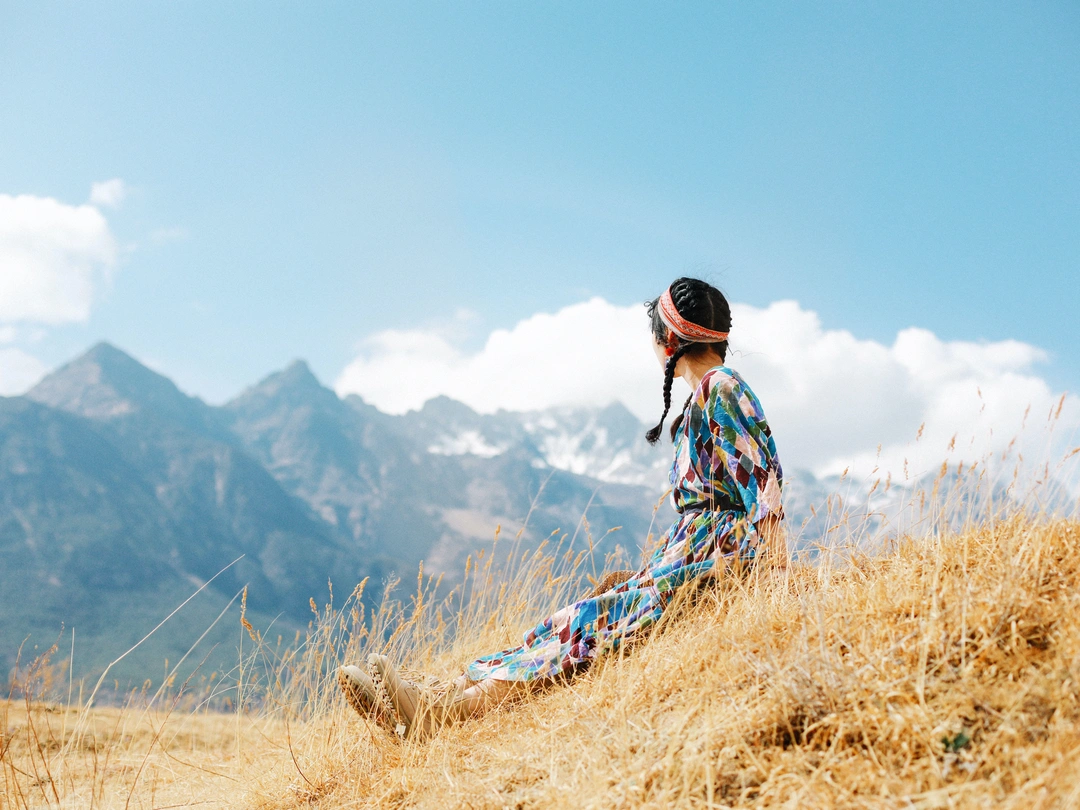
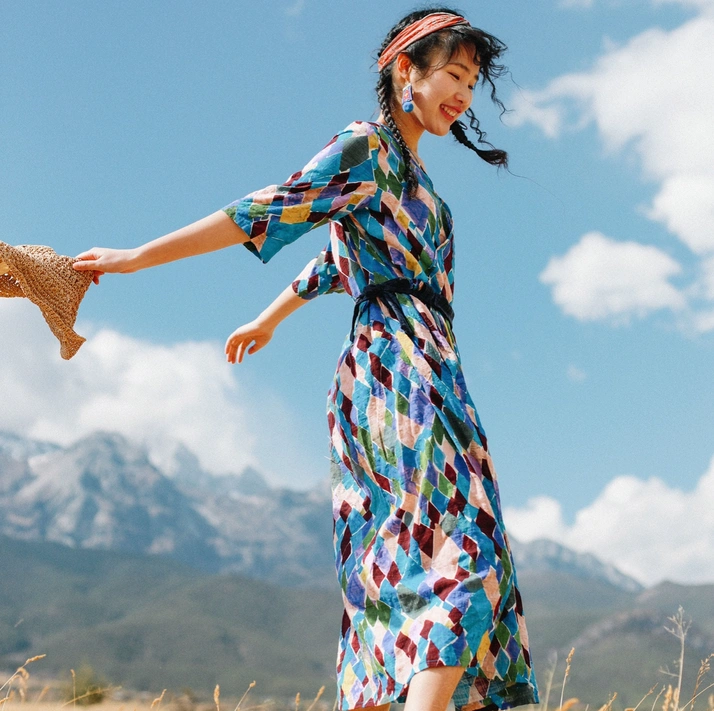
We hailed a ride-sharing car and arrived at the foot of Jade Dragon Snow Mountain—a place that felt like it belonged to just the two of us. Our phone location showed we were at Jade Lake Village (玉湖村). The mountain stood like a jade fan unfurled, pure and sacred. We took off our masks and ran wildly across the withered yellow grass, spinning our skirts in circles, our laughter lighting up the wind on all sides.
Leaning against a pear tree covered in white blossoms, breathing in the fragrant scent, I almost fell asleep—until a sudden sun shower woke me. The crisp wind slipped through my thin gauze skirt, sending a tingling sensation across my skin. I had walked eighty thousand miles, only to find a warm embrace.
Nice to Meet You: Teacher An Arrives
Our romantic duo at the foot of the snow mountain was interrupted by the arrival of Teacher An. He took a taxi straight to the base of the mountain, dressed all in black, carrying a small black backpack and a pile of snacks that saved our starving stomachs. We crouched behind a tree, out of the wind, tearing open bags of crispy noodles and slurping yogurt, then introduced ourselves.
"Hi, I'm Xiao Su." "Hi, I'm Didi." "Hello everyone, I'm Teacher An."
Hahahaha. And then, in a daze, we raised our yogurt cups and talked about life and dreams, chasing the last rays of sunset on March 24, 2020, until the sun slowly sank into the arms of Jade Dragon Snow Mountain.
Grandma's Preserved Pork Ribs (阿婆腊排骨): The Perfect End to the Day
Back at the guesthouse, while Teacher An checked in, Xiao Su and I played with the three furry babies at the inn. Two little dogs nuzzled Xiao Su's neck with enthusiastic licks, then ran over to me and nibbled on the chair I was sitting on. I love life in Lijiang—blue skies, white clouds, warm sunshine, and a couple of dogs and cats to keep you company. Pure bliss.
For dinner, we went to a preserved pork rib place I had spotted that morning. When the waitress brought out the steaming hot ribs and a big bowl of rice, I felt like the day had finally found its perfect ending.
Lijiang Old Town: The Quiet of Early Morning
The next morning, we woke up early. After freshening up and getting dressed, the three of us set off to explore Lijiang Old Town. The streets were nearly empty of cars, so we could stride freely through the ancient alleyways.
Entering from the North Gate, we first scanned a health QR code, then registered our ID information. Lijiang Old Town, which had seen almost no tourists for about two months, seemed to have returned to its original state from the late Song Dynasty, when it was first built. Warm sunlight fell on the red cobblestones as we walked briskly along the blue stone paths, jostling and laughing with Xiao Su until we reached a bridge. By the bridge, little daisies were still in bloom. The babbling stream flowed from higher ground to lower, carrying a few flower petals along, and sunlight danced and raced through the water.
We visited some once-popular spots—Cat's Sky City (猫的天空之城), Da Bing's Little House (大冰的小屋), and "I'm Waiting for You in Lijiang." Every year, I take a photo at the entrance for memory's sake. I was glad to see Cat's Sky City was open. I bought a few postcards to send to friends and mailed a letter home. A letter from home is worth its weight in gold. I really hoped my mom would get my letter soon.
Zhongyi Market (忠义市场): The Warmth of Everyday Life
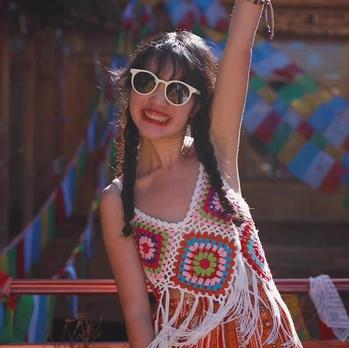
Every time I visit Lijiang Old Town, I absolutely have to go to Zhongyi Market. First, because the fruit sold inside the old town is always about twice the price of what you find at the market. Second, because I love the warm, human touch of a bustling market.
We bought a bag of tangerines and some small bananas, then found a noodle shop on the street that had a good number of customers. The owner was frying some blackened, unrecognizable food. Xiao Su and I stared wide-eyed at the fragrant smell. The owner told us, "This is chicken bean jelly (鸡豆凉粉)." Curious, we ordered a portion. Coated in the owner's secret sauce, it was sour and spicy—and pretty tasty.
Shangri-La (香格里拉): First Encounter with Paradise
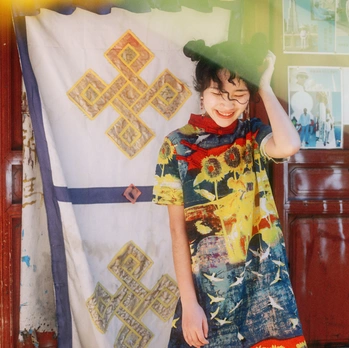
Scenery Along the Way
The road from Lijiang to Shangri-La wasn't smooth. There were still rockslides along the roadside, and passing trucks kicked up clouds of dust. But during the four-hour drive, the most beautiful things were the endless blue sky, the clouds that seemed within arm's reach, the sacred snow-capped mountains in the distance, and the grasslands waiting to burst into life. Even though I was tired and drowsy, I couldn't bear to close my eyes, afraid of missing even a single sight.
By a stroke of luck, our driver was from the same hometown in Zigong. When fellow townspeople meet, we naturally started chatting in fluent Zigong dialect. Everyone in the car except Teacher An was from Sichuan. To include him, we switched to a comical mix of Sichuan-accented Mandarin. Hahahaha.
Baha Snow Mountain (巴哈雪山): A Breathtaking Encounter
The car wound along the twisting mountain roads. We played Xu Wei's songs, singing along off-key and having a blast. Suddenly, I spotted a continuous range of snow-capped mountains in the distance. I screamed, "Look, look! So beautiful!"
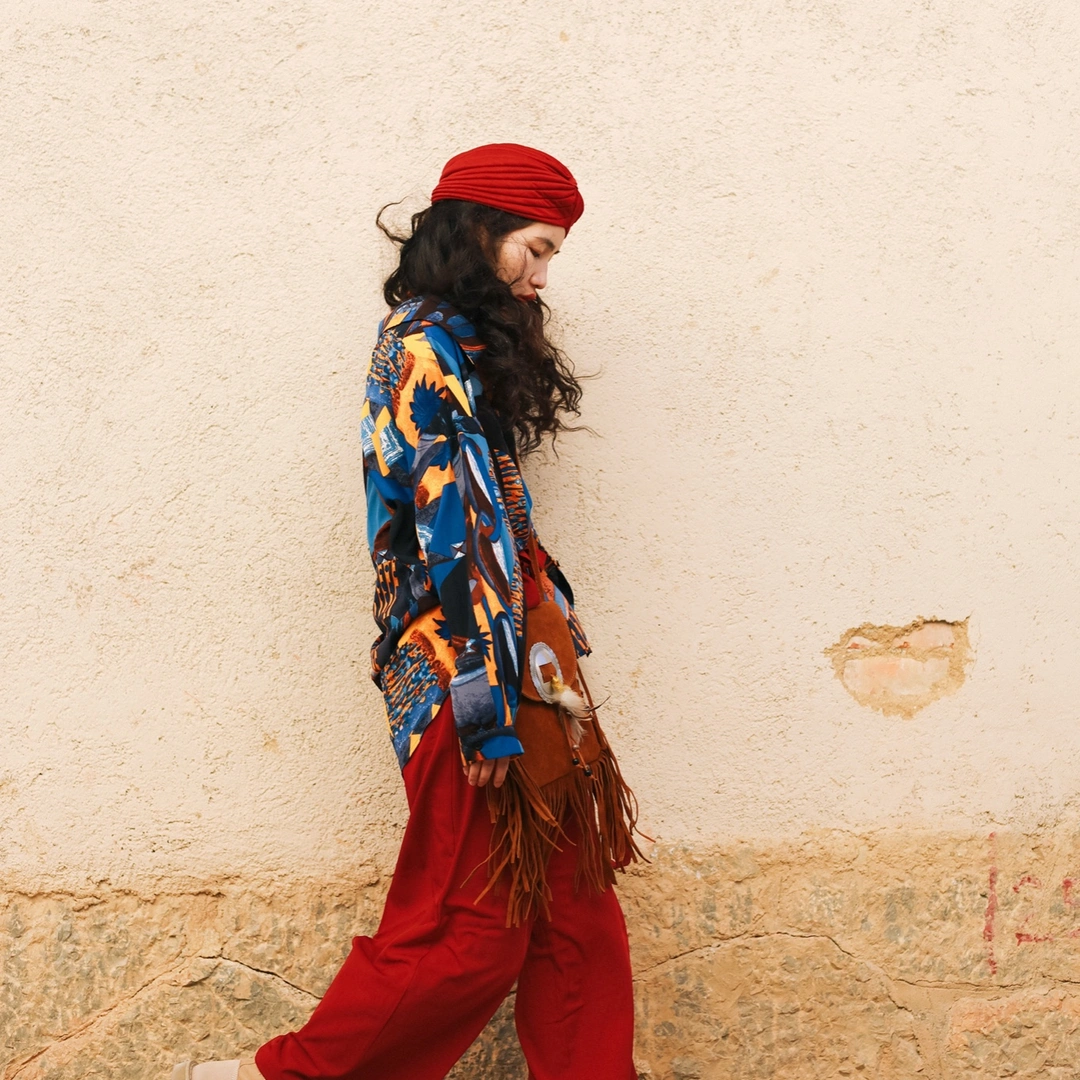
On the winding mountain pass, we stumbled upon Baha Snow Mountain. From the first glimpse out the window, I couldn't tear my eyes away. I begged the driver to stop so I could take photos. He laughed and said, "Little sister, don't rush. There's an observation deck ahead."
At the deck, I jumped out of the car, ran to the edge, and screamed with joy. A gust of cold wind sent goosebumps all over my body. I wrapped myself in my only lambswool jacket, which helped a little. The snow-covered mountains stood against the deep blue sky, like a beautiful woman gazing down at the peaceful lives of the Baha people.
Okay, let me record one embarrassing moment: The observation deck had two levels, both made of steel grating with iron sheets underneath. We had no trouble on the first level, but when I tried to go up to the second, my legs started shaking—I'm afraid of heights. Even though I'm often bold and charge ahead, when it comes to high, open-grid places, I turn into a trembling mess.
Dukezong Old Town (独克宗古城): Meeting at Dusk
By evening, we finally arrived at the Shangri-La we had been longing for. After checking into our guesthouse, we freshened up, put on some lipstick, and then our masks—looking beautiful, but no one could see our "gorgeous faces" as we stepped out.
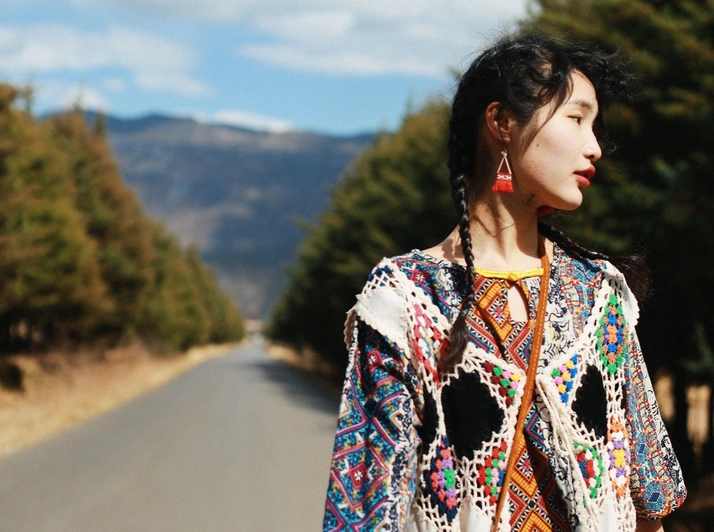
As we left the inn, the sun slowly sank into the green mountains, casting its last light on the rooftops of the old town. We walked in the glow, feeling the residual warmth.
At the entrance to the old town, we met our first companion in Dukezong—Little Flower. She was a stray border collie, her fur messy and caked with a bit of mud. I casually called out, "Little Flower," and she happily followed us, all the way into the depths of the old town.
In the twilight, only a few shops in Dukezong were open. Smoke rose from chimneys, an old lady sat on a small stool mending shoe insoles, and a child with flushed cheeks ran past us. We strolled slowly along the stone paths, chasing the light, photographing the first beams of sunlight we had ever seen in Shangri-La.
Highland Barley Wine and Yak Hotpot
When the sun disappeared behind the mountains, our stomachs growled. We walked into the nearest small eatery—Shun Shun Snacks (顺顺小吃). We ordered a small yak hotpot, highland barley flatbread, sesame greens, and filled our cups with highland barley wine. The three of us started celebrating. Eating big chunks of yak meat was incredibly satisfying.
It happened to be a gathering of the owner's friends. The little girl at the next table finished her meal and sat there playing games. I overheard her say to another girl, "I just snuck into the kitchen and stole a piece of ham." I immediately chimed in, "Little sister, I want a piece of ham too." So she went back to the kitchen and stole a piece for me. Haha, I happily dropped it into my hotpot to cook.
Tips for Shangri-La
Temperature: It's freezing cold in the morning and evening. The wind gives you goosebumps all over. When going to Shangri-La, make sure to bring thick winter clothes.
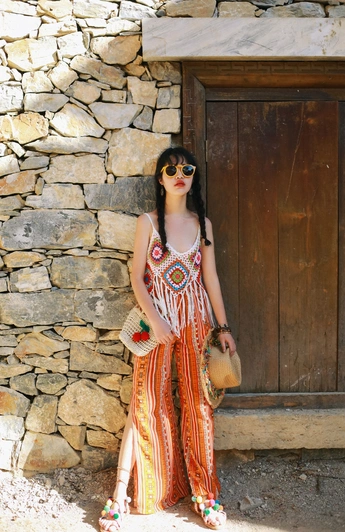
Accommodation: Like in Lijiang, every bed in the guesthouses has an electric blanket. There's no air conditioning. You have to keep the electric blanket on all night. Xiao Su and I learned that the hard way—we turned ours off and woke up freezing in the middle of the night.
Climate: Shangri-La is extremely dry. My skin cracked all over. Girls must bring body lotion. Also, the UV rays are incredibly strong. You have to wear sunscreen, or your own mom won't recognize you when you get home.
Road Trip: All Roads Lead to a Gas Station
The next day, we planned to rent a car and drive ourselves to Potatso National Park (普达措国家公园) and Napahai Lake (纳帕海). We booked the car online the night before—200 yuan per day. In the morning, the driver delivered the car to our guesthouse. Xiao Su drove, I sat in the passenger seat as navigator, and Teacher An sat in the back, taking photos of the scenery.
All three of us had driver's licenses, but Teacher An and I were terrible drivers, and Xiao Su had very little experience. Under immense pressure, she drove on the plateau for the first time in her life—and for an entire day. It was the longest drive Xiao Su had ever done. Special shout-out to her for being awesome!
The car didn't have much gas left, so we needed to find a station first. Driving cautiously through the narrow streets of Dukezong Old Town, my unreliable navigation kept failing to give timely directions, causing us to take wrong turns and reroute. But hey, all roads lead to a gas station.
At the station, a Tibetan lady helped Xiao Su park smoothly. We generously added 100 yuan worth of gas. Turns out, we probably didn't even use 50 yuan worth. My heart ached for 100 seconds—the rental guy said the car was fuel-efficient, but it was even more efficient than we imagined.
As we were leaving, the kind, attentive gas station lady hurried over to tell us that our taillight was still on—because Xiao Su hadn't fully released the handbrake. She waited until the light went out before letting us drive off.
Potatso National Park: The Bleakness of March
It's about 30 kilometers from Dukezong Old Town to Potatso National Park. The car drove along the horizon between earth and heaven, the clouds seeming close enough to touch. We passed winding mountain roads, small piled Mani stones, five-colored prayer flags fluttering in the wind, vast grasslands, and rows of barley-drying racks. Finally, we arrived at the park entrance.
The massive parking lots at Potatso were almost empty. Only the lot closest to the park was open. After parking, we walked to the entrance, scanned our health codes, registered, bought tickets, and had our temperature checked. Only after everything was confirmed could we enter.
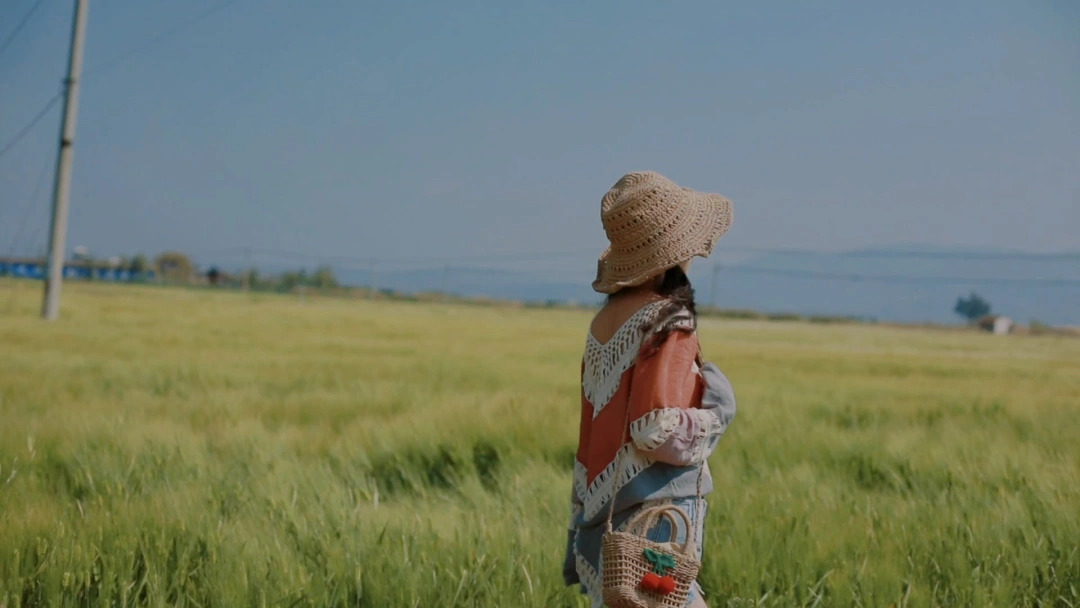
From the entrance to the actual scenic area, we had to take a shuttle bus for about 20 minutes. Outside the window, the mountains were still barren, with some snow remaining on the peaks. Sitting by the window, the warm sunlight fell on me, making me want to doze off.
Only Shudu Lake (属都湖) was open in Potatso; Bita Lake (碧海) was closed for ecological protection. We walked along the boardwalk around Shudu Lake, which is about 3.3 kilometers long and takes about two hours to complete. But for us, those two hours felt like an eternity—we kept stopping to take photos, so it took us about four hours.
In March, Shudu Lake was as calm as a mirror, with gentle ripples. Small patches of wetland in the water swayed with the wind. Black-necked cranes bowed their heads to forage by the shore. In the distance, a mother wild boar led her piglets as they scurried along.
Shudu Lake is surrounded by mountains. Apart from the expanse of blue water before us, everything else looked desolate—bare rhododendron branches, withered yellow grass, and pine trees still dusted with snow. March's Shudu Lake was a sleeping Snow White. By June, she would shake off the snow, and the grass would grow tall again, with rhododendrons blooming freely.
The most unforgettable sight was the white snow piled by the lake's edge, ancient trees with gnarled roots lying in the water, and rows of green trees on the mountains leaning against the blue sky and white clouds. We sat on the boardwalk, swinging our feet, thoroughly enjoying the gentle breeze and warm sun.
Napahai Lake: Thrills in the Wind
We left Potatso around 3 PM. We wolfed down some snacks in the car, put on "The Ordinary Road" (平凡之路), and headed to our next stop—Napahai Lake.
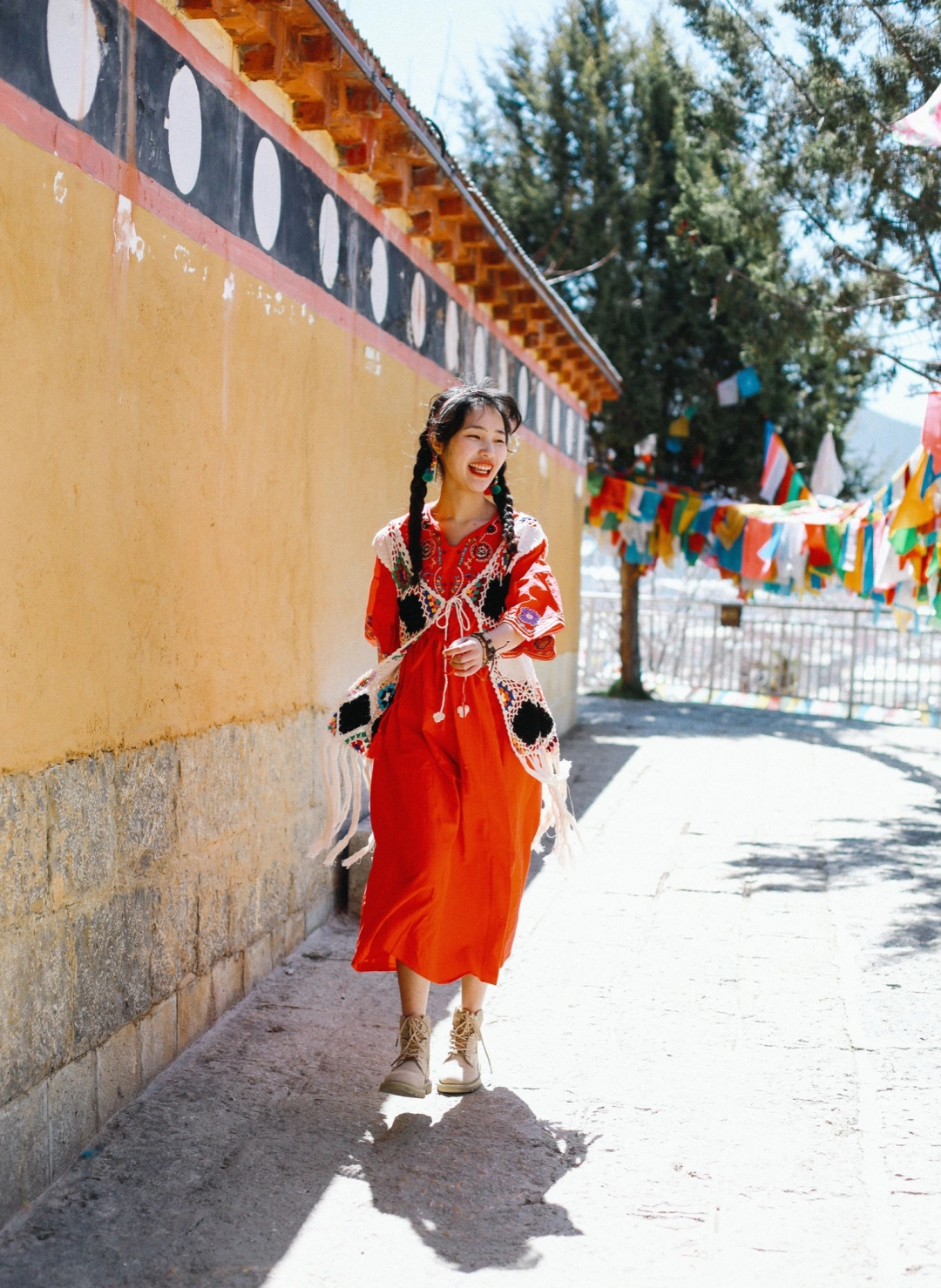
By the time we arrived, it was nearly dusk. The sun was slowly sinking behind the mountains, and the lake shimmered with rippling light. When I opened the car door and stepped out, the wind nearly blew me away. I bundled up in all my thickest layers and charged out onto the grassland by the lake—only to find I couldn't walk anymore. The wind gave me a headache. In the blink of an eye, I sprinted a hundred meters back to the safety of the car.
But the view of Napahai from the car window was stunning—the wind whipping the five-colored prayer flags, a little horse by the lake drinking water, and the late-arriving sunset painting the sky red. I stuck my hand out the window, letting the wind slip through my fingers. It was pure bliss.
For dinner, we stopped at a roadside Lanzhou noodle shop. We were lured in by pictures of big plate chicken, lamb skewers, and beef skewers. Teacher An treated Xiao Su, who had worked so hard driving, and I got to enjoy the big plate chicken too. The owner was incredibly generous and made an enormous portion. Eating big chunks of meat, slurping big mouthfuls of noodles, laughing loudly, and boasting freely—it felt amazing.
Dukezong Old Town: Final Leisurely Moments
Pigeons at Moonlight Square (月光广场)
On our third day in Shangri-La, we woke up with dry mouths and a bit of insomnia from the altitude. We decided to just wander around the old town in the morning.
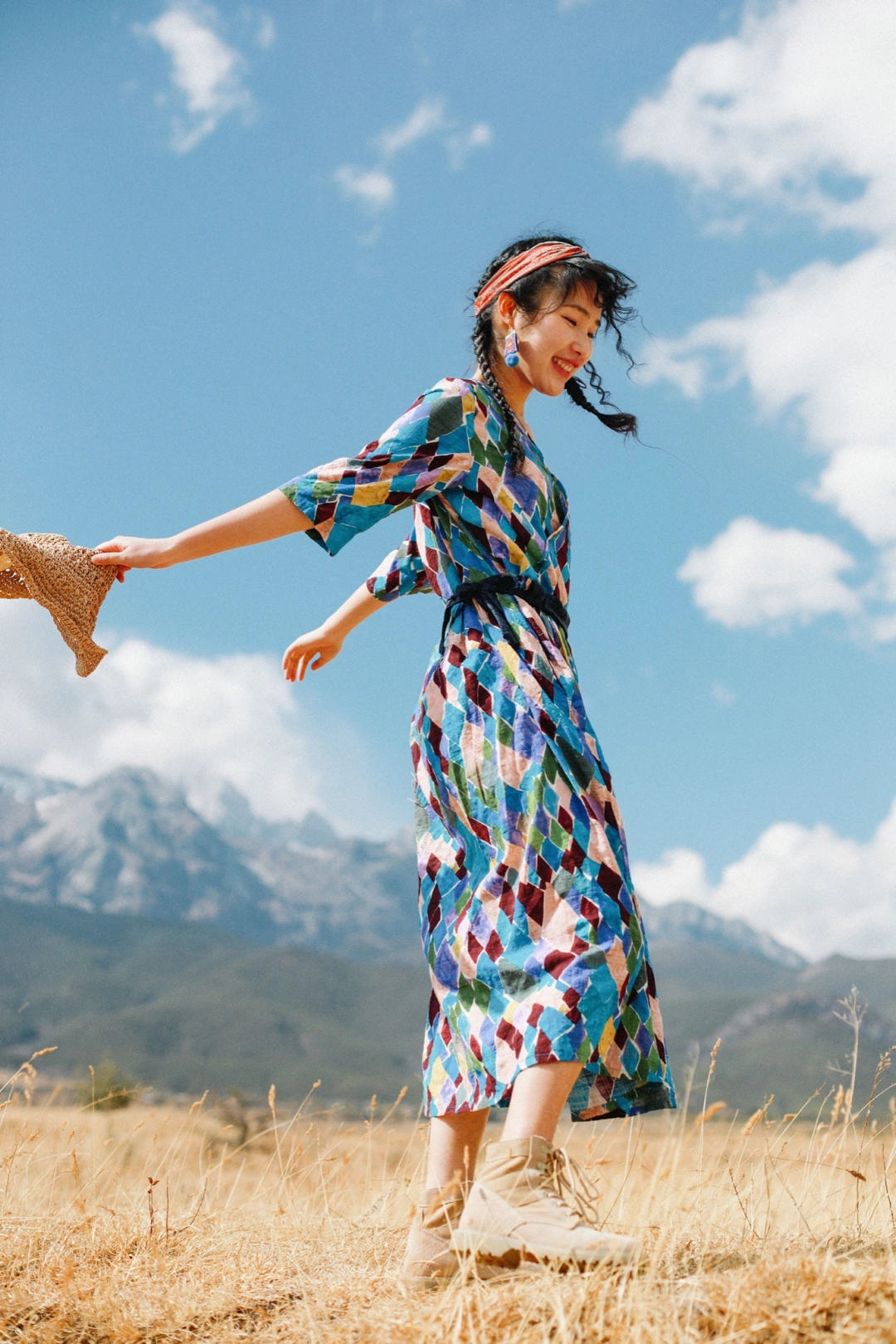
As we came out of a breakfast shop, we ran into Little Flower again. I called her name enthusiastically, and she followed us around the old town once more, impossible to shake off. Wanting to take photos among the pigeons, we came up with a diversion—Xiao Su took Little Flower to play by a bridge, while Teacher An and I went to photograph the pigeons.
At Moonlight Square, a local Tibetan grandfather was feeding the pigeons with a bag of爱心 grain. The pigeons here weren't afraid of the locals; they hopped right up to his hand and happily ate their breakfast. Soon, mothers and grandmothers with children came to feed the pigeons too. The pigeons loved the kids, pecking at the grains in their little palms. When they were full, they flapped their wings and perched on tree branches to rest.
The old grandfather was very kind. He shared some grains with me and taught me how to lure the pigeons to the center of the square—throw the grains up in the air, and the pigeons would flock over. Well, that might work for others, but when I tried it, the pigeons were still too busy with the grandfather's and the children's piles of grain.
Guishan Park (龟山公园): Praying at the Prayer Wheel
After feeding the pigeons, we climbed the steps up to Guishan Park to get a view of the entire Dukezong Old Town. The park has a lot of steep stairs, and climbing at high altitude is much harder than on the plains. We climbed, stopped, rested, and climbed again. Nearby, a young Tibetan guy was literally jumping up the stairs step by step. Double thumbs up!
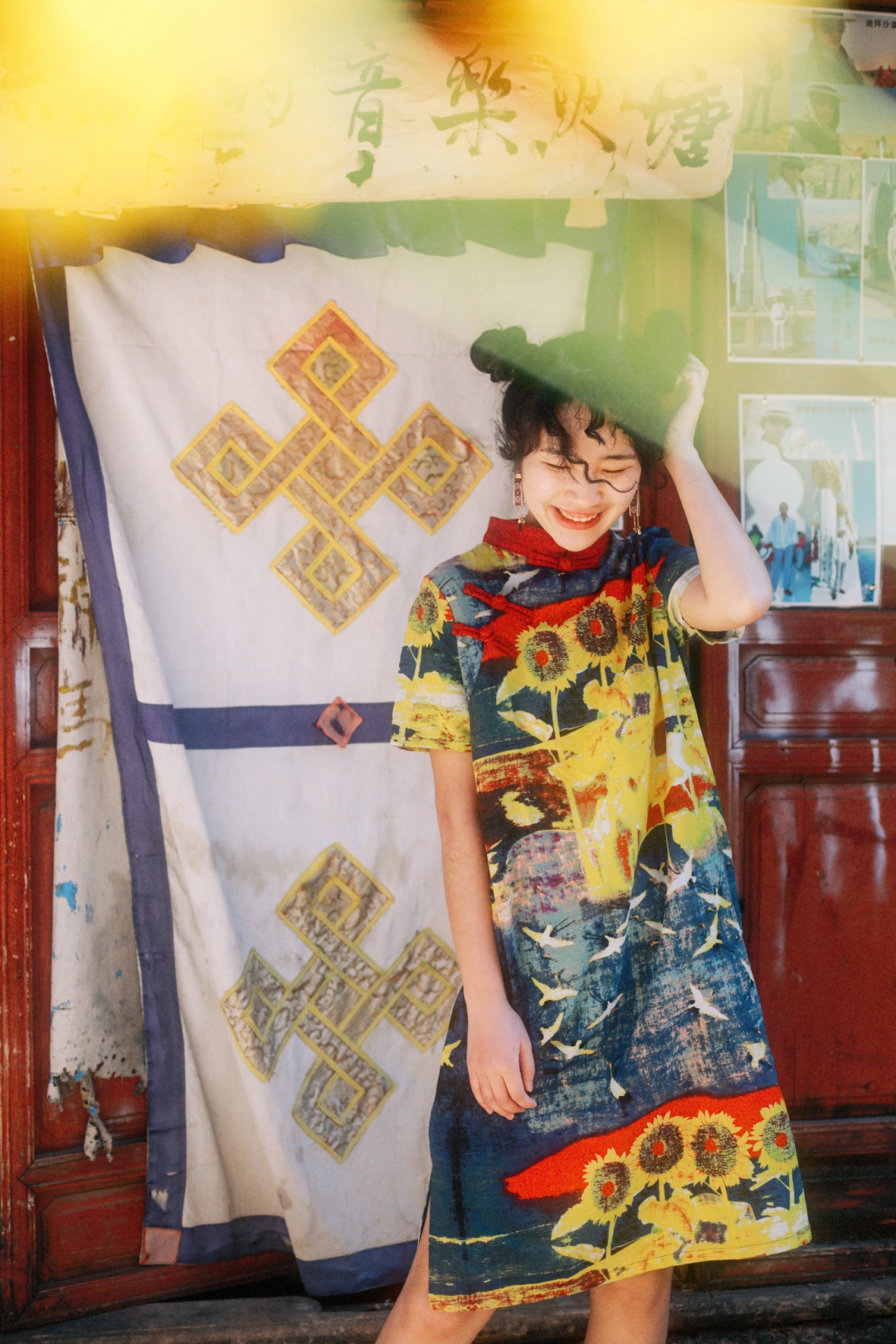
The giant golden prayer wheel that you can see from Moonlight Square was the main reason we climbed up to Guishan Park. It's the largest prayer wheel in the world, about five stories high. Made of gilded pure copper, its surface is covered in exquisite relief carvings. Turning the entire wheel requires ten strong men working together. I became a Popeye, joining a group of people to turn the prayer wheel several times, praying for my family's well-being and hoping everything goes well.
Standing at the top of Guishan Park, looking down at the entire Dukezong Old Town, it looked like a blooming white lotus. Rows of traditional Tibetan wooden houses surrounded the area in all directions—a magnificent sight.
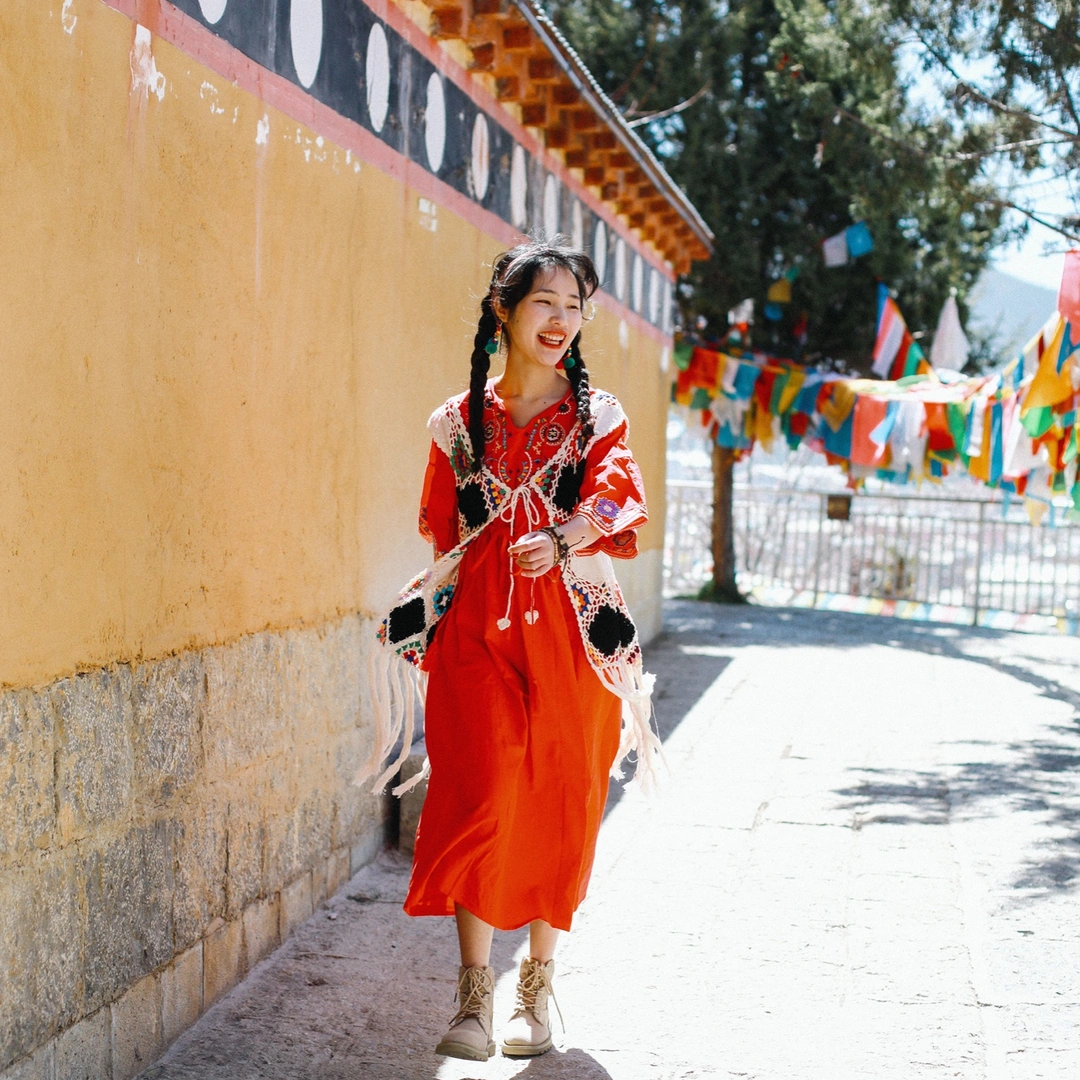
The temple wasn't open, but the area around it was filled with five-colored prayer flags. Tree shadows fell on the yellow walls, swaying in the wind. We sat on the stone steps, the wind blowing gently as we chatted and laughed. It was incredibly relaxing.
No Instant Noodles, No Complete Journey
The midday sun was a bit harsh. Back at the guesthouse, Xiao Su said she wanted instant noodles. Teacher An wanted some too. Okay, done! Instant noodles with ham sausage and quail eggs—that's the perfect combination.
A full stomach always makes you sleepy. We took a happy nap. When I woke up, I started writing postcards to send from Shangri-La—to my friends, and to myself. I hope everyone gets my postcards.
An Unexpected Encounter: The Story of an Old Guesthouse
In the afternoon, we wandered through Dukezong Old Town again. Most shops were still closed. We weaved through every crisscrossing alley, stopping in front of shop windows displaying prayer wheels. I couldn't help but think of Tsangyang Gyatso's poem: "In that life, I turned mountains, turned water, turned pagodas—not for rebirth, but to meet you on the way."
We walked into a random alley. The earthen buildings still had their crumbling mud walls. A guesthouse with five-colored prayer flags fluttering above caught our attention. I called up to the owner, "Hey boss, can we come up and play?"
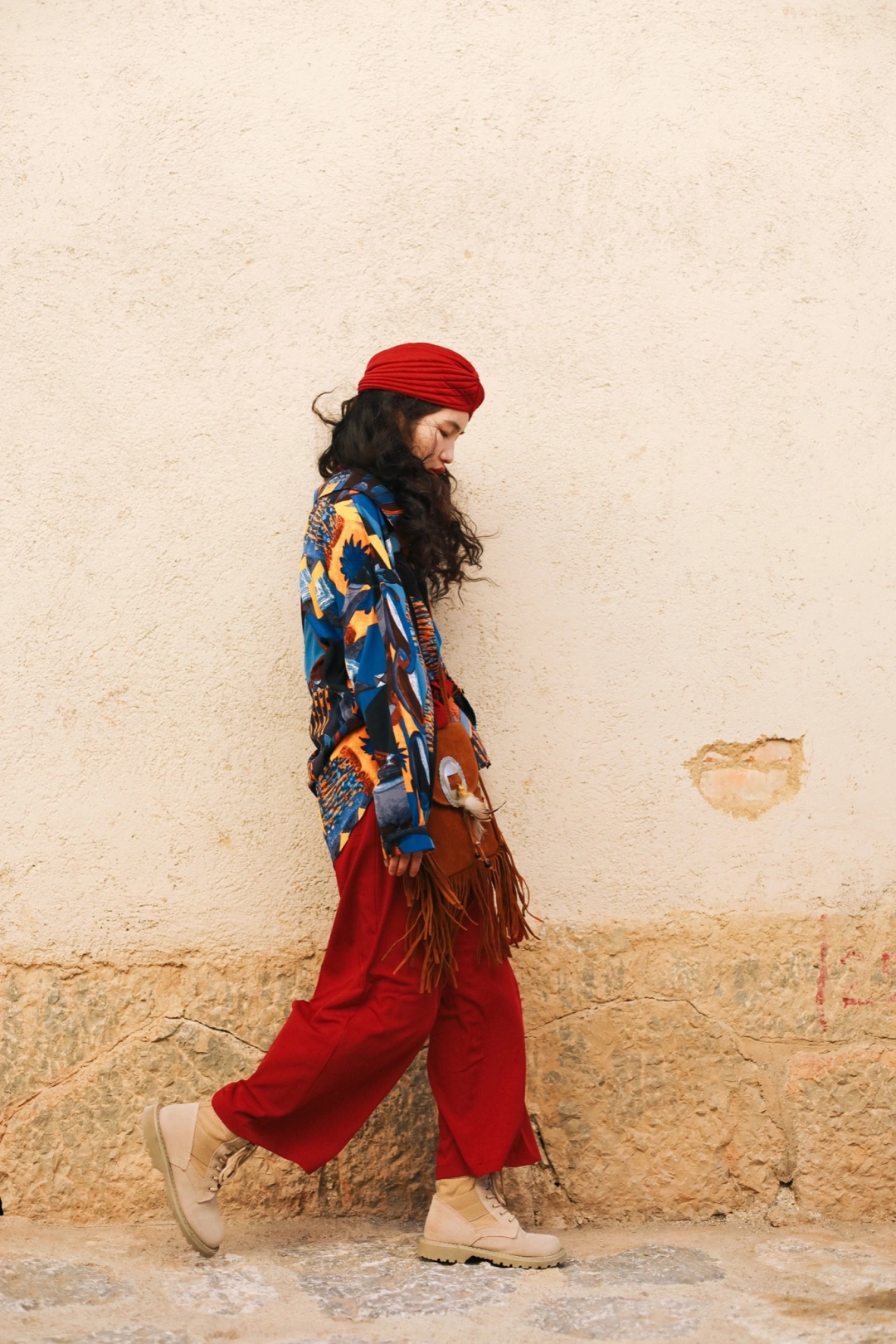
A young guy called back, "Sure, but the guesthouse isn't open yet, and I haven't cleaned up. If you don't mind, come on up and hang out!"
As soon as I walked through the door, I saw Polaroid photos of foreigners plastered all over the walls. Following the spiral staircase to the second floor, we found the owner's small café and bar, along with a few guest rooms.
The owner was holding a little orange cat. He said the mother cat had just been spayed and was still in critical condition at the hospital. I meant to say I felt sorry for the mother cat, but what came out of my mouth was, "I feel so bad for the big orange cat—dying young." To this day, I can't figure out how those words slipped out. I quickly apologized.
The light on the second floor was beautiful. Xiao Su and I happily took photos under the prayer flags while Teacher An chatted with the owner.
In the End: Yunnan, a Poem That Never Ends
The seven-day journey came to an end, but the feelings Yunnan gave me will never end.
From the blue skies and white clouds of Lijiang to the snow-capped mountains and grasslands of Shangri-La; from the sapphire gem of Qingxi Reservoir to Shudu Lake in Potatso; from the twilight of Dukezong Old Town to the prayer wheel at Guishan Park—every scene is like a poem, every experience like an essay.
Yunnan is a romantic prose poem that can never be finished. It taught me that life can slow down, that it can be as free as the clouds and as gentle as the wind.
If you're tired too, why not take a trip to Yunnan? Here, you can find poetry and distant lands, and you can also find your most authentic self.
Practical Tips: - The temperature difference in Yunnan is huge—bring enough clothes - In high-altitude areas, remember sun protection and moisturizing - Book accommodation and transportation in advance - Respect local culture and customs - Keep an open mind—you'll encounter unexpected beauty
It was nice to meet you. I hope my smile brings you joy, and I hope my travels give you a little bit of happiness.
You should also read:
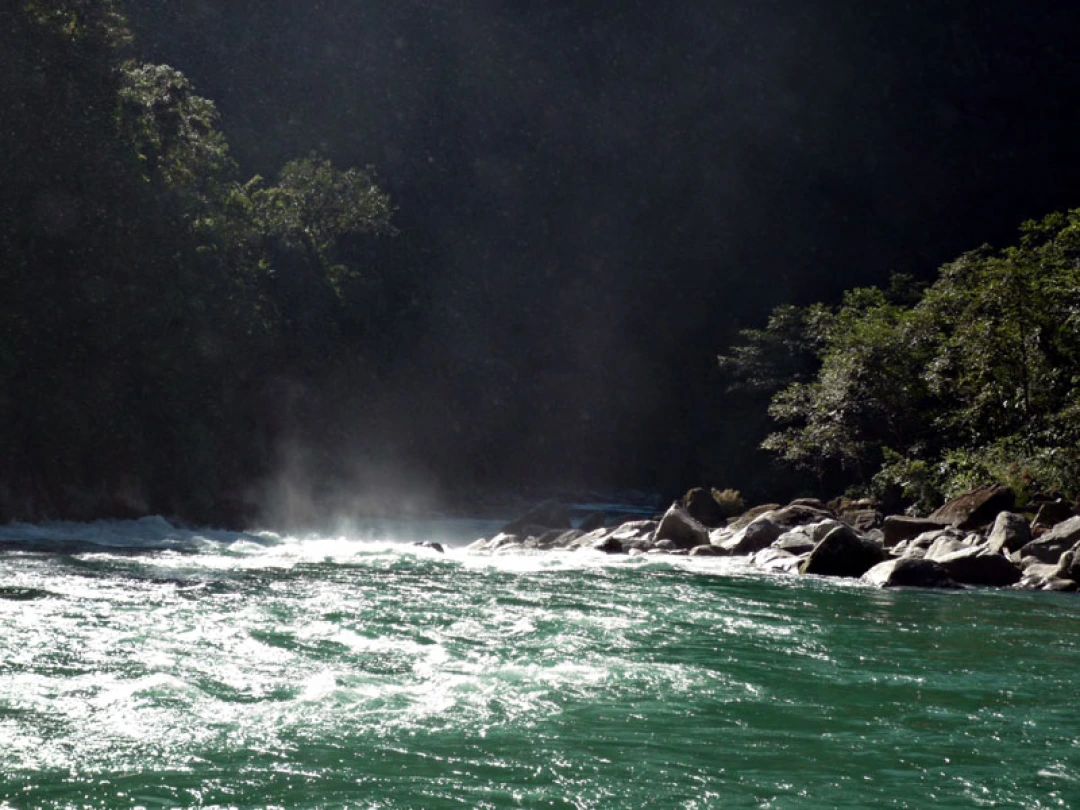
Into the Hidden Valley: A Solo Journey Through the Mysterious Dulong River
Into the Hidden Valley: A Solo Journey Through the Mysterious Dulong River Deep in the northwestern corner of Yunnan Province, tucked away from the modern world, lies a place that feels like a secret whispered among mountains. The Dulong River Valley is not just a…
Continue reading...
God’s Abandoned Palette: A Self-Drive Journey Through Yunnan’s Dongchuan Red Land
God’s Abandoned Palette: A Self-Drive Journey Through Yunnan’s Dongchuan Red Land Travel has never been about reaching some distant geographic coordinate. It’s about encountering, along the way, the version of yourself buried beneath the rubble of daily routine. During this May Day holiday, I finally…
Continue reading...
Cloud Travelogue · Dali of Wind, Flowers, Snow, and Moon: A Three-Day, Two-Night Journey of a Free Spirit
Cloud Travelogue · Dali of Wind, Flowers, Snow, and Moon: A Three-Day, Two-Night Journey of a Free Spirit I am a cultured female foodie with a touch of rogue charm. I slung on my backpack, took my lover's hand, and set off on a spontaneous…
Continue reading...