Yunnan ▎ At Nineteen, One Car, One Person's Journey — This Is How Youth Should Burn
Yunnan ▎ At Nineteen, One Car, One Person's Journey — This Is How Youth Should Burn
What were you doing at nineteen? Cramming for exams, falling in love, playing video games, or scrolling through other people's travel videos in your dorm? In the autumn of 2017, a boy from Northeast China named Xiao Long used a 136-yuan plane ticket to throw himself into the land of colorful clouds — Yunnan. No travel companions, no guidebook, just a rental car, a camera, and a heart full of curiosity about the world. This wasn't some influencer-style photo-op trip. It was a letter of love written to himself by a perfectionist Virgo with an INFJ personality type.
The Beginning: An "Impulse" Triggered by a Plane Ticket
If you're a travel enthusiast, you know that feeling — seeing a flash sale airfare and your fingers start itching. Ruili Airlines had a Singles' Day promotion: Shenyang to Kunming, one-way, including taxes and insurance, for just 136 yuan. That's right — round trip for 272 yuan. To put that in perspective: in Beijing or Shanghai, a taxi ride from downtown to the airport costs more than that.
At the time, Xiao Long was working as an intern at Uniqlo. His salary wasn't high, but when it came to travel, he never held back. As a seasoned globetrotter who had already visited South Korea, Japan, Thailand, Cambodia, Sri Lanka, Australia, and over a dozen Chinese provinces, he knew one thing well: travel isn't spending money — it's investing. Investing in your perspective, your life experience, and your story bank.
So, on a whim, he bought the ticket. He left twenty days later, for a ten-day trip along the classic Kunming-Dali-Lijiang route. The timing was just right, the budget was just right, everything was just right — except for the mild cold he caught right before departure.
Kunming: The "Welcome Gift" from the Spring City

Airport Scams and Seagulls at Dianchi Lake
Landing at Kunming Changshui Airport at 11 p.m., the subway had already shut down. There were two airport bus options: the 919C public bus for 13 yuan, or the airport express for 25 yuan. Staff members, cleaning uncles, even security guards by the roadside — everyone urged him to take the 25-yuan option: "That one's faster, that one's better." The result? The 13-yuan bus came and went twice, while the 25-yuan express was still waiting to fill up. Xiao Long later complained in his travel journal: "The express wasn't fast at all. I guess that's the 'introductory lesson' of a tourist city."
Kunming is known as the "Spring City" for its year-round mild weather, but late November proved to be a moody child — overcast and drizzly. On his first day, dark clouds rolled in, and Xiao Long's heart sank: if he couldn't see the snow-capped mountains and Lugu Lake was a washout, wouldn't this whole trip be a waste? Fortunately, starting from Lijiang, the weather gods finally showed some mercy.
On the east side of Dianchi Lake lies Haigeng Park, a popular spot for locals to exercise and jog. The park is free, and a direct bus costs just 1 yuan. From October to November each year, the park is swarmed by seagulls — and that's not an exaggeration; it's genuinely a plague of them. Tens of thousands of black-headed gulls fly in from Siberia to spend the winter, circling and scavenging by the lakeshore, creating a scene straight out of a nature documentary.
Er Kuai and Rice Noodles: The "Soul Snacks" of Yunnan
In Kunming, Xiao Long tried fried 饵块 (Er Kuai) for the first time. Er Kuai is a rice-based product unique to Yunnan, with a chewy, springy texture. In Northeast Chinese terms, he explained it as "a stir-fried pancake made with soy sauce and leafy greens." The bowl of plain rice noodles next to it was the standard breakfast and filler meal for locals. Later in Dali, he also tried cross-bridge rice noodles (过桥米线), but the dish that lingered in his memory was this humble, honest bowl from a street-side shop.
Dali → Lijiang: The Extraordinary on an Ordinary Road
Renting a Car: A Painful Lesson
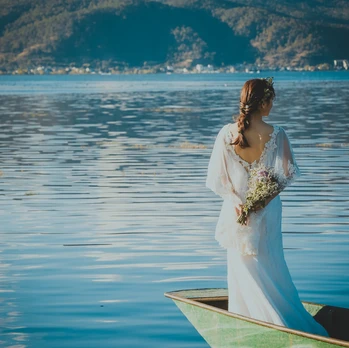
From Kunming to Dali, Xiao Long chose an overnight sleeper train — departing at 11 p.m., arriving at 7 a.m., saving one night's accommodation and gaining a full day. The next morning, he picked up his rental car at the Shenzu Car Rental counter near Dali Railway Station. With a credit score of 650 or above on Alipay, the deposit was waived, and the process was smooth. But the car itself... He had booked a Buick Excelle. It looked nice, but the ground clearance was ridiculously low. Yunnan's national highways, provincial roads, and even some "main roads" were full of potholes. The Excelle scraped its undercarriage the whole way, and Xiao Long cursed under his breath every time. His advice: if you're renting a car in Yunnan, choose an SUV if you can. If you must pick a sedan, don't pick an Excelle.
Circumnavigating Erhai Lake: Northward Bound, No Looking Back
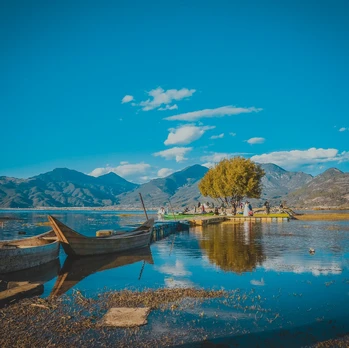
From Dali to Lijiang, Xiao Long's route was textbook-perfect: take the west side of Erhai Lake on the way there, and the east side on the way back, capturing both sides' beauty without backtracking. On the west side, he passed through Xizhou Town and Haishe Wetland Park. Xizhou Ancient Town was eerily quiet and still charged a 20-yuan entrance fee, so Xiao Long drove right past. Haishe Wetland Park was free. Its shape resembles a tongue sticking into Erhai Lake, offering nice views. From the entrance to the scenic area, it's a few hundred meters — you can take a horse-drawn carriage or a "three-wheeler."
Heading north, with Pu Shu's "Ordinary Road" playing in the car and the Cangshan Mountains and Erhai Lake outside the window under a blue sky dotted with white clouds, Xiao Long said: "I listen to this song on every trip. Hearing it in different places, it feels completely different."
Shuhe Ancient Town: So Quiet It Makes You Want to Become a Monk
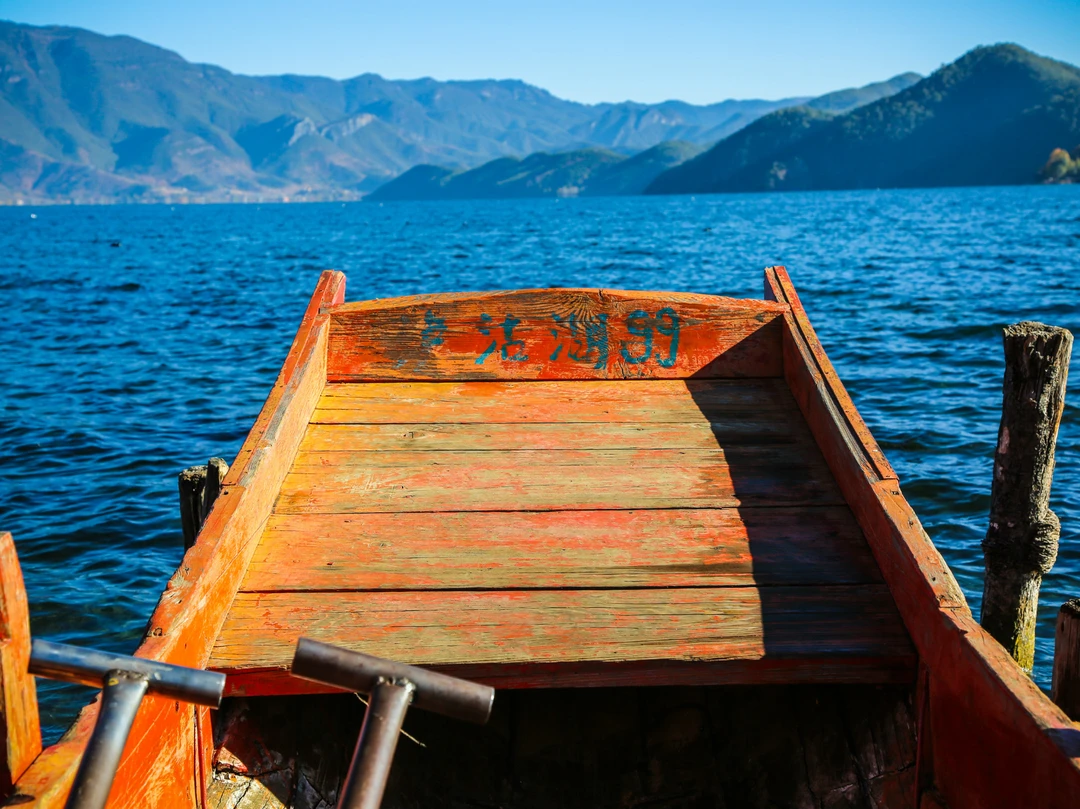
Arriving in Lijiang at 7 p.m., his first stop was Shuhe Ancient Town. Compared to the crowds of Lijiang Old Town, Shuhe was as quiet as another world. Far fewer tourists, no noisy bars or hawking vendors — just stone-paved streets, small bridges over flowing water, and the occasional sound of hand drums. Xiao Long wrote in his journal: "In the morning, find a tea house, sip a cup of tea, and you can sit there all morning. I love cities with a slow pace of life."
Lashihai Lake: A Pleasant Surprise Amid the Scams
On the fourth day, he had originally planned to visit Jade Dragon Snow Mountain, but he was too tired from the previous day's driving, so he adjusted his itinerary on the fly — that's the beauty of independent travel. He pulled up a map and discovered Lashihai Lake. Online reviews were polarizing: photos were stunningly beautiful, but the horse-riding packages were notoriously overpriced and scammy. Xiao Long decided: just enjoy the scenery, skip the horse riding, and see what they could do to him.
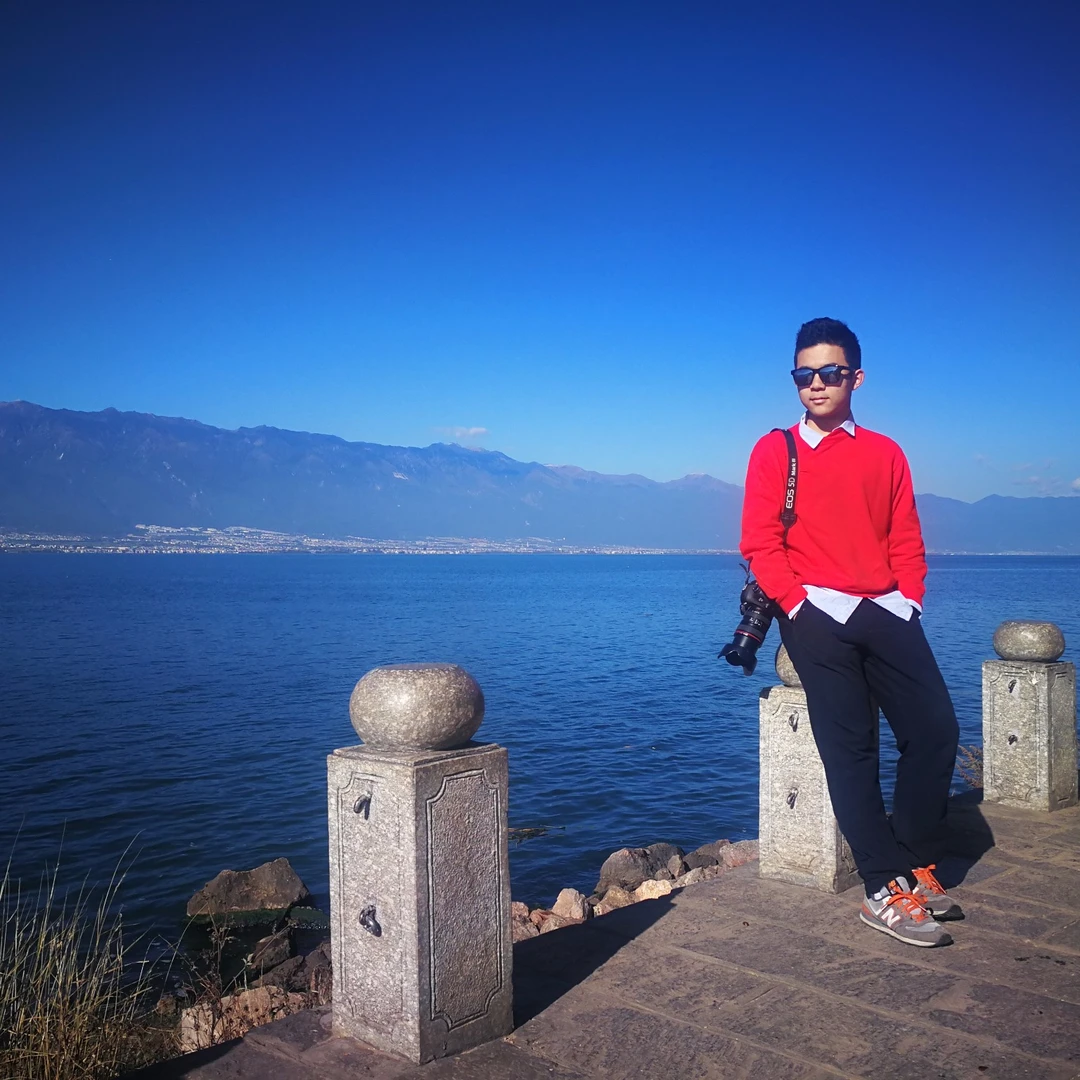
The eastern side of Lashihai was dotted with horse ranches, with prices all over the place like a chaotic market. The cheapest route was listed at 180 yuan, but bargaining it down to 80 yuan was a breeze. Xiao Long didn't ride. Instead, he headed to the Lashihai National Wetland Park in the south. Entrance was 20 yuan, and driving in was free. In the off-season, the park was almost empty — he had the entire blue sky and white clouds to himself. The wetland is home to over 50 species of birds, with more than 30,000 migratory birds wintering there each year. Entering through the east gate, he found a stretch of water so ethereal that almost every wedding photography studio in Lijiang came here for shoots. Xiao Long said: "Even if you can't take photos or edit them, just press the shutter here, and every shot is a masterpiece."
That evening, he met up with friends from a Lijiang travel group and had an authentic Dai-style hand-grabbed rice feast. Everyone got a pair of gloves and ate with their hands. Fried potatoes, fried chicken, sour-and-spicy vegetable salads, tangy chili dipping sauces... Xiao Long was sweating from the spice but thinking to himself: "I miss Yangzhou fried rice."
Jade Dragon Snow Mountain: Conquering the Impossible at 4,680 Meters
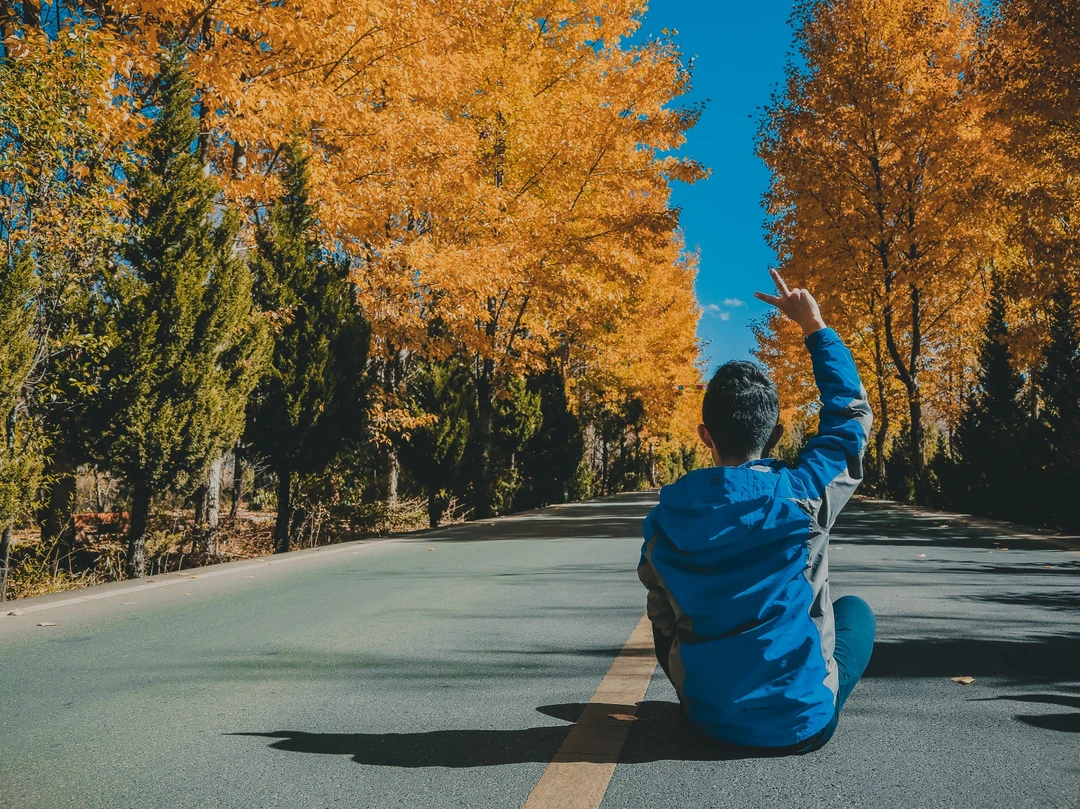
Sunrise at 4 a.m.
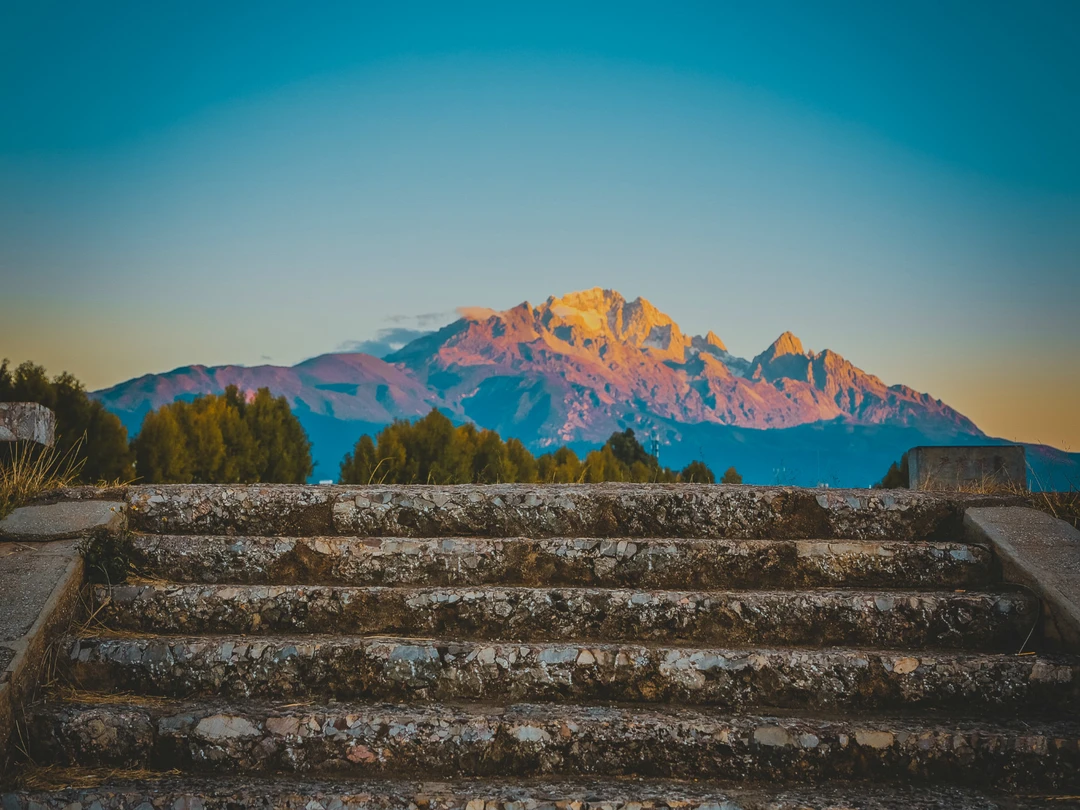
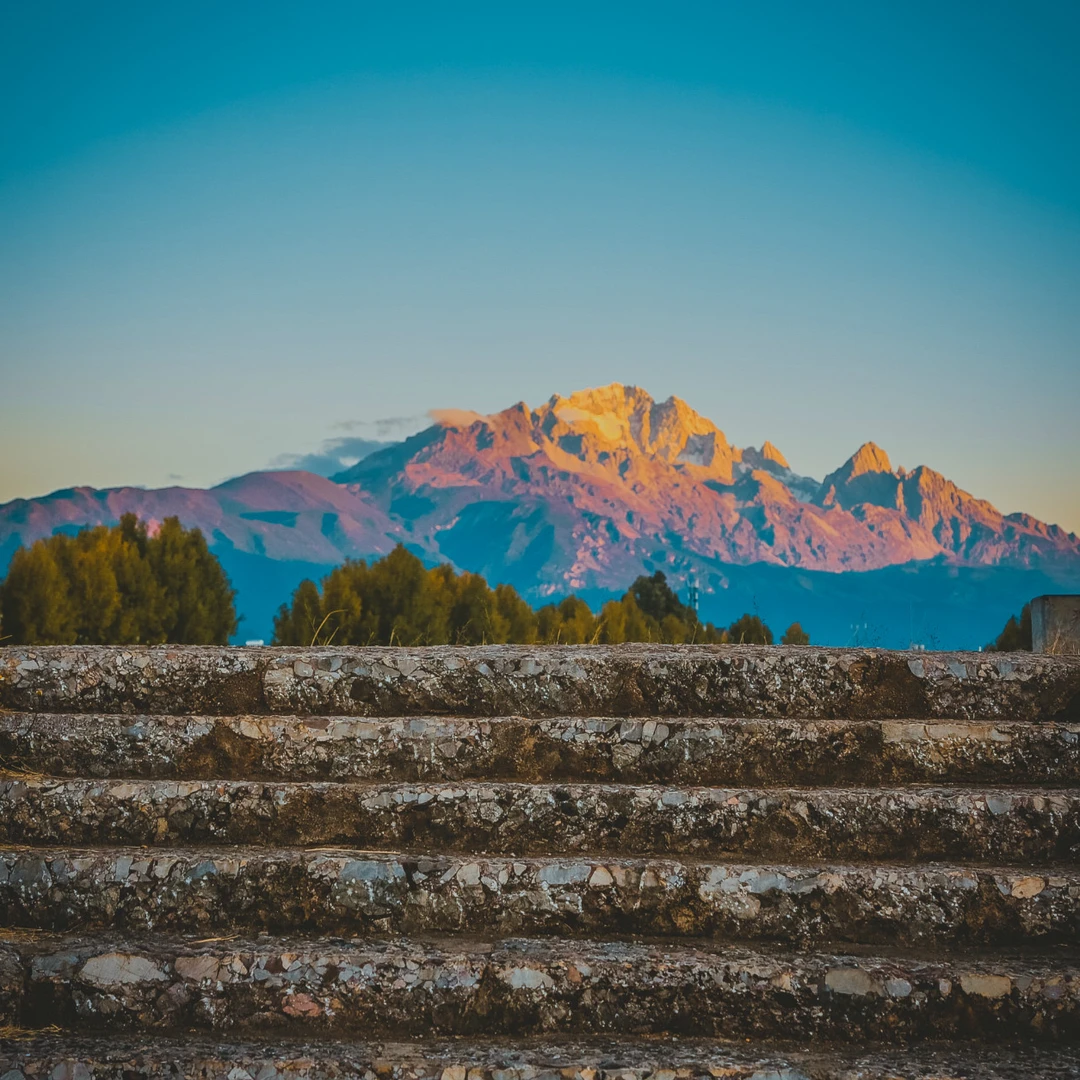
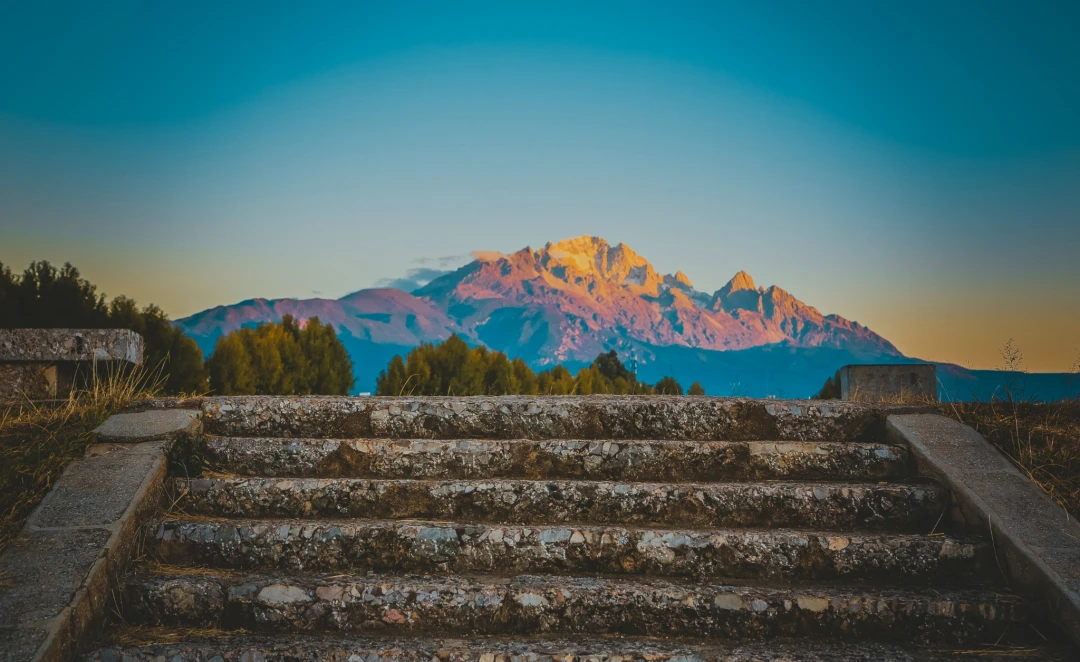
On the fifth day, it was finally time for the main event — Jade Dragon Snow Mountain. Before setting out, Xiao Long was well-prepared: he bought oxygen canisters, checked the sunrise time, and woke up at 4 a.m. to drive to a large reservoir on the outskirts of Lijiang. According to tips from local photography enthusiasts, this was the best spot to capture the snow mountain at sunrise. He lugged his camera to the top of the reservoir dam and waited in the cold.
The sun emerged from the edge of the pitch-black sky, casting a red glow directly onto the snow-white peak. At that moment, Xiao Long said: "That was the most beautiful sunrise I've ever seen."
Reaching the Summit: Every Step a Conquest
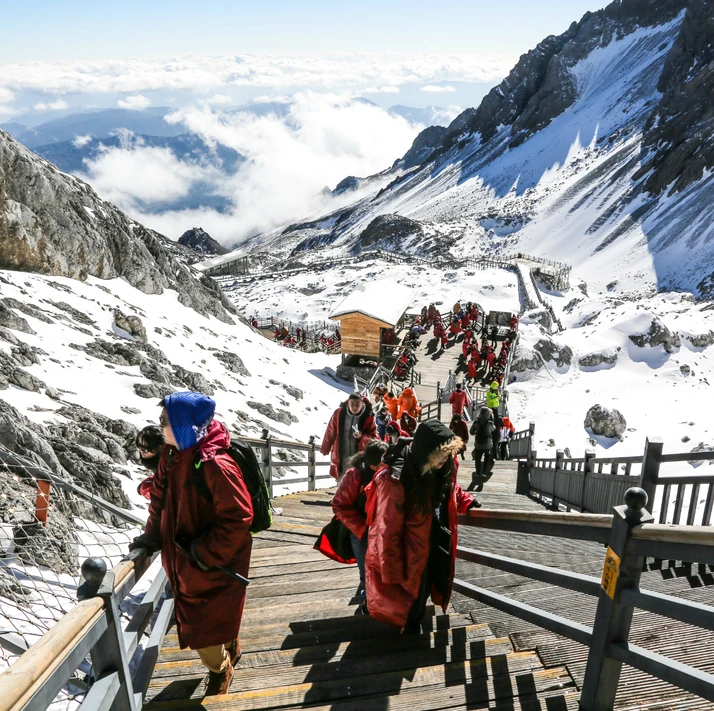
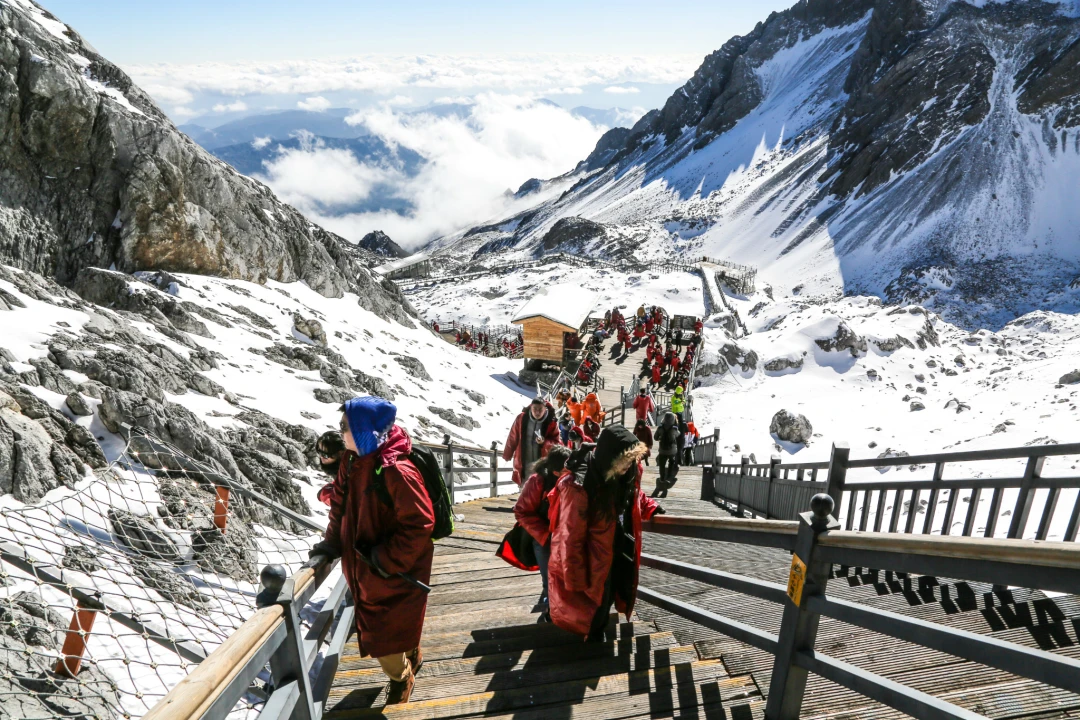
Jade Dragon Snow Mountain has three cable car routes: the large cable car (Glacier Park, elevation 4,680 meters), the middle cable car (Yak Meadow), and the small cable car (Spruce Meadow). Most people choose the large cable car because it reaches the highest point accessible to tourists. The cable car ticket cost 200 yuan (including round trip and shuttle bus), and the mountain entrance fee was 130 yuan. Xiao Long's advice: if you see a sign at the entrance telling you to turn right to buy cable car tickets, make sure you turn in — otherwise, you'll have to drive past and come back.
Arriving at the parking lot at 9 a.m., Xiao Long was wearing the down jacket he brought from Northeast China, skipping the rental of the park's long coats. He queued for the shuttle bus, then transferred to the cable car. Each car held eight people and moved at high speed — the second half of the ride was almost vertical, climbing 1,000 meters in about ten minutes. In his car, seven people were riding, and three were already sucking on oxygen. The atmosphere was tense. Xiao Long's biggest fear wasn't altitude sickness — it was his fear of heights.
Getting off the cable car at 4,506 meters, many people immediately started vomiting, gasping for oxygen, or leaning against the walls, unable to move. Xiao Long found a spot, took deep breaths for five minutes to let his body adjust to the altitude, and then began walking slowly. He controlled his steps, controlled his breathing, didn't say a word. Every step felt like climbing thirty. Half an hour later, he stood at the top — 4,680 meters.
He bought a gold medal with his name engraved on it. At that moment, he said: "I couldn't contain my joy. Man and nature became one."
Blue Moon Valley: The "Lijiang Blue" He Couldn't Leave Behind
After descending, Xiao Long went to Blue Moon Valley. On sunny days, the lake here turns a brilliant blue, and the valley is crescent-shaped, looking from afar like a blue moon set at the foot of the snow mountain. He sat by the lake for an hour, just staring at it. Even when it was time to leave, he couldn't bear to go. The water in Blue Moon Valley isn't drinkable — it contains copper ions — but that shade of blue... some call it "Maldives Blue." Xiao Long called it "Lijiang Blue."
That evening, three women from southern China he had met at Blue Moon Valley invited him for a preserved pork rib hotpot. The four of them ate for just over 130 yuan — not expensive. Yunnan cuisine tends to be sour and spicy, and Xiao Long, a Northeasterner, was sweating profusely, but the preserved pork rib hotpot didn't disappoint. He also tried a dish called "水性杨花" (literally "watery and flirtatious flower") — a poetic name. The taste, though... he wasn't a fan.
Lugu Lake: Half in Yunnan, Half in Sichuan
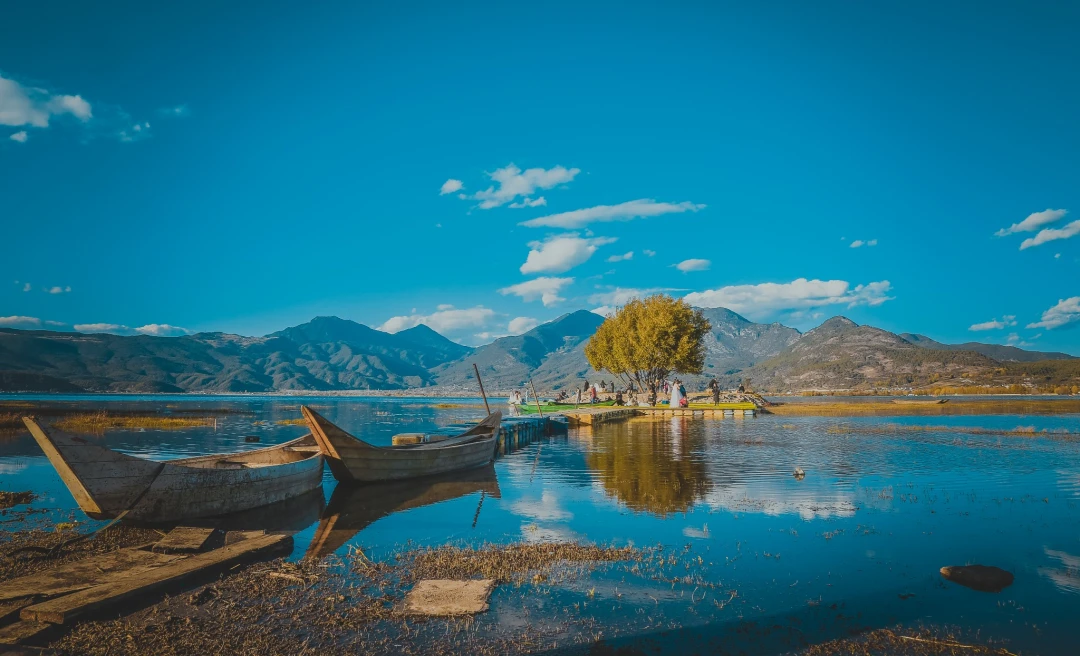
On the sixth day, Xiao Long joined a pure-play small group tour to Lugu Lake. From Lijiang to Lugu Lake, there was no expressway — just winding mountain roads. The bumpy ride made him a bit carsick. But when the van crested the last hill and Lugu Lake appeared before them, everyone forgot their fatigue — the azure water merged with the sky, so beautiful it looked fake.
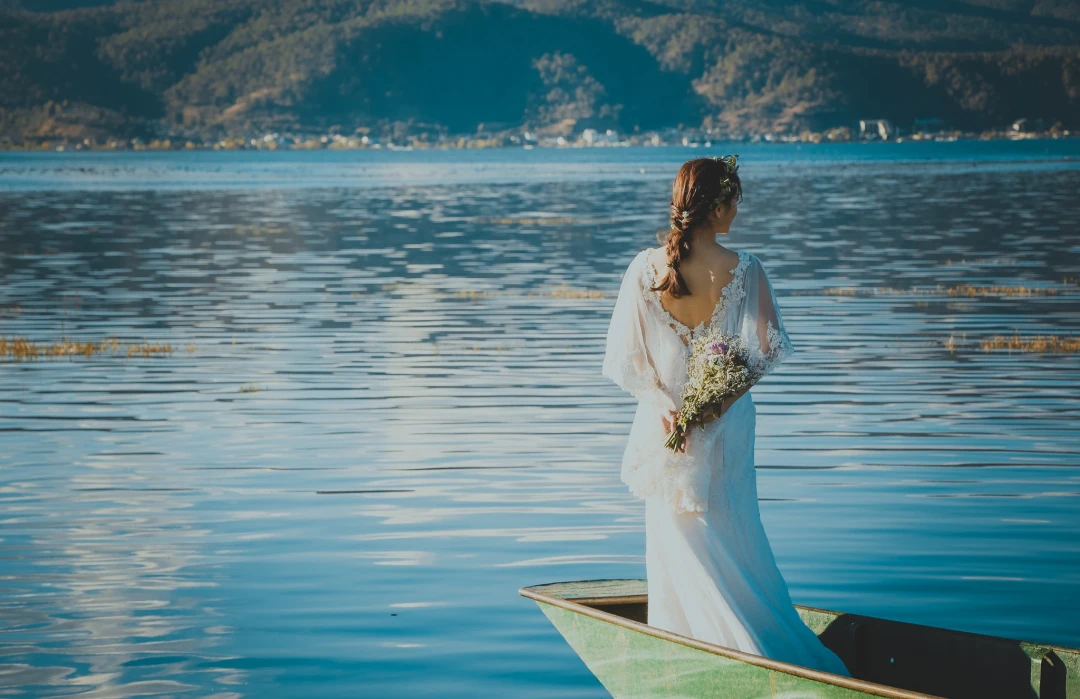
Lugu Lake is roughly circular, with a circumference of about 70 kilometers. Half lies in Yunnan, half in Sichuan. Xiao Long took a small boat rowed by a Mosuo family member, bought a pack of salted fish to feed the seagulls. The lake water was so clear you could see straight to the stones and water plants at the bottom. He wrote in his journal: "With scenery like this, give me a small boat, and I could row all day."
On the tour, he met a guy who served as a firefighter in Xinjiang. Both were traveling solo, and they hit it off immediately. That evening, they shared a clay pot chicken hotpot.
Lijiang → Dali: Goodbye and Growth
On the seventh day, with a heavy heart, Xiao Long drove from Lijiang back to Dali. In the car, Hao Yun's "Go to Dali" played:
Are you not quite satisfied with life?
Haven't laughed in a long time and don't know why
Since you're unhappy and don't like it here
Why not head west to Dali?
He took the east side of Erhai Lake — a different route from the one he came on — and saw yet another set of stunning views. Along this journey, he had gained so much: the seagulls of Dianchi Lake, the serenity of Lashihai, the majesty of Jade Dragon Snow Mountain, the purity of Lugu Lake... and all the people he met along the way — the women from the south, the firefighter from Xinjiang, the friends from the travel group.
Travel is like that. It won't give you direct answers, but it will give you a new angle on the world. Nineteen-year-old Xiao Long, with one car, one camera, and one brave heart, drew a circle around Yunnan. Inside that circle were surprises, pitfalls, emotions, and growth.
In Conclusion: Youth Without Limits
Many people ask: Isn't traveling alone lonely? Xiao Long's answer: When you're too busy seeing the world, you don't have time to be lonely. From Northeast China to the Southwest, from the plains to the plateau, from the city to the snow mountains, he measured every inch of Yunnan in his own way.
He stepped into traps — renting a car with too low ground clearance, being "fooled" by airport bus staff, the chaotic pricing at Lashihai. He also gained priceless beauty — sunrise over the snow mountain, flocks of seagulls, the waters of Blue Moon Valley, the starry sky over Lugu Lake. More importantly, he learned how to be with himself, how to find a sense of belonging in unfamiliar places.
The world at nineteen — you can't imagine it. Not because it's so extraordinary, but because you haven't set out yet. Once you truly hit the road, you'll discover: the world is bigger than you think, and also gentler. Just as Xiao Long wrote at the end of his travel journal:
"Travel is a magical thing. On the road, you can learn things you'd never learn in a classroom or even among friends. It broadens your horizons and enriches your life. After completing a perfectly planned independent trip, you'll find — it gives you a tremendous sense of accomplishment."
So stop waiting. Your nineteen-year-old self deserves a "Yunnan" of your own.
You should also read:

Cloud Travelogue · Dali of Wind, Flowers, Snow, and Moon: A Three-Day, Two-Night Journey of a Free Spirit
Cloud Travelogue · Dali of Wind, Flowers, Snow, and Moon: A Three-Day, Two-Night Journey of a Free Spirit I am a cultured female foodie with a touch of rogue charm. I slung on my backpack, took my lover's hand, and set off on a spontaneous…
Continue reading...
The Meaning of Travel – A Tengchong Story: A Journey of the Heart and Personal Growth
The Meaning of Travel – A Tengchong Story: A Journey of the Heart and Personal Growth Setting Out, Only to Return a Better Self Some say travel is nothing more than leaving a place you're tired of, only to go to a place where others…
Continue reading...
A Spiritual Journey to Lugu Lake in Lijiang: Experiencing the Legend of the Kingdom of Women! (Reproduction and Hotlinking Prohibited)
A Spiritual Journey to Lugu Lake in Lijiang: Experiencing the Legend of the Kingdom of Women! (Reproduction and Hotlinking Prohibited) Off-road自驾, food, hotel and民宿 reviews, Featured Traveler, Tank 300 owner, 200,000 km of self-driving experience. WeChat: y01294987 Ninglang Yi Autonomous County 2010.11.08 · 7 days…
Continue reading...