Yunnan | Dali, Tengchong, and Mangshi: An Unexpected Gentle Encounter
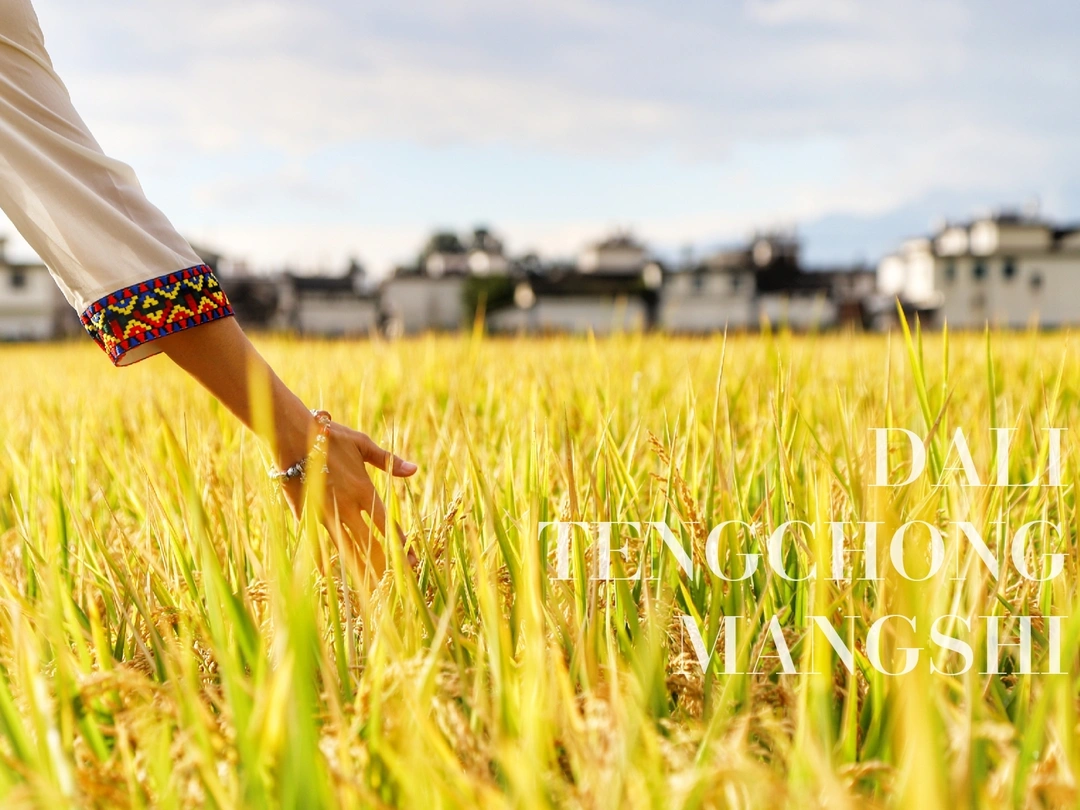
Yunnan | Dali, Tengchong, and Mangshi: An Unexpected Gentle Encounter
"Give time to civilization, not civilization to time." This quote from The Three-Body Problem took on new meaning the moment I set foot on Yunnan soil. We may all be bugs living in the gutter, but some of us still look up at the stars—and in Yunnan, the stars hang so low you feel you could pluck them from the sky.
During the 2020 National Day holiday, a trip originally planned for the Spring Festival was postponed for nine months due to the pandemic. Who would have thought we'd turn National Day into Spring Festival, transforming regret into surprise? Over nine days and eight nights, Dali, Tengchong, and Mangshi—three names that sound like poetry—showed me their truest selves and gave me a "blessing in disguise" kind of healing.
How It Began: A Spontaneous Plane Ticket
On October 3, 2020, my friend and I flew out of Guangzhou. We used a weekend flexible flight pass to redeem round-trip tickets, paying only 100 yuan in taxes. Adding two days of leave, we pieced together a nine-day itinerary. Because of a sudden COVID outbreak in Ruili, tourist numbers in Yunnan plummeted—we had originally worried about "overcrowding," but when we arrived in Tengchong, the ancient town felt almost like a ghost town.
What does it mean when there are fewer people? It means you can hear the wind rustling through the rice paddies in Xizhou. It means you can stroll through Dali's old town without being jostled forward. This "unexpected bonus" made the entire trip infinitely more comfortable and joyful.
Dali: The Blue and White That Haunts My Dreams

Dali—a place I had fantasized about countless times. The azure waters of Erhai Lake on my social media feed were like a giant net, trapping me, a southerner, completely. But when I finally stood by the lake, my first thought was: Wait, why isn't the water as blue as I imagined?
Those "liars" on social media—Erhai's water really isn't as sapphire as it appears with filters. But strangely enough, I still loved it. Because reality, often more than perfection, is what truly moves us.
Dali Old Town: A Commercial Shell with an Artistic Soul
Starting from the old town, we rented a car and began our journey around Erhai Lake. Dali's old town is commercialized, as expected, but it didn't disappoint. What we cared about more was: Which café has the best coffee beans? Which alley is less crowded? Which cat will let me pet it?
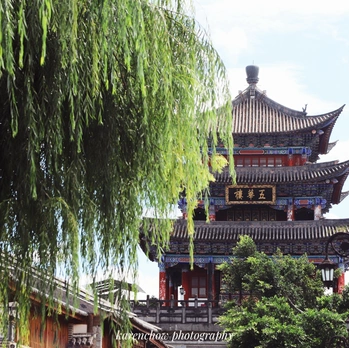
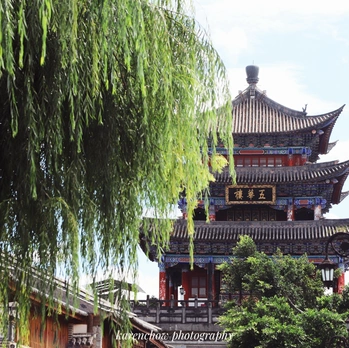
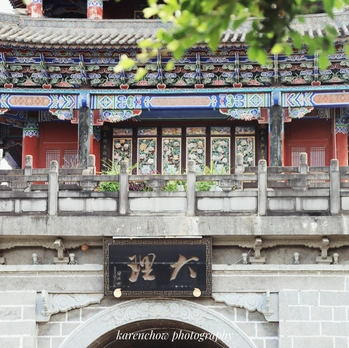
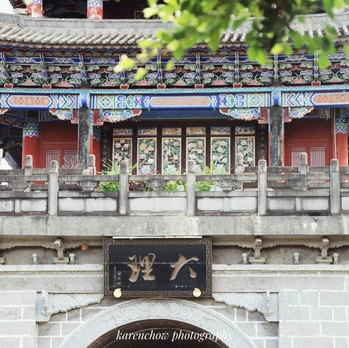
Wuhua Tower is a landmark of the old town. Originally the guesthouse for the Nanzhao king, it was where Kublai Khan once stationed his troops. After being burned down in the early Ming Dynasty, it was rebuilt as a bell and drum tower. In 1982, the southern gate was restored, and the two characters "大理" (Dali) on the gate were taken from calligraphy by Guo Moruo. These fragments of history add a layer of depth to the old town.
But what captivated me most was a small street on the edge of the old town, far from the main road. Few people, quiet, with cafés playing music and sunlight filtering through the leaves, casting dappled shadows on the stone pavement. We strolled along, teasing cats and dogs, and even encountered a "sunflower seed" pattern that might trigger trypophobia—but I couldn't resist sharing it.
Practical Info: Dali Old Town is free to enter. Spend about 2 hours here. I recommend visiting the Bed Sheet Factory Art District, located near the old town. It's free and takes about 30 minutes to explore. This is a haven for the artsy crowd, with vintage warehouses, cafés, and handicraft markets. Since we visited when tourists were scarce, the market was quiet, but the wall murals are worth a photo.
Hua Ban Yi Sheng: Making a Flower Cake with My Own Hands
In Dali, there's a place that completely changed my opinion of flower cakes—the Hua Ban Yi Sheng (Flower Companion Life) Flower Cake Experience Center.
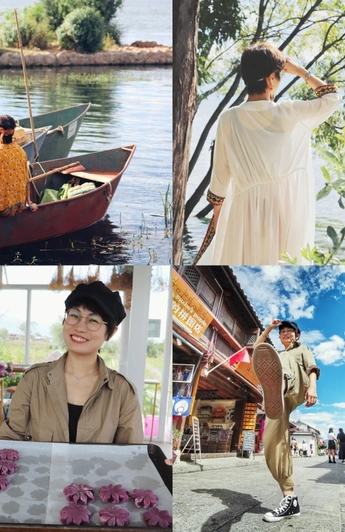
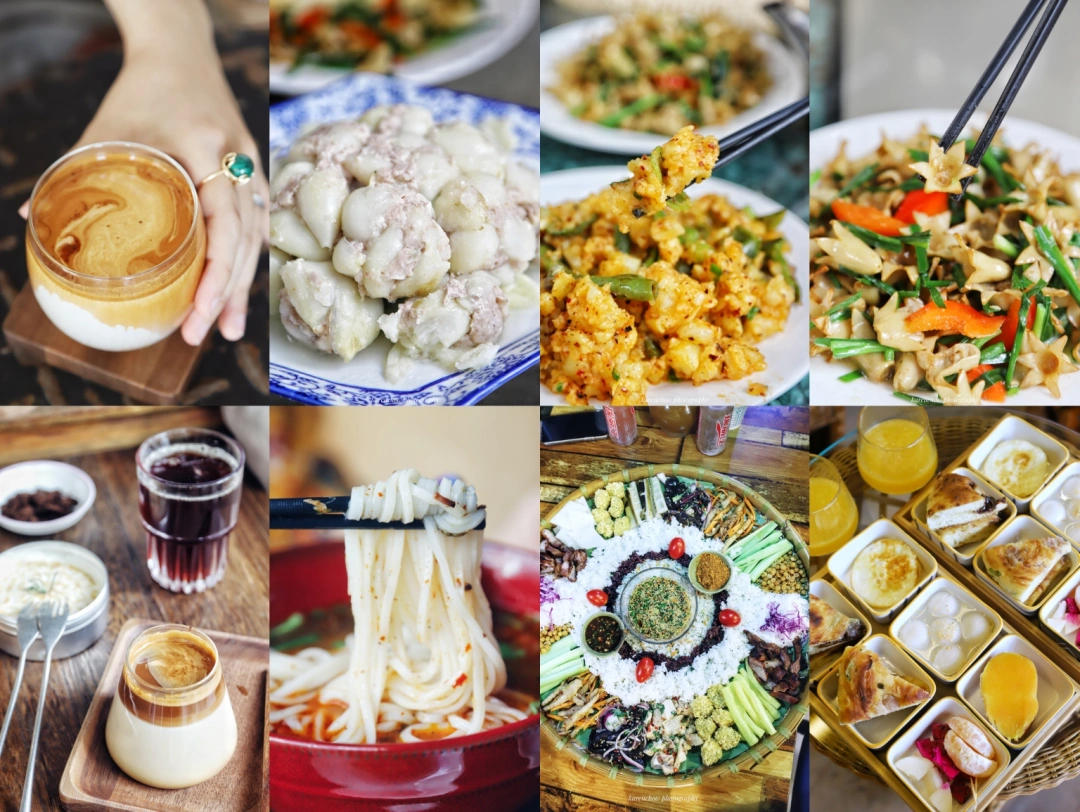
Over a decade ago, a colleague brought back flower cakes as souvenirs, and their cloying sweetness made me steer clear ever since. But here, I kneaded the dough, stuffed the filling, and baked it myself. In 15 minutes, I had six misshapen flower cakes. Fresh out of the oven, the crust was crisp, the rose aroma rich, and the sweetness just right. So this is what a real flower cake tastes like.
The center is spacious, divided into a baking area and a farm. The baking experience costs 98 yuan per set, and two people can share one. While waiting 20 minutes for the cakes to bake, you can explore the farm. Rose fields, alpacas, and a white horse—these alpacas were the cleanest and gentlest I've ever seen, with big fluffy butts that were utterly adorable. They lie down to eat grass, follow their keeper to "do their business," and even pose for wedding photos.
Practical Info: Located 20 meters north of Luchengwei, Dali Road. Free entry. Flower cake baking is 98 yuan per set. Farm photos are free with no time limit. Easy parking, and the staff are friendly.
Xizhou Rice Paddies: Golden Guardians
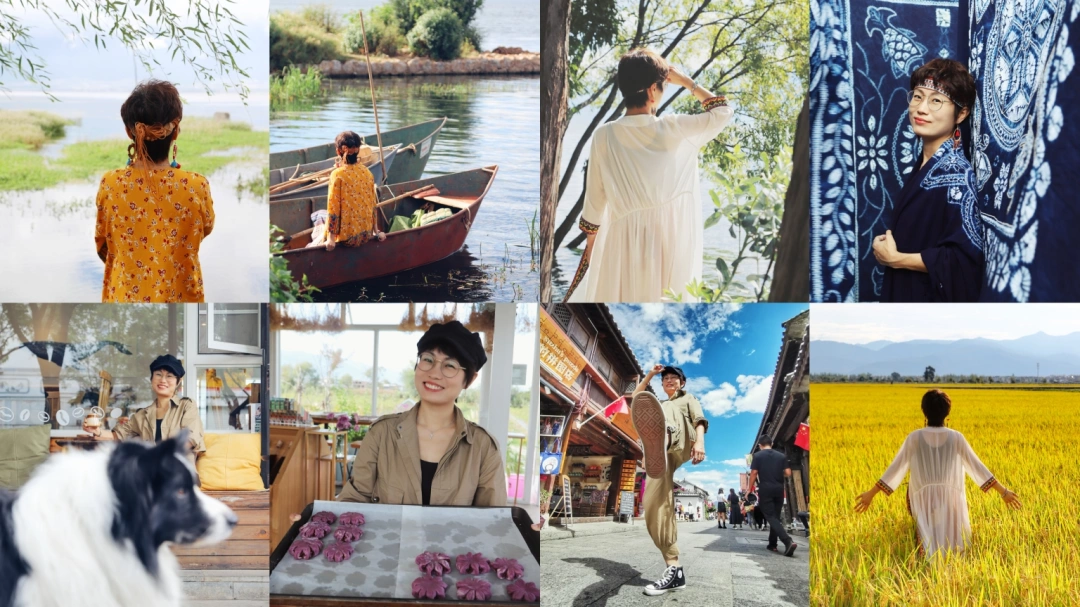
Xizhou is famous for its Instagram-worthy rice paddies. We arrived before 9 a.m., when there weren't many people and the sunlight was perfect. Golden waves of rice rippled in the breeze. In the distance, someone rode a small scooter, someone drove a pink Beetle, and farmers with baskets and tractors moved through the fields—a scene of genuine harvest.
I walked into the paddies in my white sneakers and came out with them turned into "little mud shoes." But it was worth it. In that sea of gold, I saw a catcher in the rye—not the one from the novel, but real life itself.
Practical Info: Located next to the Shacun Village Committee, Chengbei Village, Xizhou. Free entry. Arrive before 9 a.m. for photos. Be careful not to trample the crops. Wear shoes that can get dirty.
Lanxu and Puzhen: The Blue-and-White Art of Tie-Dye
Xizhou has two places worth visiting for tie-dye experiences.
Lanxu Ancient Tie-Dye Experience Store, at No. 118 Courtyard, Xizhou Town. Free to visit. The highlight is a long glass window that frames the rice paddies like a painting. Arrive before 10 a.m.; the store opens at 9:30 a.m.
Puzhen Bai Ethnic Tie-Dye Museum, in Zhoucheng, about a 1-hour drive from Xizhou. Free entry and free parking. This is a comprehensive showcase of Bai tie-dye, with a history spanning thousands of years. The dye is made from natural indigo (ban lan gen), and the blue-and-white palette is both sophisticated and eco-friendly. We bought a scarf for 260 yuan—handmade and one of a kind.
Around Erhai Lake: The Worthy and the Not-So-Worthy
We circled Erhai Lake and visited several popular spots.
Luwo Mountain Ruins: The famous "Iceland"-style cave has been submerged, leaving only a steep downhill path and a few abandoned buildings. It's small and not worth a dedicated trip.
Xiao Putuo (Little Putuo): A temple on a small island that requires a fee to enter. On the shore, there's a spirited monkey (a "big brother"). A 10-minute photo stop. Come before 9 a.m. to avoid crowds.
Lixiangbang (Ideal State): An unfinished resort styled after Spanish architecture, borrowing from Gaudí and Santorini, with some Chinese elements. It looks decent from afar but up close is all construction debris. Crowded—not recommended.
Wencun Village: A "trendy village" converted from an abandoned settlement, filled with photo props like bird nests and glass swings. I don't care for artificial attractions, though the small boats and wetlands at the edge of the village were unexpectedly beautiful.
Nancun (South Village): My favorite spot of the day. A natural wetland with willow trees, small boats, and an elderly lady selling fruit. Natural beauty is far more moving than any Instagram prop.
Practical Info: Lixiangbang is free, with parking at 10 yuan/hour. Nancun parking is 10 yuan per visit. Wencun Village is not recommended.
Dali Food: From Hand-Grabbed Rice to Firepit BBQ

Gu's Family Private Kitchen: Dai-Style Hand-Grabbed Rice
On the first night, hungry and exhausted, we found Gu's Family Private Kitchen. The place had only a dozen tables and didn't take reservations. We arrived at 6:40 p.m. and were already tenth in line. The owner almost refused to give us a number, but my friend managed to persuade him.
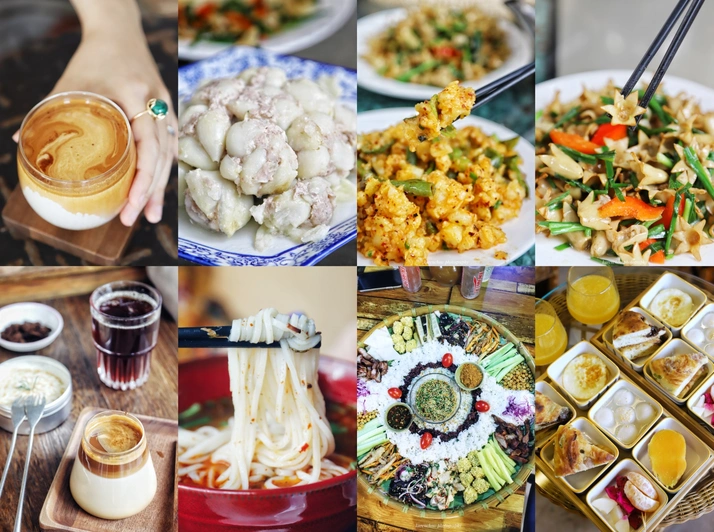
The Dai-style hand-grabbed rice is served on banana leaves, piled with sticky rice, purple rice, roasted pork belly, lemon chicken, potato balls, rice noodles, cucumber, cold-mixed wood ear mushrooms, and rice cakes. Three dipping sauces accompany it; the middle one tastes like Southeast Asian fish sauce—sour and spicy, refreshing. Grab a handful of rice and toppings, squeeze it into a ball, and take a bite—tangy and fresh.
The wrapped roasted chicken tendons and lemon chicken are also worth trying. Average cost: 55 yuan per person, and we were stuffed.
Mingli Commune: BBQ on a Farm
Mingli Commune, a restaurant run by a farmer, operates by reservation at 258 yuan per person. Dining is outdoors, surrounded by flowers and plants. Sudden sun showers are common, and rainbows often follow.
The set meal is all-you-can-eat: Argentine filet mignon, black tiger prawns, French-style chicken legs, cold-water salmon from Cangshan Mountain, French porcini mushroom soup, garden salad, and specialty rice noodles. The steak was perfectly medium-rare, rich in beef flavor; the tiger prawns were bouncy and fresh; the rice noodles sold out early, and we missed out.
As night fell, a bonfire was lit. The owner, wearing overalls, was handsome and friendly. Two dogs—Gongzi and Xiaotian—ran around, jumping on guests with the enthusiasm of the hosts themselves. Finally, everyone gathered to roast marshmallows, creating a warm, family-like atmosphere.
Tengchong and Mangshi: An Ancient Ghost Town and Borderland Charm
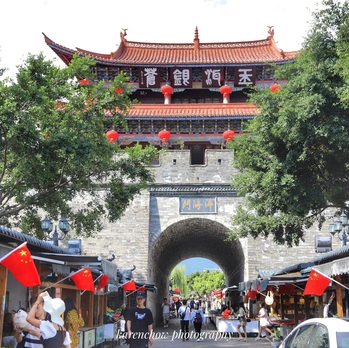
Due to the Ruili outbreak, Tengchong's ancient town was nearly empty. We walked along the stone paths, occasionally passing a few tourists, with shopkeepers outnumbering customers. This "private screening" experience only amplified the town's serene character.
Mangshi, a small border town, is rich in Dai culture. The Golden Pagoda and Silver Pagoda sparkled in the sunlight, and street food was cheap and delicious. The pace here is as slow as an old song, making you want to linger.
Epilogue: Memories You Can't Take Away
Nine days—not too long, not too short. But some memories will stay with me forever:
- At the Hua Ban Yi Sheng farm, an alpaca lay eating grass, and I laughed like a child.
- In the Xizhou rice paddies, a golden retriever jumped into the mud, splashing me all over.
- At Mingli Commune, roasting marshmallows by the bonfire turned strangers into friends.
- On the streets of Mangshi, I ate a bowl of cold noodles for 3 yuan, crying from the spice.
Dali wasn't as perfect as I imagined, and Erhai's water wasn't as blue. But it was these "imperfections" that made the trip real and precious. As The Three-Body Problem says: "Give time to civilization, not civilization to time." We can't extend the length of our lives, but we can broaden their width.
And Yunnan is one of the best places to do just that.
Itinerary Summary (9 Days, 8 Nights)
| Day | Itinerary | Accommodation |
|---|---|---|
| Day 1 | Guangzhou → Dali, explore old town | Dali Old Town |
| Day 2 | Around Erhai Lake: Xizhou, Zhoucheng tie-dye | Xizhou |
| Day 3 | Around Erhai Lake: Haidong, Lixiangbang, Nancun | Haidong |
| Day 4 | Dali → Tengchong | Tengchong Ancient Town |
| Day 5 | Tengchong: Rehai Hot Springs, Heshun Ancient Town | Tengchong Ancient Town |
| Day 6 | Tengchong → Mangshi | Mangshi |
| Day 7 | Mangshi: Golden Pagoda, Silver Pagoda, street food | Mangshi |
| Day 8 | Mangshi → Dali | Dali Old Town |
| Day 9 | Dali → Guangzhou | - |
Practical Tips
- Transportation: Flexible flight pass + car rental is most convenient. For circling Erhai, rent a car; scooters have too much UV exposure.
- Accommodation: Stay one night each in Dali Old Town, Xizhou, and Haidong to experience different vibes.
- Food: Must-tries include Dai-style hand-grabbed rice, flower cakes, and firepit BBQ.
- Photography: Xizhou rice paddies are best before 9 a.m.; arrive at Lanxu tie-dye store before 10 a.m.
- Note: The Ruili outbreak drastically reduced tourist numbers in Yunnan—a rare "perk" of the situation.
All text and images are original. Please do not reproduce without permission.
You should also read:
Yunnan! Paradise on Earth – The Yubeng Chapter: A Soul-Cleansing Journey into Seclusion
Yunnan! Paradise on Earth – The Yubeng Chapter: A Soul-Cleansing Journey into Seclusion Prologue: Why Yubeng? If you ask me which place in Yunnan is most worth hiking to, I would answer without hesitation: Yubeng. This is not an answer I give lightly. As a…
Continue reading...
Solo in Yunnan: A Wanderer’s Guide to the Land of Eternal Spring
Solo in Yunnan: A Wanderer’s Guide to the Land of Eternal Spring There’s something magical about traveling alone. No compromises, no schedules to keep, no one to please but yourself. I’ve been on the road for nearly three months now, and not once have I…
Continue reading...
God’s Abandoned Palette: A Self-Drive Journey Through Yunnan’s Dongchuan Red Land
God’s Abandoned Palette: A Self-Drive Journey Through Yunnan’s Dongchuan Red Land Travel has never been about reaching some distant geographic coordinate. It’s about encountering, along the way, the version of yourself buried beneath the rubble of daily routine. During this May Day holiday, I finally…
Continue reading...