Yunnan in Autumn and Winter: A Solo Journey Under the Lazy Warm Sun, Embracing the Gentle Moments of Dali, Tengchong, and Lijiang
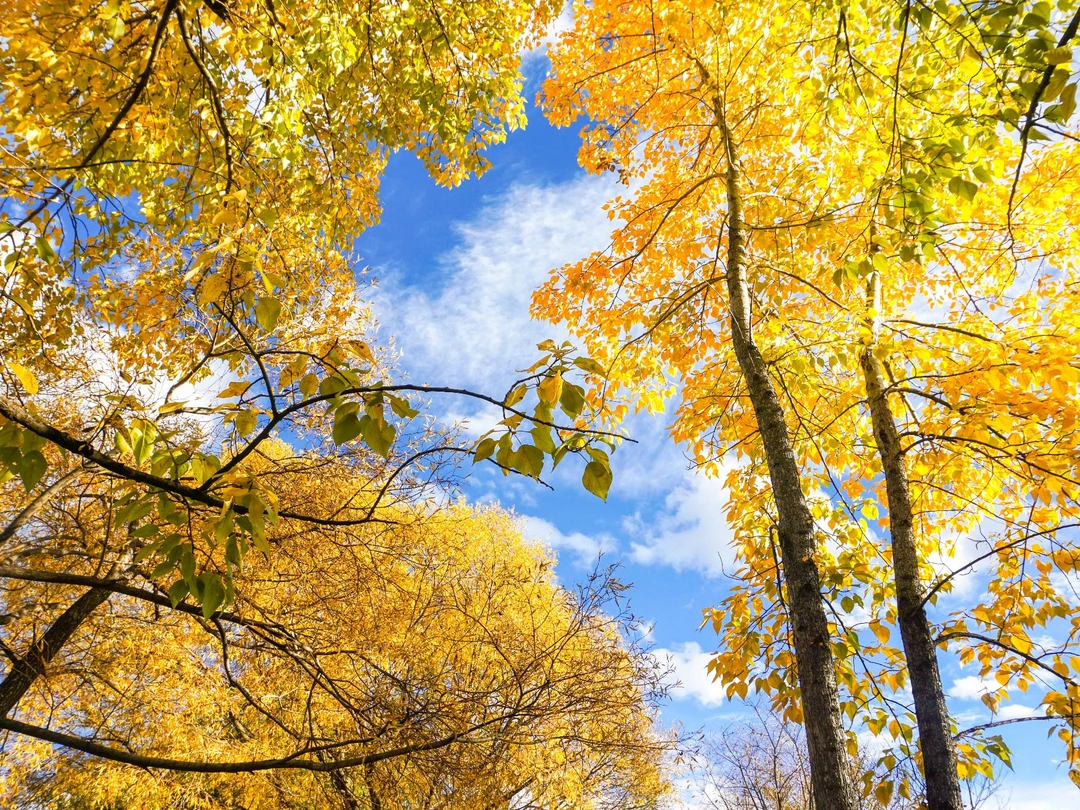
Yunnan in Autumn and Winter: A Solo Journey Under the Lazy Warm Sun, Embracing the Gentle Moments of Dali, Tengchong, and Lijiang
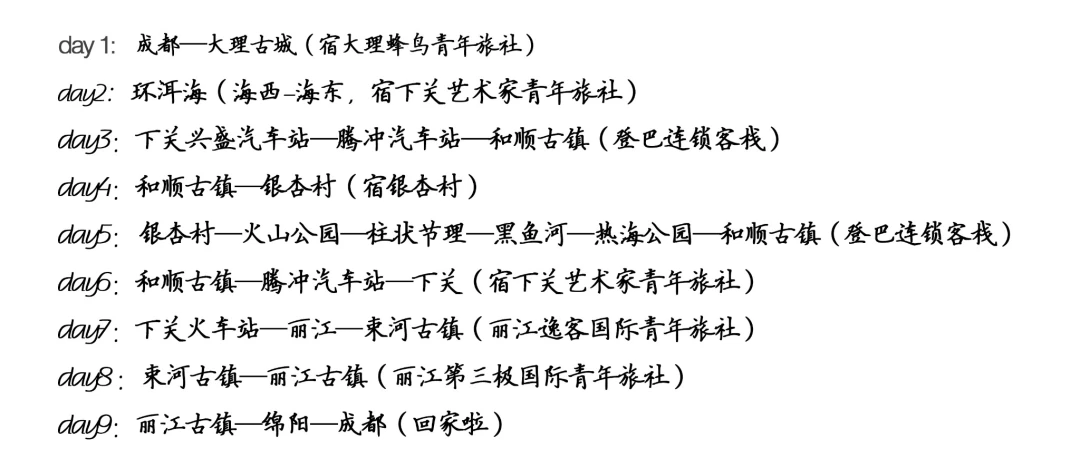
Some roads are meant to be walked alone. When the November chill began sweeping across the north, I chose to fly to Yunnan, chasing that lazy, warm sun. Over nine days, from Dali to Tengchong, then to Lijiang, I carried my camera and tripod—along with a heart in need of healing—and set off on a journey of conversation with myself.
Pre-Departure Tips: Why This Route?
I chose to travel in mid-November because of the Ginkgo Village in Tengchong. The entire trip revolved around Tengchong: I started in Dali because it's close to Tengchong and gave me a chance to see the long-admired Erhai Lake; I ended in Lijiang because flights were cheaper. This created a large loop—unconventional, but every stop was worth it.

Practical Note: This year saw more rain than usual, so the ginkgo leaves turned yellow about half a month later than normal. But the warmth of Tengchong's people and the travel buddies I met by chance made this trip my happiest memory. In autumn, every corner of Yunnan is worth lingering over.
Day 1-2: Dali, Slow Time by Erhai Lake
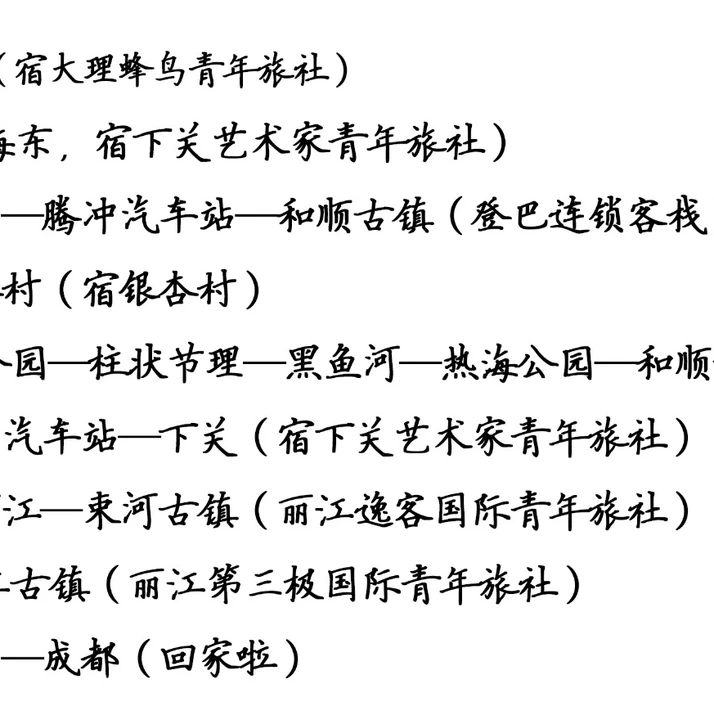
Arriving in Dali: From the Airport to the Ancient City
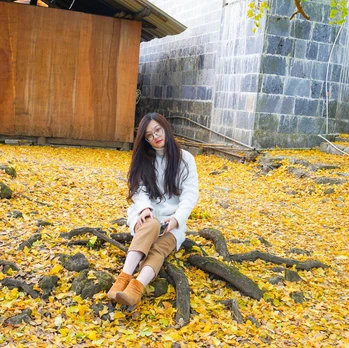
November 11th. I woke up at 4 a.m. to catch my flight. From Chengdu, I booked a rideshare to the airport—a little trick: choose "carpool" for an easier match. The moment the plane landed, the sky was clear and boundless, and my spirits soared instantly.
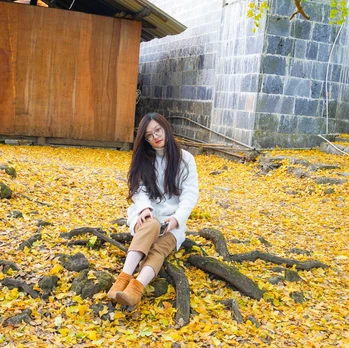
The Dali airport shuttle goes directly to the south gate of the ancient city, winding along Erhai Lake. The biggest surprise was the travel guide provided at the shuttle service center—it was actually a printed version of Mafengwo content. Seeing digital content turned into a physical book felt oddly magical.
At noon, I checked into Hummingbird Youth Hostel. It was my first time experiencing "books for board"—it cost me only 6 yuan, the cheapest hostel I've ever stayed in. Clean, and just a ten-minute walk from the center of the ancient city.
Strolling Through the Ancient City and First Food Encounters
My afternoon task was to buy flower cakes (鲜花饼, flower-shaped pastries filled with edible roses) for my colleagues back at the office. I sampled dozens of shops and finally chose one that tasted amazing fresh. I bought a large batch to mail back. But when they arrived, they were just average—lesson learned: flower cakes are best eaten warm.
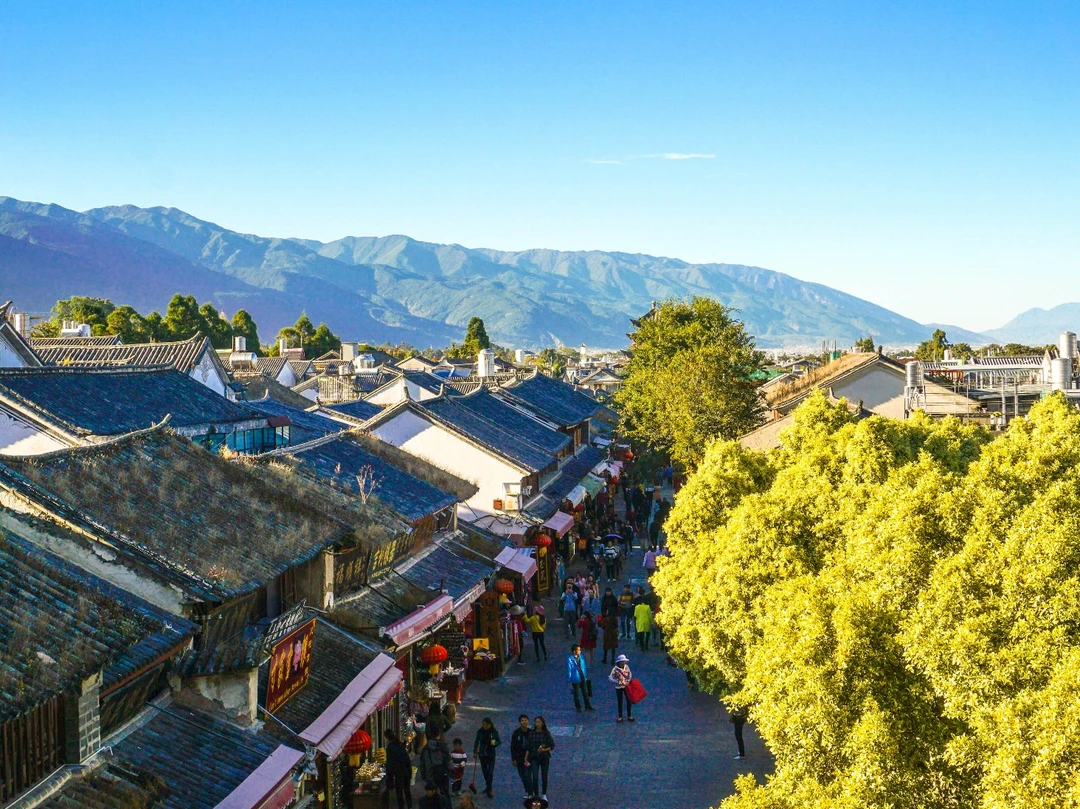
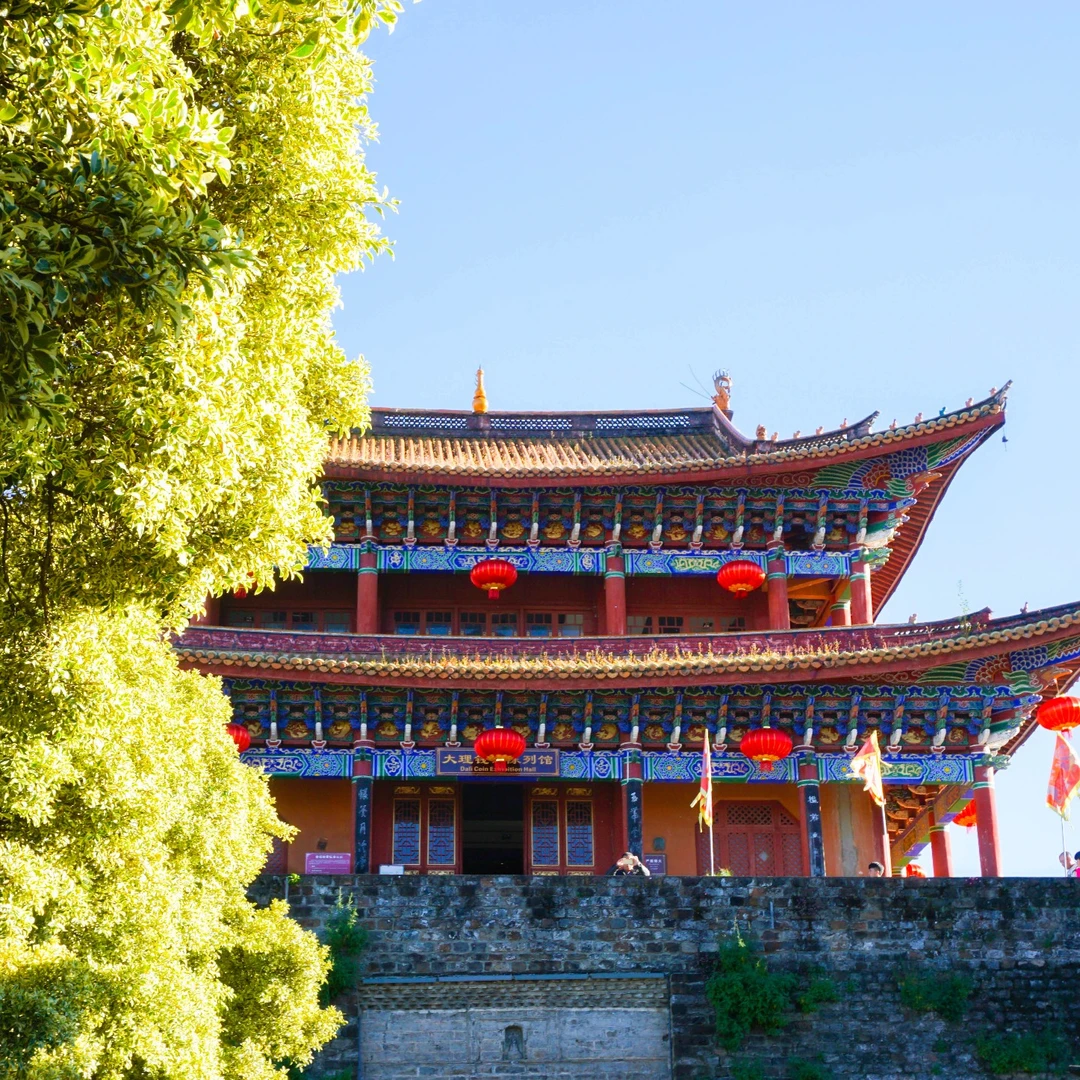
The Five Phoenix Tower (五华楼) is the heart of the ancient city, always crowded. The grilled milk fan (烤乳扇, a crispy, tangy dairy snack) was sweet and sour, a bit greasy—not really my taste. The view from the ancient city wall was excellent, especially at sunset when the light was most beautiful. I found a corner, set up my tripod, brazenly took backlit selfies, and was overjoyed.
For dinner, I tried cold chicken rice noodles (凉鸡米线). I had high expectations but was deeply disappointed. Later, I ate many bowls of rice noodles—those in tourist areas were all mediocre, while small shops in the city center were decent. Maybe I just hadn't found the truly good ones yet.
A Day Tour Around Erhai Lake: From West to East
Thanks to Singles' Day deals, I booked a small group tour around Erhai Lake on Mafengwo, saving 30 yuan. If you have time, I recommend renting an electric scooter: circle the west side on the first day and stay by the lake; then circle the east side on the second day—that's the perfect plan.
But the group tour had its own surprises—the guide was fantastic at posing for photos, and I met a kind travel buddy who took turns taking pictures with me. Without them, I wouldn't have so many beautiful shots of Erhai.
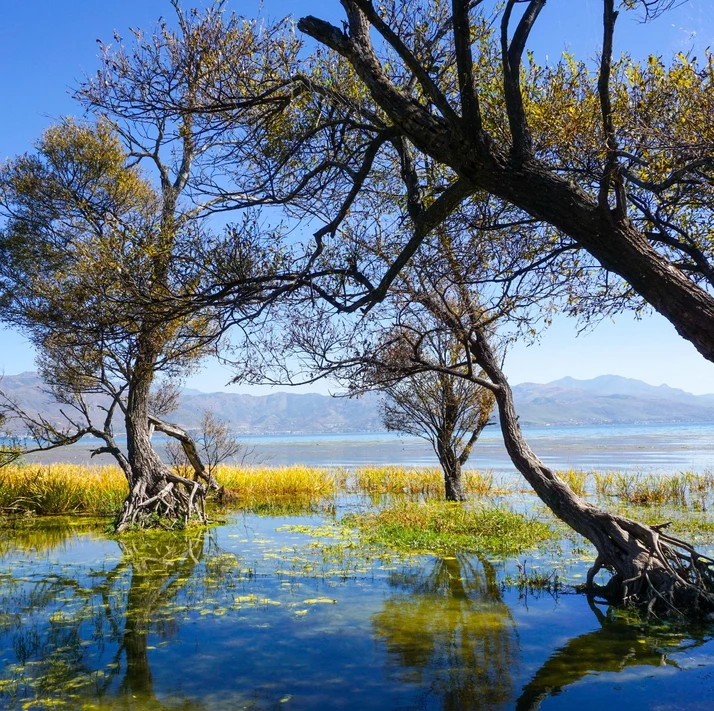
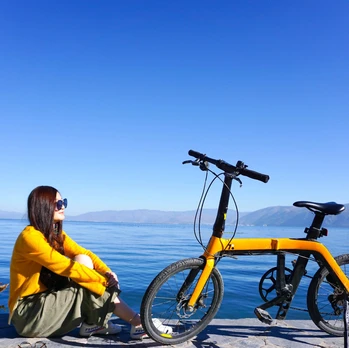
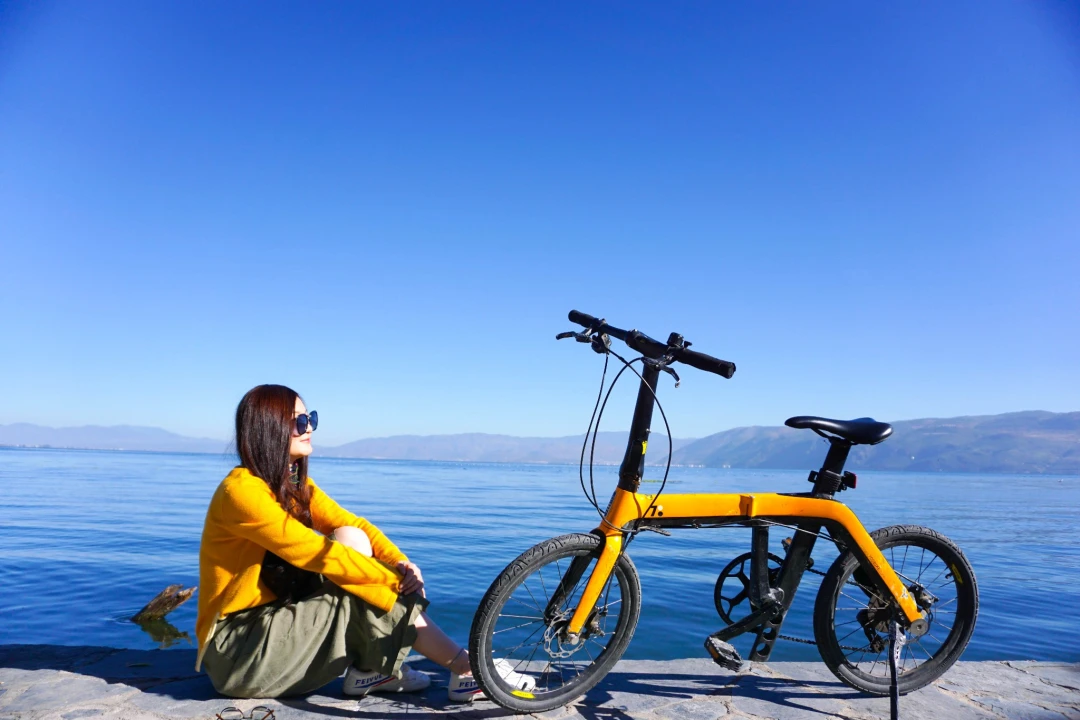
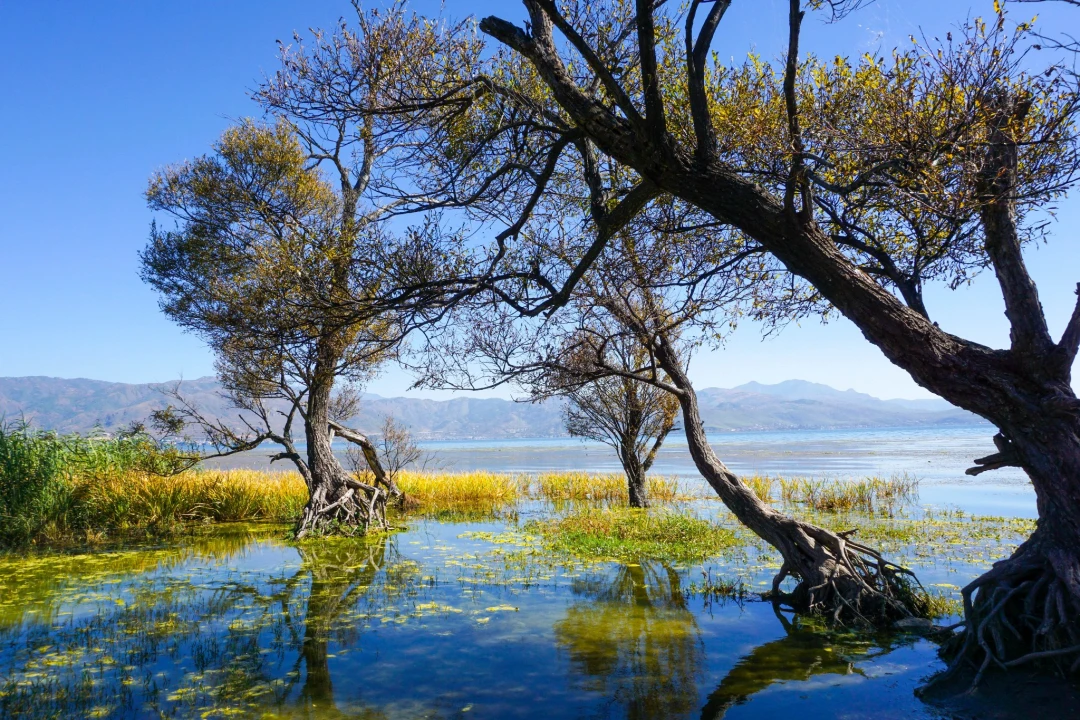
Haishe Ecological Park (海舌生态公园) was my most anticipated spot. Blue sky, leaning trees, water plants, autumn leaves, an old man fishing—and me with my camera. It was a perfect fulfillment of my wish list. The scenery along the west coast was exactly the Erhai Lake I had imagined.
The east coast was completely different—more like a seaside, perfect for wide-angle road photos. We stayed by the lake until sunset. Backlighting is ideal for silhouettes. As soon as the sun dipped below the horizon, the whole landscape dimmed—here, sunlight is the source of all vitality.
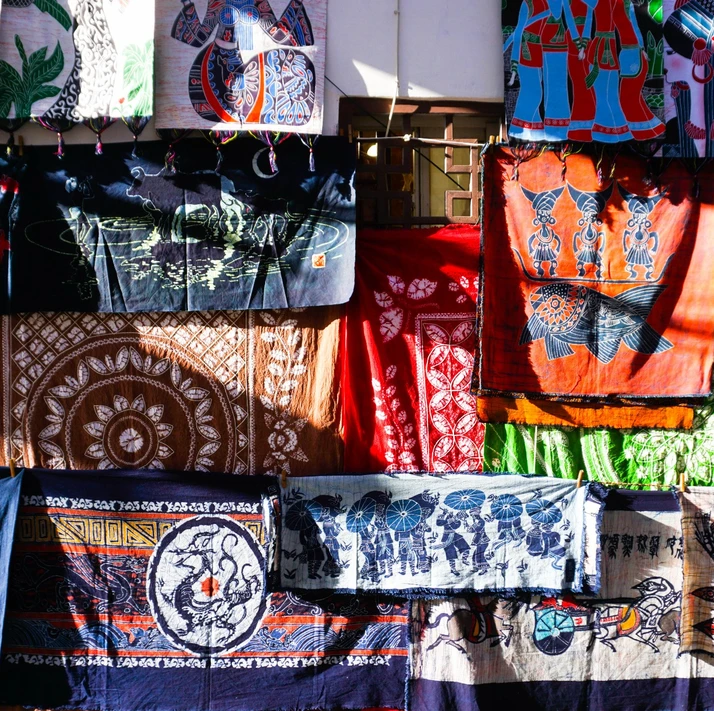
We had lunch at Xizhou Ancient Town (喜洲古镇). I fell in love with the tie-dye there. On hand-dyed fabric, you can see the tiny needle holes. I bought a piece of grass-green cloth for 10 yuan—I'll use it as a mat under my meals at home.
Day 3-5: Tengchong, the Warmest Place for Human Connection
Heshun Ancient Town: The Most Lively Ancient Town
From Xiaguan to Tengchong takes five hours by bus. I chose to travel during the day and rest in Heshun at night. If you plan to visit Ginkgo Village, it's more convenient to stay in the city center. But staying in Heshun is how I met Jolin and Dongdong, my travel companions for the rest of the trip. We borrowed their car and managed to check off more Tengchong spots than I had planned.
Heshun Ancient Town is just the right level of quiet. In the morning market, locals still set up stalls directly on the ground, carrying their goods on their backs and spreading cloths to display their wares. The entire alley was full of life. This is the most vibrant small town I've ever seen—overflowing with human warmth.
At a small eatery near the market, I had a bowl of 稀豆粉 (thin chickpea porridge) and 饵块 (pounded rice cakes) for just 5 yuan—authentic and cheap. Most of the customers were locals. When it got crowded, people made room for each other with genuine kindness. Similar moments of warmth happened many times in Tengchong.
Ginkgo Village: Waiting for the Gold
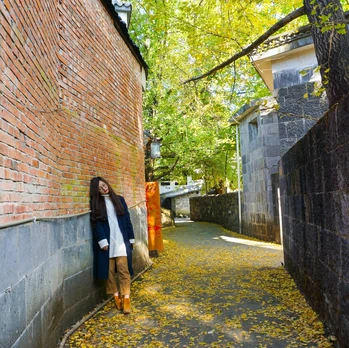
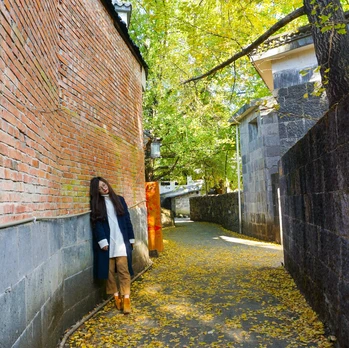
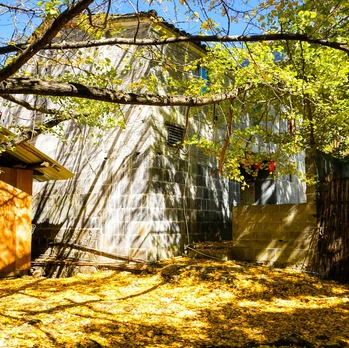
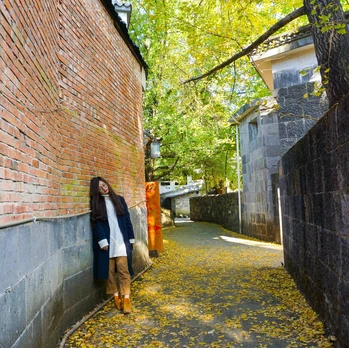
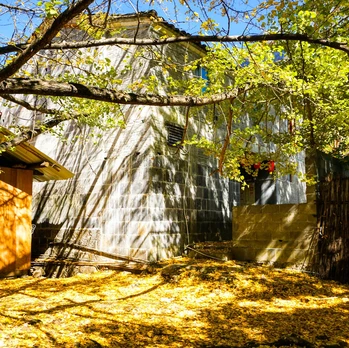
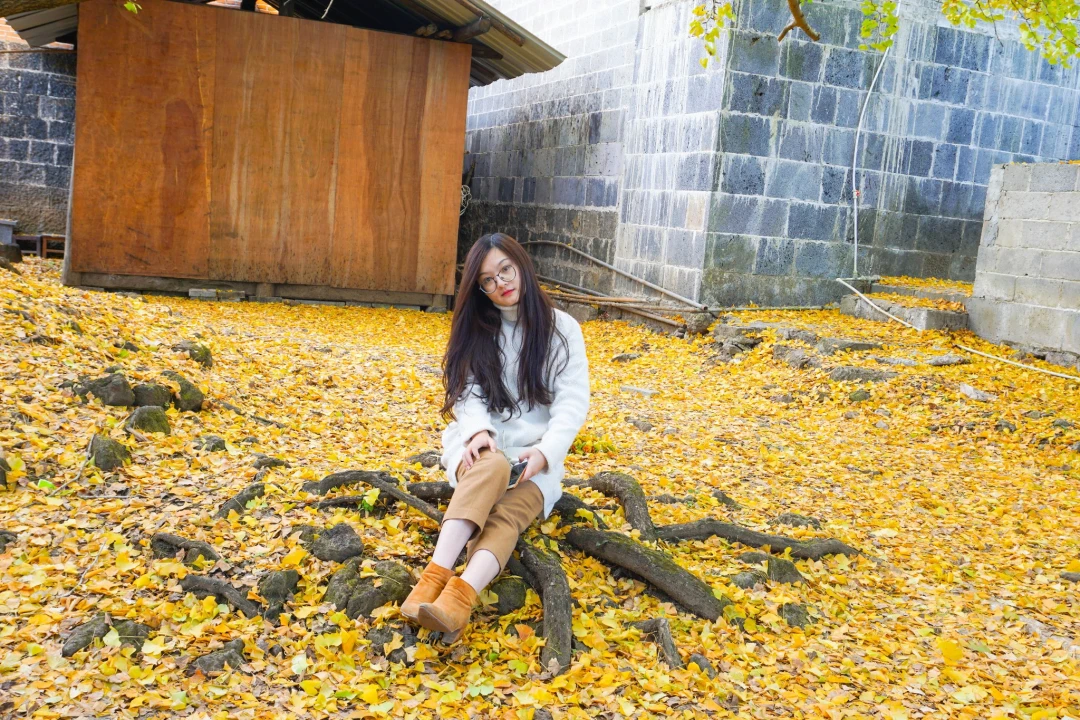
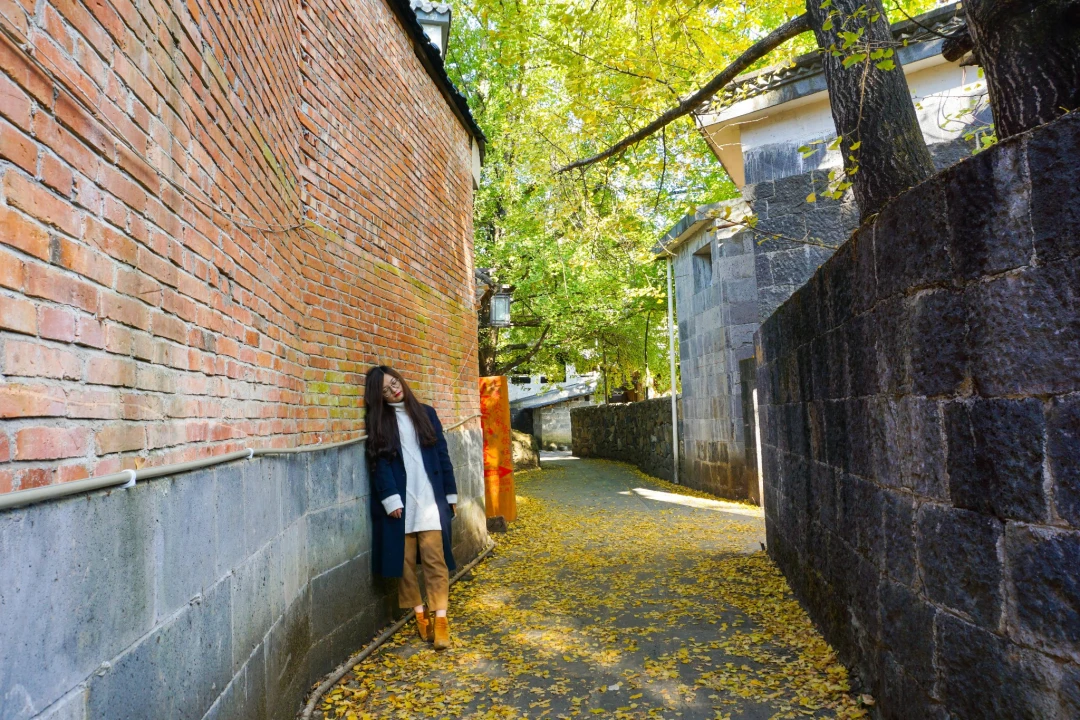
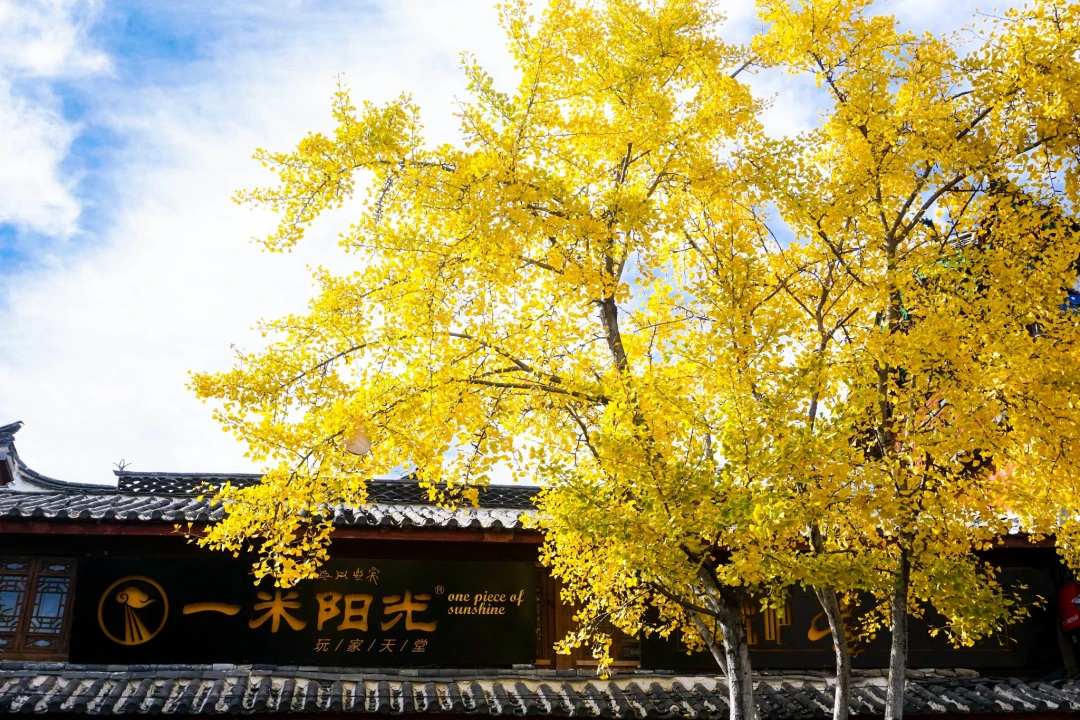
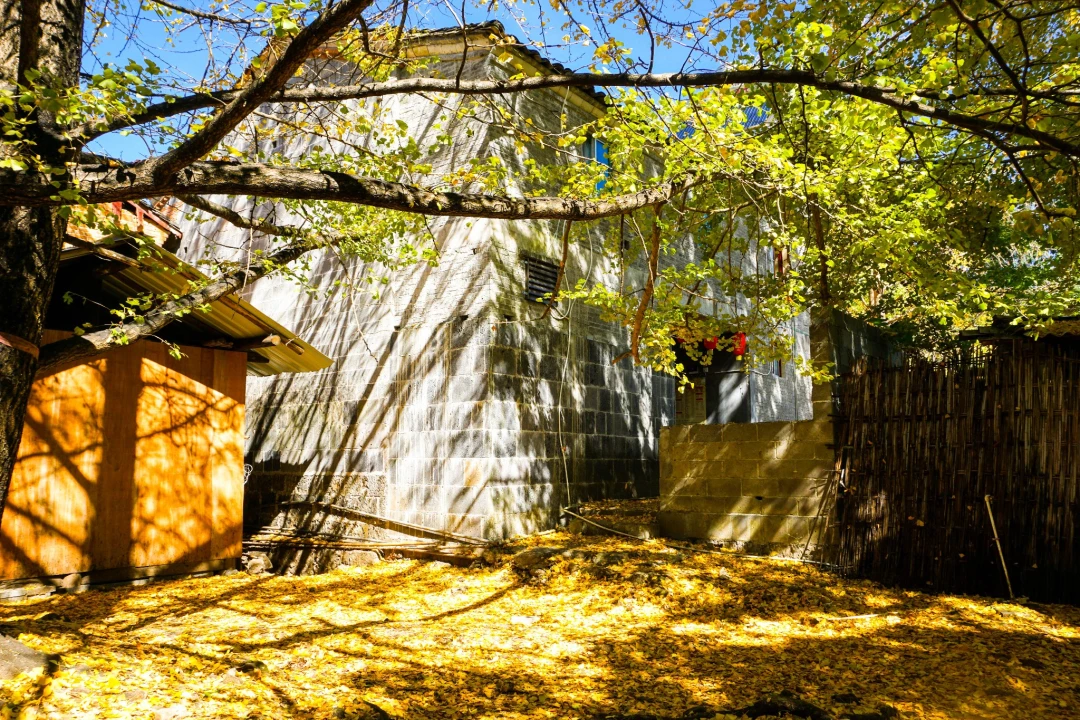
I arrived half a month too early—the ginkgo trees were still on the verge of turning yellow. But in some alleys, fallen leaves already covered the ground. Sunlight filtered through the leaves, casting a warm glow.
At noon, I had a home-cooked meal at the landlady's house—50 yuan per person, and it was delicious. After lunch, I soaked up the sun and sipped tea. The tea in Ginkgo Village had a sweet aftertaste, made from plants unique to the mountains. The landlady's ginkgo tree was over 500 years old, with leaves drifting down. I wished this kind of life could last forever.
There's an observation deck in the village. If the leaves had all turned gold, the view from there would have been stunning. Lucky for me, I caught the sunset glow—I ran back to my room for my camera and snapped a photo from the second-floor platform. The sunset was gone in an instant.
The next morning, I took my tripod to a spot I had scouted. It was completely empty—perfect for selfies. This was probably the main reason I stayed overnight in Ginkgo Village. Looking at those photos now, I can't help but smile.
I also fulfilled my wish to try 赌石 (gambling on raw jade stones). I bought a small stone and watched the master cut it open. The quality was mediocre, but I had satisfied my curiosity. I took it home carefully.
A Marathon of Sights: Volcano – Black Fish River – Beihai – Rehai
From Ginkgo Village, I headed to the Volcano Park, just in time to see the last two hot air balloons rise. The volcano park itself was a bit underwhelming—just one large and one small crater. But later, when I did some activities, the volcano museum I had accidentally visited provided a lot of inspiration. That's life—the more you experience, the better.
Black Fish River (黑鱼河) was the highlight. After walking for half an hour, I found a river so clear it felt like a hidden treasure in the deep mountains. I even brought a bottle of water to drink—it had a natural sweetness.
By 4 p.m., I arrived at Rehai Park (热海公园), where the landscape along the way was quite distinctive. I didn't soak in the hot springs—I preferred exploring the scenery. On the way out, a driver offering rides took me to the bus stop for 5 yuan. I took the bus, slowly rocking my way back to Heshun.
I had thought the ticket inspectors would be off duty after 7 p.m., but I met a local who offered to guide me. We got lost in the dark. Looking up, all I saw was pitch blackness, with a beautiful small town winding along a hillside in the distance—too bad I had no mood for photos. The scenery on a journey is unpredictable. Even the most anxious moments have their own beauty.
Day 6-8: Lijiang, A Duet of Autumn Colors and Nightlife
Back to Xiaguan, Then On to Lijiang
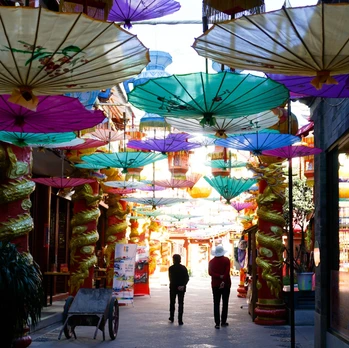
On the sixth day, I transferred to Lijiang. I chose to go back to Xiaguan first, which gave me the morning to wander around Heshun. On an overcast day, Heshun had a different charm. Wild Duck Lake (野鸭湖) had the warm feeling of a small bridge, flowing water, and homes.
You must experience the market in Heshun. Things are cheap, and it's all for locals. The pine flower cake (松花糕) and grilled rice cakes from Grandma Lin's shop are the most famous—cool and refreshing. My travel buddies said nothing else compares.
Shuhe Ancient Town: Breathtaking Autumn Colors
I arrived at Lijiang train station at noon and took a bus directly to Shuhe Ancient Town. I chose a hostel just outside the town. The moment I got off, I could see Jade Dragon Snow Mountain against a blue sky with white clouds—my spirits soared.
Everyone had recommended Shuhe, saying it was much quieter than Lijiang. But compared to Heshun, I still preferred the latter. However, Shuhe's autumn colors were more beautiful.
Walking along the river, I came across a particularly stunning tree. Its golden autumn leaves radiated a kind of vitality in the sunlight. In the distance, a band was rehearsing. I was completely immersed in the simple joy of being alone.
I had already thought that tree was beautiful enough, but walking a bit further, I encountered an even more gorgeous autumn scene. I couldn't stop exclaiming "Wow, wow, wow." The highland autumn scenery I had been longing for finally came true, even if just a little.
The stuffed tofu (包浆豆腐) was delicious—crispy on the outside, silky on the inside, though a bit greasy. The copper pot rice (铜锅饭) was okay, also slightly heavy.
Lijiang Ancient City: Night Views and the Jianghu Bar
On the second-to-last day, I slept in and took the bus to Lijiang. Capturing a panoramic view was my obsession—I had been amazed by the night scenes in travel guides. Wenchang Palace (文昌宫) is the best free photo spot. I went once during the day and once at night—the night view was still the most beautiful.
Lijiang's Sifang Street is enormous, and it was packed with people. Inside Wenchang Palace, there are two towering trees, half of their leaves turned yellow. I sat on the steps, feeling incredibly calm. Occasionally, people came in, hurried through, and left. I felt like an outsider looking in, watching a fleeting moment in others' lives.
That evening, I went to Lijiang's famous Jianghu Bar (江湖酒吧). Xiao Song's voice was incredibly charismatic—I instantly became a fangirl. Later, Zhang San actually showed up—I had read that he usually only performs on Tuesdays and Wednesdays, so I was incredibly lucky. But waiting for Zhang San kept me out very late. Walking back alone was a bit frightening. I'd advise women not to return so late—it can be genuinely scary.
The Journey Home: Nine Days of Warm Memories
On the last day, I went to the trendy 饵块时光 (Rice Cake Time) restaurant. The rice cakes were average, but the classic pork chips and drinks were good. I went back to the hostel to pick up my luggage, called a Didi to the airport, flew to Mianyang, took a bus to the high-speed rail station, and returned to Chengdu.
The nine-day trip ended perfectly. I jumped straight into a frenzy of overtime work. Every day after work, I edited photos and wrote—it took me nearly a month to finish this travelogue. Sometimes I scroll through my social media and this article, smiling to myself. Occasionally, I think it's a bit sentimental—but so what? Recording life and beauty is the charm of travel writing.
Travel Summary and Practical Tips
Route Recommendation: Enter through Dali, exit through Lijiang, with Tengchong as the core. If you have more time, Tengchong deserves a few extra days.
Transport Tips: Tengchong's attractions are scattered. Renting a car and allowing more time is the best approach. Didi is a travel lifesaver—saves time and hassle.
Accommodation Choices: Heshun Ancient Town has more local flavor than Shuhe; consider staying one night in Ginkgo Village to experience the empty, beautiful morning scenery.
Food Recommendations: Eat flower cakes while they're hot; Tengchong's thin chickpea porridge and rice cakes are cheap and authentic; Lijiang's stuffed tofu is worth a try.
Best Time to Go: Mid-November is the prime viewing period for Ginkgo Village, but it may be delayed due to rainfall.
Solo Travel: You can have a great time alone. Bring a tripod, be shameless about taking selfies, and be open to meeting travel buddies by chance—unexpected surprises await.
Yunnan in autumn and winter is a lazy, warm sun, golden ginkgo leaves, crystal-clear Erhai Lake, and the warmth of human connection. If you, too, want to escape the northern cold, come here and have a gentle conversation with yourself.
You should also read:

God’s Abandoned Palette: A Self-Drive Journey Through Yunnan’s Dongchuan Red Land
God’s Abandoned Palette: A Self-Drive Journey Through Yunnan’s Dongchuan Red Land Travel has never been about reaching some distant geographic coordinate. It’s about encountering, along the way, the version of yourself buried beneath the rubble of daily routine. During this May Day holiday, I finally…
Continue reading...
Cloud Travelogue · Dali of Wind, Flowers, Snow, and Moon: A Three-Day, Two-Night Journey of a Free Spirit
Cloud Travelogue · Dali of Wind, Flowers, Snow, and Moon: A Three-Day, Two-Night Journey of a Free Spirit I am a cultured female foodie with a touch of rogue charm. I slung on my backpack, took my lover's hand, and set off on a spontaneous…
Continue reading...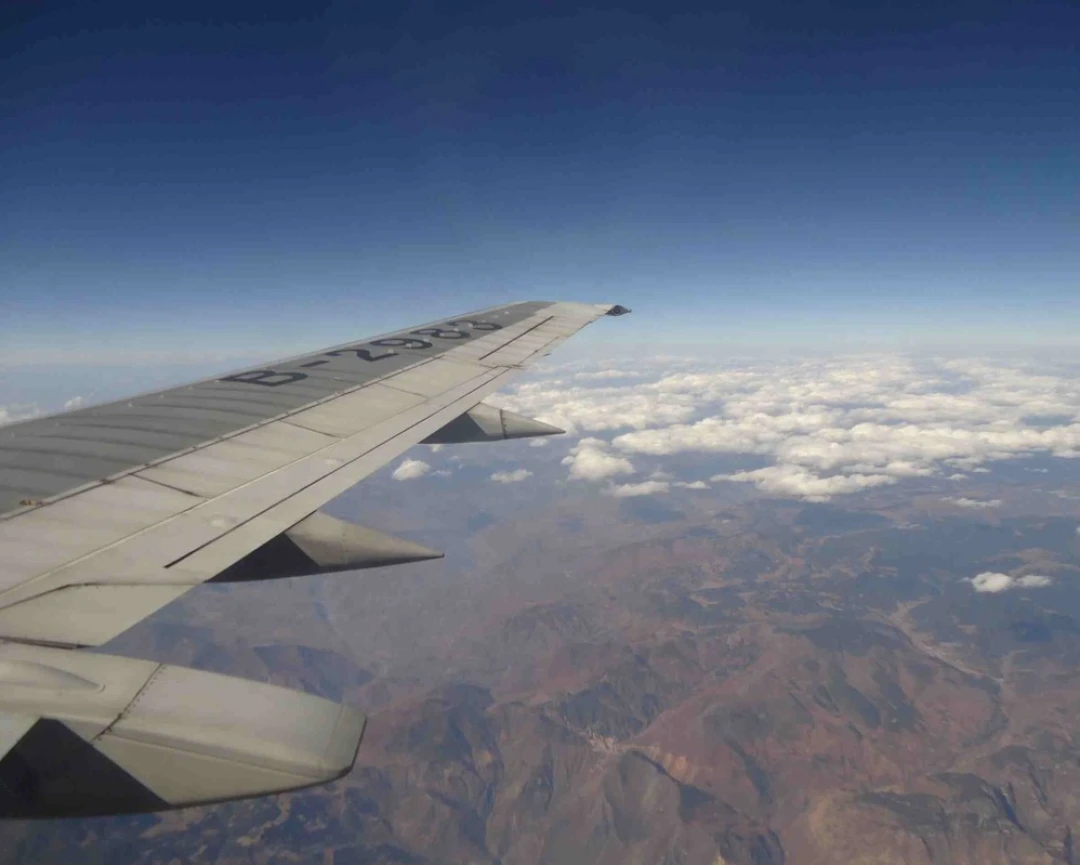
The Meaning of Travel – A Tengchong Story: A Journey of the Heart and Personal Growth
The Meaning of Travel – A Tengchong Story: A Journey of the Heart and Personal Growth Setting Out, Only to Return a Better Self Some say travel is nothing more than leaving a place you're tired of, only to go to a place where others…
Continue reading...