Yunnan | Is There Also a Jingmai Mountain in Your Heart? (7-Day Self-Guided Tour of Xishuangbanna + Pu'er)
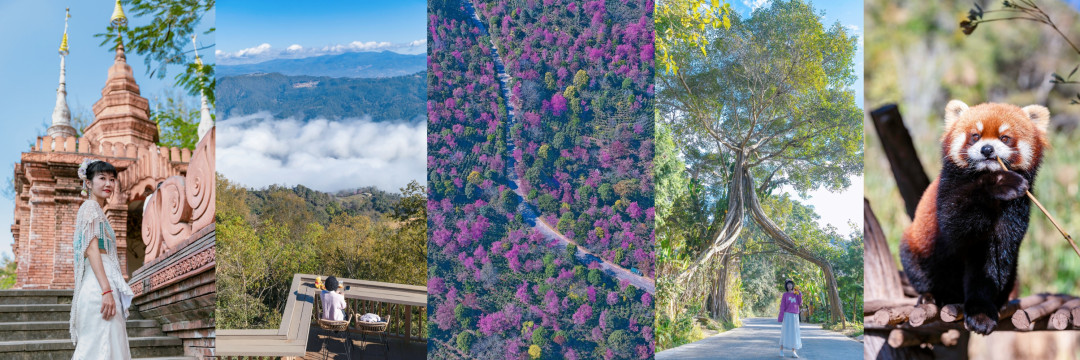
Yunnan | Is There Also a Jingmai Mountain in Your Heart? (7-Day Self-Guided Tour of Xishuangbanna + Pu'er)
Weibo: Duoduo Bear · WeChat Official Account: Duoduo Bear's Time Machine
Destination: Yunnan
Travel Dates: December 28, 2025 · 7 days
Per Person Cost: Not disclosed
Travel Companions: Couple
Preface: A Healing Journey for the City-Weary
At the tail end of 2025, I threw myself into Yunnan. Starting from Jinghong in Xishuangbanna, making a detour through Pu'er, driving up into the misty embrace of Jingmai Mountain, then looping back to Jinghong. This was my fifth time setting foot on Yunnan's soil, yet it was the most comfortable, the most healing of all.
The weather was impossibly perfect—sunlight like filtered honey, clear and sweet. The locals' warmth felt as natural as old friends. As someone constantly chased by life in the city, this journey gave me a warm embrace—slow down, let out a long sigh, return to a primal state, and feel the simplest joys.
As for Jingmai Mountain, which has been blowing up recently—even though it feels like ten thousand people on Xiaohongshu are spending New Year's here—many corners remain peacefully quiet. In winter here, the sunlight is warm, the breeze is warm, and even the winter cherry blossoms carry the laziness of spring. The sea of clouds is magnificent and enduring, and at night, the stars blanket the sky. If you're not in the mood for sightseeing, you can simply lie in your guesthouse, sip tea, and daydream. Coffee shops are everywhere, and you can also try the local "罐罐烤奶" (clay-pot roasted milk).
This mountain isn't the kind that stuns you at first glance, but it's absolutely worth visiting. It goes beyond the scenery in photographs—it's more like an abstract spirit, hidden within everything it embraces.
Part One: Xishuangbanna—A Glimpse of "Thailand's Little Sister"
Landing in Jinghong: From Shenzhen to the Tropics
Since there are no direct flights from Shenzhen to Pu'er, we had to fly into Xishuangbanna or Kunming first. To save time, we chose Xishuangbanna. We booked too late to snag good flight deals, but aside from transportation, everything else was quite affordable—especially the food.
Stepping off the plane in Jinghong, a wave of heat hit us—hotter than Shenzhen. The hotel was in the Gaozhuang area, a massive tourist hub that felt chaotic and disorganized. As the capital of the Dai Autonomous Prefecture, it's not ideal for a city walk, but it absolutely delivers on every expectation of a "tourist city."
Staying only one night, we skipped the botanical garden and Dai villages, opting instead for the Manting Royal Garden. While I'm usually indifferent to "must-visit attractions," there wasn't much else to do.
Manting Royal Garden: A Garden or a Photoshoot?
The park entrance was packed with people, all drawn to the thousand-year-old royal garden. Manting Park connects to the General Buddhist Temple, so you can visit both together. The park ticket costs 40 yuan, and the temple is free. Right at the entrance stands a bronze statue of Premier Zhou Enlai in ethnic attire, holding a water basin—he once celebrated the Water Splashing Festival here with the Dai people. Relief sculptures on either side recreate the grand scene.
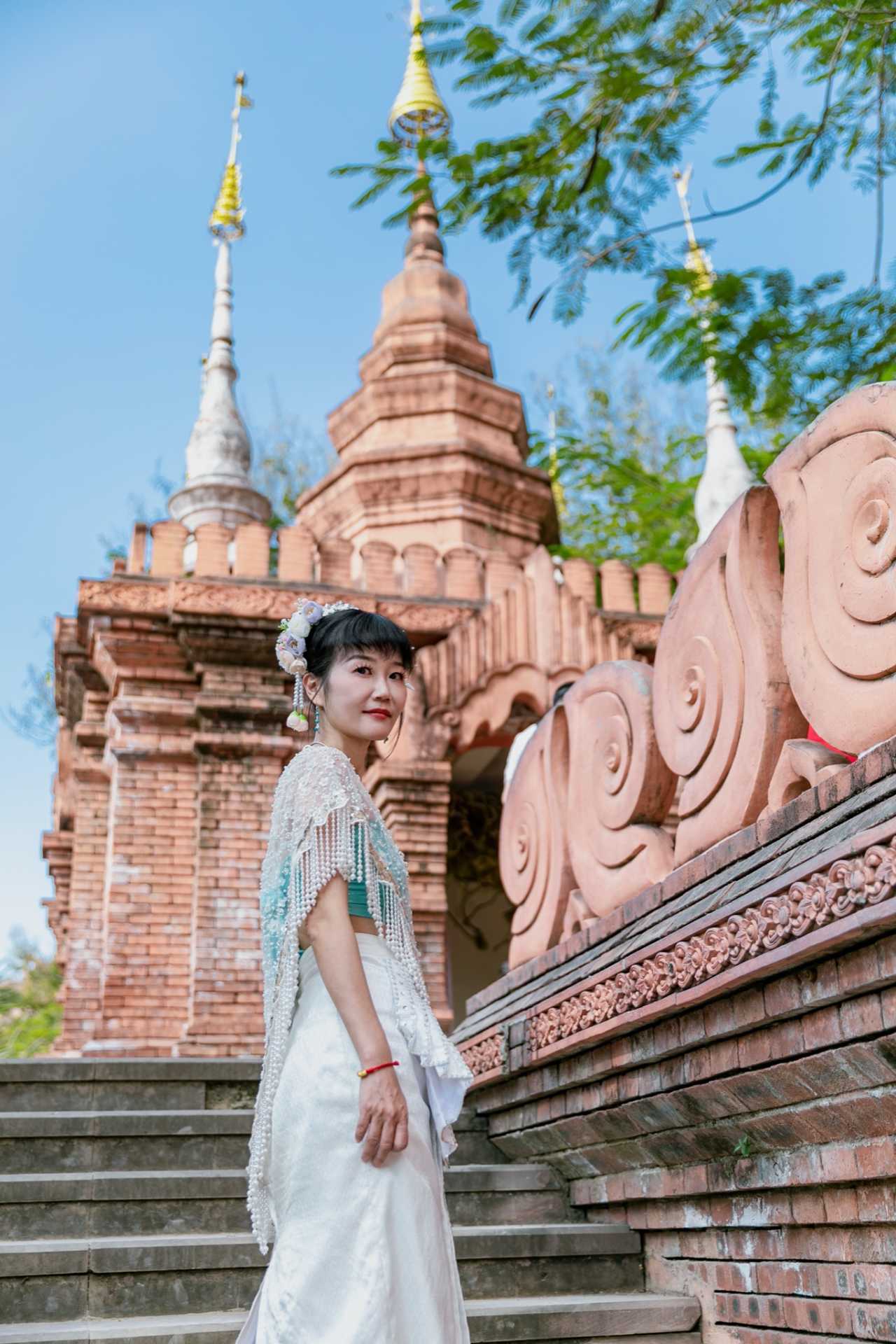
Despite being a 4A-rated scenic spot, the park was swarming with people doing photoshoots—young, old, everyone in between. It's become a full-fledged assembly line. Later, I realized the entire Xishuangbanna is one giant photoshoot base. I'd seen posts online about 99-yuan packages (makeup + costume), and I told my husband Lao Cao, "If we find that price, let's do it." The first shop near the entrance quoted 298 yuan—we walked away immediately. Further in, we found one for 100 yuan and took it. The owner was super friendly, saying we'd save money since we had our own camera. Since I never know what to do with my hands, I negotiated to rent a flower umbrella for 10 yuan.
Manting Royal Garden, also called Manting Park, was once the palace of Dai kings, with over 1,300 years of history. It's built on the land of Manting Village, hence the name "Manting"—which in Dai language means "the village of flowers." The Dai people also call it "Chunhuan," meaning "the village of the soul," because legend has it that a Dai princess was so enchanted by the scenery that her soul was captivated.
What follows are photos taken by our own amateur photographer—free of charge. You can tell the model was determined to "get the shot," striking poses with full commitment.
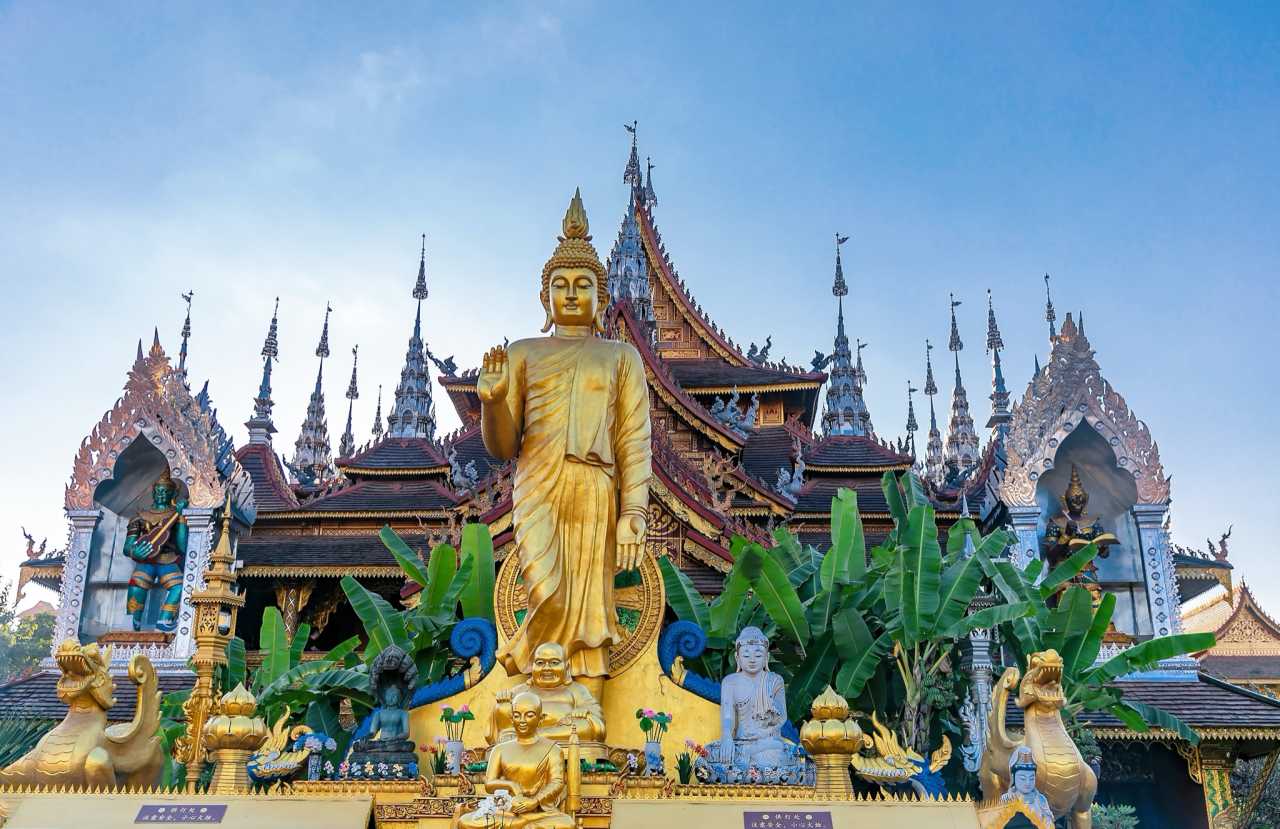
Golden and ornate Dai-style buildings are everywhere, exuding exotic charm. If the timing is right, the park also features a performance of the Dai king's procession. One girl explained that the off-shoulder outfits people wear are actually Thai clothing—traditional Dai attire is much more modest.
Tripods, reflectors, and photographers hustling for business lined the paths, some offering 20 yuan per edited photo. To avoid discouraging our own photographer, I politely declined. The earrings I wore were my own, and they matched surprisingly well.
Red walls, golden roofs, vermilion pillars supporting ornate eaves—it's truly a unique backdrop of exotic charm. The entire park is surrounded by greenery, with boats gliding across the tranquil lake, reflecting golden pavilions and pagodas. You can experience both the grandeur of the tropical rainforest and the essence of Dai culture.
The park includes a Red Culture Square, a Royal Elephant Cultural Park for families, a song-and-dance performance hall, a Dai food area, boat rides, and even a bonfire party at night. It's a typical amusement-style city park—the experience is average, but the photos turn out great. Still, with its Dai character, it's different from mainland parks.
The White Pagoda is a cluster of one main pagoda and eight smaller ones, looking from afar like bamboo shoots—hence the name "Bamboo Shoot Pagoda." The Earth Goddess statue, located west of the White Pagoda, is one of Buddhism's guardian deities, symbolizing peace and abundance. The statue is designed as a fountain, with an octagonal base featuring eight guardian deities praying with clasped hands. At the top, the Earth Goddess lets down her long hair, with holy water flowing from the tips through eight dragon heads into golden basins, where visitors can "wash their hands in gold," symbolizing washing away bad luck and welcoming good fortune. It was too crowded there, so we quickly washed our hands and left. The side paths were empty, perfect for photos.
We wandered aimlessly and were told we could catch an elephant show and a parrot garden, but we weren't interested and skipped both. We spotted a wish tree that had grown in a strangely forked shape, and a white dragon sculpture that looked unintentionally comical. A four-faced Buddha sat in a pavilion. A few stray cats were foraging in the bushes, but our bags were checked in at the photoshoot shop—lesson learned: always carry cat food when traveling.
General Buddhist Temple: Golden Splendor and Exotic Charm
The north gate of Manting Park leads to the General Buddhist Temple, which is free to enter. The entrance features a marble stele and three arches, with a pagoda above the gates. We returned to the shop to return our costumes, then strode in. A sign at the entrance reminds visitors not to show their shoulders, avoiding exposure.
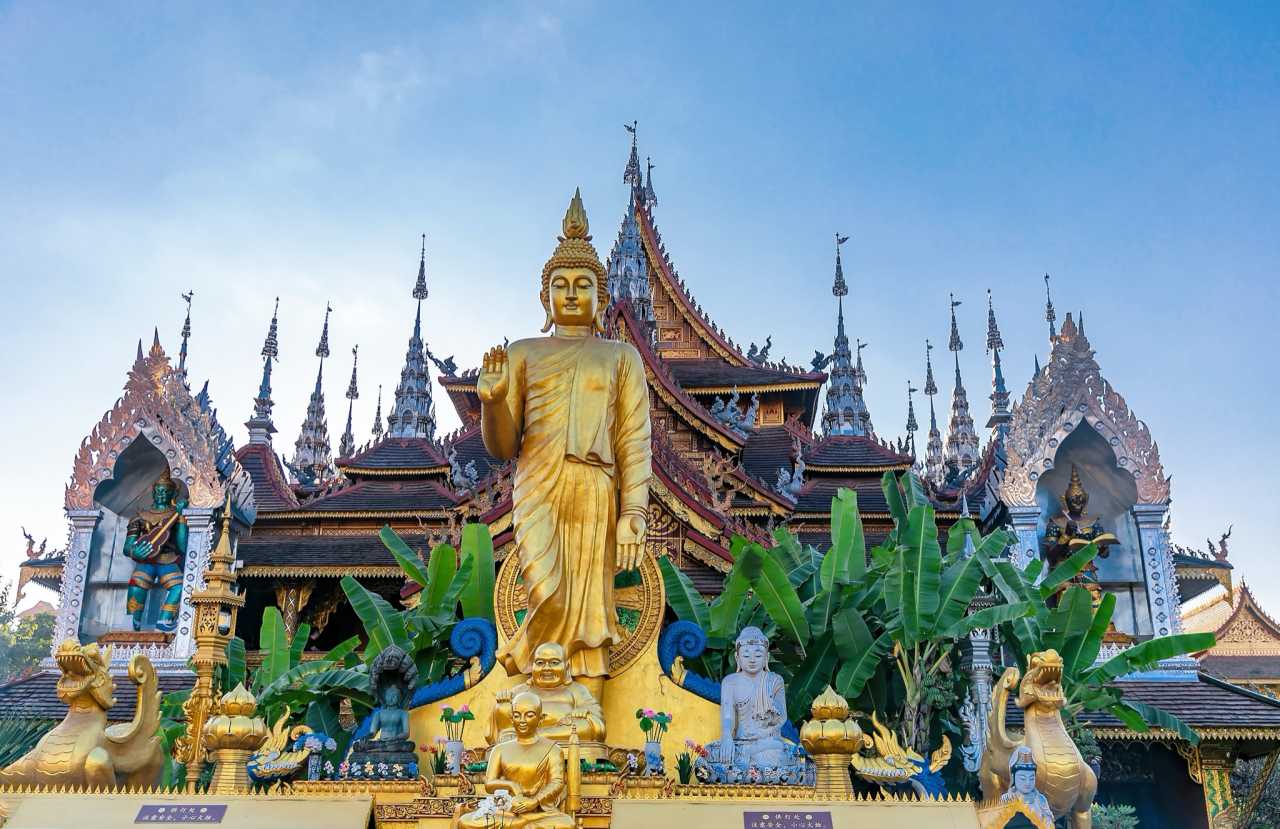
The temple's bell and drum towers were unlike any I'd seen before, with strong Southeast Asian characteristics. An eight-meter-tall standing Buddha statue has its arms naturally extended, right hand pointing to the sky, left hand pointing to the ground, with one toe touching the ground, exuding an air of ease and contentment.
The temple has over 1,400 years of history, having been damaged and rebuilt multiple times. The current structure was rebuilt in the 1980s. Because it was the first temple built and served as the political and religious center of Xishuangbanna throughout history, it's called the General Buddhist Temple, serving as a pilgrimage site for followers of Theravada Buddhism.
The Viharn (main hall), called "Xionghan" in Dai language, can also be referred to as the Grand Hall. Its colors are predominantly gold, red, and silver, blending Dai and Southeast Asian architectural elements. Under the sunlight, it gleams and shimmers with gilded brilliance—very different from the temples we're used to seeing. Here, the Buddha's guardians are peacocks and elephants, and the mythical beasts on the roof ridges are either peacocks, elephants, or hybrids of the two.
According to ancient Thai legends, mice are also spirits, tamed by the elephant god's wisdom to become his mount and "wish deliverer." In any case, these are far from the traditional mythical beasts we're familiar with.
The temple grounds are compact, yet still filled with "Dai princesses" (tourists in costume) weaving through, like a floating world painting. The Fushun Building is one of the core structures of the Yunnan Buddhist Academy's Xishuangbanna branch, entirely decorated with golden wood carvings, its beams and pillars adorned with intricate diamond patterns and scrollwork, with the red-and-gold color scheme characteristic of Theravada Buddhism. There's even a dedicated area for raising peacocks.
After finishing, we thought about visiting the Boruo Temple, but it was too far, so the two lazybones decided to head straight for dinner.
Starry Night Market: A Massive Party Scene
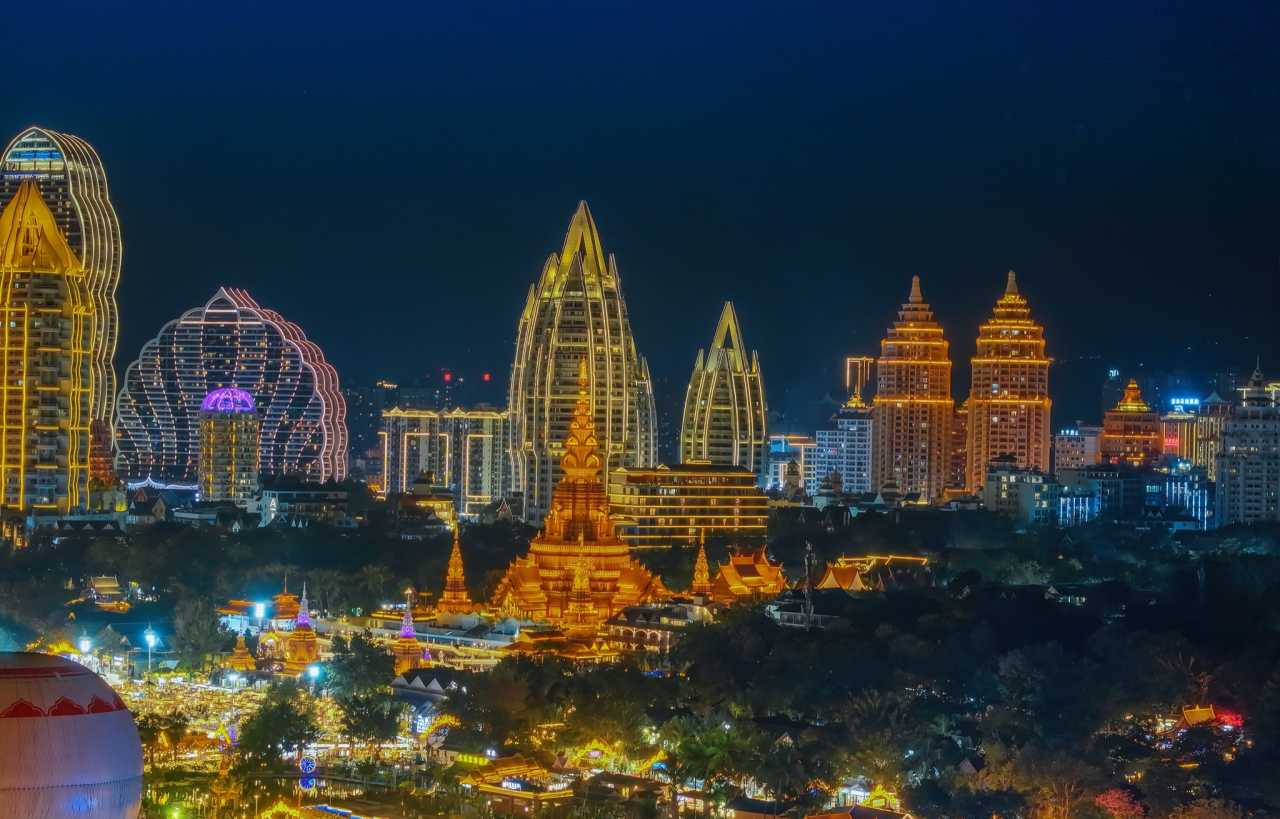
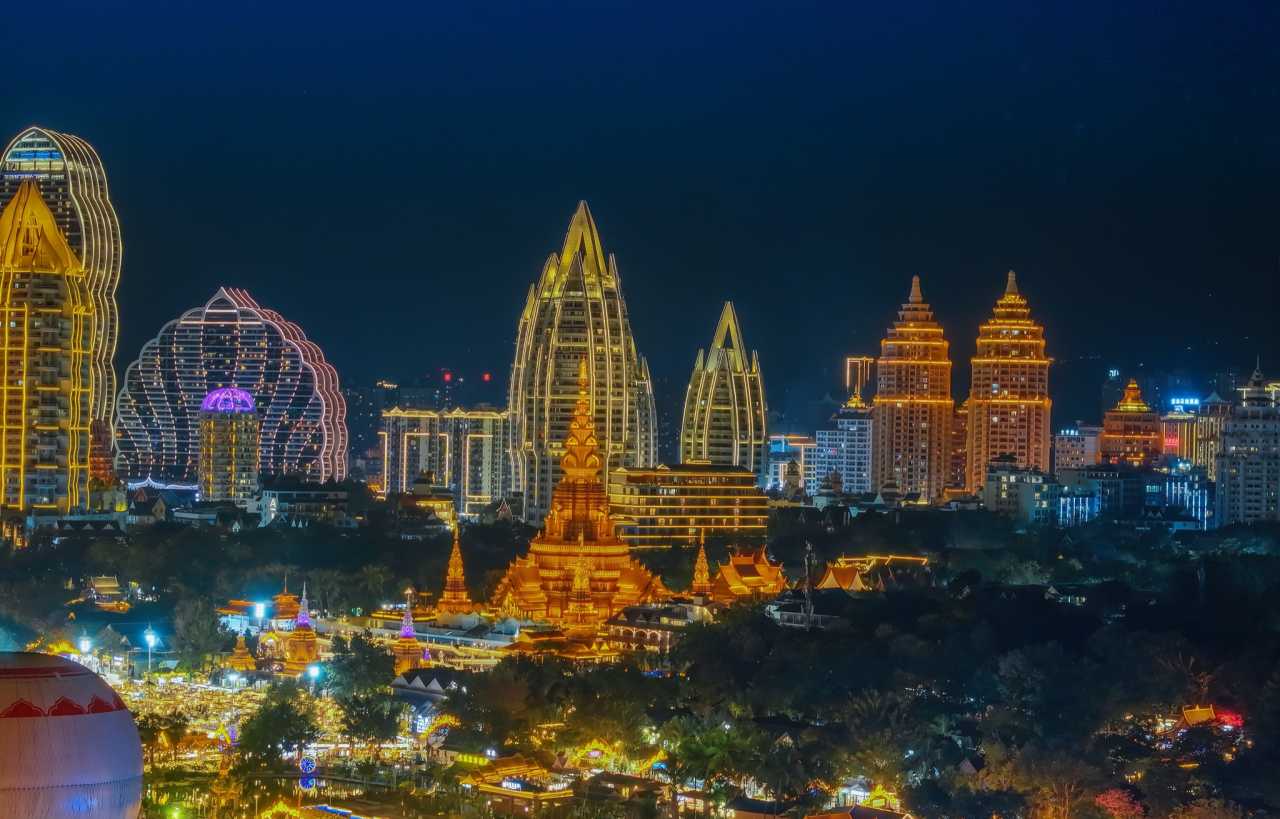
Our final stop in Xishuangbanna was the massive party scene—the Starry Night Market. In reality, Gaozhuang Xishuangjing, the Great Golden Pagoda Market, the Starry Night Market, and the Riverside Night Market are all clustered together—quiet during the day, lively at night. With the Dai-Thai style architecture, there are plenty of photoshoot groups too.
From our hotel room balcony, we could see the Lancang River (known downstream as the Mekong River), which flows right through Jinghong. The noise continued until 11:30 PM, so light sleepers should think twice about staying here.
The Starry Night Market is the most popular spot in Xishuangbanna. As night falls, tourists from all corners converge here. The market has several entrances; we chose the park entrance, which required a mini-program reservation. The reservation had a catch—without paying attention, we accidentally subscribed to some China Mobile membership, and Lao Cao spent a while arguing with customer service.
The park side was quiet and empty. It was a bit chilly at night, so a long-sleeved jacket was necessary. A short walk later, we plunged into the sea of people at the Starry Night Market. Stretching along the Lancang River, it's said to be Asia's largest night market, brilliantly lit and bustling. There were hot air balloons and a bonfire party, but both required extra fees.
The market had countless stalls, but with our sensitive stomachs, we just looked. The Great Golden Pagoda wasn't open at night, but the view from the square in front was still impressive. The blend of烟火气 (bustling atmosphere) and exotic charm, with countless colorful lights and neon signs intertwined, turns "Xishuangbanna nights" into the brightest star in memory.
Quick Bites in Xishuangbanna
Dong Li Thai ★★★★
Ranked the number one Thai restaurant, right across the street from our hotel—very close. You need to go early or you'll wait forever. Semi-outdoor seating, street-food style, overall a thumbs-up.

The shrimp crackers were complimentary. We ordered all the must-try items—the Tom Yum Kung was better than any I'd had before, with a rich coconut milk base balanced by sour and spicy notes, and fresh, plump shrimp. The steamed lemon fish was tender, with a sweet, sour, and spicy flavor that was very refreshing. The "ancient method" curry shrimp—though I'm not sure what makes it "ancient"—tasted great, with modest portions that even had us finishing the bread. The crispy pork neck was crispy on the outside, tender inside, served with two dipping sauces. The mango sticky rice was beautifully plated, with freshly cut mango and soft sticky rice wrapped in coconut milk. The "flaming" morning glory—again, not sure where the "flame" comes in—was just a normal stir-fried vegetable. The bagged Thai-style milk tea was okay, nothing mind-blowing. The rice bowls were likely silver, adding a nice local touch.
Dagu Rice Noodles ★
We grabbed a quick breakfast at a rice noodle shop before heading out the next day. I'm including this as a warning—very mediocre.
Part Two: Is There Also a Jingmai Mountain in Your Heart?
The Road Up: Driving Through the Clouds
There are generally two ways to get to Jingmai Mountain by car: rent a car directly from Xishuangbanna and drive up (about four hours, reportedly rough roads), or go to Pu'er first, rent a car there, and drive up (about three and a half hours, slightly better roads). We compromised: rented a car from Xishuangbanna, spent a day in Pu'er, then drove up to stay two nights, followed by two days back in Pu'er city, and finally drove straight to the Xishuangbanna airport. Why? Because the driver was lazy—our whole trip had a laid-back vibe.
The weather changed dramatically along the way. Passing through a tunnel, thick clouds suddenly rose up, turning the world beyond the road into a white expanse. It felt like driving through the clouds, with green mountains and blue skies alternately clear and obscured.
Jingmai Mountain: Slow Time in a World Heritage Site
Jingmai Mountain belongs to Lancang Lahu Autonomous County in Pu'er, a settlement area for the Blang and Dai ethnic groups, famous for its tea. It boasts the world's largest, best-preserved, and oldest artificially cultivated ancient tea forest. In 2023, the "Pu'er Jingmai Mountain Ancient Tea Forest Cultural Landscape" was inscribed on the UNESCO World Heritage List. Along with it, the fourteen traditional villages scattered across the mountain also came into the spotlight. The film "Coffee or Tea?" (also known as "A Little Red Flower") was filmed here, boosting its fame and drawing more tourists.
Although I hadn't seen the film, I was still drawn to Jingmai Mountain's local customs and culture. Add Pu'er tea and coffee to the mix, and it felt perfect. We ended up booking accommodation in Wengji Ancient Village (we booked late, so many popular guesthouses were already full). Other options include Mangjing, Manghong, Nuogan, Jingmai Dazhai, and others. Because we booked late, the price wasn't great either, but it was comfortable, offered sunrise and sunset views, and had convenient amenities—exactly what a weary city dweller needs for decompression.
Personal Tips:
- Renting a car and driving yourself (or hiring a driver) is the most flexible and time-efficient. You can take a bus up the mountain, but getting around between villages requires a car (e-bikes aren't convenient either). Many small shops have driver contact info, charging 15-25 yuan per person between villages—I haven't tried it, so I can't comment.
- If driving up, you need to reserve in advance via the "Jingmai Mountain Reservation Service" mini-program. Avoid holidays if possible, or you might get stuck in traffic at village entrances.
- Why aren't e-bikes convenient? Because some roads between villages are cobblestone paths that will shake you to pieces. I didn't see many e-bikes either (in Wengji, where we stayed, only one shop rented them at 88 yuan/day).
- The cobblestone road up the mountain isn't as scary as rumored. The roads to Jingmai Dazhai, Manghong, and Mangjing have been paved with stone slabs and are easy to drive. You won't scrape the undercarriage, but you might get a flat tire (we saw one in two and a half days).
- Villages commonly visited by tourists (from bottom to top): Jingmai Dazhai - Nuogan - Wengji - Mangjing Upper & Lower Villages - Manghong. For accommodation, I recommend Manghong, Mangjing, or Wengji (my personal pick). Wengji is good for sunset, Jingmai Dazhai for sunrise, and Manghong for both.
- Jingmai Mountain doesn't charge an entrance fee, but there's a parking fee. We paid 7 yuan at the main gate when leaving.
- The cherry blossoms are winter cherry blossoms. They bloomed early this year; locals said they usually bloom around late January. The sea of clouds appears from December to late January, visible from around 6:00 AM to 11:00 AM. Winter sunrise is around 8:08 AM, but I recommend arriving at the viewpoint by 6:30 AM to see the star-filled sky and the pinkish-dark blue horizon.
- If renting a car from Xishuangbanna, check the rental page carefully—many companies don't allow their cars to leave Xishuangbanna.
Cherry Blossoms, Sunrise & Sunset, Crossing the Sea of Clouds
Because we finalized our itinerary late, things were a bit rushed—fewer accommodation options, pricier flights. But traveling in-season had its advantages—despite the crowds, we got to see the gentlest yet most magnificent landscapes.
The winter cherry blossoms were in full bloom, pinkish-white and crimson, like mist and clouds. The sea of clouds churned, and the sunrise felt like a dream. The ancient tea trees filled the air with fragrance, inviting us to savor life's true flavor. The satisfying scenery was a uniquely delightful winter pleasure.
Winter Cherry Blossoms Dye the Tea Mountains
Although it's "winter," Yunnan's seasons aren't clearly defined. The dry season is very comfortable—cool in the mornings and evenings, around 20°C (68°F) at noon, with warm sunshine, valleys filled with clouds, and ancient tea forests interspersed with winter cherry blossoms. It lifts everyone's spirits.
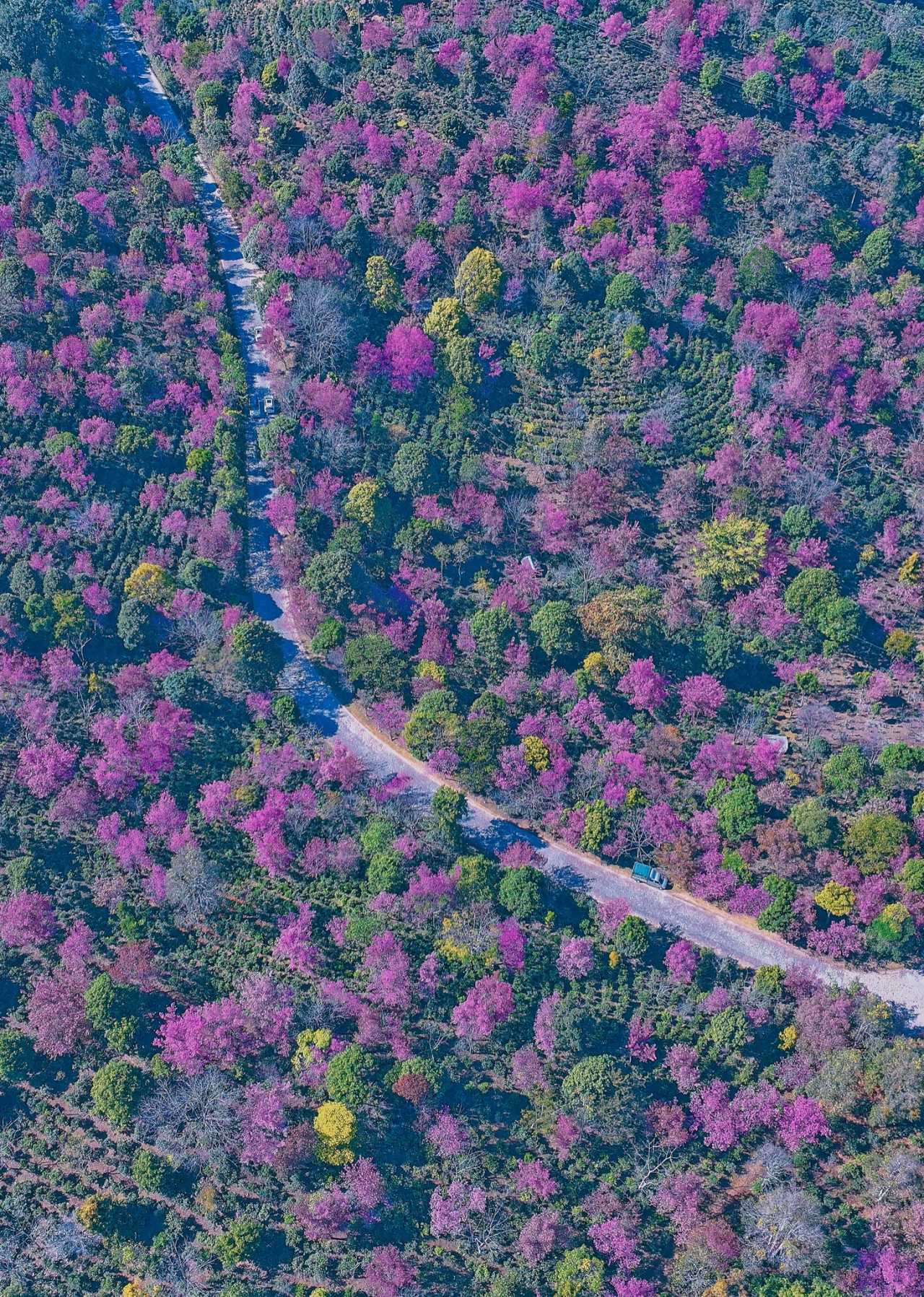
After driving up, clusters of pink appeared one after another, lining the road like welcoming guests. Tourists couldn't resist stopping to take photos. The first viewpoint, despite its messy perspective, still attracted a crowd for group photos.
The gravel road into the mountain looks like this. Some say it will scrape the undercarriage, but it won't (though a flat tire is possible). Online rumors claim this is intentional—asphalt fumes would harm the ancient tea trees. I find that hard to believe, since several villages have already paved their roads with cement. Besides, if they really wanted to protect the ancient trees, they wouldn't let so many cars up.
Green tea forests, pink blossoms, blue skies, and white clouds—together they paint the best scenery of the year's end. Cherry blossoms can be seen all the way to Wengji Village, but not in the higher areas of Mangjing and Manghong. If you want to see and photograph the flowers, park safely along the road. Also, don't pick the flowers—I saw a woman break off a branch for a photo and wanted to confront her.
An e-bike on these roads would be a bumpy ride. But the warm winter sun and the cherry blossom trees along the way make all the travel fatigue worthwhile. The scenery is filled with warmth and romance, with clusters of blossoms like colorful clouds, lending Jingmai Mountain a charming, graceful air.
A Sea of Clouds Sunrise Worth the Effort
When it comes to Jingmai Mountain, online guides always mention watching the sunrise and sunset. Despite being late risers, we mustered all our strength and dragged ourselves out to see the sunrise two days in a row. We chose the Great Golden Pagoda in Jingmai Dazhai and the Octagonal Pagoda Viewpoint in Manghong. If you have a drone, I'd recommend Jingmai Dazhai—you can capture the golden pagoda, sea of clouds, and sunrise all in one shot.
In winter, I suggest arriving at the viewpoint by 6:30 AM; the golden hour lasts from then until about 8:30 AM. At 6:30 AM, you'll see a star-filled sky and a pinkish-dark blue horizon—an unforgettable sight. After sunrise, the glow gilds the clouds, creating a fairy-tale scene. It's very cold in the early morning on the mountain; my down jacket was just right.
① Jingmai Dazhai Great Golden Pagoda
We drove to see the sunrise under a deep blue night sky, with the moon still on the other side of the mountain. We arrived at the Golden Pagoda at 6:30 AM. There's a parking lot right at the entrance; we parked and walked into the pagoda temple. A row of plastic stools was set up for sunrise viewing—early birds get hidden perks. Compared to Manghong, this spot had fewer people, but I liked it more. In short, if you don't mind the effort, go to the Golden Pagoda; if you want an easier time, go to Manghong.
The golden pagoda shimmered in the dawn light, forming a serene and sacred scene with the distant tea mountains and sea of clouds. The sun arrived on schedule, and the vast sea of clouds churned beneath us—an indescribably stunning sight. In winter, seeing the sea of clouds at Jingmai Mountain doesn't require luck; it's visible almost every day. Sunlight bathed the clouds in gold, creating a scene of ultimate romance.
② Beigui Coffee House
Besides the Golden Pagoda, another great spot in Dazhai for sunrise and sea of clouds is Beigui Coffee House. Both are free viewpoints. After the Golden Pagoda sunrise, we stopped by here to see the clouds again. A note: you can see the sea of clouds from anywhere, and it lasts until about 11:00 AM, so you don't need to wake up early specifically for it—only for the sunrise.
The view is incredibly open, and since it's a coffee shop, you can sip a coffee while watching the clouds roll. The observation deck has two levels, both free. We ordered a pour-over coffee and some juice and took our time. Before leaving, we bought some coffee beans and coffee fruit tea. The sea of clouds at Jingmai Mountain is like a winding river in the valley. After thinking about it, I'd describe it as "generous." It feels like being cradled by a soft, fluffy comforter.
③ Manghong Octagonal Pagoda Viewpoint
On New Year's Day, we went to Manghong for sunrise. The spot is at the Octagonal Pagoda, which has a parking lot. You need to climb some steps and a dirt slope—a bit of a wild path. On the left, there's a viewing platform with benches, run by a local who charges 10 yuan per person (I definitely wouldn't get up for that). The dirt slope can accommodate a row of people; if you want a front-row spot, arrive early. We got there at 6:30 AM, and sunrise was at 8:08 AM (a nice omen). Enjoy the starry sky—it's absolutely stunning.
The clouds on the horizon slowly took on pink and orange hues, subtle yet impossible to ignore. The sea of clouds had already crept up to the mountainside and was still rising. When the sun suddenly emerged from the mountaintop, and strangers from all over shouted "Happy New Year!" in unison, the golden light illuminated the ridges, the clouds, the wooden houses, the earth—and every face.
I couldn't help but sigh: Jingmai Mountain's sunrise is truly beautiful, offering a grand yet comforting embrace. I found a corner to launch my drone, flying it high to avoid disturbing others. It felt like watching the sunrise from inside an airplane cabin. Boundless and magnificent, it was a profound stillness and healing that made every moment of waiting worthwhile, making you feel like you could let go of everything.
Sunset: The Creases of Time
During our days on Jingmai Mountain, the three most important things each day were: watching the sunrise, watching the sea of clouds, and watching the sunset.
I preferred the effortless sunset—no need to wake up early, and the scenery was even more breathtaking than the sunrise. You can watch it from Wengji, Mangjing, or Manghong—I found no significant difference. If you want to watch from the popular little bar in Manghong, you'll need to get there early to secure a spot; the space is tiny, and once it's full, the owner won't let anyone else in. We ended up finding a second-floor viewing platform at a guesthouse. We wanted to order a drink but couldn't find the owner. When we called, he said they didn't have anything and we were free to use the space. Almost everyone on Jingmai Mountain is this relaxed, immersed in a "whatever, I'm too lazy to do business today" vibe, living life on their own terms.
① Manghong
In fact, you can see the sunset all along the road from Mangjing to Manghong. Just walk into any west-facing shop—they always have large windows framing the view. The sun disappears behind the distant mountains, leaving afterglow spilling over the peaks, like gilding the mountains with a golden edge.
Manghong's popular coffee shop, 槚蔎 (jiǎ shè), has limited seating. If you want to watch the sunset there, arrive early. Once it's full, the owner won't let anyone else in, refusing to sell standing tickets just for business. I asked if I could go in to take a couple of photos, and the owner agreed, so I rushed in, snapped a few, and left. Even the props were borrowed from another guest. The sunset was stunning—orange-red light spreading over the tea forests, even the cooking smoke tinged with a gentle hue.
The owner also recommended another place—Tree Immortal (树仙森), pointing and saying, "The view is similar to mine." No professional jealousy whatsoever. This was a guesthouse we'd passed by, but the owner was never around—too bad for our restless stomachs. Compared to the little bar, this spot had an open view overlooking most of the village, and best of all, no crowds. Own the moment, savor the moment, immerse yourself in the moment.
② Wengji
Besides Manghong, Wengji Village is also good for sunset. When I asked the guesthouse owner, he said the view was pretty much the same everywhere. To them, the daily sunset is just an ordinary occurrence.
We could watch from our room's balcony or the guesthouse's viewing platform. We even brought up a clay-pot roasted milk tea from downstairs. When we told the shopkeeper we'd return the pot at night, he waved his hand and said, "No rush." I'd never taken the time to quietly watch a sunset in Shenzhen. Maybe some rituals require a change of scenery.
The sun sank behind the other side of the mountain in just two or three minutes, then disappeared. The sunset viewers all left, but if you wait another half hour, you'll be rewarded with even more brilliant afterglow. We stayed, feeling the breeze, watching the valley bathed in flowing, colorful light, surrounded by absolute silence. Life's trivialities seemed insignificant, yet they filled the gaps with sweetness.
Strolling Slowly Through Jingmai, No Rush
Scattered across Jingmai Mountain are fourteen traditional villages, each one small. The mountain is home to the Dai, Blang, Hani, Wa, and other ethnic groups, who have lived and worked here for generations. They may have cultural differences, but there are no clear boundaries in daily life. Many say Jingmai Mountain has become increasingly commercialized since its UNESCO listing. I think commercialization has brought better lives for locals and convenience for visitors—not necessarily a bad thing.
Also, if you want to experience the beauty you envision, you can't "rush" through Jingmai Mountain. Take your time, savor every detail, and you'll truly grasp its essence.
Characteristics of Each Village: - Jingmai Dazhai: Great Golden Pagoda, ancient tea forest, Jingmai Dazhai Temple; best for sunrise (Beigui Coffee House is also here) - Wengji: Wengji Temple, thousand-year-old cypress; best for sunset - Nuogan: Viewpoint, temple; good for a leisurely stroll - Mangjing Upper & Lower Villages: Princess Banyan, Queen Bee Tree, Bee God Tree; good for sunrise and sunset - Manghong: Octagonal Pagoda; good for sunrise and sunset
Jingmai Dazhai: Golden Pagoda, Temple, Ancient Tea Forest
This time, we visited Jingmai Dazhai, Wengji, Mangjing Upper & Lower Villages, and Manghong. Each village is like a pearl, stringing together the soul of Jingmai Mountain.
Epilogue: Jingmai Mountain Is Worth Your Time
Seven days—not too long, not too short. But what Jingmai Mountain gave me was a long-lost sense of relaxation—no need to rush through attractions, no need to check off a list. Just sit in the sun and daydream, drift off in the sea of clouds, and fall silent under the sunset.
If you're tired of the city's hustle and bustle, come to Jingmai Mountain. It doesn't have scenery that makes you gasp, but it has a gentle power that lets you drop all your defenses, return to your original state, and feel the simplest joys.
Is there also a Jingmai Mountain in your heart?
You should also read:

Two Girls' Graduation Trip: Dali and Shuanglang – A Poetic Farewell to Mountains and Sea
Two Girls' Graduation Trip: Dali and Shuanglang – A Poetic Farewell to Mountains and Sea Preface: Catching the Tail of Youth, Heading South During our senior year of college, my roommate and I – two girls studying in Beijing – decided to bid farewell to…
Continue reading...
Xishuangbanna: Encountering an Ideal and Magical Paradise in the Green Wonderland at 21° North Latitude
Xishuangbanna: Encountering an Ideal and Magical Paradise in the Green Wonderland at 21° North Latitude If you ask me which place in China most resembles Southeast Asia, I would answer without hesitation: Xishuangbanna. This is not Thailand, yet it possesses an even richer Buddhist ambiance…
Continue reading...
The Slow Life of Lijiang: A Soft Dream on the Yunnan-Guizhou Plateau
The Slow Life of Lijiang: A Soft Dream on the Yunnan-Guizhou Plateau Some places, just by hearing their name, stir a ripple in your heart. Lijiang is one of those names. It's not the kind of destination that demands you tick off a checklist of…
Continue reading...