Yunnan Journey: Experiencing Ethnic Culture in Xishuangbanna and Encountering Comfortable Temperatures in Pu'er – My Ten-Day Slow Travel Diary
Yunnan Journey: Experiencing Ethnic Culture in Xishuangbanna and Encountering Comfortable Temperatures in Pu'er – My Ten-Day Slow Travel Diary
February 20 to March 1, 2025 – I finally embarked on a long-awaited trip to Yunnan. Starting from Xi'an, I flew to Xishuangbanna, then took the high-speed rail to Pu'er, and finally returned to Banna to fly back to Xi'an. Ten full days, no rushing, no anxiety over checking off attractions – I just wanted to find a warm place to truly unwind.
Preface: Why Yunnan?
Since returning from Fujian to Xi'an last December, I hadn't traveled far for two months. The northern winter was too cold to want to move, and the south was where my heart longed to be. I'd already been to Fujian and Guangxi, and I planned to spend the winter in Guangdong this year. After much deliberation, Xishuangbanna became the most suitable choice.
To be honest, Xishuangbanna wasn't originally on my travel list. Its attractions didn't particularly appeal to me, but where else could I go in winter? I didn't want to go somewhere cold, and I'd never been to Banna, so I thought, why not give it a try? Just a chance to get some fresh air and change my mindset.
After discussing it with Lao Li, we quickly agreed, booked our flights, packed our bags, and set off!
Itinerary Overview: A Ten-Day Route at a Glance
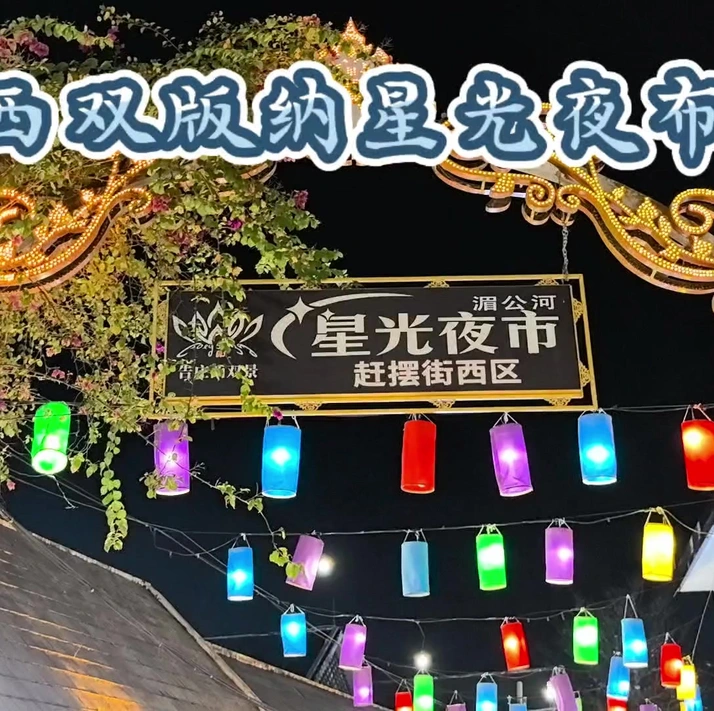
- Day 1 (Feb 20): Xi'an → flight → Xishuangbanna, explore Gaozhuang Starry Night Market
- Day 2 (Feb 21): Manting Park, General Buddha Temple
- Day 3 (Feb 22): Chartered car eastern route – Manta Village, Xishuangbanna Tropical Botanical Garden, Dai Ethnic Garden
- Day 4 (Feb 23): Chartered car northern route – Manzhang Village, Jinuo Mountain Village, Xishuangbanna Primitive Forest Park
- Day 5 (Feb 24): Chartered car western route – Mengbala, Manlü Jingfo Temple, Jingmai Mountain Nuogan Ancient Village, Taipingzhang Ancient Tea Forest, Mangjing
- Day 6 (Feb 25): Jingmai Mountain → Banna → high-speed rail → Pu'er (Bee King Tree, Octagonal Pagoda, Tea God Tree, Wengji Ancient Village)
- Day 7 (Feb 26): Pu'er Daijia Lane, Wuyi Farmers' Market
- Day 8 (Feb 27): Tea Horse Ancient Town, Tea Horse Road Scenic Area, Meizihu Park
- Day 9 (Feb 28): Pu'er → high-speed rail → Xishuangbanna, explore Riverside Night Market
- Day 10 (Mar 1): Manjinglan Ancient City, Water Splashing Square, fly back to Xi'an
Expense Breakdown: Practical Reference
| Item | Amount (CNY) |
|---|---|
| Flights | 2,726 |
| Train tickets | 176 |
| Chartered car fees | 1,800 |
| Taxi fares | 173 |
| Entrance tickets | 337 |
| Scenic area shuttle buses | 305 |
| Accommodation | 1,090 |
| Meals | 927 |
| Other expenses | 200 |
| Total | 7,734 |
Less than 4,000 yuan per person – great value for money.
Day 1: Xi'an → Xishuangbanna, First Taste of the Starry Night Market
On the day of departure, it was raining in Xi'an, and the rain kept getting heavier. Dragging our luggage, we took Metro Line 3 and then Line 14 to Xi'an Xianyang International Airport Terminal 3, but my heart was full of anticipation. The plane landed on time at Gasa Airport. Shedding our heavy winter coats and changing into light spring clothes, we instantly felt more at ease.
Xishuangbanna Dai Autonomous Prefecture, with its capital Jinghong City, borders Pu'er to the northeast, Laos to the southeast, and Myanmar to the southwest – one river connects six countries. Located at the northern edge of the tropics, it has a tropical monsoon climate. Winter temperatures are comfortable, making it an ideal place to escape the cold.

Our chartered car driver picked us up, and by the time we settled into our guesthouse, it was nearly 8 p.m. Still early, we headed straight for the Starry Night Market.
Located in Gaozhuang Xishuangjing, this is one of Asia's largest night markets, boasting 8,000 stalls. At night, the lights blaze like a starry sky. Here, you'll not only find local Xishuangbanna and Southeast Asian specialties but also various handicrafts and souvenirs. It was incredibly crowded, with loads of people dressed in ethnic costumes for photos. Even though it was the off-season, the buzz was no less intense.
We tried pineapple rice and fire ginseng fruit (huǒshēn guǒ), then had a bowl of small-pot rice noodles (xiǎoguō mǐxiàn). Satisfied, we headed back to rest. Tomorrow was a free day – we'd sleep in and take it easy.
Day 2: Manting Park and General Buddha Temple – Exploring the Charm of the Dai King's Imperial Garden
The beauty of free travel is sleeping in. At 9:30 a.m., we took a taxi to Manting Park and began a leisurely day of exploration.
Manting Park is located southeast of Jinghong city, about 2 kilometers from the urban area, covering over 400 mu (about 66 acres). It was once the imperial garden of the Dai kings, with a history of more than 1,300 years. The park features over 500 ancient ironwood trees, with hills and waterways interweaving, blending cultural landmarks with natural scenery. In the Dai language, it's called "Chun Huan," meaning "Garden of the Soul" – legend has it that a Dai princess was so captivated by the beauty here that her soul remained.

The park hosts regular free performances, and we also found a hand-washing pool said to ward off illness and misfortune. Following local customs, we washed our hands for good luck.
Adjacent to Manting Park is the General Buddha Temple, which is free to enter. In Dai, it's called "Wa Ba Jie" and is the center of Buddhist pilgrimage in Xishuangbanna. It was once the sacred site where the supreme ruler, the "Zhaopianling," and his chieftains prayed before liberation, making it the highest-ranking temple. The interior is resplendent with gold, and incense burns thickly – even without religious faith, you can feel the solemnity and reverence.
We exited around 2 p.m. and found a restaurant near the Riverside Night Market for a meal, waiting for the market to open. The Riverside Night Market, right next to the Lancang River, is a favorite among locals. When we arrived around 4 p.m., stalls were just setting up, lined up along the riverbank road. There were Dai-style grilled skewers, fresh juices, banana pancakes (xiāngjiāo bālādá), and other local snacks. But we walked to the end and took a taxi back – too tired to continue, we rested before heading out for dinner.
Day 3: Eastern Route Charter – Manta Village, Botanical Garden, Dai Ethnic Garden
Xishuangbanna's attractions are quite scattered, and Lao Li didn't want to drive, so we decided to charter a car. After contacting a driver online, we began four consecutive days of chartered tours.
Our first stop was Manta Village, the last place where a Dai king lived. The village has only 49 households, preserving unique Dai customs: women manage the household and weave cloth, while men handle crafts, language, and writing, and they marry into the wife's family. Boys must become monks at age 10 to learn Dai culture, while girls have no such tradition. The houses are all stilted buildings (diàojiǎo lóu), evolving from first-generation thatched huts to fourth-generation concrete structures, but always maintaining the Dai architectural style with square pillars to prevent snakes from coiling up. The ground floor is left empty to avoid animal intrusion – a clever design.
Our second stop was the Xishuangbanna Tropical Botanical Garden, run by the Chinese Academy of Sciences. The garden is huge, divided into eastern and western zones, but we only visited the west zone. A shuttle bus is essential because of the long distances between attractions. There were tons of visitors, mostly tour groups – even in the off-season, it was packed. For me, plants were just a visual spectacle: all kinds of tropical flora and flowers, beautiful but impossible to remember the names.
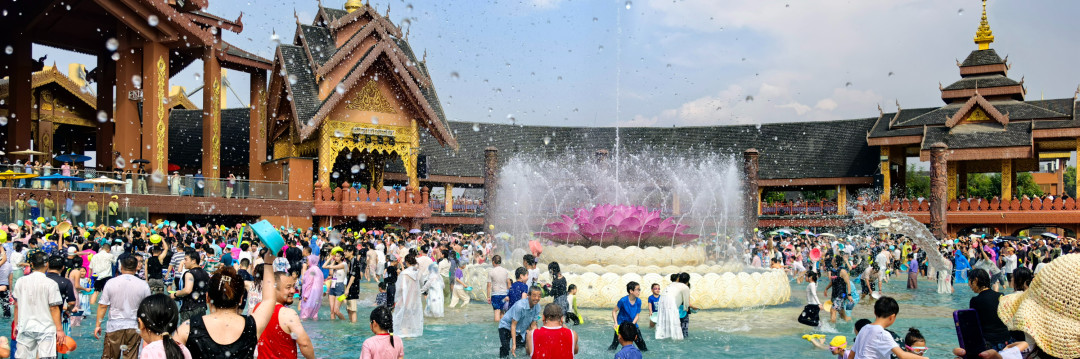
Our third stop was the Dai Ethnic Garden, located on Olive Dam (Gǎnlǎn Bà). It preserves five intact Dai natural villages. The Water Splashing Square features a water-splashing performance, but we didn't participate – just watched and took photos from the side. The Border Pier is the filming location for the movie Border Pier, with Myanmar just across the river. At the Peacock Garden, you can pay to interact with peacocks, and there are professional dance performances with graceful movements.
On the way back, it started raining. Banna hadn't seen rain for months, and the moment I arrived, it poured – I really have a "rain god" constitution.
Day 4: Northern Route Charter – Manzhang Village, Jinuo Mountain Village, Primitive Forest Park
Manzhang Village means "Elephant Village" in Dai, with a history of over 500 years. Its traditional houses are well-preserved, and it's a model "Beautiful Village." Here, chickens are kept as pets, and dragon fruit is ripened with lights at night, creating a beautiful scene. Grilled chicken is the village's signature dish. The locals are simple and honest, and commercialization is minimal – well worth a slow stroll.
Jinuo Mountain Village is the only place in China that comprehensively showcases Jinuo culture. In 2007, the Jinuo Grand Drum Dance was listed as a national intangible cultural heritage. On the way up the mountain, there are thatched shelters for resting and places to display hunted game, as well as bamboo-woven rattles used to scare off animals. The Jinuo people performed traditional shows for us – we couldn't understand the language, but we could feel their passion for their culture.
Xishuangbanna Primitive Forest Park covers 26,310 mu (about 4,340 acres), with a forest coverage rate of 98.6%. It's the best-preserved primary forest south of the Tropic of Cancer. The shuttle bus driver suggested we first watch the peacock release show. At 3:30 p.m., a water show and dance performance began, and the peacock release was spectacular. Afterward, we went to the Rainforest Culture Square for a dance show where performers interacted with the audience, creating a lively atmosphere. The last stop was the Aini Mountain Village, but we were too tired and left before finishing.
The 60-yuan shuttle bus ticket felt overpriced – there were only two stops, neither far apart. If you have time, you could easily walk up.
Day 5: Western Route Charter – Mengbala, Jingmai Mountain
Banna hadn't seen rain for a long time, but in my four days here, it rained for three. Heavy rain started the night before, and I was woken at 6 a.m. by the sound of rain. The forecast for Jingmai Mountain also showed rain – oh well, whatever will be.
Our first stop was Mengbala, a tranquil villa area with tent hotels and campsites. Here, we saw many peacocks with their tails fanned out – the first time I'd seen so many peacocks displaying at once, and it was delightful. The environment was lovely, perfect for a relaxing getaway.
Our second stop was Mengzhe Manlü Jingfo Temple, resplendent with gold. Some parts were still under construction, and there was a reclining Buddha. If you're interested in Buddhism, it's worth a visit.

Once we entered Jingmai Mountain, the paved road turned into a gravel path, supposedly to protect the ecological integrity of the tea forests. After a bumpy ride, we arrived at Nuogan Ancient Village, a large settlement on Jingmai Mountain with well-preserved Dai stilted houses. Despite some commercialization, each shop was tastefully decorated – not flashy or ostentatious. We tried grilled chicken and grilled pork belly, both delicious. This village was also a filming location for the movie One Step Away (Yīdiǎn Jiù Dào Jiā).
Leaving Nuogan, we headed to Taipingzhang Ancient Tea Forest, which is filled with ancient tea trees of various shapes, all well-protected. Jingmai Mountain's ancient tea forest is hailed as a "natural museum of ancient tea," a model of harmony between humans and nature.
Golden Pagoda Temple is near Jingmai Dazhai, a sacred site for Theravada Buddhism where you can watch sunrise and sunset. But our timing was off, so we just passed by.
By evening, we rushed to Wengji Mountain Village. Seeing rain clouds approaching, we first found accommodation in Mangjing Village. Just as we checked in, a torrential downpour began. When the rain stopped, we hurried to find a spot to watch the sunset. We saw an "egg yolk" sun dip below the horizon – it disappeared quickly, but we were already satisfied.
Day 6: Jingmai Mountain → Pu'er – Farewell to Sea of Clouds and Ancient Villages
Rain fell all night. Morning was overcast, with no sunrise. We set off at 8:30 a.m., first visiting the Bee King Tree. This ancient banyan tree stands nearly 50 meters tall, with over 70 beehives hanging from its branches – a truly spectacular sight. Through the trees, we caught a glimpse of a sea of clouds, faint but beautiful.
Eager to see the clouds clearly, we quickly drove to Manghong Octagonal Pagoda, but mist rapidly spread, obscuring the mountains – the sea of clouds was gone. Next, we looked for the Tea God Tree. The sign said it was 60 meters away, but we walked about 200 meters before finding it. It also had beehives, but not as many as the Bee King Tree.
Wengji Ancient Village is a Bulang ethnic village with 80 households and 380 people, known as the "Thousand-Year Bulang Ancient Village." It's quieter than Nuogan and less commercialized, but all the paths are on slopes – very tiring on the legs. Every house had a mascot hanging at the door, adding unique character.
Around 11 a.m., we headed back. I couldn't accept leaving without seeing the sea of clouds, so the driver took a detour to the Great Golden Pagoda to try our luck. But the clouds and fog were too thick, and we reluctantly returned to Banna, preparing to head to Pu'er.
At 3:40 p.m., we arrived at Banna Train Station. Forty-four minutes later, we reached Pu'er. The temperature here was lower than in Banna – we needed two layers of clothing – but it was wonderfully comfortable.
Days 7-8: Slow Life in Pu'er – Tea Horse Ancient Town and Farmers' Market
Pu'er's pace is much slower than Banna's. Daijia Lane and Wuyi Farmers' Market are great places to experience local life – all kinds of fruits, snacks, and handicrafts to browse through, and we had a wonderful time.
Tea Horse Ancient Town and the Tea Horse Road Scenic Area are excellent spots to learn about Pu'er tea culture. Meizihu Park has a beautiful environment, perfect for a leisurely stroll or just sitting and daydreaming.
Pu'er's temperature was truly comfortable – neither too hot nor too cold, just right.
Days 9-10: Return to Banna – Riverside Night Market and Farewell

We took the high-speed rail from Pu'er back to Banna. In the evening, we visited the Riverside Night Market – not as bustling as the Starry Night Market, but with a more local vibe.
On the last day, we went to Manjinglan Ancient City and Water Splashing Square, then flew back to Xi'an in the afternoon. The ten-day trip was over. Though some attractions weren't as stunning as I'd imagined, the overall experience was relaxing and joyful.
Final Thoughts: What I Gained in Ten Days
The biggest takeaway from this Yunnan trip wasn't how many sights I saw, but the chance to change my surroundings and my mindset. Xishuangbanna's ethnic culture and Pu'er's comfortable temperatures both showed me the charm of Yunnan.
A few practical tips: 1. Chartering a car is less hassle than driving yourself, especially if you don't want to drive. Just find a reliable driver online. 2. The off-season is still crowded, so be prepared, especially at the botanical garden and forest park. 3. Bring a jacket – temperatures vary greatly between morning and evening in Banna, and Pu'er is even cooler. 4. Don't rush – you don't need to visit every attraction. Just pick the ones you like. 5. Respect local culture, especially in temples and villages. Stay quiet and don't take photos without permission.
Travel isn't just about seeing scenery – it's about seeing the world and seeing yourself. I hope to come back to Yunnan again and explore more of its hidden beauty.
You should also read:

God’s Abandoned Palette: A Self-Drive Journey Through Yunnan’s Dongchuan Red Land
God’s Abandoned Palette: A Self-Drive Journey Through Yunnan’s Dongchuan Red Land Travel has never been about reaching some distant geographic coordinate. It’s about encountering, along the way, the version of yourself buried beneath the rubble of daily routine. During this May Day holiday, I finally…
Continue reading...
Cloud Travelogue · Dali of Wind, Flowers, Snow, and Moon: A Three-Day, Two-Night Journey of a Free Spirit
Cloud Travelogue · Dali of Wind, Flowers, Snow, and Moon: A Three-Day, Two-Night Journey of a Free Spirit I am a cultured female foodie with a touch of rogue charm. I slung on my backpack, took my lover's hand, and set off on a spontaneous…
Continue reading...
The Meaning of Travel – A Tengchong Story: A Journey of the Heart and Personal Growth
The Meaning of Travel – A Tengchong Story: A Journey of the Heart and Personal Growth Setting Out, Only to Return a Better Self Some say travel is nothing more than leaving a place you're tired of, only to go to a place where others…
Continue reading...