Yunnan Seven-Day Journey: Dali, Shaxi, Lijiang | Slow Time Under Three Inches of Sunlight
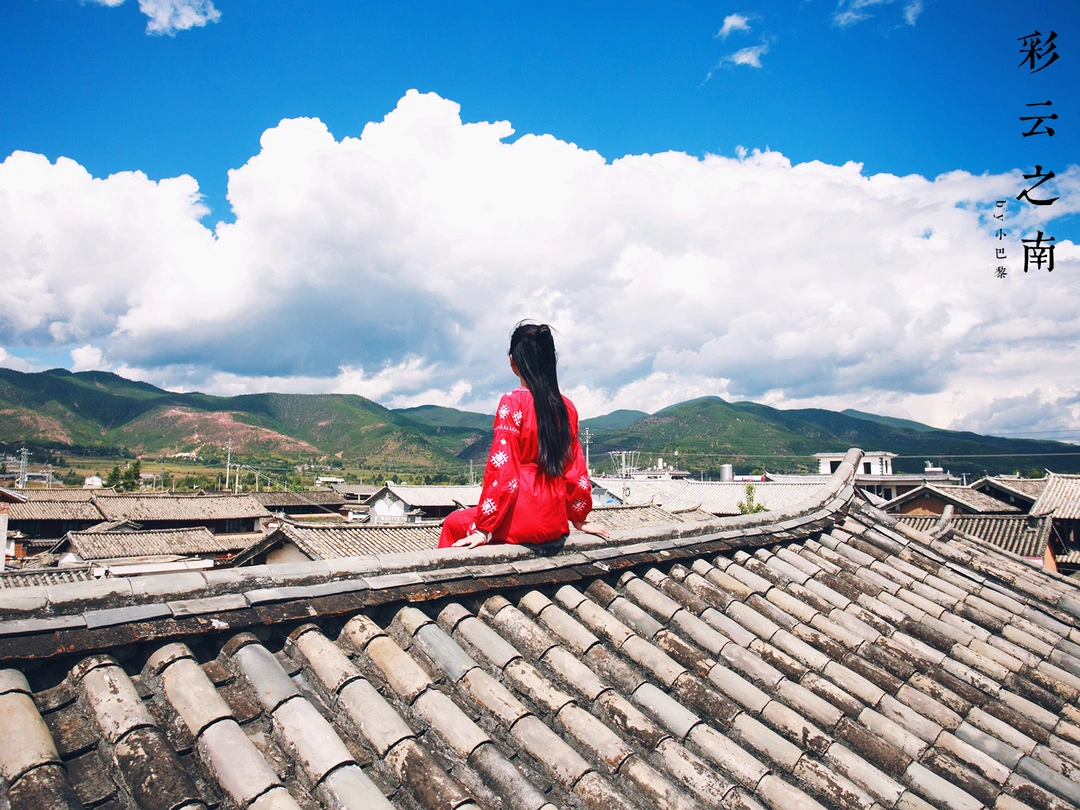
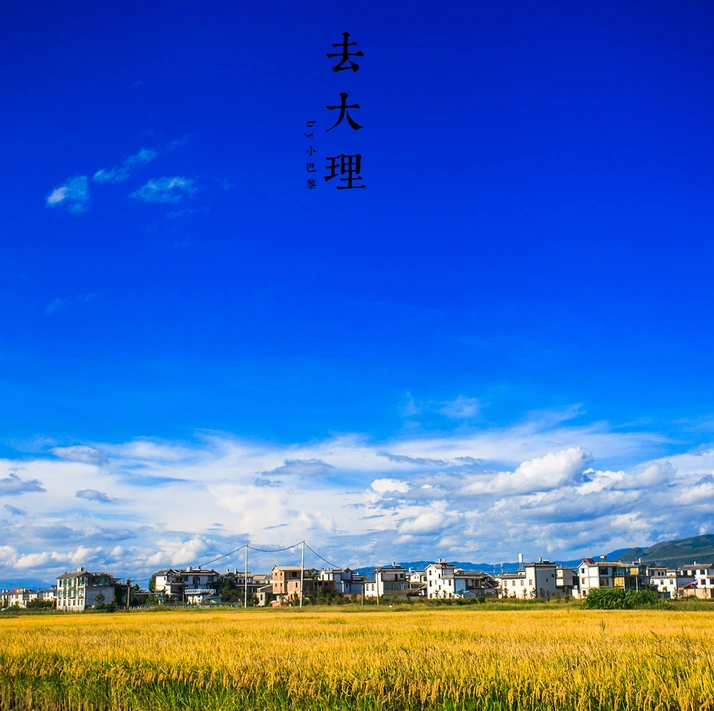
Yunnan Seven-Day Journey: Dali, Shaxi, Lijiang | Slow Time Under Three Inches of Sunlight
Weibo: @小巴黎XIAOYU
WeChat Official Account: Paris809
WeChat: littleparis809 (please note "Mafengwo")
Destination: Yunnan
Travel Dates: September 21–27, 2017 · 7 days
Cost per Person: Approximately RMB 3,000–4,000
Travel Companions: Friends
Foreword: Why Do I Keep Going Back to Yunnan?
If you ask me which place in China I never tire of, the answer is always Yunnan. Over the years, I've counted — I've been there thirteen times: seven to Dali, eight to Lijiang. Every trip feels like meeting an old friend — familiar yet fresh, ordinary yet full of surprises.
In 2012, I first drove myself through Yunnan, that excitement and innocence still unforgettable. In 2015, I found a long-lost sense of connection in the winds of Dali and the alleyways of Lijiang. And this time, in September 2017, I impulsively set off again on the most familiar route — Dali, Shaxi, Lijiang. The difference? I finally made it to the long-awaited Shaxi Ancient Town.
Many people ask me: Why do you always go to the same place? My answer is simple: Yunnan is too vast. Every trip only lets me glimpse a tiny corner. And every time, it makes me fall in love again — with different scenery, different warmth.
This article isn't just to record a journey. It's to preserve those moments under "three inches of sunlight" — the succulents on Cangshan, the blue of Erhai, the quiet of Shaxi, the nights of Lijiang. If you want to go to Yunnan, or just want to travel through words, come along with me.
The First Inch of Sunlight: Dali — A Four-Season Poem of Wind, Flowers, Snow, and Moon

To me, Dali has never been just the four characters "wind, flowers, snow, and moon." It's a poem with distinct seasons: rapeseed flowers in spring, rice paddies in summer, golden wheat waves in autumn, and snow on Cangshan in winter. This time, I caught the tail end of early autumn.
Cangshan and the Jizhao Nunnery: Succulents Gleam Brighter After Rain
Cangshan is the main peak of the Yunling mountain range. Nineteen peaks stretch from north to south, starting from Eryuan Dengchuan in the north to Xiaguan Tiansheng Bridge in the south. After so many visits to Dali, I've been to Erhai countless times but rarely ventured up Cangshan. In September, Yunnan's rainy season has just ended, but toward the end of the month, it rained. However, Dali's weather is strange — rain in the morning, clear skies by afternoon; or rain on the west side of Erhai while the east side is sunny.
Because of the rain, I decided to visit Jizhao Nunnery first. This Buddhist nunnery is hidden deep in Cangshan, a 20-minute uphill walk from Gantong Temple. It's less a temple and more a courtyard filled with succulents and flowers. The nunnery is small, but every detail shows care — the backyard tea room is free for guests to brew tea, read, and chat.
Practical Tips: - Admission: Free - Vegetarian meal: RMB 20 per person (free at noon on the 1st and 15th of each lunar month) - Getting there: Take a taxi from Dali Old Town to Cangshan Geopark entrance, then walk up - Opening hours: 8:30 AM – 5:00 PM
This was my second visit to Jizhao Nunnery. The first time was on a rainy day in March, when the succulents were washed clean by the rain, glistening with vitality. This time, though the sky was clear and sunlight bathed the plants, they lacked that moist, lively sheen. Honestly, I prefer the nunnery in the rain — fewer people, more peaceful, the plants more alive.
The vegetarian meal is a highlight here. About ten vegetable dishes, surprisingly delicious — who knew plant-based food could be so flavorful? But a word of caution: don't pile your plate too high; you must finish everything. I made the same mistake again and ended up staggering out, full to bursting. Bitter laugh.
After lunch, I wandered around the nunnery. Sunlight filtered through the leaves, casting dappled shadows. Unfortunately, midday crowds made it impossible to get a good portrait. I only managed one photo, feeling a bit frustrated — I'd worn a new dress! Let me share a few photos from my first visit. The rainy Jizhao Nunnery — that's the one I carry in my heart.
My advice: If it rains during your Dali trip, don't be discouraged. Head to Jizhao Nunnery. The rain-washed succulents and the courtyard in the drizzle will make you feel the rain came just right.
Cangshan National Geopark: Wrong Season, But Still Worth It
From Jizhao Nunnery, I took the Gantong Cable Car up Cangshan. This season is a bit awkward — winter has snow, May has azaleas, both better than September. But since I was there, I went anyway. The cable car ride offered decent views, overlooking Erhai and the old town, with light dancing across the mountains.
Practical Tips: - Peak season (April–October): 8:30 AM – 4:10 PM - Low season (November–March): 8:30 AM – 3:40 PM - Admission: RMB 30 - Cable car: Gantong Cable Car RMB 110 (round trip, includes admission); Cangshan Grand Cable Car RMB 182 (one way, includes admission) - Best approach: Walking + cable car
I walked around the mountain, snapped a few waterfall photos, but it wasn't really my thing. On the way down, the weather improved, and from the cable car, I got a panoramic view of Erhai. Yeah, I'm better off at places made for photos — like portrait shots.
A Cave Garden Beneath Cangshan: A New Way to Stay in Dali
I recently discovered a new trend: instead of staying by Erhai, people are staying beneath Cangshan. Near Dali Old Town, the newly opened Tinghuatang Dali Fengxue Gucheng (Wind, Snow, Ancient City) has a cave-themed design. The room details are thoughtful — a blend of ethnic style and cave aesthetics. Even on rainy days, it's cozy to just stay in.
I'd planned to shoot a floating girl series, but with zero experience, the results weren't great. Next time, I'll make up for it!
Xizhou and Haishe Park: Unchanged Tie-Dye, Changed Times
The next morning, it rained again... I was beyond despair. After much hesitation, I decided to revisit Xizhou.
Xizhou Town lies north of Dali City, leaning against Cangshan to the west and facing Erhai to the east. During the Sui and Tang dynasties, it was called "Dali City" and was one of the "ten towns" of the Nanzhao Kingdom. It's the hometown of the film Five Golden Flowers and a hub for Bai ethnic tie-dye. A 20-minute drive from the old town.
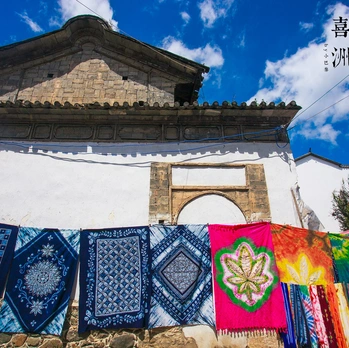
Practical Tips: - Admission: Free - Yan Family Grand Courtyard: About RMB 30 (worth a visit to understand Bai residential architecture) - Recommendations: Xizhou flatbread (喜洲粑粑), Bai tie-dye
This was my third visit to Xizhou. The iconic old buildings were still under renovation — never had the chance to see them in full. Yan Family Grand Courtyard, built in 1907 by wealthy Bai merchant Yan Zizhen, features four courtyards plus a Western-style building, covering 2,475 square meters. Bored out of my mind, I finally went in for a look. If you're interested in traditional residences, it's worth it. For a layman like me, a quick glance was enough.
Xizhou has become increasingly crowded, nothing like my first visit. At noon, with harsh overhead light and swarms of tourists, I had no desire to take photos. Let me share two photos from two years ago — when the streets were nearly empty, with yellow walls, stone paths, and tie-dye cloth. That's the Xizhou I remember.
From Xizhou, I went to Haishe Park. It was the wet season, so many landscapes were submerged. I searched but couldn't find the spot I'd visited before. Still, the afternoon Erhai was a heartbreaking blue. I took a RMB 3 horse-drawn cart to the park entrance, then walked in. The wind felt wonderful.
Photography tip: Haishe Park is very windy, great for dynamic portraits. But some views are lost during the wet season — choose your timing carefully.
Caicun Flower Fields: An Unexpected Surprise
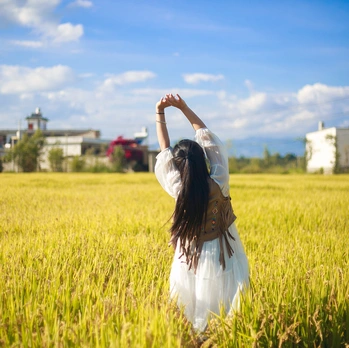
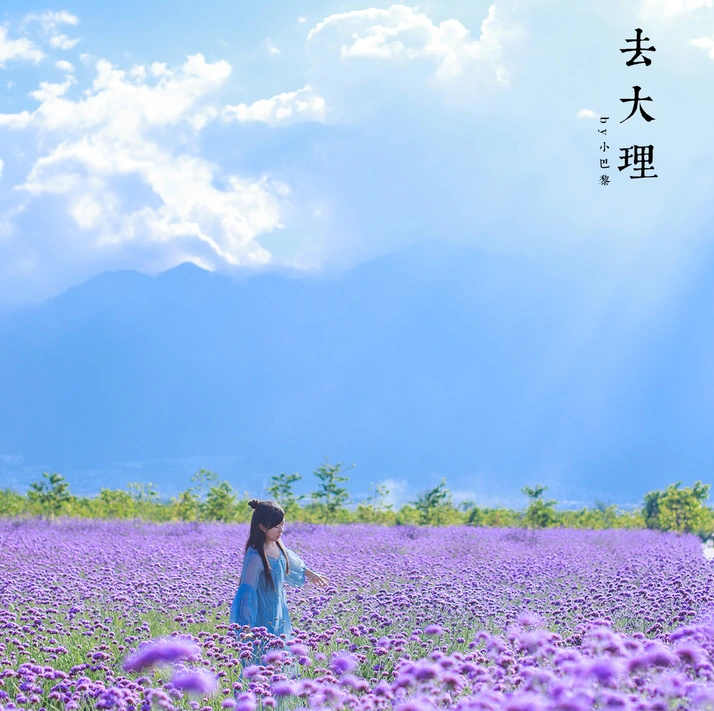
Caicun is close to the old town — a RMB 10 Didi ride. There are many flower fields here, fenced off by locals who charge RMB 10 per person. Though the verbena (马鞭草) is artificially planted, the backdrop of Cangshan and Dali's sunlight is unmatched anywhere else.
The biggest surprise came when I stumbled upon a patch of cosmos flowers (格桑花) on a small path in Caicun. Women love flowers, and I caught the last rays of light, spinning among the blooms. Dali's Tyndall effect — sunlight streaming through clouds in visible beams — combined with the flower fields, created a natural photography studio.
Photography tip: The best light is from 4:00 to 6:00 PM. Cosmos, verbena, and sunflowers are all excellent subjects.
West Erhai Road: Dali's Autumn Colors
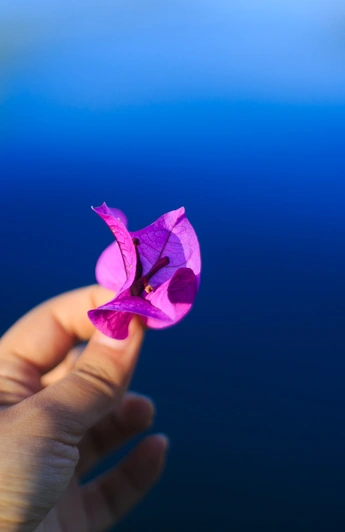
West Erhai Road runs from Caicun to Xizhou, showcasing Dali's unique autumn palette — golden rice paddies, Bai houses, and the Tyndall effect beneath Cangshan. This season, the famous "crooked tree" at Fumeiyi was gone, but the bougainvillea was in full bloom.
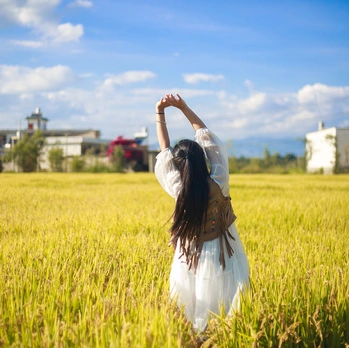
The reservoir at Jiyi — I'd missed it several times before. This time, during the high water period, I couldn't capture the square gate I'd hoped for. But I stumbled upon an unexpected angle that became a happy accident during my bike ride.
On the last day, near Xizhou, I chanced upon wheat fields again. Dali's weather was perfect for photos, perfect for just spacing out. But I think this was my last trip here this year. I once said I wanted to settle here — that was the younger me. Now, every visit brings new memories, but I'm still searching for those irretrievable moments.
Goodbye, Dali. I hope next time we meet, you'll be better, and so will I.
The Second Inch of Sunlight: Shaxi — The Last Quiet Place on the Ancient Tea Horse Road
Shaxi sits between Dali and Lijiang, closer to Lijiang. I'd traveled between Dali and Lijiang many times but never made it to Shaxi. This time, I finally committed.
I booked a Didi carpool from Dali the day before. We left at 11:00 AM the next day and arrived at 1:30 PM. Shaxi is tiny. The iconic ancient banyan tree and old stage are right on Sifang Street (Square Street).
Practical Tips: - Getting there: About 2.5 hours from Dali by carpool or self-drive - Admission: Free - Recommendations: Sifang Street, Big Stone Bridge, Ancient Stage
I found a café on Sifang Street — a pot of rose tea, a few rose pastries, a bowl of noodles. Simple, but paired with Shaxi's light and shadow, it felt special. Shaxi is perfect for doing nothing. The afternoon on Sifang Street reminded me of how Dali and Lijiang used to be years ago.
Just outside the old town is the Big Stone Bridge. There were horse caravans offering rides, but I didn't go — who would take a good photo of me? In the evening, the wind on the bridge was pleasant, the day's heat fading. I'd heard the morning was even better, so I got up early the next day.
Shaxi at dawn: the stone paths washed clean, Sifang Street peaceful. On the Big Stone Bridge, I watched people come and go, feeling time pass. As the sun grew stronger, I knew I had to leave. I've heard late autumn and early winter are even more beautiful. Next time, I'll stay for a few days and do absolutely nothing.
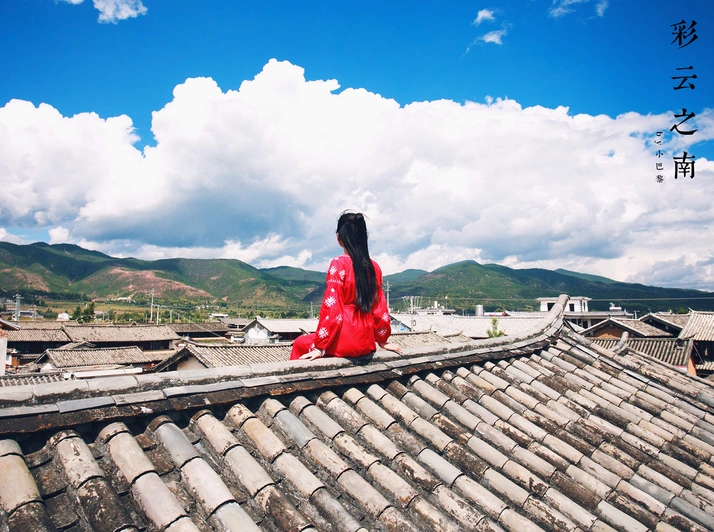
The biggest reward of this Shaxi trip? I climbed onto a rooftop. On the roof of my guesthouse, I sang a song, letting the white clouds decorate the sky into the most romantic clear day. The rooftop experience I'd dreamed of in Yunnan — I finally had it in Shaxi. But be careful; don't try it if you're not agile.
Goodbye, Shaxi. Because I love it, I'll come back.
The Third Inch of Sunlight: Lijiang — From Bustle to Quiet, I Love It More and More
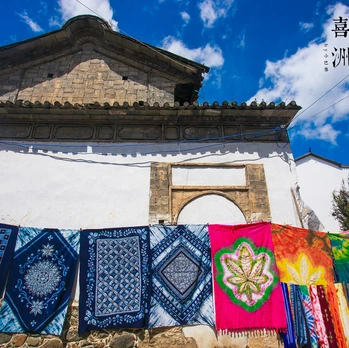
I remember a winter in college when I desperately wanted to go to Lijiang. I finally went during National Day in 2012. Despite the crowds, I loved the Dayan Old Town. Later, I visited Lijiang eight times, gradually losing that initial feeling — only to fall in love with it all over again.
There's a bar in Lijiang called "Little Paris" (小吧黎). Somehow, I feel a deep connection to this city.
The Old Town at Night: From Getting Lost to Knowing Every Corner
I took a carpool from Shaxi to Lijiang Old Town, arriving in the evening. In the past, the old town charged a conservation fee, so I avoided Dayan. Now that it's free, I can come and go as I please.
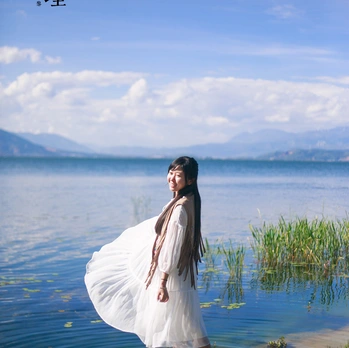
After resting at the guesthouse, I went to the new town for dinner with friends, then returned to the old town. Walking from South Gate to Sifang Street, I suddenly remembered that Lantern Festival years ago when I got lost in the old town, panicking with my friend Gao. Now, I'm no longer the little girl who gets lost here — Sifang Street, Wuyi Street, Qiyi Street, Lion Hill, I know them all by heart.
By the river on Sifang Street, they still sell wish lanterns. I've passed by countless times but never bought one. Every time I visit the old town, I stop by Zuoxiang Coffee (左巷咖啡) near the Big Stone Bridge — a glass of red wine, a story, listening to a singer perform. Zuoxiang Coffee used to be "Yuanlai Coffee" (缘来咖啡), featured in the TV drama Beijing Youth. After renovation, it became Zuoxiang. I always come at night, but I hear it's nice during the day too.
In Lijiang, I rarely go to bars, except for Jianghu (江湖). Hidden in an inconspicuous alley, it's a traditional fire-pit bar where everyone sits around the hearth. One of the singer-owners, Lijiang Xiao Song, does a stunning rendition of Hongyan (Swans). There's also Wednesday (周三) — the original singer of Wednesday's Love Letter, a contestant on Cai Jianya's team on The Voice of China. Here, everyone sits around the fire, strangers becoming old friends, beer in hand, singing along until voices go hoarse, until they're drunk.
"Better to forget each other in the world than to depend on each other." Everyone in Lijiang has a story.
Waking Up Naturally: That's Lijiang Life
If Dali is a natural photography studio, Lijiang for me is a place to truly relax. Every time I come from Dali to Lijiang, my travel companions dwindle from a group to two, to one, and several times I've been entirely alone.
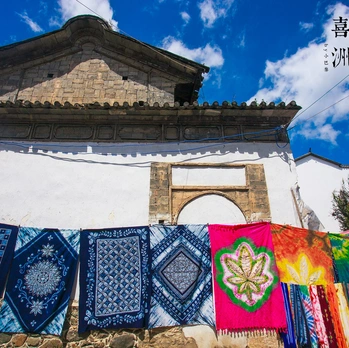
This time, I decided to just unwind. I stayed at Tinghuatang Guesthouse. Waking up from the hustle and bustle in the morning was pure bliss. Sleeping until noon is the correct way to do Lijiang. When the weather was good, I went to the rooftop to gaze at Jade Dragon Snow Mountain — always from afar. When will I finally go there?
In the afternoon, I wandered through the old town. It's commercialized now, but that has its advantages — convenience. At a corner on the uphill road, I found a café called "No. 1 Coffee." The waitress said the second floor had a better view. She was right — the open vista of the old town under a blue sky was stunning.
I ordered a mango mille-feuille and an orange juice, settling into afternoon tea time. Rarely do I skip sightseeing to just sit and daydream. There's even an open-air terrace on the third floor. In that moment, I loved Lijiang Old Town under the blue sky and white clouds.
A Dream in Shuhe: Slow Time in a Garden
Shuhe Ancient Town is a well-preserved market town on the Ancient Tea Horse Road and part of Lijiang Old Town. This was my fourth visit. In spring, there are weeping crabapple blossoms and wisteria. The more I come to Shuhe, the more I love it.
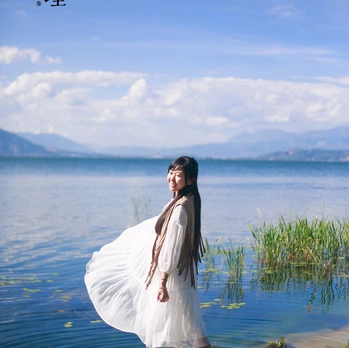
Heavenly Time (天堂时光) is a popular spot in Shuhe where you can send postcards. On a sunny day, from Sifang Street to Jiuding Dragon Pool, I have beautiful memories here too.
This time, I stayed at Tinghuatang's Shuhe branch. The entire guesthouse is an American-style countryside garden. Perfect for portraits — but my friend wasn't there... Next time, I'll make up for it.
Conclusion: Three Inches of Sunlight, One Inch of Memory
Seven days, three places, three inches of sunlight. Cangshan and Erhai in Dali, the pristine quiet of Shaxi, the night scenery of Lijiang Old Town — every inch is etched into memory.
Some say once is enough for Yunnan. But for me, every time feels like the first — because the scenery changes, my mood changes, and the people around me change. The excitement of 2012, the emotion of 2015, the easygoing acceptance of 2017 — each journey is unique.
If you ask me where in Yunnan is best, I'd say: Dali for photos, Shaxi for doing nothing, Lijiang for relaxation. But most importantly, bring your heart and let yourself encounter the unexpected sights.
Practical Tips Summary: - Best season: September to November (most beautiful autumn colors, end of rainy season) - Transport: Dali to Shaxi (carpool, 2.5 hours); Shaxi to Lijiang (carpool, 1.5 hours) - Accommodation: In Dali, stay in the old town or beneath Cangshan; in Shaxi, near Sifang Street; in Lijiang, in the old town or Shuhe - Must-bring: Sunscreen, sunglasses, light jacket (big temperature difference between morning and evening) - Photography: Best light from 4:00 to 6:00 PM; cosmos, rice paddies, and Erhai are great backdrops
Finally, a message to myself: Find long-lost feelings in familiar places. Stay true to your初心 (original intention), and keep moving forward.
See you next time, Yunnan.
You should also read:
Escaping Nanning, Falling Under Lijiang's Spell: Our Four-Person, Ten-Day Yunnan Dream
Escaping Nanning, Falling Under Lijiang's Spell: Our Four-Person, Ten-Day Yunnan Dream Before We Set Off: No Pain, No Obsession Have you ever had that impulse—suddenly tired of the office fluorescent lights, the crush of the subway, the endless parade of identical takeout boxes, and just…
Continue reading...
Tengchong·Heshun: Finding Life as It Should Be in a Border Town Where Time Stands Still
Tengchong·Heshun: Finding Life as It Should Be in a Border Town Where Time Stands Still The long journey of over twenty days was over. On my first day back at the office, I was still in a daze. My fingers couldn't find the keys on…
Continue reading...
Cloud Travelogue · Dali of Wind, Flowers, Snow, and Moon: A Three-Day, Two-Night Journey of a Free Spirit
Cloud Travelogue · Dali of Wind, Flowers, Snow, and Moon: A Three-Day, Two-Night Journey of a Free Spirit I am a cultured female foodie with a touch of rogue charm. I slung on my backpack, took my lover's hand, and set off on a spontaneous…
Continue reading...