Yunnan | Southwest by South, A Cultural Tapestry: Walking Through Jianshui and Shiping
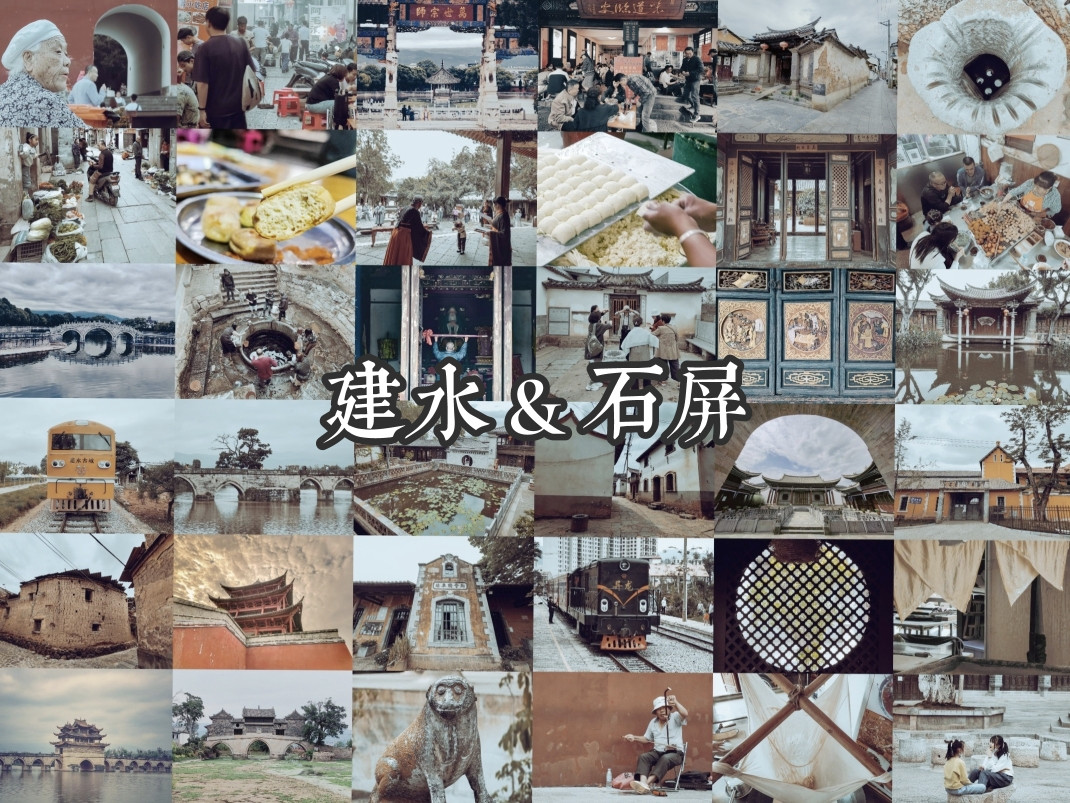
Yunnan | Southwest by South, A Cultural Tapestry: Walking Through Jianshui and Shiping
In the spring of 2022, travel had become a delicate gamble. I wasn't choosing destinations so much as pleading with fate for a place that would let me in. Lucky for me, China is vast enough, and Yunnan always keeps its arms open. This time, I set my sights on southern Yunnan—that borderland forgotten by time but etched into history. Jianshui and Shiping, two small towns like pearls polished by the years, lie quietly in the embrace of Honghe Prefecture, waiting for those with eyes to see.
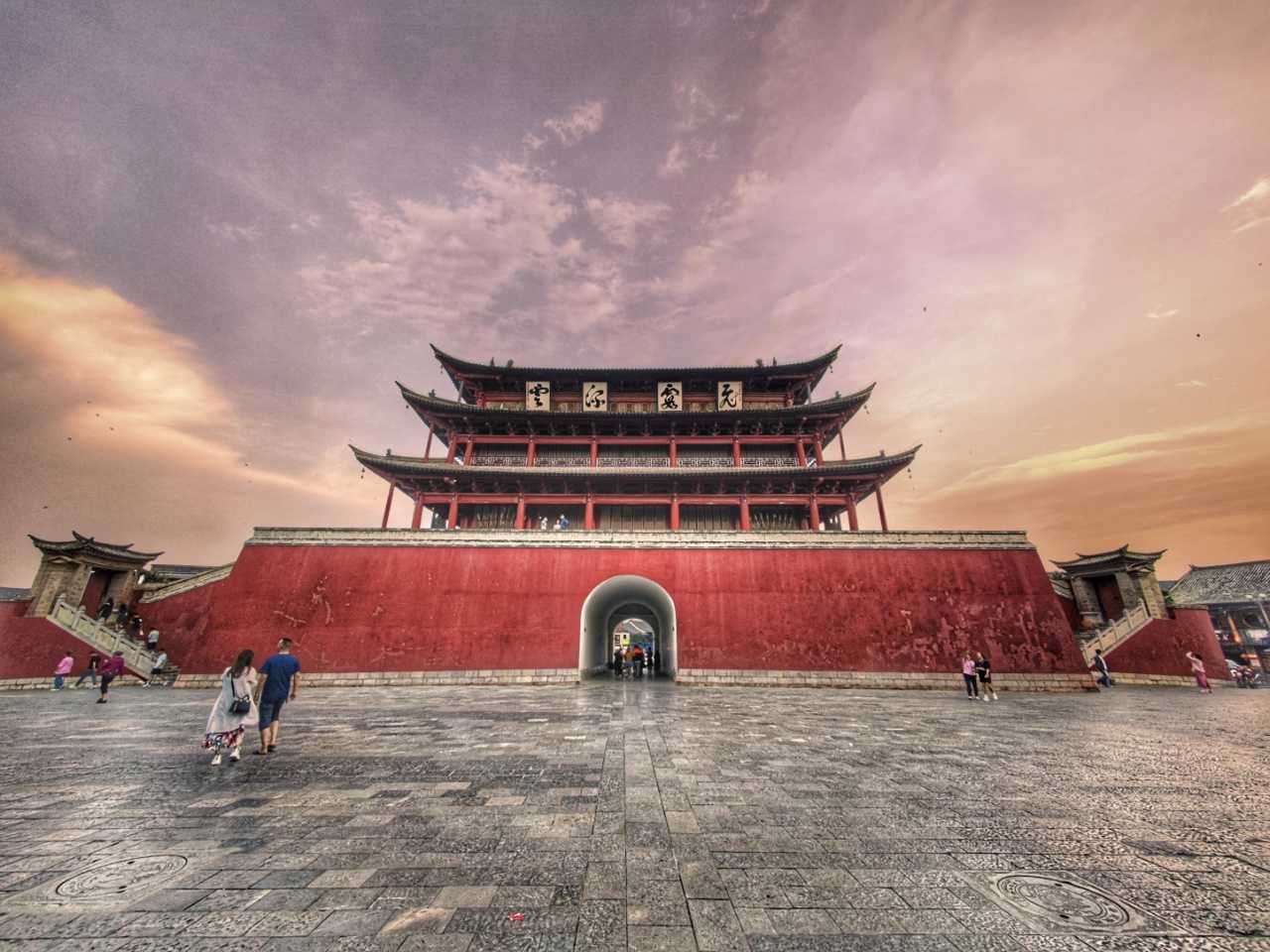
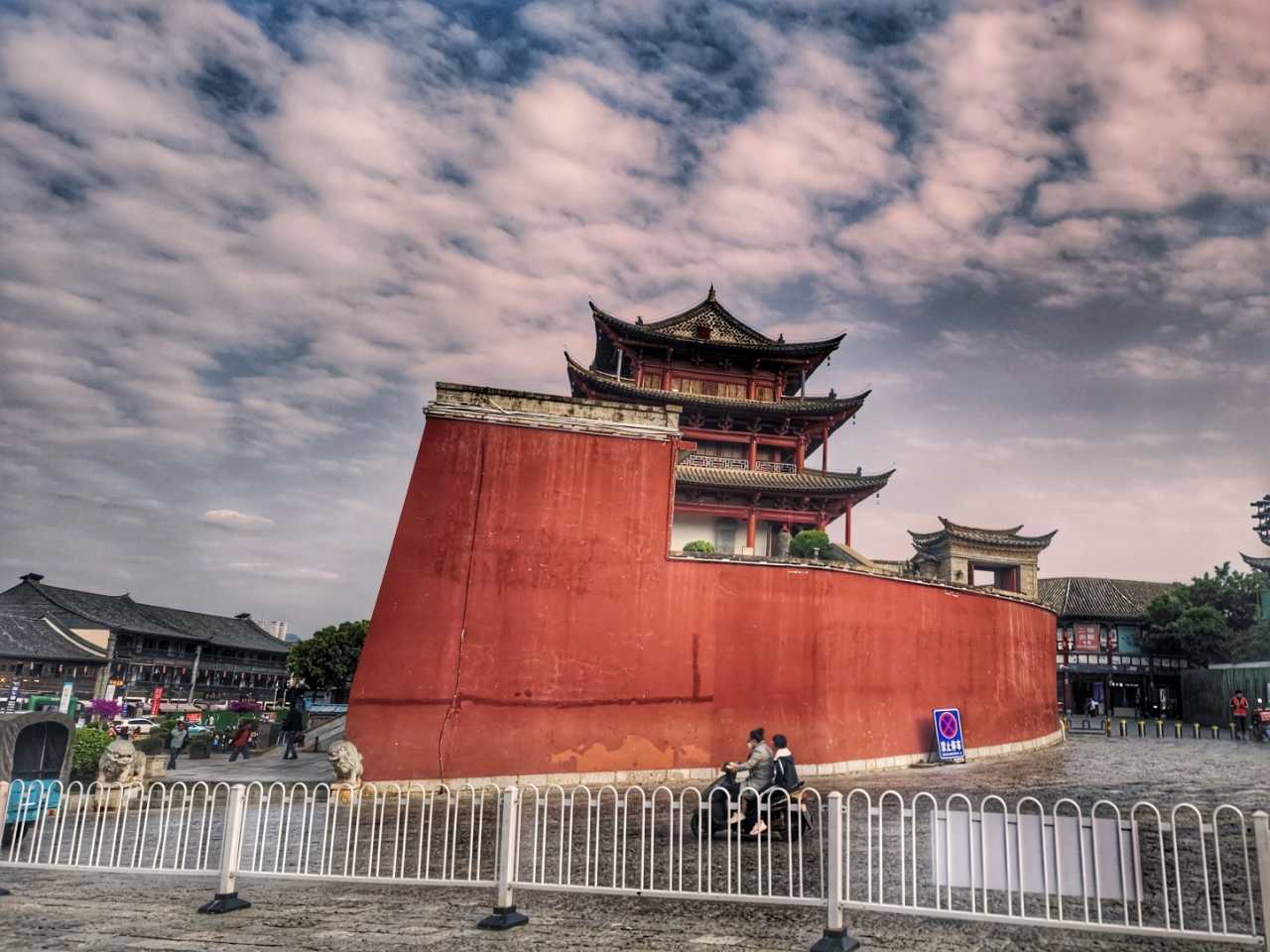
On the first day of May, I landed at Kunming Changshui Airport, rented a car, and drove south. Three hours later, the expressway gave way to asphalt, and asphalt gave way to flagstone. When gray bricks and black tiles replaced steel and concrete, I knew—the ancient town had arrived. A towering red gatehouse loomed into view. The setting sun painted the clouds crimson. In that moment, I understood what "grandeur" really meant.
First Glimpse of Chaoyang Tower: A Guardian Older Than the Forbidden City
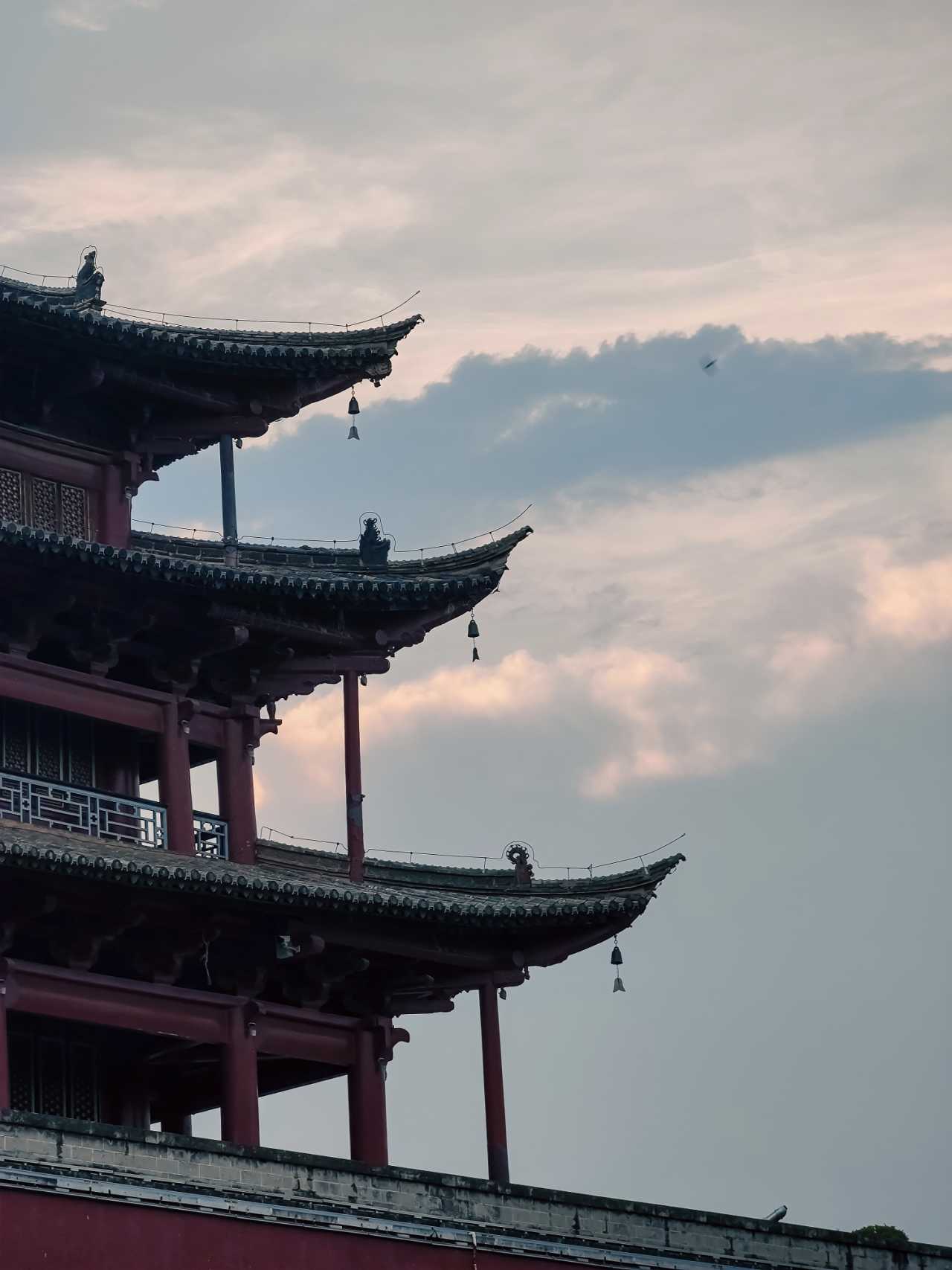
This red gatehouse is called Chaoyang Tower, also known as Yinghui Gate—the eastern entrance to Jianshui's old town. Built during the Hongwu reign of the Ming Dynasty, it is thirty-one years older than the Forbidden City and twenty-eight years older than Tiananmen. Online, people often call it the "Little Tiananmen," forgetting that Chaoyang Tower came first, long before the Forbidden City ever existed. This three-story tower, perched atop a brick-and-stone city wall, gazes down upon Jianshui, watching over its people. The Jianshui Prefecture Gazetteer describes it as "a hundred feet high, piercing the clouds, overlooking the city and its ten thousand households of smoke and flame."
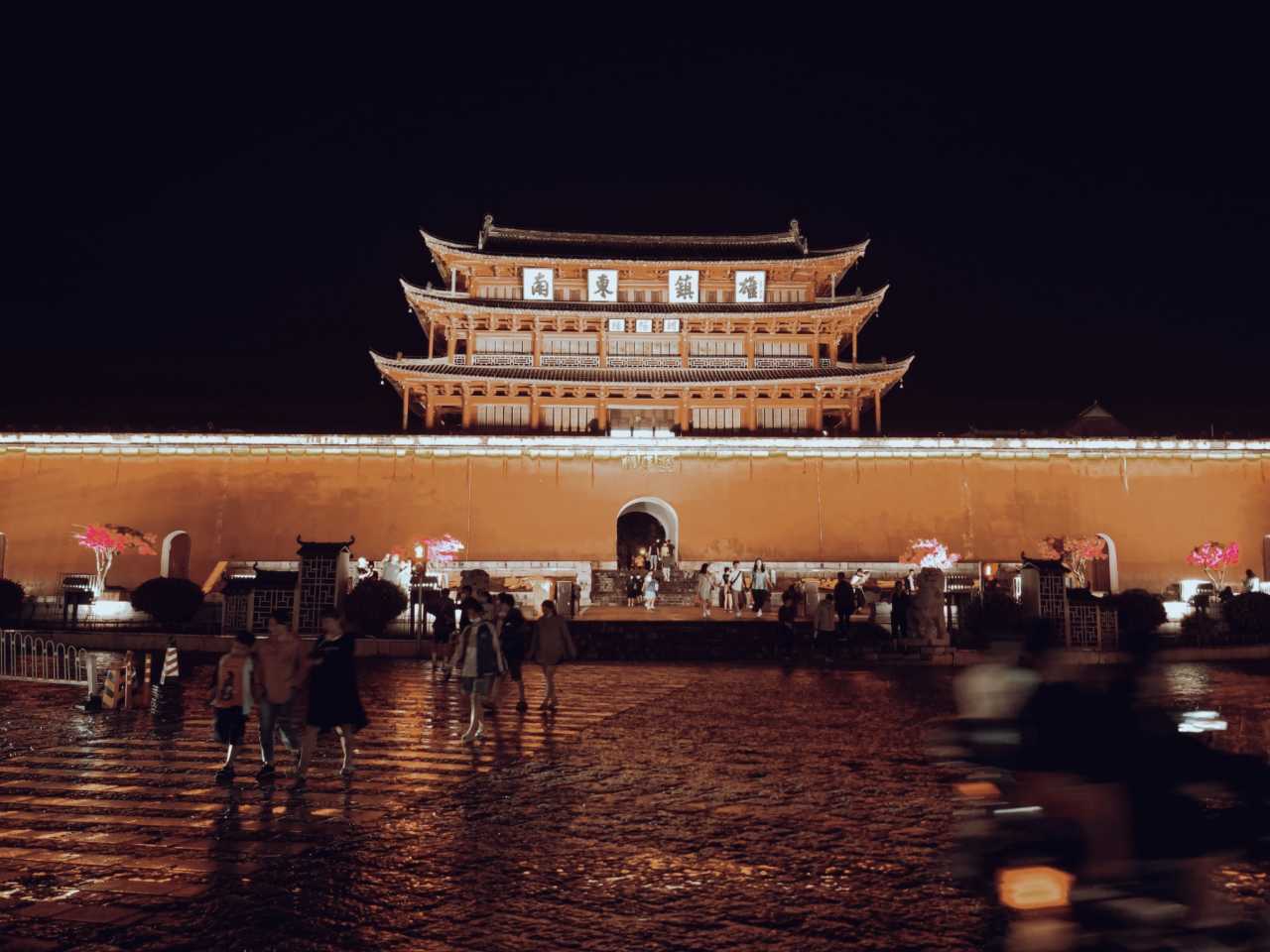
As night fell, rain suddenly poured down. The flagstones gleamed under the downpour, and the tower's lights reflected off the wet ground, casting a red glow. The four characters "雄镇东南" (Mighty Guardian of the Southeast) shone with solemn dignity under the lights. These characters were the handiwork of Tu Zhuo, a Qing Dynasty calligrapher, and they are the only surviving example of Yunnan's four great monumental inscriptions from that era. Tu Zhuo was not from Jianshui; his hometown lay a few dozen kilometers away in Shiping—another small cultural town. He never passed the imperial exams, never held high office, yet with these four characters and the surviving tower, he became an eternal symbol of Jianshui.
Jianshui and Shiping have been the twin cultural jewels of southern Yunnan since the Yuan Dynasty. They depend on each other, absorb from each other, and in this borderland untouched by the spotlight, they have burst forth with two parallel beams of cultural light. It is this very miracle that brought me here.
Borderland Confucian Temples: Pioneering Confucianism at the Frontier
The Confucian temple is the ultimate symbol of Han Chinese culture. Jianshui and Shiping, these two tiny border towns, each possess a Confucian temple originally built in the Yuan Dynasty and preserved to this day. Yunnan once belonged to the Nanzhao and Dali kingdoms, and it was not until the Mongol army annihilated the Dali Kingdom that the region was first incorporated into a unified empire. To govern the Han Chinese and promote Confucianism, the Mongols established these temples, and so they took root in southern Yunnan.
Jianshui Confucian Temple: The Modern Echo of the First Writing Ceremony
Jianshui's main thoroughfares, Lin'an Road and North Main Street, buzz with activity from dawn till dusk. But the vast area they enclose is eerily quiet, as if existing in a parallel dimension—that is the realm of the Jianshui Confucian Temple, where "culture resides."
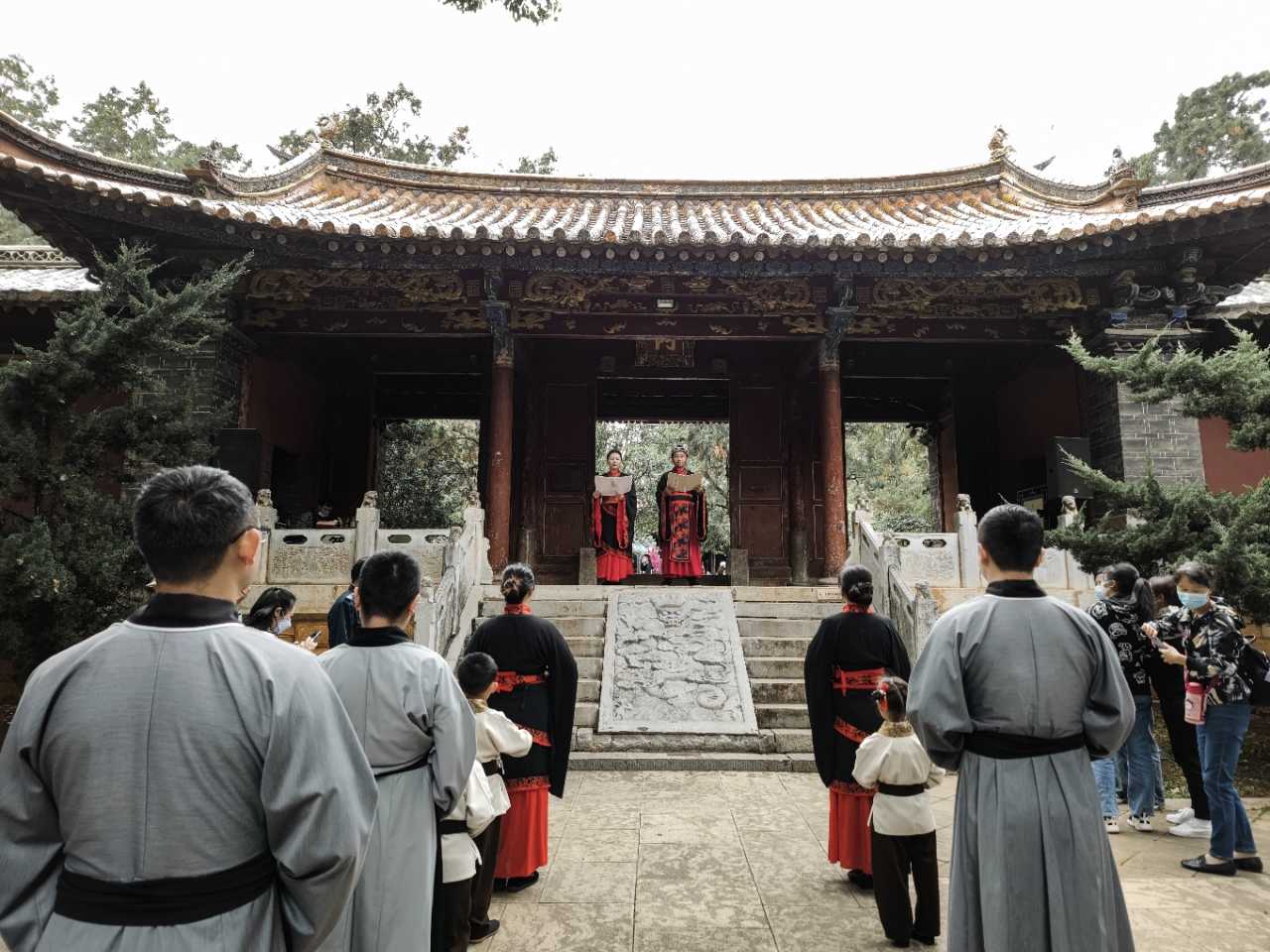
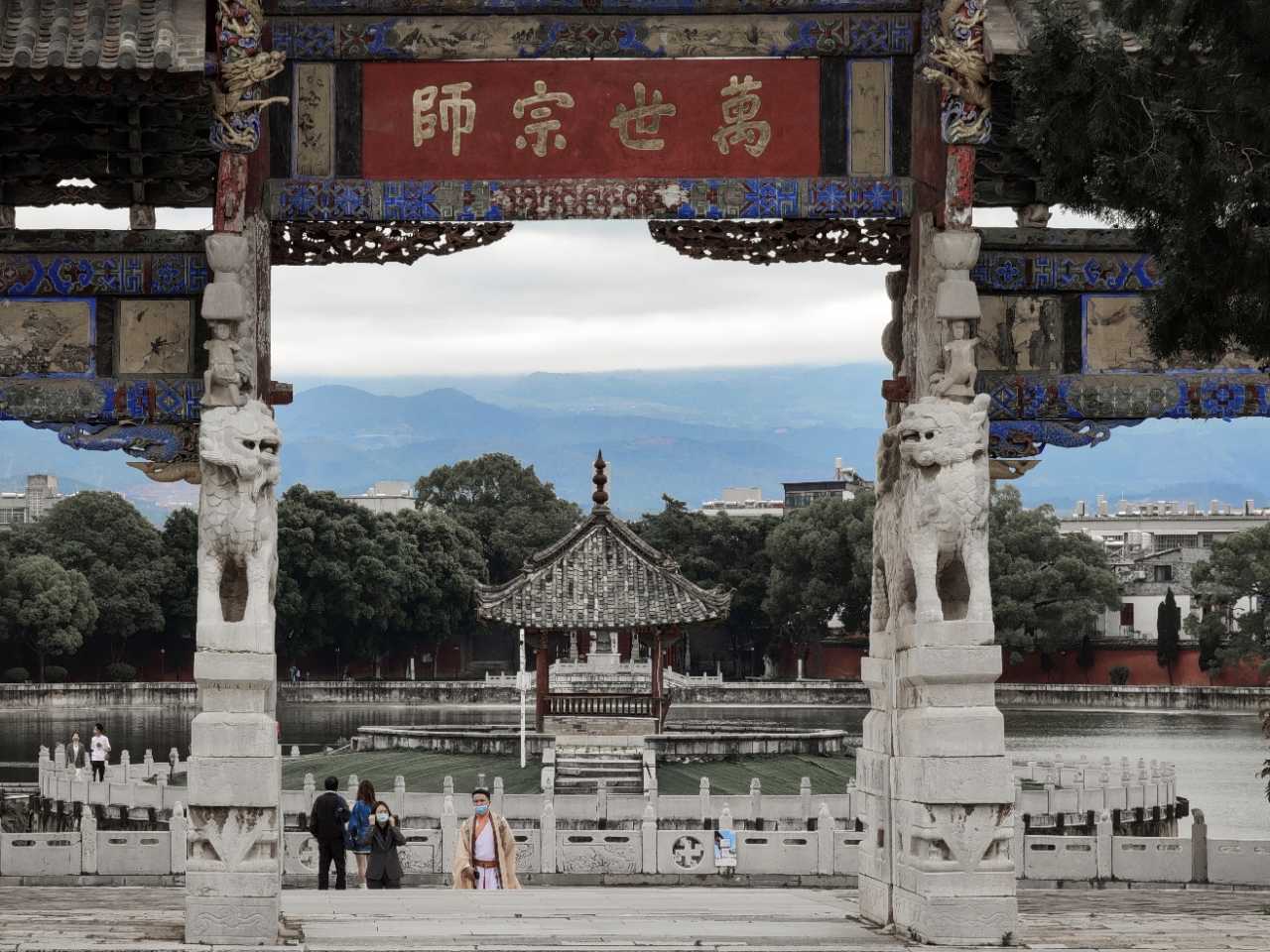
The temple was first built during the Zhiyuan reign of the Yuan Dynasty and expanded through the Ming and Qing dynasties to its present form. The Pan Pond symbolizes the sea of learning, and Jianshui's version is astonishingly large, embodying the idea that "the sea of learning has no bounds." The local prestigious school, Jianshui No.1 High School, once occupied the temple grounds for years, and its students consistently ranked among the top in the college entrance exams—perhaps the influence of that "sea of learning."
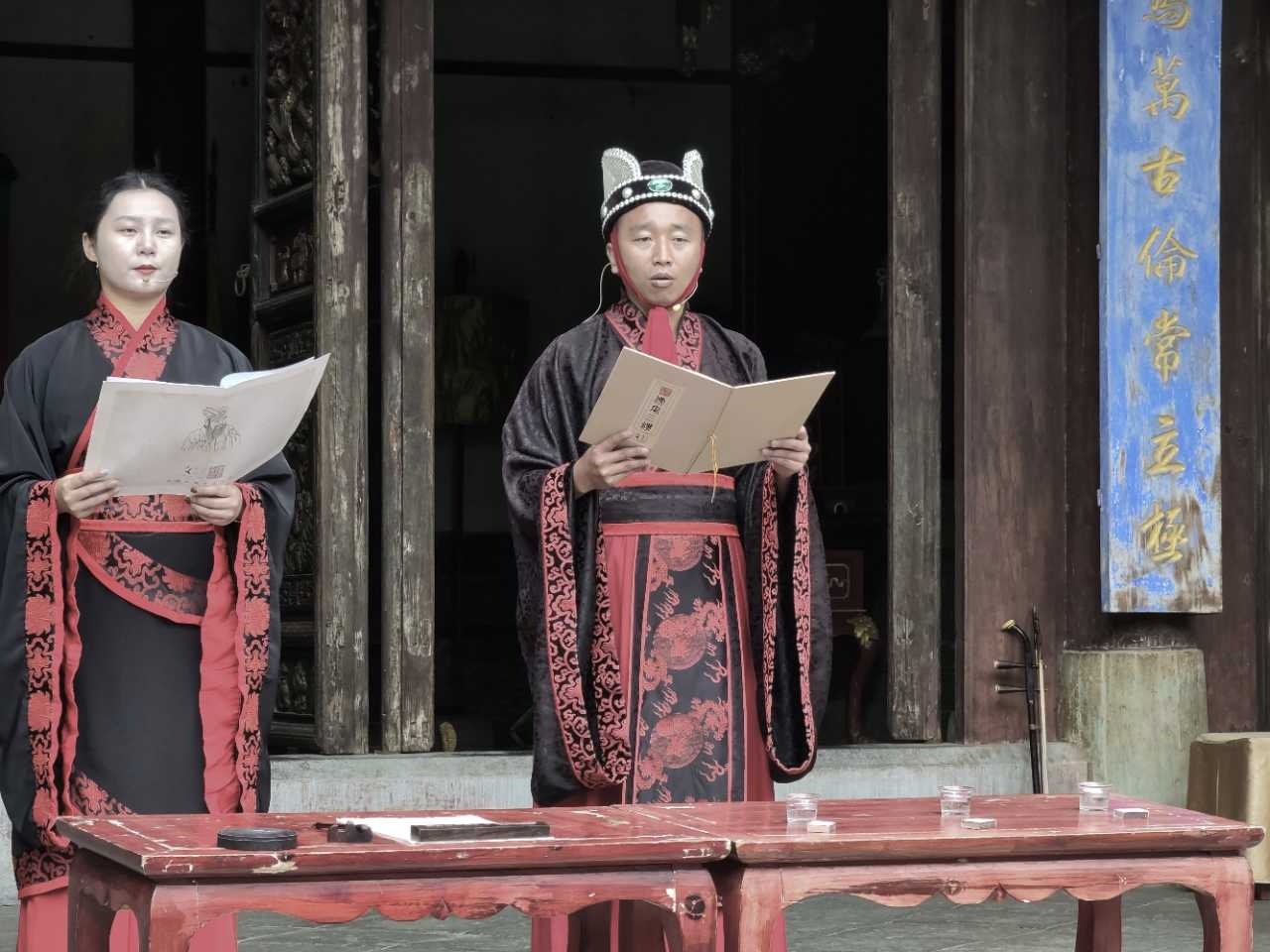
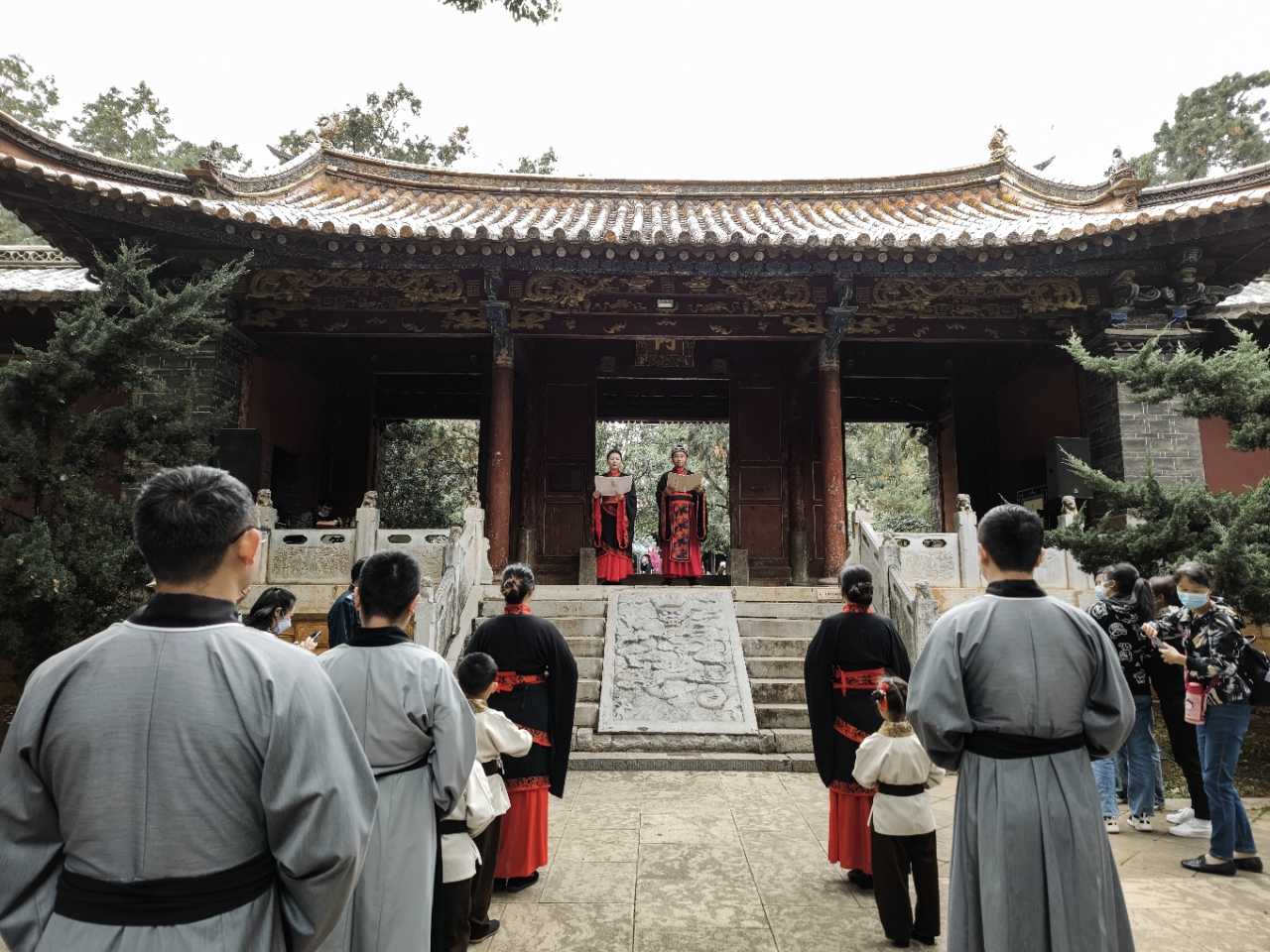
I was fortunate enough to witness a traditional children's "first writing ceremony." Dressed in Hanfu, led by their parents, the children followed the musicians' tunes step by step to the front of the Dacheng Hall. Straightening their clothes, dotting with cinnabar, beating the drum, tracing characters, bowing to the teacher—every step was elaborate and solemn. When the teacher dabbed a big red dot on each child's forehead, it symbolized "opening the third eye." For the tracing exercise, the children wrote their first character—"人" (person)—learning to be a person before doing things.
After the ceremony, the crowd dispersed, and I could quietly admire the carved lattice doors of Dacheng Hall. Twenty-two doors, each a masterpiece of woodcarving. Magpies on plum branches, three goats bringing prosperity, blessings upon blessings—every carving was three-dimensional, hollowed out. In the garden behind the hall, an old man with white hair was practicing his sword dance, lost in his own world. You have your opening ceremony; I have my dragon sword dance—he was living life on his own terms.
Shiping Confucian Temple: Silence Hidden in the Bustle
About a few dozen kilometers west of Jianshui lies Yilong Lake. On the lake's western shore sits Shiping County—once called Yilong Town. Shiping's Confucian temple is tucked away in the heart of the market.
The temple was built during the Zhizheng reign of the Yuan Dynasty, under the last emperor, Yuan Shundi. His "Zhizheng Reforms" included restoring the imperial exams and expanding the Imperial Academy, and Shiping's temple is a relic of that effort. Though Yuan Shundi was eventually defeated by Zhu Yuanzhang, the temple survived.
Compared to Jianshui's, Shiping's Confucian temple is much smaller, but "a sparrow may be small, yet it has all its organs." The Lingxing Gate, Pan Pond, Pan Bridge, and Dacheng Hall—all are present. Today, it no longer functions as a temple, nor does it host commercial events like the first writing ceremony. Children run and play here; adults play cards at the entrance. It lies quietly in the heart of the old town, keeping company with ordinary people and their daily routines.
The Railroad That Changed Destiny: The Legend of the Ge-Bi-Shi Railway

For cultural travelers, the Ge-Bi-Shi Railway is a must-visit. But few realize it was China's first private railway built by Chinese people, and the earliest in Yunnan Province. In those days, the twists and hardships of raising private funds to build a railway are beyond our imagination.
The Ge-Bi-Shi line started at the Bisezhai Station on the Yunnan-Vietnam Railway, connecting towns like Gejiu, Mengzi, Jianshui, and Shiping. It was the country's only "cun-gui" (narrow-gauge) railway—the distance between the two rails was only 60 centimeters, even narrower than the meter-gauge Yunnan-Vietnam line. Construction began in 1915 and took 21 years, finally opening to traffic on Double Ten Day (October 10) in 1936. On that day, Shiping County held a grand ceremony. The railway ended millennia of human and animal transport in southern Yunnan, pulling Jianshui and Shiping out of the mountains by train.
Later, road networks replaced the old railway, and the train line fell silent. But this railway, like a fine aged wine, only grows richer with time.
Riding the Tourist Train
Today, the Jianshui-to-Shiping section has been transformed into a tourist route. Tourists hop aboard the rickety little train, crawling along at the same turtle pace as in the old days—a must-do experience. The tourist railway is split into two segments: Jianshui to Tuanshan, and Tuanshan to Shiping. To ride the full route, you need to change trains at Tuanshan Village.
The newly built Lin'an Tourist Train Station is designed in retro style, complete with a preserved locomotive from the 1940s. Wooden carriages are packed with tourists as the train chugs along at about 20 kilometers per hour. One of Yunnan's "Eighteen Oddities" says, "A train is slower than a car"—and that's exactly what this narrow-gauge train is like. Sitting inside, you sway left and right with the winding tracks, with plenty of time to enjoy the scenery. Push open the wooden window, feel the breeze, watch the rails glide past lotus ponds, and soak in the pastoral beauty of "late spring days, hills and rivers fair; spring breeze and flowers, fragrance in the air."
Searching for the Old Stations
The Lin'an-to-Shiping section preserves two old train stations: Xianghuiqiao Station and Shiping Station. Xianghuiqiao, built in 1936, inherits the French colonial style of the Yunnan-Vietnam Railway. Its yellow station building, though weathered, still stands out. Shiping Station, the site of the 1936 Double Ten Day inauguration ceremony, has been converted into a railway-themed museum.
The much-maligned commercialization of tourism isn't all bad. As long as development is done with proper preservation, it can spark people's interest in history. At the Shiping station museum, I found a map promoting the old stations, showing that several have been well preserved. As long as they remain, the Ge-Bi-Shi Railway will never truly disappear.
Garden Stories: Dreams of Wealth Built on Tin
The biggest driving force behind the Ge-Bi-Shi Railway was to transport tin from Gejiu. Industrialized nations couldn't do without tin, and Gejiu's tin ore was world-class. With the Westernization Movement of the late Qing Dynasty, local gentry from Jianshui and elsewhere plunged into tin mining, making fortunes. Two famous gardens in Jianshui—the Zhu Family Garden and the Zhang Family Garden—bear witness to this legend.
Zhu Family Garden: "What a Fine Morning, What a Lovely Day"
Zhu Guangfu, a Jianshui native, originally ran a mill and distillery at home. Seeing the business opportunity between Gejiu and Kunming, he went to Gejiu to mine tin, later founded the "Zhu Hengtai" trading house, and set up a smelter, creating a complete industrial chain. His descendants not only expanded the business but also passed the imperial exams and became officials. The Zhu family gradually became Jianshui's leading merchant-official clan. From the Guangxu to the Xuantong reigns, they built, piece by piece, an astonishingly vast garden.
The Zhu Family Garden is based on the traditional southern Yunnan residential layout, essentially a collection of multiple courtyard houses. The courtyards layer upon layer, with 42 open-air patios alone, making it a giant maze. Stepping inside is like entering a grand vista. Pavilions, towers, carved beams, painted rafters—it rivals any Suzhou garden. The most stunning feature is the woodcarving on doors and windows: animals, flowers, figures, historical tales—every detail exquisitely rendered.
Standing before the water stage, I could almost imagine Du Liniang from the opera The Peony Pavilion, standing center stage, finally meeting her dream lover, Liu Mengmei. "What a fine morning, what a lovely day—but in whose garden does joy reside?" A garden stroll, a dream awakened!
Zhang Family Garden: "How Many Dreams Have I Wandered Through"
In Tuanshan Village, west of Jianshui, the Zhang surname dominates. Zhang Guoyi and Zhang Guoming, two brothers, started in transportation and later joined the tin rush, founding the "Ji Chang Hao" trading house. After making their fortune, they built the Zhang Family Garden on a grand scale.
The Zhang Family Garden's main draw is also its woodcarving. Doors and windows are covered in exquisite works—reliefs, hollow carvings, openwork—every pattern lifelike, no two carvings alike. The courtyard is surrounded by corridors, with the main hall and side buildings closely connected, forming a "running-horse corner-tower" style typical of southern Yunnan.
Today, the Zhang Family Garden has been renovated. The main hall now houses a book bar and café. Tired tourists can sit outside, watch the clouds roll by, listen to the patter of rain on lotus leaves, and feel the poetic mood of "a garden brings coolness in its way—how many dreams have I wandered through in this life?"
Ancient Villages Outside the City: Living Fossils of History
Outside Jianshui and Shiping, two cultural ancient villages are not to be missed: Tuanshan Village and Zhengying Village. Their histories are inseparable from tin mining, railways, and modernization—a microcosm of the nation's fate at the time.
Tuanshan Village: A Castle of Yellow Walls
Tuanshan Village retains its complete layout: clusters of buildings, four village gates at the cardinal points, ancestral halls, and temples all intact. Traditional commoner houses are built with wooden frames and rammed earth exteriors—first a timber skeleton, then brick, stone, and adobe. The street-facing outer walls are predominantly yellow, glowing brightly in the sunlight. Sadly, with tourism development, many houses have been renovated, and this earthy yellow, as pure as the soil, is becoming rare.
When the railway opened, Tuanshan didn't have a station, but the train would stop at the village entrance for a few minutes. Today's Tuanshan Village Station is a newly built replica, serving as the transfer point for the tourist line. The tiny station house feels like a memory of home.
Zhengying Village: The Legacy of Chen Heting
Zhengying Village lies west of Shiping County. Legend has it that during the Ming Dynasty, a general surnamed Zheng stationed troops here and settled down. The village boasts pavilions, temples, ancestral halls, and residences, with blue-stone streets crisscrossing like a chessboard. In modern times, Zhengying Village became linked to the Ge-Bi-Shi Railway through a native son—Chen Heting.
Chen Heting was a late Qing Dynasty jinshi (imperial scholar) from Shiping who held key positions in the Republican government. In 1914, he became general manager of the Ge-Bi-Shi Railway Company, championing private commercial operation. Later, he also served as general manager of the Gejiu Tin Company, integrating tin mining with railway transport, allowing China's tin to reach the world via Chinese rails.
Chen Heting built the Chen Family Ancestral Hall in the village, now the biggest cultural attraction in Zhengying. Inside the main gate, a stone bridge spans a pond, its railings carved with the twelve zodiac animals, elephants, lions, and other creatures, all vividly alive. These animals have been touched by visitors for nearly a century, worn smooth and glossy. I captured their expressions with my camera, feeling as if they had always been alive—just tired from running, resting on the bridge railings.
A few years after completing the ancestral hall, Chen Heting passed away, never living to see the Ge-Bi-Shi Railway fully open. He couldn't witness the train arriving at his doorstep—a profound regret. But perhaps regret itself is part of a complete life.
Ancient Bridges: Timeless Bonds
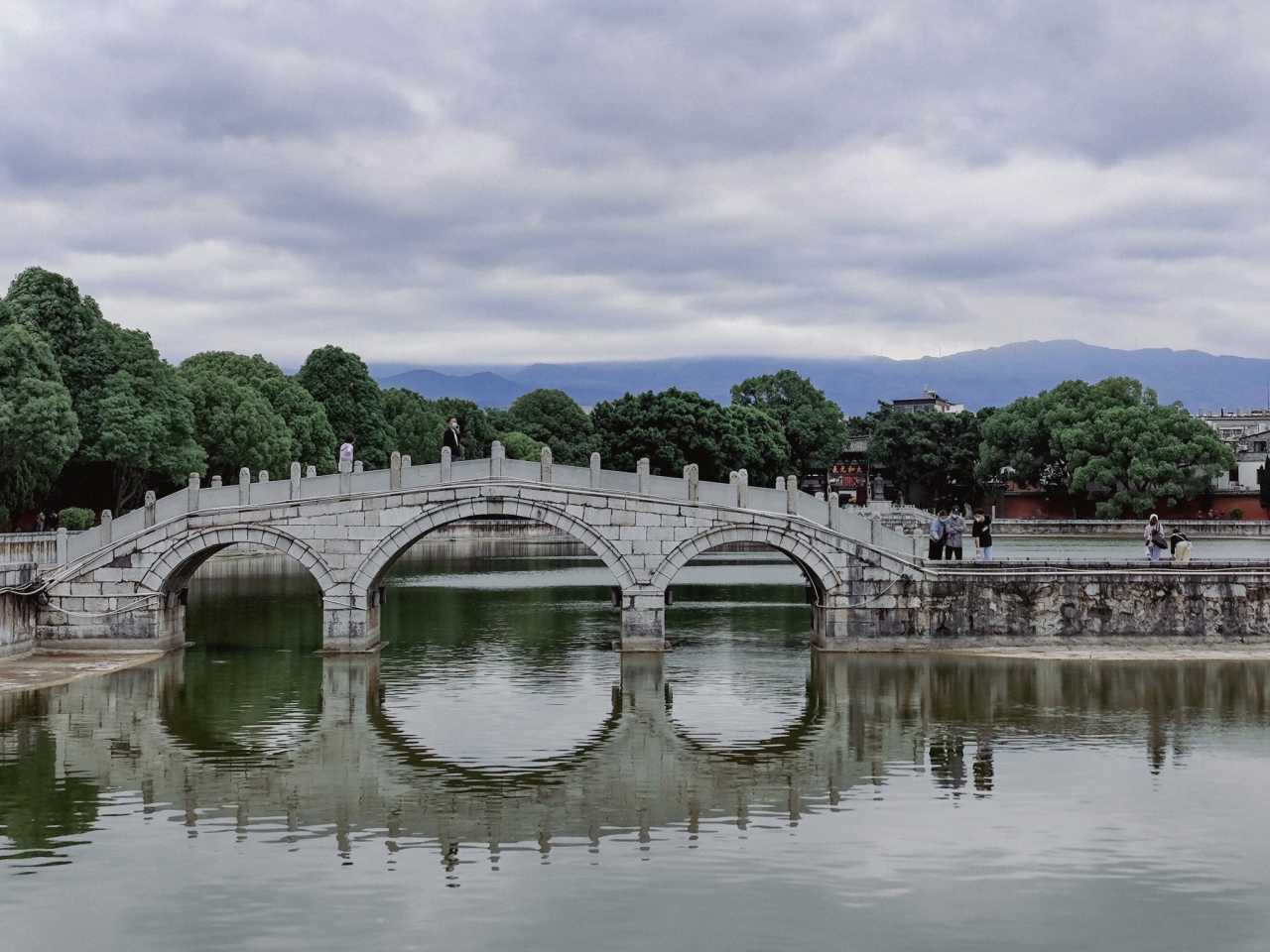
Southern Yunnan is crisscrossed by waterways. Between Jianshui and Shiping flows the Lu River. In ancient times, the Lu was a great river, unlike today's nearly dry bed. Where there are rivers, there are bridges, and their role is self-evident. West of Lin'an City and east of Tuanshan Village, two ancient bridges survive: Xianghui Bridge and Shuanglong Bridge. They are not just old landmarks but cultural symbols.
Epilogue: Border Towns Without Borders
Jianshui and Shiping, these two small towns in southern Yunnan, are like two silent elders, guarding a thousand years of memory. They lack Dali's romance of wind and snow, Lijiang's bustling noise, but they possess the most authentic history, the purest culture.
From Chaoyang Tower to the Confucian temples, from the Ge-Bi-Shi Railway to the Zhu and Zhang family gardens, from Tuanshan Village to Zhengying Village—every site is a gift of time. They tell us that even at the edge of the world, a dazzling light of culture can shine.
If you're tired of crowded tourist traps, come walk through Jianshui and Shiping. Here, you can quietly listen to a train whistle that echoes across a century, watch the sunset paint the gatehouse crimson, and feel the serenity of "how many dreams have I wandered through in this life?"
Border towns without borders. Culture without distance.
You should also read:

Solo in Yunnan: A Wanderer’s Guide to the Land of Eternal Spring
Solo in Yunnan: A Wanderer’s Guide to the Land of Eternal Spring There’s something magical about traveling alone. No compromises, no schedules to keep, no one to please but yourself. I’ve been on the road for nearly three months now, and not once have I…
Continue reading...
Into the Hidden Valley: A Solo Journey Through the Mysterious Dulong River
Into the Hidden Valley: A Solo Journey Through the Mysterious Dulong River Deep in the northwestern corner of Yunnan Province, tucked away from the modern world, lies a place that feels like a secret whispered among mountains. The Dulong River Valley is not just a…
Continue reading...
God’s Abandoned Palette: A Self-Drive Journey Through Yunnan’s Dongchuan Red Land
God’s Abandoned Palette: A Self-Drive Journey Through Yunnan’s Dongchuan Red Land Travel has never been about reaching some distant geographic coordinate. It’s about encountering, along the way, the version of yourself buried beneath the rubble of daily routine. During this May Day holiday, I finally…
Continue reading...