Yunnan Tengchong: Life at the Foot of the Mountain, the Smoke of the Mortal World
Yunnan Tengchong: Life at the Foot of the Mountain, the Smoke of the Mortal World
At the end of 2014, I returned from overseas to visit family in China and, on a whim, decided to travel to Yunnan with a friend. We're both easygoing people who prefer peace and quiet, so without hesitation we crossed popular destinations like Lijiang off our travel list and instead chose Tengchong—a place that was gradually emerging but had not yet been over-commercialized. Departing from Chengdu, only Lucky Air offered a direct flight, a two-hour journey with steep ticket prices and the unremarkable service typical of budget airlines. But when the plane landed at驼峰机场 (Tuofeng Airport), the brilliant sunshine instantly dispelled the gloom of a Chengdu winter, and my mood lifted along with it.
The background music was Cao Fang's "Rainbow," because she's a Yunnan girl.
Heshun Ancient Town: The Smoke of Life in Morning Mist
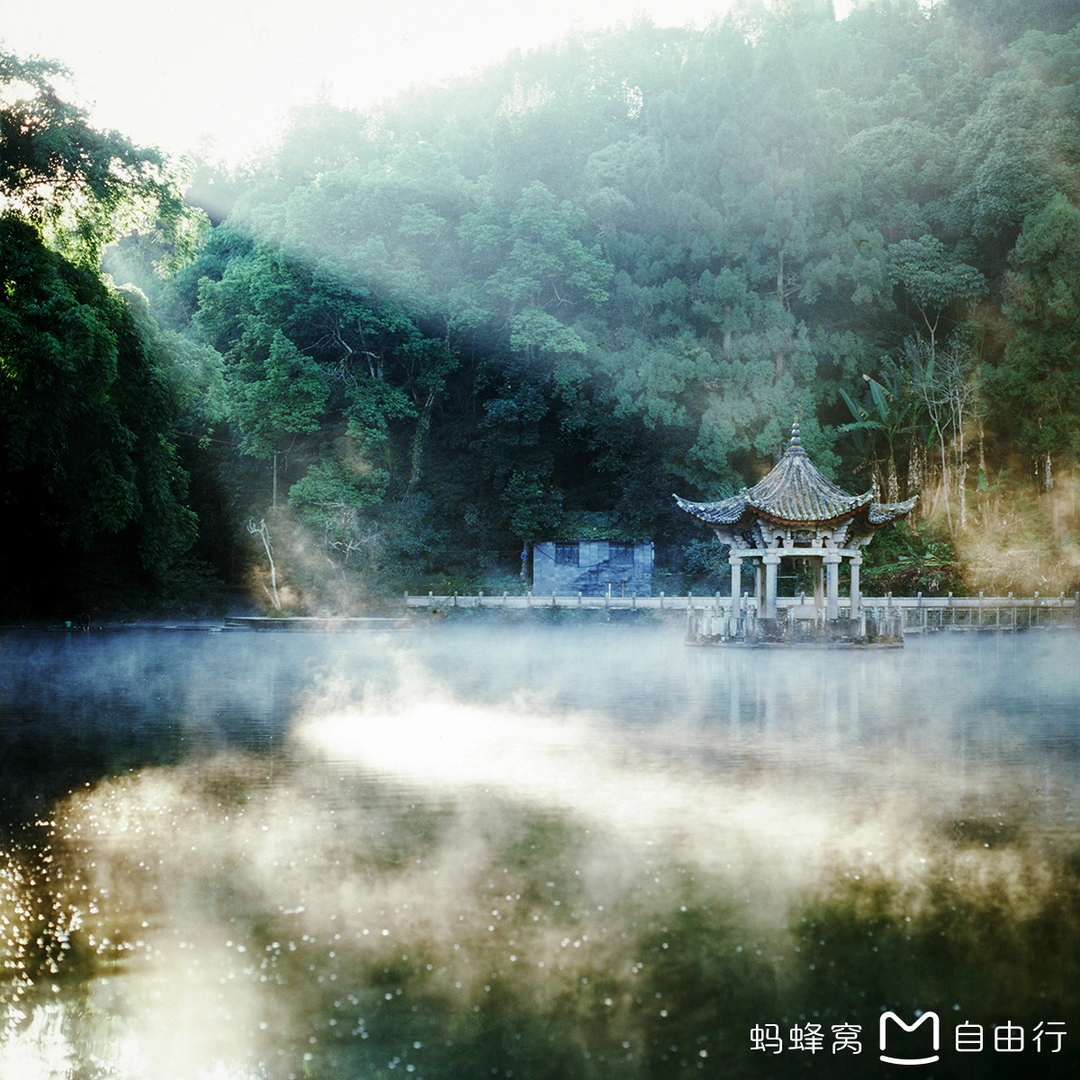
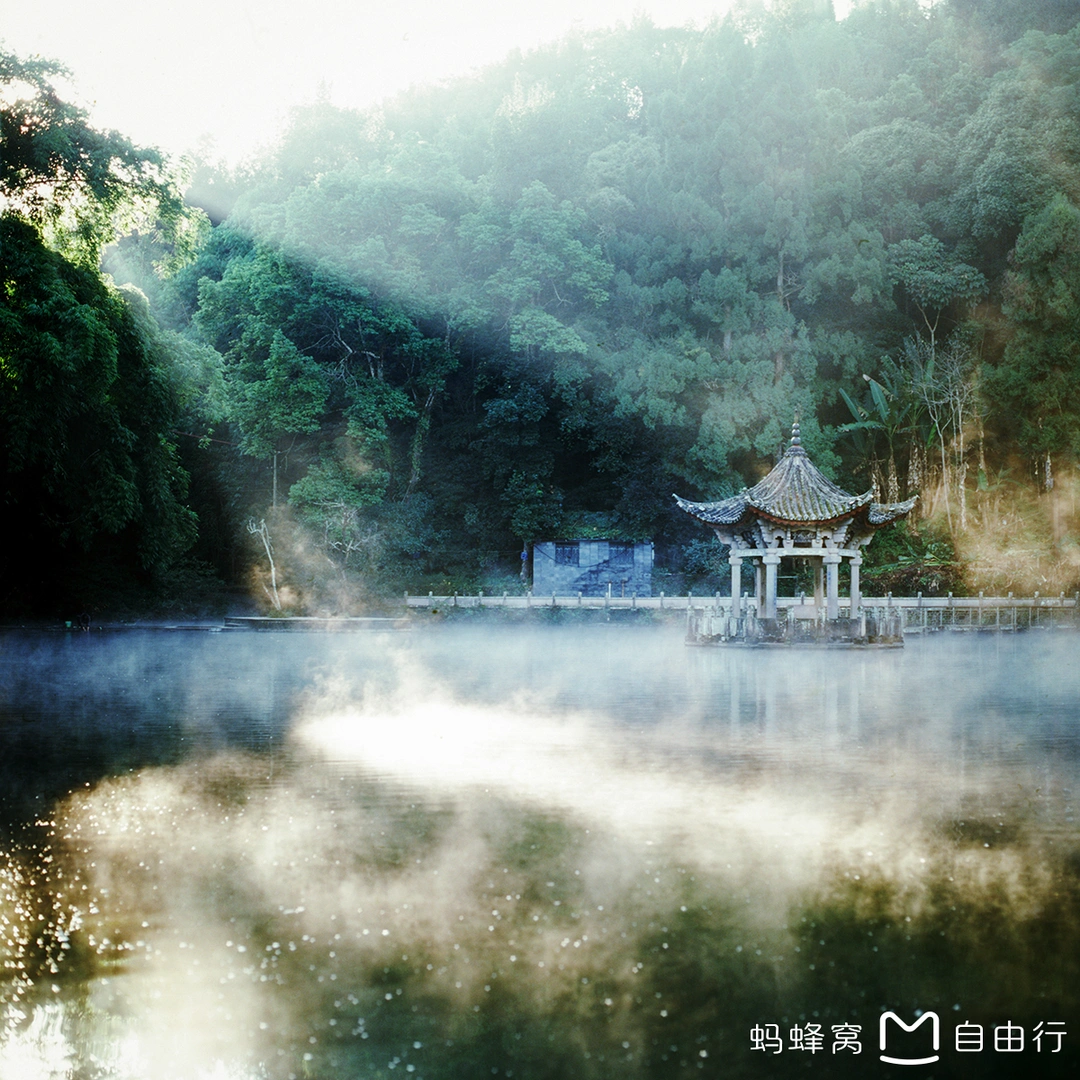
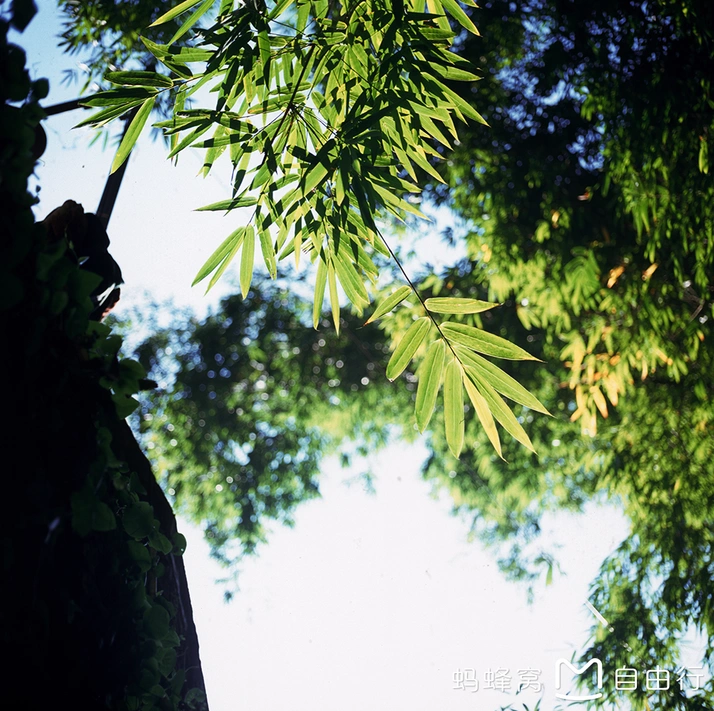
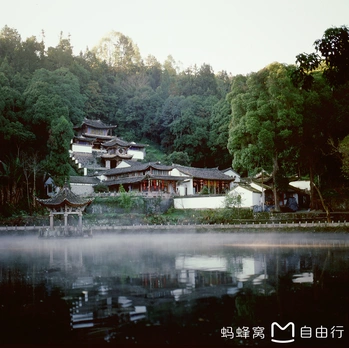
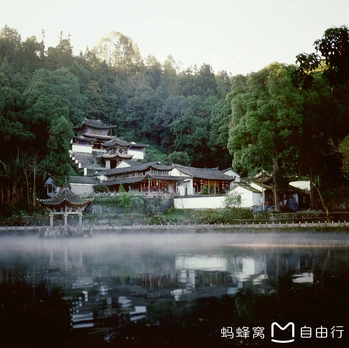
In early November, Tengchong's rainy season had just ended. The days were warm under a bright sun, but mornings and evenings carried a chill. We stayed at a guesthouse deep in Heshun Ancient Town, perched on a hillside. Every morning, we walked down the cobblestone path toward the village, passing a lush bamboo grove along the way. When we set out early, the old woman selling 松花糕 (pine pollen cake) hadn't yet set up her stall. Passing the washing pavilion and the lotus pond, we shuffled sleepily toward the residential area and market at the other end of the ancient town. Breathing in the crisp morning air, with the town still quiet and untouched by tourists, I suddenly felt that waking up early could be a joyful thing.
It's said that there are hot springs beneath the lake in Heshun Ancient Town, which is why mist rises on cold mornings. We hadn't planned to photograph the lake—we were originally heading to the market to try the legendary 稀豆粉 (thin pea flour porridge)—but passing by, we were captivated by the beauty before us. By the time we finished taking photos, the village women washing clothes at the pavilion had already left. The sun had risen high, burning off the morning mist. The old woman had set up her stall for pine pollen cakes, but the 稀豆粉 we'd been craving was already sold out. As someone who's both a foodie and a photography enthusiast, I know all too well that such choices are always a dilemma.
Since I was carrying ISO 100 film, I planned to return the next morning with ISO 400 for another shot. But the sky was overcast, and the lake's mist wasn't ideal, so we had to give up—only to arrive at the market early enough to enjoy the delicious 稀豆粉 and 豆沙粑粑 (red bean paste rice cakes). That's how things work in this world: lose at sunrise, gain at sunset. Regret and surprise are both essential parts of any journey.
The Smoke of Life at the Market

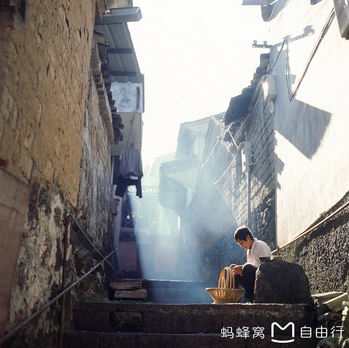
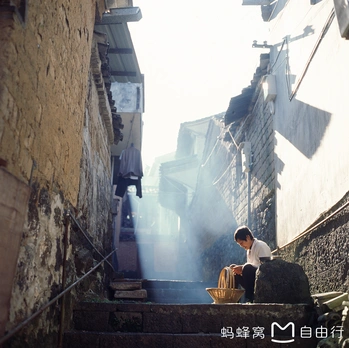
Around eight in the morning, the market was at its liveliest. Fresh vegetables and meat lined the narrow streets, with locals and tourists weaving through the crowd. We decided to abandon our travel guide and follow our instincts to discover food. Squatting with locals around low tables, we ate from worn enamel basins filled with flavorful 稀豆粉. Following the locals' lead, we dipped 粑粑 (rice cakes) into the porridge—a simple but unique pleasure. The biggest surprise was the 豆沙粑粑: red bean paste evenly kneaded into glutinous rice, left overnight, then grilled over charcoal until crispy on the outside and soft inside. Truly unforgettable.
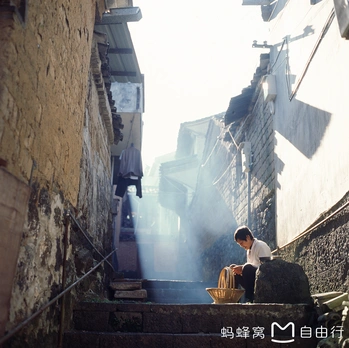
After eating, I wandered with my camera, watching people go about their business in the小巷 (alleyways). I was incredibly lucky that a scene bathed in morning light found its way into my viewfinder. Compared to beautiful landscapes, I love this mundane, worldly烟火 (smoke and fire of life) far more.
Slow Time in the Ancient Town

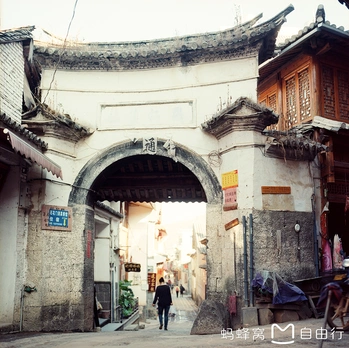
The weather in early winter Tengchong was magnificent. Instead of rushing to various attractions, we leisurely strolled through the ancient town. We'd stop, walk a bit more, sip a coffee, taste some black tea, and try a 鲜花饼 (flower pastry). In the evening, we sat by the lake, dining against the backdrop of sunset and the beautiful scenery, eating from dusk until the stars hung in the sky.
We were so reluctant to leave the winter sunset—something we never see in the Sichuan Basin—that we always waited until darkness fully fell before fumbling our way back up the hill to the guesthouse. A night watchman's loudspeaker repeatedly played warnings: "The weather is dry, be careful with fire." Occasional sounds from the pitch-black bamboo grove beside the road made our hearts race. Enduring exhaustion, we held our breath and quickened our pace, only breathing a sigh of relief when we saw the red lanterns at the guesthouse entrance. Looking back at the scattered lights below the mountain, everything felt like a dream.
In a dream, you don't know you're a guest. I don't know why that thought came to me. Perhaps the most beautiful things are never found deliberately. That's why I love Heshun Ancient Town's ordinary life and worldly烟火 (smoke and fire) even more than its picturesque scenery.
On Accommodation
Many people have asked me where I stayed. My answer is the same: I stayed at the "安之若宿" (An Zhi Ruo Su) guesthouse. Tengchong has an overwhelming number of guesthouses. I didn't do much research back then—I just chose it because the photos looked good. What I loved most about this place was its elevated position. Every morning, pulling back the curtains to gaze over the entire ancient town was pure joy. Another bonus was the owner's love story: she and her husband met, got to know each other, and eventually got together in Tengchong—very romantic. My friend and I listened, resting our chins in our hands, green with envy. The owner used to work in construction, so she handled everything from design to material selection for the guesthouse. Whenever asked, she'd enthusiastically explain. Every afternoon, we loved sitting by the window or in the courtyard, brewing a pot of滇红 (Yunnan black tea), chatting with the owner for a while—leisurely and content. This was the "Tengchong slow time" I truly wanted.
Jiangdong Ginkgo Village: A Golden Fairy Tale in the Mortal World
After spending a few days idling in Heshun Ancient Town, we decided to take a day to explore the famous银杏村 (Ginkgo Village).
Driving from Tengchong to Gudong Town, we unfortunately ran into the so-called "Ginkgo Festival." There were crowds of tourists, rows of stalls, and blaring music from loudspeakers—as lively as a market fair, far from the tranquil, otherworldly village I had imagined.
In early November, the ginkgo leaves hadn't fully turned yellow before they began falling prematurely. The branches were somewhat sparse, but the ground was a carpet of gold. The village was filled with the sounds of chickens crowing and dogs barking, with wisps of smoke rising from chimneys—it felt like one giant farmhouse restaurant. Every courtyard had tourists: some gathering with friends, others eating and drinking, still others playing mahjong or cards. It was bustling and lively.
Though I couldn't find that sense of detached solitude, there was worldly food to satisfy my appetite. The bowl of 饵丝 (rice noodles) from the morning still lingered in my mind, and the hanging cured pork belly and plump sausages on the trees made my mouth water. Cutting off a piece, even just steaming it briefly, made for an excellent accompaniment to drinks. Additionally, 烤乳猪 (roast suckling pig) and 白果炖鸡 (ginkgo nut stewed chicken) were local specialties. The free-range livestock had excellent meat, rich in flavor. Even a simple stir-fry of 苦荞 (bitter buckwheat) was crisp and refreshing, almost moving me to tears—someone who, living abroad, was used to frozen chicken legs.
Sitting in a farmhouse courtyard, with fallen ginkgo leaves piled thick like a carpet beneath my feet, tipsy and warm from food and drink, I finally felt that the trip had been worthwhile.
History and Legend
Walking along the sloping paths among the ginkgo trees, we wandered between low volcanic stone walls, admiring the aged wooden houses and the rare talismans on courtyard gates. The early winter sun lazily warmed our skin, just as described in Wu Yong's poem: "Neither cold nor warm, neither windy nor rainy. Azaleas have withered, ginkgo has passed, yet autumn flowers still bloom." It's said that the history of Ginkgo Village dates back to the Ming Dynasty's Hongwu era. Migrants from central China, uprooted from their homeland, brought ginkgo seeds with them to this border region, where they took root and flourished for generations.
The 2011 film Wu Xia (known internationally as Dragon) was shot here, but the filmmakers avoided the golden season, choosing summer instead. The movie opens with lush rural scenery: moss-covered green tiles on village rooftops, and wooden walls that had absorbed enough moisture from the rainy season to no longer look dusty. The rustic houses where "people live downstairs, cattle upstairs" left a strong impression, but I never found out which specific building in the village served as the prototype.
Next time I visit Jiangdong, I hope to come during the "ginkgo shaking" season. Though the trees wouldn't be covered in a canopy of gold, I could avoid the noisy crowds. I want to witness the harvest of白果 (ginkgo nuts): watch the elderly set up an altar, burn incense, and pray for a good year ahead; see the young men nimbly climb the ancient trees, laughing and joking among the branches; and observe women and children happily gathering the fallen nuts. That, I imagine, is the true otherworldly life of Ginkgo Village.
Gaoligong Papermaking Museum: A Thousand Years on Paper
Anyone familiar with Tengchong's 宣纸 (Xuan paper) has probably heard this story: At the end of 1941, the artist Xu Beihong passed through Tengchong, Yunnan, and bought some Teng paper. After painting with it, he praised it lavishly. He said Teng paper not only matched the quality of "first Xuan" (paper from Xuancheng) but was also so sturdy that it was difficult for others to secretly peel off his paintings. Though the source of this anecdote is unverifiable, it appears in almost every introduction to Tengchong paper. Yet the local papermakers aren't satisfied with this. They say Xu Beihong forgot to mention another virtue of Teng paper: it doesn't change color even after a hundred years.
Ancient Chinese literati pursued perfection to such extremes that the handcrafting techniques for brushes, ink, paper, and inkstones once reached their zenith. Among the "Four Treasures of the Study," Xuan paper is the most complex to produce. From the Tang Dynasty to the end of the Qing, Xuan paper dominated the mainstream precisely because it requires eighteen processes and over a hundred operations, spanning eight to ten months, from raw material processing to drying and shaping, to create the durable, imperishable "thousand-year paper." Unfortunately, as brushes, ink, paper, and inkstones gradually declined, these precious handcrafting skills were lost. In China's vast market, it's hard for the "Four Treasures" to find a place. Today, the best Jing County Xuan paper is mostly exported to Japan, Taiwan, and South Korea, with Japan being the largest market.
Visiting the Museum
On our last day in Tengchong, we didn't want to rush through attractions. Instead, we rented a car and headed to the Gaoligong Handmade Paper Museum. First, we were genuinely interested in traditional papermaking. Second, my friend, a former designer, knew that this museum was an award-winning design by Hua Li and insisted on seeing it.
The museum clearly isn't very famous—even the local driver couldn't find it. We had to drive to Xinzhuang Village in Jietou Township and ask for directions along the way before finally locating it. Seeing photos of the natural wood-colored museum amidst a sea of rapeseed flowers online, I was quite impressed. But when we arrived, we found that part of the field opposite the building had been replaced by an asphalt road. I later learned that township officials had built the road and parking lot for convenience, without consulting the museum's management team beforehand, let alone considering the relationship between the building complex and its environment. This affected the overall layout's aesthetic, which was regrettable and somewhat frustrating.
The museum was even smaller than it appeared in photos. Built with local materials like fir, bamboo, volcanic stone, and handmade paper, it didn't strive for polished exterior perfection. Instead, it allowed itself to fade, crack, and age over time under sun and rain—like the rough texture of handmade paper itself, fitting seamlessly into its surroundings.
Contemporary China is filled with a restless atmosphere driven by vanity, so I greatly admire Hua Li's design philosophy: "Architecture does not pursue the glossy refinement and flawlessness of machine-made products, but rather emphasizes the value of 'restoration' and 'presentation'... In details, it attempts to reflect genuine construction logic." Yes, after all, this is just a rural museum in a field, without priceless collections. It only needs a space that adapts to local conditions and showcases papermaking techniques. I think this is why Hua Li and his team's paper museum design was selected for Architectural Record magazine's 2012 Design Vanguard and shortlisted for the 2013 Aga Khan Award for Architecture.
A World on Paper
The museum was very quiet—we were the only visitors. It wasn't large, with six compact, interconnected exhibition halls displaying Teng paper, paper presses, wooden vats for sheet-forming, and raw materials like构树 (paper mulberry bark), tall white-stem rice straw, and hemp. There were no tickets, no rigid introductions. The seemingly casual displays invited you to reach out and touch, to feel the texture of Teng paper.
We were fortunate to meet a staff member who invited us upstairs to the terrace for tea. As we gazed at the rural scenery at the foot of the Gaoligong Mountains, we chatted about everything under the sun for a long time. After the museum was built and won awards, maintaining and sustaining its development was no easy task. The person in charge had studied and lived in Singapore for many years before resigning from a high-paying job to work for an NGO in rural Tengchong—truly admirable. She took us to visit local villagers' homes to watch the manual papermaking process and talked at length about her plans for the museum's future.
Echoes of History
In the late 19th century, spurred by France's construction of the Yunnan-Vietnam Railway, Britain began planning the Yunnan-Burma Railway to open a trade route connecting inland China to Shanghai. The British explorer H.R. Davies led four survey expeditions through Yunnan, even venturing into the Tibetan-Yi regions of southwestern Sichuan, leaving behind important historical records.
Davies spent several days in Longshang Village, Jietou Township, documenting local customs and the manual production method for白棉纸 (white cotton paper). The raw material for Tengchong handmade paper is 楮, also known as构 (paper mulberry). "The bark is soaked for a day, then boiled with lime, and then rinsed to remove any lime residue. It is then crushed with a wooden pestle, and the finest particles are selected and stirred with water in a large vat to form a pulp. A fine bamboo screen is dipped into the pulp, leaving a thin white layer on top. The screen is then turned over onto a stack of paper. When dry, the pulp on top becomes soft white paper, used for writing."
Tengchong is close to Southeast Asia, and 白棉纸 (white cotton paper), due to its excellent quality, was widely used for copying Buddhist scriptures. Teng paper itself dates back to the Qing Dynasty, and the "Guanyin Hall Big White Paper" was once highly renowned in the art world. At its peak, every household in Jietou had its own papermaking "recipe" and workshop. But with the development of modern industry, handmade paper was gradually forgotten, unable to match the convenience and low cost of industrial paper.
Today, although 80-90% of families in Jietou Township still retain the skills and tools for handmade papermaking, they no longer rely on it as their main livelihood. The few remaining workshops in the village have long used modern chemical agents, and the paper produced, being rough in texture, is mostly used for packaging. To preserve the ancient craft, museum staff encourage villagers to de-industrialize the papermaking process, restore traditional methods as much as possible, and also research new paper products, hoping to improve local lives by building a cultural industry.
The Art of Paper
- Sheet-forming (抄纸): Using a bamboo screen to scoop pulp from the vat. The pulp fibers interlace on the screen to form an even wet sheet.
- Backing (背纸): Using a palm-bristle brush to layer the wet sheets onto a drying board, placed in a ventilated area.
- Drying (晾纸): Air-drying the paper, then sun-drying again to ensure all moisture is completely removed.
While researching paper from Xuancheng, Anhui, I came across a poem by Qing Dynasty poet Zhao Tinghui, "Gankeng," written after visiting a paper mill in Jing County:
"What keeps the mountain folk so busy, / Moving stones to build new walls? / Pestles by the stream pound without rest, / Their sound shaking the sunset."
I imagine the papermaking scene in Jietou during its heyday was much the same. But that scene is gone, and that ancient paper is no more.
Today, in Tengchong, from the ancient town to the fields, buildings and villas are gradually being constructed. As real estate developers hype up the idea of enjoying a "pastoral life" here, the real rural life is slipping away. How do we maintain balance on the scales of "heritage" and "development"? Sadly, we have already lost so much along this journey.
Conclusion: Life at the Foot of the Mountain, the Smoke of the Mortal World
The Gaoligong Mountains, rising over 5,000 meters, form a barrier that seems to cut off the outside world. Yet Tengchong at their foot is no isolated paradise. Life here moves slowly. Though the scenery is picturesque, it's filled with the smoky, worldly气息 (breath) of everyday existence.
I'm reminded of the preface to Tao Yuanming's "Wandering at Xie Stream": "The weather is clear and mild, the scenery leisurely and beautiful." Those simple eight words perfectly capture the impression Tengchong left on me.
I've never liked completely commercialized ancient streets and towns that are rebuilt after being demolished—places like Chengdu's Jinli and Kuanzhai Alley. The food may be good, the faux-ancient architecture may be beautiful, but they don't have the original flavor. That's why I've never written travelogues about them—aside from eating and drinking, there's nothing that touches my heart.
Before the old Kuanzhai Alley was torn down, I worked nearby for a year. I passed through it every day on my way to and from work. I still remember the large "拆" (demolish) characters on the walls, the satirical, protest poems pasted on residents' doors against the demolition, and I was especially familiar with the fried dough stall at the street entrance and the calico cat at the alley's end. The new Kuanzhai Alley is teeming with tourists, so I can only treat this once-familiar, now-foreign place with a tourist's mindset: have a cup of tea, buy a souvenir—that's all.
The real Kuanzhai Alley is the one in my memory: bedding and clothes hung out to dry in the courtyard houses, wisps of smoke rising at dawn and dusk.
And a real ancient town should have the breath of local life.
That, I think, is why I love Tengchong.
Practical Tips
On Film and Customs
Some of the following photos were exposed during customs checks. I advise you not to check your film in lead bags like I did. When X-ray scanners can't clearly identify what's inside a lead bag, customs officers will forcibly open your luggage in your absence and run the film through a separate X-ray. The X-ray dosage for checked baggage is much higher than that for passenger security screening, so higher ISO film is easily exposed.
Carry your film with you and request a manual inspection at customs. I haven't had much trouble in Asia or Europe. Only once, when leaving China through Shenyang, I was asked to open the film. After some argument, they only tore the foil wrapper without opening the film canister, so I escaped that disaster. To avoid long delays at customs that might cause you to miss your flight, if you're carrying film and need a manual inspection, please arrive at the airport early.
On Accommodation
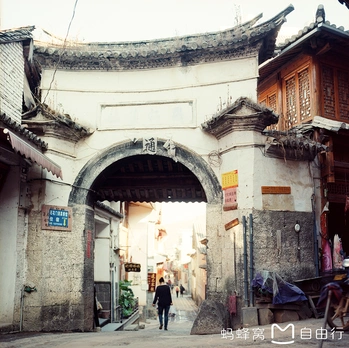
Tengchong has an overwhelming number of guesthouses. I stayed at "安之若宿" (An Zhi Ruo Su). It's located on higher ground, and every morning, pulling back the curtains to gaze over the entire ancient town was pure joy. The owner's love story is also romantic: she and her husband met and got together in Tengchong. The owner used to work in construction, so she handled everything from design to material selection for the guesthouse and will enthusiastically explain it to you. Every afternoon, brewing a pot of滇红 (Yunnan black tea) and chatting with her was leisurely and delightful.
On Accommodation in Ginkgo Village
At the time, we stayed at a farmhouse recommended by our taxi driver. It turned out to be a terrible choice, so I won't recommend it. Tengchong has developed very quickly in the last couple of years, so perhaps Ginkgo Village now has better accommodation options.
"We travel not to escape life, but for life not to escape us."
Happy travels!
You should also read:
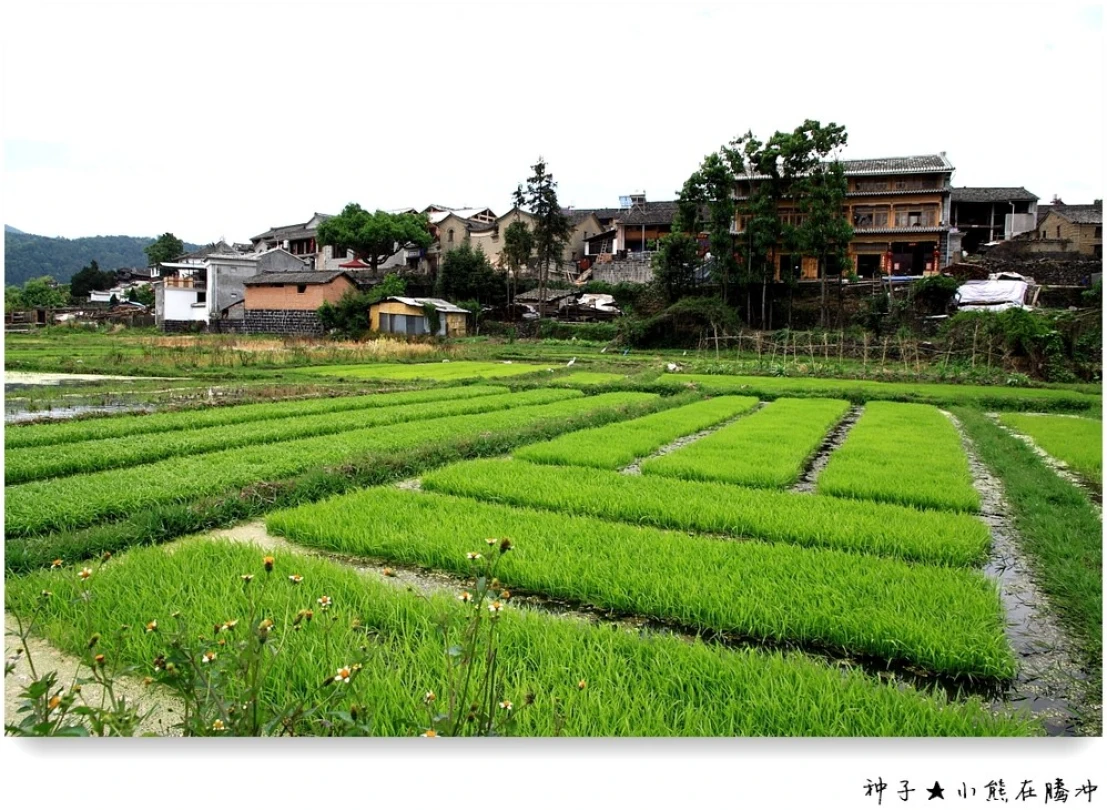
Tengchong·Heshun: Finding Life as It Should Be in a Border Town Where Time Stands Still
Tengchong·Heshun: Finding Life as It Should Be in a Border Town Where Time Stands Still The long journey of over twenty days was over. On my first day back at the office, I was still in a daze. My fingers couldn't find the keys on…
Continue reading...
God’s Abandoned Palette: A Self-Drive Journey Through Yunnan’s Dongchuan Red Land
God’s Abandoned Palette: A Self-Drive Journey Through Yunnan’s Dongchuan Red Land Travel has never been about reaching some distant geographic coordinate. It’s about encountering, along the way, the version of yourself buried beneath the rubble of daily routine. During this May Day holiday, I finally…
Continue reading...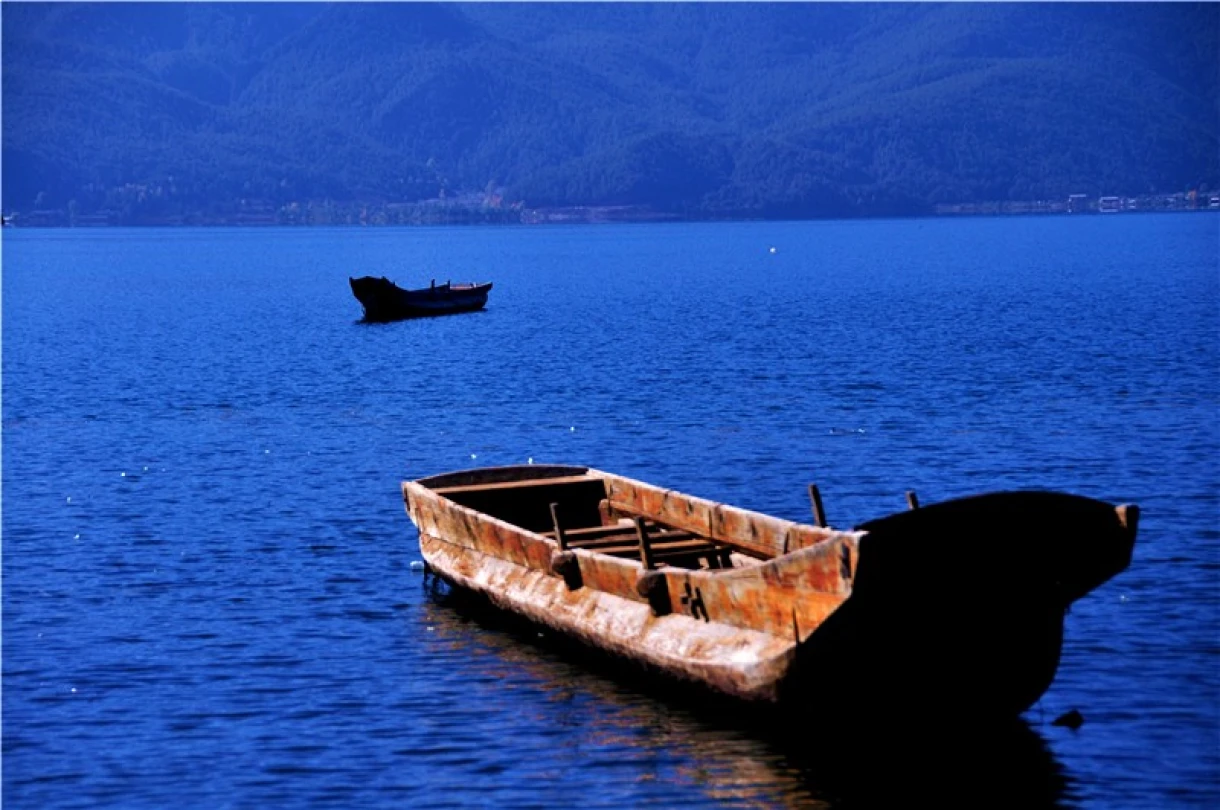
Hiking Around Lugu Lake: Measuring This Mysterious Highland Pearl on Foot
Hiking Around Lugu Lake: Measuring This Mysterious Highland Pearl on Foot Introduction: A Date with the Lake At the border between Yunnan and Sichuan provinces lies a highland lake embraced by mountains, embedded like a sapphire in the folds of the Hengduan mountain range. Here,…
Continue reading...