Yunnan: The Destination That Never Gets Old | Admiring Flowers in Kunming, Strolling in Maitreya, and Learning History in Mengzi
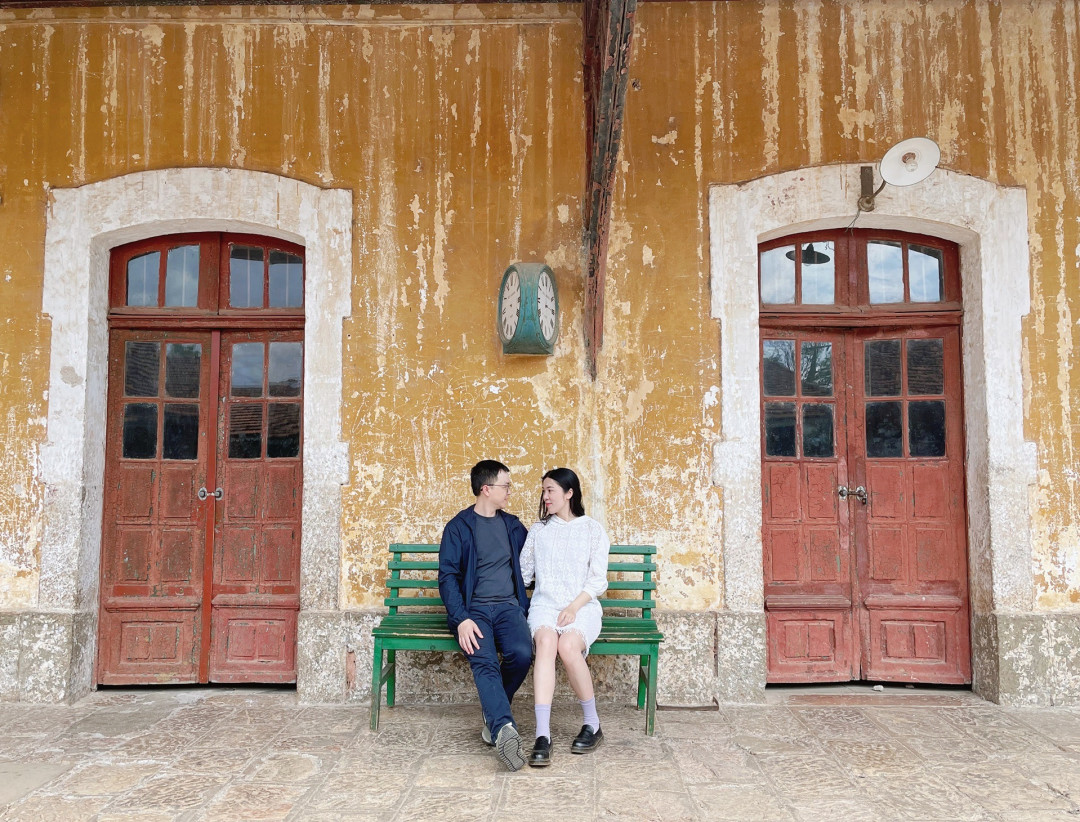
Yunnan: The Destination That Never Gets Old | Admiring Flowers in Kunming, Strolling in Maitreya, and Learning History in Mengzi
China has 34 provincial-level administrative regions, but only Yunnan can make your heart race just by reciting its place names—Xishuangbanna, Mangshi, Pu'er, Yuxi, Maitreya, Dali, Lijiang, Shangri-La, Puzhehei... This land seems to possess a kind of magic that draws you back again and again, no matter how many times you've been.
This was our third time setting foot on Yunnan's soil. The first time, we visited Dali and Lijiang, stumbled upon a "Baltic Sea" in Shaxi, cycled around Lugu Lake, and listened to stories for ten straight days across Yunnan. The second time, we rushed to Xishuangbanna, saw elephants for the first time at Wild Elephant Valley, were surrounded by the blooming flowers of the Xishuangbanna Tropical Botanical Garden, and fulfilled a promise to the tropical rainforest. This third time, we chose Kunming and Honghe Prefecture, finally saw the jacaranda flower sea we had dreamed of, got lost in the kaleidoscope of Maitreya's Dongfengyun, and fell in love with the laid-back, cozy little city of Mengzi.
There will be a fourth, fifth, sixth time... But before I set off again, let me finish telling the story of this third journey.
Kunming: A City Worth Stopping For
On our first two visits to Yunnan, Kunming was just a transit hub we hurried through. We never really stopped to take a good look at this city. Until this time, coinciding with the jacaranda blooming season, we finally decided to stay.
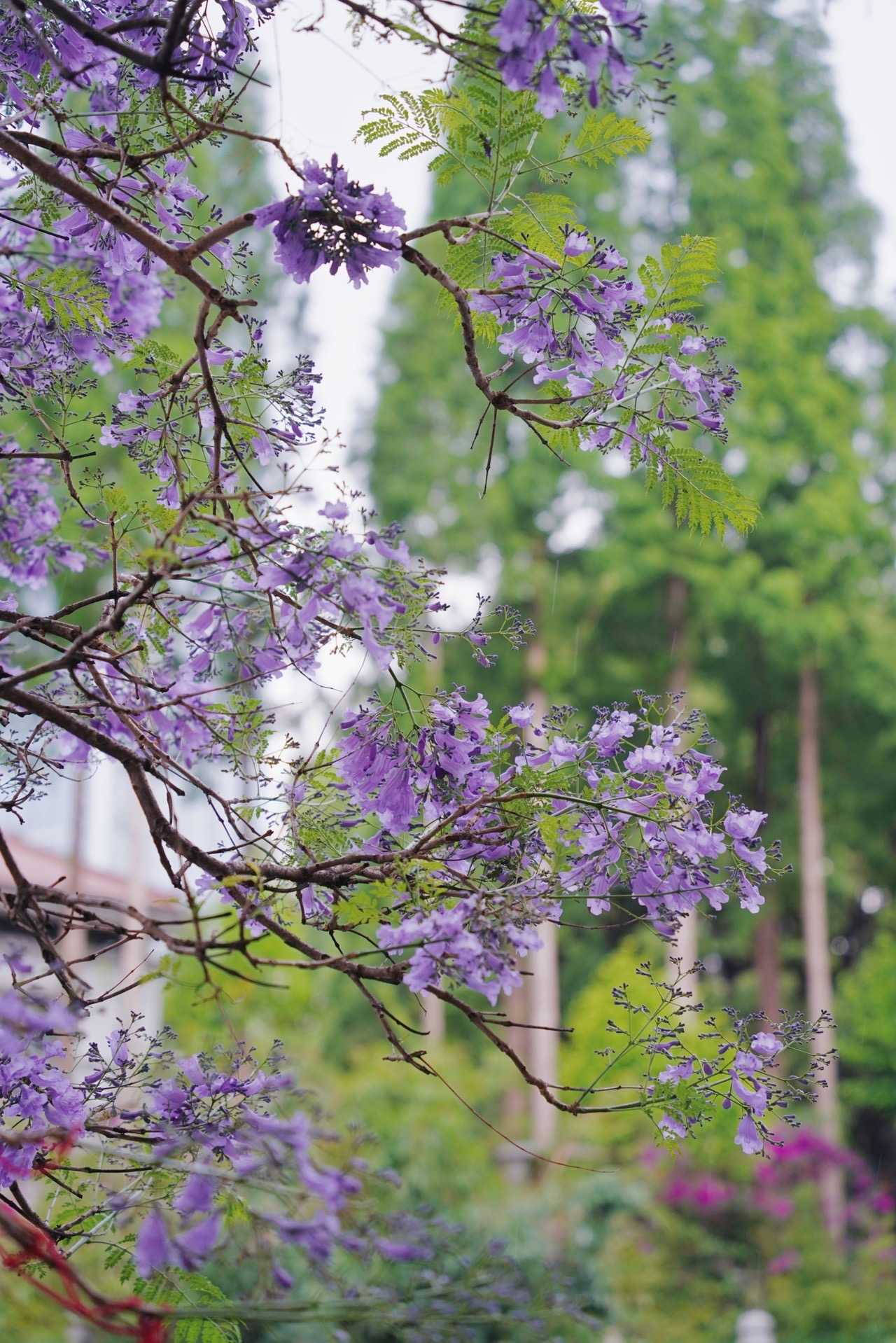
Kunming's charm lies in its historical depth, its comfortable climate, and its cuisine. But this time, we came for the flowers.
By the Panlong River: A Rain of Jacaranda
After checking into the hotel, we took the metro to the banks of the Panlong River. No sooner had we gotten off the metro and approached that sea of purple than the sky unleashed a heavy downpour. We huddled under the eaves of a roadside shop with a few other passersby, watching as the rain beat down the jacaranda petals, carpeting the ground in purple.
We waited about twenty minutes until the rain let up. Kunming's rain comes and goes quickly. Worried it might return, I bought a transparent umbrella from a nearby shop—it looked a bit flimsy, but turned out surprisingly photogenic.
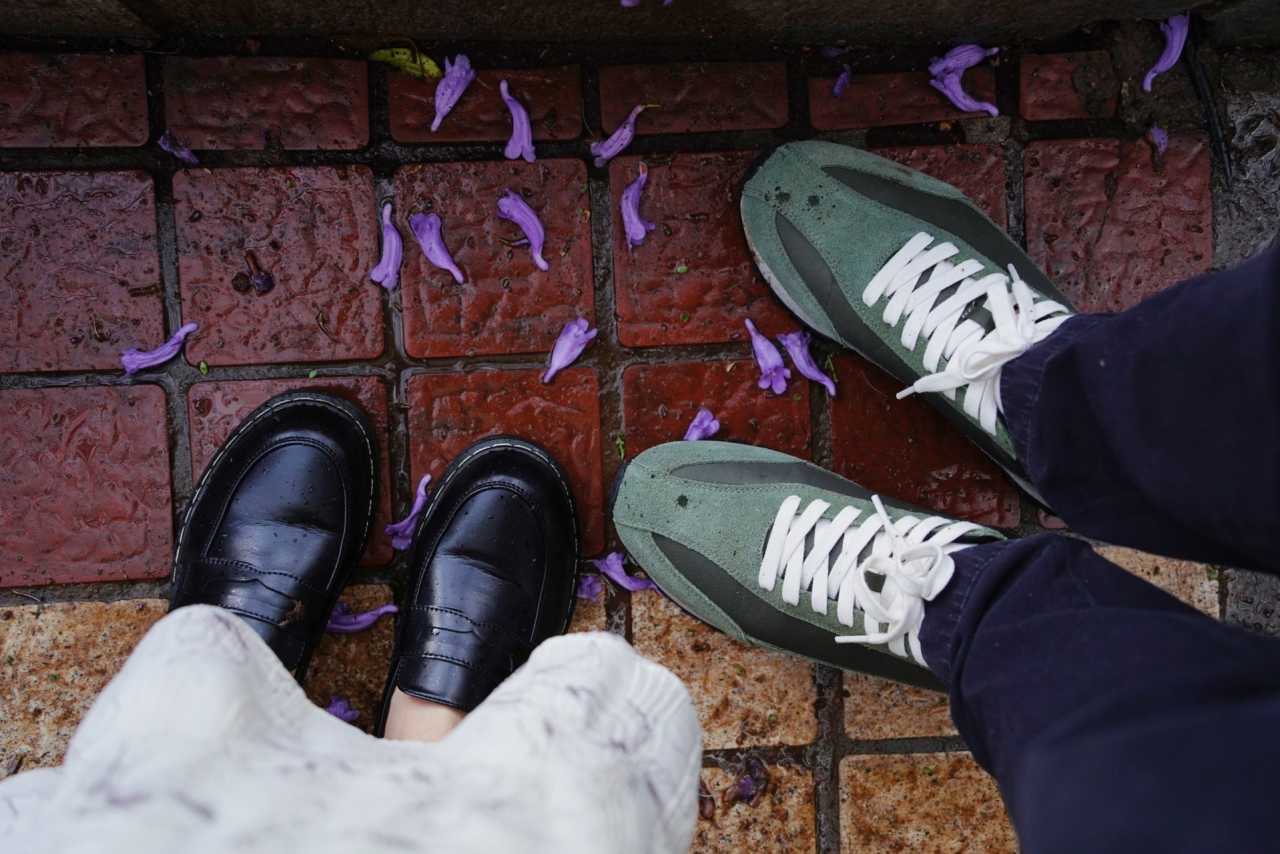
I first learned about jacaranda trees many years ago from a travel blog about Australia on Mafengwo. The author had worn a self-made wedding dress and taken a set of bridal photos under a jacaranda tree—unique and romantic. From that moment on, that sea of purple was etched into my memory. Perhaps I wasn't that passionate, though—I knew Kunming also had jacarandas five years ago, but only now did I finally come to fulfill that promise. What I longed for, perhaps, was just a distant place with a wedding dress, a partner, and jacarandas in full bloom.
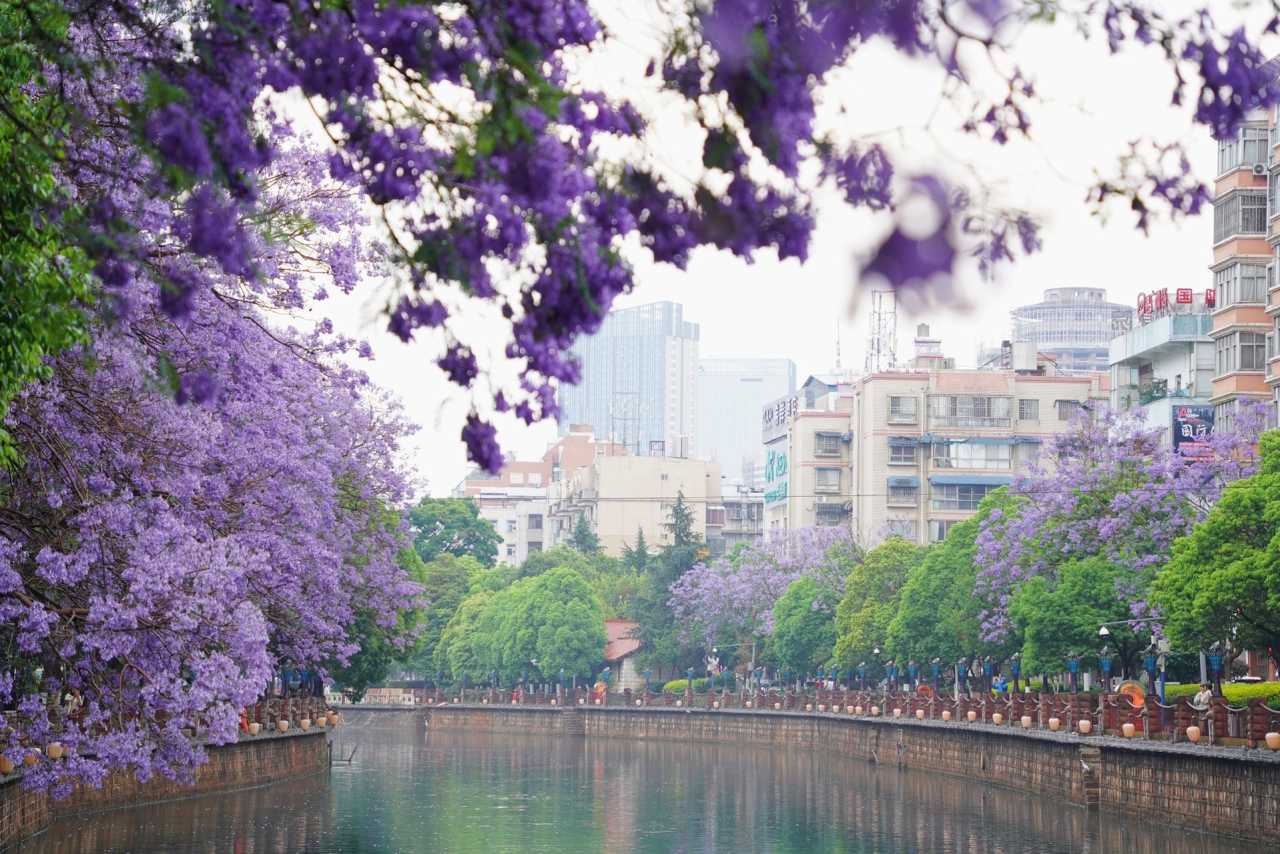
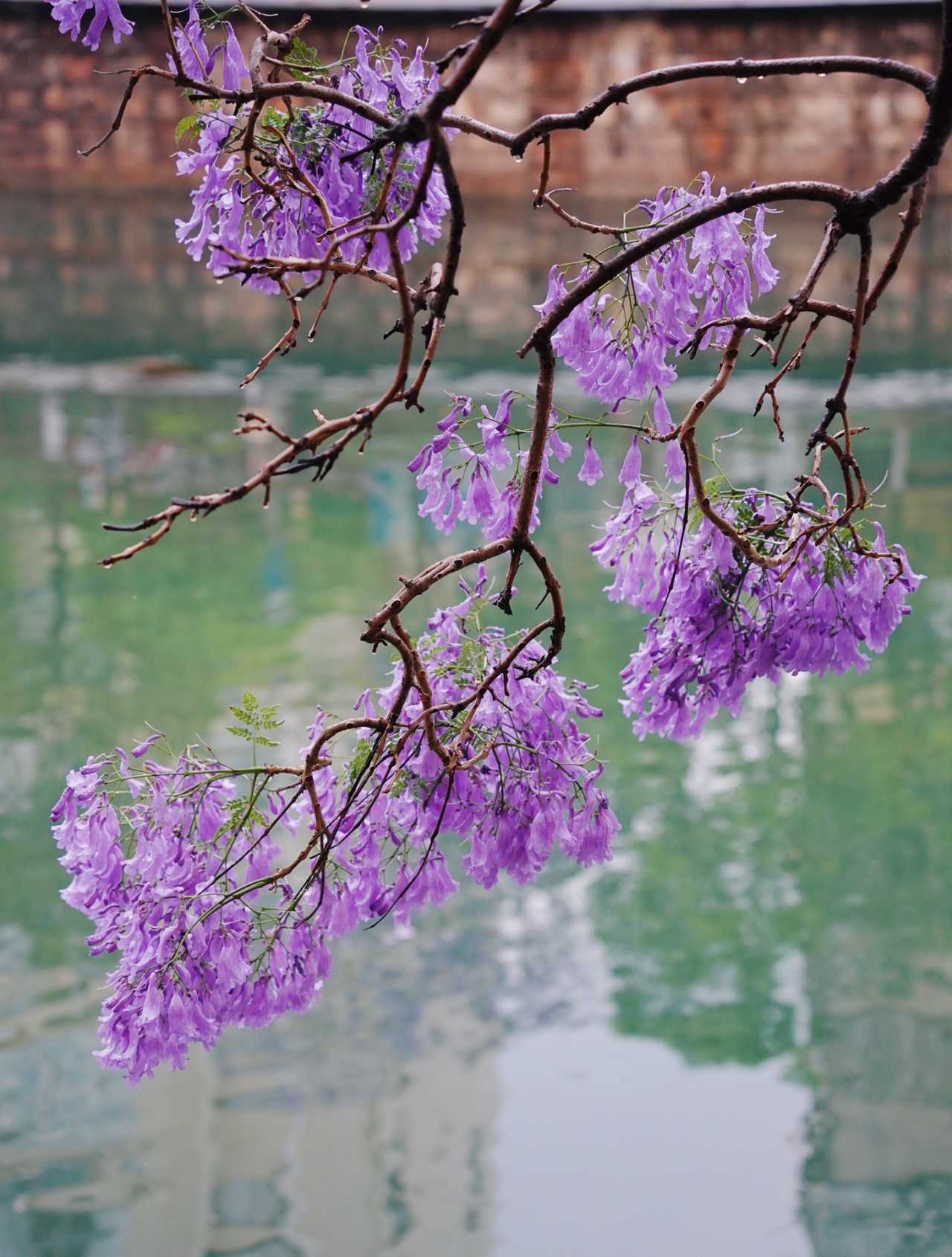
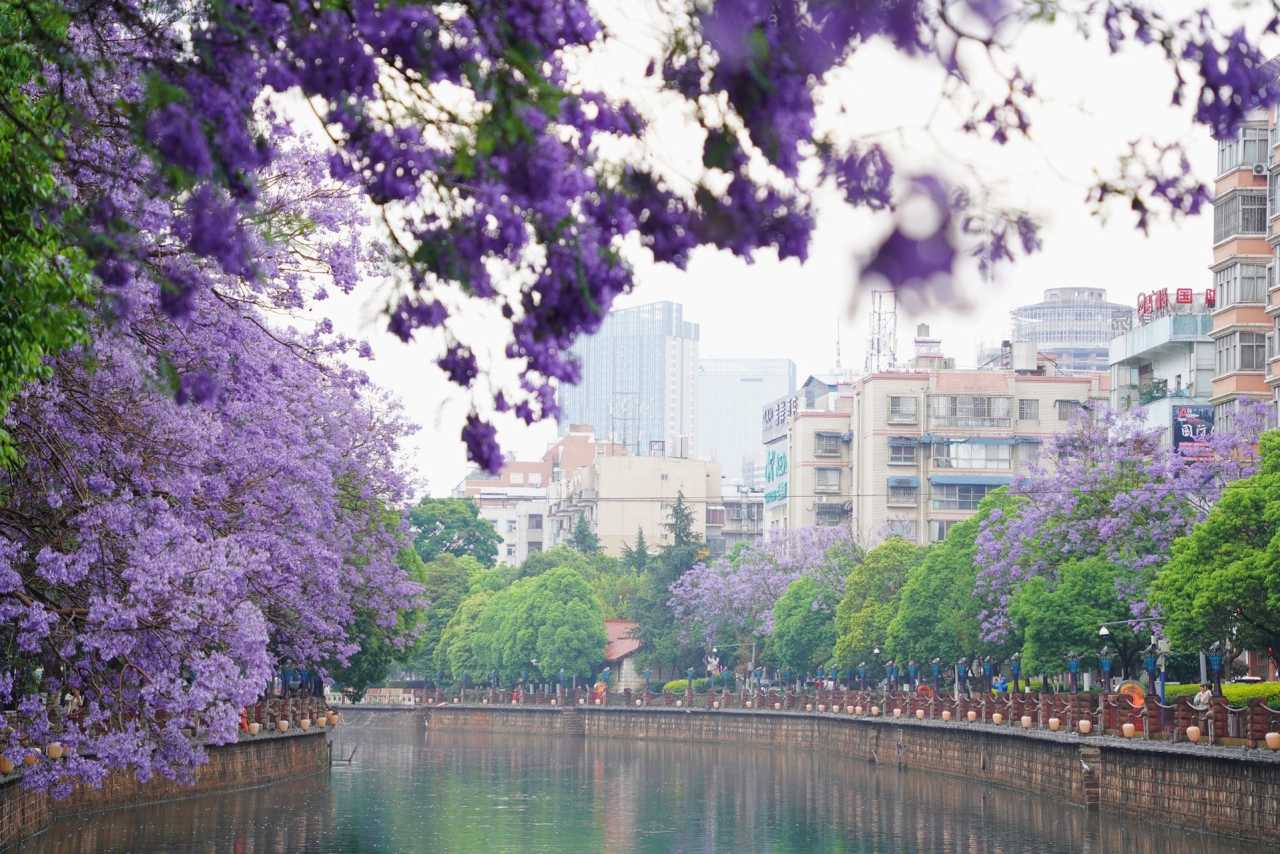
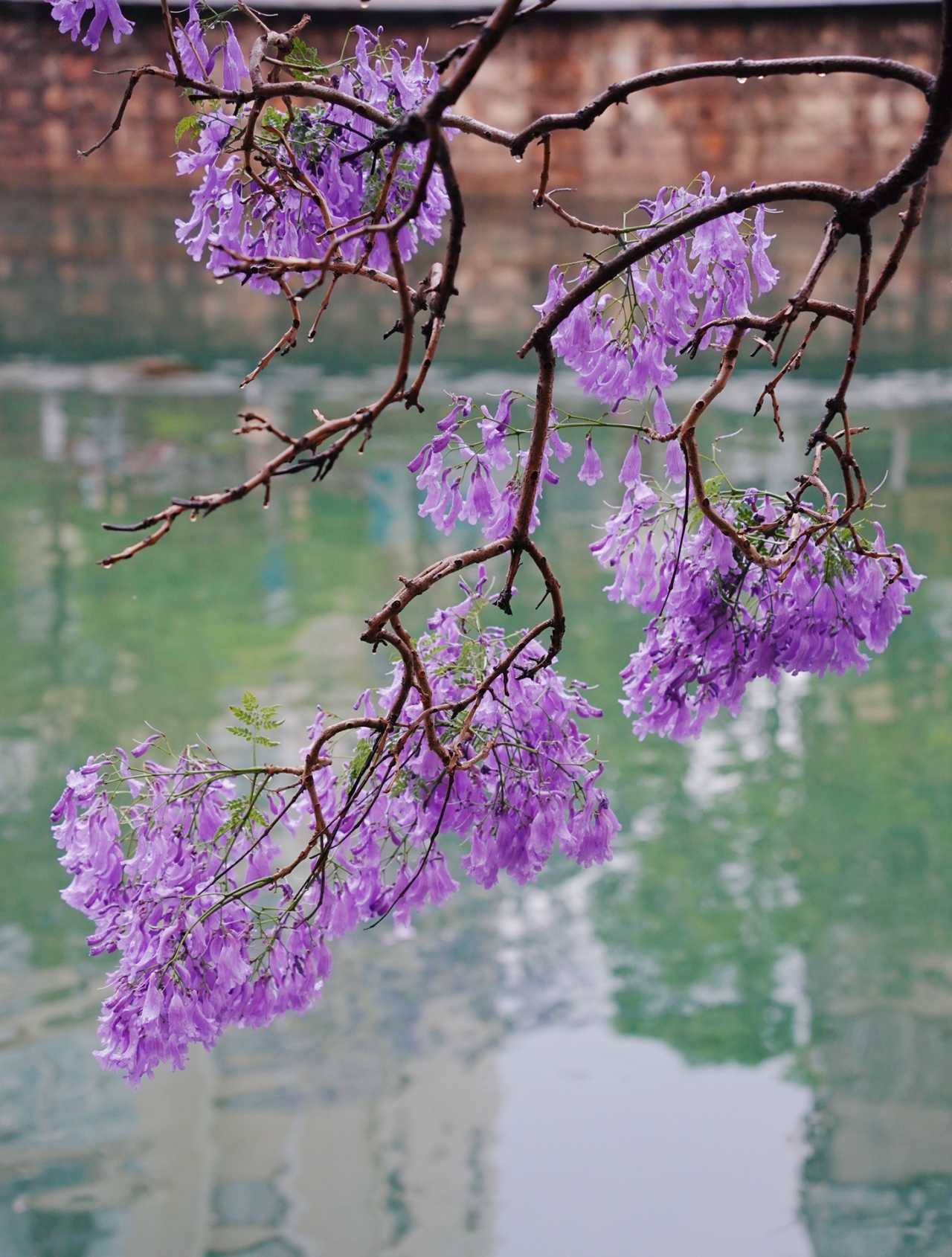
The jacarandas along the Panlong River aren't particularly tall. Some dense, heavy branches drooped down toward the water. Looking closely at the petals, they resemble tiny purple bells or little trumpets. I took a few photos, and then the rain started drizzling again, creating ripples on the river's surface and hanging little "pearls" on the petals.
This passing shower didn't dampen our spirits at all. Walking slowly along the riverbank with an umbrella actually added a touch of romance. Blue has been my favorite color since childhood, and in recent years, I've fallen in love with purple, finding it mysterious and profound. As for jacaranda, I could never decide whether to classify it as blue or purple. Later, I searched online and discovered it has its own exclusive color, certified by Pantone as the 2022 Color of the Year: "Very Peri," with the tranquility of purple as its foundation and a delicate touch of blue infused into a passionate reddish-purple.
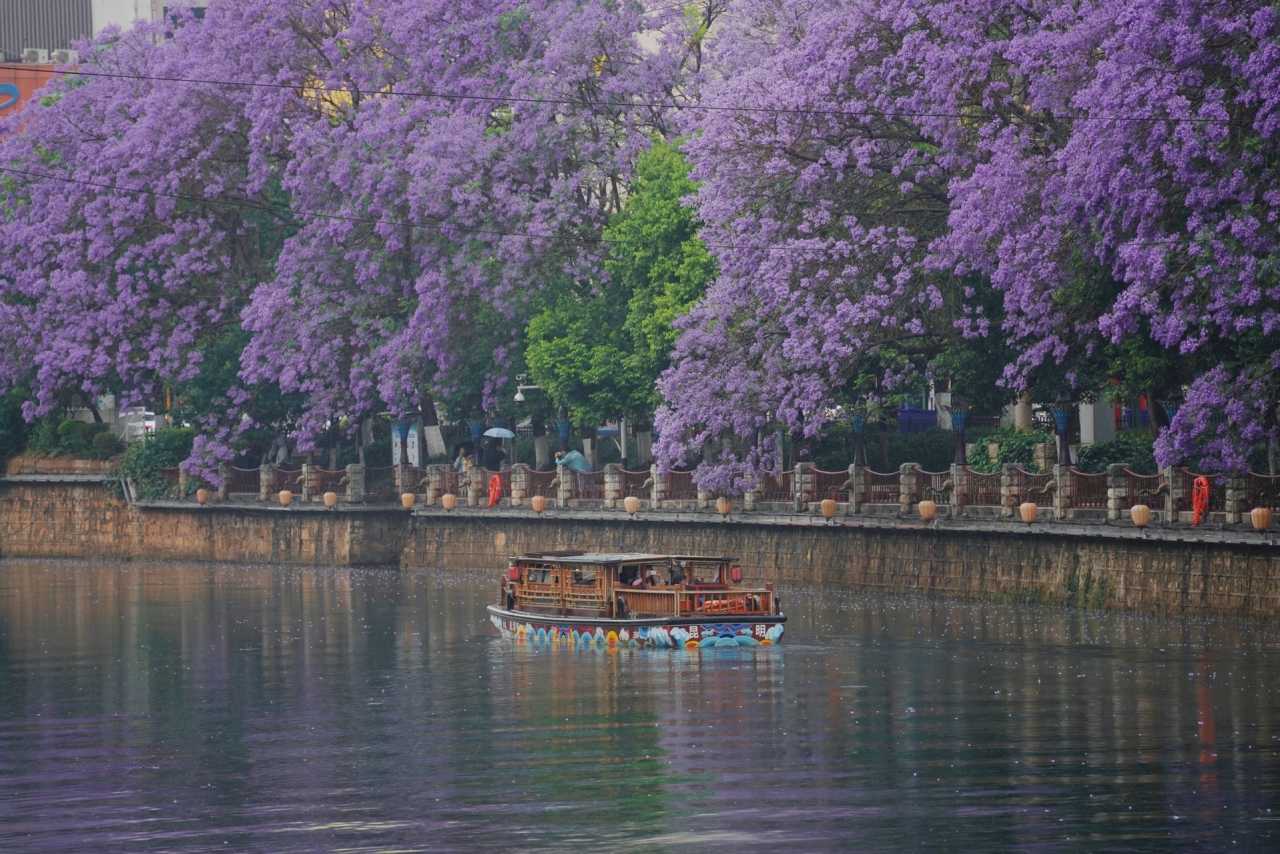
A sightseeing boat occasionally passed by on the river. I imagined sitting on that boat, drifting along the Panlong in the rain, slowly taking in the jacarandas on both banks—it must be a different kind of pleasure. We crossed over to the other side via a bridge. Sometimes it drizzled, sometimes it stopped. The puddles on the road weren't kind to our shoes, but they didn't dampen my enthusiasm for photography. I kept pulling my travel companion to press the shutter.
When night fell, the rain suddenly intensified. That little transparent umbrella simply couldn't fit two people, so we reluctantly left to take shelter in a nearby mall. But I was sure tomorrow would be a sunny day—the jacarandas on Jiaochang Middle Road were still waiting for us.
Kunming Old Street: Perfect for a City Walk
After breakfast at the hotel, we navigated to the old street. Passing by Yongdao Flower Street, we spotted Nie Er's former residence. There weren't many tourists, no reservation needed—you could just walk in and visit.
Every Chinese person knows the name Nie Er. He, along with Tian Han, composed our national anthem, "March of the Volunteers." But not many people know much about his life. Nie Er's parents were from Yuxi, Yunnan. He was born in this very residence on Yongdao Street and spent his childhood here. After leaving Kunming at 18 to study elsewhere, he never returned. This residence was a shopfront that Nie Er's father, Nie Hongyi, rented when he practiced medicine in Kunming. He opened a traditional Chinese pharmacy called "Chengchun Tang." The building faces east and west, with three two-story rooms made of timber and earth facing the street.
If you're interested in Nie Er, you can stop by when you're in Kunming Old Street.
Kunming Old Street is 435 meters long and is the only old street in Kunming that retains its古朴 (ancient simplicity) style. Among all the buildings, the most famous is probably the "Paper-thin Building." This structure was remodeled from a 1946 French-style historic building and is one of the few surviving curved French-style buildings in the world. Composed of a pair of curved buildings, Kunming locals call it the "Wine Glass Building." It stands out for its narrowness and thinness. The two buildings face each other, embracing the Victory Hall in a curved arc, earning the name "Moon-facing Tower," carrying the beautiful poetic sentiment of "Don't let the golden cup be empty under the moon."
There were so many tourists taking photos in front of the Moon-facing Tower that it was hard to capture the entire building in one shot. I simply gave up and found a few side angles instead—they turned out pretty good, too.
Passing by a café, I saw many people taking photos with an animal resting on the windowsill. I thought it was a cute dog, but when I got closer, I realized it looked a lot like a fox. The staff told me it really was a fox.
Huanggong East Street: More Than Just a Trendy Sign
Walking from Kunming Old Street toward Cuihu Park, we passed a large building—its front looked like a tower, its side like a sailboat. I searched online for a long time before finding out it was the Wuhua District Government Building.
As we walked, we came across another avenue of jacarandas. The trees here were taller, and the flowers were sparser—not great for portraits, but good for treating a stiff neck, since you have to keep looking up. Petals had fallen all over a car, decorating it with a layer of purple. When the owner came to drive it away, their heart must have been filled with romantic surprise.
By chance, we stumbled upon the famous yellow photo spot on Huanggong East Street. There were too many people waiting to take pictures, and too many vehicles passing by—it felt a bit unsafe. Seizing the gap between two groups of girls swapping turns, I quickly snapped a couple of empty shots. Actually, the whole street is painted yellow, and it looks great for photos anywhere. There's really no need to queue for that one trendy spot.
Inside the yellow wall is the Yunnan Liberation Memorial Hall, the main building being a two-story French-style villa. We went in for a look. In the early days of Yunnan's liberation, this was the headquarters of the Kunming Military Control Commission of the Southwest Military Region of the People's Liberation Army, where Chen Geng, director of the commission, and Song Renqiong, Yunnan's first provincial party secretary, lived and worked. During the Sino-Burmese border demarcation, Premier Zhou Enlai visited Kunming many times, and in March 1957, he also stayed here.
We passed by the entrance to Cuihu Park but didn't plan to go in. We quickly snapped a photo, then rented a shared bike and rode to Jiaochang Middle Road—the romance of the jacarandas was still waiting for us.
Jiaochang Middle Road: Falling into a Blue-Purple Dream
Jiaochang Middle Road—I feel that no amount of beautiful words can accurately describe its beauty. From the moment I entered the street, I fell into a blue-purple dream.
I bought two creative popsicles, refreshingly colored, planning to hold them for photos. But there were too many tourists, shoulder to shoulder, and the weather was hot. The popsicles started melting quickly. I took a few rapid shots, then finished them off. I don't know who invented these creative popsicles, but they're incredibly imaginative—though to be honest, not a single one tasted good.

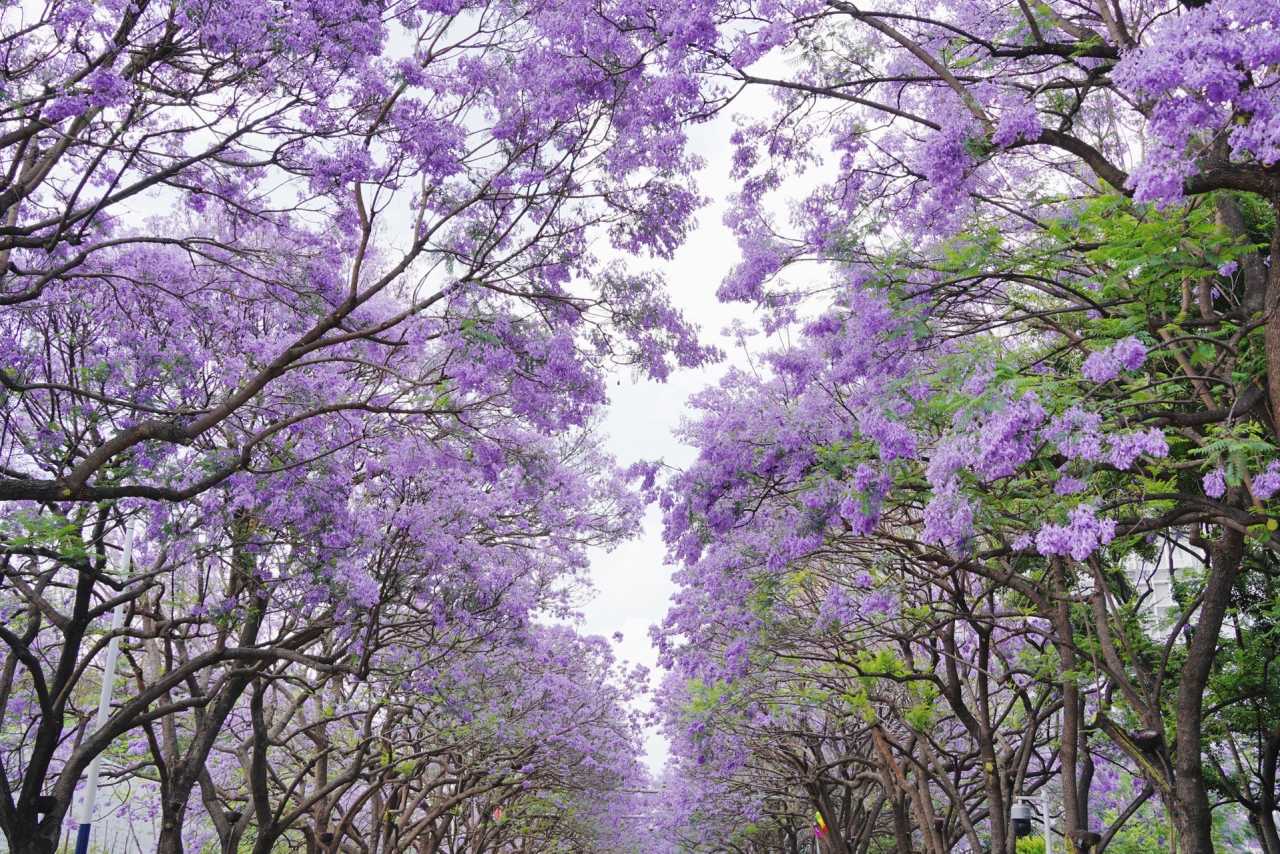
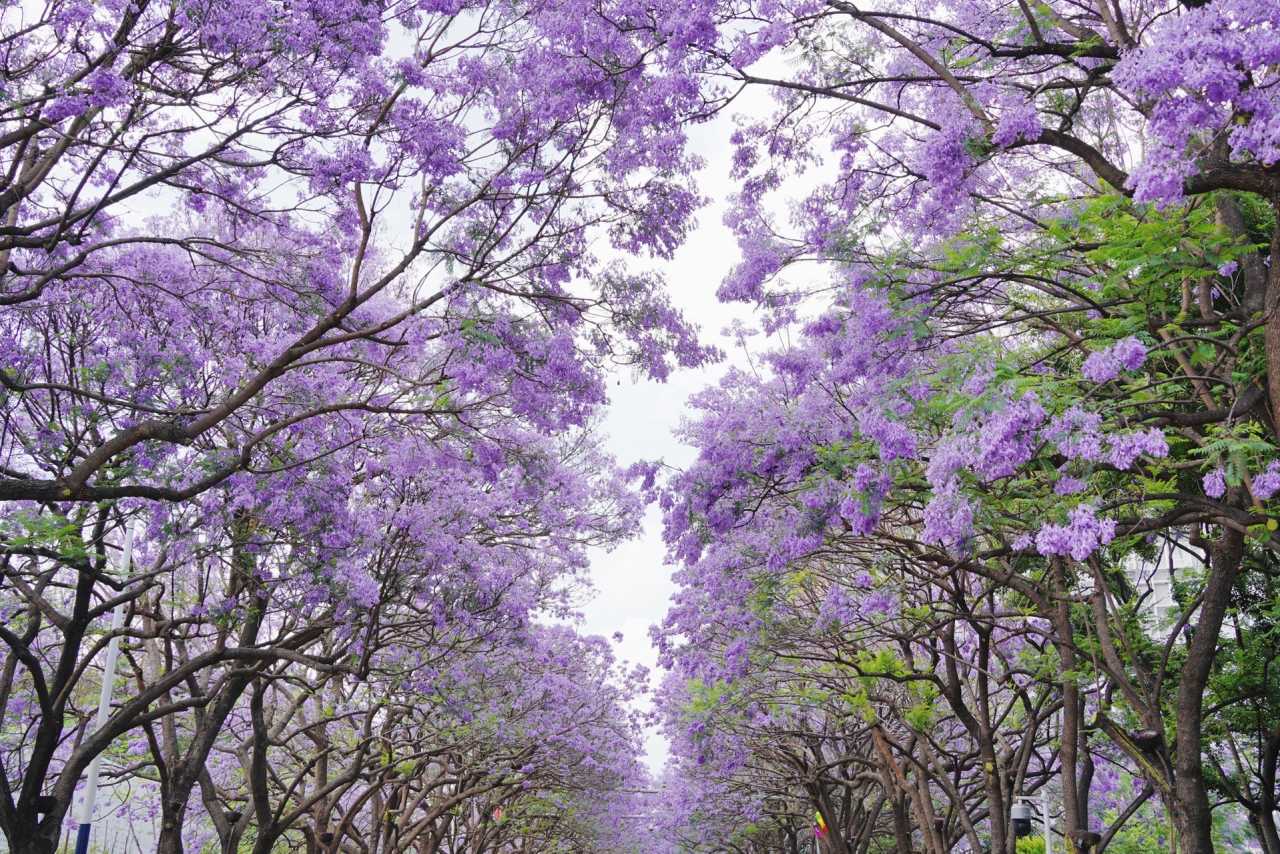
The jacarandas on both sides were layered and dense, clusters upon clusters, a sky-covering expanse of blue-purple that flooded the entire Jiaochang Middle Road. A spring breeze swept through, carrying a refreshing coolness, rustling the treetops and sending down a shower of "jacaranda rain." Petals fell to the ground, landed on tourists' heads, scattering everywhere, filled with romantic atmosphere.
Jacaranda has the melancholy of blue and the mystery of purple. Blue and purple interweave, like a calm sea, elusive. Yet it is also magnificent—tall tree trunks stand by the roadside, and as soon as you look up, you're met with romance. Tourists bustled about, voices clamored, shutters clicked incessantly—everyone wanted to capture all the colors of spring in their frames.
The jacarandas on Jiaochang Middle Road are too tall for portraits; you'd need a ladder to shoot upward. At the entrance, there were also many vehicles coming and going, causing traffic jams. For safety, it's best not to linger on the road for photos. If you walk further, the middle of the road has a half-lane reserved for tourists to take pictures, and many photographers with full equipment offer their services at reasonable prices.
If you think strolling under the trees isn't romantic enough, you can also spend 39 yuan to ride the jacaranda-themed double-decker bus. Maybe it will pass under low-hanging jacaranda branches, and with a stretch of your hand, you can touch the romantic breath of spring. The entire Jiaochang Middle Road is enveloped in romance. Walking under the trees, every pore opens up, soaking in the romantic atmosphere, and you naturally become gentle.
Nanping Pedestrian Street: Jacaranda Under Night Lights
After eating wild mushrooms, we slowly strolled to Nanping Pedestrian Street. The sky gradually darkened, and the street came alive. A band happened to be performing on the street, so we stood and listened to a few songs. Night fell, lights came on, and the moon rose.
Unexpectedly, on one side of Nanping Pedestrian Street, there was also a row of tall, fully blooming jacarandas. Under the light, the jacarandas changed from blue-purple to deep purple. The trees here were particularly tall, and only on one side—not suitable for portraits, but great for shooting upward at the flowers.
When we arrived at the hotel the day before, I asked the cleaning lady where we could see the flowers nearby. She shyly said she hadn't seen them either, only on short videos. When I accidentally saw these flowers on Nanping Pedestrian Street, I really wanted to tell that lady—there are flowers to admire just over 400 meters from her, no need to look through a screen.
Eating in Kunming: Two Memorable Meals
When cycling from Cuihu to Jiaochang Middle Road, we saw a dense crowd of tourists from afar. We quickly found a place to park the bike and turned around to see a Dai ethnic restaurant right there. It was mealtime, and there were quite a few customers. The two of us ordered five dishes—the portions were very generous, and we ended up having to pack up the包烧鸡脚筋 (grilled chicken tendons wrapped in banana leaves). The taste was pretty similar to what we had in Xishuangbanna. I really like Dai cuisine—unique ingredients, can be sour and spicy, can be light.
The other meal was a wild mushroom hotpot. I wanted to go to a particularly popular online restaurant called "One Mushroom," but the queue was at least two hours long, so I decisively gave up. I found a highly-rated restaurant nearby on Dianping (Chinese Yelp). The place was decorated quite flashily, with lots of tropical plants and mist underneath, giving a refreshing coolness as soon as you walked in. I ordered a set meal online—a tea-flower chicken broth base, including chicken and a wild mushroom platter. You could choose five types from a selection of matsutake,青杆菌 (green mushroom), yellow porcini,见手青 (a type of Boletus, stains blue when touched), morel, chanterelle, bamboo fungus, and白风菌 (white wind mushroom). I really like bamboo fungus, but I forgot to tell the staff, so they just put together a platter, and by the time I noticed, it was too late to change.
Every year, there are many cases of poisoning from eating wild mushrooms in Yunnan. It's said that hospitals have become very experienced in treating wild mushroom poisoning. Most restaurants that serve wild mushrooms set a timer after the pot starts boiling, don't give out chopsticks until the time is up, and even keep a sample after cooking—it's quite ceremonial. When you go to eat, be sure to strictly follow the restaurant's instructions. Seeing little people dancing after eating is really not a pleasant feeling. The mushroom soup was incredibly delicious—I had several bowls. Personally, I think mushrooms are mainly about the ingredients; as long as the ingredients are fresh, every restaurant will taste good. You don't necessarily have to go to the trendy ones.
Maitreya: A City Sharing a Name with the Buddha
"Maitreya" is a city that shares its name with the Buddha, with a history of over two thousand years. It's located in the Honghe Hani and Yi Autonomous Prefecture of Yunnan Province, serving as an important hub connecting central Yunnan with Guangdong and Guangxi. Just hearing the name is particularly captivating.
The completion of the Dongfengyun Art Town has made Maitreya increasingly well-known. Opinions on Dongfengyun vary. But it's undeniable that because of Dongfengyun, more and more people are choosing Maitreya as a stop on their Yunnan itinerary.
Dongfengyun: Entering a Magical World
From Kunming South to Maitreya, it's about half an hour by high-speed rail. There's luggage storage next to Maitreya Station, 20 yuan per day. If you're only going to Dongfengyun, you can directly store your luggage at the station.
Even during the half-hour train ride, I couldn't calm the anxiety from rushing at Kunming South Station. Kunming South Station is too far from the city center, and we miscalculated the time. With only seven minutes left, we got off the metro, passed security and entered the station in two minutes, only to find our boarding gate was the farthest one, with one minute until closure. We ran the whole way, more exhausting than an 800-meter sprint in high school. Although we made it, I felt chest tightness and discomfort. It wasn't until we got off at Maitreya Station and had a bowl of rice noodles at a nearby bamboo garden Ma's braised chicken shop that I gradually calmed down.
Transport Info: - Kunming South—Maitreya: 33 minutes, 34 yuan/person - Maitreya—Dongfengyun: 10 minutes, Didi about 10 yuan, carpool 5 yuan/person - Usually can go directly to the scenic area entrance; during holidays with heavy traffic, need to transfer to a scenic area bus at the intersection
Opening Hours: 8:00—18:00
Tickets: 60 yuan/person, sightseeing car round trip 20 yuan/person, one-way 15 yuan/person. Personally, I think the sightseeing car is unnecessary—staff said you need to walk 3 kilometers, but it's actually not that far. On the way back, because of the crowd, we also walked back to the entrance.
Route: Xiude Gate—Colorful Flower Field—Seal Pavilion—Kaleidoscope Art Hall
Note: Accommodation within the scenic area grants free entry with unlimited access. Luggage can be stored for free at the visitor center (we paid to store ours at the station—felt like we lost a fortune).
Xiude Gate is the main entrance, shaped like a white kaleidoscope, very photogenic. But there were too many tourists, people coming and going, hard to avoid the crowd—not great for portraits. From the visitor center, there's a spacious observation deck where you can overlook the entire Dongfengyun town. The nearby jacarandas and the distant purple verbena create a romantic purple tableau.
After about five minutes on the sightseeing car, we arrived at Seal Pavilion. The driver made everyone get off here—normally you can get on and off at any stop, but the driver made everyone get off. Seal Pavilion gets its name from buildings shaped like seals. They used to be for photo-taking and viewing, but now they've turned into shops selling various things, looking quite cluttered. We took a few photos behind the buildings, avoiding the tourists and the messy shop signs.
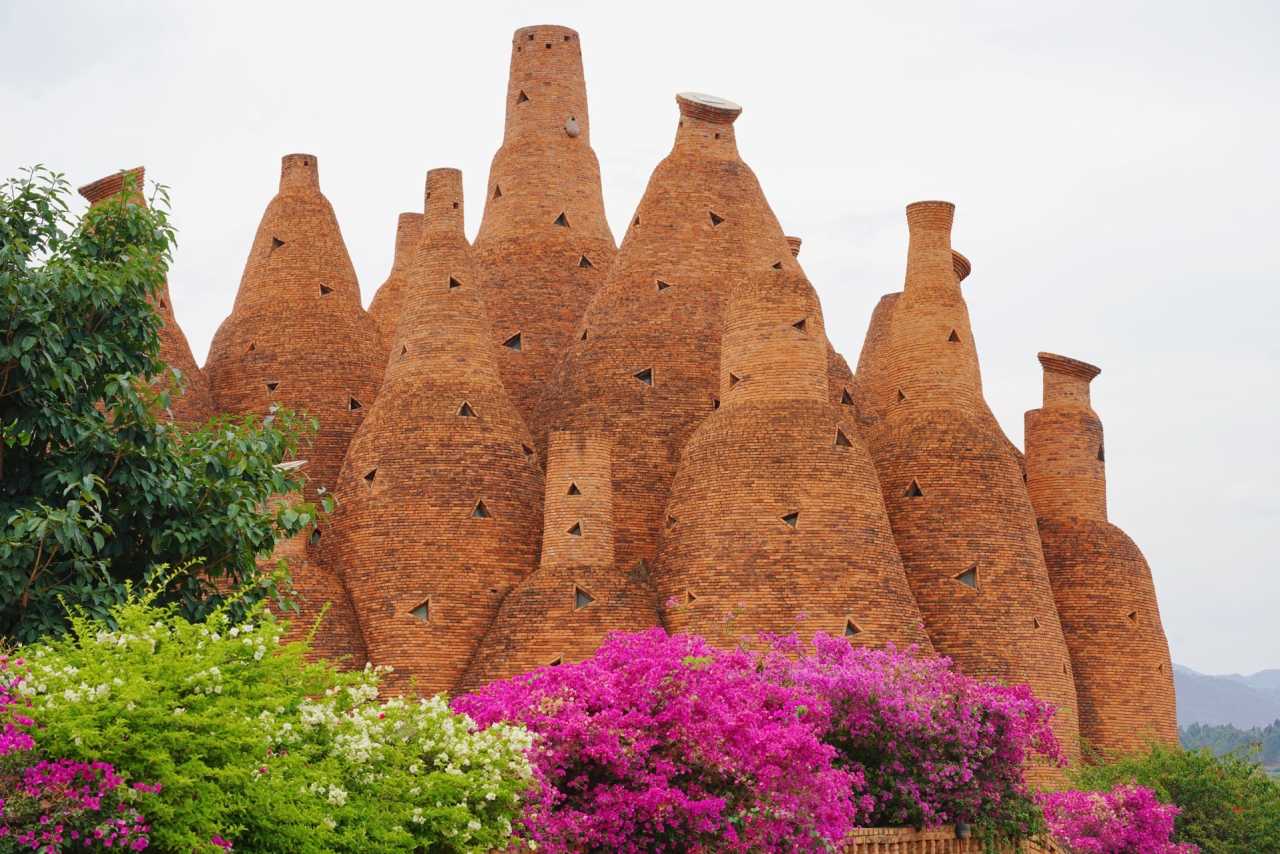
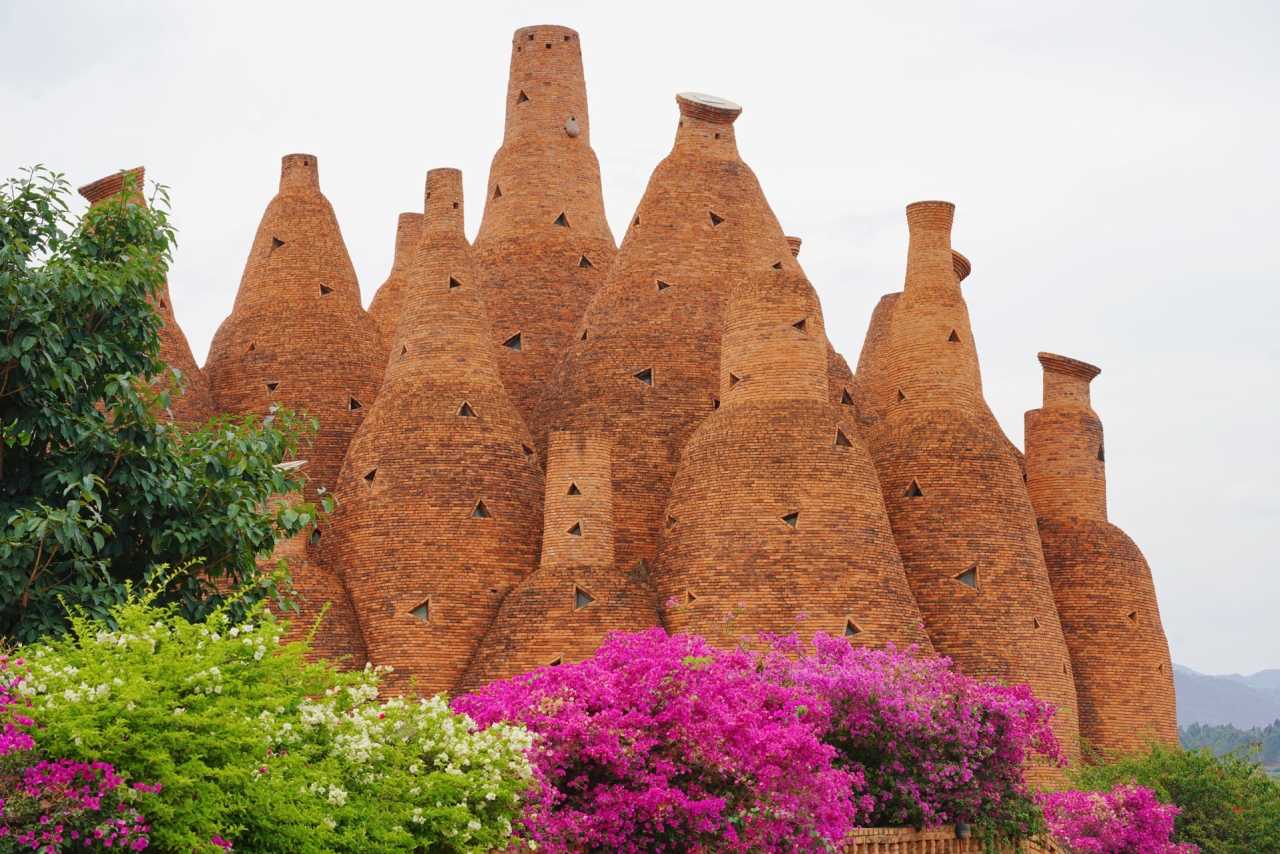
From Seal Pavilion, we slowly strolled to the Kaleidoscope, visible from anywhere in the Dongfengyun scenic area. It's named for its resemblance to the kaleidoscopes we played with as children, but actually looks more like wine bottles—because Maitreya's wine culture is very famous. These kaleidoscope-shaped buildings have smooth, natural lines, paired with red brick tiles, truly like fairy tale castles.
In Yunnan, there are two nationally treasured arts—Luo Xu's sculptures and Yang Liping's dances. Everyone knows Yang Liping, but Luo Xu is relatively low-key. This artist, however, holds the titles of "Yunnan's Gaudi" and "Yunnan's Eccentric Genius." He never systematically studied architecture and isn't good at calculations. Relying solely on his intuitive sense of mechanics, he directed workers with a 3-meter-long bamboo pole to create three unique buildings: Native Nest (in Kunming), Red Brick House (in Maitreya), and Ant Workshop (in Jianshui). The entire Dongfengyun complex was built without a single steel bar or nail—all constructed from locally fired red bricks. They blend seamlessly with the color of the soil beneath, as if they naturally grew out of this red earth.
Inside the art hall, you can see the "Thousand-Person Choir" clay figurines—a thousand faces reflecting the myriad forms of life. We wandered around and sat down to rest, marveling at the greatness of artist Luo Xu. I'm not an architect or an artist, so I can't professionally judge good from bad. But as an ordinary tourist, I found the unique shapes of these buildings, the red earth color, and the surrounding layout very captivating. For tourists who like photography, it's an excellent setting. I recommend wearing solid-colored clothes or dresses in white, black, red, or yellow—you'll get hundreds of great shots. I really love Yunnan's various markets and hope this market culture can spread across the country.
The Colorful Flower Field is also called the Lavender Manor, hailed as the "Provence" of central Yunnan. But actually, these purple flowers aren't lavender—they're verbena. After taking a few photos in the flower field, I wanted to return to Seal Pavilion for the sightseeing car, but was told I needed to walk back to the Kaleidoscope to catch the return car, and the estimated wait was an hour due to the crowd. No choice—I had to endure the pain of blisters forming on my heels and slowly walk out. A word of advice: never wear new shoes when going out—your feet will definitely get blistered.
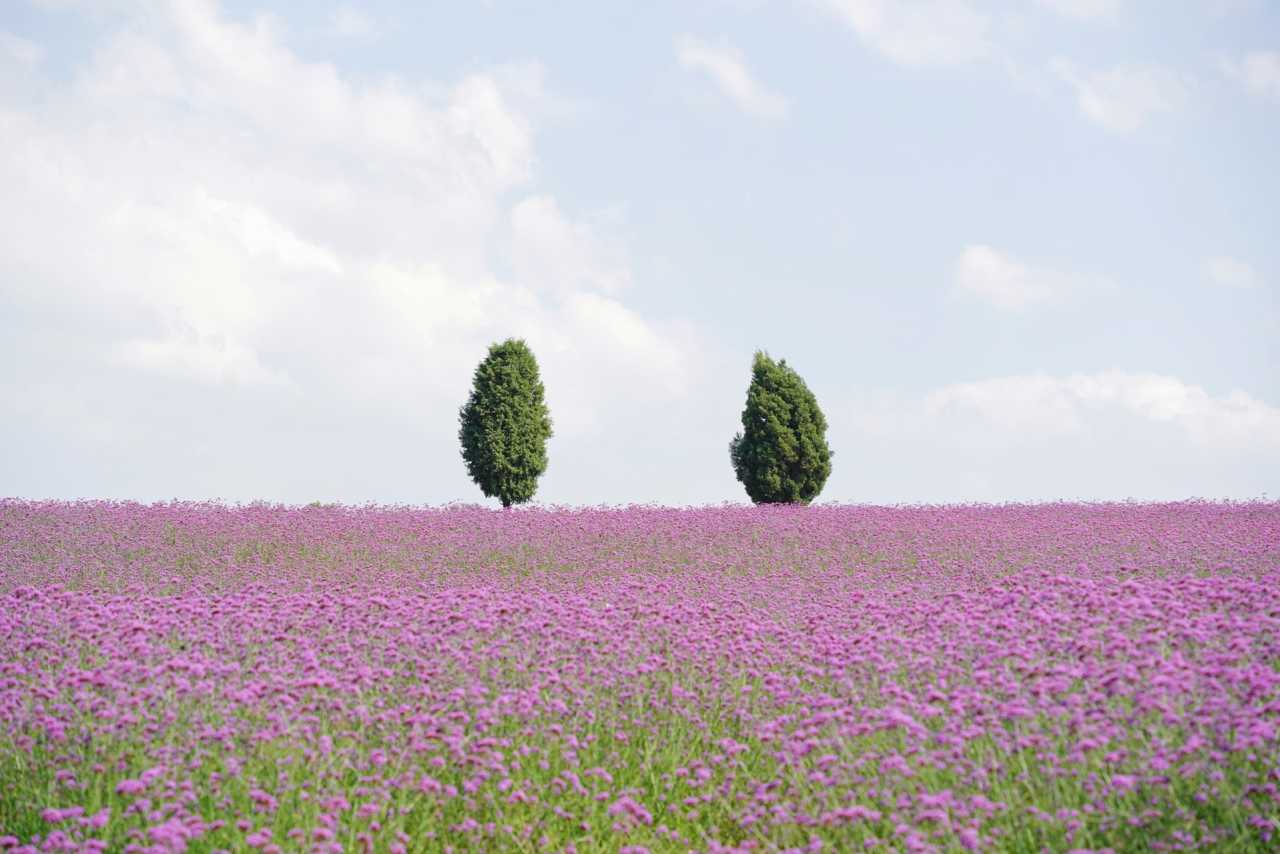
Although I felt I'd wasted the one-way ticket by not taking the return sightseeing car, when I saw the view of the flower sea, I started to feel glad I hadn't taken it. I particularly loved the two trees in the flower field. Several scenes here inexplicably reminded me of Biei in Hokkaido during summer—though I've never been. Artists are truly romantic; otherwise, they wouldn't have built a railway through the flower field, engraved with "I love you" in every language. Every step you take is an imprint of love.
Mengzi: A Small Town with a Century of Memories
My awareness of Mengzi comes from Feng Xiaogang's film "Youth." The碧色寨 (Bisezhai) train station lingered in my mind for a long time.
Mengzi is the capital of the Honghe Hani and Yi Autonomous Prefecture, possessing cultural icons of "a century of the Yunnan-Vietnam Railway, a century of open trade, and a century of Crossing-the-Bridge Rice Noodles." In 1938, the National Southwestern Associated University established a branch campus in Mengzi, where students from the College of Arts and the College of Law and Business studied. Many renowned scholars we know well also came to Mengzi—Zhu Ziqing, Wen Yiduo, Feng Youlan, Chen Yinke, Qian Mu, and others—leaving indelible memories by South Lake. Even today, walking into Mengzi, you can still trace the historical memories of the SWAU Mengzi branch through a number of former sites and ancient buildings.
Laoshuzhai Night Market: Catching a Night Market
On the high-speed train from Maitreya to Honghe, my travel companion found the most recommended night market in Mengzi. After checking into the hotel and dropping off our luggage, we took a taxi to Dashuzhai Night Market Street. The entrance was packed with people. As we slowly wandered in, we found that compared to other night markets, Laoshuzhai's food offerings were quite distinct and had strong local characteristics.
Ever since I had bagged Lao-style iced coffee in Xishuangbanna, I've been particularly fond of it. This time, I didn't dare drink coffee at night, so I ordered a cup of violently smashed lemon tea. The robust boss pounded it with all his might. One sip, and it was incredibly refreshing.
While waiting for the barbecue, I strolled around the night market and saw many people still setting up street stalls, trading vegetables, fruits, clothes, shoes, and other items. The markets I've seen are usually in the morning, especially for fresh produce—I've rarely seen them still operating at night. Sitting down to eat barbecue, it suddenly struck me—Yunnan is a province that particularly loves going to markets. I used to see various Yunnan bloggers going to markets, and I had just unintentionally caught a night market myself.
After finishing the barbecue, my travel companion, who has a thing for tofu, insisted on finding grilled tofu. We searched the entire market but couldn't find any. Just as we were about to give up at the end, we turned around and found it right on the right side—disappointment instantly turned to joy. I thought it was just okay, but he found the skin crispy and the inside soft and tender, particularly delicious. Gejiu small meat skewers came in three flavor options. They were very small, with short bamboo skewers that required some skill to eat and demanded high heat tolerance from the boss. We ordered the pure sweet flavor, which I really liked. If the wait hadn't been so long, I would have bought more.
We bought some homemade soda—it tasted exactly like the one from childhood, the white lemon flavor particularly refreshing. The bottle could be taken away or returned after drinking. We were already stuffed, but couldn't resist the recommendations and packed some chicken feet to eat back at the hotel. Here, I discovered木姜子 (litsea, a spice plant)—it has a very distinctive and fragrant flavor, and I really liked it.
Living in Yunnan is truly a blessing—all kinds of cheap tropical fruits, all kinds of cheap fresh flowers, all kinds of wild and delicious mushrooms. Most of the flowers in the photos cost just ten yuan a bunch, and lilies were only twenty yuan.
Bisezhai: A Century of Memories on the Yunnan-Vietnam Railway
Getting from Mengzi to Bisezhai isn't very convenient. You can take a car to the scenic area entrance and then transfer to the scenic area sightseeing car. We took a Didi, and the driver took us directly into the village, telling us to just walk in along the railway.
Just then, a train approached with a heavy whistle, and we quickly stepped aside. Walking slowly along the railway, it felt like slowly entering another era.
If you've seen films like "Youth" or "Forever Young," or if you're a train enthusiast, you're probably familiar with Bisezhai. Bisezhai is one of the earliest railway stations in modern Chinese history, a pearl on the Yunnan-Vietnam Railway where meter-gauge and inch-gauge tracks coexisted. It is both a train station and a village; both a scenic area and a glorious memory of Honghe Prefecture and even Yunnan Province.
In 1913, after the completion of China's first private joint-stock railway—the Ge-Bi-Shi inch-gauge railway—Bisezhai Station became a transshipment point, where all of Yunnan's imports and exports were transferred. At that time, Bisezhai was bustling with merchants, warehouses and shops lining the streets. It was a major station on the Yunnan section of the Yunnan-Vietnam Railway, a special-class station, and the hub of Yunnan's railway transportation, earning the nickname "Little Hong Kong." Today, Bisezhai Station still functions as a small stop on the Kunming-Hekou railway line.
We happened to encounter Bisezhai's promotional event. Staff selected some tourists for interviews, asking everyone to share their wishes for Labor Day and their impressions of Bisezhai. We had just arrived, and aside from feeling like we'd traveled to another era, we had no other impressions.
There are 36 modern and contemporary buildings near the Bisezhai scenic area, each with very detailed descriptions. We weren't in a hurry and slowly explored the entire village, taking detailed notes along the way.
The Yunnan-Vietnam Railway is China's first international railway and the only meter-gauge railway still in operation in China today. It is one of the most influential railway projects in world railway construction history. Once hailed as a "masterpiece of design, marvel of construction, and monumental project," it was ranked alongside the Suez Canal and the Panama Canal as one of the "Three Great Engineering Wonders of the World." Construction on the Yunnan-Vietnam Railway began in 1901 and was completed in 1910, taking nine years, with a total length of 854 kilometers. Because the rail gauge is one meter, it is commonly called the meter-gauge railway. Nearly a century later, freight trains still rumble along this century-old railway. Starting from Kunming, crossing the China-Vietnam railway bridge at Hekou and heading south, the train roars all the way, reaching the Vietnamese port city of Haiphong in about a day and a night. During the 30-plus years the railway was operated by the French, taking advantage of the便利 conditions of the Mengzi Customs Bisezhai Sub-station, they transported a total of 234,242 tons of Yunnan tin through this railway, earning profits exceeding 300 million francs.
In 1940, when Japan occupied Vietnam, the Chinese government ordered the removal of the tracks from Bisezhai to Hekou and the destruction of the China-Vietnam railway bridge to prevent Japan from invading China along the Yunnan-Vietnam Railway. In 1943, when China and France severed diplomatic relations, the Kunming-Hekou section of the Yunnan-Vietnam Railway came under Chinese government management. In 1950, it was converted into the Bisezhai-Hekou highway. In 1956, the Railway Corps repaired the Hekou section of the railway and renamed the Yunnan section of the Yunnan-Vietnam Railway as the Kunming-Hekou Railway.
Under the doorstep of the main building of Bisezhai Station, there's a stone step engraved with the mark "BM149," and behind it, a pattern carved by French engineer Nivresse. This is the marker point for the Tropic of Cancer.
Final Thoughts
Yunnan is that kind of land—you never know what you'll encounter next time. It could be a rain of jacaranda petals by the Panlong River, it could be the buildings that seem to grow out of the red earth in Dongfengyun, or it could be the whistle of a train on the Bisezhai railway. Every time I leave, I feel like I haven't had enough; every time I return, it feels like the first time.
If you're hesitating about where to travel, Yunnan is absolutely the right choice. It won't disappoint you; it will only make you want to come back again and again.
Where will I go next time? Maybe the Ant Workshop in Jianshui, maybe the tea mountains in Pu'er, maybe the snowy peaks of Shangri-La... But I know, no matter where I go, Yunnan will give me new surprises.
Quick Practical Tips: - Best Flower Viewing Time: Jacaranda peak bloom is from late April to mid-May - Transport Advice: Kunming South Station is far from the city center; allow plenty of time - Accommodation Recommendation: Staying within the Dongfengyun scenic area grants free entry, good value - Gear Reminder: Don't wear new shoes when traveling—your heels will get blistered - Must-Try Foods: Dai cuisine, wild mushroom hotpot, Gejiu small meat skewers, grilled tofu
You should also read:
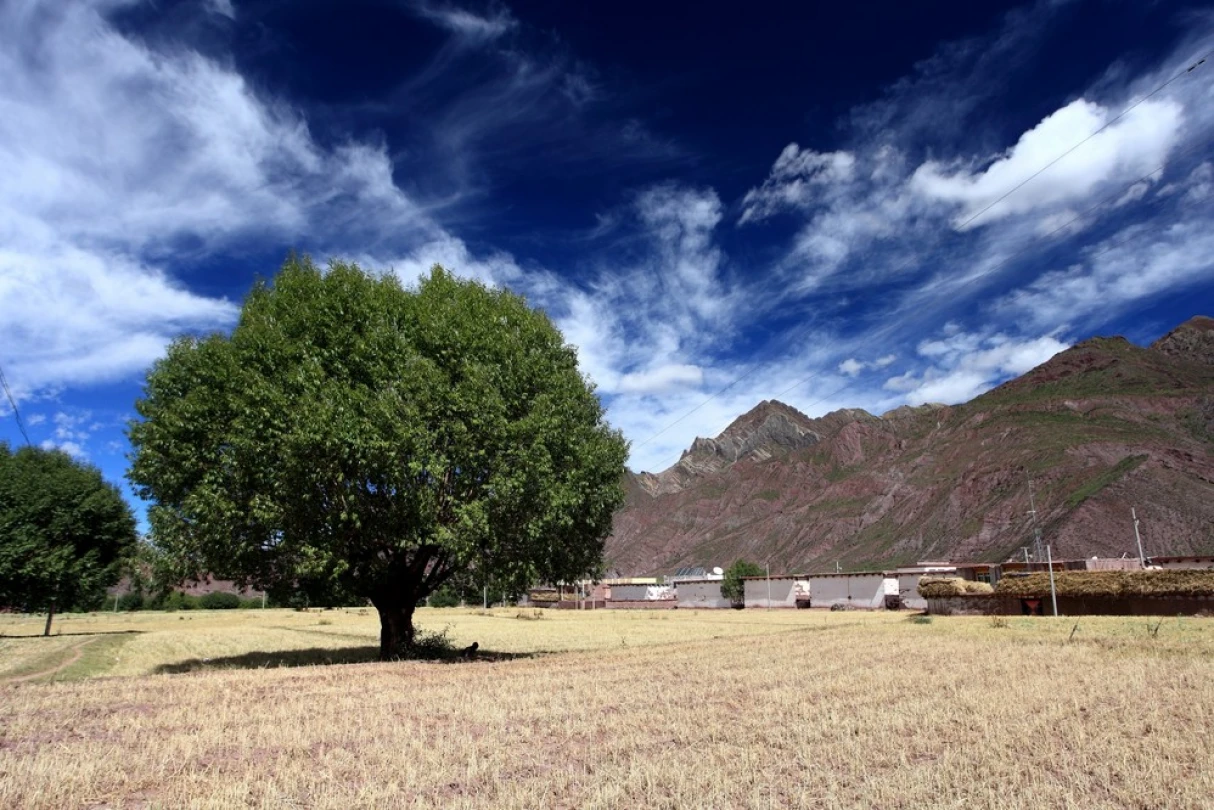
Big Bear and Little Cat Explore China: [A Self-Guided Tour of the Shangri-La Region: That Sky, So Blue It Feels Unreal!]
Big Bear and Little Cat Explore China: [A Self-Guided Tour of the Shangri-La Region: That Sky, So Blue It Feels Unreal!] Prologue: Why Shangri-La? In September 2011, my friend and I followed the Yunnan-Tibet Highway into the Greater Shangri-La region. Six days of travel, without…
Continue reading...
September: Finding Unexpected Warmth in Yunnan (Kunming, Dali, Shuanglang, Lijiang, Lugu Lake)
September: Finding Unexpected Warmth in Yunnan (Kunming, Dali, Shuanglang, Lijiang, Lugu Lake) Foreword: One Person's Journey, A Crowd's Story Before I set off, like every first-time solo traveler, I printed out a thick stack of travel guides and rehearsed countless possible scenarios in my head—getting…
Continue reading...
Dreaming of Lijiang, Dreaming of Shangri-La: A Journey That Lets Your Soul Breathe Deeply
Dreaming of Lijiang, Dreaming of Shangri-La: A Journey That Lets Your Soul Breathe Deeply Life is like a long trek. We're always rushing through the concrete jungle, searching for a glimmer of light in the monotony of our days. Then one autumn, I heard the…
Continue reading...