Yunnan, We've Finally Arrived!
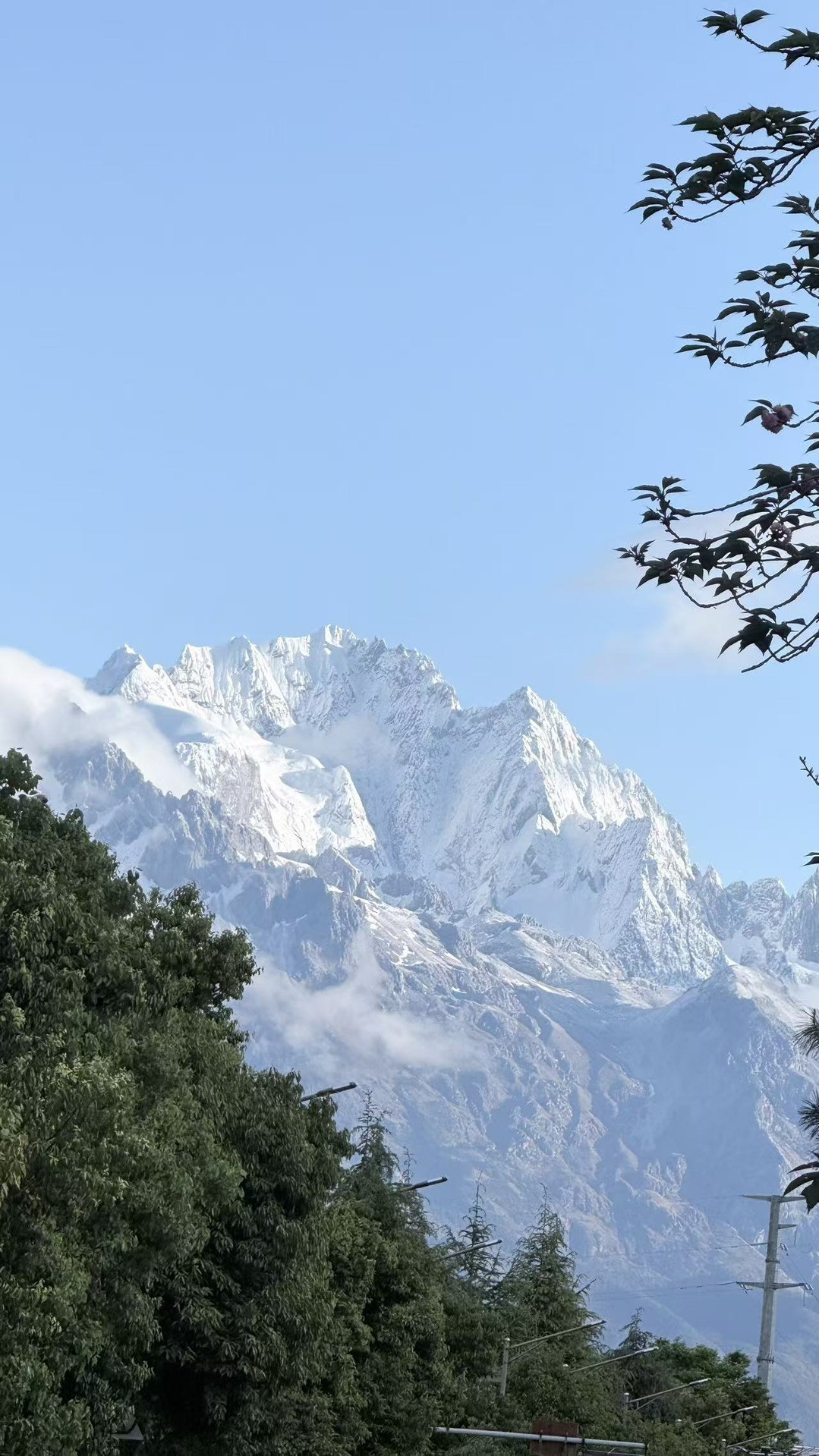
Yunnan, We've Finally Arrived!
Hugo's Bistro
Yunnan had been on my travel wish list for years. There were several reasons for the delay. First, there are so many travel routes in Yunnan that I suffered from a bit of choice paralysis. Second, transportation in Yunnan wasn't well-developed in earlier years, making independent travel inconvenient. Third, and most concerning to me, Yunnan has long been associated with tourist traps and poor online reviews—who wants to spend money just to suffer?
This year, with Japan off the table and tensions rising in Europe and the Middle East, I put my overseas travel plans on hold.
So, Yunnan it was! After careful comparison, I chose the Kunming-Dali-Lijiang route. I checked with AI assistants, and they confirmed that April to May offers the most pleasant weather in these cities. Time to go!
First Stop: Kunming
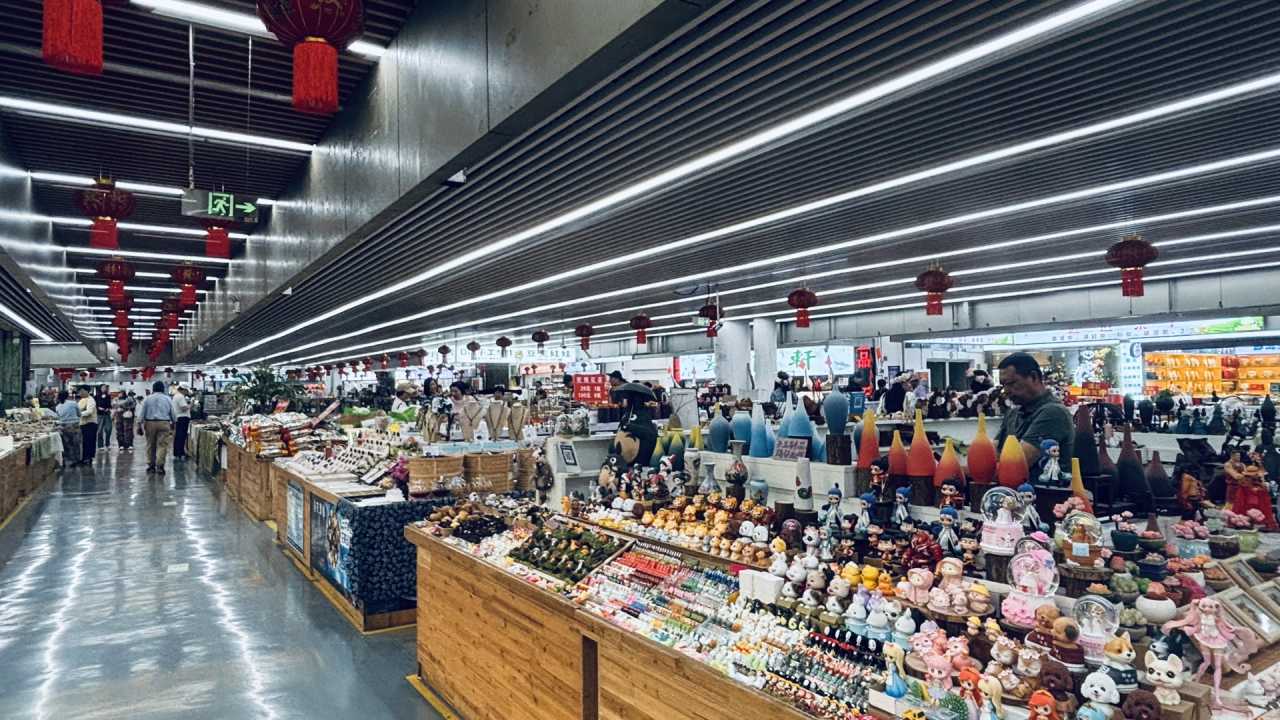
Kunming is the capital of Yunnan Province and serves as a transportation hub for tourism in the region. In recent years, many high-speed rail lines have opened, greatly improving access to surrounding cities.
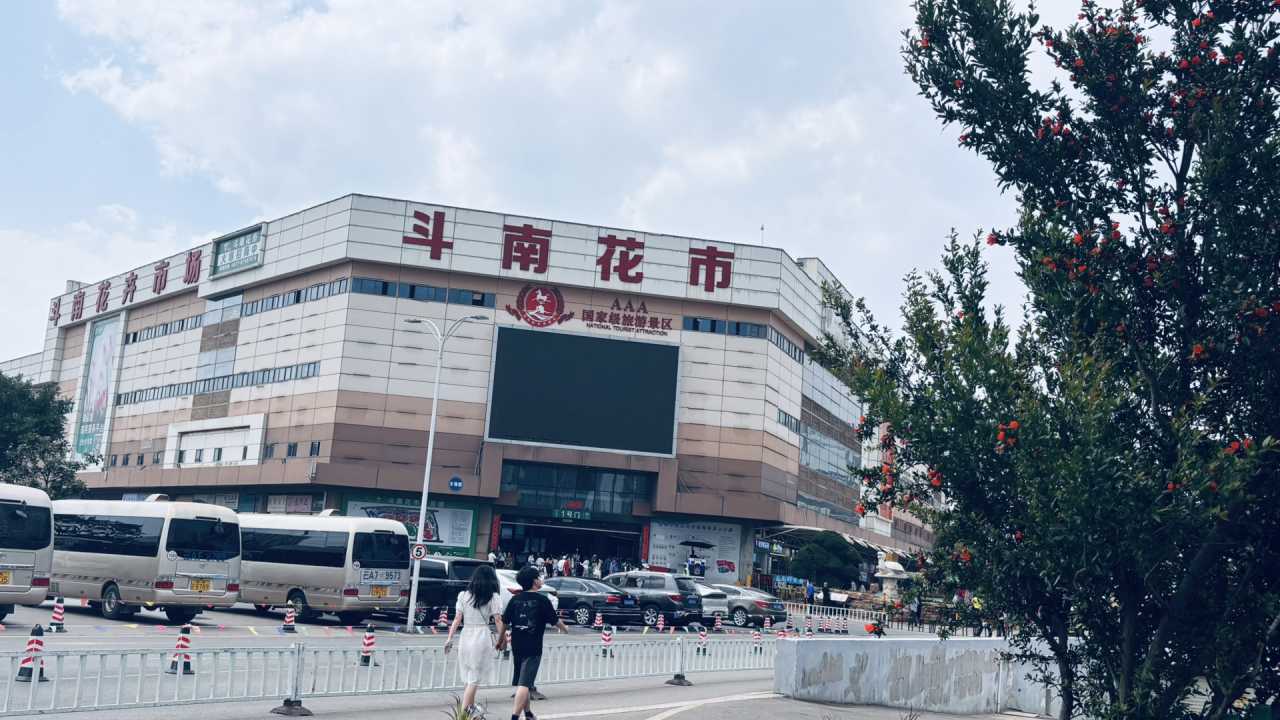
Attraction 1: Dounan Flower Market
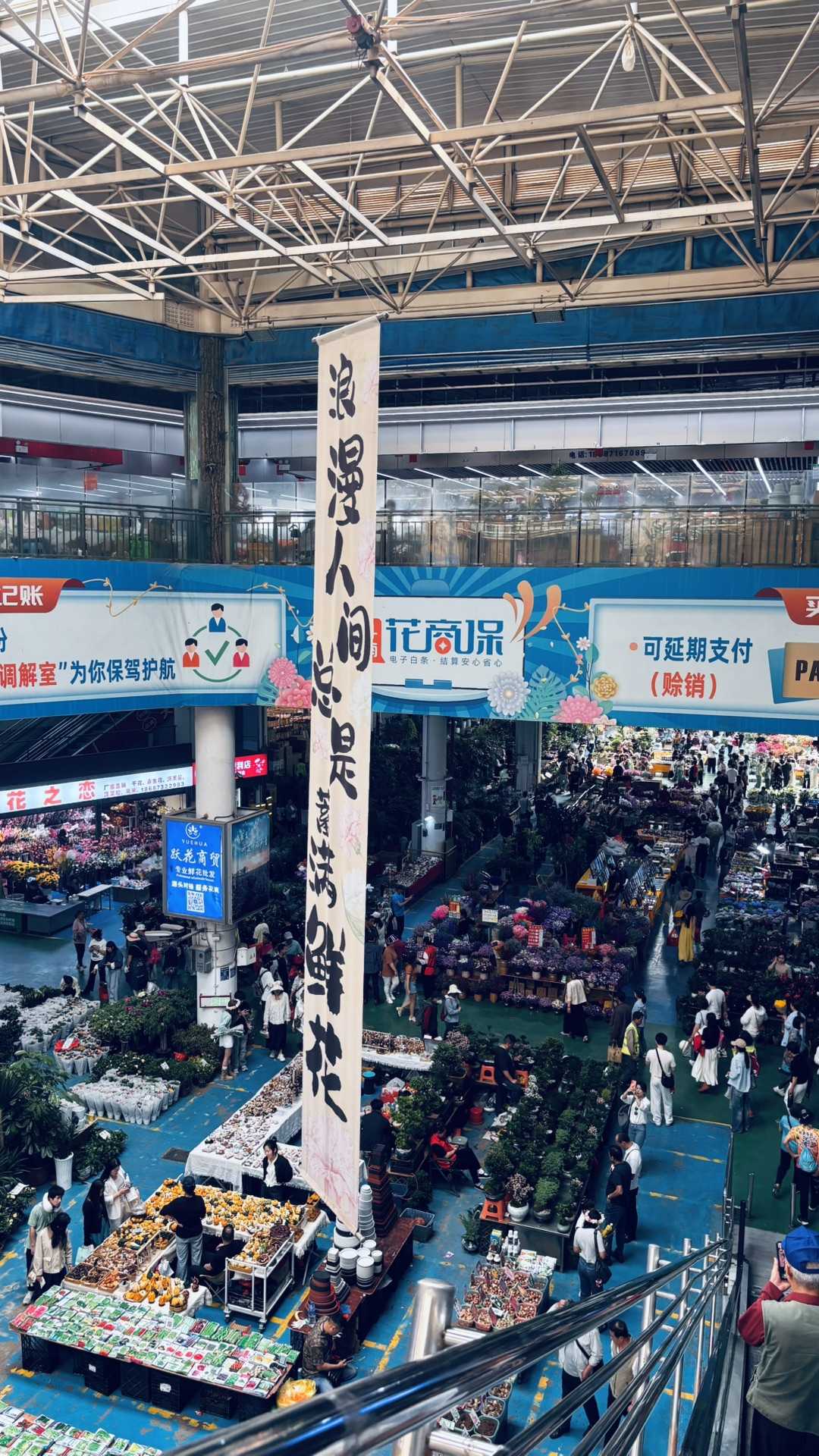
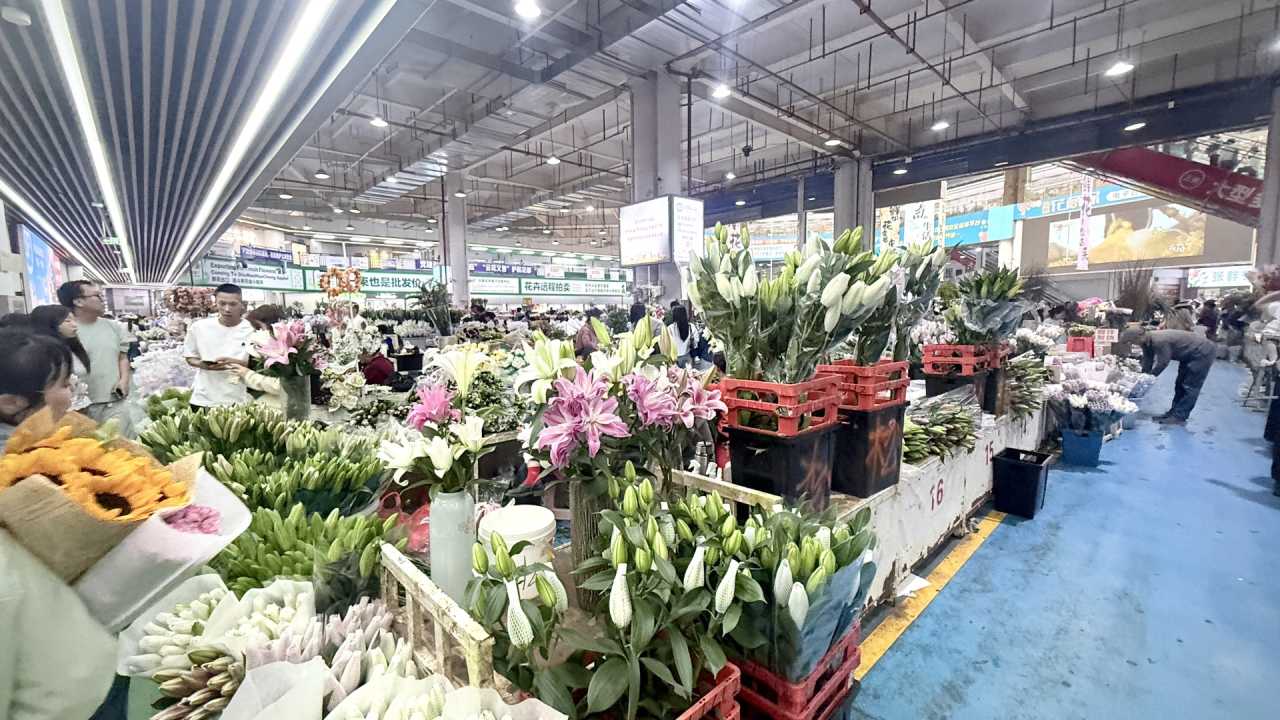
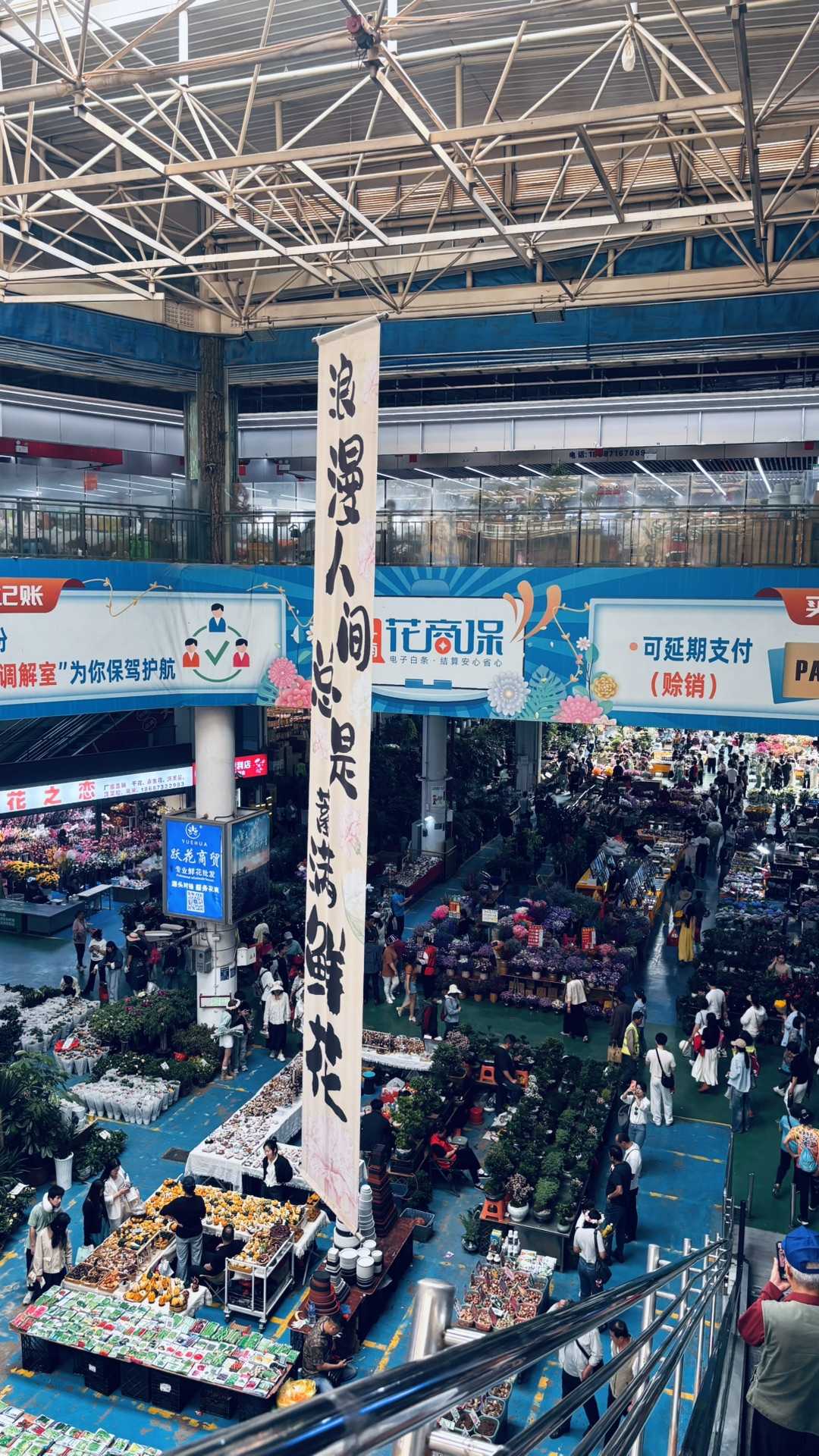
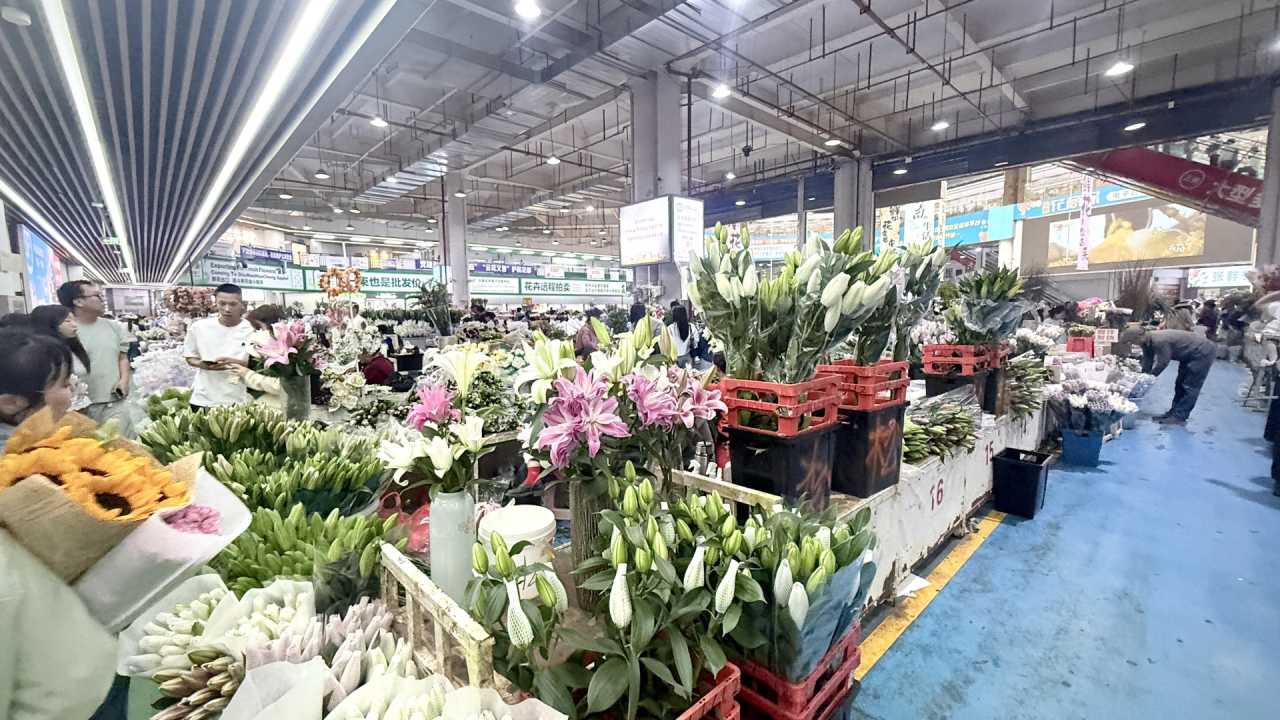
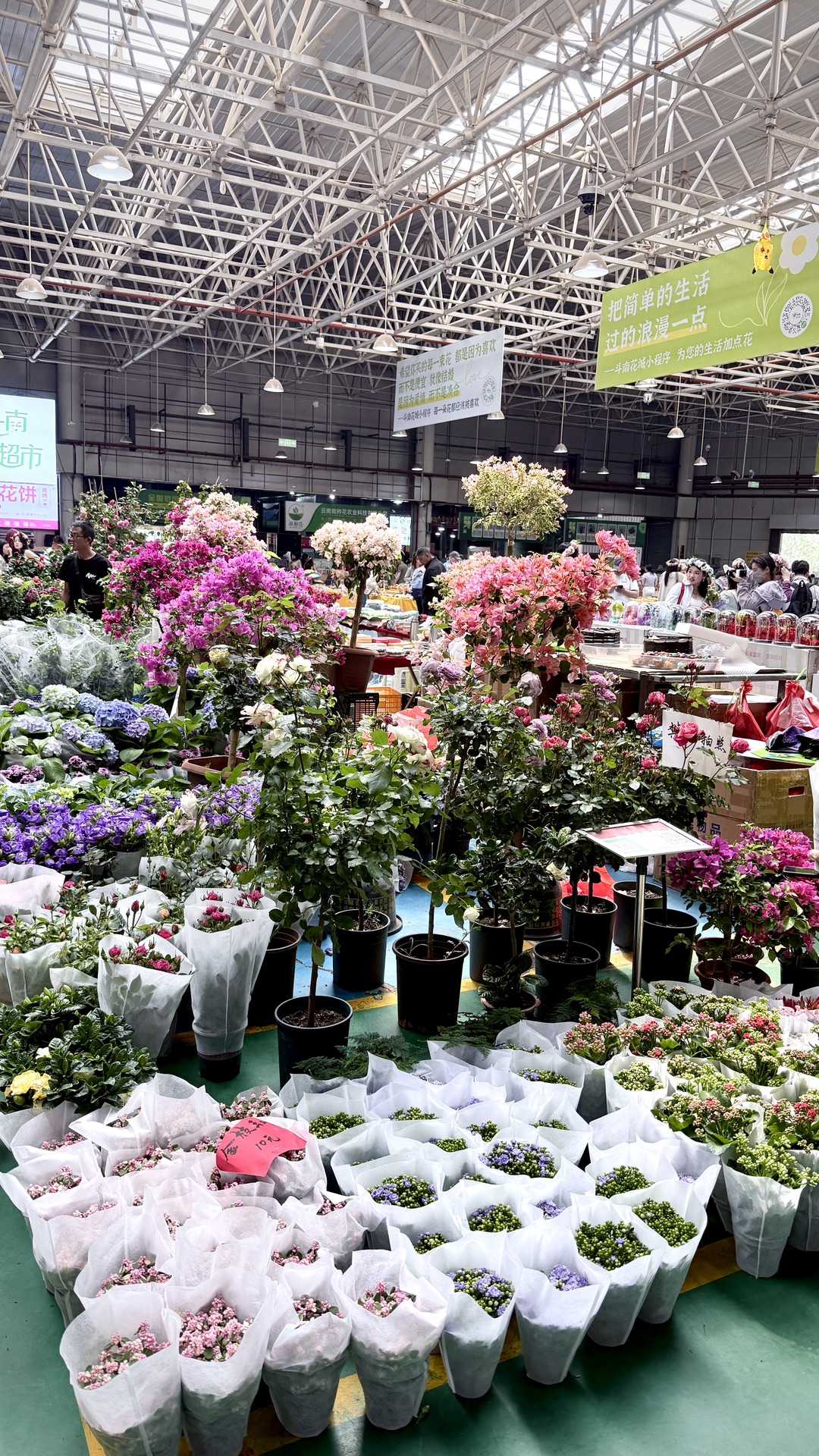
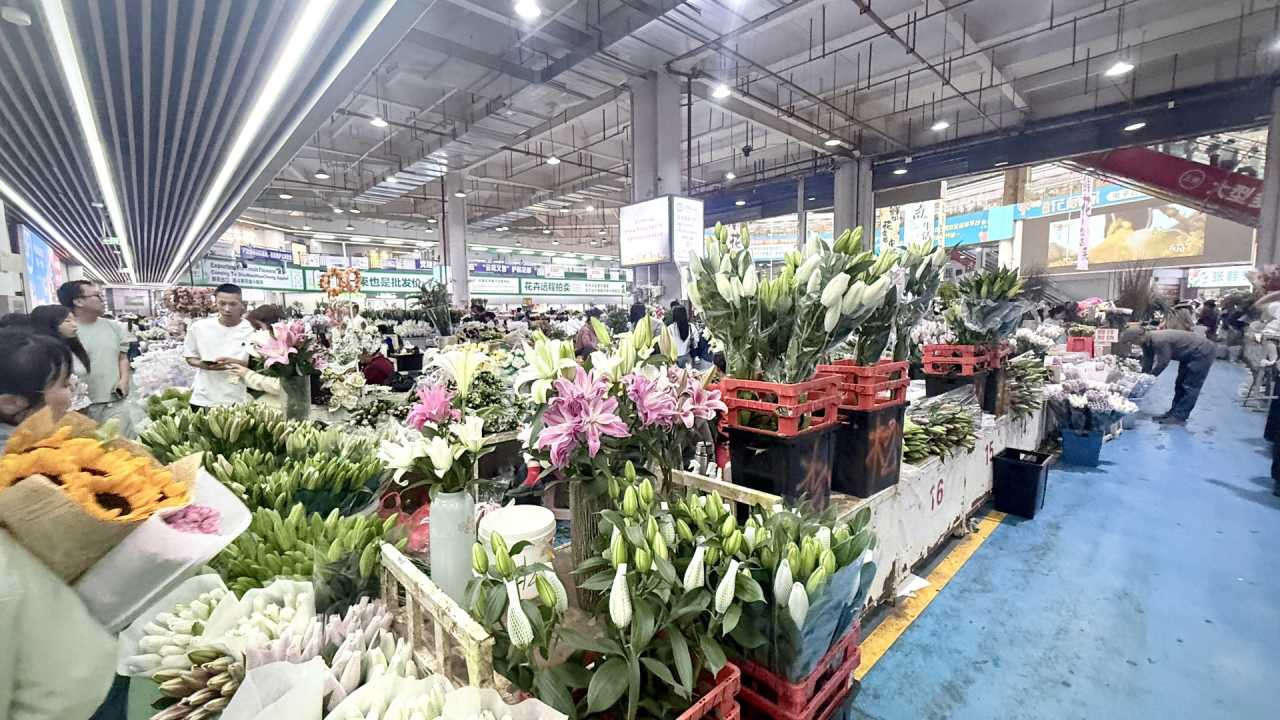
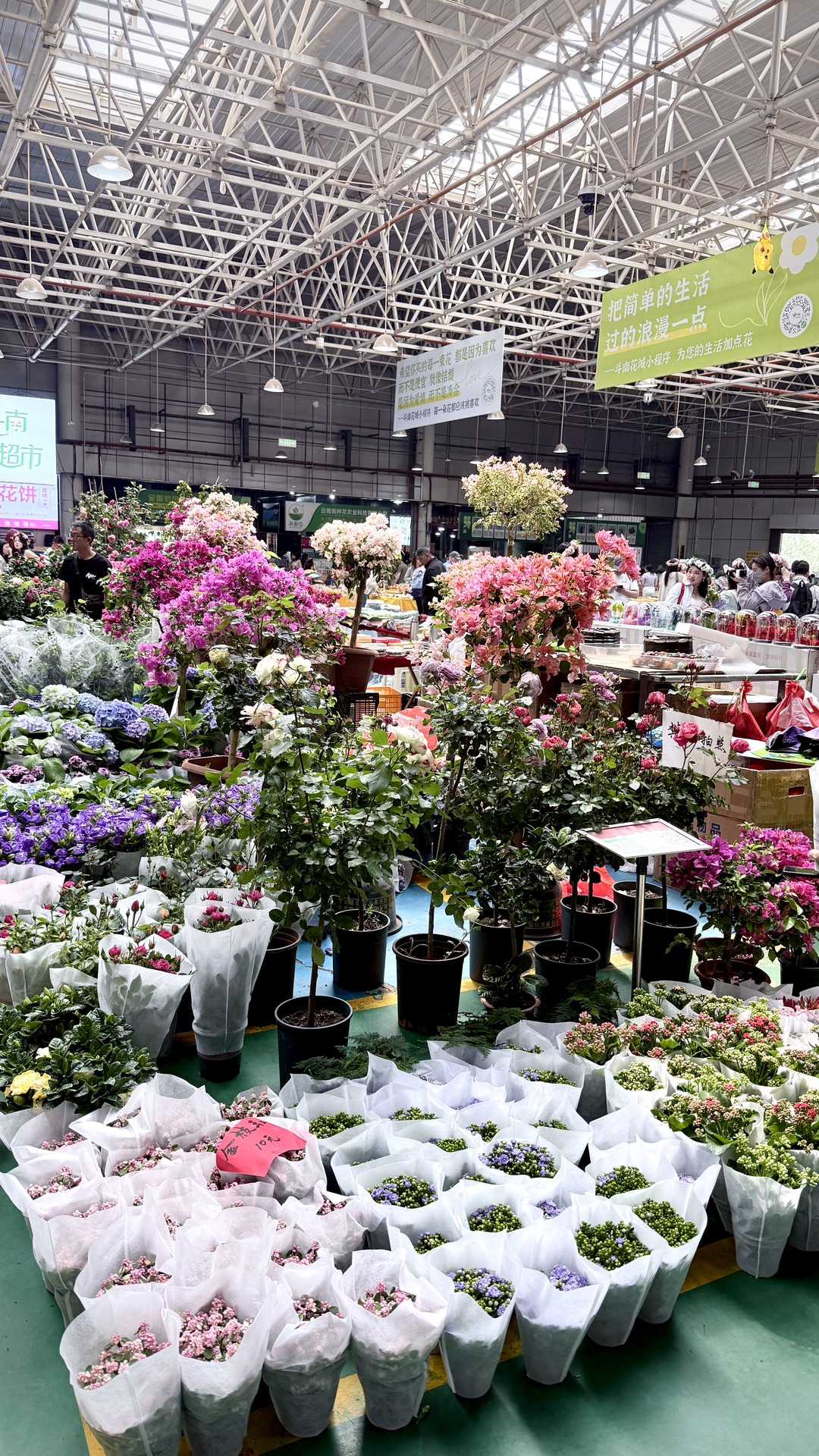
Kunming truly deserves its nickname "Flower City." The famous Dounan Flower Market has become a comprehensive flower trading platform integrating trading, exhibitions, research, warehousing, and logistics. It's the largest flower market in Asia and the second largest in the world. Apparently, 7 out of every 10 fresh flowers sold nationwide come from Dounan.
Whenever I visit a new place, I love to see what makes it unique, so Dounan Flower Market was a must-visit.
During the day, the market is mostly filled with tourists like me who enjoy the spectacle. Every night, over 10,000 people come to trade—just imagine the scene!
With such a wide variety of flowers and well-developed logistics, I often buy seasonal flowers online myself. Being here in person made me even more eager to shop.
The second floor features succulents and handicrafts.
Attraction 2: Kunming Old Street
On the way back to the hotel from Dounan Flower Market, we passed by this old street. We usually skip old streets and ancient towns during our travels because they tend to look the same, sell the same things, and are equally crowded and noisy.
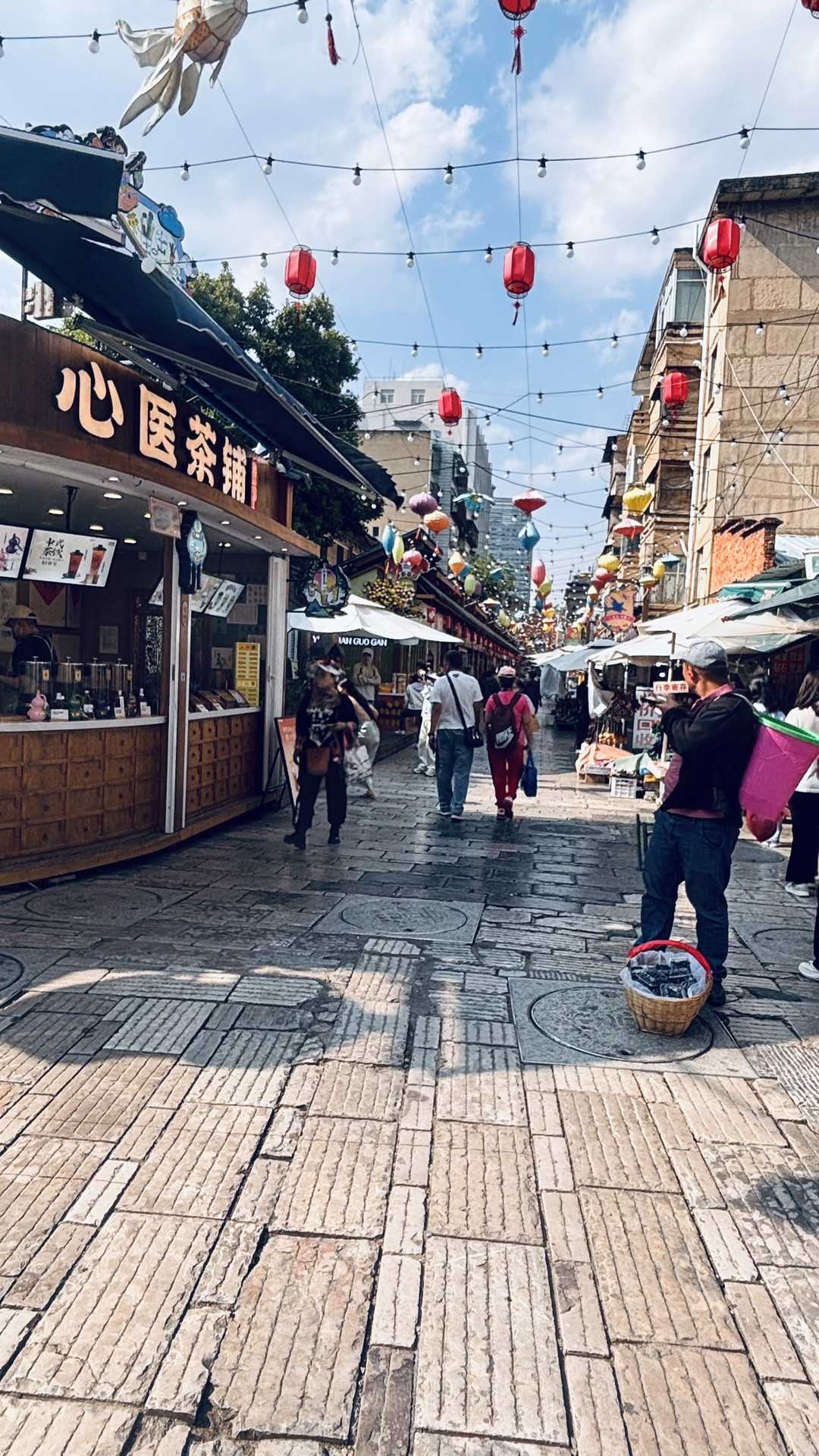
What made us stop was a violin displayed by the roadside—it marked the former residence of Nie Er!
This building faces west, with two bays in width and two in depth. The ground floor originally housed a traditional Chinese medicine shop run by Nie Er's parents. During the Republican era, part of the building facing the street was demolished. What remains are two shop fronts with four rooms upstairs and downstairs. Nie Er was born here.
The exhibition showcases Nie Er's life and the creation process of the "March of the Volunteers" (义勇军进行曲), China's national anthem.
Attraction 3: National Southwestern Associated University
This was the place I most wanted to visit in Kunming. I had previously read "The Diary of Mei Yiqi at National Southwestern Associated University," which records what is known as "the Long March of Chinese education history"—the arduous journey of relocation, campus construction, and operation. It was deeply moving! I had always wanted to see the place where so many famous scholars, writers, and intellectuals lived and worked.
The university is located within Yunnan Normal University. The campus is lush with green grass, birds singing, and flowers blooming. A statue of Mr. Wen Yiduo stands quietly here.
This school produced two Nobel Prize winners in Physics, eight recipients of the "Two Bombs, One Satellite" Meritorious Service Medal, and 175 academicians.
This classroom is the only remaining rammed-earth wall classroom of National Southwestern Associated University. It's said that Liang Sicheng participated in the design of these simple school buildings. Due to wartime material shortages, the plans were simplified multiple times, ultimately using earth walls and iron roofs.
During one heavy rain, the noise from the iron roof was so loud that students couldn't hear the lecture. Chen Daishan wrote "Class suspended to enjoy the rain" on the blackboard, then sat upright with the students, waiting for the rain to pass.
The restored school buildings maintain their original appearance.
Attraction 4: Yunnan Military Academy
The Yunnan Military Academy is about 700 meters from Yunnan University. I hurried over early in the morning hoping to see the guard changing ceremony. Unfortunately, it was under major renovation, with only a small open area at the entrance accessible. I saw nothing at all—yet the website showed it was open as usual. Such a disappointment for travelers who had come from afar!
Feeling disappointed, I returned to Yunnan University. This famous institution was so beautiful that it instantly lifted my spirits!
The long staircase leading to Huize Hall has 95 steps and is a landmark of Yunnan University. Built in French style, it's also known as Dragon Gate Road, symbolizing the "nine-five" auspicious pattern in Chinese culture.
Yunnan University Bell Tower
Ginkgo Avenue: About 300 meters long, with golden leaves falling from November to December.
Zhigong Hall: The main building of the Ming and Qing Dynasty Yunnan Examination Hall. Wen Yiduo delivered his last speech here—a site rich in historical significance.
In the afternoon, we left Kunming for our next destination.
Second Stop: Dali
It takes just two hours by high-speed rail from Kunming to Dali. The main attraction here is Erhai Lake. According to Baidu, it's named "Erhai" (Ear-shaped Sea) because of its shape resembling a human ear. Although called a "sea," it's actually a lake. Legend has it that the Bai people had never seen the sea, and to express their longing for it, they named it Erhai.
From this pavilion, you can enjoy a panoramic view of Erhai Lake.
Climbing the steps from the south gate of Erhai Park offers a bird's-eye view of the lake. After descending the 300-plus steps to the north gate, you cross the road and arrive at the lakeshore.
The area around Erhai Lake is developing rapidly. It's said there are over 1,000 homestays and 50 to 80 coffee shops nearby, showing the potential of tourism development.
Early the next morning, we arrived at Xingsheng Bridge on the lakeshore. This bridge spans the Xi'er River, connecting the north and south banks of Erhai Lake, serving both as a transportation hub and a popular photo spot.
Design Inspiration: The bridge draws from Bai traditional culture. The pier design mimics the Three Pagodas of Chongsheng Temple in Dali. The bridge railings feature golden-winged roc birds and butterfly motifs, symbolizing good fortune and protection.
With its strong European retro style, the bridge tower resembles "Big Ben," earning Dali the nickname "Little Europe."
We said a hasty goodbye to Dali, regretting not visiting Yunxiang Mountain for a view of Erhai Lake. This scenic spot combines alpine meadow views, luge racing, and cliff chapel photo opportunities, offering a 270-degree panorama of Cangshan Mountain, Erhai Lake, and the city skyline. I hadn't done my research well enough—by the time locals recommended it, it was too late. I'll comfort myself with two classic photos.
Third Stop: Lijiang
The high-speed rail from Dali to Lijiang also takes about two and a half hours—very convenient. I booked a hotel on the outskirts of the ancient town for four days and three nights. The hotel package included pickup from the train station and drop-off at the airport, which was very convenient. I'm glad I didn't stay inside the ancient town—first, the surrounding area is very congested, and ride-hailing cars can't get in; second, the streets are paved with stone slabs, making it difficult to drag luggage.
Lijiang is the most important stop on the Kunming-Dali-Lijiang route. It has 19 A-level tourist attractions, including representative ones: Two Mountains (Jade Dragon Snow Mountain, Laojun Mountain), One City (Lijiang Ancient Town), One Lake (Lugu Lake), One River (Jinsha River), One Culture (Naxi Dongba Culture), and One Ethnic Flavor (Mosuo Customs).
Attraction 1: Lugu Lake
Lugu Lake is the third largest deep-water lake in China, with a small island in the middle. Legend has it that the "Kingdom of Women" once existed there. The area around Lugu Lake is mainly inhabited by Mosuo, Yi, and Pumi people, along with about 13,000 people from seven ethnic groups including Mongolians. Its beautiful natural environment and unique ethnic customs make it a famous tourist destination.
We booked a small group tour of six people through Mafengwo. We set off from Lijiang early in the morning with a Tibetan driver. The route passed scenic spots like Lijiang Eighteen Bends and the Jinsha River, with many winding roads.
Jinsha River Gorge, Xiaoliangshan Mountain
The white lines on the mountains are all ring roads. We had to cross three mountains.
From the observation deck, we could see Lugu Lake in the distance. Although the weather wasn't great, the view had an ink-wash painting quality.
Marriage Bridge and Grass Sea: A 300-meter wooden bridge spans thousands of acres of reed marsh. It's a symbol of the Mosuo walking marriage custom. In spring, the mountains are lush and the reeds golden. With sunshine, it would have been even more beautiful!
A photo at Lover's Beach
Pig-trough boats gliding across the glassy water surface. The lake was a deep blue, the mountains peaceful.
One last photo of Lugu Lake from the observation deck, keeping its gentle beauty in memory.
Attraction 2: Jade Dragon Snow Mountain
In the Naxi language, Jade Dragon Snow Mountain is called "Oulu." Its thirteen snow-capped peaks stretch continuously like a "jade dragon" soaring and dancing, hence the name.
The developed tourist areas of Jade Dragon Snow Mountain include: Glacier Park, Ganhaizi, Blue Moon Valley, Spruce Meadow, and Yak Meadow.
Having climbed Switzerland's Jungfrau and Xinjiang's Muztagh Ata, and experienced the discomfort of altitude sickness, we chose the gentler elevations of Spruce Meadow and Blue Moon Valley.
Taking a ride-hailing car from Lijiang to Jade Dragon Snow Mountain is very convenient—no need to join a tour group. From the visitor center, you can see the queueing order for all scenic spots. The park management is good, arranging vehicle access according to reservation times and activities.
Spruce Meadow is at an altitude of 3,240 meters. It's a forest clearing on the eastern side of Jade Dragon Snow Mountain, covering about 0.5 square kilometers.
Unfortunately, the grass hadn't turned green yet, and the weather was gloomy, making the whole scene look gray.
Between Ganhaizi and Spruce Meadow lies a valley with dense forests and clear streams. The river at the bottom, fed by clear springs, is called Baishui River (White Water River). It gets its name because the riverbed and terraces are composed of white marble and limestone fragments, appearing grayish-white. The clear water flowing over the rocks also appears white. The water originates from melted glacial snow at higher elevations.
As the river in Blue Moon Valley flows, it's blocked by mountain terrain, forming four larger water bodies: Jade Liquid Lake, Mirror Pool Lake, Blue Moon Lake, and Listening to Waves Lake. The shores are lush with vegetation, backed by distant snow-capped peaks.
According to Baidu: "The glacial meltwater of Jade Dragon Snow Mountain flows through a valley on the eastern slope. Because the moon is reflected in the blue lake water against the blue sky, it's called 'Blue Moon Valley.'"
But to me, the lake water looked green!
Fourth Stop: Shangri-La
Today we hired a car to Shangri-La for two days. The driver was Naxi. The advantage of hiring a car is controlling your own schedule and choosing your preferred sightseeing style.
Attraction 1: Tiger Leaping Gorge
The south bank of Tiger Leaping Gorge is Jade Dragon Snow Mountain, and the north bank is Haba Snow Mountain. Constricted by the high mountains on both sides, the river narrows to just over 50 meters after entering the gorge. At its narrowest point, a tiger could leap across—hence the name.
Tiger Leaping Gorge is divided into three sections: Upper Tiger Leaping, Middle Tiger Leaping, and Lower Tiger Leaping. Upper Tiger Leaping has escalators for easy access. Middle and Lower Tiger Leaping are mostly hiking routes.
This is the narrowest section of the entire gorge—the river surface is only about 20 meters wide.
A huge boulder stands in the middle of the river, about 13 meters high. Legend says a tiger once used this rock to leap to the opposite bank, giving it the name Tiger Leaping Rock, and the gorge its name. The rock splits the torrent in two.
The guide said not to take photos directly under the "tiger's mouth," but crowds of tourists kept rushing up anyway.
A small path along the ridge was once part of the ancient Tea Horse Road used by horse caravans.
The Jinsha River flows southward, running parallel with the Lancang River and the Nu River. At the "First Bend of the Yangtze River" in Shigu, Lijiang, the Jinsha River turns eastward, cutting between Jade Dragon Snow Mountain and Haba Snow Mountain.
Attraction 2: Potatso National Park
Shangri-La Potatso National Park is China's first officially designated national park.
I specially downloaded this guide map online, looking forward to thoroughly exploring this famous national park.
We took the scenic area bus from the visitor center. After about half an hour of driving through wilderness and dead trees, with light rain falling, it felt quite desolate!
Many areas of the park are nature reserves still under development. Only Shudu Lake and Bita Lake are open to the public.
It wasn't until we reached Shudu Lake that green vegetation and the lake finally appeared.
"Shudu" in Tibetan means "cheese as solid as stone."
Shudu Lake offers three routes: a 3.3-kilometer wooden boardwalk along the south shore, a 2.2-kilometer ecological hiking trail at Shudugang, and a 3-kilometer cultural experience trail along the north shore featuring Tibetan nomadic culture. You can also take a boat tour.
We only walked on the boardwalk for a while before heading back to the visitor center, quite disappointed.
Attraction 3: Dukezong Ancient Town
Dukezong Ancient Town is laid out with Sifang Street as its main axis, divided into four sections facing east, west, south, and north. Each section leads to different places. The terrain resembles a blooming eight-petal lotus, with three main streets (Beimen Street, Jinlong Street, Cangfang Street) and 33 alleys crisscrossing.
"Dukezong" is an ancient Tibetan place name meaning "Moonlight City." It faces the "Sunlight City" by the Naizi River, where the sun rises earliest. Together, they're called "the sun and moon in the heart."
Dukezong Ancient Town was not only a必经之地 (necessary passage) on the Yunnan-Tibet Tea Horse Road but is also one of the best-preserved and largest Tibetan residential communities in China.
Dukezong Flower Lane is located at the north gate of Dukezong Ancient Town, offering visitors a Tibetan cultural experience. Walking into Dukezong Flower Lane, you can see traditional craftsmen's Tibetan-style paintings and wood carvings everywhere. The intangible cultural heritage experience center showcases techniques like Nixi black pottery, Dongba papermaking, Mani stone carving, Songlin Tibetan incense, and Kasa Tibetan knives.
On January 11, 2014, a major fire destroyed large areas of Tibetan residential buildings in Dukezong Ancient Town, causing losses of over 100 million yuan. After the disaster, the ancient town was restored and rebuilt, officially reopening on January 1, 2016.
Guishan Park is located in the center of Dukezong Ancient Town. Climbing to the top offers a panoramic view of the ancient town. In the middle of Guishan Mountain is the Dragon King Pavilion, flanked by statues of Laozi and Confucius. The coexistence of Confucianism, Buddhism, and Taoism in one place fully reflects the multicultural coexistence and integration of Diqing Shangri-La.
On the west side of Guishan Mountain is Baiji Temple. At the top stands the Great Buddha Temple, a three-story building constructed using Han-style pavilion techniques.
On the north side of Big Guishan Mountain is the Auspicious Wish-Making Prayer Wheel, the world's largest gilded pure copper prayer wheel. Built in 2002, it has a base diameter of 10 meters, a height of 21 meters, and weighs 60 tons. It's a commemorative and landmark structure for the renaming celebration of the former Shangri-La County. The cylinder is copper-plated with relief carvings—a lotus seat at the bottom, followed by the Eight Auspicious Symbols, the unity of 56 ethnic groups, and other sculptures. It's listed in the Guinness World Records.
I joined the crowd turning the prayer wheel, pulling the rope. Whether it was my deep wish for blessings or the devout atmosphere, I found myself in tears...
Attraction 4: Songzanlin Monastery
Ganden Songzanlin Monastery is the largest Tibetan Buddhist monastery in Yunnan Province and holds a significant position throughout the entire Tibetan region. It's known as the "Little Potala Palace."
Built on a mountainside, its shape resembles an ancient castle, embodying the essence of Tibetan plastic arts. It's also called the "Tibetan Art Museum."
The Fifth Dalai Lama personally named it "Ganden Songzanlin."
Some travel guides mention 147 steps, interpreted as symbolizing "wholeheartedly going to the monastery to pray."
In front of the monastery is Lhamo Yangtso Lake, where the lake and mountains reflect each other—an excellent spot for photographing the monastery's reflection. If you have energy, you can buy a one-way ticket to the scenic area and walk back along the hiking trail, taking photos along the way. When you see the sign for the visitor center, head back to the main road.
Monastic Organization: The monks' organization is called "Khamtsen," meaning "monastic community" in Tibetan. Based on the monks' birthplace or origin, the monastery's monks are divided into groups, forming regional organizations. Each Khamtsen is led by an elder monk, with administrative staff like Nianwa and Gegan managing the region's administrative, religious, and economic affairs relatively independently.
Attraction 5: Napahai Lake
After our experience at Potatso National Park, our expectations for Napahai Lake were much lower. I checked online: the so-called "horseback riding lake tour" is basically a rip-off. With ABC tour routes, Route B costs over 200 yuan, and the horse riding and scenery simply don't justify the price. "Come once, never again," one review said. "The promotion is too good, the reality too disappointing!" Scared off, we asked the driver to take us directly to the Alpine Botanical Garden observation deck.
Just look from afar—no need to go down to the lakeshore, right?
Today we took the expressway from Shangri-La back to Lijiang. Something happened on the road that I feel I must warn fellow travelers about: At the Lugu Lake observation deck scenic area, there were many stalls selling medicinal herbs and local specialties. Two Cantonese-speaking tourists wanted to buy Gastrodia elata (tianma). They negotiated with the stall owner: no invoice, could they get a discount if they bought all the stock? The owner agreed—no invoice, 5 yuan per gram. The deal was done. The owner took the money and immediately used a grinder to process the Gastrodia into powder. I did the math on the side: 5 yuan per gram, 500 grams would cost 2,500 yuan!
Last night at our hotel in Shangri-La, the lobby display case also had various medicinal herbs and local products. I spotted a bottle of Gastrodia elata priced at 150 yuan per 500 grams. I rubbed my eyes and called my husband over to confirm. Yes, that was right.
Today at a service area on the expressway back to Lijiang, I saw another Gastrodia stall. The price: 0.8 yuan per gram, or 400 yuan for 500 grams. Another tourist was asking about it. I couldn't help myself and asked: "What's the difference between wild and cultivated Gastrodia? Why such a big price difference?" The stall owner said, "All Gastrodia is cultivated now. This is the standard price." I winked at the tourist, and he walked away thoughtfully.
We never buy medicinal herbs or local specialties at scenic spots or service areas during our travels. If we want to buy, we go to local supermarkets. Otherwise, you're just throwing your money away.
Last Stop: Lijiang Ancient Town
The UNESCO World Heritage Site "Lijiang Ancient Town" includes Dayan Ancient Town (including Black Dragon Pool), Shuhe Ancient Town, and Baisha Ancient Town, covering an area of 7.279 square kilometers.
The ancient town was built in the late Song and early Yuan dynasties, flourished in the Ming and Qing dynasties, and has a history of nearly 800 years. Its shape resembles a large inkstone, giving it the name "Dayan" (Big Inkstone).
We wandered, looked, photographed, and laughed... The ancient town was like a kaleidoscope, dazzling and overwhelming.
Lijiang Ancient Town—Mu Residence
Listed separately as an attraction, this shows how worthwhile it is to visit.
The Mu Residence was the official mansion of the hereditary Mu chieftains of Lijiang. Now known as the Lijiang Ancient Town Museum, it's located in the Gucheng District of Lijiang City. It's the core building of Lijiang Ancient Town and an important part of the World Heritage Site.
The Mu chieftains held hereditary rule over Lijiang from the Yuan dynasty, through the Ming and Qing dynasties, for 22 generations spanning over 470 years. During its peak in the Ming dynasty, the architecture was magnificent, earning it the reputation of Lijiang Ancient Town's "Grand View Garden." The Ming dynasty traveler Xu Xiake once praised it, saying, "The splendor of the palace rivals that of a king."
Sanqing Hall, the highest point in the residence, offers a panoramic view of Lijiang Ancient Town from the mountaintop.
Mu Zeng was one of the most outstanding chieftains in Mu Residence history. A real historical figure from the Ming dynasty's Wanli period, he once invited Xu Xiake to visit Lijiang. When Xu Xiake became unable to walk due to "both feet failing him," Mu Zeng sent a group of strong men to carry him on a sedan chair. The journey took over 150 days, safely escorting Xu Xiake from Yunnan back to his home in Jiangyin, Jiangsu Province.
The Ming dynasty Mu Residence architecture was grand, modeled after the Forbidden City's layout but facing east instead of south. At its peak, it covered over 120 mu (about 20 acres), with 15 buildings and 162 rooms, including a stage, overhead walkways, family courtyards, corridors, and official guesthouses.
Final Thoughts
The saying "A chosen day is not as good as an accidental one" perfectly applies to travel. Before our trip, I consulted Baidu, AI assistants, and Xiaohongshu (Little Red Book). They all said late April was the best time for the Kunming-Dali-Lijiang route—sunny skies, green grass. But...
On the morning of our last day, my husband said, "We have time. Let's take a walk around." And so...
Black Dragon Pool Park, 7:15 AM: Dark clouds shrouded the peak of Jade Dragon Snow Mountain.
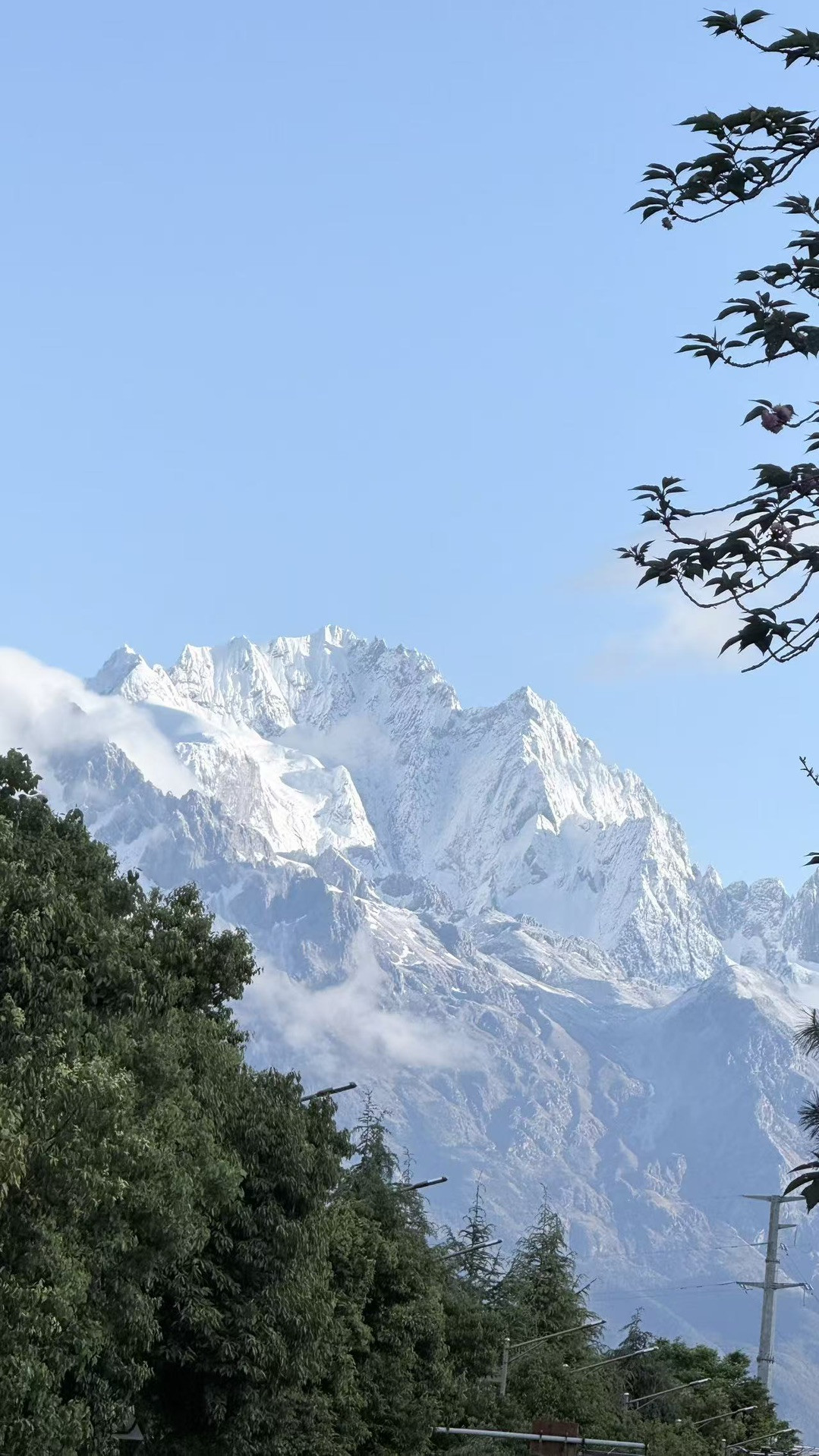
Jade Dragon Snow Mountain emerges
White clouds wrapped around the snow-covered mountain like a white hada (ceremonial scarf).
7:30 AM: The clouds completely dissipated, revealing the unique fan-shaped steep cliffs of Jade Dragon Snow Mountain.
Back at the hotel entrance, I turned around—and there was the snow mountain, right before our eyes!
Yunnan is far from Shanghai, separated by thousands of mountains and rivers. In ancient times, travelers had to cross mountains and rivers, enduring countless hardships over many months to reach such distant lands. Today, we fly through the blue sky and traverse valleys to experience exotic cultures and savor delicious food. Isn't travel truly wonderful?!
This travelogue is copyrighted by @山寨夫人 (Shanzhai Lady). Any form of reproduction requires permission from the author.
© 2026 mafengwo.cn
You should also read:
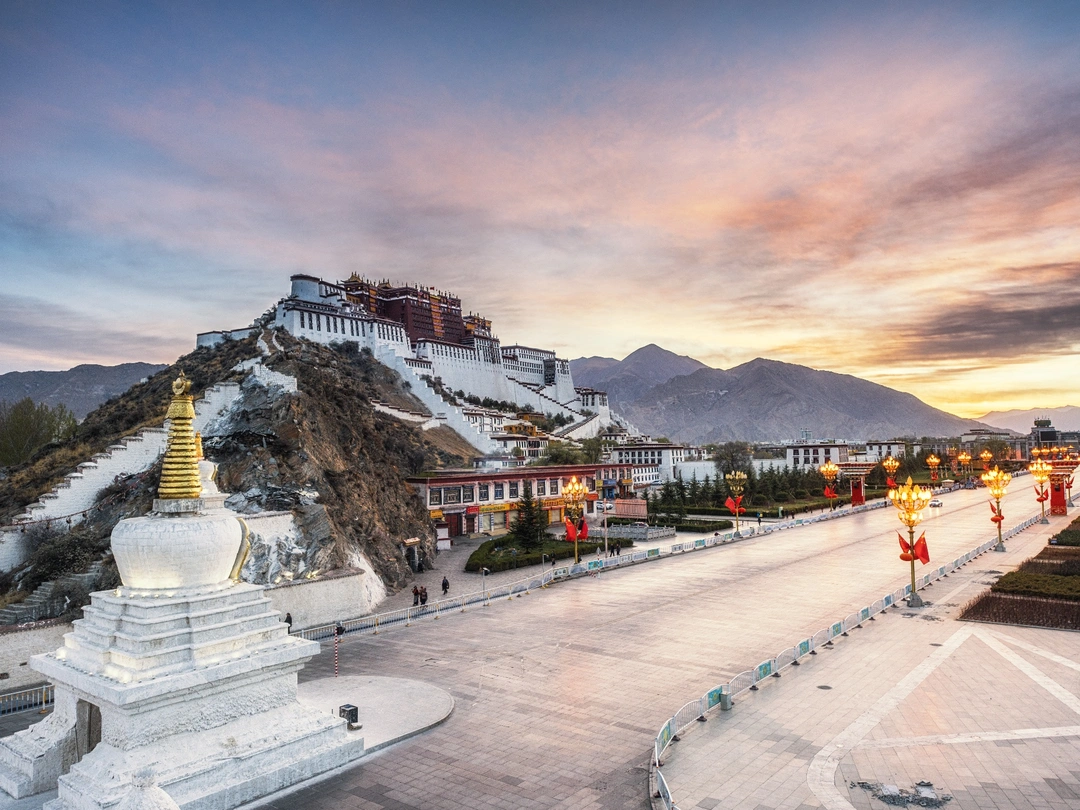
A Pilgrimage of Light and Shadow: Solo Travel Through Yunnan, Western Sichuan, and Tibet in Search of the Soul’s Landscape
A Pilgrimage of Light and Shadow: Solo Travel Through Yunnan, Western Sichuan, and Tibet in Search of the Soul’s Landscape Weibo: @刘三根_ThreeGen | WeChat Official Account: 刘三根 Key Takeaway: This is not your average travel guide. It’s the solo record of a photographer measuring the…
Continue reading...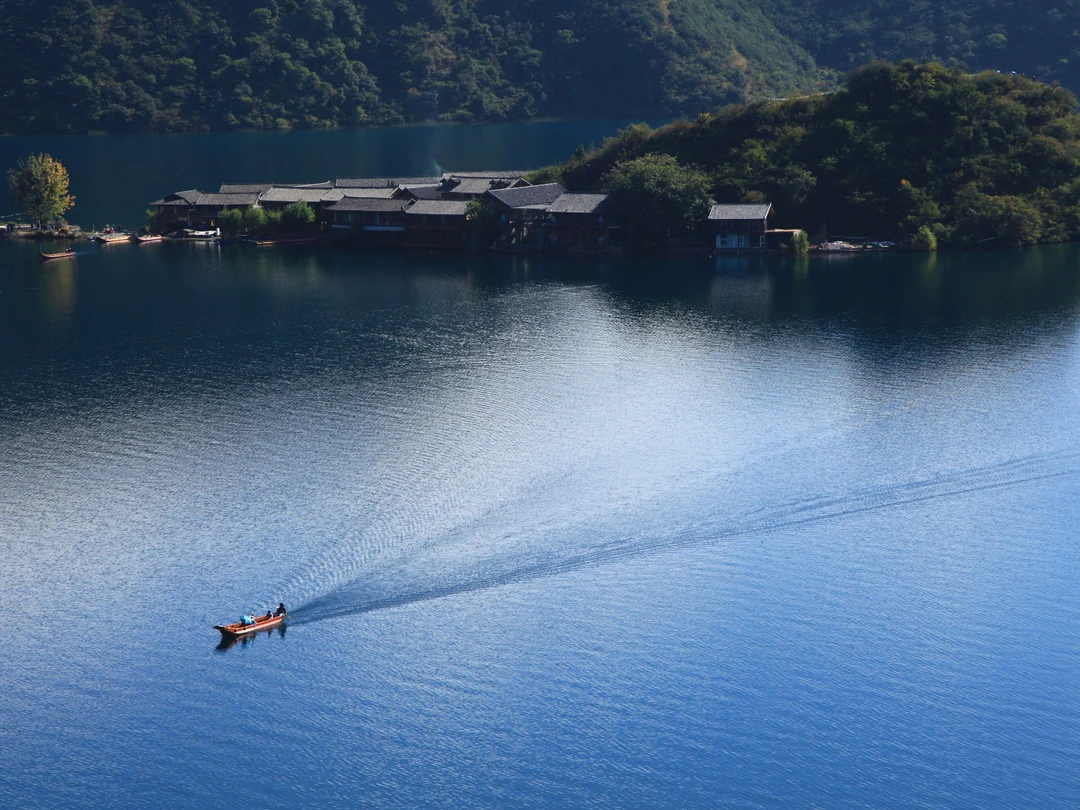
A Long Time Trapped in a Cage, I've Finally Returned to Nature: A 9-Day Escape to Lijiang, Lugu Lake, and Shuanglang
A Long Time Trapped in a Cage, I've Finally Returned to Nature: A 9-Day Escape to Lijiang, Lugu Lake, and Shuanglang Prologue: When Life Becomes a Cage, the Distance Is the Antidote Have you ever had that moment? Every day you repeat the same route,…
Continue reading...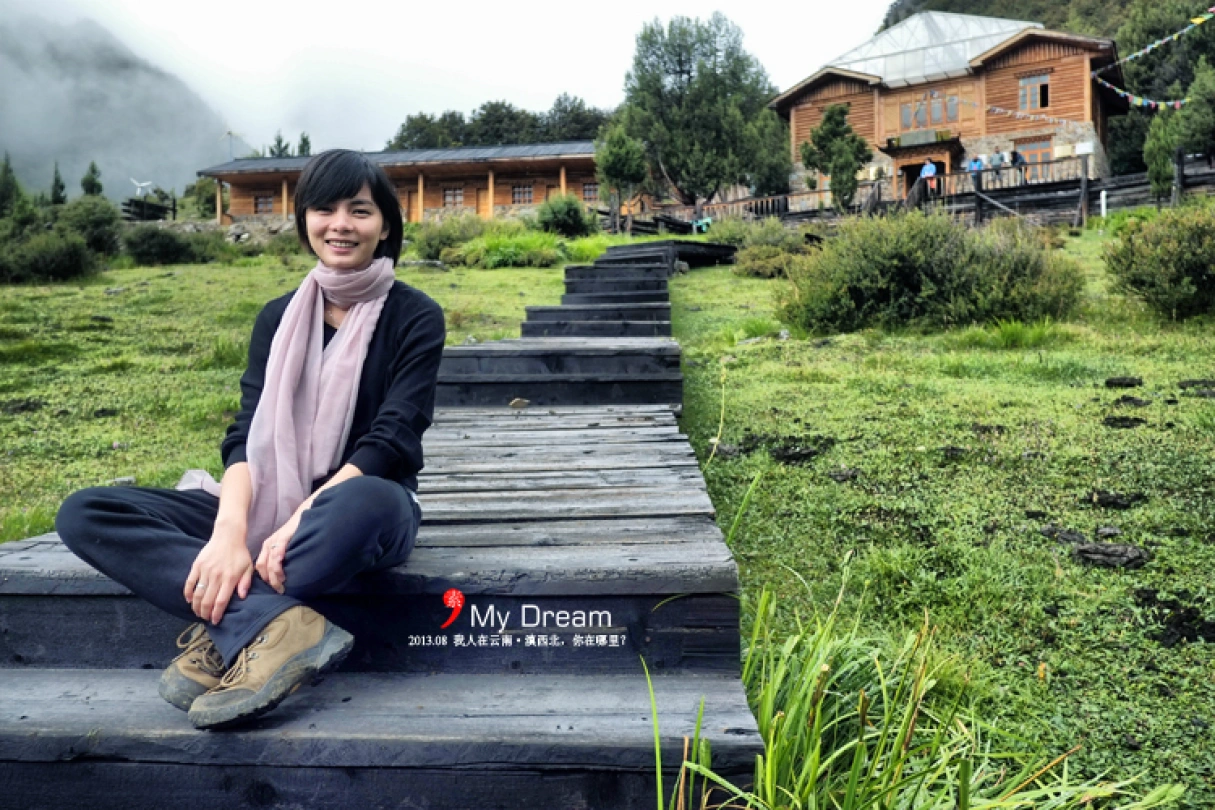
From Resignation to Return: Northwest Yunnan, A Journey of Magical Realism
From Resignation to Return: Northwest Yunnan, A Journey of Magical Realism When "Leaving on a Whim" Meets "The Inevitable Return" For those who love to travel, there's always a restless wind living in their hearts. A few months ago, I quit my job, threw on…
Continue reading...