Yunnan Without Cangshan and Erhai: The Rustic Castle of Maitreya Dongfeng Yun, Hiding a Wild Romance You'd Never Expect
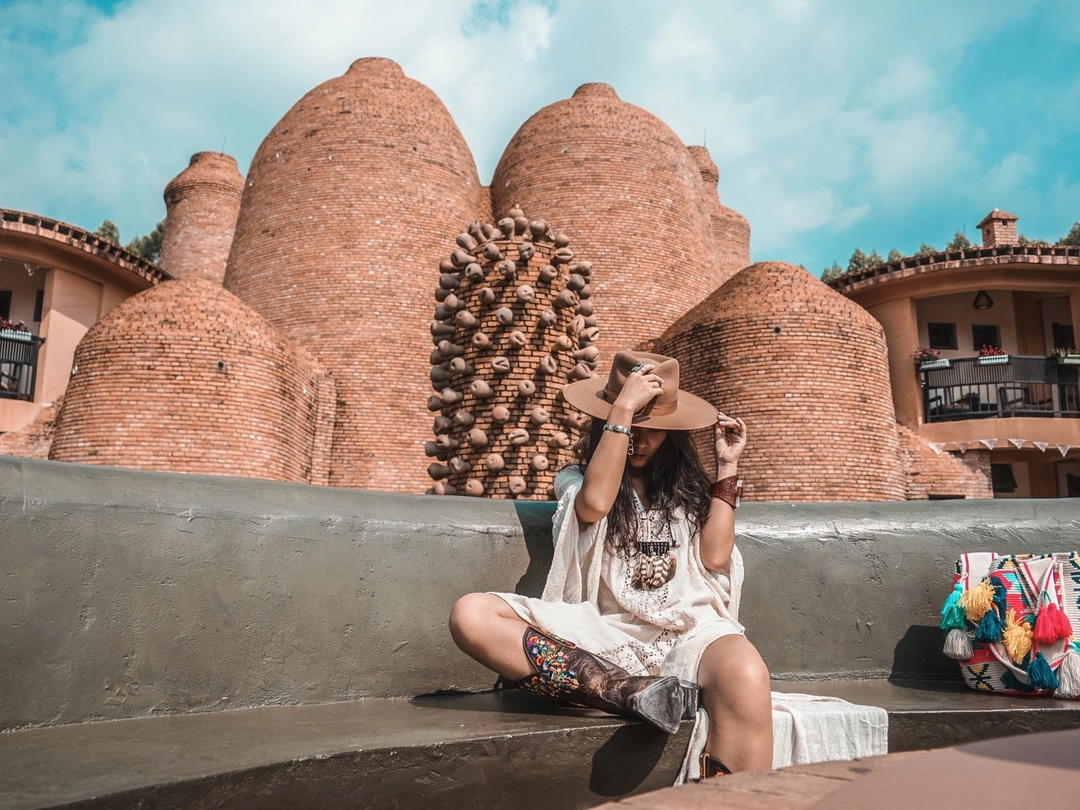
Yunnan Without Cangshan and Erhai: The Rustic Castle of Maitreya Dongfeng Yun, Hiding a Wild Romance You'd Never Expect
If your impression of Yunnan is still stuck on the serene beauty of Cangshan Mountain and Erhai Lake, or the artistic charm of Lijiang Old Town, then today I'm going to introduce you to a completely different Yunnan—a "rustic castle" built from red bricks, flower seas, and art. There's no tourist bustle here, no commercialized gimmicks, just a fantastical complex of buildings that seems to have grown right out of the earth, and a wondrous world called "Niu Duo Luo" (Ox Droll).
In May 2018, my partner and I spent two days driving 2.5 hours from Kunming straight to this city named after a Buddha—Maitreya (Mile). To be honest, before we left, I was thinking: What's there to see in a Yunnan that doesn't even have Cangshan and Erhai? Well, I was proven wrong—and gladly so.
Maitreya: A Forgotten "Highland Grape Country"
Maitreya—the name itself carries a hint of Buddhist tranquility. It doesn't belong to the popular tourist routes like Dali or Lijiang, but it is the core production area for Yunnan's highland grapes. That's right, the "Yunnan Red" wine you've probably heard of comes from here. If you visit during grape harvest season, you're in for a treat—the orchards are bursting with fruit, and you can just pick one, pop it in your mouth, and taste sweetness straight to your heart.

But Maitreya's treasures go far beyond grapes. There's also a local pride: 卤鸡米线 (braised chicken rice noodles). Don't worry, I'll tell you later where to find the most authentic version.

The Rustic Castle: A "Reckless" Building Without Blueprints
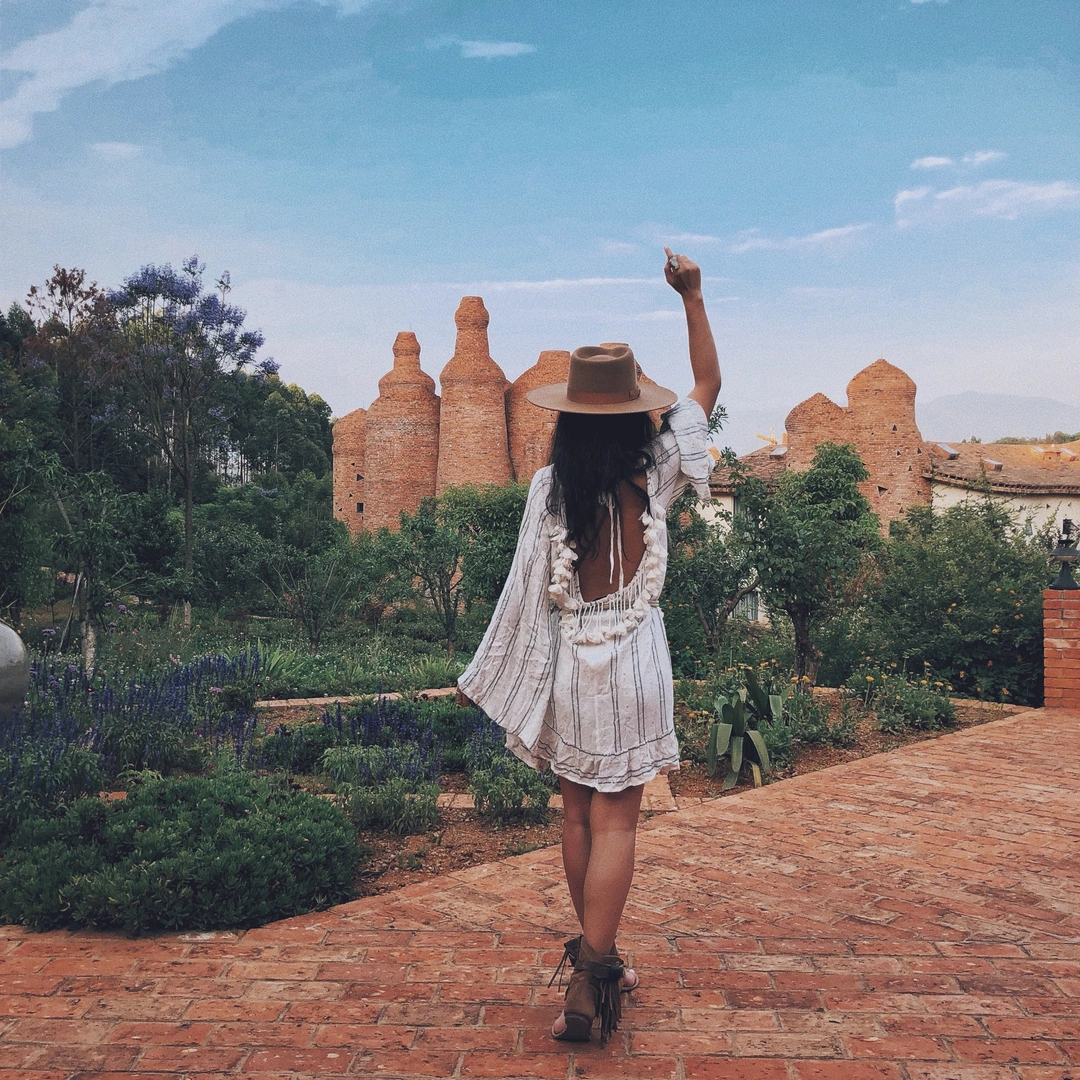
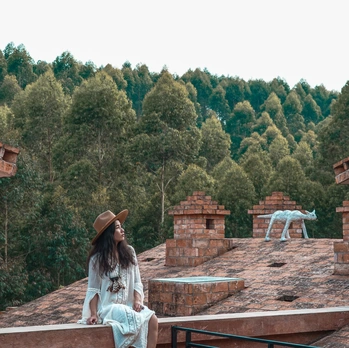
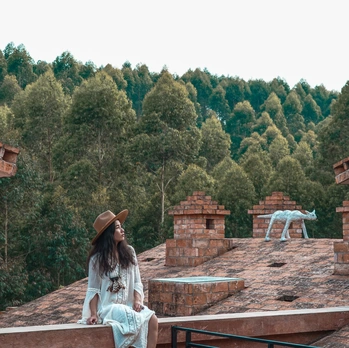
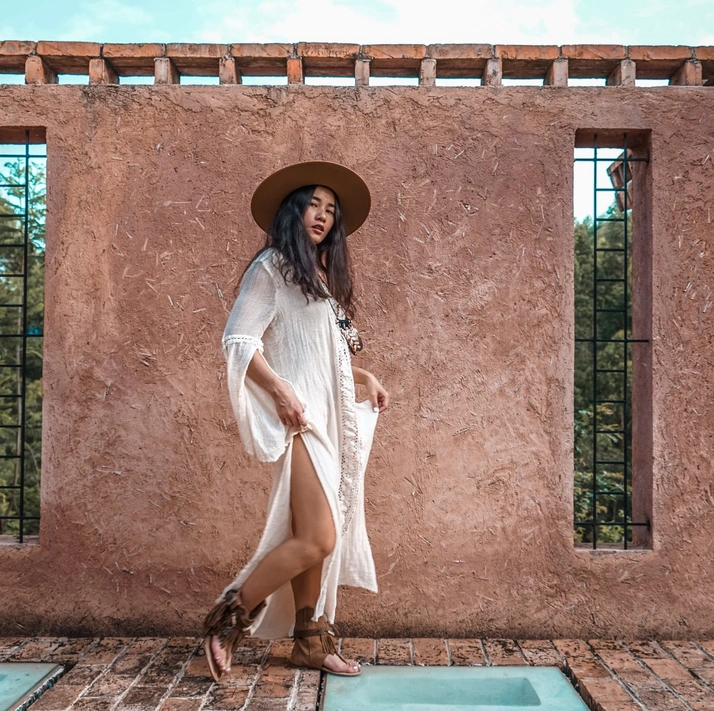
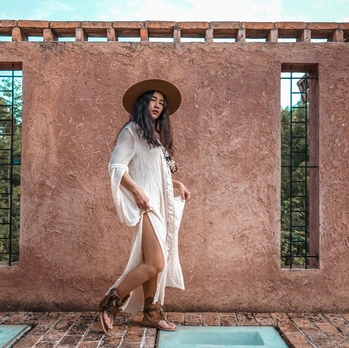
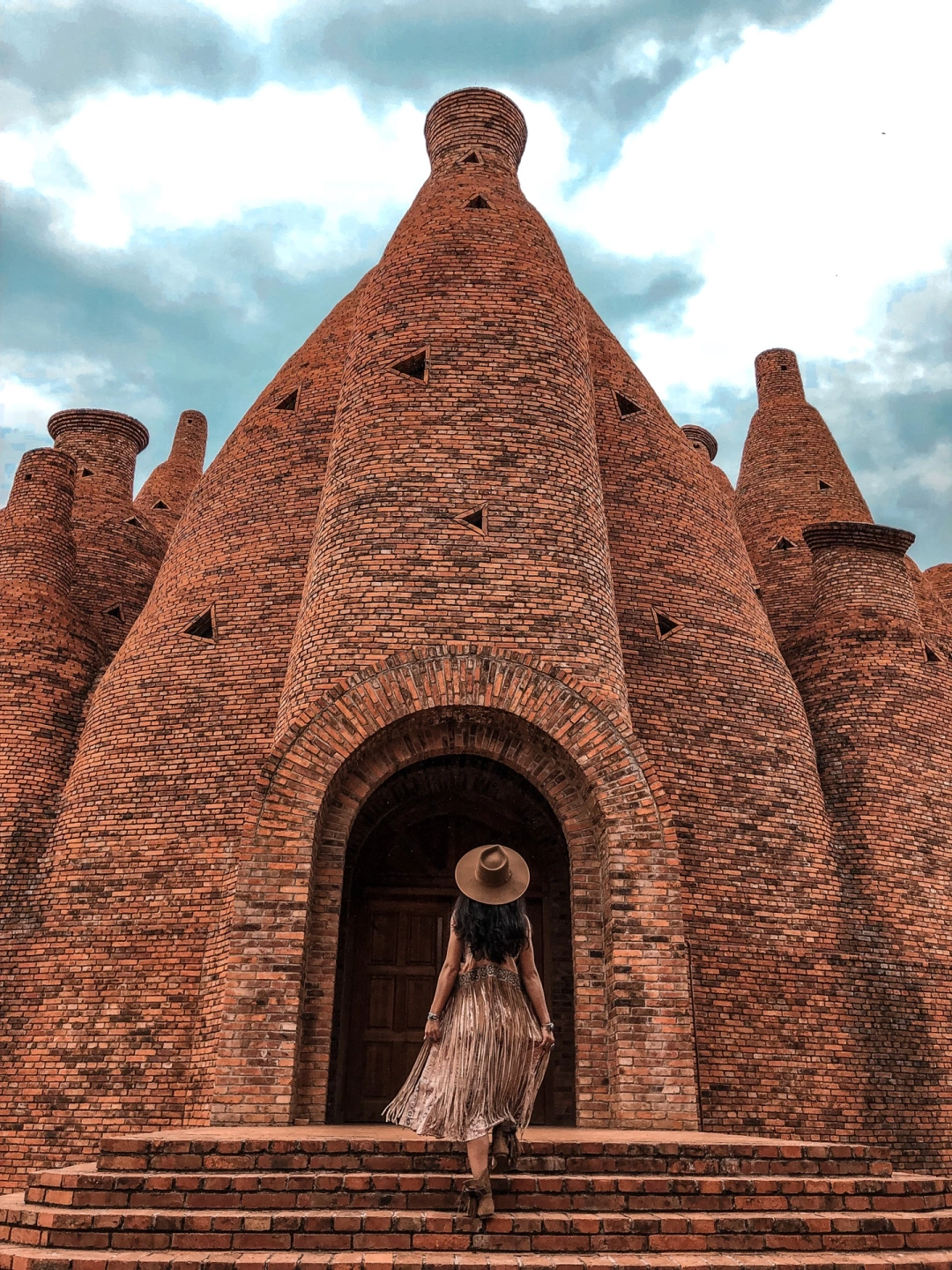
Let's start with the "rustic castle" that stole my heart at first sight—Dongfeng Yun (East Wind Charm). It's hidden in a forest near Maitreya, and from a distance, it looks like a red castle that has sprouted from the earth. It doesn't feel man-made at all; it's as if nature itself had a playful hand in creating it.
The "father" of this castle is a man named Luo Xu. You might not have heard of him, but if you see his work in person, you'll be blown away by his audacity. Luo Xu is a local of Maitreya. He never attended a single day of formal art school, yet he studied under Qian Shaowu, a sculpture master from the Central Academy of Fine Arts. In his early years, he worked as a ceramics factory worker and later as a laborer on construction crews. But driven by a spirit of "self-taught, naive yet knowledgeable," he managed to reinvent himself as an artist.
What's most astonishing is that this castle has no formal architectural blueprints. Luo Xu only drew a conceptual sketch, then relied entirely on intuition and on-site control, working alongside structural engineers as they went along. He once said, "Even I didn't know what it would look like until it was finished." This "reckless" creative approach actually gave the building a raw, untamed beauty.
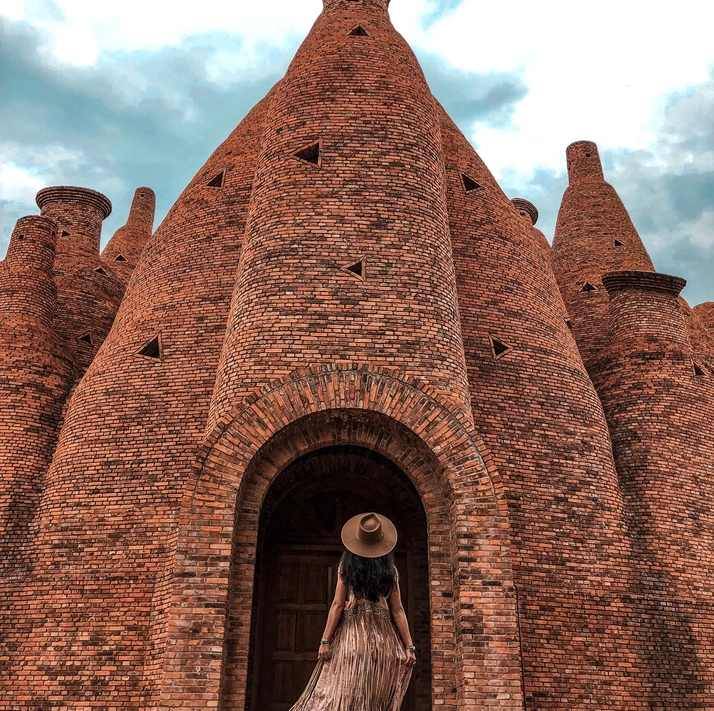
Even more incredible: apart from the foundation, which uses rubble stone, there isn't a single steel bar or nail in the entire structure. All the main walls are built using locally fired red bricks, laid in a staggered pattern. Standing inside, you can feel the honest, solid grip between the bricks, as if each one is telling its own story.
A Kaleidoscope of Light and Shadow
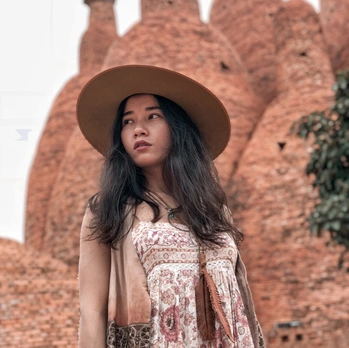
Step inside the castle, and you'll discover an even more ingenious design. Luo Xu incorporated the kaleidoscope's prism concept into the architecture. The entire building is shaped like giant wine bottles or jars, with almost no normal windows. Instead, there are triangular openings of various shapes. Sunlight streams through these irregular holes, and as the angle of the sun changes throughout the day, the light inside shifts into countless variations.
Sometimes golden beams slant across the floor; other times, soft, diffused light envelops the whole space. Standing there, you feel like you're inside a giant kaleidoscope, with light and shadow dancing on the walls, the floor, even your face. This design isn't just for show—it's meant to create a "dialogue" between the building and natural light. Every sunlit hour is a brand-new performance.
Flower Seas, a Railway, and 14 Ways to Say "I Love You"
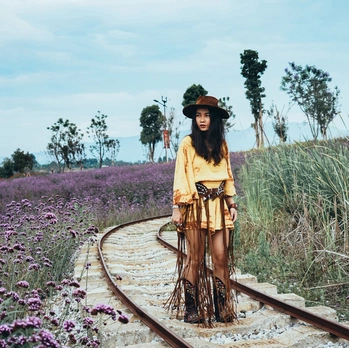
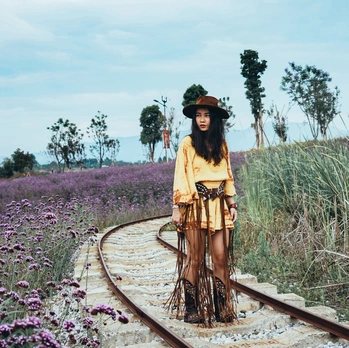
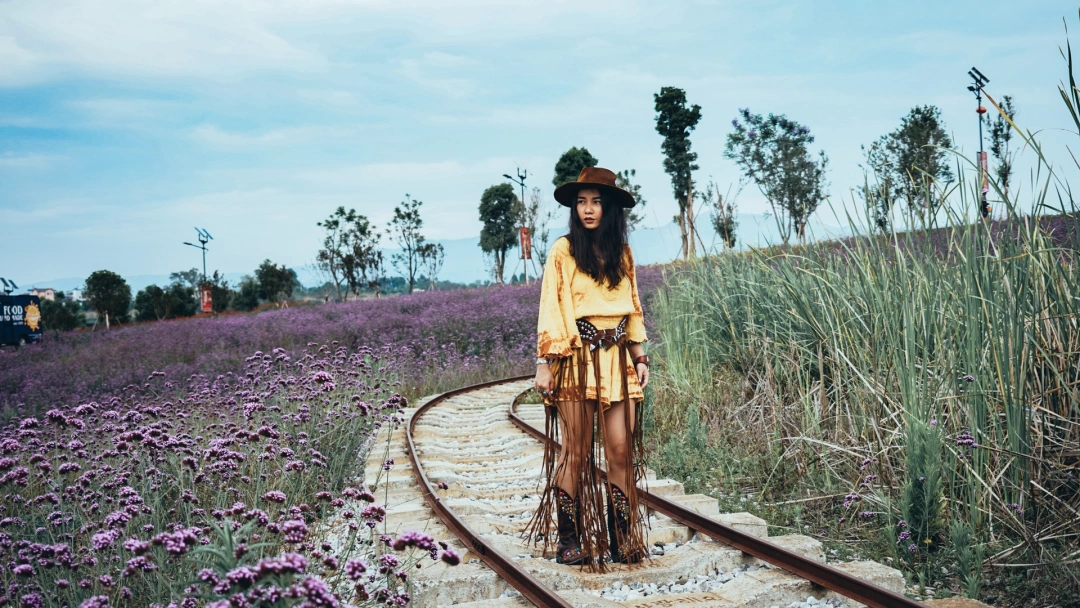
Beyond the red brick castle, Dongfeng Yun boasts a vast sea of flowers. Fields of lavender, verbena, sunflowers—they spread out under the blue sky like a giant oil painting. Walking through the flower fields, your feet sink into soft earth, bees buzz in your ears, and the air is thick with fragrance.
The most romantic touch is a man-made railway hidden among the flowers. Carved into the tracks are the words "I love you" in 14 different languages—Chinese, English, French, Japanese, Korean, and more. You can hold your partner's hand and walk along the rails, each step landing on a declaration of love. This kind of romance hits harder than any sweet talk.
Beside the railway, there are small paths through the fields, with weeds neatly trimmed and arranged. These seemingly casual details add a touch of wildness and everyday charm to the flower sea.
Where to Stay: Niu Duo Luo Music Farm & Reading Hut

If you only have one day, you can easily tour the entire park. But if you want to truly immerse yourself in this fantastical world, I strongly recommend staying overnight.
Niu Duo Luo Music Farm
We stayed at Niu Duo Luo Music Farm, which costs 800 RMB per night. The rooms are spacious and comfortable, but there's one "fatal" flaw—no air conditioning! For Yunnan locals, summer is barely tolerable, but visitors from other provinces might find it tough. So, avoid going during the hottest season, or you'll regret it.
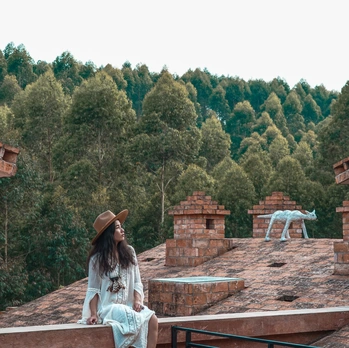
That said, the public areas are beautifully designed. The restrooms, hallways, even the steps at the entrance—all have an artistic flair. You can snap a photo anywhere and it could pass for a wallpaper.
Reading Hut (读书铺)
If you prefer a quieter, more literary atmosphere, try the Reading Hut. This is the "shop" of renowned artist Ye Yongqing. As Ye puts it, "It's a place for reading, sleeping, and dreaming." The hut is filled with books, with paintings hanging on the walls. You can read, sip tea, daydream, or just take a nap. Ye also says, "Through reading, I connect with the past; through dreaming, I gallop into the unknown, meet the future, and bridge time and space." Sounds a bit mystical, doesn't it? But when you sit there, you really do feel a sense of time travel.

Food Guide: Braised Chicken Rice Noodles and Grape Seed Jam
After all that exploring, you'll need to refuel. The hotel includes breakfast, which offers rice noodles and a unique condiment called 葡萄籽酱 (grape seed jam). Honestly, aside from the jam, the noodles are pretty standard. But the grape seed jam is worth trying—sweet and tangy with a hint of grape aroma. Spread it on bread or mix it into the noodles; it's quite distinctive.

For a proper meal, the hotel restaurant serves decent food, but we recommend heading to the snack area inside the park. In front of the seal stamp house, there's a row of food stalls where everything is delicious. Fried potatoes, grilled tofu, cold noodles—they're cheap and authentic. We ate our fill there and didn't even bother ordering from the hotel.
As for the braised chicken rice noodles, we made a special trip to Maitreya town to try the most popular spot: 沈卫国卤鸡米线 (Shen Weiguo's Braised Chicken Rice Noodles). To be honest, I thought it was okay, but not as mind-blowing as the hype suggested. Locals love it, though, and the queue was long. Personally, I preferred the fried potatoes—crispy on the outside, soft on the inside, sprinkled with chili powder. I couldn't stop eating them.
How to Get There: Self-Drive or High-Speed Rail?
We chose to drive from Kunming, which took about 2.5 hours. Take the Maitreya South exit off the highway, then navigate to "Dongfeng Yun." One thing to note: you need to contact the hotel at the gate so security will let you in. If you're not staying overnight, you'll have to walk or take a sightseeing cart—the park is huge, and walking is exhausting. We always drove to the attractions.
For visitors from other provinces, I recommend taking the high-speed rail. From Kunming Station to Maitreya Station takes only 40 minutes, plus transfers and shuttles, you're looking at about 2 hours total. It saves you the hassle of driving, and you can scroll through your phone on the train.
Final Thoughts: A Rustic Dream Worth Having
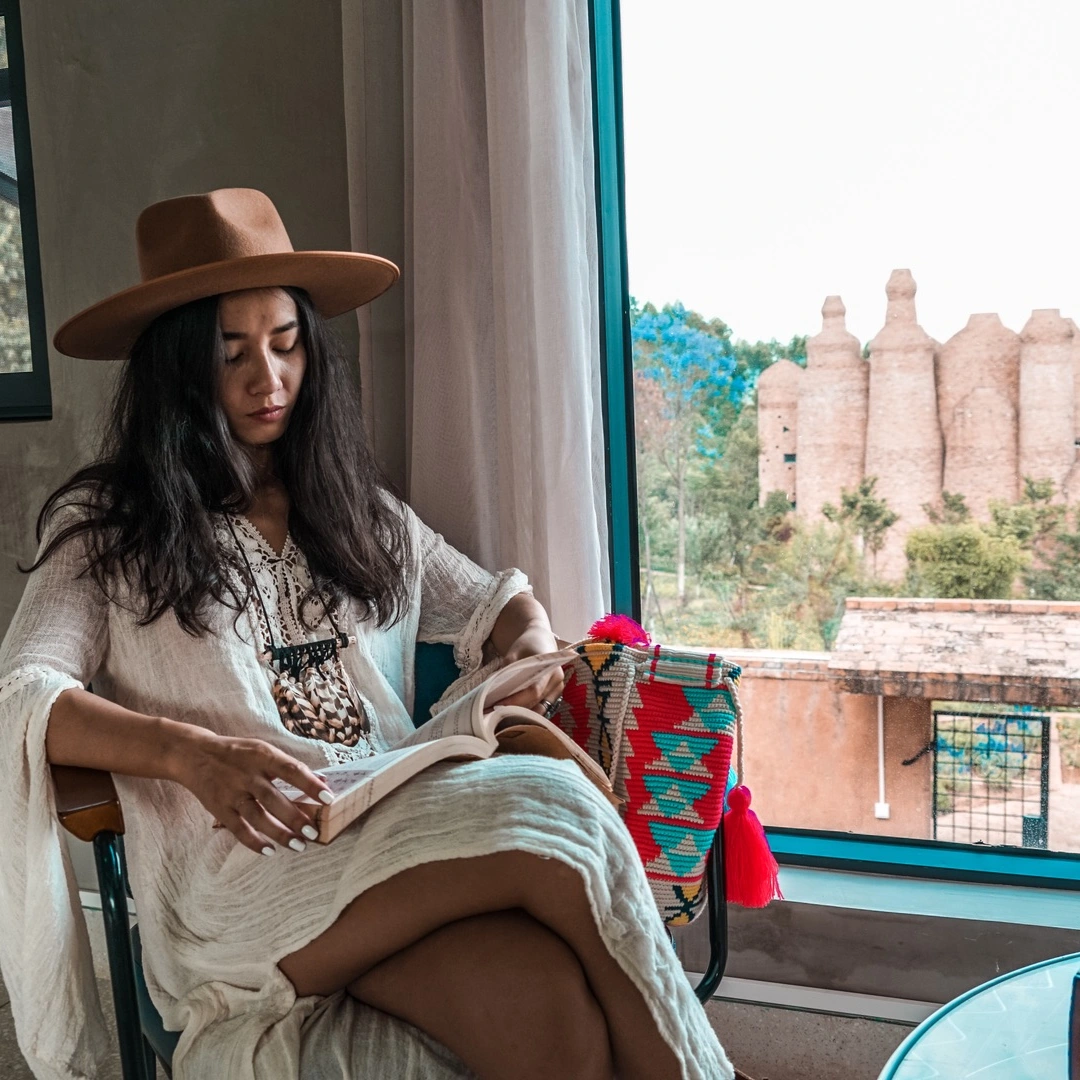

This weekend trip completely changed my understanding of Yunnan. It turns out Yunnan isn't just about the poetry of Cangshan and Erhai—it also has the wild romance of Maitreya's Dongfeng Yun. There's no tourist crowds, no commercial noise—just red bricks, flower seas, light and shadow, art, and a bunch of untamed hearts.
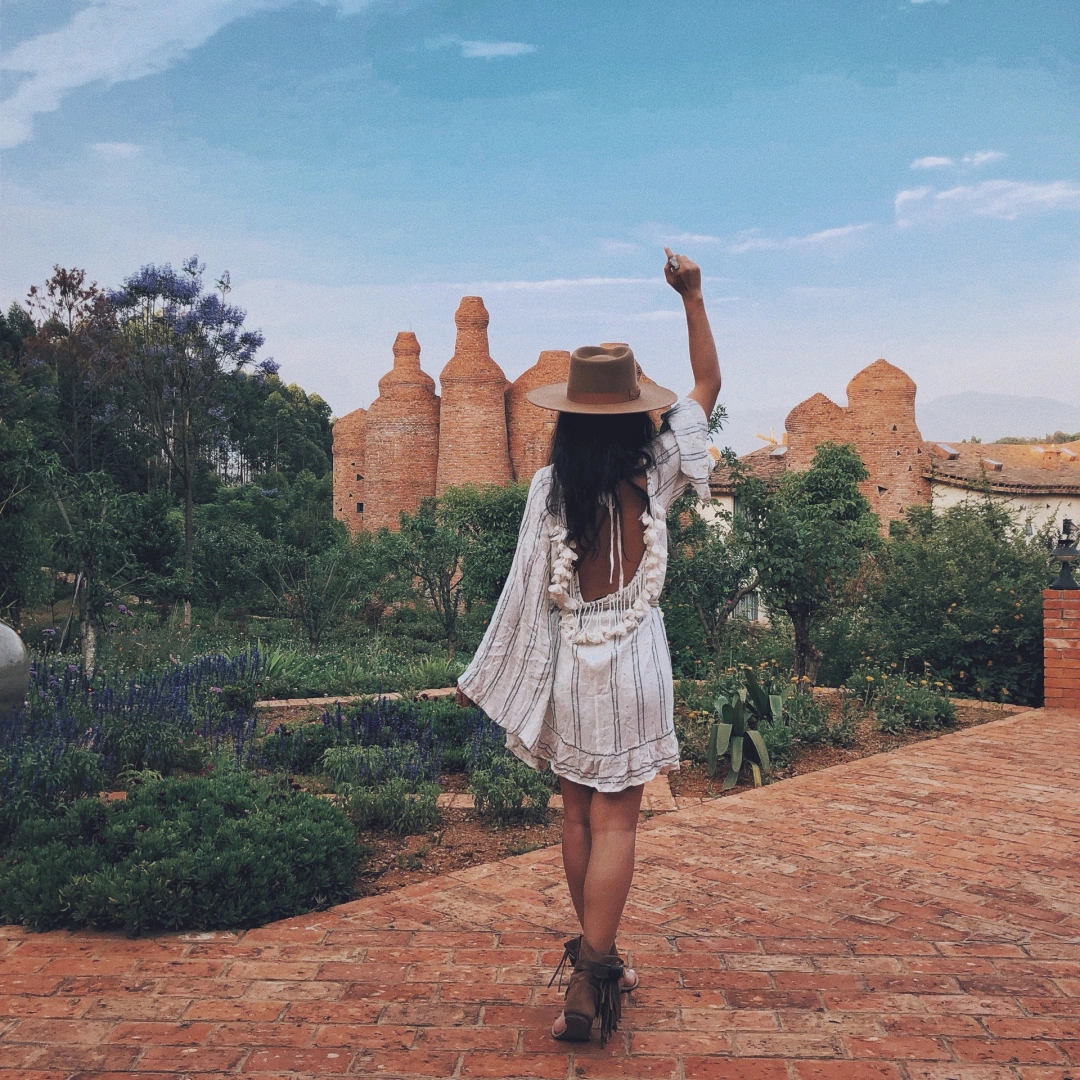
If you want to escape the grind of daily life, come here and have a "rustic dream." Bring your partner, hold hands as you wander through the flower fields, step on "I love you" along the railway, and watch the dance of light and shadow inside the castle. Trust me, this trip is worth it.
One last reminder: Don't go during the hottest season, or you'll regret it.
All content in this travelogue is original. Unauthorized reproduction is prohibited.
© 2026 Lyu Xiaona
You should also read:
Yunnan Travel Mastery: From Beginner to Pro-Level Player – A Complete Guide
Yunnan Travel Mastery: From Beginner to Pro-Level Player – A Complete Guide "Either travel or read, but your body and soul must be on the road." This quote has been repeated countless times, but very few people truly manage to be "on the road" and…
Continue reading...
Escaping Nanning, Falling Under Lijiang's Spell: Our Four-Person, Ten-Day Yunnan Dream
Escaping Nanning, Falling Under Lijiang's Spell: Our Four-Person, Ten-Day Yunnan Dream Before We Set Off: No Pain, No Obsession Have you ever had that impulse—suddenly tired of the office fluorescent lights, the crush of the subway, the endless parade of identical takeout boxes, and just…
Continue reading...
Solo in Yunnan: A Wanderer’s Guide to the Land of Eternal Spring
Solo in Yunnan: A Wanderer’s Guide to the Land of Eternal Spring There’s something magical about traveling alone. No compromises, no schedules to keep, no one to please but yourself. I’ve been on the road for nearly three months now, and not once have I…
Continue reading...