Yunnan Yi: The Echo of Hooves, the Depths of Time — A Dream of an Ancient Post Station That Spans a Millennium
Yunnan Yi: The Echo of Hooves, the Depths of Time — A Dream of an Ancient Post Station That Spans a Millennium
Prologue: When History Awakens Beneath Your Feet
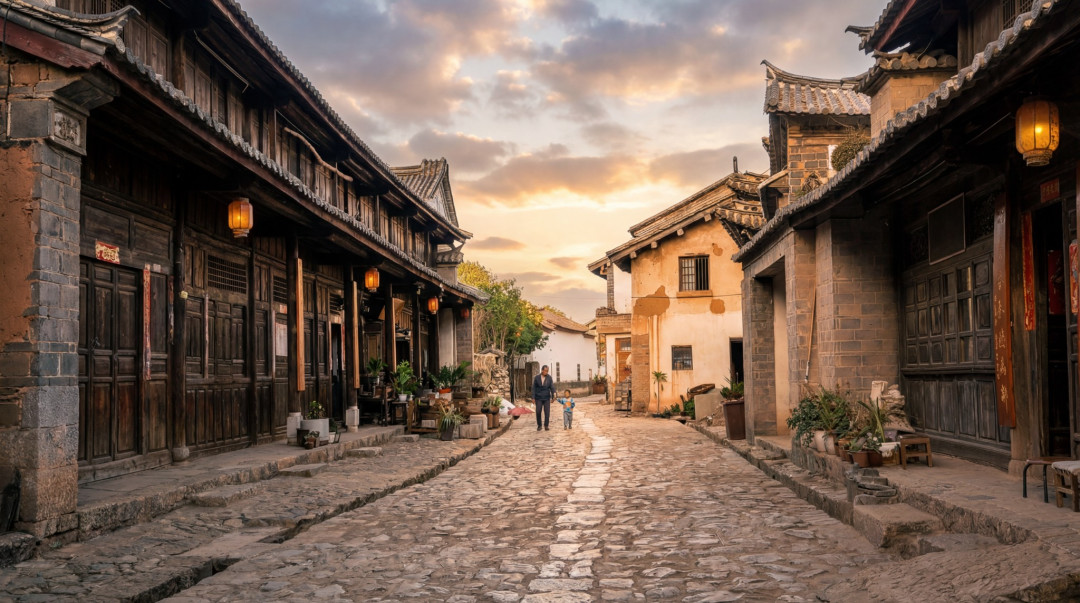
Have you ever wondered how many hurried footsteps have passed over the ground you're standing on? Hidden between Dali and Chuzhou in Yunnan Province lies a place called "Yunnan Yi" (Yunnan Post Station). It's not a bustling tourist attraction, devoid of the clamor of social media check-in spots. Instead, it resembles an old book flipped open by the wind, every page brimming with stories. As I stood on the pitted, uneven cobblestone road, looking down at hoof prints of varying depths, I seemed to hear the sound of horse hooves from a thousand years ago — the jingling bells of merchant caravans, the heavy breathing of relay horses, and the echo of time itself. Today, let me take you into this forgotten corner of time and space, to experience a wondrous journey where "a great dream lies before your eyes."
Part One: What is Yunnan Yi? — A Post Station Frozen in Time
1.1 The Past and Present of the Post Station
Yunnan Yi, located in Xiangyun County, Yunnan Province, was a crucial post station on the ancient "Southwest Silk Road." Its history can be traced back to the Han Dynasty, and even earlier. In those days, it wasn't just a resting place for horse caravans (mǎ bāng); it was a hub for information exchange and material transfer. Imagine this: in ancient times, when transportation was difficult, a horse laden with tea, silk, or salt would set out from Sichuan, traversing mountains and valleys, finally arriving at Yunnan Yi. The caravan drivers would unload their goods here, drink a bowl of hot tea, feed their horses, and then continue their journey southward. Meanwhile, the officials at the post station were responsible for transmitting imperial documents — bamboo slips or silk scrolls that started in Chang'an (ancient Xi'an), passed through countless such stations, and eventually reached the frontier.
1.2 The Secret in the Name
The name "Yunnan Yi" itself holds a piece of history. It is said that during the Tang Dynasty, this place was one of the origins of the name "Yunnan" — because the post station was located "south of the Yunling Mountains" (Yún Lǐng zhī Nán). Later, as Yunnan became fixed as the name of an administrative region, "Yunnan Yi" was preserved. It stands as a living fossil, witnessing Yunnan's transformation from a remote borderland into a center of cultural fusion.
Part Two: Hoof Prints Deep and Shallow — A Silent Epic on the Stone Road

2.1 Those Potholes Are the Seals of History
Walking along the streets of Yunnan Yi, the most striking feature is the hoof prints on the bluestone slabs. Some are several centimeters deep, others as shallow as scratches. They are densely packed, like a collection of seals, recording the weight of the years. According to local elders, these prints are the "masterpieces" of horse caravans over millennia. A single horse stepping on the stone might leave only a faint mark; but tens of thousands of horses, day after day, year after year, have created these deep and shallow grooves. You can imagine: behind every deep scar lies a story of a journey through wind and rain; in every pothole are hidden the sweat and sighs of the caravan drivers.
2.2 The Daily Life of a Horse Caravan: More Than Just Traveling
The life of a horse caravan was far less romantic than what movies depict. They would set out before dawn every day and only rest at sunset. On the road, they faced wild animals, bandits, landslides, and disease. Only when they reached a post station could they finally breathe a sigh of relief — feeding the horses, repairing hooves, mending saddles, and repacking goods. The post station itself was like a miniature society: it had tea houses, inns, blacksmith shops, pharmacies, and even a small "post office." Here, caravan drivers could exchange information, inquire about road conditions ahead, or ask someone to send a message home. The prosperity of Yunnan Yi was sustained by these unsung horse drivers.
Part Three: A Great Dream Before Your Eyes — Time Intertwined at the Post Station
3.1 Standing in the Past, Looking at the Present
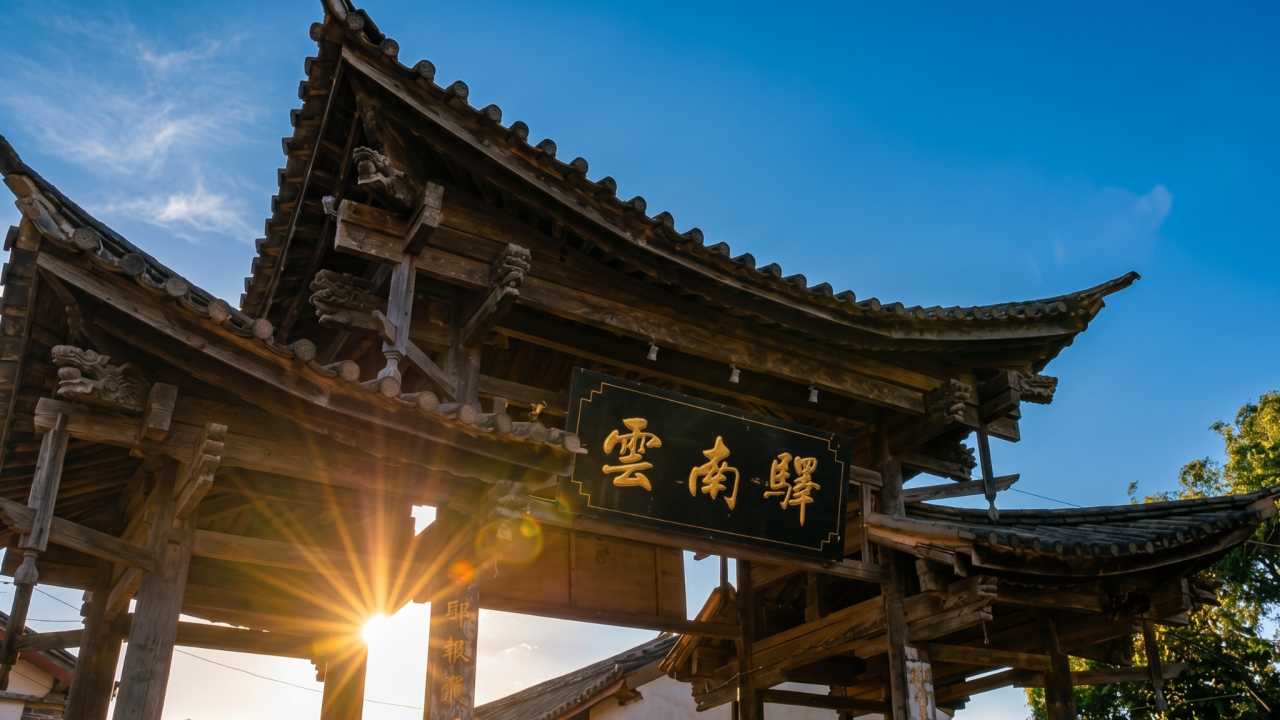
If you come to Yunnan Yi at dusk, you'll feel a strange sense of time intertwining. The setting sun slants onto the mottled earthen walls, stretching the shadows as if pulling your own silhouette into history. You can close your eyes and imagine yourself as a caravan driver: wearing straw sandals, carrying a cloth bag over your shoulder, stepping into an inn with red lanterns hanging outside. The innkeeper hands you a bowl of hot tea. You sit on a long bench, listening to merchants at the next table discussing the price of tea. Outside, mules and horses lower their heads to drink water, occasionally snorting. Open your eyes, and reality tells you: those horses have long disappeared, leaving only the polished, gleaming stones.
3.2 "Living Relics" at the Post Station
Yunnan Yi is not merely a historical site; people still live there today. Walking along the street, you'll see old houses — wooden door panels, carved window lattices, roofs covered with moss. Many of the owners of these houses are descendants of the horse caravans. Although they no longer drive horses, they still maintain their ancestors' way of life: farming, raising chickens, drying chili peppers in their courtyards. Occasionally, they tell visitors stories about their forefathers, speaking in a calm tone that nonetheless captivates listeners. For example, an elderly woman surnamed Li told me that her grandfather once led a caravan all the way to Myanmar, bringing back jade and ivory, as well as songs from a foreign land. These stories, like the hoof prints, are deeply etched into this land.
Part Four: A Practical Guide — How to Visit This "Great Dream" Land
4.1 Transportation and Routes
Yunnan Yi is located in Xiangyun County, about 50 kilometers from downtown Dali, roughly a one-hour drive. If you're starting from Kunming, you can take a high-speed train to Dali Station, then transfer to a local minibus or hire a car. The minibus ride takes about 1.5 hours and costs around 30 RMB. If you're driving, take the G56 Hangzhou-Ruili Expressway, get off at the "Xiangyun" exit, and then follow a rural road for a short distance. The road conditions are generally good, but the last few kilometers are on a narrow road, so be careful when passing oncoming vehicles.
4.2 Best Time to Visit
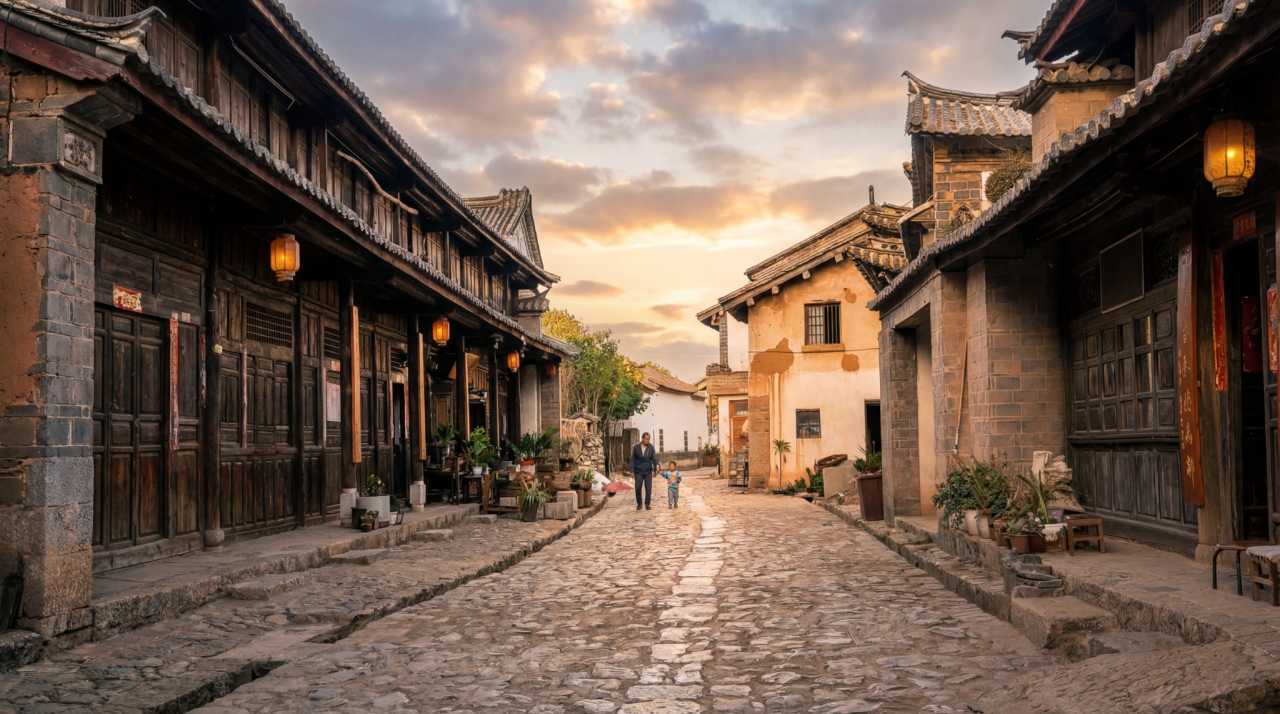
Yunnan Yi is pleasant year-round, but the most recommended seasons are spring and autumn (March to May and September to November). During these times, the weather is cool and the sunlight is gentle, perfect for a slow stroll on the stone road. Summer has more rain, making the road slippery, but the post station in the rain has its own unique charm. Winter has large temperature differences between day and night, so remember to bring a jacket.
4.3 Travel Tips
- Must-See Attractions: Yunnan Yi Ancient Road, the Horse Caravan Museum (free admission), and the Old Tea House (where you can drink authentic Pu'er tea).
- Photography Tips: The best light is at dawn or dusk, which brings out the texture of the stone road. Wear dark-colored shoes, as the road is dusty.
- Food Recommendations: There are a few small eateries near the post station. I recommend "马帮烤鸡 (horse caravan roast chicken)" and "驿道豆腐 (post road tofu)." The roast chicken is made with free-range chicken and is wonderfully fragrant; the tofu is made with mountain spring water, tender and smooth.
- Notes: Yunnan Yi is not a commercialized scenic spot. There is no entrance fee and not many signposts. It's advisable to hire a local guide (costing about 50 RMB), who can take you to the most hidden corners.
4.4 Accommodation Options
For a deeper experience, consider staying overnight in Xiangyun County town. I recommend "驿路客栈 (Post Road Inn)," whose owner is a descendant of the horse caravans. The rooms are clean, and you can listen to his stories. Prices range from 100 to 150 RMB per night. If you're short on time, you can also make a day trip from Dali.
Part Five: Epilogue — The Hoof Beats Fade, the Dream Ends
As I left Yunnan Yi, I turned back for one last look at the long stone road. The setting sun had dyed the hoof prints a golden color, like a flowing river of time. I suddenly realized that each of us is, in fact, a "traveler" — we make a brief stop at the inns of life, then continue on our way. And those hoof prints, some deep, some shallow, are not just the marks of horse caravans; they are the epitome of all who have passed through. When you stand here, you understand: history is not just words in a book; it is the tangible sensation beneath your feet.
Key Takeaways:
- Yunnan Yi is a thousand-year-old post station on the Southwest Silk Road, marked by the hoof prints on its bluestone slabs, carrying the profound history of horse caravan culture.
- Highlights of the visit: The ancient road, the Horse Caravan Museum, and the Old Tea House. Hiring a guide is recommended to discover hidden stories.
- Best seasons: Spring and autumn. It is easily accessible from Dali or Xiangyun County.
- Unique experience: Feel the intertwining of time at dusk and listen to locals tell stories of their ancestors' caravan journeys.
If you, too, want to have a "great dream" about history, then go to Yunnan Yi. There, the hoof prints are deep and shallow, and a great dream lies before your eyes — waiting only for you to gently step onto those stones polished by time.
You should also read:
Escaping Nanning, Falling Under Lijiang's Spell: Our Four-Person, Ten-Day Yunnan Dream
Escaping Nanning, Falling Under Lijiang's Spell: Our Four-Person, Ten-Day Yunnan Dream Before We Set Off: No Pain, No Obsession Have you ever had that impulse—suddenly tired of the office fluorescent lights, the crush of the subway, the endless parade of identical takeout boxes, and just…
Continue reading...
Tengchong·Heshun: Finding Life as It Should Be in a Border Town Where Time Stands Still
Tengchong·Heshun: Finding Life as It Should Be in a Border Town Where Time Stands Still The long journey of over twenty days was over. On my first day back at the office, I was still in a daze. My fingers couldn't find the keys on…
Continue reading...
God’s Abandoned Palette: A Self-Drive Journey Through Yunnan’s Dongchuan Red Land
God’s Abandoned Palette: A Self-Drive Journey Through Yunnan’s Dongchuan Red Land Travel has never been about reaching some distant geographic coordinate. It’s about encountering, along the way, the version of yourself buried beneath the rubble of daily routine. During this May Day holiday, I finally…
Continue reading...