Yunnan's Hidden Realm: Rediscovering Time Stolen by the City on This Central Yunnan Art & Culture Route
Yunnan's Hidden Realm: Rediscovering Time Stolen by the City on This Central Yunnan Art & Culture Route
The key to happiness is doing what you love, and being with the people you love.
Sometimes, the city feels like a giant exhaust fan, silently sucking away your time, your energy, and that instinctive joy for life. You sit in your cubicle, watching the sky outside shift from bright to dark, and in a daze, the day is gone. The week is gone. The year, just like that, is gone too.
But Yunnan is different. Especially this route through central Yunnan — from Kunming to Yuxi, and then to Chengjiang. It's like a deliberately hidden level in a video game, one that only those who know how to slow down can unlock.
When the Ming dynasty scholar Yang Shen was exiled to Yunnan, he wrote: "The weather is always like early spring or mid-spring; flower branches bloom in endless spring." When I first read that, I thought it was just a poet's romantic filter. But when I actually set foot on this land, I realized he had been far too restrained — the spring here isn't "like" anything. It is spring.
Over three days, I moved between the smoky alleys of Kunming and the lake-and-mountain sanctuaries of Yuxi and Chengjiang. I watched locals rush past with bowls of steaming rice noodles, the rising mist blurring their faces yet sharply outlining the unhurried rhythm of this city. "Spring all year round" isn't just about the climate. It's about the people living here — their unhurried, steady breathing pace.
Quick Reference: Practical Information
Itinerary
Day 1
Chengjiang Shihuayuan Farmers' Market → Yunnan Provincial Museum → Haigeng Dam → Yunnan Nationalities Museum
Day 2
Dounan Flower Market → Wuliduo Farmers' Market → Cuihu Park → Kunming Old Street
Day 3
Fuxian Lake Cherry Blossom Valley → Cliffside Coffee → The Famous S-Curve → Chengjiang Fossil Site Natural Museum → Yuxi City Museum
What to Eat?
Kunming
- Rice Noodles: For crossing-the-bridge rice noodles, try Shangzuo, Fuhuayuan, Yunnandao, or Jianxinyuan. For small-pot/bean-sauce/meat-sauce rice noodles, try Dongchun, Banpo, Tiepeng, Chenxi, Sanwan, or Wenshan He Xian Ju.
- Yunnan Stir-fry: Hongdouyuan, Aozaoguan, Sifang Xiaochao, Congshuilu, Lincang Wa Cai, Shenmi Xiaochao, Qiezi Qiaqia.
- Dai-style Food: Duogeshui, Qiaoxiang Dai.
- Wild Mushrooms: Lushun Fanzhuang, Jiangxin Duyun, Lao Yongsheng, Ruifengyuan, Youjian Chuiyan, Xuefeng Restaurant.
- Wild Mushroom Hotpot: Aishangjun·Yunnan True Wild Mushroom Hotpot, Jun Cunzhang·Stone Pot Fish and Wild Mushroom Hotpot·Yunnan Cuisine.
Yuxi
Beyond the famous copper-pot fish, you absolutely must try:
- Fried silverfish in Lucun Village — crispy, fragrant, and crunchy.
- Farmhouse dishes at Mingxing Yudong — generous portions.
- Lotus root starch cakes from street stalls — soft, sweet, and refreshing.
Where to Stay?
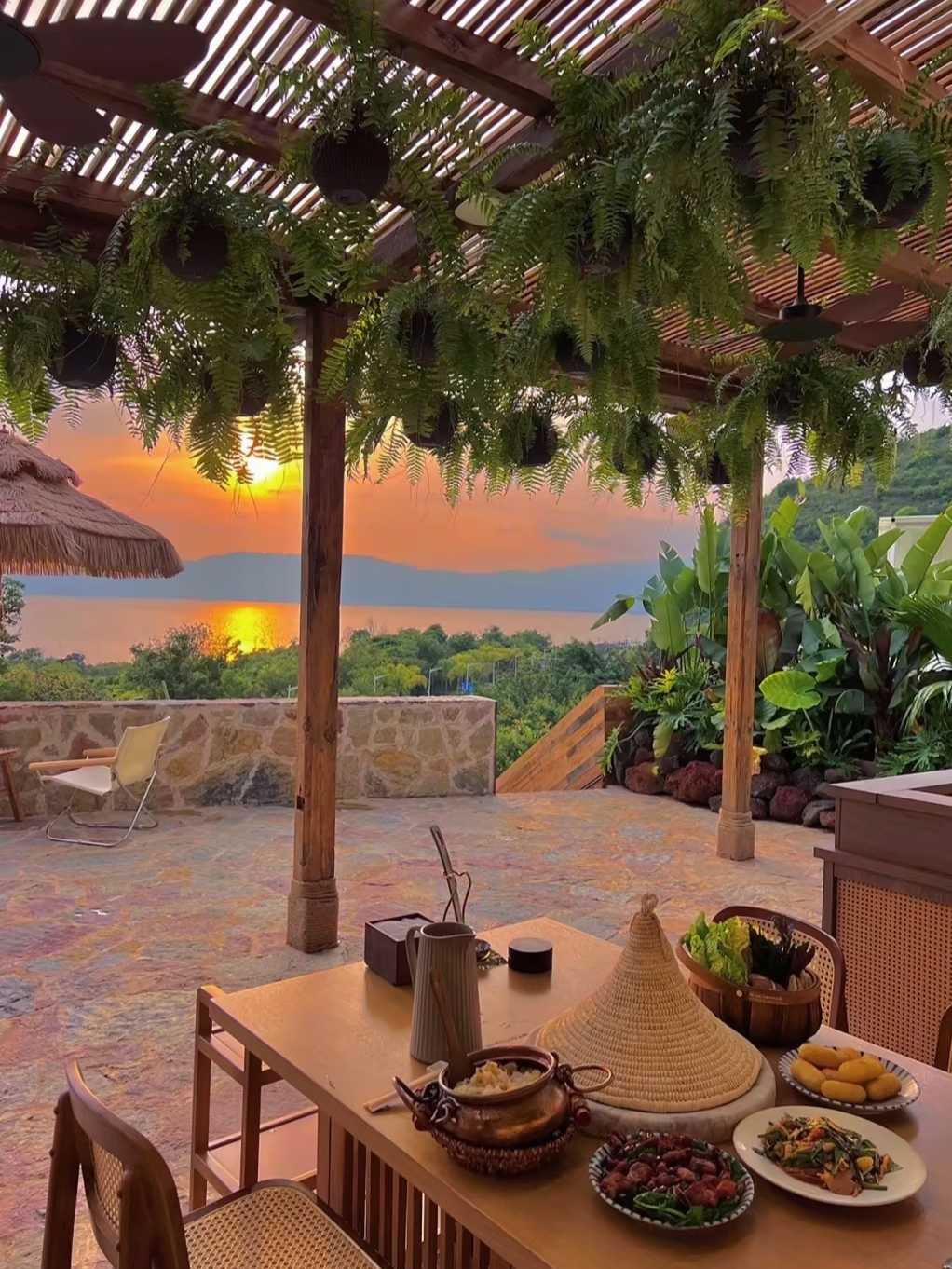
Kunming: Recommended near Dounan Flower Market — convenient for an early morning visit to the market.
Fuxian Lake:
- Cambrian Town: Full supporting facilities including hot springs, commercial streets, and an amusement park. Great for family trips.
- Sun Mountain Town: A European-style town with a quiet, beautiful environment. The streets and chapel are very photogenic.
Kunming: A Spring Scroll Woven with Smoke, Fire, and Culture
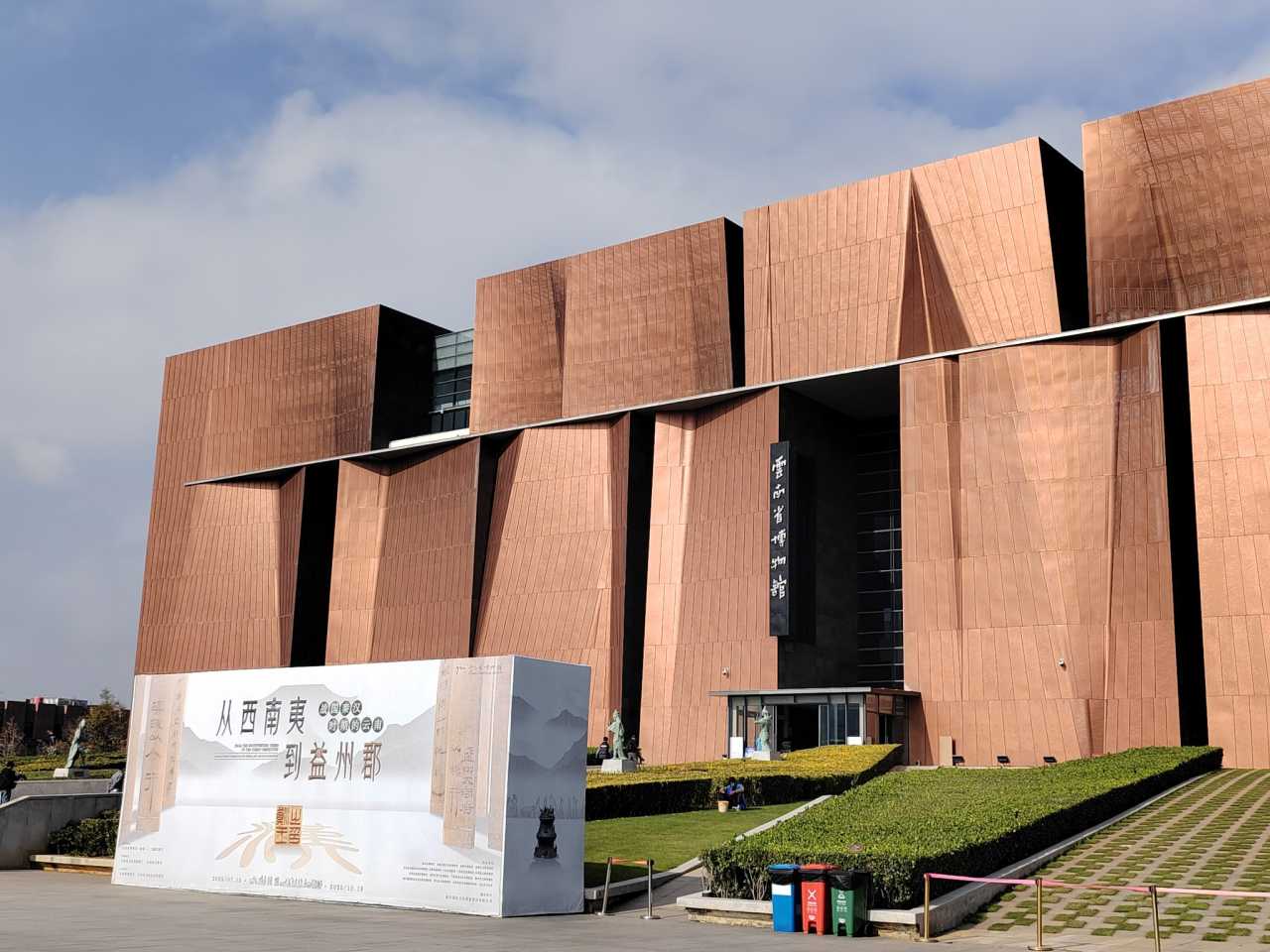
Yunnan Provincial Museum — Bronze Codes Spanning Two Millennia
The vermillion-red building is built into the hillside, its clean lines carrying a subtle Yunnan charm. Sunlight streams through the glass curtain wall, casting dappled shadows on the lobby floor like fragments of time gathering here. There's no deliberate noise inside — only footsteps and soft exclamations, perfectly complementing the artifacts on display.
In 276 BC, the Chu general Zhuang Qiao led his tribe to establish a kingdom in the Dianchi Lake region. Cut off from returning home by the Qin dynasty, they settled here. Seven generations of Dian kings ruled over roughly 190 years, until the kingdom gradually faded after submitting to the Han dynasty during the Western Han period. The ancient Dian kingdom had no written language — all its history and social life were "recorded" through bronze artifacts.
The ancient Dian kingdom exhibition hall on the second floor is an absolute must-see. The famous Bronze Ox and Tiger Case stands quietly in its display case — a fierce tiger biting the tail of an ox, with a calf emerging from beneath the mother's belly. The dynamic tension of life and death is frozen into an eternal sculptural aesthetic. In the warm luster of the bronze, the ox's simplicity and the tiger's ferocity achieve a strange balance. The intricate patterns on the details are so clear you can almost see the concentration of the craftsman who cast it over two thousand years ago.

Nearby, a bronze cowrie-shell container depicts hunting and sacrificial scenes with vivid detail. Tiny human figures and animals are arranged in layers, sketching out the daily life of the ancient Dian kingdom.
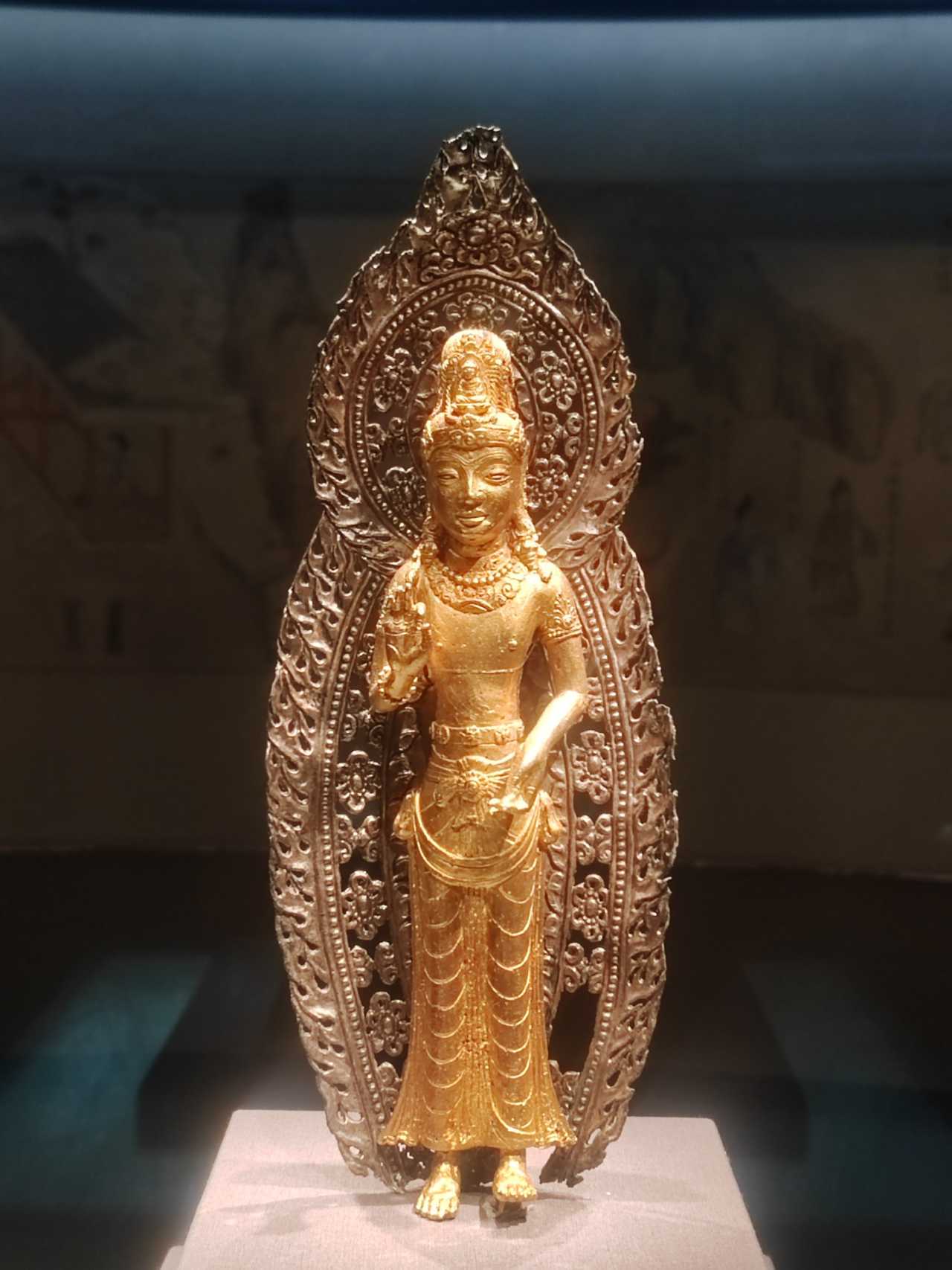
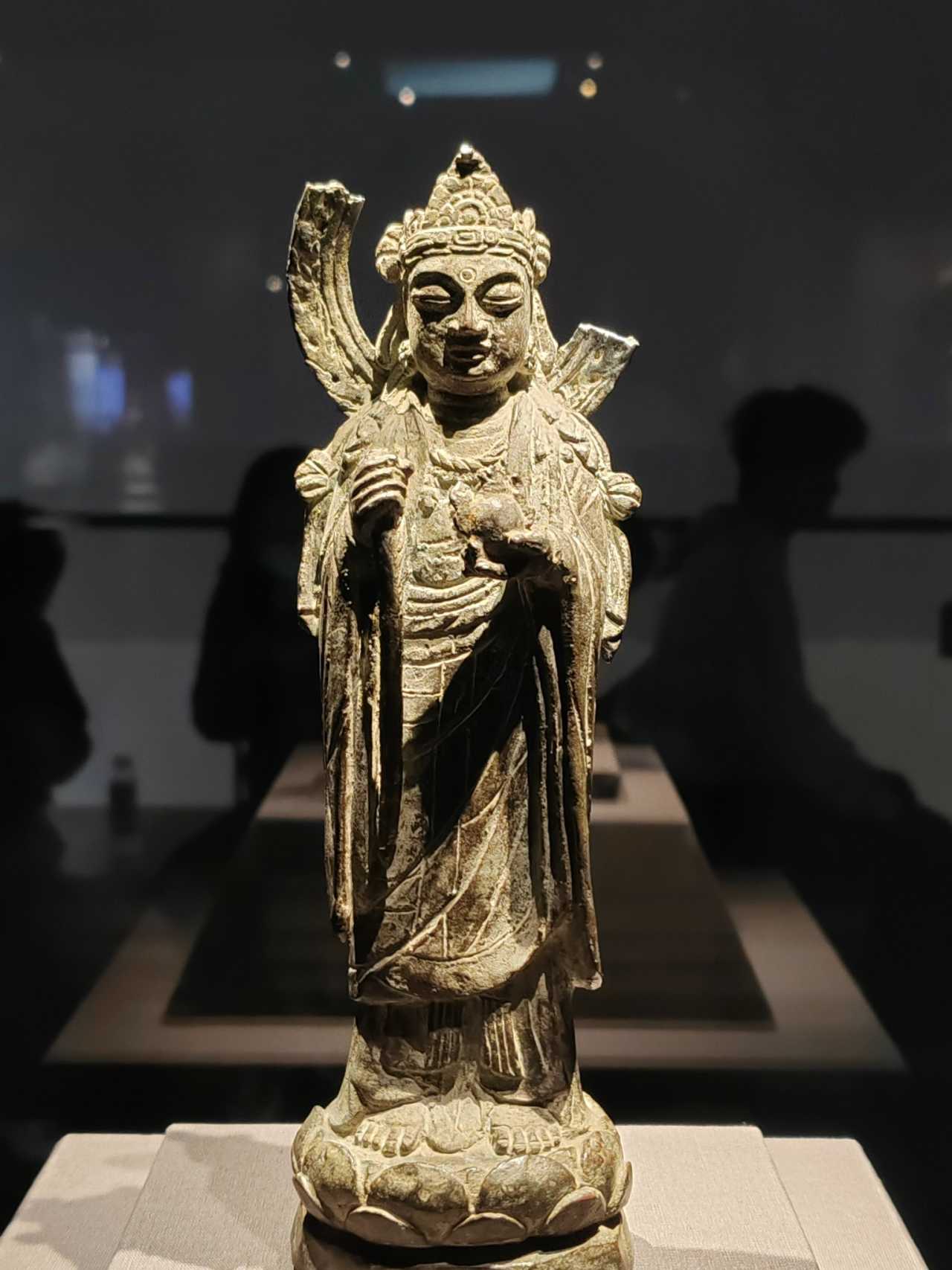
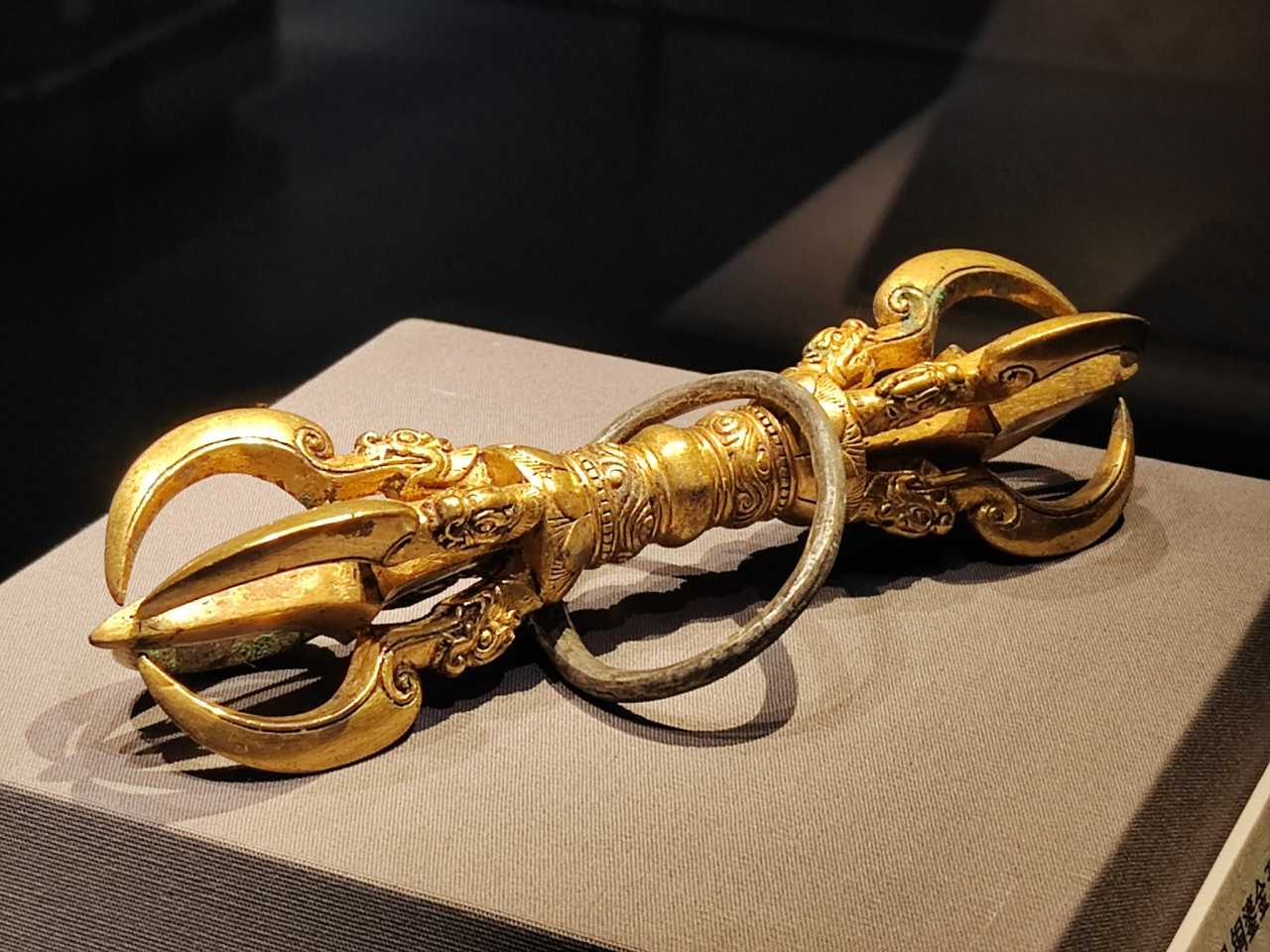
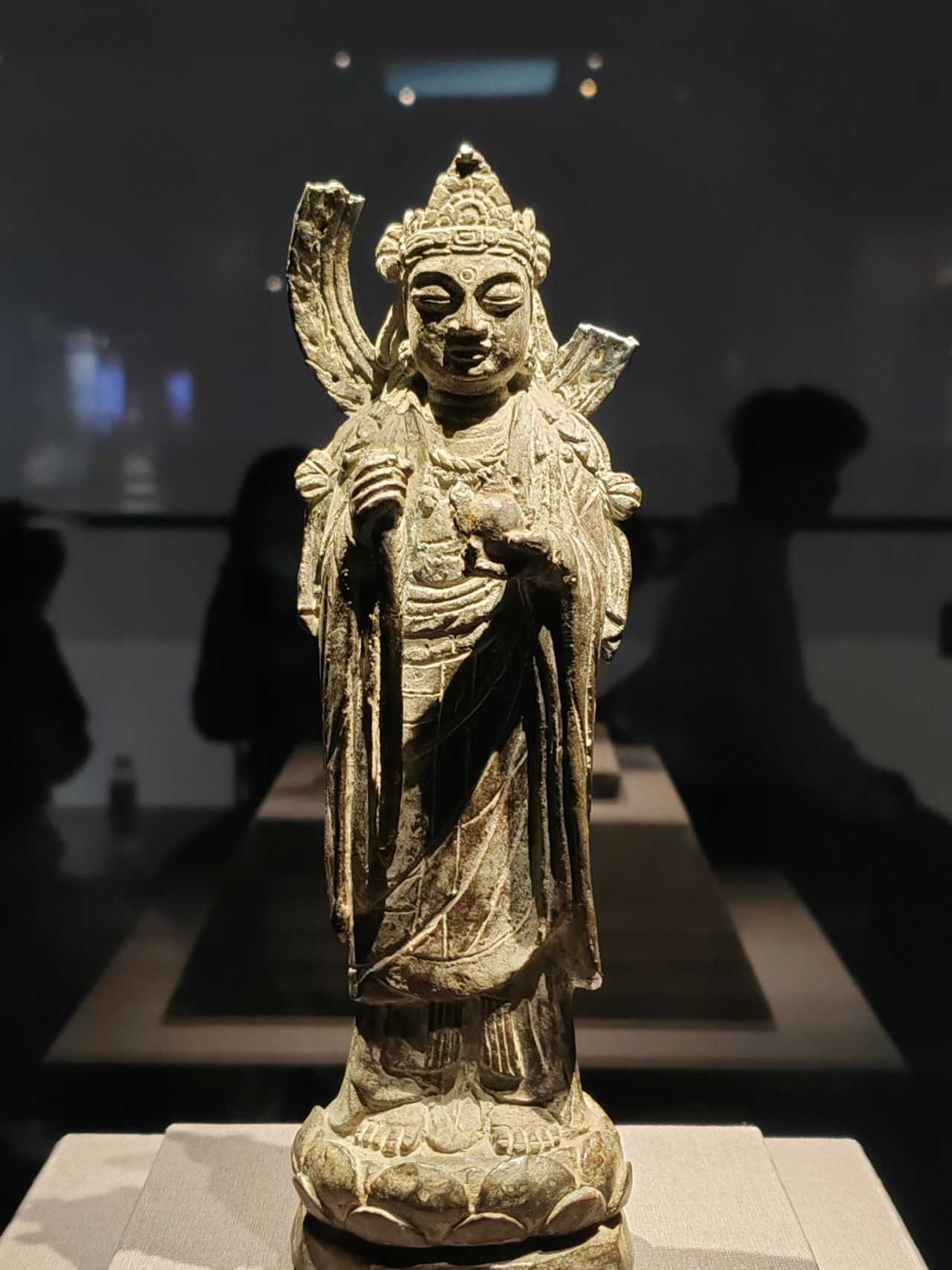
The Buddhist art exhibition hall on the third floor is equally captivating. The Dali Kingdom Avalokiteshvara Statue — its gilded body slender and graceful, its expression compassionate yet solemn — seems to radiate a halo of Buddhist light as its robes flutter. As the largest known pure gold Buddha statue from the Song dynasty, it bears witness to Buddhism's spread and localization in Yunnan.
Key Exhibits: - Bronze Ox and Tiger Case: Life and death frozen into an eternal sculptural aesthetic. - Dali Kingdom Golden Garuda: A national treasure featured on the TV program National Treasure, excavated from the Qianxun Pagoda of the Dali Chongsheng Temple. - Dali Kingdom Silver-backed Gold Avalokiteshvara Standing Statue: The largest pure gold Buddha statue from the Song dynasty. - Bronze Cowrie Container with Human Sacrifice Scene: A complete recreation of an ancient Dian sacrificial scene; prohibited from overseas exhibition.
Ancient Dian Kingdom Fun Facts: 1. "Dian" is not the origin of Yunnan's abbreviation. It comes from the "Southwest Barbarian" tribes recorded in Sima Qian's Records of the Grand Historian. 2. Bronze artifacts feature many oxen and tigers — oxen represent wealth, tigers represent power. The shapes alone tell you the values of ancient Dian. 3. Cowrie containers were the ancient Dian "national archives." One sacrificial scene container features 127 human figures — a miniature epic. 4. The combined use of the lost-wax method and piece-mold technique remains difficult to perfectly replicate today. 5. After the Eastern Han dynasty, the ancient Dian civilization mysteriously vanished. The bronze codes it left behind still gleam with a cold light on the red earth plateau.
Haigeng Dam — Spring City's "Seagull Reception Hall"
Locals in Kunming call Haigeng Dam the "Seagull Reception Hall" of Spring City. Even outside the peak seagull season, the scenery here is enough to captivate you.
The waters of Dianchi Lake spread toward the horizon like a gray-blue silk fabric, crumpled by the wind. The true spirits here are the red-billed gulls. They're not just background — they're the masters of this space. Flocks sweep across the water like flexible white shuttles, weaving an invisible net. Or they hover above the bait held up by people, their wings vibrating rapidly with a "whoosh" sound, pecking with precision, then gliding away without a trace of attachment.
Walking to the end of the dam, you'll see a scene of "perfectly divided autumn colors" — a long causeway separates Dianchi Lake from the Caohai marsh. On one side, the open lake; on the other, a shallow shore with swaying reeds. It's a living, breathing natural painting.
Driving Tip: Park in the sports center parking lot across the street. Plenty of spaces, 5 yuan per hour.
Yunnan Nationalities Museum — A Vibrant Mosaic of 26 Cultures
A short walk from Haigeng Dam brings you to the Yunnan Nationalities Museum. Tucked away by the shores of Dianchi Lake, this museum lacks the weight of the provincial museum but has more of a down-to-earth charm. It's like a vivid mosaic, displaying the cultural styles of Yunnan's 26 ethnic groups.
The exhibition halls are organized by ethnic group, each one hiding unique surprises. In the Yi embroidery hall, walls are covered with intensely colored embroideries. Patterns of flowers, birds, fish, and insects are so lifelike — the stitches carry the ingenuity and deep emotion of Yi women. In the Dai bamboo weaving area, delicate baskets and mats are neatly displayed. The warm bamboo, shaped by craftsmen's hands, becomes objects that are both practical and beautiful.
The most moving section is the costume display. Bai tie-dyed long skirts are simple and fresh. Naxi "wearing the stars and moon" costumes are adorned with silver ornaments. Hani embroidered clothing bursts with color. Each garment carries the history and aesthetic of its people, silently telling their stories.
Dounan Flower Market — Romance Sold by the Pound
If museums are frozen epics, then Dounan Flower Market is a surging, living explosion of color and life.
In Yunnan, there's a saying: "Flowers are sold by the pound." Hydrangeas pile up like mountains. Roses flow like rivers. The air is drenched with sweetness. Romance here can really make you drunk.
I've been to Kunming several times but never made it to the flower market. This time, I finally took a quick tour of Dounan. How to describe it? One step in, and I was swallowed by a sea of flowers. "Spectacular" doesn't even begin to cover it.
Roses, lilies, and carnations are the basic colors here — bundled in heaps, sold by weight. Hydrangeas in an almost unreal blue, bird-of-paradise flowers in blazing orange, tulips in their purple nobility... every color spectrum you can imagine — and some you can't — collides, flows, and explodes here.
Flower farmers weave through the crowds on electric scooters, carrying half-meter-tall bouquets like they're driving mobile gardens. The sounds of haggling, mobile payment alerts, and the sharp rip of packing tape mix with hundreds of floral scents, rising into a thick, steaming cloud of everyday life.
So this is what Yunnanese mean when they say, "Come on, let's go buy some flowers" — like buying a bunch of vegetables. What they're selling here isn't just flowers. It's life force hitting you in the face. It's poetry within arm's reach of ordinary days. I casually bought two bunches of daisies for three yuan. The old man said I could take all six bunches for five yuan. I laughed and said I didn't need that many.
I rushed back to the hotel and put them in a vase. I felt like I had cashed in my entire spring quota in advance. I left the flowers for the hotel the next day. I hadn't planned to buy any — I just wanted to join in the fun.
Zone Guide: - Main Hall, 1st Floor | Universe Center for Cut Flowers: Auction trading starts at 8 PM. Roses are sold by the bundle. Recommended affordable options: eustoma, blue lace flower, carnations. - 2nd Floor | Succulent Lover's Paradise: Five yuan gets you three pots! From thumb-sized to palm-sized. - Outdoor Area | Potted Plants & Exotic Flowers: Locals come here for orchids and bougainvillea. Huge pots for under 100 yuan. - Hall 2 | Hydrangea Zone: If you love hydrangeas, go straight here. Hydrangeas in every color, piled into small mountains.
Three Best Times to Buy: - Morning Session (9:00 AM - 12:00 PM): Fewer tourists, great for photos, but prices are slightly higher. - Evening Session (5:00 PM - 8:00 PM): Heaven for casual buyers! All the small street stalls light up. Prices are reasonable, and you can haggle. - Night Market (8:30 PM - 10:00 PM): Wholesale feast! The freshest flowers with the widest variety, at absurdly low prices.
Here, flowers aren't gifts. They're life itself. You see, even when the world occasionally feels barren, there's always a moving spring here.
Wuliduo Farmers' Market — A Living Art Museum of Produce
If Dounan is Spring City's romance, then Wuliduo Farmers' Market is Kunming's most authentic, earthy heartbeat.
This old market is hidden deep in a residential area. There's no fancy decoration, but it has the most vivid sense of daily life. Step inside, and you step directly into a Kunming local's everyday world. Red chilies, yellow corn, purple eggplant, and green wild greens are arranged by the vendors like carefully composed oil paintings. Every step makes you want to take a photo.
Stalls line the narrow alleys on both sides. Wild mushrooms are piled into small mountains — termite mushrooms, porcini, and green-headed mushrooms each release their unique earthy fragrance. Cured hams hang from beams, oily and deep red. Jars of pickled vegetables sit open, their sour aroma aggressively filling your nose.
An elderly woman tends a copper pot of tofu rice noodles. The broth is boiling hot and milky white. The noodles are slippery smooth. She tops them with chili oil, chives, crushed peanuts, and a handful of mint leaves. The moment they hit your mouth — sour, spicy, fresh, fragrant, and cool explode on your tongue. The mint's refreshing sensation shoots straight to the top of your head.
Dialects you can't understand. Fresh produce you can't stop looking at. Here, no one rushes to be a tourist. Instead, you feel like you've stumbled into a living documentary of everyday life.
Kunming Old Street — Folds of Time on Blue Stone Slabs
Zhengyi Fang, Wenmiao Straight Street, Jingxing Street... The blue stone slabs have been polished to a warm, glossy sheen by time. The lintels of old houses are carved with intricate patterns. Wooden lattice windows are half-open. Blue calico prints on clotheslines sway gently in the breeze.
Old Street isn't very long, but it hides many surprises. Time-honored shops line the street — Jianxinyuan's crossing-the-bridge rice noodles, Fulin Tang's traditional Chinese pharmacy, the scent of old books from Dongfang Bookstore. Every place carries the sediment of time.
Dongfang Bookstore is a must-visit. Founded in 1926, it was a frequent haunt of literary figures like Wen Yiduo and Zhu Ziqing. Push open the wooden door, and a rich smell of books washes over you. Old books are neatly arranged on shelves, their yellowed pages holding stories of the past.
Beyond the historic shops, Old Street is also home to many artistic boutiques — handicraft stores, cafes, and creative shops, each with its own unique style. In one handicraft shop, a craftsman is making Yunnan-style silver jewelry. The sound of his chisel striking metal rings clearly through the quiet alley.
At the end of Old Street stands the Victory Hall of the War of Resistance. At night, the hall is brilliantly lit, creating a striking contrast with Old Street's antique charm, yet they coexist in perfect harmony. The evening breeze carries the smoky scent of Old Street and the weight of history, intoxicating anyone who lingers.
Yuxi: A Secret Realm of Lakes, Mountains, and Ancient History
Chengjiang Fossil Site Museum — The Code of Life from 500 Million Years Ago
A little over an hour's drive from Kunming brings you to Chengjiang in Yuxi. The most breathtaking attraction here is the Chengjiang Fossil Site Museum — China's first natural museum built directly on a fossil site, holding the secrets of life's evolution on Earth.
The museum's architectural design is highly distinctive, shaped like a giant fossil that blends into the surrounding landscape. Step inside, and the dim lighting creates a mysterious atmosphere, as if you've traveled back in time to the Cambrian period, over 500 million years ago.
The "Great Cambrian Explosion" exhibition hall on the first floor is the core area. It displays over 4,000 rare fossil specimens, each one incredibly lifelike. The most famous is the Naraoia fossil — the body lines and limb details are so clear it looks like it could start wriggling at any moment. The 3D video in the hall is breathtaking, using sound and light technology to vividly recreate the Cambrian ocean. Ancient creatures swim through the water, and the miracle of life unfolds before your eyes.
The "Great Evolution of Life" hall on the second floor tells the story of life's evolution from the Cambrian to the present day, along with Chengjiang's cultural history and the origin of Fuxian Lake. On the third floor, the "Biodiversity" hall features life-sized animal models paired with simulated natural scenes, making you feel like you're right there.
Suggested Viewing Route: 1. 10:00 AM: Head to the third-floor terrace for a panoramic view of Fuxian Lake's blue waves. 2. 11:00 AM: Join the free guided tour. Focus on the comparison between "Chengjiang Biota vs. Burgess Shale." 3. 1:00 PM: Take your time in the gift shop. The fossil-textured silk scarves and Cambrian species notebooks are gorgeous. Get your stamps at the counter — six exquisitely designed paleontological stamps.
5 Hardcore Facts: 1. Why did the Cambrian Explosion happen in Chengjiang? 518 million years ago, this was a warm, shallow sea. Frequent volcanic ashfalls created a "fossil treasure trove," 10 million years older than the Burgess Shale. 2. The Miracle of Soft Tissue: Only three places in the world preserve soft-tissue fossils (Canada, Greenland, and Chengjiang). Here, jellyfish tentacles and worm intestines are clearly visible. 3. The Earliest Eyes: The compound eye structures on trilobite fossils prove that a "visual arms race" had already begun among creatures at that time. 4. The Debate Over Yunnanozoon: Was it the ancestor of vertebrates or a failed experiment? The museum has a dedicated research corner showing evidence for both sides. 5. The Fossil Layer Code: Rock slices look like a layered cake. Black layers = anoxic events. Yellow layers = volcanic ash deposits.
Standing before the giant fossil wall, tracing the outlines of those ancient creatures with my finger through the glass, an indescribable shock grips my heart. This land beneath our feet was once a thriving primordial ocean. Countless lives were born, evolved, and died here, eventually turning into codes within stone. In the face of such vast geological time, the entire history of human civilization is just a fleeting spark of light.
Fuxian Lake — So Drunk I Didn't Know the Sky Was in the Water
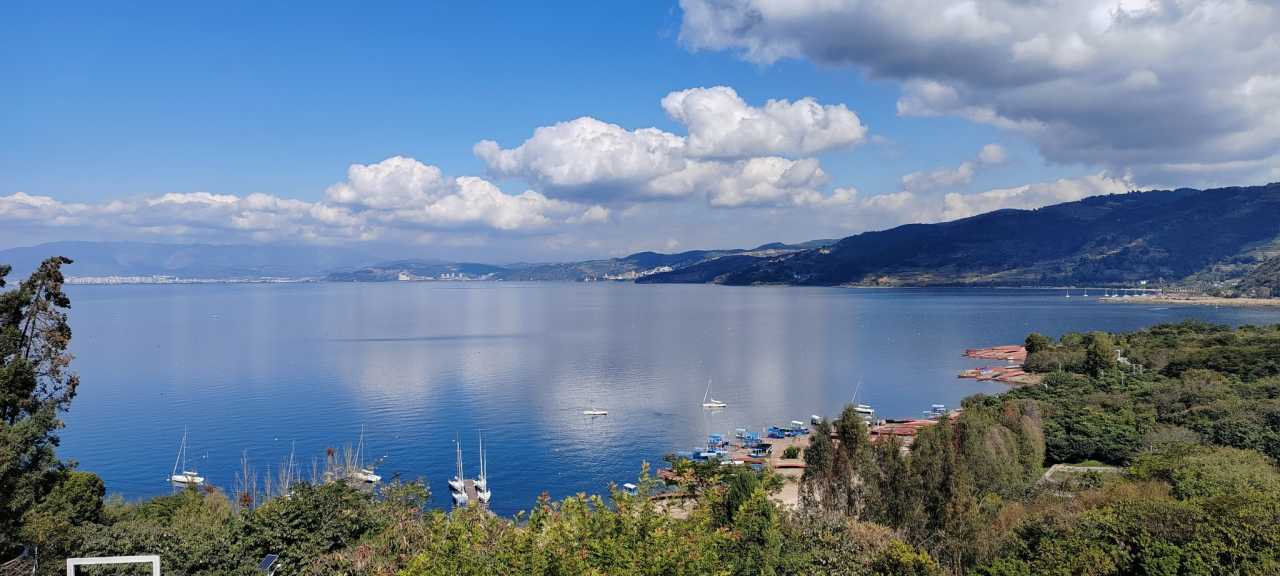
"After drinking, I didn't know the sky was reflected in the water; a boat full of clear dreams pressed down upon the Milky Way." The blue of Fuxian Lake is a visual assault with healing power.
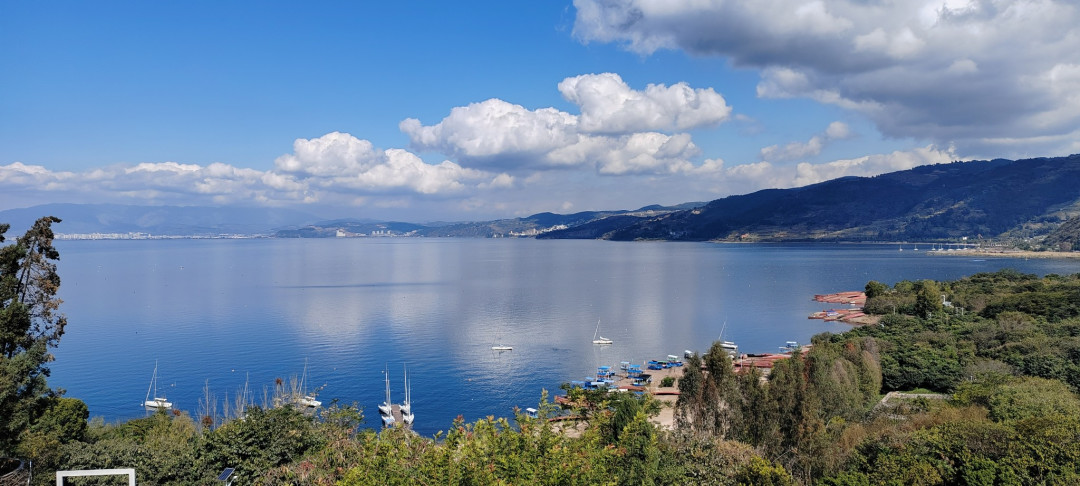
That blue isn't uniform. Near the shore, it's transparent, a lustrous peacock green like fine jade. It deepens gradually into a steady, velvet-like sapphire. Finally, at the horizon where the eye can reach, it melts into the pale blue sky.
As the first morning light touches the lake, the surface is as smooth as a mirror, reflecting the sky's deep blue and the clouds' pure white. The boundary between water and sky disappears, and you feel as if you're walking through emptiness. Rent a small boat and paddle toward the deeper waters. The sound of the oars breaks the glass-like surface. The lake water is so clear you can see the bottom. Water plants sway like green silk. Occasionally, a small fish darts by, its scales flashing for an instant before disappearing.
Route:
Cherry Blossom Valley → Cliffside Coffee → The Famous S-Curve → Moon Bay Wetland Park → Guanglong Town → Red Sand Beach
When you pass Cliffside Coffee, you absolutely must stop in. The 360° panoramic viewing platform overlooking Fuxian Lake is worth the visit. Order an apricot Americano while you're there — the flavor is surprisingly unique.
Yuxi City Museum — A Brocade Woven with Local Threads
Compared to the grandeur of the provincial museum and the specialized depth of the Chengjiang museum, Yuxi City Museum feels like a brocade carefully woven with local threads.
It tells the story of this land's past and present in a gentle, detailed manner: from Neolithic shell mound sites to the mysterious patterns of ancient Dian bronze culture; from Ming and Qing blue-and-white porcelain shards to the modern rise of Hongta Mountain as the "Home of Cloud Tobacco."
The history hall on the first floor displays artifacts unearthed from various sites in Yuxi. Stone tools from the Neolithic era, bronze vessels from the Shang and Zhou dynasties, porcelain from the Ming and Qing dynasties — step by step, they outline Yuxi's historical trajectory. The bronze artifacts from Jiangchuan's Lijiashan site are particularly striking, echoing the ancient Dian artifacts in the Yunnan Provincial Museum.
The ethnic culture hall on the second floor introduces the customs of Yuxi's Yi, Hani, and Dai peoples. On display is a blue-and-white porcelain plate from the Yuxi kiln, where the characteristic cobalt pigment creates a sparse, lyrical landscape. What moved me most was a collection of modern central Yunnan folk objects — a carved snuff box, a tin wine flask, a child's hat embroidered with a pomegranate pattern symbolizing fertility... These everyday objects are silent, but they convey the warmth and wishes of this land more genuinely than any grand narrative.
Yuxi is not just a dot on a map. It is the lingering echo of ancient Dian civilization. It is a gift from the red earth plateau. And it is the starting point of a stirring melody.
Epilogue: Yunnan's Abundance — A Blooming That Has Lasted 500 Million Years
As my trip drew to a close, I remembered the caption I saw at the Chengjiang Fossil Museum: "The Chengjiang biota reveals the miracle of the Cambrian Explosion, proving that complex life emerged in an extremely short period of time."
From the smoky alleys of Kunming to the lake-and-mountain sanctuaries of Chengjiang, from the sediment of time in museums to the vibrant energy of markets — every scene on the central Yunnan land carries its own unique gentleness and depth.
When Yang Shen wrote "The spring of Yunnan is beautiful," he wasn't just talking about the flowers blooming all year round. He was talking about the joy hidden in everyday life. He was talking about the heritage etched into the cultural fabric.
Isn't this land the same? From the miracle of life nurtured in an ancient ocean to today's never-withering flowers, the rising smoke of markets, and the clear reflections of lakes and mountains — Yunnan's abundance and beauty are like a grand, unending bloom of life.
Three days is short. But it's enough to let the time stolen by the city slip back into your pocket.
This travelogue was originally written by a professional content team. Please contact us for authorization if you wish to reprint.
You should also read:
Escaping Nanning, Falling Under Lijiang's Spell: Our Four-Person, Ten-Day Yunnan Dream
Escaping Nanning, Falling Under Lijiang's Spell: Our Four-Person, Ten-Day Yunnan Dream Before We Set Off: No Pain, No Obsession Have you ever had that impulse—suddenly tired of the office fluorescent lights, the crush of the subway, the endless parade of identical takeout boxes, and just…
Continue reading...
Solo in Yunnan: A Wanderer’s Guide to the Land of Eternal Spring
Solo in Yunnan: A Wanderer’s Guide to the Land of Eternal Spring There’s something magical about traveling alone. No compromises, no schedules to keep, no one to please but yourself. I’ve been on the road for nearly three months now, and not once have I…
Continue reading...
Into the Hidden Valley: A Solo Journey Through the Mysterious Dulong River
Into the Hidden Valley: A Solo Journey Through the Mysterious Dulong River Deep in the northwestern corner of Yunnan Province, tucked away from the modern world, lies a place that feels like a secret whispered among mountains. The Dulong River Valley is not just a…
Continue reading...