Yunnan's Path of Time: A Healing Journey from the Hidden Tibetan Realm to the Sun-Drenched City
Yunnan's Path of Time: A Healing Journey from the Hidden Tibetan Realm to the Sun-Drenched City
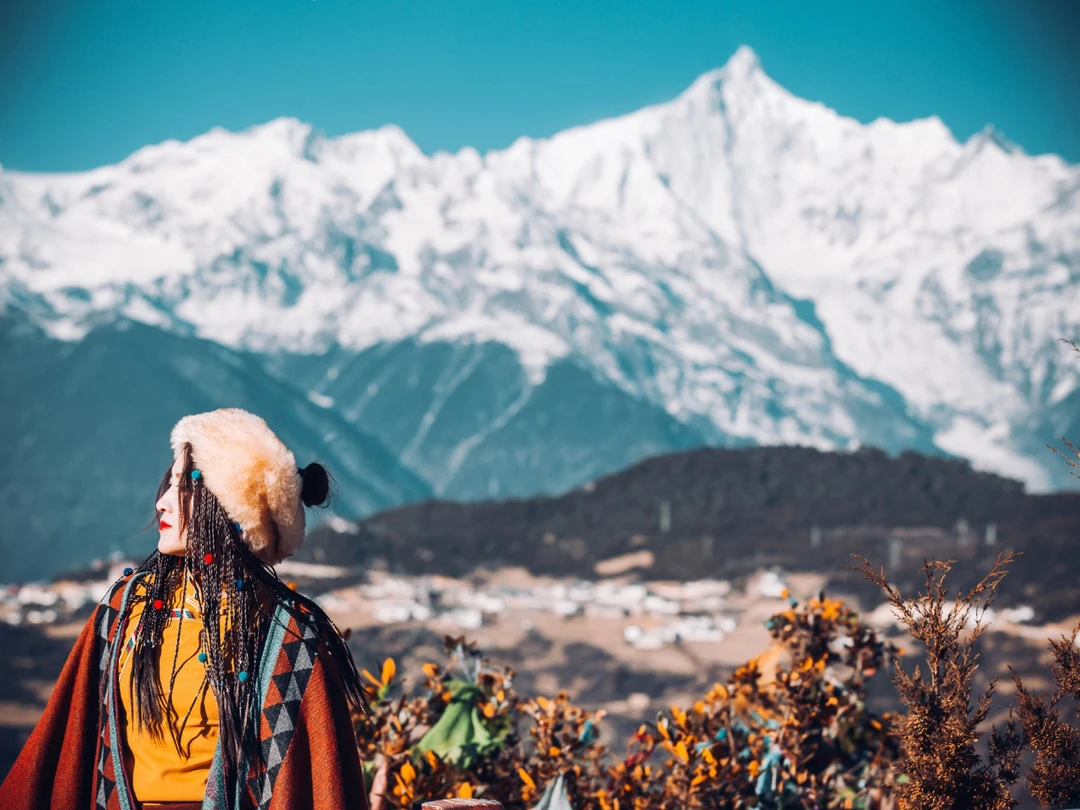
Fourteen years ago, I stood for the first time on the soil of Deqin, Yunnan, gazing at the Meili Snow Mountains from afar. In that moment, heaven and earth fell silent—only the towering peaks and rolling clouds remained. That awe, like a seed buried deep in my heart, occasionally breaks through the soil in the quiet hours of the night, reminding me of the legends about "Golden Sunlight on the Snow Peaks"—it is said that those who witness the golden rays bathing the mountain tops will be blessed with a full year of good fortune.
In January 2021, I returned to this land with my family. Over 16 days, we set out from Lijiang, heading north through Shangri-La, arriving at Deqin, and then looping back to Dali. This was a path through time—from the ancient depths of the Tibetan realm to the healing embrace of a sun-drenched city.
Lijiang: Dayan and Baisha—Two Faces of the Ancient City
Dayan Ancient Town: The "Trapped" City Without Walls
Our journey began and ended in Lijiang. After landing, we rented a car and, under the glaring sun, drove toward the long-missed ancient town.
Unlike most ancient cities in China, Dayan has no walls. Legend has it that the ruler of Lijiang, whose surname was Mu (木, meaning "wood"), believed that building walls would trap the character "Mu" inside a frame, creating the character "困" (meaning "trapped" or "besieged"). So he forbade the construction of walls. This open-minded attitude may well be the secret to Lijiang's thousand-year vitality.

The ancient town has the Jade Dragon Snow Mountain as its northern backdrop and the Wenbi Mountain as its southern screen. Sifang Street (Square Street) is the center of commerce and culture. Five main streets—Xinhua, Xinyi, Guangyi, Qiyi, and Wuyi—radiate outward like veins, connecting countless alleys.
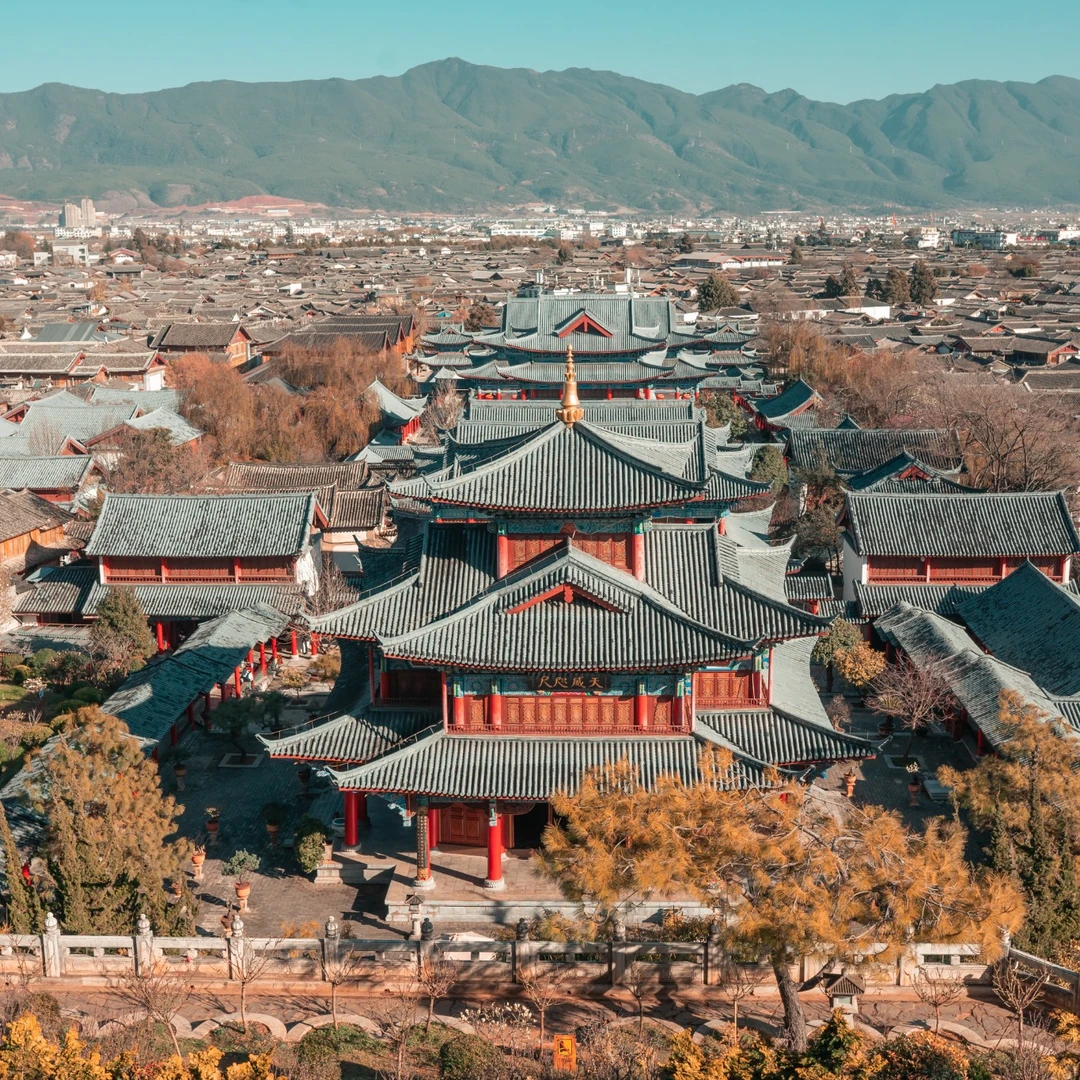
The last time I visited Lijiang, I missed the Mu Mansion. This time, I reserved the first afternoon for it. After the devastating earthquake of 1996, the mansion was rebuilt. It faces east, greeting the rising sun with grandeur. To its left stands the Jade Dragon Snow Mountain (the Azure Dragon), to its right Tiger Mountain (the White Tiger), and behind it Lion Mountain (the Black Tortoise). To the southeast, Turtle Mountain and Snake Mountain stand guard. As the saying goes, "In the north, there is the Forbidden City; in the south, there is the Mu Mansion"—and it's no exaggeration.
Stepping inside, the grand议事厅 (Council Hall) was where chieftains discussed state affairs. The Wanjuan Tower (Ten Thousand Volumes Pavilion) houses thousands of Dongba scriptures, hundreds of volumes of the Buddhist Tripitaka, poetry collections of six generations of Mu chieftains, and countless calligraphy and paintings by renowned scholars—truly a treasure trove of southwestern culture. A few plum blossoms peeked over the wall, blooming brilliantly, as if whispering tales of a family's former glory.
Some complain that Dayan Ancient Town has become too commercialized and isn't worth visiting. But in my eyes, the town still retains its soul. Every scene, every tree, every mountain, every house carries the unique character of the Naxi people.
Back at our guesthouse in the evening, watching the interplay of sunlight and moonlight from the terrace was the most leisurely way to end the day.
Sunrise on Lion Mountain
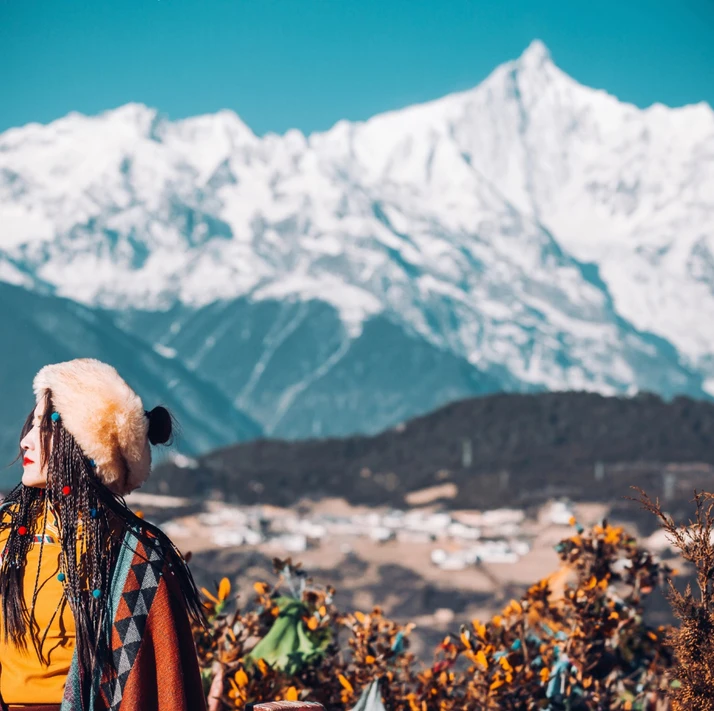
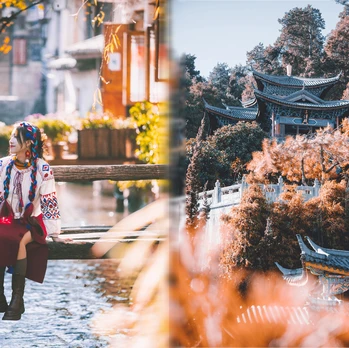
The next morning, we rose early and climbed Lion Mountain. The ascent took only 15 minutes, but it offered a panoramic view of the entire ancient town. The shops were still closed; the town had just woken from its slumber. Walking along the bluestone paths, through ancient alleyways lined with whitewashed walls and black-tiled roofs, the noise and bustle of the world seemed to melt away.
As the sun rose, the distant Jade Dragon Snow Mountain stood majestically in view. The green-brick houses built along the waterways were arranged in tight rows, crisscrossed by winding bridges. Beneath the bridges, water murmured, and weeping willows swayed in the breeze, as if waving a welcome to travelers from afar.
Baisha Ancient Town: The Last Guardian of Naxi Heritage
Leaving Dayan, we headed to another lesser-known ancient town—Baisha. Nestled at the foot of the Jade Dragon Snow Mountain, about 12 kilometers north of Lijiang city, it is one of the "Three Great Ancient Towns of Lijiang," alongside Dayan and Shuhe.
Baisha was the first settlement of the Naxi people in the Lijiang basin and the birthplace of the Mu family, the ruling chieftains of Lijiang. While other towns embraced commercialization early on, Baisha has preserved its complete Naxi-style architecture and numerous cultural relics. Many scholars consider Baisha the most authentic Naxi village, the purest embodiment of Naxi heritage.
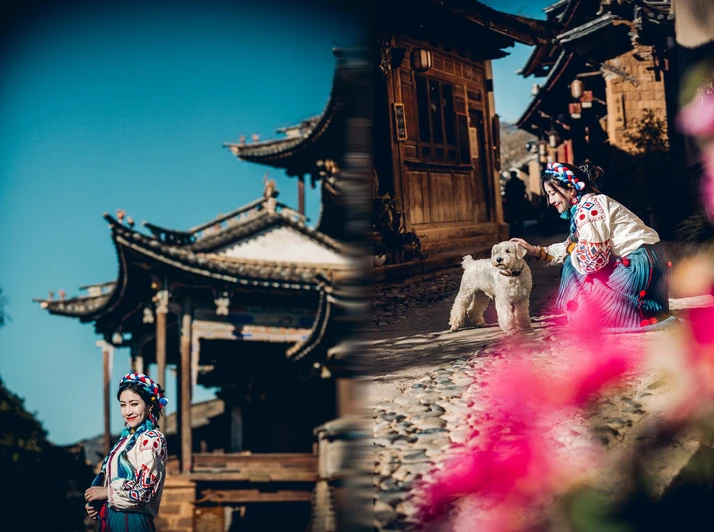
The town's dyeing workshops are particularly distinctive. In the spacious courtyards of old square houses, freshly dyed batik fabrics hang drying on long racks. Some courtyards are being converted into guesthouses, as if engaging in a dialogue between the ancient and the modern.
Diqing: A Winter Whisper in Ren'an Valley and Napahai
Ren'an Valley: Stars and Icicles in a Tent
The drive from Lijiang to Shangri-La takes about three and a half hours. The Lijing Expressway has been completed—though only half was open when we traveled—but compared to the winding mountain roads I took on my first visit in 2007, it was a world of difference.
Shangri-La sits in northern Yunnan, and further north lies Deqin. Many people come here with the ultimate goal of seeing the Meili Snow Mountains, and we were no exception. But Shangri-La itself has enough weight to make you linger.
We spent one night in a tent in Ren'an Valley. It took about 30 minutes to drive from the city center, the road was rough, and there were no restaurants nearby. But I had no regrets—in the valley, we recharged with the energy of nature.
The valley, the tent, the sunrise, the friendly dogs, the distant sheep and yaks... If travel is a lesson, I wish more parents would bring their children here to experience true nomadic life, even if only for a day and a night.
The hotel had several dogs. A chubby corgi named "Qiqi" was everyone's favorite; a gentle golden retriever seemed like the guardian of the place.
The only downside of tent living was the cold. The bathroom was inside the tent but separated from the sleeping area by a corridor with no heating—it was freezing. Every morning and evening, we had to put on down jackets just to wash up. When I woke up the next day, I was astonished to find that the faucet had frozen into an icicle. The nights in Shangri-La were far, far colder than in Lijiang.
Dabao Temple: A Hidden Gem in the Mountains
A staff member at the hotel told us about a temple that only locals visit: Dabao Temple (Great Treasure Temple). Built on a small hill, it is known in Tibetan as the "Temple of Five Buddhas" and is one of the earliest Tibetan Buddhist monasteries in the Zhongdian region.
The temple itself is modest—just a small shrine that feels somewhat empty. But it is surrounded by a pine forest, with colorful prayer flags fluttering from the trees. It is said that "above, a hundred and eight kinds of trees grow in profusion; below, thirty li of springs flow in twin streams," and the sound of the water resembles the chanting of Buddhist sutras. Even during the Republic of China era, stone inscriptions testified to the deep roots of Buddhist teachings in the local community.
Napahai: A Different Kind of Beauty in Winter
In winter, Pudacuo National Park is not at its best, but Napahai is a better choice. Every May, the grassland sprouts tender green shoots; in June, wildflowers bloom in profusion. But winter brings a different kind of beauty to Napahai.
The yellow-brown grassland stretches like a blanket over the earth, extending to the horizon. Herds of cattle and sheep drift across the sea of grass, appearing and disappearing like ships on the ocean. As we slowly approached the water's edge, the yellow-brown soil gradually gave way to deep brown, and patches of water emerged from the earth, forming irregular ribbons. Beyond the streams lay the azure blue of the lake.
Distant mountains were like dark eyebrows, and snow-capped peaks reflected in the lake. This season, black-necked cranes, yellow ducks, and bar-headed geese gather here, frolicking in the grass and on the water.
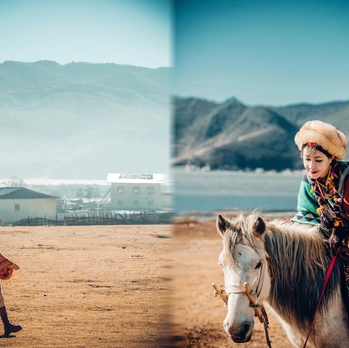
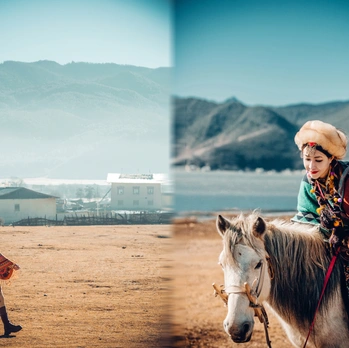
Before entering the scenic area, the staff enthusiastically recommended horseback riding. For sightseeing, it was a bit unnecessary, but it was definitely a great photo opportunity. The gentle horses seemed to understand human speech, moving slowly alongside me. Under the sunlight, by the lake, we formed a picture of leisurely coexistence between humans and animals.
Isn't that the essence of travel? Not getting too caught up in gains and losses, but simply enjoying the moment—that is the truest experience.
Deqin: Meili Snow Mountains—A Pilgrimage to the Golden Sunrise
From Shangri-La to Deqin, it takes about three hours to drive to Wunongding, and then another half hour to Feilai Temple. The road is good, so there's no need to worry about bumps.
The ultimate destination in Deqin is, of course, the Meili Snow Mountains. We didn't book a hotel in advance. Instead, we checked the weather forecast, saw that the next few days would be clear, and immediately adjusted our itinerary to head to Deqin. Luckily, we still got the hotel we wanted.
Golden Sunrise: A Rare Blessing—Only 40 Days a Year
The Meili Snow Mountains are located in Deqin County, Yunnan. There are 13 peaks with an average elevation of over 6,000 meters, collectively known as the "Thirteen Peaks of the Prince." The main peak, Kawagebo Peak, stands at 6,740 meters, making it the highest peak in Yunnan and the foremost of the eight sacred mountains in Tibetan Buddhism.
Although "Golden Sunlight on the Snow Peaks" is a natural phenomenon, its significance is uniquely tied to the Meili Mountains. Witnessing it is considered a great omen, bringing a full year of good fortune. Due to the unpredictable climate, the Meili Mountains are often shrouded in clouds and mist, and the golden sunrise is visible only about 40 days a year, making clear days especially precious.
The Meili Mountains are also the only major peak that remains unclimbed. In the hearts of local villagers, Kawagebo Peak is the dwelling place of their protective deity. Since 1902, British, American, and Japanese expeditions have repeatedly attempted to conquer the main peak, but none have succeeded. The 1991 disaster, in which 17 climbers disappeared, remains the second deadliest accident in mountaineering history.
Best Viewing Spots
Watching the sunrise from a warm glass-enclosed room, rather than waiting outside in sub-zero temperatures, has become a popular option for many visitors. Wunongding has several upscale, Instagram-famous guesthouses. Their rooftop terraces offer an unobstructed view of all thirteen peaks, with a foreground of smoke rising from village chimneys—a perfect mountain dwelling scene.
There are also two viewing platforms for the best photos of the Meili Mountains:
- Feilai Temple Viewing Platform: The closest to the mountains, ideal for close-up views, but the leftmost peaks may be partially blocked.
- Wunongding Viewing Platform: Slightly farther away, but offers a panoramic view of all thirteen peaks, with the village near Feilai Temple in the foreground for a fuller composition. The platform also features a row of white pagodas and prayer flags, making for excellent photographic elements.
After sunrise, we went to the Wunongding viewing platform and witnessed the miracle of golden light spreading across the snow-covered peaks.
Shangri-La: The Tibetan Light of Dukezong and Songzanlin Monastery

Dukezong: The Moonlit Ancient Town
Shangri-La's city center is no longer the small village I once knew. The broad avenues before us felt like those of a second- or third-tier city. Dukezong lies at the heart of the city. "Dukezong" means "white" in Tibetan, symbolizing the moon, and "zong" means "castle"—hence the Chinese name "Moonlight City."
After being damaged by fire, Dukezong has been completely restored. At night, the town is cool and quiet. Turtle Mountain Park, built during the Kangxi era, is built into the hillside. Climbing to the top offers a panoramic view of all of Shangri-La.
This is also the home of the world's largest prayer wheel. Standing 21 meters high and weighing 60 tons, it is the largest and heaviest gilded pure copper prayer wheel in the world. Inside, it holds 1.24 million mantras and 16 tons of various Buddhist treasures. It takes at least six adult men to turn it simultaneously.
Climbing Turtle Mountain Park requires some effort—the elevation here is around 3,300 meters, so it's best to take it slow. At the top stands Chaoyang Tower (Sunrise Tower), a three-story building from which you can see the entire "Moonlit City" spread out below.
While the buildings in Lijiang's ancient town are mostly in Naxi style, the architecture in Dukezong is almost entirely Tibetan.
Songzanlin Monastery: The Little Potala Palace
Ganden Songzanlin Monastery, also known as Guihua Temple, sits at the foot of Foping Mountain in Shangri-La County. It is the largest Tibetan Buddhist monastery in Yunnan and the center of the Gelug school (Yellow Hat sect) in the Sichuan-Yunnan region, earning it the nickname "Little Potala Palace."
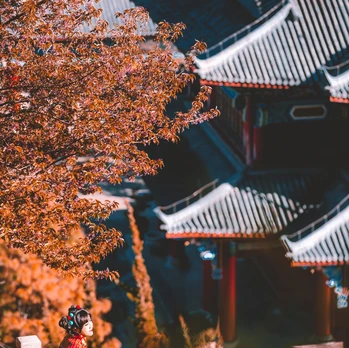
The monastery embodies the essence of Tibetan religious culture. Its buildings are grand and imposing, solemn and mysterious; the resplendent halls and exquisite murals and carvings interpret the rich meaning of the Buddhist scriptures. Out of respect, I did not take photos inside the halls.
When visiting Tibetan Buddhist temples, there are a few things to keep in mind: - Do not wear sunglasses or hats inside the main hall. - Do not retrace your steps; follow the clockwise route. - Do not step on the threshold; step over it when entering. - Enter and exit on the left, and turn prayer wheels clockwise. - Photography is not allowed inside the halls, and do not point at Buddha statues with your fingers.
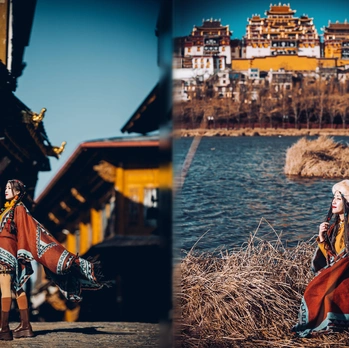
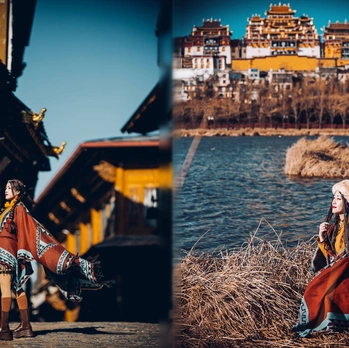
In front of the monastery is a large wetland lake. On clear days, the water is as clear as a mirror, reflecting the mountains and the temple. This is the perfect spot for photographing Songzanlin Monastery.
Lijiang: Hidden Gems at the Foot of Jade Dragon Snow Mountain
Jade Dragon Snow Mountain: The Guardian Spirit of the Naxi
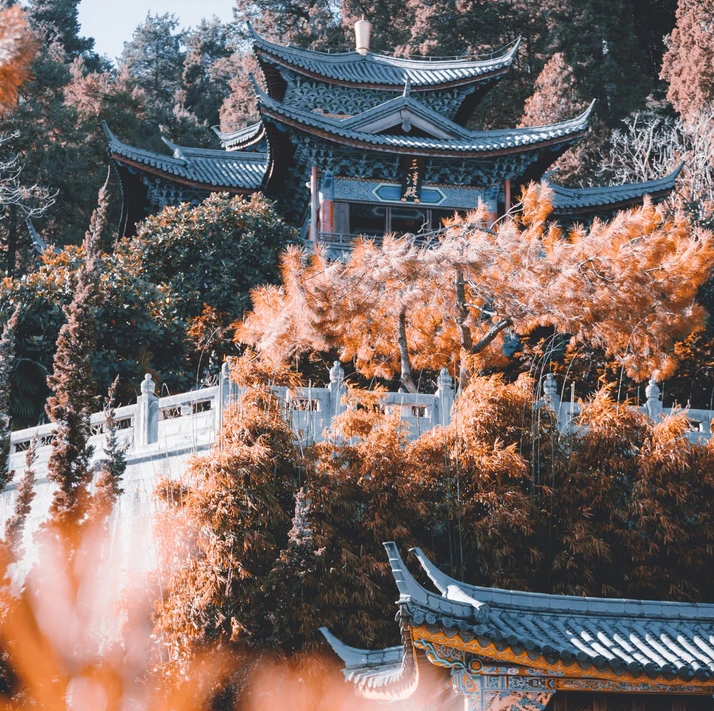
Jade Dragon Snow Mountain is a sacred mountain in the hearts of the Naxi people and all ethnic groups of Lijiang. The Naxi protective deity "Sanduo" is the incarnation of this mountain.
A magical story is passed down among the Naxi: Jade Dragon Snow Mountain and Haba Snow Mountain were twin brothers who depended on each other, panning for gold in the Jinsha River to make a living. One day, a fierce demon came and seized the river. The brothers fought the demon with their swords. Haba, the younger brother, was tragically beheaded. Jade Dragon fought for two days and three nights, chipping thirteen swords, before finally driving the demon away. From then on, Haba became the headless Haba Snow Mountain, and Jade Dragon, holding high his thirteen swords day and night, turned into the thirteen snow-capped peaks.
Reaching 4,680 Meters
The mountain can be accessed via a large cable car to a viewing platform, from which you can climb a boardwalk to the highest point at 4,680 meters. Before entering the mountain, I planned carefully: considering the high altitude, we rested in Lijiang for two days; considering the weather, we only went up on clear days. But there was another factor I couldn't ignore: wind speed.
In the morning, the sun was shining brightly, and we felt refreshed as we checked in and entered the mountain. But at the cable car checkpoint, we were hit with a blow. The staff advised us to turn back: the wind was too strong, and the cable car couldn't operate. Meanwhile, those lucky enough to have boarded the 9:00 AM cable car were now stranded at the summit, waiting for the wind to die down before they could descend.
Caught off guard, we had to adjust our itinerary and enter the mountain again the next day. A tip: if you encounter a similar situation, ask the service desk for a second-entry permit—you won't have to pay again.
Yunshanping Meadow and Blue Moon Valley
Yunshanping is a high-altitude meadow on the mountainside of Shanzidou, the main peak of Jade Dragon Snow Mountain, at an elevation of 3,240 meters. It looks like a small pasture hidden within a primeval spruce forest. The Yunshanping cable car goes in a different direction from the main cable car, so when the main cable car was shut down due to strong winds, the Yunshanping cable car was still running.
We walked for about a kilometer through the spruce forest, surrounded by dark green trees, with the distant snow mountain standing like a jade screen against the sky.
On clear days, Blue Moon Valley (Blue Moon Valley) lives up to its name: the water is a brilliant blue, and the valley is shaped like a crescent moon, looking from afar like a blue moon embedded at the foot of the Jade Dragon Snow Mountain. It was formerly known as White Water River because the lakebed is made of white mud, turning the water white when it rains.
As the river flows through the valley, it is blocked by the terrain, forming four large bodies of water: "Jade Liquid" Lake, "Mirror Pond" Lake, "Blue Moon" Lake, and "Listening to the Waves" Lake. Taking photos in Blue Moon Valley in the afternoon is a bit challenging due to backlighting, so morning is better. The lake is surrounded by lush vegetation, with distant snow-capped peaks in the background. The water is a transparent blue, with a touch of green in the almost frozen azure.
Little Surprises at the Foot of the Mountain
Xiaozun Muli Manor is a small farm at the foot of the snow mountain. While it can't compare to the vast grasslands, it is lush and green. The manor keeps various animals in enclosures, making it a good choice for families with children who have extra time.
Tinghua Valley (Listening to Flowers Valley) is a popular attraction in recent years, with an entrance fee of 120 yuan. Upon entering, I found that although it was a man-made landscape, a lot of effort had gone into it. Against the backdrop of snow mountains, forests, and lakes, there are excellent photo spots: Hobbit-style treehouses, Balinese bird's nests, a wooden boardwalk facing the snow mountain, and in summer, a large field of sunflowers.
Back at the hotel, we watched another sunset. We were staying right next to the Jade Dragon Snow Mountain, and our hotel had only one group of guests—us. Breakfast had been changed from a buffet to a set menu, and dinner needed to be ordered in advance. After we checked out, the entire hotel staff could begin their holiday.
Dali: The Healing Time of Shaxi Ancient Town and Erhai Lake
Shaxi Ancient Town: The Last Market on the Tea Horse Road
We had originally planned to go to Lugu Lake, but due to pandemic restrictions that closed scenic areas in Sichuan, we changed course to Dali. From Lijiang to Dali, if time permits, it's worth taking a detour to Shaxi Ancient Town, which lies between the two.
Strictly speaking, it's not exactly on the way—although Shaxi is under Dali's administration, it's a two-hour drive from Erhai Lake, including some winding mountain roads. But coming to Shaxi, that two-hour detour was more than worth it.
As early as 400 BC, Shaxi had developed a bronze smelting and production center around the Heihui River, making it one of the birthplaces of Yunnan's bronze culture. The Tang and Song dynasties marked Shaxi's golden age. As a strategic passage between the Nanzhao and Dali kingdoms, the Tang Empire, and Tibet, Shaxi became an important node on the Yunnan-Sichuan-Tibet Tea Horse Road.
For thousands of years, horse caravans passed through here. Today, Shaxi is the only surviving ancient market town on the Tea Horse Road.
On a Friday afternoon, we happened to encounter a market day. Villagers from near and far brought out their treasures to sell—from large iron tools to small items like yarn and sunflower seeds—creating a lively and bustling scene.
Shaxi is a small basin surrounded by green mountains. The population is mainly Bai, with Han, Yi, and Lisu people living together. It is known as "a land of beautiful mountains, waters, valleys, and even more beautiful women—a land of fish and rice, and a land of song and dance."
Sideng Street and Ouyang Courtyard
Sideng Street is located in the middle of the Shaxi basin, on the gentle slope at the northern end of Aofeng Mountain on the west bank of the Heihui River. It is considered the best feng shui location in Shaxi. Every household on the street is connected, forming a well-proportioned and layered layout.
Ouyang Courtyard is the residence of a family of horse caravan traders. Every wall and tile is steeped in the atmosphere of the Tea Horse Road. This courtyard was built by Ouyang Shu's father with money earned from running horse caravans. Part of it was specifically designed to accommodate passing merchants and caravans. The guest rooms for the caravan drivers were upstairs, with a row of wooden cabinets by the window—a unique invention of the Ouyang family. People slept on top of the cabinets, allowing them to both keep watch outside and guard the valuables stored inside.
The Ancient Stage and Yujin Bridge
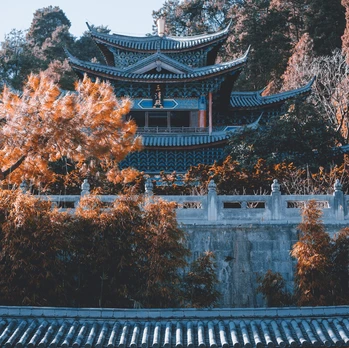
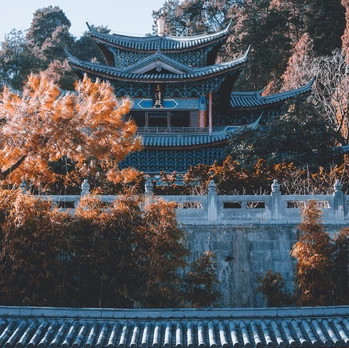
The ancient stage is the soul of Shaxi Ancient Town and the most distinctive building on Sifang Street (Square Street). Built during the Qing Dynasty, it is a three-story Kuixing Pavilion with an attached stage—a front-stage, rear-pavilion structure with 14 flying eaves jutting out into the sky. For centuries, it has received the admiring gazes of countless onlookers.
Yujin Bridge was the first bridge on the Tea Horse Road connecting south to Dali, and it was the必经之路 (only route) for all horse caravans traveling north and south. First built during the Kangxi reign of the Qing Dynasty, it has collapsed and been damaged by war several times over the centuries. In 1931, the people of Shaxi raised funds to rebuild it, and the renowned Bai scholar Zhao Fan wrote the "Call for Funds to Repair the Bridge."
In the early morning mist, Yujin Bridge looks like a crescent moon. The arch is adorned with a stone carving of a turtle's head, and at the ends of the railings are four stone carvings of "baby fish" (salamanders). Interestingly, the arches of Yujin Bridge were bonded using a paste made from glutinous rice and paper pulp—rice was cooked into porridge, cotton paper was soaked and mashed into pulp, then mixed with lime. This ancient innovation produced a bonding strength comparable to cement.
Erhai Lake: The Final Healing Stop
After staying one night in Shaxi, we drove to the final stop of our Yunnan journey: healing Dali.
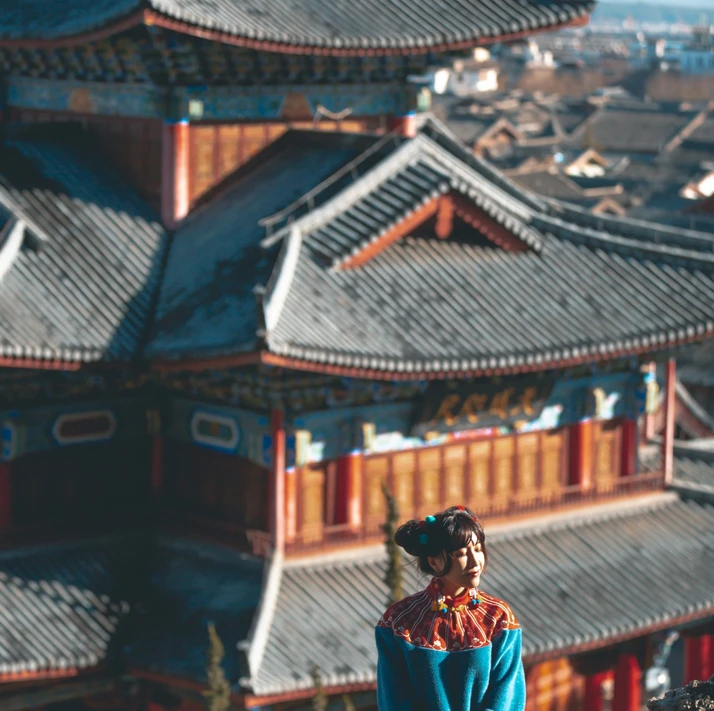
Dali surrounds Erhai Lake, and a lakeside tour is often recommended. On the east side is Shuanglang Ancient Town, and on the west side is Xizhou Ancient Town, each with a different character. Shuanglang is known for its natural scenery along the lake, while Xizhou is famous for its Bai-style houses and pastoral landscapes.
When we finally saw the azure waters of Erhai Lake, all our worries vanished. Dali's sun-drenched city felt like a cure for restlessness and anxiety.
Conclusion: A Path Through Time, A Journey of the Soul
Sixteen days of travel, from Lijiang to Dali, from snow mountains to lakes, from ancient towns to valleys. This path through time carried me through the ancient depths of the Tibetan realm and toward the healing embrace of a sun-drenched city.
What travel taught me was not how many attractions I could check off, but how to find my own rhythm in the present moment. In the tent at Ren'an Valley, in the sunrise over the Meili Snow Mountains, in the market at Shaxi Ancient Town, I confirmed again and again: the meaning of travel lies not in how far you go, but in those moments that make your soul pause.
If you're thinking of going to Yunnan, my advice is this: don't let your itinerary tie you down. Leave room for the unexpected. The best scenery is often found where you least expect it.
You should also read:
Yunnan Travel Mastery: From Beginner to Pro-Level Player – A Complete Guide
Yunnan Travel Mastery: From Beginner to Pro-Level Player – A Complete Guide "Either travel or read, but your body and soul must be on the road." This quote has been repeated countless times, but very few people truly manage to be "on the road" and…
Continue reading...
Into the Hidden Valley: A Solo Journey Through the Mysterious Dulong River
Into the Hidden Valley: A Solo Journey Through the Mysterious Dulong River Deep in the northwestern corner of Yunnan Province, tucked away from the modern world, lies a place that feels like a secret whispered among mountains. The Dulong River Valley is not just a…
Continue reading...
God’s Abandoned Palette: A Self-Drive Journey Through Yunnan’s Dongchuan Red Land
God’s Abandoned Palette: A Self-Drive Journey Through Yunnan’s Dongchuan Red Land Travel has never been about reaching some distant geographic coordinate. It’s about encountering, along the way, the version of yourself buried beneath the rubble of daily routine. During this May Day holiday, I finally…
Continue reading...